4.394 Ergebnisse
1768Best.-Nr. 14001768 Neuvième édition augmentée considérablement et mise en meilleur ordre avec la vertu des simples, l'apothicairerie, les décisions de droit français sur les matières rurales et enrichie de figures en taille-douce. Paris, Humblot, 1768, 1768. 2 volumes in-4°, bonne reliure d'époque plein veau fauve décoré au doigt, dos à nerfs décoré de fleurons (deux fleurons effacés), étiquettes de titre et de tomaison rouges, gardes ornées, tranches marbrées, III + 916 pages + 5 pages de tables non chiffrées au tome 1, 894 + 15 feuilles non chiffrées de tables et approbation au tome 2. Les 2 volumes sont illustrés de 39 gravures hors-texte et de 47 bois dans le texte.Bel exemplaire.2 volumes
1750Best.-Nr. 150030Halle, á la Maison des Orphelins, 1750. 444 S., 1 Bl. 8°, Ldr. d. Z. mit reicher Rückenvergold. u. marmor. Vorsätzen, Farbschnitt.
Best.-Nr. 197446S.l. [Paris], s.d. (1797) gravure in-12 de 14,5 x 11,5 cm, en feuille, fixée sur papier fort.
Best.-Nr. 243393Mons, chez les libraires associés, 1793 in-8, 48 pp., avec 15 plans dépliants hors texte (Charlemont, Arras, Saint-Omer, Dunkerque, Bergues, Gravelines, Lille, Douai, Valenciennes, Maubeuge, Condé, Landrecies, Philippeville, Cambrai, Montmédy), broché sous couverture moderne de papier bleu imprimé. Page de titre salie, des traces d'humidité.
Best.-Nr. 214686Avignon, Imprimerie de Seguin frères, 1809 in-8, 110 pp., un f. vierge, pp. 111-214, demi-basane fauve granitée, dos lisse orné de guirlandes dorées, pièce de titre brique, tranches jaunes (reliure de l'époque).
2002Best.-Nr. 34432Paris Librairie Teissedre 2002 in-8° Réédition de l'édition 1902-1908 parue en 2002. Elle se décompose comme suit : Tome 1, deux parties 745 + 151, tableaux et planches en noir et couleurs ( atlas ), tome II, 889 pp, Tome III, 604 + 604 pp, tome IV, 771 pp, Tome V, 304 pp, soit 7 volumes, série complète
Best.-Nr. 111501A Paris, chez Deterville, Libraire, rue Hautefeuille, N° 8, 1805, 3 volumes in-4 de 260x200 mm environ, Tome 1 : (1) f. blanc, faux-titre, titre, xvj-891 pages, (1) f. blanc, avec 20 planches (dont 4 planches doubles) - Tome 2 : (1) f. blanc, faux-titre, titre, v-899 pages, (1) f. blanc, avec 20 planches (dont 15 planches doubles). Tome 3 : (1) f. blanc, faux-titre, titre, xij-1006 pages, 1f. blanc, avec 20 planches (dont 11 planches doubles). Demi-reliure tabac, dos lisses portant titres et tomaisons dorés. Complet des soixante planches hors texte annoncées dans la table. Reliures en mauvais état (coiffes manquantes, manques de cuir sur les dos, frottements), des rousseurs et pages brunies, quelques pages (dont planches) restaurées, néanmoins ensemble solide.
1665Best.-Nr. 4528Cologne, Pierre Du Marteau, 1665 ; trois tomes petit in-12 ; demi-veau glacé caramel, dos à nerfs ornés, pièces de titre et de tomaison havane (reliure du XIXe siècle) ; 448 ; 526 ; 430 pp.
1855Best.-Nr. 29642Paris Librairie Militaire J. Dumaine 1855 2 volumes In-8 un portrait - XIV - 400 + 423 pp , nombreux cachets de la bibliothèque du 37 ème régiment de chasseurs d'Afrique, intérieure frais, , dos frottés et usagés avec manques en coiffe et coins émoussés, papier de couvrure correct, intérieur frais exempt de rousseurs . Tulard, 140
Best.-Nr. 19871...concernant Les Biens de Campagne, notamment les Fiefs, Flancs-Aleux, etc..Recueil de règlements de 1563 à 1772. A Paris chez Prault père en 1774.(seconde et dernière édition). 3 vol.in-12 en veau d'époque.(387,392,459 pages avec la Table des Matières).Bon état malgré rares traces de vers et qques coiffes manquantes.
1916Best.-Nr. 15.0214Santander 1916. Encuadernado en pergamino. 22x32. unknown
1818Best.-Nr. va563Paris, chez le Normant, Imprimeur-Libraire Relié 1818 Trois volumes in-8 (13,5 x 20,7 cm), reliure d'époque pleine peau, dos lisses ornés de dorures, tranches marbrées, gardes couleurs, xvj-416, 420 et 247 pages, ex-libris de La Hamonais, bien complet de la carte du fac-similé et du frontispice ; dos décolorés, quelques marques de frottement aux plats, intérieur frais, bon état. Livraison a domicile (La Poste) ou en Mondial Relay sur simple demande.
1749Best.-Nr. 814481749 A Paris, au Palais, chez Joseph Saugrain, au sixième pilier de la Grande Salle, vis-à-vis de l'Escalier de la Cour des Aydes, à la Bonne-Foi couronnée - M. DCC. XLIX. (1749) - 2 vol in-4 ( 25,9 x 21 cm), plein veau marbré du temps, 5 nerfs, caissons dorés et ornés, tomaison en doré dans caisson, pièce de titre rouge; tranches rouges - 1004 pp. + 992 pp. - Très nombreuses gravures en taille douce in et hors texte
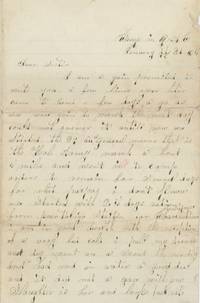
1865Best.-Nr. List2724South Carolina 1865. Single letter measuring 7.5 x 10 inches folded one double-sided sheet with stampless envelope. Near fine with light normal wear. George Harpole Vannada 1844–1928 was a private promoted to corporal in Company I of the 25th Indiana Infantry Regiment during the Civil War. The 25th Infantry was a volunteer regiment mustered in August 1861 and mustered out in July 1865. At the time of Vannada’s writing the Regiment was involved in the Campaign of the Carolinas – led by General Sherman this campaign would culminate in the Army of the South’s unconditional surrender and effectively end the war. Vannada writes that his regiment had “started with 25 days rations from pocotaligo staton for i supose Charleston.” On the way they had encountered: “a few Johneys i.e. Confederates not far off i have heard sevrel cannons to day we will be botherd with them all the way to Charleston between here and Buford they had a fort a bout evry 3 miles they wood stop and fire a few shots and then get up a bug for the next fort”. By “Buford” Vannada probably means Beaufort South Carolina which had been occupied by Union forces since November 1861. At this point the Savannah area had been essentially a refugee camp for freed people for several years and Sherman’s Special Field Orders No. 15 which settled them in the nearby South Carolina Sea Islands—the “forty acres and a mule” order—came in response to their request for stewardship over the land. Vannada remarks on Sherman’s order: “Gen Foster has been on Buford Iland for 2 years and now Sherman has comand of his troops i think they will get off now this Iland they have to give to the Niggars to setle on that is all that have famlies 40 acre to the man”. Vannada also accurately forecasts despite the fact that “we don’t often get any papers here to see what is goin on” that there “is some talk of peace down here but i think it is sevrel months off yet”. unknown
1865Best.-Nr. List2724South Carolina 1865. Single letter measuring 7.5 x 10 inches folded one double-sided sheet with stampless envelope. Near fine with light normal wear. George Harpole Vannada 1844–1928 was a private promoted to corporal in Company I of the 25th Indiana Infantry Regiment during the Civil War. The 25th Infantry was a volunteer regiment mustered in August 1861 and mustered out in July 1865. At the time of Vannada’s writing the Regiment was involved in the Campaign of the Carolinas – led by General Sherman this campaign would culminate in the Army of the South’s unconditional surrender and effectively end the war. Vannada writes that his regiment had “started with 25 days rations from pocotaligo staton for i supose Charleston.” On the way they had encountered: “a few Johneys i.e. Confederates not far off i have heard sevrel cannons to day we will be botherd with them all the way to Charleston between here and Buford they had a fort a bout evry 3 miles they wood stop and fire a few shots and then get up a bug for the next fort”. By “Buford” Vannada probably means Beaufort South Carolina which had been occupied by Union forces since November 1861. At this point the Savannah area had been essentially a refugee camp for freed people for several years and Sherman’s Special Field Orders No. 15 which settled them in the nearby South Carolina Sea Islands—the “forty acres and a mule” order—came in response to their request for stewardship over the land. Vannada remarks on Sherman’s order: “Gen Foster has been on Buford Iland for 2 years and now Sherman has comand of his troops i think they will get off now this Iland they have to give to the Niggars to setle on that is all that have famlies 40 acre to the man”. Vannada also accurately forecasts despite the fact that “we don’t often get any papers here to see what is goin on” that there “is some talk of peace down here but i think it is sevrel months off yet”. unknown books
2008Best.-Nr. Q-0815515510William Andrew 2008-02-08. Hardcover. New. New. In shrink wrap. Looks like an interesting title! William Andrew hardcover
19348vo., Second Impression, with a frontispiece, 7 plates and 24 illustrations in the text; original pictorial brown cloth, upper board and backstrip blocked and lettered in brown, a very good, bright, clean copy. C DAY LEWIS'S COPY, PRESENTED TO HIM BY HIS FATHER IN APRIL 1934 AND WITH THE LATTER'S INITIALLED HOLOGRAPH INSCRIPTION ON FRONT FREE ENDPAPER. Second appearance of Sturt's classic account (first published in 1923). Complete with extended glossary.
1814Best.-Nr. 17400Paris, Chez A. Eymery, chez Tardieu [et divers autres], 1814-1815. Deux ouvrages en un volume in-8 de 112-87 pages, demi-basane camel à coins, dos lisses, pièce de titre en maroquin miel, supra-libros en queue: Paul Grand.
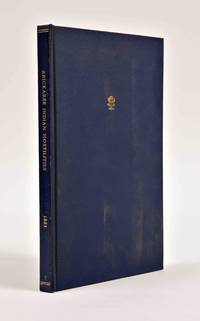
1823Best.-Nr. 52010Washington. 1823. Early Western Skirmishes The document accompanies President Monroe's Message of 1823 which consists of letters and reports concerning attacks of the Arikara Indians on General Ashley's trading party and of the Blackfoot Tribe on the Missouri Fur Company's Yellowstone or Mountain Expedition. Included is correspondence from Ashley Benjamin O'Fallon William Gordon and Joshua Pilcher describing the attacks in detail. 55-108pp. Modern blue pebbled cloth gilt label. Light tanning and foxing. Very good. WAGNER-CAMP 22. HOWES A307. GRAFF 3071. hardcover
1823Best.-Nr. 52010Washington. 1823. Early Western Skirmishes The document accompanies President Monroe's Message of 1823 which consists of letters and reports concerning attacks of the Arikara Indians on General Ashley's trading party and of the Blackfoot Tribe on the Missouri Fur Company's Yellowstone or Mountain Expedition. Included is correspondence from Ashley Benjamin O'Fallon William Gordon and Joshua Pilcher describing the attacks in detail. 55-108pp. Modern blue pebbled cloth gilt label. Light tanning and foxing. Very good. WAGNER-CAMP 22. HOWES A307. GRAFF 3071. hardcover books
1932Best.-Nr. 84387New York City: Workers Library Publishers 1932. Presumed First Edition First printing thus. Wraps. Good. Format is approximately 4.25 inches by 5.75 inches. 32 pages. RARE. Ink and pencil marks noted. Photos of the two candidates are on the cover. William Z. Foster February 25 1881–September 1 1961 was a radical American labor organizer and Communist politician whose career included serving as General Secretary of the Communist Party USA from 1945 to 1957. He was previously a member of the Socialist Party of America and the Industrial Workers of the World leading the drive to organize the packinghouse industry during WWI and the steel strike of 1919. Foster began to lose power within the Party due to his imprisonment during the Party's convention in 1930 and his continuing differences with others over trade union policies. Foster was nominated for president yet again in 1932 but he suffered a heart attack on the campaign trail and was forced to step down as leader of the party in favor of Earl Browder. James W. “Jim” Ford December 22 1893 – 1957 was an activist a politician and the Vice-Presidential candidate for the Communist Party USA in the years 1932 1936 and 1940. Ford worked as a party organizer for the CPUSA in New York City. He was the first African American to run on a U.S. presidential ticket 1932 in the 20th century. In 1932 the CPUSA nominated Ford as its candidate for Vice President of the United States; this increased his national recognition. The placing of a Black man near the top of the Communist ticket was symbolic of the party's self-declared commitment to racial equality and its commitment to advance Blacks to its own leadership. William Z. Foster had to drop out of the 1932 Presidential campaign due to health issues so most of the surviving Communist Party of the United States 1932 political material features Earl Browder making this small pamphlet exceedingly rare. The Communist Party USA officially the Communist Party of the United States of America CPUSA is a communist party in the United States established in 1919 after a split in the Socialist Party of America following the Russian Revolution. The history of the CPUSA is closely related to the American labor movement and communist parties worldwide. Initially operating underground due to the Palmer Raids starting in the First Red Scare the party was influential in American politics in the first half of the 20th century and played a prominent role in the labor movement from the 1920s through the 1940s becoming known for opposing racism and racial segregation after sponsoring the defense for the Scottsboro Boys in 1931. Its membership increased during the Great Depression and they played a key role in the Congress of Industrial Organizations. The CPUSA subsequently declined due to events such as World War II the beginning of the Cold War the second Red Scare and the influence of McCarthyism. Its support for the Soviet Union increasingly alienated it from the rest of the left in the United States in the 1960s. The CPUSA received significant funding from the Soviet Union and crafted its public positions to match those of Moscow. The CPUSA also used a covert apparatus to assist the Soviets with their intelligence activities in the United States and utilized a network of front organizations to shape public opinion. The CPUSA opposed glasnost and perestroika in the Soviet Union and as a result major funding from the Communist Party of the Soviet Union ended in 1989. Workers Library Publishers paperback
19688vo., First Edition, with numerous plates and full-page maps in the text; handsomely bound in full dark green crushed morocco, sides with gilt frame border, back with raised bands, second and fourth compartments lettered in gilt, all other compartments tooled in gilt, gilt top, hand-made endpapers, ribbon marker, a most attractive copy ideal as a gift or for presentation. Hillaby's engaging and highly personal account of his tramping odyssey from John O'Groats to Lands End in 1966. A modern travel classic with significant additional value as a social study of Britain in the sixties.
Best.-Nr. BN382855Opus circa speculare enigma universi Opus circa speculare enigma universi Heymericus de Campo María Cecilia Rusconi ed unknown
1812Best.-Nr. 137[Paris, Ponthieu, 1822], in-8°, 3 feuillets non chiffrés, 236 pages (à partir de la page 160 il y a une erreur de pagination, on passe de la page 160 à la page 141 alors qu'il devrait être imprimé 161; à la fin la dernière page est numérotée 216 alors qu'il s'agit en fait de la page 236), cartonnage rouge de l'époque, dos lisse orné de filets dorés, coiffe inférieure abimée (voir photo).
Best.-Nr. 91999Sans mention d'Editeur, 1764, 1 volume in8 de210x140 + 1 brochure in-8 broché de 220x135 mm environ, 316-7-7-8 pages +1 brochure de 30 pages : l'Addition à la réponse. Edition originale de la Réponse aux Lettres écrites de la campagne, suivie de de 2 publications du Conseil Général de Lullin. Couverture en mauvais état pour le volume, absente pour la brochure. Feuillets non rognés pour les ouvrages avec plis sur les bordures, et manque de papier dans la p. 87-88, sinon bon état intérieur.