4477 risultati
rif. BN125899Verlag Moderne Industrie Buch. Virtual Private Networks. Virtual Private Networks. Campo Markus a/Pohlmann Norbert Verlag Moderne Industrie Buch unknown
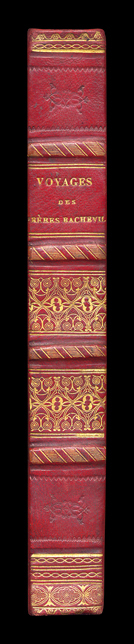
1822rif. 15861Paris, Béchet Ainé et chez le Capitaine Bacheville, 1822 ; in-8 ; demi-veau glacé grenat à petits coins, dos à quatre nerfs plats décorés encadrant le titre et deux caissons décorés "à la cathédrale", palette et roulettes décoratives dorées, fleurons et roulettes à froid, tranches marbrées (reliure de l'époque) ; XII, 432, (2) pp., frontispice lithographié par G. Engelmann montrant les frères Bacheville se séparant pour toujours en Turquie d'Europe.
1740rif. ARC-114158Paris, Veuve d'Etienne Ganeau, 1740, 2 volumes, in-folio, reliés, [10]-1656-C- [1] p. / 1570-LXXXVI p., numérotation par colonne, manque le feuillet IIiii4, dans la table du tome 2. 2 volumes de suppléments ont paru la même année. Nombreuses gravures sur bois in-texte, table alphabétique en fin de chaque volume. Reliure d'époque, plein veau glacé moucheté, dos à nerfs avec caissons et fleurons dorés, pièces de titre rouges, de tomaison vertes, double filet doré sur les coupes, tranches rouges lissées, gardes de papier peigné à décor géométrique, intérieur très blanc, coiffes arasées, petits chocs ou petite usure aux coins, épidermures sur les plats. Armes dorées en médaillon au centre des plats, de René-Jean marquis d'Osmond (1707-1771) famille de la Comtesse de Boigne née Adèle d’Odmond EINAUDI I-1086 . Olivier, Hermal et Roton planche 2469.
rif. 15565Paris, Germer Baillière (Tomes 1 à 3), puis Félix Alcan (Tomes 4 à 6), 1869-1888 ; 6 tomes in-8 (21,8 x 14 cm) ; demi-chagrin vert-empire, dos à nerfs soulignés de pointillés et filets dorés, titre et tomaison dorés (reliure de l'époque) ; VIII, 604 ; 512 ; 532 ; 502 ; 461, (1) errata ; 458, (2) pp. catalogue.
1976rif. 5208Manchester: CHE 1976-77 1976. A rare complete set of all five issues of the short-lived but important and influential magazine published by the Campaign for Homosexual Equality. Each issue was 12 pages 295x210mm stapled at the spine although the last issue appears not to have been stapled. On the front covers are cartoons or photographs and there are few in the way of illustrations in the magazine. It was a serious affair highly political and firmly activist in its intent. As the first issue makes clear "our aim is to provoke thought and discussion and we shall encourage criticism of the gay movement". The editors two men and two women "believe in gay liberation and non-sexism - which is why you won't find pin-up pictures or advertisements for hard-core pornography". OUT was a campaigning journal at a critical moment for the gay movement. The magazine covers political developments moving reports from people whose lives were helped by the CHE an interview with Christopher Isherwood news of local organisations details about rallies and conferences lots of letters book reviews and in the first two issues a rather wonderful column entitled "Outsiders. Why I won't join the CHE" which shows a refreshing contrariness. Indeed OUT which is scarce is an attractively serious but off-beat magazine and it is a pity it seemed to last for only five issues. Manchester: CHE 1976-77 unknown
rif. #[18762]4º: pi1 4 A-Z 4 2A-3F 4 gepag.: 2 8 1-184 369-376 193-416. Met een gegraveerde titelpagina waarop Weyerman zittend is afgebeeld pen in de hand met achter hem de godinnen van de Waarheid en de Schilderkunst. Contemporain perkament op de plaats van de ontbrekende aflevering 24 is aflevering 47 ingevoegd verder goed exemplaar alleen eerste deel van twee delen. Buijnsters/Geerars 5; De Vries Weyerman 18; Scheepers I 331; Van Someren 6121; Waller 1851 Altena e.a. Het verlokkend ooft. Proeven over Jacob Campo Weyerman Amsterdam 1985; Hanou Nederlandse literatuur van de Verlichting 1670-1830 Nijmegen 2002 p.35-64; Altena e.a. De satiricus Jacob Campo Weyerman de luis in de pels van de Verlichting Catalogus Weyerman-tentoonstelling KB 1987; Hoogma 'Schimpschriften en gestempelde penningen. Over de voorrede bij de Amsterdamsche Hermes' in: MedJCW 12 1989 1; Vieu-Kuik Geschiedenis der letterkunde der Nederlanden VI p.167-173; NNBW II 1542 l Ruim drie weken nadat hij met 'Den Rotterdamschen Hermes' was gestopt begon Jacob Campo Weyerman een nieuw weekblad: 'Den Amsterdamschen Hermes' en in het voorwoord van dit tijdschrift zette hij zijn bedoelingen uiteen die volgens Riet Hoogma neerkomen " unknown
rif. BN382259Centheologicon Centheologicon Heymericus de Campo Giovanna Bagnasco ed unknown
1934Half-leather binding. Telephone Talk was the glossy bimonthly publication of the British Columbia Telephone Company. It was written by employees for employees to present information of interest to those engaged in the plant, traffic, commercial, operating, accounting and other departments of the service. Each issue is replete with black and white photos and information on topics such as: company, industry and technological news, traffic levels, expansion plans, personnel announcements, publicity and social events, deaths, weddings, lists of exchanges, and more. As such, these issues serve as a vital preserve of rare and fascinating British Columbia history. This volume covers topics including: New Year's Greetings telephoned to Mother in England; Echoes of Turkish Telephony; What people talk about during long distanc calls; Industry advances in 1932 despite business losses; First Bermuda call was boon to navigation company; Statement of Development, January 1, 1933 - provides statistics on the number of telephones working in each community of B.C.; West Vancouver celebrates 21st birthday; Entertainment programme telephoned from Vancouver to Victoria; John Lawson - phone pioneer of West Vancouver; John Henry Ward retires; Royal City students visit phone office; New employee sales campaign has been organized; An ounce of prevention; Fred Meloche has retired; We can talk to the Holy Land; Bowen Island annual picnic; C.A. McMaster; Telephone echoes from India; Who can solve the mystery of B.C.'s first telephone?; Telephone people on job despite earthquake; Hungry people make most work for telephone operators; B.C. Telephone Basketball Team; Statement of Development, May 1, 1933 - a table showing the number of telephones in each community of the province; W.H. Cooke; Victoria to London via All-Red Telephone Route; Vancouver-London conversation heard across Canada; Bowen Island Picnic; Gold Rush turns spotlight on Bridge River Valley; R.G. Roach Retires; An address by Miss Nell Rowbottom, agent, Nanaimo; Beware of Holiday Hazards; Port of New Westminster sets new shipping record; Speedy repairs after Cumberland fire - text and photos; George McCartney (Mr. Mac) retires; A Haircut for the Trans-Canadian Line; George Williamson of the Slocan retires; Toll Lines Restored for Christmas after two weeks of havoc - 6 pages of amazing photos and text; We can talk to the Flathead Valley; The Plant Library is at your service; Two Mining Areas Brought Within Telephone Reach - Anyox and Campbell River (opens up Stewart, Alice Arm and Premier Arm) - great photo of the Anyox plant of the Granby Consolidated Mining, Smelting & Power Company, Limited; Col. Victor Spencer's voice travels record distance by phone; Telephone to the rescue; Operators' Problems Explained in Radio Interview; Telephone plays prominent part in fight against forest fires - 2 pages with photos; Telephone queries add spice to newspaper life; Electrical Men Meet at Nanaimo; Ernest Moore passes away; New construction project to improve Bridge River service - 2 pages with photos; B.C. Nickel project given service; A telephone pole becomes a Bug's Breakfast - 3 pages with interesting photos and text; Barnston Island receives service; Sculling champ, Edward Snead, retires; Telephone Exchange Established in Bridge River Area - 3 pages of text and photos; Construction programme under way in the Albernis; Ralph S. MacPherson; Photo of the 'Morro Castle' afire; Roy (Dutch) Harris of East Kootenay dies; 'Mystery Mountain' claims life of Alec H. Dalgleish; and more. Average wear. Ink stamp of company executive E.P. LaBelle upon fore- and top edges, and inside front board, else unmarked. Binding intact. Book
1931Half-leather binding. Telephone Talk was the glossy bimonthly publication of the British Columbia Telephone Company. It was written by employees for employees to present information of interest to those engaged in the plant, traffic, commercial, operating, accounting and other departments of the service. Each issue is replete with black and white photos and information on topics such as: company, industry and technological news, traffic levels, expansion plans, personnel announcements, publicity and social events, deaths, weddings, lists of exchanges, and more. As such, these issues serve as a vital preserve of rare and fascinating British Columbia history. This volume covers topics including: Cover photo of the Victoria Exchange; Company launches employee sales plan; feature on Leo Griggs with photos; Ladner forges to the front as a farming district - with photos; Important changes in Prince George; Mission and Revelstoke; Remodelling Victoria Exchange; Our Trans-Canada Link is growing; - 3 pages with photos; Record holiday load handled by Vancouver toll office; Vancouver-Victoria Cable line severed by Dredge; Engineeers walking all over the province - 4 pages with photos and text; Proper posture; Statement of Development - a table listing the number of operating phones in towns across the province; Campbell River - Cape Lazo Cable is big job for this month - 2 pages; Keeping pace with Schedule on Trans-Canada Line; Philip Creagh - Nanaimo wire chief; Centralized billing system now in effect; Breaking of insulators may have serious consequences; Ocean Falls joins our system and receives first toll service - great photo; Powell River - Cape Lazo Cable successfully laid - 3 pages with photos; Harvey Sauder; A P.A.B.X. is now serving the B.C. Electric Railway Co.; Cover photo of the Victoria exchange; Victoria traffic and commercial staffs now under same roof - text and great art deco photos; One-Fourth of Work on Trans-Canada line completed; C. Whitmore Halford; new phone system in Powell river - 2 pages with photos; All Canadian route from Vancouver to Winnipeg; Trans-Canada construction photos; Vancouver talks with Berlin; Coal Harbour Regatta broadcast from radiotelephone ship; A telephone man in Turkey; Thrilling events preceded opening of Ocean Falls service - with photos; The Huntingdon System is Acquired; The Municipality of Maple Ridge; N.J. Dunlop; A telephone man in South America; Telephone Co-operators; Cover photo of Vancouver fire alarm switchboard; Telephone to the rescue when fire threatens; Great photos of laying cables across Victoria Harbour; Selling Telephone Service; A telephone man in India; Three Nanaimo phone men attempt to save three children in Nanaimo River; Gerald C. Clarke; Two-Thirds of Trans-Canada line complete; Prince George visits plant where our dial equipment was made, in Lancashire; Successful picnic; Princeton to be important link in Trans-Canada line; Wiring plans; The Modern Mouse must have a Telephone House (mouse moves into pay phone); Bigger phone directory - 2 pages with interesting photos; Phone poles go over mountains - several photos; Ervin J. Davis; Trans-Atlantic service growing; Herman A. Nicholson; and more. Average wear. Ink stamp of company executive E.P. LaBelle upon top edge of text else unmarked. Binding intact. Book
1764rif. 15947Paris, Charles-Antoine Jombert, 1764 ; in-8 ; veau porphyre, dos à nerfs décoré et doré, pièce de titre grenat, filet doré sur les coupes, tranches rouges cirées (reliure de l'époque) ; (4), LXII, (4), 391, (5) pp., XXXVII planches dépliantes gravées sur cuivre.
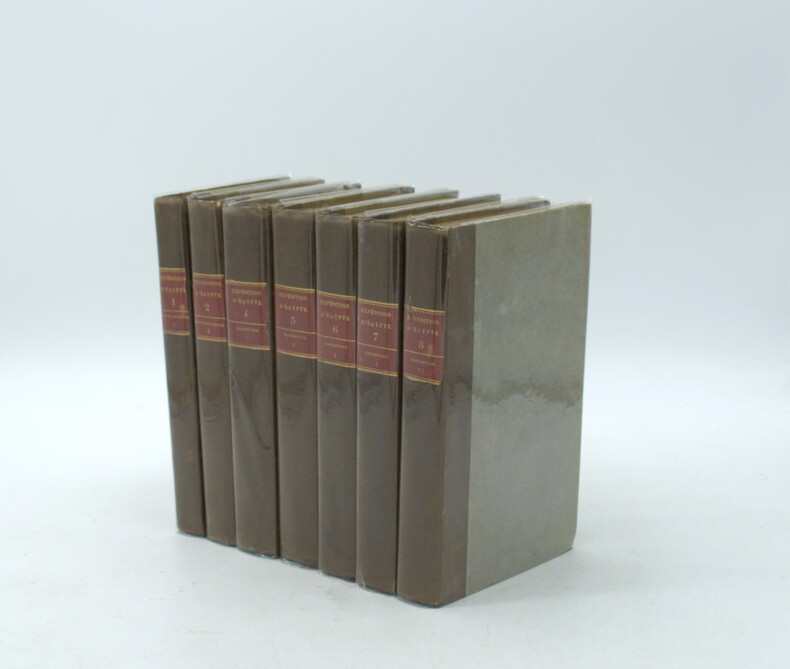
1830rif. PHO-2172Paris, A.-J. Dénain, 1830–1836. Ensemble de 7 volumes in-8 de texte sur 10, comprenant les tomes I, II, IV, V, VI, VII et VIII (manquent les tomes III, IX et X ; sans les volumes d’atlas). Demi toile postérieure, pièce de titre et tomaison cerise, petits frottements, quelques rousseurs. Illustré de 131 portraits des principaux personnages ayant participé à l’expédition, dessinés par Dutertre
18958vo., Second Edition, on laid paper, with a portrait frontispiece in photogravure, 2 plates in photogravure and 5 folding maps, neat signature on front free endpaper verso, half-title, frontispiece and title mildly spotted ; original red cloth, upper board framed in blind enclosing regimental crest of 16th Light Dragoons in gilt, gilt back, black endpapers, upper hinge tender (but binding entirely sound) else a very good, bright, clean copy. SIR CHARLES OMAN'S COPY WITH HIS NINETEENTH CENTURY ARMORIAL BOOKPLATE MOUNTED ON FRONT PASTE-DOWN. Tomkinson's Diary was first published in 1894 (a number of Press reviews is given on half-title verso). Widely regarded as a classic personal account of the campaign, it has been several times reissued but usually without the plates. This second edition contains the editor's final amendments, including the correction to the part played by Vivian's brigade at Waterloo. A RARE, POSSIBLY UNIQUE, ASSOCIATION COPY. Sandler 3277.
18742 vols., 8vo., First Edition, with a folding facsimile on blue stock and a double-page map as frontispieces, a folding map and a double-page map, and two large folding maps (one coloured in outline) in pocket at rear of second volume, some very mild occasional foxing, fore-edges dusty; original decorative cloth blocked in blind, gilt backs, uncut, covers moderately soiled (boards to volume two stained with black ink), volume one neatly rebacked with original backstrip (faded) laid down else a good, firm, sound copy of a work scarce in any condition. This volume bears the neat contemporary signature of 'Frank Cooper' and the following holograph inscription: 'Maps drawn by my brother Harry, who was with Colonel Colley as Adjutant of Transport. Col. Colley, afterwards Sir G[eorge]. Pomeroy Colley, was killed in the fatal action of Majuba Hill in Natal fighting against the Boers'. Henry Brackenbury was Assistant Military Secretary to Wolseley; Cooper (as stated correctly above) was sometime Adjutant of Transport during the campaign. The official records were placed by Wolseley at Brackenbury's disposal 'without reservation' and augmented by the latter's private journal which he kept whilst serving at headquarters. The account of Captain Glover's expedition is taken entirely from letters between Wolseley and himself. The missions of Captains Butler and Dalrymple are described from their own letters. Frank Cooper's signature is dated 1874; the Battle of Majuba Hill took place on 27th February 1881 during the First South African War (this action was, incidentally, the last occasion on which British regimental colours were carried into battle). It would seem, therefore, that this was originally Frank Cooper's copy (until at least 1881) which then passed into the Brackenbury family. It was then in the library of Major-General Charles Booth Brackenbury (1831-1890) and bears his signature on the half-title of the second volume. The author's elder brother, he spent his career in the Royal Artillery culminating in his appointment as Director of Artillery Studies at Woolwich, from which position no-one did more to spread sound ideas throughout the service on tactical changes demanded by the advancement in weapons technology. On Charles's death this copy passed to his youngest son, Hereward Irenius Brackenbury and bears his engraved armorial bookplate on front paste-down of first volume. Hereward Brackenbury was a talented engineer and director of the prominent defence contractor Hawthorn Leslie & Co. The Brackenbury family was well represented in nearly all the British wars of the nineteenth century. THIS IS AN IMPORTANT AND DESIRABLE FAMILY COPY SHOWING MULTIPLE ASSOCIATIONS WITH THE AUTHOR OF A CLASSIC VICTORIAN CAMPAIGN MEMOIR.
1962rif. 16579Manuscrit in-4, broché, 30 pp. ; page de titre ornée de quelques étoiles semées. Manuscrit original (?), de ce recueil de poésies, publié en 1962 à Paris par J. Grassin (imprimerie Douard), in-16 de 52 pp. et couverture illustrée en couleurs ; L’Olivier ; Danse ; L’Enfant de la nuit ; Satan; Divagations sur un petit ânon ; Nu ; Non, ne souriez pas...; Soifs ; La Berline ; Berceuse pour un souvenir ; Campo Santo ; Capricorne.
rif. 9532, Paris, Desaint, 1772., Relie, plein - maroquin brun, dos orne de fil. fleuronne dore et de piece de titre dore, dos a nerfs (5) plats dore, plats de papier marbre, tranches rouge, frontispice grave, (VIII) 760pp + (VIII) 756pp, illustre n/b.
rif. PD36Quarto album ca. 249x205 cm 9 ¾ x 8 in. 24 card stock leaves. including 4 blank With 69 mounted original gelatin silver photographs from ca. 87x139 cm 3 ½ x 5 ½ in to ca. 29x56 cm 1 x 2 ¼ in. Most photos with period English captions either on the mounts or in negative; at least one photo dated; with ca. 10 period printed postcards ca. 84x13 cm 3 ¼ x 5 in; two greeting cards one signed by “Herb” from Poona India in 1914; and a souvenir fold-out set of 10 postcards each ca. 34x68 cm 1 ¼ x 2 ¾ in. Half-leather binding with a cloth glued on the spine. Binding worn and rubbed first page is detached from the main block at least one photo missing age-toning but otherwise a very good album with strong photos. Historically important collection of original gelatin silver photographs compiled by a British soldier associated with the 1/4th Hampshire Regiment during the Mesopotamian campaign of World War I. The Mesopotamian campaign 1914–1918 was a strategic offensive for control over Ottoman-held Iraq primarily managed by British and Indian forces. For the 1/4th Battalion Hampshire Regiment service began with a 1914 deployment to India for garrison duty at Rawalpindi and Lucknow. In early 1915 the battalion joined the 33rd Indian Brigade for the invasion of the Persian Gulf advancing from the deltas of Basra into the arid interior. The unit participated in grueling operations along the Tigris including the 1916 attempts to relieve the besieged garrison at Kut-al-Amara. Following a logistical reorganization under General Maude the battalion joined the 1917 offensive that eventually captured Baghdad. The album contains ca. 69 early amateur photographs with most images taken in Mesopotamia today’s Iraq in the mid-1910s. Especially interesting are about five rare photographs of Baghdad captured shortly after the British occupation of the city. The images show Khalil Pasha Road or New Street with the clearly visible Haydar Khana Mosque a railway goods yard the outskirts of the city photographed from an airplane and the iconic ceremonial entry of the 1/4th Battalion Hampshire Regiment watched by locals lining the street. The last scene was apparently staged with the battalion marching from a camp outside the city specifically for propaganda purposes. Other lively vernacular photographs from Mesopotamia include two heavily armed Arab policemen posing for a cameraman in Kut Al Amara officers of the 1/4th Battalion Hampshire Regiment joyfully playing football in Tal Afar and an apparent compiler posing with local children. The rest of the Mesopotamian series mostly shows local landmarks and architecture in Al-ʻUzair Ezra’s Tomb Al-Qurnah the traditional site of the Garden of Eden Kirkuk main street view with English shop signs factory barracks and government house Tal Afar motor convoy and Baqubah a double pontoon bridge crossing the Diyala River ambulance cars at the railroad etc. About twenty-five photographs of India were taken and collected by the compiler prior to the 1/4th Hampshire Regiment’s deployment to Mesopotamia. Interesting images include group portraits of British and Indian soldiers Parsi haymakers in traditional attire clustered near barracks and soldiers landing mules in Parsik Hill. Other photographs primarily depict the compiler and his companions local children the YMCA quarters in Deolali nature views and scenes of oxen drawing water from a well. The collection also features about ten printed postcards of Mumbai and the Suez Canal; a WWI Christmas postcard; a New Year card from the 4th Battalion Hampshire Regiment signed by "Herb; " and a vintage "pull-out " souvenir postcard shaped like a bear holding an "A ‘Bear’ Idea of Bombay " sign; the flap reveals twelve small black-and-white views including Queens Road Null Bazar Street Apollo Bunder and Victoria Gardens. Overall historically important collection of original gelatin silver photographs compiled by a British soldier associated with the 1/4th Hampshire Regiment during the Mesopotamian campaign of the Great War. hardcover
1943rif. 000062North Africa. Good. 1943. Softcover. SUPER WORLD WAR II NORTH AFRICA ROYAL AIR FORCE HANDWRITTEN MEMOIR: "This is an exercise book" which it is stated in the first line of the first entry: 22/2/43 9 pages; "I bought this book yesterday and am just taking a few spare moments to jot down some of the happenings and events of the last few months. This book is not intended to be a diary as such as I have found that a day to day record of events becomes monotonous; but rather a medium that permits me to express myself on paper at thise inevitable times in the service when due to ones surroundings and situation there is nothing else to do. I shall also include such events as seem worthy of record and which I may like to preserve for the future in a clear cut form than memory alone provides. So I am now on the threshold of Operational Flying there should be much of interest and amusement which will be of interest and amusement." He then summarizes his Air Force Career and details what I assume is the "happenings of the last few months" as detailed at the beginning of this entry. This includes Scotland and Durban South Africa and Egypt. The rest of the journal is concerned with life and training in Africa and finishes abruptly on 21st July 1943. One week after he makes his first Operational flight over the Mediterranean. Dated 5/2/43 - 6.5 pages Dated 19/3/43 - 4.5 pages Dated 29/3/43 - 8.5 pages Dated 4/4/43 - 4 pages Dated 10/4/43 - 3 pages Dated 19/4/43 - 4 pages Dated 03/5/43 - 7 pages Dated 25/5/43 - 10 pages Dated 08/6/43 - 5 pages Dated 13/6/43 - 5 pages Dated 20/6/43 - 6 pages Dated 22/6/43 - 2 pages Dated 09/7/43 - 9 pages Dated 14/7/43 - 3 pages Dated 16/7/43 - 5 pages - This entry starts " I have now done my first operational flight 4.5 hours in duration and this involved patroling the Med." Dated 21/7/43 - 3.5 pages.; Manuscript; 5.5.x 8.5 Inch; RAF ROYAL AIR FORCE NORTH AFRICA HANDWRITTEN MANUSCRIPT DOCUMENT LETTER AUTOGRAPH WRITER HAND WRITTEN DOCUMENTS SIGNED LETTERS MANUSCRIPTS HISTORICAL HOLOGRAPH WRITERS AUTOGRAPHS PERSONAL PERSONAL HISTORY MEMOIR MEMORIAL DIARY JOURNAL DIARIES JOURNALS LOG LOGS KEEPSAKE WORLD WAR II WWII . paperback
1677In-8°, (12cc), 139pp, legatura in mezza pergamena, lieve restauro al frontespizio, buone condizioni In-8°, (12cc), 139pp, half calf binding, title page slightly restored, good copy
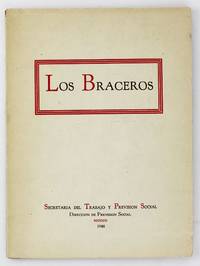
1946rif. 6505Mexico: Secretaria del Trabajo y Prevision Social 1946. Very good. 120pp. Quarto. Illustrated. Original cream printed wrappers. Light wear heavier to extremities. Text toned. One of the first official studies on the subject of braceros. The study was carried out by Luis Fernández del Campo Director of Social Security for the Mexican Ministry of Labor. Fernández del Campo focuses on the characteristics that typify the Mexican migrant laborers who have emigrated to the North exploring the reasons that have prompted them to emigrate and the changes that the foreign environment in the United States has had on them. The introduction points put that "The southern region of the United States especially Texas has been for many years a market for Mexican labor cheap labor subject to multiple arbitrariness and even used to depress the salaries of North American workers and to displace them from their occupations. Cotton picking in the State of Texas was the activity that attracted the largest number of Mexican emigrant workers." The text also points out the disparities in wages for these workers depending on the region in which they work. The work contains chapters on international arrangements for migrant workers a statistical analysis of survey data gathered from braceros including their salaries and the mental disorders suffered by some migrant workers. Interspersed throughout the work are numerous photographs featuring groups of migrant workers in the application process and in the fields. A detailed informative and scarce work that is absolutely essential for the study of migrant labor in the southwestern United States. Secretaria del Trabajo y Prevision Social unknown
1946rif. 6505Mexico: Secretaria del Trabajo y Prevision Social 1946. Very good. 120pp. Quarto. Illustrated. Original cream printed wrappers. Light wear heavier to extremities. Text toned. One of the first official studies on the subject of braceros. The study was carried out by Luis Fernández del Campo Director of Social Security for the Mexican Ministry of Labor. Fernández del Campo focuses on the characteristics that typify the Mexican migrant laborers who have emigrated to the North exploring the reasons that have prompted them to emigrate and the changes that the foreign environment in the United States has had on them. The introduction points put that "The southern region of the United States especially Texas has been for many years a market for Mexican labor cheap labor subject to multiple arbitrariness and even used to depress the salaries of North American workers and to displace them from their occupations. Cotton picking in the State of Texas was the activity that attracted the largest number of Mexican emigrant workers." The text also points out the disparities in wages for these workers depending on the region in which they work. The work contains chapters on international arrangements for migrant workers a statistical analysis of survey data gathered from braceros including their salaries and the mental disorders suffered by some migrant workers. Interspersed throughout the work are numerous photographs featuring groups of migrant workers in the application process and in the fields. A detailed informative and scarce work that is absolutely essential for the study of migrant labor in the southwestern United States. Secretaria del Trabajo y Prevision Social unknown books
rif. PE82Oblong Folio album ca. 246x33 cm 9 ¾ x 13 in. 14 card stock leaves with tissue guards. With 98 original gelatin silver photographs including one loose from ca. 88x135 cm 3 ½ x 5 ¼ in to ca. 46x7 cm 1 ¾ x 2 ¾ in and one four-part panorama ca. 79x378 cm 3 x 15 in; with an excerpt from the Imperial Gazetteer of India North-West Frontier Province or a closely related provincial civil-military handbook ca. 1930s. Ca. 206x166 cm 8 x 6 ½ in. 57-63 pp. in all 8 pp. Most photos with period white individual or group ink captions in English on the mounts. Period purple full-cloth album with gilt floral ornaments; fastened with a string. Binding worn with tears of the spine partially faded some tissue guards with tears and detached one photo from the panorama detached spine of the booklet rebacked with a non-archival paper partially obscuring text on p. 57 but otherwise a very good album with strong interesting photos. Historically significant collection of gelatin silver photos apparently compiled by a British military officer attached to the Royal Tank Corps or a specialized frontier brigade in the North-West Frontier area of British India now Pakistan during the Second Mohmand Campaign of 1935. The Mohmand Campaign was a British military operation fought from July to October 1935 against the Mohmand tribes north of the Khyber Pass in the North-West Frontier Province of British India. It combined British and Indian Army advances with Royal Air Force bombing to secure the frontier and suppress tribal resistance to the construction of the Mohmand–Gandab road. The campaign saw the first use of light tanks in frontier warfare and ended with the defeat of Mohmand forces restoring British control over the border region. As follows from the photos the compiler arrived in India via Singapore in 1932 traveling through key imperial hubs such as Calcutta and New Delhi en route to his frontier posting. By 1933 he was serving on the frontier spending summer leave in Kashmir and Srinagar before deployment to the remote outpost of Chitral. In March 1935 he traveled to Kabul Afghanistan likely on an official diplomatic or intelligence mission before seeing active frontline service later that year during the Second Mohmand Campaign. By 1936 he was stationed with the 2nd Light Tank Company at the Khojak Pass near Quetta where the unit tested its tracked vehicles while maintaining frontier surveillance. The album contains ninety-eight original gelatin silver photographs including about fifty excellent images taken in present-day Pakistan in 1935–1936. A well-executed series from the Second Mohmand Campaign feature more than six photographs of Peshawar the campaign's principal staging ground where British forces assembled before advancing into the Mohmand hills. The images capture the tree-lined Mall Road cantonment the bustling local bazaar and striking portraits of locals and armed Pashtuns during the British blockade. Several photographs follow the campaign into the mountains documenting the Wucha Jawar Camp of the British Indian Army the construction of the strategic military road through the Gandab Valley and the first-ever light tank to traverse the Nahakki Pass. Especially interesting are about five photographs illustrating the formal negotiations that brought the campaign to an end. The historic images show dozens of Mohmand delegates gathered for the Jirga the traditional Pashtun grand assembly with a Malik reading out the final treaty terms a portrait of a local clan chieftain and a British field officer and a Mohmand Malik smiling for the camera apparently after the conclusion of the peace talks. Other important photos from Pakistan mostly depict British captain posing with Mehtar of Chitral Sir Shuja Ul-Mulk 2nd Light Tank Company encamped on Khojak interior of the Guide’s Church in Mardan Jamrud & Shagai Forts in Khyber Agency and topographical views of the area. The Afghan series features about ten excellent photos of Kabul apparently taken during the compiler's military service or leisure time before the Second Mohmand Campaign. The images mostly show local landmarks ruins of Bala Hissar the British Military Attache’s House Minister’s Central Official Residence and topographical views of Amannulah Khan’s unfinished New Kabul project Paghman Valley and Kabul River. There’s also one important photo showing a narrow mountain pass where the catastrophic retreat of Major General Elphinstone’s British-Indian garrison occurred during the First Anglo-Afghan War in 1842. The incident resulted in the deaths capture or disappearance of ca. 16500 soldiers and civilians. The rest of the identified photographs mostly show Kashmir general views of Srinagar and Ali Kadal bridge the River Jhelum the mountain resort of Gulmarg the Sind Valley and the Mughal gardens of Nishat and Shalimar Bagh Calcutta Victoria Memorial Fort William Belvedere New Delhi Memorial to Imperial Service Cavalry Brigade India Gate and Delhi the Viceroy’s House; Parliament House. There’s also an excerpt from the Imperial Gazetteer of India North-West Frontier Province or a closely related provincial civil-military handbook likely dating to the 1930s. The booklet features a brief history of Peshawar and Khyber Railway. Overall historically significant album offering a rare window into the Second Mohmand Campaign of 1935. hardcover
1931rif. 16792JLos Angeles: RKO Radio Pictures 1931. First Edition. Original RKO Radio Pictures 1931-32 Campaign Book measures 11" x 14" 28 x 36 cm; 54 pages. There are smudges and stains on to the front cover and on the completely blank back cover and there are small tears and chipping around the edges of both covers. The interior pages are in fine condition This RKO Radio Pictures campaign book sent to theater owners to encourage them to show RKO movies. The book includes 54 pages with one and two-page spreads on RKO's upcoming movies and their best stars. Some of the movies and stars promoted include "Glamour" "Miracle City" "Exposed" "Frontier" "The Dove" Dolores Del Rio "The Slander Girl" Rex Beach Irene Dunne Lily Damita Wheeler & Woolsey and much more! Note that many of the pages have signed artwork by many different quite talented artists including Armand Seguso Fredric C. Madan Frank Bensing Patterson Rico and most of these artists have several different pieces in the book. Note that because RKO at this time did not have the biggest name stars they relied on movies with very lurid and sensational material and they created images for this campaign book that are both extremely colorful and often downright sexy! This is really one of the absolute nicest studio campaign books in terms of artwork that was created during the Golde Age of Hollywood. Note that even though this campaign book was sent to many theater owners it appears that very few examples have survived. We have seen film campaign books and related material for many years and I know for certain that this campaign book is extremely rare! Note that studios almost always spent far more money preparing campaign books than they did preparing movie posters often hiring very talented and well-known illustration artists because campaign books directly benefited the studio in getting theaters to book the movies. Also note that as was often the case with these campaign books some of the movies advertised were either never made had their titles changed before they were released or were made with different casts than those announced in the campaign book. RKO Radio Pictures unknown
rif. 37210Paris,1767. 3 volumes in-folio. Ouvrage composé originairement par Le Curé de St.Vincent à Lyon, Noël Chomel, et corrigé et augmenté par l'Abbé de La Marre. Il contient l'art de faire valoir les terres et de mettre à profit les endroits les plus stériles;l'établissement , l'entretien et le produit des près; les soins qu'exigent les bêtes à cornes, à laine; la façon d'élever les abeilles, les vers à soie, les oiseaux..Les Biens de campagne, les végétaux, les instructions pour prévenir les maladies; les plantes; les droits seigneuriaux...Tome I: 959 pages, 1 planche dépliante et de nombreuses figures in-texte. Tome II: 919 pages, 1 planche dépliante et de nombreuses figures in-texte, Tome III: 909 pages avec additions et corrections. Reliures en basane. Dos conservés avec plats restaurés.
1647rif. 008428Aquilae 1647 ex typographia Francisci Marini Full-Leather 1st Edition
rif. Z1-K-016-01804Campaign for Homes in Central London. Used - Good. Ships from UK in 48 hours or less usually same day. Your purchase helps support Sri Lankan Children's Charity 'The Rainbow Centre'. Ex-library so some stamps and wear but in good overall condition. 100% money back guarantee. We are a world class secondhand bookstore based in Hertfordshire United Kingdom and specialize in high quality textbooks across an enormous variety of subjects. We aim to provide a vast range of textbooks rare and collectible books at a great price. Our donations to The Rainbow Centre have helped provide an education and a safe haven to hundreds of children who live in appalling conditions. We provide a 100% money back guarantee and are dedicated to providing our customers with the highest standards of service in the bookselling industry. Campaign for Homes in Central London unknown