4478 risultati
rif. 8704Paris, Dépôt de la Marine, 1863. 1 volume in plano, reliure demi-toile, petites décirures sans gravité sur le dos, très bon état des planches. Atlas de 8 planches et cartes dont 1 en couleurs. Cet atlas se réfère à l'Expédition de Chine de 1860. Il a été dressé d'après les Documents Officiels sous la Direction du Lieutenant Pallu et publié par ordre de S.E. Monsieur le Comte P. de Chasseloup-Laubat, Sénateur, Ministre de la Marine et des Colonies. Atlas en très bon état.
First and only edition. Two leaves of text (half-title, list of plates, title-page) plus fifty gorgeous lithographs by Victor Petit, each depicting a recently-built country house near Paris. COMPLETE. About a third of each plate is devoted to the floor-plans of the house in question. Printed on very fine bright white wove paper. Aside from being an architectural and art-historical document of the first order of importance, this set of lithographs is a work of great artistic merit and beauty. Folio. TEXT AND LITHOGRAPHS LOOSE AS ISSUED IN THE ORIGINAL PRINTED CLOTH-BACKED BOARD PORTFOLIO, WITH CLOTH TIES. Portfolio case a bit worn but still solid. Text pages and plates FINE AND BRIGHT. An incredibly fresh set. Rare and important.
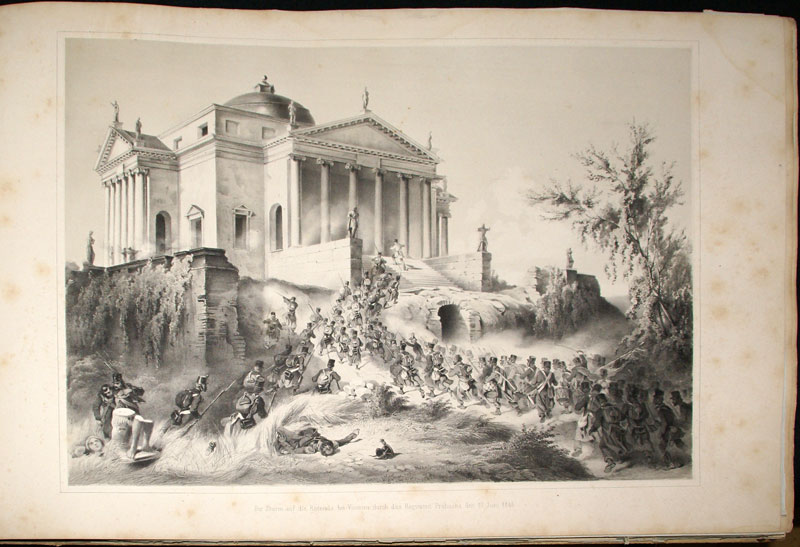
1851rif. STLD0090München, Cotta (1851). Quer-Folio, 1 lithogr. Titel, 24 lithogr. Taf. m. Textblättern, OHLn., stärker berieb., Ecken u. Kanten berieben, vord. Deckel fleckig. Blätter leicht stockfleckig, Textbll. tlw. zerknittert, randrissig u. staubrandig. Die Abbildungen zeigen Szenen aus dem italienischen Aufstand gegen die Habsburger: Reitergefechte, Straßenkämpfe, Belagerungen in norditalienischen Städten. Lipperheide Qc 20.
1979rif. SBBI-mon0000012749Imprint unknown 1979. paperback. Acceptable. Please see the condition note after this for details if this is missing please consider Acceptable to mean poor quality that could include major staining water damage writing missing dustjacket etc etc. Our books are dispatched from a Yorkshire former cotton mill. We list via barcode/ISBN so please note that the images are stock images and may not be the exact copy you receive furthermore the details about edition and year might not be accurate as many publishers reuse the same ISBN for multiple editions and as we simply scan a barcode or enter an ISBN we do not check the validity of the edition data when listing. If you're looking for an exact edition please don't order at least not without checking with us first although we don't always have time to check. We aim to dispatch prompty the service used will depend on order value and book size. We can ship to most countries see our shipping policies. Payment is via Abe only. Imprint unknown paperback
1913Bella raccolta di Lacerba. Ril in mezza tela. Completo anno 1913. Completo anno 1915. Anno 1914 dal n.16 al n. 23. Nel n. 21 e' presente il rarissimo manifestino sul Referendum. futurismo futurism marinetti papini campana boccioni carra lacerba
rif. Juanpebooks069977WE ship worldwide. Brand new 100%guarentee unknown
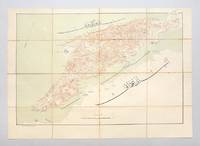
1915rif. 138323Istanbul: Erkan- Harbiye-i Umumiye Matbaas 1915. Grasping Gallipoli A rare example untraced institutionally of Ottoman military cartography conveying information on physical geography anchorages and the layout of key towns for the purposes of defensive planning. Compared to most Ottoman maps this offered the granular perspective necessary to mount an effective and ultimately successful operational defence of the peninsula and it was in all likelihood the most detailed map available to Otto Liman von Sanders and senior Ottoman commanders at the start of the campaign. Areas of the peninsula including the north-eastern and south-western fringes are shown with much gentler elevations and gradients than was actually the case. It is unclear whether copies fell into enemy hands but general misconceptions over the topography of the peninsula proved the undoing of much of the Allied advance during 1915. While most of the northern tip of the Ottoman empire is unfilled the map identifies features relevant to the ferrying of troops across the Dardanelles including coastal settlements rivers and landing sites. Colour lithograph 560 x 790 mm in 16 sections and mounted on linen as issued folding away to 42 x 200 mm. Contemporary colour crayon annotations on verso. Light foxing along folds a few sections slightly lifting at corners occasional staining: a very good example. unknown
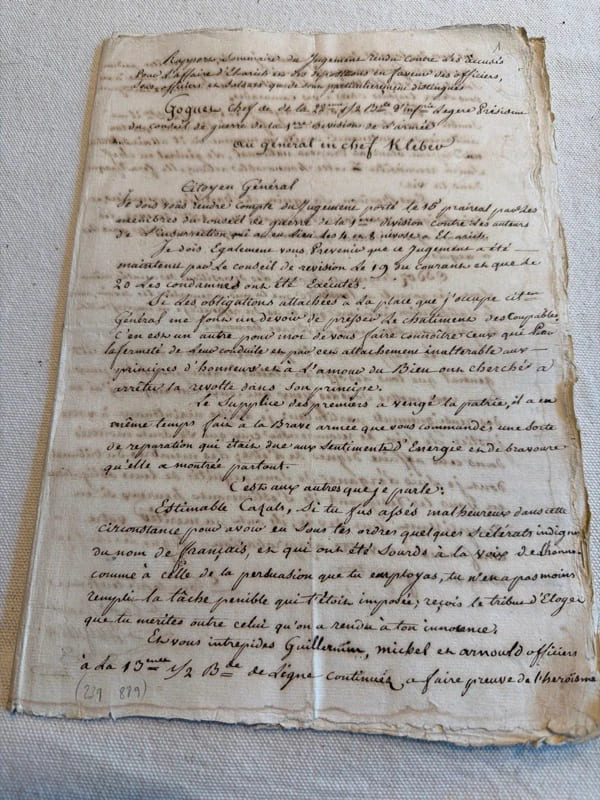
rif. 239889S.l., s.d. (janvier 1800) in-folio, [10] ff. n. ch., couverts de plusieurs écritures très lisibles, en feuilles.
1595Interessante opera del 1595 sulla storia dell'Ungheria scritta dal notaio veneziano Giovanni Nicolo Doglioni (1548-1629). Doglioni perse la sua famiglia durante l'epidemia di peste del 1576. Si ritirò a vita privata e scrisse storie di Venezia, Belluno e quest'opera, considerata come la prima storia moderna dell'Ungheria. L'autore inizia con la descrizione del paese, il clima, gli abitanti e la lingua. Prosegue con la storia a partire dalla sua occupazione da parte dei romani, gli unni nel IV secolo e l'invasione dei magiari per concludersi con la battaglia di Giurgevo nel 1595 quando Sigimondo Bathery principe di Transilvania venne sconfitto dall'Impero Ottomano. L'opera è in particolare apprezzata per l'accurata descrizione delle campagne turche nel XVI secolo. Subito dopo la carta b4 la mappa ripiegata dell'Ungheria di Girolamo Porro, cartografo ben conosciuto per aver lavorato con Ruscelli e Porcacchi. Antico manoscritto ai contropiatti, al verso dell'ultima pagine e all'ultima carta bianca. In buone condizioni. Copertina in piena pergamena seicentesca con titolo manoscritto al dorso in buone condizioni generali con lievi usure ai margini e dorso. Rottura alla cerniera anteriore. Legatura in buone condizioni ma corpo del libro staccato al piatto posteriore. Pagine in buone condizioni con fioriture e gore d'umidità marginali. Piccolissimo segno di tarlo al margine di piegatura delle prime 25 pagine e da pag. 71 riparato con applicazione di carta da pag. 25 fino a pag. 70 e da p. 89 fino a 102 senza perdita di testo; al margine superiore da pag. 168 alla fine riparato con applicazione di carta senza perdita di testo. In 8 cm 22,5x16,5. Pp. (32)+209+(2). Peso Kg. 0,322. Interesting work of 1595 about the history of Hungary written by the notary from Venice Giovanni Nicolo Doglioni (1548-1629). Doglioni lost all his family during plague epidemic of 1576. He retired and wrote histories of Venice, Belluno and this work, considered as the first modern history of Hungary. The author begins with the description of country, climate, inhabitants and language. Then history from its occupation by romans, huns of IV century and invasion of magyars. It ends witht he battle of Giurgevo in 1595 when Sigimondo Bathery prince of Transilvania was defeated by Ottoman Empire. The work is particularly appreciated for the accurate descriptions of turkish Campaigns in XVI century. After page b4 folded map of Hungary by Girolamo Porro, cartography well known because he worked with Ruscelli and Porcacchi. Antique manuscript in the counterplates, in the verso of the last page and in the last endpage. In good conditions. Full parchment cover of 17th century with handwritten title in the spine in good general conditions lightly worn in the extremities. Crack in front hinge. Binding in good conditions but the body of the book detached in the back plate. Pages are in good conditions with foxing. Very little worming in the folding edge of the first 25 pages and repaired with application of paper from pag. 25 until pag. 70 and from p. 89 until 102 with no loss of text; in the upper edge from pag. 168 to the end repaired with application of paper with no loss of text. In 8 cm 22,5x16,5. Pp. (32)+209+(2). Weight Kg. 0,322
1808rif. 15548Wien, Aus der Kaiserl. Königl. Hof-Und Staatsdruckerey (Vienne, Imprimerie de la Cour et de l'État), 1808 ; in-folio ; bradel de papier marbré, pièce de titre vert foncé (reliure de l'époque) ; (4), 169 pp., 25 cartes et plans gravés par Johann Renard, Kilian Parheimer, Ant. Benedict et Heironymus Benedicti, entièrement aquarellés, 1 accompagnée de 2 détails et 5 avec des détails mobiles qui permettent de suivre les mouvements dans le temps.
rif. 9911Pont-à-Mousson, Lithographie Artistique de la Lorraine, Haguenthal, Imprimeur-Editeur - Paris, Librairie Générale, Religieuse et Classique Guérin-Muller et Cie, Libraires-Editeurs, MDCCCLXII (1862). 1 volume in-folio, format oblong, page de titre et 16 gravures lithographiques en noir et blanc, chacune accompagnée d'une page de texte explicatif. Les 2 couvertures illustrées en couleurs n'ont malheureusement pas été conservées, page de titre légèrement salie, sinon très bon état. L'ouvrage a été relié plein cuir moderne bordeaux. 1 album folio oblong, 16 lithographic plates in black and white, each with a text leaf, without the illustrated cover boards, a very good copy rebound in modern full leather.
rif. LDM0058814We ship worldwide. 100% guarentee. BRAND NEW unknown
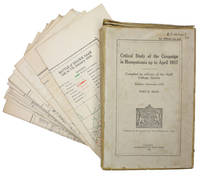
1925rif. ABC_47726Calcutta: Government of India Press 1925. Original tan cloth map-case with original printed label to cover. 25 of 26 folding maps sketches etc. as always lacking the "Explanation of the Method of giving Map Co-ordinates adopted in Chapters XIII and XX". An excellent set of maps documenting the battlefields of the Mesopotamian Campaign of WWI: "In the Autumn of 1923 a tour of the Mesopotamian battlefields was undertaken by the instructors and students of the Staff College Quetta and the course of the campaign and the principal operations were studied on the spot" Introduction Part I not present. Printed at the Survey of India Offices Dehradun the maps cover the major sites of the conflict. Maps of note include a simplified version of the sought-after "Lower Mesopotamia" War Office map an elegant map of the Battle of Ctesiphon and a detailed map of Sheikh Saad and Kut-Al-Amara which includes an interesting note on the burgeoning cartography of the area: "The first map with any pretensions to accuracy was not produced till the summer of 1916". Designated "For Official Use Only" this study is uncommon. There are no print-run details given in the text volume but the markings on the maps suggest that there may have been 1000 copies produced. LibraryHub locates three copies at King's College London the London Library and the British Library. WorldCat adds seven more with three in North America three in Australia and one in South Africa.Without the text volume Part I and lacking 1 maps as usual. Some spotting and closed tears to several of the smaller maps printed on thin paper larger folding maps in very good condition. Map-case rubbed with some wear and splits to extremities. Ownership inscription of R. T. Holland to front cover. Government of India Press, hardcover
1818rif. 21571London, Diggens pour Ackermann, 1818 ; petit in-4°, demi-veau vert foncé, dos à nerfs décoré de fleurons à froid et de palettes, filets et titre dorés, roulette décorative à froid d’une part et d’autre du dos (reliure romantique de l’époque) ; VIII, 106, [4] pp. et 27 planches hors-texte très finement aquarellées, avec les plans.
rif. 8701Paris, Lithographie du Ministère de la Marine, 1862. 1 volume in folio (30*46 cm), 125 pp., enrichi de 13+45 planches à pleine page légendées, décrites et commentées sur la page opposée. La page de titre est salie et tachée, ainsi que 2 feuillets internes (pp. 62-63). Déchirures restaurées sur les 2 derniers feuillets, sinon très bon état, reliure moderne plein cuir noir.
1625In-folio (mm 304x205). Pagine [12], 152, [2] con 2 tavole in una carta fuori testo. Numerose figure incise in legno nel testo, anche a piena pagina. Stemma mediceo al frontespizio e grande marca dello stampatore in fine. Piccoli strappi e lacune riparati al frontespizio, rimontato, altro strappo marginale riparato alle carte ff3-ff4 e alla tavola fuori testo in fine, lievi ma ampie gore d'acqua lungo il volume. Legatura inglese settecentesca in pieno vitello spruzzato con cornice a motivi floreali impressa a secco ai piatti e titoli dorati su tassello al dorso. Ex-libris Macclesfield al contropiatto anteriore.
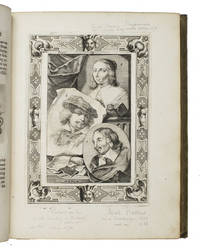
1729rif. ABC_45605The Hague widow of E. Boucquet H. Scheurleer F. Boucquet J. de Jongh 1729 vols. 1-3; 1729. 4to. Dordrecht Ab Blussé & son 1769 vol. 4. Contemporary blind-tooled vellum with manuscript titles on spines. Sprinkled edges. With an engraved frontispiece title pages in red and black and with engraved vignettes a folding portrait of Willem Karel Hendrik Friso 1711-1751 Prince of Orange and from 1747 hereditary Stadtholder Willem IV a portrait of the author 40 engraved plates by Houbraken with multiple portraits of artists on each plate 1 plate with a night scene 1 mezzotint and 118 engraved vignettes. 4 volumes. 16 412 6; 4 412 6 4 446 4. First edition of richly illustrated biographies of more than 100 Dutch painters male and female still of interest for the history of Dutch art. The author Jacob Campo Weyerman 1677-1747 was one of the foremost Dutch authors of the Enlightenment and was known for his merry style. For this history of Dutch art he leans on Houbraken's De groote schouburgh der Neder-lantsche konstschilders en schilderessen 1718-1721.The first three parts were all published in 1729; the fourth - 40 years later - is mainly devoted to the painters from the Art Academy at The Hague. All 40 plates with artists' portraits the frontispiece 2 other portraits and the night scene are in the first 3 volumes the later volume 4 has no plates. The lavish vignettes throughout the volumes are worth mentioning as well mostly executed by Picart and apparently made for the present publication.The plates seem to be from a rare early state avant la lettre: all other copies we have seen have lettering on the plates but the present copy has the information written on the plates in ink. The title-page lettering seems to be very slightly moved compared to other copies but positions of the quire signatures all match. Perhaps this was a first impression or proof.From the library of Belgian artist/curator Philippe Jacques van Brée 1786-1871 with his owner's inscription on the front paste-down of each volume: "P.J. van Bréé". He was curator of the Royal Museum of Fine Art in Brussels from 1831-1861.With a few neat annotations in pencil in the margins of the plates and a small tear in the foot margin of a text page. Vellum slightly thumbed. Otherwise in very good condition.l Kunst op schrift 243-245; Arntzen/ Rainwater H129. ABE CAT Art History ART ARCHITECTURE & PHOTOGRAPHY BOOK HISTORY & PRINTING LITERATURE & LINGUISTICS LOW COUNTRIES Art & Art History Bibliography & Biography Dutch Literature Netherlands hardcover
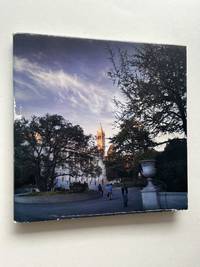
rif. 2053Berkeley: University Relations 2008. First edition. Hardcover. Fine/Very good. An uncommon photo book that commemorates the launch of the Campaign for UC Berkeley in 2008 highlighting the campus in pictures and in words from renown alumni and others. This is Joan Didion's copy with a university notecard to her laid in from one "Mary Kay" likely someone in University Relations. It reads in full: "Dear Joan Greetings from Berkeley! We have found yet another way to use your inspirational words about Berkeley. The enclosed book include the summary of your essay in 'There Was Light'--the version you approved for the television spot--as well as another well-used quote of yours at the end of the book. Should you ever want to read your essay again there are many people who have asked about it and would love to hear you read it again--or for the first time. I continue to follow your work and life and admire your strength and optimism. I hope this note finds you filled with hope for the new year. With warmest regards Mary Kay." There Was Light: An Autobiography of a University: Berkeley 1868-1968 referenced in the note was published in 1970 and featured essays about the university from thirty-one notable alumni including Didion. She attended Berkeley from 1953-1956 and went on to become one of California's greatest chroniclers as literary journalist and essayist. See photos for the pages that hold Didion's words. A short quarto in denim blue cloth with the title stamped on the front board; dark blue endpapers and a transparent page guarding the half-title; 130 pages. A short introduction from Chancellor Robert J. Birgeneau on the photo-illustrated jacket's front flap. The jacket depicts the campus's famous Sather Tower The book is fine; the jacket is very good with rubbing to all edges and some faint dampstaining at the center of its spine mainly visible from the jacket's interior and with no discernible effect on the book itself. An incredible UC Berkeley association copy and keepsake; we dare say this would make a one-of-a-kind graduation gift. University Relations hardcover
1973rif. 55752Washington DC: GPO 1973. fair to good. 17000 approx. complete 30-vol. set wraps illus. charts some fold-out tables footnotes some fading and wrinkling to spines. Complete 30-volume set of the Watergate hearings including 26 volumes of hearing transcripts 1 volume of indexes 2 volumes of appendices and 1 volume final report. Contents include Books 1-9 Phase I: Watergate investigation 9 volumes; Books 10-12 Phase II: Campaign practices 3 volumes; Book 13 Phase III: Campaign financing; Books 14-17 Milk fund investigation 4 volumes; Books 18-19 Use of incumbency-responsiveness program 2 volumes; Books 20-24 The Hughes-Rebozo investigation and related matters 5 volumes; Book 25 Supplemental material on campaign practices and finances; Book 26 Appendix to the Hughes-Rebozo Investigation and exhibits relating to chapter 8 of the final report; volume 27: Indexes to the Public Hearings; volumes 28-29: Appendix to theHearings Legal Documents Relating to the Select Committee Hearings Part Iand Part II; volume 30: The Final Report Report No. 93-981. Small piecesmissing to base of spine in a few volumes some soiling and small stains tosome covers some pages discolored volume 18 has volume number written on spine and ink comment and soiling on front cover and some ink marks on a few pages. Approximately 17 000 pages of the seminal investigation of Presidential conduct on the 20th century forecasting the later Clinton investigations but perhaps rising to a higher level than the investigationsat the end of the century. GPO paperback
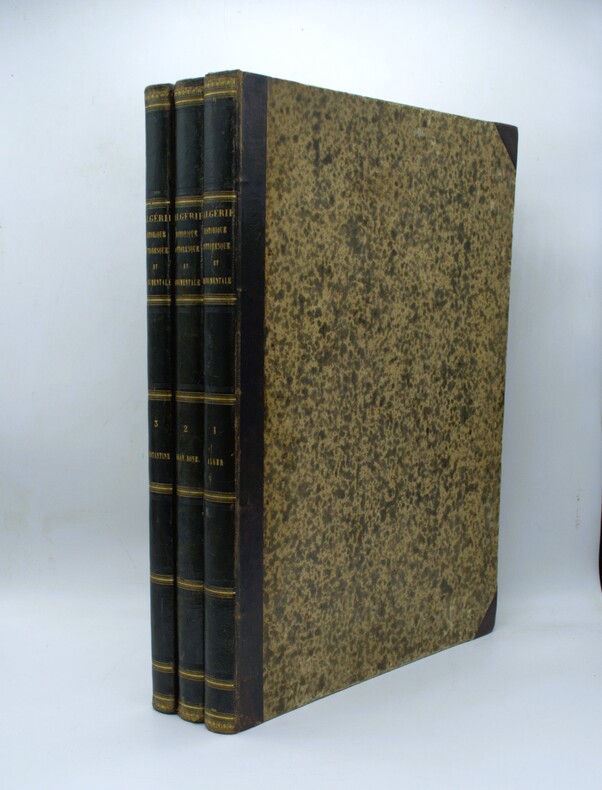
1843rif. PHO-2292Paris, Chez J. Delahaye Éditeur, 1843. Cinq parties reliées en 3 volumes in-folio demi basane brune à coins, dos lisse cloisonné de filets or, titre doré (Koenig). Quelques planches roussies, comme toujours, petites rousseurs.
First and only edition. Title-page (with large lithographed image of a country house) plus one hundred gorgeous lithographs by Victor Petit, each depicting a a country house or related structure, such as a gazebo, belvedere, pavillion, etc. COMPLETE. Printed on very fine bright white wove paper. Aside from being an architectural and art-historical document of the first order of importance, this set of lithographs is a work of great artistic merit and beauty. Folio. LOOSE AS ISSUED IN THE ORIGINAL PRINTED CLOTH-BACKED BOARD PORTFOLIO, WITH CLOTH TIES. Portfolio case a bit worn but still solid. Plates FINE AND BRIGHT. An incredibly fresh set. Rare and important.
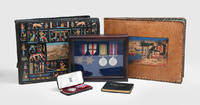
1940rif. 1690571940-43. Fine photographs of North Africa and the Middle East A British airman's substantial archive comprising photographs autographs ephemera and medals. A skilled photographer Jack Leslie Lees 1912-1980 was a leading aircraftman at the RAF's Air Ministry Experimental Station AMES Number 235 a British radar unit employed in Wadi El Natrun Egypt and Tobruk Libya where they suffered German attack in 1942. His personal archives hold extensive records of his military service and activities on leave between 1940 and 1943. The photographs portray Lees and other soldiers during their free moments and in battle as well as everyday scenes at the base and outside. He photographed Aboukir Alexandria including the zoo Cairo and Mersa Matrouh the site of several battles. In 1941 he was in Tobruk where he photographed as always everyday scenes and interesting buildings and documented the siege; he was also in Derna and Benghazi. Lees was especially fond of Jerusalem where he visited and photographed the holy sites. The first album opens with a Certificate of Pilgrimage with a chip of rock from the Grotto from Lees's visit to the Holy Sepulchre in Jerusalem issued signed and stamped in Greek by Archimandrite Kyriakos; Lees also kept a memento with the leaf of a tree from the Garden of Gethsemane. The albums include fine views of Beirut's cityscape and other areas of Lebanon where he visited ruins and the Jezzine waterfalls as well as of Syria with several Roman sites and a coastal town perhaps Latakia or Tartus. The autographs and sketches in his pocket book were jotted down by British soldiers; one in Russian calls Lees "a comrade met in Tel-Aviv". Together 5 items: landscape folio brown camel leather album 325 x 345 mm with tooled and hand-coloured pictorial scene long-stitched with thick leather strip green silk pastedowns one with pasted broadsheet 15 stiff black card leaves tissue guards 224 photographs c. 61 x 87 mm mostly gelatine silver prints with ink caption at head of some leaves; landscape folio black leather 250 x 320 mm with tooled both covers and hand-coloured front cover only pictorial scene and Egyptian hieroglyphs long-stitched with a lace 30 stiff black card leaves 411 photographs c.61 x 87 mm of which 3 inserted loosely and 5 hand-coloured mostly gelatine silver prints occasional captions in white pen; an oblong octavo leatherette autograph book 90 x 110 mm upper cover gilt-lettered label of Oriental Philatelic House B. Hagopian Cairo on front pastedown 96 pages with autographs dedications and sketches in ink to 34 pages the remainder blank; a wooden display case 200 x 250 mm with velvet lining glazed containing four medals Atlantic Star Africa Star with North Africa 1942-43 bar Defence Medal and War Medal; and a leather flip case 125 x 55 mm with velvet lining containing one Imperial Service Medal. Extremities occasionally a trifle rubbed: very good examples. hardcover
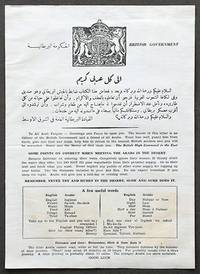
1940rif. 170773London: British High Command in the East c. 1940-43. Greetings and Peace be upon you A rare chit for RAF pilots to carry during the North Africa Campaign 1940-3 in case of being lost or captured. Written for the benefit of British personnel in the field the focus is simple and concise. The first paragraph in English and Arabic presents a simple greeting asking for hospitality. The following gives points of conduct such as "remove footwear before entering their tents" and "do not expect breakfast if you sleep the night. Arabs will give you a mid-day or evening meal". A word list includes translations of "friend" "food" "tired" and "enemy". We have encountered two other issues: one slightly simplified British issue and an American issue carried by all pilots and crewmen of the Twelfth Air Force with a message from President Roosevelt instead of the British High Command in the East. Single sheet 244 x 173 mm text in Arabic and English on recto only vignette of the Great Seal of the Realm at head backed on coarse linen and mounted on black card within white card mount all on laminate board presented in dark oak frame with conservation acrylic glazing 353 x 280 mm. Minor foxing sometime folded. A very good example of a fragile publication. "Notes for Communicating with Arabs" IBCC Digital Archive document 25543. unknown
1814rif. 2677Hunthill House Scotland 1814. 4to 230 x 185 mm. 10 233 4 pp. Written in an italic hand in English with occasional corrections or additions in a different hand on wove paper watermarked Budgen & Wilmott / 1812. Four unnumbered pages of French text at front and four at back the latter dated 27 May 1814 in a different hand apparently the author's on different paper with no visible watermark. Very good; some occasional spotting. Contemporary red straight-grained morocco gilt edges scuffed and scraped joints strained head of spine chipped. A first-hand unpublished memoir by a French army officer of the terrible Peninsular War. The narrator was one of few survivors of the surrender of French forces after the Battle of Bailén in July 1808. The background to this event was Napoleon's attempt to complete the isolation of England from the continent by sending a French army into the Iberian Peninsula to seize the coast of Portugal and occupy Spain. Napoleon later referred to the Peninsular War characterized by appalling cruelty on both sides as the 'Spanish ulcer'; it was to be one of the primary factors in his downfall. Although written in a matter-of-fact tone the details of this memoir are searing. General Pierre Dupont de l'Étang was charged with securing French control of the major cities in Spain. Dupont's 20000 men had initial success but as they penetrated deeper into Spain they faced increasing resistance. The present diary traces the route and experiences of Dupont's army to its furthest point of penetration into Spain: Córdoba. There after a particularly bloody and cruel occupation the army was forced to withdraw and was soon overwhelmed. Dupont surrendered his army at Bailén. Originally promised safe passage most of the French were slaughtered immediately after their surrender. The start of the Peninsular War marks the commencement of the memoir written by H. de Montvaillant an officer from Montpellier who was serving in the second Corps d'Observation of the Gironde placed under the direction of General Dupont. Although the starting date of the campaign is generally accepted as March 1808 by Montvaillant's account the French had already occupied the town of Vittoria 50 miles west of Pamplona by Dec. 22 1807. By January 9 1808 French troops had advanced to south of Burgos heading toward Valladolid. At every stopover small detachments were left behind to guard the roads thereby diminishing the strength of the army as it travelled. Spanish guerrilla activity took a toll on the troops; so much so that the author records that the troops had to "redouble our vigilance and take measures the most severe ever adapted to ensure our safety" p. 58. On Feb. 16 they entered Medina del Campo on their way to Madrid. Montvaillant records his impressions of the city its palaces and inhabitants. Toledo was the next destination where he notes a visit to the palace library and the suppression of an uprising led by monks. By the end of May the French had occupied Consuegra and entered La Carolina in Andalusia. It is at this point that the narrative takes on an ominous tone. About to enter Seville Montvaillant notes a change in circumstances in the countryside and the inhabitants. The population is abandoning villages and fleeing. He records that the senior officers assumed that the army would only be harassed by small bands of "brigands" p. 84 a far cry from the massive insurgency that it encountered: "We learned that the insurgents each day gathered strength and that the Junta of Seville was determined to stop us in our march. The following days we got to the little town Baylen Bailén in whose plains two months afterwards our destiny was decided" p. 86. The French attacked and sacked the city of Córdoba: "Neither tears promises or humble supplications could arrest the thirst for pillage." p. 89; discipline was nonexistent and the drunkenness and looting continued for eight days. Soon after Montvaillant is ordered back to the village of Alcolea not far from Bailén to guard a bridge crossing. While there he discovers the slaughter of the French sick and wounded who had been left along the line of march while the main body of General Dupont's troops had taken Córdoba. The army had moved back to Andujar near Bailén and encamped. Montvaillant records that the general staff soon realized that the French were now outnumbered and that the opposition had organized itself. Dupont's army was isolated without hope of reinforcement or re-supply defending a garrison at the village of Andújar situated on a flat plain in the scorching sun. The narrative is now of troop dispositions losses tactical mistakes errors of the general staff and increasing difficulties. Dupont's surrender came on July 20 1808. The officers were segregated from the defeated army before being escorted supposedly to France. Most of the remaining army was slaughtered within days. Montvaillant records the details of his months-long "death march" southwards to the coast finally arriving at Jerez de la Frontera near Cádiz to await embarkation to France. This never occurred. The officers' captors kept them in Jerez having discovered that the ruling Junta of Seville had abrogated the surrender treaty and that the inhabitants were waiting to massacre the French on their approach to Cádiz. Montvaillant now fills his account with anecdotes of captivity and of the officers' horrendous treatment at the hands of their escorts and guards. He is unclear as to exact dates but it seems that the French captives were held at Jerez until mid-December before being hastily driven aboard ships to sail for the Balearic Islands p. 141. A severe storm intervened and they were blown off course to Africa finally coming to port at Gibraltar; several days later they were already back in Andalusia at Málaga. Then after more storms and much sailing they finally made the Balearics where they were exiled to the desert island of Cabrera. There some 4400 surviving men and officers were forced to survive as best they could p. 148. Almost 250 officers were collected from this exile after a month and taken to the capital Palma. Imprisoned there though in better conditions than previously this group of officers waited; nearly half would be massacred during a riot and assault on the prison by the inhabitants of Palma. By March 1809 only 140 of the original 250 rescued officers were alive and were returned to Cabrera where the living conditions were desperate pp. 155-165. Despite this the officers were able to conjure up distractions. There is an account of theater productions dances and the jealousy and bickering among those playing female roles in these performances. Montvaillant comments that the theatrical chronicle of Cabrera would make quite a book. Eventually the officers were placed aboard an English ship. On August 4 when they were off Cape Palos near Cartagena there were rumors of a prisoner exchange which again did not occur. After several weeks aboard the English ship Montvalliant and his companions were disembarked at Portsmouth. He continued on to Salisbury then embarked again for Leith en route to his final destination in Scotland Jedburgh where he remained in exile until the accession of Louis XVIII in 1814. The text is written in an occasionally stilted English. Eight pages of notes in French by the author are inserted four at the beginning using wax seals to insert the bifolium and four at the end dated May 27 1814. The French preface consists of a romanticized fictionalized account of the author's Scottish sojourn including a temptress fairy and concluding with the author's promise to never forget his friends in Scotland. The English text is preceded by the title-leaf and a one-page dedicatory poem introduced by a statement that these "`Recollections' in an English Garb are presented by the sincerest of Friends to the Author" and dated Hunt Hill 1 January 1814. The first of the four final pages in French provides some information about the history of the manuscript the remaining pages contain literary notes including translations into French of poems by Robert Burns and Sir Walter Scott. According to these comments the diary was originally written in French and was translated into English by the narrator's benefactors in Jedburgh. During his years of exile Montvaillant had befriended a well-off family Rutherford the owners of nearby Hunthill House to whose three young daughters he became deeply attached. Without them he claims he would not have survived the loneliness of his exile. To pay them homage and in acknowledgement of his gratitude he dedicated his memoir to them. His friends retained the original French version as a valued keepsake of their friend and an engrossing biographical narrative and presented him with this translation which he brought back to France planning to render it anew into French to share with his family and close friends. The annotations in the text appear to be the author's. He emphasizes that he plans to keep the manuscript unpublished; perhaps the memories were too painful. unknown books
1997Signed, without inscription, by both authors upon half-title page. [xiv], 382 pages. Footnotes. Index. "Offers an utterly persuasive prophecy about a new American era that will begin just after the millennium." - dust jacket. Yellow high-lighting to eight pages. Light overall wear. Binding tight. Dust jacket now preserved in archival-grade Brodart. Today, Neil Howe applies the Strauss-Howe generational theory with consulting companies he founded with Strauss, who passed away in 2007. Book