4 931 résultats
réf. DADAX1171360371New unknown
réf. DADAX019030376XNew unknown
2005réf. G9505155751I4N00De LA Flor S.R.L. Ediciones 2005. Hardcover. Very Good. May have limited writing in cover pages. Pages are unmarked. ~ ThriftBooks: Read More Spend Less.Dust jacket quality is not guaranteed. De LA Flor S.R.L. Ediciones hardcover
2024réf. SKU1709836American Academy of Pediatrics 2024-09-12. paperback. Good. 6x0x9. Textbook May Have Highlights Notes and/or Underlining BOOK ONLY-NO ACCESS CODE NO CD Ships with Tracking American Academy of Pediatrics paperback
2024réf. SKU1714553American Academy of Pediatrics 2024-09-12. paperback. New. 6x0x9. New Book Ships with Tracking American Academy of Pediatrics paperback
1969réf. 338436Buenos Aires: Edicom 1969. First edition no. 1502 of 3000 copies. Illustrations by Jorge Enrique Werffeli. 98 3 pp. 1 vols. 4to. Wrappers. Near fine. First edition no. 1502 of 3000 copies. Illustrations by Jorge Enrique Werffeli. 98 3 pp. 1 vols. 4to. The classic Gaucho narrative poem with a new preface by Borges. Published on the 90th anniversary of the death of Stanislao del Campo. Becco 176; Helft p. 93. Becco 176; Helft p. 93 Edicom unknown
réf. 66508Brepols 2025. Hardback cxl 788 pages Size:155 x 245 mm Illustrations:13 b/w 26 tables b/w. Languages:Latin German. new ISBN 9782503612003. Summary Calendar calculations held a significant place in medieval education. They were used to determine movable feasts like Easter and Pentecost for a given year calculate the day of the week for specific dates and determine the moon's age i.e. how many days had passed since the last new moon. Various tools were employed for these tasks including key numbers for years months and festivals calculation rules with or without the use of fingers tables and mnemonic verses. Given the importance of calendar calculations it is not surprising that numerous contemporary texts comprehensively covered this subject. The current edition includes 15 texts from the period 1103 to 1232 14 of which have not been printed before. Only the most successful of these texts written by Johannes de Sacrobosco was first printed in 1538 and subsequently in many other editions. The rich content of the texts published here is made accessible through several indexes including an alphabetical subject index. Die Kalenderrechnung hatte im mittelalterlichen Unterricht ihren festen Platz. Mit ihr konnte man für ein vorgegebenes Jahr die beweglichen Feste wie Ostern und Pfingsten bestimmen aber auch beispielsweise ausrechnen welchen Wochentag ein bestimmtes Datum hatte oder wie alt der Mond dann war d.h. wie viele Tage seit dem letzten Neumond vergangen waren. Für diese Aufgaben wurden verschiedene Hilfsmittel eingesetzt. Es gab Kennzahlen für Jahre Monate und Feste Rechenvorschriften mit oder ohne Zuhilfenahme der Finger Tabellen und Merkverse. Bei dem hohen Stellenwert den die Kalenderrechnung hatte verwundert es nicht dass zahlreiche zeitgenössische Bücher das Gebiet gesamthaft darstellten. Die vorliegende Edition enthält 15 Texte aus der Zeit von 1103 bis 1232 von denen 14 bisher nicht gedruckt vorliegen. Lediglich der erfolgreichste dieser Texte verfasst von Johannes de Sacrobosco wurde erstmals 1538 und dann in vielen weiteren Auflagen gedruckt. Der reiche Inhalt der hier veröffentlichten Texte wird durch mehrere Indizes erschlossen zu denen insbesondere auch ein alphabetisches Sachregister gehört. TABLE OF CONTENTS Vorwort Einleitung Zur Konzept des vorliegenden Buches Die Autoren und ihr Werke A: Ignoti auctoris Regulae factae de computo B: Ignoti auctoris Computus de sententiis doctorum collectus C: Ignoti auctoris Ars computi D: Ignoti auctoris Summa de computo ecclesiastico E: Magistri Willelmi Summa de computo F: Ignoti auctoris Tractatus de computo manuali G: PetriCunestabuli De computo H: Ignoti auctoris Compendium de computo I: Ignoti auctoris Computus J: Conradi de Strazburg Computus K: Petri de Bernia Computus de arte astronomiae L: Radulfi de Longo Campo Computus M: Ignoti auctoris Computus N: Iohannis de Sacrobosco Computus ecclesiasticus O: Iohannis de Sacrobosco Nova computi compilatio Frühere Ausgaben Editorische Grundsätze Handschriften Bibliographie Quellen Sekundärliteratur Textus Indices Index biblicus Index fontium Index uersuum Index nominum Index analyticus Brepols 2025 hardcover
réf. 65748Brepols 2020. Hardback lxvii 336 pages Size:155 x 245 mm Illustrations:1 col. Languages: Latin Italian. ISBN 9782503584645. Summary Eimerico di Campo maestro di arti e teologia attivo a Colonia e Lovanio fra gli anni Venti e gli anni Cinquanta del XV secolo è autore di numerose opere filosofiche e teologiche la cui rilevanza teorica e storica è stata messa in luce da studiosi come Meersseman Colomer Korolec Cavigioli Kaluza Imbach e Hoenen che hanno soprattutto richiamato l'attenzione sulla sua ripresa di motivi albertisti e lulliani nonché sui suoi rapporti personali e intellettuali con Cusano. Se si eccettua un fondamentale contributo di Imbach relativamente poco studiata resta però una delle più singolari opere di Eimerico: il Centheologicon che in 101 capitoli dedicati ciascuno a una diversa forma di teologia presenta i molteplici modi di conoscere Dio. L'opera è rilevante non solo per la storia della teologia ma anche per la storia della filosofia tardo medievale: oltre a presentarvi la teologia divina conoscenza perfetta che Dio ha di se stesso e angelica Eimerico analizza innumerevoli forme di teologia umana soffermandosi da un lato sulle teologie 'naturali' proposte dalle varie scuole filosofiche antiche dall'altro sulla teologia ignoranter docta coniecturaliter unitrina e geometrica di Cusano. Del Centheologicon conservato da un unico manoscritto Bibliothèque Royale de Bruxelles ms. 11571-75 ff. 1va-74vb è stato pubblicato sinora soltanto qualche capitolo. Il presente lavoro costituisce la prima edizione completa del testo che compare dopo diversi anni di revisioni e di studio dovuti alla complessità sintattica e lessicale del latino dell'autore oltre che alla sorprendente pluralità di fonti nella maggior parte dei casi non dichiarate da ricercare. TABLE OF CONTENTS Heymericus de Campo - Centheologicon - ed. G. Bagnasco Brepols 2020 hardcover
réf. A9780198882596Hardback. New. Secession and European Union Law draws on a pluralist reading of the relationship between EU law and national law to support the conclusion that EU law should respect domestic constitutional orders in the context of secession. hardcover
réf. DADAX3845490225New unknown
réf. DADAX0786969040New unknown
réf. SONG1459738586Used: Good unknown
réf. DADAX1845136179New unknown
réf. A9783110673562Hardback. New. hardcover
réf. DADAX1445790645New unknown
réf. 63435Brepols 2024. Hardback liii 89 pages Size:155 x 245 mm Illustrations:6 col. 1 tables b/w. Languages:Latin Spanish. ISBN 9782503610535. Summary Although he has not yet been widely studied Heymericus de Campo - Heymeric van den Velde - 1395-1460 played a role of some importance among the philosophers of the 15th century. He worked as a Master of Arts at the University of Cologne where he was the main representative of the followers of Albertus Magnus Scola Albertistarum as member of the Bursa Laurentiana. He subsequently became a professor of theology and rector of the University of Louvain in 1435. The Opus circa speculare enigma universi corresponds to this final period of his career. In this treatise Heymericus presents a diagram that represents the principles of universal knowledge. The so-called enigma universi constitutes according to Heymericus a certain exemplar paradigm or visible mirror image of the archetypal world. Although it does not contain any illustration the entire work is concerned with a detailed description and interpretation of the enigma. It is a geometric image composed of four circles and four concentric triangles colored in blue green red and black on a white background through which the human intellect is able to reflect its intellectual knowledge on sense and imagination. Aunque su obra aún no ha sido ampliamente estudiada Heymerico de Campo -Heymeric van den Velde- 1395-1460 tuvo un papel relevante entre los filósofos del siglo XV. Trabajó como Maestro en Artes en la Universidad de Colonia donde fue el principal representante de la Scola Albertistarum la llamada Bursa Laurentiana. Después de lo cual se convirtió en profesor de teología y rector de la Universidad de Lovaina en 1435. El Opus circa especulare enigma uniuersi corresponde a este último período de su carrera. En esta obra Heymerico describe un diagrama que representa los principios del conocimiento universal. De hecho el llamado enigma uniuersi del que trata la obra constituye según Heymerico cierto ejemplo paradigma o imagen especular visible del mundo arquetípico. Aunque no contiene ninguna ilustración toda la obra se ocupa de una interpretación detallada del enigma. Se trata de una imagen geométrica compuesta por cuatro círculos y cuatro triángulos concéntricos coloreados en azul verde rojo y negro sobre un fondo blanco a través de la cual el intelecto humano debe poder reflejar su conocimiento intelectual en los sentidos y la imaginación. TABLE OF CONTENTS Introducción Bibliografía Heymericus de Campo Opus circa speculare enigma uniuersi ed. M.C. Rusconi Indices Index locorum S. Scripturae Index fontium Brepols 2024 hardcover
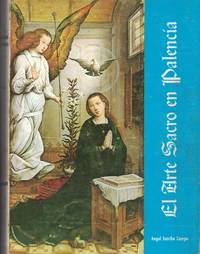
réf. 1082929Encuadernación de tapa dura. Aceptable. . Palencia. Publ. del Obispado de Palencia. Imp. Gráfs. Diario-Día. 1971. 2ª edic. 23x17 cm. T. I Introducción y Presentación. 329 págs. 126 Láms. T. II 319 págs. 138 Láms. T. III 544 págs. 236 Láms. T. IV 650 págs. 292 Láms. Papel Couché. Algún subrayado en el texto. # Palencia hardcover
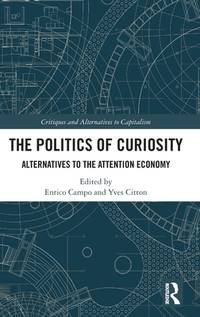
réf. A9781032512983Hardback. New. Through a variety of studies in the emerging field of attentional studies this book examines and seeks alternatives to the current attention economy. hardcover
réf. A9781032001715Hardback. New. hardcover
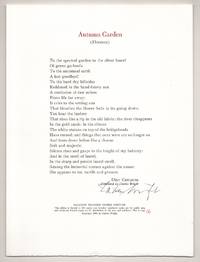
1984réf. 190512Winston-Salem NC: Palaemon Press Limited 1984. First edition. Number 16 of of 126 copies. Broadside printed in two colors that measures 9" wide by 12.50" high. A poem by Campana translated by Charles Wright. A fine copy. Signed by Wright. Uncommon with only 7 copies listed in OCLC. Palaemon Press Limited unknown
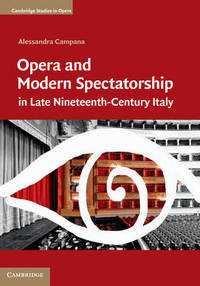
réf. B9781107051898Hardback. New. Alessandra Campana examines four late nineteenth-century operas Mefistofele by Arrigo Boito Simon Boccanegra by Verdi Otello by Verdi and Manon Lescaut by Puccini and a silent film scored by Mascagni to explore for the first time how opera participated in the making of a modern public in post-unification Italy. hardcover
réf. A9780415568470Paperback / softback. New. Zygmunt Molik is one of the last living members of Jerzy Grotowski's original acting company and was a leading trainer at the Teatr Laboratorium. This book explores the development of voice and body exercises throughout his career in actor training. paperback
réf. A9780367386801Paperback / softback. New. paperback
réf. SONG0310087430Used: Good unknown
2013réf. SKU0225419Saunders 2013-09-20. Hardcover. Good. Textbook May Have Highlights Notes and/or Underlining BOOK ONLY-NO ACCESS CODE NO CD Ships with Tracking Saunders hardcover