[ZHEJIANG-JIANGXI CAMPAIGN].Biblio.com
4.652 resultados
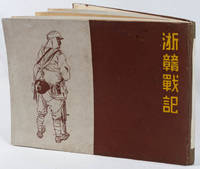
1943ref. 221445Japan.: 中支派遣登部隊本部 Chushi Haken Nobori-butai Honbu. Koki 2603 1943. Maps 4 tipped-in colour plates illustrated throughout with black and white photographic illustrations unpaginated 74pp 23.7 x 33cm oblong hardback with pictorial paper covered boards. Hinges strengthened with paper tape endpapers a little marked lower endpaper torn with loss at upper corner boards a little worn marked and lifting a little. Contents clean and sound. This is a comprehensive official campaign record of the Zhejiang-Jiangxi campaign which took place in the vicinity of Zhejiang province and Jiangxi province between May and September 1942. The book was published by the headquarters of the 13th Army Noboru Butai 登部隊 and dedicated to those who sacrificed their lives during the campaign. The campaign was aimed at attacking Chinese airfields in Zhejiang and Jiangxi areas after the Doolittle Air Raid in April 1942. Although the Japanese troops claimed victory they struggled and faced difficulties with complex geography and climate in the area. The book opens with words given by an Imperial family member and the commander-in-chief of the China Expeditionary Army General Hata. This book includes numerous photographic illustrations as well as 4 beautiful colour art illustration plates of local sceneries. The chronology of the campaign is printed at the end as well as a notice that a documentary film which covers the campaign Tairiku Shin Sanjo 大陸新戦場 A New Front Line in the Continent received a recommendation from the Ministry of Education. . 中支派遣登部隊本部 [Chushi Haken Nobori-butai Honbu]. hardcover
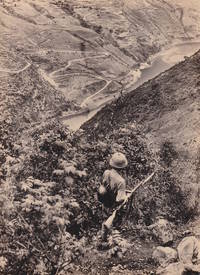
1942ref. 222243Japan. 1942. Black and white photograph with an explanatory slip in Japanese. The photograph measures 20 x 14.5cm; the slip measures 16 x 11cm. Reverse of photograph lightly browned and slightly foxed in a few spots not affecting image slip also evenly browned on reverse and little creased overall a good pair. A view of a Japanese foot soldier armed with his Arisaka Type 99 and bayonet surveying the Nujiang/Salween Valley and River following what is claimed to have been a successful crossing. On the opposite bank a convoy of trucks can be seen winding their way along a dirt track leading away from the shoreline through a patchwork of terraced farms. The remnants of the Huitong Bridge having been destroyed by defending Chinese troops can be seen at the bottom of the valley. Although the explanatory slip included with the image declares the operation to have been a roaring success with a valiant crossing made and the road to Kunming and Chongqing opened by all credible reports the Salween Campaign proved to be a tactical stalemate for Imperial Japanese forces. Although the IJA had indeed been able to reach the Salween River a successful crossing was never made as National Revolutionary Army troops had taken up an entrenched defensive position prior to their arrival. Ultimately the IJA were dislodged by the NRA in 1944-45 with the assistance of Joseph Stilwell. . unknown