Kurt Schwitters: Catalogue Raisonne Vol. 1 1905-1922
2000rif. 97762Hatje Cantz 2000. Hardcover. Fine/Fine. Volume one. Hatje Cantz hardcover

Moe's Books · Stati Uniti750,00 USD≈ 668,75 €
1463 risultati
1985Very Good English Original fine grey-brown cloth bdg. Boards have titled bilingual in Persian and English, with the Iranian Commission for UNESCO logo. Brown endpapers. Large roy. 8vo. (24,5 x 18 cm). In Persian and English, not parallel texts. Text in English pp. i-244; in Persian pp. 1-199. One of a good printing in terms of the accordance of a western and an eastern language. Persian text starts from the right, English one is from left. [xii], [1 blank], 244, 199, 10 p. First Edition, thus. Slightly foxing on edges, a presentation inscription by pen. Overall a very good copy. Abû-Muhammad Muslih al-Dîn bin Abdallâh Shîrâzî, (1193-1292), better known by his pen name Saadi (or, Sadi, Sa'di), was a major Persian poet and prose writer of the medieval period. He is recognized for the quality of his writings and for the depth of his social and moral thoughts. Saadi is widely recognized as one of the greatest poets of the classical literary tradition, earning him the nickname "The Master of Speech" or "The Wordsmith" (Ostâd-e soxan) or simply "Master" [Ostad] among Persian scholars. He has been quoted in the Western traditions as well. Bustan has been ranked as one of the 100 greatest books of all time by The Guardian. Bustan [i.e. The Orchard] completed in 1257and it's entirely in verse (epic meter). It consists of stories aptly illustrating the standard virtues recommended to Muslims (justice, liberality, modesty, contentment) and reflections on the behavior of dervishes and their ecstatic practices. Gulistan is mainly in prose and contains stories and personal anecdotes. The text is interspersed with a variety of short poems that contain aphorisms, advice, and humorous reflections, demonstrating Saadi's profound awareness of the absurdity of human existence. The fate of those who depend on the changeable moods of kings is contrasted with the freedom of the dervishes. Saadi is also remembered as a panegyrist and lyricist, the author of a number of odes portraying human experience, and also of particular odes such as the lament on the fall of Baghdad after the Mongol invasion in 1258. His lyrics are found in Ghazaliyat [i.e. Lyrics] and his odes in Qasa'id [i.e. Odes]. He is also known for a number of works in Arabic. George Michael Wickens, (1918-2006), the translator of this edition, was a distinguished Canadian-British Persianist as well as Arabist, translator, and a University lecturer. Wickens was fluent in Persian and Arabic and was one of the pioneering figures of Persian literature in Canada. He translated several masterpieces of Persian literature as Boostan of Sa'di into English. (Source: Wikipedia).
1842rif. D19065London: T. Richard for the Percy Society 1842. First Edition. Hardcover. Good. 8vo later dark-blue ¼ cloth boards stained period toning and spottin to contents ex-Opie Collection with their stamp to front pastedown. Opie Three Centuries 41. Quite scarce. T. Richard for the Percy Society hardcover books
rif. 28397Paris, Les Editions de la Revue Noire, 1993. Grand in-4, (525 X 32,6 cm), cartonnage Bradel illustré, (photographie), 238 pp. Texte en français et en anglais.
1953rif. 241114049Thomas Nelson and Sons Limited 1953. Hardcover. Very Good. 10x7x2. Please Read Dust Jacket has minor shelf wear - No marks on text - My shelf location - 62-f-6 Thomas Nelson and Sons Limited hardcover
2000rif. 97762Hatje Cantz 2000. Hardcover. Fine/Fine. Volume one. Hatje Cantz hardcover
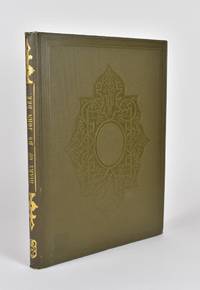
rif. 43422London: Printed for the Camden Society by John Bowyer Nicholas and Son 1842. First edition small 4to 218 x 165 mm with half-title viii 102 2 35 1pp. small circular neat stamp to lower margin of title page two further stamps to text orig. publishers embossed cloth spine gilt a fine copy. The first publication of the Diary and Catalogue of Manuscripts of the famous 16th century occultist Dr John Dee. Halliwell notes in his introduction that the Catalogue is valuable for the notices which it preserves of several middle-age treatises not now extant and that Dee was said to have expended the vast sum of £ 3000 on this collection. The diary 1577-1601 is preceded by notes of nativities during 1554-75; the catalogue was made in 1573. The final section of the volume comprises Camden Society material including a Report of the council Laws and a full list of members. London: Printed for the Camden Society, by John Bowyer Nicholas and Son, 1842 hardcover
rif. 41419London: Printed for the Camden Society by John Bowyer Nicholas and Son 1842. First edition small 4to 218 x 165 mm with half-title viii 102 2 35 1pp. private bookplate to front paste-down orig. publishers embossed cloth spine gilt a fine copy. The first publication of the Diary and Catalogue of Manuscripts of the famous 16th century occultist Dr John Dee. Halliwell notes in his introduction that the Catalogue is valuable for the notices which it preserves of several middle-age treatises not now extant and that Dee was said to have expended the vast sum of £ 3000 on this collection. The diary 1577-1601 is preceded by notes of nativities during 1554-75; the catalogue was made in 1573. The final section of the volume comprises Camden Society material including a Report of the council Laws and a full list of members. London: Printed for the Camden Society, by John Bowyer Nicholas and Son, 1842 hardcover
1953rif. 201623New York: Thomas Nelson & Sons 1953. First Edition; First Printing. Hardcover. Very Good in a Very Good dust jacket. Owner personalization on FEP. Rubbing along panel edges. Thomas Nelson & Sons hardcover
2001rif. BN12746Hatje Cantz Sprengel Museum Hannover Kurt Schwitters Sprengel Museum Hanover Norddeutsche Landesbank Stadtsparkasse Hannover 2001. 2001. Hardcover. 315 x 262 x 51 cm. Kurt Schwitters geboren 1887 besuchte nach einjähriger Kunstgewerbeschule 1909 - 1914 die Kunstakademie Dresden. Nach der Rückkehr in die Heimatstadt 1915 heiratete er Helma Fischer. 1918/19 Studium an der TU Hannover. 1918 stellt Kurt Merz Schwitters seine ersten Merzbilder aus und veröffentlicht seine ersten Gedichte. Nach der Begegnung mit Hans Arp nimmt er Kontakt zu allen Avantgarde-Gruppen auf führt auf Vortragsreisen und in Ausstellungen regelrechte Dada-Feldzüge und gibt von 1923 - 1932 die dadaistische Zeitschrift Merz heraus. 1933 wird sein Schaffen als entartete Kunst verboten. 1937 flieht Schwitters vor der Gestapo nach Norwegen 1940 nach England wo er am 8. Januar 1948 in Ambleside/Westmoreland verstarb. Obwohl Kurt Schwitters zu den bedeutendsten Künstlern der internationalen Moderne zählt ist sein vielseitiges bildnerisches Oeuvre nur partiell erschlossen. Erstmalig wird nun in einem dreibändigen Werkverzeichnis sein Gesamtschaffen dokumentiert und gewürdigt. Nach weltweiten Recherchen und der vollständigen Aufarbeitung des künstlerischen Nachlasses können jetzt rund 3600 Werke aus dem Zeitraum von 1905 bis 1948 vorgestellt werden darunter zahlreiche bislang unveröffentlichte Bilder und Zeichnungen. Schwitters' Arbeiten werden chronologisch und innerhalb eines Jahres nach Gattungen geordnet. Jedes Werk wird schwarzweiß abgebildet verschollene und zerstörte Arbeiten dokumentiert. Darüber hinaus werden pro Band 150 repräsentative Werke ganzseitig in Farbe präsentiert. Der erste Band enthält eine ausführliche illustrierte Biografie des Künstlers und versammelt die frühen und weniger bekannten Arbeiten aus den Jahren vor dem Ersten Weltkrieg sowie die Merzkunstwerke bis 1922. Kurt Schwitters was one of the most influential groundbreaking and forward-looking artists of international Modernism-yet only certain areas of his immensely diverse oeuvre have been thoroughly investigated and catalogued. His has now been properly and fully documented for the first time in a landmark three-volume catalogue raisonn which is particularly notable for bringing to light many of Schwitters' previously unpublished pictorial work including collages drawings and paintings. This first volume covers the artist's early years with little-known works form the period prior to World War I as well as the earliest MERZ pieces he created between 1918 and 1922. Schwitters' works are here organized chronologically and within years according to genre and the book also features a detailed illustrated biography of the artist 997 Abb. 104 farb. Sprache englisch; deutsch Musik Theater Kunstgeschichte Kunststile Literatur Bildende Kunst Schwitters Kurt Werkverzeichnis ISBN-10 3-7757-0926-6 3775709266 ISBN-13 978-3-7757-0926-2 9783775709262 Catalogue raisonné Band 1 1905-1922 Gebundene Ausgabe Karin Orchard Autor Isabel Schulz Autor Sprengel Museum Hannover Künstlermonographien Artist's Monographs Orchard K. u. Schulz I. - Kurt Schwitters catalogue raisonne Ostfildern-Ruit 2000-06. 4to. Orig.-Leinenbd. - Der komplette Werkkatalog umfaßt und dokumentiert erstmals das 3600 Arbeiten umfassende bildnerische Oeuvre von Kurt Schwitters. - Künstler - Schwitters Kunstgeschichte Kunststile Literatur Bildende Kunst Schwitters Kurt Werkverzeichnis Merzkunstwerke Kunstakademie Dresden Theater Kunstgeschichte Kunststile Literatur Bildende Kunst Schwitters Kurt Werkverzeichnis ISBN-10 3-7757-0926-6 3775709266 ISBN-13 978-3-7757-0926-2 9783775709262 Catalogue raisonné Band 1 1905-1922 Gebundene Ausgabe Karin Orchard Autor Isabel Schulz Autor Sprengel Museum Hannover Künstlermonographien Artist's Monographs Orchard K. u. Schulz I. - Kurt Schwitters catalogue raisonne Ostfildern-Ruit 2000-06. 4to. Orig.-Leinenbd. - Der komplette Werkkatalog umfaßt und dokumentiert erstmals das 3600 Arbeiten umfassende bildnerische Oeuvre von Kurt Schwitters. - Künstler - Schwitters Kunstgeschichte Kunststile Literatur Bildende Kunst Schwitters Kurt Werkverzeichnis Merzkunstwerke Kunstakademie Dresden Theater Kurt Schwitters geboren 1887 besuchte nach einjähriger Kunstgewerbeschule 1909 - 1914 die Kunstakademie Dresden. Nach der Rückkehr in die Heimatstadt 1915 heiratete er Helma Fischer. 1918/19 Studium an der TU Hannover. 1918 stellt Kurt Merz Schwitters seine ersten Merzbilder aus und veröffentlicht seine ersten Gedichte. Nach der Begegnung mit Hans Arp nimmt er Kontakt zu allen Avantgarde-Gruppen auf führt auf Vortragsreisen und in Ausstellungen regelrechte Dada-Feldzüge und gibt von 1923 - 1932 die dadaistische Zeitschrift Merz heraus. 1933 wird sein Schaffen als entartete Kunst verboten. 1937 flieht Schwitters vor der Gestapo nach Norwegen 1940 nach England wo er am 8. Januar 1948 in Ambleside/Westmoreland verstarb. Obwohl Kurt Schwitters zu den bedeutendsten Künstlern der internationalen Moderne zählt ist sein vielseitiges bildnerisches Oeuvre nur partiell erschlossen. Erstmalig wird nun in einem dreibändigen Werkverzeichnis sein Gesamtschaffen dokumentiert und gewürdigt. Nach weltweiten Recherchen und der vollständigen Aufarbeitung des künstlerischen Nachlasses können jetzt rund 3600 Werke aus dem Zeitraum von 1905 bis 1948 vorgestellt werden darunter zahlreiche bislang unveröffentlichte Bilder und Zeichnungen. Schwitters' Arbeiten werden chronologisch und innerhalb eines Jahres nach Gattungen geordnet. Jedes Werk wird schwarzweiß abgebildet verschollene und zerstörte Arbeiten dokumentiert. Darüber hinaus werden pro Band 150 repräsentative Werke ganzseitig in Farbe präsentiert. Der erste Band enthält eine ausführliche illustrierte Biografie des Künstlers und versammelt die frühen und weniger bekannten Arbeiten aus den Jahren vor dem Ersten Weltkrieg sowie die Merzkunstwerke bis 1922. Kurt Schwitters was one of the most influential groundbreaking and forward-looking artists of international Modernism-yet only certain areas of his immensely diverse oeuvre have been thoroughly investigated and catalogued. His has now been properly and fully documented for the first time in a landmark three-volume catalogue raisonn which is particularly notable for bringing to light many of Schwitters' previously unpublished pictorial work including collages drawings and paintings. This first volume covers the artist's early years with little-known works form the period prior to World War I as well as the earliest MERZ pieces he created between 1918 and 1922. Schwitters' works are here organized chronologically and within years according to genre and the book also features a detailed illustrated biography of the artist 997 Abb. 104 farb. Sprache englisch; deutsch Musik Theater Hatje Cantz Sprengel Museum Hannover Kurt Schwitters Sprengel Museum Hanover Norddeutsche Landesbank Stadtsparkasse Hannover hardcover
1780rif. 003023Orléans, Chez la Veuve Rouzeau-Montaut, 1780
1847rif. 38813Brixton Hill: For private circulation only printed by C. and J. Adlard 1847. FIRST EDITION OF THE ALLITERATIVE MORTE ARTHURE one of the great monuments of Arthurian literature and of Medieval English literature. This poem like Gawain and the Green Knight is part of the late Medieval literary movement now called the "alliterative revival". According to Larry Benson the most recent editor of this poem the Alliterative Morte Arthure "lacks the delicacy and balance of Sir Gawain and the Green Knight but the vigor of its narrative the epic sweep of its action and its coolly realistic presentation of fourteenth-century warfare lend the poem an interest of its own." EDITION LIMITED TO JUST 75 COPIES each numbered and signed by the printer of which THIS IS ONE OF ONLY 50 COPIES PRINTED ON THIN PAPER. Beautifully printed in large attractive type on fine wove paper with large margins. Frontispiece engraving by F. W. Fairholt after a manuscript miniature depicting the Round Table. Large 4to. Bound in original cloth beautifully decorated in blind. Uncut. Professionally recased with original endpapers preserved. Frontispiece discolored as always because of paper used and a bit stained. Otherwise FINE AND BRIGHT. A legendary rarity in its original binding. Extremely rare and important. sxxi For private circulation only (printed by C. and J. Adlard) hardcover
1849rif. 136692London: John Russell Smith 1849. First edition of this important little work; scarce in commerce. James Orchard Halliwell later Halliwell-Philipps 1820-1889 antiquary and literary scholar co-founder of both the Percy and Shakespeare Societies is one of the most significant figures in the codification of English nursery rhymes. Popular Rhymes was a sequel to his groundbreaking Nursery Rhymes of England 1842 both of which "would remain standard works on the subject for half a century" Gregory p. 116. Most familiar to modern readers are Halliwell's versions of Tom Thumb and Chicken Licken and his important transcription from chapbook sources of Jack the Giant-Killer see Thomas Green Arthuriana: Early Arthurian Tradition and the Origins of Legend The Lindes Press 2009 p. 148; these are gathered together in the chapter entitled "Fireside Stories". "Much more than a collection the Popular Rhymes offered historical and comparative analysis of its verses and tales. It amplified the scope of the earlier rhyme-book with a section of nineteen folktales obtained both from oral sources and from chapbooks. The chapter rubrics were now much tighter and more definitive: Nursery Antiquities Fireside Nursery Stories Game-Rhymes Alphabet-Rhymes Riddle-Rhymes Nature-Songs Proverb-Rhymes Places and Families Superstition Rhymes Custom-Rhymes and Nursery-Songs. Halliwell conceded his debt to Robert Chalmers's 'elegant work' The Popular Rhymes of Scotland 1826 but also stressed the differences in content. Together the two 'vernacular anthologies' contained nearly all that was worth preserving of 'the natural literature of Great Britain'" Dorson p. 68. Provenance: pencilled ownership inscription to advertisement facing title "H. C. Hart / 89" possibly Henry Chichester Hart 18476-1908 Anglo-Irish botanist and explorer who like Halliwell was also a Shakespearean scholar editing a number of volumes in the Arden edition. Duodecimo in 6s. Original green pebble-grain cloth with blind lateral striations gilt lettered and decorated spine blind panel to sides gilt block of a child reading to front cover all edges gilt slate-green-coated endpapers. Old ink splash to front cover gilt block a little rubbed nick to head of spine. A very good copy. Richard M. Dorson History of British Folklore 2000 volume I Routledge 2000; E. David Gregory Victorian Songhunters: The Recovery and Edition of English Vernacular Ballads and Folk Lyrics 1820-1883 The Scarecrow Press 2006. hardcover
2000rif. x-0415218225Routledge 2000. Hardcover. New. 1st edition. 504 pages. 8.75x5.75x1.50 inches. Routledge hardcover
2006rif. BN32401Hatje Cantz Verlag Sprengel Museum Hannover Norddeutsche Landesbank Stadtsparkasse Hannover Hanover 2006. 2006. Hardcover. 305 x 266 x 64 cm. Nach mehrjähriger intensiver Forschungstätigkeit jetzt komplett: der Catalogue raisonné zu Kurt Schwitters' Oeuvre in drei Bänden mit einem Gesamtumfang von über 2 000 Seiten und mehr als 3 300 Abbildungen.Obwohl Kurt Schwitters zu den bedeutendsten Künstlern der internationalen Moderne zählt ist sein vielseitiges bildnerisches Oeuvre nur partiell erschlossen. Erstmalig wird nun in einem dreibändigen Werkverzeichnis sein Gesamtschaffen dokumentiert und gewürdigt. Nach weltweiten Recherchen und der vollständigen Aufarbeitung des künstlerischen Nachlasses können jetzt rund 4 000 Werke aus dem Zeitraum von 1905 bis 1948 vorgestellt werden darunter zahlreiche bislang unveröffentlichte Bilder und Zeichnungen. Schwitters' Arbeiten werden chronologisch und innerhalb eines Jahres nach Gattungen geordnet. Jedes Werk wird schwarzweiß abgebildet verschollene und zerstörte Arbeiten werden dokumentiert. Darüber hinaus werden rund 120 repräsentative Werke ganzseitig in Farbe präsentiert. Der umfangreichste dritte Band der die Jahre 1937 bis 1948 umfasst beinhaltet jene Werke die in der Zeit des Exils zunächst in Norwegen und ab 1940 in England entstanden. Farbig gefasste Plastiken sowie Collagen und Assemblagen deren Materialvielfalt um Fundstücke aus der Natur bereichert ist führen das frühe Merzkonzept fort. Darüber hinaus werden die zwei Merzbauten Haus am Bakken und Merz Barn die weniger bekannten norwegischen Landschaftsbilder und Zeichnungen sowie die Porträts aus der englischen Internierungszeit vorgestellt. Zum Künstler: Kurt Schwitters Hannover 1887-1948 Kendal Lake District. Studium an der Kunstgewerbeschule Hannover und an der Königlich Sächsischen Akademie der Künste Dresden. 1911 erste Ausstellungsbeteiligung. 1919 erstes Merzbild und Veröffentlichung des Gedichts »An Anna Blume«. Seit 1923 Arbeiten am Merzbau Erscheinen der Publikationsreihe Merz. 1937 Diffamierung seiner Werke Emigration nach Norwegen. 1940 Flucht nach England. 1943 Zerstörung des Hauses und des Merzbaus durch Luftangriff. Although Kurt Schwitters was one of the most influential artists of international modernism only select portions of his immensely varied body of pictorial work have been investigated thoroughly. And what a body of work it is unlike one ever seen before or after combining bits of found detritus into compositions of tight unexpected melodies and startling tunes. Schwitters was constantly sighting scraps of handbills train tickets newspapers clothing and more on the city streets pocketing them for later use in one of his Merz collages. His intense body of found object constructions stands as one of the premier examples of the ultimtate modern form assemblage of which he has been called the "grandfather." After extensive research worldwide and a complete examination of his artistic estate Schwitters's oeuvre has finally been properly acknowledged documented and prepared for public presentation. The comprehensive Kurt Schwitters Catalogue Raisonna of which the present volume is the third installation includes more than four thousand works from the period between 1905 and 1948 many of them published for the first time. Lost and destroyed works are documented whenever possible. For ease of reference the survey is ordered chronologically; within each year works are sub-divided according to genre. In this third volume are presented creations spanning Schwitters's years in exile 1937 to 1948 when he escaped Nazi Germany to live first in Norway and then in England. Though artworks are primarily reproduced in black-and-white each volume of the catalogue also presents color reproductions of representative works Zusatzinfo 1312 Abb. davon 119 farbig Sprache englisch; deutsch Maße 265 x 308 mm Gewicht 4830 g Einbandart Leinen Kunst Musik Theater Kunstgeschichte Kunststile catalogue raisonne catalogue raisonné classical modern art Dada Sachbücher Kunst Literatur Bildende Kunst Sachbücher Künstler Literatur Bildende Kunst Klassische Moderne Schwitters Kurt Schwitters Kurt Werkverzeichnis Werkverzeichnisse ISBN-10 3-7757-0989-4 3775709894 ISBN-13 978-3-7757-0989-7 9783775709897 Kurt Schwitters Catalogue raisonné Band 3 1937-1948/ Volume 3 1937-1948 Gebundene Ausgabe von Karin Orchard Autor Isabel Schulz Autor Kunstgeschichte Kunststile catalogue raisonne catalogue raisonné classical modern art Dada Bildende Kunst Künstler Klassische Moderne Schwitters Kurt Schwitters Kurt Werkverzeichnis Werkverzeichnisse Sachbücher Kunst Literatur Although Kurt Schwitters was one of the most influential artists of international modernism only select portions of his immensely varied body of pictorial work have been investigated thoroughly. And what a body of work it is unlike one ever seen before or after combining bits of found detritus into compositions of tight unexpected melodies and startling tunes. Schwitters was constantly sighting scraps of handbills train tickets newspapers clothing and more on the city streets pocketing them for later use in one of his Merz collages. His intense body of found object constructions stands as one of the premier examples of the ultimtate modern form assemblage of which he has been called the "grandfather." After extensive research worldwide and a complete examination of his artistic estate Schwitters's oeuvre has finally been properly acknowledged documented and prepared for public presentation. The comprehensive Kurt Schwitters Catalogue Raisonna of which the present volume is the third installation includes more than four thousand works from the period between 1905 and 1948 many of them published for the first time. Lost and destroyed works are documented whenever possible. For ease of reference the survey is ordered chronologically; within each year works are sub-divided according to genre. In this third volume are presented creations spanning Schwitters's years in exile 1937 to 1948 when he escaped Nazi Germany to live first in Norway and then in England. Though artworks are primarily reproduced in black-and-white each volume of the catalogue also presents color reproductions of representative works Nach mehrjähriger intensiver Forschungstätigkeit jetzt komplett: der Catalogue raisonné zu Kurt Schwitters' Oeuvre in drei Bänden mit einem Gesamtumfang von über 2 000 Seiten und mehr als 3 300 Abbildungen.Obwohl Kurt Schwitters zu den bedeutendsten Künstlern der internationalen Moderne zählt ist sein vielseitiges bildnerisches Oeuvre nur partiell erschlossen. Erstmalig wird nun in einem dreibändigen Werkverzeichnis sein Gesamtschaffen dokumentiert und gewürdigt. Nach weltweiten Recherchen und der vollständigen Aufarbeitung des künstlerischen Nachlasses können jetzt rund 4 000 Werke aus dem Zeitraum von 1905 bis 1948 vorgestellt werden darunter zahlreiche bislang unveröffentlichte Bilder und Zeichnungen. Schwitters' Arbeiten werden chronologisch und innerhalb eines Jahres nach Gattungen geordnet. Jedes Werk wird schwarzweiß abgebildet verschollene und zerstörte Arbeiten werden dokumentiert. Darüber hinaus werden rund 120 repräsentative Werke ganzseitig in Farbe präsentiert. Der umfangreichste dritte Band der die Jahre 1937 bis 1948 umfasst beinhaltet jene Werke die in der Zeit des Exils zunächst in Norwegen und ab 1940 in England entstanden. Farbig gefasste Plastiken sowie Collagen und Assemblagen deren Materialvielfalt um Fundstücke aus der Natur bereichert ist führen das frühe Merzkonzept fort. Darüber hinaus werden die zwei Merzbauten Haus am Bakken und Merz Barn die weniger bekannten norwegischen Landschaftsbilder und Zeichnungen sowie die Porträts aus der englischen Internierungszeit vorgestellt. Zum Künstler: Kurt Schwitters Hannover 1887-1948 Kendal Lake District. Studium an der Kunstgewerbeschule Hannover und an der Königlich Sächsischen Akademie der Künste Dresden. 1911 erste Ausstellungsbeteiligung. 1919 erstes Merzbild und Veröffentlichung des Gedichts »An Anna Blume«. Seit 1923 Arbeiten am Merzbau Erscheinen der Publikationsreihe Merz. 1937 Diffamierung seiner Werke Emigration nach Norwegen. 1940 Flucht nach England. 1943 Zerstörung des Hauses und des Merzbaus durch Luftangriff. Zusatzinfo 1312 Abb. davon 119 farbig Sprache englisch; deutsch Maße 265 x 308 mm Gewicht 4830 g Einbandart Leinen Kunst Musik Theater Kunstgeschichte Kunststile catalogue raisonne catalogue raisonné classical modern art Dada Sachbücher Kunst Literatur Bildende Kunst Sachbücher Künstler Literatur Bildende Kunst Klassische Moderne Schwitters Kurt Schwitters Kurt Werkverzeichnis Werkverzeichnisse ISBN-10 3-7757-0989-4 3775709894 ISBN-13 978-3-7757-0989-7 9783775709897 Kurt Schwitters Catalogue raisonné Band 3 1937-1948/ Volume 3 1937-1948 Gebundene Ausgabe von Karin Orchard Autor Isabel Schulz Autor Hatje Cantz Verlag Sprengel Museum Hannover Norddeutsche Landesbank Stadtsparkasse Hannover Hanover hardcover
1842rif. RDEEPRI00tpmCamden Society 1842. Very Good. Dee John. The Private Diary of Dr. John Dee and the Catalogue of His Library of Manuscripts. Halliwell editor James Orchard. London: Camden Society 1842. 102pp. Indexed. 8vo. Black cloth with gilt embossing on spine. Book condition: Very good with rubbed extremities bumped spine ends and light soiling. Boards peeking through slightly frayed cloth. Previous owners bookplate on front pastedown. Endsheets are subtly split along hinges but the binding holds firm. In protective mylar. Camden Society hardcover
1842rif. RDEEPRI00tpmCamden Society 1842. Very Good. Dee John. The Private Diary of Dr. John Dee and the Catalogue of His Library of Manuscripts. Halliwell editor James Orchard. London: Camden Society 1842. 102pp. Indexed. 8vo. Black cloth with gilt embossing on spine. Book condition: Very good with rubbed extremities bumped spine ends and light soiling. Boards peeking through slightly frayed cloth. Previous owners bookplate on front pastedown. Endsheets are subtly split along hinges but the binding holds firm. In protective mylar. Camden Society hardcover books
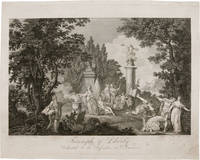
1796rif. 373398New York 1796. Broadside text in English and French in two columns. 12-1/4x8 inches. Silked and inlaid to a larger sheet very toned extraneous fold at the bottom area of loss at the top largely affecting the title in French. Broadside text in English and French in two columns. 12-1/4x8 inches. A broadside prospectus for a noted allegorical print celebrating the American Revolution. We locate only two known examples of this broadside John Carter Brown Library and Winterthur Museum. The print first published in 1796 and then again with the addition of extensive descriptive text in 1798 used classical iconography to illustrate America's victory in the American Revolution with the gods led by Minerva with the American eagle on her aegis paying honor to American heroes and laying waste to the concepts and persons of monarchy. As a French veteran of the American Revolution and transatlantic witness to the French Revolution it is perhaps unsurprising that the artist Renault would choose such subject matter for this dramatic piece. Reilly describes the print and its features in detail: An allegory of liberty flourishing and monarchy and tyranny in decline. In a wooded grove Minerva with a shield bearing the arms of the United States and a flag emblazoned with stars pours libations on an altar fire. Beside her are three female figures. The first Plenty holds a torch to a pile of titles of nobility crowns scepters and other attributes of monarchy. Justice holds a sword and scales and Peace an olive branch. Behind them is a small pyramid on a pedestal inscribed with the names: Hancock Warren Sullivan Putnam Scamel Barber Green Laurens Wooster Mercer and Poor. Two urns on the monument are labeled "B. Franklin" and "Montgomery." To the right is a column surmounted by a seated nude Liberty figure holding a wreath. Below it stands a cherub with a scroll with the words 'Allons enfans de la Patrie.' an open book labeled 'The Rights of Man' a staff and liberty cap and a flag. Behind is a mountainous landscape and town. In the lower right foreground stands another group including a king about to stab himself several other monarchs cringing and a standing woman. In the lower left stand an aged classical priest and a writhing mutilated hydra appear. Not much is known about Renault or Verger beyond their production of this print. Bristol B9805; ESTC W38987 unknown
1796rif. 373398New York 1796. Broadside text in English and French in two columns. 12-1/4x8 inches. Silked and inlaid to a larger sheet very toned extraneous fold at the bottom area of loss at the top largely affecting the title in French. Broadside text in English and French in two columns. 12-1/4x8 inches. A broadside prospectus for a noted allegorical print celebrating the American Revolution. We locate only two known examples of this broadside John Carter Brown Library and Winterthur Museum. The print first published in 1796 and then again with the addition of extensive descriptive text in 1798 used classical iconography to illustrate America's victory in the American Revolution with the gods led by Minerva with the American eagle on her aegis paying honor to American heroes and laying waste to the concepts and persons of monarchy. As a French veteran of the American Revolution and transatlantic witness to the French Revolution it is perhaps unsurprising that the artist Renault would choose such subject matter for this dramatic piece. Reilly describes the print and its features in detail: An allegory of liberty flourishing and monarchy and tyranny in decline. In a wooded grove Minerva with a shield bearing the arms of the United States and a flag emblazoned with stars pours libations on an altar fire. Beside her are three female figures. The first Plenty holds a torch to a pile of titles of nobility crowns scepters and other attributes of monarchy. Justice holds a sword and scales and Peace an olive branch. Behind them is a small pyramid on a pedestal inscribed with the names: Hancock Warren Sullivan Putnam Scamel Barber Green Laurens Wooster Mercer and Poor. Two urns on the monument are labeled "B. Franklin" and "Montgomery." To the right is a column surmounted by a seated nude Liberty figure holding a wreath. Below it stands a cherub with a scroll with the words 'Allons enfans de la Patrie.' an open book labeled 'The Rights of Man' a staff and liberty cap and a flag. Behind is a mountainous landscape and town. In the lower right foreground stands another group including a king about to stab himself several other monarchs cringing and a standing woman. In the lower left stand an aged classical priest and a writhing mutilated hydra appear. Not much is known about Renault or Verger beyond their production of this print. Bristol B9805; ESTC W38987 unknown books
1837rif. 18480nantes Forest 1837 1 -in-4 demi chagrin 5 tomes reliés en 1 volume, reliure demi-chagrin havane in-quarto (half binding leather in-quarto (27,4 x 22 cm), Reliure d'Epoque , dos à nerfs (spine with raised bands), décoré "or" et à froid (gilt and blind-stamping decoration), titre et auteur frappés or (gilt title), filet à froid en place des nerfs avec un filet à froid de part et d'autre des nerfs, filet à froid en tête et en pied, plats décorés à froid d'un double filet à froid aux mors, papier peigné marron clair, marron foncé et rouge aux plats (cover with painting paper), toutes tranches lisses (edges smooth) jaunes, abondamment illustré (plentifully illustrated) de 31 lithographies hors-texte (full page engraving) en noir par E. de La Michellerie, Messager, Louis Petit, Hersart du Buron, Jules Noël et Rivière Fils + 2 importantes vignettes in-texte en noir (7 au Tome 1, 6 au Tome 2, 9 au Tome 3 + 2 vignette in-texte , 5 au Tome 4, 1 au Tome 5), texte 2 colonnes (text - 2 coloumns), quelques Rousseurs Habituelles, pagination normale jusqu'à la page 32 du 1er volume, ensuite pagination à la colonne, Tome 1 : 417 pages + 6 de tables, Tome 2 : 398 pages + 6 de tables, Tome 3 : 429 pages (tables comprises), Tome 4 : 398 pages (tables comprises), Tome 5 : 494 pages (tables comprises), 1837-1841 Nantes Forest Imprimeur Editeur,
1837rif. 24629nantes Forest 1837 1 -in-4 demi chagrin 5 tomes, reliure demi-toile violine in-quarto (half cloth-bound in-quarto) (26,2 x 20,5 cm), RELIURE D'ÉPOQUE, dos long (spine without raised bands), décoré "or"(gilt decoration), Titre et Tomaison frappés "or" (gilt title and volume numbering), pièce de titre et de Tomaison sur fond bleu-marine avec un filet "or" de part et d'autre, papier peigné bleu, vert, rouge et crème aux plats, toutes tranches lisses, couvertures marron clair imprimées en noir et ornées d'un encadrement orné en noir conservées, abondamment illustré (plentifully illustrated) de 31 lithographies hors-texte (full page engraving) en noir par E. de La Michellerie, Messager, Louis Petit, Hersart du Buron, Jules Noël et Rivière Fils + 2 importantes vignettes in-texte en noir (7 au Tome 1, 6 au Tome 2, 9 au Tome 3 + 2 vignette in-texte , 5 au Tome 4, 1 au Tome 5), texte 2 colonnes (text - 2 coloumns), quelques Rousseurs Habituelles, pagination normale jusqu'à la page 32 du 1er volume, ensuite pagination à la colonne, Tome 1 : 417 pages + 6 de tables, Tome 2 : 398 pages + 6 de tables, Tome 3 : 429 pages (tables comprises), Tome 4 : 398 pages (tables comprises), Tome 5 : 494 pages (tables comprises), 1837-1841 Nantes Forest Imprimeur Editeur,
1796rif. 65977New York: D.F. Launy 1796. Attractive Allegorical Engraving Depicting Democracy's Victory over Monarchism An attractive and elaborate allegorical engraving celebrating American independence drawn by French-American artist John-Francis Renault and engraved by Peter Verger both known almost exclusively for the present print. The print first published in 1796 and then again with the addition of extensive descriptive text in 1798 uses Classical iconography to illustrate America's victory with the gods led by Minerva with the American eagle on her aegis paying honor to American heroes and laying waste to the concepts and persons of monarchy. As a French veteran of the American Revolution and transatlantic witness to the French Revolution it is perhaps unsurprising that Renault would choose such subject matter for this dramatic piece. Reilly describes the print and its features in detail: "An allegory of liberty flourishing and monarchy and tyranny in decline. In a wooded grove Minerva with a shield bearing the arms of the United States and a flag emblazoned with stars pours libations on an altar fire. Beside her are three female figures. The first Plenty holds a torch to a pile of titles of nobility crowns scepters and other attributes of monarchy. Justice holds a sword and scales and Peace an olive branch. Behind them is a small pyramid on a pedestal inscribed with the names: Hancock Warren Sullivan Putnam Scamel Barber Green Laurens Wooster Mercer and Poor. Two urns on the monument are labeled "B. Franklin" and "Montgomery." To the right is a column surmounted by a seated nude Liberty figure holding a wreath. Below it stands a cherub with a scroll with the words 'Allons enfans de la Patrie.' an open book labeled 'The Rights of Man' a staff and liberty cap and a flag. Behind is a mountainous landscape and town. In the lower right foreground stands another group including a king about to stab himself several other monarchs cringing and a standing woman. In the lower left stand an aged classical priest and a writhing mutilated hydra appear. "Stauffer describes an impression the 1798 edition with re-engraved title and imprint accompanied by the following text: 'By a Column raised to Liberty is a Monument sacred to the memory of the American Heroes fallen in defence of their Country. While Liberty is Crowning them America uder sic the figure of Minerva sacrifices to their Manes and a Priest of that Deity sings their glorious actions. The Hydra of Despotism mortally wounded by those great men expires in frightful convulsions. Peace and Justice hand in hand join with America in her homage to Liberty. Plenty reclining on her emblematical Horn reposes on American ground. The Genius of Liberty points out the declaration of Independence and a Book of the American Constitution. From the dreadful Sight a group of Kings turn away with horror and dismay.'" Not much is known about Renault or Verger beyond their production of this print. Describing the former as an "Allegorical & historical painter" Falk writes that "Renault claimed to have been at the Battle of Yorktown in 1781 as assistant secretary to Count de Grasse and Engineer to the French Army. His 'Triumph of Liberty' was advertised in NYC in 1795 by D.F. Launy and again in 1797 by Renault and Verger. In 1819 he published an engraving of the British officers surrendering their arms to Washington at Yorktown describing himself as a U.S. Citizen." Falk has little to add respecting Verger except that "He was associated with John Francis Renault in the publication of the latter's 'Triumph of Liberty' print" and that he was "Active in NYC from 1795-97; Paris in 1806." OCLC locates copies of the first edition of this print at the Society of the Cincinnati American Antiquarian Society and Massachusetts Historical Society. We locate further copies at the Library of Congress and Yale Art Gallery. A rare and dramatic allegorical print published on the twentieth anniversary of the Declaration of Independence. Light tanning and soiling some pale dampstains to lower margin just into lower part of image. Very good. REILLY 1796-1. STAUFFER 3344. FOWBLE 322. FALK WHO WAS WHO IN AMERICAN ART pp.2742 3403. OCLC 768299108. unknown
1796rif. 65977New York: D.F. Launy 1796. Attractive Allegorical Engraving Depicting Democracy's Victory over Monarchism An attractive and elaborate allegorical engraving celebrating American independence drawn by French-American artist John-Francis Renault and engraved by Peter Verger both known almost exclusively for the present print. The print first published in 1796 and then again with the addition of extensive descriptive text in 1798 uses Classical iconography to illustrate America's victory with the gods led by Minerva with the American eagle on her aegis paying honor to American heroes and laying waste to the concepts and persons of monarchy. As a French veteran of the American Revolution and transatlantic witness to the French Revolution it is perhaps unsurprising that Renault would choose such subject matter for this dramatic piece. Reilly describes the print and its features in detail: "An allegory of liberty flourishing and monarchy and tyranny in decline. In a wooded grove Minerva with a shield bearing the arms of the United States and a flag emblazoned with stars pours libations on an altar fire. Beside her are three female figures. The first Plenty holds a torch to a pile of titles of nobility crowns scepters and other attributes of monarchy. Justice holds a sword and scales and Peace an olive branch. Behind them is a small pyramid on a pedestal inscribed with the names: Hancock Warren Sullivan Putnam Scamel Barber Green Laurens Wooster Mercer and Poor. Two urns on the monument are labeled "B. Franklin" and "Montgomery." To the right is a column surmounted by a seated nude Liberty figure holding a wreath. Below it stands a cherub with a scroll with the words 'Allons enfans de la Patrie.' an open book labeled 'The Rights of Man' a staff and liberty cap and a flag. Behind is a mountainous landscape and town. In the lower right foreground stands another group including a king about to stab himself several other monarchs cringing and a standing woman. In the lower left stand an aged classical priest and a writhing mutilated hydra appear. "Stauffer describes an impression the 1798 edition with re-engraved title and imprint accompanied by the following text: 'By a Column raised to Liberty is a Monument sacred to the memory of the American Heroes fallen in defence of their Country. While Liberty is Crowning them America uder sic the figure of Minerva sacrifices to their Manes and a Priest of that Deity sings their glorious actions. The Hydra of Despotism mortally wounded by those great men expires in frightful convulsions. Peace and Justice hand in hand join with America in her homage to Liberty. Plenty reclining on her emblematical Horn reposes on American ground. The Genius of Liberty points out the declaration of Independence and a Book of the American Constitution. From the dreadful Sight a group of Kings turn away with horror and dismay.'" Not much is known about Renault or Verger beyond their production of this print. Describing the former as an "Allegorical & historical painter" Falk writes that "Renault claimed to have been at the Battle of Yorktown in 1781 as assistant secretary to Count de Grasse and Engineer to the French Army. His 'Triumph of Liberty' was advertised in NYC in 1795 by D.F. Launy and again in 1797 by Renault and Verger. In 1819 he published an engraving of the British officers surrendering their arms to Washington at Yorktown describing himself as a U.S. Citizen." Falk has little to add respecting Verger except that "He was associated with John Francis Renault in the publication of the latter's 'Triumph of Liberty' print" and that he was "Active in NYC from 1795-97; Paris in 1806." OCLC locates copies of the first edition of this print at the Society of the Cincinnati American Antiquarian Society and Massachusetts Historical Society. We locate further copies at the Library of Congress and Yale Art Gallery. A rare and dramatic allegorical print published on the twentieth anniversary of the Declaration of Independence. Light tanning and soiling some pale dampstains to lower margin just into lower part of image. Very good. REILLY 1796-1. STAUFFER 3344. FOWBLE 322. FALK WHO WAS WHO IN AMERICAN ART pp.2742 3403. OCLC 768299108. unknown books
2007rif. 73031Snoeck Publishers. New. Hardcover. FREE UPGRADE to Courier/Priority Shipping Upon Request - IN STOCK AND IMMEDIATELY AVAILABLE FOR SHIPMENT - Flawless copy brand new pristine never opened -- Text in English and German. 136 pp. With 104 ills. 73 col. . 29 x 25 cm. -- with a bonus offer-- . 2007. 393685968X . Snoeck Publishers hardcover
1983rif. 60734Museum. As New. Paperback. FREE UPGRADE to Courier/Priority Shipping Upon Request – – IN STOCK AND IMMEDIATELY AVAILABLE FOR SHIPMENT - AS NEW THE TEXT BLOCK IS PRISTINE CLEAN UNMARKED AND IN EXCELLENT CONDITION - - 32 pp. With 30 ills. 16 col. . 22 x 28 cm. -- with a bonus offer-- . 1983. 096130460X . Museum paperback
2003rif. 69453Downsview Ontario Canada: Univ of Toronto Pr. New. Paperback. FREE UPGRADE to Courier/Priority Shipping Upon Request - IN STOCK AND IMMEDIATELY AVAILABLE FOR SHIPMENT - FLAWLESS COPY BRAND NEW PRISTINE NEVER OPENED . Orchard Andy Pride and Prodigies: Studies in the Monsters of the Beowulf-Manuscript BEOWULF LITERARY CRITICISM MEDIEVAL . 2003. 0802085830 . Univ of Toronto Pr paperback