78 856 résultats
1985réf. UTHENUC00ajsNick Lyons 1985. Very Good. The League of Women Voters Education Fund. The Nuclear Waste Primer: A Handbook for Citizens. NY: Nick Lyons 1985. 90pp. Illustrated. Glossary. Paperback. Book condition: Very good with rubbing and bumping. Nick Lyons paperback books
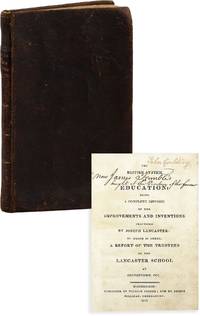
1812réf. 89512Georgetown Washington D.C.: William Cooper and Joseph Milligan 1812. First American Edition. 12mo. Contemporary full sheep; xx1-130pp; frontispiece 5 leaves of plates. A complete but somewhat worn copy with typical darkening to text leaves; a few brief marginal chips including a small loss to frontispiece costing a couple of characters of the printed margin; Good and sound. Early holograph ex-libris of a John Goulding. A very early exposition of the Lancasterian method of education following by just a few years the American edition of Lancaster's own book Improvements in Education NY: 1807 and perhaps the first to delineate the application of his methods in a strictly American setting. Lancaster's method which involved strict regimentation and the use of student monitors enabled the "teaching" of hundreds of students in a single classroom. Lancasterian grammar schools were extremely popular in the early years of the Republic as they filled an urgent need to build a literate working class in a nation with a paucity of qualified profefssional teachers; by the mid-19th century the method fell out of favor in large part due to the influence of reformer Horace Mann. The "Epitome" printed here is followed by the full report of the Georgetown D.C. Lancaster School Society for the year just past to which is appended a letter from Lancaster himself praising the Society's efforts. Six wood-engraved plates illustrate aspects of the Lancasterian approach. Scarce in commerce. SHAW & SHOEMAKER 25817. William Cooper and Joseph Milligan unknown books
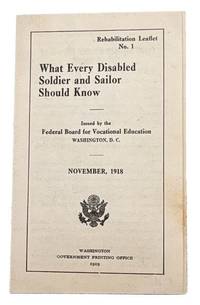
1919réf. 96204Washington: GPO 1919. 1st ed. Very Good. Single sheet folded to form a small unnumbered 6-page leaflet. 13 cm. Some browning. GPO unknown books
1850réf. 47824Mexico: Imprenta de M. Murguia 1850. Very Good. Mexico: Imprenta de M. Murguia ca. 1850. First Edition. Broadside 40.5x29.25cm; ornamental border surrounding a series of math-related tables and instructions. Chipping principally to edges occasional staining horizontal fold to center; Very Good. Uncommon and ephemeral broadside printed by the Mexican state for instruction of young students in arithmetic. Approximate date from OCLC which shows four holdings Penn State and U. Conn only in the US. Imprenta de M. Murguia unknown books
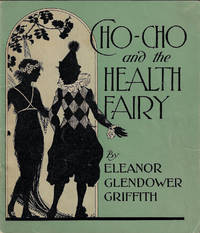
1925réf. 011381New York: Macmillan 1925 Pictorial covers with light wear along spine top corner creased throughout previous owner's name. Six stories about a fairy named Health who looks out for the well-being of children and a witch who tempts children to do drink and eat things that are bad for them. The stories reinforce the idea of proper nutrition and healthy habits. Illustrated with 2-color silhouettes by Jessie Gillespie who is best known for her illustration work for Girl Scouts' publications. Originally published in 1919. . Early Edition. Pictorial Wraps. Very Good/No Jacket. Illus. by Jessie Gillespie. Square 12mo. Macmillan unknown books
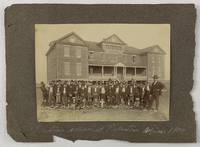
1900réf. 12717Pipestone Mn 1900. Sepia-toned photograph 4.75 x 6.75 inches mounted on a gray sheet of paper manuscript caption reading "Indian school at Pipestone Minn 1900." Removed from an album. Photograph in excellent shape. Very good. A striking group photograph picturing a young teacher and fifty-five of his male Native American students posed in front of the imposing Boy's Residential Building at the Pipestone Indian Training School in 1900. The students appear to range from around five years of age to their mid-teens all dressed in similar pants white shirts and dark jackets. According to Minnesota's Carleton College: "In the 1890s the U.S. built the Pipestone Indian Training School on reserved quarry land and legal conflict soon followed. The Pipestone Indian Training School was one of many boarding schools that separated Native children from kin and land in order to assimilate them into American economy and society. These schools came about as attitudes towards the 'correct' treatment of Native people turned towards assimilation with the passage of the Dawes Severalty Act of 1887. Many Native people resisted boarding schools but the Pipestone Indian School inspired particularly active resistance for two reasons. First it was built illegally on Yankton Sioux reservation land. Second during the school's tenure management of the quarries fell largely to the white superintendent of the school instead of the Yankton people. unknown books
1875réf. 219541875. Feminism and Women's RightsEarly Women's Education Three House Commons bills on women's education 1875-1911. London: House of Commons Printing Office 1875 1910 1911. First printings. This archive charts incremental but foundational legal reforms to ensure British women's access to university education teaching professions and public educational funding across the late 19th and early 20th centuries. Each bill represents a distinct moment in the evolving struggle for gender parity in education from admission to universities to protection against workplace discrimination for married women. 1 Universities Scotland Degrees to Women Bill No. 6. A Bill to Remove Doubts as to the Powers of the Universities of Scotland to Admit Women as Students and to Grant Degrees to Women. Ordered to be printed 8 February 1875. Prepared and brought in by Mr. Cowper-Temple Mr. Russell Gurney Mr. Orr Ewing and Dr. Cameron. This early bill was designed to eliminate ambiguities in existing law that obstructed women's access to higher education in Scotland. It explicitly authorized the admission of women to universities and the awarding of degrees citing the earlier 1858 Act that governed Scottish university operations. The bill's clarity and precision reflect Parliament's growing engagement with women's academic rights. Four pages. Toning and faint pencil note to upper corner. Very good. 2 Education Girls Bill No. 70. A Bill to Extend the Duties and Powers of Educational Authorities with Regard to the Training of Girls. Ordered to be printed 14 March 1910. Presented by Sir Charles McLaren supported by Mr. Atherley-Jones Mr. J.M. Robertson Mr. Snowden and Mr. Theodore Taylor. This substantive legislative effort addressed gender inequality in employment and access to education. It proposed barring dismissal of female teachers upon marriage mandating that publicly funded institutions provide equal access to women and reallocating endowments for equitable gender distribution. Sections also provided for training in domestic arts and midwifery. Eight pages total including title and memorandum. Light crease to margin; near fine. 3 Education Girls Bill No. 153. A Bill to Give Better Educational Facilities to Women. Ordered to be printed 3 April 1911. Presented by Mr. Snowden supported by Mr. Atherley-Jones Mr. J.M. Robertson and Mr. Theodore Taylor. This later iteration reaffirms and slightly refines the provisions of the 1910 bill. It reiterates non-discrimination against married women teachers reasserts the equal access requirement for institutions and funding and continues the support for domestic arts and midwifery education under the 1902 Act. The bill's expanded language reflects the increasing integration of feminist principles into public educational policy. Eight pages total. Crisp and clean with only minor toning; near fine. Paper lightly toned with light edge wear as expected. Overall very good to near fine condition. A critical collection of original legislative printings representing England and Scotland's shifting stances on gender equality in education and employment. unknown books
1947réf. 010564Philadelphia: John C. Winston 1947 16 pgs including cover. 9 x 6 inch 23 x 16cm Color printed paper wraps. A prospectus for the learning-to-read system "Easy Growth in Reading" sold by John C Winston Company. The prospectus gives details for each reading level including a helpful chart which demonstrates how many new words are introduced for each level of the program. The booklet is illustrated in color throughout with examples of the artwork which appears in the books. Artists include such well-known names as Armstrong Sperry Erick Berry Henry C Pitz Corinne Malvern etc. No date circa 1947. Pictorial Wraps. Near Fine/No Jacket. Illus. by Various. 8vo. John C. Winston unknown books
1828réf. 17578Philadelphia: American Sunday School Union n.d. ca. 1828 Early edition. The earliest copy noted by OCLC apparently has 1828 on the title-page and this copy can't have been published much later. OCLC also only lists copies that claim to be revised as ours does. A scarce book regardless as OCLC lists only thirteen physical copies of any edition. We could find no indication of who the author is. Quarter red roan over marbled boards gilt-lettered spine. Twelvemo. Engraved frontispiece. Binding extremities a bit worn and rubbed. Lacking blank preliminary and terminal leaves. Very light foxing the occasional minor stain. A very good copy of a rare fragile book. The present work consists of four dialogues each between two characters that wish to instill morality in young readers by addressing the following topics: keeping good company reading the Bible on collecting donations for church rising early regular and punctual attendance at Sunday school animal cruelty dog fights cock fighting etc. violence for sport fist-fighting and more. American Sunday School Union, hardcover books
1808réf. 197171808. Weidner Samuel. Early 19th-Century Barter Arithmetic Notebook of Samuel Weidner of Bucks County Pennsylvania is an 1808 to 1829 manuscript documenting practical mathematics education and commercial calculation in the early Republic. Begun when Weidner was about seventeen and continued intermittently into adulthood the notebook records arithmetic as a working intellectual skill tied to trade currency conversion profit and loss partnership accounting and barter exchange. Its long span provides unusually direct evidence of how one Pennsylvania student preserved and revisited mathematical rules across the transition from schooling to adult use. Weidner Samuel. Early 19th-Century Barter Arithmetic Notebook of Samuel Weidner of Bucks County Pennsylvania. Bucks County Pennsylvania 1808-1829. Manuscript arithmetic notebook 62 handwritten pages approximately 12" x 7½". The notebook is organized into titled lessons including "Loss and Gain" "Fellowship" and "Exchange" each followed by manuscript definitions rules and worked examples. Under "Loss and Gain" Weidner writes "Loss and Gain is a method of computing the profits or loss on the purchase or sale of goods" and connects the rule to "Barter." In "Fellowship" he defines the subject as "the rule for adjusting the several quota of the loss or gain of any joint adventure of a bankruptcy effect" adding that "the sum of the several shares must equal the whole gain or loss." The "Exchange" section addresses conversion between monetary units through the "rule of three" while long division examples include extended problems such as "1265.50 divided by 165191.02" and "2000 divided by 6840912." The notebook records the commercial orientation of early nineteenth-century arithmetic instruction in rural Pennsylvania where mathematical study prepared students for market transactions bookkeeping shared ventures debt and practical financial reckoning. Light soiling and handling wear consistent with a working manuscript; handwriting remains clear and legible throughout all 62 pages. Overall very good. A substantial Bucks County student manuscript preserving the rules examples and applied logic of early American commercial arithmetic over more than two decades. unknown books
1914réf. 196171914. African American Literature Miller Kelly. Out Of The House Of Bondage. New York: The Neale Publishing Company 1914. First edition ex-library hardcover copy. No dust jacket. 242 pages. Measures 5.25" x 7.5". Out of the House of Bondage is a collection of essays by Kelly Miller a professor and administrator at Howard University and an important figure in the intellectual life of black America for close to half a century. Miller first attended Howard University on scholarship in 1882. While studying mathematics in 1886 under Captain Edgar Frisby he was recommended to attend Johns Hopkins University and became the first African-American student to attend the university and the to study graduate mathematics in the US. Miller was appointed as president of Howard in 1918 and built a new central administration. He published articles and weekly columns in black presses on education and race many of which were compiled together in this text. A sticker from Rochester Library is on the front pastedown. All pages are still attached to spine pages are very clean and neat. Overall in very good condition. Miller advanced the intellectual life of African Americans earning several advanced degrees and inspiring others to pursue education through his writings. unknown books
1925réf. 194211925. African American family archive. Dallas photographs and Booker T. Washington High School commencement material circa 1925 documents Black education friendship courtship and family life in segregated Dallas through four vernacular photographs and two graduation-related booklets. Booker T. Washington High School opened under that name in 1922 and was then Dallas's only public high school for Black students drawing pupils from African American neighborhoods across the city. The archive records a 1925 graduating class of thirty-nine students including thirteen young men while the accompanying portraits preserve the informal social relationships surrounding school-age life beyond the classroom. Together these primary materials support research into African American education youth culture gender domestic settings and community formation under Jim Crow. Dallas Texas circa 1925. Six pieces as described: four sepia-toned black-and-white photographs and two printed Booker T. Washington High School booklets comprising a commencement program and a separate class-roll booklet; the original inventory's stated total of five items should be verified. The photographs measure between 2½ by 3 inches and 3 by 4½ inches. They show a young couple posed together a young man identified in manuscript as "my sweetheart" a girl seated outdoors beside a house and friends perched along a stone wall beneath the caption "a happy moment of my life." These images document formal and informal modes of self-presentation including romantic identification domestic surroundings and collective recreation. The printed material names the class motto as "Solidarity" identifies the class flowers as the white carnation and fern and lists thirty-nine graduates twenty-six young women and thirteen young men. The commencement address was delivered by J. F. Williams of Paul Quinn College the African Methodist Episcopal institution then located in Waco; available institutional chronologies place Williams in the college presidency during the mid-1920s although the exact beginning of his term varies among secondary accounts. 1-4 Unidentified photographers. Four family and student-life photographs. Dallas Texas circa 1925. Individual images depict a couple a young man captioned "my sweetheart" a girl seated outside a residence and several friends atop a stone wall captioned "a happy moment of my life." Their association with the graduation papers suggests a shared family or student provenance but the sitters' identities and exact dates remain unverified. 5 Booker T. Washington High School. Commencement Program. Dallas Texas 1925. Program for the graduation exercises of Dallas's segregated public high school for Black students recording the class motto "Solidarity" the white carnation and fern as class flowers and an address by J. F. Williams of Paul Quinn College. 6 Booker T. Washington High School. Class Roll. Dallas Texas 1925. Separate booklet listing thirty-nine graduates including thirteen male and twenty-six female students providing a named record of educational attainment within the city's Black community three years after the school assumed the Booker T. Washington name. Photographs removed from album leaves with residual adhesive on the versos; other individual defects are not supplied overall good. A closely associated group joining official evidence of Black educational achievement with intimate vernacular photographs of the young people and social relationships surrounding a 1925 Dallas graduating class. unknown books
1931réf. 17287New York: The Platt and Munk Co 1931 First edition.This seems to be one of the earliest Platt and Munk children's book catalogues. OCLC locates no copies and we could not locate any other copies of the 1931 catalogue in the trade at this time September 2022. Color printed paper wrappers illustrated by Eulalie Banks. 7 x 10 in. . Illustrated in black and white on every page with images of children's books in the Platt and Munk Star Books for Children series including activity books paper dolls anthologies of fairytales and verse stories like Little Black Sambo literature and educational early readers for young children. A couple patches of minor toning to wrappers. A bright clean near-fine copy of this rare catalogue with the original mailing envelope addressed to San Ramon California and a typed letter on Platt and Munk Co. stationery. Eulalie Minfred Banks 1895 – 1999 was a painter and children's book illustrator. Born in England Banks spent her later years in Southern California where she painted murals for Charlie Chaplin Ann Harding and Harold Lloyd. Banks also painted a mural in the old Santa Monica Public Library Boys and Girls room. The Platt and Munk Co books
1863réf. 17243Boston: Prang & Co. 1863 First edition. These are the first two volumes in a set of six. OCLC records seven institutions with at least parts of the set: the Morgan Library Library of Congress Winterthur Museum University of Florida Cincinnati PL Library Co. of Philadelphia and Penn State. Not all of these institutions have full sets and at least one of the libraries LOC holds a copy that lacks leaves. Publisher's green paper wrappers. . Two volumes 4 x 6 . Black leaves illustrated throughout with line drawings in white. These drawings were meant to be copied onto a blackboard by students. Back covers with L. Prang & Co. ads. Some chipping and soiling to wrappers. Pencil markings on a couple pages in volume one. Otherwise clean throughout. A very good set of uncommon and fragile educational booklets. Copying drawings onto a blackboard was a common educational method at the time. The practice tested students' abstract thinking skills and their hand-eye coordination. Froebel for example believed that a student's ability to translate an image they saw into an image they could represent through art was crucial to mental development. Prang & Co., books
1844réf. 17156Boston: Munroe and Francis 1844 First edition fourth printing. Originally published by Munroe and Francis in 1838. All printings are uncommon. OCLC records eleven copies of this printing fifteen of the 1839 and no more than a few copies of any other printing. Contemporary black cloth wrappers rubbed with spine of text block partially detached from gutter. . 4 in. x 5 in. . With seventy engraved vignettes illustrating educational rhymes e.g. a boy fishing to accompany "Four times eight are forty-eight / I wish that I could get some bait". Also with an additional engraved title and printed floral borders on each page. Engraved title loose laid in at original position. Some foxing as usual. A good sound copy of an uncommon and fragile educational item for children. Uses instructive vignettes to illustrate the times tables from one through twelve. The simple rhymes include "Six times nine are fifty-four / My little boat has come ashore" and "Nine times nine are eighty-one / See how fast the horses run." Munroe and Francis, hardcover books
1876réf. 170421876. Vail Amy memory album 1876 to 1882 documents women's education female seminary culture and school friendship networks linking New York and Massachusetts in the late nineteenth century. Kept by Amy Vail while she attended Newburgh Female Seminary in Orange County New York and later Miss Burnham's School in Northampton Massachusetts the album records how young women used manuscript memory books to preserve poems affectionate inscriptions school identity and parting sentiments across changing educational settings. Vail Amy. Memory album. New York Massachusetts and other locations 1876 to 1882. Manuscript autograph album with 36 handwritten entries. Original black leather boards with gilt decoration to spine and front cover 8.5 x 7.25 inches. Entries come chiefly from young women identified as friends and schoolmates with locations including Newburgh Holyoke Northampton Philadelphia Chicago Colorado and elsewhere. Earlier entries from 1876 to 1879 center on Newburgh Female Seminary including one signed by Kittie Kennedy as "Your Loving Schoolmate" and located at "Newburgh GFS." Later entries from around 1881 identify Miss Burnham's School in Northampton indicating Vail's movement between female educational institutions. One playful inscription turns her name into a sentimental school pun: "For having a lovable girl in the present they Christened her 'Amy' for ever" while another asks remembrance through seasonal and domestic imagery: "When around thee dying Autumn leaves are lying.Oh! still remember me." The album provides evidence of the literary and emotional forms through which female students sustained friendship marked school affiliation and recorded educational transitions in the decades after the Civil War. Spine worn original boards intact manuscript entries legible very good. A strong manuscript record of women's education female seminary life and geographically dispersed schoolgirl networks in nineteenth-century America. unknown books
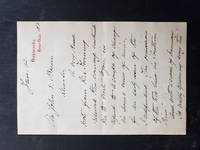
1900réf. 170551900. Hazard Caroline autograph letter signed circa 1900 documents women's higher education and literary publication through correspondence between Wellesley College's fifth president and John E. Bowen editor of The Independent. Written during Hazard's presidency the letter shows the editorial process by which a woman educator and published poet negotiated textual revision theological language and periodical authorship providing primary-source evidence for the study of women college presidents women's literary labor and print culture at the turn of the twentieth century. Hazard became Wellesley president in 1899; during her eleven-year tenure enrollment doubled new departments and buildings were added and faculty salaries improved. Hazard Caroline. Autograph letter signed. Peace Dale Rhode Island: Oakwoods letterhead January 12 circa 1900. 3 pages. 4.5 x 6.75 inches. Addressed to John E. Bowen editor of The Independent and signed "I remain very truly yours Caroline Hazard." Hazard writes "in regard to a couple of changes in some verses of mine for an early issue of The Independent" accepting "The omission of two lines in 'Southern Pines'" but objecting to changing "Mother" to "Father" in "Renewal" explaining that "It changes the idea entirely" and adding "Nature I perceive cannot be a father; but it surely can bask in the smile of the All Father." The letter's attention to wording gendered metaphor and religious meaning makes it a useful document of Hazard's literary judgment as well as her public intellectual identity. Written from Peace Dale Rhode Island Hazard's birthplace and home community the letter connects her presidency at one of the leading women's colleges with her continuing work as a poet and author. Remains of prior mounting on blank verso light toning mailing folds very good. A concise manuscript record of a prominent woman educator's participation in periodical publication and literary revision during the expansion of women's higher education. unknown books
1863réf. 170711863. Emily Hodgson. Women's education and suffrage activist. Autograph Letter Signed by Hodgson on December 31 1863. Massachusetts. 14-page letter on from the seminary days of author Emily Hodgson profiled by close friends and suffragists Frances Willard and Mary Livermore in A Woman of the Century 1893. 8 x 5 inches. 14 pages of lined white stationary. At this time Hodgson was a student at the prestigious Ipswich Female Seminary an early school for girl students where she wrote in lively prose about the New Year's party she prepares to surprise her classmates and hints at her early literary ambitions. About living in a dormitory and celebrating New Year's Eve with other students: "Such a gay time as the six damsels that board in this house are having tonight! As we are all ''young ladies" Mrs. Cowles has given us permission to sit up till quarter past twelve. I was commissioned to provide refreshments arrange the table etc. and really I feel quite proud. None of the girls except my assistant have as yet seen it and I know they do not expect to see quite such a grand affair grand for Boarding school . " New Years Eve don't come but once a year" I hear one of the girls exclaiming. I know they are coming to see why I am so long- Sure enough- and now they are gone." About her early writing attempts: "I have had a letter come from an old teacher of mine. And I know you won't think me vain if I send it to you for as you fly so hard to have me do well and are the means of my enjoying myself so much and giving what enjoyment I am able to others around me I know it will please you to see that I sometimes succeed . she like Mrs. B is not ordinary woman . she is a very finely educated lady. and I feel pleased that she should like my feeble endeavors. The lady Miss Briggs who writes the note enclosed has been composition teacher here for a long time. You would hardly judge from this not which is far from a good letter from her that was very easy and elegant with her pen. She has written three or four prize essays and won the prizes." Ipswich Female Seminary was founded in Massachusetts in 1828 and the school's focus was on preparing girls for careers as teachers and missionaries. It offered a "rigorous curriculum" including study of English arithmetic geography chemistry human physiology history the natural sciences religion vocal music and calisthenics and placed an emphasis on "standards of personal conduct and discipline." As part of their preparation students practiced teaching with guidance from school instructors. Mild toning and a few light stains. All sheets except 1 have minor tape repairs at folds. In very good condition. A unique and personal piece of early Female Education history. unknown books
1850réf. 170931850. Archive of 7 letters totaling 18 pages spanning the years 1845-1900. The letters detail the administration of women's seminaries during a time when these institutes were being created to offer educational opportunities for female students as they prepared to become teachers. One admissions letter addressed to the father of two students reads "Dear Sir I am happy to inform you that your daughters can be admitted to the Seminary agreeably to your request. And that rooms will be selected and and reserved for them. The next term will commence on Thursday the 15th." In a series of letters written between teachers cheerful complaints are detailed " I like teaching very well though I think I have found more pleasure in studying. I like it so long as I can keep my class interested. Sometime I can easily do this at other times I find it more difficult then it is that I get discouraged and think that it would be easier for me to learn a lesson and recite it myself than to see that a half dozen mischievous girls get theirs." During the mid-nineteenth century female seminaries were a cultural phenomenon succeeded the family-like environment of boarding schools to be structured more like men's colleges. The development of the female intellect was seen as a responsibility one educators took seriously. In one somewhat humorous letter on the rigor of examinations a professor writes "I have been more busily engaged than even you can imagine. I took it into my head to get up a semi-annual Examination which draws heavily upon my time and energies and to cap the whole I narrowly escaped the loss of one of my eyes. A piece of red hot burning coal few into it." A letter written from a professor to student reveals the mentorship fostered in these institutions "Dear Madam I am entering your name as a candidate for the Classical Scholarship. The examination will take place on Wednesday Thursday & Friday the 14th 15th & 16th of March at Newnham College. You will have to come to Cambridge on Tuesday probably in time to read for the examination on Wednesday morning but most likely you will & leave on Friday afternoon. If you would like us to arrange for board and lodging for you please let us know. It will cost you 3 / b per night." The seminaries were private institutions without public funding so finding donors was imperative. In one letter a John P.LeRoy writes to a friend asking for such an investment "Mr. Boyd of the Monroe Female Seminary said that if you could furnish capital enough he did not know but he would like to take you as a partner in his school but as I supposed from what he intended that he would want a partner with some three thousand dollars at least to invest." In a letter written by one headmaster after being let go from his position the administrative structure of the seminary is alluded to "I regard the action of the Committee as neither just kind nor courteous.Up to the meeting of the Comm. In May I had never received any intimation that the Comm. or the patrons of the school were dissatisfied with my administration." And in one snapshot of student life during a measles outbreak in Ohio dated 1873 a student writes to her mother "I thought I would write and ask you if I have ever had the Measles as we have them in school now. If I have not I don't want to have them here. One of the girls is going home Saturday. She is exposed and has never had them & she is going home to have them. This is a mighty poor place to get sick. I never thought the Measles ended in such serious things as they do sometimes that is if you get cold. The girls were talking about the different way in which they effect persons. The mumps are raging too." These letters give a unique portrait of the administrative obstacles and successes across a small set of female seminaries during these institutions burgeoning years. unknown books
1944réf. 171651944. Women Education Scrapbook from a woman student at co-educational Oswego State Teachers College filled with 141 pieces of ephemera including newspaper clippings full-issues of the campus paper ticket stubs programs invitations and more. 1944-1947. Original paper wraps. 15 x 11 inches. 80 pages. Large color image of fall foliage on front cover. Originally belonged to Marjorie O. Walker of Woodridge NY. Includes rich material from Oswego College as well as items from the schools in New York where Ms. Walker was employed following graduation. Many newspaper clippings and other items are related to WWII and its effects on students. Article from LIFE Magazine dated Aug 21 1944 about "Refugees Arrive From Europe" with 16 photo-illustrated images of Jewish refugees at a facility at Fort Ontario in Oswego. Another 1944 clipping: "Training makes Aviation Group Physically Fit. the men who have gone from Oswego to the classification centers have been outstanding in physical activities. The Air Corps program as carried out in the college training centers develops physical fitness strength and eagerness for combat." Other headlines such as "Oswego Graduate Killed in Crash"; "Post-War Plans Found Indefinite"; "49 Awarded Degrees at Oswego College 66 in Service 1 Dead". Printed documents giving updates on Oswego graduates now serving in the Armed Forces. Numerous items from social events - both on campus and later. Programs for: 1944 St. Patrick's Day Party Womens Athletic Association installation Banquet "Lawn Party" for graduating seniors several "Alumni Day" events and religious services. Printed lyrics for the song "Hail Oswego". 1944 Commencement Program which lists her own name among the graduates. Playbill for the 1945 Broadway production of "Deep are the Roots" about a decorated African-American soldier who has returned from WWII. Schedule and map for the Lackawanna Railroad connecting New York Buffalo Cleveland Detroit and Chicago. Correspondence and documentation from New York State Teachers Association Woodbridge High School Fallsburgh High School Mountaindale High School Liberty High School and Pearl River Public Schools in New York. She cared deeply for her students as shown in a 1947 correspondence with the Junior American Red Cross in support of a program for her high school students. The State University of New York at Oswego was founded in 1861 as the Oswego Primary Teachers' Training School; this institution embraced and popularized some of the most innovative teaching methods of the day. The school led the Oswego Movement of educational reform in the United States which sought to emphasize that every aspect of the child's life contributed to the formation of their personality character and capacity to reason. These educational methods were child-centered and based on individual differences sense perception and the student's self-activity. In 1942 the New York state legislation elevated Oswego from a Normal School to the 4-year bachelor's degree-granting Oswego State Teachers College. In 1948 Oswego became one of the State University of New York's charter members. To meet the expanded need for specialized instruction the institution broadened its academic perspective to become a full-fledged arts and sciences institution in the SUNY system and featuring a range of liberal and professional studies by 1962. Pages are thin with a few very small closed tears at edges. In very good condition. unknown books
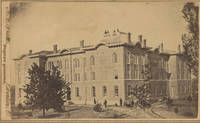
1868réf. List1022Oberlin 1868. Albumen photographs 2 ½ x 3 ½ inches on larger mounts. Some fading to one of the photographs other image with excellent contrast near fine condition overall. Near Fine. An uncommon early pair of views of the Second Ladies’ Boarding House at Oberlin College in the 1860s taken at a time when Oberlin was one of few coeducational colleges having first admitted women in 1837. Oberlin’s Second Ladies Hall was built in 1861-1863 and featured Itlianate architecture and a rooftop balcony. The building was opened for student accommodations in 1865. The first floor held an assembly room a reading room a dining room parlors and stewards’ quarters. The second and third floors housed 100 women. The building was destroyed by a fire in 1889. unknown books
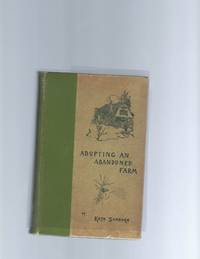
1899réf. 166821899. Sanborn Kate. Early Women Author and Teacher at Smith College. First Edition Signed Inscribed and signed by the author on the front free end paper Sanborn writes in her hnad: " Let her wait! Her time/ aint worth nothin! Antique Hero/ Kate Sanborn". Printed in New York 1899 12 mo; 171 pages; plus 2 pages of ads; original green glit- stamped cloth spine and white paper stamped in green over boards Kate Abbott Sanborn 1839-1917 as lecturer at Smith College. In its early days Smith College called her to teach English literature and here she created the "Round Table Series of Literature" once published and used by many teachers. She wrote over 40 lectures4 but among her best-known works were Adopting an Abandoned Farm and Abandoning an Adopted Farm Witty Records of her original ideas regarding farming which she put into practice upon an abandoned farm which she purchased near Boston. Some of her other books were Home Pictures of English Poets A Truthful Woman in Southern California Vanity and Insanity; Shadows of Genius Purple and Gold. She was instrumental in gathering and publishing a valuable historical work on New Hampshire. In 1885 she published an anthology The Wit of Women in response to an ongoing debate in literary circles as to whether women had a sense of humor. Front hinge split and inscription page has detached but binding still sound Corners a bit bumped and rubbed. Overall very good. unknown books
1815réf. 164271815. Ruffle Mary. Cross stitch sampler dated October 25 1815 documents the integration of literacy and needlework in early nineteenth-century girls' education in the United States. Created by a nine-year-old student the sampler records the instructional practice through which young girls demonstrated proficiency in both reading and fine needlework within domestic and academy settings. Alphabet samplers functioned as exercises in memorization and discipline reinforcing gendered expectations of education that emphasized refinement order and domestic skill alongside basic literacy. The object supports research into women's education childhood instruction and the material culture of early American schooling. Ruffle Mary. Needlework sampler. United States October 25 1815. Textile work measuring approximately 11.5" x 15" executed in cross stitch. The composition includes uppercase and lowercase alphabets the ampersand and numbers one through eight framed by a decorative border. The lower register is inscribed: "Mary Ruffle October 25 1815 Aged 9." Decorative motifs include trees vines flowers and a crown rendered in colored threads including navy orange pink dark green brown and white. The arrangement reflects common pedagogical formats used in female academies and home instruction during the period. Produced at a time when formal educational opportunities for girls were expanding but remained closely tied to domestic training samplers such as this served both as instructional tools and as records of accomplishment. Families often displayed these works as evidence of a daughter's education and refinement linking needlework to social identity and household status. Surviving examples provide insight into curriculum aesthetic conventions and the lived experience of young girls in early nineteenth-century America and have since become important artifacts in museum and archival collections documenting women's history. Moderate toning; minor thread fraying; overall in very good condition. unknown books
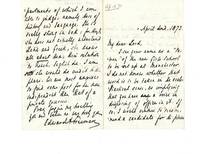
1873réf. 160861873. Freeman Edward Augustus. Autograph letter signed April 2 1873 recommends Scottish educator and historian Margaret A. R. Macarthur for appointment as headmistress of a new girls' school in Manchester explicitly arguing that her abilities warranted a position "more independent than that of a private governess." Freeman a historian who would later become Regius Professor of Modern History at Oxford had employed Macarthur as governess to his daughters for nearly five years and writes from direct experience of her teaching. His recommendation documents the professional transition available to an educated woman from domestic governess work to leadership in the expanding field of girls' secondary education and identifies history and languages as Macarthur's particular strengths. Freeman Edward Augustus. April 2 1873. Autograph letter signed to "My Dear Lord." Somerleaze Wells Somerset England. Four pages on a single folded sheet. Having seen his correspondent named as a "Patron of the new Girls School to be set up at Manchester" Freeman asks whether he has influence over appointments and recommends Macarthur for headmistress. "She is a woman of powers far above the common" he writes "and I can witness that she has practiced them well in the only two departments of which I am able to judge namely those of History and language." Freeman adds that although Macarthur did not know Latin and Greek directly "she knows all about them their relation to French English etc." As evidence of his confidence in her historical abilities he explains "I have set her to write one of my series of small histories a History of Scotland which I hope will soon be out." He concludes "I am sure she would do credit to the place. We are most anxious to find some post for her more independent than that of a private governess." Margaret A. R. Macarthur born in Scotland in 1842 subsequently published History of Scotland in Freeman's Historical Course for Schools confirming the literary project Freeman describes while it was still in preparation. The letter thus precedes publication and records Freeman using Macarthur's authorship as evidence of her qualifications for educational leadership. Although the supplied information states that Macarthur was not appointed to the Manchester position the reason given-that better-qualified candidates prevailed-cannot be established from the letter itself and is therefore omitted. Fine condition. Freeman's detailed recommendation preserves contemporary evidence of a woman educator seeking advancement beyond private governess work and of published historical scholarship being cited as a qualification for the headship of a girls' school. unknown books
1854réf. 165031854. Hale Sarah Josepha Woman's Record 1855 is a major nineteenth-century biographical dictionary of women by the editor of Godey's Lady's Book supporting research into women's education female authorship historical memory and the construction of women's achievement in antebellum American print culture. Hale described her purpose as preparing "a comprehensive and accurate record of what women have accomplished" and the volume gathers women's lives into a reference work meant to argue for women's intellectual and moral influence. Hale Sarah Josepha. Woman's Record; or Sketches of All Distinguished Women from Creation to A.D. 1854. New York: Harper & Brothers Publishers 1855. Second edition revised with additions. 1 volume. 900 pages. Illustrated with 239 wood-engraved portraits by Lossing and Barritt including frontispiece portrait of Hale. Original hardcover with gilt title and spine decoration. 4to 10 x 7 inches. The book includes entries on more than a thousand women across history literature religion politics reform and public life. The volume belongs to Hale's broader editorial program as one of the most influential women editors in the United States; she edited Godey's Lady's Book for decades promoted women's education supported women writers and campaigned for a national Thanksgiving holiday which Abraham Lincoln proclaimed in 1863. Extremities lightly worn with light foxing on first pages; very good. Substantial illustrated reference work documenting how women's historical authority was collected organized and defended in mid-nineteenth-century America. unknown books