66 résultats
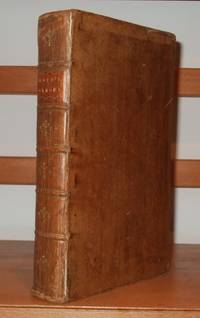
1775réf. c2412110474xbvkLouvain / Leuven, Belgium; 1775. Titlesheet (former blank front flyleaf), (9) pages 'Proemium Rhetorica / ...' and 'Deperiodo.', 5 blank sheets, pages 17-257 (of?), 1 blank sheet, blank rear flyleaf. - Vellum binding of the period over 5 raised bands with colour-marble-paper covered panel with vellum corners and red edges; small 4to.(ca. 19 x 16 x 2 cm).
1765réf. 11568Hamburg, durch I. C. Piscator, ( 1765). 20 S. (mit Kopf- u. Schlußstücken). Geheftet.
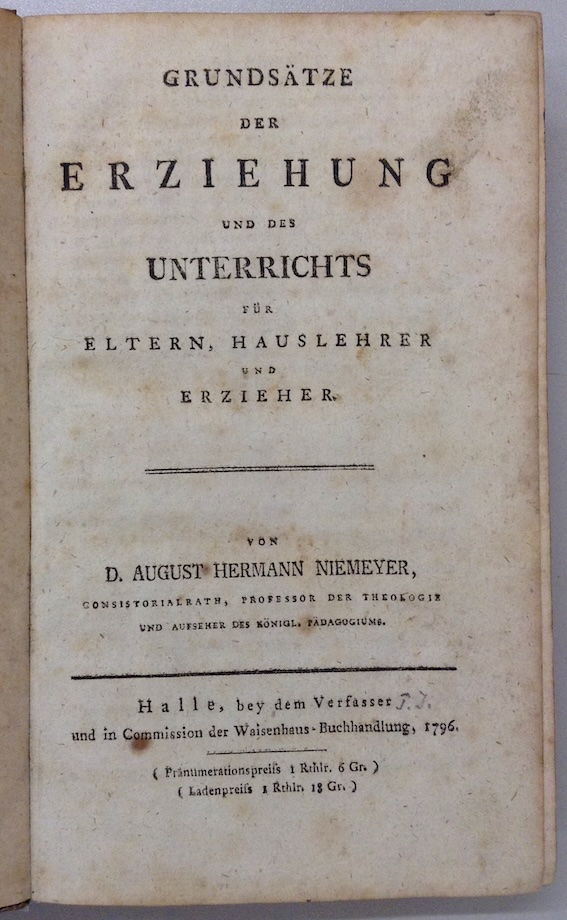
1796réf. 628240Halle, Waisenhaus, 1796. X, 660 S. Pappband d. Zeit mit neuem Rückenschild (berieben u. bestoßen, Rücken mit neuem Papier überklebt). [2 Warenabbildungen]
1718réf. 627501Breslau u. Leipzig, Blessing, 1718. 4to. 1 Bl., 8, 364 S., 3 Bl. Mit gestochenem Porträt. Moderner Pappband mit Rückenschild. [2 Warenabbildungen]
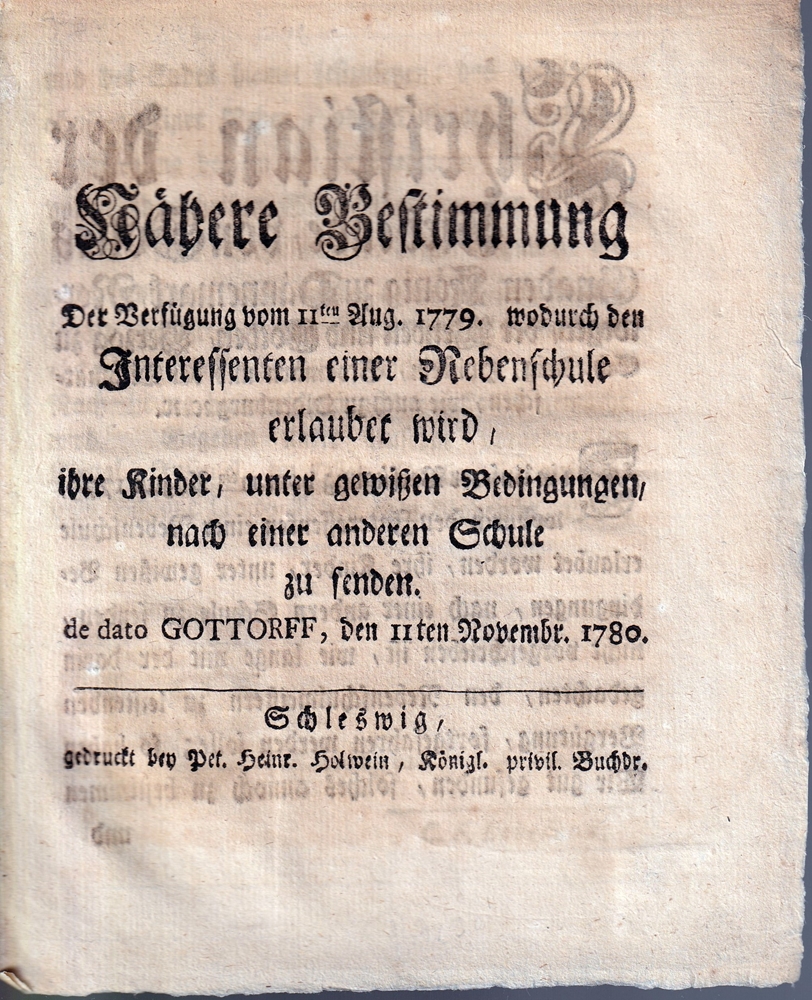
1780réf. 9230Schleswig, gedr. bei P. H. Holwein, ( 1780). 2 Bll. Unbeschnitten.
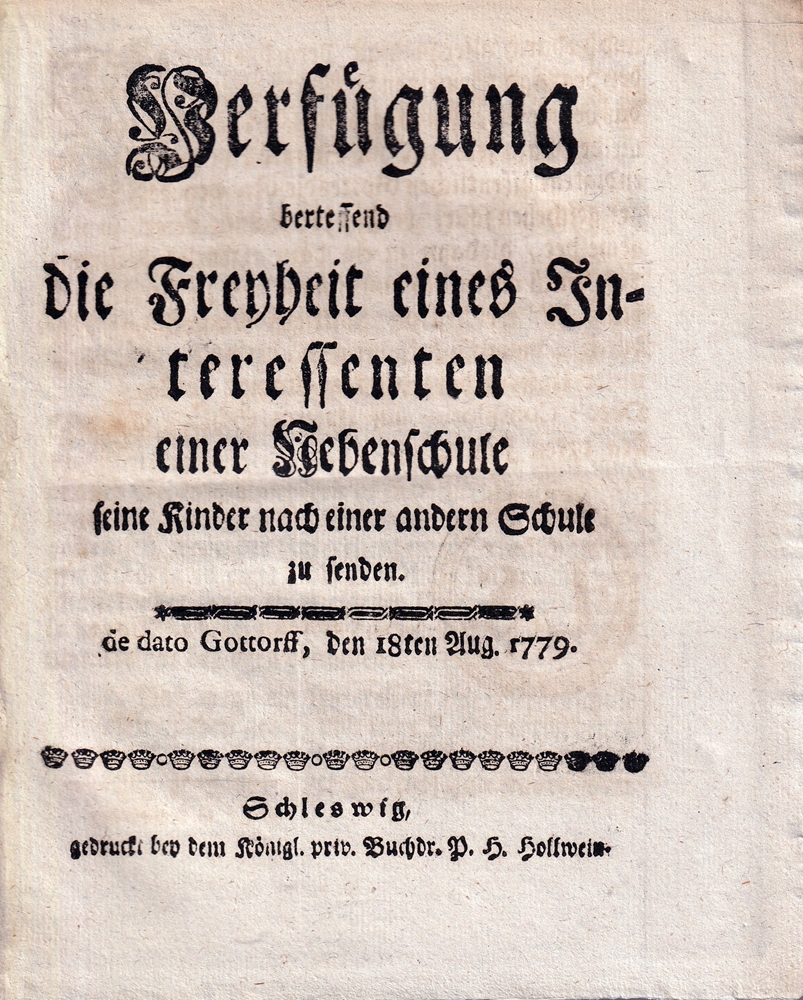
1779réf. 9260Schleswig, gedr. bei P. H. Hollwein, ( 1779). 2 Bll. Unbeschnitten.
1791réf. 38981791. 13 x 9 inches. Dark brown body colour on prepared paper. Inscribed "N.2.Stück" and "am 9ten Aprill 1791--nach der Natur gezeichnet von JEW" ink collector's stamp "Linel-Smlg. No." followed by pencilled number "1046" all on verso. Provenance: Linel ink collector's stamp on verso. A high quality image that clearly is drawn from life as the inscription claims. The artist's use of a dark prepared ground recalls the work of Barbara Regina Dietsch and her family. A search of Nissen's index of artists reveals one possible name: the Swiss artist Johann Emmanuel Wyss 1782-1837. However the maturity and assurance shown in the present drawing would seem to rule him out: he could have been no older than nine in April 1791. unknown books
1737réf. 262745London: E. Owen 1737. First edition. Double-page engraved frontispiece of Charterhouse engraved portrait of Sutton preceding Chapter I additional engraved plate of Sutton's tomb. xvi 275 1 pp. 8vo. Early 19th-century red straight-grained morocco a.e.g. Light rubbing to joints later gift inscription on ffep. First edition. Double-page engraved frontispiece of Charterhouse engraved portrait of Sutton preceding Chapter I additional engraved plate of Sutton's tomb. xvi 275 1 pp. 8vo. A life of Thomas Sutton 1532-1611 founder of the Charterhouse School in Smithfield London. E. Owen unknown books
1800réf. 225275England 1800. Watercolor drawing. 31.8 x 45.7 cm. 12-1/2 x 18 inches. Framed and matted. Watercolor drawing. 31.8 x 45.7 cm. 12-1/2 x 18 inches. Superb hilltop view of the old port in this village in North Devon showing several large frigates anchored in the bay sloops moored in the harbor cattle grazing on the slopes sea and sky in the distance. unknown books
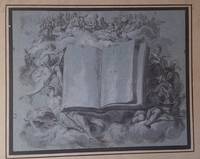
1750réf. 762Augusburg 1750. Original Drawing for Book Illustration. 160 x 197 mm. 6 ¼ X 7 ¾ inches. Drawn on blue paper laid down on 19th century paper. Black double fillet ink border. Shows some light wear but otherwise in very good condition. An attractive and well executed drawing in brown and white ink which illustrates the Book of Life surrounded by figures which probably illustrate the four seasons. This motif is crowned by a chorus of angels and saints also drawn in fine detail. Originally thought to be an Italian drawing the small-scale figures and the delicate pen strokes suggest the Augsburg School of the mid-18th century. Artists like Johann Wolfgang Baumgartner Joseph Christ and Godfried Göz all painters of considerable skill and reputation who also worked closely with local publishers creating designs for prints and book illustrations. The choice of blue paper and the application of white ink to heighten the image is typical of Augsburg style of the 1750's. For further information see Thomas Kaufmann's monograph Central European Drawings 1680-1800. Princeton 1989 and an essay by Peter Stoll in OPUS "Empire of Prints. The Imperial City of Augsburg and the Printed Image in the 17th and 18th Centuries" 2016. Both works are well illustrated and show examples of the drawings and prints from Augsburg artists during the period. unknown books
1794réf. 183235Paris: De l'imprimerie du Comité de Salut Public 1794. As owned by a prominent critic of Robespierre First edition of these lessons delivered at the short-lived military-civic school in the final months of the Reign of Terror where the instructors included such luminaries as Claude-Louis Berthollet and Antoine-François Fourcroy. This copy has the contemporary ink signature of "Rudel Du miral" on the title page. This is presumably Claude Antoine Rudel du Miral 1719-1807 a prominent critic of Robespierre in the National Convention. A common claim among Robespierre's opponents was that he intended to use graduates of the École as a paramilitary force to strengthen his own position in the Convention. Quarto 242 x 195 mm pp. ii 168 - 41 individual parts paginated mostly in 4s Contemporary quarter vellum spine with blue paper label blue marbled boards edges sprinkled red. Light bumping and wear infrequent minor browning and foxing to contents: a very good copy. BNF FRBNF33554332. hardcover
1765réf. 098733London: Printed for the Author 1765. Book measures 23 x 14.5 cm. Collation xxxix379pp. Bound in full period calf raised bands gilt lines and fluer-de-lis. Calf lightly rubbed top hinge joint split but board firmly attached some light fading. Anice clean attractive binding. Internally occasional light spotting. Pages in good clean condition. A very nice copy in a very nice period binding. . First Edition. Full Period Calf. Very Good. 8vo. Printed for the Author Hardcover
1796réf. Pa578London: J.S. Jordon 1796. 1st Edition . Paper. Fine. 8vo. . or a few words en passant: occasioned by his two letters on a regicide peace. From a tyro of his own school but of another Class.ii half-title 63 i pp. Dis-bound copy from a nonce volume. Printed 'A Tyro' at the end. Lacking covers. Rare item 4 copies only Copac. ESTC- T110091 J.S. Jordon unknown
1737réf. 262745London: E. Owen 1737. First edition. Double-page engraved frontispiece of Charterhouse engraved portrait of Sutton preceding Chapter I additional engraved plate of Sutton's tomb. xvi 275 1 pp. 8vo. Early 19th-century red straight-grained morocco a.e.g. Light rubbing to joints later gift inscription on ffep. First edition. Double-page engraved frontispiece of Charterhouse engraved portrait of Sutton preceding Chapter I additional engraved plate of Sutton's tomb. xvi 275 1 pp. 8vo. A life of Thomas Sutton 1532-1611 founder of the Charterhouse School in Smithfield London. E. Owen unknown
1711réf. 44322Ratisponæ regensburg Joh. Z. Seidel 1711. 12mo.Contemp. full vellum. Light wear. Old name on titlepage. 3250610 pp. Internally clean. Waller Nos 7810-48 but not this edition. - Wellcome IV pp. 493-94 but not this edition. The work includes the famous poem "Regimen Sanitatis." with commentaries. hardcover
1800réf. 63904Tokyo & Kyoto Japan: Kano School ca. 1800-1810. One 4to. art sample design portfolio sized 12.5 x 14 in. which folds out into giant montage of six large original late-Edo-Period Kano School screen designs on durable handmade Japanese rice paper measuring 110 x 75 in. carefully pasted as montage some titled as well as featuring ink manuscript painting instructions ordered counter-clockwise: “Bamboo scene” 47 x 38.5 in.; King Tang of Shang court scene 36.5 x 39 in.; 2nd Court scene 38.75 x 38.75 in.; Pine tree landscape 38.75 x 38.75 in.; Crane 28.75 x 39 in.; and Island pagoda landscape & pine trees 31 x 41.75 in six w/ original colour painting some colour painting & material instructions in Japanese all arranged to compactly fold and bound with colour woodblock illustrated cloth and old bookseller labels mounted on verso some repairs to corners to reattach the boards thumbing & minor tears a fold creases w/ a few occasional paper repairs at the first most frequently used fold minor creasing & edgewear dustsoiling to fold creases interior offset toning from sizing & paint colours still an extraordinary exemplar. This exceptional late-Edo-period original Kano School painting montage incorporates many of the elements developed by the famed multi-generational painters whom over four centuries revived and shaped Chinese idealist traditions into a uniquely vigorous Japanese art style. The Kano school painters emphasized landscapes Imperial court interior & exterior architectural elements colours uses of gold animal and botanical subjects often creating crowded panoramic scenes typically used in wall & door screens as well as triptych folding wall screens. The repeated instructions on these designs in Japanese by Sasayama Tsutsumu -- one of several Sasayama painters who took that name from the 18th- to 19th-Centuries in the Kano School beginning with Sasayama Yoi d. 1743 student of Kano Sunnobu 1636-1713 and subsequently four more generations afterwards nearly all adopted and chiefly serving the Chofu domain -- specify these designs are each one of three pieces. In addition there are ink manuscript memos appearing with directions on pigments for the final design work such as adding mica flecks or other paints & dyes and these sketches captured key features of a design so that students or other Kano artists could sufficiently enlarge recreated and fully understand the steps required for the finished decorative artwork pieces. The upper right first image presents bamboo looming in the weather emphasizing their connections to architectural features; The second and third designs capture the golden age Curt of the King of Shang in 1600 B.C. memorialized later as the Xia Dynasty; the fourth presents a rugged hillside and trees shrouded in clouds; the fourth a wonderful large crane apparently intended as part of a much larger piece; and finally the sixth lower right features distant pagoda temple shrouded mountains flower-bedecked pine tree in foreground and with delicate colouring and shading. Naganobu Kano fl. 1775-1828 and his son Osanobu Seisenin Kano 1786-1846 were of the Kobikicho family which carried on the Kano School traditions from 1730 until the Meiji Period and were instrumental in producing designs and screens for the Nishinomaru and Honmaru palaces which burned down in 1838 and again in 1844. Even though the paintings no longer exist similar original design such as these do survive in the Tokyo National Museum. Seisenin Kano was especially well known for his art adapted from his studies from ancient paintings at the end of the Edo-period. See: Kano School After the Middle of the Edo Period Art Nomura 2026; Matthew P. McKelway Rediscovering the Kano School Artforum Vol. 53 No. 5 Jan. 2015; Brief Biographies of Scholars Painters and Haiku Poets of Chofu Records of the Sasayama Family Painters of the Chofu Domain 2026. Kano School, hardcover
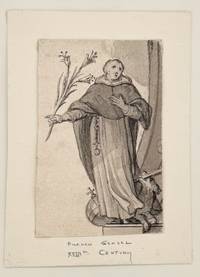
1750réf. 24931750. Very good. Ink and wash on laid paper 3 3/8 x 2 1/4 inches 87 x 58 mm the full sheet. In very good condition adhered to a slip of archival paper at the top and bottom sheet edges. St. Anthony is seen here holding a spray of lilies representing purity and his struggle against temptation. unknown
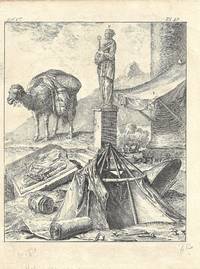
1780réf. 22271780. Very good. Engraving on lightweight laid paper with an small indiscernible alphabetic watermark 9 x 7 1/2 230 x 188 mm; sheet 11 1/4 x 8 1/2 inches 284 x 215 mm wide margins. In very good condition with some light inscriptions in pencil in the lower margin outside of the image area. unknown
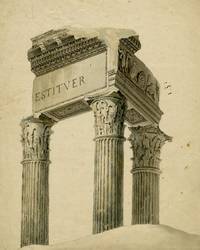
1800réf. 10251800. Very good. Ink and wash in black ink with pen in black ink on watermarked C & I Honig cream laid paper 14 7/8 x 12 1/4 inches 378 x 311 mm the full sheet. In very good condition with some minor areas of light brown spotting in the right-center sheet margin. An excellent drawing with fine detail. The ruins of the Temple of Vespasian and Titus are located in the Roman Forum in Rome. The temple is a marble ruin that honors the deified emperors Vespasian and Titus. Located near the Temple of Saturn all that remain standing are three Corinthian columns that formed part of the colonnade. The temple was also dedicated to the son of Vespasiano Titus. Construction started on this temple in 79 AD. unknown
1710réf. 1320Paris 1710. Very good. Etching on cream laid paper with a heraldic watermark with a fleur-de-lys 5 7/8 x 3 1/4 inches 147 x 81 mm wide margins. On the verso is what appears to be a printed passage discussing Jean Barbeyrac Baron perhaps from De Pufendorf's 4 volume commentary on natural law The Law Of Nature And People 1712. unknown
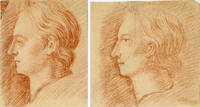
1790réf. 14111790. Very good. Red crayon on cream laid paper 3 3/4 x 4 inches 95 x 102 mm ; 3 3/4 x 3 1/8 inches 95 x 80 mm. Each with scattered early repairs done with non-archival tape on the verso; the smaller of the two drawings has a repaired corner upper-right with in-drawing in red crayon. Condition issues are all consistent with age and the versos remain largely uneffected. A lovely duo. unknown
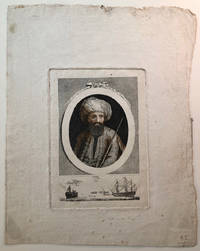
1770réf. 1201770. Very good. Steel engraving with hand coloring in brown ink on thick handmade laid paper. 150 x 104 mm; 6 x 4 1/8 inches full margins. Scattered light staining age tone light tone and light foxing. Appointed as Admiral of the Ottoman Navy in 1769 by 1770 Mandalzade Husamaddin Pasha had risen to the rank of High Admiral. On the heels of the longest period of peace with Europe 1747-1768 the first Russo-Turkish was raging and despite the fact that Husamaddin had inherited a weak and depleted Navy he was able to command his ships into a series of victories by capitalizing on Russia's deep financial strain. The forward progression wouldn't last long. Despite the fact that the Russian Navy had been in a lot of ways inferior to the Ottoman Navy and the Turkish forces had shorter supply lines and the ability to levy troops from their vassel state the Crimean Khanate the Russian Navy eventually opted to employ British officers to resolve their shortcomings. In addition relentless Russian destabilization of the area and brute action to undermine the government eventually destroyed the effectiveness of the Ottoman Navy. In 1774 the Ottoman Empire ceded two key seaports to Russia Azov and Kerch allowing the Russian Navy and merchant fleet direct access to the Black Sea. This war comprised but a small part of the continuous process of expansion of the Russian Empire which continued to bleed southwards and eastwards throughout the 18th and 19th centuries. unknown
1790réf. 16081790. Good. Engraving with hand coloring on laid paper 5 1/8 x 6 1/2 inches 130 x 160 mm the full sheet with unevenly trimmed margins. Multiple vertical creases and with the right margin having been fully reattached with clear tape on the verso. The top left corner has also been reattached with clear tape. There is some ghost text on the verso. Coloring is fresh yet delicate and extensive. One plate from an unknown English language publication. unknown
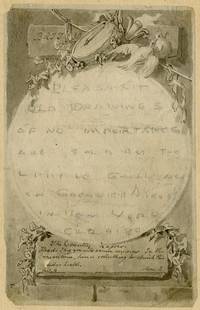
1780réf. 14231780. Good. Ink and wash on tissue thin Japon paper adhered to period cream laid paper 5 1/4 x 3 3/8 inches 132 x 84 mm the full sheet. With some handling wear and general surface soiling the matrix has some spots of light brown discoloration in the margins. A sweet composition with lovely detail. Written in ink appears "The Country illegible. Heart; I beg you will excuse illegible. In the meantime here is something to cherish this lady's health. Apr. 4 June 2." Inside the cartouche someone has written in pencil "Pleasant old drawings of no importance are sold by the illegible Gallery on Greenwich Avenue in New York CH 29184." The New York telephone exchange CH 2-9184 is the alphanumeric format for CHelsea 2-9184. unknown
1750réf. 11421750. Good. Etching on cream wove paper 14 1/2 x 9 1/2 inches 377 x 239 mm full margins. Scattered surface soiling and handling creases consistent with age. A rare anonymous image. An impression of this work can be viewed in the permanent collection of the Fine Arts Museums of San Francisco Accession Number 1963.30.33071. unknown