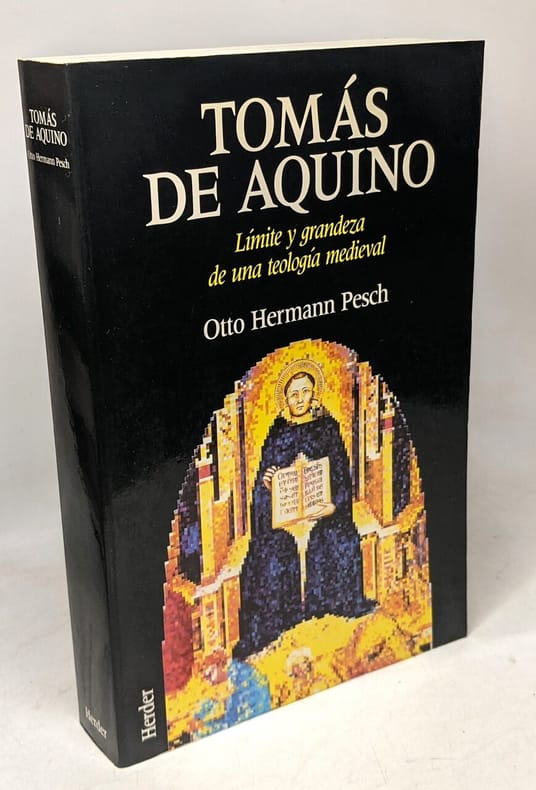
Pesch Otto HermannLivre Rare Book
Tomás de Aquino limite y grandeza de una teologia medieval
1992ref. 100133083Herder Editorial 1992 548 pages in8. 1992. Broché. 548 pages.
Un Autre Monde · Val Couoesnon, France€300.00
6,535 results
1836Period full leather binding, 8vo, 370 + [1] Leaves [740 + 2 pages]. In Hebrew. Printed entirely on Blue paper. Red and black lettering on title page. me-et Yosef Karo ; ?im Hidushe dinim me-et Mosheh Iserles; ve-im Baer hetev. Yehudah Ashkenazi, dayan di-k. k. Tiktin. The Shulchan Aruch, sometimes dubbed in English as the Code of Jewish Law, is the most widely consulted of the various legal codes in Judaism. It was authored in Safed (today in Israel) by Joseph Karo in 1563 and published in Venice two years later. Together with its commentaries, it is the most widely accepted compilation of Jewish law ever written. The halachic rulings in the Shulchan Aruch generally follow Sephardic law and customs, whereas Ashkenazi Jews generally follow the halachic rulings of Moses Isserles, whose glosses to the Shulchan Aruch note where the Sephardic and Ashkenazi customs differ. These glosses are widely referred to as the mappah (literally: the tablecloth) to the Shulchan Aruch's Set Table. Almost all published editions of the Shulchan Aruch include this gloss, and the term Shulchan Aruch has come to denote both Karo's work as well as Isserles', with Karo usually referred to as the mechaber (author) and Isserles as the Rema (an acronym of Rabbi Moshe Isserles). Due to the increased availability of the printing press, the 16th century was an era of legal codification in Poland, the Ottoman Empire and other countries. Previously unwritten laws and customs were being compiled and recorded; the Shulchan Aruch was one of these. In the century after it was published by Karo (whose vision was a unified Judaism under the Sephardic traditions) it became the code of law for Ashkenazim, together with the later commentaries of Moses Isserles and the 17th century Polish rabbis (WIkipedia). OCLC: 39808032/233341596. OCLC lists 3 copies worldwide (NLI, NYPL, JTSA). Period inscriptions on blank endpapers, Very Good Condition. Attractive blue paper copy. (RAB-66-29)
1992ref. 100133083Herder Editorial 1992 548 pages in8. 1992. Broché. 548 pages.
1744ref. J73919Francfurti & Lipsiae [Frankfurt & Leipzig], Ex officina Knochiana 1744 vol 2 (out of 2): 500 + [27]pp., 26cm., full leather binding (gilt lettering and decorations on spine, gilt decorations on edges of cover, leather slightly rubbed, corners bit bumped, small pieces detached from spine), title page printed in black and red, vignette on title page, title-vignettes, few foxing, generally good, text in Latin, [this second volume contains "Liber sextus" - "Liber septimus" - "Liber octavus" - "Index auctorum" - "Index rerum"; Samuel von Pudendorf, 1632-1694, German jurist, political philosopher, statesman, economist and historian], J73919
1744vol 2 (out of 2): 500 + [27]pp., 26cm., full leather binding (gilt lettering and decorations on spine, gilt decorations on edges of cover, leather slightly rubbed, corners bit bumped, small pieces detached from spine), title page printed in black and red, vignette on title page, title-vignettes, few foxing, generally good, text in Latin, [this second volume contains "Liber sextus" - "Liber septimus" - "Liber octavus" - "Index auctorum" - "Index rerum"; Samuel von Pudendorf, 1632-1694, German jurist, political philosopher, statesman, economist and historian], J73919
ref. DADAX0199759448New unknown
1880Very Good Turkish, Ottoman (1500-1928) Original cloth bdg. Foolscap 8vo. (18 x 12 cm). In Ottoman script (Old Turkish with Arabic letters). [16], 318 p. Lithographed Edition. Early edition of this first translation of Fenelon's "Telemaque"; made by Yusuf Kamil Pasha (1808-1876), under the influence of the leading French writers and thinkers like La Fontaine, Racine, Voltaire, Montesquieu, Rousseau; which introduced early Ottoman / Turkish literature to the utopian city called "Salante" for the first time. Özege 20335.; This edition cannot be found in OCLC. (Utopias from the Middle East 2).
1967Very Good Turkish Original wrappers. 12mo. (16 x 12 cm). In Turkish. 16 p. First and only edition of this extremely rare pamphlet written by Turkish Islamist-Nationalist journalist Eygi, who criticizes the understanding of Islam in the 1960s, through the symbol of the first fictional utopian land and vision in Turkish literature called "Darürrahat" [i.e. The Door of Peace] in Ismail Gaspirinskiy (1851-1914)'s book "Darürrahat Müslümanlari" [i.e. The Muslims of Darrürrahat] published in 1887, in Kazan. Mehmed Sevket Eygi was a Turkish journalist, writer, columnist, and Holocaust denier. He had Islamist-nationalist views. After graduating from university in 1956, he worked as a translator at the Directorate of Religious Affairs for two years. Eygi began publishing the daily Bugün newspaper and its publishing house in 1966, where this book will also be published as the third book of the publishing house. While making this criticism, he used the first utopia text of Turkish literature called "Darürrahat Muslims" by Gaspirinskiy as a symbol. Ismail Gaspirinskiy (or Gaspirali) was an ideologist, author, journalist, publisher, educator, and major. Gaspirali's work called Muslims of Darurrahat (Comfortable Country) was published in 1891 after the first issuance in Tercuman Newspaper as the continuation of Letters of Frengistan. Cannot be found in any data as well as OCLC. (Utopias from the Middle East 1).
ref. DADAX0195168658New unknown
ref. DADAX0415298814New unknown
ref. DADAX9400774699New unknown
ref. DADAX0190204532New unknown
ref. DADAX0199251436New unknown
ref. DADAX0199241325New unknown
ref. DADAX0415823803New unknown
ref. DADAX0367901250New unknown
ref. DADAX0415535611New unknown
ref. DADAX041589994XNew unknown
ref. DADAX0415623413New unknown
ref. DADAX0415298792New unknown
ref. DADAX0415583772New unknown
ref. DADAX0415138116New unknown
ref. DADAX0419257705New unknown
ref. DADAX0415956471New unknown
ref. DADAX0415725283New unknown
ref. DADAX0415815002New unknown