936 resultados
1969ref. z014520Washington DC: Bureau of Narcotics and Dangerous Drugs U.S. Department of Justice 1969. Paperback. Very Good. 1969. Paperback 8vo. in tan printed wraps. 18pp. not illustrated illustrated includes details about the Bureau following its establishment in 1968 and new Narcotic and Drug laws and reefer madness tinged information on marijuana hallucinogens narcotics bibliographies a film list &c. Very good. Wraps toned and foxed light edge wear. Contents unmarked. Bureau of Narcotics and Dangerous Drugs, U.S. Department of Justice paperback
1967370 p. Profusely illustrated with photographs. 110mm. Original full cloth binding. Original worn dust jacket. Hardbound. Very good. VERIA BX 2
1963ref. 785981963 Editions Denoël, Collection "Présence du Futur" N°65 - 1963 - In-8 broché, jaquette illustrée en couleurs - 220 pages
2019br. Coca, farlopa, perico, fariña. Nella storia galiziana nessun prodotto è mai stato commercializzato con tanto successo. Negli anni ottanta e novanta infatti quasi tutta la cocaina che sbarcava in Europa faceva il suo ingresso dai porti della Galizia, che allora ha rischiato di trasformarsi in un vero e proprio narcostato. Oltre alla posizione geografica privilegiata, la Galizia aveva tutte le carte per diventare una "nuova Sicilia": ritardo economico, una tradizione secolare di contrabbando via terra, mare e fiumi, e un atteggiamento di tolleranza ammirata verso una cultura criminale ereditata dall'epoca degli "inoffensivi" e "benevoli" boss del tabacco. I clan, potenti e intoccabili, sono cresciuti in un clima di massima impunità grazie all'inerzia - se non alla complicità - della classe politica e delle forze dell'ordine. Attraverso le testimonianze dirette di boss, piloti di aerei, pentiti, giudici, poliziotti, giornalisti e madri di tossicodipendenti, Nacho Carretero disegna con minuzia uno scenario criminale spesso sottovalutato, ma che ha annientato il tessuto sociale, economico e politico della regione spagnola, che ancora oggi paga il prezzo delle attività dei clan del narcotraffico, tutt'altro che estinti.
1970525 p. illus., ports. In Serbian (?) Detailed histoy of pharmacy and drugs in former Yugoslavia. Scarce. // Pharmacy -- history.†
Roma, Editrice C.I.D.S., 1979, in-8, br., pp. (81). (Disagio sociale a Firenze, testimoniato nella crudezza di alcune immagini).
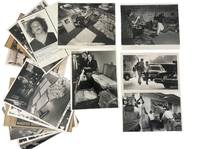
1970ref. 231661970. Narcotics raids arrests rehabilitation scenes and evidence displays across Florida in press photographs and magazine pages. Photograph archive spanning Miami Fort Lauderdale Pasco County and related Florida sites from 1970 to the early 1990s establishing how drug control operated through police action newspaper circulation and treatment institutions during the War on Drugs. Produced for press use by newspaper staff photographers wire services and law enforcement publicity channels the group shows the public face of narcotics enforcement at the point when South Florida had become a major corridor in the national drug economy and anti drug policy was being made newly visible through staged photographs official briefings and widely circulated arrest imagery. Named figures included such as Bob Gladden Larry Csonka Jim Kiick Admiral Rickover Carl Mingo and several rehab subjects identified by hand on the versos. The photographs depict suspects detained searched paraded identified displayed beside seized contraband and in other cases shown within rehabilitation settings revealing how law enforcement courts newsrooms and treatment programs handled the same crisis through different institutional forms. Photo archive of 18 press photographs including 16 silver gelatin press photographs and 2 wire photos approximately 8 x 10 inches Florida 1970 to early 1990s. The core images show narcotics policing in action: a helmeted officer beside a paddy wagon crowded with detainees; a bench filled with young men under detention in an interior holding space; two handcuffed men led from a courthouse or station entrance; a police-released mugshot with typed caption identifying former New England Patriots running back Bob Gladden after arrest in Fort Lauderdale on a marijuana charge; and a street arrest with an armed officer escorting a suspect between parked cars. Several photographs center on the staged display of evidence including tables covered with packets of drugs stacked currency pistols taped "cookie sheets" and open suitcases packed with bricks or cutting materials. One image shows a narcotics dog inspecting rows of luggage; another shows officials at microphones before a sign for the Vice President's National Narcotics Border Interdiction System; another records cocaine seized from a concealed boat compartment. The group also includes rehabilitation scenes with young adults identified en verso in cursive extending the archive beyond arrest photography into treatment culture. Versos carry a dense record of press handling and editorial use including Miami Herald staff photo stamps dated Dec. 15 1970 and Jan. 5 1971 a St. Petersburg Times credit and clipping backing for a Pasco County drug ring case dated May 29 1974 typed bureau captions circled editorial notations such as "cocaine" "marijuana" "drug raid" and "Operation Crackdown" plus handwritten shot descriptions and date-used stamps. The earliest prints fall at the threshold of the modern War on Drugs while later additions carry the record forward into the crack era and the more theatrical seizure photography of the 1980s and early 1990s. Florida is central to that story not only as a site of smuggling and interdiction but as a place where narcotics enforcement became highly visual with press conferences celebrity linked arrests tactical raids canine inspections and rehabilitation coverage all translated into newspaper images for public consumption. The present grouping combines an earlier core of related press photographs with later additions and it preserves a strong visual record of how narcotics control was communicated to the public through local papers wire distribution and agency captioning. Light surface wear minor edge and corner handling editorial markings and stamps to versos scattered adhesive residue and toning; overall very good condition. A concentrated Florida press record of the machinery publicity and human management of drug enforcement across two decades. unknown
1970ref. 231661970. Narcotics raids arrests rehabilitation scenes and evidence displays across Florida in press photographs and magazine pages. Photograph archive spanning Miami Fort Lauderdale Pasco County and related Florida sites from 1970 to the early 1990s establishing how drug control operated through police action newspaper circulation and treatment institutions during the War on Drugs. Produced for press use by newspaper staff photographers wire services and law enforcement publicity channels the group shows the public face of narcotics enforcement at the point when South Florida had become a major corridor in the national drug economy and anti drug policy was being made newly visible through staged photographs official briefings and widely circulated arrest imagery. Named figures included such as Bob Gladden Larry Csonka Jim Kiick Admiral Rickover Carl Mingo and several rehab subjects identified by hand on the versos. The photographs depict suspects detained searched paraded identified displayed beside seized contraband and in other cases shown within rehabilitation settings revealing how law enforcement courts newsrooms and treatment programs handled the same crisis through different institutional forms. Photo archive of 18 press photographs including 16 silver gelatin press photographs and 2 wire photos approximately 8 x 10 inches Florida 1970 to early 1990s. The core images show narcotics policing in action: a helmeted officer beside a paddy wagon crowded with detainees; a bench filled with young men under detention in an interior holding space; two handcuffed men led from a courthouse or station entrance; a police-released mugshot with typed caption identifying former New England Patriots running back Bob Gladden after arrest in Fort Lauderdale on a marijuana charge; and a street arrest with an armed officer escorting a suspect between parked cars. Several photographs center on the staged display of evidence including tables covered with packets of drugs stacked currency pistols taped "cookie sheets" and open suitcases packed with bricks or cutting materials. One image shows a narcotics dog inspecting rows of luggage; another shows officials at microphones before a sign for the Vice President's National Narcotics Border Interdiction System; another records cocaine seized from a concealed boat compartment. The group also includes rehabilitation scenes with young adults identified en verso in cursive extending the archive beyond arrest photography into treatment culture. Versos carry a dense record of press handling and editorial use including Miami Herald staff photo stamps dated Dec. 15 1970 and Jan. 5 1971 a St. Petersburg Times credit and clipping backing for a Pasco County drug ring case dated May 29 1974 typed bureau captions circled editorial notations such as "cocaine" "marijuana" "drug raid" and "Operation Crackdown" plus handwritten shot descriptions and date-used stamps. The earliest prints fall at the threshold of the modern War on Drugs while later additions carry the record forward into the crack era and the more theatrical seizure photography of the 1980s and early 1990s. Florida is central to that story not only as a site of smuggling and interdiction but as a place where narcotics enforcement became highly visual with press conferences celebrity linked arrests tactical raids canine inspections and rehabilitation coverage all translated into newspaper images for public consumption. The present grouping combines an earlier core of related press photographs with later additions and it preserves a strong visual record of how narcotics control was communicated to the public through local papers wire distribution and agency captioning. Light surface wear minor edge and corner handling editorial markings and stamps to versos scattered adhesive residue and toning; overall very good condition. A concentrated Florida press record of the machinery publicity and human management of drug enforcement across two decades. unknown books
2018Blue octavo, 264 pages ; 24 cm. Inscribed and signed by author. || Marijuana -- United States -- Autobiography. || An audacious pot-smuggling tale of the early days 57,000 pounds of high-grade marijuana from Colombia to Massachusetts by shrimp boat.
ref. 1332746977.Gpaperback. Good. Access codes and supplements are not guaranteed with used items. May be an ex-library book. paperback
ref. ria9789210462358_inpPaperback / softback. New. New Book; Fast Shipping from UK; Not signed; Not First Edition; Offering policy-focused insights on global crime prevention and criminal justice trends the publication by UNODC compiles expert articles tackling international challenges. The eleventh issue spotlights the gender dimensions of corrupt paperback
2018brossura Dei propri sbagli si ha timore, si cerca di nasconderli agli altri per evitarne il giudizio. In adolescenza, terra di vita inquieta e di ricerca, gli errori sono spesso oggetto di giudizi adulti che, se non motivati e accompagnati da una sana dose di comprensione e fermezza, diventano macigni per chi li subisce. La droga gioca su questo, perché nasce dalla paura di vivere affrontando i propri limiti e le proprie solitudini, senza timore. È una via di fuga dallo specchio che il quotidiano vivere con gli altri ci impone. È bene sapere che questo può capitare a tutti, a prescindere dal ceto sociale o dalle possibilità economiche. Il modo per non cadere in questa trappola è prevenirla, maturando la consapevolezza della preziosità della propria vita e del suo valore, sapendo cogliere il senso di infinita bellezza che sta dentro ad ogni cosa, anche negli errori e nelle situazioni che non si comprendono. In questo libro - che più di un libro, è un dono di vita - Federico racconta la sua esperienza di caduta e rinascita. La sua storia vuole essere una testimonianza a quelle "vite in crescita" che potranno riconoscersi nei sentimenti, nelle esperienze, nei dubbi, nelle speranze e nei timori di quel giovane ragazzo. Accanto a loro, Federico si rivolge al mondo degli adulti e in particolare ai genitori e agli educatori, affinché vigilino sui giovani e li aiutino a maturare un'identità solida, bilanciata, in grado di resistere alle pressioni mortifere che oggi permeano la società.
ref. 353351Blond & Briggs London 1983 In-8 ( 240 X 165 mm ) de 340 pages cartonnage sous jaquette illustrée. Edition originale. Quelques surlignages sinon bon exemplaire.
2018br. Questo libro racchiude una di quelle idee che, nella loro semplicità, si rivelano bellissime e vincenti. Brown ha infatti scelto di radunare in un solo volume tutti gli aspetti della cultura psichedelica - dalla musica alla psicologia, dalla meditazione allo spionaggio americano, dalla chimica alla botanica - per consentire al lettore una vera immersione in questo mondo, di cui tanto si parla e poco si conosce. Tra il 2006 e il 2014, ha incontrato e intervistato i grandi protagonisti della storia della psichedelia, da Hofmann (inventore dell'LSD) a Posford (noto musicista psy-trance), passando per personaggi del calibro di Grof, Narby, Strassman e molti altri, ciascuno dei quali ha aperto il suo armadio dei ricordi e condiviso un sapere prezioso. Nello sfogliare questo libro ci si ritrova catapultati in un universo fatto di ricerche, sperimentazioni, esplorazione delle potenzialità e dei rischi delle sostanze psicotrope, impedimenti legali, blocchi governativi e perfino indagini della CIA.
ref. SCH237M1993 / 287 pages. Broché Editions du Lézard
ref. 294LOUIS MICHAUD EDITEUR (sd), reliure plein cuir verte, format 11x17.8 cm, 315 pages, très bon état
ref. ORD-17786Paris. Louis Michaud. (1909).- In-12 (122 x 185 mm) dos lisse et coins basane rouge, filets, titre et nom d'ancien possesseur dorés, plats et gardes marbrés, 315, (1) pages. Bon exemplaire de cette deuxième édition publiée sous les auspices des Français d'Asie par la veuve de l'auteur.
1919ref. 28262Louis Michaud 1919 In-12 broché, 315 pp. Couverture illustrée par G. Dorival. Couverture ternie. Mors fendillés en pied. Petite déchirure en pied sans manque.
1926ref. 37144Paris, Terquem 1926 Grand in-4, demi-maroquin brun a coins, dos a nerfs richement orne, couv. conservees. Vignette de titre, frontispice coul., 18 eaux-fortes en noir dont 9 hors-texte et 7 culs-de-lampe, le tout augmente d’une suite en sanguine de toutes les illustrations avec des remarques par Henri Le Riche la suite des culs-de-lampe et de la vignette de titre sont en fin de volume.
In-8, 288p. Préface de Pierre Louys. Illustrations en noir in-texte de Louis Morin.
ref. 62988Paris, Librairie Paul Ollendorff, 1910, treizième éditions, in-12, br., couv. fond jaune éd., 288 pp., Un des livres les plus connu de cet amoureux de l'Orient. La première édition date de 1904. Bon état du papier; mors et coiffes déchirés mais recollés
ref. 118452Paris Ollendorff, s.d. [1914] 1 vol. broché in-12, broché, XII + 288 pp. Ex-libris manuscrit sur la couverture et la page de titre. Petite restauration au dos. Bon état.
ref. 118452Paris Ollendorff, s.d. [1914] 1 vol. broché in-12, broché, XII + 288 pp. Ex-libris manuscrit sur la couverture et la page de titre. Petite restauration au dos. Bon état.
ref. ORD-3803Préface par Pierre LOUYS. Paris. Société d'Éditions Littéraires et Artistiques. 1904. In-12 (123 x 186mm) dos à 5 nerfs et coins maroquin bleu nuit, plats et gardes jaspés, tête dorée, couverture imprimée entièrement conservée, XII, 288 pages. Edition originale sur papier d'édition après seulement 5 Hollande. Papier jauni comme souvent mais bon exemplaire très bien relié. Ex-Libris M. R.
ref. 3346éditions martinet 1969 in 8 broché 308 pages nombreux dessins de l'auteur dans le texte - édition originale