|
S A Editorial Escudo De Oro
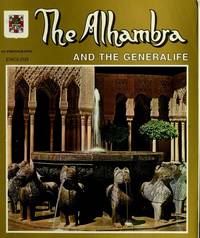
The Alhambra and the Geralife
Editorial Escudo De Oro S.A 1999-01-01. Paperback. New. New. In shrink wrap. Looks like an interesting title! Editorial Escudo De Oro, S.A paperback
Referentie van de boekhandelaar : Q-8437809568 ISBN : 8437809568 9788437809564
|
|
|
S A Technical Department of Editorial Escudo De Oro [Editor]
All Avila and Its Province
Editorial Escudo De Oro S. A 1987-01-01. Paperback. New. New. In shrink wrap. Looks like an interesting title! Editorial Escudo De Oro, S. A paperback
Referentie van de boekhandelaar : Q-8437805309 ISBN : 8437805309 9788437805306
|
|
|
S H Gold
Design of a High Power X-Band Magnicon Amplifier
PN. New. 1994. Soft Cover. Date is original print. This is a reprint edition. . PN paperback
Referentie van de boekhandelaar : 435818
|
|
|
S H Gold
Initial Operation of a High Power Frequency-Doubling X-Band Magnicon Amplifier
PN. New. 1996. Soft Cover. Date is original print. This is a reprint edition . PN paperback
Referentie van de boekhandelaar : 284287
|
|
|
S H Gold
Millimeter-Wave Gyroklystron Amplifier Experiment Using a Relativistic Electron Beam
PN. New. 1990. Soft Cover. Date is original print. This is a reprint edition . PN paperback
Referentie van de boekhandelaar : 232940
|
|
|
S H Gold
Multimode Simulation of High Frequency Gyrotrons
PN. New. 1991. Soft Cover. Date is original print. This is a reprint edition . PN paperback
Referentie van de boekhandelaar : 247804
|
|
|
S H Gold
Study of Gain in C-Band Deflection Cavities for a Frequency-Doubling Magnicon Amplifier
PN. New. 1993. Soft Cover. Date is original print. This is a reprint edition . PN paperback
Referentie van de boekhandelaar : 262563
|
|
|
S L A Marshall; H Garver Miller, ORO [Drawings]
Pork Chop Hill: The American Fighting Man in Action: Korea Spring 1953 Twelfth in The Combat Arms Series
The Battery Press 1986-10-01. Hardcover. New. In shrink wrap. Looks like an interesting title! The Battery Press hardcover
Referentie van de boekhandelaar : Q-0898390907 ISBN : 0898390907 9780898390902

|
|
|
S. Baxter - T. Bisson e altri
Umani e Transumani - Il meglio della fantascienza 2
Mondadori, Urania n. 1462, marzo 2003. Introduzione di David G. Hartwell. Traduzione di Roberto Marini. Spedizioni tracciabili con raccomandata entro 24 ore dall'ordine. Soft cover in good conditions, no inscriptions or markings inside. Worldwide delivery.

|
|
|
S. C. Van D'Elden;
Tristan and Isolde: Medieval Illustrations of the Verse Romances,
Turnhout, Brepols, 2012 Hardback, 350 p., 300 b/w ill., 220 x 280 mm. ISBN 9782503530987.
Referentie van de boekhandelaar : 33801
|
|
|
S.Snyder-T.Rasmussen
La pratica dei Jhana
Vol.in 8°bross.edit.Nuovo
|
|
|
SA Editorial Escudo de Oro S A
Todo/All Puerto Rico
F.I.S.A Palaudarias Spain. Used - Very Good. Very Good condition. Spanish & English. travel exploration puerto rico A copy that may have a few cosmetic defects. May also contain light spine creasing or a few markings such as an owner’s name short gifter’s inscription or light stamp. F.I.S.A Palaudarias, Spain unknown
Referentie van de boekhandelaar : SB19B-02167
|
|
|
Saavedra Faxardo [or Fajardo], Diego
Republica Literaria y Empresa Politica I-CI
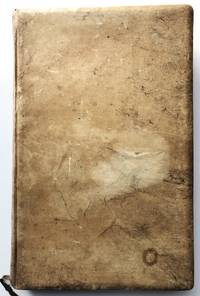
Amberes: Iuan Bautista Verdussen 1678. Hardcover. Good. Folio 12.5 inches 32 cm tall old but probably not original vellum hand lettered on spine 18 34 6 398 Empresa Politica 2 pp Sumario; lacking at least one more page of the Sumario at end with woodcut emblems throughout. Good text with dampstaining the Table page of Republica Literaria and last page of text have wear pp. 370-378 have some lining to the outer margins and flipping through the book there are probably a handful of other pages similarly lined. Rare edition of this Anti-Machiavellian emblem book. Iuan Bautista Verdussen hardcover
Referentie van de boekhandelaar : H7589
|
|
|
SAAVEDRA FAJARDO, Diego (1584-1648).
República Literaria. Obra posthuma. Oración en alabanza de las obras de Don Diego de Saavedra i Fajardo, por Don Gregorio Mayans i Siscar.
Valencia, por Salvador Faulí, 1768. 8vo.; 18 hs., 177 pp. Cubiertas en papel impreso del siglo XIX. Edición preparada y prefaciada por Gregorio Mayans y Siscar a la vista de una copia manuscrita del original que obraba en su poder y que contiene su exaltada "Oración en alabanza de las Obras de Don Diego Saavedra Fajardo", un texto que constituye en sí mismo una extraordinaria apología de la lengua española y de los literatos que a juicio de Mayans fueron modelo de "eloquencia castellana".

|
|
|
SAAVEDRA FAJARDO, Diego de (1584-1648).
Corona Gótica, Castellana y Austriaca, dividida en quatro partes. Parte Segunda, continuada por Don Alonso Nuñez de Castro; en la qual se da noticia de lo sucedido en estos Reynos de España en mas de 500 años, desde el de 714 en que empezó su restauración, hasta el de 1216; y se escriben las vidas de 33 Reyes, desde el ínclito Infante Don Pelayo hasta Don Fernando el Santo.
Madrid, en la Oficina de Don Benito Cano, 1790 ["Obras de Don Diego de Saavedra Faxardo"]. 4to. menor; 7 hs., 601 pp. Encuadernación de época en piel con tejuelo.

|
|
|
SAAVEDRA FAJARDO, Diego de (1584-1648).
Idea de un Príncipe Político y Christiano, representada en Cien Empressas.
Valencia, por Vicente Cabrera, 1695. 4to.; 6 hs., incluyendo portada a dos tintas, 694 pp. (i.e. 692). Errores de paginación. Con los 103 emblemas xilográficos entre el texto. Tres agujeros en la última página afectan al último emblema y a una palabra de texto. Encuadernación en pergamino de la época, con lomera perdida en la mitad inferior y un agujero en el plano posterior.

|
|
|
SAAVEDRA FAJARDO, Diego de.
Corona Gótica, Castellana y Austriaca, dividida en quatro partes. Parte Tercera, por Don Alonso Nuñez de Castro. Tomo II: contiene las vidas de los Reyes Don Sancho el Bravo y Don Hernando el Quarto.
Madrid, en la Oficina de Don Benito Cano, 1790 ["Obras de Don Diego de Saavedra Faxardo"]. 4to. menor; 477 pp. Ejemplar de salida sin desbarbar. Cubiertas en papel de aguas, de la época.
|
|
|
SAAVEDRA FAJARDO, Diego de.
Corona Gótica, Castellana y Austriaca, dividida en quatro partes. Parte Primera. Tomo II: desde Recaredo hasta 716 d. C.
Madrid, en la Oficina de Don Benito Cano, 1789. 4to. menor; 1 h., 618 pp., de 620, faltando la última. Mancha en la esquina inferior exterior hasta pp 52. Ejemplar de salida sin desbarbar. Ejemplar sin encuadernación. Cubiertas provisionales en cartulina.
|
|
|
SAAVEDRA ZAPATER, Juan Carlos y SÁNCHEZ BELÉN, Juan Antonio (Eds.).
La "Cartilla Política y Cristiana" de Diego Felipe de Albornoz. Edición y estudio.
Madrid, UNED, 2007. 4to.; 213 pp. Cubiertas originales.

|
|
|
SAAVEDRA, Gonzalo de / SAAVEDRA Y GUZMAN, Martin de
Los pastores del Betis, versos y prosas de don Gonzalo de Saavedra;Ocios de Aganipe divididos en differentes poesias
In -4°, pp. (22), 289 (i.e. 379), (9); frontespizio inciso (al fr. la data è 1633) e un ritratto calcografico dell’autore che precede il testo. Carta Yy con prova di penna, con testo ancora leggibile. Saavedra, nato e vissuto a Cordoba fra il XVI e il XVII secolo fu un poeta spagnolo, lontano parente di Cervantes. Fumagalli 428. Il volume è rilegato con la raccolta poetica del figlio di Saavedra, “Ocios de Aganipe divididos en differentes poesias” - pp. (6), 260, frontespizio inciso -, pubblicato anch’esso a Trani nello stesso anno. Due rarissime opere spagnole appartenenti al Siglo de oro. In -4 °, pp. (22), 289 (i.e. 379), (9); engraved title page (the title page date is 1633) and a chalchographic portrait of the author preceding the text. Yy leaf with spoiled with ink, yet the text is still readable. Saavedra, was born and lived in Cordoba between the 16th and 17th centuries, was a Spanish poet, distant relative of Cervantes. Fumagalli 428. The volume is bound with the poetic collection of Saavedra’s son, “Ocios de Aganipe divididos en differentes poesias” - pp. (6), 260, engraved title page -, also published in Trani in the same year. Two very rare Spanish works belonging to the Siglo de oro.

|
|
|
SABA, Antonina.
El Léxico del Breve Compendio de la Sphera y de la Arte de Navegar de Martín Cortés.
Madrid, 2001. 4to.; 826 pp., más CD ROM. Cubiertas originales.

|
|
|
SABAHATTIN TÜRKOGLU.
Jewel and jewellery culture in Anatolia throughout history.= Tarih boyunca Anadolu'da taki ve kuyumculuk kültürü.
Fine English Original bdg. HC. 4to. (30 x 24 cm). In English and Turkish. 224 p., color and b/w ills. Jewel and jewellery culture in Anatolia throughout history.= Tarih boyunca Anadolu'da taki ve kuyumculuk kültürü. It is observed that, along history, cultures and levels of development of societes have reflected on the jewellery pieces, accessories and designs that were used. For that reason, we believe that examining the historical development of jewellery business and jewellery design on this piece of land will give us an idea about our past, judgement values and the utilization process of gold and silver as well as it will shed on the light on the future of the society and the sector and add value to it. In this period where ccorporate social responsibility is as important as the corporate identities of companies, to be involved in this publications, second of which has been prepared by IKO, since the very beginning has become o part of the mission of Lidya (Lidia) jewellery which has taken its name from Anatolian history. We believe that sharing information will unite our sector on a common ground and make us stronger and will be able to form the concept of 'Golden Furute'.
|
|
|
Sabatino Moscati
Cronache di Archeologia - Nuove rivelazioni sulle civiltà scomparse
SEI, ottobre 1991. Con illustrazioni a colori e b/n. Rilegato con sovraccoperta. Prima edizione. Spedizioni tracciabili con raccomandata entro 24 ore dall'ordine. First edition. Hardback cover with dust jacket in fine conditions, no price clipped, no inscriptions or markings inside. Worldwide delivery.

|
|
|
Sabatino Moscati; Mario Bussagli; Mario Petrassi
Gli Ori in Italia, Roma, Editalia, 1985
Presentazione di Sabatino Moscati. Roma, 1985; br., pp. 304, ill. b/n, tavv. col., cm 27x33. (Antiquariato Arredamento e Design). italiano 88-7060-16 Antiquariato Arredamento e Design br.

|
|
|
Sabattini, Mario - Celli, Nicoletta
I Tesori di Pechino Imperiale
Mm 265x370 Volume in copertina rigida con sovraccoperta, custodia originale, 312 pagine profusamente illustrate a colori lungo l'intero testo. Condizioni del libro: nuovo-new. Spedizione in 24 ore dalla conferma dell'ordine.
|
|
|
Sabatès, Fabien (Mitwirkender) und Angelika (Herausgeber) Jockers
Gold Käfer. [Von Fabien Sabatès, Redaktion Angelika Jockers, übersetzt aus dem Französischen von Gerhilde und Jean-Claude Wenger].
Wien, Genf und New York: Lechner 1992. 127 Seiten. Mit zahlreichen Abbildungen. 4° (25-35 cm). Farbig illustrierter Orig.-Pappband. [Hardcover / fest gebunden].
Referentie van de boekhandelaar : 2134310

|
|
|
Sabbadini Sodi Chiara
Oreficerie toscane medioevali e rinascimentali nella collezione Raspini, Firenze, Polistampa, 2009
Firenze, 2009; ril., pp. 72, ill., 22 tavv. col., cm 24,5x31,5. (Collezionismo).

|
|
|
SABBE, Maurits (1873-1938).
Viaje a España del Librero Baltasar Moreto (1680). Traducción, prólogo, notas y apéndices por Antono Rodríguez-Moriño.
Madrid, Imprenta de Langa y Compañía, 1944. 4to. menor; 168 pp. y seis láminas, tres de ellas plegadas. Edición limitada y numerada de 510 ejemplares. Cubiertas originales.

|
|
|
SABUCO DE NANTES Y BARRERA, Oliva (1562-c.1622).
Nueva filosofía de la naturaleza del hombre y otros escritos. Edición de Atilano Martínez Tomé.
Madrid, Editora Nacional, 1981 (Biblioteca de Visionarios, Heterodoxos y Marginados). 4to.; 297 pp., 2 hs. Cubiertas originales.
|
|
|
Sacher.-
Musikhandschriften aus der Sammlung Paul Sacher. Festschrift zu Paul Sachers siebzigstem Geburtstag. In Verbindung mit Ernst Lichtenhahn und Tilman Seebass herausgegeben von F. Hoffmann-La Roche & Co.
Basel, Editions "Roche", F. Hoffmann-La Roche & Co., 1976. 4°. 179 S. Mit 48 faks. Tafeln nach Noten-Manuskripten. Orig.-Halbpergamentbd. mit goldgepr. Leder-Rückenschild in Orig.-Pappschuber.
Referentie van de boekhandelaar : 28421AB

|
|
|
Sack, ..., u. Joachim J. Meyer-Collings
Gold- und Valutaklausel in deutscher und niederländischer Gerichtspraxis.
München u. Berlin, C. H. Beck, 1937. Groß 8°. VIII, 336 S. Goldgeprägter Original Leinen. Alter Stempel u. Namenszug auf fliegendem Vorsatz.
Referentie van de boekhandelaar : 19044

|
|
|
SACRISTÁN DE VIEJARRÚA, El (Sebastián Calderón Villoslada, 1584-1653).
Poesía completa del Sacristán de Viejarrúa. Edición y estudio de Esteban Hernández Vicente.
Burgos, Institución Fernán González, 2003. Dos volúmenes en 4to.; 522 pp. y 467 pp. Cubiertas originales.

|
|
|
SACROBOSCO Johannes de d. 1244 or 1256
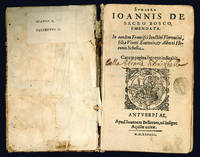
Sphaera Ioannis De Sacro Bosco emendata. In eandem Francisci Iunctini Florentini Eliae Vineti Santonis & Alberti Heronis Scholia. Caetera pagina sequens indicabit
<p>COPY CONTAINING THE MINUTE OF A LETTER ADDRESSED BY GIORGIO RAGUSEO TO HIS COLLEAGE OF THE UNIVERSITY OF PADUA GIROLAMO PALLANTIERI</p><p>8vo 153x93 mm. 16 327 1 pp. and 1 folding plate with the movable parts to be cut out and the instructions on how to assemble them. Collation: †8 A-V8 X4. Printer's device on title page and several woodcut diagrams and illustrations in text. On the front pastedown label with the shelf mark "Scansia N. G10 Palchetto N.". On title page is the ownership's entry "Della libraria di Brisighella" and an old faded stamp. Contemporary binding made with a manuscript vellum leaf datable to the 12th-13th century inked title on spine and on the upper edge round worm holes and small losses to the panels heavier loss to the bottom part of the spine lacking ties and front flyleaf. Leaves †6 and †7 stained and with minor losses of paper and occasionally also of text small hole in the middle of quire M affecting a few letters other hole in the lower blank margin of ll. V3-X4 with no loss of text uniformly browned throughout first quire slightly loose. A genuine copy.</p><p>On back flyleaf recto is a manuscript note containing the minute of a letter presumably autograph by Giorgio Raguseo d. 1622 dated "Patavi ex academia nostra V. Non. Marti 94" 3 March 1594 and addressed to the "Admodum Rev.do ac Ecellentiss.o Patri Magistro Hieronimo Palanterio in almo Patavino Gimnasio theologiam publice proficienti" in which Raguseo thanks his colleague and professor of theology Girolamo Pallantieri 1533-1619 and asks his permission to print some not better specified academic "conclusiones ex variis doctoribus scholasticiis" which he thinks are worth publishing. It is also not clear which academy he is referring to in the letter.</p><p>On the verso of the same leaf is another note by the same hand quoting as a reminder the 1566 Giovanni Battista & Marchiò Sessa edition of <i>Le nuove teoriche de i pianeti</i> by Georg Peurbach in the translation by Orazio Toscanella.</p><p>RARE EDITION published in Antwerp of Sacrobosco's famous astronomical treatise accompanied by notes of Francesco Giuntini 1523-1590 Elie Vinet 1509-1587 and Albert Hero d. 1589 which appeared for the first time in the Lyon edition of 1562.</p><p>"Sacrobosco's <i>Sphaera</i> written in Paris around 1220 enjoyed a long popularity as the leading introduction to spherical astronomy. First printed in 1472 it went through at least a score of editions in the fifteenth century and something over 100 in the sixteenth … Publishing Sacrobosco entered a new and different phase in Wittenberg in 1531. Prior to that year all the editions were folio or quarto that is large often quite beautiful and presumably expensive volumes. In 1531 the Lutheran University of Wittenberg apparently sponsored a version cheap enough to become a required textbook for the astronomy course. It is fully illustrated with didactic figures and comes with a preface in praise of astronomy by Philipp Melanchthon … Demand for the small Sacrobosco textbook remained high at Wittenberg and a new edition was issued every few years. In 1538 a revised revision appeared: for the first time three of the diagrams incorporated moving parts. This proved to be such a popular feature that virtually every octavo Sacrobosco from the 1540s on – regardless of whether it was printed in Paris Antwerp Cologne or Venice – included these same identical volvelles. Incidentally these volvelles were not pre-cut and pasted by the printer. They were issued on ancillary sheets together with instructions for assembling them. Hence it is possible to find copies of these text books with no sign that the volvelles were ever in place and very occasionally the original sheet with the instructions and cutouts can still be found with the book" O. Gingerich <i>Sacrobosco as a Textbook</i> in: "Journal of History of Astronomy" 19 no. 4 Nov. 1988 pp. 269-273.</p><p>The letter contained in the present copy is particularly interesting as it connects two prominent figures of the University of Padua at the end of the 16th century highlighting their academic and professional ties. It is also worth noting that Raguseo wrote a commentary on Sacrobosco's <i>Sphaera</i> <i>Expositio super spheram Ioannis de Sacrobosco</i> Milan Biblioteca Ambrosiana manuscript N.207 sup. which has remained unpublished.</p><p>Giorgio di Ragusa or Raguseo as he was called after the name of his hometown today's Dubrovnik in Dalmatia was born on an unspecified date in the second half of the 16th century. He spent his youth in Venice where he was educated in mathematics by his father in the letters by L. Natali and in astrology his favourite discipline by Osvaldo da Gent and F. Barozzi. He then studied and graduated at the Studio of Padua first in the arts the exact date is not known then in 1592 in theology and in 1601 in medicine. In the meantime he took the minor orders and gained a certain reputation as an expert in Lull's art taking part in two public disputes over theological conclusions exposed according to R. Lull's method one in Venice in 1594 and the other in Padua in 1595. In 1599 he set off on a journey that kept him away from Venice for two years. In Pisa he met G. Mercuriale while in Naples he made the acquaintance of G. Della Porta. When he returned to Padua in the spring of 1601 he was appointed to the second ordinary chair of natural philosophy at the local Studio replacing C. Cremonini recently promoted to the first chair. In the following years he was deeply involved in all academic activities not only in teaching. His name in fact is one of those that most often appears in the commission that conferred the doctorate titles according to the practice of the Palatine counts and in this capacity on April 25 1602 he conferred the title of doctor in philosophy and medicine to W. Harvey. In 1613 in Venice he published twenty-four Aristotelian disputes under the title of <i>Peripateticae disputationes</i>. Around 1618 Raguseo took part in the discussions raised by the appearance of a comet. Despite his academic Aristotelianism he expressed an original position in the debate supporting the need for critical scrutiny by the senses and experience. From a letter of 1611 we also know that he used the telescope to verify some of discoveries announced by Galileo in the <i>Sidereus nuncius</i>. Raguseo died in Padua on 13 January 1622 cf. C. Preti <i>Giorgio da Ragusa</i> in: "Dizionario Biografico degli Italiani" LV 2001 s.v.; see also L. Thorndike <i>A history of magic and experimental science</i> VI New York 1941 pp. 198-202; M. Josipovic <i>Il pensiero filosofico di G. Raguseo</i> Milan 1985; and G.F. Tomasini <i>Gymnasium Patavinium</i> Udine 1654 pp. 309 and 445 for Ragueseo and p. 284 for Girolamo Pallantieri professor of theology from 1580 to 1603.</p><p>Bernardino Pallantieri was born in Castel Bolognese in 1533. In 1547 at the age of fourteen he entered the order of friars minor conventual taking the name of Girolamo. In Ferrara he studied philosophy with the theologian Filippo Braschi and the famous philosopher Vincenzo Maggio. He then continued his studies in Bologna under the guidance of Giovanni Antonio Delfini and Franceschino Visdomini. At first appointed regent of the Studio of Pavia in 1566 Pallantieri took up the chair of theology at that university. In 1568 he was called to Milan by St Charles Borromeo archbishop of that city who appointed him as preceptor of the candidates for priesthood and as his personal theologian. Pallantieri remained in Milan for 5 years then in 1573 he resumed his teaching in Pavia. Between 1575 and 1581 he was in Rome at the service of Cardinal Felice Peretti as his personal advisor and theologian. In 1581 he was called back to Bologna and in 1582 he was elected minister provincial of the friars minor of the province of Bologna. He was also a member of the Accademia degli Infiammati of Parma with the name of "Solingo". When his three-year mandate in Bologna expired in 1585 Pallantieri was called by the Reformers of the Studio of Padua to occupy the chair of theology and at the same time he was appointed superior of the convent of the Saint Anthony the patron of the city. Girolamo remained in Padua for ten years until about 1595. In 1603 he was appointed bishop of Bitonto by Pope Clement VIII but he moved to his diocese only in 1605. Pallantieri died in Bitonto in 1619 at the age of eighty-six cf. E. Papagna <i>Pallantieri Bernardino</i> in: "Dizionario Biografico degli Italiani" LXXX 2014 s.v.</p>Houzeau-Lamcaster no. 1658; L. Desgraves <i>Elie Vinet</i> Genève 1977 no. 125. Jean Bellère books
Referentie van de boekhandelaar : 73
|
|
|
SADO ISLAND GOLD SILVER & COPPER MINING SCROLLS KINGINZAN EMAKI
Three finely illustrated manuscript scrolls scroll I: 9720 x 260 mm. scroll II: 8420 x 260 mm.; scroll III: 6600 x 260 mm. on fine thin paper & later backed with mica-embossed paper with numerous explanatory captions blue silk brocade endpapers at beginning of each scroll wooden rollers preserved in an old wooden box
Japan: 1816 or after. A fine complete and uncommonly well-illustrated set of scrolls concerning the famous gold silver and copper mine on Sado Island illustrating all the steps from mining to refining to minting along with the administrative and commercial activities associated with the mines. We have had several sets of "Sado Island Scrolls" and this is by far the finest in terms of the quality of the illustration completeness and richness of detail. The skilled artist of these scrolls has provided an enormous amount of valuable factual content by labeling each depicted person's role in the production of gold silver and copper. For a really excellent account of the history of mining on Sado Island and the scrolls produced there see Hamish Todd "The British Library's Sado Mining Scrolls" in The British Library Journal Vol. 24 No. 1 Spring 1998 pp. 130-43. Our description is largely based on this wonderful and beautifully researched article. Gold silver and copper mining on Sado Island just off the coast of Niigata Prefecture had its beginnings in ancient times. With the discovery in 1601 of the rich Aikawa gold and silver mine Sado experienced an economic boom. The Edo shogunate assembled miners and slave laborers mostly the homeless from throughout Japan and sent them to Sado to exploit the Aikawa mine and three other principal mines. It soon became the largest gold and silver mine in Japan attracting a population of 200000 and to a very large degree financed the Edo shogunate for several hundred years. A series of unique mining smelting and minting technologies developed at Sado were disseminated to other mines within Japan. Today the Sado complex of mines is on the "Tentative List" of Unesco World Heritage Sites. The Aikawa mine was one of the few mines at the time to be based on kodobori mine-digging. A series of pre-modern mine management systems and mining-related technologies ranging from mining to smelting were developed at Sado including methods for extracting gold from silver such as the Chinese haifuki cupellation method brought in from the Iwami Ginzan Silver Mine Shimane Prefecture; the yakikin method; as well as manufacturing-based operational formats such as the yoseseriba. It is particularly important to remember that the entire series of processes from mining and smelting to ultimately the production of gold coinage were carried out at this single mine and its environs. The finely drawn scrolls depict every process of extraction refining and minting. Each scroll has a title on a label on the outside: "Sado kozan saikutsu jikkei" "Actual View of Sado Mining". As we unroll the scroll we find another title "Sashu kingin saisei zenzu" "Sado Gold & Silver Extracted & Processed Illustrated" and a grand index of the pictorial contents of the three scrolls. The first scroll begins with a map showing the Aikawa mountain and the numerous entrances to the mining complex with names and locations of refining buildings. This is followed by wonderful paintings of the main entrance to the mine and the surrounding buildings; miners entering and working in the shafts; the ladders made from logs into which steps have been cut; lamps made of iron dishes to hold oil and attached to long iron handles; buckets and pulleys to remove water; baskets to carry ore; government officials the mine operator and surveyors discussing the best location for a new tunnel; carpenters constructing support beams; etc. Each person has a label so we know his exact title and function. The remainder of the scroll takes place outside of the mine: blacksmiths making tools; women removing waste material from the ore and placing the ore in sieves to be washed under the watchful eye of government supervisors; the administrative center for the mine where the ore is graded for sale to the smelters with a bookkeeper recording all the transactions; a back office where managers senior administrators of the mine and accountants are meeting; a room where the ore is examined once again; the ore sewn into sacks and carried out to be loaded onto oxen to be transported to the smelting works; a storage area with big locks; another government office where mine workers turned in their ID cards at the beginning of their shifts; the building known as Kanaba where the ore was pulverized to win the precious metals; a horsetail sieve to separate the ore into various constituents; grinding of the ore using ishiusu grindstones; the process of nekonagashi which used cotton cloth in wooden troughs to extract the very smallest particles using the gravimetric principle etc. The second scroll depicts the smelters called fukidaiku with men operating the bellows all watched by a guard. The gold/silver/lead alloy was then taken to an area called the Haifukidoko where the alloy was subjected to roasting in a cupel. The following scene shows the government office where the gold sujimengane and silver yamabukigin samples are examined. Now we shift to the scenes showing the processing of copper. We see the pulverizing and winning of the copper using methods similar to those for gold and silver with the addition of extensive smelting scenes employing large smelting furnaces nibukidoko mabukidoko and nanbandoko. There are a number of processing scenes including daifukisho which are not present in the BL set of scrolls. From the copper works we move to the coast of Sado where we see the extraction of alluvial gold and silver from the sand of the beaches by means of a technique called sluicing or nekonagashi. An Archimedes screw is used to draw water up to form a flow that could be used for sluicing. The material is then taken to a building called the Hamanagashi no seriba for further processing. The third scroll is devoted to minting in the Kobandokoro where small coins called koban were produced. Using the cementation process called shioyaki the partly refined gold is further refined. Above is a criss-cross construction of wooden planks known as a senryodana designed to trap any gold dust mixed with smoke from the smelting. The workers are wearing only loin cloths to prevent theft. The powdered gold is then mixed with salt and shaped into cones. Then the cones are burned slowly for seven or eight hours. Further processing steps are shown finally resulting in balls of gold called yosegane suitable for minting. Next the silver by-product is shown being processed and refined in a series of scenes. The following series of scenes show the gold being formed into metal strips called nobegane which were then polished by salt before being sent to the office run by the Goto family the Goto Yakusho. We see Sanemon Goto 2nd d. 1845 in his office. He succeeded to running the Goto Yakusho in 1816 and this is the basis for dating these scrolls. In this office the strips were tested for purity before being cut into small sections. In fine condition. There is minor marginal worming in the beginning of the second and third scrolls. hardcover books
Referentie van de boekhandelaar : 7024

|
|
|
Saggs, HWF; Gurney, OR; Gardiner, Alan; Cook, JM H W F O R J M
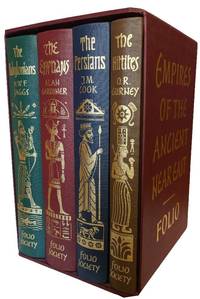
Empires of the Ancient Near East 4 volumes: The Babylonians / The Hittites / The Egyptians / The Persians
London: Folio Society 1999. Hardcover. Near Fine. Sixth printing. 2002. Crisp bright clean; no owners' marks; pale gray-brown cloth binding is square and fresh; maroon slipcase shows two very small light abrasions on the top side and a group of pale specks on the closed side otherwise well-kept with bright gilt lettering. Folio Society hardcover
Referentie van de boekhandelaar : 00090883
|
|
|
SAGÜÉS AZCONA, Pío.
Fray Diego de Estella (1524-1578). Apuntes para una biografía crítica.
Pamplona-Madrid, Institución Principe de Viana, Espasa Calpe, 1950. 4to.; 161 pp., 2 hs., y 20 láminas fuera de texto. Cubiertas originales.

|
|
|
Saint Bris Isabelle
Vladimir Fédorovski : secrets et confidences: Secrets et confidences
Du Rocher 2008 225 pages 21 6x2 4x14cm. 2008. broché. 225 pages.
Referentie van de boekhandelaar : 9930

|
|
|
SAINT-MARCOUX
AELYS ET LA CABRE D'OR
1956 reliure cartonnée jaune in-octavo sous jaquette illustrée en couleurs sur le dos et le recto - verso imprimé (hard-back editor with dustjacket illustrated in colours on the spine and front cover in-octavo), illustrations in et hors-texte en noir et en couleurs par Georges de Sainte-Croix, vignette pour l'obtention d'un livre gratuit conservée (label for obtaining a free book preserved), 184 pages, 1956 Paris Editions G. P. Editeurs,
Referentie van de boekhandelaar : 14652
|
|
|
Saint-Marcoux
Aniella
Rouge et or souveraine Sans date.
Referentie van de boekhandelaar : 500321712

|
|
|
SAINT-MARCOUX
CRISS, OU J'ETAIS UNE IDOLE
1964 reliure cartonnée jaune in-octavo sous jaquette illustrée en couleurs sur le dos et le recto - verso imprimé, illustrations in et hors-texte en noir et en couleurs par Daniel Dupuy, vignette pour l'obtention d'un livre gratuit non conservée, 188 pages, 1964 Paris Editions G. P. Editeurs,
Referentie van de boekhandelaar : 8619
|
|
|
SAINT-MARCOUX
ESPOIR EN 33 TOURS
1960 reliure cartonnée jaune in-octavo (hard-back editor) sous jaquette illustrée en couleurs sur le dos et le recto - verso imprimé (dustjacket illustrated in colours on the spine and front cover), illustrations in et hors-texte en noir et en couleurs par Daniel Dupuy, vignette pour l'obtention d'un livre gratuit conservée (label for obtaining a free book preserved), 188 pages, 1960 Paris Editions G. P. Editeurs,
Referentie van de boekhandelaar : 6999
|
|
|
SAINT-MARCOUX
FANCHETTE le jardin de l'espérance
1955 reliure cartonnée jaune in-octavo (hard-back editor) sous jaquette - légèrement défraîchie - illustrée en couleurs sur le dos et le recto - verso imprimé (dustjacket - lightly damaged - illustrated in colours on the spine and front cover), illustrations in et hors-texte en noir et en couleurs par Gilles Valdès, 192 pages, 1955 Paris Editions G. P. Editeurs,
Referentie van de boekhandelaar : 4890
|
|
|
SAINT-MARCOUX
L'OUBLIEE DE VENISE Carina
1954 reliure cartonnée jaune in-octavo sous jaquette illustrée en couleurs sur le dos et le recto - verso imprimé (hard-back editor with dustjacket illustrated in colours on the spine and front cover), illustrations in et hors-texte en noir et en couleurs par Guy Sabran, 188 pages, 1954 Paris Editions G. P. Editeurs,
Referentie van de boekhandelaar : 8969
|
|
|
Saint-marcoux
La Caravelle
Editions g.p. Jaquette en très bon état Claire Rigide Étoilée Paris 1959
Referentie van de boekhandelaar : 000579
|
|
|
SAINT-MARCOUX
LA CARAVELLE
1960 reliure cartonnée jaune in-octavo sous jaquette illustrée en couleurs sur le dos et le recto - verso imprimé (hard-back editor with dustjacket illustrated in colours on the spine and front cover), illustrations in et hors-texte en noir et en couleurs par Daniel Dupuy, 188 pages, 1960 Paris Editions G. P. Editeurs,
Referentie van de boekhandelaar : 13205
|
|
|
SAINT-MARCOUX
La Caravelle
Souveraine Sans date. L'histoire suit des adolescents dont la vie est bouleversée par le développement de la Caravelle un avion emblématique de l'aéronautique française dont la construction et le succès marquent leur passage à l'âge adulte. Le récit célèbre l'épopée humaine et technique derrière la naissance de cet avion
Referentie van de boekhandelaar : 500392017

|
|
|
SAINT-MARCOUX
LE SECRET DE PIERRES-NOIRES
1953 reliure cartonnée jaune in-octavo sous jaquette illustrée en couleurs (hard-back editor with dustjacket illustrated in-octavo), illustrations de la jaquette et illustrations in et hors-texte en noir et en couleurs par (illustrations of the dustjacket and inside illustrations in text and full page engraving in black and in colours by) Pierre Rousseau, 183 pages, 1953 Paris Editions G. P. Editeurs,
Referentie van de boekhandelaar : 14651
|
|
|
SAINT-MARCOUX
LES CHAUSSONS VERTS (Michèle des îles)
1956 reliure cartonnée jaune in-octavo (hard-back editor) sous jaquette illustrée en couleurs sur le dos et le recto - verso imprimé (dustjacket illustrated in colours on the spine and front cover), illustrations in et hors-texte en noir et en couleurs par Georges de Sainte-Croix, vignette pour l'obtention d'un livre gratuit conservée (label for obtaining a free book preserved), 184 pages, 1956 Paris Editions G. P. Editeurs,
Referentie van de boekhandelaar : 9962
|
|
|
SAINT-MARCOUX
LES SEPT FILLES DU ROI XAVIER Murielle
1953 reliure cartonnée jaune in-octavo sous jaquette illustrée en couleurs sur le dos et le recto - verso imprimé (hard-back editor with dustjacket illustrated in colours on the spine and front cover), illustrations in et hors-texte en noir et en couleurs par Marcel Bloch, 192 pages, 1953 Paris Editions G. P. Editeurs,
Referentie van de boekhandelaar : 269
|
|
|
SAINT-MARCOUX
MON VILLAGE AU BORD DU CIEL
1965 reliure cartonnée jaune in-octavo sous jaquette illustrée en couleurs sur le dos et le recto - verso imprimé, illustrations in et hors-texte en noir et en couleurs par Gilles Valdès, 188 pages, 1965 Paris Editions G. P. Editeurs,
Referentie van de boekhandelaar : 8618
|
|

 De zoekresultaten per email ontvangen
 Zoekresultaten downloaden als PDF
 RSS feed
 Permanente link


