|
BUCHANANUS, GEORGIUS
Georgij Buchanani Scoti ad viros sui seculi clarissimos eorumque ad eundem Epistolae. Ex Mss. accurate descriptae nunc primum in lucem editae.
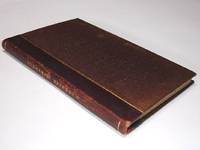
London Londini Impensis D. Brown ad Insigne Cygni Nigri extra Portam vulgo dictam Temple-Bar & G. Taylor 1711. X93 p. 20th century half brown morocco 17.5 cm Ref: J. Durkan 'Bibliography of Buchanan' Glasgow 1994 no. 271 Details: Woodcut printer's mark on the title depicting 2 black swans. Lacking the leaves A2 & A3 these leaves contain the dedication to John Duke of Roxburgh and are signed by one James Oliphant Condition: Binding slightly scuffed paper slightly foxed; the verso of the last page with an advertisement has been glued to last flyleaf; without the last blank leaf. Lacking leaves A2 & A3 with the dedication. Small etched bookplate on the front pastedown Note: George Buchanan 1506-1582 was a Scottish historian and humanist scholar. 'Tutor of Mary Queen of Scots and King James VI he was a Renaissance figure of European repute. His contemporaries saw him as 'easily the premier poet of the age' and praised the quality of a critical mind that ranged over multiple concerns vital to the Europe of his day. His writing whether in the cosmopolitan Latin of his time or in a homely vernacular mirrored these wide concerns as a university man of distinction a poet and master of new styles a playwright in a modern idiom a controversial historian and popular pamphleteer at the center of contemporary religious and political storms'. Durkan p. IX Remains of Buchanan's correspondence were collected by James Oliphant member of a high Scottish clan and published by him in 1711. The collection consists of 35 letters to and from Buchanan. The last modern edition MacFarlane 1981 contains 59 letters. Not all the letters which Oliphant published were based on the poet's autographs. Much correspondence is evidently lost the dating is occasionally problematic and minor textal variations occur Collation: A8 minus leaf A8 lacking leaf A2 & A3; B-G8 minus the blank leaf G8Photographs on request unknown
Bookseller reference : 120214
|
|
|
TACITUS
C. Corneli Taciti Quae exstant opera. Recensuit J.N. Lallemand.
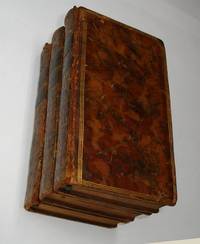
Paris Parisiis Apud Desaint & Saillant . typis J. Barbou 1760. 12mo. 3 volumes: XXIV444; VI480; 456 p. 3 frontispieces. Mottled calf. 16 cm Ref: Schweiger 21004: 'L.'s Noten sind von Werth'; Dibdin 2455: 'one of the most beautiful and correct of all his classics'; Moss 2645: 'A pleasing and accurate little edition'; Graesse 6/210: 'Jolie edition dans laquelle le texte d'Ernesti of 1752 a ete corrigé à l'aide d'un manuscript de Paris'; Ebert 22175; Brunet 5636: 'Bon texte' Details: Backs with 2 shields and gilt with fleurettes. Edges of the boards and the bookblocks also gilt. Boards with triple fillet gilt borders. Marbled endpapers. The frontispiece of the first volume designed by Ch. Eisen and executed by L. Lempereur depicts Tacitus in his study; Tacitus looks at a bust of Agricola his father in law. The second frontispiece depicts Messalina the wife of the emperor Claudius; the third Galba. Barbou's woodcut printer's mark on the three titles depicting an old man who stands in the shade of a vine-entwined elmtree symbolising the symbiotic relationship between scholar and publisher. The motto is: 'Non solus'. Three nice engravings in the text Condition: Bindings scuffed especially at the extremities. Corners bumped. Two joints are splitting. Front joint of volume three is cracking. Old ink inscription on the front flyleaf of volume one Note: The Roman historian Publius Cornelius Tacitus offered ammunition for many intellectual and political battles in 16th and 17th century Europe. The turmoil caused by the emerging new monarchies in England France en Spain civil and religious wars in Italy and Germany and the plague made Tacitus' account of the state of the early Roman Empire increasingly topical and relevant. The debate Tacitus provoked in intellectual circles was of course on Roman history but also on literary style in Latin and the vernacular but more so on historical and political thought. Tacitus ideas were not original but he brought them in a forceful lapidary way oneliners ready for the use in debate. Tacitus became in a corrupted world 'the one true guide for those involved in the awful revolution of modern times: he "teaches well the mode of life under tyrants just as he teaches tyrants how to establish tyranny'' '. The Classical Tradition Cambr. Mass. 2010 p. 921 The French humanist scholar Muretus Marc Antoine Muret 1526-1585 declared that 'Tacitus' descriptions of lost liberty failed revolutions vicious civil wars and mad emperors amounted to a theater of our time'. Op. cit. ibid. The French encyclopedists of the 18th century 'turned Tacitus into an enlightened enemy of obscurantist princes. This is the Tacitus wise and mild who prevailed in Europe immediately before the French revolution'. R. Ash editor 'Tacitus' Oxford 2012 p. 429 In the preface to this Tacitus edition of 1760 the French scholar Nicolas Lallemand acknowledges that he used for his work the editions of Lipsius Ryckius Ernesti and especially the edition of J. Gronovius that was published in Leiden in 1721; he was advised he tells by Claudius Capperonerius or Claude Capperonnier custos of the Royal Library and 'Regius linguae Graecae professor'. Lallemand's text contains the readings of some manuscripts of the Royal Library especially of those which coincide with the 'editio princeps'. Worldcat records 20 reissues of Lallemand's edition between 1760 and 1832 Provenance: On the front pastedown of all three volumes the armorial bookplate of G.C.J. Vosmaer. Gualtherus Carel Jacob Vosmaer 1854 - 1916 was a Dutch zoologist. He was the son of the Dutch author Carel Vosmaer who produced a successful translation of Homer's Ilias and Odyssea Collation: pi1 a12 A-S12 T6; pi2 A-T12 V-X6; pi2 A-S12 T-V6 Photographs on request hardcover
Bookseller reference : 120324
|
|
|
HEINSIUS,D
Dan. Heinsii De tragoediae constitutione liber in quo inter caetera tota de hac Aristotelis sententia dilucide explicatur. Editio auctior multo cui & Aristotelis De poëtica libellus cum ejusdem notis & interpretatione accedit.
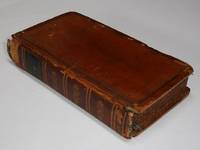
Leiden Lugd. Batav. Ex officinâ Elsevirianâ 1643. 12mo. XII368 p. 19th century calf 13.5 cm 'De tragoediae constitutione' established the reputation of Heinsius as an Aristotelian literary critic Ref: Willems 554; Berghman 964; Rahir 548; Brunet 383; Graesse 3232; Ebert 9377 Details: Back ruled gilt with a letterpiece. Boards with blind stamped borders & gilt dentelles on the turn-overs. Marbled endpapers. Elsevier's woodcut printer's mark on the title featuring an old man who stands in the shade of a vine-entwined elmtree symbolising the symbiotic relationship between scholar and publisher. The motto is: 'Non solus'. The first part of the book consists of the 'De tragoediae constitutione' the pages 221-321 contain Aristotle's Poetics edited and translated into Latin by Daniel Heinsius the pages 322-368 are filled with Heinsius' notes on that text Condition: Binding used and worn at the extremities. Head of the spine gone for 1 cm foot of the spine chafed. Joint cracked but strong. Small bookplate on the front pastedown. Paper yellowing Note: 'De tragoediae constitutione' established the reputation of the Dutch classical scholar of Flemish origin Daniel Heinsius 1580-1655 as an Aristotelian critic of reknown. He enjoyed also 'international fame as an editor of classical texts theorist of literary criticism historian and neolatin poet was professor of Poetics at the University of Leiden since 1603 extraordinarius Greek since 1605. After the death of J.J. Scaliger to whose inner circle he belonged he held the chair of Greek from 1609 till 1647. He is best known for his edition of Aristotle's treatise on poetry . which he studied in connection with the 'Ars Poetica' of Horace. This edition is 'the only considerable contribution to the criticism and eludication of the work that was ever produced in the Netherlands. . In his pamphlet 'De tragoediae constitutione' . he deals with all the essential points in Aristotle's treatise giving proof that he has thoroughly imbibed the author's spirit. . It was through this work that he became a centre of Aristotelian influence in Holland. His influence extended in France to Chaplain and Balzac to Racine and Corneille; in Germany to Opitz; and in England to Ben Jonson .'. J.E. Sandys 'A history of classical scholarship N.Y. 1964 vol. 2 p. 314 Heinsius' edition and Latin translation of Aristotle's 'De poetica liber' was first published by Elsevier in 1610 a year later this was repeated and expanded with 'De tragoediae constitutione' 1611. Heinsius produced of both works a second and augmented edition published by Elzevier in 1643. Heinsius' treatise 'De tragoediae constitutione' addresses itself explicitly to the task of presenting a simple and intelligible exposition of tragedy and the tragic plot 'ex mente atque opinione Aristotelis'. Accordingly the work is based on the Aristotelian definition of tragedy which is incorporated verbatim in the opening of Heinsius' discussion and Aristotle's qualitative parts of tragedy fabula mores sententiae dictio melodia and apparatus provide the topics around which the argument is built up. Heinsius' treatise has consequently sometimes been viewed as rendering the 'milk of the Aristotelian word' more or less unwatered'. P.R. Selin 'Daniel Heinsius and Stuart England' Leiden/Oxford 1968 p. 124/25 Nevertheless 'Heinsius moves away from the Aristotelian concern with the essence of an artistic product to the search for appropriate means of securing what are basically rhetorical effects ultimately directed to the ethical benefit of the audience'. Idem p. 145 The treatise did not contribute completely fresh ideas or methods to the Renaissance tradition of the poetic theory. Heinsius' importance lies in the pruning away of complex and elaborate rhetorical Renaissance approaches Provenance: Bookplate probably beginning 20th century: 'Ex libris Emile Brugnon' Collation: 6 A12-P12 Q4 Photographs on request hardcover
Bookseller reference : 120249
|
|
|
BEZA, MURETUS, JANUS SECUNDUS
Theodori Bezae Vezelii Poemata. Bound with: Marci Antonii Mureti Juvenilia. And: Johannis Secundi Hagiensis Juvenilia.
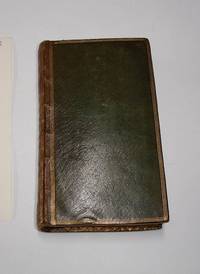
Leiden Lugduni Batavorum 1757. 12mo in 8 & 4 sheets. 3 volumes in 1: IVIV124 p. a portrait of Beza; X106 p. a portrait of Muretus; IV3-156 p. Green morocco 16 cm Ref: Brunet 1239; Graesse cf 1359 where we find the imprint Paris 1757 Details: Green morocco; red morocco shield on the back; gilt floral decoration on the back; boards with gilt triple fillet borders; inside dentelles gilt; marbled endpapers; edges of the bookblock gilt; woodcut printers' mark of Joseph Gérard Barbou on all three titles depicting an old man who stands in the shade of a vine-entwined elmtree. The motto is 'Non solus'. The 2 portraits have been etched by Fiquet Condition: Some wear to the extremes. A small bump in the bottom edge of the front board. Two tiny and almost invisible wormholes in the front joint Note: All three titles in this book have a false imprint 'Lugduni Batavorum' i.e. Leiden in the Dutch Republic. It was according to Brunet actually published in Paris by Barbou. He does not explain but the printer's mark paper printing and layout looks indeed very Barbou. The Short Title Catalogue Netherlands STCN is not sure either about Leiden it adds 'printed in France' § In Latin elegiac and epigrammatic poetry from Roman times to the Renaissance there is constant reference to the 'poetry of youth' as 'standing in contrast to a kind of poetry suitable to be written in old age. The poets characterize the latter poetry as serious moral and austere touching on wars and politics and patriotism. The former is filled with passion and exuberance concerned not with weighty national issues but with jokes and laughter and erotic affaires'. K.M. Summers 'The Iuvenilia of Marc-Antoine Muret' Columbus 2006 p. XXV-XXVI § The first edition of 'poemata juvenilia' of the young Calvinist theologian Theodore de Bèze or Theodorus Beza 1519-1605 was published in Paris in 1548. 'It had certain rather free pieces printed which were afterwards made a matter of bitter reproach against him. He therefore suppresed them in the following editions'. Ebert This first edition including the erotic love poems which Beza later regretted having ever published was clandestinely reprinted. Beza was considered to be among the best Neo-Latin poets of his time. He is however best known for his Latin translation of the New Testament his critical Greek edition of the New Testament and for being the founder of the University of Geneva. § The Frenchman Marc Antoine Muret latinized as Marcus Antonius Muretus 1526-1585 'exemplifies the essence of French Renaissance humanism. A master of Latin and student of Classical Antiquity he not only engaged in the recovery and exposition of ancient texts he also actively employed the old genres and skills in the contemporary ecclesiastical and public spheres. He wrote Latin poetry both sacred and profane delivered public orations in Latin and lectured in various schools throughout France and Italy on authors as diverse as Catullus and Tacitus and on topics as varied as Greek philosophy and Roman law'. K.M. Summers 'The Iuvenilia of Marc-Antoine Muret' Columbus 2006 p. XIII His 'Iuveninlia' were first published in 1552. § The Dutch neolatin poet Janus Secundus Nicolai Hagiensis was born on the 15th of november 1511 the day of the martyr Secundus in The Hague. He died very young in 1536. In 1528 he moved to Mechelen the residence of the Austrian vicequeen Margaretha of Parma. The southern part of the Netherlands was in this time the center of a florishing urban civilization. In May 1530 Secundus met a young prostitute from Mechelen called Julia and fell in love with her. Julia became the subject of his first book of elegies his 'Julia Monobiblos' in which he tells how he won and lost his love. During his studies in Bourges under the famous jurist Alciati he wrote his first 'Basia'. Alciati introduced Secundus there also to the newest Italian poetry. A humanist poet often started his career with erotic poetry like Piccolomini and Beza. Secundus' 'kiss-poems' are a variation on two 'kiss-poems' of the Latin poet Catullus ca. 84-54 B.C who became during the Renaissance a model for love-poetry. Secundus wrote in his short life 6835 lines of poetry of which only 425 lines were printed during his lifetime. He wrote 'with equal fluency all kinds of lyrical heroic and elegiac verse. Down to the present day Secundus lives in literary history as the kissing poet' . 'Until far in the 18th century Secundus is mentioned as one of the classics of love poetry' IJsewijn Companion to Neo-Latin studies I Leuven 1990 p. 152 The first edition of his collected works was posthumely published in 1541 in Utrecht and was edited by Secundus brother Marius. § After the poems of Janus Secundus we find 46 pages with the 'Pancharis Joan. Bonefonii Averni ad Jacobum Guellium p. 111-156 Provenance: On the verso of the front flyleaf: 'John Wordsworth Edinburgh 1827'. This is the English classical scholar John Wordsworth 1805-1839 nephew of the Romantic poet William Wordsworth. 'In October 1824 he entered Trinity College Cambridge. His university career was distinguished. In 1825 he obtained the Bell scholarship in 1826 a scholarship at his own college and was second for the Porson prize; in 1827 he obtained it. In 1828 he proceeded to the B.A. degree but was disqualified for classical honours through distaste for mathematics. In 1830 he was elected fellow of his college. . In 1834 he was appointed a classical lecturer in Trinity College and undertook to edit Richard Bentley's Correspondence afterwards completed by his brother Christopher Wordsworth'. Source Wikipedia Collation: pi4 plus portrait; A8 B4 C8 D4 etc. K4 L2; Portrait A8 B4 etc. X8 Y4 Photographs on request hardcover
Bookseller reference : 120208
|
|
|
VARRO
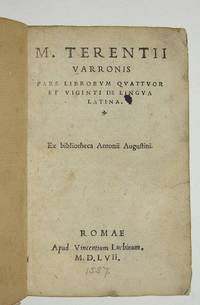
M. Terentii Varronis Pars librorum quattuor et viginti de lingua latina. Ex Bibliotheca Antonii Augustini.
Rome Romae Apud Vincentium Luchinum 1557. Colophon at the end: Romae Apud Antonium Bladium impressorem Cameralem 1557 8vo. XXIV2111 blank43 index1 blank99 index1 blank p. Modern cloth 17 cm Ref: EDIT16 CNCE 35852; Schweiger 21118; Brunet 51092; Graesse 6/2 263; Ebert 23393 Details: A vellum look-a-like cloth binding from ca. 1900. See for this date the provenance below Condition: Binding somewhat soiled. Both flyleaves browning. Title and last page dust-soiled. Small piece of the right upper corner of the first 2 leaves worn away. Blank right upper corner of 88 pages somewhere in the middle of the book cut off. Some foxing. A few allmost invisible pinpoint wormholes at the right edge of the first half. Some wormholes in the margin of 50 pages of the index sometimes nibbling at a few letters Note: The Roman Encyclopaedist Marcus Terentius Varro 116-27 B.C. was a landowner on a large scale and member of the senatorial class. Though the bulk of his works are lost he is considered to be the greatest scholar ancient Rome produced. His writings cover nearly every domain of science except mathematics. 'A remarkable fact is that he was not a dry pedant but one whose works included witty and lively sketches of life side by side with long and very erudite treatises'. H.J. Rose 'A handbook of Latin Literature' London 1967 p. 220 The 'de re rustica' is his only complete work that is preserved. Of the 'de lingua latina' on the latin language Varro's principle work in 24 books on language only 6 books remain fairly complete the books 5 to 10. Book 1 was the introduction 2/4 were on etymology in general 5/7 on the etymologies of particular classes of words. 'It hardly need be said that Varro does not group them as a modern philologist would and has no idea of the immutable or nearly immutable phonetic laws which govern the development of speech'. Op. cit. p. 222 Books 8/12 are on declension declinatio including the additions of suffixes and the like. Books 12/24 were on syntax. The style is plain but with 'all its faults and its incompleteness however the work is of much importance in the history of linguistic study'. Op.cit. ibid. 'De lingua latina' is a work of great importance in the history of linguistic studies. § During the Renaissance a renewal of interest in Latin grammar occurred. Medieval vocabulary and terminology and sloppy grammar were rejected and the primary of the Latin of the classical period was reasserted. This process was stimulated by the gradual rediscovery of previously unknown texts of classical authors among which Varro's de lingua Latina was one of the most important. The printed text of de lingua latina is based on an 11th century manuscript Florentinus F and was first published in 1471. The Spanish humanist Antonio Agustín Albanell 1517 - 1586 latinized as Antonius Augustinus is now remembered as the first canon law historian and not as a classical scholar. This edition of 1557 of 'de lingua latina' of Varro is a reissue of an edition which was first published in Rome in 1554. In it Agustín followed 'the interpolated manuscripts and banished every archaism from the text a process that met with protest from Turnebus and Scaliger'. E.J. Sandys A history of Classical Scholarship N.Y. 1964 2160 This edition notwithstanding the criticism of both great scholars remained the standard text till that of Spengel of 1826. Agustín lists on p. 1 the names of the scholars who contributed 'emendationes' to his edition: Pomponius Laetus Angelus Tifernas Fran. Rolandellus Aldus Manutius Michael Bentinus Angelus Colotius Octavius Pantagathus Petrus Victorius Ant. Augustinus Gabriel Faernus Provenance: Small green booklabel pasted on the front pastedown of 'George Gregory Bookseller to H.M. Queen Alexandra Bath'. George Gregory lives on in the name of the antique prints department the George Gregory Gallery of the British antiquarian bookseller George Bayntun. Bayntun tells on his website that George Gregory established his bookshop in Bath in 1846 and proudly proclaimed it to be 'The Worlds Book Store'. He held the Royal Warrant as Bookseller to Queen Alexandra and was President of the Antiquarian Booksellers Association from 1915 to 1918. George Bayntun and W.J. Crudgington bought the business in 1924 and moved into new premises in Green Street Bath. § This book was sold by Gregory so its binding must be older than 1924 or more probable 1918. § This edition must be rare the last recorded copy in 'Rare Books Hub formerly the Americana Exchange' dates from 1964 Collation: -28 A-M8 N6; O-P8 Q6 leaf Q6 verso blank; Aa-Ff8 Gg2 leaf Gg2 verso blank Photographs on request hardcover
Bookseller reference : 120193
|
|
|
GREGORIUS CORINTHIUS
Gregorii Corinthii et aliorum grammaticorum libri De dialectis linguae graecae. Quibus additur nunc primum editus Manuelis Moschopuli libellus De vocum passionibus. Recensuit et cum notis Gisb. Koenii Fr. Iac. Bastii Io. Franc. Boissonadi suisque edidit Godofr. Henr. Schaefer. Accedit Fr. Iac. Bastii commentatio palaeographica cum tabellis aeneis VII.
Leipzig Lipsiae Sumtibus Io. Aug. Gottl. Weigel 1811. 8vo. LIV41072 p. Half calf. 21 cm Still a standard edition Ref: Hoffmann 2172; Graesse 3146; Ebert 8866; Brunet 21723: 'excellente édition qui a effacé la précédente' Details: Lacking the 7 plates. Back ruled gilt and with a gilt black letterpiece. Edges dyed red. Excellent paper Condition: Binding scuffed head of the spine slightly damaged. Small library stamp on the verso of the title even smaller 'dyplum' double stamp on the last page Note: This edition of 1811 still is the standard edition of Gregorius Corinthius' 'De dialectis' Peri dialektôn. Gregorius Corinthius 1092-1156 fl. His 'De dialectis' enjoyed great popularity in Byzantine times which is proved by its preservation in numerous manuscripts. It 'is founded partly on Tryphon cent. 1 B.C. and Joannes Philoponus cent. 4 A.D. on scholia and glossaries to Pindar Aristophanes and especially Theocritus and probably also on the author's independent reading of Herodotus as well as Pindar and Theocritus. It aims at completeness but is defective in arrangement'. Sandys 1424 Works like this 'De dialectis' were considered by 18th century scholars to be of great use for the understanding of textual problems and for the amending of texts of classical authors and for gaining a profound knowledge of the Greek language and its vocabulary. § This 1811 edition opens with 2 'praefationes' one of the previous editor of Gregorius Corinthius the Dutch scholar Gisbertus Koen 1766 the other of Godofredus Henricus Schaefer. Besides 'De dialectis' this edition contains also a number of short anonymous Greek/Byzantine works on Greek dialects among which a short one 'libellus de vocum passionibus' excerpta e codice Parisino num. 2662 attributed here to Manuel Moschopulus fl. 1295-1316. The work is further equipped with Friedrich Jakob Bast's Bastius 1771-1811 valuable palaeographic treatise commentatio palaeographica on 'De dialectis' p. 701-938 and with lots of notes and excellent indices. Bast 'Commentatio Palaeographica' is considered the next contribution of note to palaeography after Montfaucon's 'Palaeographia Graeca' of 1708. § The editor of this 'De dialectis' edition of 1811 is the German scholar Gottfried Heinrich Schaefer 1764-1840 who was a man of wide learning especially in the province of Greek prose. He is best known for his edition of Demosthenes with his commentary and 'Apparatus criticus'. Sandys 3 p.102 Provenance: The stamp and removal stamp are of 'Bibliothek zu Heidelberg' Collation: -38 44 between leaf 41 and 42 have been inserted erroneously by the binder the last 2 leaves p. 1071/72 and the very last leaf with the text: 'typis Caroli Tauchnitzii' signed 3Y. A second mistake was the insertion in this gathering 4 of an unsigned leaf with the text: 'Pars posterior appendicem ad Gregorium Corinthium complectens' a leaf which should have been bound before page 701 at the beginning of the second part; A-3X8 minus blank leaf 3X8 Gathering 3Y2 ended up erroneously in the preliminary pages Photographs on request unknown
Bookseller reference : 154096
|
|
|
HOMERUS- LA MOTTE,A HOUDART DE
L'Iliade. Poëme avec un discours sur Homère. Par Monsieur De la Motte de l'Académie Françoise.
Paris Chez Gregoire Dupuis 1714. 8vo. Frontispiece CLXXX208168 p.; 12 full-page engravings. Contemporary calf 17 cm Ref: Hoffmann 2345; Cioranescu 36534; Graesse 3337; Ebert 100600 Details: Decorated gilt back with 5 raised bands. The frontispiece and engraved plates depict scenes from the Ilias; they were designed by Fr. Roettiers Nattier A. Dieu & F. Delamonce and executed by Edelinck & Chaufourier. Woodcut head-pieces Condition: Binding scuffed corners bumped. Leather of the turn-in of the lower board partly worn away. Flyleaves removed. A tiny strip of a few millimeters of the blank upper-margin of the title has been torn off not affecting any text. The first gathering is slightly stained in the gutter. One small wormhole in the blank right upper corner of the first half of the book. Another small wormhole near the gutter of the blank left inner corner of the last half of the book Note: The French classical scholar Anne Dacier 1645-1720 published in 1699 a French prose translation of the Ilias of Homer. She wanted to rehabilitate the poet who suffered from a bad reputation in France because of inferior translations with a translation which would restore Homer's original lustre. It was thought that Homer's poetry was bad and implausible and sometimes improper. The French author Houdar de la Motte 1672-1731 took it upon himself to prune Homer and produced a refashioned and civilized version of Madame Dacier's translation. He used her translation because he didnot know any Greek. In 1714 he published his translation of the Ilias reduced to 12 books. De la Motte condensed the Iliad by polishing away everything he thought silly dull cruel tedious or inappropiate to the taste and mind of a French gentleman. The fierce battle scenes described by Homer in books X-XV 4000 verses were summarized in 400. Many lines were replaced by meaningless verses. In the introductory 'Discours' of 180 p. De la Motte elaborated on the principles of his translation. He is convinced that he restored with his pruned version the original beauty of Homer. The translation is prededed by a short Ode 'L'Ombre d'Homère' in which the Frenchman conjures up the ghost of Homer and asks him to show him the way in his undertaking. He tells Homer 'Je veux sous un nouveau language/ rajeunir ton antique ouvrage'. Homer simply has to tell him 'Dis-moi comme il faut t'imiter'. p. CLXXVI. The ghost of Homer asks De la Motte 'Saufe-moi l'affront d'ennuyer' p. CLXXVII and orders him 'Respecte le goût de ton âge'. He commissions him to create the poetry as he would have created had he lived in France in his age. When the ghost disappears De la Motte concludes 'Homere m'a laissé sa Muse/ Et si mon orgueil n'en abuse/ Je vais faire ce qui'il eût fait'. p. CLXXX Collation: pi1 a-l8 m2; A-N8; A8 chi4 Photographs on request hardcover
Bookseller reference : 120263
|
|
|
HORATIUS
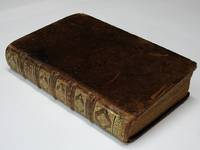
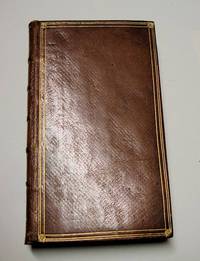
Quinti Horatii Flacci Carmina nitori suo restituta. Accurante Steph. And. Philippe.
Paris Lutetiae Parisiorum Sumptibus Ant. Urb. Coustelier 1746. Colophon at the foot of leaf 2B6v reads: 'Typis viduae Delatour' Small 8vo. Engraved frontispiece XXIV2991 blank p. Calf 155 cm Ref: Schweiger 2410; Brunet 3320; Graesse 3355; Ebert 10211 Details: Nice copy. Back gilt and with 5 raised bands. Boards with tripple fillet gilt borders. Gilt inside dentelles. Edges of the bookblock gilt. Green marbled endpapers. Frontispiece designed by B. Picart and executed by Cl. Duflos. Claude-Augustin-Pierre Duflos It depicts a bucolic scene with in the foreground Venus and little Amor; in the middle a medallion with a portrait of Horace. Printer's mark of the Estiennes on the title featuring an old man who stands in the shade of a vine-entwined elmtree symbolising the symbiotic relationship between scholar and publisher. The motto is: 'Non solus'. Woodcut initials ornaments and engraved vignettes Condition: Some faint wear and scratches to the binding; small inscription on the verso of the first flyleaf Note: The works of the Roman poet Quintus Horatius Flaccus 65-8 B.C. have enjoyed a continuous presence in European culture. Till well into the 20th century he stood central in school curricula. Earlier in the Middle Ages he was next to Vergil the most important school author. Horace is transmitted in around 300 medieval manuscripts. The Renaissance saw the beginning of a flood of editions. 'For Neo-latin poetry until modern times and for all the vernacular literature of Europe from the 16th through the 18th centuries Horace provided the dominant model both for private lyrics celebrating wine and love and for public lyrics celebrating affairs of state'. Young poets used Horace to learn the trade. 'Horace's elegant rationalism and moral wisdom and also his disabused and tolerant tone made his poems favorite reading during the Enlightenment'. The Classical Tradition Cambr. Mass. 2010 p. 454/60 § The French historian and geographer Étienne André Philippe de Prétot 1710-1787 produced in the beginning of his carreer quite a number of editions of Latin classics. Between 1747 and 1755 he edited for the Parisian publisher Antoine-Urbain Coustelier Catullus Tibullus Propertius Sallustius Vergilius Horatius Juvenalis Persius Phaedrus Lucretius Velleius Paterculus Eutropius and Terentius. The editions were accompanied by explanatory notes and erudite introductions. See wikipedia s.v. Philippe de Prétot Philippe de Prétot based his Horace on the very respectable Parisian edition of the Jesuit Noel-Étienne Sanadon of 1728 who consulted the old commentaries but chiefly followed Bentley and Cunningham. Especially the latter adds Dibdin Provenance: On the verso of the front flyleaf in ink: '4 francs Paris October 1855' and in pencil: '26 florins Amsterdam Maart 1955' Collation: a8 b4; A-Z8/4 2A4 2B6 Photographs on request hardcover
Bookseller reference : 120262
|
|
|
HEINSIUS,D
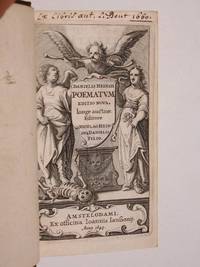
Danielis Heinsii Poemata Latina et Graeca; Editio post plurimas postrema longe auctior.
Amsterdam Amstelodami Apud Joannem Janssonium 1649. 12mo. XII6662 errata4 blank p. frontispiece. Calf 13.5 cm 'Elegantly printed edition of Heinsius' collective neo-Latin & neo-Greek poetry' Ref: STCN ppn 850068738; Cf. Willems 1613; Berghman 865; Rahir 2013; Ebert 9380; Brunet 384; Graesse 3232; Ebert 9380 Details: Back elaborately gilt with 5 raised bands and with a red morocco letterpiece in the second compartment. Boards with tripple fillet gilt borders within which is another tripple fillet rectangle with cornerpieces. Marbled endpapers. Engraved frontispiece depicting a kind of altar on which rests a shield with text; the altar is flanked by an angel and a girl; the angel tramples on a skeleton; above this scene soars a winged Fama blowing two horns Condition: Joints slightly rubbed. Two small wormholes in the leather at the foot of the spine and some damage to the lower edge of lower board for ca. one cm. Small hole in the leather of rear cover. On the blank upper margin of the frontispiece an ownership entry Note: The Dutch classical scholar of Flemish origin Daniel Heinsius 1580-1655 who enjoyed international fame as an editor of classical texts theorist of literary criticism historian and neolatin poet was professor of Poetics at the University of Leiden since 1603 extraordinarius Greek since 1605. After the death of J.J. Scaliger to whose inner circle he belonged he held the chair of Greek from 1609 till 1647. He is best known for his edition of Aristotle's treatise on poetry 1611 which he studied in connection with the 'Ars Poetica' of Horace. This edition is 'the only considerable contribution to the criticism and eludication of the work that was ever produced in the Netherlands. . In his pamphlet 'De tragoediae Constitutione' published in the same year 1611 he deals with all the essential points in Aristotle's treatise giving proof that he has thoroughly imbibed the author's spirit. . It was through this work that he became a centre of Aristotelian influence in Holland. His influence extended in France to Chaplain and Balzac to Racine and Corneille; in Germany to Opitz; and in England to Ben Jonson'. J.E. Sandys 'A history of classical scholarship N.Y. 1964 vol. 2 p. 314 Heinsius was a representative of the great age of Neo-Latin in the Low Countries which encompasses the 16th century and a good part of the 17th century. Here the Anacreontic-Petrarcan love poetry in Latin was kept alive. J. IJsewijn 'Companion to Neo-Latin studies' vol. 1 Leuven 1990 p. 154 This volume of Heinsius' poetry which was as the text of the frontispiece tell us edited by his son Nicolaus Heinsius opens with early work the three books of Sylvae followed by Hipponax an Ode to Molinus 3 books of Elegiae and the Monobiblos. Then comes the 'Herodes Infanticida tragoedia' followed by Heinsius' last long Latin poem 'De contemptu mortis' a didactic poem in 4 books wherein arguments Platonic Stoic and Christian are set forth which explain why man should not fear death. Then Heinsius' Epigrams and occasional poetry the 'Elegiarum iuvenilium libri'. At the end we find Heinsius' literary tour de force his Greek poems which were inspired by Theocritus and the Anthologia Graeca. It opens with 'Peplus' Gown a series of epigrams which Heinsius composed on Greek authors and philosophers. This part is followed by occasional poetry in Greek which Heinsius wrote for his contemporaries like Casaubon and by a section with Heinsius' Latin translations of Greek poetry. The collection closes with the 'Liber adoptivus' which contains occasional poetry addressed to Heinsius by J.J. Scaliger J. Dousa H. Grotius et alii. This edition of 1649 is a reissue of an edition of the collected greek and latin poetry of Heinsius which was published by Heger in Leiden in 1640 Provenance: 'Ex libris 'Ant. La Bout 1660' or 'Ant. LaBout' Collation: 6 A- D12 2E-2F6 leaves 2F5 & 2F6 blank Photographs on request hardcover
Bookseller reference : 120256
|
|
|
MEURSIUS,J
Ioannis Meursii Panathenaea sive de Minervae illo gemino festo liber singularis.
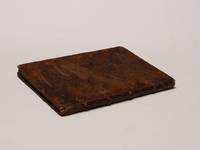
Leiden Lugduni Batavorum Ex officina Elzeviriana 1619. 4to. VIII48 p. Calf 18 cm Ref: Wiilems 161; Rahir 131; Berghman 1977 Details: Woodcut printer's mark on the title depicting an eagle with spread wings on a pedestal; the bird holds in its beak a set of 7 arrows bound together; the motto reads: 'Concordia res parvae crescunt'; the bundle of arrows symbolizes The Dutch Republic of the Seven United Netherlands also Provinces; since its foundation in 1588 the motto of the United Provinces was 'Concordia res parvae crescunt' in Dutch: 'Eendracht maakt macht' a still popular motto in the coat of arms of many countries. The saying was coined by the Roman historian Sallust. Bellum Jugurthinum caput 10 Condition: Binding very scuffed: leather on the back wearing away; scratches on the boards; front joint partly split and broken; corners bumped. Front flyleaf gone. Title dustsoiled. Some light foxing on the first and last pages. Right lower corner of the last gathering faintly waterstained Note: The Dutch classicist and ancient historian Johannes Meursius Johannes van Meurs 1579-1639 was professor of History and Greek since 1610/13 in the university of Leiden. He studied under the genius J.J. Scaliger and is best known for the 'editiones principes' of a number of Byzantine authors he produced and the 'editio princeps' of the 'Elementa Harmonica' of Aristoxenus 1616. He edited also the 'Timaeus' of Plato with the commentary and translation of Chalcidius 1617. He wrote much on the history of ancient Greece on Eleusis and especially on the antiquities and festivals of Athens and Attica. His work was widely used as source by later ancient historians. J.E. Sandys 'A history of classical scholarship' 1964 p. 311 § The tradition of studying the 'Athenian Festivals' goes back to antiquity was kept alive during the Renaissance and is still flourishing today. The real mark of a festival is the breadth of participation i.e. whether large groups of the population participate in the celebration. The Panathenaea or Panathenaic Games were held every four years in ancient Athens and are doubtless the best known of all Greek festivals with the exeption of Eleusis. It was held in honour of Athena in the form of Athena Polias the protectress of the city. There were two kinds of Panathenaea the lesser one often called Panathenaea without any epithet and greater Panathenaea which had the adjective µea. The difference between the two festivals was that the greater one was more solemn and luxurious and that the peplus of Athena was brought to the Parthenon on the Akropolis in a magnificent procession. The great Panathenaea were held every fourth year in the third year of every Olympiad and lasted a number of days. There were solemn and very munificent offerings and rituals a torch-race or lampadephoria/lampadarium was held between the Athenian phylai athletic competitions chariot races musical dance and reciting contests were organized and there was an abundance of food and entertainment. The chief solemnity was the procession to the temple of Athena Polias where a vestment the peplos was consecrated and offered to the goddess. Meursius treats all these aspects constantly referring to ancient sources. It is clear that all later research on the subject is based on the foundations he laid Collation: 4 A-F4 Photographs on request hardcover
Bookseller reference : 120282
|
|
|
PETAVIUS,D
D. Petavii Aurelianensis e Societate Iesu Rationarium Temporum in partes duas libros tredecim distributum. In quo aetatum omnium sacra profanaque historia chronologicis probationibus munita summatim traditur. Editio ultima nonnullis accessionibus auctior facta & ab Auctore recognita.
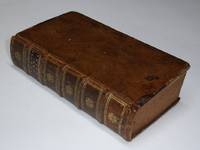
Paris Parisiis Apud Sebastianum Cramoisy Regis & Reginae Architypographum 1662 - 1663. 12mo. 2 volumes in 1: XX526 recte 51676 index2 blank; 2417 index2 blank p. Calf. 15 cm Details: Back gilt and with 5 raised bands; red morocco letterpiece in the second compartment. Marbled enpapers Condition: Binding worn at the extremities. Corners bumped. Owner's entry on the title. Small label on the front pastedown partly removed Note: This 'Rationarium Temporum' of the French Jesuit classical scholar historian and theologian Denis Pétau latinized as Dionysius Petavius 1583-1652 is a summary made for a greater public and for the use at schools of his great work on chronology 'De Doctrina Temporum' which he published in 1627. The summarized version 'Rationarium Temporum' first appeared in 1633 and was reissued/revised/augmented many times. It was also translated into French English and Italian. In KVK we counted till 1745 22 Latin editions of which 8 were published by Cramoisy in Paris between 1633 and 1673. Petavius devoted a large part of this 'Doctrina Temporum' to the vehement criticism of 'De Emendatione Temporum' of the great protestant French scholar J.J. Scaliger 1540-1609 who is considered to be the first serious modern student of chronology. The Jesuits however considered Scaliger who lost no opportunity to attack them an heretic and a great danger to the catholic church. Their opinion on his 'De Emendatione Temporum' 1593 was that it was worthless frivolum and a pack of lies commentitum. Especially Scaliger's denial of the authenticity of the works of Dionysius Areopagita raised their anger. The Jesuits believed that Scaliger undermined the authority of the church for in the work of Dionysius Areopagita the Jesuits found proof of the 'transsubstantiation' the belief that the substance of the bread and wine used in the sacrament in the Eucharist changed into that of the body and blood of Christ. J. Bernays 'Joseph Justus Scaliger' Berlin 1855 p. 81 Dionysius Petavius a member of the Jesuits an order called colloquially 'God's Soldiers' took up the fight against Scaliger with the publication of his 'Doctrina Temporum' of 1627. Petavius was a brilliant scholar and he succeeded in correcting and improving the chronological labours of Scaliger on many points even though his criticism directed against the protestant scholar was unfair and mean. The science of locating historical events in the ancient world in time is ultimately based on the work of Scaliger and Petavius Provenance: Name on the title of 'Hebert Le Jeune 1720' lightly crossed out. The remains of the small bookplate on the front pastedown are of a Jesuit library Collation: a8 e2; A-2A12 2B8 2C2 leaf 2C2 blank; A-K8 L2 M2 2M2 blank Photographs on request hardcover
Bookseller reference : 120290
|
|
|
FOURCROY, Abbe de
Méthode pour apprendre facilement l'histoire romaine. Avec une chronologie du regne des Empereurs & un abregé des coutumes des romains par Monsieur D. Édition nouvelle corrigée & augmentée.
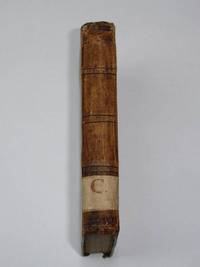
Brussels Brusselle Chez François Foppens 1701. 12mo. 3204 p. frontispiece. Calf 14 cm A popular schoolbook Details: On the frontispiece made by J. Harrewijn are a number of Roman symbols the she-wolf and the twins a Roman warrior with S.P.Q.R. on his shield a lictor with his fasces and a triumphal arch Condition: Binding rubbed & scuffed; head of spine chafed; front joint split for about 4 cm; small paper label near the foot of the spine Note: Quérard 833d attributes this very popular schoolbook to l'Abbé de Fourcroy. It was first published in 1694 and was reissued many times up to 1785. It was also translated into English appearing for the first time in 1695 and many times later. A Dutch translation appeared in 1734 1784 & 1810. The book is a specimen of the 2500 years old platonic teaching method the 'Question and Answer Method' Collation: A-N12 O6 Photographs on request unknown
Bookseller reference : 120246
|
|
|
MARTIALIS
M. Val. Martialis. Ex museo Petri Scriverii. Sumptibus Societatis.
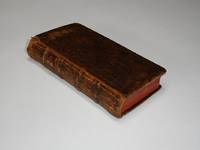
Amsterdam Amstelodami Typis Danielis Elzevirii 1664. 24mo. 3102 blank p. Calf 12 cm Ref: Willems 1344 & 1448; Berghman 2096 & 2092; Rahir 1392 & 1535 In october 2013 it was reported in the 'Daily Mail online' that in a book just published 'Mad about the boy' of Helen Fielding 40 pages had been swapped with another title that was printed on the same day Sir David Jason's autobiography. The Mail observes: 'The printers have had a Bridget moment. Only early editions of this new novel contain chunks of Sir David's book. A kind of error that would have left Bridget Jones herself feeling very embarrassed and resolving to try harder. Readers of the latest instalment of the hapless singleton's diary were astonished to discover Bridget's reflections on life and lover interrupted by 40 pages of Sir David Jason's memoirs' Details: Binder's error. When the binder of this Martialis of 1664 took the plano 24mo sheets in order to cut and fold the gatherings he had his 'Bridget Jones moment' and erroneously picked parts of a Lucan edition of 1671 which he was working on at the same time. Both books were published by the Amsterdam printer Daniel Elsevier and have the same format and typeface lay-out and paper. As the sheets of these small formats were cut before folding mistakes could occur. This lapse happened two times in gathering I and in M both consisting of 16 pages as they should. In these gatherings the leaves signed I1 and I8 and M1 and M8 are from the Martialis pile the remaining leaves signed I2 to I7 and M2 to M7 came from Lucanus' pile. So these gatherings begin with 2 pages Martialis followed by 12 pages Lucanus and end with 2 pages Martial. See for the cutting and folding of 24mo: Ph. Gaskell 'A new introduction to bibliography' Oxford 1974 p. 86 & 107 Owners of this Martial must have been astonished to discover that the author's saucy and witty epigrams were interrupted two times by 12 pages of Lucan's dull reflections on the Civil War. § Back with 4 raised bands and with a red shield in the second compartment. Marbled endpapers. Engraved title: in the centre a pedestal with on it a winged putto riding a dolphin a well known motiv in Renaissance art. The pedestal is flanked by 4 actors who hold a mask before their face. One of them is a naked women. The naked truth Condition: Binding scuffed. Head of the spine slightly damaged. The right margin of the frontispiece has been infilled expertly with fibered paper. Three leaves of the first gathering which once were torn out have been expertly repaired with a strip of paper in the gutter with on the tear some loss of letters at the beginning of a few words. Owing to the above mentioned binder's error this Martial edition lacks 24 pages p. 131/142 VI44-VII26 and p. 179/190 IX3-57. These leaves were swapped with part of the books VII & IX of Lucan's Civil War picked by mistake from 'M. Annaei Lucani Pharsalia sive de bello civili Caesaris et Pompeii libri X. Ex emendatione V.C. Hug. Grotii cum eiusdem notis'. Amstelodami Typis Danielis Elsevirii 1671 Provenance: On the front flyleaf: 'K.E. Geoges 1857'. Every classical scholar knows the German lexikographer and classical philologist Karl Ernst Georges 1806-1895. He is the compiler of a huge Latin-German lexicon: 'Ausführliches Lateinisch-deutsches Handwörterbuch' an indispensable standard work until this day. Neue Deutsche Biographie 6 1964 p. 241 Collation: A-T8 V4 leaf V4 blank See above for the construction of the gatherings Photographs on request hardcover
Bookseller reference : 120276
|
|
|
ROSCIUS,LUCIUS VITRUVIUS
L. Vitruvii Roscii Parmensis Libetius primus secundus et tertius: vel grammaticarum quaestionum libri tres.
Genua Genuae 1547. Colophon at the end: Apud Antonium Bellonum Taurinensem 1542 Small 8vo. XV1 blank; 2354 index1 blank p. 18th century half calf. 15.5 cm Ref: Edit 16 CNCE 54876: both title and colophon 1547; USTC 853565: both title and colophon 1542 Details: Back gilt and with red shield. The colophon at the end mentions another year: 'Genuae anno Domini 1542'. Edges dyed red Condition: Binding slightly chafed and worn. An old hand wrote on the title: 'Oratorii Parmetensis'. Some small and old ink annotations. White paper Note: Next to nothing is known about the Italian cleric and scholar Lucio Vitruvio Rossi or in Latin Lucius Vitruvius Roscius. He was born ca. 1500 and was regular canon of the 'Congregazione Renana'. He wrote besides this book on grammar a number of introductory books on linguistics grammar oratory and epistolography e.g. 'Grammaticae institutiones' Venice 1526; 'De ratione studendi atque docendi libellus. Iacobi Lebetii Ferrariensis Christi in crucem acti querela heroico carmine' Bologna 1536; 'De conficiendis epistolis isagogicon' Venice 1538; 'De modo docendi atque studendi ac de claris puerorum moribus libellus quam utilissimus' Venice 1539; 'De commoda ac perfecta elocutione deque conficiendis epistolis Isagogicon' Basel 1541; 'Grammaticarum quaestionum et elegantiarum libri tres utilissimi' Venice 1542; 'Institutionum latinae grammatices libri tres' Genoa 1545. Several of his books saw reissues in different Italian cities. He died ca. 1550. He was a colleague and close friend of Jacopo Lavezzoli born ca. 1510 in Ferrara who is also known as Lebezio or Lebetius. Lavezzoli was named Lebetius after the latinized form 'lebes' Greek lebês of the Toscan word 'laveggio' kettle cauldron. Vergilius Aeneis 3466 Lebetius was praised as 'theologus philosophus orator latinus poeta graecaeque linguae peritissimus'. His best known poem is 'Christi in crucem acti querela' which was published in Roscius' 'De ratione studendi atque docendi libellus' of 1536. Following the ancient example of Cicero who gave some of his dialogues the name of the principal participant Cato Laelius Roscius named his 'grammaticarum quaestionum libri tres' after his friend Lebetius. The other participants are Roscius himself one Sebastianus Eradius Augustinus Florentius Johannes Alenus and Paulus Pincius. At the end is a useful index of two pages. This work on grammar and linguistics was first published in Genoa by the printer Bellone in 1537. Bellone reissued this title in 1542 and 1547. In this edition of 1547 he repeated however in the colophon the year 1542. This 1547 reissue has furthermore a terrible misprint on the title 'Libetius' instead of 'Lebetius'. To complicate matters the edition of 1537 also has at the end a colophon dated 1542! Except for the title pages all these three issues seem similar. As there are not yet digitized copies available to investigate this we cannot be sure. See for Lebetius and Roscius 'Continuazio delle Memorie Istoriche di Letterati Ferraresi' Ferrara 1811 p. 186-191 At the end of the introduction there is a distichon of 18 lines by Lebetius to praise Roscius and his work followed by five other short poems in praise of Lebetius and Roscius. § This book is very rare. We located in KVK only three copies one in the University Library of Edinburgh and two in Italy of which one in the University Library of Genua Provenance: We found only one book with the same inscription on the title: 'oratorii nannetensis'. It is held by the the University Library of Basel and is in the same hand. This 'oratorium' is the famous 'Chapelle de l'Oratoire' in the city of Nantes at the Place de l'Oratoire. The 'Congrégation de l'Oratoire' came to Nantes in 1619. In 1625 the city council entrusted to them the pedagogical management of the local 'Collège Saint-Clément'. The building was confiscated during the French revolution. We assume that its library was sold Collation: A-Q8 verso of the leaves A8 & Q8 blank Photographs on request unknown
Bookseller reference : 120313
|
|
|
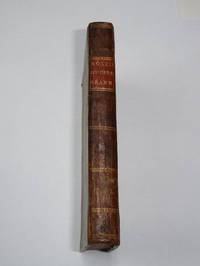
HEINSIUS,D
Laus asini. Tertia parte auctior cum aliis festivis opusculis quorum seriem pagella sequens indicat.
Leiden Lugd. Batavorum Ex Officina Elzeviriana 1629. 24mo. XX4382 blank p. Contemporary calf 10.5 cm Ref: Willems 315; Berghman 1247; Rahir 286; Brunet 384; Graesse 3233 Details: Binding ruled blind. Engraved title depicting 2 learned gentlemen perhaps Ewaldus Schrevelius to whom the book is dedicated and Heinsius' friend Adolph Vorstius who both doff their hats for an ass Condition: Binding scuffed and with a few scratches corners bumped. Small piece of leather gone at the foot of the spine. Both pastedowns detached Note: The 'Laus asini' ad Senatum Populumque eorum qui ignari omnium scientias hoc tempore contemnunt was published anonymously for the first time in 1623. An augmented edition appeared in 1629. The author is according to all critics the Dutch classical scholar and neolatin poet Daniel Heinsius 1580-1655. It makes fun of people in an Erasmian spirit and seems to have lost none of its topicality. The aim is Heinsius tells in the 'ad lectorem' to vindicate men of letters and those who love to learn from the contempt of ignorant people who not only heartily ridicule liberrime. illudunt them but also culture eruditioni and the sciences. leaf 6 recto & verso This eulogy is a satire on ignorance and voluntary servitude of the ass. It is hard to fathom because of the complexity of its style and the overabundance of erudition or put more positively the veritable fireworks of learned allusions which often obscures matters. The first edition of 1623 which contained the 'Laus Asini' only is augmented in this second edition with 6 other pieces 1: an Menippean satire 'Cras credo hodie nihil' 2: 'Epistola qua agitur an & qualis viro literato sit ducenda uxor' 3: 'Laus pediculi ad Conscriptos Mendicorum Patres' 4: 'Epistola de poetarum ineptiis & saeculi vitio' 5: 'Argumentum Batrachomyomachiae' 6: 'Viro Nobilissimo Ioanni Milandro Domino de Poederoeye Principi a Secretis: de Graeculis quos illi commendaverat'. At the end Heinsius added a short letter to H. Grotius and a consolation poem for his friend Baudius on the occasion of the death of his wife Collation: 6 24 A-2N6 2O4 leaf 2O4 blank Photographs on request hardcover
Bookseller reference : 120250
|
|
|
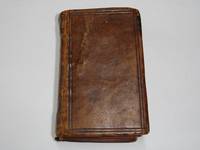
SULPICIUS SEVERUS
Sulpitii Severi Aquitani Sacrae Historiae a mundi exordio ad sua usq; tempora deductae libri duo; item Dorothei Episcopi Tyri qui sub Constantino Magno vixit De vita Prophetarum & Apostolorum Synopsis. Quibus accessit rerum & verborum index copiosus.
Paris Parisiis Apud Gulielmum Guillard & Almaricum Warencore 1560. Small 8vo. XXXII1562 blank;24 index p. Modern hardbound binding. 13.5 cm 'A universal chronicle which is an important source for the history of 4th-century events' Ref: USTC 153005; Ebert 22005; Schoenemann 2378/79 Details: Back with 4 raised bands and with a gilt short title in the second 'compartment' Condition: Old inscriptions on the front flyleaf. Front flyleaf worn thumbed and dustsoiled. Title also thumbed and dustsoiled and with an old ownership entry and shelf number Note: The Latin historian Sulpicius or Sulpitius Severus was born in Aquitania ca. 360 A.D. He organized under the influence of Bishop Martinus of Tours a sort of monastic life on his own estate for himself and his friends. His extant works are a 'vita S. Martini Turonensis' and this 'Sacrae Historiae' a kind of universal chronicle to A.D. 402 'which is an important source for the history of 4th-century events . The whole book is an interesting attempt to present a 'breviarium' of history from the Christian point of view: it uses Christian chronographers especially St. Jerome but also Pagan writers. J. Bernays suggested that for the destruction of Jerusalem in A.D 70 Sulpicius followed the lost account of Tacitus. Sallust and Tacitus are his models in the matter of style'. OCD 2nd 3d. p. 983 § The 'Sacrae Historiae' were first published in Basel in 1556 by the Ilyrian protestant scholar Matthias Flacius the latinized slavic name Vlacich from a old manuscript found in a library in Hildesheim. Flacius 1520-1575 who taught Hebrew in Wittenberg and the New Testament in Jena was a pupil and lifelong supporter of Luther. Flacius dedicated his book to the Polish duke Nicolaus Radziuilius who was a great patron of the Lutherans. Neue Deutsche Biographie 5 1961 p. 220-222 Schoenemann's opinion is that Flacius 'accurata fide hos libros exprimendos curavit'. Schoenemann p. 378 The next edition of the 'Sacrae Historiae' this edition appeared a few years later in Paris in 1560. In the 32 page 'praefatio' to this edition which is in fact a ferocious attack against Lutheranism that brought nothing but 'latrocinia furta praedationes adulteria usurae homicidia & id genus alia flagitia' p. 2 recto written by one 'Iacobus Faber doctor theologus Sorbonicus' we are told that he Faber published this work to strengthen the spirit of the Catholics against the heresy of the Reformation that was raging through Europe and especially Germany. p. 3 recto Faber suggests that he found and edited the text of the 'Sacrae Historiae' himself. 'cuius sacram historiam cum in publicum omnium catholicorum commodum evulgare ex mediis antiquorum seculorum abditissimis scriniis erutam cogitaremus' p. 23 recto & verso Schoeneman explains that the catholic professor of the Sorbonne was a common thief who misappropriated the edition of his protestant precursor Flacius without any acknowledgment. 'partam Matthiae Flacio gloriam suffurari non erubuit' Schoenemann p. 379. Schoenemann calls the praefatio of Faber nothing but 'emendicatus pannus' 'begged for rags' pun for 'emendicatus panis' Provenance: On the title: 'Conv.s ff. erem. s. Aug.ni Bruxell. 1610' indicating that the book once belonged to the convent of the Order of the Eremites of St. Augustine in Brussels. § On the front flyleaf the old names: 'Van den Boom' and 'P. vanden Hoogen ex Horsten 18/12/'25' Collation: -28 A-T8 V4 last leaf V4 blank 8 24Photographs on request hardcover
Bookseller reference : 120316
|
|
|
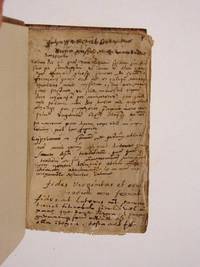
SALLUSTIUS
Quae exstant opera.
Paris Parisiis Typis J. Barbou. 1761. 12mo. XXXVI348 p. 3 plates one of which is the frontispiece. Mottled calf 16 cm Ref: Schweiger 2882; Graesse 6/1241; Ebert 20036; Brunet 587 Details: Back gilt boards with triple fillet gilt borders. Endpapers marbled. Edges of the bookblock gilt. The plates including the frontispiece are designed by N. Cochin filius and executed by E. Fessard. The frontispiece depicts the elevation to the Pantheon of the author the historian Sallustius. Woodcut printer's mark of the Barbou brothers on the title it depicts in a central round medallion two flying pelicans or storks with one feeding the other; it symbolizes mutual help and brotherly love Condition: Binding shabby and scuffed corners bumped. Inside good Note: 'One of the most widely read and influential of Roman historians along with Caesar Livy and Tacitus Sallust 86-34 BC has been studied quoted and imitated not only as a historian but also as a moral philosopher political thinker and stylist.' Until 1600 more than 200 editions of his work appeared. Sallust was used in France during the 16th and 17th century to support absolute theories of government. But 'on the other hand it was the republican Sallust ennemy of tyrants whom John Milton admired and who bolstered the cause of liberty in the Lowlands during the war with Spain and later in France and on the American continent'. The Classical tradition Cambr. Mass. 2010 p. 856 Sallust's condemnation of corruption made a deep impression on the Founding Fathers of the American Republic at the end of the 18th century. One of them John Adams urged his son John Quincy to read Sallust whom he called 'one of the most polished and perfect of the Roman historians'. The Barbou's previously published this same Sallust edition in 1754. This first Barbou is according to Schweiger and Ebert a reissue of the Sallust edition of Paris 1744 which was edited by the French historian and geographer St. Andr. Philippe or rather Étienne André Philippe de Prétot 1710-1787. He produced in the beginning of his career quite a number of editions of Latin classics. Between 1747 and 1755 he edited for the Parisian publisher Antoine-Urbain Coustelier Catullus Tibullus Propertius Sallustius Vergilius Horatius Juvenalis Persius Phaedrus Lucretius Velleius Paterculus Eutropius and Terentius. See Wikipedia 'Philippe de Prétot' Collation: a12 b6; A-O12 P6 Photographs on request hardcover
Bookseller reference : 120312
|
|
|
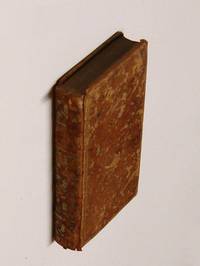
CICERO
Pensées de Cicéron traduites pour servir à l'éducation de la Jeunesse; par M. l'Abbé d'Olivet. Nouvelle édition revue et corrigée avec soin.
Lyon Chez Tournachon-Molin 1804. 12mo. 3171 p. Calf 17.5 cm Details: Back ruled gilt boards with gilt borders. Marbled endpapers Condition: Binding scuffed back rubbed corners slightly bumped. Stamp on the verso of the front flyleaf. Paper slightly yellowing Note: This is a thematically organized anthology of texts of the Roman politician rhetor and philosopher Cicero 106-43 A.D mostly taken from his philosophical works. It has 12 chapters: I 'Sur la religion; II Sur l'homme; III Sur la conscience; IV Sur les passions; V Sur la sagesse; VI Sur la probité; VII Sur l'éloquence; VIII Sur l'amitié; IX Sur la vieillesse; X Sur la mort; XI Songe de Scipion; XII Pensées diverses'. Opposite of d'Olivets French translation is the Latin text. The 'Pensées de Cicéron traduites pour servir à l'éducation de la jeunesse' was produced by the French scholar grammarian and translator Pierre-Joseph Thoulier d'Olivet also known as the 'abbé d'Olivet' 1682-1768. He wrote about French grammar and prosody and translated speeches of Cicero 1726/27 his De Nature Deorum 1731 and Tusculanae Disputationes 1732. The 'Pensées de Cicéron' were first published in 1744. Voltaire observed about d'Olivet: 'Nous lui devons les traductions les plus élégantes et les plus fidèles des ouvrages philosophiques de Cicéron enrichies de remarques judicieuses. Toutes les uvres de Cicéron imprimées par ses soins et ornées de ses remarques sont un beau monument qui prouve que la lecture des anciens nest point abandonnée dans ce siècle. Il a parlé sa langue avec la même pureté que Cicéron parlait la sienne et il a rendu service à la grammaire française par les observations les plus fines et les plus exactes'. See for d'Olivet Wikipédia Provenance: On the verso of the front flyleaf the withdrawal stamp of 'Koninklijk Huis-Archief' which is the archive of the the Dutch Royal Family Collation: A-N12 O4 minus blank leaf O4 Photographs on request hardcover
Bookseller reference : 120225
|
|
|
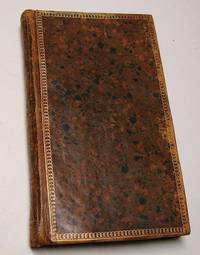
HORATIUS
Q. Horatii Flacci Carmina expurgata. Accuratis notis ac appendice de Diis & Heroibus Poëticis illustravit Josephus Juvencius. Editio prioribus auctior & emendatior. Iuxta exemplar Romae. Cum privilegio Regis.
Rouen Rothomagi Ex typographia privilegio distincta 1790. XVIIIXXX40712I = index1 blank p. Half calf. 17 cm Ref: cf Schweiger 2405 for the first edition Details: Back gilt endpapers and boards marbled Condition: Some wear to the extremes of the binding. Occasional ink & pencil marginalia. A few very pinpoint wormholes almost invisible in the blank lower margin from p. 145 till the end Note: This school edition of Horace is the work of the French Jesuit scholar poet and paedagogue Joseph de Jouvancy or Jouvency in Latin Josephus Juvencius 1643-1719. Jouvancy entered the Society of Jesus when he was sixteen 'and after completing his studies he taught grammar at the college at Compiègne and rhetoric at Caen and the College of La Flèche. He made his profession in the latter place in 1677 and was afterwards appointed professor at the Lycee Louis-le-Grand in Paris. In 1699 he was called by his superiors to Rome to continue the history of the Society of Jesus begun by Niccolo Orlandini and was engaged in this work until his death. . Jouvancy edited a large number of school editions of Latin authors including Terence Horace Juvenal Persius Martial the Metamorphoses of Ovid and the philosophical writings of Cicero such as De Officiis Cato Major and Laelius'. The texts were revised and purged for school use and supplied with footnotes in Latin. 'These expurgated editions were frequently reissued well into the 19th century both in France and other countries'. Source for Jouvancy Wikipedia The first Horace edition of Jouvancy mentioned by Schweiger dates from 1697 Paris. In the stream of many hundreds of 18th century school editions of Horace we counted 13 of Jouvancy 1706 1708 1714 1717 1722 1728 1736 1737 1754 1754 1794 1790 1814. Seven of them were published in Rouen. There may of course be more editions for Schweiger does not mention our 1790 edition Collation: 6 a-c6; A-2M6 Photographs on request hardcover
Bookseller reference : 120266
|
|
|
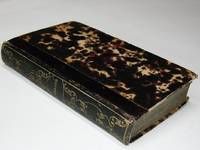
AUSONIUS
D. Magni Ausonii Burdig. viri consularis opera. A Iosepho Scaligero & Elia Vineto denuo recognita disposita & variorum notis illustrata . Adiectis variis & locupletissimis indicibus.
Geneve Typis Iacobi Stoer 1588. 16mo. 2 volumes in 1: XXXII350;2471 blank14 indices p. 18th century calf back recently and decently restored. 13 cm Ref: GLN-3290; Schweiger 21; Graesse I259; Smitskamp p. 118 Details: Back with 4 raised bands recently and expertly restored. Morocco shield with gilt lettering in second compartment. Boards with blind triple fillet borders. Elaborately blind tooled rectangles on both boards. Edges of the boards gilt edges of the bookblock dyed red. Title within woodcut borders right edge of the title slightly cut short. The second volume has a title of its own it contains 'Iosephi Scaligeri Iul. Caes. F. Ausonianarum lectionum libri duo' to which have been added notes of A. Turnebus Hardianus Junius G. Canter J. Lipsius & E. Vinetus Condition: Endpapers renewed. First title slightly soiled and having a name on it Note: Decimus Magnus Ausonius of Burdigala Bordeaux ca. 310-394 was according to H.J. Rose an example of the senile degeneration of 4th century Latin literature and the first glimmer heralding the full day of French literature. He wrote trifles sometimes pretty or clever often tiresome. H.J. Rose 'A History of Latin Literature' London 1967 p. 527/29. H.G. Evelyn White the editor of the Loeb edition is even more negative: 'As poetry . the great mass of his verse is negligible'. The chief value of Ausonius' work is according to him historical. Loeb Classical Library Ausonius Cambr. Mass. 1919. p. VII The 'Neue Pauly' is more positive: 'Ausonius repräsentiert eine Kultur der Bewahrung und des Erbes. Allenthalben greift er auf die griech. und lat. Lit. zurück über die er souverän verfügt und gestaltet anspielungs- und voraussetzungsreiche pretiöse Gebilde von formalem Raffinement'. Der Neue Pauly 2334 Alexander Souter is in the Oxford Classical Dictionary full of praise: 'His numerous poems written in various metres . are of considerable interest in both subject-matter and style. There are over a hundred epigrams some of which are in Greek and others translated from Greek. There are 25 letters. His correspondence with Paulinus of Nola is the most notable part of these. The Ephemeris includes many poems in various metres dealing with daily life. The Parentalia is a collection of short poems in memory of deceased relatives of the poet. The Commemoratio Professorum Burdigalensium is of interest for the history of education. . This account by no means exhausts the list of minor poems throughout which the author's minute knowledge of Virgil is apparant and his Christian faith is not obtruded. His most important poem is the Mosella which still attracts readers. It is a rhetorically fashioned laudatio in 483 hexameters and describes in considerable detail the various fish to be found in the river as well as some of the fine buildings on the banks and other features the whole constituting a series of episodes composed like the rest of Ausonius' verse according to rule'. OCD 2nd ed. p. 154 § The 2 French scholars mentioned on the title Joseph Juste Scaliger1540-1609 and Elie Vinet or Elias Vinetus 1509-1587 had probably nothing to do with the editing of this new Ausonius edition of 1588. It was produced according to the very short preface by the jurist P.B. Cestius I.C or Petrus Baudoza Cestius 1557-1627. It is further explained that it is based on the earlier edition of Scaliger Antwerp 1575 with corrections of typographical errors. Vinetus had published an edition with his commentary in 1580 Provenance: Name on title: 'Jacobus Levinus'. At the end of volume 1 written: 'John Rocherus 1794' Collation: ¶-¶¶8 a-y8 minus blank leaf y8; A-Q8 R4 minus last blank leaf R4 Photographs on request hardcover
Bookseller reference : 120207
|
|
|
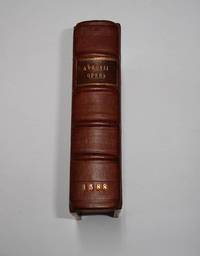
PALINGENIUS
Marcelli Palingenii Stellati Poetae Zodiacus vitae id est de hominis vita studio ac moribus optime instituendis libri XII. Nunc demum ad exemplaria primaria sedulo castigati centenis aliquot mendis expurgati aliisque accessionibus aucti.
Rotterdam Rotterodami Apud Joannem Hofhout 1722. 8vo. XVI including frontispiece407;47 index2 blank p. Calf 15.5 cm Details:.Back gilt and with 5 raised bands. The frontispiece designed and executed by Jan Goeree depicts an allegorical scene which may refer to passages in the second and sixth book of the 'Zodiacus Vitae' called Taurus and Virgo. It shows a laureated woman Poetry who shakes hands with death and at the same time clings with her left arm to a bust of the virtuous goddess of wisdom Athena. Her feet rest on a bag of gold and a scepter. Next to her stands a winged putto scourge at hand who reveals gold and other treasures of the church that lay hidden below a piece of cloth. Above them on a monument the wellknown scene of Hercules on the crossroads where he meets two women personifications of Virtue and Vice. They both advice Hercules to follow the road they show him. Virtue depicted here as Athena points at a narrow rocky and steep path at the end of which he will find a reward. Vice who is stripped to the waist offers Hercules pleasure crowns and wealth; she points at the easy road. The message is clear the highest good can not be found in wealth and profane goods but in virtue combined with wisdom. At the end of the sixth book Virgo the poet concludes having considered the endless miseries of humankind that we should not fear death but that we must embrace her/him as a safe haven. The woodcut printer's mark shows the intertwined initials of the publisher Johannes Hofhout. The title is printed in red and black. Each of the 12 songs is preceded by a useful synopsis Condition: Binding scuffed. Tip at the head of the spine worn away. Gilt on the back fading. Front joint cracked still strong but showing some small damage. Bookplate on the front pastedown. Endpapers worn and yellowing. Some old ink underlinings Note: The real name of the Italian neolatin poet Marcello Palingenio Stellato or in Latin Marcellus Palingenius Stellatus was in 1725 revealed by I. Facciolati in a letter to the German bibliographer J.A. Fabricius. Marcello Palingenio is an anagram for the name of the Italian courtier Pier Angelo Manzolli born to a humble family in La Stellata near Ferrara between 1500 and 1503. He died before 1558. Recent research Bacchelli 1985 points in a completely different direction. On the basis of indications in the privilege for the printing of the Zodiacus granted in Venice in 1535 to one Marcellus Stellato Neapolitanus it is thought that Marcellus may have been born in Campania and that his real name was Marcello Stellato or Stellati a family name attested in area of Campania thus denying the attribution of the poem to Pier Angelo Manzoli. A weak point is that the appellation 'Palingenio' is here hard to explain. Anyway of the author's life little is known. It is assumed that he was a medical doctor. He was at one point suspected of heterodoxy perhaps because he was a member of the Calvinist circle of Renata d'Este. After his death his bones were dug up following a process of heresy under pope Paulus III and burned at the stake. A Vatican codex which includes documents of the Congregation of the Index of the years 1571-90 informs us that the unearthing of Marcello'nihil credens neque divinitatem Christi' took place in Cesena without however indicating the date while in November 1558 the Bolognese Jesuit Francesco Palmio informed his general G. Lainez that his body was publicly exhumed and burned because of certain heretic books Palingenius had composed. The cause of this exhumation may well have been his 'Zodiacus Vitae' a poem in 12 songs 9939 hexameters each song taking its name from one the twelve signs of the Zodiac. It was written between 1520 and 1534 and was dedicated to Ercole II d'Este. These songs do not form a coherent unity and contain a variety of didactic moralistic metaphysical astronomical and frequently satirical passages. The work was placed on the Index in 1558; and perhaps because of this in addition to its intrinsic qualities and its attacks upon the Catholic clergy it was widely read and admired in Protestant countries. In England it was even used as a school text both in Latin and English. It was imitated in and translated into several languages. The main theme is the 'highest good' and around this are woven other secondary themes. There are contradictions repetitions and none of the questions dealt with is original. Yet the Zodiacus is a characteristic and interesting work for its dealing with important philosophical questions and the author's noble intent to offer the reader a poetic code of rule how to live wisely. Its literary value lies in its ornate style and the freedom with which it treats the Latin language. Most importantly the poem shows traits of true and heartfelt poetry as found in some particularly sharp satiric attacks upon the clergy in certain similes and in outpourings of real pessimism. Source: Dizionario Biografico degli Italiani - Volume 69 2007 and Enciclopedia Italiana 1934 Provenance: On the front pastedown the armorial bookplate of 'The Right Honorable Sir John Trollope Bar-t. M.P.' Probably Sir John Trollope 1800-1874 7th Baronet of Casewick in the county of Lincoln and created Baron Kesteven in 1868. He was a conservative politician and M.P. for Lincolnshire South. See Wikipedia 'John Trollope 1st Baron Kesteven' and 'Trollope Baronets' Collation: pi1 frontispiece 8 minus leaf 1; A-2C8 2D-2G4 2H4 leaf 2H4 is a blank and located between the leaves 2H1 and 2H2 because of a binder's error Photographs on request hardcover
Bookseller reference : 120288
|
|
|
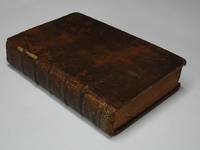
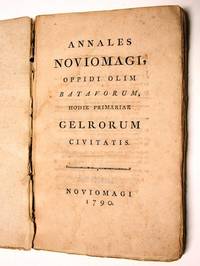
BETOUW,J IN DE
Annales Noviomagi Oppidi olim Batavorum hodie primariae Gelrorum Civitatis.
Nijmegen Noviomagi Ex typographia Ahasuëri van Goor filiique 1790. 4to. IV2444 index p. Contemporary wrapppers 22 cm Ref: STCN ppn 190386835; Gheprint te Nymeghen 45.1 Details: Uncut Condition: Wrappers chafed. Paper on the back gone. Paper of 9 gatherings browned. Waterstain sometimes almost invisible in the upper inner corner Note: The city of Nijmegen in the Dutch province of Gelderland is one of the oldest cities in the Netherlands. In the first century BC the Romans built a military limes-camp on a place of great strategic value because of the surrounding hills which gave a good view over the Rhine valley. By 69 a village called 'Oppidum Batavorum' had formed near the Roman camp where 'Legio X Gemina' was stationed. The settlement around the camp received in 98 A.D. Roman city rights. In 104 the Emperor Trajan renamed the town 'Ulpia Noviomagus Batavorum' better known as 'Noviomagus'. In the 8th century Nijmegen was part of the empire of Charlemagne. The Emperor of the Holy Roman Empire Fredericus II granted Nijmegen city rights in 1230. In 1364 Nijmegen became part of the Hanseatic League. During the Eighty Year's War of Independence a revolt against the souvereign of the Netherlands the King of Spain which lasted from 1568 till 1648 the city belonged to the Republic of United Provinces and had to endure multiple sieges. Source Wikipedia § The Annals of Nijmegen were published anonymously and cover its history up to 1790. The author is the local historian and collector of antiquities Johannes in de Betouw 1732-1820 who was a descendent of the archaeologist Johannes Smetius Johannes Smith 1590 - 1651. Smetius broke with his work on Nijmegen new ground for the history of the Netherlands and with him starts the provincial Roman archaeology in the Netherlands Provenance: The provenance seems to indicate Nijmegen. On the inside of the frontcover: 'J.E. v. Lijnden' member of an old Nijmegen-family Collation: pi2 A-2H-4 Photographs on request unknown
Bookseller reference : 130088
|
|
|
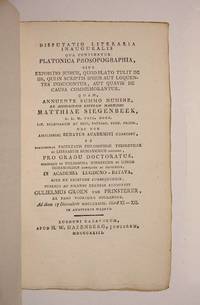
GROEN VAN PRINSTERER,G
Platonica prosopographia sive expositio judicii quod Plato tulit de iis qui in scriptis ipsius aut loquentes inducuntur aut quavis de causa commemorantur.
Leiden Lugduni Batavorum Apud H.W. Hazenberg juniorem 1823. 8vo. XV12388 theses p. Contemporary boards 22 cm Dissertation University Leiden The Dutch politician and historian Guillaume Groen van Prinsterer 1801-1876 was a devout Christian lifelong member of the Dutch Reformed Church the state church of the Netherlands. He lead the evangelical renewal movement thriving at the time the European Continental counterpart to the Second Great Awakening known in the Netherlands as the 'Reveil'. Groen ardently opposed the liberal politician Thorbecke whose principles he denounced as ungodly and revolutionary i.e. inspired by the French Revolution. Groen played as a political writer and a member of the Second Chamber of Parliament a prominent role in Dutch home politics. As the leader of the protestant anti-revolutionary movement he gradually created the ideological basis on which after his death in 1879 Abraham Kuyper founded the 'Anti Revolutionary Party' Anti-Revolutionaire Partij Source Wikipedia hardcover
Bookseller reference : 130081
|
|
|
ROBERTSON,W
Geschiedenis van Oud Griekenland van de vroegste tijden af tot dat het een Romeinsch wingewest werd. Naar den tweeden druk uit het Engelsch vertaald.
Utrecht etc. A. van Paddenburg W. Holtrop & C. van der Aa 1780 - 1781. 3 volumes in 2: XIV3451 blank; IV330; IV182;19 index1 blank p. Half calf. 23 cm Ref: STCN ppn 261832115 Details: Back ruled gilt and with 5 raised bands Condition: Bindings worn & scuffed. Corners bumped. 2 small paper shelf numbers on the upper boards. 2 small oval stamps on the title Note: This is a translation into Dutch of the second edition of 'The History of Ancient Greece' 1778 by the Scottish historian and minister of the Church of Scotland Reverent William Robertson 1721-1793 who was a significant figure in the Scottish Enlightenment and also of the moderates in the Church of Scotland. One of his most notable works is his 'History of Scotland 1542-1603' begun in 1753 and first published in 1759. Source Wikipedia; but see also for Robertson: G. Ceserani 'Narrative Interpretation and Plagiarism in Mr. Robertson's 1778 'History of Ancient Greece' in 'Journal of the History of Ideas' Vol. 66 No. 3 Jul. 2005 pp. 413-436 Provenance: On the front pastedown the booklabel of Mr. S.I.Z. Wiselius. See for the Dutch jurist playwright and poet Samuel Iperuszoon Wiselius 1769-1845: resources.huygens.knaw.nl/bwn1780-1830/lemmata/data/Wiselius Collation: 1: 2 3 24 A-X8 Y6 leaf Y6 verso blank; minus blank leaf Y6; 2: pi2 A-V8 X6 minus blank leaf X6; 3:pi2 A-M8 N6 leaf N6 verso blank Photographs on request hardcover
Bookseller reference : 22248

|
|
|
FABER SORANUS, BASILIUS
Basilii Fabri Sorani Thesaurus eruditionis scholasticae omnium usui et disciplinis omnibus accommodatus post celeberrimorum virorum Buchneri Cellarii Graevii operas et adnotationes et multiplices A. Stübelii et Io. Mat. Gesneri curas iterum recensitus emendatus locupletatus.
Frankfurt Leipzig Francofurti Lipsiae In taberna libraria Ioh. Frid. Gleditsch 1749. Folio. 2 parts in 1: X p.; 1792;1308 columns; 198 index p. Vellum 39.5 cm Ref: Brunet 22/1146; Ebert 7243: the best edition; Graesse 2540; Spoelder p. 618/19: Kampen 2 Details: Back ruled gilt. Red morocco shield in the 'second compartment'. Board with gilt borders and the gilt coat of arms of Kampen. Woodcut of Pegasus on the title. Printed in 2 columns. At the one finds a 198 p. 'Index germanico-latinus rerum vocabulorum phrasium descriptionum & locutionum proverbialium' Condition: Vellum slightly soiled and age-toned. Folds in the half title and front flyleaf. Paper foxed and yellowing. Some faint waterstains Note: The German schoolmaster and lexicologist Basilius Faber born ca. 1520 in Sorau nowadays Polish Zary was 'einer der bedeutensten Schulmänner des 16. Jahrhunderts'. He produced a 'Thesaurus' which long survived him. He died in 1576. ADB 6 p. 489/90 The work was first published in 1571 and later revised and augmented by scholars like Cellarius and Graevius. The last and best re-edition is this edition produced by the German classical scholar Johann Matthias Gesner 1691-1761. It is a Latin dictionary/encyclopedia with German and sometimes Greek equivalents. Lemmata are arranged under the word from which they derive. The article 'eo' 'to go' for instance fills 5 pages and offers in alphabetical order all possible derivative composita from 'abeo' to 'transeo' and under each of these verbs we find again in alphabetical order numerous lemmata; e.g. under 'coëo' we find the short derivative articles 'coiens' 'coitus' 'coitio' 'coibilis' 'incoibilis' 'coetus' with the German equivalent and a number of elucidating 'loci' in ancient authors. Sometimes articles are of an encyclopedic nature e.g. a word like 'charta'. This word 'paper' receives one whole densely printed column covering all kinds of aspects of paper in ancient sources papyrus biblos etc. This really is a classical 'Fundgrube'. It is 'nicht blos ein Lexikon der lateinischen Sprache sondern recht eigentlich eine Schatzkammer die durch reiche Phraseologie sowie durch Aufnahme von Sentenzen Sprüchen Geschichten etc. zu freierer Bewegung im Gebrauche des Lateinischen anleiten und nebenbei auch sonst bildende Elemente darbieten sollte'. Op. cit. p. 489 The preliminary papers include the prefaces of earlier editions of A. Bucherus 1625 and 1655 of Cellarius 1692 of A. Stübel 1717 and of I.M. Gesner 1635 Collation: a-b4 chi2 A-5V4 chi1 A-4M4 4N4 minus blank leaf 4N4 A-2A4 2B2 2C2 leaf 2C2 blank Photographs on request Heavy book may require extra shipping costs hardcover
Bookseller reference : 65451
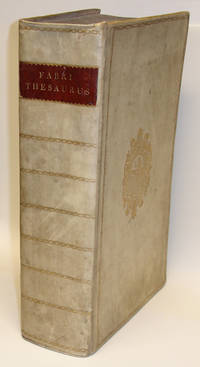
|
|
|
EUSEBIUS
Kerkelyke geschiedenissen zedert den dood van onzen Zaligmaker tot aan den volkomen bloeistand van 't Kristendom. Waar in van de prediking der Apostelen; de Heilige Schrift des N. Verbonds; de opvolgeren der Apostelen; de uitmuntende mannen in de vornaamste kerken en hunne schriften; de vervolgingen; martelaren; scheuringen; ketteryen en andere zaken de eerste Kristen Kerk betreffende berigt wordt gegeven: In het Grieksch beschreven door Eusebius Pamfilus . Nu vertaald en met vele aantekeningen opgehelderd door Abraham Arent Vander Meersch; .
Amsterdam Te Amsteldam By F. Houttuyn 1749. 4to. Frontispiece XLVI584L11636 p. 2 folding maps. Vellum. 26.5 cm Ref: STCN ppn 82986403 STCN does not mention the cancel of leaf 2Y4 p. 359/360 which our copy has; OiN p. 180 Details: Title printed in red & black. The frontispiece by J.C. Philips depicts an allegorical scene of the battle between False and True Religion. 15 engravings in the text 2 folding maps 43x30 cm of the Roman empire under Constantine the Great and of Asia Minor Condition: Vellum wrinkled & soiled. Back worn. The vellum seems ill-fitting it looks as if the binder has tried to make the vellum of an other book fit to this binding. The interior is ok. New endpapers. The maps are slightly waterstained Note: Eusebius Caesariensis ca. 263-339 became bishop of Caesarea in 313 shortly after the Great Persecution of christians which lasted from 303 till 313. Eusebius was not an original thinker or historian. Nevertheless he has 'mit Gelehrsamkeit und gründlicher Quellenkenntnis zu vielen Gebieten Beachtliches in einer grossen Anzahl von Schriften beigetragen'. N.P. 4310 The most important of his works is his 'Historia Ecclesiastica' the History of the Church. The first 7 books run up to 280 A.D. books 8 & 9 describe the Great Persecution and book 10 offers the events from 313 till 324; Eusebius developped the idea that a christian emperor has as a successor of Christ divine power. § This is the first Dutch translation of this work. The book contains also a translation of the appendix to book 8 'De martyribus Palestinae'. Then follows a translation of 50 p. of Hieronymus' Latin version of the 'Chronicon' of Eusebius and of its continuation by Hieronymus. At the end 116 p. of annotations by Vander Meersch. § Abraham Arent vander Meersch 1720-1792 was professor of Theology and Church history at Amsterdam. He lectured also on philosophy. He was succeeded by Daniel Wyttenbach in 1771. See for a vita NNBW vol. 10; and 'Gedenkboek van het Athenaeum en de Universiteit van Amsterdam 1632-1932' p. 684 Collation: -64 frontispiece after leaf 1 minus blank leaf 64 A-2X4 2Y4 cancel leaf 2Y4 2Z-3A4 3B4 leaf chi 1 after 3B3 3C-4D4; a-f4 g2 minus blank leaf g2; A-T4 2 maps after leaf P2 Photographs on request Heavy book may require extra shipping costs hardcover
Bookseller reference : 140011
|
|
|
OROSIUS
Pauli Orosii presbyteri Hispani Adversus paganos historiarum libri septem ut et Apologeticus contra Pelagium de arbitrii libertate. Ad fidem MSS. et praesertim cod. Longob. antiquiss. Bibliothecae Florentinae Mediceae S. Laurentii adjectis integris notis Franc. Fabricii Marcodurani et Lud. Lautii recensuit suisque animadversionibus nummisque antiquis plurimis illustravit Sigebertus Havercampus.
Leiden Lugdini Batavorum Apud Gerardum Potvliet 1738. 4to. XXXVIII63430 index p. Calf 25.5 cm Ref: STCN ppn 238889998; Schweiger 2622: 'Neue Recens. der Geschichtsbücher nach 11 Hdschr. u. älteren Ausgg.'; Schoenemann p. 502/3: 'quae ad Historiae illustrationem spectant docte ubique apposita sunt ut nihil ex hac parte desiderari possit'; Brunet 4237: 'Édition la meilleure que l'on ait de cet auteur elle est peu commune et très recherchée'; Ebert 12256; Graesse 552 Details: Back ruled gilt and with 5 raised bands & with a red morocco letterpiece in the second compartment. Title printed in red & black and with an engraved numismatic vignet: both sides of a coin of Caesar Augustus. Numismatic text engravings on about 100 p. Condition: Head & tail of the spine gone. Front joint cracked and hanging on 3 bands. Rear joint cracking. Boards scratched corners bumped. Paper partly somewhat browning. Endpapers foxed Note: Paulus Orosius 5th century A.D. was a priest from Portugal. Fled before the Vandals he became a pupil of Augustine. It is on his instigation that Orosius wrote his 'Historia adversus Paganos' the first Christian universal history from the creation of the world to the founding and history of Rome until A.D. 417. His pagan sources for Roman history were Livy Tacitus Suetonius Justinus and Eutropius. We see here the course of history through the eyes of his master Augustine who asked Orosius to write a historiographic 'supplement' to his 'City of God'. The work was apologetic and attacked the pagan complaint that Rome's troubles were caused by her abandonment of the pagan Gods. He proved that there were also sufferings before the rise of Christianity. 'Ego initium miseriae hominum ab initio peccati hominis docere ducere institui' he tells the reader in the first chapter and wanted to demonstrate that the sufferings of humanity diminished since Christ. The History was widely read in the Middle Ages. Neue Pauly 953/4 § An edition of this work was produced by the Dutch scholar Siegbert Havercamp 1684/174 since 1721 professor of Greek at Leiden University. Schoenemann praises Havercamp because he offered also the 'praefationes' of worthy predecessors. Havercamp included the complete commentary on the 'Historiae' of Franz Fabricius of Düren also called Marcoduranus 1527-1572. Fabricius studied in Paris under Ramus and Turnebus and published much on Cicero. His Orosius edition dates from 1561. Sandys 2268 and ADB 6507 Havercamp also incorporated the commentary of Ludovicus Lautius a Flemish priest who's commentary was published in 1615 in Mainz. Van der Aa 11214 Provenance: In the right margin of the title a small oval embossed ownership stamp of the 'Free Church College Library Glasgow'. The 'Free Church College Library' Glasgow was established in 1856 and renamed 'United Free Church College Library' after the reunion of the 'Free Church of Scotland and United Presbyterian Church' in 1900; then it was renamed 'Trinity College Library' after reunion of the 'United Free Church' and the 'Church of Scotland' in 1929. Now it is incorporated in the University of Glasgow Divinity Hall Library Collation: -24 -34 minus blank leaf 34 A-4O4 Photographs on request hardcover
Bookseller reference : 140107
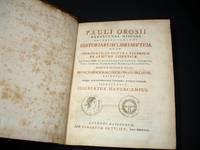
|
|
|
NEPOS
Cornelius Nepos. De Excellentibus Viris notis perpetuis ex Longolio Lambino Schotto Boeclero Buchnero Bosio Cellario aliisque ad modum Johannis Minellii illustratus. Adjecta sunt ejusdem Fragmenta collecta ab Schotto et index selectissimus. Editio altera.
Amsterdam Amstelaedami Apud Joannem Haffman 1746. 8vo. XVI41136 index1 blank p. Vellum 16 cm Ref: Not in Schweiger Details: Five thongs laced through both joints. Title in red & black. Engraved printer's device on the title depicting Hermes and Athena between them the fountain struck by Pegasus it's motto: 'Ex hoc fonte licet cuique levare sitim' Condition: Vellum soiled. 'Nepos' in curly ink letters on both boards. Some old ink annotations in the margins Note: This is a school edition with notes of the only surviving complete work of the Roman historian Cornelius Nepos ca. 100-24 B.C. De excellentibus ducibus exterrarum gentium also known as De excellentibus Viris. This very well preserverd schoolbook was produced after the manner of the Dutch schoolmaster Johannes Minellius an industrious and successfull compiler of schoolbooks. He published the works of several classical authors with ample notes which were easy to understand by young schoolboys who were still inexperienced in Latin or just lazy. Minellius or Min-ellius born ca. 1625 was educated at the Schola Erasmiana at Rotterdam and was from 1650 onward till his death in 1683 a Praeceptor at that school. Minellius' schoolbooks with accompanying annotations were a tremendous success. In 1653 he published his first Sallustius then Valerius Maximus in 1661 Florus in 1664 Terence in 1665 Vergil in 1666 Horace in 1668 and Ovid in 1684. His books were reissued many times and his manner was followed by schoolmasters all over Europe who wanted to participate in his success and who produced school-editions ad modum Joanni Minellii. At the end of the 17th and in the 18th century his editions were widely used on Dutch grammar schools. After that they were barred from the schools because they were too unscientific and offered too much help. They were esteemed to be pontes asinorum Van der Aa 122 p. 873. Minellius never published a Nepos edition. The printer/bookseller of this Nepos nevertheless announces on the very first page of the Lectori that this is an edition cum notis Minellii. In the following preface the anonymous compiler however eases off the pedal and explains that Minellius never touched Nepos but that the publisher asked him to make a Nepos secundum ejusdem institutum. § Cornelius Nepos is the author of the first surviving ancient collection of biographies. De excellentibus etc. contains the lives of 20 Greek generals and the Carthaginians Hamilkar and Hannibal. Nepos corresponded with Cicero and was close with Cicero's friend Atticus. The collection served probably as a model for Plutarch's Vitae Parallelae. In his own days and in late antiquity Nepos was considered to be a source of importance. The churchfather Hieronymus included him in his De viris illustribus 392 A.D. in his list of great authors and historians Collation: 8 A-2E8 leaf 2E8 verso blank Photographs on request hardcover
Bookseller reference : 120369
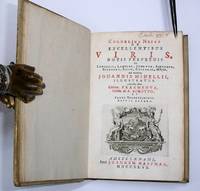
|
|
|
MACROBIUS
Macrobii Ambrosii Aurelii Theodosii viri consularis & illustris in Somnium Scipionis libri II. Eiusdem Saturnaliorum libri VII. Ex vetustissimis manuscriptis codicibus recogniti & aucti. Edited by Joach. Camerarius.
Basel Basileae Ex officina Ioan. Hervagii 1535. Cum privilegio Caesaris ad quinquennium. Folio. XL3342 p. Vellum 30 cm Ref: VD16 ZV 20513; Schweiger 2586: the first mentioned copy with the privilegium and the corrections. 'Neue schätzbare Recension von Joach. Camerarius nach 2 Handschriften'. Dibdin 2220: 'under the care of the celebrated Camerarius and by the help of several important MSS. there was hardly a verse in the poets quoted but what received very considerable emendation. . A volume thus intrinsically valuable will not fail to find a purchaser at a reasonable price'; Ebert 12716; Graesse 4330 Details: Later vellum 18th century. Brown morocco shield on the back. 2 thongs laced through both joints. Large printer's mark of Hervagius Johann Herwagen the elder on the title and a different one on the verso of the last leaf both depicting a three headed Hermes on a pillar. Woodcut initials 8 woodcuts and a woodcut map of the world in the text Condition: Some small and almost invisible repairs of the vellum. Corners of the shield on the back partly gone. Title browning paper yellowing some slight foxing. Wormhole in the right uppercorner of ca. 80 p. not coming near any text. Pastedowns affected by a few small unobjectional wormholes Note: Ambrosius Theodosius Macrobius a Roman senator and a classical scholar of the early 5th century A.D. 'was a notable link between the cultures of antiquity and the Middle Ages'. This edition contains his 2 most important works the 'Saturnalia' and his 'Commentarii in Somnium Scipionis' the 'Dream of Scipio' a commentary on a part of 'De Republica' of the Roman orator Cicero. The 'Saturnalia' is a learned compilation in 7 books cast in dialogue form in which the cultural life of the former generation is idealized. Macrobius' aim is to provide his son with all the necessary hard to come by scientific knowledge. He did so in the form of a banquet. Macrobius was inspired by the Ciceronian dialogues 'De Oratore' and 'De Republica'. 'Set during the Saturnalia of 383 it gathers several conspicuously non-Christian members of the aristocracy and their entourage to discuss matters ridiculous . and sublime . above all the poetry of Virgil. Quarried from mostly unnamed sources - including Gellius Seneca Plutarch and the tradition of scholastic commentary today known from Servius the discussion presents Virgil as the master of all human knowledge'. More influential in the Middle Ages and Renaissance was the commentary of Macrobius on the 'Somnium Scipionis'. Macrobius uses Cicero's text De Republica 610 ff as the starting point for a thoroughly Neoplatonic treatment of especially cosmology and the soul's ascent to the One with direct debts to Porphyry and Plotinus.' Discussed are matters of mathematics physics cosmology astronomy geography and ethics. He thus forged a kind of compendium of science and philosophy which transmitted classical knowledge to the medieval world and was to hold a central position in the intellectual development of the West during the Middle Ages. His books belong to the basic sources of the scholastic movement and of medieval science. His work left traces in the works of Dante Chaucer Vives and Spenser. Source for M. and the quotations: 'The Classical Tradition' Cambr. Mass. 2010 p. 553. § Joachim Camerarius 1500-1574 holds one of the foremost places among the German classical scholars of the 16th century. Gudeman calls him even 'der bedeutendste Philologe Deutschlands im 16. Jahrh.' Grundriss der Geschichte der klassischen Philologie Lpz. 1909 p. 216 He held professorships at Nuremberg Tübingen and Leipzig. 'His numerous editions of the Classics without attaining the highest rank are characterized by acumen and good taste'. Sandys 'History of Classical Scholarship' 2 p. 266/67 Camerarius was a man of vast knowledge. He also wrote on history theology mathematics astronomy and paedagogy. He seems to have been just the man for editing the encyclopaedic works of Macrobius. Camerarius had evidently a high opinion of himself and his talents. Such we gather from the following distich on the titlepage: 'Qui tamen et nostri numerum vult scire laboris annumeret versus totius ille libri' i.e. he left his mark in every line of verse in Macrobius. This book contains furthermore an interesting Macrobian map a map which for a 1000 years formed the basis of world geography. It was first printed in 1482 showing the continents in the 'Alveus Oceani' a big Europe and a rather small Africa and Asia. The round map is typically divided in 5 climatic zones. It shows the pre-Renaissance view of the world Antipodeans and all. Our map shows the awakening of the passion for exploration and the cartographic progress in this period. Africa and Asia have grown hugely and Europe has shrunk considerably. The lines of the climatic zone on the first map of 1482 were straight suggesting a flat earth on our map the lines are convex indicating a world which is really a round ball. And the Antipodean part has gone. No sign however of America. The literature on the development of the Macrobian world view is immense Provenance: On the front flyleaf in pencil '7 januari 1961' written by the Flemish linguist Walter Couvreur 1914-1996 who was an Orientalist and professor of Indoeuropean linguistics at the University of Gent. It indicates the date of aquisition. The place of acquisition he wrote on the flyleaf at the end: 'Turijn Bottega d'Erasmo' Collation: alpha - beta6 gamma8 a-z6 A-E6 Photographs on request hardcover
Bookseller reference : 27613
|
|
|
JUSTINUS MARTYR & TERTULLIANUS
Justini en Tertulliani Verantwoording voor de Christenen tegens de Heydenen; als mede Minutii Felicis t'Samen-spraak tussen Octavius en Caecilius. Ook zijn hier achter by-gevoegt de brieven van Clemens Romanus en Policarpus.
Amsterdam Gedrukt by Jan Rieuwertsz Haarlem By Jan Gerritsz. Geldorp Boek-verkopers 1684. 8vo. VIII1831 blank;1171 blank731 blank;471 blank111 blank133 blank Vellum 16 cm 'An interesting collection of translations into Dutch of early Christian works' Ref: STCN ppn 056885253; OiN 236 Justinus 'integrale vert. van Apol. 1-2'; titles of Tertullianus Minucius Clemens Romanus & Polycarpus not in OiN; 6 copies in NCC Details: 5 thongs laced through the joints. Manuscript title on the back. Woodcut initials. The Letter of Clemens has a separate title page indicating that this is the 3rd impression Condition: Vellum slightly soiled & scratched; upper corner of the front pastedown torn off. A few pinpoint wormholes in the uppermargin of the last 150 p. not affecting the text.§ STCN calls for 2 leaves between the preliminary pages and the beginning of the translation and an illustration; these 2 leaves and illustration are lacking in our copy; the 2 leaves contain translated testimonia of Christ from Flavius Josephus 3x Tacitus 2x and the short apocryphical letter of Lentulus to the emperor Tiberius giving a physical and personal description of Christ; the lacking illustration is a portrait of Jesus Christ; the different quality paper and the deviant typeface used in the lacking leaves suggests that they were printed and added later Note: At the beginning of the preface the publisher declares that when he wanted to bring on the market once more the Dutch translation of C. Boon of the 'Apologeticum' of Tertullian & the 'Octavius' of Minucius Felix he asked Dr. Petrus Langedult to produce a new translation of the 'Apologiae' of Justinus Martyr. Langedult also added he tells very extensive notes to 3/4 of his translation. He however died untimely at the age of 37 so the last quarter is without his learned notes. The translated Greek and Latin texts the publisher goes on show how excellent the first Christians were in professing and defending their religion against the Jews and heathens. Tertullian and the others lived short after the Apostles so they can be considered to be their agents. The publisher incites his readers to use the texts against all those who undermine 'our' christian religion 'soo Joden Heydenen als Atheisten'. When and where the translations of Boon were published previously is hard to tell. In Worldcat and in Picarta we found no earlier copies. We only found a reference to an earlier edition of his translation of Tertullian and Minucius Felix in the 'Bibliotheca Furliana' the catalogue of the library of an eighteenth century Rotterdam citizen. There we find the listing of these 2 works translated by C. Boon and published in 1671 in Rotterdam by Ryckhals. In the usual biographic reference works we also found nothing about this 'C. Boon'. More is known about the translator of the Greek text of the 'Apologiae' of Justinus Langedult. He was born in 1640 in Haarlem and established himself there as a medical doctor. He had a great knowledge of Jewish antiquities and the churchfathers and is the author of some poetry and theological works. He died in 1677. His widow and some friends seem to have had some of his work published posthumely e.g. this translation. This translation of Justinus Martyr with learned notes is however not recorded in the lemma about him in the 'Nieuw Nederlandsch Biografisch Woordenboek. NNBW 5309/10 At the end of the book we find a translation of the first 2 letters which are traditionally ascribed to Clemens Romanus I. He was at the end of the first century AD the 2nd 3rd or perhaps the 4th bishop of Rome. Both letters are also known as the 'epistles of Clement'. The translated letter is addressed to the chuch of Corinth. Its title records that this is already its third edition. A Dutch translation of these epistles was published earlier in 1656 by P. Casteleyn in Haarlem. At the very end we find the short and edifying letter of Polycarpus bishop of Smyrna who died in 156 AD. to the Corinthians and the letter of Polycarpus to the Philippenses Collation: 4 A-L8 M4 leaf M4 verso blank A-M8; A-D8 leaf D8 & D7 verso blank A8leaf A7 verso and A8 blank Photographs on request hardcover
Bookseller reference : 120089
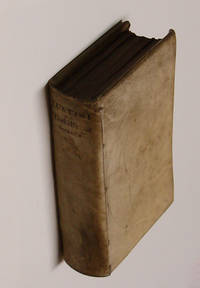
|
|
|
HORATIUS
Quincti Horatii Flacci Venusini Poetae Lyrici elegantiss. Opera grammaticorum XL tam antiquiss. quam neotericorum partim iustis commentariis partim succinctis annotationibus singulari studio & amplissimis sumptibus in unum Corpus collectis illustrata variisque ac vetustissimis exemplaribus collata & menda in iisdem sublata quorum Authorum nomina & ordinem sequens pagina demonstrabit. Iam pridem in studiosae iuventutis gratiam et utilitatem post Herculeos labores edita cum gemino indice rerum verborum ac sententiarum locupletissimo.
Basel Basileae Per Sebastianum Henricpetri 1580. Folio. XXIVXXXVI2280 columns 12 index and printer's mark at the end p. 19th century full calf. 35 cm 'May be classed among the most excellent and rare' Ref: VD16 H 4874; Schweiger 2398; Dibdin 294; Moss 212/13; Brunet 3314/15: 'mérite certainement d'être distinguée'; Ebert 10159; Riedel Horatiana 51; USTC 689469 Details: Back with 5 raised bands. Gilt short title in second compartment. Sebastian Henripetrus' woodcut printer's mark on the title depicting a rock on which a hand from heaven strikes fire with a hammer. The fire is aroused by a human head a cloud blowing from the sky. The second printer's mark on the verso of the last leaf is a simpler version of the image now with the addition of the name of the printer 'Sebastian Henric Petri'; the 2 letters 'n' in the name 'Sebastian Henric Petri' are strange enough cut backwards mirrorwise. Woodcut initials. Printed in 2 columns. The poems of Horace printed in a beautiful Roman letter are surrounded by commentary printed in italics thus more or less suggesting the layout of a medieval manuscript Condition: The foot of the spine is somewhat chafed. The front flyleaf is gone. Front inner hinge slightly cracking but strong. Title a bit soiled. Old name on the title. Occasional yellowing paper. Occasional some faint and small waterstains. One larger waterstain in a few quires at the end of the book. Small wormhole in the blank right upper corner of some 80 leaves not affecting text. A few spots on the lower board. The binder erroneously switched leaf Ee1 and Ee6 Note: The works of the Roman poet Quintus Horatius Flaccus 65-8 B.C. have enjoyed a continuous presence in European culture. His memorable phrases made him the most quoted ancient author. Till well into the 20th century he stood central in school curricula. Earlier in the Middle Ages he was next to Vergil the most important school author. Horace is transmitted in around 300 medieval manuscripts. The Renaissance saw the beginning of a flood of editions. 'For Neo-latin poetry until modern times and for all the vernacular literature of Europe from the 16th through the 18th centuries Horace provided the dominant model both for private lyrics celebrating wine and love and for public lyrics celebrating affairs of state'. Young poets used Horace to learn the trade. 'Horace's elegant rationalism and moral wisdom and also his disabused and tolerant tone made his poems favorite reading during the Enlightenment'. The Classical Tradition Cambr. Mass. 2010 p. 454/60 § This edition of Horace is a kind of 'Variorum' edition. It offers the observations and emendations of 40 Horace scholars old and new including the commentaries of the scholiasts Helenius Acron and Porphyrius. It does not break new ground Lambinus seems not to exist but it is a real treasure chest for Horatian philology supplying all what is worth knowing of Horace and his poetry. It is a reissue of the edition of 1555 which was produced by the German classical scholar Georg Fabricius 1516-1571. 'Seine Ausgaben von Vergil Horaz und Ovid zeichnen sich nicht nur durch philologische Akribie aus sondern sind auch wegweisend für die Interpretation'. NDB 4734 § A remarkable feature of this edition is the space which is attributed to the Ars Poetica. Commentaries treatises on the AP by Landinus Luisinus Grifolus Lucinianensis Iason & Gabriel de Nores Parrhasius Amarbachius & Freigius fill almost a quarter of the book. It is a pity that Robertello's work on the Ars Poetica was not included. Still this 1580 edition is declared to be indispensable by Dr. Harwood: 'This is the great treasure of learning bestowed on Horace. My learned and worthy friend Dr. Parr one of the best classical scholars in this kingdom many years ago informed me of the distinguished merit of this edition. It contains the observations and remarks on Horace which were made by the great scholars of that illustrious age the glorious age of the revival of literature as well as the criticism of all the old commentators on Horace Acron Porphyrion &c'. E. Harwood 'A view of the various editions of the Greek & Roman classics' 4th ed. London 1790 p. 221/222 Provenance: Name on the title of 'R. Alberda'. This must be a 'Reynt Alberda' or a 'Reint' Alberda'. This christian name is the most frequently used name for men in the Alberda family of Northern Dutch gentry so it is hard to say who this might be. The handwriting seems to be 18th century Collation: -26 a-c6 A-Z6 Aa-Zz6 AA-ZZ6 AAa-ZZz6 AAaa-DDdd6 Photographs on request Heavy book may require extra shipping costs hardcover
Bookseller reference : 150251
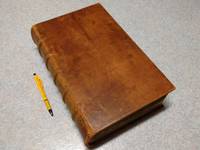
|
|
|
BECK,MF M F
Monumenta Antiqua Judaica Augustae Vindel. reperta & enarrata cum Mantissa III. Monum. vetustorum Roman. operis Velseriani de antiquis Monum. August. appendice quadam. Studio Matthiae Friderici Beckii.
Augsburg Augustae Vindel. Apud Viduam Theoph. Goebelii Typis Koppmayerianis impressa 1686. 8vo. 622 p. 2 engraved plates. Modern marbled boards. 16 cm Ref: VD17 1:060593L Details: Title in red and black. Occasional Hebrew texts and inscriptions. Two engraved plates of two sides of the four-sided Roman monument of one Aelius Montanus Haederanus found in Augsburg and erected in the garden of the Aedes Peutingeriana; good quality paper Condition: Two plates depicting two sides of the four-sided Roman monument have been removed Note: The German orientalist Matthias Friedrich Beck 1649-1701 studied in Jena oriental languages and literature. In 1672 he received a stipendium from the city of Augsburg to finish his studies. From 1677 onward he played an important role in this city. He is said to have had a great knowledge of Hebrew and other Semitic languages. ADB 2 218. In the first 44 p. of this booklet 8 medieval Hebrew inscriptions which were to be found in the city of Augsburg are elaborately discussed. In the appendix Beck publishes 3 inscriptions which had escaped one way or the other the attention of the Augsburg humanist Marcus Velser. Marcus Velser or Velserus 1558-1614 was a city official of Augsburg Patricius Augustanus & Duumvir and humanist. He contributed e.g. to the great Corpus of ancient inscriptions of Janus Gruter which was published in 1602. He also corresponded with the famous J. Scaliger. Velserus wrote about the history of his native city. Augsburg or in Latin Augusta Vindelicorum was founded by the Romans in 15 BC. Beck tries in his treatise to reconstruct the history of the Jews in Augsburg from early medieval times. Before that he sketches the history of the diaspora ever since the destruction of the s econd temple in Jerusalem in 70 A.D. Beck looks for Jewish traces in the topography and investigates offical texts and annals of the city written during the Middle Ages. Beck was certainly not an anti-semite. He compiles from all kinds of local texts a very sad list of miserable occurrences. He never accuses the Jews of anything but on the other hand he also never condems the cruel treatment of the Jews by the inhabitants of the city or their representatives. Beck explains that because no effort has hitherto been put into the collecting of Jewish inscriptions in Germany he decided to publish 8 Jewish inscriptions found in the city. He elaborately comments upon the linguistic and historical background of the inscriptions. The oldest inscription dates according to Beck from 693 the second from 991. The last one he discusses dates from 1446. § Beck's best known work is Martyrologium ecclesiae Germanicae pervetustum Augsburg 1687. § See for the history of Jewish Augsburg and its Jewish monuments: Yehuda Shenef 'When even cedars fall in flames
' Some explanatory notes on history and remnants of the Medieval Jewish Cemetery of Augsburg called Judenkirchhof 2011 Collation: A-D8 leaf D8 recto errata leaf D8 verso blank Photographs on request hardcover
Bookseller reference : 120505
|
|
|
MONTGOMERY, JAMES
The world before the flood a poem in ten cantos; with other occasional pieces. Second edition.
London printed for Longman Hurst Rees Orme and Brown Paternoster-Row 1813. 12mo. III-XVI;32813 blank p. Calf. 17 cm Details: Back with 3 gilt raised bands; gilt title in second compartment; other 3 compartments with blindstamped palmette cornerpieces. Both boards with tenfold blindstamped fillet borders within blindstamped floral borders a blindstamped wave/flood pattern in the central panel Condition: Cover shows wear to the extremes. Lacking the half-title before the title with the text: 'The world before the flood with other occasional pieces' Note: James Montgomery 1771-1854 was a British poet philanthropist and campainer for humanitarian causes. He achieved some literary fame with 'The wanderer of Switzerland' in 1806 against the annexation of that country by the French. The abolishment of slavery is the theme of his 'The West Indies' published 3 years later. He created a reconstruction of the world from the creation to the Deluge in his 'The world before the flood' published in 1812. The author states in his preface that he is 'under obligation of no other authority whatever'. The work was a success and sold more than 10000 copies Collation: pi-6 A4 2A8 B4 2B8 etc.- N4 2N8 O2 2O4 P4 leaf P3 verso and leaf P4 blank Between the gatherings A till N there is a regular alternation in the signature of the gatherings each gathering signed A etc. till N numbers 4 leaves and is immediately followed by a gathering signed 2A etc. till 2N numbering 8 leaves Photographs on request hardcover
Bookseller reference : 120475
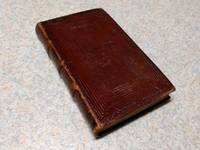
|
|
|
MINUCIUS FELIX
M. Minucii Felicis Octavius. Cum integris omnium notis ac commentariis novaque recensione Jacobi Ouzelii cujus & accedunt animadversiones. Accedit praeterea liber Julii Firmici Materni V.C. De errore profanarum religionum.
Leiden Lugduni Batavorum Ex officina Ioannis Maire 1652. 4to. 384424614036322122356 p. Overlapping vellum 20.5 cm Ref: STCN ppn 840085141; Breugelmans 1652:10B; Schoenemann I71; not in Brunet; Graesse 4534; Ebert 14107 Details: Title in red & black. Engraved printer's mark on the title depicting a farmer stamping a shovel into the ground he is flanked by a woman holding a cornucopiae and a woman holding an ancre above the head of the farmer the motto: 'fac et spera'. According to Breugelmans there are 2 issues of this edition: 1652:10A and 1652:10B; 10A shows on the title 3 lines printed red and 10B our copy has 5 lines printed red; 10B also has 2 cancels leaves 2 and E4; in our copy these 2 leaves have not been cancelled; our copy is conform the copy in the University Library of Leiden UBL 503 C 2 Condition: Cover somewhat soiled. Small ink stain only touching the top of the right upper corner of the first 30 pages; small ownership inscription on the title. Some gatherings browning. Some small spots of paper near the inner gutter of the front pastedown eaten away; our copy lacks leaf pi2 the leaf after the title showing the table of contents Note: The Octavius is a dialogue in defence of the christian religion and perhaps the oldest literary work of christian Latin. It was written by Minucius Felix who lived in the second or third cent. A.D. In it he tries to prove that christian principles were not contrary to pagan culture and that the Greek and Roman philosophers paved the path for christianity. The inspiration seems to come from Cicero's dialogue 'De Oratore'. The dialogue starts with Minucius recollections of the friendship he had with the recently deceased christian advocate Octavius. The setting is Ostia 'amoenissima civitas' 12. Minucius Octavius Januarius and the heathen Caecilius have come there to enjoy their holiday free from 'iudicariam curam'. Caecilius then launches a vehement attack upon the christians and their doctrines. It is the opinion of Octavius that no honorable Roman should leave a friend in the darkness of ignorance. He ridicules the folly of heathen fables and proves the existence of providence and of God. Octavius warmly praises the purity courage and other virtues of the christians. At the end Caecilius acknowleges himself vanquished and converted. § Jacobus Ouzelius Oiselius 1631-1686 born as Jacques Oisel Oesel in Dantzig was only 21 when he edited this book. Although destined for a commercial career he chose to study classical literature in Leyden. Later he switched to law and became professor of law in Groningen. He also edited Gaius and Gellius. Van der Aa vol. 14 p. 59 Ouzelius says in the 'praefatio' that he hopes that the reader will forgive him any mistakes without 'livor' and 'maledicentia'. He dedicates the book to Queen Christina of Sweden. Well if we may believe Schoenemann Christina had reason for complaint. Schoenemann is very critical about Ouzelius. He calls him a 'futilissimus commentator'. 'Omnia apta inepta incredibile stupore et imprudentia corrosa sunt'. The value of this edition lies in the printed commentaries of previous commentators. The reader should skip the 212 p. filled with notes by Ouzelius and consult the presented notes of Nicolaas Rigaltius 32 p. or Desiderius Heraldus or the 'liber commentarius ad M. Minucii Felicis Octavium' by G. Elmenhorst 140 p. or the notes of J.A. Wouwer 46 p. Nic. Rigaltius Rigault 1577-1624 See Sandys 2283; Desiderius Heraldus ca. 1579-1649 professor of Greek at Sedan See Sandys 2287. J.A. Wowerius 1574-1612 was a pupil of Scaliger and helped him with his Petronius edition. Wowerius published his edition and commentary earlier in 1603 at Copenhagen See Sandys 2287. Elmenhorst published in 1612 at Hamburg a text and commentary on Minucius Felix See Schoenemann I71. § At the end has been added 'De errore profanarum religionum' by Julius Firmicus Maternus edited by Wowerius with his commentary. Firmicus lived in the 4th century A.D. In this work he urges the emperors Constans and Constantius both sons of Constantine the Great the man who in 313 A.D. had declared christianity to be the state religion to abolish paganism Provenance: Engraved armorial bookplate with ducal coat of arms on the front pastedown: 'Bibliothek Oberherrlingen 1839' with the initials 'E. M.' on it of Eugen Freiherr von Maucler 1783-1859. The name of Paul Friedrich Theodor Eugen Maucler is connected with the legislation of the kingdom of Württemberg under 'König Wilhelm'. In 1818 he became minster of justice. His legislative work gave him great influence. He was hated by the liberals and resigned in 1848. ADB 20 p. 687-688 Having bought 'Schloss Herrlingen' Maucler had room enough to build a huge library. Libraries all over the world hold a host of valuable incunabula and 16th century books from his library. The incunabula were sold at the beginning of last century Collation: pi1 lacking leaf pi2 2 2-54 A-E4 F2; A2 B-F4 G2; a2 b-3k4; A-G4 Photographs on request hardcover
Bookseller reference : 130151
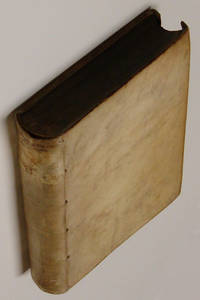
|
|
|
JUVENALIS & PERSIUS
D. Junii Juvenalis et Auli Persii Flacci Satyrae: cum Veteris Scholiastae & Variorum Commentariis. Accurante Cornelio Schrevelio.
Leiden Lugd. Batav. Ex officina Hackiana 1671. 8vo. XVI60442 index p. Vellum 20 cm Ref: STCN ppn 840013876; Schweiger 2511; Dibdin 2154; Moss 2158/9; Ebert 11242; Graesse 3520 Details: 5 thongs laced through both joints. Short title in ink on the back. The engraved title which is not signed is used here for the third time. It was first used for the original edition of 1648 for a repetition in 1658 and for this 1671 reissue. In 1648 the engraved title still bears the name of the engraver it is executed by the Dutch Golden Age engraver Reinier van Persijn. The title depicts a complicated allegorical scene: on the left a naked woman sitting on a crocodile holding in her hand a parrot; then a Janus-headed woman with bird feet and a tail holding up in her left hand a Momus-mask and in her right 2 flaming hearts; in the centre sits on a throne an old woman holding in her left hand a sack of money and in her right what seems a little flask; on the right in the foreground a king reaching for that sack; he is accompanied by a priest a farmer and a soldier; in a window central above the old woman we see the ascension of the poet. See for an explanation of the allegory the note below Condition: Vellum age-toned and soiled. Boards worn at the extremities. Front hinge cracking but still strong. Front flyleaf loosening. Name on the front flyleaf. Small old inscription on the rear pastedown. Occasional small ink underlinings. Small wormhole in the right lower corner of the first 14 gatherings never even coming near to the text Note: The Roman poet Juvenalis ca. 55-140 AD was the last and most influential of the Roman satirists. He 'uses names and examples from the After p. 65 has been added a plate showing a allegoric triumph scene with prince Frederik Hendrik of Orange. See for this plate: rkd.nl/nl/explore/portraits/recordfiltersplaats=DenHaag&filterskunstenaar =Vinckboons%2CDavid%28I%29&query=&start=2past as protective covers for his exposés of contemporary vice and folly'. His main theme is the dissolution of the social fabric. The Classical Tradition Cambr. Mass. 2010 p. 501 The satires of the stoic poet Aulus Persius Flaccus form one 'libellus' of 6 satires together 650 hexameters. 'They are well described as Horatian diatribes transformed by Stoic rhetoric'. 'He wrote in a bizarre mixture of cryptic allusions brash colloquialisms and forced imagery'. OCD 2nd ed. p. 805 This edition of 1671 is a 'Variorum' edition. It offers the 'textus receptus' which is widely accepted accompanied with the commentary and the annotations of specialists taken from earlier useful normative or renewing editions. Editions like these 'cum notis Variorum' were useful but never broke new ground. The production of this kind of editions was the specialty of Dutch scholars of the 17th and 18th century. The compilers seldom were great scholars but often hard working schoolmasters. Their involvement in publishing a new edition was limited to the necessary but ungrateful task of the beast of burden. Such a plodder was the Dutch editor Cornelius Schrevelius who taught classics at the Schola Latina at Leiden where he had been raised himself. In 1642 he succeeded his father Theodorus Schrevelius as the rector Moderator of the school. He raised at least 11 kids and fell in 1664 victim to the then raging plague. His first Juvenal edition he published in 1648 and it was reissued by Hackius in 1658 1664 and in 1671. Schrevelius' aim was to promote the studies of his young students and to instill in them a necessary fear optatam metam which would make them useful citizens and the pride of their parents. Juvenal is a suitable author for such an enterprise for he flogs wrongdoers and learns them to avoid the path of wickedness and to embrace honesty. Dedicatio p. 2 verso Especially in shameless times as ours he continues satyre is needed. Decent behaviour and faith have been replaced by deceit and swindle. In a short 'Benigno Lectori' 4 verso and 5 recto Schrevelius tells that he relies for the text on the earlier editions of Robertus Stephanus and Pithoeus and that he excerpted the notes and commentaries of Lubinus Farnabius and Casaubon. In addition he offers he says a complete and emendated edition of the old Scholiast. Schrevelius even used two excellent manuscripts which were lent to him by the Leiden professor Salmasius which he tells helped him to solve many difficult problems. § The engraved title deserves some attention. The easiest description we found was 'an engraved title with many figures'. To us it seems an allegorical scene based on the tenth satire Juvenal's famous declamation on the folly of men in desiring in their prayers from the gods vane things as honor fame wealth power beauty or a long life instead of a sane spirit in a healthy body. 'Whole households have been destroyed by the compliant gods in answer to the masters' prayers. In camp nocitura militia and city nocitura toga alike we ask for things that will be our ruin'. Vss. 7/9 in the Loeb-translation of Ramsay Juvenal offers a list of pityful examples such as the once powerful Sejanus who like the Libyan general Gadaffi many centuries later was 'being dragged along by a hook as a show and joy to all'. Vss. 66/67 translation Ramsay Victims of their lust for power were Alexander the Great Xerxes or the punic conqueror Hannibal the man who was once about to destroy Rome. We assume that the royal figure who reaches out for the sack of money or from whose hands it is being snatched is Hannibal. The clue for this assumption is the woman on the crocodile. Such a woman was in 17th century iconography the common personification of Africa for instance on maps. The fate of this scourge of Rome is treated by Juvenal in evocative language in 20 beautiful verses. It begins like this: 'Put Hannibal into the scales; how many pounds' weight will you find in that greatest of commanders This is the man for whom Africa was all too small'. vs. 147/8. Together with the old woman he is the central figure on the title. The positioning of the three woman brings in mind a Triad a triple diety such as the Graces the Moirai or Fates or the Harpies. The Erinyes the avenging spirits also sometimes form a trinity. The standing woman seems to be a mixture of an Erinye and a Harpy. She has some features of such a Harpy the personification of deamonic powers and an agent of terrible punishment. She is bare breasted and stands on huge bird claws with which she abducts the souls of the dead to their doom. In her right hands she holds instead of the usual horrifying snake a Momus mask which personifies satire and mockery the power to make a fool or ass of someone. In her left hand rest two flaming hearts catholic imagery distastful to the protestants and therefore perhaps reprensenting idolatry. Her double faced Janushead looking to the future and the past might be an image of Time. The old woman on the throne is the central figure on the title. To her all movement on the picture is directed. She has the features of Atropos the riged and inflexible one the oldest of the 3 Moirai or Fates and in iconography often depicted as an old woman. She has power over life and death and represents the fate that cannot be avoided. She holds Hannibal's fate in her hands. She withdraws the sack of money power and offers with her right hand the once mighty suppliant a little flask or small beaker with the invitation to poison himself. Juvenal on Hannibal's unglamorous bleak death: 'What then was his end Alas for glory! A conquered man he flees headlong into exile and there he sits a mighty and marvelous suppliant in the Kings's antichamber until it pleases his Bithynian Majesty to awake! No sword no stone no javelin shall end the life which once wrought havoc throughout the world: no but that which shall avenge Cannae and all those seas of blood a ring containing poison'. Vss 158/165 translation Ramsay The engraver follows for this scene the better known version of the Roman historian Livy. In chapter 51 of the 39th book of his History of Rome 'Ab Urbe Condita' Livy tells that Hannibal took his poison in an 'poculum' cup/goblet/bowl/beaker Provenance: Manuscript ownership entry of 'A.J. Enschedé' on the front flyleaf. Adriaan Justus Enschedé 1829-1896 was a member of a famous Dutch dynasty of printers. His forefather Izaak Enschedé established himself in Haarlem in 1703 and there the firm remained for more than 300 years. The firm was and still is famous for the quality of its printing of bonds and banknotes. In 1810 they printed the first Dutch banknotes. Adriaan Justus entered the firm and kept it flourishing. From 1857 onward he was also Keeper of the archives of the city of Haarlem. He wrote several books on the history of Haarlem and on the history of the Wallon Church in the Netherlands Collation: 8 A-2R8 2S4 2S4 blank Photographs on request hardcover
Bookseller reference : 130097
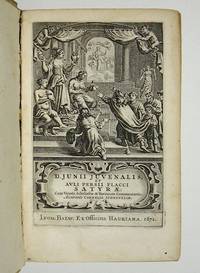
|
|
|
WASSENBERGH,E
Bibliotheca Wassenberghiana sive catalogus librorum qui studiis inservierunt viri clarissimi Everwini Wassenberghii ordinis Leonis Belgici Equitis Ling. gr. et antiq. gr. et ling. belg. in Academia Franekerana professoris quondam ordinarii. Quorum publica fiet distractio per Petrum den Hengst et filium Bibliopolas Amstelaedamenses Franekerae in aedibus defuncti die 9 Junii sqq. MDCCCXXVIII hora decima antemeridiana et tertia pomeridiana.
Franeker Franekerae 1828. 4to. 2051 blank p. 20th century plain cloth. 24 cm Details: A few prices written in the margins Condition: Back and upper part of the frontcover faded. First and last leaf browning. 1 centimeter at the upper and lower edge of the title cut off without loss of text. The title leaf which was originally the frontcover and was once detached has been reattached with a strip of paper Note: The Dutch classical scholar Everwijn Everwinus Wassenbergh 1742-1826 was born in Lekkum a little village just north of Leeuwarden. He studied Greek at the University of Franeker under the genius L.C. Valckenaer who twice succeeded as professor of Greek T. Hemsterhuis first at Franeker 1741 and later at Leiden 1766. Wassenbergh followed Valckenaer to Leiden to finish his studies. In 1767 he was called to Deventer to teach Greek Latin and Rhetoric as professor at the Athenaeum. In 1771 he was appointed professor of Greek at the University of Franeker. From 1790 he also lectured on Dutch language and literature. The University of Franeker was closed down during the French occupation period but was reopened as an Athenaeum in 1815. Wassenbergh may be considered to be one of the last members of the 'Schola Hemsterhusiana' a movement which strove to revive Greek studies in the Netherlands. Wassenbergh was not only a classicist but also published important works on Dutch and Frisian language and literature. In the Netherlands he is still remembered as the translator of the 'Lives of Plutarchus' 'De levens van Doorluchtige Grieken en Romeinen onderling vergeleeken' Amsterdam 1789-1820. Wassenbergh died in Franeker on the 3rd of december of 1826. One and a half year later his books were auctioned in his own house. The auction lasted 6 days. The catalogue lists 414 folio volumes and 1040 quarto volumes. 2768 volumes were octavo or smaller Collation: pi2 A-2A4 last leaf blank Photographs on request hardcover
Bookseller reference : 140135
|
|
|
ANTHOLOGIA POETICA
In usum Gymnasii Amstellodamensis. Edidit R. Van Ommeren. Editio altera.
Amsterdam Den Hengst 1804. 12mo. VIII205 p. Vellum. 15 cm Catullus' Epith. Pelei et Thetidos Carmen nuptiale. Tibullus' Liber I Elegia 1 3 7 Liber II Elegia 1 2 5 Liber III Elegia 1235. Propertius' liber III Elegia 12357916 liber IV Elegia 3 4691011. Ovid's Heroides 151013 & 14; Amorum liber I Elegia 15; liber II Elegia 6 liber III Elegia 9; Artis Amatoriae liber II vs. 21-97 123-143 liber tertius vs. 687-747; Fastorum liber I vs. 539-583 liber II vs. 83-119 193-243 381-425 685-853 liber III vs. 179-229; Artis Amatoriae liber I vs 101-131 527-565; Fastorum liber III vs. 459-517 liber IV vs. 419-618. Consolatio ad Liviam Augustam. Juvenalis' Sat. 8. Lucretius' liber I vs. 272-330 liber II vs. 1-60 342-376 liber III vs. 1037 et seqq. liber IV vs. 548-598 vs. 958-1023 liber V vs. 930-1154 1240 ad finem liber VI vs. 1088 ad finem. Laberius' Prologus Vellum slightly soiled. Short title in ink on the upper board hardcover
Bookseller reference : 107932
|
|
|
STATIUS
P. Papinii Statii Opera ex recensione et cum notis I. Frederici Gronovii.
Amsterdam Amsterodami. Typis Ludovici Elzevirii 1653. 16mo. VIII424 p. Vellum 12 cm Ref: This edition is 'the most significant stage in the evolution of the printed text of the Thebaid before the late nineteenth century.' Berlincourt Classical quarterly 2016 66 1 376-383; STCN ppn 852853726; Willems 1166; Bergman 2139; Rahir 1189; Copinger 4491; Schweiger 2965; Dibdin 2424; Fabricius/Ernesti 2335; Moss 2612; Ebert 21682: 'mit grossem Scharfblick und nach guten Hülfsmitteln verbessert'; Brunet 5512 Details: Engraved title: a battle scene from the Thebaid the city of Thebes is in the background the poet sits in front Condition: Vellum very slightly soiled. Occasional small verse numbers in the margins. A small tear in the outer margin of p. 49 Note: His fluent and highly polished verse brought the Roman poet Publius Papinius Statius ca. A.D. 45-96 to the court of the Roman emperor Domitianus. He is best known for his epic the 'Thebaid' which tells the story of the civil war between the sons of Oedipus Eteocles and Polynices contesting power over the city of Thebes. The 'Achilleid' tells the story of the education of Achilles. Statius' 'Silvae' is a collection of 32 occasional poems addressed to his friends celebrating their marriages etc. In his epic work there are frequent imitations of Vergil in word and thought.' OCD 2nd e. p. 1011/12 The Thebaid was extraordinary popular during the Middle Ages and the Renaissance. In Dante Statius even ascends to heaven. The 'Thebaid' was used by Boccaccio and Chaucer and there appeared adaptations in Irish French and Italian. Also Statius' 'Silvae' enjoyed a vigorous afterlife and set a standard for the Neolatin poets of the 16th and 17th century. Composing occasional poetry in imitation of Statius was a common pastime among humanist classicists e.g. Heinsius Scriverius Meursius and in England Milton and Ben Jonson. § The works of Statius were ably edited by the Dutch classicist of German origin Johann Friedrich Gronov or Gronovius 1611-1671 He was the successor of Heinsius at the University of Leiden and was influenced by Vossius Grotius Heinsius & Scriverius. His editions mark an epoch in the study of Livy of Seneca Tacitus & Gellius. His interest to the textual criticism of Latin poetry was due to the discovery of the Florentine MS of the tragedies of Seneca. In his riper years 'the acumen exhibited in his handling of prose is also exemplified in his treatment of the text of poets such as Phaedrus and Martial Seneca and Statius'. Sandys 'History of Classical Scholarship' 2321 As an editor and commentator Gronovius played a pivotal role in the history of the works of Statius. This small and light book of 1653 weighs only 120 grams it is indeed 'pondus non magnum' but especially the notes are 'satis ponderosae' that is really important. They fill merely 68 pages at the end of this volume and of these pages the notes to the 'Thebaid' fill only 41 and are concerned with little more than 200 passages. 'Their scope is almost entirely limited to the emendation of the text of Statius'. For the 'Thebaid' Gronovius consulted at least 11 manuscripts. 'The place given to conjecture though clearly subordinate is by no means negligible. These notes often involve other aspects as well: Gronovius broad conception of emendation leads him to tackle various questions whenever they lend support to his views. . In his eyes the dignity of critical studies does not lie in emendation itself but in the comprehensive knowledge of ancient languages and cultures in which emendation should always be grounded; such knowledge enables the scholar to get the author's genius and thus restore the text from inside'. V. Berlincourt ''In pondere non magno satis ponderosae.' Gronovius and the printed tradition of the Thebaid' in 'The poetry of Statius' Leiden Boston Brill 2008 p. 1-2. Mnem. Suppl. 306 The Gronovius edition became during the 2 following centuries 'the undisputed foundation of almost every later edition until scholars at last began to base their work on a comprehensive study of the manuscript tradition that is until the second Teubner of Otto Müller in 1870'. Berlincourt p. 7. His work exercised a great influence over later editors and commentators. 'There is little to find fault with in Gronovius' critical method as illustrated by his notes though it is of course still conceived of as being mere emendation of the textus receptus; usually his discussions are well informed his arguments sound and his judgement balanced'. Berlincourt p. 10 Provenance: In pencil written elegantly on the front pastedown: 'Aan Lenus 16 December 1945 Toet en Sem'. On the internet we found on the 20th of november 2012 a book B. Constant 'Le cahier rouge ma vie' Amsterdam Balkema 1945 on offer by a Dutch antiquarian bookseller called Osmose. This bookseller gives Sem & Toet their surname. This book by Constant shows the following dedication: 'Aan Eg. zonder wiens hulp we de winter van '45 niet zoo goed waren doorgekomen. Toet en Sem Hartz'. This book once belonged to Samuel Sem Louis Hartz 1912-1995 an important Dutch graphic designer of Jewish origin who worked all his life for the firm of Enschedé. He married in 1936 Toet Juch whom he had met at the 'Kunstacademie' at Amsterdam. They survived the war in hiding. Database Joods Biografisch Woordenboek. Toet was still alive in 2007. Hartz has a lemma in Wikipedia. Here we find that he published in 1955 'The Elseviers and their contemporaries an illustrated commentary'. For Enschedé Hartz designed poststamps and banknotes. The graphic designer Van Krimpen was one of his friends. In hiding Hartz designed the 'Emergo' a typeface for his own private press the 'Tuinwijkpers'. Important parts of his personal archives now belong to the Library of the University of Amsterdam and the Museum Meermanno-Westreenianum. Hartz apparantly knew Latin for the occasional verse numbers in the margins are from his hand. At the end on the pastedown an old and elegant ownership entry in ink of 'Gerhardus ab Hoeclum'. There are several Gerards or Gerrits van Hoeclum. The Van Hoeclums were an old and respected family in the Dutch province of Gelderland Collation: 4 A-2C8 2D4 Photographs on request hardcover
Bookseller reference : 120503
|
|
|
ROMANARUM INSCRIPTIONUM FASCICULUS
Cum explicatione notarum in usum juventutis. Tironibus rei lapidariae studiosis ut posthabita barbarie quam in plerisque recentibus inscriptionibus eruditi fastidiunt et nova epigrammata eleganter condere et vetera interpretari recte discant. Angelus Josephi F. Cominus hunc inscriptionum fasciculum D.D.
Padua Patavii Excudebat Josephus Cominus Superiorum permissu 1774. 8vo. XVI222 p. Contemporary limp cardboard. 18.5 cm Details: Cover still remarkably fresh; woodcut printer's device on title: a man digging for antique objects Motto: 'Quidquid sub terra est in apricum profert aetas'; the inscriptions in the text are set in all kinds of capitals to make them look like real inscriptions; fresh paper Condition: small slip of paper pasted over a name on the title Note: Why the ICCU attributes this publication to Giovanni Domenico or Giandomenico Polcastro 1710-1787 is not quite clear. Perhaps they rely on the Handbuch der klassischen Literatur by J.J. Eschenburg Berlin 1818 p. 74 where the book is attributed to Comite Polcastro. Or it is attributed to the Padovian Polcastro because the firm of Giuseppe Comino used to print scientific texts produced by professors of the University of Padova among which in 1773 Polcastro's Notizia della scoperta fatta in Padova d'un ponte antico con una romana iscrizione. Polcastro was a well known philologist born in Padua. G. Mussato began a laudatio on him like this: En Polcaster adest Patavi lux alma decusque/ qui domus et patriae nomen ad astra vehit. G. Vedova. Biografia degli scrittori padovani II p. 111/15. However it seems far more probable that the son of Giuseppe Comino Josephus Cominus Angelo produced this anthology. On page 3 we find a kind of subtitle which we have to elucidate matters put between brackets immediately after the title described above. In this 'subtitle' it is stated that Angelus F. Josephi Cominus gave this fasciculum inscriptionum to/for students tironibus studiosis who study epigraphy. He wants them to understand old inscriptions better and to be able to produce them elegantly themselves. After the death of Giuseppe in 1762 his son Angelo continued the firm more than 30 years still using the name of his father in the imprint. The inscriptions of this collection come from 31 sources among which Gruter Montfaucon & Muratori. After each inscription the source is mentioned; the collection is devided into 12 classes: 1: Diis sacra; 2: templa aedes sacrae; 3: elogia; 4: opera publica; 5: senatus consulta leges et plebescita; 6: monumenta historica; 7 militaria officia; 8: tituli sepulcrales; 9: opera figulina; 10: monumenta christianorum; 11: carmina ex lapidibus; 12: appendix miscellanea; & 22 p.of notae Collation: 8 a-e8 f-i4 k-p8 q-r4 minus blank leaf r4 Photographs on request unknown
Bookseller reference : 120389

|
|
|
TERENTIUS
P. Terentii Comoediae sex elegantissimae cum Donati commentariis ex optimorum praesertim veterum exemplariorum collatione emendatae atque scholiis exactissimis a multis doctis viris illustratae & nunc denuo a omnibus mendis purgatae.
Basel Basileae Apud Nicolaum Brylingerum 1561. 8vo. XXVI6431 blank p. Pigskin binding over wooden boards and dated 1565. 17.5 cm Ref: VD16 T 456; cf. Schweiger 21059; cf. Renouard Annales de l'imprimerie des Estienne p. 43 no. 15; cf. Dibdin 2470 for the Stephanus ed. of 1536 Details: Contemporary blindstamped pigskin over wooden boards dated 1565. Back with 3 raised bands and its 4 compartments have blindstamped floral motives. The boards decorated with a triple blind-rolled frame; the outer frame comprising human figures alternating with acanthus leaves; the central compartment of the upper board shows the female figure of Justice who holds a sword and a pair of scales below her 3 lines of worn away and unreadable text; in a compartment above Justice is blindstamped 'N.O' below Justice the year of the binding '1565'. In the center of the lower board Lucretia who plunges the dagger into her breast; beneath her 3 lines dog latin: 'Castatvlitmagnafor/ maelvcrelavdeactat/ magestvvlneclarasv'; This might be something like: 'Casta tulit magnam form/ ae Lucretia laudem actat/ magest magis est vulne = vulnera clara sua'. Brass clasps on pigskin hinges. Woodcut printer's mark on the title depicting 3 panting lions one holds a hourglass; they are waiting for the sands of time to trickle through the glass. Woodcut initials Condition: Pigskin soiled and spotted. Some wear to the extremes. Front pastdown gone. 3 ownership entries on the front flyleaf ownership entry on the title. Edges of the first leaves thumbed. Right edge of the first 20 leaves stained. Pastdown of the lower board loose Note: Late in life the Dutch humanist Desiderius Erasmus 1466-1536 published his edition of the plays of Roman playwright Terentius who lived in the first half of the second century B.C. It was printed in Basel in 1532 on the presses of Froben. It immediately became the standard edition. The French scholar/printer Robert Estienne Robertus Stephanus 1503-1559 immediately saw the importance of the edition of Erasmus and according to Schweiger adopted the best part of the edition of 1532 for a new edition which he brought on the market in 1536. Stephanus added also the scholia on Terentius of the 4th century grammarian Donatus which he had already published previously in 1529. We compared the 1536 edition of Stephanus with our Brylinger edition of 1561 and must conclude that this 1561 edition is a word for word reissue from beginning to end including the preliminary pages of the Terentius edition of Robertus Stephanus. To complicate matters the pirate edition of Brylinger of 1561 itself is a repetition of an edition which Brylinger had earlier published in 1543 VD16 T 418. The layout and the typeface are the same. § Terentius remained from antiquity through the Middle Ages and in later centuries an example of style and a rich source for moral sentences. Erasmus seems to have learned the whole of Terentius by heart in his youth. He admired the author for his 'latinitas' and his civilized humor. His ideal as a humanist and pedagogue was the creation of better men with the help of the classics. He held the opinion that schoolboys should read Terentius over and over again. Thus they could master a pure Latin style and learn at the same time good morals. In his short 'praefatio' Erasmus says: 'Non ex alio scriptore melius discitur Romani sermonis puritas nec est alius lectu iucundior aut puerorum ingeniis accomodatior' page 3 recto Provenance: 'Eastern Europe Jewish'. The first name on the front flyleaf is a small stamp: 'Ex libris Dr. O. Hönich'. We found on the internet one Dr. O. Hönich; Dr. Osias Hönich was a Jewish paediatrician living in Czernowitz a city which till 1918 belonged to Austria then till 1940 to Rumania and from WW II to the Soviet Union and now since 1991 to the Ukraine Tsjernivtsi. We cite an obituary of February 22 1933 from Der Tag a local newspaper in German of Czernowitz: 'Samstag den 18. d. M. starb im Alter von 66 Jahren der Kinderarzt Dr. Osias Hönich einer der geachtetsten und tüchtichsten Vertreter des Aerztestandes unserer Stadt. Abgesehen von seinen hervorragenden Eigenschaften als Arzt verfügte Dr. Hönich über ein bedeutendes Wissen und viel Verständnis auf künstlerischen und wissenschaftlichen Gebieten. Das Leichenbegängnis fand gestern nachmittags vom Trauerhaus Borobchiecigasse 3 aus statt. Von seinen Sohen ist der eine Advokat in Czernowitz der jüngere Maler in Paris'. The names of his sons are Felix Hönich and Paul Konrad Hönich Hoenich. The last one emigrated to Israel before WWII and became a succesfull painter. A photograph of Osias Höning his wife Friederike and 2 of his kids can be found here: www.geni.com/people/Dr-Osias-Hoschia-H%C3%B6nich-Henich/6000000007383326410. § The second name in ink is Polish: 'Jan. Rogawski Kolomgji' 1876'. § The third name: 'Josephi .eislai Schind'; Schind might be a Jewis name from Galicia and Bukovina in German Buchenland a region in Eastern Europe half of which now belongs to Rumania and half to the Ukraine. § On the title in old ink: 'Residentiae Sambonenis Soc. Jesu' 1702. What and where this 'residentia' of the Jesuits was is hard to say Collation: a-z8 A-T8 Leaf T7 verso blank minus blank leaf T8 Photographs on request hardcover
Bookseller reference : 120518
|
|
|
JUVENALIS
D. Iunii Iuvenalis Aquinatis Satirae XVI. Recensuit et annotationibus instruxit Ernestus Guilielmus Weber Weissenseas Philos. Dr. et Professor Gymnasii Wimariensis.
Weimar Wimariae In novo Bibliopolio vulgo Landes-Industrie-Comptoir 1825. 8vo. X3802 corrigenda p. Half calf 22 cm Ref: Schweiger 2505: 'Neue Recognition des Textes. Ruperti's Text liegt zum Grunde. Die Interpunktion ist vereinfacht. Die schwierigen Stellen sind trefflich erläutert'; Graesse 3521; Not in Spoelder p. 554 Enkhuizen Details: Prize copy of the Gymnasium of Enkhuizen including the prize printed on thick paper. Spine divided by double gilt fillets. Gilt lettered shield in the 'second compartment' Condition: Binding worn at the extremes. Owing to a binder's error the pages in the 23rd and 24th gathering from p. 353 to 376 have been mixed up and 4 of those leaves have been bound double Note: The Roman poet Juvenalis ca. 55-140 AD was the last and most influential of the Roman satirists. He 'uses names and examples from the past as protective covers for his exposés of contemporary vice and folly'. His main theme is the dissolution of the social fabric. The Classical Tradition Cambr. Mass. 2010 p. 501 § This Juvenal edition of 1825 was produced by the German schoolmaster Ernst Christian Wilhelm Weber born in 1796 in Wissensee. In 1815 he went to Leipzig to study classical philology under Gottfried Hermann. In 1819 he published in Jena a dissertation 'Animadversiones in Juvenalis Satiras'. In 1820 he was appointed rector of the Gymnasium of Weimar and 3 years later he received the title of professor. In 1826 the firm of Teubner published his edition of Persius. Another contribution to classical scholarship is his edition of Demosthenes' 'Oratio in Aristocratem'. ADB 41287/89 Provenance: The folding prize 19x28 cm with the coat of arms of Enkhuizen has been printed for the greater part; names and the occasion have been added by hand; it reads: 'Ingenio Magnaeque Spei Adolescenti Christiano Cramer Hartman propter insignes in artibus humanioribus progressus praemium hoc litterarum virtutis et diligentiae testimonium Gymnasii Enchuisani Curatores donarunt cum in secundam classem transscriberetur ad diem 6 Septembris 1830'. It is signed by 'R.J. Jungius S. Muntendam Duyvensz' and by 'Me Gymnasii Rectore' A. Hirschig. Spoelder does not mention this kind of prize copy without the coat of arms on the boards but with the coat of arms on the prize. Christiaan Cramer Hartman was born in Averhorn in 1817. He died in Utrecht in 1886. See for him 'pondes.nl/detail/i_d.phpinum=14460294' This is about all that is to be found on Christiaan. His diligence and virtue brought him only a public notice of his marriage with Johanna Spruyt in Utrecht in the 'Opregte Haarlemsche Courant' of the 3rd of May 1862 in Utrecht Photographs on request hardcover
Bookseller reference : 130452
|
|
|
SPOELDER,J
Prijsboeken op de Latijnse School. Een studie naar het verschijnsel prijsuitreiking en prijsboek op de Latijnse scholen in de Noordelijke Nederlanden ca. 1585-1876 met een repertorium van wapenstempels.
Amst. Maarssen APA-Holland Universiteits Pers 2000. XIX852 p.; ills. 33 pls. Cl. 23 cm Diss. unknown
Bookseller reference : 109595
|
|
|
NEPOS
Cornelii Nepotis Vitae excellentium imperatorum cum integris notis Jani Gebhardi Henr. Ernestii & Jo. Andreae Bosii. Et selectis Andreae Schotti Dionysii Lambini Gilberti Longolii Hieronymi Magii Jo. Savaronis aliorumque Doctorum; necnon Excerptis P. Danielis. Hisce accedit locupletissimus omnium vocabulorum index studio & opera Jo. Andr. Bosii confectus curante Augustino Van Staveren qui & suas notas addidit.
Leiden Lugduni Batavorum Apud Samuelem Luchtmans 1734. XVI including frontispiece765187 p. Half calf 21.5 cm Ref: STCN ppn 189887893; Schweiger 2300/1; Dibdin 2246; Moss 2320; Ernesti/Fabricius I107: 'Optima hodie et nitidissima est'; Graesse 2271; Brunet 2289 Details: Back gilt and with 5 raised bands. Black morocco shield in the second compartment. Boards marbled. Margins preserved uncut. Frontispiece executed by J. Visscher depicting Clio with a pen in her hand receiving advice from Kronos scythe at hand Fama blows her trumpet; title in red and black; printer's mark on title depicting Athena motto: 'Tuta sub Aegide Pallas'; small engravings of portraits and objects in the text on 11 pages Condition: Binding rubbed and scuffed. Head and tail of the spine damaged. Small library shelf number label on the upper board. Half of the front flyleaf cut off vertically. Flyleaf at the end gone. 12 gatherings are somewhat browning Note: This is an edition with commentary of the only surviving complete work of the Roman historian Cornelius Nepos ca. 100-24 B.C. 'De excellentibus ducibus exterrarum gentium'. He is the author of the first surviving ancient collection of biographies. 'De excellentibus etc.' contains the lives of 20 Greek generals and the Carthaginians Hamilkar and Hannibal. Nepos corresponded with Cicero and was close with Cicero's friend Atticus. The collection served probably as a model for Plutarch's Vitae Parallelae. In his own days and in late antiquity Nepos was considered to be a source of importance. The churchfather Hieronymus included him in his 'De viris illustribus' 392 A.D. in his list of great authors and historians. Already in late antiquity this collection was ascribed to the grammarian Aemilius Probus and the 'editio princeps' of 1471 bears his name. The simple style of writing of Nepos has made him a standard choice for schools. The biographies provided the pupils also models of behaviour. Schweiger mentions numerous editions. This edition is a socalled Variorum edition an edition which contained everthing a student required. Such an edition offers the 'textus receptus' which is widely accepted accompanied with the commentary and the annotations of specialists taken from earlier useful normative or renewing editions. Editions like these 'cum notis Variorum' were useful but never broke new ground. The production of this kind of editions was the specialty of Dutch scholars of the 17th and 18th century. The compilers seldom were great scholars but often hard working schoolmasters. The Dutch schoolmaster who skillfully excerpted compared and contrasted the material of brighter minds is Augstinus van Staveren 1704-1772. He was rector of the schola latina at Leiden since 1750. He is known for this edition of Nepos which saw several later editions and his 'Auctores Mythographi Latini' which was published in 1742. The frontispiece or rather the copper plate for this frontispiece and the text engravings which belong to this edition have a long history. The same plates were used for almost 150 years by different publishing firms. The plates were first used for by Hackius edition of 1658 and then the reissue of 1675. The next users were the Blaeu brothers in 1687 thereupon probably Mortier in 1704 not seen by us then Janssonius van Waesberge in 1705 and then by Samuel Luchtmans who seems the last owner in 1728. Luchtmans used the plates in 1734 again for his new edition of Van Staveren next for the second edition of 1773 and finally for the 'editio minor' of Van Staveren which was published in 1793 Collation: - 28 A-3N8 3O4 Photographs on request hardcover
Bookseller reference : 130342
|
|
|
AMMONIUS
AMMÔNIOU peri Homoiôn kai Diaphorôn lekseôn. De adfinium vocabulorum differentia. Accedunt opuscula nondum edita Eranius Philo 'de Differentia Significationis'. Lesbonax 'de figuris grammaticis'. Incerti scriptores 'de soloecismo & barbarismo'. Lexicon 'de spiritibus dictionum ex operibus' Tryphonis Choerobosci Theodoriti etc. selectum. Ammonium ope MS. primae editionis Aldinae & aliunde emaculavit & notis illustravit reliqua ex codd. MSS. Bibliothecae Lugduno-Batavae nunc primum vulgavit Ludovicus Casparus Valckenaer. Bound with: Ludov. Casp. Valckenaer. Animadversionum ad Ammonium grammaticum libri tres. In quibus veterum scriptorum loca tentantur & emendantur. Accedit specimen scholiorum ad Homerum ineditorum ex codice Vossiano Bibliothecae Lugduno-Batavae.
Leiden Lugduno Batavorum Apud Johannem Luzac 1739. 8vo. 2 volumes in 1: VIIIXXXI3264; VIII24915 index2 blank p. Vellum 20.5 cm Ref: Hoffmann 1125; Brunet 1239; Ebert 536; Graesse 1105 Details: Six thongs laced through the joints. Both titles printed in red & black. Engraved printer's mark on title designed by F. v. Bleyswyck depicting a ship heading for Scylla and Charybdis; its motto: 'nec dextrorsum nec sinistrorsum' or 'Neither to the right nor to the left' referring to Deuteronomium ch. V32/33: 'Custodite igitur et facite quae praecepit Dominus Deus vobis: non declinabitis neque ad dexteram neque ad sinistram: sed per viam quam praecepit Dominus Deus vester ambulabitis ut vivatis et bene sit vobis et protelentur dies in terra possesionis vestrae' Condition: Vellum age-tanned and slightly soiled. Small name on the title. Old ink inscription on the front flyleaf. Front hinge cracking but strong; paper of pastedowns cracking Note: The Frisian scholar Lodewijk Caspar Valckenaer 1715-1785 was a pupil of his fellow Frisian Tiberius Hemsterhuis and after him the greatest Dutch classical scholar of the 18th century. Hemsterhuis 1685-1766 advised his students in Franeker and later in Leiden to use especially the lexica of the ancient lexicographers. These works could be of great use for the understanding of textual problems and for the amending of texts of classical authors and they were of great help to gain a profound knowledge of the Greek language and its vocabulary. For his first fruits Valckenaer chose an unpublished work of the Greek grammarian Ammonius who lived probably in the first or second century A.D. This edition the 'editio princeps' of 'De adfinium vocabulorum differentia' made his name. In the preface Valckenaer explains that Ammonius suffered grievous wrongs at the hand of French scholar/printer Henri Estienne who ignored his usefulness in the appendix of his celebrated 'Thesaurus Linguae Graecae' 1572 and who vexed and lacerated him in the preface of his 'De Atticae linguae seu dialecti idiomatis' 1573 and portrayed the ancient lexicographer as a careless ignoramus. 'omnibus modis Ammonium vexavit & tam contumeliose laceravit ut in Ammonio exemplum & incuriae & inscitiae ponendum esse'. Praefatio p. XXV Young Valckenaer announces that he is going to repair this 'gravissimam iniuriam'. For Valckenaer it is clear liquido constet that Ammonius penetrated deep into the nature of the Greek language and the true origin of words. in interiorem Linguae indolem & veram vocum originem reliquis grammaticis omnibus ignoratam sese penetravisse Ammonium' Idem eodem The first part consists of the work of Ammonius and several other unpublished ancient grammatici the second part consists of Valckenaer's notes on Ammonius and a specimen of the scholia from the 'codex Vossianus'. The untertaking proved to be successful because it resulted in his appointment as professor of Greek at the University of Franeker in 1741. Gerretzen Schola Hemsterhusiana 1940 p. 205/6 Collation: -54 A-2K4; 4 A-2K4 leaf 2K4 blank Photographs on request hardcover
Bookseller reference : 130008
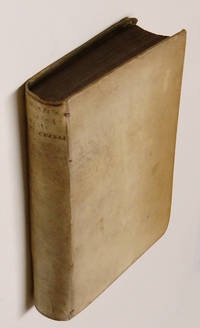
|
|
|
LIBRI DE RE RUSTICA
Scriptores Rei Rusticae Veteres Latini. E recensione Jo. Matth. Gesneri cum ejusdem praef. et lexico rustico. Praemittitur notitia literaria. Studiis Societatis Bipontinae. Editio accurata.
Zweibrücken Biponti Ex typographia Societatis 1787 - 1788. 8vo. 4 volumes: IICLVI248; II566; II510; II3691 blank p. Half vellum 22 cm Ref: Not yet in VD18. Burkard p. 181/185; Schweiger 21307; Graesse 6/1332; Ebert 20744 Details: Nice set in 19th century half vellum. Backs gilt and with red morocco shields. Marbled boards. Engraved vignet on the first 3 titles Condition: Vellum slightly soiled. Some wear to the extremes. Some foxing. Joints of the first volume beginning to split. Very small hole in title of the 4th volume the 'Lexicon Rusticum'. A bookplate on the front pastedowns Note: Vol. 1 contains Cato's 'De agri cultura' and Varro's 'De re rustica libri III'; vol. 2 Columella's 'De re rustica' and 'De arboribus'; vol. 3 Palladius' 'De re rustica libri XIV' Vegetius Renatus' 'De artis Mulomedicinae libri IV' 'Gargilii Martialis fragmentum' and 'Ausonii Popmae de instrumento fundi liber'; vol. 4 the 'Lexicon rusticum'. § The Roman gentlemen-farmers and landowners Cato Varro and Columella wrote about agriculture and were successful farmers too. Their aim was to bring Roman farming on a higher level. The conjunction of these three didactic texts can be found from the Middle Ages. They were jointly published for the first time in 1472 in Venice and form the chief texts on agriculture and rural life in antiquity. The oldest of the trio is the Roman politician Marcus Porcius Cato 234-149 B.C. the source of famous maxims for orators like 'rem tene verba sequentur'. 'He distinguished himself for fearless and ruthless attacks on those whose way of life did not agree with his own somewhat old-fashioned and puritanical morality'. H.J. Rose 'A Handbook of Latin Literature' London 1967 p. 91 In style and in character he was a typical farmer shrewd hardworking frugal honest sincere but limited. His 'De agri cultura' also known as 'De re rustica' is a kind of commonplace book. It gives us a view of the life of an oldfashioned landowner in that age and offers information on Roman cult and rustic folklore'. § The second work was written by possibly the greatest scholar Rome produced Marcus Terentius Varro 116-27 B.C. Of the mass of works he wrote only one is preserved to us completely 'De re rustica libri III' and further more there are parts and fragments of some other works. He was a landowner on a large scale who wrote 'De re rustica' in his eightieth year annus octogesimus he tells us in the beginning 'ut sarcinas colligam ante quam profiscar e vita'. It is a philosophic dialogue in 3 books in which he gives sound and practical advice for managing a farm I a stock-ranch II poultry aviary and herb-garden III. 'While giving interesting information on the state of agriculture at that time it is withal a pleasantly discursive book the work of a garrulously entertaining old scholar' Idem p. 222 § Lucius Junius Moderatus Columella was a contemporary of Seneca. He wrote his 'De re rustica' consisting of 12 books ca. 60-65 A.D. He was also a practical farmer on a large scale who was concerned over the decline of the agriculture in his days. 'Book 1 deals with general matters of buildings and labour 2 with soils and crops 3-5 with vines olives and fruittrees 6-7 with domestic animals 8 with poultry and fishponds 9 with game and bees 10 in verse with gardening 11 with the bailiff's duties and the farmer's calendar 12 with the bailiff's wife's duties'. OCD 2nd ed. p. 268 A separate book on arboriculture part of a larger work survives too. His style is straitforward and pleasant. The texts of this trio were edited by Piero Vettori or Petrus Victorius 1499-1585. With his edition of 1541 begins for the 'Scriptores de re rustica' according to the 18th century German scholar J.M. Gesner a new era the 'Aetas Victoriana'. Gesner based his own edition of the 'Scriptores rei rusticae veteres latini' of Leipzig 1735 on the work of Vettori. He slightly revised Vettori's text with the help of some manuscripts and earlier edtions. This 'Scriptores rei rusticae veteres latini' edition of 1787 is a reissue of that edition of Leipzig 1735. The 'notitia literaria' is brought up to date and added are a translation of the life of Cato by Plutarch and the 'Varro-Vita' by M. Hanke of Leipzig 1669. Gesner adopted next to the triumvirate Cato Varro and Columella in his 1735 edition the 'De re rustica' of the late antique agriculturalist with estates in Italy and Sardinia Palladius Provenance: Modern bookplate: 'Ex libris Georges Raepsaet' a Belgian ancient historian and archaeologist Collation: 1: pi1 a-i8 k4 l2; A-P8 Q4. 2: pi1 a-2M8 2N4 minus blank leaf 2N4. 3: pi1A-2H8 2I8 minus blank leaf 2I8. 4: A-2F8 2G2 minus blank leaf 2G2 leaf 2G1 verso blank Photographs on request Heavy book may require extra shipping costs hardcover
Bookseller reference : 130154
|
|
|
POMEY,F
Pantheum mythicum seu fabulosa deorum historia hoc epitomes eruditionis volumine breviter dilucideque comprehensa. Auctore P. Francisco Pomey e Societate Jesu. Editio septima denuo recensita a quamplurimis erroribus repurgata & aeneis figuris ornata.
Utrecht Ultrajecti Apud Guilielmum vande Water 1717. 8vo. XVI29814 p. frontispiece & 26 engraved plates. Calf. 16 cm "Prize copy' Ref: STCN ppn 20819178X; Brunet 4793; Michaud 34 p. 12: 'la meilleure édition est celle qu'a publiée Sam. Pitiscus' Details: Prize copy probably of a Belgian Jesuit College. Back with 5 raised bands between gilt fillets & floral rolls. Black morocco gilt lettered shield in the second compartment. Boards with gilt fillet borders. Within the fillet border a gilt row consisting of ears of corn and quadrangles. A gilt lyre in all 4 corners. A gilt oval laurel wreath with in its center the gilt text PRAEMIUM. Edges of the boards gilt. Marbled endpapers. Title in red & black. Woodcut printer's mark on the title. Engraved frontispiece depicting deities. 26 engraved plates with mythological scenes Condition: Wear to extremes back somewhat rubbed. Prize gone. Front hinge cracking but still hanging on 2 ties Note: This is the 6th edition of the most popular and authoritative mythology manual of the 17th and 18th century. It was first published in Lyon in 1659. There are more than 40 editions and it was translated into English French Spanish and Polish. The manual was produced by the French Jesuit schoolmaster François Antoine Pomey 1618-1673 who lectured humanities and rhetoric at several colleges. He is also the author of a number of schoolbooks and dictionaries. His 'Pantheum Mythicum' became to be regarded as an essential work which provided the indispensable ornaments of formal discussion. It was also popular as a schoolbook for the stories formed a body of moral precepts hidden under the mask of agreable fiction. 'Perinde quasi alius esse debeat cum omnibus tum mihi maxime ac studium & propagatio Divinae gloriae'; In the praefatio to this 6th edition the Dutch classicist of German origin Samuel Pitiscus Samuel Petiski 1636-1727 tells the reader that the publisher had sold within 4 years 1300 copies of the 5th edition of 1697. To surpass this tremendous success he asked him to produce a new edition purged from all erroneous inventions and extensions of later editors and mistakes of ignorant printers. Pitiscus really was the expert for the job. He produced editions of several Roman historians and did also lexicographic work. He was well acquainted with the 'Romanae Antiquitates' of Rosinus and Dempster and in 1713 he published an encyclopaedic 'Lexicon Antiquitatum Romanarum' Collation: 8 A-T8 V4 Photographs on request hardcover
Bookseller reference : 120456
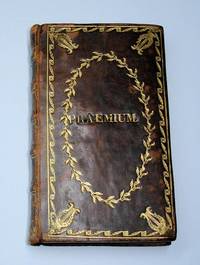
|
|
|
HISTORIA AUGUSTA
Historiae Augustae Scriptores VI. Aelius Spartianus Vulc. Gallicanus Julius Capitolinus Trebell. Pollio Aelius Lampridius Flavius Vopiscus. Cum notis selectis Isaaci Casauboni Cl. Salmasii & Jani Gruteri. Cum indice locupletissimo rerum ac verborum. Accurante Cornelio Schrevelio.
Leiden Lugduni Batavorum Ex officina Francisci Hackii 1661. 8vo. VI99735 index p. engraved title. Recently repaired calf. 19 cm Ref: STCN ppn 840035284; Schweiger 2385; Fabricius/Ernesti 3102; Graesse 3304; Ebert 9831 Details: Boards with blind double fillet borders; the boards have a blind triple fillet rectangle in the center and on its corners 4 blind stamped 'fleur de lis'. Frontispiece depicting the seated goddess Roma; she looks in despair at the capture and humiliation of the Roman emperor Valerianus I the father of Gallienus by the Sassanid king Shapur after the battle of Edessa Syria in 260 A.D. Shapur who is on horseback and holds his foot on the neck of Valerianus using him as a human footstool when mounting; his horse tramples the Roman eagle; this shocking defeat is narrated by 'Trebellius Pollio' in the short biography of 'Valerianus Pater et Filius' Condition: The spine is rebacked with cloth the original backstrip has been preserved and pasted on the back. 2 bookplates and some shelf numbers on the front pastedown. 2 ownership entries on the front flyleaf. Outer margin of the title thumbed and showing 2 minute tears. Paper in the gutter of the first and last 40 p. waterstained continuing and gradually disappearing halfway Note: This is a 'Variorum' edition of the 'Historiae Augustae Scriptores VI' nowadays referred to as 'Historia Augusta'. A 'Variorum' edition generally offers a 'textus receptus' which is widely accepted accompanied with the commentary and the annotations of various specialists taken or excerpted from earlier useful normative or renewing editions. Editions like these 'cum notis Variorum' were useful but never broke new ground. The production was the specialty of Dutch scholars of the 17th and 18th century. The compilers seldom were great scholars but often hard working schoolmasters. Their involvement in publishing a new edition was limited to the necessary but ungrateful task of the beast of burden. Such a plodder was the Dutch editor Cornelius Schrevelius who taught classics at the 'Schola Latina' at Leiden where he had been raised himself. In 1642 he succeeded his father Theodorus Schrevelius as the rector Moderator of the school. He raised at least 11 kids and fell in 1664 victim to the then raging plague. A.M. Coebergh van den Braak Meer dan zes eeuwen Leids Gymnasium Leiden 1988 p. 47/55; includes also his portrait. § This collection of 30 biographies of Roman emperors Caesars and usurpers was published for the first time in 1475. It formed part of a bigger collection of historical texts. The surviving 30 biographies were probably written between 293 and 330 A.D. They cover the period from Hadrian to Carinus roughly 117-284/85. The collection is one of the most debated and controversial sources for the history of the Roman empire. The historic value of the 30 biographies is diverse some seem to be trustworthy and offer useful information others seem to be fiction full of wondrous tales anecdotes and short stories. Some tend to having been written in the tradition of the ancient novel. The obvious falsification of sources and documents rendered the entire collection suspect. The French classical scholar Isaac Casaubon or Isaacus Casaubonus 1559 - 1619 was the first to publish the biographies written by the otherwise unknown authors Aelianus Spartianus Iulius Capitolinus Aelius Lampridius Vulcatius Gallicanus Trebellius Pollio & Flavius Vopiscus separately in 1603 under the title 'Historiae Augustae Scriptores Sex'. The first part contained the text the second the exhaustive commentary of Casaubon. Caution about the use of the 'Historia Augusta' was already made by Casaubon. 'He revealed some of their inconsistencies and improbable statements. He used considerations of style and content to argue that the works ascribed in the manuscripts to Aelius Spartianus Aelius Lampridius and Julius Capitolinus could more plausibly be ascribed to a single author'. A. Grafton 'Defenders of the text' Cambr. Mass. 1991 p. 148. 1611 saw a new edition of the text corrected by the classical scholar Janus Gruter 1560-1627. He lectured in Heidelberg where he was appointed librarian in 1602. For this new edition he used a manuscript from his employer's library the famous 'Bibliotheca Palatina'. He chose well for recent research revealed that this 'Codex Palatinus' was the parent manuscript of a number of other manuscripts. This 'Codex Palatinus' was also consulted by the French scholar Claude de Saumaise or Claudius Salmasius 1588 - 1653. His edition of 1620 follows the groundbreaking edition of Casaubon. He found that the manuscript from the Royal Library in Paris on which Casaubon had relied was inferior to the 'Codex Palatinus'. 'Salmasius Anmerkungen sind höchst schätzbar und erläutern die Sprache besonders aber die Sachen. Vorzüglichste Ausgabe dieser Schriftsteller'. Schweiger Provenance: On the front pastedown pasted an armorial bookplate of 'Lavington'. It depicts a dolphin between 2 wings. This bookplate must be connected with 'East Lavington House' residence of the Wilberforce family in West-Sussex. In this mansion was born in 1888 Octavia Wilberforce. She wanted a career in medicine but her parents were opposed to that idea. Her father became so angry at her decision that he cut her out of his will. She was qualified as a doctor in 1920. She campaigned for women's rights and in 1927 se set up a convalescent home at Backsettown for overworked professional women. Her biography was written by Pat Jalland. www.spartacus.schoolnet.co.uk/Wwilberforce.htm § Below this bookplate the label 'From the Wilberforce library Backsettown'. § On the front flyleaf in ink 'Jo. Conant e Coll. Pemb. Oxon. 1723'. This is the Reverend John Conant Pembroke Hall Oxford MA 1730 vicar of Elmsted in Kent from 1736 till his death in 1779. He was born in 1706. www.thepeerage.com/p24720.htm § Below the name of the Reverend in ballpoint the name 'Lennart Hakanson' 1939-1987 professor of Latin at the university of Uppsala Collation: 4 A-3S8 3T4 Photographs on request Heavy book may require extra shipping costs hardcover
Bookseller reference : 130194
|
|
|
SALLUSTIUS
C. Salustius Crispus. Roomsche historie. Van de t'Zamenzweeringe van Catilina en den oorlog met Jugurtha. Vertaelt door F.v.H.
Rotterdam Tot Rotterdam By Fransois van Hoogstraeten 1683. 12mo. XVI982196 p. Vellum 13 cm Ref: Geerebaert 1323; OiN 331; Schweiger 598; In NCC 5 copies Details: 5 thongs laced through the joints. Title printed in red and black Condition: Vellum slightly soiled Note: 'One of the most widely read and influential of Roman historians along with Caesar Livy and Tacitus Sallust 86-34 BC has been studied quoted and imitated not only as a historian but also as a moral philosopher political thinker and stylist.' Until 1600 more than 200 editions of his work appeared. Sallust was used in the 16th and 17th century to support absolute theories of government. But 'on the other hand it was the republican Sallust 'ennemy of tyrants' whom John Milton admired and who bolstered the cause of liberty in the Lowlands during the war with Spain and later in France and on the American continent'. The Classical tradition Cambr. Mass. 2010 p. 856 Sallustius furnished indeed weapons to the supporters and opponents during the rebellion of the Netherlands against the Spaniards a war of independence that lasted 80 years from 1568 till 1648. Numberless pamphlets appeared during this war and many are full of reminiscences and quotations of classical authors. Sallust also was widely used. William of Orange e.g. was once called 'desen seditieuse Catalina' P.A.M. Geurts 'Sallustius' Catilinae Coniuratio in politieke pamfletten'. In Hermeneus 32 1961. p. 113/7 The translator of both works is the publisher François van Hoogstraten 1632-1696. He was a literary minded publisher who wrote some poetry and translated Boethius Thomas Morus and the 'Laus Stultitiae' of Erasmus. NNBW 8833/34 Collation: 8 A-M12 N4 Photographs on request hardcover
Bookseller reference : 120148
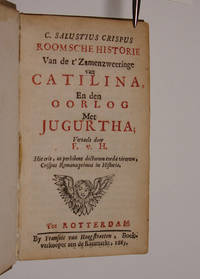
|
|
|
NEPOS
Cornelii Nepotis Vitae excellentium Imperatorum cum notis selelectis Boecleri Bosii Buchneri Ernestii Gebhardi Heidmanni Lambini Loccenii Longolii Magii Ravii Savaronis Schefferi Schotti nec non excerptis P. Danielis. Hisce accedit locupletissimus omnium vocabulorum index studio & opera J.A. Bosii. Suas notas addidit Augustinus van Staveren. Editio altera longe auctior.
Leiden Lugduni Batavorum Apud Sam. et Joan. Luchtmans 1773. 8vo. XXXII including frontispiece832176 index p.; text-illustrations on 11 p. Vellum 22 cm Ref: STCN ppn 238342476; Schweiger 2302: 'vielfach verbesserte und bereicherte Ausgabe'; Dibdin 2246: 'a very elaborate edition' 'It is in great repute'; Moss 2320; cf. Ernesti/Fabricius I107; Ebert 5273; Brunet 2289; Spoelder p. 490 Amsterdam 9 Details: Prize copy including the printed prize. Back gilt. 6 thongs laced through both joints. Boards with gilt borders gilt corner pieces and the gilt coat of arms of Amsterdam. Engraved frontispiece dated 1794 executed by J. Visscher. Engraved printer's mark on the title depicting Athena motto: 'Tuta sub Aegide Pallas'. Small text engravings portraits illustrations on 11 p. Condition: Vellum soiled. All 4 ties gone. Excellent paper Note: This is an edition with commentary of the only surviving complete work of the Roman historian Cornelius Nepos ca. 100-24 B.C. 'De excellentibus ducibus exterrarum gentium'. He is the author of the first surviving ancient collection of biographies. 'De excellentibus etc.' contains the lives of 20 Greek generals and the Carthaginians Hamilkar and Hannibal. The collection served probably as a model for Plutarch's 'Vitae Parallelae'. In his own days and in late antiquity Nepos was considered to be a source of importance. The churchfather Hieronymus included him in his 'De viris illustribus' 392 A.D. in his list of great authors and historians. Already in late antiquity this collection was ascribed to the grammarian Aemilius Probus and the 'editio princeps' of 1471 bears his Probus' name. The simple style of writing of Nepos has made him a standard choice for schools. The biographies provided the pupils also models of behaviour. Schweiger mentions numerous editions. This edition is a socalled 'Variorum' edition an edition which contained everthing a student required. Such an edition offers the 'textus receptus' which is widely accepted accompanied with the commentary and the annotations of specialists taken from earlier useful normative or renewing editions. Editions like these 'cum notis Variorum' were useful but never broke new ground. The production of this kind of editions was the specialty of Dutch scholars of the 17th and 18th century. The compilers seldom were great scholars but often hard working schoolmasters. The Dutch schoolmaster who skillfully excerpted compared and contrasted the material of brighter minds is in this case Augstinus van Staveren 1704-1772 who was rector of the 'schola latina' at Leiden since 1750. Nevertheless he proudly announces in the preface that he also has consulted in his search for 'variantes lectiones' 4 manuscripts of the Library of the University of Leiden and the collations of 2 English manuscripts. This second edition of Van Staveren's Nepos was published posthumously. In the short 'dedicatio' to the second edition written by Carolus Antonius Wetstenius J.C. we read that Van Staveren who was already halfway asked him short before his death to complete the second corrected and augmented edition. Van Staveren whom he calls 'vir amicissimus' was once his teacher Westein tells us. Van Staveren had already skipped 'quaedam suaque non pauca' to prevent the book from being too overloaded. Van Staveren is known for this edition of Nepos which saw several later reissues and for his 'Auctores Mythographi Latini' which was published in 1742. Not much is known of Carolus Antonius Wetstein 1742-1797. He was a Leyden lawyer and also an accomplished Neolatin poet. Van der Aa 20159 The bibliographers donot mention his involvement in the editing of his teacher's Nepos. The frontispiece or rather the copper plate for this frontispiece has a story of almost 150 years. It was first used in 1658 then 1675 1687 1704 1705 1728 1734 this book of 1773 and finally in 1793 Provenance: The prize is for Henricus Oort: 'Ingenuo optimaeque spei adolescentulo Henrico Oort. Hoc virtutis ac diligentiae praemium in classe sexta nova decreverunt Ampliss. Dd. Coss. & Scholarchae Amstelaedamenses'. It is signed by the Rector R. van Ommeren 29th of March 1793. Young Henricus Oort 1778-1849 received this book also for his diligence. That is what he was diligent. He took holy orders in the 'Nederlandsch Hervormde Kerk' and worked tirelessly for his church. He was also a diligent member of all kind of Societies. Van der Aa 14142 Collation: -28 A-3R8 Photographs on request hardcover
Bookseller reference : 130139
|
|
|
CALLIMACHUS
Callimachi Hymni epigrammata et fragmenta ex recensione Theodori J.G.F. Graevii cum ejusdem animadversionibus. Accedunt N. Frischlini H. Stephani B. Vulcanii P. Voetii A.T.F. Daceriae R. Bentleii commentarius et annotationes viri illustrissimi Ezechielis Spanhemii nec non praeter fragmenta quae ante Vulcanius & Daceria publicarant nova quae Spanhemius & Bentleius collegerunt & digesserunt. Hujus cura & studio quaedam quoque inedita epigrammata Callimachi nunc primum in lucem prodeunt.
Utrecht Ultrajecti Apud Franciscum Halmam Guilielmum vande Water 1697. 8vo. 2 volumes: XXXII1-438; 369-496138; 1675864 index p. frontispiece 6 engraved plates and occasional engraved text illustrations. Vellum 21 cm Ref: STCN ppn 833518089; Hoffmann 1429: 'Vorzügliche Werth erh. diese Ausg. durch Spanheim's u. Bentley's Noten'; Dibdin 1368/69: 'An excellent and erudite edition' and the scholar 'will have abundant reason to rejoice in the acquisition of this edition'; Moss 1249; Brunet 21481/2: 'Belle édition faisant partie de la collection Variorum'; Graesse 217; Ebert 3344 Details: 6 thongs laced through both joints. The frontispiece depicts Callimachus while offering to the gods. Title of the first volume in red & black. Engraved printer's mark on the title it depicts Athena and Ceres who are holding between them a painting with an allegorical scene which shows people harvesting a crop. They are surrounded by putti the motto is: 'cultior his vita est'; another and bigger version of the printer's mark on the second title. 6 plates showing statues of Greek gods drawn by G. Hoet and etched by I. van Vianen. Greek text with opposing Latin translation commentary & notes Condition: Vellum slightly soiled; some gatherings are yellowing Note: The Greek poet and scholar Callimachus of Cyrene c. 305 - c. 240 B.C. was given employment at the famous Alexandrian library. There he produced the first scientific literary history. 'It is clear that Callimachus was a poet of great originality and extraordinary refinement. His amazing productivity . was accompanied by bold experimentation in his poetry and a great versatility of style. The scholarly element it is true often adds a frigidity to his verse but the lively personal and realistic touches which appear never allow his writings to degenerate into arid selections of obsure myths'. OCD 2nd ed. p. 195/6 § This edition of the surviving works of Callimachus of 1697 was prepaired by the Dutch scholar Theodorus Georgius Graevius 1669-1692 the promising son of the professor of Classics at the University of Utrecht Johannes Georgius Graevius 1632-1703. The young man died when 23. The book was finished and published posthumously by his mourning father in 1697 with pain in his heart. 'Id non potest non gravissimum rescindere vulnus' he laments in the 'Dedicatio'. Johannes Georgius Graevius Greffe of German descent was the last 42 year of his life a star of the first order which adorned the University of Utrecht. Van der Aa 7353/58 & Van der Aa 7358. The young man the father tells in the 'praefatio' was fascinated by Callimachus and he was planning an edition of that poet with his own notes and commentary and that of others. Alas an immature death took away the young man's hopes and promisses but still he left his Callimachus finished. 'Non infrequenter' had he also corrected the Latin translation. When the German scholar Ezechiel Spanheim 1629-1710 heard that the father was preparing the posthumous edition he sent him all he had written about Callimachus. His 'In Callimachi Hymnos observationes' fill the second volume of the set. The fame of Graevius also enticed the 'splendissimum Britanniae lumen' Richard Bentley 1662-1742 to send him old and new material emendations and notes he had on Callimachus in his portfolio. On Spanheim see Sandys 2327 Collation: Volume I: -28 A-2D8 minus leaf B8; STCN erroneously doesnot mention this omitted leaf; nothing however is missing the pagination is correct the catchword between p. 30 and 31 is correct and the text also connects correctly Ee4. 2a-2i8 between leaf 2i3 and 2i4 have been bound 2 gatherings: 8 24 in STCN notation: 2i82i38 24 2k-2p8 2q4 leaf 2q4 recto has 'aan den binder' for the binder where the irregular pagination of the first volume is explained Volume II: 28 2A-3E8 3F4 leaf 3F4 blank Photographs on request hardcover
Bookseller reference : 130420
|
|

 Receive by email
 Download as PDF document
 RSS feed
 Permanent link


