|
Pierre LOUS
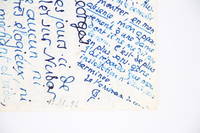
"H.eredia refuse . la dédicace d'Aphr.odite parce qu'il a encore deux filles à marier."" Signed autograph letter addressed to Georges Louis
Paris 1895. Fine. Paris 12 novembre 1895 12.50 x 20 cm 4 page sur un double feuillet Autograph letter signed by Pierre Louÿs signed with his initial addressed to Georges Louis. Four pages written in blue ink on a double sheet. Envelope enclosed bearing on the verso the intact wax seal with the writer's cipher. Transverse fold inherent to the mailing. Important letter addressed to his brother Georges Louis with whom Pierre Louÿs maintained a very intimate relationship and whom he considered as his own father. The question of the real identity of Pierre Louÿs' father still fascinates biographers today: ""His father Pierre Philippe Louis . had married in 1842 Jeanne Constance Blanchin who died ten years later after giving him two children Lucie and Georges. In 1855 he remarried Claire Céline Maldan and from this union was born in 1857 a son Paul; then in 1870 our writer who received the first names Pierre Félix. This late birth the differences in character between father and son the former's disaffection towards the latter the profound intimacy that always reigned between Louÿs and his brother Georges all this has led certain biographers and critics to suspect that the latter was in reality the father of the writer. The exceptionally intimate and constant relationship that Pierre and Georges maintained between them all their lives could be an argument in this sense. Of course no irrefutable proof has been discovered and probably never will be. Nevertheless certain letters . are quite troubling. In 1895 for example Louÿs writes seriously to his brother that he knows the answer to 'the most poignant question' he could ask him a question he has had 'on his lips for ten years.' The following year in the midst of Aphrodite's triumph he thanks Georges effusively and ends his letter with this sentence: 'Not one of my friends has a FATHER who is for him what you are for me.' Arguing from the close intimacy of Georges and Claire Céline during 1870 and the jealousy that the father never ceased to show towards his younger son Claude Farrère did not hesitate to conclude in favor of Georges Louis. And what to make of this dedication by Louÿs to his brother on a Japan paper copy of the first edition of Pausole: To Georges his eldest son / Pierre."" Jean-Paul Goujon Pierre Louÿs As attested by the enclosed envelope Pierre Louÿs sends this letter to his brother while the latter is exercising the function of France's delegate to the International Commission of Egyptian Debt and is in Cairo. Like a good socialite Pierre tells his brother about his new encounters: ""I met yesterday at a friend's house one of the sons of your minister Marcellin Berthelot. I have known all four of them for a long time but I see little of them. One of them André is a friend of Henri Mougeot with whom he has rented along with two or three other young men a house in Chevreuse and a mistress in Paris. . The other Daniel is a professor at the School of Pharmacy. A remarkable chemist they say. Philippe does nothing special . Finally René the youngest is Blum's oldest friend and his great rival of former times in the general competition. . It is Philippe who formed five or six years ago with Léon Daudet and Georges Hugo such a famous trinity. He is also known for having written a sonnet containing six rhymes in omphe which stupefied Heredia."" But these worldly matters do not distance Pierre Louÿs from literature. Indeed his first novel entitled Aphrodite is about to appear and he wonders to whom he could dedicate it. He first thought of José Maria de Heredia but. ""H. refuses . the dedication of Aphr. because he still has two daughters to marry. I myself had put a thousand reservations in my offer and his response after all is not unobliging. I know on the other hand that he repeats before strangers and indifferent persons everything he told me about the book and in the same hyperbolic terms. Finally he gave me unknown
Bookseller reference : 77509
|
|
|
Pierre LOUS
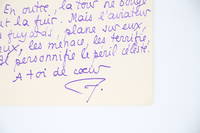
"Edison est en France."" Signed autograph letter addressed to Georges Louis
Paris 1911. Fine. Paris Lundi 11 septembre 1911 13.50 x 18 cm 5 pages sur un double feuillet et un feuillet libre Autograph letter signed by Pierre Louÿs addressed to Georges Louis. Five pages written in violet ink on a double leaf and a loose leaf. A press article pasted on the recto of the single leaf. Transverse creases inherent to posting. Fine letter addressed to his brother Georges Louis with whom Pierre Louÿs maintained a very intimate relationship and whom he considered as his own father. The question of the real identity of Pierre Louÿs's father still fascinates biographers today: ""His father Pierre Philippe Louis . had married in 1842 Jeanne Constance Blanchin who died ten years later after giving him two children Lucie and Georges. In 1855 he remarried Claire Céline Maldan and from this union was born in 1857 a son Paul; then in 1870 our writer who received the first names Pierre Félix. This late birth the differences in character between father and son the former's disaffection toward the latter the profound intimacy that always reigned between Louÿs and his brother Georges all this has led certain biographers and critics to suspect that the latter was in reality the writer's father. The exceptionally intimate and constant relationship that Pierre and Georges maintained between themselves all their lives could be an argument in this sense. Of course no irrefutable proof has been discovered and none will probably ever be discovered. Nevertheless certain letters . are quite disturbing. In 1895 for example Louÿs writes seriously to his brother that he knows the answer to ""the most poignant question"" he could ask him a question he has had ""on his lips for ten years."" The following year in the full triumph of Aphrodite he thanks Georges effusively and ends his letter with this sentence: ""Not one of my friends has a FATHER who is to him what you are to me."" Arguing from the close intimacy of Georges and Claire Céline during the year 1870 and the jealousy that the father never ceased to show toward his younger son Claude Farrère did not hesitate to conclude in favor of Georges Louis. And what to think of this dedication by Louÿs to his brother on a deluxe paper copy of the first edition of Pausole: For Georges his eldest son / Pierre."" Jean-Paul Goujon Pierre Louÿs Pierre Louÿs comments in this letter on Thomas Edison's visit to Paris: ""Edison is in France. Toward the end of last month a journalist questioned him. I regret not having kept the article."" The writer then launches into a true dialogue from his memories of said article paraphrasing the inventor in the manner of a witness who himself attended the interview: ""To the simple question ""Are you pleased with your trip"" Edison answered with amiable phrases and immediately on his own he brought the conversation to the subjects: Monoplane. War. He said I only repeat from memory the sense of what I read: He said in substance: ""You are not yet enthusiastic enough about the value of your new weapon: it is formidable. You take aeroplanes for scouts. Say first: combatants. From the heights where the monoplane evolves easily today there is an effective military power but especially an incalculable moral power."" He explained himself thus: ""Give grenades to an aviator who will drop them. Even if they are not very dangerous even if they rarely hit their target the entire enemy army will scatter like a flock of sheep under the flight of the eagle. Five six grenades falling from the sky will provoke panic terror. Nothing is frightening for a crowd like a peril that comes from above."" "" This ""remarkable interview"" related by the writer who finds that ""the theory is correct"" underlines the visionary character of Edison who seems here to relate the facts of the coming First World War. The erudite Pierre Louÿs illuminates this theory of ""Edison the prophet"" with his classical culture: ""It agrees with the old phrases about the limits of b unknown
Bookseller reference : 77520
|
|
|
Pierre LOUS
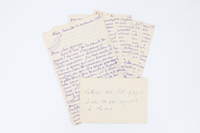
Lettre autographe signée de 20 pages adressée à Georges Louis : ""Et j'ai une grande nouvelle à t'annoncer qui décidera du bonheur de ma vie : je me marie.""
Dizy Dizy-le-Gros 1888. Fine. Dizy Dizy-le-Gros samedi 15 septembre 1888 13.70 x 21.20 cm 20 pages sur 5 doubles feuillets & une enveloppe Very long autograph letter signed by Pierre Louÿs addressed to Georges Louis. Twenty pages written in blue ink on five double sheets of graph paper. Enclosed is an envelope on which is written in pencil in Pierre Louÿs's hand: ""Letter of 20 pages about my stay in Limé"" Amusing letter addressed to his brother Georges Louis with whom Pierre Louÿs maintained a very intimate relationship and whom he considered as his own father. The question of Pierre Louÿs's real father's identity still fascinates biographers today: ""His father Pierre Philippe Louis . had married in 1842 Jeanne Constance Blanchin who died ten years later after having given him two children Lucie and Georges. In 1855 he remarried Claire Céline Maldan and from this union was born in 1857 a son Paul; then in 1870 our writer who received the first names Pierre Félix. This late birth the differences in character between father and son the former's disaffection toward the latter the profound intimacy that always reigned between Louÿs and his brother Georges all this has led certain biographers and critics to suspect that the latter was in reality the writer's father. The exceptionally intimate and constant relationship that Pierre and Georges maintained between them throughout their lives could be an argument in this sense. Of course no irrefutable proof has been discovered and probably never will be. Nevertheless certain letters . are quite troubling. In 1895 for example Louÿs writes gravely to his brother that he knows the answer to 'the most poignant question' he could ask him a question he has had 'on his lips for ten years.' The following year at the height of Aphrodite's triumph he thanks Georges effusively and ends his letter with this sentence: 'Not one of my friends has a FATHER who is to him what you are to me.' Arguing from the close intimacy between Georges and Claire Céline during the year 1870 and from the jealousy that the father never ceased to show toward his younger son Claude Farrère did not hesitate to conclude in favor of Georges Louis. And what to think of this dedication by Louÿs to his brother on a deluxe copy of the first edition of Pausole: To Georges his eldest son / Pierre."" Jean-Paul Goujon Pierre Louÿs In this titillating letter bearing at the top the mention ""Papa doesn't know I'm writing you this letter"" underlined three times young Pierre Louÿs eighteen years old tells his elder about his vacation in Limé Aisne with the Glatron family. Visibly very excited he announces to his brother after some brief family news: ""And I have great news to announce to you which will decide the happiness of my life: I'm getting married. Don't look for a match for me anymore: I've found one."" In order to keep his reader in suspense he first tells him at length about his stay in Limé and paints a portrait of the Glatron family: ""Here first is the introduction to the little work I'm sending you by way of a letter and which may be very boring. It's the tableau of the Glatron family; it amused me to study them a bit while I was there. I wanted to find for each of them three or four words to paint them completely but I soon realized that I couldn't do so for any of them."" Far from being ""boring"" this very long passage allows Pierre Louÿs to deploy his talents as storyteller and caricaturist. Each member receives a colorful description ""the queen mother"" ""a nonentity"" ""a very special character"" ""petrified phlegm"" ""a repetitive Paulus"" ""the little invalid"". and Louÿs also gives pride of place to dialogues which he deliberately exaggerates: ""'I tell you that you took her by the waist! I saw you! Don't say no I saw you!'"" These humorous observations continue with the quasi-anthropological description of a village festival in Limé: ""I arrived in Limé the day before the patron saint's festival. unknown
Bookseller reference : 78162
|
|
|
George SAND
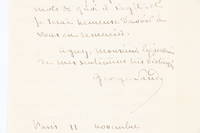
Lettre autographe signée adressée à un correspondant inconnu
Paris 1864. Fine. Paris s. d. entre 1864 et 1868 13.40 x 20.70 cm 2 pages sur un double feuillet Autograph letter signed addressed to an unknown correspondent written in black ink on a double leaf with dry stamp bearing the writer's initials. This letter probably unpublished was written on ""November 11th"" between 1864 and 1868 according to the address at the bottom: ""rue des feuillantines 97"". ""Une amie commune et pleine de confiance en votre bonté me fait espérer monsieur que vous m'accorderez un peu de sympathie. Si je suis indiscrète d'y croire ne vous en prenez qu'à elle comme elle est de ces personnes à qui l'on ne peut en vouloir je ne crains pas de vous la dénoncer. Vous pouvez vendre un immense service au fils de mon ami d'enfance. Le voudrez-vous quelque difficile que la chose puisse être Elle ne l'est peut-être pas je ne sais pas. Mais si elle l'est j'espère quand même depuis ce que Madame de Voisins me dit de vous. ."" ""A mutual friend full of confidence in your kindness gives me hope sir that you will grant me some sympathy. If I am indiscreet to believe it blame only her as she is one of those persons one cannot hold a grudge against I do not fear to denounce her to you. You can render an immense service to the son of my childhood friend. Will you do so however difficult the matter may be Perhaps it is not difficult I do not know. But if it is I still hope so from what Madame de Voisins tells me about you. ."" unknown
Bookseller reference : 78465
|
|
|
Pierre LOUS
Carte lettre autographe signée adressée à Georges Louis
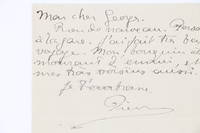
Paris 1887. Fine. Paris juillet 1887 11.20 x 14.20 cm une carte-lettre Autograph signed letter-card from Pierre Louÿs addressed to his brother Georges Louis with whom Pierre Louÿs maintained a very intimate relationship and whom he considered as his own father. The question of Pierre Louÿs's real paternal identity still fascinates biographers today: ""His father Pierre Philippe Louis . had married in 1842 Jeanne Constance Blanchin who died ten years later after having given him two children Lucie and Georges. In 1855 he remarried Claire Céline Maldan and from this union was born in 1857 a son Paul; then in 1870 our writer who received the first names Pierre Félix. This late birth the differences in character between father and son the former's disaffection toward the latter the profound intimacy that always reigned between Louÿs and his brother Georges all this has led certain biographers and critics to suspect that the latter was in reality the writer's father. The exceptionally intimate and constant relationship that Pierre and Georges maintained between them throughout their lives could be an argument in this sense. Of course no irrefutable proof has been discovered and none probably ever will be. Nevertheless certain letters . are quite troubling. In 1895 for example Louÿs writes seriously to his brother that he knows the answer to 'the most poignant question' he could ask him a question he has had 'on his lips for ten years.' The following year in the full triumph of Aphrodite he thanks Georges effusively and ends his letter with this sentence: 'Not one of my friends has a FATHER who is for him what you are for me.' Arguing from the close intimacy of Georges and Claire Céline during the year 1870 and from the jealousy that the father never ceased to show toward his younger son Claude Farrère did not hesitate to conclude in favor of Georges Louis. And what to think of this dedication from Louÿs to his brother on a Japan paper copy of the first edition of Pausole: For Georges his eldest son / Pierre."" Jean-Paul Goujon Pierre Louÿs Brief note to his brother upon arrival in Epernay: ""Rien de nouveau. Personne à la gare. J'ai fait très bon voyage. Mon bouquin était mourant d'ennui et mes trois voisins aussi. Je t'embrasse. Pierre"" ""Nothing new. Nobody at the station. I had a very good journey. My book was dying of boredom and so were my three neighbors. I embrace you. Pierre"" unknown
Bookseller reference : 78441
|
|
|
Renee VIVIEN
"Mon si fragile bonheur sois très prudente et ménage ta jolie santé frêle qui m'est si précieuse."" Signed autograph card addressed to Natalie Clifford Barney
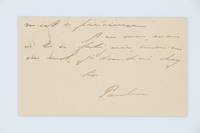
s. l. Paris 1900. Fine. s. l. Paris s. d. ca 1900 9.50 x 5.60 cm une carte rédigée des deux côtés Autograph manuscript card signed ""Pauline"" and addressed to Natalie Clifford Barney written in black ink on both sides. ""Repose-toi aujourd'hui chérie. Je suis inquiète de toi et cela me rend affreusement triste. Repose-toi bien n'est-ce pas Mon si fragile bonheur sois très prudente et ménage ta jolie santé frêle qui m'est si précieuse. A ce soir mais si tu es fatiguée envoie-moi un mot je viendrai chez toi."" ""Rest today darling. I am worried about you and it makes me terribly sad. Rest well won't you My so fragile happiness be very careful and take care of your pretty frail health which is so precious to me. Until tonight but if you are tired send me a word I will come to you."" It was at the end of 1899 and through Violette Shillito that Renée Vivien - then Pauline Tarn - made the acquaintance of Natalie Clifford Barney ""this American more supple than a scarf whose sparkling face shines with golden hair sea-blue eyes and implacable teeth"" Colette Claudine à Paris. Natalie who had just lived a summer idyll with the sulfurous Liane de Pougy who had initiated her into sapphism paid only discreet attention to this new acquaintance. Renée however was totally captivated by the young American and would relate this love at first sight in her autobiographical novel Une Femme m'apparut: ""I evoked the already distant hour when I saw her for the first time and the shiver that ran through me when my eyes met her eyes of mortal steel her sharp blue eyes like a blade. I had the obscure presentiment that this woman was giving me destiny's order that her face was the dreaded face of my future. I felt near her the luminous vertigo that rises from the abyss and the call of very deep water. The charm of peril emanated from her and attracted me inexorably. I did not try to flee her for I would have escaped death more easily."" ""Winter 1899-1900. Beginning of the idyll. One evening Vivien is invited by her new friend to Mme Barney's studio Natalie's mother 153 avenue Victor-Hugo at the corner of rue de Longchamp. Natalie ventures to read verses of her own composition. When Vivien tells her she loves these verses she replies that it is better to love the poet. A response quite worthy of the Amazon."" J.-P. Goujon Tes blessures sont plus douces que leurs caresses Two years of unequal happiness followed punctuated by Natalie's recurring infidelities and Renée's pathological jealousy whose letters oscillated between passionate declarations and painful mea culpa. ""Renée Vivien is the daughter of Sappho and Baudelaire she is the flower of evil 1900 with fevers broken flights sad voluptuousness."" Jean Chalon Portrait d'une séductrice In 1901 came an important rupture that would last almost two years; Renée despite Natalie's solicitations and the intermediaries she sends to win her back resists. ""The two friends saw each other again and it was in August 1905 the pilgrimage to Lesbos which constituted a disappointment for Natalie Barney and remained without consequence. . The spring was definitively broken. The two former friends ceased to see each other from 1907 and Vivien died without their having met again."" J.-P. Goujon Ibid. Precious and very rare card from Sappho 1900 to the Amazon. unknown
Bookseller reference : 78898
|
|
|
Renee VIVIEN
"Tu es pareille à une sirène cruelle qui aurait aveuglé un esclave et qui se couronnerait étant nue de l'indifférence de l'esclave aveugle devant sa beauté."" Signed Autograph Love Letter to Natalie Clifford Barney
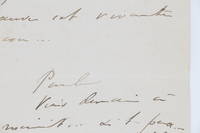
s. l. Paris 1905. Fine. s. l. Paris s. d. ca. 1905 12.50 x 16.70 cm 4 pages sur un double feuillet Autograph letter signed ""Pauline"" and ""P.M.T."" by Renée Vivien addressed to Natalie Clifford Barney and written in black ink on a double folio with silver-violet letterhead and the address 3 rue Jean-Baptiste Dumas. Transverse fold inherent to mailing. Very fine love and reproach letter written after the long two-year separation and probably upon return from Mytilene Lesbos: ""Est-ce vraiment pour moi que tu restes demain Tout-Petit . Qui le saura jamais . Ce doute que le passé justifie un peu entrave mes plus hautains élans et fait de moi la créature misérable et triste que je suis."" ""Is it really for me that you stay tomorrow Little One . Who will ever know . This doubt which the past somewhat justifies hampers my most haughty impulses and makes me the miserable and sad creature that I am."" Renée weakened by Natalie's infidelities struggles to trust her again ""Je ne puis croire en toi"" ""I cannot believe in you"" but continues despite her suffering to be entirely devoted to her: ""Tu m'as dédaignée alors que tu aurais été pour moi la révélation miraculeuse - Tu m'as dédaignée. Et aujourd'hui tu t'étonnes de ne point me trouver telle que tu m'aurais rêvée toi qui n'as pas pris le soin de me façonner à ta guise ! Ecoute. Tu es comme un potier qui voyant à ses pieds un argile informe le repousserait et qui plus tard voyant un de ses élèves en fait une statue imparfaite exhalerait en termes amers sa colère et son dédain."" ""You scorned me when you would have been for me the miraculous revelation - You scorned me. And today you are surprised not to find me as you would have dreamed me you who did not take the care to shape me to your liking! Listen. You are like a potter who seeing at his feet an unformed clay would push it away and who later seeing one of his students make an imperfect statue from it would exhale in bitter terms his anger and disdain."" Torn between pain and desire Renée nevertheless calls for her lover: ""Viens demain à minuit.si tu peux. si tu veux. si Ilse n'en décide pas autrement et si ton caprice te le permet."" ""Come tomorrow at midnight.if you can. if you want. if Ilse doesn't decide otherwise and if your whim allows it."" These reunions would not last however: torn between Baroness Hélène de Zuylen and Natalie Renée would chain together travels; in turn to Holland Germany Switzerland and Venice she would confide her hesitations to Kérimé Turkhan-Pacha her epistolary companion from the Bosphorus. It was at the end of 1899 and through Violette Shillito that Renée Vivien - then Pauline Tarn - made the acquaintance of Natalie Clifford Barney ""cette Américaine plus souple qu'une écharpe dont l'étincelant visage brille de cheveux d'or de prunelles bleu de mer de dents implacables"" ""this American more supple than a scarf whose sparkling face shines with golden hair sea-blue eyes implacable teeth"" Colette Claudine à Paris. Natalie who had just lived a summer idyll with the sulfurous Liane de Pougy who had initiated her into sapphism paid only discreet attention to this new acquaintance. Renée on the other hand was totally captivated by the young American and would relate this love at first sight in her autobiographical novel Une Femme m'apparut: ""J'évoquai l'heure déjà lointaine où je la vis pour la première fois et le frisson qui me parcourut lorsque mes yeux rencontrèrent ses yeux d'acier mortel ses yeux aigus et bleus comme une lame. J'eus l'obscur prescience que cette femme m'intimait l'ordre du destin que son visage était le visage redouté de mon avenir. Je sentis près d'elle les vertiges lumineux qui montent de l'abîme et l'appel de l'eau très profonde. Le charme du péril émanait d'elle et m'attirait inexorablement. Je n'essayai point de la fuir car j'aurais échappé plus aisément à la mort."" ""I evoked the already distant hour when unknown
Bookseller reference : 78939
|
|
|
Renee VIVIEN
"Avril mon doux petit Avril chaque fois que tu t'en vas tu emportes un peu de mon cur qui ne peut se détacher de toi et te suit tristement."" Signed autograph letter addressed to Natalie Clifford Barney
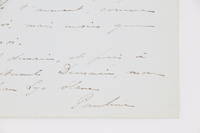
s. l. Paris 1900. Fine. s. l. Paris s. d. ca. 1900 12.30 x 16.50 cm 4 pages sur un double feuillet Autograph letter signed ""Pauline"" by Renée Vivien addressed to Natalie Clifford Barney and written in black ink on a double sheet with the poetess's silver monogram letterhead. Very beautiful and poetic love letter from the Muse of violets languishing for her ""dear white Lily"": ""Je n'ai pas pu te demander cet après-midi si je te verrais demain mon doux Avril mais tu as bien compris n'est-ce pas qu'il me serait aussi impossible de vivre un jour sans toi que de me priver des lumières du soleil ou des fleurs. . Avril mon doux petit Avril chaque fois que tu t'en vas tu emportes un peu de mon cur qui ne peut se détacher de toi et te suit tristement. Tu es pour moi la poésie la consolation et le rêve. Tu mets de la beauté dans ma vie et dans mon âme - quand je me réveille chaque jour et je pense à toi c'est la perpétuelle éclosion de quelque miraculeuse amour. Je vis dans un conte de fées un pays où tout est bleu et d'où la tristesse a disparu. Pense à moi ce soir avant d'aller rêver dans l'au-delà et le lointain du sommeil."" ""I could not ask you this afternoon if I would see you tomorrow my sweet April but you understood didn't you that it would be as impossible for me to live a day without you as to deprive myself of light sun or flowers. . April my sweet little April each time you leave you take with you a piece of my heart which cannot detach itself from you and follows you sadly. You are for me poetry consolation and dream. You bring beauty into my life and into my soul - when I wake each day and think of you it is the perpetual blossoming of some miraculous love. I live in a fairy tale a country where everything is blue and from which sadness has disappeared. Think of me tonight before going to dream in the beyond and the distance of sleep."" The letter then takes on a more sensual tone: ""J'aime tes cheveux blonds. Je leur envoie un long baiser. Les lys que j'ai dans ma chambre sont tristes parce que tu n'es plus là. Ils t'envoient leur âme dans un parfum. Ils t'aiment comme moi ; mais moins que moi."" ""I love your blonde hair. I send them a long kiss. The lilies I have in my room are sad because you are no longer there. They send you their soul in a fragrance. They love you like me; but less than me."" During their first night of love Renée had filled her room with lilies transforming it into a ""chapelle ardente"" N.Clifford Barney Je me souviens. Jean-Paul Goujon notes: ""The choice of lilies was very much in the taste of the period: let us remember Mucha's posters Schwabe's paintings Lorrain's poems. But Vivien who certainly remembered certain pages filled with flowers and perfumes from Zola's La Faute de l'abbé Mouret seems to have wanted to celebrate mystical nuptials coupled with a sort of perfumed death."" It was at the end of 1899 and through Violette Shillito that Renée Vivien - then Pauline Tarn - made the acquaintance of Natalie Clifford Barney ""cette Américaine plus souple qu'une écharpe dont l'étincelant visage brille de cheveux d'or de prunelles bleu de mer de dents implacables"" ""this American more supple than a scarf whose sparkling face shines with golden hair sea-blue eyes implacable teeth"" Colette Claudine à Paris. Natalie who had just lived through a summer idyll with the scandalous Liane de Pougy who initiated her into Sapphism paid only discreet attention to this new acquaintance. Renée however was totally captivated by the young American and would relate this coup de foudre in her autobiographical novel Une Femme m'apparut: ""J'évoquai l'heure déjà lointaine où je la vis pour la première fois et le frisson qui me parcourut lorsque mes yeux rencontrèrent ses yeux d'acier mortel ses yeux aigus et bleus comme une lame. J'eus l'obscur prescience que cette femme m'intimait l'ordre du destin que son visage était le visage redouté de mon avenir. Je sentis p unknown
Bookseller reference : 78919
|
|
|
Renee VIVIEN
"Tes lettres te seront renvoyées sans être lues - ne m'envoie pas de fleurs elles seront refusées."" Signed autograph letter addressed to Natalie Clifford Barney
s. l. Paris 1905. Fine. s. l. Paris s. d. 1905-1906 11.50 x 15.90 cm 3 pages sur un double feuillet Autograph letter signed ""Pauline"" by Renée Vivien addressed to Natalie Clifford Barney and written in violet ink on a double sheet bordered with violets. Transverse creases inherent to the mailing. Icy and a fresh attempt at rupture or at the very least a rebuff this letter is completely devoid of courtesy and tenderness: ""Je ne suis pas pareille à toi - j'ai de l'orgueil et de la fierté - cet orgueil tu l'as blessé cette fierté tu l'as froissée - je ne m'exposerai plus à des dégoûts de ce genre. Tes lettres te seront renvoyées sans être lues - ne m'envoie pas de fleurs elles seront refusées. Je vois peu de gens dans l'horreur où je vis des êtres j'en verrai moins encore - cela me procurera peut-être la paix. Je me demande seulement pourquoi tu m'as importunée pour me revoir si ce n'était pour m'humilier et me dégoûter de toi encore davantage. Adieu puisque je ne te reverrai plus de ma vie. Pauline"" ""I am not like you - I have pride and dignity - you have wounded that pride you have bruised that dignity - I will no longer expose myself to such disgust. Your letters will be returned unread - do not send me flowers they will be refused. I see few people in the horror I feel for human beings I will see even fewer - that will perhaps bring me peace. I only wonder why you bothered me to see me again if it was not to humiliate me and disgust me with you even more. Farewell since I will never see you again in my life. Pauline"" Moving letter revealing the suffering and isolation of the Muse of violets sliding inexorably toward her tragic end. It was at the end of 1899 and through the intermediary of Violette Shillito that Renée Vivien - then Pauline Tarn - made the acquaintance of Natalie Clifford Barney ""cette Américaine plus souple qu'une écharpe dont l'étincelant visage brille de cheveux d'or de prunelles bleu de mer de dents implacables"" ""this American more supple than a scarf whose sparkling face shines with golden hair sea-blue eyes implacable teeth"" Colette Claudine à Paris. Natalie who had just experienced a summer idyll with the scandalous Liane de Pougy who had initiated her into Sapphism paid only discrete attention to this new acquaintance. Renée however was completely subjugated by the young American and would relate this coup de foudre in her autobiographical novel Une Femme m'apparut: ""J'évoquai l'heure déjà lointaine où je la vis pour la première fois et le frisson qui me parcourut lorsque mes yeux rencontrèrent ses yeux d'acier mortel ses yeux aigus et bleus comme une lame. J'eus l'obscur prescience que cette femme m'intimait l'ordre du destin que son visage était le visage redouté de mon avenir. Je sentis près d'elle les vertiges lumineux qui montent de l'abîme et l'appel de l'eau très profonde. Le charme du péril émanait d'elle et m'attirait inexorablement. Je n'essayai point de la fuir car j'aurais échappé plus aisément à la mort."" ""I evoked the already distant hour when I saw her for the first time and the shiver that ran through me when my eyes met her mortal steel eyes her sharp blue eyes like a blade. I had the obscure prescience that this woman was giving me destiny's orders that her face was the dreaded face of my future. I felt near her the luminous vertigo that rises from the abyss and the call of very deep water. The charm of peril emanated from her and attracted me inexorably. I did not try to flee her for I would have escaped death more easily."" ""Hiver 1899-1900. Débuts de l'idylle. Un soir Vivien est invitée par sa nouvelle amie dans l'atelier de Mme Barney mère de Natalie 153 avenue Victor-Hugo à l'angle de la rue de Longchamp. Natalie s'enhardit à lire des vers de sa composition. Comme Vivien lui dit aimer ces vers elle lui répond qu'il vaut mieux aimer le poète. Réponse bien digne de l'Amazone."" ""Winter 1899-1900. Beginning of the idyll. One evening Vivie unknown
Bookseller reference : 79002
|
|
|
Renee VIVIEN
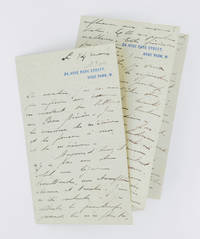
"Je lirai « Séraphita » pour te retrouver un peu dans ces pages de Balzac."" Signed Autograph Love Letter to Natalie Clifford Barney
s. l. Londres London 1900. Fine. s. l. Londres London Le 14 mars 1900 9.90 x 15.20 cm 8 pages sur 2 doubles feuillets Autograph letter signed ""Pauline"" by Renée Vivien written in black ink on two double sheets of letterhead paper from 24 Hyde Park Street. Transverse folds inherent to posting. A very beautiful and poetic letter written from London where the young Renée savors a sweet melancholy: ""Today there was no sun a light fog a dark and sad atmosphere. I was pleased by it I hate spring when you are no longer here and the sun and soft air hurt me. I love the sadness of the sky and the moon which goes well with my thoughts."" Despite a very busy schedule ""I am very tired this evening I return from the Alhambra where mama took me to see the military ballet and hear the patriotic songs. . I went skating in the afternoon in the morning I went to see one of my friends here who is very kind although having too much religion for my taste."" the young woman is bored in this city that she profoundly detests ""How can you be jealous you whom I adore of London which I hate I have been unhappy since I entered this city. It is dark it has a bad influence on my destiny. It brings me misfortune. It will end up killing me if I stay. I am afraid of it I want to leave to join you my darling my spring you who are the being of light and beauty my love my happiness and my consolation."" and finds comfort in the memory of her beloved of whom she thinks every moment: ""You are right to feel my thoughts around you I desperately throw my soul across space so that it finds you Your memory is in all my actions all my words it is you that I see through the things that surround me."" Natalie is everywhere even in her reading: ""I will read 'Séraphita' to find you a little in those pages of Balzac. Everything that reminds me of you everything that has some connection with you even distant is dear to me."" As Jean Chalon shows in his biography of Natalie Clifford Barney Portrait d'une séductrice Séraphita is a founding novel of the Amazon's thought and one of the first books she bought upon her arrival in Europe: ""Natalie had vainly sought this philosophical novel by Balzac in the bookstores of Washington. She would find this book in Europe and push refinement to the point of reading the angelic avatars of Séraphitus-Séraphita in that Norway which forms its setting."" From this underlined passage in her copy one notices that she retains more of its feminism than the concept of intersexuality: ""Would this not be using your rights as a man We must always please you relax you always be cheerful and have only the whims that amuse you. What must I do my friend Do you want me to sing to dance when fatigue takes away the use of my voice and legs Gentlemen even if we were dying we must still smile at you! You call this I believe reigning. Poor women! I pity them."" As evidenced by a letter addressed to her previous lover Liane de Pougy she had already introduced her to this Balzacian heroine: ""You will come to me I will go to you and we will marry our lives. That day you will read me Séraphîta. She will awaken our slumbering souls and you will lend to the sleeping words the beauty of your voice. It will be our litany of love."" It was at the end of 1899 and through Violette Shillito that Renée Vivien - then Pauline Tarn - made the acquaintance of Natalie Clifford Barney ""this American more supple than a scarf whose sparkling face shines with golden hair sea-blue pupils and implacable teeth"" Colette Claudine à Paris. Natalie who had just lived a summer idyll with the sulfurous Liane de Pougy who had initiated her into sapphism paid only discreet attention to this new acquaintance. Renée on the other hand was totally captivated by the young American and would relate this love at first sight in her autobiographical novel Une Femme m'apparut : ""I evoked the already distant hour when I saw her for the first time and t unknown
Bookseller reference : 79025
|
|
|
Renee VIVIEN
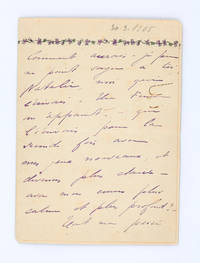
"Tu vois bien que mes pensées te reviennent toujours."" Signed autograph letter addressed to Natalie Clifford Barney
s. l. Paris 1905. Fine. s. l. Paris 30 mars 1905 11.50 x 15.90 cm 6 pages 1/2 sur deux doubles feuillets Autograph letter signed ""Pauline"" by Renée Vivien addressed to Natalie Clifford Barney and written in violet ink on two double sheets edged with violets. Transverse folds inherent to posting. Very fine love letter evoking the only novel by the Violet Muse Une femme m'apparut. ""Comment aurais-je pu ne point songer à toi Natalie moi qui écrivais « Une femme m'apparut » - qui l'écrivais pour la seconde fois avec mes yeux nouveaux et devenus plus clairs - avec mon cur plus calme et plus profond "" ""How could I not have thought of you Natalie I who was writing 'Une femme m'apparut' - who was writing it for the second time with my new eyes which had become clearer - with my heart calmer and deeper"" Published in 1904 this novel - the only one of Renée's literary career - tells the love story of the narrator and ""Vally"" Natalie Clifford Barney from their beginning to their tragic end and the ""apparition"" of the savior Hélène de Zuylen. Reconciled with the Amazon Renée undertakes to rewrite the book which will appear at the beginning of 1906: ""Literary and stylistic improvement No. The concern to justify herself anew but this time in the face of Natalie Barney is beyond doubt. Remorse too: now the apparition that gives the book its title is no longer Eva-Hélène de Zuylen but Lorely-Natalie Barney and this from page 2. When we know that during the summer of 1904 unexpected reunions in Bayreuth came to unite Natalie Barney and Vivien we better understand the meaning of this new version of the novel Renée only returns to her amorous past to deliver us a second version revised and corrected. She thus erases the final choice she had suggested in the first version. Complete palinode confirmed by the very text of the letters that Vivien will write to Natalie Barney in 1904 and especially in 1905."" J.-P. Goujon Tes blessures sont plus douces que leurs caresses This confusion of feelings shows through this letter filled with oxymorons: ""je goûte une tristesse charmante à t'évoquer . quand je songe à toi j'évoque ma plus belle douleur"" ""I taste a charming sadness in evoking you . when I think of you I evoke my most beautiful pain"" The sadness - mixed with unconditional love - is here pushed to its paroxysm: ""Ne te laisse pas attrister par ma lettre grise de ce soir. Il y a des heures ternes - ce sont peut-être les meilleures - Dans tous les cas ce sont les plus vraies . Et ceux qui sont comme tu le dis « ingrats et joyeux » sont fort à plaindre."" ""Do not let yourself be saddened by my grey letter this evening. There are dull hours - these are perhaps the best - In any case these are the truest . And those who are as you say 'ungrateful and joyful' are much to be pitied."" Vivien effaces herself completely in favor of her beloved even proposing to live in her place: ""Va - si tu le peux - là où je voudrais être - à Mytilène. Je verrais l'île merveilleuse à travers tes prunelles - tu me ferais respirer tous ses parfums - A dire vrai le courage m'a manqué pour y aller. Je n'avais plus la force ni le désir de partir ainsi."" ""Go - if you can - where I would like to be - to Mytilene. I would see the marvelous island through your eyes - you would make me breathe all its perfumes - To tell the truth I lacked the courage to go there. I no longer had the strength nor the desire to leave thus."" ""Ne peux-tu toi aller à Mytilène et me rapporter des roses de là-bas "" ""Cannot you go to Mytilene and bring me roses from there"" Yet it is together that the two lovers will soon undertake the journey to Lesbos; it will be the last of their story. It was at the end of 1899 and through Violette Shillito that Renée Vivien - then Pauline Tarn - made the acquaintance of Natalie Clifford Barney ""cette Américaine plus souple qu'une écharpe dont l'étincelant visage brille de cheveux d'or de prunelles bleu de mer d unknown
Bookseller reference : 78968
|
|
|
Renee VIVIEN
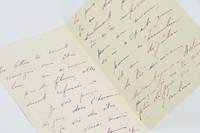
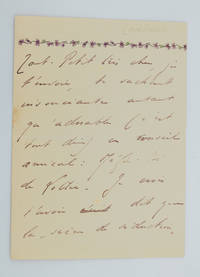
"Méfie-toi de Lottie. Je crois t'avoir dit que la « scène de séduction » chez moi était très savamment préparée et combinée. Lottie a besoin d'argent."" Autograph Letter to Natalie Clifford Barney
s. l. Paris 1906. Fine. s. l. Paris s. d. ca 1906 11.50 x 15.90 cm 4 pages sur un double feuillet Autograph letter by Renée Vivien addressed to Natalie Clifford Barney and written in violet ink on a double sheet bordered with violets. Transverse folds inherent to mailing. Interesting letter of warning against the opportunist ""Lottie"": ""Tout-Petit très cher je t'envoie te sachant insouciante autant qu'adorable c'est tout dire ce conseil amical : Méfie-toi de Lottie. Je crois t'avoir dit que la « scène de séduction » chez moi était très savamment préparée et combinée. Lottie a besoin d'argent. Elle en cherche avec âpreté. Elle me demande maintenant une « lettre d'introduction » pour Lugné-Poë. et moi qui ne le connais pas ! Elle « t'embêtera » . c'est le mot cru le seul qui convient Elle est exaspérée contre moi parce que je n'ai pas succombé et surtout parce que je ne lui donnerai pas d'argent. Si elle m'en avait demandé loyalement franchement au nom des jours d'autrefois j'aurais cédé mais cette comédie amoureuse me répugne Je te le répète : Méfie-toi Ne la vois point si cela t'est possible."" ""Very dear Little One I send you knowing you to be as carefree as you are adorable which says everything this friendly advice: Beware of Lottie. I believe I told you that the 'seduction scene' at my place was very cleverly prepared and planned. Lottie needs money. She seeks it eagerly. She now asks me for a 'letter of introduction' to Lugné-Poë. and I who don't know him! She will 'bother you'. that's the crude word the only one that fits She is exasperated with me because I did not succumb and especially because I will not give her money. If she had asked me loyally frankly in the name of days gone by I would have given in but this amorous comedy disgusts me I repeat: Beware Do not see her if it is possible for you."" Charlotte ""Lottie"" Stern Countess Venturini was an actress also known by the name of Yorska and a close friend of Sarah Bernhardt. Alice Pike Barney Natalie's mother painted a very beautiful profile of her in pastel entitled ""Vamp of 1900"" and today preserved at the Smithsonian American Art Museum in Washington. The Jacques Doucet library holds eighteen autograph letters that she addressed to Natalie Clifford Barney. It was at the end of 1899 and through the intermediary of Violette Shillito that Renée Vivien - then Pauline Tarn - made the acquaintance of Natalie Clifford Barney ""cette Américaine plus souple qu'une écharpe dont l'étincelant visage brille de cheveux d'or de prunelles bleu de mer de dents implacables"" Colette Claudine à Paris. Natalie who had just lived through a summer idyll with the scandalous Liane de Pougy who had initiated her into sapphism paid only discreet attention to this new acquaintance. Renée on the other hand was completely captivated by the young American and would relate this love at first sight in her autobiographical novel Une Femme m'apparut: ""J'évoquai l'heure déjà lointaine où je la vis pour la première fois et le frisson qui me parcourut lorsque mes yeux rencontrèrent ses yeux d'acier mortel ses yeux aigus et bleus comme une lame. J'eus l'obscur prescience que cette femme m'intimait l'ordre du destin que son visage était le visage redouté de mon avenir. Je sentis près d'elle les vertiges lumineux qui montent de l'abîme et l'appel de l'eau très profonde. Le charme du péril émanait d'elle et m'attirait inexorablement. Je n'essayai point de la fuir car j'aurais échappé plus aisément à la mort."" ""Winter 1899-1900. Beginning of the idyll. One evening Vivien is invited by her new friend to Mme Barney's studio Natalie's mother 153 avenue Victor-Hugo at the corner of rue de Longchamp. Natalie ventures to read verses of her composition. When Vivien tells her she loves these verses she replies that it is better to love the poet. A response quite worthy of the Amazon."" J.-P. Goujon Tes blessures sont plus douces que leurs caresses Two year unknown
Bookseller reference : 79012
|
|
|
Renee VIVIEN - Helene de ZUYLEN
"Dis à tes cheveux que je les aime."" Autograph letter signed by Renée Vivien and Hélène de Zuylen addressed to Natalie Clifford Barney
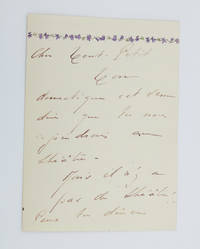
s. l. Paris 1906. Fine. s. l. Paris s. d. ca 1906 11.50 x 15.90 cm 4 pages sur un double feuillet Autograph letter signed ""Paul"" from Renée Vivien addressed to Natalie Clifford Barney and written in black ink on a double sheet bordered with violets. Baroness Hélène de Zuylen has added a small manuscript message signed at the end of the letter: ""Paule a raison vous êtes un être charmant et féerique !"" ""Paule is right you are a charming and fairy-like being!"" Transverse folds inherent to mailing. ""Cher Tout-Petit Ton domestique est venu dire que tu nous rejoindrais au théâtre. Mais il n'y a pas de théâtre ! Peux-tu dîner avec nous jeudi ou vendredi Si dans la soirée de jeudi tu n'es libre qu'après le dîner viens nous rejoindre à n'importe quelle heure. Donne-moi un petit coup de téléphone pour me dire ce que tu feras et si je dois te faire chercher et à quelle heure Dis à tes cheveux que je les aime."" ""Dear Little One Your servant came to say that you would join us at the theater. But there is no theater! Can you dine with us Thursday or Friday If on Thursday evening you are only free after dinner come join us at any hour. Give me a little telephone call to tell me what you will do and if I should have you collected and at what time Tell your hair that I love it."" It was at the end of 1899 and through Violette Shillito that Renée Vivien - then Pauline Tarn - made the acquaintance of Natalie Clifford Barney ""cette Américaine plus souple qu'une écharpe dont l'étincelant visage brille de cheveux d'or de prunelles bleu de mer de dents implacables"" ""this American more supple than a scarf whose sparkling face shines with golden hair sea-blue eyes implacable teeth"" Colette Claudine à Paris. Natalie who had just experienced a summer idyll with the scandalous Liane de Pougy who initiated her into sapphism paid only discreet attention to this new acquaintance. Renée on the other hand was totally captivated by the young American and would relate this coup de foudre in her autobiographical novel Une Femme m'apparut: « J'évoquai l'heure déjà lointaine où je la vis pour la première fois et le frisson qui me parcourut lorsque mes yeux rencontrèrent ses yeux d'acier mortel ses yeux aigus et bleus comme une lame. J'eus l'obscur prescience que cette femme m'intimait l'ordre du destin que son visage était le visage redouté de mon avenir. Je sentis près d'elle les vertiges lumineux qui montent de l'abîme et l'appel de l'eau très profonde. Le charme du péril émanait d'elle et m'attirait inexorablement. Je n'essayai point de la fuir car j'aurais échappé plus aisément à la mort. » ""I evoked that already distant hour when I saw her for the first time and the shiver that ran through me when my eyes met her deadly steel eyes her sharp blue eyes like a blade. I had the obscure prescience that this woman was giving me destiny's order that her face was the dreaded face of my future. I felt near her the luminous vertigo that rises from the abyss and the call of very deep water. The charm of peril emanated from her and attracted me inexorably. I did not try to flee her for I would have escaped death more easily."" « Hiver 1899-1900. Débuts de l'idylle. Un soir Vivien est invitée par sa nouvelle amie dans l'atelier de Mme Barney mère de Natalie 153 avenue Victor-Hugo à l'angle de la rue de Longchamp. Natalie s'enhardit à lire des vers de sa composition. Comme Vivien lui dit aimer ces vers elle lui répond qu'il vaut mieux aimer le poète. Réponse bien digne de l'Amazone. » ""Winter 1899-1900. Beginning of the idyll. One evening Vivien is invited by her new friend to the studio of Mme Barney Natalie's mother 153 avenue Victor-Hugo at the corner of rue de Longchamp. Natalie grows bold enough to read verses of her own composition. When Vivien tells her she loves these verses she replies that it is better to love the poet. A response quite worthy of the Amazon."" J.-P. Goujon Tes blessures sont plus douces qu unknown
Bookseller reference : 79017
|
|
|
Renee VIVIEN
"Tu veux entrer dans mon cur Mon cur n'est qu'un miroir où tu te mires."" Signed Autograph Love Letter to Natalie Clifford Barney
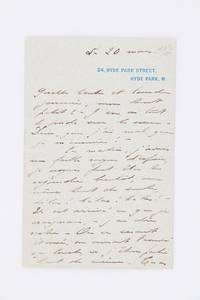
s. l. Londres London 1900. Fine. s. l. Londres London Le 20 mars 1900 9.90 x 15.20 cm 4 pages sur un double feuillet Very long autograph manuscript letter from Renée Vivien signed ""Pauline"" written in black ink on a double sheet of headed paper from 24 Hyde Park Street. Transverse folds inherent to posting. Fine love letter sent from London while Renée was with her family: ""Quelle lente et lourde journée mon tout petit ! j'en ai tout le poids sur le cur Dieu que j'ai mal que je m'ennuie ! Ce matin j'avais un faible rayon d'espoir je croyais peut-être te rejoindre bientôt ou même tout de suite hélas ! hélas ! hélas ! Il est arrivé ce que je craignais j'ai dû rester On se serait étonné on aurait trouvé ça louche si j'étais partie tout de même."" ""What a slow and heavy day my little one! I have all its weight on my heart God how I hurt how I'm bored! This morning I had a faint ray of hope I thought perhaps to rejoin you soon or even right away alas! alas! alas! What I feared has happened I had to stay People would have been surprised they would have found it suspicious if I had left anyway."" This was only a few months since Renée and Natalie began seeing each other and we can read here the importance this relationship held for the Muse of violets who never ceased to flagellate herself: ""Ta pauvre lettre où chaque mot respire la mélancolie et la souffrance me brise le cur. Je souffre en la lisant tout ce que tu as souffert. Pardonne-moi Natalie ma bien-aimée ! Tes reproches sont si doux qu'ils me déchirent l'âme plus que toutes les récriminations amères qu'un autre être moins aimant m'aurait criées. J'ai eu tort cent fois tort mille fois tort de rester pourquoi donc ai-je obéi à un fantôme de Devoir à un spectre de Pitié qui je ne sais pourquoi m'obsède et vient m'ôter des heures divines que le Destin pitoyable m'accorde. La réalité c'est l'Amour il n'y a que lui rien n'est en dehors de lui et on souffre toujours de l'avoir sacrifié à quelque chose si sainte soit-elle."" ""Your poor letter where each word breathes melancholy and suffering breaks my heart. I suffer in reading it everything that you have suffered. Forgive me Natalie my beloved! Your reproaches are so sweet that they tear my soul more than all the bitter recriminations that another less loving being would have cried to me. I was wrong a hundred times wrong a thousand times wrong to stay why then did I obey a phantom of Duty a specter of Pity which I don't know why obsesses me and comes to take from me divine hours that pitiful Destiny grants me. Reality is Love there is only it nothing is outside of it and one always suffers from having sacrificed it to something however sacred it may be."" Very fine letter imbued with the devouring passion of the Muse of violets for her Amazon. It was at the end of 1899 and through the intermediary of Violette Shillito that Renée Vivien - then Pauline Tarn - made the acquaintance of Natalie Clifford Barney ""cette Américaine plus souple qu'une écharpe dont l'étincelant visage brille de cheveux d'or de prunelles bleu de mer de dents implacables"" ""this American more supple than a scarf whose sparkling face shines with golden hair sea-blue eyes implacable teeth"" Colette Claudine à Paris. Natalie who had just lived a summer idyll with the sulfurous Liane de Pougy who had initiated her to sapphism paid only discreet attention to this new acquaintance. Renée however was totally subjugated by the young American and would relate this love at first sight in her autobiographical novel Une Femme m'apparut: ""J'évoquai l'heure déjà lointaine où je la vis pour la première fois et le frisson qui me parcourut lorsque mes yeux rencontrèrent ses yeux d'acier mortel ses yeux aigus et bleus comme une lame. J'eus l'obscur prescience que cette femme m'intimait l'ordre du destin que son visage était le visage redouté de mon avenir. Je sentis près d'elle les vertig unknown
Bookseller reference : 79031
|
|
|
Renee VIVIEN
"A quoi bon nous revoir Ton impatience se heurterait vainement contre ma lassitude contre mon ennui."" Autograph Letter to Natalie Clifford Barney
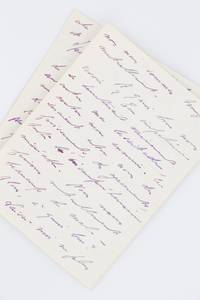
Paris 1904. Fine. Paris s. d. septembre 1904 12.40 x 16.80 cm 8 pages sur 2 doubles feuillets Autograph letter signed ""Pauline"" from Renée Vivien addressed to Natalie Clifford Barney and written in purple ink on two double sheets with violet letterhead and address of 23 avenue du Bois de Boulogne. Transverse folds inherent to posting. A very beautiful and lengthy breakup letter addressed to the Amazon after her impromptu summer 1904 visit to Bayreuth to attempt to win Renée back: "". Les heures passées à Bayreuth étaient de la douceur : et c'est pourquoi je suis revenue."" ""The hours spent in Bayreuth were sweet: and that is why I returned."" The lexical field of death is omnipresent in this missive as if to better emphasize the definitive character of her decision: ""Pourquoi t'acharner à vouloir ranimer vainement les choses mortes Natalie Tu ne l'as point compris : ce que je cherchais auprès de toi c'était le souvenir et rien d'autre. On ne revit point l'autrefois. Tu dois le sentir comme moi-même. . Je souriais à mon passé. Il est doux parce qu'il est mort. Et toi tu veux galvaniser ce cadavre et le rendre odieux."" ""Why persist in trying to vainly revive dead things Natalie You have not understood: what I sought with you was memory and nothing else. One cannot relive the past. You must feel it as I do myself. . I smiled at my past. It is sweet because it is dead. And you you want to galvanize this corpse and make it odious."" The Muse of violets here reveals her suffering and disappointment pleading with Natalie twice: ""Laisse-moi ne plus revenir."" ""Let me not return again."" A veritable funeral oration for extinguished love this letter is very illuminating as to each one's way of loving: ""Nous nous sommes mal comprises. Je voulais un peu de rêve : tu m'offres la réalité."" ""We have misunderstood each other. I wanted a little dream: you offer me reality."" For this is what separates Renée - the dreamy and quasi-platonic poetess - and Natalie - the carnal and fickle lover: ""Ne sens-tu donc pas ne comprends-tu donc pas que je n'ai plus aucun désir d'amour Je suis lasse infiniment ; je ne voulais qu'un peu de douceur. Et tu m'offres la vie et les frissons que sais-je tout dont je ne me soucie point. Les joies charnelles Mais je les possède mon amie me les donne ma chair est satisfaite et au-delà. Je ne cherche point cela : je ne désire point cela. Ces choses m'excèdent venant de toi. J'espérais que assouvie de ton côté tu ne me demanderais que ce que je te demande : un peu de rêve lassé ; un peu de compréhension un peu de regret. Mais nous nous sommes trompées mutuellement. . Cherche un amour de chair chez une autre ."" ""Do you not feel do you not understand that I no longer have any desire for love I am infinitely weary; I wanted only a little sweetness. And you offer me life and thrills what do I know everything I care nothing about. Carnal joys But I possess them my friend gives them to me my flesh is satisfied and beyond. I do not seek that: I do not desire that. These things excess me coming from you. I hoped that satiated on your side you would ask of me only what I ask of you: a little weary dream; a little understanding a little regret. But we have deceived each other mutually. . Seek carnal love with another ."" It was at the end of 1899 and through the intermediary of Violette Shillito that Renée Vivien - then Pauline Tarn - made the acquaintance of Natalie Clifford Barney ""cette Américaine plus souple qu'une écharpe dont l'étincelant visage brille de cheveux d'or de prunelles bleu de mer de dents implacables"" ""this American more supple than a scarf whose sparkling face shines with golden hair sea-blue pupils implacable teeth"" Colette Claudine à Paris. Natalie who had just lived a summer idyll with the scandalous Liane de Pougy who had initiated her into sapphism paid only discrete attention to this new acquaintance. Renée however was totally capt unknown
Bookseller reference : 79022
|
|
|
Renee VIVIEN
"Dis à Madame Mardrus pas de ma part de la tienne ! que Doriane c'est elle telle qu'elle s'est révélée à moi un jour dans l'ardeur et dans la tristesse."" Autograph Letter to Natalie Clifford Barney
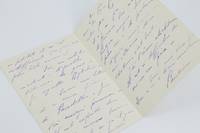
Villa Clos fleuri Nice Nice 1906. Fine. Villa Clos fleuri Nice Nice 3 mars 1906 12.40 x 16.80 cm 3 pages sur un double feuillet Autograph letter signed ""Pauline"" by Renée Vivien addressed to Natalie Clifford Barney and written in violet ink on a double sheet with violet letterhead the Parisian address on the letterhead crossed out. Transverse folds inherent to mailing. Fine letter evoking Renée Vivien's execration for Nice: ""Ici un soleil insolent d'ignobles bâtisses des gens Je regrette Mytilène . Mon Dieu entre Nice et Paris il n'y a pas de différence bien marquée quelques oranges de plus ici des palmiers d'opéra comique - une illusion de chaleur c'est tout."" ""Here an insolent sun ignoble buildings people I miss Mytilene . My God between Nice and Paris there is no marked difference a few more oranges here comic opera palm trees an illusion of warmth that's all."" The evocation of Mytilene where the two lovers had traveled the previous summer continues in this missive: ""Encore une lettre de ce vieux filou de Paradellis Je l'ai envoyé promener Il est capable de faire main basse sur tout ce qu'il y a dans la maison "" ""Another letter from that old rogue Paradellis I sent him packing He's capable of making off with everything in the house "" It was Passagisti Paradellis who rented a villa on site with a two-year lease to Renée and Natalie. ""The villa had been tastefully furnished. Collections of rare porcelain mother-of-pearl inlaid furniture a dining room with high-backed armchairs."" J.-P. Goujon Tes blessures sont plus douces que leurs caresses In this letter the Violet Muse also gives the key to one of the characters in Une femme m'apparut whose revised version had just appeared: ""Dis à Madame Mardrus pas de ma part de la tienne ! que Doriane c'est elle telle qu'elle s'est révélée à moi un jour dans l'ardeur et dans la tristesse."" ""Tell Madame Mardrus not from me from you! that Doriane is her as she revealed herself to me one day in ardor and in sadness."" The work whose rewriting had nevertheless tried the poetess is here devalued by the latter: ""En somme je n'aime pas ce volume ou plutôt il m'est indifférent ce qui est plus triste encore "" ""In sum I don't like this volume or rather it is indifferent to me which is even sadder "" It was at the end of 1899 and through the intermediary of Violette Shillito that Renée Vivien - then Pauline Tarn - made the acquaintance of Natalie Clifford Barney ""cette Américaine plus souple qu'une écharpe dont l'étincelant visage brille de cheveux d'or de prunelles bleu de mer de dents implacables"" Colette Claudine à Paris. Natalie who had just lived through a summer idyll with the scandalous Liane de Pougy who had initiated her into sapphism paid only discreet attention to this new acquaintance. Renée on the other hand was completely captivated by the young American and would relate this love at first sight in her autobiographical novel Une Femme m'apparut: ""J'évoquai l'heure déjà lointaine où je la vis pour la première fois et le frisson qui me parcourut lorsque mes yeux rencontrèrent ses yeux d'acier mortel ses yeux aigus et bleus comme une lame. J'eus l'obscur prescience que cette femme m'intimait l'ordre du destin que son visage était le visage redouté de mon avenir. Je sentis près d'elle les vertiges lumineux qui montent de l'abîme et l'appel de l'eau très profonde. Le charme du péril émanait d'elle et m'attirait inexorablement. Je n'essayai point de la fuir car j'aurais échappé plus aisément à la mort."" ""Winter 1899-1900. Beginning of the idyll. One evening Vivien is invited by her new friend to Mme Barney's studio Natalie's mother 153 avenue Victor-Hugo at the corner of rue de Longchamp. Natalie ventures to read verses of her composition. When Vivien tells her she loves these verses she replies that it is better to love the poet. A response quite worthy of the Amazon."" J.-P. Goujon op. cit. Two ye unknown
Bookseller reference : 79014
|
|
|
Renee VIVIEN
"Je suis en proie à un de mes accès de mélancolie noire et sauvage - je ne peux plus voir personne."" Signed autograph letter addressed to Natalie Clifford Barney
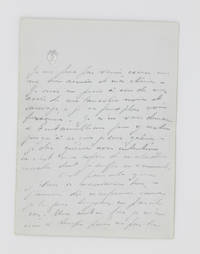
s. l. Paris 1900. Fine. s. l. Paris s. d. 1er semestre 1900 12.30 x 16.70 cm 2 pages sur un double feuillet Handwritten signed letter addressed to Natalie Clifford Barney: I am in the grips of one of my bouts of black and wild melancholy - I can no longer see anyone. Paris 1st half-year 1900 12.3 x 16.7 cm 2 pages on a double leafHandwritten letter from Renée Vivien signed Paule and written in pencil on a double leaf with a silver-coloured heart with the poet's monogram at the top of the first sheet. Transverse fold from having been sent. Beautiful letter of apology after a dispute with the Amazone: Suis en proie à un de mes accès de mélancolie noire et sauvage je ne peux plus voir personne. Je m'en vais demain à Fontainebleau pour y rester jusqu'à ce que je sois guérie je dis : guérie avec intention car c'est une espèce de maladie morale dont je souffre en ce moment. C'est pour cela que j'étais si mauvaise hier j'aurais dû m'enfermer comme je le fais toujours en pareil cas. Une autre fois je m'en irai à temps pour ne pas te faire du mal si toutefois tu me permets de dire : une autre fois et si tu ne me renvoies pas à jamais de ta présence. Je n'ai qu'une excuse c'est que je souffre. Je n'ai pas été digne de l'amour que tu m'as si généreusement et si largement donné je n'ose plus te demander pardon je t'ai tant de fois offensée ! I am in the grips of one of my bouts of black and wild melancholy - I can no longer see anyone. Tomorrow I am going to go to Fontainebleau to stay there until I am healed - I say: healed with intent because it is a kind of moral illness from which I suffer at the moment. That's why I was so bad yesterday - I should have locked myself up as I always do in such a case. Another time I will go sooner so as not to cause you harm - if nevertheless you allow me to say: another time and if you do not dismiss me forever from your presence. I only have one excuse that is that I suffer. I have not been worthy of the love that you have so generously and so widely given me - I dare not ask you anymore for forgiveness - I have offended you so many times! unknown
Bookseller reference : 79000
|
|
|
Victor SEGALEN
"Tépéva est mon nom"" Signed autograph postcard sent from Tahiti and addressed to Emile Mignard
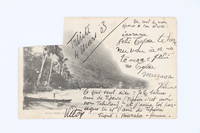
Tahiti Tahiti 1903. Fine. Tahiti Tahiti 4 mars 1903 14 x 9 cm une carte postale ""Tépéva is my name"". Handwritten postcard signed sent from Tahiti and addressed to Émile Mignard Tahiti 4 March 1903 14 x 9 cm one postcard Handwritten signed postcard from Victor Segalen sent from Tahiti and addressed to émile Mignard. A few lines written in black ink around the black and white photographic reproduction of a view of Bora-Bora correspondent's address handwritten on the verso. Some minor stains a cut corner likely due to the removal of the stamp. Doctor Segalen seems to have taken a wife: A word from my wife to you: written by the hand of said wife iaorana fetii Tepeva te here neivou ia se no te mea e fetii no Tapeva Maraéa Vahine. Written by Segalen again Which means: I greet you friend of Tépéva Tépéva is my name in Tahitian and I love you because you are a friend of Tépéva. signed Maraéa-wife. Segalen's biography makes no mention of this exotic wife. Emile Mignard 1878-1966 also a doctor and Brest-born was one of Segalen's closest childhood friends whom he met at the Jesuit Notre-Dame-de-Bon-Secours School. The writer interacted with this comrade in an abundant and closely followed correspondence in which he described with humor and intimacy his daily life in all corners of the world. It was at Mignard's wedding on 15 February 1905 that Segalen met his wife Yvonne Hébert. unknown
Bookseller reference : 79067
|
|
|
Emile ZOLA
"Je désire simplement toucher au sujet dans mon livre pour le besoin du petit drame commercial qui me sert de fable."" Autograph letter signed unpublished addressed to Léon Carbonnaux head of department at Le Bon Marché and advice for the writing of Au bonheur des Dames
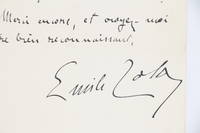
Médan 1882. Fine. Médan 23 juin 1882 13.40 x 21.60 cm 1 page 1/2 sur un double feuillet - enveloppe jointe Autograph letter signed by Emile Zola - apparently unpublished - addressed to Léon Carbonnaux written in black ink on a double sheet. Folds inherent to mailing. Envelope included. Important testimony to the colossal documentation work and the capital role of Emile Zola's informants in depicting his immense natural and social fresco. This letter was sent to Léon Carbonnaux department head at Bon Marché who transmitted precious information to Emile Zola for the creation of the eleventh volume of the Rougon-Macquart series: Au Bonheur des Dames. Only two letters from Léon Carbonnaux to Emile Zola are known: they can be consulted in the digitization of the preparatory file for Bonheur des Dames made available online by the Bibliothèque nationale de France. However we know thanks to this same file which contains a long section entitled ""Notes Carbonnaux"" that this department head at Bon Marché provided a significant amount of information to Zola particularly about employee customs and their remuneration. The two men undoubtedly met when Emile Zola eager for information about the functioning of department stores conducted field research in February and March 1882. This response would therefore be the very first that the writer addressed to the department head in reply to his letter of June 19 1882. Far from imagining the keen success that this new novel would achieve Zola even seems to take it lightly: ""Je désire simplement toucher au sujet dans mon livre pour le besoin du petit drame commercial qui me sert de fable. Vos notes sont excellentes. . Enfin me voilà au travail. Le sujet est à la fois bien vaste - et bien ingrat pour un roman. On devra me tolérer un peu de fiction car il faut bien que je passionne la matière. Mais je tâche de m'en tenir le plus strictement possible à mes notes."" ""I simply wish to touch on the subject in my book for the needs of the little commercial drama that serves as my fable. Your notes are excellent. . Finally here I am at work. The subject is both very vast - and very thankless for a novel. One will have to tolerate a bit of fiction from me for I must make the material passionate. But I try to stick as strictly as possible to my notes."" It must be said that Carbonnaux takes his role as informant very much to heart and having no doubt about the book's success he writes: ""Dans le bâtiment chez nous d'ailleurs partout on attend votre livre. Les lecteurs ne vous manqueront pas. Soyez-en sûr. Vous n'en êtes plus à compter les succès celui-là s'annonce comme devant dépasser les autres."" letter of June 19 1882 For another work on the same subject has just appeared: ""J'ai lu le volume de Pierre Giffard. Il me paraît comme vous injuste et même faux dans plusieurs parties. C'est bâclé. Il aurait fallu pour un pareil ouvrage de documents purs une entière exactitude. Moi qui écris une uvre d'imagination je ne me permettrai pas de tels écarts."" ""I have read Pierre Giffard's volume. It seems to me like you unjust and even false in several parts. It is hastily done. For such a work of pure documents complete accuracy would have been necessary. I who write a work of imagination would not allow myself such deviations.""It was Carbonnaux who had pointed out the work to Zola: ""Pierre Giffard du Figaro vient de faire paraître chez Havard un vol de 300 pages intitulé « Les Grands bazars de Paris ». . On sait que le Figaro est inféodé au Louvre magasin concurrent au Bon Marché & on peut assurer que ce livre a été commandé et bâclé dès que votre intention de traiter le même sujet a été connue. . Il fallait déguiser un peu la réclame pour le Louvre."" letter of June 19 1882 We can clearly see here how much department stores fascinate and we understand the immense success that this novel by Zola describing their advent and supremacy would achieve. unknown
Bookseller reference : 79108
|
|
|
Emile ZOLA
"Le sieur Grimm de Buda-Pesth est un simple voleur qui fait traduire mes romans au fur et à mesure de leur publication dans les journaux français sans autorisation aucune."" Signed autograph letter addressed to an unknown correspondent
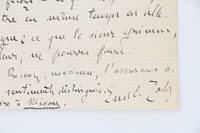
Bénodet 1883. Fine. Bénodet 10 septembre 1883 13.20 x 20.30 cm 2 pages sur un double feuillet Signed autograph letter by Emile Zola - apparently unpublished - addressed to an unknown correspondent written in black ink on a double sheet. Folds inherent to mailing. Interesting letter relating the translation of Emile Zola's works and the legal disputes inherent to their clandestine distribution. This missive is visibly addressed to a correspondent considered for the German translation of La Joie de vivre: ""I would ask you to give me the promptest possible response regarding the translation of La Joie de vivre; for I am already receiving proposals from Germany and I would like to know where I stand."" In this autumn of 1883 Zola - though vacationing in Brittany - is very occupied with managing the translation of his works which he handles directly with publishers. We see here the determination with which he conducts negotiations: ""I repeat that I will only accept a fixed sum paid in advance. It is simpler and without possible surprises."" But things are not simple and Zola whose works already enjoy great success must fight against the clandestine publication of his novels. Completely overlooked by biographers the disputes with Hungarian publisher Gustav Grimm are nonetheless a leitmotif of Zolian correspondence: ""Monsieur Grimm of Budapest is a simple thief who has my novels translated as they are published in French newspapers without any authorization. Already the Neue Freie Presse of Vienna has sued him in my name. But it appears we have no treaty with Hungary. I await the signing of a treaty which they say is imminent."" Indeed Grimm had already published without Zola's authorization German translations of two novels: Nana 1881 and Pot-Bouille Der häusliche Herd 1882. These illegal publications discouraged German publishers Curt Busch and George Kuhr who very interested in distributing the novel to German-speaking readers declared forfeit. Gustav Grimm who finally agreed to respect commercial treaties won the battle and published the very first German translation of La Joie de vivre in 1889 under the title Die Lebensfreude. The man whom Zola here calls a ""simple thief"" would finally obtain authorization to distribute the German translation of the entirety of the twenty volumes of the Rougon-Macquart between 1892 and 1899. Interesting letter revealing the editorial mechanisms of the Rougon-Macquart and testifying to the ardor with which Zola conducted negotiations inherent to the translation of his great hereditary fresco. unknown
Bookseller reference : 79106
|
|
|
Natalie Clifford BARNEY
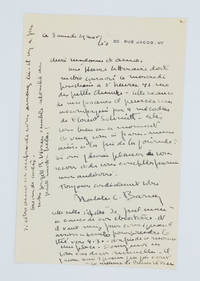
"Il y aura aussi 3 poèmes que j'ai écrits à la mémoire de Renée Vivien."" Signed autograph letter to a friend
Paris 1952. Fine. Paris samedi 29 novembre 1952 13.50 x 20.80 cm une page sur un feuillet Handwritten signed letter addressed to a friend: There will also be three poems that I wrote in memory of Renée Vivien Paris Saturday 29 November 1952 135 x 208 cm one page on a leaf Handwritten letter signed by Natalie Clifford Barney addressed to a friend and written in black ink on a stationery from 20 rue Jacob Paris VIe. Central fold from having been sent. Interesting letter mentioning a future reading of Natalie Clifford Barney: A literary hour must be devoted to me this Wednesday at 5pm 41 rue des Petits champs. This session of my poems and thoughts will be accompanied by 4 melodies by Florent Schmidt. The so-called literary hour will also be a tribute to one of Natalie's greatest loves who died several decades earlier: There will also be 3 poems that I wrote in memory of Renée Vivien. The two women experienced an intense and tumultuous relationship in their youth. After the tragic and early death of her lover Natalie Clifford Barney continued to honor her memory notably by becoming a patron of the Prix Renée-Vivien created by the baroness Hélène de Zuylen another of Renée's lovers. It is at the end of 1899 and through Violette Shillito that Renée Vivien then Pauline Tarn met Natalie Clifford Barney ""this American woman softer than a scarf whose sparkling face shines with golden hair sea blue eyes never-ending teeth"" Colette Claudine à Paris. Natalie who had just experienced a summer romance with the scandalous Liane de Pougy who introduced her to sapphism paid little attention to this new acquaintance. Renée on the other hand was totally captivated by the young American woman and describes this love at first sight in her autobiographical novel Une femme m'apparut: ""I lived again the hour already well past when I saw her for the first time felt the shiver that ran through me when my eyes met the mortal steel of her look those eyes blue and piercing as a blade. I had a dim premonition that this woman would determine the pattern of my fate and that her face was the predestined face of my Future. Near her I felt the luminous dizziness which comes at the edge of an abyss or the attraction of a very deep water. She radiated the charm of danger which drew me to her inexorably."" ""Winter 1899-1900. Beginnings of the idyll. One evening Vivien is invited by her new friend to Mme Barney's studio Natalie's mother 153 avenue Victor-Hugo on the corner of the rue de Longchamp. Natalie finds the courage to read the verses of her composition. As Vivien tells her to love these verses she tells her that it is better to love the poet. A response worthy of the Amazon."" J.-P. Goujon Tes blessures sont plus douces que leurs caresses Two years of unequal happiness will follow punctuated by Natalie's recurring infidelities and Renée's sickly jealousy the letters of which oscillate between inflamed declarations and painful admissions of guilt. ""Renée Vivien is the daughter of Sappho and Baudelaire she is the 1900 flower of evil with fevers broken-up fights sad delights."" Jean Chalon Portrait d'une séductrice In 1901 a major break-up occurred which lasted almost two years; Renée despite requests from Natalie and the others she sent to win her back resisted. ""The two friends saw each other again and in August 1905 went on a pilgrimage to Lesbos which was a disappointment for Natalie Barney and was short-lived. . The spring was broken once and for all. The two former friends stopped seeing each other in 1907 and Vivien died without them seeing each other again."" J.-P. Goujon ibid. unknown
Bookseller reference : 78894
|
|
|
Victor SEGALEN
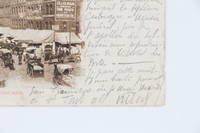
Carte postale autographe signée envoyée depuis Chicago et adressée à Emile Mignard Autograph signed postcard sent from Chicago and addressed to Emile Mignard
Chicago 1902. Fine. Chicago 23 octobre 1902 14 x 8.80 cm une carte postale Autograph signed postcard sent from Chicago and addressed to Émile Mignard Chicago 23 October 1902 14 x 88 cm one postcard Handwritten signed postcard from Victor Segalen sent from Chicago and addressed to Emile Mignard. A few lines written in pencil in the corner of the black and white photographic reproduction of a view of South Water Street in Chicago handwritten address on the verso. Some minor stains and folding. Emile Mignard 1878-1966 also a doctor and Brest-born was one of Segalen's closest friends of youth whom he met at the Jesuit Notre-Dame-de-Bon-Secours School in Brest. The writer interacted with this comrade in an abundant and closely followed correspondence in which he described with humour and intimacy his daily life in all corners of the world. It was at Mignard's wedding on 15 February 1905 that Segalen met his wife Yvonne Hébert. This postcard had been addressed by Segalen to his friend from Chicago as he travelled to Tahiti via San Francisco. It is the first time that the Breton has been to the United States and his impressions are rather pessimistic: Chicago. The deplorable pinnacle of acute budding Americanism. Imagine a mass of sandstone that has crystallised following the Cubic system. A childlike museum: close to the Apollo Belvedere a reproduction of the Hôtel des Postes. I leave tonight for a straight through journey to San Francisco where I will be on Tuesday at 4am. unknown
Bookseller reference : 78605
|
|
|
Renee VIVIEN
Lettre autographe signée adressée à Natalie Clifford Barney et enrichie d'un poème intitulé ""Le Miroir"" Handwritten signed letter addressed to Natalie Clifford Barney and enriched with a poem entitled Le Miroir
s. l. Londres London 1900. Fine. s. l. Londres London 24 mars 1900 10 x 15.70 cm 6 pages sur 2 doubles feuillets Handwritten signed letter addressed to Natalie Clifford Barney and enriched with a poem entitled « Le Miroir » London 24 March 1900 10 x 157 cm 6 pages on 2 double leaves Handwritten manuscript letter by Renée Vivien signed Pauline and written in black ink on a double leaf headed 24 Hyde Park Street. This letter contains a handwritten alexandrine poem entitled Le Miroir; never published on the initiative of the poet but it has been transcribed in Renée Vivien et ses masques in à l'encart April 1980: Je t'admire et ne suis que ton miroir fidèle Car je m'abîme en toi pour t'aimer un peu mieux; Je rêve ta beauté je me confonds en elle Et j'ai fait de mes yeux le miroir de tes yeux Je t'adore et mon cur est le profond miroir Où ton humeur d'avril se reflète sans cesse Tout entier il s'éclaire à tes moments d'espoir Et se meurt lentement à ta moindre tristesse Ô toujours la plus douce ô blonde entre les blondes Je t'adore et mon corps est l'amoureux miroir Où tu verras tes seins et tes hanches profondes Ces seins pâles qui sont si lumineux le soir! Penche-toi tu verras ton miroir tour à tour Pâlir ou te sourire avec tes mêmes lèvres Où trembleront encore les mêmes mots d'amour Tu le verras frémir des mêmes longues fièvres Contemple ton miroir de chair tendre et nacrée Car il s'est fait très pur afin de recevoir Le reflet immortel de la beauté sacrée Penche-toi longuement sur l'amoureux miroir! The rest of this long missive has however remained unpublished. A very beautiful letter sent from London by the Muse aux Violettes who misses her little one: Despite its slowness time passes you see and brings the hour that I await feverishly the time to meet again Natalie! Two more sad evenings and the third you will be there to rock me in your arms! . Today I was still disproportionately bored. I so need to see you again that I count the hours as they pass. I only think of you obsessed haunted taken possessed by you and by our memories. I am a poor unhappy thing far from you. Weary of society life We had the queen's dressing room how chic my darling! Lady Augustus Fitz Clarence invited us. She descends from a bastard of the King and is therefore an illegitimate relative of the sovereign! Renée lingers on the contemplation of a present from her darling: Your ring I love it so much it is a bond of our love that never leaves me. I so regretted your dagger that at the last moment I forgot to carry. Your ring you see is your memory on my finger I look at it and part of our tenderness is embodied in it. It is at the end of 1899 and through Violette Shillito that Renée Vivien then Pauline Tarn met Natalie Clifford Barney ""this American woman softer than a scarf whose sparkling face shines with golden hair sea blue eyes never-ending teeth"" Colette Claudine à Paris. Natalie who had just experienced a summer romance with the scandalous Liane de Pougy who introduced her to sapphism paid little attention to this new acquaintance. Renée on the other hand was totally captivated by the young American woman and describes this love at first sight in her autobiographical novel Une femme m'apparut: ""I lived again the hour already well past when I saw her for the first time felt the shiver that ran through me when my eyes met the mortal steel of her look those eyes blue and piercing as a blade. I had a dim premonition that this woman would determine the pattern of my fate and that her face was the predestined face of my Future. Near her I felt the luminous dizziness which comes at the edge of an abyss or the attraction of a very deep water. She radiated the charm of danger which drew me to her inexorably."" ""Winter 1899-1900. Beginnings of the idyll. One evening Vivien is invited by her new friend to Mme Barney's studio Natalie's mother 153 avenue Victor-Hugo on unknown
Bookseller reference : 78743
|
|
|
Jules RENARD
Lettre autographe signée adressée à Gabrielle Réval
Chaumot Nièvre Chaumot 1900. Fine. Chaumot Nièvre Chaumot 4 juin 1900 13.80 x 21.30 cm une feuille Autograph letter signed by Jules Renard addressed to Gabrielle Réval. One and a half pages written in black ink on letterhead paper from ""Gloriette"" the writer's residence in Nièvre. Transverse fold lines inherent to mailing. Fine letter to this fellow writer alluding to Poil de Carotte: ""Je suis au moins aussi content que vous. Certes je n'avais pas oublié le manuscrit où Poil de Carotte était si bien compris - et aimé - j'avais oublié la signature."" ""I am at least as pleased as you are. Certainly I had not forgotten the manuscript where Poil de Carotte was so well understood - and loved - I had forgotten the signature."" He mentions Gabrielle Réval's book: ""Et tant mieux ; car j'ai lu les Sèvriennes et non le livre d'une amie de Poil de Carotte. L'auteur seul a plu le lecteur seul a été touché. Il y a de belles réussites vous le voyez madame."" ""So much the better; for I read the Sèvriennes and not the book of a friend of Poil de Carotte. The author alone pleased the reader alone was moved. There are beautiful successes you see madam."" Jules Renard already enjoyed considerable success at this time: ""Il me répugnerait de jour au vieux maître sachez pourtant que j'ai déjà reçu bien des livres écrit bien des lettres en quelle proportion par politesse je ne sais plus mais aucune ne fut plus spontanée que celle dont vous me remerciez aimablement."" ""It would repel me to play the old master know however that I have already received many books written many letters in what proportion out of politeness I no longer know but none was more spontaneous than the one for which you thank me kindly."" The highly laudatory letter alluded to here is preserved at the Jean Jaurès Media Library in Nevers and was written by Renard a few days before ours: ""Ce n'est pas l'auteur des Sévriennes que je remercie c'est vous. C'est grâce à vous que j'ai lu par cette froide fin de mai entre la première rose de mon jardin et les dernières flammes de ma cheminée un beau Livre."" ""It is not the author of the Sévriennes that I thank it is you. It is thanks to you that I read during this cold end of May between the first rose of my garden and the last flames of my fireplace a beautiful Book."" Gabrielle Réval was one of the co-founders of the Prix de la Vie heureuse which would later become the Prix Femina. unknown
Bookseller reference : 79398
|
|
|
Jorge AMADO
Carte postale autographe datée et signée de Jorge Amado adressée à Alice Raillard traductrice de ses ouvrages en français
Fortaleza 1995. Fine. Fortaleza 29 Novembre 1995 15 x 10.50 cm une carte postale Autograph postcard dated and signed with 8 lines by Jorge Amado addressed to his friend Alice Raillard translator of his works into French and to her husband the art critic Georges Raillard on the verso of a photograph of a beach in Fortaleza. Handsome copy. unknown
Bookseller reference : 79512
|
|
|
Renee VIVIEN
"Vous chantez la rose aimée de Psapphâ qui la comparait aux vierges amoureuses de Mytilène."" Signed autograph letter addressed to a poet
s. l. Paris 1907. Fine. s. l. Paris Le 23 juillet ca. 1907-1908 11.50 x 16 cm 2 pages sur un double feuillet Handwritten signed letter addressed to a poet: You sing the rose loved by Psapphâ who compared it to the loving virgins of Mitilini Paris 23 July ca1907-1908 11.5 x 16 cm 2 pages on a double leafHandwritten signed letter from Renée Vivien addressed to a poet written in violet ink on a double leaf of paper decorated at the head with a border of violets. Transverse folds from having been sent. Monsieur Je viens à l'instant de défaire le paquet qui contenait votre délicat volume où j'ai cueilli de rares fleurs de poésie. Vous chantez la rose aimée de Psapphâ qui la comparait aux vierges amoureuses de Mytilène. Parmi vos poèmes je préfère : ''Sa Voix"" ""Sa Grâce"" et ""Les Mains et l'Apothéose"" . Renée Vivien Monsieur I have just this minute undone the package that contained your delicate volume where I picked rare flowers of poetry. You sing the rose loved by Psapphâ who compared it to the loving virgins of Mitilini. Among your poems I prefer: Sa Voix"" ""Sa Grâce"" and ""Les Mains et l'Apothéose"" . Renée Vivien Despite the precision of the titles mentioned it has not been possible for us to identify the poet to whom Vivien sent this letter of thanks. These titles are reminiscent of the poems of the Muse aux violettes herself. unknown
Bookseller reference : 79815
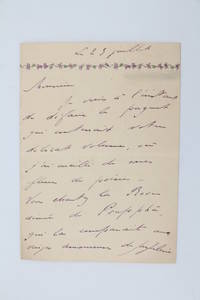
|
|
|
Jules CLARETIE
Carte postale autographe signée adressée à Emile Straus
Paris: S. n. 1906. Fine. S. n. Paris 11 janvier 1906 14 x 9 cm une carte postale Autograph postcard signed by Jules Clarétie addressed to Emile Straus on a postcard reproducing the photograph of his portrait at his work table: ""Avec tous les souhaits et compliments. Jules Claretie."" ""With all best wishes and compliments. Jules Claretie."" Some staining. A great enthusiast of epistolary art Emile Straus founded in 1899 La Carte postale illustrée the newsletter of the association he had just launched the International Poste-Carte Club. S. n. unknown
Bookseller reference : 80516
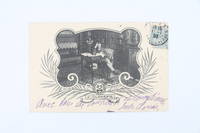
|
|
|
Emile ZOLA
"Je vais remercier infiniment le comte Joseph Primoli de l'amabilité qu'il a mise à vous adresser à moi"" Signed autograph letter addressed to Ugo Ojetti
s. l. Rome Rome 1894. Fine. s. l. Rome Rome Dimanche 4 novembre 1894 13.20 x 20.50 cm une page sur un double feuillet et une enveloppe Autograph letter signed by Emile Zola addressed to Ugo Ojetti. One page written in black ink on the first page of a double sheet. Folding inherent to postal transmission. Envelope included. This letter was addressed by the father of naturalism to journalist Ugo Ojetti when he had just arrived in Rome: ""Monsieur je vais remercier infiniment le comte Joseph Primoli de l'amabilité qu'il a mise à vous adresser à moi et je serai très heureux de vous recevoir si vous voulez bien me venir voir le soir qu'il vous plaira à six heures."" ""Sir I wish to thank Count Joseph Primoli infinitely for the kindness he has shown in directing you to me and I shall be very happy to receive you if you would be so good as to come and see me any evening that suits you at six o'clock."" Having arrived a few days earlier in the eternal city to conduct research for Rome Emile Zola hoped to meet Count Joseph Primoli there. The latter was unfortunately in Paris but he sent him this young journalist from La Tribuna who would serve as his guide but also as secretary. The two men clearly got along well and Zola even authorized Ojetti to adapt an opera libretto from his famous Nana. The project would unfortunately never come to fruition. Joseph Napoléon Count Primoli 1851-1927 was the great-great-nephew of Napoleon Bonaparte. Very close to the imperial family under the Second Empire he subsequently remained faithful to the salon of his beloved aunt Princess Mathilde in her private mansion on rue de Berri. His refined and witty conversation worked wonders there and he met as a passionate bibliophile some of the greatest writers of his time: Gustave Flaubert Théophile Gautier the Goncourts and Guy de Maupassant. unknown
Bookseller reference : 80728
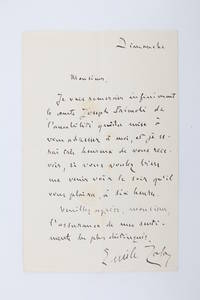
|
|
|
Judith GAUTIER
"Je voudrais savoir si Francis pourrait se charger de rafraîchir ma maison et de repeindre les moulures de bois et les persiennes."" Signed autograph letter addressed to Céleste Chrétien
Alger Algiers 1910. Fine. Alger Algiers s. d. ca 1910 13.40 x 18 cm 4 pages sur un double feuillet Autograph letter signed by Judith Gautier addressed to Céleste Chrétien her maid. Four pages written in black ink on a double sheet. Transverse folds inherent to mailing last page soiled in lower margin without hindrance to reading. Judith Gautier asks her maid if the latter's husband can do work in her house at Pré aux oiseaux in Dinard: ""Je voudrais savoir si Francis pourrait se charger de rafraîchir ma maison et de repeindre les moulures de bois et les persiennes. Il s'agit de refaire un peu les fausses briques . et aussi les fenêtres lucarnes rondes du 2eme étage du côté de la mer qui sont à jour et qu'il faudra boucher avec du coton. On pourrait aussi reblanchir la cuisine qui n'a été faite qu'à peu près et le plafond de la salle à manger qui est très sale. ."" ""I would like to know if Francis could take care of refreshing my house and repainting the wood moldings and shutters. It's about redoing a bit the false bricks . and also the round dormer windows on the 2nd floor on the sea side which are open and will need to be plugged with cotton. We could also rewhiten the kitchen which was only roughly done and the ceiling of the dining room which is very dirty. ."" unknown
Bookseller reference : 80820
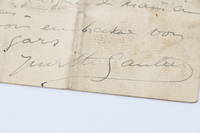
|
|
|
ANONYME - Edouard COUTURIER
AFFAIRE DREYFUS Carte postale dreyfusarde appartenant à la série intitulée ""Histoire d'un crime"" n°15
s. l. Paris: Edouard Couturier 1899. Fine. Edouard Couturier s. l. Paris s. d. 1899 13.90 x 9 cm une carte postale First edition of this postcard from the series entitled ""Histoire d'un crime"" n°15; it was created by Edouard Couturier and heightened in colors. Handsome copy. Edouard Couturier unknown
Bookseller reference : 80782
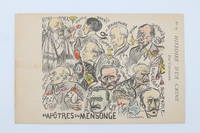
|
|
|
ANONYME - Edouard COUTURIER
AFFAIRE DREYFUS Carte postale appartenant à la série intitulée ""Histoire d'un crime"" n°16
s. l. Paris: Edouard Couturier 1899. Fine. Edouard Couturier s. l. Paris s. d. 1899 13.90 x 9 cm une carte postale First edition of this postcard belonging to the series entitled ""Histoire d'un crime"" n°16; it was created by Edouard Couturier and heightened in colors. Handsome copy of this postcard denouncing the anti-Semitic massacres in Algiers in January 1899. Edouard Couturier unknown
Bookseller reference : 80783
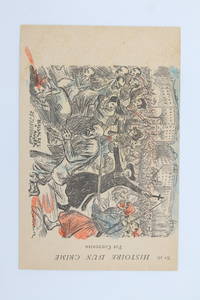
|
|
|
Judith GAUTIER
"C'est gentil de nous avoir envoyé des fleurs du jardin."" Signed autograph card addressed to Celeste Chrétien
Alger Algiers 1910. Fine. Alger Algiers s. d. ca 1910 16.30 x 10.60 cm une carte Autograph card signed by Judith Gautier addressed to Céleste Chrétien her housekeeper written in black ink on both sides of a card with letterhead from 30 rue Washington in Paris. Judith regrets leaving her house in Dinard: ""It was kind of you to send us flowers from the garden. It gave us pleasure and regrets because there must still be beautiful days there."" She expresses here her passion for horticulture: ""Every evening I burn a eucalyptus leaf from your trees to perfume my room. The terrace is full of chrysanthemums in bloom and there were three tomatoes that are ripening on my wardrobe."" unknown
Bookseller reference : 80833
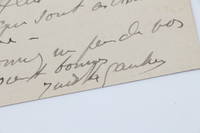
|
|
|
Judith GAUTIER
" Ma chauve-souris va toujours bien. Je lui cherche en vain une petite femelle. "" Signed autograph letter addressed to Céleste Chrétien
Alger Algiers 1914. Fine. Alger Algiers s. d. ca 1914 13.70 x 18 cm 6 pages sur un double feuillet et un feuillet simple Autograph letter signed by Judith Gautier addressed to Céleste Chrétien her maid. Four pages written in black ink on a double sheet. Transverse folds inherent to mailing. Judith Gautier here evokes the visit of her friend the musician Chalmers Clifton - whom she liked to nickname Charmeur - to Dinard: ""Mr Clifton received yesterday Sunday a telegram which told him to book Villa Mitsou for August and September in the name of Ni Liao."" She also asks Celeste for additional information about a maid she recommended to her: ""Tell me again about the cleaning woman. Is she . a good cook how much does she ask for Is it only for the season"" A lover of animals she then gives some advice on how to pamper them: ""For the blackbirds you must crush the hemp seed very fine and crush in the same manner bread crust. This is the foundation of their diet but they eat almost everything bread in milk minced meat cooked or raw cherries strawberries grapes a little bit of young snail cut in pieces flies and especially mealworms and ant eggs fresh they adore them plenty of water always something to bathe in."" She also mentions one of her pets: ""My bat is still doing well. I am searching in vain for a little female for it."" ""A poor bat found itself one summer day stuck in a ""fly-catcher"" . The poor creature was struggling desperately. Judith unstuck it with cologne water put it in a small pantry and it lived there eighteen months. It lost its bat habits slept at night awake during the day it drank water from a shell lapping it like a little horse."" Anne Danclos La Vie de Judith Gautier : égérie de Victor Hugo et de Richard Wagner unknown
Bookseller reference : 80879
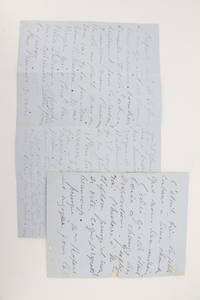
|
|
|
Gerard de NERVAL
Billet autographe signé de Gérard de Nerval adressé à Charles Romey
Paris 1852. Fine. Paris s. d. fin 1852 - début 1853 10.30 x 13.20 cm quelques lignes sur un double feuillet Autograph letter signed ""Gérard de Nerval"" addressed to historian Charles Romey: ""Mon cher Romey Je reçois votre lettre aujourd'hui seulement parce qu'on me l'a envoyée par la poste de chez Didier. Je la lui renvoie. Il sera sans doute trop tard. Voici l'autre petit volume. Votre affectionné Gérard de Nerval. Attendez plutôt huit jours pour parler des deux."" ""My dear Romey I am only receiving your letter today because it was sent to me by post from Didier's. I am returning it to him. It will probably be too late. Here is the other small volume. Your devoted Gérard de Nerval. Rather wait eight days before discussing the two."" Folds inherent to being placed in envelope. This note has been transcribed in the correspondence published in the Pléiade volume 3 p. 799. unknown
Bookseller reference : 80738
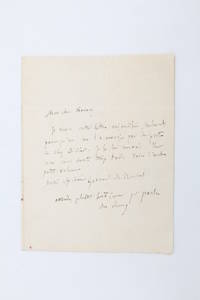
|
|
|
ANONYME - Edouard COUTURIER
AFFAIRE DREYFUS Carte postale dreyfusarde appartenant à la série intitulée ""Histoire d'un crime"" n°18
s. l. Paris: Edouard Couturier 1899. Fine. Edouard Couturier s. l. Paris s. d. 1899 13.90 x 9 cm une carte postale First edition of this postcard belonging to the series entitled ""Histoire d'un crime"" n°18; it was created by Edouard Couturier and heightened in colors. Handsome copy. Edouard Couturier unknown
Bookseller reference : 80784
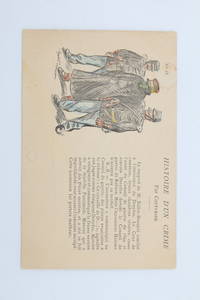
|
|
|
Jean Auguste Dominique INGRES
Lettre autographe signée recommandant son élève Albert Magimel
1823. Fine. s. d. jeudi 9 13.50 x 20.80 cm une feuille Autograph letter signed by painter Jean-Auguste-Dominique Ingres about his pupil Albert Magimel with whom he worked in close collaboration. Magimel published a catalogue raisonné of his master's artworks. Handsome signature of Ingres in the lower part of the letter. unknown
Bookseller reference : 82956
|
|
|
Robert de MONTESQUIOU
" . puisque vous souffrez c'est vous qu'il faut plaindre ; puisque je souris ce n'est pas moi qu'il faut blâmer."" Autograph letter signed by Robert de Montesquiou
s. l.: S. n. 1920. Fine. S. n. s. l. s. d. circa 1920 27 x 22 cm deux pages sur deux feuilles Autograph letter dated and signed by the dandy count 20 lines on 2 pages written in black ink about friendship and certain constraints that his correspondent seems to encounter probably his friend Henri Lapauze: ""Cher ami puisque vous souffrez c'est vous qu'il faut plaindre ; puisque je souris ce n'est pas moi qu'il faut blâmer. Votre souffrance vient de ne pas faire ce que vous voulez ; donc votre vindicte doit viser qui vous contraint. Ce que mes yeux ont vu aura comme suite conséquente ce que mes oreilles ont entendu on l'a écrit plaisamment. Il faut fournir à ces tomes là. Vous pensez bien que votre logique et votre justice ne visent qu'à établir les responsabilités. Car nous nous estimons au dessus de la louange mais pas au dessus de l'amitié. J'étais heureux de vous attester la mienne. Je le suis davantage de vous l'avoir témoignée. Votre Montesquiou."" ""Dear friend since you suffer it is you who must be pitied; since I smile it is not I who should be blamed. Your suffering comes from not doing what you want; therefore your vindication must target whoever constrains you. What my eyes have seen will have as a consequent sequel what my ears have heard it has been written pleasantly. We must provide for those volumes there. You well think that your logic and your justice aim only to establish responsibilities. For we consider ourselves above praise but not above friendship. I was happy to attest mine to you. I am even more so to have shown it to you. Yours Montesquiou."" S. n. unknown
Bookseller reference : 83142
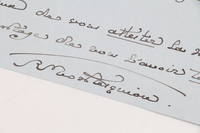
|
|
|
Jorge AMADO
Lettre autographe sur bristol signée et datée de Jorge Amado à son amie Alice Raillard traductrice de ses ouvrages en français
Salvador de Bahia Salvador: S. n. 1983. Fine. S. n. Salvador de Bahia Salvador 6 septembre 1983 15.50 x 11 cm une feuille Bristol autograph in Brazilian and signed by Jorge Amado addressed to his friend and translator of his works into French Alice Raillard 12 lines in blue ballpoint pen. Handsome copy. S. n. unknown
Bookseller reference : 83084
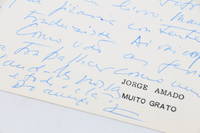
|
|
|
RAIMU
". L'arlésienne ne pourra pas se faire parce que monsieur gendre Prouvost et cie sont des couillons. Et des gens sans aucune descisions"" Virulent signed autograph letter addressed to his great friend Carlo Rim about an aborted film project
Paris: S. n. 1941. Fine. S. n. Paris 13 juin 1941 14 x 19.50 cm trois feuilles recto-verso Autograph letter dated June 13th Carlo Rim having specified in pencil at the head of the first leaf 1941 and signed by Raimu addressed to his great friend Carlo Rim 98 lines in black ink on three leaves recto-verso. Folds inherent to mailing. Raimu rails against the incapacity and indecision of those responsible for a film project entitled l'Arlésienne quite a symbol! of which Carlo Rim was part: ""L'arlésienne ne pourra pas se faire parce que monsieur gendre Prouvost et cie sont des couillons. Et des gens sans aucune descisions. Donc affaire morte."" ""l'Arlésienne cannot be made because monsieur son-in-law Prouvost and company are fools. And people without any decisions. So the matter is dead."" "". tous les mois il change d'idées et dieu sait s'il en a mais tout cela se termine par des idées. jamais il ne tournera pas plus le tien que celui des autres il a peut-être de l'argent mais il ne veut pas le sortir. Genre Prouvost."" "". every month he changes his mind and God knows he has ideas but all this ends with ideas. he will never shoot yours any more than those of others he may have money but he doesn't want to spend it. That's Prouvost for you."" Raimu ever so irascible does not calm down and drowns his friend's last hopes about the forthcoming realization of l'Arlésienne: ""Mon vieux Carlo à l'heure actuelle les deux pauvres studios de Nice sont pris jusqu'à fin septembre par des gens qui eux prennent les descisions et qui verse de l'argent. donc tu vois mon pauvre vieux ce sont tous des bonimenteurs Honnebelle - Prouvost. des gens plein aux as mais ils ne veulent pas les sortir."" ""My dear Carlo at present the two poor studios in Nice are booked until the end of September by people who do make decisions and who put up money. so you see my poor friend they are all smooth talkers Honnebelle - Prouvost. people loaded with money but they don't want to spend it."" "". il trouvera 100 excuses pour ne pas tourner et elles lui seront faciles."" "". he will find 100 excuses not to shoot and they will come easily to him.""and ends his epistolary diatribe with this glacial criticism:""Mon Carlo il n'y a plus rien à faire en province que de la barraque et à écarter les marchands de boniments. because que depuis la fille du puisatier je n'ai entendu que des bobards. En plus il faudrait faire des films à la noix."" ""My Carlo there is nothing left to do in the provinces but fairground shows and to ward off the peddlers of smooth talk. because since la fille du puisatier I have heard nothing but tall tales. Plus we would have to make trashy films."" Carlo Rim was a Provençal writer author notably of ""Ma belle Marseille"" a caricaturist a filmmaker: ""Justin de Marseille"" ""L'armoire volante"" ""La maison Bonnadieu"" and was notably the friend of Fernandel Raimu and Marcel Pagnol but also of Max Jacob and André Salmon whom he met in Sanary. S. n. unknown
Bookseller reference : 83134
|
|
|
Julien GRACQ
Lettre autographe signée de Julien Gracq adressée au journaliste Jean-Claude Lamy à propos d'un article accompagné de photographies : ""Rappelez vous notre conversation : une seule photo pour illustrer votre texte j'aurais préféré"" aucune ! malgré le talent très grand de Robert Doisneau""
Paris 1985. Fine. Paris 24 octobre 1985 14.50 x 10.50 cm quatre feuilles une enveloppe Autograph letter signed on a Bristol card by Julien Gracq 15 lines in black ink addressed to journalist Jean-Claude Lamy regarding the text of an article for which he gives his approval and an album of photographs concerning another writer. Apart from a few modifications he intends to make notably on the fact of not being photographed even by Robert Doisneau he authorizes the publication of this interview. We include the envelope addressed by Julien Gracq from his Parisian home. We also include the text of three pages of the article with corrections and crossings-out by Jean-Claude Lamy and four modifications and corrections in Julien Gracq's hand. A few letters have smudged without consequence a handsome copy. ""Paris 24 octobre Cher monsieur. Merci de m'avoir soumis le texte que je vous retourne : il correspond en gros aux propos tenus et je ne vois à vous soumettre que deux ou trois formulations un peu différentes. Je regarde avec plaisir les photos de l'album que vous l'aimable pensée de m'adresser : il s'agit là d'un écrivain qui ne m'a jamais laissé indifférent. Rappelez vous notre conversation : une seule photo pour illustrer votre texte j'aurais préféré"" aucune ! malgré le talent très grand de Robert Doisneau Avec mon bon souvenir. J. Gracq."" ""Paris 24 October Dear sir. Thank you for submitting the text which I return to you: it corresponds roughly to the remarks made and I see only two or three slightly different formulations to submit to you. I look with pleasure at the photos in the album which you had the kind thought to send me: this concerns a writer who has never left me indifferent. Remember our conversation: only one photo to illustrate your text I would have preferred none! despite Robert Doisneau's very great talent With my kind regards. J. Gracq."" unknown
Bookseller reference : 83170
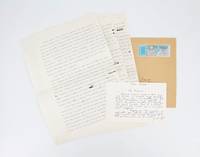
|
|
|
Lucien DESCAVES
"Si j'aime Daumier et ses amis . Vous verrez cela ! "" Signed autograph letter addressed to a writer who recently wrote a biography of Honoré Daumier
Paris 1934. Fine. Paris 20 avril 1934 13.50 x 21 cm une feuille Autograph letter signed on letterhead of the periodical ""Le journal"" by Lucien Descaves 15 lines in blue ink probably addressed to Raymond Escholier who published at Floury in 1934 a biography of Honoré Daumier. Fold mark inherent to envelope insertion. ""20 avril 34 Cher ami. Je suis désolé de vous avoir oh ! bien involontairement contrarié mais je rendais compte de votre livre comme je parlerai de celui que vous allez m'envoyer et que j'attends avec impatience. Alors je dirai ce que Daumier vous doit et ne doit pas à Suarès. Si j'aime Daumier et ses amis . Vous verrez cela ! A bientôt cher ami le plaisir de dîner ensemble et cordialement vous. Lucien Descaves."" ""20 April 34 Dear friend. I am sorry to have oh! quite involuntarily upset you but I was reviewing your book as I will speak of the one you are going to send me and which I await with impatience. So I will say what Daumier owes you and does not owe to Suarès. If I love Daumier and his friends. You will see that! See you soon dear friend for the pleasure of dining together and cordially yours. Lucien Descaves."" unknown
Bookseller reference : 83171
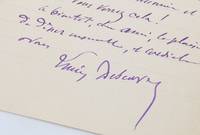
|
|
|
Erik ORSENNA
Bristol manuscrit signé Erik A/O dans lequel il félicite sa correspondante
Paris: Seuil 1990. Fine. Seuil Paris s. d. circa 1990 15 x 10.50 cm une feuille une enveloppe Handwritten Bristol paper on letterhead of the Presidency of the Republic and under the true patronyme of Erik Orsenna 5 lines in black ink addressed to Nadine Nimier wife and widow of Roger Nimier. Envelope included. ""Bravo pour votre N°III. Quand venez-vous me voir 261 51 00. A bientôt Erik A/O."" ""Congratulations on your issue III. When are you coming to see me 261 51 00. See you soon Erik A/O."" The letters b and i and bientôt having smudged. Seuil unknown
Bookseller reference : 83263
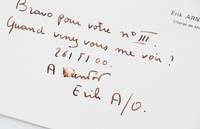
|
|
|
Robert de MONTESQUIOU
Lettre autographe signée de Robert de Montesquiou concernant ses exigences à propos d'un article publié dans le Gaulois d'Arthur Meyer
s. l.: S. n. 1920. Fine. S. n. s. l. s. d. 1920 27.50 x 18 cm une page Autograph letter signed by the dandy count on a bristol card 20 lines written in black ink addressed to his friend and bibliographer the critic Henri Lapauze about an article to appear in ""Le Gaulois"" and for which he sets his conditions: ""Cher Mr Lapauze en réponse à votre aimable mot veuillez dire à M. Meyer que je lui demande pour l'article en question la place de tête pour le 28. Et que je lui demande aussi le secret à l'égard de la destinataire à qui je veux faire une surprise. Je sais qu'il sera d'accord avec moi dans ce dessein d'art et d'amitié. Merci et à bientôt. Cte R. de Montesquiou."" ""Dear Mr Lapauze in response to your kind note please tell M. Meyer that I ask him for the lead position for the article in question on the 28th. And I also ask him for secrecy regarding the recipient whom I want to surprise. I know he will agree with me in this design of art and friendship. Thank you and see you soon. Count R. de Montesquiou."" S. n. unknown
Bookseller reference : 83258
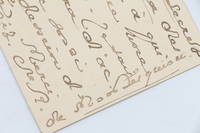
|
|
|
Robert de MONTESQUIOU
Lettre autographe signée de Robert de Montesquiou concernant la publication de poèmes publiés que lui a demandés le Gaulois d'Arthur Meyer
s. l.: S. n. 1906. Fine. S. n. s. l. s. d. 1906 21.50 x 27.50 cm une page Autograph letter signed by the dandy count 20 lines written in black ink on tracing paper addressed probably to his friend and bibliographer the critic Henri Lapauze regarding verses commissioned from him by the newspaper ""Le Gaulois"": ""Neuilly Cher ami puisque nous supprimons le dessin remplaçons-le par par cette petite pièce qui servira de repos entre les deux autres et frappons un grand coup de vers. Les trois pièces ce nombre est necéssaire pour fixer l'attention sont les meilleurs que j'ai faites. Rendez notre cher Galdemar favorable à ce projet et dites lui que ce n'est pas moi qui sollicite du Gaulois cette publication ; mais bien le Gaulois qui la désire. J'insiste sur cette différence parce qu'elle donne je veux le croire à l'envoi ee ces nouveaux vers la grâce et l'essor d'une aile de plus. Votre bien affectionné. Cte R. de Montesquiou."" ""Neuilly Dear friend since we are removing the drawing let us replace it with this little piece which will serve as a respite between the two others and let us strike a great blow with verse. The three pieces this number is necessary to capture attention are the best I have written. Make our dear Galdemar favorable to this project and tell him that it is not I who am soliciting this publication from Le Gaulois; but rather Le Gaulois which desires it. I insist on this difference because it gives I want to believe to the sending of these new verses the grace and soaring of one more wing. Your most affectionate. Count R. de Montesquiou."" Creases inherent to folding for mailing small creases to right and left lower margins of the letter. S. n. unknown
Bookseller reference : 83262
|
|
|
BALTHUS
Carte postale manuscrite signée et adressée à Henriette Gomès
Chassy 1953. Fine. Chassy 30 décembre 1953 9 x 14.50 cm une feuille Signed autograph postcard from Balthus addressed to gallerist Henriette Gomès 17 lines in black ink. A clear dampstain in the upper right margin of the postcard depicting a ski slope. ""Chassy le 30 XII 53 Ma petite Henriette comme il n'est pas impossible que mon petit mot de Rome ait été englouti par la pgrève je préfère pour plus de sûreté t'envoyer une nouvelle litanie de souhaits et de bons voeux d'ici où je suis rentré hier - Quand viens-tu J'espère que tu t'arrangeras popur rester quelques jours. Je t'embrasse ainsi qu'André. B. L'adresse de Georges Parent G. Parent 1 rue de Narbonne Paris 7e."""" ""Chassy December 30th 53 / My dear little Henriette / as it's not impossible that my little note from Rome was swallowed up by the strike I prefer for greater safety to send you a new litany of wishes and good wishes from here where I returned yesterday - When are you coming I hope you'll arrange to stay a few days. I embrace you as well as André. B. Georges Parent's address G. Parent 1 rue de Narbonne Paris 7th."" ""During the summer of 1952 Balthus found a château in the Nièvre between Autun and Avallon which he decided to rent and where he settled in the spring of the following year. The means were provided by his dealers Henriette Gomès Pierre Matisse and with them a group of collectors including Maurice Rheims Alix de Rothschild and Claude Hersent. They paid him a pension in exchange for his latest paintings which they divided among themselves. The château was severely deteriorated and Balthus lived there modestly in continual restoration work. He had for company to help him settle in and ensure a presence when he went to Paris the poet Léna Leclercq met through Giacometti. She remained until spring 1955. Meanwhile Balthus had begun a love affair with his niece by marriage Frédérique Tison daughter of a previous union of his brother Pierre's wife."" Fondation Balthus unknown
Bookseller reference : 83261
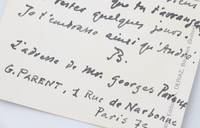
|
|
|
BALTHUS
Lettre autographe signée adressée à Henriette Gomès
Rome Rome 1961. Fine. Rome Rome s. d. circa 1961 22 x 27.50 cm une page sur un feuillet Signed autograph letter from Balthus addressed to gallerist Henriette Gomès. One page written in black ink on letterhead of the Académie de France in Rome of which Balthus was appointed director by André Malraux in 1961 13 lines. Transverse folds inherent to mailing two small tears in left and right margins of the letter not touching the text pin marks in upper left margin of the letter the ink of certain words having faded. ""Ma petite Henriette imossible de me souvenir de l'adresse de Claude Hersent ni de celle de Lefebvre dont je ne trouve plus l'enveloppe. C'est donc à toi que j'envoie le papier ci-joint à remettre au personnage en question. - Quant aux dégats subis par mon tableau une fois la toile montée il n'y parait plus. Donc inutile de se lancer dans des correspondances à n'en plus finir. Je t'embrasse. B."" ""My dear little Henriette / impossible to remember Claude Hersent's address or that of Lefebvre whose envelope I can no longer find. So it's to you that I'm sending the enclosed paper to give to the person in question. - As for the damage suffered by my painting once the canvas is mounted it no longer shows. So no need to launch into endless correspondence. I embrace you. B."" ""During the summer of 1952 Balthus found a château in the Nièvre between Autun and Avallon which he decided to rent and where he settled in the spring of the following year. The means were provided by his dealers Henriette Gomès Pierre Matisse and with them a group of collectors including Maurice Rheims Alix de Rothschild and Claude Hersent. They paid him a pension in exchange for his latest paintings which they divided among themselves. The château was severely deteriorated and Balthus lived there modestly in continual restoration work. He had for company to help him settle in and ensure a presence when he went to Paris the poet Léna Leclercq met through Giacometti. She remained until spring 1955. Meanwhile Balthus had begun a love affair with his niece by marriage Frédérique Tison daughter of a previous union of his brother Pierre's wife."" Fondation Balthus unknown
Bookseller reference : 83260
|
|
|
Colonel REMY
Lettre autographe signée de remerciement à propos des éloges bienveillants de son correspondant concernant son dernier ouvrage Fatima paru récemment
s. l.: S. n. 1957. Fine. S. n. s. l. 17 juillet 1957 20.50 x 27 cm une page une enveloppe Autograph letter signed by Colonel Rémy 10 lines written in blue ink from the seaside resort of Cascais envelope included addressed to Henri Petit author of a favorable review of the latest work entitled ""Fatima"" by the great resistance fighter recently published and entitled ""Fatima"" ""Merci cher ami pour les lignes comme toujours si bienveillantes - que vous avez eu la gentillesse de consacrer à mon ""Fatima"" et que je trouve ici en rentrant de France. Bonnes vacances ! Croyez-moi votre reconnaissant et dévoué Rémy."" ""Thank you dear friend for the lines as always so benevolent - which you were kind enough to devote to my ""Fatima"" and which I find here upon returning from France. Happy holidays! Believe me your grateful and devoted Rémy."" Fold marks inherent to posting. S. n. unknown
Bookseller reference : 83328
|
|
|
Robert de MONTESQUIOU
". et voici que Jacques Blanche vient de s'y mettre - quinze ans trop tard ! Quel dommage qu'il ne m'ait pas consulté sur l'institut. Je l'aurais trouvé car mon génie à moi il ne faut pas le défier. Dominique jugé par Jacquot. "" Immodest autograph letter signed by Robert de Montesquiou to Henri Lapauze concerning his latest work
s. l.: S. n. 1911. Fine. S. n. s. l. 16 mai 1911 31 x 19.50 cm 3 feuilles Autograph letter signed by the dandy count 56 lines written in black ink on three sheets addressed to his friend and bibliographer the critic Henri Lapauze notably mentioning a work by Ingres in his possession also thanking his correspondent for his always lucid and benevolent critiques regarding him. ""16 mai 911 Cher ami merci pour le magnifique volume au sujet duquel je me félicite sans trop insister. que votre catégorique réponse de l'autre jour sur la non-participation des non-contemporains à votre index me permette de n'avoir pas à vous adresser le beau reproche que j'avais préparé non sur ""Phidias absent"" puisqu'il y est. mais sur moi-même oublié. Quand donc vous en serez à l'index en vie je suis bien sûr que dans votre équité non moins que dans votre estime méritée vous croirez justement devoir faire une part à l'homme qui a publié il y a quinze années cet essai qu'il juge mui-même aujourd'hui insuffisamment respectueux à l'heure où les jeunes gens ont trouvé ce titre pour Ingres ""un maître sans génie"". Tout de même je ne doute pas que sous l'enveloppe insuffisamment libérée du style n'oubliez pas qu'il y a quinze ans la documentation ne vous semble assez forte et le jugement assez expressif pour un temps où vous ne nous aviez pas facilité la chose avec tant de révélations qui sont votre gloire. Je le répète mon cher Lapauze le mot ne me semble pas trop fort pour l'admirable monument élevé par vous au génie des génies dans votre ouvrage si noblement animé mieux que de la ferveur d'un compatriote d'un concitoyen disons le si joli titre disons d'un ""pays"". Votre lecteur et ami Robert de Montesquiou. et voici que Jacques Blanche vient de s'y mettre - quinze ans trop tard ! Quel dommage qu'il ne m'ait pas consulté sur l'institut. Je l'aurais trouvé car mon génie à moi il ne faut pas le défier. Dominique jugé par Jacquot. "" ""16 May 911 Dear friend thank you for the magnificent volume about which I congratulate myself without insisting too much. that your categorical response the other day on the non-participation of non-contemporaries in your index allows me not to have to address to you the fine reproach I had prepared not about 'Phidias absent' since he is there. but about myself forgotten. When therefore you get to the index of the living I am quite sure that in your equity no less than in your deserved esteem you will believe justly that you should make a place for the man who published fifteen years ago this essay which he himself judges today insufficiently respectful at a time when young people have found this title for Ingres 'a master without genius'. All the same I do not doubt that under the insufficiently liberated envelope of style don't forget that it was fifteen years ago the documentation will seem strong enough to you and the judgment expressive enough for a time when you had not made things easy for us with so many revelations which are your glory. I repeat my dear Lapauze the word does not seem too strong to me for the admirable monument erected by you to the genius of geniuses in your work so nobly animated better than with the fervor of a compatriot of a fellow citizen let us say the lovely title let us say of a 'countryman'. Your reader and friend Robert de Montesquiou. and here Jacques Blanche has just started on it - fifteen years too late! What a pity he didn't consult me about the institute. I would have found it for my genius one must not defy it. Dominique judged by Jacquot."" Fold marks inherent to postal delivery. S. n. unknown
Bookseller reference : 83347
|
|
|
Robert de MONTESQUIOU
"je crois posséder une miniature d'Ingres père ; c'est laid mais assez curieux un tétard de Georges Rivière junior mais un tétard sur ivoire ! "" Autograph letter signed by Robert de Montesquiou about a work by Ingres
s. l.: S. n. 1911. Fine. S. n. s. l. Janvier 1911 21 x 27 cm 2 feuilles Autograph letter signed by the dandy count 31 lines written in black ink addressed probably to his friend and bibliographer the critic Henri Lapauze notably mentioning a work by Ingres in his possession also thanking his correspondent for his always lucid and benevolent critiques toward him. ""Cher ami je crois posséder une miniature d'Ingres père ; c'est laid mais assez curieux un tétard de Georges Rivière junior mais un tétard sur ivoire ! Merci pour votre mot révélateur mais toujours compréhensif et sympathique en ce qui vous concerne tous les deux c'est l'important. Il n'y a qu'un terme que je n'accepte pas dans votre protestation c'est le monosyllabe tous. ""Envers et contre plusieurs"" suffit et d'ailleurs est plus exact. Tous le monde n'est pas si bête que de ne pas voir et entendre ce que je mets dans mes livres bien notamment dans celui-là et ce que ça vaut. Il y a même beaucoup de gens qui s'en aperçoivent m'en félicitant et m'en remerciant de cent façons. Et comme ce sont les meilleurs je suis content. Vous êtes de ceux-là tous deux. Je le savais ; mais une fois d eplus je m'en félicite non sans vous en complimenter un peu. Votre Montesquiou Janvier 911."" ""Dear friend I believe I possess a miniature by Ingres the elder; it is ugly but quite curious a tadpole by Georges Rivière junior but a tadpole on ivory! Thank you for your revealing word but always understanding and sympathetic as far as you are concerned both of you that's what's important. There is only one term I do not accept in your protest it is the monosyllable 'all'. 'Against and despite several' suffices and moreover is more exact. Everyone is not so stupid as not to see and hear what I put in my books particularly in that one and what it's worth. There are even many people who notice it congratulating and thanking me in a hundred ways. And as they are the best I am content. You are among those both of you. I knew it; but once more I congratulate myself for it not without complimenting you a little. Your Montesquiou January 911."" On a separate sheet Robert de Montesquiou added as a postscript: ""P.S. Votre ""L'homme propose et Dieu dispose"" m'a bien fait rire. Cette fois c'est le Dieu d'Israël ; et celui-là n'est jamais tout à fait converti."" ""P.S. Your 'Man proposes and God disposes' made me laugh heartily. This time it's the God of Israel; and that one is never quite converted."" Traces of folds inherent to postal handling. S. n. unknown
Bookseller reference : 83331
|
|
|
Robert de MONTESQUIOU
Lettre autographe signée de Robert de Montesquiou à propos d'un dessin qu'il tient à la disposition de son correspondant
s. l.: S. n. 1906. Fine. S. n. s. l. s. d. 1906 12.50 x 20 cm une page Autograph letter signed by the dandy count 11 lines written in black ink addressed probably to his friend and bibliographer the critic Henri Lapauze. ""Neuilly 14 juin Cher monsieur & ami mon dessin est à votre disposition de préférence à partir du samedi 21. Je vous assure et de mes sentiments les meilleurs. RMontesquiou."" ""Neuilly June 14 Dear sir & friend my drawing is at your disposal preferably from Saturday the 21st onwards. I assure you of my best regards. RMontesquiou."" Folding traces inherent to the envelope Henri Lapauze has inscribed across the letter in blue pencil the word ""faire"" ""to do"". S. n. unknown
Bookseller reference : 83313
|
|

 Receive by email
 Download as PDF document
 RSS feed
 Permanent link


