|
|
|
[Medical manuscript]. (Anna) Maria Magdalena Winkler, née Seeauer, burgher of Ischl, Austria (1668-1745).
Ein sehr nützlicheß unnd approbiertes Artzenney-Puech, inn welchem sehr guette Stuckh zu unndterschiedlichen Khranckheiten und Zuestanndten zu fündten seinn. Anno 1688. Maria Magdallenna Winckhlerin gebohrne v. Seeau gehörig. [Ischl], 1688.
German manuscript on paper (watermark: crowned double-headed eagle, counter-sign CH), probably by two or three different hands. 196 unnumbered ff. with 197 written pages. Contemporary half vellum with remains of ties, 4to (158 × 200 mm). Loosely inserted between the leaves are 9 slips of paper in various sizes, some folded and written on several sides, containing additional recipes (including the remainder of a letter, addressed to the book's owner in Ischl), as well as a strip of cotton cloth from the 17th or early 18th century. An extensive, privately compiled medical manuscript, owned and in all likelihood largely written by a patrician lady from Ischl in the Austrian Salzkammergut region. The recipes contained appear to some extent based on popular tradition, but more frequently on Paracelsian sources and generally on the Paracelsian-inflected pharmacology and chemical medicine of the Renaissance. A relevant example is provided by the very first recipe, "daß gerechte Froschlaichpflaster" - a frogspawn bandage on a white lead basis, as it was frequently applied by surgeons as early as the 16th century to advance wound healing: "Froschlaich 2 lb., Baumöll 1½ Virting, Wein Essig 3 loth. Lass es mit ein andter sieden bis die Feichtigkeith verraucht und nur daß Öll verbleibe, dan du mues es hernach durch ein [Sieb] durchseihen, daß die schwartzen Eier in und ander Unflath darvon weg khumbt, hernach due darein Bleyweis 8 loth, Bleyzucker 2 loth, lass es wider ein wenig sieden und du must alleweil riechen, damit du es nicht verbrenest, so dan duehe darein Weißwax 1½ Vierting, lass es wider ein wenig sieden, und hernach von Feurer gethan thue darin Weisses Vitriol 1 loth, Rohen Alaun ½ loth, Ca[mp]her 2 Quintl, riche so lang bis es kalt wirdt, hernach mach Zapfen darauß, due es reecht mit Öll wo gaffer darein ist und zächs recht endereinander, so dan ist es bereith." This is followed by "daß gerechte Fontonell Pflaster" (a bandage for the fontanelles) and "Jungfrau Milch" (virgin's milk), then - after several blank leaves - a series of recipes concerning the head, including "das edle Khopff Bulffer" ("the noble cephalic powder"), "fier die Pluet Schuß im Khopf" ("for when blood rushes to one's head"), "fyer das Haubt Wehe der Khinter" ("for children's headaches"), "Wann ein Personn verwüret ist in Haubt" ("when a person is confused in his head"), "fuer den Wuremb im Khopf" ("for the worm in the head"), "füer den großen Khopf Wehe" ("for the severe headache"), etc. Among the further recipes are "ein khöstliches Wuntt Trankh" ("a delicious wound potion"), "Khrafft Wasser vor den Schlag" ("strong water for a stroke"), "Etles Trisanet Pulver, vor den Schlag, vor Schwacheit des Herzen, Bletigkeit des Mang, der Löber" ("noble trisanet powder for strokes, weakness of the heart, and ailments of the stomach and the liver"), "Inwendig grosse Hizen" ("great inner heat"), etc. Other recipes concern the internal organs and respiratory tract ("Räynigung des Mangs", "Geschwollen Mangen", "Wer hart umb Prust", "Vor Huesten", "Vör Lung- und Lebersucht, Huesten, auch Stäckhen auf der Prust"), gynecology and obstetrics ("Wann ein Frau nit gebehren khan", "Wann das Khünntt nit kan ledig werten", "Von Mangel der monatlichen Zeit"), as well as dentistry ("Vor Zahn Wehe", "Zahn ohne Schmerzen herauszunemben", "Vor Munntfeille"); also, recipes for emetics ("Vor Erbrechen daß der Mangen nichts behalte") and for various ointments ("zu den Prysten", "vor Reissen und Grimmen"), tapeworms ("vor Wuremb im Leib"), enemas ("Von Clystier- und Purgiern"), and "how to push the intestines back into the body when the bowels have fallen out" ("so einen der Leib Tarmb ausgeht, den Layb Darmb hinein zu bringen"). Some recipes reveal the scientific limits of their age (one captioned "vor Anwax ter Khüntter", intended to make children grow faster, is essentially a rose ointment to be soaked in a cloth which is bound on the child's head); others fall into the province of the quasi-magical ("Krumpe und lammbe Gliter zu haillen, es wirt die selbe verzaubert, und also gemacht worten, mit der Hilffe Gotes abzuhelfen", "Wahrer Gebrauch und Nuzung des Pulvers des Lebens"). Although several hands appear to have contributed to this manuscript, a large part is unquestionably by the writer of the title page, whom we may identify with its owner. Maria Magdalena Seeauer, born on 7 June 1668, was descended from the well-known dynasty of Ischl salt loaders who can be traced to the 14th century. She was a daughter of the local salt loader, alderman and judge Simon Seeauer (1615-1704) and sister of Johann Ignaz Seeauer (1661-1709), who succeeded his father in all his offices. Ten days after her 19th birthday Maria Magdalena married, in Ischl, the 36-year-old Johann Richard Winkler from Grieskirchen; she began compiling the present recipe book the following year. She died in her native city on 9 March 1745, having survived her husband by 27 years. - Binding somewhat rubbed; paper insignificantly browned. Nine leaves in the book's interior show slight worming, occasionally barely touching letters, but altogether clean and unstained, uncommonly well preserved for a manuscript apparently kept in constant use. The piece of cotton cloth inserted between two leaves likely represents the authentic type of a cloth bandage used for applying ointments in the early 18th century.
|
|
|
[Medici].
Albero cronologico della famiglia de' Medici comprovante il ramo di essa trasferito in Napoli nell' anno 1559. No place, c. 1745/1750.
Ink on paper, 15 segments mounted on cloth (ca. 138 x 72 cm). Folded. Large-scale genealogy of the House of Medici beginning in the early 13th century and ending with Gian Gastone de' Medici, the seventh and last Medicean Grand Duke of Tuscany. With his death in 1737, nearly 300 years of Medici rule over Florence came to an end. He was survived by his sister Anna Maria Luisa, Electress Palatine, for less than six years, and was succeeded as Grand Duke of Tuscany by Francis Stephen of Lorraine, soon to be Emperor Francis I. The present chart, apparently drawn up shortly after the extinction of the family in 1743, is decorated with several designs of the Medici arms dangling from the family tree's branches, and the names of the last three scions - Ferdinando, Gian Gastone, and Anna Maria - are drawn with their appropriate crowns, as are those of Popes Leo X, Clemens VII, and Leo XI. As the title announces, the genealogy includes the secondary branch of the Medici Family known as the Princes of Ottaiano (near Naples), here ending with Alessandro de' Medici (1560-1606), General of the Papal States. Descendants of this last remaining line, which still flourishes, unsuccessfully claimed the title of Grand Duke of Tuscany in 1737, and the Ottaiani's pretensions to the title would seem to have played a role in the preparation of this chart. - Some brownstaining and ink corrosion; slight edge defects professionally repaired. Residue of the collection of Sir Thomas Phillipps (1792-1872).

|
|
|
[MEDIEVAL MANUSCRIPTS -- FACSIMILE].
Codex Vysehradensis 1085. Editio Cimelia Bohemica. Vol. XIII. Bibliotheca Rei publicae socialisticae Bohemicae Pregaensis. Consilio virorum litteris eruditorum moderante Dr. Joseph Vinarek. . . .
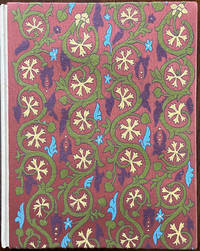
Prague Czechoslovakia: Sumptibus Pragopress 1970. Two vols. Folio. 1st - 12.75 x 16.75 in. 63 1 pp. text in Czech English French German & Russian. Title in purple & black. Faux vellum paper boards gilt lettering on spine; 2nd - 13.5 x 17 in. 222 pp of colour photo facsimile reproducing the entire manuscript. Quarter-vellum over embroidered Bohemian folk pattern cloth covers w/ original mylar protective cover ever-so-slight fraying in a couple fore-edges still NF/NF set preserved in original clamshell slipcase gilt lettering on spine hinges starting at foot of spine. Striking facsimile edition of the sumptuous Romanesque Codex of Vysehrad commissioned as one of four manuscripts produced by the same artists between 1080 and 1085 around the time of the coronation of Vratislav II 1061-1092 first king of Bohemia and includes the lection for the king’s coronation. They all probably originated in the scriptorium at the Monastery of St. Emmeram and this manuscript was declared a National Cultural Monument of the Czech Republic. The extensive cycle of images carefully rendered and detailed draw from the Regensburg School and Ottonian influences with a Christ’s genealogy on four divided pages. Within the 108 folios there are 26 pages depicting the gospels four of the Old Testament and 29 scenes from the life of Christ with large decorated illuminated initials. Originally the property of the Church of Vysehrad many scholars believe it was originally prepared for St. Vitus Cathedral in Prague Castle and Vratislav II had secured his title after negotiations with Holy Roman Emperor Henry IV at the time in conflict with Pope Gregory VII as he continued insisting on the retaining the Slavonic liturgy and wanted to appoint his own bishops. Sumptibus Pragopress, hardcover
Referentie van de boekhandelaar : 60625
|
|
|
[Medieval medical manuscript].
Fragments from four leaves from a medical treatise. [France, early 13th century].
Decorated manuscript in Latin, ink on parchment. Four cuttings once re-used to form pastedowns and endleaves for a landscape format volume (measuring 140 by 200 mm). Remains of single column up to 32 lines in a tiny early gothic bookhand. Rubrics in pale red, initials in red or blue with contrasting penwork. Fragments from four leaves from a medical treatise discussing diseases and disorders of the stomach. There are entries here on pleurisy, pain in the stomach, vomiting, and on childbirth, as in the medieval tradition this was often grouped with other stomach disorders. - 17th-century ownership of Michel Bonniel inscribed to one cutting. Some scuffs, small holes and discolouration, otherwise in good condition.
|
|
|
[Medizinische Handschrift].
Manuskript über die Therapie der Gonorrhoe. O. O., ca. 1845.
3 SS. auf Doppelblatt. 8vo. Anleitung zur Therapie der Gonorrhoe durch Injektion einer Lösung aus Silbernitrat und destilliertem Wasser nach der erstmals 1845 publizierten Methode des französischen Mediziners A. Debeney: "Behandlung des Trippers mit Einspritzen von Arg. nitr. nach Debeney [...] Die Injection besteht nach Debeny 16 gr. Aug. n. auf 1 Unze Wasser, das nur einige gr. vermindert oder vermehrt werden kann [...] Diese Injection ist so lange fortzusetzen, bis jedes Entzündungszeichen gewichen, bis der Ausfluß sich vermindert und seine Natur verändert, d. h. seine weiße u. gelbe u. grüne Farbe u. dicke eitrige Beschaffenheit verloren hat [...] Vor wie nach der Einspritzung enthalte man sich so viel als möglich des Genusses von Speisen u. Getränken [...], um das Uriniren möglichst selten zu machen [...] Die Einspritzung verrichte der Arzt dem Kranken selbst. Dieselbe geschieht mit einer Glasspritze nach gewohnlicher Weise, u. wiederhohlt sie zum 2ten male, weil mit der 1ten Einspritzung die in der Harnroehre befindlichen Materien ausgespült werden, und belasse die 2te Einspritzung 1 Minute in der Harnröhre. Nach 1-2 St[un]den hört gewohnlich der Schmerz auf [...] 24 Stunden nach der Einspritzung ist an der Regel nichts mehr zu merken, u. gleichzeitig sämtliche Erscheinungen des Trippers geschwunden [...]".
|
|
|
[Medizinische Handschriften].
Aufzeichnungen der Alfhausener Ärztefamilie Eymann. Göttingen und Alfhausen, 1833-1883.
11 Bände. Deutsche und lateinische Manuskripte auf Papier. Zusammen ca. 2800 SS. Papp- und Halblederbände der Zeit. Teilweise mit Rückenschildchen; Rot- und Gelbschnitt. Die vorliegende Manuskriptsammlung reicht zurück in die Studienzeit des Joseph Eymann (1812 - nach 1872), wahrscheinlich in Göttingen. Das älteste Objekt ist die auf 1833 datierte Abschrift der "Ars obstetricia" eines Dr. Heine. Ungefähr zu dieser Zeit dürfte auch die Abschrift von Friedrich Benjamin Osianders "Lehrbuch der Hebammenkunst" (Göttingen, 1796) entstanden sein: In eigenen Anmerkungen zur Thematik am Ende des Bandes zitiert Joseph Eymann wissenschaftliche Artikel der Jahre 1832-38. Es ist anzunehmen, dass auch die Abschrift des dritten Bandes von August Gottlieb Richters berühmter siebenbändiger "Wundarzneykunst" zu den "Krankheiten der Augen" (Wien, 1790) aus Eymanns Studienzeit stammt. - Spätestens ab 1838 praktizierte Joseph Eymann als Landarzt in Alfhausen bei Osnabrück. In diesem Jahr begann er ein "Liber Testimoniorum medicinalum" mit Fallbeschreibungen seiner Patienten. Die Notizen auf 42 teilweise paginierten Seiten reichen bis in das Jahr 1854. Schon am 1. Januar 1843 legte Eymann ein neues "Diarium medicinale" mit 391 paginierten Seiten an, gefolgt von einem Personen- und Krankheitsregister. Im folgenden Jahr begann Eymann ein weiteres medizinisches Tagebuch. Die Eintragungen enden auf S. 169 am 18. September 1844. Auf SS. 280-282 folgt die Abschrift eines Artikels aus Johann Ludwig Caspers "Wochenschrift für die gesammte Heilkunde" 14 (1845), der die "Neue Behandlung des übermäßigen Monatsflusses" aus Johann Heinrich Kopps "Denkwürdigkeiten" kommentiert. Ein 1841 angelegtes Notizheft mit Einträgen bis 1872 kann in einen wirtschaftlichen und einen poetischen Teil mit Gedicht- und Textabschriften unterteilt werden. - Der zweite Teil der Manuskriptsammlung ist auf den Arzt Ludwig Eymann (1841-91), sehr wahrscheinlich Joseph Eymanns Sohn, zurückzuführen. In seiner Göttinger Studienzeit kopierte Eymann zwei chirurgische Lehrbücher von Wilhelm Baum (1799-1883); eine der Abschriften ist auf den 14. November 1867 datiert. Ludwig Eymann hat die Praxis seines Vaters wohl im Laufe der 1870er Jahre übernommen; ein Patientenregister von Alfhausen, das ihm zugeschrieben werden kann, ist auf 1882 datiert. Am inneren Vorderdeckel dieses Bandes findet sich auch eine Notiz Eymanns zum Tod seiner Frau Auguste Schulte am 7. November 1882 im Alter von 33 Jahren. Auguste Schulte ist auch die undatierte Abschrift einer Ästhetik in 19 Paragraphen gewidmet, die wohl ebenfalls von Ludwig Eymann angefertigt wurde. - Einbände beschabt und bestoßen; ein Band mit gebrochenem Rücken, einer mit teilweise abgelöstem Rückenbezug. Die Manuskripte teilweise minimal angeschmutzt, doch durchgehend in gutem Zustand.
|
|
|
[MEHMET] EMIN [HALID] ONAT, (1908-1961).
[MODERN TURKISH ARCHITECTURE] [Autograph letter signed Emin Onat].
Very Good Turkish, Ottoman (1500-1928) Original autograph handwritten letter by Mehmet Emin Onat. (30x21 cm). In Ottoman script. 2 p. Full. Letterhead of 'Teknik Üniversite Istanbul; Ev: Kadiköy'. It starts as 'Sevgili Lemancigim'. Emin Onat was a Turkish architect and former rector of Istanbul Technical University. Onat was born in Istanbul in 1908. He entered Istanbul Technical University in 1926. Then, he was sent to Zurich Technical University. Onat was one of the architects of Anitkabir, the mausoleum of Mustafa Kemal Atatürk. His architectural style was formed at ETH. Emin Onat learned to experiment, interpret and search for modernism from his teacher Otto R. Salvisberg, a well-known, experienced practicing architect. Despite getting under the Anitkabir's shadow, he has a unique architectural style. Onat's architectural talent blossomed at Zurich Technical University, where one of his fellow students was Otto Rudolf Salvisberg, who later went to become one of the best architects of his time. Onat completed his studies in Zurich and returned to Turkey in 1934. Within a year, he had become an assistant professor in the Department of Architecture at the School of Engineering. He held the post for a couple of years that were marked by strenuous relations with the other members of the faculty, owing to the novel methods of teaching Onat introduced. In 1944 Onat became the first dean of the newly established Faculty of Architecture at the Istanbul Technical University. Onat rose further into the echelons of the architectural world in 1946, when he was given an honorary membership of the Royal Institute of British Architects (RIBA). In 1951 he became the Rector of the Istanbul Technical University, a post he held for two years. The Hannover Technical University awarded him an honorary doctorate in 1956. In 1957 he returned to the university. His return lasted only three years as on 21 October 1960 he and 147 faculty members were ousted from the university. Onat designed several impressive buildings during his career. These include the Istanbul Theatre and Conservatory, Istanbul Palace of Justice (1949), Kavaklidere Cenap, Presidential Secretariat in Cankaya and the General Directorate of Security. Onat had a predilection for local architectural elements. He fused traditional designs into his own designs, striving to attain organic unity. Onat's other designs are the Istanbul Lounges, Uludag Sanatorium, Bursa Governor's Mansion and IBM Headquarters in Istanbul. (Source: Wikipedia). Rare.
|
|
|
[Mei Chen Chalais] GUTH Paul - (Ossun 1910 - Ville d'Avray 1997) - Ecrivain français
Manuscrit autographe intitulé: "La Licorne des rizières par Mei Chen Chalais (Carrère)" -
1 page 1/2 in8 - râtures et corrections - bon état -
Referentie van de boekhandelaar : GF27059
|
|
|
[MESSRS I. CAMONDO ET CIE ON BEHALF OF [PROBABLY] MOISE DE CAMONDO, (Ottoman Empire-born French banker, art collector and philanthropist), (1860-1935)].
Autograph letter signed.
Very Good French Original autograph letter signed (ALS) by P.pon "[We hereby declare that Ms. L. Cassinelli occupied our house located in Pera Rue, Hodja Ali No 19. On December 1, 1887, and left him on September 30, 1899. That during all time, he did not pay me the tax... P. pon de la succession de feu le Comte A. de Camondo. [i.e. On behalf of the succession of Count A[braham Salomon] Camondo, (1781-1873)]. Probably it's signed by his advocate of Moise de Camondo. Recipient is not defined. Letter indicates one of Camondo family's houses in Pera, Constantinople. 26,5x21 cm. Completely in French. 14 lines. On a paper watermarked "William Brown & Co., London". William Brown and Co. were located in London in this 'St. Mary Axe, and 40 to 41, Old Broad Street, London, E.C.' address according to Grace's guide to British industrial industry; they worked on 'Lithographic and Letterpress Printers'. 1887 Registered as a Limited Company. Count Moïse de Camondo, (1860-1935), was an Ottoman Empire-born French banker and art collector. He was a member of the prominent Camondo family. As a child, Camondo moved with his family from their home in Constantinople, Ottoman Empire, to Paris around 1869, where he grew up and continued the career of his father, Nissim de Camondo (1830-1889), as a banker. He was born into a Sephardic Jewish family that owned one of the largest banks in the Ottoman Empire, established in France since 1869. Starting in 1911, he completely rebuilt the family's Parisian mansion on the Parc Monceau in order to house his collection of 18th-century French furniture and artwork. Working closely with the architect René Sergent, he created a palatial home conforming to certain 18th-century traditions, even planning the room dimensions to match exactly the objects in his collection. The entryway is inspired by the Petit Trianon of Versailles. The home includes a kosher kitchen with separate sections for meat and dairy. The dining room includes a beautifully-carved green marble fountain in the shape of a shell, with a dolphin spigot for the ritual washing of hands before eating a meal. Some highlights of his collection include a French silver service that had been ordered by Russian Empress Catherine the Great, a set of Buffon porcelain (with exact reproductions of ornithological drawings) from the Sèvres manufacturer, and perhaps the only existing complete set of Gobelin royal tapestry sketches. He married Irène Cahen d'Anvers, daughter of Louis Cahen d'Anvers, in 1891. They separated in August 1897 after her affair with de Camondo's stable master, Count Charles Sampieri, whom she would later marry and divorce. The children, Nissim and Beatrice, remained with de Camondo. The mansion was completed in 1914, but his son did not reside there very long, as he rejoined the French Army to fight in The Great War. It had been de Camondo's great hope that his son, whom he adored, would take over the family empire. Following Nissim's death in 1917, de Camondo closed all banking activities. He largely withdrew from society and devoted himself primarily to his collection and to hosting dinners for a club of gourmets at regular intervals. Camondo died in 1935, and the museum opened the following year. He donated the home to Paris's Decorative Arts society as a museum (Musée Nissim de Camondo) in honor of the loss of his son Nissim in World War I. In addition to the collection, the meticulously-restored service areas, elevator, and woodwork of the mansion are noteworthy. During the German occupation of France during World War II, his daughter Béatrice, his son-of-law Léon Reinach, and their children (Fanny and Bertrand) were deported from France and died in the Auschwitz concentration camp. As a result, the de Camondo family died out.
|
|
|
[Meurer, Noe].
Wie weidmennisch vonn allem Weydwerkh zu reden. Probably Southern Germany, ca. 1590 / later 16th century.
Oblong 4to (222 x 172 mm). 1 blank leaf, 50 unnumbered written pages, 2 blank leaves. German manuscript (dark brown ink) on paper, fine calligraphy by a single scribal hand (titles and headlines in blackletter, text in cursive script). Later limp vellum wrappers, spine reinforced with a fragment of a 15th century vellum manuscript with red and blue rubrication. Stored in a modern custom-made half morocco case. Calligraphically appealing 16th century manuscript on the art and terminology of hunting and falconry, written by a professional scribe for an unidentified sponsor, though likely for a highly placed personage or member of the nobility in South-Western Germany. The manuscript contains contemporary extracts from the end of the third part of Noe Meurer's "Von Forstlicher Oberherrlichkeit und Gerechtigkeit", an important study of hunting first published in Pforzheim by Georg Rab in 1560, and then, in expanded form, in Frankfurt, by Georg Rab & Weigand Han, in 1561. Meurer (born ca. 1525 in Memmingen in Southern Swabia, died in Heidelberg in 1583) was one the first German legal scholars to write in his native tongue rather than in Latin; among his works are treatises on the law of inheritance and of water. In particular, he was the first German author to publish monographs on the subjects of forestry and hunting, not as mere chapters within the larger framework of agriculture, for which reason he was of great importance for the study of forestry in the 16th century. The present extracts comprise the only parts of Meurer's book concerned with the practical, technical aspects of hunting, rather than with its legal foundations. They include sections on hounds, canned and net hunting, the hunting of stags, roes, boars, foxes, rabbits, bears, wolves, ibexes and chamois, as well as a section on how to tell a deer from a roe when viewing the animal from the rear. The final part is dedicated to hunting with falcons and hawks. The entire section on deer ("Die Hürsch zu suchen, wie auch der Hürsch für der Hinndin zue erkennen etc.") is not part of the first edition of Meurer's book, suggesting that the scribe based his work on the second edition of 1561 (leaves LXXXIIII verso to XCVII verso). Yet the order of the individual sections does not follow the published book in all particulars, and the present arrangement would seem to reflect the scribal editor's or the sponsor's private considerations. - The paper stock for this manuscript is from a paper mill in Meurer's native Memmingen (watermark: Gothic letter "P" - or more likely "Q" - with the arms of Memmingen: Briquet III, no. 8750 and p. 468; cf. Briquet I, p. 72; specimens dating from the late 1580s to 1590s). - Very well preserved and legible, untrimmed manuscript from the collection of the Swiss-born German merchant and entrepreneur Hans Dedi (1918-2016), chairman of the "Quelle" mail order concern and the Schickedanz business group, with his bookplate in the marbled solander case and his gilt signet on the spine. Cf. VD 16, M 5017.
|
|
|
[Militaria - Manuscrit]
Ensemble de dix documents manuscrits in-folio qui constitue le dossier de projet du budget pour le service de l’Extraordinaire des guerres pendant l’année 1772 :
-Projet des fonds nécessaires pour le service de l’extraordinaire des guerres pendant l’année 1772 (2 ff).-Mémoire sur la réduction intérieure que l’on peut faire dans les troupes, sur leur état actuel, relativement aux fonds de leur entretien (4 ff.).-Comparaison du nombre de troupes de 1754 à 1771 (2 ff.).-Etat des troupes en 1754 (2 ff.).-Les dépenses à l’Extraordinaire des guerres de l’exercice 1754 (2 ff.).-Officiers généraux employés dans les Provinces en 1754 (2 ff.).-Tableau de l’Etat des bataillons nécessaires à la garde des places du Royaume et des côtes (2 ff.).-Etat des troupes sur le pied, porté dans le projet de fonds de 1772 (2 ff.).-Diverses notes sur des économies possibles (2 ff.).-Etat estimatif des dépenses de l’Extraordinaire des guerres pendant l’année 1772 (du 8 mai 1772, solde et masses pendant les cinq premiers mois de 1772 avec extrapolation à l’année) (2 ff.).
Referentie van de boekhandelaar : 5221

|
|
|
[MILITARIA - REPERTOIRE MANUSCRIT / MILITARIA - HANDWRITTEN DIRECTORY].
Statistique extérieure.
s.l., Octobre 1837. 1837 1 vol. in-8° oblong (183 x 248 mm) ff. avec tableaux lithographiés en noir et complétés à la main à lencre brune de : [8] ff. (Note indicative) ; 80 ff. ; 2 cartes dépliantes lithographiées en noir, complétées à lencre brune et rehaussées à l'aquarelle. Plein veau rouge d'époque, dos lisse orné de double filets dorés, filet doré encadrant les plats, 1er plat titré en lettres dorées: "Statistique extérieure. Octobre 1837." (Coiffes restaurées, salissures et usures aux onglets avec petits manques angulaires).
Referentie van de boekhandelaar : 4178

|
|
|
[Militärgeschichte].
Erinnerung beym Exerciren. O. O. u. D., ca. 1780.
Deutsche Handschrift auf Papier. 220 beschriebene SS., 1 Bl. mit kl. Federzeichnungen. Lederband der Zeit mit Rückenvergoldung. Kl.-8vo. Im Schuber. Enthält u. a. Moritz Graf von Lacy's "Beobachtungen welche bei denen im Jahr 1769 abgehaltenen Exercir Tagen deren in Böheim und Mähren verlegten k. k. Infanterie Regimentern [...] befunden wurden" sowie ausführliche Auflistungen der Kommandowörter. "Es würde ein sehr falsches Vorurtheil sein, wenn man in dem Wahn stünde, daß die hinter der Fronte stehende[n] Ober- und Unter Officiers nur deßentwegen ihren Posten daselbst hielten, weilen sie nicht alle in die Fronte eingeteilet werden können, ihre Hauptsachliche Sorgfalt bestehet darinnen: nemlich in der Verhütung einer Haupt Unordnung zu ihren Abtheilungen, und fallß sich wieder Verhoffen ergeben sol[l]te, die Ordnung darinnen auf daß schleunigste wieder herzustellen, daß Zurückweichen ihrer Abteilung, und die [E]ntweichung eines Mannes zu verhindern, der seine Schuldigkeit vor dem Feind nicht thun will, zu untersuchen, ob diejenige[n] welche sich wegen Blessuren aus ihren Abteilungen ziehen würden, nicht außer Stand sind zu fechten, oder ob es nur kleine, und nichts zu bedeuten habende Convulsiones seynd, und unter dem Vorwand, daß der Mann sich aus der Action, und der fernern Gefahr entziehen wil[l] [...]" (aus Punkt 17 der "Anmerkungen welche a[nn]o 1768 im Lager gemacht worden". - Bindung stellenweise etwas locker, Einband etwas beschabt und bestoßen.
|
|
|
[Militärgeschichte].
Exercitium welches fürohin in Brigaden, Flügeln oder in Treffen exerciret werden solle. Nebst beygefügten nach dem Reglement eingerichteten dreyen Exercity Theilen. O. O., Ende 18. Jahrhundert.
Deutsche Handschrift auf Papier. 94 num. SS. Mit 12 aquarellierten Faltplänen und einigen aquarellierten Federzeichnungen im Text., Lederband der Zeit mit Rückenschildchen und -vergoldung. 8vo. "Wie ein Regiment in 4 Battaillons, und 16 Compagn[ien] eingetheilet, wird der nachfolgende Plan zeigen; und formiret ein Regiment 16 ganze = 32 halbe Divisions, und 64 Züge oder Pelotons; jeder Hauptmann hat seinen Unter Lieutnant hinter sich, ausgenohmen der 9te, 10te, 11te, und 12te Hauptmann nicht, wovon die ober Lieutnants bey denen fahren, mithin die Unter-Lieut[nants] an deren Stelle kommen; die Ober Lieutn[ants] stehen mitten vor der Compag[nie], ausgenohmen der von der Leib und Obristen Compag[nie] nicht. Wann die Staabs Off[iziere] eintretten, woselbe aufwärts hinter ihre Hauptleuthe, neben denen unter-Lieutenants stehen [...]". Ähnlich präzise sind dann die illustrierten Ausführungen, "wann man drey Mann hoch außrücket", "wann man mit 4 Mann hoch ausrücket" und welche Figur etwa bei der Anweisung "Grenadier macht euch fertig, schlagt an, Feur" erwartet wird, nämlich "das Feuer fangt an, und wird hir orths auch alles befolget, wie schon bey 3 Mann hoch angewendet worden, und die Grenadier bleiben alleinig in Reserve". - Innen sehr sauber, der Einband gering berieben.
|
|
|
[Militärgeschichte].
Regimentsunterricht in 6 Abteilungen. Pesth. Geschrieben von Vinzenz Sokoll Canonier des 5. Feld Artillerie Regiment 1825. Pest, 1825.
Deutsche Handschrift auf Papier. Ca. 150 SS., mehrere Tabellen, 11 Bll. Federzeichnungen. Pappband der Zeit mit zarter Goldbordüre. 8vo. Die sehr ordentliche und sauber ausgeführte Handschrift behandelt in sechs Hauptkapiteln die Themen: 1) Von der Kenntnis des Geschützes und der Munition. 2) Von dem Gebrauch des Geschützes. 3) Von der Haubitze und dem Cavallerie Geschütz. 4) Von dem Batteriebau. 5) Von den Lagen der Batterien [...]. 6) Von dem Canoniers Bestöck und dessen Gebrauch. - In einem zehnseitigen Anhang findet sich abschließend die "Anwendung der Proportionen auf die Berechnung der Kugeldurchmesser und auf die Bestimmung der Verhältnisse der Kugeldurchmesser zu jenen der Bohrungen bei unsern Geschützen". In einer Tabelle werden die "Durchmesser der eisernen und steinernen Kug[e]l" nach dem Nürnberger Gewicht angeführt, "einige Formeln" illustrieren die "Berechnung der Kugelpyramiden". Die Zeichnungen zeigen u. a. die positionsbedingte Schusslinie einer Kugel ("der horizontale Kernschuß", "ein Schuß mit Aufsatz aus der Tiefe in die Höhe" und umgekehrt). - Innen durchgehend leicht fleckig, der Einband etwas beschabt und bestoßen.
|
|
|
[Militärgeschichte].
Richt-Schnur und Observations Puncta, sowohl in Militar, Ceremoniel als Oeconomicis deß löblichen General Feld Marschall Graf Daunischen Regiments zu Fuß, deren man sich in Feld, Guarnison, Stand-Quartieren und zu allen vorfallenden Begebenheiten zu gebrauchen und genauest nachzukommen hat. O. O., letztes Drittel 18. Jh.
369 num. SS. und 4 SS. Register. Mit einigen Tabellen im Text und 2 Faltplänen mit aquarellierten Federzeichnungen. Lederband der Zeit. Rückenvergoldung mit Titelschildchen. 8vo. Feldmarschall Leopold Joseph Graf von Daun hatte nach dem Frieden von Aachen (1748), der den Österreichischen Erbfolgekrieg beendete, eine Reform der österreichischen Streitkräfte eingeleitet, wofür er schon auf sein eigenes, 1739 von ihm für sein Regiment eingeführtes Reglement zurückgreifen konnte. Das äußerst umfangreiche Manual seines eigenen Infanterie-Regiments "Graf Leopold Daun" behandelt in (lt. Register) 80 Kapiteln umfassend die Gepflogenheiten, Abläufe und Vorschriften im militärischen Alltag der Musketiere, Zimmermänner, Krankenwärter, Trommler, Pfeifer, Fouriere, Korporale, Fähnriche, Hauptmänner, Proviantmeister u. dgl. m. "Vor allen Dingen", so heißt es über den Musketier, "solle er Gottes-Förchtig sein, zu aller Andacht fleißig, willig und ohne allen Murren gehen, damit Er in allen seinen Thuen und lassen des Jenigen Seegen, und Heyls Sich theilhaftig mache, den Gott der Allmächtige denen Jenigen versprochen, so ihn förchten und anrufen, da er in Gegentheil alls Unglück, und Unstern zu besorgen, und zu gewarten hat, Er solle sich nach diesen eines ehrlichen und redlichen, auch aufrichtigen Lebens Wandel befleißen; nicht Gotts-lästern, fluchen, schnorren, und alle liederliche Gesellschaft [...] meyde; darbey solle er frisch, freudig, munter, behertzt, unverdroßen, geduldig, willig gehorsam, friedlig, und einig sein, sich nicht allein miteinand wohl vertragen, sondern sich auch unter einander brüderlich lieben, und Einer dem andern keine Spitz-Nahmen oder Stichreden geben, noch von etwas (so vormals vorbey gegangen wäre) einig Vorwurf thuen [...]" (S. 51). - Die eine Falttafel zeigt die "völlige Chargierung" des Regiments, die andere die "würcklich auffgeschlagenen Laager" des Regiments. - Stellenweise gering fleckig, der Einband beschabt.
|
|
|
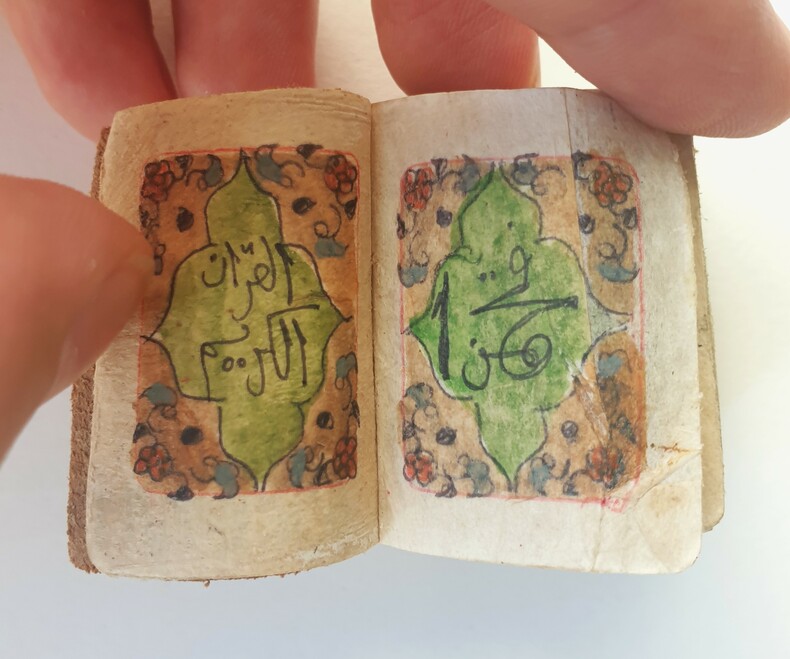
[MINIATURE MANUSCRIPT QU'RAN/MINUSCULE CORAN MANUSCRIT]
Manuscrit religieux islamique.
[circa 1800] 1800 1 vol. minuscule (40 x 30 mm) de: [117] ff. manuscrites. Plein veau.
Referentie van de boekhandelaar : 5557
|
|
|
[Miniature].
[The gathering of Manna and a Dominican friar reading mass]. Swabia, 1475-1500.
Miniature painting on vellum, 12.2 cm diameter. Watercolour and gold leaf, pen with black and red ink on verso. Pasted to backing cardboard. Circular miniature initial separated into two parts by a curved S-shape in gilt. The upper section represents three Jewish figures gathering manna falling from the heavens during the Exodus. To the right a horned Moses is seen. The lower section shows a Dominican friar celebrating mass before a monstrance and an altar. The manna scene serves as a prefiguration of the Holy Host in the monstrance below. - The fragment probably belonged to a Dominican antiphonary, and the verso side contains musical staffs and text fragments. The stylistic elements in the illumination point to a workshop in Southern Germany, probably in Swabia. Comparable in style is a copy, dated to ca. 1455, of Johannes Hartlieb's "Buch aller verbotenen Kunst" (Dresden, Landesbibl., Mscr. M 59). The visual idea of conjoining the scenes is also apparent in the "Biblia Deutsch" published by Johann Sensenschmidt in Nuremberg between 1476 and 1478.
|
|
|
[Minuscule]
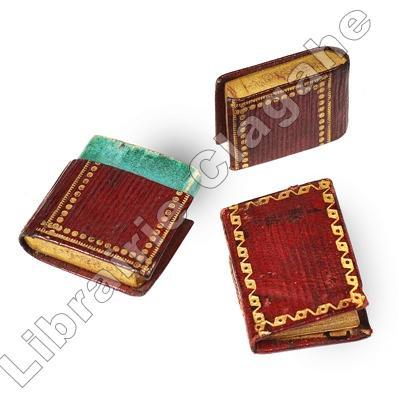
Le Petit paroissien de l'enfance.
Paris, Caillot, rue S. André des Arts, n.57, s.d. (avant 1811, date à laquelle il n’est pas maintenu comme imprimeur) ; minuscule 30 x 20,5 mm, maroquin grenat à grain long, roulette décorative d’encadrement des plats, gros pointillé doré au dos, tranches dorées, étui en forme de livre relié : 36 x 25 mm, maroquin grenat à grain long, dos à faux nerfs et fleurons dorés, double encadrement des plats, pointillé fin et pointillé gras, tranches dorées (reliure de l’époque) ; 80 pp. y compris le titre.
Referentie van de boekhandelaar : 20240
|
|
|
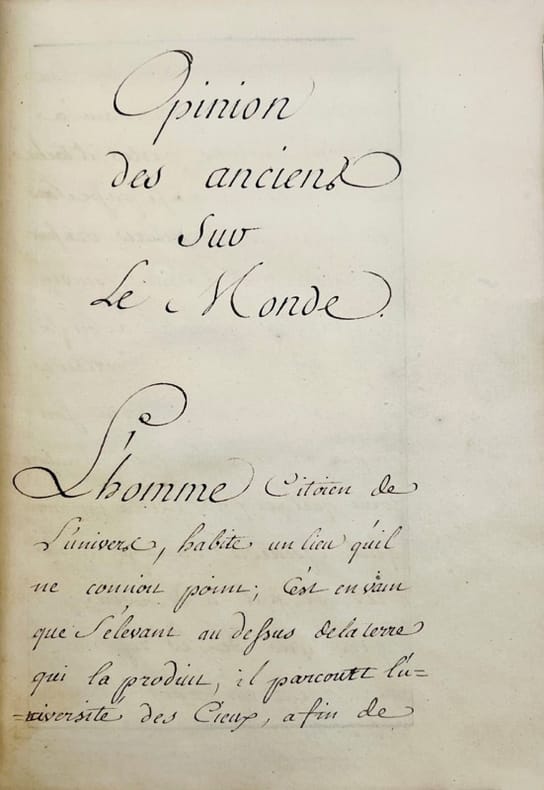
[MIRABAUD (Jean-Baptiste de).
Manuscrit clandestin]. Opinion des anciens sur le Monde.Des Révolutions auxquelles les Anciens ont crû la Terre sujette.
, , 1726 ca. Manuscrit in-8 carré (190 x 135 mm) de (133) ff., veau fauve, dos lisse orné, pièce de titre en maroquin rouge, triple filet doré d'encadrement sur les plats, tranches dorées (reliure de l'époque).
Referentie van de boekhandelaar : 44760
|
|
|
[MISTRAL Frédéric - [Maillane 1830 - 1914 ] - Ecrivain provençal] L'AIOLI
L'Aioli - que vai cremant tres fes pèr mes (7, 17, 27) - no 179 du 17 de desembre 1895 - auquel on joint un manuscrit autographe de Frédéric Mistral (quelques lignes sur une page in8) -
Belle réunion d'un exemplaire du journal "L'Aioli" - 4 pages in folio dont la première est illustrée d'une vignette sur bois (8x16 cm) d'Eugène Burnand - et d'un article de quelques lignes autographes rédigé pour paraitre dans les "brêves" de ce journal - pliures centrales sans gravité -
Referentie van de boekhandelaar : GF22120
|
|
|
[MISTRAL Frédéric - [Maillane 1830 - 1914 ] - Ecrivain provençal] L'AIOLI
L'Aioli - que vai cremant tres fes pèr mes (7, 17, 27) - no 182 du 17 de janvié 1896 - auquel on joint un manuscrit autographe de Frédéric Mistral (quelques lignes sur une page in8) -
Belle réunion d'un exemplaire du journal "L'Aioli" - 4 pages in folio dont la première est illustrée d'une vignette sur bois (8x16 cm) d'Eugène Burnand - et d'un article de quelques lignes autographes rédigé pour paraitre dans les "brêves" de ce journal - pliures centrales sans gravité -
Referentie van de boekhandelaar : GF24661
|
|
|
[MISTRAL Frédéric - [Maillane 1830 - 1914 ] - Ecrivain provençal] L'AIOLI
L'Aioli - que vai cremant tres fes pèr mes (7, 17, 27) - no 184 du 17 de febrié 1896 - auquel on joint un manuscrit autographe de Frédéric Mistral (quelques lignes sur une page in8) -
Belle réunion d'un exemplaire du journal "L'Aioli" - 4 pages in folio dont la première est illustrée d'une vignette sur bois (8x16 cm) d'Eugène Burnand - et d'un article de quelques lignes autographes rédigé pour paraitre dans les "brêves" de ce journal - pliures centrales sans gravité -
Referentie van de boekhandelaar : GF24662
|
|
|
[MISTRAL Frédéric - [Maillane 1830 - 1914 ] - Ecrivain provençal] L'AIOLI
L'Aioli - que vai cremant tres fes pèr mes (7, 17, 27) - no 189 du 27 de mars 1896 - auquel on joint un manuscrit autographe de Frédéric Mistral (quelques lignes sur une page in8) -
Belle réunion d'un exemplaire du journal "L'Aioli" - 4 pages in folio dont la première est illustrée d'une vignette sur bois (8x16 cm) d'Eugène Burnand - et d'un article de quelques lignes autographes rédigé pour paraitre dans les "brêves" de ce journal - pliures centrales sans gravité -
Referentie van de boekhandelaar : GF24663
|
|
|
[MISTRAL Frédéric - [Maillane 1830 - 1914 ] - Ecrivain provençal] L'AIOLI
L'Aioli - que vai cremant tres fes pèr mes (7, 17, 27) - no 191 du 17 d'abrieu 1896 - auquel on joint un manuscrit autographe de Frédéric Mistral (quelques lignes sur une page in8) -
Belle réunion d'un exemplaire du journal "L'Aioli" - 4 pages in folio dont la première est illustrée d'une vignette sur bois (8x16 cm) d'Eugène Burnand - et d'un article de quelques lignes autographes rédigé pour paraitre dans les "brêves" de ce journal - pliures centrales sans gravité -
Referentie van de boekhandelaar : GF24664
|
|
|
[MISTRAL Frédéric - [Maillane 1830 - 1914 ] - Ecrivain provençal] L'AIOLI
L'Aioli - que vai cremant tres fes pèr mes (7, 17, 27) - no 192 du 27 d'abrieu 1896 - auquel on joint un manuscrit autographe de Frédéric Mistral (quelques lignes sur une page in8) -
Belle réunion d'un exemplaire du journal "L'Aioli" - 4 pages in folio dont la première est illustrée d'une vignette sur bois (8x16 cm) d'Eugène Burnand - et d'un article de quelques lignes autographes rédigé pour paraitre dans les "brêves" de ce journal - pliures centrales sans gravité -
Referentie van de boekhandelaar : GF24665
|
|
|
[MISTRAL Frédéric - [Maillane 1830 - 1914 ] - Ecrivain provençal] L'AIOLI
L'Aioli - que vai cremant tres fes pèr mes (7, 17, 27) - no 193 du 7 de mai 1896 - auquel on joint un manuscrit autographe de Frédéric Mistral (quelques lignes sur une page in8) -
Belle réunion d'un exemplaire du journal "L'Aioli" - 4 pages in folio dont la première est illustrée d'une vignette sur bois (8x16 cm) d'Eugène Burnand - et d'un article de quelques lignes autographes rédigé pour paraitre dans les "brêves" de ce journal - pliures centrales sans gravité -
Referentie van de boekhandelaar : GF24666
|
|
|
[MISTRAL Frédéric - [Maillane 1830 - 1914 ] - Ecrivain provençal] L'AIOLI
L'Aioli - que vai cremant tres fes pèr mes (7, 17, 27) - no 194 du 17 de mai 1896 - auquel on joint un manuscrit autographe de Frédéric Mistral (quelques lignes sur une page in8) -
Belle réunion d'un exemplaire du journal "L'Aioli" - 4 pages in folio dont la première est illustrée d'une vignette sur bois (8x16 cm) d'Eugène Burnand - et d'un article de quelques lignes autographes rédigé pour paraitre dans les "brêves" de ce journal - pliures centrales sans gravité -
Referentie van de boekhandelaar : GF24667
|
|
|
[MISTRAL Frédéric - [Maillane 1830 - 1914 ] - Ecrivain provençal] L'AIOLI
L'Aioli - que vai cremant tres fes pèr mes (7, 17, 27) - no 196 du 7 de jun 1896 - auquel on joint un manuscrit autographe de Frédéric Mistral (quelques lignes sur une page in8) -
Belle réunion d'un exemplaire du journal "L'Aioli" - 4 pages in folio dont la première est illustrée d'une vignette sur bois (8x16 cm) d'Eugène Burnand - et d'un article de quelques lignes autographes rédigé pour paraitre dans les "brêves" de ce journal - pliures centrales sans gravité -
Referentie van de boekhandelaar : GF24668
|
|
|
[MISTRAL Frédéric - [Maillane 1830 - 1914 ] - Ecrivain provençal] L'AIOLI
L'Aioli - que vai cremant tres fes pèr mes (7, 17, 27) - no 197 du 17 de jun 1896 - auquel on joint un manuscrit autographe de Frédéric Mistral (quelques lignes sur une page in8) -
Belle réunion d'un exemplaire du journal "L'Aioli" - 4 pages in folio dont la première est illustrée d'une vignette sur bois (8x16 cm) d'Eugène Burnand - et d'un article de quelques lignes autographes rédigé pour paraitre dans les "brêves" de ce journal - pliures centrales sans gravité -
Referentie van de boekhandelaar : GF24669
|
|
|
[MISTRAL Frédéric - [Maillane 1830 - 1914 ] - Ecrivain provençal] L'AIOLI
L'Aioli - que vai cremant tres fes pèr mes (7, 17, 27) - no 198 du 27 de jun 1896 - auquel on joint un manuscrit autographe de Frédéric Mistral (quelques lignes sur une page in8) -
Belle réunion d'un exemplaire du journal "L'Aioli" - 4 pages in folio dont la première est illustrée d'une vignette sur bois (8x16 cm) d'Eugène Burnand - et d'un article de quelques lignes autographes rédigé pour paraitre dans les "brêves" de ce journal - pliures centrales sans gravité -
Referentie van de boekhandelaar : GF24670
|
|
|
[MISTRAL Frédéric - [Maillane 1830 - 1914 ] - Ecrivain provençal] L'AIOLI
L'Aioli - que vai cremant tres fes pèr mes (7, 17, 27) - no 201 du 27 de juliet 1896 - auquel on joint un manuscrit autographe de Frédéric Mistral (quelques lignes sur une page in8) -
Belle réunion d'un exemplaire du journal "L'Aioli" - 4 pages in folio dont la première est illustrée d'une vignette sur bois (8x16 cm) d'Eugène Burnand - et d'un article de quelques lignes autographes rédigé pour paraitre dans les "brêves" de ce journal - pliures centrales sans gravité -
Referentie van de boekhandelaar : GF24672
|
|
|
[MISTRAL Frédéric - [Maillane 1830 - 1914 ] - Ecrivain provençal] L'AIOLI
L'Aioli - que vai cremant tres fes pèr mes (7, 17, 27) - no 202 du 7 d'avoust 1896 - auquel on joint un manuscrit autographe de Frédéric Mistral (quelques lignes sur une page in8) -
Belle réunion d'un exemplaire du journal "L'Aioli" - 4 pages in folio dont la première est illustrée d'une vignette sur bois (8x16 cm) d'Eugène Burnand - et d'un article de quelques lignes autographes rédigé pour paraitre dans les "brêves" de ce journal - pliures centrales sans gravité -
Referentie van de boekhandelaar : GF24673
|
|
|
[MISTRAL Frédéric - [Maillane 1830 - 1914 ] - Ecrivain provençal] L'AIOLI
L'Aioli - que vai cremant tres fes pèr mes (7, 17, 27) - no 204 du 27 d'avoust 1896 - auquel on joint un manuscrit autographe de Frédéric Mistral (quelques lignes sur une page in8) -
Belle réunion d'un exemplaire du journal "L'Aioli" - 4 pages in folio dont la première est illustrée d'une vignette sur bois (8x16 cm) d'Eugène Burnand - et d'un article de quelques lignes autographes rédigé pour paraitre dans les "brêves" de ce journal - pliures centrales sans gravité -
Referentie van de boekhandelaar : GF24675
|
|
|
[MISTRAL Frédéric - [Maillane 1830 - 1914 ] - Ecrivain provençal] L'AIOLI
L'Aioli - que vai cremant tres fes pèr mes (7, 17, 27) - no 205 du 7 de setembre 1896 - auquel on joint un manuscrit autographe de Frédéric Mistral (quelques lignes sur une page in8) -
Belle réunion d'un exemplaire du journal "L'Aioli" - 4 pages in folio dont la première est illustrée d'une vignette sur bois (8x16 cm) d'Eugène Burnand - et d'un article de quelques lignes autographes rédigé pour paraitre dans les "brêves" de ce journal - pliures centrales sans gravité -
Referentie van de boekhandelaar : GF24676
|
|
|
[MISTRAL Frédéric - [Maillane 1830 - 1914 ] - Ecrivain provençal] L'AIOLI
L'Aioli - que vai cremant tres fes pèr mes (7, 17, 27) - no 206 du 17 de setembre 1896 - auquel on joint un manuscrit autographe de Frédéric Mistral (quelques lignes sur une page in8) -
Belle réunion d'un exemplaire du journal "L'Aioli" - 4 pages in folio dont la première est illustrée d'une vignette sur bois (8x16 cm) d'Eugène Burnand - et d'un article de quelques lignes autographes rédigé pour paraitre dans les "brêves" de ce journal - pliures centrales sans gravité -
Referentie van de boekhandelaar : GF24677
|
|
|
[MISTRAL Frédéric - [Maillane 1830 - 1914 ] - Ecrivain provençal] L'AIOLI
L'Aioli - que vai cremant tres fes pèr mes (7, 17, 27) - no 207 du 27 de setembre 1896 - auquel on joint un manuscrit autographe de Frédéric Mistral (quelques lignes sur une page in8) -
Belle réunion d'un exemplaire du journal "L'Aioli" - 4 pages in folio dont la première est illustrée d'une vignette sur bois (8x16 cm) d'Eugène Burnand - et d'un article de quelques lignes autographes rédigé pour paraitre dans les "brêves" de ce journal - pliures centrales sans gravité -
Referentie van de boekhandelaar : GF24678
|
|
|
[MISTRAL Frédéric - [Maillane 1830 - 1914 ] - Ecrivain provençal] L'AIOLI
L'Aioli - que vai cremant tres fes pèr mes (7, 17, 27) - no 208 du 7 d'outobre 1896 - auquel on joint un manuscrit autographe de Frédéric Mistral (quelques lignes sur une page in8) -
Belle réunion d'un exemplaire du journal "L'Aioli" - 4 pages in folio dont la première est illustrée d'une vignette sur bois (8x16 cm) d'Eugène Burnand - et d'un article de quelques lignes autographes rédigé pour paraitre dans les "brêves" de ce journal - pliures centrales sans gravité -
Referentie van de boekhandelaar : GF24679
|
|
|
[MISTRAL Frédéric - [Maillane 1830 - 1914 ] - Ecrivain provençal] L'AIOLI
L'Aioli - que vai cremant tres fes pèr mes (7, 17, 27) - no 209 du 17 d'outobre 1896 - auquel on joint un manuscrit autographe de Frédéric Mistral (quelques lignes sur une page in8) -
Belle réunion d'un exemplaire du journal "L'Aioli" - 4 pages in folio dont la première est illustrée d'une vignette sur bois (8x16 cm) d'Eugène Burnand - et d'un article de quelques lignes autographes rédigé pour paraitre dans les "brêves" de ce journal - pliures centrales sans gravité -
Referentie van de boekhandelaar : GF24680
|
|
|
[MISTRAL Frédéric - [Maillane 1830 - 1914 ] - Ecrivain provençal] L'AIOLI
L'Aioli - que vai cremant tres fes pèr mes (7, 17, 27) - no 210 du 27 d'outobre 1896 - auquel on joint un manuscrit autographe de Frédéric Mistral (quelques lignes sur une page in8) -
Belle réunion d'un exemplaire du journal "L'Aioli" - 4 pages in folio dont la première est illustrée d'une vignette sur bois (8x16 cm) d'Eugène Burnand - et d'un article de quelques lignes autographes rédigé pour paraitre dans les "brêves" de ce journal - pliures centrales sans gravité -
Referentie van de boekhandelaar : GF24681
|
|
|
[MISTRAL Frédéric - [Maillane 1830 - 1914 ] - Ecrivain provençal] L'AIOLI
L'Aioli - que vai cremant tres fes pèr mes (7, 17, 27) - no 212 du 17 de nouvembre 1896 - auquel on joint un manuscrit autographe de Frédéric Mistral (quelques lignes sur une page in8) -
Belle réunion d'un exemplaire du journal "L'Aioli" - 4 pages in folio dont la première est illustrée d'une vignette sur bois (8x16 cm) d'Eugène Burnand - et d'un article de quelques lignes autographes rédigé pour paraitre dans les "brêves" de ce journal - pliures centrales sans gravité -
Referentie van de boekhandelaar : GF24682
|
|
|
[MISTRAL Frédéric - [Maillane 1830 - 1914 ] - Ecrivain provençal] L'AIOLI
L'Aioli - que vai cremant tres fes pèr mes (7, 17, 27) - no 215 du 17 de desembre 1896 - auquel on joint un manuscrit autographe de Frédéric Mistral (quelques lignes sur une page in8) -
Belle réunion d'un exemplaire du journal "L'Aioli" - 4 pages in folio dont la première est illustrée d'une vignette sur bois (8x16 cm) d'Eugène Burnand - et d'un article de quelques lignes autographes rédigé pour paraitre dans les "brêves" de ce journal - pliures centrales sans gravité -
Referentie van de boekhandelaar : GF24685
|
|
|
[MISTRAL Frédéric - [Maillane 1830 - 1914 ] - Ecrivain provençal] L'AIOLI
L'Aioli - que vai cremant tres fes pèr mes (7, 17, 27) - no 216 du 27 de desembre 1896 - auquel on joint un manuscrit autographe de Frédéric Mistral (quelques lignes sur une page in8) -
Belle réunion d'un exemplaire du journal "L'Aioli" - 4 pages in folio dont la première est illustrée d'une vignette sur bois (8x16 cm) d'Eugène Burnand - et d'un article de quelques lignes autographes rédigé pour paraitre dans les "brêves" de ce journal - pliures centrales sans gravité -
Referentie van de boekhandelaar : GF24686
|
|
|
[MISTRAL Frédéric - [Maillane 1830 - 1914 ] - Ecrivain provençal] L'AIOLI
L'Aioli - que vai cremant tres fes pèr mes (7, 17, 27) - Taulo di matèri countengudo dins l'Aioli (1891 - 1892 - 1893 - 1894 - 1895 - 1896 - 1897 ) - avec un manuscrit autographe de 23 lignes sur une page in-8 de Frédéric Mistral intitulé: "Lou cadarau de Marsiho" -
Belle réunion de la très rare table des matières du journal "L'Aioli" - 6 pages in folio dont la première est illustrée d'une vignette sur bois (8x16 cm) d'Eugène Burnand - et d'un article de quelques lignes autographes rédigé pour paraitre dans les "brêves" de ce journal - pliures centrales sans gravité -
Referentie van de boekhandelaar : GF24687
|
|
|
[MISTRAL Frédéric - [Maillane 1830 - 1914 ] - Ecrivain provençal] L'AIOLI
L'Aioli - que vai cremant tres fes pèr mes (7, 17, 27) - no 217 du 7 de janvié 1897 - auquel on joint un manuscrit autographe de Frédéric Mistral (quelques lignes sur une page in8) -
Belle réunion d'un exemplaire du journal "L'Aioli" - 4 pages in folio dont la première est illustrée d'une vignette sur bois (8x16 cm) d'Eugène Burnand - et d'un article de quelques lignes autographes rédigé pour paraitre dans les "brêves" de ce journal - pliures centrales sans gravité -
Referentie van de boekhandelaar : GF24688
|
|
|
[MISTRAL Frédéric - [Maillane 1830 - 1914 ] - Ecrivain provençal] L'AIOLI
L'Aioli - que vai cremant tres fes pèr mes (7, 17, 27) - no 220 du 7 de febrié 1897 - auquel on joint un manuscrit autographe de Frédéric Mistral (quelques lignes sur une page in8) -
Belle réunion d'un exemplaire du journal "L'Aioli" - 4 pages in folio dont la première est illustrée d'une vignette sur bois (8x16 cm) d'Eugène Burnand - et d'un article de quelques lignes autographes rédigé pour paraitre dans les "brêves" de ce journal - pliures centrales sans gravité -
Referentie van de boekhandelaar : GF24689
|
|
|
[MISTRAL Frédéric - [Maillane 1830 - 1914 ] - Ecrivain provençal] L'AIOLI
L'Aioli - que vai cremant tres fes pèr mes (7, 17, 27) - no 221 du 17 de febrié 1897 - auquel on joint un manuscrit autographe de Frédéric Mistral (quelques lignes sur une page in8) -
Belle réunion d'un exemplaire du journal "L'Aioli" - 4 pages in folio dont la première est illustrée d'une vignette sur bois (8x16 cm) d'Eugène Burnand - et d'un article de quelques lignes autographes rédigé pour paraitre dans les "brêves" de ce journal - pliures centrales sans gravité -
Referentie van de boekhandelaar : GF24690
|
|
|
[MISTRAL Frédéric - [Maillane 1830 - 1914 ] - Ecrivain provençal] L'AIOLI
L'Aioli - que vai cremant tres fes pèr mes (7, 17, 27) - no 222 du 27 de febrié 1897 - auquel on joint un manuscrit autographe de Frédéric Mistral (quelques lignes sur une page in8) -
Belle réunion d'un exemplaire du journal "L'Aioli" - 4 pages in folio dont la première est illustrée d'une vignette sur bois (8x16 cm) d'Eugène Burnand - et d'un article de quelques lignes autographes rédigé pour paraitre dans les "brêves" de ce journal - pliures centrales sans gravité -
Referentie van de boekhandelaar : GF24691
|
|
|
[MISTRAL Frédéric - [Maillane 1830 - 1914 ] - Ecrivain provençal] L'AIOLI
L'Aioli - que vai cremant tres fes pèr mes (7, 17, 27) - no 223 du 7 de mars 1897 - auquel on joint un manuscrit autographe de Frédéric Mistral (quelques lignes sur une page in8) -
Belle réunion d'un exemplaire du journal "L'Aioli" - 4 pages in folio dont la première est illustrée d'une vignette sur bois (8x16 cm) d'Eugène Burnand - et d'un article de quelques lignes autographes rédigé pour paraitre dans les "brêves" de ce journal - pliures centrales sans gravité -
Referentie van de boekhandelaar : GF24692
|
|
|
[MISTRAL Frédéric - [Maillane 1830 - 1914 ] - Ecrivain provençal] L'AIOLI
L'Aioli - que vai cremant tres fes pèr mes (7, 17, 27) - no 224 du 17 de mars 1897 - auquel on joint un manuscrit autographe de Frédéric Mistral (quelques lignes sur une page in8) -
Belle réunion d'un exemplaire du journal "L'Aioli" - 4 pages in folio dont la première est illustrée d'une vignette sur bois (8x16 cm) d'Eugène Burnand - et d'un article de quelques lignes autographes rédigé pour paraitre dans les "brêves" de ce journal - pliures centrales sans gravité -
Referentie van de boekhandelaar : GF24693
|
|
|

 De zoekresultaten per email ontvangen
 Zoekresultaten downloaden als PDF
 RSS feed
 Permanente link


