|
[Con Artists - Cartography - War Correspondence - California] De Beaufort, Jack or Jacques
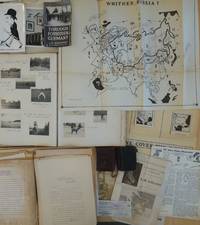
Collection of Maps Diaries Manuscripts and Photographs Documenting the Life and Work of the Con Artist War Correspondent and Cartographer Jack or Jacques de Beaufort aka “The Dude Reporter†with a Focus on His Cartographic and Literary Activities in Mid-Century Los Angeles
Europe and California 1950. Includes two small diaries from 1901 and 1917 with sporadic entries a large photo album measuring 14 x 11 with appx. 400 small photographs from 1906-1909 attached to album pages most measuring 3 x 2 as well as a few larger format images laid in. With 100 plus pages of typed pages including retained correspondence story ideas and various other manuscripts. With eleven maps produced for his “Of Men and Maps†series including five copies of a large map entitled “Whither Russia†in varied states and in large sizes up to 30 by 36 inches and a handful of small ephemeral pieces. Generally near fine condition with the exception of the album which is missing its rear board and has some pages loose and torn. Very Good. J.M. de Beaufort a war correspondent for the London Daily Telegraph and New York American during World War I recounted his wartime adventures in the 1917 book "Behind the German Veil: A Record of a Journalistic War Pilgrimage." Originally arriving in Chicago in 1909 he married a steel magnate's daughter and pursued a career in show business. However by 1912 he had gone through a divorce and transitioned to newspaper work earning the moniker of the "Dude Reporter." Originally born in the Netherlands as Jacques Albert Uilenbroek he was thought to be a deserter. He spent the latter part of his life in the United States apparently jailed in San Francisco for a stint in the 1920s and eventually settled in Los Angeles. <br /> Offered here is an interesting smattering of material from the life of the mysterious De Beaufort which bookends his most unusual career and life with a large visual photographic record of his life in Europe as a young man and over a hundred pages of manuscript material from late in his life with a highlight being several maps in draft form for an apparently unpublished project called “Of Men and Maps.†As a group the material shows the work of an ex-con artist and war correspondent trying to regain his form while living in Los Angeles. He was still writing as a “Special Correspondent†at this point though the title seems to have been fully honorary. Also included are two small pocket journals with sporadic notations from his life in Europe in 1900 and in 1917. In its entirety the group gives an interesting visual and manuscript record of a literary fraudulent and imaginative transatlantic life and intellect. <br /> The cartographic highlight of the group is several iterations of a large map called “Whither Russia†in varied forms which show an interesting interpretation of the sphere of influence of the USSR and its growth from 1939 to 1946. Also included are two drafts of a map of Operation Market-Garden in the Netherlands in 1944 an unidentifed tactical map of a military battlefield a map called “Middle East Jackpot†showing the division of territory between the Allied and Axis powers a map called “Dawn’s Early Light some reproduced small format maps from the De Beaufort’s and a small map called “Gifts from Yalta.†De Beaufort was working on these maps for a column called “Of Men Maps and Memories†that was published in the East Los Angeles Tribune. He also sent the columns out in newsletter form from his address at 1635 N. Ogden Drive in Los Angeles. <br /> The collection of manuscripts drafts and retained correspondence tackle a range of subjects perhaps most interestingly those detailing De Beaufort’s creative process - drafts of stories lists of ideas for stories and letters. His over the top style is on display in a lot of the writings some of which are of unknown origin and purpose. The documents contain correspondence between De Beaufort and Edwin Pauley the oil man and presidential advisor. In one untitled essay he asks himself the question “What has been your most thrilling experience†and his reply is “ Silly questions. Who or at least what newspaperman of some 25 turbulent years standing - and falling - could answer such a question. A reporter’s life has a thousand thrills. There was that rainy day in Marcy 1915 in the fortress of Loetzen when I stood face to face with Hindenburg. Hm yes that was quite a thrill…†De Beaufort was entrenched in the Los Angeles journalistic scene at this point and the documents show the degree to which he relied on his former glories to attempt various career revitalizations endeavors. <br /> The album of photographs from 1906-1909 over 400 in total give a visual record of the young Uilenbroek’s life in Europe. The star of the collection is his bulldog Bob who travels throughout Europe with him and eventually comes to America by 1907. Mary who we presume to be his future wife is featured heavily in the images. It is unclear whether he was working at this point the images show affluent young people and their dog in varied cities and are purely of a personal nature. Other photographs laid in are relics from his war correspondent period. The loose photographs and ephemera are a mix of portraits from different periods from his life including two pictures of Sydney Turing Barlow Lawson one signed by his widow. The journals are sporadically filled and hard to decipher though one legible passage says “drinking all day.â€<br /> Overall the group gives evidence of this intriguing life and is the only extant group of material relating to Beaufort to our knowledge with the exception of a single journal from his time in Belgium during WWI that was sold at Bonhams and is still available in the trade as of this writing. unknown
Référence libraire : List2425
|
|
|
[Japanese-Americana - World War Two - 442nd Infantry Regiment] Hamada, Harry
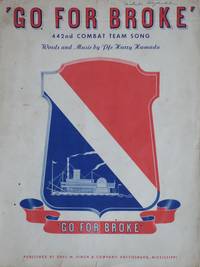
‘Go For Broke’ / 442nd Combat Team Song
Hattiesburg: Earl M. Finch 1944. Sheet music measuring 12 x 9 inches 4 pp. Signature of a Nabuko Hayashida on front cover. Slight tears at fold some toning two small pinholes very good overall quite attractive. Very Good. In Hawaii in May 1942 a battalion of Nisei volunteers was assembled for service in World War Two despite earlier failures of efforts to recruit Japanese-Americans due to the Army’s labeling of Nisei recruits as 4-C enemy aliens. Designated as the 100th Infantry Battalion they were deployed to North Africa in June 1943 integrating with the 34th Division in active combat. Their subsequent deployment to Italy in September 1943 exposed them to intense warfare earning them the moniker of the "Purple Heart Battalion" due to their notably high casualty rate.<br /> <br /> In January 1943 the U.S. War Department officially declared the establishment of the segregated 442nd Regimental Combat Team RCT which was comprised of Nisei volunteers originating from Hawaii and the mainland. The culmination of this initiative transpired in June 1944 when the 442nd RCT merged forces with the 100th Infantry Battalion in Europe subsequently absorbing the latter into its structure. The notable achievements of Nisei soldiers in combat operations prompted the reinstatement of the draft in January 1944 specifically targeting Nisei detainees to augment the ranks of the 442nd. Over time the 442nd RCT expanded to encompass the 2nd 3rd and 100th Battalions; the 522nd Field Artillery Battalion; the 232nd Engineering Company; the 206th Army Band; Anti-Tank Company; Cannon Company; and Service Company. <br /> <br /> Offered here is a very scarce piece of sheet music entitled “Go For Broke†which was written by the Hawaiian musician Harry Hamada reflecting the slogan of the 442nd and performed by Shelby and others during the war as part of efforts to boost morale. Hamada would feature in the 1951 movie “Go For Broke†as Masami alongside several other veterans of the 442nd. This publication of “Go For Broke†is from 1944 seven years before the movie’s release. The piece is dedicated to Colonel C.W. Pence. Hamada was a Hawaiian musician who performed with a band called the Shelby Hawaiians or the Shelby Serenaders. They performed as early as 1943. The Hattiesburg Mississippi merchant Earl M. Finch who ran an Army and Navy store close to Camp Shelby befriended Hamada and other members of the 442nd and acted as a sponsor for the group and eventually published this version despite his business being a dry goods merchant house and not a publishing house. The group with the support of Finch performed throughout the country to lift morale. At some point Hamada penned this composition likely in 1944 as we find no reference to it in 1943 articles and Finch published it - Hamada’s composition would become the theme song of the 442nd and Hamada would perform at the Halloran General Hospital in New York and the Walter Reed Hospital in Washington D.C. in 1944 likely performing this composition. Another composition called “Go For Broke†exists as well and it is unclear to what degree Hamada’s work caught on among the regiment. <br /> <br /> We find two records of Finch’s published version of the composition one listed as part of an online remembrance of the 442nd by the Smithsonian Institution https://americanhistory.si.edu/explore/stories/day-remembrance-70-years-after-executive-order-9066 which appears to have been on loan from the National Japanese American Historical Society and another copy held at Stanford though not listed in OCLC. Finch’s story is also interesting and is the subject of a remembrance on a 100th Battalion History page online https://www.100thbattalion.org/history/stories/earl-finch/. We find no copies listed in OCLC. Overall a very scarce piece of Japanese-American wartime history. Earl M. Finch unknown
Référence libraire : List2436
|
|
|
[Mexican Border War - Cartography - Personal Narratives] Gaffney, Samuel; Rice, CA, et al C A
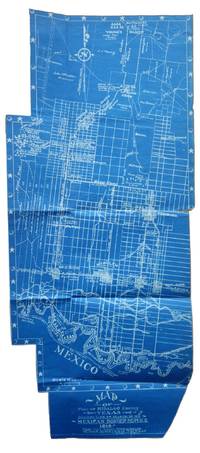
Scrapbook Documenting the Mexican Border Service Campaigns of 1916-1917 with an Unrecorded Map of the Campaign in Hidalgo County in 1916
VP 1917. Scrapbook measuring 15 ½ x 10 ½ inches. With forty leaves most with newspaper clippings and varied ephemera attached. Boards detached contents generally fine. Laid in is a blueprint map entitled Map of Part of Hidalgo County Texas Showing Line of March in my Mexican Border Service 1916. Made from Survey Notes taken on the march by Corp. C.A. Rice 74 Inf. N.G.U.S. Buffalo N.Y. Armory. Map measuring 33 ½ x 14 ¾ inches irregularly shaped and apparently complete. Very Good. A scrapbook documenting the military service of 1st Sergeant Samuel Gaffney of the 74th National Guard New York in the Mexican Border Service. Gaffney documents the campaign in great detail through printed matter - with each of the forty leaves containing material affixed including panoramic photographs advertisements from local businesses along the routes programs from entertainment offered to the troops military orders and official correspondence and many affixed newspaper articles and photographs. <br /> <br /> The scrapbook is most notable for the inclusion of an unrecorded map by Charles A. Rice the Buffalo native who would eventually map the campaign in larger fashion in a map entitled Map Showing Lines and March and Border Patrols in my Mexican Border Service 1916-1917. The map here just showing the route through Hidalgo County is unrecorded. The larger map - which was produced as souvenirs for the other members of the 74th - is quite scarce as well with five copies known to exist per OCLC with two different numbers. This blueprint map which appears to be complete cartographically and missing only the ornamental border on one portion shows the route taken early in the campaign in 1916. The Buffalo native Rice 1885-1931 who would eventually settle in Texas after the conflict also wrote a history of the 74th during the campaign. Rice published the maps and memoir himself. The map shows the route in great detail showing the location of wells farms roads and identifying landowners. Water quality and abundance is understandably a common theme in Rice’s notes. Some notes show the location of bandits smugglers and the like. We find no other examples of blueprint maps by Rice. <br /> <br /> Other highlights from the scrapbook include seven panoramic photographs of the 74th encamped at Pharr; a broadside advertisement for the shop of Agustin Acevedo in Pharr listing prices of goods; a handbill advertising the 74th’s Minstrels and Great Entertainment show on September 16 1916; an advertisement for a production entitled Glorious Liberty at the National Theatre in Pharr; two circulars instructing troop movement issued by Headquarters Brownsville District; several postcards with songs about the campaign; several snapshots; a mounted albumen photograph of troops at rest with the notation “Corp Frederick Paid†verso; a typed poem entitled “Home Again†and a notebook page describing his activities from January 1917 onward; and a thanksgiving menu for 1916 for the holiday spent at Pharr. The remainder of the scrapbook is composed of affixed newspaper clippings which provide extensive information on the 74th collected in a single volume. <br /> <br /> Overall a significant scrapbook with much information to glean for students of the 74th’s activities with the map providing a unique cartographic reference of the early days of the campaign. unknown
Référence libraire : List2530
|
|
|
[RUSSO-JAPANESE WAR].
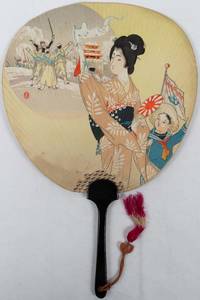
戦勝祝賀団扇. Sensho shukuga uchiwa. Victory Celebration Fan.
Japan. Taisho 10 1921. Colour printed paper fan print 23 x 24cm wooden handle 14.3 x 1.3cm with a colourful silk tassel. A little light wear visible on the reverse of the fan. A very good example. This fan depicts a celebratory scene: a woman in a kimono waves a scarf with a star design on it while in her other hand is a rising sun fan; her son clad in a sailor-style outfit holds a Navy flag. To the left behind them a victorious scene most likely from the Russo-Japanese War is depicted. On reverse there is text celebrating a long life of 95 years dated spring 1921. . unknown
Référence libraire : 216196
|
|
|
[Civil War – Politics – Americans Abroad] Peck, Tracy
Letters from Friends to Tracy Peck Connecticuter Living Abroad
United States Germany and others 1869. Seven letters approximately twenty-six total pages most about 8 x 5 inches. One letter dated 1862; one dated 1863; two dated 1864; one dated 1869; two without date. Two of the letters are written in French untranslated. Generally very good or better with one showing water damage though legible. Tracy Peck 1838–1921 was born in Bristol Connecticut to a family who had been in the Hartford area since the 17th century. According to his obituary in The Classical Journal Vol. 17 No. 6 Peck studied at Yale and then abroad in Germany returned to the United States to teach Latin at Cornell and Yale and then went back to Europe again where he served as the Director of the American School of Classical Studies in Rome until his death.<br /> <br /> Offered here is a group of letters from friends and family to Peck mainly written during the American Civil War when Peck was studying in Germany. The letters update Peck on the war politics and the activities and fortunes of various friends.<br /> <br /> Many of Peck’s friends were academics and avoided involvement in the Civil War nearly as well as Peck himself did. Not all were so lucky though. A friend probably a Yale classmate writes from Massachusetts “with a notice of the death of F.S. Davisâ€:<br /> <br /> “He died poor fellow in the hospital at Chattanooga about the middle of April. After leaving college he spent the first winter at home joined the ‘Memphis Southrons’ in March ‘62 He was at many battles and suffered untold hardships for one year when he died the first martyr of our class.†August 17 1863<br /> <br /> Another friend Sheldon had just completed his service:<br /> <br /> “He had been in several severe battles had been captured and taken to Richmond. While in service he met Bob Stiles who wouldn’t shake hands with him but tried to prove that unionism was oppressionâ€.<br /> <br /> Though the war would continue for several more years the friend writes that zeal for it is already waning:<br /> <br /> “The war goes on languidly. The enthusiasm has died out. Everyone expects the war to close by the south yielding to reasonable conditions. There is no apprehension felt as to the final issue. It has about ceased to be talked of.â€<br /> <br /> That same friend would later travel abroad as well though his aspirations would be less intellectual than were Peck’s. He writes from Egypt where it is so hot that “Except for some luscious oranges which we got of a lightly-clad nymph we should have perished of thirst†about a comical scene:<br /> <br /> “A tall muselman at one of the intermediate train stations had lain down his silk mantle and turning to the east gave through the prostrations prayers of his religion with great fervor and to the intense satisfaction of the ladies. Suddenly he touched his forehead to the ground leaped up. Their interest redoubled their attention with it when to my great amusement he squatted down unbuttoned his trousers began to pump ship in full view. The abrupt descent from prayer to pissing was too much for the females while I stifled a laugh in a cough my jacket handkerchief.†No Date<br /> <br /> A later comment in the same letter where he describes being escorted up one of the pyramids and then “shouting ‘be quiet’ to the clamoring Egyptiansâ€â€”whom he also describes as a “rapacious broodâ€â€”is likewise revealing of his attitude towards the locals.<br /> <br /> The latest letter in the group from Richard Harck is more high-minded. Harck inquires whether as Peck’s “foot . again walks on hallowed native soil†he has “acquired such a situation among the lumina of your country as your knowledge and learning deserve†July 30 1869. Harck is in Germany where there “is an utter stagnation in politics†as they approach the unification:<br /> <br /> “The particularities and sectional ideas of the southern population and their sovereigns the antagony of the there powerfull clergy and the partly illiberal constitution and laws of the North German Union. Bismarck may be a great statesman and minster for foreign affairs but not a fit man to rule the interior of a constitutional state. . But he cannot stop the progress of the ever advancing ideas of liberalism and freedom; the powerful public opinion overwhelms him .â€.<br /> <br /> Overall a look at the effects on ordinary lives of several important political upheavals of the mid-19th century. unknown
Référence libraire : List2723
|
|
|
[Women's History - World War II – Women's Army Corps – VE Day – Pacific Theater] Bremer, Mary J; Miller, June; Melotte, John
Collection of a Women’s Army Corps Technician Concerning VE Day Reassignment to the Pacific Theater and Processions for Roosevelt and Eisenhower with Lyrical Descriptions of Paris on V-E Day
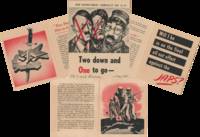
Paris France; and Washington D.C. 1945. Six 8 x 10 inch and smaller typed pages; one 4 x 5 inch card with two tickets; one twenty-six page 4 x 5.5 inch pamphlet; one six page 6 x 8.5 inch pamphlet; six 2.5 x 3.5 photographs and two 3 x 4.5 inch photographs. Of the printed matter most is affixed to paper some small tears and folds; overall excellent; photographs near fine. Mary J. Bremer 1917–2019 was a Technician fourth grade from Grant Township Nebraska. Her correspondents here include June Miller 1920–deceased an aviation cadet from Michigan and John Melotte 1919–deceased an artilleryman from Philadelphia. Bremer and Miller were members of the Women’s Army Corps WAC. Established in May of 1942 as the Women’s Army Auxiliary Corps the WAC converted to active duty in July of 1943. The women of WAC known as Wacs served in noncombatant roles across the various theaters of World War II.<br /> <br /> Offered here is a small archive of Bremer’s documents and photographs relating to WAC: a few letters including a description of Paris the day after the Nazi surrender; two pamphlets including the War Department pamphlet Two down and One to go –; and a collection of photographs of Eisenhower’s victory parade and Roosevelt’s funeral procession.<br /> <br /> On April 12 1945 President Roosevelt died of a stroke in Warm Springs Georgia. His body was returned to Washington two days later and a military procession escorted it from the train station to the White House. Two photographs of the funeral procession are included in the archive. One showing a woman at the start of a section of the parade is identified verso as “WACs led by Capt. Machenâ€.<br /> <br /> The following month the Nazis surrendered. Bremer’s friend June Miller was stationed in Paris at the time. She wrote to Bremer the next day describing the celebration:<br /> “It began the night before when we stood on the roof and watched the flares go off all over the city--just like the 4th of July; the Sacred Couer was blazing with lights and it looked like a miniature fairy-land. Last night all the famous old buildings including the Arc d’Triumph was all lit up the fountains in the parks at Concord in front of the Trocadero--they were all going and the kids were wading and splashing around having the time of their life. It was really something to see--something the French had been waiting a long time for. “Fini le guerre†they kept saying--the end of the war!â€<br /> <br /> Miller also claims to have witnessed a bomber flying a celebratory loop through the Eiffel Tower:<br /> <br /> “When we came out of the Trocadéro the fountains were on and what a sight that is. Looking down over the water that looks like a miniature waterfall to the Eiffel Tower at the bottom of a small hill. And if I hadn’t seen it with my own eyes I would never have believed that I saw a small bomber come through the bottom but that’s just what it did--and just did clear it too. The planes seemed to be going as wild as the people on the ground--they were so thick up there that pretty soon we thought surely something would happen.â€<br /> In June Dwight Eisenhower returned from Europe and a homecoming parade was held for him in Washington D.C. Six photographs of this parade are included in the archive including a shot of his plane arriving at the airport and one where he is visible standing in the back of a Jeep.<br /> <br /> Miller notes in her letter from Paris that “you wondered what was coming next; where we would go from here ‘cause in a sense there is still a war very definitely going onâ€. In fact John Melotte who seems to be Miller’s partner writes to Bremer that he “May be slated for that place they call the CBI but don’t tell June please. She does not want me to even mention the place in my letters so I let well enough alone†July 15 1945. Hostilities would continue in the CBI—the China-Burma-India theater—until September of that year.<br /> The process by which soldiers were selected to be sent to the Asia-Pacific theater is laid out in the War Department pamphlet Two down and One to go –. The pamphlet reminds them that there are still “a couple of big jobs ahead†the primary one being to “crush†or “smash†the “Japs†and the second one being to occupy and police “conquered lands . until the peril of future aggression is gone.†It is a visually striking piece with illustrations in a bold black and red color palette; its cover is a reproduction of a caricature of Hitler Mussolini and Hirohito by Polish-Jewish artist Arthur Szyk.<br /> <br /> Also included in the archive are a card from a friend with tickets to an American League baseball game; a humorous poem congratulating Wacs Ruth O.B. and Lenore I. Nier on new work assignments; and a Christmas 1945 WAC pamphlet with a dinner menu and list of WAC officers. The pamphlet assures the Wacs with a note from Colonel Kenton Cooley “Before another Christmas you all will have returned to civilian life and each of you will take with you my appreciation and my sincere admiration for a great job well done.â€<br /> Of interest to scholars of women’s history especially in the military; and of the events leading up to the end of the Second World War. unknown
Référence libraire : List2747
|
|
|
[Judaica - World War Two - Immigration - Ellis Island] Rosendor, Bitia
Portfolio of Drawings and Memoir Documenting a Forty-Day Internment at Ellis Island While Fleeing Nazi Persecution in 1941
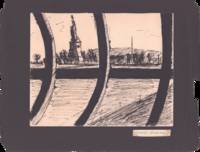
New York City 1941. Thirty-three sketches mainly measuring 6 x 8 or 8 x 10 inches affixed to black construction paper. Sketches are pen and ink or pencil some with captions. With seventeen typed pages mainly measuring 6 ½ x 7 inches. In an 11 x 14 ½ inch portfolio. Spine of portfolio missing all pages separated; sketches excellent construction paper with much marginal chipping; typed pages with adhesive verso else excellent. Overall very good to excellent. Bitia Rosendor 1920–2011 was a Jewish artist born in Jerusalem and raised in Antwerp Belgium. Rosendor studied painting and sculpture at the Koninklijke Academie voor Schone Kunsten in Antwerp but her studies were interrupted by the outbreak of World War II. The Rosendor family fled Europe via Portugal in 1941 and were detained at Ellis Island where these sketches were produced.<br /> <br /> The sketches include portraits of other detainees and immigration employees and views from the island. Most have captions including brief notes about the subjects such as “She became hysterical and was taken to the hospital†“A little orphan going all alone to the Dominican Republic†and “‘Liberty’ through barsâ€â€”the latter on an illustration of the Statue of Liberty seen through the bars on the internment center’s windows.<br /> <br /> The typed text describes Rosendor’s experience waiting for the family’s Visa to be approved. The ordeal is mostly one of boredom; she writes:<br /> <br /> “Everyone had the same endless day to pass but everyone passed it differently. There was no possible way to be original but each of us retained her or his personality. The emptiness of the hours was heavy to bear.â€<br /> <br /> The boredom though is punctuated by “incidentsâ€; some negative as when “Once a Chinese girl wept for three days uninterrupted refused to eat refused everything†and some positive as when “A friend seen last time at the Antipodes†disembarks “from a newly entered ship . and suddenly: ‘YOU’! -’YOU’â€.<br /> <br /> Rosendor would live with her family in Brooklyn until the 1950s when she returned to Europe with her husband Jewish-American painter Martin Reisberg a fellow immigrant whom she met in the city. The pair returned to Belgium where they ran a gallery and created exhibitions together until Rosendor’s death in 2011.<br /> <br /> Of interest to scholars of the Holocaust American immigration and the Jewish immigrant experience in the 1940s. unknown
Référence libraire : List2962
|
|
|
[Pennsylvania – Presbyterian Church – Civil War – World War II] Hill, George; Hill, Harriett; Weeks, WC; et al W C
Multigenerational Archive of a Pennsylvania Family Spanning More Than a Century
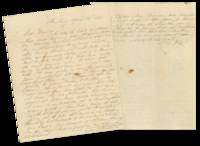
United States Norway and Germany 1960. 320 items: 276 letters thirty-eight modern photographs five CDVs and one cabinet card; with a large amount of unsorted ephemera. Of the letters 198 are from the nineteenth century with most from the 1840s through 1870s; and seventy-eight are from the twentieth century with most from the 1940s and 1950s. Excellent. A broad archive mainly of letters spanning over 130 years. The letters were mostly sent between members of the Hill family of Pennsylvania and other families Lewis Hosack and Weeks that married in. In the nineteenth century George Hill 1815–1895 his wife Harriet Lewis 1820–1852 and their two oldest daughters Jane Hosack 1842–1878 and Harriet Hill 1844–1928 are the main correspondents; in the twentieth letters are mainly from Cornelia 1863–1948 and Charlotte 1874–deceased Lewis Harriet Lewis’ nieces and the family of Nancy Weeks 1909–1992 her great-granddaughter-in-law. Weeks also had several correspondents in Europe immediately after World War II.<br /> <br /> Earlier letters discuss family affairs temperance societies and church business—George Hill was a Presbyterian minister and writes to his family from trips to the General Assembly. For instance he describes the 1843 Assembly:<br /> <br /> “We have dispatched a good deal of business this week in the Assembly. The question which detained us longest was with regard to the right of Elders to impose hands in the Ordination of Ministers this was discussed for the greater part of two days and finally decided against the right to impose. But of all the questions which have yet come before us none has excited so much interest or called forth half the feeling which the question on the approval of the records of the Synod of Pittsburgh did. The committee on the records took exception to the mention of the Synod on the subject of Temperance . On this I let them know my mind at considerable length and in the course of the proceedings voted down the very same proposition which was adopted by the last Gen. Ass. on the subject of Temperance.†May 27 1843<br /> <br /> At the same time Hill was preaching around Pennsylvania and Ohio to raise funds to start the Blairsville Female Seminary which was open from 1851 to 1913. Among his travel correspondence is an interesting description of antebellum Athens Ohio:<br /> <br /> “On Tuesday morning I rode 6 or 7 miles to Athens . which is wholly given over to abolition. This subject is to that people ‘The one thing needful’. It is the law and the gospel; it is philanthropy patriotism morality and religion. It swallows up everything else and enlists the sympathies & energies of the people to the exclusion of almost everything besides.†January 29 1844<br /> By the outbreak of the Civil War Jane and Harriet are young adults and Harriet gets involved with the war effort. She writes to her stepmother Abigail Hawes:<br /> <br /> “I was in sewing for the Soldiers yesterday. I made a Havelock. I guess there were over thirty ladies there sewing. The Bardstown ladies are making clothing for Capt. S’s company. They leave on next Monday. . I went in early last Monday morning to see our company off. The flag was presented by Mr Beaumin to Capt. Nesbit. Then Mrs Thompson & Luther Martin presented Testaments & ‘Prayer Books’ some of Mrs. McAfee’s work they then marched up to the depot followed by men women & children. Such a sight I never witnessed. Some of the soldiers large men cried like children – bade goodbye to every body – men that I never saw before came up & bade me goodbye & then turned their heads away to hide the tears. . But to go back to our Sewing Society you ask ‘will they really do anything’ I tell you they really have done something. Made seventy five shirts & intend making so many more of blue & red flannel & forty five or fifty Havelocks about thirty five towels eighty pin cushions or needle books. Then when the company went away the ladies supplied them with either a blanket or a comfort apiece . The ladies also intend making bandages or something to fasten tight round their stomachs to keep them from taking dysentery so readily.†June 4 1861<br /> <br /> Harriet notes that Abigail doesn’t “seem to be much disturbed about the war†May 20 though she requests that although “We all admire your patriotism . be sure & dont send us an envelope with ‘Death to Traitors’ on it†June 4.<br /> <br /> Other letters from Harriet and Jane discuss school family and especially health; a number of deadly diseases were rampant throughout the century and many letters read as litanies of dead and dying friends and family. The CDVs from this era mainly taken in studios in Blairsville seem to be mostly family friends or employees at the Female Seminary; many of the subjects are identified verso.<br /> <br /> The family’s letters in the twentieth century are similar though with less sickness and death and from more dispersed locations in the US—seemingly few family members remained in Pennsylvania.<br /> <br /> One particularly interesting thread is Nancy Weeks’ correspondence with several Europeans immediately after World War II. One is Benjamin Molnar a Hungarian living in Munich and in the process of emigrating to the US. Molnar describes himself and continental Europeans generally as “prejudiced and very nationalistic†and explains that he would prefer to live in the American midwest or west as the “types of people†on the east coast “are rather unamerican looking†July 14 1949. He ends up in California and complains to Weeks that:<br /> <br /> “Everybody here seems to be violently pro-negro and pro-Jewish. Jews and negroes are all right I suppose and I have nothing against them but is it a sin for a white man to prefer to live among his own kind†December 27 1949<br /> <br /> On the other end of the spectrum are the Bjelkes a Norwegian family who write a number of times to Nancy. They describe the Nazi invasion:<br /> <br /> “Reidar drove me and the children 7 & 2 years up in the country the first day thinking we would be safe there he had to leave right away to do his duty of course and we were left alone. Not many days later we were in the middle of the whole war shooting and bombing all around then the middle of the nite we had to flee out in the snow two children and no place to go at last I could no more and together with some others we broke the window of a little mountain home and crawled thru finding the house empty. . But the peace was short not long after some soldiers came and said we must off as the germans would soon be there. Well out in the deep snow again and we struggle thru and at last came to a little mountain farm where we were allowed to stay. But they had little food and for four weeks we starved . At last Reidar found us and we wandered our way towards home . to Bygdo. Mother had been there all the time and everything had been fine there.†October 10 1945<br /> <br /> They also tell Weeks about Oslo during the war and their experience of the occupation:<br /> <br /> “We demonstrated our hate as far as we dared to – by not sitting beside any Germans for example on the car it went so far that they put up a ticket saying ‘no seat must stay vacant or we would be arrested.’ The result was that we just stood all the time then a new ticket came up we were not aloud to stand. Well I had to jump off the car several times in order not to seat myself beside a uniform. Then they started taking our red caps & scarfs – we used them as a demonstration you see & they not only took them off us but kept them. They even took our red jackets from us if we dared wear them on the street & so many dared! On our Kings last birthday during the war several hundred were arrested because they wore flowers in their buttonholes– Oh the Germans & Naszi were so childish.†May 11 1945<br /> <br /> They also describe the difficulties of postwar life including the dangers of unexploded ordnance left around the area which stop the ferries from running to Oslo and injure the family’s young son Per.<br /> <br /> Overall the archive is notable for its breadth spanning at least four generations of a family and many historical eras and events. unknown
Référence libraire : List3237
|
|
|
[African-Americana – World War I – National Guard] Unknown
Eighth Illinois Regiment Now In France
United States: N.p. 1917. Lithographic poster measuring 15 ½ x 11 ¼ inches. Some damage to edges including small section torn off upper right side good condition. A poster celebrating the Eighth Infantry Regiment Illinois National Guard during World War I. Text on the poster reads:<br /> <br /> “Eighth Illinois Regiment Now In France / The Regiment was mustered in the U.S. Volunteer Service as the Eighth Infantry 370th U. S. National Guard Illinois U. S. Volunteers. / On June 28th officers were commissioned by Governor John R. Tanner then Governor of the State of Illinois. The first commander was JOHN R. MARSHALL who commanded the Regiment and saw service during the Spanish American War in Cuba. He was placed on the retired list January 1st 1914 and was succeeded by the present Commander COLONEL FRANKLIN A. DENNISON January 12th 1914 who is at present Commanding Officer in France. The Eighth Regiment is now about 3000 strong and is now in France on active duty. There are over 157000 negro troops either in France or on their way.â€<br /> <br /> The Eighth Illinois was the only African American combat regiment at that time that also had Black officers. Brig. General Franklin A. Denison pictured at the top left and mislabeled as “Franklin H. Denison†was Colonel of the regiment in France and was the first Black American to be promoted above Colonel when he became a Brigadier General in 1918; when Denison was replaced with a white officer Lieutenant Colonel Otis Beverly Duncan of the Eighth became the highest-ranking African American officer in the US Army.<br /> <br /> The Eighth fighting under the French Army saw significant combat earning the nickname “Black Devils†from the Germans and receiving more honors than any other American regiment on the Western Front. We find records of holdings at Yale and the Chicago Public Library but no examples on the market or at auction. N.p. unknown
Référence libraire : List3309
|
|
|
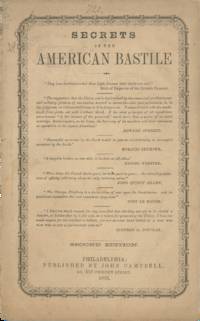
[Civil War – Prison History – Anti-Abolitionism] Winder, William H
Secrets of the American Bastile
Philadelphia Pennsylvania: John Campbell 1863. Second edition. 8vo paper wraps 64pp. Wraps with wear to edges library stamps and some manuscript notes; contents excellent to Near Fine. Overall excellent to Near Fine. A short booklet by William H. Winder 1808–1879 son of the Brigadier General and Baltimore lawyer of the same name concerning his 1861 arrest and imprisonment for treason for his opposition to the Civil War. Winder attributes his arrest to his correspondences with Secretary of State William H. Seward and Secretary of War Simon Cameron. In his letters Winder laid out his case that not only would a war spell the end of any union between North and South but that an agreement between the two would be easy to reach. Winder was imprisoned in Fort Lafayette where the "abominable treatment of prisoners . is too well known to require any notice in this statement†23 and then at Fort Warren. He was released in 1862 after fifteen months.<br /> <br /> Secrets reproduces Winder’s correspondence alongside his editorializing: that he was falsely arrested under the Secretary of State’s name without the Secretary’s knowledge that he was denied his Constitutional rights and especially that the Republican government’s “corruption and imbecility†in its suppression of opposition to the war amounted to “terrorism†vii.<br /> <br /> OCLC locates twenty copies of the second edition. John Campbell unknown
Référence libraire : List3325
|
|
|
[African-Americana – Civil War – Maryland] Carter, John M; Sears, John L; Cottman, Susan; et al
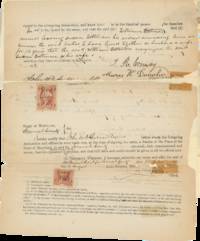
Three 1865 Documents Certifying the Death of Private William Cottman of the 9th U.S. Colored Troops
Annapolis Baltimore and Somerset County Maryland 1865. Three documents. Two folded with normal wear else Near Fine; one very delicate torn into two pieces formerly mended with archival tape with some damage intersecting with text good. Overall very good. Three documents certifying the death of William Cottman a private with the 9th Regiment of the US Colored Troops USCT during the Civil War. The 9th was organized at Camp Stanton in Benedict Maryland in November of 1863 shortly following the establishment of USCT divisions; Cottman’s documents state that he enlisted on November 22. Coming from Maryland William Cottman was likely formerly enslaved; the Cottmans were a prominent Maryland family holding many enslaved people.<br /> <br /> According to the National Parks Service record during the 9th’s service forty-seven men one an officer were killed in combat and 266 enlisted men died from disease; the latter includes Cottman whose paperwork states that he “Died at Base Hospital Jones Landing of feverâ€. In fact not only did the USCT mortality rate exceed other that of other troops by thirty-five per cent the majority of the deaths were from disease.1 Living and sanitary conditions for these troops were subpar and there was significant difficulty in convincing qualified surgeons to work in African American regiments. <br /> <br /> These forms are possibly related to a pension claim by Cottman’s widow Susan Cottman; one of the documents certifies with two witnesses that the couple were married for fourteen years. Pension applications for Black Civil War veterans and their dependents were complicated—many were formerly enslaved and thus might be illiterate without documents such as a birth certificate or with marriages that were not legally recognized.<br /> <br /> Of interest to researchers of the USCT and the postbellum lives of their families.<br /> <br /> 1 Herbert Aptheker “Negro Casualties in the Civil War†The Journal of Negro History 32 no. 1 Jan. 1947: 10–80. unknown
Référence libraire : List3406
|
|
|
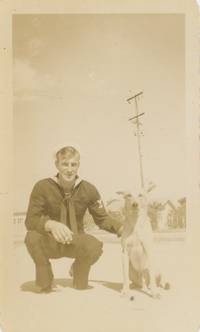
[Hawai'i – US Navy – World War II] Whitaker, Jane; Whitaker, James
1940s Photo Album with Candid Images of Young Sailors in Hawai’i and Japan During and After World War II
United States and Japan 1940. Photo album measuring 10 ½ x 13 inches containing approximately 350 photos. With four copies of Jane Whitaker’s discharge and immunization papers and the Navy’s Marching to Victory songbook 13th printing Naval Reserve Midshipmen’s School 1943. Album with covers detached and wear to pages; fair. Contents excellent. Overall very good. A photo album belonging to siblings Jane 1924–d. and James 1921–1997 Whitaker of Florida. Both siblings were in the US Navy; the copy of Jane’s discharge paper indicates that she enlisted in 1943 and was honorably discharged in 1946. The siblings are descendants of founding Florida figures William Wyatt and Mary Wyatt Whitaker.<br /> <br /> The album mainly covers their time in Hawai’i and Japan. Alongside eighteen photographs of a large military parade one labeled “V-J Day Honolulu†with floats including the Filipino Federation of America’s celebration of General MacArthur and a bilingual float reading “AGGRESSORS GONE FOREVER†and fifteen likely souvenir photos of the Pearl Harbor attack there are approximately 120 candid photographs of the sailors’ lives. These include spending time with family and children sitting on a tank on the beach barbecuing at a park fishing and doing laundry outside. Some of these were taken in Hawai’i and others in Japan; a number show a sign for Nimitz Recreation Field which is likely at the US Fleet Activities in Sasebo Nagasaki. Thirty show men not in uniform but also likely sailors mainly during similar recreational activities. Others include photos of military installations and from inside barracks—bunk beds the kitchenette and dining area. Individuals in the photos are occasionally identified verso by first name.<br /> <br /> The album is uncommon for the candid nature of the personnel photos. Of interest to historians of life in the US Navy in Hawai’i and Japan during WWII. unknown
Référence libraire : List3520
|
|
|
[Vietnam War – Anti-War Movement – Counterculture] Workshop in Nonviolence
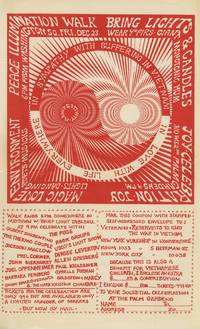
Peace Illumination Walk. Washington Sq. Fri. Dec. 23
New York: New York Workshop in Nonviolence 1966. Broadside poster printed in red on white stock approximately 14 x 11 inches. Near Fine. A poster announcing the Peace Illumination Walk an anti-Vietnam War demonstration held in New York City on Friday December 23 1966. Participants were instructed to assemble in Washington Square at 6 p.m. and march through Manhattan carrying candles “in sympathy with suffering in Vietnam.†The walk was to conclude about 8 p.m. with a light tableau in Midtown followed at 9 p.m. by a benefit celebration at the Palm Gardens. The event was organized by the New York Workshop in Nonviolence and advertised as a benefit for Vietnamese children. Speakers and performers listed on the poster include poets Allen Ginsberg Denise Levertov and Jackson Mac Low; the satirist Paul Krassner later a founder of the Youth International Party Yippies; novelist Gilbert Sorrentino; and the countercultural rock group The Fugs led by Ed Sanders and Tuli Kupferberg. The program also notes appearances by Swami Bhaktivedanta and members of the Hare Krishna movement.<br /> <br /> The poster’s radiating optical design centers on the word “manifestivity†a term used by anti-war organizers to describe protest events combining demonstration with music and performance. The lower portion includes a mail-in coupon inviting supporters to send contributions to the Veterans and Reservists to End the War in Vietnam through the New York Workshop in Nonviolence at 5 Beekman Street. New York Workshop in Nonviolence unknown
Référence libraire : List36100
|
|
|
[Women's History – Medicine – Crimean War – Early Photography] Kilburn, William Edward [Nightingale, Florence]
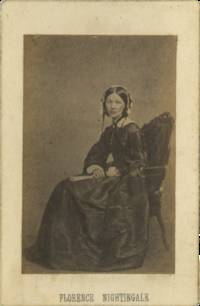
Carte-de-Visite Portrait of Florence Nightingale
N.p. 1870. Carte After the original photograph by William Edward Kilburn 1818–1891 taken circa 1854 with later CDV issue probably circa 1870s. Albumen print mounted on card; sitter identified in print beneath image. Standard carte-de-visite format approximately 2½ x 4 inches. Excellent contrast with light surface wear. Seated three-quarter portrait of Nightingale in dark silk dress with white collar hands folded over a paper posed beside an upholstered Victorian chair. The image derives from a sitting arranged in London with William Edward Kilburn one of Britain’s early professional photographers and a former daguerreotypist who gained fame by exhibiting at the Great Exhibition of 1851. By the early 1850s Kilburn had established a reputation for photographing members of the aristocracy and prominent public figures.<br /> <br /> The Nightingale sitting happened shortly before her departure for the Crimea in October 1854 at a moment when her name was just entering the public press. The portrait predates her full transformation into the national icon later known as the “Lady with the Lamp.†Unlike later more romanticized images Kilburn’s photograph presents a composed unsentimental likeness more consistent with standard portraiture practices than her later photographs. Following Nightingale’s wartime service at Scutari 1854–1856 and the subsequent surge of public acclaim Kilburn’s image became the primary photographic source from which engravings lithographs and later carte-de-visite reproductions were made.1<br /> <br /> 1 Denis Pellerin “Florence Nightingale: The Mystery Behind Her Iconic Photographs†The Classic November 15 2020 https://theclassicphotomag.com/florence-nightingale-the-mysteries-behind-her-iconic-photographs/ accessed February 27 2026. unknown
Référence libraire : List36105
|
|
|
General Staff War Office
Infantry Training 4 - Company Organization 1914 40 War Office 2052
London U.K.: HMSO. Good with No dust jacket as issued. 1914. First Edition. Hardcover. "The object to be aimed at in the training of the infantry soldier is to make him mentally and physically a better man than his adversary on the field of battle." - p. 1. xviii 265 pages. Index. Occasional black and white illustrations. Binding sound. Moderate wear to maroon boards. Considerable pencil underlining and notes some in coloured pencil. Rubber stamp and prior owner's name upon title page. A well-preserved example of this informative WWI memento. ; 24mo . HMSO hardcover
Référence libraire : 233j2662
|
|
|
War Games Research Group
War Games Rules: Armour & Infantry 1950-1975
Jan 01 1974. Unknown Binding. Good. unknown
Référence libraire : JI-0B6C-YGYI
|
|
|
War Dept Office of Adj General
Decorations United States Army 1862-1926
Paperback / softback. New. paperback
Référence libraire : B9780788455421 ISBN : 0788455427 9780788455421

|
|
|
Naval War College (U S )
The Battle of Savo Island August 9 1942: Strategical and Tactical Analysis
Hardback. New. hardcover
Référence libraire : B9781013671920 ISBN : 1013671929 9781013671920
|
|
|
War Services Program Pennsylvania
The Making of America Land of the Free;
Hardback. New. hardcover
Référence libraire : B9781013418884 ISBN : 1013418883 9781013418884

|
|
|
[Cuba] [Spanish-American War] Leach & Patterson
Mounted Albumen Print of an American Warship in Havana Harbor Published as part of the “Recuerdo de Cuba†Series
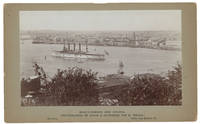
Havana: R. Testar 1890. Albumen photograph on cardstock mount image measuring 7 1/4 x 4 1/2 inches on 8 3/4 x 5 1/2 inch mount. A view of an American warship in Havana harbor likely taken prior to the outbreak of hostilities between the United States and Spain in early 1898. The photographers Leach and Patterson of Calle San Rafael published several views of Cuba at this time mostly of bucolic scenes around Havana and its environs. The American cruiser is similar in design to the U.S.S. Maine with slight differences - two smokestacks instead of three. An excellent example with minor wear to mount and fine image. R. Testar unknown
Référence libraire : LIST110
|
|
|
[World War One][15th Infantry, Known as the "Harlem Hellfighters"]International Film Service / Underwood and Underwood, Photogra
Two Press Photographs Relating to the 15th Infantry
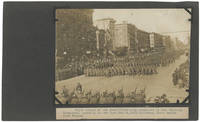
New York: Underwood and Underwood 1919. First Edition. Gelatin silver prints 7 ¾ x 5 ½ inches each on 11 ½ x 7 inch black paper mounts captioned with affixed text. Very Good. Two WWI-era press photographs related to the Negro 15th Infantry Division of the New York National Guard a.k.a. the 369th US Infantry Regiment and their white commander Colonel William Hayward. One photograph shows the division on parade in New York following their return from combat duty in France in 1919 the other is a well-known image of Hayward who organized the all-black unit and served as its leader. Fighting for a record-breaking 191 consecutive days alongside French troops in the trenches the regiment became known as the “Harlem Hellfighters.†<br /> <br /> The opportunity for African-Americans to serve in WWI arose from the Selective Service Act of 1917 which drafted all men between the ages of twenty-one and thirty. Special segregated training camps were established and units were formed. The US National Archives states that 200000 African-Americans served in Europe during WWI but only 42000 saw combat. When the 15th Infantry arrived in France in 1918 Hayward was committed to the idea that his unit would fight on the front lines. After General Pershing refused to integrate them with the full US army Hayward pushed for another assignment under French command. Unlike many other segregated divisions in WWI the 15th aka 369th was eventually sent to the trenches. Its members' distinguished service brought honor and fame. Before leaving the US in 1917 the regiment had not been allowed to participate in the New York National Guard’s farewell parade. When they returned victorious Hayward ensured they were publicly honored. <br /> <br /> Both with various press stamps to versos. Small closed tear of about a half inch to upper edge of parade picture good overall. Hayward portrait with some rippling at edges very good overall. Underwood and Underwood unknown
Référence libraire : CAT0119
|
|
|
[West Point; Revolutionary War]
Centennial Home Insurance Company. Calendar
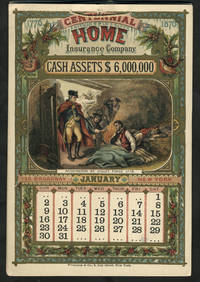
New York: Kronheim & Co 1876. Very good condition. Finely printed chromolithographed 12 page calendar with Revolutionary War depictions which includes a cover illustration of George Washington at Valley Forge 1778 and a view from Garrison's North Redoubt on the Hudson River looking towards West Point. The view is captioned "West Point -- with its Fortifications & c. 1780". A full page of text printed on the verso describes West Point in 1780. <br /> <br /> The calendar was created as a trade souvenir to be distributed at the Centennial Exhibition in Philadelphia. Each month in this lavishly illustrated and gilt decorated calendar with titled illustration has a b&w verso of text or woodcut illustration of buildings at the Centennial International Exhibition of 1876. <br /> <br /> Kronheim & Co. was founded by the German born lithographer and wood engraver Joseph Martin Kronheim who is noted for working with George Baxter the English printed credited with the invention of commercially viable color printing.<br /> <br /> 5 1/4 x 7 3/4". 13pp string bound. Lavishly printed with gilt highlights the colors fresh and intense. OCLC: 341180480 records one copy at University of Massachusetts Boston. Kronheim & Co unknown
Référence libraire : 23626
|
|
|
War Department
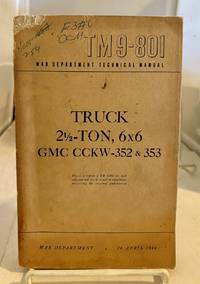
War Department Technical Manual TM 9-801 - Restricted - Truck 2 1/2-Ton 6x6 GMC CCKW-352 and 353 April 24 1944
Washington D. C.: War Department. Good. 1944. Early Reprint. Paperback. B&W Illustrations; This is a Trade paperback book with cardstock covers and a glued spine. The book is in Good only condition and was issued without a dust jacket. The book covers have some bumping and rubbing to the spine ends and corners along with a couple of chips missing some ground-in dirt and spots of discoloration. There is a previous owner's inked notation on the front cover. The text pages are in generally clean condition though the pages have light toning. The top front corner of the book cover has been torn off chipped as have the first several pages beneath it. "The GMC CCKW also known as "Jimmy" or the G-508 by its Ordnance Supply Catalog number a was a highly successful series of off-road capable 21/2-ton 6×6 trucks built in large numbers to a standardized design from 1941 to 1945 for the U. S. Army that saw heavy service predominantly as cargo trucks in both World War II and the Korean War. The original "Deuce and a Half" it formed the backbone of the famed Red Ball Express that kept Allied armies supplied as they pushed eastward after the Normandy invasion. The CCKW came in many variants including open or closed cab long wheelbase LWB CCKW-353 and short SWB CCKW-352 and over a score of specialized models but the bulk were standard general purpose cargo models. A large minority were built with a front mounted winch and one in four of the cabs had a machine-gun mounting ring above the co-driver's position. " from Wikipedia . War Department paperback
Référence libraire : A49230
|
|
|
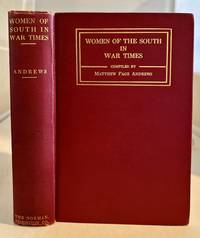
Andrews, Matthew Page (compiled by)
Women of the South in War Times
Baltimore MD: The Norman Remington Co. Very Good. 1920. 1st Edition; 1st Printing. Hardcover. This book is in Very Good condition and is lacking a dust jacket. The book is in generally clean bright condition. The spine ends and corners of the book covers have some light bumping and rubbing. There is some beginning fraying to the spine ends and corners of the book covers. The text pages are clean and bright. There is a previous owner's inked name and date on the front endpaper and a previous owner's bookplate on the front pastedown along with a small inked green mark. "Matthew Page Andrews 1879-1947 was born in Shepherdstown being the nephew of the famous southern writer Thomas Nelson Page. He was the author of Women in the South in War Time The Tercentenary History of Maryland Virginia The Old Dominion A History of the United States and The American's Creed and Its Meaning." from West Virginia University. The author writes this history from the perspective of a staunch Confederate painting the history of the war in colorful terms. He talks about the privations of the women and how they worked around the lack of provision. He includes personal testimonies and correspondence from ladies and much more. . The Norman, Remington, Co. hardcover
Référence libraire : A49411
|
|
|
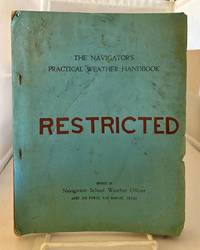
Army Air Force
The Navigator's Practical Weather Handbook
San Marcos TX: Army Air Force. Good. 1942. Stapled wraps. B&W Illustrations; This is an oversized paperback book with cardstock covers and a side stapled spine. The book is in Good only condition and was issued without a dust jacket. The book covers have noticeable spots of ground dirt / finger dirt and general wear and tear. There are several small edge nicks and tears and some curling and creases to the corners. The text pages are clean though noticeably toned throughout. There are several folded maps / pages that are in clean bright condition. The book talks about predicting the weather and making use of those predictions for proposed battles. . Army Air Force paperback
Référence libraire : A49473
|
|
|
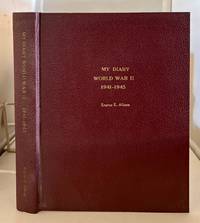
Allison, Eugene E
My Diary World War II 1941-1945
San Jose CA: Betty J. Allison. Near Fine. 1977. 1st Edition; 1st Printing. Hardcover. This book is made up of mimeographed typed pages. The book is in Near Fine condition and was issued without a dust jacket. The book and its contents are in clean bright condition. The text pages are clean and bright. This copy includes a taped in typed thank you note from the Santa Clara High School Association in thanks for donating this book. . Betty J. Allison hardcover
Référence libraire : A50327
|
|
|
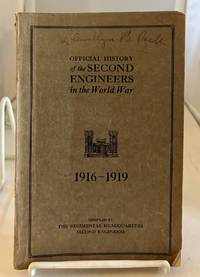
Regimental Headquarters / Second Engineers (compiled by) / William Augustus Miller
The Official History of the Second Regiment of Engineers and Second Engineer Train United States Army in the World War
United States: San Antonio Printing Company. Very Good. 1920. 1st Edition; 1st Printing. Paperback. B&W Illustrations; This is a trade sized paperback book with illustrated cardstock covers and a Glued spine. The book is in Very Good condition and was issued without a dust jacket. The spine ends and corners of the book covers have some bumping rubbing and creasing. The bottom spine end has a thin chip and the top spine end has several nicks/ beginning tears as do the front and rear spine joints. The text pages are clean and bright with a few scattered spots of foxing. Laid-in is a letter asking for copies of this official history four copies! for family members of a member of this unit. "The 2nd Engineer Regiment was deployed to the Mexican border prior to US involvement in the First World War. On the US entry to the war the 2nd Engineers deployed to the Western Front in France as the organic Engineering element of the 2nd Division. The regiment arrived in theater under strength. On 15 December 1917 400 men from Companies D E and F of the 116th Engineers Idaho National Guard assigned to the 41st "Sunset" Division. The remainder of the 116th Engineers formed the cadre of new military training depot in Angers France. The 1st and 2nd battalions of the 2nd Engineers participated in the Battle of Belleau Wood in direct support of the 4th Marine Brigade of the US Army's 2nd Division. Elements of the 2nd Engineers provided combat engineer support and fought as infantry throughout the battle. In the words of author and U. S. Marine Corps veteran John Thomason "There were always good feelings between the Marines of the 2d Division and the Regular Army units that formed it but the Marines and the 2d Engineers 'Say if I ever get a drink a 2d Engineer can have half of it! Boy they dig trenches and mend roads all night and they fight all day! '" " from Wikipedia . San Antonio Printing Company paperback
Référence libraire : A50541
|
|
|
Martinez, Annia/ Llanes Guerra, Oscar/ Garcia Pedraza, Lienny
El Modelo de Balance Social Cooperativo: Lecciones aprendidas en el proyecto "VÃA LÃCTEA": fortalecimiento de la cadena productiva de la leche en Cuba
EAE 2019. Paperback. New. Spanish language. 8.86x5.94x0.43 inches. EAE paperback
Référence libraire : 2-6139437563 ISBN : 6139437563 9786139437566
|
|
|
Gen Marcus J Wright, assisted by Col Benjamin La Bree & James P Boyd, AM, Commissioner of War Department A M
Official and Illustrated War Record Embracing Nearly One Thousand Pictorial Sketches By the Most Distinguished American Artists of Battles By Land and Sea Camp and Field Scenes Insignia and Rank and Leading Characters in the Civil War Comprehensive and Impartial Histories of Military and Naval Operations
Washinngton: Edward J. Stanley 1898. Hardcover. Acceptable. DAMAGED. HARDCOVER. SCARCE ORIGINAL 1898 PRINTING. COVERS SHOW SIGNIFICANT RUBBING AND SCUFFING TO CORNERS AND EDGES. HINGES ARE CRACKED AND SHAKEN AND REINFORCED WITH BOOKBINDER'S TAPE. All pages present mostly clean and unmarked slightly tanned and soiled. Several pages have creases and small tears. AN EXCELLENT READING OR REFERENCE COPY.; 100% Satisfaction Guaranteed! Ships same or next business day! Washinngton: [Edward J. Stanley], hardcover
Référence libraire : 142602020003
|
|
|
War Department, Office Of The Chief Of Staff
Monograph On Mexico FIRST EDITION
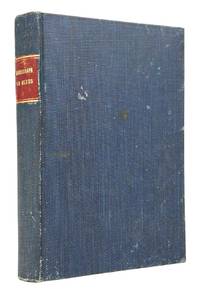
Washington DC: Government Printing Office 1914. First Edition. Hardcover. Very Good/No Jacket. The demand upon the library of the Army War College for information on Mexico became so great that this First Edition was published in 1914. Contents include six chapters highlighting general descriptions of the Mexico and inhabitants; the Federal Districts States and Territories and Coast Cities <br>Government <br>Means of Communication <br>Resources And Supplies <br>The Army and National Defense By Land <br>The Navy and Naval Resources. <br><br>Included are 29 black and white photographic Plates depicting railway stations ports parks warehouses and docks and panoramic views. Index 323 pp. <br><br>CONDITION: Hardbound navy boards gilt title within red label on spine. The corners and edges are worn covers are spotted and rubbed. Green and red design endpapers. Text block is stable; rear hinge starting; pages 289 attached but loose. Unmarked text; very good condition. Full refund if not satisfied. Government Printing Office hardcover
Référence libraire : 080071
|
|
|
Guerra, Vince
The Stars and Their Places
hardcover. Good. Access codes and supplements are not guaranteed with used items. May be an ex-library book. hardcover
Référence libraire : 0960092102.G ISBN : 0960092102 9780960092109

|
|
|
States Pay Dept War Dept, Pay Dept Uni
Manual for the Pay Department: Revised to Include April 30 1898
hardcover. Good. Access codes and supplements are not guaranteed with used items. May be an ex-library book. hardcover
Référence libraire : 0526231033.G ISBN : 0526231033 9780526231034

|
|
|
United States War Department
Abstract Of Infantry Tactics Including Exercises And Maneuvers Of Light - Infantry And Riflemen. 1833 ;
Alfred A. Knopf. Very Good with no dust jacket. 1833. Leather. B&W Illustrations; 138 pages; . .for the Use of the Militia of the United States. Bound in full tree calf leather. Width: 4.5" Height: 7.5". "To secure uniformity of instruction and practice between the infantry of the militia and that of the regular army this Abstract both in its principles and details is taken from the work which governs the regular infantry. The form of the two works is also the same. A profusion of plates including some folding and double page- general condition of these is VG or better. . Alfred A. Knopf hardcover
Référence libraire : 39083

|
|
|
Us War Department
Lloyd's Official Map Of The State Of Vrigina 1862 Large Folded Map Civil War
US War Department. Very Good with no dust jacket. 1862. Hardcover. Color Illustrated; J. T. Lloyd. Lloyd's Official Map of the State of Virginia. New York: J. T. Lloyd 1862. 31 x 51.5". A large linen-backed folding map first issued in 1861 then 1862 and last issued in 1863 taken from Boye's map of 1828 and extensively revised. Each county is in color. This version was intended for use by Union military officer's and bears the printed notation "This is the only map used to plan campaigns in Virginia by Gen. McClellan". The map is mounted in embossed brown cloth covers measuring 4.5" x 7.25" and the front board is titled in faded gold Lloyd's $100000 Topographical Map of Virginia. By War Department. Largest and finest map of the state produced in the nineteenth century" according to Wooldridge. Linen backed aprox 32" x 51.5". Contents are in excellent condition. There are a couple small holes where the folds intercept. Colors are a bit muted as it was printed. Aging has darkened the background of map. On both the right and the left sides there are somewhat lengthy commentaries. The map is at least in Very Good condition as due to it's format it has had minimal light exposure. The entire contents consists of this map. Boards with cloth spine. Boards are VG though faded the color is even the spine matches the board color but is wrinkled. Complete as issued an unusually nice copy. . US War Department hardcover
Référence libraire : 39443
|
|
|
Miller, Henry
Murder The Murderer: An Excursus On War From "The Air-conditioned Nightmare"
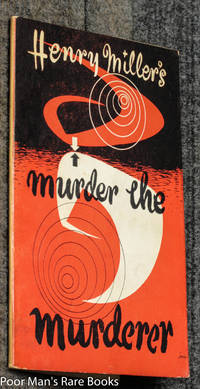
Fordingbridge Hants; Hampshire: The Delphic Press. Very Good with no dust jacket. 1946. 1st. Stiff wrapper. 59 pages; Nice copy in red and black stiff wrappers. Light soiling to back cover otherwise clean. Shifreen and Jackson A36c . Crisp copy. Printed in red. Discussions of Quakers coming independence of India etc. . The Delphic Press unknown
Référence libraire : 38186
|
|
|
S S Steel (Lyricist) ; Frederick Buckley (Composer)
DECORATIVE BROADSIDE CIVIL WAR SONG SHEET OUR UNION RIGHT OR WRONG PATRIOTIC POEM STARS & STRIPES PUBLISHER J. WRIGLEY NEW YORK EPHEMERA
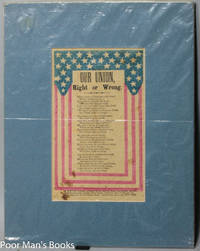
Wrigley. Very Good with no dust jacket. c1862. Mat. Color Illustrations; 14 x 11"; 1 pages; "Our Union Right or Wrong" was a popular song during the Civil War and this original decorative copy of the words is framed by the stars and stripes printed in two colors. This page has been matted and preserved with archival materials to preserve its good condition. Sight Good with some pressed out wrinkling not examined out of mat. . Wrigley unknown
Référence libraire : 34816
|
|
|
Parival, Jean-Nicolas De (1605-1669)
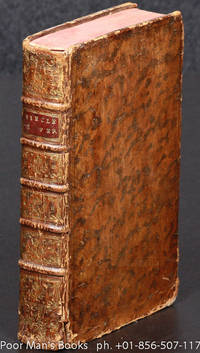
ABREGE DE L'HISTOIRE DE CE SIECLE DE FER : CONTENANT LES MISERES ET CALAMITEZ DES DERNIERS TEMPS AUEC LEURS CAUSES & PRETEXTES IUSQUES AU COURONNEMENT DU ROY DU ROMAINS FERDINAND IV.
Brussels: Chez Francois Vivien. Very Good with no dust jacket. 1658. Third Edition. Hardcover. History French; 17th Century; 12mo 7" - 7½" tall; 542 pages; Wing P361. Nicely bound in full sheep leather with ornate gilded spine. Short history of this century of iron. Containing the miseries and calamities of recent times with their causes and pretexts till the coronation of Ferdinand IV King of the Romans made in late summer one thousand six hundred fifty three. The author wrote his book to expose the horror of war. . Chez Francois Vivien hardcover
Référence libraire : 32480
|
|
|
Pierre Hammers; Preface General Weygand
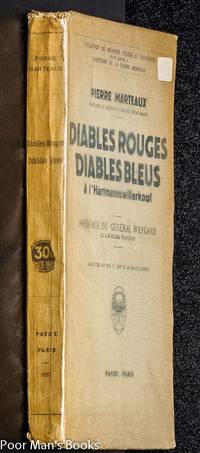
Diables Rouges Diables Bleus À Lhartmannswillerkopf
Paris: Payot. Very Good in Very Good dust jacket. 1937. Paperback. B&W Illustrations; 8vo 8" - 9" tall; 214 pages; Numerous black and white plates photos maps. Numerous woodcuts in black and white in the text headbands initials and tail-pieces. Waterstains. . Payot paperback
Référence libraire : 33826
|
|
|
D Anna Guerra De Jesus [Siria, Antonio De, 1681-1745 ]
VIDA ADMIRABLE Y PRODIOSAS VIRTUDES DE LA V. SIERVA DE DIOS
San Salvador: Dirección General De Publicaciones Del Ministerio De Educación. Very Good with no dust jacket. 1962. Third Edition. Paperback. 8vo 8" - 9" tall; 384 6 1 pages; Publisher's original wraps printed in red and black. This is a facsimile of the 1716 edition. First published 1687. Admirable Virtues of a servant of God. Spanish Language . Dirección General De Publicaciones Del Ministerio De Educación, paperback
Référence libraire : 33802

|
|
|
Georges Becker
Les Confins Franco-suisses Et Le Traie De Versailles. By Georges Becker Les Confins Franco-suisses Et Le Traite De Versailles. The Se Pour De Doctorat Sciences Politiques Et E Conomiques Par Le Colonel G. Becker.
Nancy-Paris-Strasbourg. Good with no dust jacket. 1922. Presumed 1st. Paperback. tall 8vo 9" - 10" tall; XVI-89 pages; Plain brown wraps. Moest wear contents with light browning to margin edges. French language text. . Nancy-Paris-Strasbourg paperback
Référence libraire : 33827
|
|
|
Leslie Anders
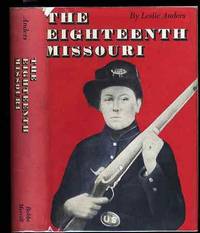
THE EIGHTEENTH MISSOURI
Bobbs Merrill. Very Good in Very Good dust jacket. 1968. First Edition. Hardcover. We fit archival quality clear acrylic covers for additional protection whenever possible. ; 8vo 8" - 9" tall; 404 pages; DJ. In acrylic. Civil war. Includes first hand accounts of more than 30 soldiers of the various wars and campaigns. . Bobbs Merrill hardcover
Référence libraire : 25508
|
|
|
Law, Richard D
Backbone of the Wehrmacht. The German K98k Rifle 1934-1945.
Toronto: Collector Grade Publications Inc 1991. HEAVY. 319pp bibliography num bw ills pictorial endpapers. Maroon leather in jacket. Spine slightly cocked leaning prev owner name on half-title page highlighting to 2 pages. The standard service arm of the German Wehrmacht from 1935 with its variations covered in detail. First Edition. Hard Cover. Very Good/Very Good. 4to. Collector Grade Publications Inc Hardcover
Référence libraire : 056183 ISBN : 0889351023 9780889351028
|
|
|
Including an Account of the Late War, and of the T
The History of the Rise Progress and Establishment of the Independence of the United States of America Vol. 3
paperback. Good. Access codes and supplements are not guaranteed with used items. May be an ex-library book. paperback
Référence libraire : 1333662548.G ISBN : 1333662548 9781333662547

|
|
|
Guerra, Ms Ann A
The THOUSAND and One DAYS: Book 1: Short Juvenile Stories The THOUSAND and One DAYS: Short Juvenile Stories
paperback. Good. Access codes and supplements are not guaranteed with used items. May be an ex-library book. paperback
Référence libraire : 1795850361.G ISBN : 1795850361 9781795850360

|
|
|
Friends' War Victims' Relief Committee and American Friends' Service Committee
List of Members of the Mission Anglo - Americaine de la Societe Des Amis
Paris. Green covers with gold title on cover covers slightly darkened fading over spine. Pages browned from edges inner hinge cracked library stamp from Haverford College Rufus M. Jones Study pages worn few corners bumped. . Good-. Hardcover. 1920. hardcover
Référence libraire : 088139
|
|
|
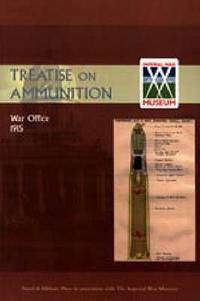
Office, War
Treatise on Ammunition 1915
paperback. Good. Access codes and supplements are not guaranteed with used items. May be an ex-library book. paperback
Référence libraire : 1843425602.G ISBN : 1843425602 9781843425601
|
|
|
Bureau of Training: War Manpower Commission/ Collin McLoughlin
Training Within Industry Program Program Development
Enna Inc. 2009. Paperback. New. 1st edition. 124 pages. 11.00x8.20x0.40 inches. Enna Inc. paperback
Référence libraire : 2-1897363966 ISBN : 1897363966 9781897363966

|
|
|
Naval War College
The Battle of Jutland
paperback. Good. Access codes and supplements are not guaranteed with used items. May be an ex-library book. paperback
Référence libraire : 1331090180.G ISBN : 1331090180 9781331090182
|
|
|
Guerra, Ms Ann A
The THOUSAND and One DAYS: Book 4: Short Juvenile Stories The THOUSAND and One DAYS Book 1 2 3 4
paperback. Good. Access codes and supplements are not guaranteed with used items. May be an ex-library book. paperback
Référence libraire : 1983876399.G ISBN : 1983876399 9781983876394
|
|
|
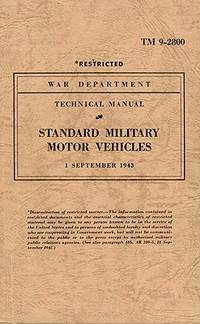
War Department
Standard Military Motor Vehicles: Technical Manual No. 9-2800 - War Department Washington 1 Sept. 1943
Brooklands Book Ltd 2006. Paperback. New. 588 pages. 8.25x5.25x1.25 inches. Brooklands Book Ltd paperback
Référence libraire : 2-1855207206 ISBN : 1855207206 9781855207202
|
|

 Recevoir par e-mail
 Télécharger en PDF
 Flux RSS
 Lien permanent


