Washington D.C.: NASA 1976. K1 - Book has some wrinkling with some tear on the top and bottom spine discoloration and shelf wear otherwise good. . Trade Paperback. Good/No Jacket as Issued. 4to - over 9¾" - 12" tall. NASA Paperback
Washington D.C.: NASA 1976. K1 - Book has some wrinkling on the top spine and corners opposite the spine light stain bottom of the cup on the back moderate discoloration and shelf wear otherwise good. . Trade Paperback. Good/No Jacket as Issued. 4to - over 9¾" - 12" tall. NASA Paperback
Washington DC: National Aeronautics and Space Administration. 1964. 4to - over 9¾" - 12" tall. F First Editions Used. H Buckram. Very Good ex-library. NASA Technical Note NASA TN: D-2271 - D-2290 1964 bound Set of 19 NASA Technical Notes bound into one volume original wraps bound-in; 4to approx. 500pp. Ex-library with usual marks. in blue buckram with gilt spine titling. Arcitles include: D-2271: Low speed fre-flight stability and drag charateristics of radially vented parachutes; D-2272: Hall effect devices as magnetometers in Cryogenic applications; D-2273: Frequency ranges for existence of waves in a cold collisionless hydrogen plasma.etc.D-2290: Initiation of cooling due to bubble growth on a heating surface. Alltogether a scarce collection of NASA technical documents. National Aeronautics and Space Administration hardcover
‎ United States Government Printing. Used - Good. Good condition. A Curriculum Project Resource for Teachers edition. A copy that has been read but remains intact. May contain markings such as bookplates stamps limited notes and highlighting or a few light stains. Bundled media such as CDs DVDs floppy disks or access codes may not be included. ‎ United States Government Printing unknown
Washington D.C.: Government Printing Office 2010. Hardcover. Very Good/Very Good Dust Jackets. 8vo - over 7¾" - 9¾" tall. 2119 pp. Tightly bound. There is a light bump to the top back corner of volume one. Text is free of markings. No ownership markings. Very good dust jackets. Very good slipcase with two corners lightly bumped. <br/> <br/> Government Printing Office hardcover
Bookseller reference : 091144 ISBN : 0160846374 9780160846373
Washington DC: National Aeronautics and Space Administration 1991. Presumed First Edition First printing thus. Wraps. Very good. 2 2-6 9 2 including covers. Appendix: Examples of NASA Patents Currently Available for Licensing. Illustrations. This document opens with " A Message for Admiral Truly to the American Taxpayers'. "NASA as it develops new technology must ensure that this technology is transferred into the private sector. The taxpayer's investment in NASA is an investment in the international competitiveness of U.S. Industry." NASA owned over one thousand patents and patent applications which protect inventions in hundreds of different subject matter categories. NASA makes these inventions available to industry through its Patent Licensing Programs which is administered by the NASA Office of General Counsel NASA Headquarters Washington DC NASA's Technology Transfer Program ensures that innovations developed for exploration and discovery are broadly available to the public maximizing the benefit to the Nation. Companies can gain a competitive edge in the marketplace by putting NASA technology to work. Spinoff profiles NASA technologies that have transformed into commercial products and services. About 50 spinoff technologies are featured annually in the publication demonstrating the benefits of America's investment in its space program. Spinoff is distributed to the public and to politicians representatives at the United Nations economic decision makers company CEOs academics scientists engineers professionals in technology transfer the news media and many others. NASA has a long history of transferring technology to the private sector. The Technology Transfer Program was formally established in 1964 in response to a congressional mandate to facilitate the process and the program has functioned under various names ever since making it NASA's longest continuously operated mission. National Aeronautics and Space Administration paperback
Washington DC: National Aeronautics and Space Administration c1962. Presumed First Edition First printing. Wraps. Good. Format is approximately 10.25 inches by 8.25 inches. 16 pages plus covers. Illustrated some in color. This is a college focused recruitment booklet. The date is assumed as there was an article in Aviation Week and Space Technology of June 2 1962 that used the phrase NASA.spearhead to space. This booklet is an invitation for college graduates with inquiring scientific minds.creative minds.to seek to join NASA's scientific and engineering staff. NASA offered rapid professional advancement early recognition rapid salary advancement support for graduate study and a choice of which NASA facilities to consider joining. The National Aeronautics and Space Administration NASA is an independent agency of the U.S. Federal Government responsible for the civilian space program as well as aeronautics and space research. NASA was established in 1958 succeeding the National Advisory Committee for Aeronautics NACA. The new agency was to have a distinctly civilian orientation encouraging peaceful applications in space science. Since its establishment most US space exploration efforts have been led by NASA including the Apollo Moon landing missions the Skylab space station and later the Space Shuttle. NASA is supporting the International Space Station and is overseeing the development of the Orion spacecraft the Space Launch System and Commercial Crew vehicles. The agency is also responsible for the Launch Services Program which provides oversight of launch operations and countdown management for uncrewed NASA launches. National Aeronautics and Space Administration paperback
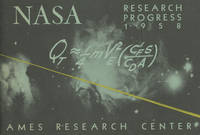
California: National Aeronautics and Space Administration NASA / Ames Research Center 1958. Paperback. Fine. 1958 Softcover. Illustrated. 30 pp. Fine. National Aeronautics and Space Administration (NASA) / Ames Research Center paperback
National Archives & Records Administration. Used - Good. Used book that is in clean average condition without any missing pages. National Archives & Records Administration unknown
Bookseller reference : 40711377-6 ISBN : 0911333347 9780911333343
Washington DC: National Aeronautics and Space Administration 1963. Presumed first thus. Wraps. Good. Format is approximately 8 inches by 8 inches. Four page insert format is approximately 7.5 inches by 7.25 inches. Rear cover folds out. Primary cover colors are Blue and Gold. The insert is titled "Salute to NASA" and includes a one page narrative a one page program one page of Head Table Guests and the last page lists the sponsor committee and administrative assistance. The interior of the rear foldout presents NASA milestones from 1958 through 1963 and a summary of the Mercury Flight Program. The front cover has a small circular hole that reveals the NASA logo on the first page of the insert. The National Aeronautics and Space Administration NASA is an independent agency of the U.S. Federal Government responsible for the civilian space program as well as aeronautics and space research. The NASA was established in 1958 succeeding the National Advisory Committee for Aeronautics NACA. The new agency was to have a distinctly civilian orientation encouraging peaceful applications in space science. Since its establishment most US space exploration efforts have been led by NASA including the Apollo Moon landing missions the Skylab space station and later the Space Shuttle. NASA is supporting the International Space Station and is overseeing the development of the Orion spacecraft the Space Launch System and Commercial Crew vehicles. The agency is also responsible for the Launch Services Program which provides oversight of launch operations and countdown management for uncrewed NASA launches. NASA science is focused on better understanding Earth through the Earth Observing System; advancing heliophysics through the efforts of the Science Mission Directorate's Heliophysics Research Program; exploring bodies throughout the Solar System with advanced robotic spacecraft such as New Horizons; and researching astrophysics topics such as the Big Bang through the Great Observatories and associated programs. National Aeronautics and Space Administration paperback
Washington DC: GPO 1983. good. Quarto 13 wraps profusely illus. in color covers slightly soiled and creased date stamped on front cover small tears to cover edges. GPO paperback
Washington DC: GPO 1977. good. Quarto 503 v.2 only wraps illus. maps tables figures appendices references index slight soiling to covers some wear at spine. In this final report on the National Geodetic Satellite Program a separate chapter describes the results of each of the participating agencies. Agencies in this volume include National Geodetic Survey Ohio State University Smithsonian Astrophysical Observatory and University of California Los Angeles. GPO paperback
Washington DC: NASA 2002. very good CD-ROM's in fair to good plastic cases. 7 CD-ROM disks 7 CD-ROM disks in plastic cases--cases for disks 1 2 5 & 6 are cracked but no damage to CD-ROM's. The Nimbus 7 Limb Infrared Monitor of the Stratosphere LIMS radiance profile dataset of 1978/79 was reconditioned and reprocessed to Version 6 profiles of temperature and species that are improved significantly over those from Version 5. NASA unknown
Washington DC: GPO 1969. fair to good. 238 wraps illus. tables appendices covers and edges foxed some foxing to a few pages mailing label on rear cover. Front cover creased. GPO paperback
Kennedy Space Center FL: NASA n.d. very good. 12" x 18" 1 12" x 18" color map folded in sixths includes short written welcome and tour highlights. NASA unknown
Washington DC: National Astronautics and Space Administration 1984. Presumed First Edition First printing. This is one of multiple originals issued. Single sheet printed on both sides. Very good. The format is approximately 8 inches by 10 inches. This is a single sheet with imagery on the front side and printing on both sides in a plastic sleeve. On the front side is a large color photograph of the Orbiter Discovery on Launch Pad. Space Shuttle Discovery Orbiter Vehicle Designation: OV-103 is a retired American Space Shuttle orbiter. The spaceplane was one of the orbiters from NASA's Space Shuttle program and the third of five fully operational orbiters to be built. Its first mission STS-41-D flew from August 30 to September 5 1984. Over 27 years of service it launched and landed 39 times aggregating more spaceflights than any other spacecraft to date. The Space Shuttle launch vehicle had three main components: the Space Shuttle orbiter a single-use central fuel tank and two reusable solid rocket boosters. Nearly 25000 heat-resistant tiles cover the orbiter to protect it from high temperatures on re-entry. Discovery became the third operational orbiter to enter service preceded by Columbia and Challenger. It embarked on its final mission STS-133 on February 24 2011 and touched down for the last time at Kennedy Space Center on March 9 having spent a cumulative total of nearly a full year in space. Discovery performed both research and International Space Station ISS assembly missions and also carried the Hubble Space Telescope into orbit among other satellites. Discovery was the first operational shuttle to be retired followed by Endeavour and then Atlantis. The shuttle is now on display at the Steven F. Udvar-Hazy Center of the Smithsonian National Air and Space Museum. The name Discovery was chosen to carry on a tradition based on ships of exploration2 primarily HMS Discovery one of the ships commanded by Captain James Cook during his third and final major voyage from 1776 to 1779 and Henry Hudson's Discovery which was used in 1610-1611 to explore Hudson Bay and search for a Northwest Passage. Other ships bearing the name have included HMS Discovery of the 1875-1876 British Arctic Expedition to the North Pole and RRS Discovery which carried the 1901-1904 Discovery Expedition to Antarctica led by Captain Scott. Space Shuttle Discovery launched the Hubble Space Telescope and conducted the second and third Hubble service missions. It also launched the Ulysses probe and three TDRS satellites. Twice Discovery was chosen as the "Return To Flight" Orbiter first in 1988 after the loss of Challenger in 1986 and then again for the twin "Return To Flight" missions in July 2005 and July 2006 after the Columbia disaster in 2003. Project Mercury astronaut John Glenn who was 77 at the time flew with Discovery on STS-95 in 1998 making him the oldest person to go into space at that time in history. On May 27 1999 Discovery was launched on STS-96 the first shuttle mission to dock with the International Space Station. Discovery was retired after completing its final mission STS-133 on March 9 2011. The spacecraft is now on display in Virginia at the Steven F. Udvar-Hazy Center an annex of the Smithsonian Institution's National Air and Space Museum. National Astronautics and Space Administration unknown
Washington DC: U.S. Government Printing Office 1989. Wraps. fair to good ex-lib. Quarto 97 wraps profusely illus. in color part of title page stuck to adjacent page library stickers on rear cover crossed out in marker. Library call number sticker taped to spine some soiling to covers. U.S. Government Printing Office paperback
Langley Research Center Lewis Research Center Marshall Space Flight Center. Washington: Scientific & Technical Information Office 1976. x238 135 pages. 11x8.5" paperback. Library rubberstamp & sticker bit scuffed soiled VG. paperback

 Receive by email
 Download as PDF document
 RSS feed
 Permanent link