|
National Aeronauti Space Administration
Spacecraft Solar Cell Arrays
Paperback / softback. New. paperback
Bookseller reference : B9781499161168 ISBN : 1499161166 9781499161168
|
|
|
National Aeronautics and Space Administration NASA
Spacecraft Tracking and Communication
Washington DC: National Aeronautics and Space Administration NASA 1967. Wraps. Near Fine. 4 pages. Self wrappers. 8 x 10 1/4 inches. A touch of browning otherwise nice and clean. Illustrated. Wraps. Part of the NASA Facts series - an educational publication of the National Aeronautics and Space Administration NASA Office of Public Affairs Programs Division. <br /> <br /> Illustrated showing several launch vehicles on the pad with descriptions. This item is part of NASA's science series for Jr. High school General Science programs. Fairly basic but with a diagram of NASA's tracking facilities and an overview of how the entire system works. National Aeronautics and Space Administration (NASA) unknown
Bookseller reference : 27505

|
|
|
National Aeronautics and Space Administration, Marshall Space Flight Center
Spacelab
Washington DC: NASA 1983. good. Quarto 8 wraps illus. some soiling to covers. NASA paperback
Bookseller reference : 14189
|
|
|
National Aeronautics and Space Administration
Spacelab 1
National Aeronautics and Space Administration. Used - Very Good. Very Good condition. Spacelab Program Spacecraft Astronautics National Aeronautics and Space Administration unknown
Bookseller reference : SB15C-01725
|
|
|
National Aeronautics and Space Administration, George C. Marshall Space Flight Center
Spacelab 1
Huntsville AL: Marshall Space Flight Center c. 1980. good. Quarto 30 illus. many in color appendix some wear to cover edges small scratches to covers. Marshall Space Flight Center unknown
Bookseller reference : 13553
|
|
|
National Aeronautics and Space Administration
Spacelab Flight Division Missions
Washington DC: NASA 1983. Folder. good sheets in good folder. Quarto 26 pages. 13 separate 8-1/2" x 11" sheets in lightweight cardboard folder illus. small rough spot in margin of last sheet. Folder somewhat soiled and creased: edges worn small tear at spine. Topics covered include Spacelab 1 mission Spacelab 2 mission Spacelab 3 mission Space Biomedical Laboratory formerly Spacelab 4 Space Plasma Laboratory formerly Spacelab 6 Solar Optical Telescope missions Astro LFC-1 mission Shuttle Radar Laboratory OAST-1 mission OSTA-2 mission and Materials Science Laboratory. NASA unknown
Bookseller reference : 14188
|
|
|
National Aeronautics and Space Administration
Spacelab Life Sciences 1; First Space Laboratory Dedicated to Life Sciences Research NP 120
Lyndon B. Johnson Space Center Houston TX: National Aeronautics and Space Administration 1989. Presumed First Edition First printing. Wraps. Good. vii 1 44 pages plus covers. Illustrations most in color. Cover has some wear and soiling with edge tear at back. Format is approximately 8.5 inches by 11 inches. The Spacelab Life Sciences 1 SLS-1 mission originated with a call to the scientific community for experiments in 1978. Accepted experiments involved humans primates rodents amphibians and plants. The original payload configuration was reduced to include human passive rodent and basic biology experiments and engineering evaluations. Human experiments will address effects of micro-gravity on various physiological parameters during and postflight. Investigations with nonhuman subjects will study microgravity effects on the cardiopulmonary cardiovascular and musculoskeletal systems on the regulation of blood volume and erythropoiesis and on calcium metabolism and gravity receptors. SLS-1 was to serve as a stepping stone in establishing capabilities for flying nonhuman subjects and performing in-flight manipulations on these subjects without jeopardizing the crew environment. Fundamental technology incorporated in the animal holding facilities and laboratory work bench will be used in subsequent missions and in the future Space Station. Space Life Science-1 SLS-1 launched aboard Space Shuttle Orbiter Columbia STS-40 on June 5 1991 was the first Spacelab mission dedicated solely to life sciences research. The laboratory for the research took place in a module shown here carried in the cargo bay of the Columbia. The purpose of the mission was to study the mechanisms magnitudes and time courses of certain physiological changes that occur during space flight to investigate the consequences of the body's adaptation to microgravity and readjustment to Earth's gravity and to bring the benefits back home to Earth. The mission was designed to explore the responses of the heart lungs blood vessels kidneys and hormone-secreting glands to examine the causes of space motion sickness and study changes in the muscles bones and cells. Many studies started during SLS-1 provided data that served as the foundation for investigations on the International Space Station. National Aeronautics and Space Administration paperback
Bookseller reference : 74608
|
|
|
National Aeronautics and Space Administration
Spacesuit guidebook SuDoc NAS 1.84:117
Paperback. Fine. Spacesuit guidebook HOW TO BUILD A SPACESUIT paperback
Bookseller reference : 59139
|
|
|
National Aeronautics and Space Administration
Spacesuit Guidebook. PED-117
Washington D.C. U.S.A: NASA 1991. Softcover. Fair/No Jacket. 8 1/2" x 11. FAIR / NO DUST JACKET as Issued. Former Library Book. 23pp. Text clean and unmarked except for usual library treatments. Pages slightly toned at edges. Illustrated with technical drawings photographs and charts in b/w. Card wraps illustrated with a photograph of astronaut Bruce McCandless in b/w. Wraps rubbed and creased and splitting at spine top and bottom. Original staple binding intact. NASA paperback
Bookseller reference : 027081
|
|
|
National Aeronauti Space Administration
Spinoff 1996
Paperback / softback. New. paperback
Bookseller reference : A9781499170795 ISBN : 1499170793 9781499170795
|
|
|
National Aeronautics and Administration
Spinoff 1995
Paperback / softback. New. paperback
Bookseller reference : A9781502903303 ISBN : 150290330x 9781502903303
|
|
|
National Aeronautics and Administration
Spinoff 1997
Paperback / softback. New. paperback
Bookseller reference : B9781502903419 ISBN : 1502903415 9781502903419
|
|
|
National Aeronauti Space Administration
Spinoff 1996
Paperback / softback. New. paperback
Bookseller reference : B9781499170795 ISBN : 1499170793 9781499170795
|
|
|
National Aeronauti Space Administration
Spinoff 1995
Paperback / softback. New. paperback
Bookseller reference : B9781499170955 ISBN : 1499170955 9781499170955
|
|
|
National Aeronautics and Administration
Spinoff 1995
Paperback / softback. New. paperback
Bookseller reference : B9781502903303 ISBN : 150290330x 9781502903303
|
|
|
National Aeronautics and Administration
Spinoff 1999
Paperback / softback. New. paperback
Bookseller reference : B9781502903518 ISBN : 1502903512 9781502903518
|
|
|
National Aeronautics and Administration
Spinoff 1998
Paperback / softback. New. paperback
Bookseller reference : B9781502903501 ISBN : 1502903504 9781502903501
|
|
|
National Aeronautics and Administration
Spinoff 1996
Paperback / softback. New. paperback
Bookseller reference : B9781502903365 ISBN : 1502903369 9781502903365
|
|
|
National Aeronautics and Space Administration, Office of Aeronautics and Space Transportation Technology
Spinoff 1998. NASA NP-1998-09-241-HQ
Washington DC: NASA 1998. very good. Quarto 118 wraps profusely illus. in color map appendix. NASA spinoffs in the areas of health and medicine transportation public safety consumer/home/recreation environment and resources management computer technology and industrial productivity/manufacturing technology. NASA paperback
Bookseller reference : 12096
|
|
|
National Aeronautics and Space Administration Office of Commercial Programs Technology Utilization Division
Spinoff 1989
Washington DC: GPO 1989. First Edition. First Printing. good. 136 wraps color illus. This National Aeronautics and Space Administration publication recognized the Twentieth Anniversary of the First Apollo Lunar Landing 1969-1989. Foreword by Richard H. Truly. GPO paperback
Bookseller reference : 43767 ISBN : 0160501598 9780160501593
|
|
|
National Aeronautics and Space Administration
Spinoff 2000
like new. unknown
Bookseller reference : 20937991 ISBN : 1494772078 9781494772079
|
|
|
National Aeronautics and Space Administration
Spinoff 2000
new. unknown
Bookseller reference : 20937991-n ISBN : 1494772078 9781494772079
|
|
|
National Aeronautics and Space Administration
Spinoff 2008: 50 Years of NASA-Derived Technologies: 50 Years of NASA-Derived Technologies
Office of Aerospace Technology 1823. Paperback. Like New. Pages are clean and are not marred by notes or folds of any kind. ~ ThriftBooks: Read More Spend Less.Dust jacket quality is not guaranteed. Office of Aerospace Technology, paperback
Bookseller reference : G0160814235I2N00 ISBN : 0160814235 9780160814235
|
|
|
National Aeronautics and Administration
Spinoff 2002: Fortieth Anniversary Technology Utilization Program
Paperback / softback. New. paperback
Bookseller reference : A9781494771997 ISBN : 1494771993 9781494771997
|
|
|
National Aeronautics and Space Administration
Spinoff 2009: Innovative Partnerships Program
paperback. Good. Access codes and supplements are not guaranteed with used items. May be an ex-library book. paperback
Bookseller reference : 0160841917.G ISBN : 0160841917 9780160841910
|
|
|
National Aeronautics and Space Administration
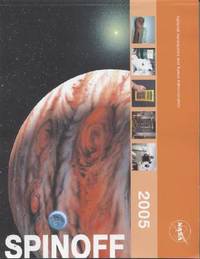
Spinoff 2005
paperback. Good. Access codes and supplements are not guaranteed with used items. May be an ex-library book. paperback
Bookseller reference : 0160752663.G ISBN : 0160752663 9780160752667
|
|
|
National Aeronautics and Space Administration
Spinoff 2008: 50 Years of Nasa-derived Technoliges 1958-2008
paperback. Good. Access codes and supplements are not guaranteed with used items. May be an ex-library book. paperback
Bookseller reference : 0160814235.G ISBN : 0160814235 9780160814235
|
|
|
National Aeronautics and Space Administration
Spinoff 2005; Innovative Partnerships Program
Washington DC: National Aeronautics and Space Administration NASA Center for AeroSpace Information CASI Publications and Graphics Department 2005. Presumed First Edition First printing of this annual report. Trade paperback. Very good. Lynette Cook Front cover art. The format is approximately 11 inches by 8.5 inches. 167 1 pages. Illustrations most with color. Annual report on technology transfer or "technology twice used" inventions from NASA. Since 1976 Spinoff has profiled technologies that benefit from NASA investment and expertise. These developments have transformed into commercial products and services that are used throughout daily life from your cell phone camera to the memory foam in your mattress. When Congress created NASA it mandated the agency disseminate its innovations as widely possible. To that end the Technology Transfer Program was created in 1964 and it has functioned ever since making it NASA’s longest continuously operated mission. Early publications about NASA inventions made available to the scientific and engineering communities resulted in feedback indicating a broad interest in the private sector in adapting NASA technology for commercial uses. As products began to emerge NASA began preparing annual reports on these successes to present at congressional budget hearings. Spinoff has been published in a four-color editionand it has been released every year since 1976. All together since its first edition NASA has shared the stories of more 2000 products and services that began as or have benefited from NASA technology. In addition to the general public NASA sends copies of Spinoff to politicians representatives at the United Nations economic decision makers company CEOs academics scientists engineers professionals in technology transfer the news media and many others. The early black-and-white Technology Utilization Program Reports published in 1973 and ‘74 generated so much public interest that NASA decided to turn them into an attractive publication for a general audience. NASA SPINOFF now features dozens of success stories annually online and in its print publication demonstrating the wider benefits of America’s investment in its space program. The 2005 edition highlights Partnership Benefits in Health and Medicine Transportation Public Safety Consumer/Home/Recreations Environment and Resources Management; Computer Technology and Industrial Productivity/Manufacturing Technology. National Aeronautics and Space Administration, NASA Center for AeroSpace Information (CASI), Publications and Graphics Departmen paperback
Bookseller reference : 86140 ISBN : 0160752663 9780160752667
|
|
|
National Aeronautics and Administration
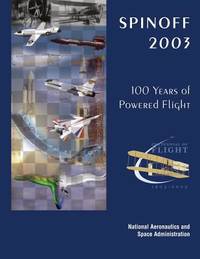
Spinoff 2003: 100 Years of Powered Flight - Centennial of Flight 1903-2003
Paperback / softback. New. paperback
Bookseller reference : B9781494771904 ISBN : 149477190x 9781494771904
|
|
|
National Aeronautics and Administration
Spinoff 2000
Paperback / softback. New. paperback
Bookseller reference : B9781494772079 ISBN : 1494772078 9781494772079
|
|
|
National Aeronautics and Administration
Spinoff 2002: Fortieth Anniversary Technology Utilization Program
Paperback / softback. New. paperback
Bookseller reference : B9781494771997 ISBN : 1494771993 9781494771997
|
|
|
National Aeronautics and Administration
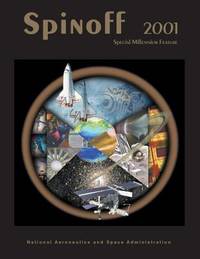
Spinoff 2001: Special Millennium Feature
Paperback / softback. New. paperback
Bookseller reference : B9781494772031 ISBN : 1494772035 9781494772031
|
|
|
National Aeronautics and Space Administration, Publication Department
SPINOFF 2008: 50 YEARS of NASA~DERIVED TECHNOLOGIES 1958 ~ 2008 Innovative Partnerships Program
: National Aeronautics and Space Administration Publication Department 2008. Soft cover. Near Fine. 2008 B00K: Near Fine/ . B00K: Near Fine/ $25.14 9780160814235 SPINOFF 2008: 50 YEARS of NASA~DERIVED TECHNOLOGIES 1958 ~ 2008 Innovative Partnerships Program National Aeronautics and Space Administration Publication Department 2008 UnStated 1sT Edition Rectangular S/c. Black Spine With Title In Bronze Letters Soft Cover B00K: Near Fine/ Slight Shelf Edge And Corner Wear. 213 Numbered Pages Appear To Be Lightly Viewed Clean And Tight To The Spine In Near Fine/ Condition. D/j: None. No Odors No Writing No Names No Stains. D/j: None. = Description Applies To This B00K ONLY. This B00K Is Hard To Find Will Be Packaged And Shipped Carefully To Avoid Shipping Damage And Will Make It An Excellent Addition To Your Own Personal Library Collection Or As A Gift. WORLD WIDE SHIPPING AVAILABLE. <br/> <br/> National Aeronautics and Space Administration, Publication Department paperback
Bookseller reference : 013420 ISBN : 0160814235 9780160814235
|
|
|
National Aeronautics and Space Administration, Office of Aerospace Technology, Commercial Technology Division
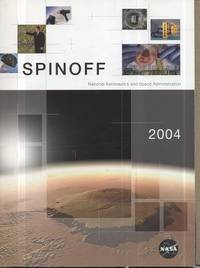
Spinoff 2004; NP-2004-10-374-HQ
Washington DC: National Aeronautics and Space Administration Office of Aerospace Technology Commercial Technology Division 2004. Presumed First Edition First printing thus. Wraps. Very good. Quarto 137 1 pages. Wraps. Profusely illustrated most in color. Maps Cover slightly worn and soiled. Foreword by Administrator Sean O'Keefe. Sean Charles O'Keefe born January 27 1956 is the university professor at Syracuse University Maxwell School former chairman of Airbus Group Inc. former Secretary of the Navy former Administrator of NASA and former chancellor of Louisiana State University LSU. He is a former member of the board of directors of DuPont. O'Keefe became NASA administrator on December 21 2001 after the United States Senate confirmed his nomination. He came to NASA without formal training in science or engineering as was the case with James E. Webb who was NASA administrator from 1961 to 1968. O'Keefe's tenure at NASA can be divided into roughly three equal periods each marked by a single problem or event of overriding importance:; in the period December 2001 through January 2003 O'Keefe eliminated a $5 billion cost overrun in the construction of the International Space Station. In 2003 the Space Shuttle Columbia accident and its aftermath. From January 2004 through February 2005 O'Keefe reorganized NASA to start working on President George W. Bush's newly announced Vision for Space Exploration to send humans to the Moon and Mars. Introduction by Benjamin Neumann Program Director Innovative Partnerships Program. Since its inception in 1958 NASA has accomplished many great scientific and technological feats in air and space. NASA technology also has been adapted for many non-aerospace uses by the private sector. NASA remains a leading force in scientific research and in stimulating public interest in aerospace exploration as well as science and technology in general. Perhaps more importantly our exploration of space has taught us to view Earth ourselves and the universe in a new way. While the tremendous technical and scientific accomplishments of NASA demonstrate vividly that humans can achieve previously inconceivable feats we also are humbled by the realization that Earth is just a tiny "blue marble" in the cosmos. Spinoff profiles NASA technologies that have transformed into commercial products and services. About 50 spinoff technologies are featured annually in the publication demonstrating the wider benefits of America's investment in its space program. NASA has a long history of transferring technology to the private sector. The Technology Transfer Program was formally established in 1964 in response to a congressional mandate to facilitate the process and the program has functioned under various names ever since making it NASA's longest continuously operated mission. Early publications about NASA inventions made available to the scientific and engineering communities resulted in feedback that indicated a broad interest in the private sector in acquiring and adapting NASA technology for commercial uses. As spinoff products began to emerge NASA began preparing annual reports on these successes to present at congressional budget hearings. These black and white Technology Utilization Program Reports published in 1973 and '74 generated so much public interest that NASA decided to turn them into an attractive publication for a general audience. The first four-color edition of Spinoff was published in 1976 and it has been published every year since sharing the stories of nearly 2000 products and services that began as or have benefited from NASA technology. National Aeronautics and Space Administration, Office of Aerospace Technology, Commercial Technology Division paperback
Bookseller reference : 74044 ISBN : 0160731798 9780160731792
|
|
|
National Aeronautics and Space Administration, Office of Aerospace Technology, Commercial Technology Division
Spinoff 2001; NP-2001-04-264-HQ
Washington DC: National Aeronautics and Space Administration Office of Aerospace Technology Commercial Technology Division 2001. Presumed First Edition First printing thus. Wraps. Very good. Quarto 133 1 pages. Wraps. Profusely illustrated most in color. Maps Cover slightly worn and soiled. Special Millennium Feature. Foreword by Administrator Daniel S. Goldin. Daniel Saul Goldin born July 23 1940 served as the 9th and longest-tenured Administrator of NASA from April 1 1992 to November 17 2001. He was appointed by President George H. W. Bush and also served under Presidents Bill Clinton and George W. Bush. He began his career at NASA's Lewis Research Center in Cleveland Ohio that year and worked on electric propulsion systems for human interplanetary travel. Goldin left NASA a few years later to work at the TRW Space and Technology Group in Redondo Beach California. During a 25-year career at TRW Goldin eventually became Vice President and General Manager and led projects that conceptualized and produced advanced communication spacecraft space technologies and scientific instruments. When Goldin returned to NASA as administrator he pioneered the "faster better cheaper" approach that proposed NASA could cut costs while still delivering a wide variety of aerospace programs. Introduction by Robert L. Norwood Director Commercial Technology Division. Since its inception in 1958 NASA has accomplished many great scientific and technological feats in air and space. NASA technology also has been adapted for many non-aerospace uses by the private sector. NASA remains a leading force in scientific research and in stimulating public interest in aerospace exploration as well as science and technology in general. Perhaps more importantly our exploration of space has taught us to view Earth ourselves and the universe in a new way. While the tremendous technical and scientific accomplishments of NASA demonstrate vividly that humans can achieve previously inconceivable feats we also are humbled by the realization that Earth is just a tiny "blue marble" in the cosmos. Spinoff profiles NASA technologies that have transformed into commercial products and services. About 50 spinoff technologies are featured annually in the publication demonstrating the wider benefits of America's investment in its space program. NASA has a long history of transferring technology to the private sector. The Technology Transfer Program was formally established in 1964 in response to a congressional mandate to facilitate the process and the program has functioned under various names ever since making it NASA's longest continuously operated mission. Early publications about NASA inventions made available to the scientific and engineering communities resulted in feedback that indicated a broad interest in the private sector in acquiring and adapting NASA technology for commercial uses. As spinoff products began to emerge NASA began preparing annual reports on these successes to present at congressional budget hearings. These black and white Technology Utilization Program Reports published in 1973 and '74 generated so much public interest that NASA decided to turn them into an attractive publication for a general audience. The first four-color edition of Spinoff was published in 1976 and it has been published every year since sharing the stories of nearly 2000 products and services that began as or have benefited from NASA technology. National Aeronautics and Space Administration, Office of Aerospace Technology, Commercial Technology Division paperback
Bookseller reference : 74042 ISBN : 0160664624 9780160664625
|
|
|
National Aeronautics and Space Administration, Innovative Partnerships Program
Spinoff 2005; NP-2005-12-419-HQ
Washington DC: National Aeronautics and Space Administration Innovative Partnerships Program 2005. Presumed First Edition First printing thus. Wraps. Very good. Format 8.5 inches by 11 inches oblong. 167 1 pages. Wraps. Profusely illustrated many in color. Maps Cover slightly worn and soiled. Foreword by Administrator Michael D. Griffin. Michael Douglas Griffin born November 1 1949 is an American physicist and aerospace engineer. He served as Administrator of NASA the U.S. space agency from April 13 2005 to January 20 2009. As NASA Administrator Griffin oversaw such areas as the future of human spaceflight the fate of the Hubble telescope and NASA's role in understanding climate change. In April 2009 Griffin who has an academic background was named eminent scholar and a professor of mechanical and aerospace engineering at the University of Alabama in Huntsville. Griffin had worked at NASA prior to serving as NASA Administrator including as Associate Administrator for Exploration. When he was nominated as NASA chief he was head of the Space Department at the Johns Hopkins University Applied Physics Laboratory APL in Laurel Maryland. While he describes himself modestly as a "simple aerospace engineer from a small town" Griffin has held several high-profile political appointments. In 2007 he was included in the TIME 100 the magazine's list of the 100 most influential people. Introduction by Merle McKenzie Acting Director Innovative Partnerships Program. She had previously been manager of JPL's Technology Transfer and Commercialization Program. Since its inception in 1958 NASA has accomplished many great scientific and technological feats in air and space. NASA technology also has been adapted for many non-aerospace uses by the private sector. NASA remains a leading force in scientific research and in stimulating public interest in aerospace exploration as well as science and technology in general. Perhaps more importantly our exploration of space has taught us to view Earth ourselves and the universe in a new way. While the tremendous technical and scientific accomplishments of NASA demonstrate vividly that humans can achieve previously inconceivable feats we also are humbled by the realization that Earth is just a tiny "blue marble" in the cosmos. Spinoff profiles NASA technologies that have transformed into commercial products and services. About 50 spinoff technologies are featured annually in the publication demonstrating the wider benefits of America's investment in its space program. NASA has a long history of transferring technology to the private sector. The Technology Transfer Program was formally established in 1964 in response to a congressional mandate to facilitate the process and the program has functioned under various names ever since making it NASA's longest continuously operated mission. Early publications about NASA inventions made available to the scientific and engineering communities resulted in feedback that indicated a broad interest in the private sector in acquiring and adapting NASA technology for commercial uses. As spinoff products began to emerge NASA began preparing annual reports on these successes to present at congressional budget hearings. These black and white Technology Utilization Program Reports published in 1973 and '74 generated so much public interest that NASA decided to turn them into an attractive publication for a general audience. The first four-color edition of Spinoff was published in 1976 and it has been published every year since sharing the stories of nearly 2000 products and services that began as or have benefited from NASA technology. National Aeronautics and Space Administration, Innovative Partnerships Program paperback
Bookseller reference : 74043 ISBN : 0160752663 9780160752667
|
|
|
National Aeronautics and Space Administration
SPINOFF: NASA Technologies Enhance Our Lives; NP 2009-10-627-HQ
Washington DC: National Aeronautics and Space Administration 2009. Presumed First Edition First printing thus. Brochure. Very good. Unpaginated 16 pages. Illustrations color. Map. Spinoff 2009 highlights recent research and development activities across the Agency and the successful transfer of NASA technologies to the marketplace. This brochure summarized the commercial technologies profiled in Spinoff 2009. Presents information on achievements in Health and Medicine; Transportation; Public Safety; Consumer Home and Recreation; Environmental and Agricultural Resources Computer Technology and Industrial Productivity. The full NASA Spinoff 2009 highlights the Agency's work to "research develop verify and transfer advanced aeronautics space and related technologies." NASA-derived technologies included in Spinoff 2009 are: A star-mapping algorithm developed for the Hubble Space Telescope now adapted to identify unique pattern markers on animals like whale sharks and polar bears that is helping study these and other endangered species; A device NASA invented to study cell growth in simulated weightlessness that is now enabling medical research into treatments for conditions such as heart disease diabetes and cirrhosis; A satellite-respondent buoy used for monitoring currents in the North Pacific that now is used for tracking debris fields on the high seas; A gravity-loading technology designed to help astronauts stay in shape while in orbit that has been incorporated in an "anti-gravity" treadmill to help ease physical therapy; and Spacesuits incorporating sun-blocking fabric and special cooling systems that have been adapted into clothing offering protection to patients with light sensitivities. NASA spinoff technologies are commercial products and services which have been developed with the help of NASA through research and development contracts such as Small Business Innovation Research SBIR or STTR awards licensing of NASA patents use of NASA facilities technical assistance from NASA personnel or data from NASA research. Information on new NASA technology that may be useful to industry is available in periodical and website form in "NASA Tech Briefs" while successful examples of commercialization are reported annually in the NASA publication "Spinoffs". The Spinoff publication has documented more than 2000 technologies over time. In 1979 notable science fiction author Robert A. Heinlein helped bring awareness to the spinoffs when he was asked to appear before Congress after recovering from one of the earliest known vascular bypass operations to correct a blocked artery. In his testimony reprinted in his 1980 book Expanded Universe Heinlein claimed that four NASA spinoff technologies made the surgery possible and that they were only a few from a long list of NASA spinoff technologies from space development. Since 1976 the NASA Technology Transfer Program has connected NASA resources to private industry referring to the commercial products as spinoffs. Well-known products that NASA claims as spinoffs include memory foam originally named temper foam freeze-dried food firefighting equipment emergency "space blankets" DustBusters cochlear implants LZR Racer swimsuits and CMOS image sensors. As of 2016 NASA has published over 2000 other spinoffs in the fields of computer technology environment and agriculture health and medicine public safety transportation recreation and industrial productivity. Contrary to common belief NASA did not invent Tang Velcro or Teflon. Spinoff is a NASA publication featuring technology made available to the public. Since 1976 NASA has featured an average of 50 technologies each year in the annual publication and Spinoff maintains a searchable database of these technologies. When products first spun off from space research NASA presented a black and white report in 1973 titled the "Technology Utilization Program Report". Because of interest in the reports NASA decided to create the annual publications in color. Spinoff was first published in 1976 and since then NASA has distributed free copies to universities the media inventors and the general public. Spinoff describes how NASA works with various industries and small businesses to bring new technology to the public. As of 2016 there were over 1920 Spinoff products in the database dating back to 1976. National Aeronautics and Space Administration unknown
Bookseller reference : 86086
|
|
|
NATIONAL AERONAUTICS AND SPACE ADMINISTRATION HAMPTON VA LANGLEY RESEARCH CEN TER
Standard Tests for Toughened Resin Composites
PN. New. 1982. Soft Cover. Date is original print. This is a reprint edition. . PN paperback
Bookseller reference : 765255
|
|
|
National Aeronautics and Administration
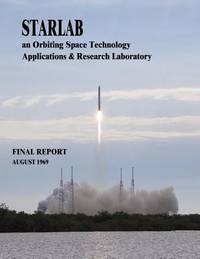
Starlab: An Orbiting Space Technology Applications & Research Laboratory
Paperback / softback. New. paperback
Bookseller reference : A9781505399370 ISBN : 1505399378 9781505399370
|
|
|
National Aeronautics and Administration
Starlab: An Orbiting Space Technology Applications & Research Laboratory
Paperback / softback. New. paperback
Bookseller reference : B9781505399370 ISBN : 1505399378 9781505399370
|
|
|
NATIONAL AERONAUTICS AND SPACE ADMINISTRATION HAMPTON VA LANGLEY RESEARCH CEN TER
Structural Concepts for Hydrogen-Fueled Hypersonic Airplanes
PN. New. 1966. Soft Cover. Date is original print. This is a reprint edition. . PN paperback
Bookseller reference : 728681
|
|
|
National Aeronautics and Space Administration, Johnson Space Center
STS - 35 NASA - JSC; Brand Hoffman Lounge Parker Gardner Durrance ASTRO1 Parise
Houston TX: National Aeronautics and Space Administration Johnson Space Center 1990. Presumed produced contemporaneously with the STS - 35 Space Mission. Pin. Good. Diameter of the pin is approximately 2.25 inches. The pin has some wear and soiling. The background is white and around the outer border at the top is STS - 35 and at the bottom is NASA - JSC. In the center are to circles the center one shows a Shuttle departing earth and entering a star-filled space. The out circle has the names of the crew and its main mission: Brand Hoffman Lounge Parker Gardner Durrance Parise and ASTRO 1. STS-35 was the tenth flight of Space Shuttle Columbia the 38th shuttle flight and a mission devoted to astronomical observations with ASTRO-1 a Spacelab observatory consisting of four telescopes. The mission launched from Kennedy Space Center in Florida on 2 December 1990. Prior to the Challenger disaster this mission was slated to launch in March 1986 as STS-61-E. Jon A. McBride was originally assigned to command this mission which would have been his second spaceflight. He chose to retire from NASA in May 1989 and was replaced as mission commander by Vance D. Brand. In addition Richard N. Richards as pilot and David C. Leestma as mission specialist were replaced by Guy S. Gardner and John M. Lounge respectively. Fifty-nine year-old Brand was the oldest astronaut to fly into space until F. Story Musgrave 61 on STS-80 in 1996 and U.S. Senator John H. Glenn Jr. 77 when he flew on STS-95 in 1998. he primary payload of mission STS-35 was ASTRO-1 the fifth flight of the Spacelab system and the second with the Igloo and two pallets train configuration. The primary objectives were round-the-clock observations of the celestial sphere in ultraviolet and X-ray spectral wavelengths with the ASTRO-1 observatory consisting of four telescopes: Hopkins Ultraviolet Telescope HUT; Wisconsin Ultraviolet Photo-Polarimeter Experiment WUPPE; Ultraviolet Imaging Telescope UIT mounted on the Instrument Pointing System IPS. The Instrument Pointing System consisted of a three-axis gimbal system mounted on a gimbal support structure connected to a Spacelab pallet at one end and the aft end of the payload at the other a payload clamping system for support of the mounted experiment during launch and landing and a control system based on the inertial reference of a three-axis gyro package and operated by a gimbal-mounted microcomputer.4 The Broad-Band X-Ray Telescope BBXRT and its Two-Axis Pointing System TAPS rounded out the instrument complement in the aft payload bay. The Crew: Vance DeVoe Brand born May 9 1931 is an American naval officer aviator aeronautical engineer test pilot and NASA astronaut. He served as command module pilot during the first U.S.-Soviet joint spaceflight in 1975 and as commander of three Space Shuttle missions. His flight experience includes 9669 flying hours which includes 8089 hours in jets 391 hours in helicopters 746 hours in spacecraft and checkout in more than 30 types of military aircraft; Guy Spence Gardner born January 6 1948 is a United States Air Force officer and a former astronaut. He holds the rank of colonel. He flew as pilot on two Space Shuttle missions STS-27 and STS-35; Jeffrey Alan Hoffman born November 2 1944 is an American former NASA astronaut and a professor of aeronautics and astronautics at MIT. Hoffman made five flights as a Space Shuttle astronaut including the first mission to repair the Hubble Space Telescope in 1993 when the orbiting telescope's flawed optical system was corrected. Over the course of his five missions STS-51-D STS-35 STS-46 STS-61 STS-75 he logged more than 1211 hours and 21.5 million miles in space; John Michael "Mike" Lounge June 28 1946 - March 1 2011 was an American engineer a United States Navy officer a Vietnam War veteran and a NASA astronaut. A veteran of three Space Shuttle flights Lounge logged over 482 hours in space. He was a mission specialist on STS-51-I 1985 and STS-26 1988 and was the flight engineer on STS-35 1990; Robert Allan Ridley Parker born December 14 1936 is an American physicist and astronomer former Director of the NASA Management Office at the Jet Propulsion Laboratory and a retired NASA astronaut. He was a Mission Specialist on two Space Shuttle missions STS-9 and STS-35. He has logged over 3500 hours flying time in jet aircraft and 463 hours in space; Samuel Thornton Durrance Ph.D. is an American scientist who flew aboard two NASA Space Shuttle missions ETS-35 STS-67 as a payload specialist; and Ronald Anthony Parise May 24 1951 - May 9 2008 was an Italian American scientist who flew aboard two NASA Space Shuttle STS-35 STS-67 missions as a payload specialist. National Aeronautics and Space Administration, Johnson Space Center unknown
Bookseller reference : 83848
|
|
|
National Aeronautics and Space Administration
STS-126 Extreme Home Improvement
Washington DC: National Aeronautics and Space Administration 2008. Xerox-style reproduction. Assumed to be one of only a limited number made for media representatives. Stapled at upper left corner. Very good. ii 114 pages plus front cover. Illustrations. Three-hole punched. Front cover also includes the logo of the United Space Alliance. Contents include STS-126 Mission Overview; Timeline Overview; Mission Profile; Mission Priorities; Mission Personnel; STS-126 Endeavour Crew; Payload Overview; Rendezvous and Docking; Environmental Contol and Life Support System ECLSS; Solar Alpha Rotary Join SARJ; Spacewalks; Experiments; Advanced Resistive Exercise Device; Shuttle Reference Data; Launch and Landing; Acronyms and Abbreviations; Media Assistance; Public Affairs Contacts. STS-126 was the one hundred and twenty-fourth NASA Space Shuttle mission and twenty-second orbital flight of the Space Shuttle Endeavour OV-105 to the International Space Station ISS. The purpose of the mission referred to as ULF2 by the ISS program was to deliver equipment and supplies to the station to service the Solar Alpha Rotary Joints SARJ and repair the problem in the starboard SARJ that had limited its use since STS-120. STS-126 launched on 15 November 2008 at 00:55:39 UTC from Launch Pad 39A LC-39A at NASA's Kennedy Space Center KSC with no delays or issues. Endeavour successfully docked with the station on 16 November 2008. After spending 15 days 20 hours 30 minutes and 30 seconds docked to the station during which the crew performed four spacewalks and transferred cargo the orbiter undocked on 28 November 2008. Due to poor weather at Kennedy Space Center Endeavour landed at Edwards Air Force Base on 30 November 2008 at 21:25:09 UTC. STS-126 included the Leonardo Multi-Purpose Logistics Module MPLM on its fifth spaceflight. Leonardo held over 14100 lbs of supplies and equipment. Among the items packed into the MPLM were two new crew quarters racks a second galley kitchen for the Destiny laboratory a second Waste and Hygiene Compartment WHC rack lavatory the advanced Resistive Exercise Device aRED two water reclamation racks spare hardware and new experiments. Also included in Leonardo was the General Laboratory Active Cryogenic ISS Experiment Refrigerator or GLACIER a double locker cryogenic freezer for transporting and preserving science experiments. The shuttle also carried irradiated turkey candied yams stuffing and dessert for a special Thanksgiving meal at the station as well as an Official Flight Kit with mementos for those who supported the astronauts and helped them complete their mission successfully. Also carried was a Lightweight MPESS Carrier LMC carrying a Flex Hose Rotary Coupler FHRC and returning a Nitrogen Assembly Tank from Quest for refurbishment. STS-126 was the only mission to land on the temporary runway 04 at Edwards Air Force Base as the main runway was completing refurbishment. The use of the temporary runway required new braking and rollout techniques that have never been used before as the runway is 2990 ft shorter than the normal runway. This was the last landing at Edwards for Endeavour. National Aeronautics and Space Administration unknown
Bookseller reference : 86137
|
|
|
National Aeronautics and Space Administration
STS-135 Launch Salute Illustrated Card
Washington DC: National Aeronautics and Space Administration 2011. Presumed first edition first printing thus. Single sheet printed on one side. Very good. The format is approximately 4.25 inches by 5.5 inches. Illustration and text on one side. The other side is blank. RARE surviving commemorative item of the last Space Shuttle launch!!! The STS-135 Launch Salute was in honor of the hundreds of thousands of men and women who have devoted their time careers and passion over the previous 40 years to the success of the Space Shuttle Program and in remembrance of the Challenger and Columbia crews who paid the ultimate price we ask you to join and raise hands as you watch Atlantis ascend into the heavens during the final space shuttle launch. At ten seconds to liftoff stand up. at liftoff join and raise hands For first ten second of flight keep hands raised. With this gesture we convey the thanks of a grateful nation and world for the legacy of space exploration that has been set for the future. NASA continues preparations for the mission that everyone hopes will never be needed: the STS-335 flight to rescue the STS-134 crew in the event that Endeavour becomes disabled during the program’s planned final flight. STS-135 ISS assembly flight ULF7 was the 135th and final mission of the American Space Shuttle program. It used the orbiter Atlantis and hardware originally processed for the STS-335 contingency mission which was not flown. STS-135 launched on July 8 2011 and landed on July 21 2011 following a one-day mission extension. The four-person crew was the smallest of any shuttle mission since STS-6 in April 1983. The mission's primary cargo was the Multi-Purpose Logistics Module MPLM Raffaello and a Lightweight Multi-Purpose Carrier LMC which were delivered to the International Space Station ISS. The flight of Raffaello marked the only time that Atlantis carried an MPLM. Although the mission was authorized it initially had no appropriation in the NASA budget raising questions about whether the mission would fly. On January 20 2011 program managers changed STS-335 to STS-135 on the flight manifest. This allowed for training and other mission specific preparations. On February 13 2011 program managers told their workforce that STS-135 would fly regardless of the funding situation via a continuing resolution. Until this point there had been no official references to the STS-135 mission in NASA documentation for the general public. During an address at the Marshall Space Flight Center on November 16 2010 NASA administrator Charles Bolden said that the agency needed to fly STS-135 to the station in 2011 due to possible delays in the development of commercial rockets and spacecraft designed to transport cargo to the ISS. "We are hoping to fly a third shuttle mission in addition to STS-133 and STS-134 in June 2011 what everybody calls the launch-on-need mission. and that's really needed to buy down the risk for the development time for commercial cargo" Bolden said. The mission was included in NASA's 2011 authorization which was signed into law on October 11 2010 but funding remained dependent on a subsequent appropriations bill. United Space Alliance signed a contract extension for the mission along with STS-134; the contract contained six one-month options with NASA in order to support continuing operations. The federal budget approved in April 2011 called for US$5.5 billion for NASA's space operations division including the shuttle and space station programs. According to NASA the budget running through September 30 2011 ended all concerns about funding the STS-135 mission. National Aeronautics and Space Administration unknown
Bookseller reference : 86173
|
|
|
National Aeronautics and Space Administration
STS-135: The Final Mission; Press Kit July 2011
Washington DC: National Aeronautics and Space Administration 2011. Xerox-style reproduction presumably one of only a few press kits produced. Stapled at upper left corner. Very good. ii 164 pages plus covers. This also has the logo of the United Space Alliance on the front cover. STS-135 ISS assembly flight ULF7 was the 135th and final mission of the American Space Shuttle program. It used the orbiter Atlantis and hardware originally processed for the STS-335 contingency mission which was not flown. STS-135 launched on July 8 2011 and landed on July 21 2011 following a one-day mission extension. The four-person crew was the smallest of any shuttle mission since STS-6 in April 1983. The mission's primary cargo was the Multi-Purpose Logistics Module MPLM Raffaello and a Lightweight Multi-Purpose Carrier LMC which were delivered to the International Space Station ISS. The flight of Raffaello marked the only time that Atlantis carried an MPLM. This press kit covers the Space Shuttle History; STS-135 Mission Timeline Profile and Objectives; Mission Personnel; STS-135 Atlantis Crew; Payload Overview; Rendezvous and Docking; Spacewalks; STS-135 Experiments; Shuttle Reference Data; Launch & Landing; Acronyms & Abbreviations; Media Assistance; Public Affairs Contacts; and The Future. Although the mission was authorized it initially had no appropriation in the NASA budget raising questions about whether the mission would fly. On January 20 2011 program managers changed STS-335 to STS-135 on the flight manifest. This allowed for training and other mission specific preparations. On February 13 2011 program managers told their workforce that STS-135 would fly regardless of the funding situation via a continuing resolution. Until this point there had been no official references to the STS-135 mission in NASA documentation for the general public. During an address at the Marshall Space Flight Center on November 16 2010 NASA administrator Charles Bolden said that the agency needed to fly STS-135 to the station in 2011 due to possible delays in the development of commercial rockets and spacecraft designed to transport cargo to the ISS. "We are hoping to fly a third shuttle mission in addition to STS-133 and STS-134 in June 2011 what everybody calls the launch-on-need mission. and that's really needed to buy down the risk for the development time for commercial cargo" Bolden said. The mission was included in NASA's 2011 authorization which was signed into law on October 11 2010 but funding remained dependent on a subsequent appropriations bill. United Space Alliance signed a contract extension for the mission along with STS-134; the contract contained six one-month options with NASA in order to support continuing operations. The federal budget approved in April 2011 called for US$5.5 billion for NASA's space operations division including the shuttle and space station programs. According to NASA the budget running through September 30 2011 ended all concerns about funding the STS-135 mission. On July 21 2011 NASA hosted an employee appreciation event outside OPF-2 with Atlantis parked. Cheryl Hurst the director of education and external relations at KSC spoke first and invited Susan Lambert to lead the crowd with the American national anthem. A pledge of allegiance followed from KSC children and NASA Administrator Charles Bolden and KSC Director Robert Cabana spoke to the shuttle program employees. During the event Rita Wilcoxson and Patricia Stratton were presented with highest NASA honors: the Distinguished Service Medal and the Distinguished Public Service Medal respectively. The citations on both were identical stating "for continuous outstanding leadership contributions provided to the nation's space shuttle program". A public "welcome home" ceremony was held for the crew at Houston's Ellington Field Hangar 990 on July 22. National Aeronautics and Space Administration unknown
Bookseller reference : 86133
|
|
|
National Aeronautics and Space Administration
STS-28 Crew Patch Sticker
Washington DC: National Aeronautics and Space Administration 1989. Presumed one of multiple originals. Single sheet printed on one side. Good. Crew patch sticker is a circle with approximately a 3.5 inch diameter. There is an image of the earth a bald eagle and the space shuttle with rays of red white and blue in the background. The names of Adamson Leestma Brown Richards and Shaw are at the outer edge. There is no text on the reverse side. There is no indication that this is the crew patch logo/sticker for STS-28 but research established its identify. Back is soiled. Backing over the adhesive is intact. STS-28 launched on August 8 1989 was the third shuttle mission to fly after the loss of the Space Shuttle Challenger in January 1986 and Columbia's first flight after the loss of her sister ship. This was the fourth mission dedicated to the Department of Defense. The Space Shuttle Columbia the first operational reusable spaceship in NASA's fleet lifted off from Kennedy Space Center the morning of August 8 1989. This was the thirtieth flight of the Space Shuttle and the first flight of the refurbished Columbia since the 61-C mission in 1986. The primary payload on this flight was classified. Non-classified life sciences experiments performed during the STS-28 mission were those classified as Detailed Supplementary Objectives DSOs. A DSO is a NASA-sponsored investigation performed by Space Shuttle crewmembers who serve as the test subjects. T Biomedical DSOs focus on operational concerns including space motion sickness cardiovascular deconditioning muscle loss changes in coordination and balance strategies radiation exposure pharmacokinetics and changes in the body's biochemistry. The STS-28 insignia was designed by the astronaut crew who said it portrays the pride the American people have in their manned spaceflight program. It depicts America the eagle guiding the space program the Space Shuttle safely home from an orbital mission. The view looks south on Baja California and the west coast of the United States as the space travelers re-enter the atmosphere. The hypersonic contrails created by the eagle and Shuttle represent the American flag. The crew called the simple boldness of the design symbolic of America's unfaltering commitment to leadership in the exploration and development of space. The crew consisted of all military personnel: Commander Brewster H. Shaw Jr. Pilot Richard N. Richards and Mission Specialists James C. Adamson David C. Leestma and Mark N. Brown. Brewster Hopkinson Shaw Jr. born May 16 1945 is a retired NASA astronaut U.S. Air Force colonel and former executive at Boeing. Shaw was inducted into the U.S. Astronaut Hall of Fame on May 6 2006. Shaw is a veteran of three Space Shuttle missions and has logged 533 hours of space flight. He was pilot of Space Shuttle Columbia in November 1983 commander of Space Shuttle Atlantis in November 1985 and commander of Columbia in August 1989. Following the Space Shuttle Challenger accident in 1986 he supported the Rogers' Presidential Commission investigating the accident. Shaw subsequently led the Space Shuttle Orbiter return-to-flight team chartered to enhance the safety of the vehicles' operations. Shaw worked as a manager at NASA until 1996. Richard Noel "Dick" Richards born August 24 1946 Capt USN Ret. is a retired American naval officer and aviator test pilot chemical engineer and a former NASA astronaut. He flew aboard four Space Shuttle missions in the 1980s and 1990s. Richards flew on four missions: STS-28 August 8-13 1989 STS-41 October 6-10 1990 STS-50 June 25-July 9 1992 and STS-64 September 9-20 1994--and logged a total of 33 days 21 hours 32 minutes 15 seconds in space. James Craig Adamson born March 3 1946 is a former NASA astronaut and retired Colonel of the United States Army. James Adamson flew on two missions STS-28 and STS-43 and completed 263 orbits and 334 hours in space. David Cornell Leestma born May 6 1949 is a former American astronaut and retired Captain in the United States Navy. He was a mission specialist on STS-41-G October 5-13 1984 STS-28 August 8-13 1989 and STS-45 March 24 to April 2 1992. Mark Neil Brown born November 18 1951 is an American engineer retired colonel in the United States Air Force and former NASA astronaut. Brown spent a total of ten days in space over two five day missions. Brown was a mission specialist on the crew of STS-28 and STS-48. National Aeronautics and Space Administration unknown
Bookseller reference : 83819
|
|
|
National Aeronautics and Space Administration
STS-33 Crew Patch Sticker
Washington DC: National Aeronautics and Space Administration 1989. Presumed one of multiple originals. Single sheet printed on one side. Good. Crew patch sticker is a circle with approximately a 3.5 inch diameter with minor 'wing extensions. There is some soiling on the back. The paper protecting the adhesive is still present. There is no identification on the sticker for STS-33 but research confirmed this is its crew patch logo. This is the crew patch for STS-33 designed by the five crewmembers. It features a stylized falcon soaring into space to represent America's commitment to manned space flight. The crewmembers feel the falcon symbolizes courage intelligence tenacity and love of flight. The orbit around Earth represents the falcon's lofty domain; the bird with its keen vision and natural curiosity is depicted looking forward beyond that domain to challenge the edge of the universe. The bold red feathers of the wings drawn from the American flag overlaying the random field of stars illustrate the determination to expand the boundaries of knowledge by American presence in space. The single gold star on a field of blue honors the memory of the late Rear Admiral S. David Griggs originally assigned to this crew. STS-33 was a NASA Space Shuttle mission during which Space Shuttle Discovery deployed a payload for the United States Department of Defense DoD. It was the 32nd shuttle mission overall the ninth flight of Discovery the fifth shuttle mission in support of the DoD and the last Shuttle launch of the 1980s. Due to the nature of the mission specific details remain classified. The mission was officially designated STS-33R as the original STS-33 designator belonged to the ill-fated Challenger STS-51-L the 25th Space Shuttle mission. Frederick Drew Gregory born January 7 1941 is a former United States Air Force pilot military engineer test pilot and NASA astronaut as well as former NASA Deputy Administrator. He was a veteran of three Shuttle missions he has logged about 456 hours in space. He served as pilot on STS-51B April 29 to May 6 1985 and was the spacecraft commander on STS-33 November 22-27 1989 and STS-44 November 24 to December 1 1991. John Elmer Blaha born August 26 1942 in San Antonio Texas is a retired United States Air Force colonel and a former NASA astronaut. He is a veteran of five space missions aboard the Space Shuttle and Mir. He served as pilot on STS-33 and STS-29 was spacecraft Commander on STS-58 and STS-43 served on Mir 22 as Board Engineer 2 and was a Mission Specialist on STS-79 and STS-81. Manley Lanier "Sonny" Carter Jr. M.D. August 15 1947 - April 5 1991 Capt USN was an American chemist physician professional soccer player naval officer and aviator test pilot and NASA astronaut who flew on STS-33. Franklin Story Musgrave born August 19 1935 is an American physician and a retired NASA astronaut. In 1996 he became only the second astronaut to fly on six spaceflights and he is the most formally educated astronaut with seven academic degrees. Musgrave is the only astronaut to fly aboard all five Space Shuttles. Musgrave served as a CAPCOM for the second and third Skylab missions STS-31 STS-35 STS-36 STS-38 and STS-41. He was a Mission Specialist on STS-6 1983 STS-51-F/Spacelab-2 1985 STS-33 1989 STS-44 1991 and STS-80 1996; and the Payload Commander on STS-61 1993. Kathryn Ryan Cordell Thornton born August 17 1952 is an American scientist and a former NASA astronaut with over 975 hours in space including 21 hours of extravehicular activity. She was the associate dean for graduate programs at the University of Virginia School of Engineering and Applied Science and a professor of mechanical and aerospace engineering. Thornton was inducted in the United States Astronaut Hall of Fame in 2010. Thornton flew on STS-33 in 1989 STS-49 in 1992 STS-61 in 1993 and STS-73 in 1995. Stanley David Griggs September 7 1939 - June 17 1989 was a United States Navy officer and a NASA astronaut. He is credited with conducting the first unscheduled extravehicular activity of the space program during Space Shuttle mission STS-51-D. Griggs was killed when the vintage World War II-era training aircraft he was piloting - a North American AT-6D registration N3931S - crashed near Earle Arkansas. He was a mission specialist on flight STS-51-D which flew April 12-19 1985. Griggs was in flight crew training as pilot for STS-33 when he died in a plane crash. National Aeronautics and Space Administration unknown
Bookseller reference : 83823
|
|
|
National Aeronautics and Space Administration Johnson Space Center
STS-33 Pin
Washington DC: National Aeronautics and Space Administration Johnson Space Center 1989. Presumed one of multiple originals. Pin. Good. Pin is approximately 2.25 inches in diameter. There is some soiling on the front and back. This design is largely the same as that of the crew patch for STS-33 designed by the five crewmembers. It features a stylized falcon soaring into space to represent America's commitment to manned space flight. The crewmembers feel the falcon symbolizes courage intelligence tenacity and love of flight. The orbit around Earth represents the falcon's lofty domain; the bird with its keen vision and natural curiosity is depicted looking forward beyond that domain to challenge the edge of the universe. The bold red feathers of the wings drawn from the American flag overlaying the random field of stars illustrate the determination to expand the boundaries of knowledge by American presence in space. The single gold star on a field of blue honors the memory of the late Rear Admiral S. David Griggs originally assigned to this crew. STS-33 was a NASA Space Shuttle mission during which Space Shuttle Discovery deployed a payload for the United States Department of Defense DoD. It was the 32nd shuttle mission overall the ninth flight of Discovery the fifth shuttle mission in support of the DoD and the last Shuttle launch of the 1980s. Due to the nature of the mission specific details remain classified. The mission was officially designated STS-33R as the original STS-33 designator belonged to the ill-fated Challenger STS-51-L the 25th Space Shuttle mission. Frederick Drew Gregory born January 7 1941 is a former United States Air Force pilot military engineer test pilot and NASA astronaut as well as former NASA Deputy Administrator. He was a veteran of three Shuttle missions he has logged about 456 hours in space. He served as pilot on STS-51B April 29 to May 6 1985 and was the spacecraft commander on STS-33 November 22-27 1989 and STS-44 November 24 to December 1 1991. John Elmer Blaha born August 26 1942 in San Antonio Texas is a retired United States Air Force colonel and a former NASA astronaut. He is a veteran of five space missions aboard the Space Shuttle and Mir. He served as pilot on STS-33 and STS-29 was spacecraft Commander on STS-58 and STS-43 served on Mir 22 as Board Engineer 2 and was a Mission Specialist on STS-79 and STS-81. Manley Lanier "Sonny" Carter Jr. M.D. August 15 1947 - April 5 1991 Capt USN was an American chemist physician professional soccer player naval officer and aviator test pilot and NASA astronaut who flew on STS-33. Franklin Story Musgrave born August 19 1935 is an American physician and a retired NASA astronaut. In 1996 he became only the second astronaut to fly on six spaceflights and he is the most formally educated astronaut with seven academic degrees. Musgrave is the only astronaut to fly aboard all five Space Shuttles. Musgrave served as a CAPCOM for the second and third Skylab missions STS-31 STS-35 STS-36 STS-38 and STS-41. He was a Mission Specialist on STS-6 1983 STS-51-F/Spacelab-2 1985 STS-33 1989 STS-44 1991 and STS-80 1996; and the Payload Commander on STS-61 1993. Kathryn Ryan Cordell Thornton born August 17 1952 is an American scientist and a former NASA astronaut with over 975 hours in space including 21 hours of extravehicular activity. She was the associate dean for graduate programs at the University of Virginia School of Engineering and Applied Science and a professor of mechanical and aerospace engineering. Thornton was inducted in the United States Astronaut Hall of Fame in 2010. Thornton flew on STS-33 in 1989 STS-49 in 1992 STS-61 in 1993 and STS-73 in 1995. Stanley David Griggs September 7 1939 - June 17 1989 was a United States Navy officer and a NASA astronaut. He is credited with conducting the first unscheduled extravehicular activity of the space program during Space Shuttle mission STS-51-D. Griggs was killed when the vintage World War II-era training aircraft he was piloting - a North American AT-6D registration N3931S - crashed near Earle Arkansas. He was a mission specialist on flight STS-51-D which flew April 12-19 1985. Griggs was in flight crew training as pilot for STS-33 when he died in a plane crash. National Aeronautics and Space Administration, Johnson Space Center unknown
Bookseller reference : 83849
|
|
|
National Aeronautics and Space Administration
STS-43 Crew Patch Sticker
Washington DC: National Aeronautics and Space Administration 1991. Presumed First Edition First printing before correction to replace Discovery with Atlantis. Single sticker sheet printed on both sides. Good. RARE with Discovery attribution. Approximately 5 inches at its highest and 4 inches at its widest. Some soiling noted. STS-43 the ninth mission for Space Shuttle Atlantis was a 9 day mission whose primary goal was launching the TDRS-E satellite TDRS-5. The flight also tested an advanced heatpipe radiator for potential use on the then-future space station and conducted a variety of medical and materials science investigations. Apparently Space Shuttle Discovery was originally intended to fly this mission. From the text on the sticker's peelable back the STS-43 insignia portrays the evolution and continuity of the U.S. space program by highlighting 30 years of American manned spaceflight experience from Mercury to the Space Shuttle. The emergence of the shuttle Discovery from the outlined configuration of the Mercury space capsule commemorates this special relationship. The energy and momentum of launch are conveyed by the gradations of blue which mark the shuttle's ascent from Earth to space. Once in Earth orbit Discovery's cargo bay opens to reveal the Tracking and Data Relay Satellite which appears in gold emphasis against the white wings of Discovery and the stark blackness of space. As primary mission objective the Tracking and Data Relay Satellite System will enable almost continuous communication from Earth to space for future space shuttle missions. The stars on the insignia are arranged to suggest this mission's STS number: four stars left of Shuttle and three starts to the right. NOTE: Later versions of the sticker properly reference the Shuttle Atlantis! The five astronauts are named on the front: Blaha Baker Lucid Adamson and Low. John Elmer Blaha born August 26 1942 in San Antonio Texas is a retired United States Air Force colonel and a former NASA astronaut. He is a veteran of five space missions aboard the Space Shuttle and Mir. Michael Allen Baker born October 27 1953 is a retired captain in the United States Navy former NASA astronaut and the International Space Station Program Manager for International and Crew Operations at NASA's Johnson Space Center. Shannon Matilda Wells Lucid born January 14 1943 is an American biochemist and retired NASA astronaut. At one time she held the record for the longest duration stay in space by an American as well as by a woman. She has flown in space five times including a prolonged mission aboard the Mir space station in 1996; she is the only American woman to have served aboard Mir. George David Low February 19 1956 - March 15 2008 was an American aerospace executive and a NASA astronaut. In addition to holding some technical assignments he logged more than 700 hours in space including stints on the Columbia the Atlantis and the Endeavour Space Shuttles before he left NASA in 1996. James Craig Adamson born March 3 1946 is a former NASA astronaut and retired Colonel of the United States Army. James Adamson flew on two missions STS-28 and STS-43 and completed 263 orbits and 334 hours in space. In terms of mission highlights the primary payload TDRS-E attached to an Inertial Upper Stage IUS was deployed about six hours into flight and the IUS propelled the satellite into geosynchronous orbit. TDRS-5 became the fourth member of the orbiting TDRS cluster. Secondary payloads were Space Station Heat Pipe Advanced Radiator Element SHARE II; Shuttle Solar Backscatter Ultra-Violet SSBUV instrument; Tank Pressure Control Equipment TPCE and Optical Communications Through Windows OCTW. Other experiments included Auroral Photography Experiment APE-B Protein Crystal Growth Ill PCG Ill; Bioserve / Instrumentation Technology Associates Materials Dispersion Apparatus BIMDA; Investigations into Polymer Membrane Processing IPMP; Space Acceleration Measurement System SAMS; Solid Surface Combustion Experiment SSCE; Ultraviolet Plume imager UVPI; and the Air Force Maui Optical Site AMOS experiment. TDRS-E which became TDRS-5 on orbit was successfully boosted to geosynchronous orbit at more than 22000 miles 35400 km 22000 mi above Earth by two firings of the Inertial Upper Stage IUS booster the last of which occurred approximately 12½ hours into the mission. TDRS then deployed its antennas and solar panels and separation from the IUS took place less than 45 minutes later. National Aeronautics and Space Administration unknown
Bookseller reference : 83822
|
|
|
National Aeronautics and Space Administration
STS-51-D Space Shuttle patch
Washington DC: National Aeronautics and Space Administration c1985. Presumed one of initial production. Patches. Very good. The format is approximately 5 inches at its longest long and is approximately 4 inches at its maximum width. STS-51-D was the 16th flight of NASA's Space Shuttle program and the fourth flight of Space Shuttle Discovery. The launch of STS-51-D from Kennedy Space Center on April 12 1985 was delayed by 55 minutes after a boat strayed into the restricted Solid Rocket Booster recovery zone. STS-51-D was the third shuttle mission to be extended. On April 19 1985 after a week-long flight Discovery conducted the fifth shuttle landing at KSC. The shuttle suffered extensive brake damage and a ruptured tire during landing. This forced shuttle landings to be done at Edwards Air Force Base California for the next five years until the development and implementation of nose wheel steering made landings at KSC more feasible. The Space Shuttle is a retired partially reusable low Earth orbital spacecraft system operated from 1981 to 2011 by NASA as part of the Space Shuttle program. Its official name was the Space Transportation System STS taken from the 1969 plan led by U.S. vice president Spiro Agnew for a system of reusable spacecraft where it was the only item funded for development. The first STS-1 test flight occurred in 1981 leading to operational flights beginning in 1982. Five complete Space Shuttle orbiter vehicles were built and flown on a total of 135 missions from 1981 to 2011. Operational missions launched satellites probes the Hubble Space Telescope conducted science experiments in orbit and participated in the construction and servicing of the International Space Station ISS. A mission patch is a cloth reproduction of a spaceflight mission emblem worn by astronauts and other personnel affiliated with that mission. It is usually executed as an embroidered patch. The term space patch is mostly applied to an emblem designed for a crewed space mission. Traditionally the patch is worn on the space suit that astronauts and cosmonauts wear when launched into space. Mission patches have been adopted by the crew and personnel of many other space ventures public and private. The first space patch was flown by Soviet cosmonaut Valentina Tereshkova on the Vostok 6 mission in 1963; however that was hidden from public view by the bright orange coverall that was part of the space suit at the time. At the start of the human spaceflight space age as a rule astronauts were pilots from a military background. These pilots took the tradition of military shoulder patches with them; most US space missions have had dedicated designs and since the mid-1980s most Soviet/Russian flights also featured space patches. Mission patches were first sported by NASA astronauts in 1965. The idea was first introduced to NASA by Air Force pilot and astronaut Gordon Cooper. Following the loss of the Apollo 1 crew in a devastating fire embroidered patches were restricted from crew clothing. Instead astronauts in flight wore mission patches of fire-resistant Beta cloth onto which designs were silkscreened. Embroidered patches were still produced for ground side wear non-flight personnel sale to collectors and to be flown in space as souvenirs. Early crewed NASA missions lacked patches; instead the astronauts gave their spacecraft names. Alan Shepard's capsule for Mercury 3 was named Freedom 7 for instance. When Gus Grissom proposed to name his Gemini 3 capsule Molly Brown—a reference to The Unsinkable Molly Brown referring in turn to Grissom's Mercury 4 capsule which sank in the ocean shortly after splashdown – NASA officials were nonplussed and they abolished the practice of naming capsules. This prompted astronaut Gordon Cooper to propose and develop a mission patch for his and Pete Conrad's 1965 Gemini 5 flight: an embroidered cloth patch sporting the names of the two crew members a covered wagon and the slogan "8 Days or Bust" which referred to the expected mission duration. NASA administrator James E. Webb approved the design but insisted on the removal of the slogan from the official version of the patch. The so-called Cooper patch was worn on the right breast of the astronauts' uniforms below their nameplates and opposite the NASA emblems worn on the left. Since Gemini 5 patches have been created for all NASA crewed missions and many uncrewed expeditions. Patches are now created by professional graphic designers but the design is still directed by each astronaut crew. They are designed and manufactured by A-B Emblem in North Carolina. Since Gemini 5 every NASA crewed space mission had its own patch; 8 designs for Gemini 12 for Apollo 3 for Skylab 1 for the Apollo-Soyuz Test Project ASTP 135 for the Space Shuttle program and 1 for SpaceX NASA Commercial Crew Program. National Aeronautics and Space Administration unknown
Bookseller reference : 89648
|
|

 Receive by email
 Download as PDF document
 RSS feed
 Permanent link


