|
Santippa. 936.
"????"
9/12 lithographies érotiques sur papier japon plus la couverture. Sans le portefeuille. Vers 1936, non daté. Rêverie, Gaspillage, Simplicité, Gourmandise, Abondance, Violence, Curiosité, Obligeance, Surprise.
Referentie van de boekhandelaar : ART5186M

|
|
|
Sanchez, Pierre and Xavier Seydoux
Les estampes de l'Art, 1875-1907. Catalogue raisonne.
The catalogue raisonne of all the original prints that appeared in the l'Art, one of the great Parisian art periodicals. Hundreds of items thoroughly described, with cross-references catalogues raisonnes of individual artists. Fully indexed. ONE OF 300 COPIES PRINTED. 4to. Original wraps. FINE AND BRIGHT.
|
|
|
SANIER
Recueil complet de chiffres a deux et trois lettres composé et dessiné par Sanier Père et gravè par son Fils. Nouvelle edition
In-8°; front. inciso su rame, pp. (4) con l’avertissement, e 34 tavole numerate incise su rame da Sanier figlio (di cui una ripiegata contenente una serie di simboli) con tutti gli esempi di lettere singole e monogrmmi a due o tre lettere, utilizzati nelle botteghe di vari artigiani, dai gioiellieri ai calligrafi; in fine anche il testamento di Luigi XVI inciso entro un tondo in caratteri minuscoli. legatura in piena pergamena con tassello e titolo in oro al dorso.Cifrario specimen alfabeti monogrammi model book calligraphic monograms writing ecriture alphabet calligraphy incisioni engravings
|
|
|
Sarah Charlesworth, Joseph Kosuth
Face / Surface (signé des deux artistes)
1976 Paris, Galerie Durand-dessert, janvier 1976, 46 x 61,3 cm, portfolio de 9 affiches dans une enveloppe de papier cristal imprimée.Tirage unique de 100 exemplaires tous numérotés et signés par les deux artistes.
Referentie van de boekhandelaar : 105337

|
|
|
Sarazin Jean-Jacques
Petit Precis de Gravure d'Art.
Marseille, Editions Autres Temps, 1992. In-8 (13 x 22), 95 pp., 7 ff., broché. Illustrations en N&B.
Referentie van de boekhandelaar : ART5124M
|
|
|
SARBER, MARY A [PHOTOGRAPHIC PRINTS BY CHARLES H BINION]
PHOTOGRAPHS FROM THE BORDER. THE OTIS A. AULTMAN COLLECTION
El Paso: Ei Paso Public Library Association 1977. 1977. TEXAS MEXICO. First edition. 4to. Limited edition of 3000 copies and the plates destroyed. Designed by Carl Hertzog. 11 3/4' x 12 3/4" maroon cloth titles stamped in gilt on front cover and spine front and rear endpapers decorated with the repeated words "Otis A. Aultman Commercial Photographer" xiii 1 100 1 pp. introduction illustrated from photographs portraits acknowledgments. 100 striking full-page photographs taken in and around El Paso Texas Columbus New Mexico and northern Mexico during the time of the Mexican Revolution. Non-authorial inked gift inscription on the half title page else a fine copy without dust jacket as issued. Ei Paso Public Library Association, 1977. hardcover
Referentie van de boekhandelaar : 54000
|
|
|
SARONI, Sergio (Torino, 1934 - Torino, 1991),
La rana sulla scatola
Acquaforte acquatinta originale a 4 colori Tiratura 100 esemplari. Firma e numerazione a matita dell'Artista. Timbro a secco dello stampatore Il Torcoliere, Roma. cm 36x36 (Foglio 59x45). . . Ottimo (Fine). . Tiratura 100. .

|
|
|
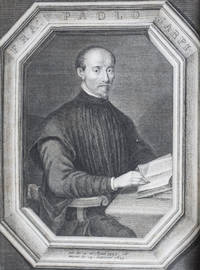
Sarpi, Fra-Paolo (Text by); Pierre-Francois Le Courayer (Translated into French, with Notes by); George Vertue (Engravings by)
Histoire du Concile de Trente. 2-vol. set Complete
Amsterdam: J. Wetstein; G. Smith 1736. First French-language edition. Hardcover. g to vg. Quarto 10 1/4 x 8". 14 lxxv 1 696pp; 4 848pp. Modern half brown calf over light green cloth with gold lettering and tooling to spines retaining the original gilt-lettered leather titles. All paper edges red. Marbled endpapers. Engraved frontispiece portrait of the author and engraved portrait of Caroline of Brandenburg-Ansbach Queen of Great Britain as the wife of King George II by George Vertue. Title vignettes. Title pages in red and black lettering. <br /> <br /> This work was originally published in London in 1619 by Paolo Sarpi 1552-1623 an Italian historian prelate scientist canon lawyer and statesman active on behalf of the Venetian Republic during the period of its successful defiance of the papal interdict 1605-1607 and its war 1615-1617 with Austria over the Uskok pirates. The author published it under the name of Pietro Soave Polano an anagram of Paolo Sarpi Veneto plus o. <br /> <br /> The book's emphasis was on the role of the Papal Curia and its slant on the Curia hostile. Sarpi's work attained such fame that the Vatican opened its archives to Cardinal Pietro Sforza Pallavicino whom it commissioned to write a three volume rebuttal entitled the "Istoria del Concilio di Trento scritta dal P. Sforza Pallavicino della Comp. di Giesù ove insieme rifiutasi con auterevoli testimonianze un Istoria falsa divolgata nello stesso argomento sotto nome di Petro Soave Polano" "The History of the Council of Trent written by P. Sforza Pallavicino of the Company of Jesus in which a false history upon the same argument put forth under the name of Petro Soave Polano is refuted by means of authoritative testimony" 1656-1657.<br /> <br /> Sporadic foxing and offsetting throughout. Bindings in overall very good interior in good to very good condition. J. Wetstein; G. Smith hardcover
Referentie van de boekhandelaar : 42844
|
|
|
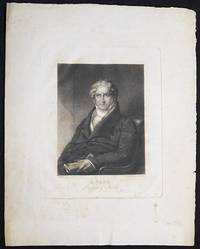
Sartain, John
B. Carr Professor Music; Painted by J. C. Darley Engraved by J. Sartain
Philadelphia: John Sartrain 1835. Very Good -. 1 mezzotint engraving of Benjamin Carr 1768-1831 American composer singer music teacher and music publisher. Sheet is 30 x 24 cm.; image is 14 x 11 cm. John Sartain 1808-1897 pioneered mezzotint engraving in the United States. He engraved this portrait of Benjamin Carr from a painting by John Clarendon Darley 1808-1863. Undated but probably produced in the 1830s. Number in pencil in lower right-hand corner: 7/882. In Very Good- Condition: light soiling and foxing; a crisp mezzotint image. John Sartrain unknown
Referentie van de boekhandelaar : 006330
|
|
|
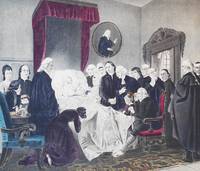
Sartain, John
The Death of the Revd John Wesley A.M.
Philadelphia: William Smith 1860. Good. Sheet is 48 x 57 cm. Image is 33 x 38 cm. Hand-colored lithograph produced by Magee's Lithograph Press 48 S. 3rd St. Philadelphia. No date of publication. John L. Magee artist lithographer and engraver was located at 48 or 49 S. 3rd St. Philadelphia only in 1860. Engraved by A. Biggerman after an engraving by John Sartain. Print of deathbed scene of the Reverend John Wesley. Others shown in the image as identified by Sartain: Sarah Wesley a medical assistant the Rev. J. Bradford the Rev. P. Dickinson Mrs. Charles Wesley the Rev. T. Rankin Mrs. E.A. Rogers Miss Ritchie the Rev. J. Rogers the Rev. J. Creighton Master Rogers R.C. Brackenbury the Rev. T. Broadbent the Rev. A. Mather the Rev. J. Broadbent J. Horton the Rev. G. Whitfield Dr. Whitehead and the Rev. J. Edmonson. Scarce one copy on WorldCat. In Good Condition: some mat burn; closed tear of 2.5 cm. fromt upper edge; closed years of less than 2 cm. from lower edge; lower corner creased; image is clean and bright. William Smith unknown
Referentie van de boekhandelaar : 006727
|
|
|
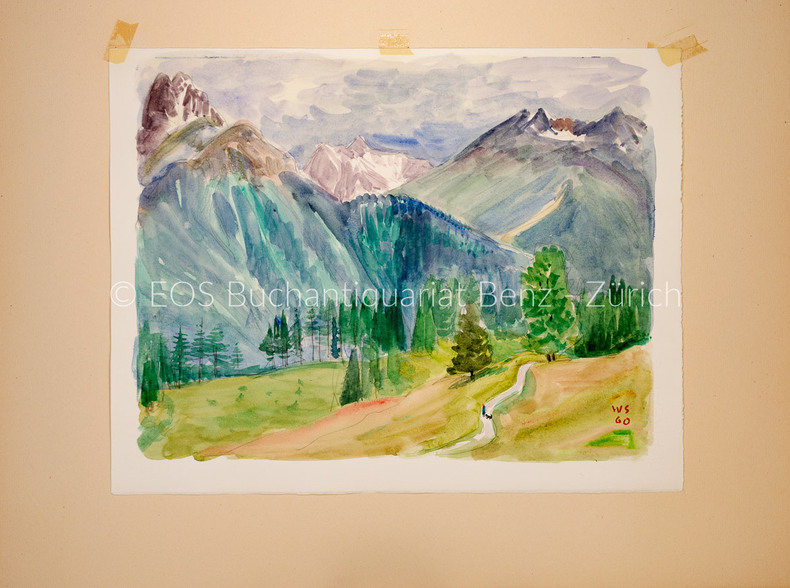
Sautter, Walter (1911–1991);
Berglandschaft bei Ftan.
1960. Aquarell auf festem Papier. Bildausschnitte: 31 x 39 cm. Blattgrösse: 33.5 x 43 cm.
Referentie van de boekhandelaar : 1699AG
|
|
|
SAUVAGE Sylvain
Cinquante eaux-fortes pour illustrer les Mémoires de Jacques Casanova de Seingalt Vénitien.
Beau portefeuille contenant 50 eaux-fortes originales de Sylvain Sauvage. Exemplaire tiré sur papier de Hollande, signé au colophon par l'artiste. On joint une lettre autographe signée de l'artiste sur son beau papier à en-tête. en feuille. Papier filigrané. Très bon Paris Cotinaud s.d. (1920) 1 volume in-folio.
Referentie van de boekhandelaar : 9742

|
|
|
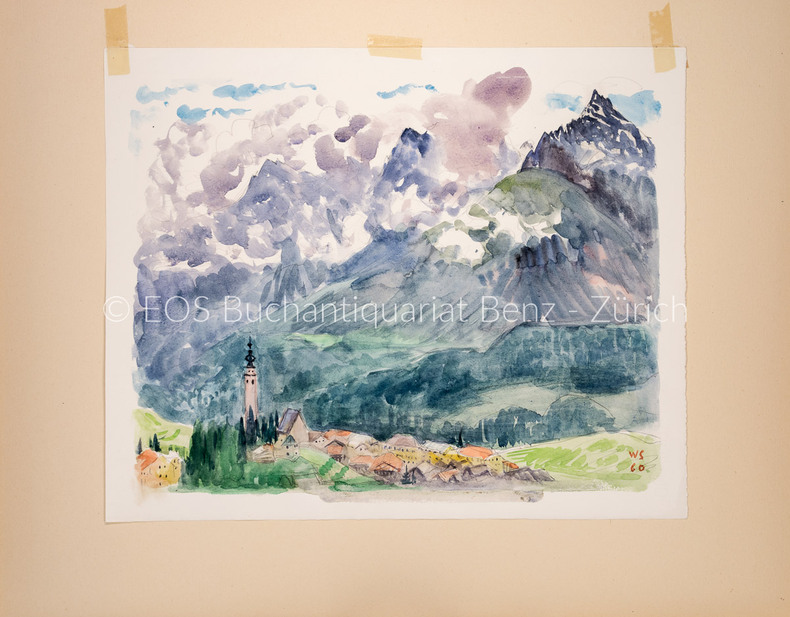
Sautter, Walter (1911–1991);
Ftan mit Blick ins Tal.
1962. Aquarell auf festem Papier. Bildausschnitte: 32,5 x 40 cm. Blattgrösse: 35 x 43 cm.
Referentie van de boekhandelaar : 1705AG
|
|
|
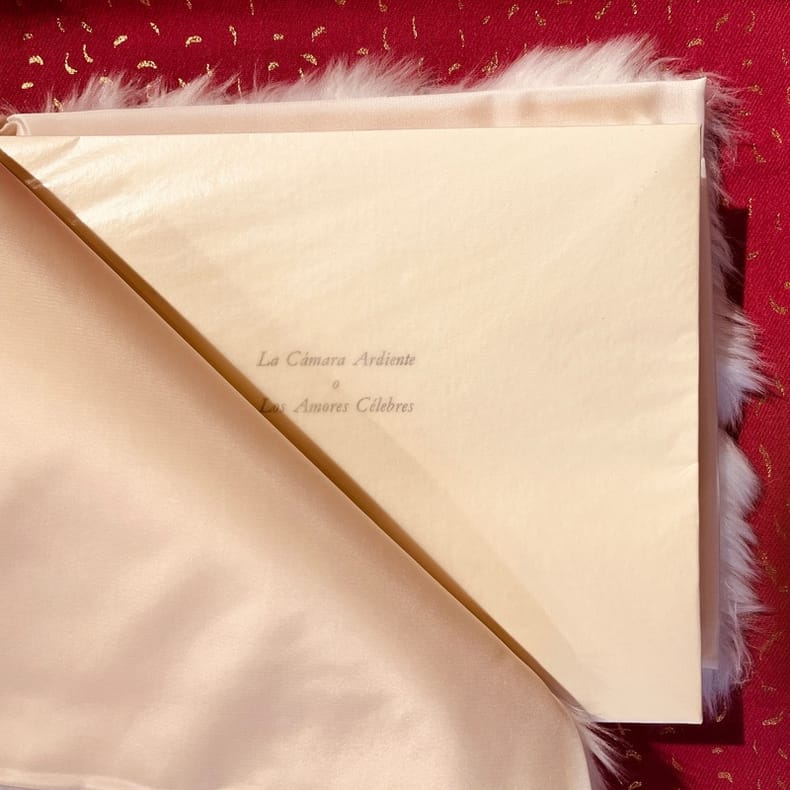
SAURA Antonio; LAMBERT Jean-Clarence:
La cámara ardiente o los amores célebres.
Barcelone, Editorial Gustavo Gili, 1977. Grand in-8 oblong, en feuilles sous couverture rempliée, couverture en fourrure blanche, sous emboîtage en Plexiglas.
Referentie van de boekhandelaar : 20185
|
|
|
Saussure, Horace-Bénedict de:
Reisen durch die Alpen, nebst einem Versuche über die Naturgeschichte der Gegenden von Genf. Aus dem Französischen übersetzt und mit Anmerkungen bereichert.
4 Bände. Leipzig, Johann Friedrich Junius, 1781–1788. 8°. XXVI, (2), 298 S.; X, (2), 327 S.; VIII, 310 S.; (4), 433 S. Mit 2 gef. Karten, 14 (davon 13 gef.) Kupfertafeln. Pappbände der Zeit mit Kleisterpapierbezug und handschr. Rückenschildern.
Referentie van de boekhandelaar : 29805AB
|
|
|
Sauer, Gordon C.
John Gould Bird Print Reproductions. Signed Copy
This is a very good softcover copy with almost no wear. Completely clean inside and just lightly soiled outside. Spine not creased. Signed and inscribed by the author in 1978. Illustrated throughout in black & white. Tall 8vo, 9" high X 6" wide, 76 pages. This book will be securely packed and shipped with tracking.
|
|
|
Saussure, Horace-Bénedict de
Reisen durch die Alpen, nebst einem Versuche über die Naturgeschichte der Gegenden von Genf. Aus dem Französischen übersetzt und mit Anmerkungen bereichert.
Leipzig, Johann Friedrich Junius, 1781-1788. 8°. XXVI, (2), 298 S.; X, (2), 327 S.; VIII, 310 S.; (4), 433 S. Mit 2 gef. Karten, 14 (davon 13 gef.) Kupfertafeln. Pappbände der Zeit mit Kleisterpapierbezug und handschr. Rückenschildern. + Wichtig: Für unsere Kunden in der EU erfolgt der Versand alle 14 Tage verzollt ab Deutschland / Postbank-Konto in Deutschland vorhanden +, 29805AB|29805AB_2|29805AB_3 4 Bände. [3 Warenabbildungen]
Referentie van de boekhandelaar : 29805AB

|
|
|
Sautter, Walter (1911?1991)
Berglandschaft bei Ftan.
1960. Aquarell auf festem Papier. Bildausschnitte: 31 x 39 cm. Blattgrösse: 33.5 x 43 cm. + Wichtig: Für unsere Kunden in der EU erfolgt der Versand alle 14 Tage verzollt ab Deutschland / Postbank-Konto in Deutschland vorhanden +, A
Referentie van de boekhandelaar : 1699AG

|
|
|
Sautter, Walter (1911?1991)
Ftan mit Blick ins Tal.
1962. Aquarell auf festem Papier. Bildausschnitte: 32,5 x 40 cm. Blattgrösse: 35 x 43 cm. + Wichtig: Für unsere Kunden in der EU erfolgt der Versand alle 14 Tage verzollt ab Deutschland / Postbank-Konto in Deutschland vorhanden +, A
Referentie van de boekhandelaar : 1705AG

|
|
|
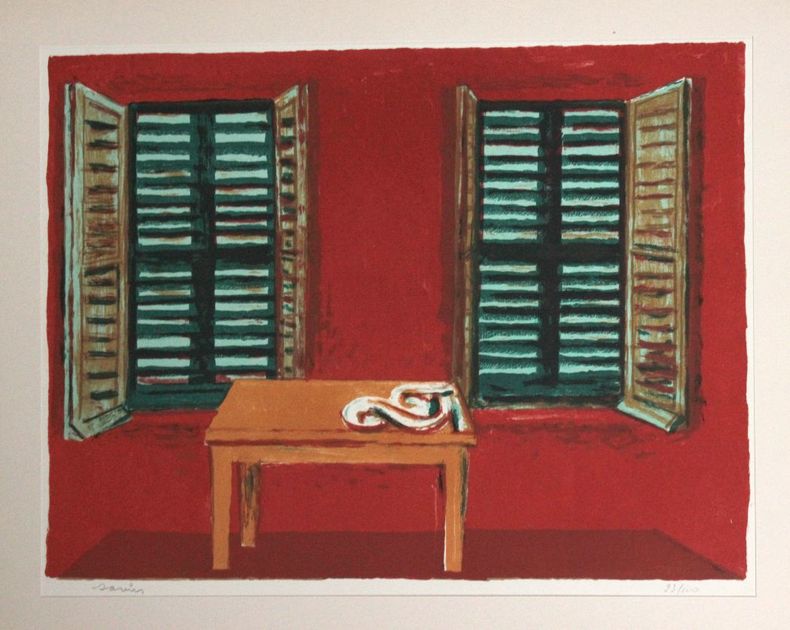
Savin, Maurice - Mac Orlan, Pierre (préf.)
[Les Maîtres de l'estampe française contemporaine :] Maurice Savin, dix estampes originales présentées par Pierre Mac Orlan
Paris Rombaldi 1949 in-folio en feuilles Paris, Rombaldi, 1949. Coll. "Les Maîtres de l'estampe française contemporaine" (n° 8). 38,5 x 28,5 cm, in-folio, 2 ff. bl. - 7 ff. n. ch. portant 2 eaux-fortes dans le texte - 10 estampes (2 lithographies au crayon, 3 lithographies au lavis, 2 lithographie en couleurs, 3 eaux-fortes) toutes numérotées et signées par l'artiste à la mine de plomb et montées sous passe-partout - 3 ff. n. ch. - 3 ff. blancs, en feuilles sous couverture blanche rempliée et imprimée et portefeuille de l'éditeur.
Referentie van de boekhandelaar : 4348
|
|
|
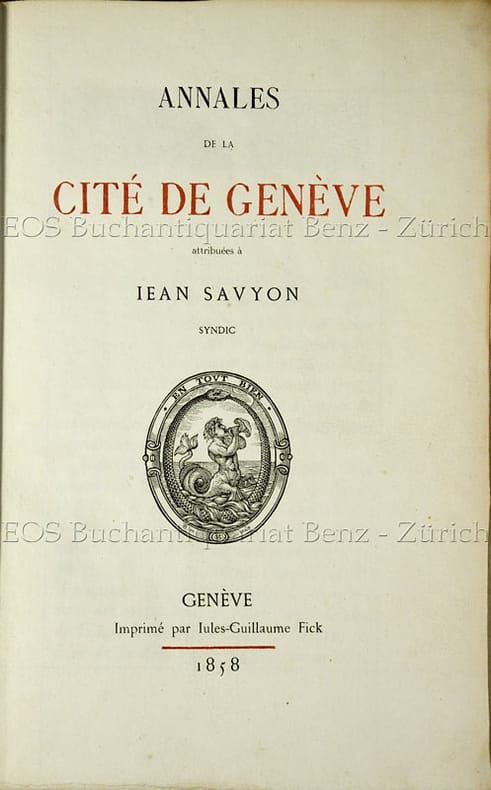
Savyon, Jean:
Annales de la Cité de Genève attribuées à Iean Savyon, Syndic. Hrsg. von Edouard Fick.
Genève, Jules-Guillaume Fick, 1858. 8°. VI, 143 S. Mit gest. Buchschmuck, darunter eine kleine Ansicht und das Genfer Wappen. Pappband d. Zt. mit blindgepr. reich verziertem Genfer Wappen auf Deckeln, diese von roter Linie eingefasst.
Referentie van de boekhandelaar : 4837CB
|
|
|
SAVIGNY, Friedrich Carl von
Das Recht des Besitzes. Eine civilistische Abhandlung. 3., vermehrte und verbesserte Ausgabe.
Gießen, Heyer, 1818. 1 Bl., XXXX, 602 S. Halbleder d. Zeit (beschabt, Ecken u. Kanten bestoßen). [2 Warenabbildungen]
Referentie van de boekhandelaar : 168473

|
|
|
Savyon, Jean
Annales de la Cité de Genève attribuées à Iean Savyon, Syndic. Hrsg. von Edouard Fick.
Genève, Jules-Guillaume Fick, 1858. 8°. VI, 143 S. Mit gest. Buchschmuck, darunter eine kleine Ansicht und das Genfer Wappen. Pappband d. Zt. mit blindgepr. reich verziertem Genfer Wappen auf Deckeln, diese von roter Linie eingefasst. + Wichtig: Für unsere Kunden in der EU erfolgt der Versand alle 14 Tage verzollt ab Deutschland / Postbank-Konto in Deutschland vorhanden +, 4837C
Referentie van de boekhandelaar : 4837CB

|
|
|
Sawyer, J.R.
THE "A.B.C." GUIDE TO THE MAKING OF AUTOTYPE PRINTS IN PERMANENT PIGMENTS. (Revised Edition).
pp. xii, 99, 13 [Price List of Tissue and Materials Used in the Production of Permanent Photographs], 19 [Abridgement of the Autotype Company's Fine Art Catalogue], (1) [Press Notices] + Autotype Frontis. Frontis worn with loss at bottom corner margin. Lacks second illustration. Title page soiled. Page xi torn without loss. Old damp staining at top margins. Fly leaves penciled scribbled. Tipped in order and telegraph directions printed in red. Top edge gold gilt. 12mo. 175 mm. Original full cloth binding, lettered and decorated in gold. Extremities rubbed with loss. Binding worn. Revised Edition. Hardbound. Very good. Autotypes were a commercial photographic process for producing excellent prints, in mostly monochrome, using a carbon pigment. W103 RtStack
|
|
|
Scaligeri, Ios. (Scaliger, Joseph)
C. Ivlii (Julius) Caesaris quae extant Ex emendatione.
Antverpiae (Antwerpen), Hieronimus Verdussen, ohne Jahr (um 1640). 12,8 x 7,5 cm. 456 Seiten, 28 nnr. Blätter (Index) und 3 gef. Karten. Ledereinband der Zeit mit goldgeprägtem Rückenschild und etwas Rückenvergoldung. Oberes und unteres Kapital beschädigt mit Fehlstellen, Vorderes Außengelenk beschädigt mit Fehlstelle. Einige Wurmgänge mit teils geringem Textverlust.
Referentie van de boekhandelaar : 703595
|
|
|
Scanavino Emilio
ORIGINAL UNTITLED MONOCHROME ETCHING
Milan: Galerie Schwarz 1961. Original monochrome etching plate size 11 x 14.5 cm on 26.5 x 19.5 cm sheet. Mounted in stiff board and acetate mat with a slight skinning at upper spine-edge with printed caption on verso. Fine. One of sixty numbered copies in addition to twenty-five copies numbered in Roman signed and dated in the margin by the artist. Printed in Paris in the Atelier of Georges Leblanc on hand made paper from Papeteries de Rives. Scanavino 1922 - 1986 who after a figurative start to his work rapidly progressed with a personal aesthetic partaking of elements of cubism. He took part in several exhibitions including the Venice Biennale 1950 1954 1958 and 1966. He also was the subject of several solo exhibitions starting in Genoa in 1948 through to his final exhibition in Rome's Quadriennale in 1986. This print was published as an element of Galerie Schwarz's series L'AVANGUARDIA INTERNAZIONALE. Galerie Schwarz unknown books
Referentie van de boekhandelaar : WRCLIT70972

|
|
|
SCANAVINO, Emilio (Genova, 1922 - Milano, 1986)
Senza titolo
Litografia originale a colori Firma e numerazione a matita. Esemplare 46/100. Cm 48,5x67. . . Molto buono (Very Good). . Tiratura 100 (Edition of 100 copies). .

|
|
|
SCANAVINO, Emilio (Genova, 1922 - Milano, 1986),
A mezzo della notte
Litografia dal libro ''A mezzo della notte'' (composto da 15 litografie ad uno e due colori dell'Artista e poesie di Gianni Malabarba) Firma e numerazione a matita. Timbro a secco dello stampatore Giorgio Upiglio. Carta Fabriano. Esemplare p.d.a.. cm 33x47. . . Ottimo (Fine). . Tiratura 50 + XX + 4 H.C. (A-D). .

|
|
|
SCANAVINO, Emilio (Genova, 1922 - Milano, 1986),
A mezzo della notte
Litografia dal libro ''A mezzo della notte'' (composto da 15 litografie ad uno e due colori dell'Artista e poesie di Gianni Malabarba) Firma e numerazione a matita. Timbro a secco dello stampatore Giorgio Upiglio. Carta Fabriano. Esemplare p.d.a.. cm 33x47. . . Ottimo (Fine). . Tiratura 50 + XX + 4 H.C. (A-D). .

|
|
|
SCANAVINO, Emilio (Genova, 1922 - Milano, 1986),
A mezzo della notte
Litografia dal libro ''A mezzo della notte'' (composto da 15 litografie ad uno e due colori dell'Artista e poesie di Gianni Malabarba) Firma e numerazione a matita. Timbro a secco dello stampatore Giorgio Upiglio. Carta Fabriano. Esemplare p.d.a.. cm 33x47. . . Ottimo (Fine). . Tiratura 50 + XX + 4 H.C. (A-D). .

|
|
|
SCANAVINO, Emilio (Genova, 1922 - Milano, 1986),
A mezzo della notte
Litografia dal libro ''A mezzo della notte'' (composto da 15 litografie ad uno e due colori dell'Artista e poesie di Gianni Malabarba) Firma e numerazione a matita. Timbro a secco dello stampatore Giorgio Upiglio. Carta Fabriano. Esemplare p.d.a.. cm 33x47. . . Ottimo (Fine). . Tiratura 50 + XX + 4 H.C. (A-D). .

|
|
|
SCANAVINO, Emilio (Genova, 1922 - Milano, 1986),
Senza titolo
Litografia Firma e numerazione a matita. Timbro a secco dello stampatore Giorgio Upiglio. Esemplare p.d.a.. cm 51x40,5. . . Ottimo (Fine). . . .

|
|
|
SCANAVINO, Emilio (Genova, 1922 - Milano, 1986),
Senza titolo
Litografia originale in rosso, bianco e nero Firma e numerazione a matita. Stampata da Piergiorgio Spallacci su carta Fabriano. Timbro a secco dell'editore. Esemplare 29/100. cm 35x33 (Foglio cm 70x50). . . Ottimo (Fine). . Tiratura 100. .

|
|
|
SCANDINAVIA IN OLD MAPS AND PRINTS
0390
Not in perfect condition. unknown
Referentie van de boekhandelaar : Erik van Mingroot and Edu
|
|
|
Scattering Lights Prints
Black Paper Notebook Black Lined Paper: Hardcover Lined Notebook With Black Paper Sheet Pages 8.5x11 Simple Minimalism Journal For Writing Paper
Hardcover. New. New Book; Fast Shipping from UK; Not signed; Not First Edition; 130 Diary PagesHardback CoverMatte FinishSized at a large 8.5" x 11"Great for writing note taking sketching doodling journaling and jottingPerfect for school home or officeFor use with gel metallic glitter pastel and florescent hardcover
Referentie van de boekhandelaar : ria9781953987143_inp ISBN : 1953987141 9781953987143
|
|
|
Scattering Lights Prints
Black Paper Notebook: Hardcover Lined Notebook With Black Pages 8.5x11 Minimalism Journal For Writing
Hardback. New. hardcover
Referentie van de boekhandelaar : B9781953987143 ISBN : 1953987141 9781953987143
|
|
|
Scattering Lights Prints
Black Paper Notebook Black Lined Paper: Hardcover Lined Notebook With Black Paper Sheet Pages 8.5x11 Simple Minimalism Journal For Writing Paper
hardcover. Good. Access codes and supplements are not guaranteed with used items. May be an ex-library book. hardcover
Referentie van de boekhandelaar : 1953987141.G ISBN : 1953987141 9781953987143
|
|
|
SCHOONEBECK Adrien
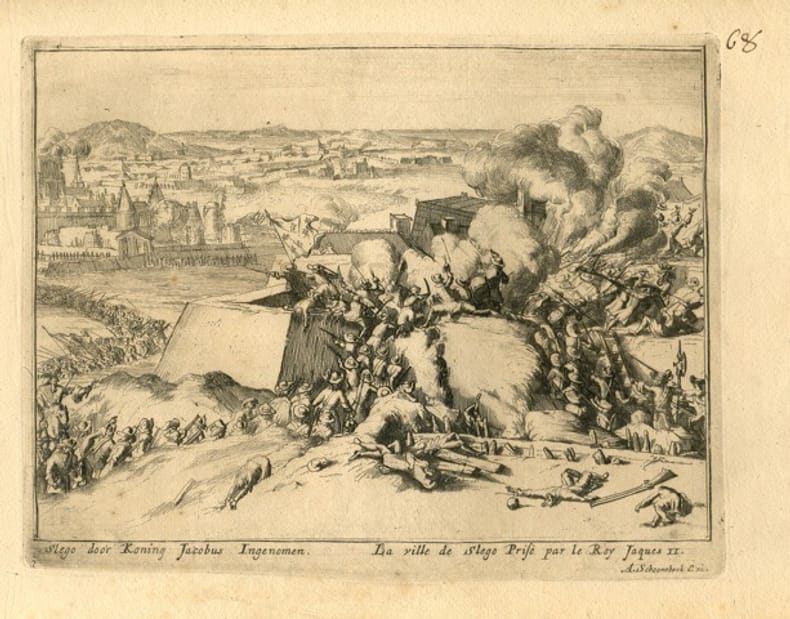
Belle série de batailles et scènes historiques gravées par Pieter PICAERT et Laurence SCHERM , avec l'excudit de SCHOONEBECK. 41 planches (eaux-fortes) mettant en scène le Duc de Monmouth, le roi Jacques II, le Duc de Schomberg, le docteur Walker, le roi Guillaume, bombardement de Liège en 1692, etc... En feuilles bon XVIIè siècle 15 x 19
Referentie van de boekhandelaar : 5040
|
|
|
Scheuchzer, Johann Jakob:
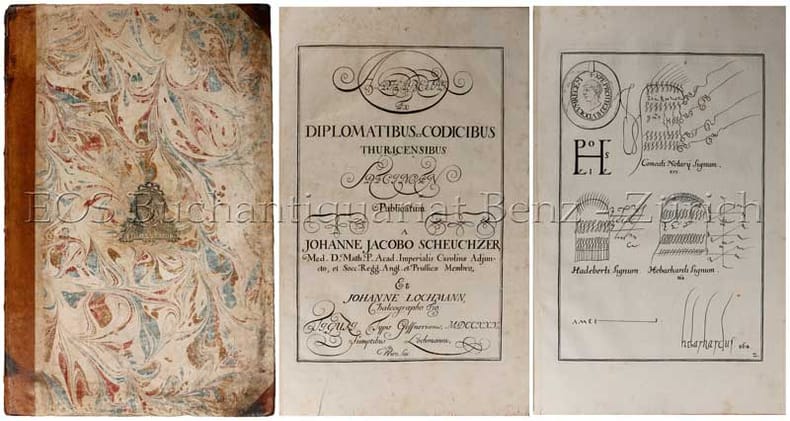
Alphabethi ex diplomaticus et codicibus Thuricensibus specimen, publicatum a Johanne Jacobo Scheuchzer et Johanne Lochmann.
Tiguri, Typis Gessnerianis, 1730. 2°. (9) Bl. incl. gest. Titel und gest. Widmung, 22 Tafeln auf 21 Bl., gest. von Lochmann nach Wirz, ein zusätzl. Bl. eingebunden. Halbleder d. Zt. mit marmor. Deckeln, vergold. Wappen-Supralibros der Bibliothek des Klosters St. Urban.
Referentie van de boekhandelaar : 6483CB
|
|
|
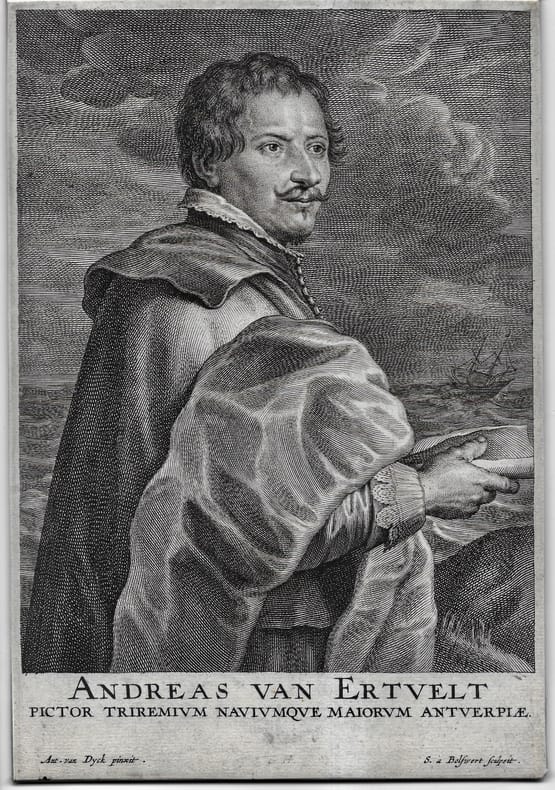
SCHELTE A. BOLSWERT
Andreas Van Ertvelt
Coupé à la cuvette. Légende : Pictor trireremium naviumque maiorum antverpiæ. Très beau portrait de ce peintre de marines, d’après Van Dyck. Tirage sur beau papier vergé. Le Blanc I - 431. En feuille Très bon 247 x 170
Referentie van de boekhandelaar : 5152
|
|
|
Schaufelberger, Rosa;
Aus dem Archiv der Familie von Schulthess Rechberg 1709-1931.
Brugg, Effingerhof A.-G., (1931). Farbigs Titelblatt, 585 S., mit einigen Illustrationen (teilweise in Farbe),, gealteten Tafeln (Stammbäume), 2 Stammbäume in der Beilage am Schluss des Buche. Lederband mit Goldfiletten und Rückbeschriftung
Referentie van de boekhandelaar : 4895DB
|
|
|
Schild, Peter.
Brienzer Mundart Allgemeine Lautgesetzte und Vokalismus.
1. Teil (alles erschienene ?). Basel Sallmann und Bonacker 1891 Gr.-8°. 106 S., 1 Bl. (Berichtigungen). Broschur. berieben, Deckel staubfleckig.
Referentie van de boekhandelaar : 3197DB
|
|
|
Schweizer, Johann Heinrich:
Chronologia Helvetica. Res gestas Helvetiorum ad nostra usque tempora indicans ordine, & brevissime complectens; Adiuncta Summorum Pontificum, Imperatorum, Regum & Principum in orbe Christiano, nec non & Turcicorum Imperatorum successione & serie succincta.
Hanau, Andreas Wechel Erben, 1607. Kl.-4°. (4) Bl., 166 S., (8) Bl. (Register und Druckervignette). Etwas späterer Halblederband.
Referentie van de boekhandelaar : 7895CB
|
|
|
Schulthess, H. und Bürkli, J.G.:
Das Musikfest in Bern und ein Ausflug in's Oberland.
(Zürich), 1828. Gr.-8°. 12 (4) S. Mit einem Aquatinta von Franz Hegi. Orig.-Heft. = "16. Neujahrsblatt (Neujahrsgeschenk an die Zürcherische Jugend sic.) von der allgemeinen Musik-Gesellschaft in Zürich auf das Jahr 1828".
Referentie van de boekhandelaar : 27459AB
|
|
|
Schumacher, F(ritz):
Das eidgenössische Eisenbahndepartement. Seine Tätigkeit und Entwicklung 1873-1913.
Bern, Gustav Grunau, 1914. Gr.-8°. 338 S. Mit 37 Tafeln. Illustr. Orig.-Leinenband (leicht bestossen u. fleckig).
Referentie van de boekhandelaar : 1132DB
|
|
|
Schurter, E.:
Das Verordnungsrecht im Kanton Zürich. Staatsrechtliche Betrachtungen zur Automobilvorlage vom 6. November/9. Dezember 1911.
Zürich, Buchdruckerei Zürcher Post, 1912. Kl.-8°. 42 S. Orig.-Heft (gebräunt, leicht bestossen und mit kleinem Eintrag auf Einbanddeckel).
Referentie van de boekhandelaar : 26636AB
|
|
|
Schild, Frz. Jos.:
Der Grossätti aus dem Leberberg. Sammlung von Volks- und Kinderliedern, Spottreimen, Sprüchwörtern, Wetter- und Gesundheitsregeln u.s.w. aus dem solothurnischen Leberberg.
Biel, Steinheil, 1864. Kl.-8°. XIV, (2) 148 S. Mit 2 Notenbeilagen auf Tafeln. Pappband der Zeit mit handbeschriftetem Rückenschild (etwas berieben und bestossen).
Referentie van de boekhandelaar : 27600AB
|
|
|
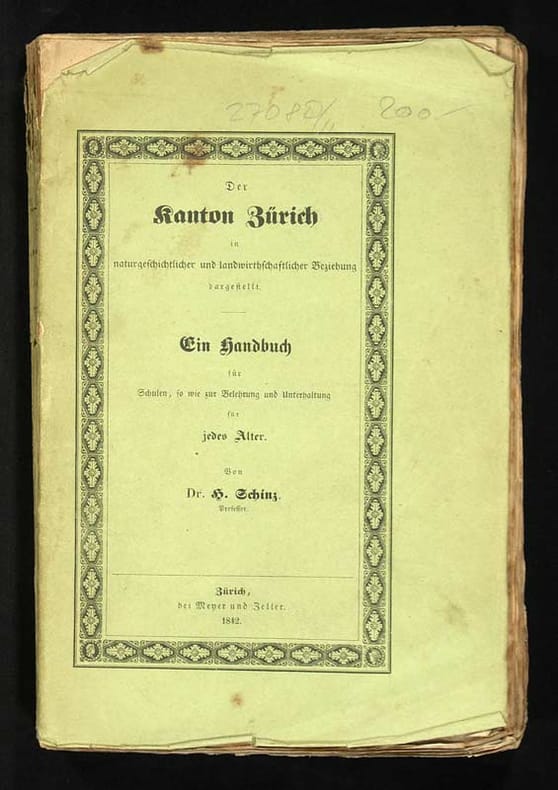
Schinz, Heinrich Rudolf:
Der Kanton Zürich in naturgeschichtlicher und landwirthschaftlicher Beziehung dargestellt. Ein Handbuch für Schulen, so wie zur Belehrung und Unterhaltung für jedes Alter.
Zürich, Meyer und Zeller, 1842. Gr.-8°. (4), 401, (3) S. Orig.-Broschur.
Referentie van de boekhandelaar : 2708DB
|
|
|
Schmitt, Sammy:
Der Bettler Gottes.
Zürich, Viernheim Verlag, 1958. (42) S. Mit 8 Linol- u. 3 Holzschnitten von Alfred E. Walder. Orig.-Broschur in Halbleinenschuber.
Referentie van de boekhandelaar : 23980AB
|
|
|
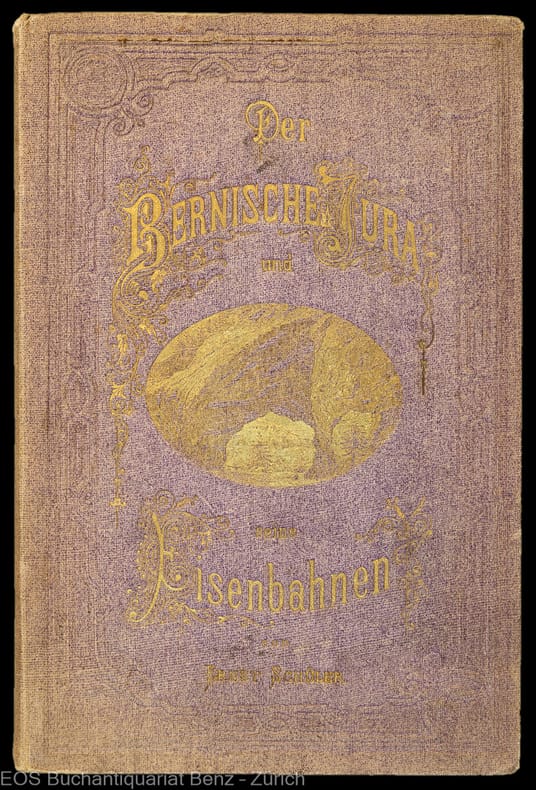
Schüler, Ernst:
Der bernische Jura und seine Eisenbahnen, Land, Volk und Cultur.
Biel, Buchdruckerei von Albert Schüler, 1876. 8°. S. 2–185, (1) S., (4) Bl. (Verlagsanzeigen). Mit zahlr. gest. z.T. ganzs. Abb. u. 1 gef. lithogr. Karte. Goldgeprägter Orig.-Leinenband.
Referentie van de boekhandelaar : 1123DB
|
|

 De zoekresultaten per email ontvangen
 Zoekresultaten downloaden als PDF
 RSS feed
 Permanente link


