Natalie Clifford BARNEYBiblio.com
67 632 résultats
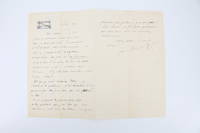
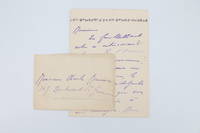
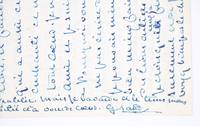
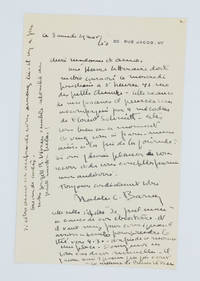
1952réf. 78894Paris 1952. Fine. Paris samedi 29 novembre 1952 13.50 x 20.80 cm une page sur un feuillet Handwritten signed letter addressed to a friend: There will also be three poems that I wrote in memory of Renée Vivien Paris Saturday 29 November 1952 135 x 208 cm one page on a leaf Handwritten letter signed by Natalie Clifford Barney addressed to a friend and written in black ink on a stationery from 20 rue Jacob Paris VIe. Central fold from having been sent. Interesting letter mentioning a future reading of Natalie Clifford Barney: A literary hour must be devoted to me this Wednesday at 5pm 41 rue des Petits champs. This session of my poems and thoughts will be accompanied by 4 melodies by Florent Schmidt. The so-called literary hour will also be a tribute to one of Natalie's greatest loves who died several decades earlier: There will also be 3 poems that I wrote in memory of Renée Vivien. The two women experienced an intense and tumultuous relationship in their youth. After the tragic and early death of her lover Natalie Clifford Barney continued to honor her memory notably by becoming a patron of the Prix Renée-Vivien created by the baroness Hélène de Zuylen another of Renée's lovers. It is at the end of 1899 and through Violette Shillito that Renée Vivien then Pauline Tarn met Natalie Clifford Barney ""this American woman softer than a scarf whose sparkling face shines with golden hair sea blue eyes never-ending teeth"" Colette Claudine à Paris. Natalie who had just experienced a summer romance with the scandalous Liane de Pougy who introduced her to sapphism paid little attention to this new acquaintance. Renée on the other hand was totally captivated by the young American woman and describes this love at first sight in her autobiographical novel Une femme m'apparut: ""I lived again the hour already well past when I saw her for the first time felt the shiver that ran through me when my eyes met the mortal steel of her look those eyes blue and piercing as a blade. I had a dim premonition that this woman would determine the pattern of my fate and that her face was the predestined face of my Future. Near her I felt the luminous dizziness which comes at the edge of an abyss or the attraction of a very deep water. She radiated the charm of danger which drew me to her inexorably."" ""Winter 1899-1900. Beginnings of the idyll. One evening Vivien is invited by her new friend to Mme Barney's studio Natalie's mother 153 avenue Victor-Hugo on the corner of the rue de Longchamp. Natalie finds the courage to read the verses of her composition. As Vivien tells her to love these verses she tells her that it is better to love the poet. A response worthy of the Amazon."" J.-P. Goujon Tes blessures sont plus douces que leurs caresses Two years of unequal happiness will follow punctuated by Natalie's recurring infidelities and Renée's sickly jealousy the letters of which oscillate between inflamed declarations and painful admissions of guilt. ""Renée Vivien is the daughter of Sappho and Baudelaire she is the 1900 flower of evil with fevers broken-up fights sad delights."" Jean Chalon Portrait d'une séductrice In 1901 a major break-up occurred which lasted almost two years; Renée despite requests from Natalie and the others she sent to win her back resisted. ""The two friends saw each other again and in August 1905 went on a pilgrimage to Lesbos which was a disappointment for Natalie Barney and was short-lived. . The spring was broken once and for all. The two former friends stopped seeing each other in 1907 and Vivien died without them seeing each other again."" J.-P. Goujon ibid. unknown
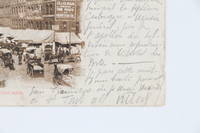
1902réf. 78605Chicago 1902. Fine. Chicago 23 octobre 1902 14 x 8.80 cm Une carte postale Autograph signed postcard sent from Chicago and addressed to Émile Mignard Chicago 23 October 1902 14 x 88 cm one postcard Handwritten signed postcard from Victor Segalen sent from Chicago and addressed to Emile Mignard. A few lines written in pencil in the corner of the black and white photographic reproduction of a view of South Water Street in Chicago handwritten address on the verso. Some minor stains and folding. Emile Mignard 1878-1966 also a doctor and Brest-born was one of Segalen's closest friends of youth whom he met at the Jesuit Notre-Dame-de-Bon-Secours School in Brest. The writer interacted with this comrade in an abundant and closely followed correspondence in which he described with humour and intimacy his daily life in all corners of the world. It was at Mignard's wedding on 15 February 1905 that Segalen met his wife Yvonne Hébert. This postcard had been addressed by Segalen to his friend from Chicago as he travelled to Tahiti via San Francisco. It is the first time that the Breton has been to the United States and his impressions are rather pessimistic: Chicago. The deplorable pinnacle of acute budding Americanism. Imagine a mass of sandstone that has crystallised following the Cubic system. A childlike museum: close to the Apollo Belvedere a reproduction of the Hôtel des Postes. I leave tonight for a straight through journey to San Francisco where I will be on Tuesday at 4am. unknown
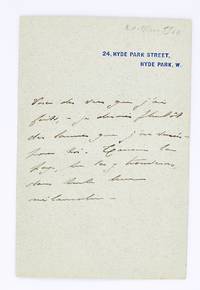
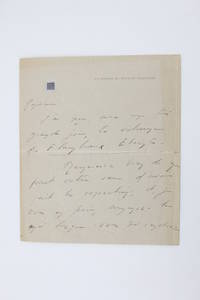
1900réf. 78737s. l. 1900. Fine. s. l. 20 mars 1900 10 x 15.70 cm 2 pages sur un double feuillet Unpublished handwritten poem to Natalie Clifford Barney « à l'absente » 20 March 1900 10 x 157 cm 2 pages on a double leaf Handwritten poem entitled « à l'absente » To the absent one and addressed to Natalie Clifford Barney. Two pages written in black ink on a double leaf headed 24 Hyde Park Street. To our knowledge this three-verse octosyllabic poem is unpublished. It is preceded on the first section of this double leaf by a little handwritten message: These are the verses I have made I would rather say the tears which I have shed for you. Turn the page you will find them there in all their melancholy. Oui c'est toi mon rêve suprême Pendant ces longs ces mornes jours Où je pleure au fond de moi-même L'exil triste de mes amours! . N'as-tu pas entendu ma blonde Le bruit d'un sanglot qui revient Dans le cur de la nuit profonde C'est mon amour qui se souvient. It is at the end of 1899 and through Violette Shillito that Renée Vivien then Pauline Tarn met Natalie Clifford Barney ""this American woman softer than a scarf whose sparkling face shines with golden hair sea blue eyes never-ending teeth"" Colette Claudine à Paris. Natalie who had just experienced a summer romance with the scandalous Liane de Pougy who introduced her to sapphism paid little attention to this new acquaintance. Renée on the other hand was totally captivated by the young American woman and describes this love at first sight in her autobiographical novel Une femme m'apparut: ""I lived again the hour already well past when I saw her for the first time felt the shiver that ran through me when my eyes met the mortal steel of her look those eyes blue and piercing as a blade. I had a dim premonition that this woman would determine the pattern of my fate and that her face was the predestined face of my Future. Near her I felt the luminous dizziness which comes at the edge of an abyss or the attraction of a very deep water. She radiated the charm of danger which drew me to her inexorably."" ""Winter 1899-1900. Beginnings of the idyll. One evening Vivien is invited by her new friend to Mme Barney's studio Natalie's mother 153 avenue Victor-Hugo on the corner of the rue de Longchamp. Natalie finds the courage to read the verses of her composition. As Vivien tells her to love these verses she tells her that it is better to love the poet. A response worthy of the Amazon."" J.-P. Goujon Tes blessures sont plus douces que leurs caresses Two years of unequal happiness will follow punctuated by Natalie's recurring infidelities and Renée's sickly jealousy the letters of which oscillate between inflamed declarations and painful admissions of guilt. ""Renée Vivien is the daughter of Sappho and Baudelaire she is the 1900 flower of evil with fevers broken-up fights sad delights."" Jean Chalon Portrait d'une séductrice In 1901 a major break-up occurred which lasted almost two years; Renée despite requests from Natalie and the others she sent to win her back resisted. ""The two friends saw each other again and in August 1905 went on a pilgrimage to Lesbos which was a disappointment for Natalie Barney and was short-lived. . The spring was broken once and for all. The two former friends stopped seeing each other in 1907 and Vivien died without them seeing each other again."" J.-P. Goujon ibid. unknown
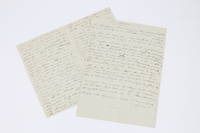
1900réf. 78743s. l. Londres London 1900. Fine. s. l. Londres London 24 mars 1900 10 x 15.70 cm 6 pages sur 2 doubles feuillets Handwritten signed letter addressed to Natalie Clifford Barney and enriched with a poem entitled « Le Miroir » London 24 March 1900 10 x 157 cm 6 pages on 2 double leaves Handwritten manuscript letter by Renée Vivien signed Pauline and written in black ink on a double leaf headed 24 Hyde Park Street. This letter contains a handwritten alexandrine poem entitled Le Miroir; never published on the initiative of the poet but it has been transcribed in Renée Vivien et ses masques in à l'encart April 1980: Je t'admire et ne suis que ton miroir fidèle Car je m'abîme en toi pour t'aimer un peu mieux; Je rêve ta beauté je me confonds en elle Et j'ai fait de mes yeux le miroir de tes yeux Je t'adore et mon cur est le profond miroir Où ton humeur d'avril se reflète sans cesse Tout entier il s'éclaire à tes moments d'espoir Et se meurt lentement à ta moindre tristesse Ô toujours la plus douce ô blonde entre les blondes Je t'adore et mon corps est l'amoureux miroir Où tu verras tes seins et tes hanches profondes Ces seins pâles qui sont si lumineux le soir! Penche-toi tu verras ton miroir tour à tour Pâlir ou te sourire avec tes mêmes lèvres Où trembleront encore les mêmes mots d'amour Tu le verras frémir des mêmes longues fièvres Contemple ton miroir de chair tendre et nacrée Car il s'est fait très pur afin de recevoir Le reflet immortel de la beauté sacrée Penche-toi longuement sur l'amoureux miroir! The rest of this long missive has however remained unpublished. A very beautiful letter sent from London by the Muse aux Violettes who misses her little one: Despite its slowness time passes you see and brings the hour that I await feverishly the time to meet again Natalie! Two more sad evenings and the third you will be there to rock me in your arms! . Today I was still disproportionately bored. I so need to see you again that I count the hours as they pass. I only think of you obsessed haunted taken possessed by you and by our memories. I am a poor unhappy thing far from you. Weary of society life We had the queen's dressing room how chic my darling! Lady Augustus Fitz Clarence invited us. She descends from a bastard of the King and is therefore an illegitimate relative of the sovereign! Renée lingers on the contemplation of a present from her darling: Your ring I love it so much it is a bond of our love that never leaves me. I so regretted your dagger that at the last moment I forgot to carry. Your ring you see is your memory on my finger I look at it and part of our tenderness is embodied in it. It is at the end of 1899 and through Violette Shillito that Renée Vivien then Pauline Tarn met Natalie Clifford Barney ""this American woman softer than a scarf whose sparkling face shines with golden hair sea blue eyes never-ending teeth"" Colette Claudine à Paris. Natalie who had just experienced a summer romance with the scandalous Liane de Pougy who introduced her to sapphism paid little attention to this new acquaintance. Renée on the other hand was totally captivated by the young American woman and describes this love at first sight in her autobiographical novel Une femme m'apparut: ""I lived again the hour already well past when I saw her for the first time felt the shiver that ran through me when my eyes met the mortal steel of her look those eyes blue and piercing as a blade. I had a dim premonition that this woman would determine the pattern of my fate and that her face was the predestined face of my Future. Near her I felt the luminous dizziness which comes at the edge of an abyss or the attraction of a very deep water. She radiated the charm of danger which drew me to her inexorably."" ""Winter 1899-1900. Beginnings of the idyll. One evening Vivien is invited by her new friend to Mme Barney's studio Natalie's mother 153 avenue Victor-Hugo on unknown
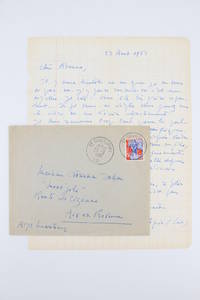
1956réf. 79397Saint-Cirq-Lapopie 1956. Fine. Saint-Cirq-Lapopie 1956 13 x 21 cm une page sur un feuillet - enveloppe jointe Autograph letter signed by Violette Leduc addressed to Adriana Salem. One page written in blue ink on a school notebook sheet. Transverse folds inherent to mailing and small marginal losses due to removal of the sheet from the notebook. Charming letter sent from Saint-Cirq-Lapopie: ""Me voici à Saint Cirq La Popie sic depuis vendredi dernier et m'y voici seule. . L'été est revenu et il s'est installé depuis mon départ. C'est un site extraordinaire connaissez-vous "" ""Here I am at Saint Cirq La Popie sic since last Friday and here I am alone. . Summer has returned and it has settled in since my departure. It's an extraordinary site do you know it"" It was undoubtedly on the invitation of Thérèse Plantier her friend who was also a writer that Violette Leduc went to Saint-Cirq-Lapopie André Breton's stronghold. ""In the 1950s the department of Lot was chosen as a testing ground by the Citizens of the World movement: a globalist movement advocating for a planet without borders governed by world law. Cahors became the first city to sign a globalization charter followed by 248 municipalities in the department and declared itself 'Cahors mundi' a world city. Several personalities - politicians intellectuals artists - joined this movement initiated by Garry Davis a former pilot in the American army. Among them André Breton 1896-1966 but also Max Ernst Albert Camus and even Abbé Pierre. On June 24 1950 André Breton participated in the inauguration of the Route sans frontière n°1 symbolically linking Cahors to Figeac. The route was then supposed to cross the world and reach Berlin China Japan and the United States. On the occasion of this inauguration André Breton discovered the village of Saint-Cirq-Lapopie."" Archives du Lot Adriana Salem was the daughter of Frederic Gentili di Giuseppe representative of the Italian Minister of Finance in Paris and great collector of Italian Renaissance paintings. unknown
1900réf. 79398Chaumot Nièvre Chaumot 1900. Fine. Chaumot Nièvre Chaumot 4 juin 1900 13.80 x 21.30 cm une feuille Autograph letter signed by Jules Renard addressed to Gabrielle Réval. One and a half pages written in black ink on letterhead paper from ""Gloriette"" the writer's residence in Nièvre. Transverse fold lines inherent to mailing. Fine letter to this fellow writer alluding to Poil de Carotte: ""Je suis au moins aussi content que vous. Certes je n'avais pas oublié le manuscrit où Poil de Carotte était si bien compris - et aimé - j'avais oublié la signature."" ""I am at least as pleased as you are. Certainly I had not forgotten the manuscript where Poil de Carotte was so well understood - and loved - I had forgotten the signature."" He mentions Gabrielle Réval's book: ""Et tant mieux ; car j'ai lu les Sèvriennes et non le livre d'une amie de Poil de Carotte. L'auteur seul a plu le lecteur seul a été touché. Il y a de belles réussites vous le voyez madame."" ""So much the better; for I read the Sèvriennes and not the book of a friend of Poil de Carotte. The author alone pleased the reader alone was moved. There are beautiful successes you see madam."" Jules Renard already enjoyed considerable success at this time: ""Il me répugnerait de jour au vieux maître sachez pourtant que j'ai déjà reçu bien des livres écrit bien des lettres en quelle proportion par politesse je ne sais plus mais aucune ne fut plus spontanée que celle dont vous me remerciez aimablement."" ""It would repel me to play the old master know however that I have already received many books written many letters in what proportion out of politeness I no longer know but none was more spontaneous than the one for which you thank me kindly."" The highly laudatory letter alluded to here is preserved at the Jean Jaurès Media Library in Nevers and was written by Renard a few days before ours: ""Ce n'est pas l'auteur des Sévriennes que je remercie c'est vous. C'est grâce à vous que j'ai lu par cette froide fin de mai entre la première rose de mon jardin et les dernières flammes de ma cheminée un beau Livre."" ""It is not the author of the Sévriennes that I thank it is you. It is thanks to you that I read during this cold end of May between the first rose of my garden and the last flames of my fireplace a beautiful Book."" Gabrielle Réval was one of the co-founders of the Prix de la Vie heureuse which would later become the Prix Femina. unknown
1995réf. 79512Fortaleza 1995. Fine. Fortaleza 29 Novembre 1995 15 x 10.50 cm une carte postale Autograph postcard dated and signed with 8 lines by Jorge Amado addressed to his friend Alice Raillard translator of his works into French and to her husband the art critic Georges Raillard on the verso of a photograph of a beach in Fortaleza. Handsome copy. unknown
1908réf. 79911s. l. Paris 1908. Fine. s. l. Paris 1908 13 x 15 cm 3 pages 1/2 sur un double feuillet Autograph letter signed by Renée Vivien addressed to her publisher Edward Sansot written in black ink on a double sheet of headed paper bearing the poet's monogram and her address at 23 avenue du Bois de Boulogne. Transverse folds inherent to mailing two tiny marginal tears without loss at the fold. Fascinating letter written by the Muse of the violets in the last months of her life: ""J'ai reçu avec une très grande joie les volumes des Flambeaux éteints. Remerciez bien de ma part votre soeur d'avoir fait les corrections et je vous en prie amenez-la moi lorsque vous reviendrez Avenue du Bois. Pour les six exemplaires de Sillages décollés donnez-les - je n'ai pas beaucoup d'amis et me soucie peu de distribuer des volumes au hasard. Maintenant s'il est trop tard lorsque ma lettre vous parviendra et que les exemplaires me parvinssent quand même ne soyez pas désolé - cela m'est indifférent je vous les ferai envoyer. Mes meilleurs sentiments d'amitié littéraire. Renée Vivien. Je vous envoie en même temps sept volumes à distribuer au hasard parmi vos amis littéraires."" ""I received the volumes of Flambeaux éteints with very great joy. Please thank your sister on my behalf for having made the corrections and I beg you bring her to me when you return to Avenue du Bois. For the six unbound copies of Sillages give them away - I do not have many friends and care little about distributing volumes at random. Now if it is too late when my letter reaches you and the copies reach me nonetheless do not be sorry - it is indifferent to me I will have them sent to you. My best feelings of literary friendship. Renée Vivien. I am sending you at the same time seven volumes to distribute at random among your literary friends."" The publication of Flambeaux éteints marks the first collaboration between the poet and her new publisher Edward Sansot. In these last painful years of life Sansot and his friend Charles-Brun are her only two links with the literary world whose critics - once highly laudatory - have finally turned their backs on her. It must be said that Renée Vivien has decided to withdraw all her books from commerce and is gradually sinking into solitude and depression. Handsome letter bearing witness to the last literary years of Sappho 1900. unknown
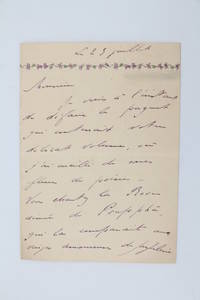
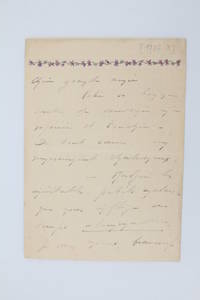
1907réf. 79815s. l. Paris 1907. Fine. s. l. Paris Le 23 juillet ca. 1907-1908 11.50 x 16 cm 2 pages sur un double feuillet Handwritten signed letter addressed to a poet: You sing the rose loved by Psapphâ who compared it to the loving virgins of Mitilini Paris 23 July ca1907-1908 11.5 x 16 cm 2 pages on a double leafHandwritten signed letter from Renée Vivien addressed to a poet written in violet ink on a double leaf of paper decorated at the head with a border of violets. Transverse folds from having been sent. Monsieur Je viens à l'instant de défaire le paquet qui contenait votre délicat volume où j'ai cueilli de rares fleurs de poésie. Vous chantez la rose aimée de Psapphâ qui la comparait aux vierges amoureuses de Mytilène. Parmi vos poèmes je préfère : ''Sa Voix"" ""Sa Grâce"" et ""Les Mains et l'Apothéose"" . Renée Vivien Monsieur I have just this minute undone the package that contained your delicate volume where I picked rare flowers of poetry. You sing the rose loved by Psapphâ who compared it to the loving virgins of Mitilini. Among your poems I prefer: Sa Voix"" ""Sa Grâce"" and ""Les Mains et l'Apothéose"" . Renée Vivien Despite the precision of the titles mentioned it has not been possible for us to identify the poet to whom Vivien sent this letter of thanks. These titles are reminiscent of the poems of the Muse aux violettes herself. unknown
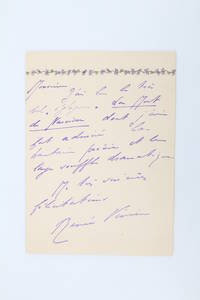
1906réf. 79816s. l. Paris 1906. Fine. s. l. Paris s. d. ca. 1906 11.50 x 16 cm 1 page 1/2 sur un double feuillet Autograph letter signed by Renée Vivien addressed to Charles Maurras written in violet ink on a double leaf of headed paper adorned with a border of violets. Transverse folds inherent to mailing envelope included. Beautiful letter of thanks: ""Monsieur En feuillettant votre si intéressant volume : De l'Avenir de l'Intelligence j'ai relu avec un plaisir ému les pages - trop indulgentes vraiment ! - que vous avez consacré à mes ouvrages. Merci infiniment. Et veuillez agréer mes très reconnaissants sentiments de confraternité littéraire. Renée Vivien"" ""Sir While leafing through your most interesting volume: De l'Avenir de l'Intelligence I reread with moved pleasure the pages - too indulgent really! - that you dedicated to my works. Thank you infinitely. And please accept my most grateful sentiments of literary confraternity. Renée Vivien"" Charles Maurras had indeed devoted a dithyrambic chapter of his work to the Muse of violets whose verses he compared to those of Verlaine: ""Le vieux faune sentimental des Fêtes galantes et de Parallèlement reconnaîtrait chez Renée Vivien beaucoup plus qu'une élève certainement une des Surs une de ces Amies terribles qu'il a chantées. Quant à Baudelaire il lui dirait : ""Ma fille"" aux premiers regards échangés. Baudelairisme profond central générateur."" ""The old sentimental faun of Fêtes galantes and Parallèlement would recognize in Renée Vivien much more than a student certainly one of the Sisters one of those terrible Friends he sang of. As for Baudelaire he would say to her: 'My daughter' at first glance. Deep central generative Baudelairism."" unknown
1907réf. 79804s. l. Paris 1907. Fine. s. l. Paris s. d. ca. 1907-1908 11.50 x 16 cm 2 pages 1/2 sur un double feuillet Autograph letter signed by Renée Vivien addressed to Marcelle Tinayre written in black ink on a double sheet of headed paper decorated with a border of violets. Transverse creases inherent to mailing. Also a writer Marcelle Tinayre was close to Renée Vivien who entrusted her first verses to her to read. Upon Vivien's death Tinayre paid tribute to her through several texts notably a very beautiful tribute article published in the review Schéhérazade in 1910 entitled ""Trois images de Renée Vivien"". ""Chère grande amie Votre si bonne carte de souvenir m'a réjouie et touchée. De tout coeur un remerciement chaleureux. Malgré les inévitables petits malaises que nous inflige ce temps abominable je vais mieux beaucoup mieux. Aussi serais-je très heureuse si vous et Monsieur Tinayre étiez libres le 12 et pouviez venir dîner chez moi. J'aurai le plaisir de vous présenter ma soeur et mon beau-frère qui seront à Paris. Vous devinez quelle joie me causera leur présence ! Croyez à toute mon admiration à toute ma sympthie. Renée Vivien."" ""Dear great friend Your so kind remembrance card delighted and touched me. A warm thank you from the heart. Despite the inevitable small ailments this abominable weather inflicts upon us I am better much better. So I would be very happy if you and Monsieur Tinayre were free on the 12th and could come dine at my home. I will have the pleasure of introducing my sister and brother-in-law who will be in Paris. You can imagine what joy their presence will bring me! Believe in all my admiration all my sympathy. Renée Vivien."" The Muse of violets was indeed very close to Toinette her younger sister who lived in London with her husband Francis. Renée Vivien was moreover the godmother of their son Paul a very rare name then in England in honor of his aunt and in 1911 Toinette would give birth to a daughter whom she would name Renée in tribute to her deceased sister. Very beautiful testimony to the friendship that Renée Vivien bore toward Marcelle Tinayre a writer friend who contributed to perpetuating the memory of Sappho 1900. unknown
1904réf. 79913s. l. Paris 1904. Fine. s. l. Paris s. d. ca 1904 11.50 x 16 cm une page sur un double feuillet Handwritten signed letter addressed to the poet Jean-Marc Bernard: I read the very beautiful eclogue La Mort de Narcisse whose haughty poetry and dramatic breath I admired very much. Paris ca 1904 11.5 x 16 cm one page on a double leafHandwritten signed letter from Renée Vivien addressed to Jean-Marc Bernard written in violet ink on a double leaf of paper decorated at the head with a border of violets. Transverse folds from having been sent. Monsieur J'ai lu le très bel ""églogue"" La Mort de Narcisse dont j'ai fort admiré la hautaine poésie et le large souffle dramatique. Mes très sincères félicitations. Renée Vivien. Monsieur I read the very beautiful eclogue La Mort de Narcisse whose haughty poetry and dramatic breath I admired very much. My very sincere congratulations. Renée Vivien. Jean-Marc Bernard was one of the founders of the poetic satirical and monarchist magazine Les Guêpes which welcomed contributions from Paul-Jean Toulet and Francis Carco among others. Together with the latter two he was part of the École fantaisiste a collective of young poets eager to break with the Parnassians and symbolists and whose ambitions were soon to be swept away by the arrival of the Great War. Jean-Marc Bernard lost his life on the front line destroyed by a shell at the age of thirty-three. unknown
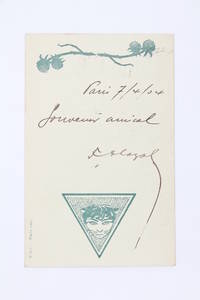
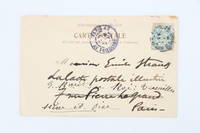
1904réf. 80519Paris: S. n. 1904. Fine. S. n. Paris 7 avril 1904 14.10 x 9.10 cm une carte postale Autograph postcard signed by Frédéric-Auguste Cazals addressed to Emile Straus: ""Souvenir amical - F. A. Cazals Paris 7/4/04"" ""Friendly remembrance - F. A. Cazals Paris 7/4/04"" Some stains. A great enthusiast of epistolary art Emile Straus founded in 1899 La Carte postale illustrée the newsletter of the association he had just launched the International Poste-Carte Club. S. n. unknown
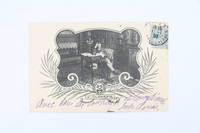
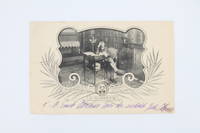
1906réf. 80516Paris: S. n. 1906. Fine. S. n. Paris 11 janvier 1906 14 x 9 cm une carte postale Autograph postcard signed by Jules Clarétie addressed to Emile Straus on a postcard reproducing the photograph of his portrait at his work table: ""Avec tous les souhaits et compliments. Jules Claretie."" ""With all best wishes and compliments. Jules Claretie."" Some staining. A great enthusiast of epistolary art Emile Straus founded in 1899 La Carte postale illustrée the newsletter of the association he had just launched the International Poste-Carte Club. S. n. unknown
1904réf. 80518Paris: S. n. 1904. Fine. S. n. Paris 13 août 1904 14.10 x 9.10 cm une carte postale Signed autograph postcard from Frédéric-Auguste Cazals addressed to Emile Straus: ""Amitiés ! F. A. Cazals Paris 13/8/04"" ""Best wishes! F. A. Cazals Paris 13/8/04"" Some staining. A great enthusiast of epistolary art Emile Straus founded in 1899 La Carte postale illustrée the newsletter of the association he had just launched the International Poste-Carte Club. S. n. unknown
1904réf. 80517Paris: S. n. 1904. Fine. S. n. Paris 3 janvier 1904 14 x 9 cm une carte postale Signed autograph postcard from Jules Clarétie addressed to Emile Straus on a postcard reproducing the photograph of his portrait at his work table: ""A M. Emile Straus tous mes souhaits. Jules Claretie."" ""To Mr. Emile Straus all my best wishes. Jules Claretie."" Some staining. A great enthusiast of epistolary art Emile Straus founded in 1899 La Carte postale illustrée the newsletter of the association he had just launched the International Poste-Carte Club. S. n. unknown
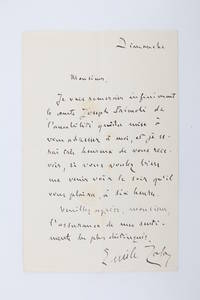
1894réf. 80728s. l. Rome Rome 1894. Fine. s. l. Rome Rome Dimanche 4 novembre 1894 13.20 x 20.50 cm une page sur un double feuillet et une enveloppe Autograph letter signed by Emile Zola addressed to Ugo Ojetti. One page written in black ink on the first page of a double sheet. Folding inherent to postal transmission. Envelope included. This letter was addressed by the father of naturalism to journalist Ugo Ojetti when he had just arrived in Rome: ""Monsieur je vais remercier infiniment le comte Joseph Primoli de l'amabilité qu'il a mise à vous adresser à moi et je serai très heureux de vous recevoir si vous voulez bien me venir voir le soir qu'il vous plaira à six heures."" ""Sir I wish to thank Count Joseph Primoli infinitely for the kindness he has shown in directing you to me and I shall be very happy to receive you if you would be so good as to come and see me any evening that suits you at six o'clock."" Having arrived a few days earlier in the eternal city to conduct research for Rome Emile Zola hoped to meet Count Joseph Primoli there. The latter was unfortunately in Paris but he sent him this young journalist from La Tribuna who would serve as his guide but also as secretary. The two men clearly got along well and Zola even authorized Ojetti to adapt an opera libretto from his famous Nana. The project would unfortunately never come to fruition. Joseph Napoléon Count Primoli 1851-1927 was the great-great-nephew of Napoleon Bonaparte. Very close to the imperial family under the Second Empire he subsequently remained faithful to the salon of his beloved aunt Princess Mathilde in her private mansion on rue de Berri. His refined and witty conversation worked wonders there and he met as a passionate bibliophile some of the greatest writers of his time: Gustave Flaubert Théophile Gautier the Goncourts and Guy de Maupassant. unknown
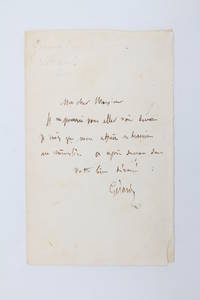
1842réf. 80729Paris 1842. Fine. Paris 10 juin 1842 10.60 x 17 cm quelques lignes sur un double feuillet Autograph letter signed ""Gérard"" addressed to Georges Guénot-Lecointe: ""Mon Cher Monsieur Je ne pourrai vous aller voir demain. Je crois que mon affaire se termine au Ministère. A après demain donc."" ""My Dear Sir I will not be able to come see you tomorrow. I believe my business is concluding at the Ministry. Until the day after tomorrow then."" Fold marks inherent to postal use. Trace of wax seal and manuscript address on fourth page. This letter has been transcribed in the correspondence published in the Pléiade volume 1 p. 917. The ""business"" referred to here concerns financial aid of 300 francs that had been granted to Nerval two months earlier by the Minister of Public Instruction Abel Villemin. Georges Guénot-Lecointe was a critic for La Sylphide a review to which Gérard de Nerval also contributed. unknown
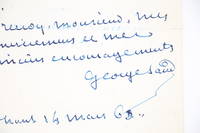
1863réf. 76837Nohant Nohant-Vic 1863. Fine. Nohant Nohant-Vic 14 mars 1863 13.40 x 20.60 cm 3 pages sur un double feuillet Autograph letter signed by George Sand addressed to René Biémont. Three pages written in blue ink on a double sheet bearing at the head of the first page the blind stamp of Sand's initials. Envelope included. Folds inherent to mailing. This letter was published in the complete correspondence of George Sand established by Georges Lubin. Fine letter of congratulations addressed to René Biémont after sending his work Le Petit Fils d'Obermann: ""Your little book is very original and you show qualities of talent that will develop if you look ahead."" As an attentive reader much solicited by her young peers Sand develops her literary criticism: ""Obermann and his grandson the monk belong to the past. They are true and the timid Jean is well drawn. There is grandeur and truth in this exceptional type. But Constant d'Heurs is too passive to events. He should react against this powerless man and cure him or pity him more ."" Sententiously she thus concludes her letter: ""Do not complain of thankless work and accept it as a good thing three-quarters of life sacrificed to some duty makes the last quarter very strong and very alive. It is very good to be attached to poetry and thwarted in the possession of a beautiful dream. As soon as one can savor it without respite it fades or becomes troubled. I speak to you from experience. One is never happier and more inspired than when one believes one does not have time to be so."" Very fine testimony to the leading role that George Sand played on the literary scene of the Second Empire. unknown
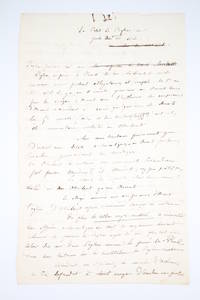
1860réf. 76834s. l. 1860. Fine. s. l. s. d. ca 1860 19.60 x 31.70 cm deux pages sur un feuillet Autograph manuscript by Gustave Flaubert entitled ""De l'état de l'église en Gaule au Ve et VIe siècle"" written in black ink on both sides of a sheet. Transverse fold. Extensive manuscript notes probably written in preparation for the writing of La Légende de Saint Julien l'Hospitalier. Precious manuscript evidence of the writer's working method. unknown
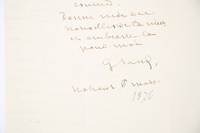
1876réf. 76872Nohant Nohant-Vic 1876. Fine. Nohant Nohant-Vic 6 mars 1876 13.20 x 20.70 cm deux pages sur un feuillet remplié Autograph letter signed by George Sand addressed to Gustave Flaubert. Two pages written in black ink on a double sheet bearing at the head of the first page the sender's dry stamp. This letter was published in the complete correspondence of George Sand established by Georges Lubin. Fine letter written by George Sand a few months before her death and addressed to her lifelong friend Gustave Flaubert. The writer wishes to offer her friend a seat so he may attend the revival of her play Le Mariage de Victorine : ""Je t'écris en courant ce matin parce que je viens de recevoir de Mr Perrin avis de la 1ère représentation de la reprise du Mariage de Victorine une pièce de moi au théâtre français. Je n'ai ni le temps d'y aller ni l'envie de partir comme cela au pied levé mais j'aurais voulu y envoyer quelques amis et il ne m'offre pas une seule place. Je lui écris une lettre qu'il recevra demain et je le prie de t'envoyer au moins un orchestre."" ""I'm writing to you hurriedly this morning because I've just received notice from Mr Perrin of the first performance of the revival of Le Mariage de Victorine a play of mine at the Théâtre Français. I have neither the time to go nor the desire to leave like that at a moment's notice but I would have liked to send some friends and he doesn't offer me a single seat. I'm writing him a letter which he will receive tomorrow and I ask him to send you at least an orchestra seat."" Letters from the correspondence between George Sand and Gustave Flaubert are renowned and highly sought after. unknown
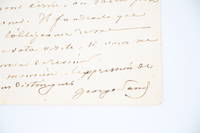
1859réf. 76839Nohant Nohant-Vic 1859. Fine. Nohant Nohant-Vic 16 août 1859 13.50 x 20.90 cm 4 pages sur un double feuillet Autograph letter signed by George Sand addressed to Ernest Feydeau. Four pages written in blue ink on a double sheet bearing at the head of the first page the sender's blind stamp. This letter was published in the complete correspondence of George Sand established by Georges Lubin. Fine and lengthy letter discussing literature and friendship between writers. Initially a stockbroker and specialist in Antiquity Ernest Feydeau launched himself late into fiction. Anxious to occupy a literary space in which he did not feel justly appreciated he used his connections and maintained a regular epistolary relationship with illustrious correspondents such as Gustave Flaubert Sainte-Beuve and George Sand to whom he sent drafts of his novels and whose opinions he sought. This letter forms Sand's response after having just finished reading Daniel Feydeau's second novel. George Sand then at the height of her literary career describes herself thus: ""I am quite old enough to be your mother for I am 55 years old and I have good hands quite skillful but not beautiful at all. I have earned the right to no longer be coquettish I have been quite reproached for never having been so. I will tell you anything about myself that you wish."" As was her habit much solicited by her peers she delivers a very detailed critique of the text her colleague submits to her: ""I am not against sentences that jar where they need to jar but I am not for harmony being sacrificed to rhythm. Nor am I for the contrary. Understand me well I only blame what is too noticeable what reveals the technique. Do not touch the passages you speak of they are excellent. And in sum I will not insist furiously on the question of form in style seeing that if the qualities of yours should disappear with what sometimes seems to me a flaw I would be in despair at having pointed out the flaw."" Herself very close to Flaubert whom she nicknamed her ""leaden bottom"" Sand seems delighted that the two men know each other: ""I do not have time. But I will have time to receive you when you are free you must come with Flaubert who also has in me an enchanted reader and a wholehearted literary friend. I did not know he was your friend and I am pleased that he is."" The friendship goes so far that Sand soon brings the two writers together placing them on complete equal footing: ""It is no misfortune for you any more than for Flaubert to belong to the race of seers."" A form of solidarity then establishes itself in the face of critical adversity: ""All this is felt better than it can be said and that is why criticism loses its reason three-quarters of the time."" For criticism has had the misfortune of labeling Feydeau as it did with Flaubert a realist: ""People have taken it upon themselves to baptize your manner and his as realism. I do not know why; unless realism is something entirely different from what the first adherents attempted to explain to us. I suspect indeed that there is a way of envisaging the reality of things and beings which is great progress and you bring triumphant proof of it. But the name realism does not suit because art is a multiple infinite interpretation. It is the artist who creates reality within himself his own reality and not that of another. Two painters paint the portrait of the same person. Both create a work that represents the person if they are both masters. And yet the two paintings do not resemble each other. What has become of reality"" This long diatribe - a true manifesto - forms a powerful testimony to the repulsion of George Sand and Flaubert for theorists obsessed with the idea of classifying literature according to a ""system that . blinds"". unknown
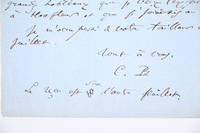
1865réf. 767951865. Fine. 30 mai 1865 13.70 x 21.10 cm une page sur un feuillet Autograph letter signed by Charles Baudelaire to Narcisse Ancelle written in black ink on a sheet of blue paper. Folds from mailing three minute pinholes not affecting the text. This letter was transcribed in the Complete Works volume 11 published in 1949 by L. Conard. A moving letter from Brussels addressed to the celebrated family notary who became in 1844 Charles's legal guardian charged with managing his annuity and his exponential debts. A complex relationship developed between the poet and his guardian mingling necessity and mistrust yet nonetheless bearing witness to genuine mutual respect between the two men. This correspondence devoid of the emotional quality of his letters to his mother or the circumlocutions in his exchanges with creditors constitutes one of the most precious biographical sources on the poet. Indeed Baudelaire's financial dependence constrained him to great transparency with his guardian and each of his letters to Ancelle admirably summarizes his wanderings. Thus this letter evokes the terrible mire in which the poet found himself in Belgium and his constantly postponed return to Paris. When he writes Baudelaire is still in Brussels at the Hôtel du Grand Miroir ""28 rue de la Montagne"" but one must not write the hotel's name otherwise letters do not reach him directly where he is dying of boredom illness and resentment toward a country in which he innocently believed he would find glory. This announcement of imminent departure for Paris ""Two or three days after your reply I will leave"" echoes all the similar promises the poet has made for nearly a year to his correspondents. This one will be aborted like all the others for as he confesses to Ancelle a few months earlier Paris fills him with ""a dog's fear."" It is only in August 1865 that he will make a final and brief stay in France before his fatal stroke. His return ""I am eagerly awaited in Paris and in Honfleur"" was nevertheless motivated by a compelling reason: to negotiate with a publisher through Manet's intervention the publication of his collection of reflections on his contemporaries which he had already titled My Heart Laid Bare Mon cur mis à nu and whose manuscript is partly at his mother's house in Honfleur. Another failurethe work would not appear until 1897 thirty years after Baudelaire's death. But it is undoubtedly the reference to the ""two large paintings he wishes to send to Honfleur"" that gives this letter all its significance. Baudelaire evokes his wish to repatriate paintings from his collection that he left with various lenders or restorers of which he had already sent a list to Ancelle a few months earlier. Among these which ones did he want to bring back to his mother His father's portrait the Boilly the Manet a Constantin Guys There is no mention in other letters of this art shipment and of the ""remainder"" to which the paintings were to be joined. This desire to ""send to Honfleur"" his precious belongings nonetheless testifies to the weakened poet's wish to settle permanently in his mother's ""jewel-house"" in Honfleur an island of serenity where Baudelaire dreamed of a peaceful retreat where all would once again be ""order and beauty luxury calm and voluptuousness."" He would indeed return there paralyzed and mute but for a final year of agony after his syphilitic crisis. The Hôtel du Grand Miroir would remain his last true dwelling as noted on Tuesday April 3 1866 in the register of admissions at the Saint-Jean Clinic: ""Name and first names: Baudelaire Charles. Address: France and 28 rue de la Montagne. Profession: man of letters. Illness: apoplexy."" A fine letter to the man who was both Baudelaire's persecutor and protector. He accompanied the poet until his death before becoming executor of the family estate. unknown
1840réf. 77244Paris 1840. Fine. Paris jeudi 7 mai 1840 13.60 x 20.90 cm une page sur un double feuillet Autograph letter signed by George Sand addressed to publisher Léon Curmer. One page written in black ink on a double sheet. This letter was published in the complete correspondence compiled by Georges Lubin. ""Monsieur J'ai parcouru votre recueil avec beaucoup d'intérêt et j'accepte la collaboration que vous m'avez offerte mais je ne pourrais m'occuper de vous satisfaire que dans six semaines ou deux mois. Si cette époque vous convient veuillez bien me le faire savoir ainsi que les conditions de la rédaction."" ""Sir I have perused your collection with great interest and I accept the collaboration you have offered me but I could not undertake to satisfy you for six weeks or two months. If this timing suits you please let me know as well as the conditions of the writing."" The ""recueil"" ""collection"" in question here is none other than Les Français peints par eux-mêmes. Sand would not however collaborate on this monumental compendium of types preferring instead several years later Le Diable à Paris published under the direction of her close friend publisher Hetzel. unknown
1931réf. 77544Paris 1931. Fine. Paris 6 avril 1931 14.60 x 19.30 cm une page sur une carte lettre Signed autograph note by Reynaldo Hahn addressed to Madame Serge André and written on a white paper letter-card in blue ink. Central fold inherent to the mailing. Dominique André is a poetess novelist and playwright. She notably published under the pseudonym Claude Isambert. ""J'ai trop tardé chère Madame à vous remercier de votre livre et du plaisir qu'il m'a procuré. Plaisir amer et trouble - mais rare. Ce qui est particulièrement remarquable en ces pages c'est leur extrême distinction."" ""I have delayed too long dear Madame in thanking you for your book and the pleasure it has given me. Bitter and troubled pleasure - but rare. What is particularly remarkable in these pages is their extreme distinction."" unknown