Maurice LEBLANCBiblio.com
67 633 résultats
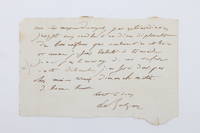
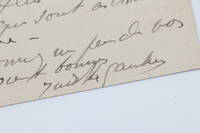
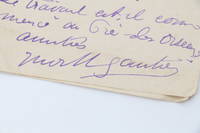
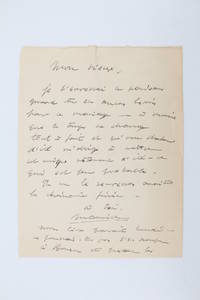
1900réf. 80760s. l. 1900. Fine. s. l. s. d. ca 1900 14.70 x 18.90 cm Une page et 1/2 sur un feuillet Autograph letter signed by Maurice Leblanc to an unknown recipient whom he addresses as ""Mon vieux""; one and a half pages written in black ink on a sheet. Transverse folds inherent to mailing. The letter concerns the loan of a garment: ""Je t'enverrai ce pardessus quand tu en auras besoin pour ce mariage - à moins que le temps ne change tout à fait et qu'une chaleur d'été m'oblige à mettre cet unique vêtement d'été - ce qui est peu probable. Tu me le renverras aussitôt la cérémonie finie."" ""I'll send you this overcoat when you need it for this wedding - unless the weather changes completely and summer heat forces me to wear this only summer garment - which is unlikely. You'll send it back to me as soon as the ceremony is over."" Maurice Leblanc also mentions the release of one of his works ""Mon livre paraît lundi - ne pourrais-tu pas t'en occuper à Rouen et presser les libraires de faire leurs commandes et de t'arranger pour n'en point manquer "" ""My book comes out Monday - couldn't you take care of it in Rouen and press the booksellers to place their orders and arrange not to run out"" before concluding his letter: ""Tout le monde va bien. Chez Geo c'est affolant. On s'en va à Bordeaux du 21 avril au 4 mai."" ""Everyone is well. At Geo's it's frantic. We're going to Bordeaux from April 21 to May 4."" unknown
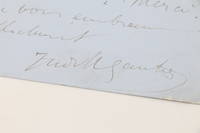
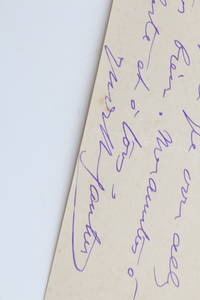
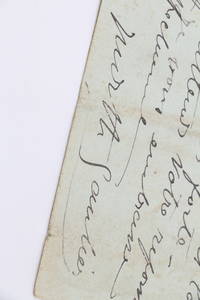
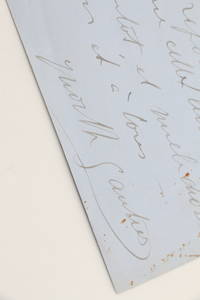
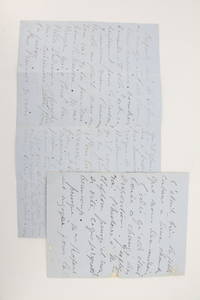
1910réf. 80820Alger Algiers 1910. Fine. Alger Algiers s. d. ca 1910 13.40 x 18 cm 4 pages sur un double feuillet Autograph letter signed by Judith Gautier addressed to Céleste Chrétien her maid. Four pages written in black ink on a double sheet. Transverse folds inherent to mailing last page soiled in lower margin without hindrance to reading. Judith Gautier asks her maid if the latter's husband can do work in her house at Pré aux oiseaux in Dinard: ""Je voudrais savoir si Francis pourrait se charger de rafraîchir ma maison et de repeindre les moulures de bois et les persiennes. Il s'agit de refaire un peu les fausses briques . et aussi les fenêtres lucarnes rondes du 2eme étage du côté de la mer qui sont à jour et qu'il faudra boucher avec du coton. On pourrait aussi reblanchir la cuisine qui n'a été faite qu'à peu près et le plafond de la salle à manger qui est très sale. ."" ""I would like to know if Francis could take care of refreshing my house and repainting the wood moldings and shutters. It's about redoing a bit the false bricks . and also the round dormer windows on the 2nd floor on the sea side which are open and will need to be plugged with cotton. We could also rewhiten the kitchen which was only roughly done and the ceiling of the dining room which is very dirty. ."" unknown
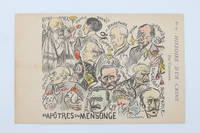
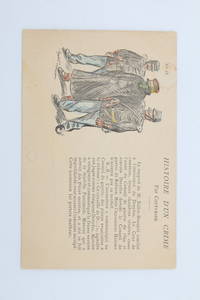
1899réf. 80782s. l. Paris: Edouard Couturier 1899. Fine. Edouard Couturier s. l. Paris s. d. 1899 13.90 x 9 cm une carte postale First edition of this postcard from the series entitled ""Histoire d'un crime"" n°15; it was created by Edouard Couturier and heightened in colors. Handsome copy. Edouard Couturier unknown
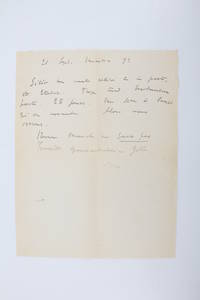
1893réf. 80761Vaucottes Vattetot-sur-mer 1893. Fine. Vaucottes Vattetot-sur-mer 21 septembre 1893 15.60 x 20.10 cm quelques lignes sur un feuillet Autograph letter signed by Maurice Leblanc to an unknown recipient; a few lines written in black ink on a sheet. Transverse folds inherent to mailing. ""Sitôt ton mot retiré de la poste été Etretat. Trop tard. Natanson parti. 28 jours. Ne sera à Paris qu'en novembre. Alors nous verrons. Revue Blanche ne paie pas. Tempête épouvantable - grêle."" ""As soon as your note was collected from the post office went to Etretat. Too late. Natanson left. 28 days. Won't be in Paris until November. Then we'll see. Revue Blanche doesn't pay. Terrible storm - hail."" unknown
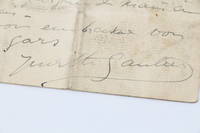
1910réf. 80835Alger Algiers 1910. Fine. Alger Algiers s. d. ca 1910 13.70 x 18 cm 4 pages sur un double feuillet Autograph letter signed by Judith Gautier addressed to Céleste Chrétien her housekeeper. Four pages written in black ink on a double sheet. Transverse folds inherent to mailing. Judith Gautier here discusses the visit of her friend the musician Chalmers Clifton - whom she liked to nickname Charmeur - to Dinard: ""Voici les dernières instructions : le voyageur arrivera dimanche soir à 7 heures 20. Il faudra le prendre à la gare vous ou Francis et le conduire tout droit à la maison qu'il ne connait pas. Il apporte des draps au cas où il n'y en aurait pas. Il les donnera pour qu'on fasse le lit et on le conduira tout de suite à Michelet pour dîner il faudra prévenir pour qu'on garde un dîner. . Mr Clifton est un très jeune américain tout à fait charmant et qui a l'air d'une demoiselle. Soignez-le bien."" ""Here are the final instructions: the traveler will arrive Sunday evening at 7:20. You or Francis will need to meet him at the station and take him straight to the house which he doesn't know. He is bringing sheets in case there aren't any. He will give them so the bed can be made and he will be taken immediately to Michelet for dinner you must warn them to save a dinner. . Mr. Clifton is a very young American who is quite charming and looks like a young lady. Take good care of him."" unknown
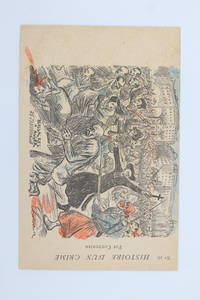
1899réf. 80783s. l. Paris: Edouard Couturier 1899. Fine. Edouard Couturier s. l. Paris s. d. 1899 13.90 x 9 cm une carte postale First edition of this postcard belonging to the series entitled ""Histoire d'un crime"" n°16; it was created by Edouard Couturier and heightened in colors. Handsome copy of this postcard denouncing the anti-Semitic massacres in Algiers in January 1899. Edouard Couturier unknown
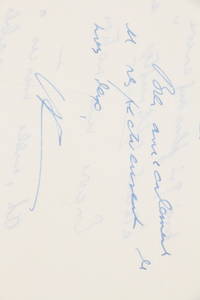
1950réf. 80910s. l. Klarskovgaard 1950. Fine. s. l. Klarskovgaard 17 novembre 1950 21 x 34 cm 2 pages sur un feuillet Autograph letter signed with the initials of Louis-Ferdinand Céline addressed to his lawyer Master Thorvald Mikkelsen. Two pages written in blue ink on a large sheet of white paper; number ""568"" in Céline's hand in red pencil at the top left. Transversal folds inherent to mailing. This letter was very partially transcribed in Année Céline 2005. Early November 1950 Gaby Paul had come to visit Céline and Lucette at Klarskovgaard: ""Oh mille mercis à Mme Christensen pour son aimable repas qui réchauffé fit nos délices ! Et puis aussi gratitudes pour tout le soin qu'elle a pris de Mme Gen Paul !. Laquelle ne donne aucune nouvelle. Quelle vacherie encore . Comme c'est amusant ! Je crois qu'elle avait des projets ""journalistiques"" mais que mon attitude l'a désenchantée. """"Oh a thousand thanks to Madame Christensen for her kind meal which reheated was our delight! And also gratitude for all the care she took of Mme Gen Paul!. Who gives no news. What nastiness again. How amusing! I believe she had 'journalistic' projects but my attitude disenchanted her."" Céline also mentions the Swedish writer Ernst Bendz one of the few to defend Céline alongside Paraz: ""Une lettre amusante de Bendz ! Bendz appartient vraiment à l'aristocratie des esprits ! La preuve ! La façon qu'il ""m'estime""!!!""""An amusing letter from Bendz! Bendz truly belongs to the aristocracy of minds! The proof! The way he 'esteems me'!!!"" In 1947 Céline pursued by French justice for his collaborationist involvement was confined in Denmark. It was in May 1948 accompanied by Lucette and Bébert that he arrived at his lawyer Master Thorvald Mikkelsen's home at Klarskovgaard. The latter owned a large property by the Baltic Sea and invited the exile to stay there. On February 21 1950 as part of the épuration the writer was definitively sentenced in absentia by the civic chamber of the Paris Court of Justice for collaboration to one year of imprisonment which he had already served in Denmark. The Swedish Consul General in Paris Raoul Nordling intervened on his behalf with Gustav Rasmussen Danish Foreign Minister and managed to delay his extradition. On April 20 1951 Jean-Louis Tixier-Vignancour his lawyer since 1948 obtained Céline's amnesty under the title of ""severely disabled veteran of the Great War"" by presenting his file under the name Louis-Ferdinand Destouches without any magistrate making the connection. Céline would leave Denmark the following summer after three years spent at his lawyer's home. unknown
1839réf. 803451839. Fine. s. d. ca 1839 13 x 8 cm une feuille Signed handwritten letter to Louis Desnoyers ca 1839 13 x 8 cm one leaf Handwritten letter signed by Honoré de Balzac addressed to Louis Desnoyers written on a white piece of paper in black ink. My dear Mr Desnoyers extraordinarily today I attend a diplomatic dinner of good-natured folk who want to laugh and drink and as I am in a stupor at work I have not had the courage to refuse this debauchery; I will therefore not be at home. Come early Sunday morning. / Yours / de Balzac. Louis Desnoyers plays an important role in the foundation of the Société des gens de lettres which aims to protect literary and artistic property and to create a solidarity fund. Balzac supported the creation of this Society of which Desnoyers was vice-president. Amusing letter testimony of Balzac's love of good food. unknown
1910réf. 80815Alger Algiers 1910. Fine. Alger Algiers s. d. ca 1910 13 x 7.20 cm une carte Autograph card signed by Judith Gautier addressed to Céleste Chrétien her maid written on both sides in black ink. Judith Gautier did not only employ Céleste for her domestic tasks but also called upon her talents as a seamstress: ""I will send you the 3 meters of taffeta for the guipure. I am hesitating about the color. The dress fits well I wear it over black taffeta undergarments."" unknown
1910réf. 80881Alger Algiers 1910. Fine. Alger Algiers s. d. ca 1910 16.30 x 20.90 cm 3 pages sur un double feuillet Autograph letter signed by Judith Gautier addressed to Francis Chrétien the husband of her maid Céleste. Three pages written in violet ink on a double sheet with letterhead from 30 rue Washington. Transverse folds inherent to mailing. Judith Gautier sends Francis some instructions regarding the renovation of her house in Dinard le Pré aux oiseaux: ""Je pensais à la cuisine qui va être très noire et à la fenêtre bouchée qui est du côté du jardin sous la fenêtre de la salle à manger. Il me semble qu'elle rendrait du jour et même du soleil si elle était débouchée et bien disposée."" ""I was thinking about the kitchen which will be very dark and the blocked window which is on the garden side under the dining room window. It seems to me that it would provide light and even sunlight if it were unblocked and well arranged."" unknown
1912réf. 80804Alger Algiers 1912. Fine. Alger Algiers 14 mars 1912 11.30 x 15.20 cm 4 pages sur un feuillet double Autograph letter signed by Judith Gautier addressed to Céleste Chrétien her maid; four pages written in black ink on a double sheet. This letter mentions the visit of Francis a carpenter by profession and Céleste Chrétien's husband to Paris: ""Does Francis still want to come and spend a few days in Paris Can he do so without harming his work They are going to perform Tristane with marionettes. I would like to have him to help me and I think it would amuse him. I would send him a first-class railway pass he would sleep and eat at my place so as not to incur any expenses. The performance takes place Saturday the 23rd at 4 o'clock; and there will be a dress rehearsal the day before or two days before."" It was in 1910 that Judith Gautier published in La Revue de Paris a triptych in verse entitled Tristane which she had performed in her Little marionette theatre inaugurated in May 1897 at 4 rue Charras in Paris. This theatre which contained about a hundred seats was quickly allocated a subsidy by the Ministry of Fine Arts. unknown
1914réf. 80878Alger Algiers 1914. Fine. Alger Algiers s. d. ca 1914 13.70 x 18 cm 4 pages sur un double feuillet Autograph letter signed by Judith Gautier addressed to Céleste Chrétien her maid. Four pages written in black ink on a double sheet. Transverse folds inherent to mailing. Judith announces the upcoming visit of a friend to Dinard: ""I come to announce to you today that a young man who is my friend will come to settle in the house next Saturday for the month of June. He wants to be there all alone to finish some urgent musical work. You will give him my room with the dressing room and the room next to it the ground floor in order and the piano well polished."" unknown
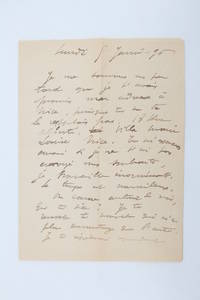
1891réf. 80763s. l. 1891. Fine. s. l. 5 janvier 1891 14.20 x 19.20 cm 3 pages sur un double feuillet Autograph letter signed by Maurice Leblanc to an unknown recipient; three pages written in black ink on a double leaf. Transverse folds inherent to posting. At the beginning of this year Maurice Leblanc left the Norman coast to spend the winter in Nice: ""Je me souviens un peu tard que je t'avais promis mon adresse à Nice puisque tu ne te la rappelais pas. 18 rue Alberti villa Marie-Louise Nice. Tu m'excuseras aussi si je ne t'ai pas envoyé mes souhaits je travaille énormément le temps est merveilleux on cause autour de moi que te dire "" ""I remember rather late that I had promised you my address in Nice since you couldn't recall it. 18 rue Alberti villa Marie-Louise Nice. You'll also excuse me if I haven't sent you my wishes I'm working enormously the weather is wonderful people are chatting around me what can I tell you"" Though he had then published only one work he gives his opinion to his correspondent on a text the latter had sent him: ""Je te répèterai répondant ce que je t'ai dit pour ton style : il n'est pas assez travaillé tu écris un peu au hasard de ta plume on ne sent pas de nerfs là-dessous d'os de solide c'est du style de journal de lettre mais pas de style littéraire. Pourquoi n'essayes-tu pas de réfléchir sur chaque phrase avant de l'écrire."" ""I'll repeat in response what I told you about your style: it's not worked enough you write somewhat at random with your pen one doesn't feel any sinew underneath bone solidity it's newspaper style letter style but not literary style. Why don't you try to reflect on each sentence before writing it."" unknown
1910réf. 80833Alger Algiers 1910. Fine. Alger Algiers s. d. ca 1910 16.30 x 10.60 cm une carte Autograph card signed by Judith Gautier addressed to Céleste Chrétien her housekeeper written in black ink on both sides of a card with letterhead from 30 rue Washington in Paris. Judith regrets leaving her house in Dinard: ""It was kind of you to send us flowers from the garden. It gave us pleasure and regrets because there must still be beautiful days there."" She expresses here her passion for horticulture: ""Every evening I burn a eucalyptus leaf from your trees to perfume my room. The terrace is full of chrysanthemums in bloom and there were three tomatoes that are ripening on my wardrobe."" unknown
1914réf. 80879Alger Algiers 1914. Fine. Alger Algiers s. d. ca 1914 13.70 x 18 cm 6 pages sur un double feuillet et un feuillet simple Autograph letter signed by Judith Gautier addressed to Céleste Chrétien her maid. Four pages written in black ink on a double sheet. Transverse folds inherent to mailing. Judith Gautier here evokes the visit of her friend the musician Chalmers Clifton - whom she liked to nickname Charmeur - to Dinard: ""Mr Clifton received yesterday Sunday a telegram which told him to book Villa Mitsou for August and September in the name of Ni Liao."" She also asks Celeste for additional information about a maid she recommended to her: ""Tell me again about the cleaning woman. Is she . a good cook how much does she ask for Is it only for the season"" A lover of animals she then gives some advice on how to pamper them: ""For the blackbirds you must crush the hemp seed very fine and crush in the same manner bread crust. This is the foundation of their diet but they eat almost everything bread in milk minced meat cooked or raw cherries strawberries grapes a little bit of young snail cut in pieces flies and especially mealworms and ant eggs fresh they adore them plenty of water always something to bathe in."" She also mentions one of her pets: ""My bat is still doing well. I am searching in vain for a little female for it."" ""A poor bat found itself one summer day stuck in a ""fly-catcher"" . The poor creature was struggling desperately. Judith unstuck it with cologne water put it in a small pantry and it lived there eighteen months. It lost its bat habits slept at night awake during the day it drank water from a shell lapping it like a little horse."" Anne Danclos La Vie de Judith Gautier : égérie de Victor Hugo et de Richard Wagner unknown
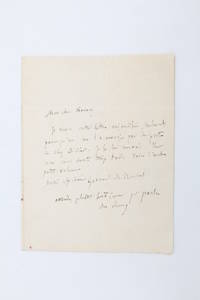
1852réf. 80738Paris 1852. Fine. Paris s. d. fin 1852 - début 1853 10.30 x 13.20 cm quelques lignes sur un double feuillet Autograph letter signed ""Gérard de Nerval"" addressed to historian Charles Romey: ""Mon cher Romey Je reçois votre lettre aujourd'hui seulement parce qu'on me l'a envoyée par la poste de chez Didier. Je la lui renvoie. Il sera sans doute trop tard. Voici l'autre petit volume. Votre affectionné Gérard de Nerval. Attendez plutôt huit jours pour parler des deux."" ""My dear Romey I am only receiving your letter today because it was sent to me by post from Didier's. I am returning it to him. It will probably be too late. Here is the other small volume. Your devoted Gérard de Nerval. Rather wait eight days before discussing the two."" Folds inherent to being placed in envelope. This note has been transcribed in the correspondence published in the Pléiade volume 3 p. 799. unknown
1910réf. 80880Alger Algiers 1910. Fine. Alger Algiers s. d. ca 1910 12.90 x 17 cm 4 pages sur un double feuillet Autograph letter signed by Judith Gautier addressed to Céleste Chrétien her maid. Four pages written in black ink on a double sheet. Transverse folds inherent to mailing. Judith Gautier frequently called upon the seamstress talents of her housekeeper: ""J'ai été contente de votre envoi tout allait bien sauf la robe en crêpe de Chine mauve qui était trop courte devant d'au moins 20 centimètres. On peut l'arranger en descendant les lés et en mettant un empiècement. Je vous enverrai d'autres étoffes si vous avez du temps. Mais je cherche un modèle un peu plus nouveau à adopter."" ""I was pleased with your shipment everything was fine except the mauve crepe de Chine dress which was too short in front by at least 20 centimeters. It can be fixed by lowering the panels and adding a yoke. I will send you other fabrics if you have time. But I am looking for a somewhat newer pattern to adopt."" unknown
1899réf. 80784s. l. Paris: Edouard Couturier 1899. Fine. Edouard Couturier s. l. Paris s. d. 1899 13.90 x 9 cm une carte postale First edition of this postcard belonging to the series entitled ""Histoire d'un crime"" n°18; it was created by Edouard Couturier and heightened in colors. Handsome copy. Edouard Couturier unknown
1910réf. 80834Alger Algiers 1910. Fine. Alger Algiers s. d. ca 1910 10.50 x 16.50 cm 1 page sur un double feuillet Autograph letter signed by Judith Gautier addressed to Céleste Chrétien her housekeeper. One page written in violet ink on a double sheet. Transverse folds inherent to the mailing. ""I receive this letter from Mr Lemoine and I don't know what to reply to him not knowing your reasons. Tell me what I should do. Has the work begun at Pré aux Oiseaux"" unknown
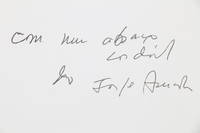
1990réf. 81162s. l.: S. n. 1990. Fine. S. n. s. l. s. d. circa 1990 11 x 7.50 cm une feuille Printed visiting card of Jorge Amado on which he has added a few words probably for his friend and translator of his works into French Alice Raillard: ""Com un abraza cordial do Jorge Amado."" Handsome copy. S. n. unknown
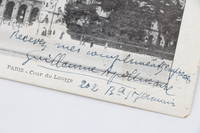
1913réf. 82418Paris 1913. Fine. Paris 1913 13.30 x 21 cm Une carte postale Unpublished autograph signed postcard by Guillaume Apollinaire addressed to the Dijon art historian Marcel Mayer. Two pages written in black ink on a photographic postcard depicting the courtyard of the Louvre. Charming letter praising the attachment to their roots of the "".fameux Flamands-Espagnols Hollandais et Bourguignons que j'admire tant"" ""famous Flemish-Spanish Dutch and Burgundians whom I admire so much"" and informing his correspondent of the writing and forthcoming publication of a ""petit livre sur Rude"" ""little book on Rude"" that Guillaume Apollinaire will not fail to send him. Fine autograph signature with the autograph address of 202 Boulevard Saint-Germain. unknown
1882réf. 79108Médan 1882. Fine. Médan 23 juin 1882 13.40 x 21.60 cm 1 page 1/2 sur un double feuillet - enveloppe jointe Autograph letter signed by Emile Zola - apparently unpublished - addressed to Léon Carbonnaux written in black ink on a double sheet. Folds inherent to mailing. Envelope included. Important testimony to the colossal documentation work and the capital role of Emile Zola's informants in depicting his immense natural and social fresco. This letter was sent to Léon Carbonnaux department head at Bon Marché who transmitted precious information to Emile Zola for the creation of the eleventh volume of the Rougon-Macquart series: Au Bonheur des Dames. Only two letters from Léon Carbonnaux to Emile Zola are known: they can be consulted in the digitization of the preparatory file for Bonheur des Dames made available online by the Bibliothèque nationale de France. However we know thanks to this same file which contains a long section entitled ""Notes Carbonnaux"" that this department head at Bon Marché provided a significant amount of information to Zola particularly about employee customs and their remuneration. The two men undoubtedly met when Emile Zola eager for information about the functioning of department stores conducted field research in February and March 1882. This response would therefore be the very first that the writer addressed to the department head in reply to his letter of June 19 1882. Far from imagining the keen success that this new novel would achieve Zola even seems to take it lightly: ""Je désire simplement toucher au sujet dans mon livre pour le besoin du petit drame commercial qui me sert de fable. Vos notes sont excellentes. . Enfin me voilà au travail. Le sujet est à la fois bien vaste - et bien ingrat pour un roman. On devra me tolérer un peu de fiction car il faut bien que je passionne la matière. Mais je tâche de m'en tenir le plus strictement possible à mes notes."" ""I simply wish to touch on the subject in my book for the needs of the little commercial drama that serves as my fable. Your notes are excellent. . Finally here I am at work. The subject is both very vast - and very thankless for a novel. One will have to tolerate a bit of fiction from me for I must make the material passionate. But I try to stick as strictly as possible to my notes."" It must be said that Carbonnaux takes his role as informant very much to heart and having no doubt about the book's success he writes: ""Dans le bâtiment chez nous d'ailleurs partout on attend votre livre. Les lecteurs ne vous manqueront pas. Soyez-en sûr. Vous n'en êtes plus à compter les succès celui-là s'annonce comme devant dépasser les autres."" letter of June 19 1882 For another work on the same subject has just appeared: ""J'ai lu le volume de Pierre Giffard. Il me paraît comme vous injuste et même faux dans plusieurs parties. C'est bâclé. Il aurait fallu pour un pareil ouvrage de documents purs une entière exactitude. Moi qui écris une uvre d'imagination je ne me permettrai pas de tels écarts."" ""I have read Pierre Giffard's volume. It seems to me like you unjust and even false in several parts. It is hastily done. For such a work of pure documents complete accuracy would have been necessary. I who write a work of imagination would not allow myself such deviations.""It was Carbonnaux who had pointed out the work to Zola: ""Pierre Giffard du Figaro vient de faire paraître chez Havard un vol de 300 pages intitulé « Les Grands bazars de Paris ». . On sait que le Figaro est inféodé au Louvre magasin concurrent au Bon Marché & on peut assurer que ce livre a été commandé et bâclé dès que votre intention de traiter le même sujet a été connue. . Il fallait déguiser un peu la réclame pour le Louvre."" letter of June 19 1882 We can clearly see here how much department stores fascinate and we understand the immense success that this novel by Zola describing their advent and supremacy would achieve. unknown
1888réf. 79098Paris 1888. Fine. Paris 11 février 1888 13.20 x 20.50 cm 2 pages sur un double feuillet Autograph letter signed by Emile Zola addressed to Henry Fouquier written in black ink on a bifolium. Usual folds from mailing. This letter was transcribed in the complete correspondence of Emile Zola published by the CNRS and the Presses de l'Université de Montréal. A fine letter evoking La Terre and Tolstoy's The Power of Darkness. Henry Fouquier 1838-1900 was a literary critic and columnist for numerous newspapers. A close friend of Guy de Maupassant he supported Emile Zolas candidacy for the Académie française. This letter was written to him the day after the performance of Tolstoy's The Power of Darkness at the Théâtre-Libre. We have not found evidence of an article in which the journalist explicitly drew a parallel between the Russian drama and Zolas La Terre but Zola here addresses his thanks: « Merci mon cher Fouquier de ce que vous voulez bien dire de « la Terre » si attaquée. J'en suis touché vivement et croyez à toute ma gratitude. » It must be said that the fifteenth volume of the Rougon-Macquart cycle was harshly received unleashing passions from the moment of its serial publication in Gil Blas. On 18 August 1887 even before the conclusion of the novel was revealed to the public Le Figaro published the Manifeste des Cinq written by Paul Bonnetain J.-H. Rosny Lucien Descaves Paul Margueritte and Gustave Guiches. These young authors issued a severe verdict: « La Terre a paru. La déception a été profonde et douloureuse. Non seulement l'observation est superficielle les trucs démodés la narration commune et dépourvue de caractéristiques mais la note ordurière est exacerbée encore descendue à des saletés si basses que par instants on se croirait devant un recueil de scatologie : le Maître est descendu au fond de l'immondice. . Nous répudions ces bonshommes de rhétorique zoliste ces silhouettes énormes surhumaines et biscornues dénuées de complication jetées brutalement en masses lourdes dans des milieux aperçus au hasard des portières d'express. De cette dernière uvre du grand cerveau qui lança L'Assommoir sur le monde de cette Terre bâtarde nous nous éloignons résolument mais non sans tristesse. Il nous poigne de repousser l'homme que nous avons trop fervemment aimé. » Zola who had been developing the idea of a peasant novel for a decade was deeply affected. Though he never responded publicly to these accusations his correspondence is strewn with clarifications about the work whose sheer brutality alone seemed to occupy readers minds: « Mais vous ajoutez que notre thèse à Tolstoï et à moi est la même et peut se résumer en ceci : le travail de la terre est corrupteur. Tolstoï il me semble protesterait bien haut et quant à moi je vous affirme que je n'ai jamais voulu prouver une telle chose radicalement fausse à mon avis. Ce que je pense c'est que la petite propriété telle qu'elle existe chez nous c'est que la suite de faits sociaux qui ont abouti à notre forme sociale nous ont donné notre paysan d'aujourd'hui avec ses qualités et ses vices. Notre paysan est le prisonnier de sa terre et non l'homme libre qu'il devrait être. Comment voulez-vous qu'il n'y étouffe pas dans son ignorance et sa passion unique Labourer est très sain mais à la condition qu'on sera le maître de son champ au lieu d'en être le forçat. Je me suis exténué à faire sortir cette vérité de mon livre si l'on ne m'a pas compris la faute en est sans doute à moi. » A remarkable letter from the master of Naturalism shedding new light on one of the most brutal volumes of the Rougon-Macquart series. unknown
1882réf. 79109Médan 1882. Fine. Médan 16 novembre 1882 13.60 x 21.40 cm 2 pages sur un double feuillet - enveloppe jointe Autograph letter signed by Emile Zola - apparently unpublished - addressed to Léon Carbonnaux written in black ink on a double sheet. Folds inherent to mailing. Envelope included. Important testimony to the colossal documentation work and the capital role of Emile Zola's informants in depicting his immense natural and social fresco. This letter was sent to Léon Carbonnaux department head at Bon Marché who transmitted precious information to Emile Zola for the creation of the eleventh volume of the Rougon-Macquart series: Au Bonheur des Dames. Only two letters from Léon Carbonnaux to Emile Zola are known: they can be consulted in the digitization of the preparatory file for Bonheur des Dames made available online by the Bibliothèque nationale de France. However we know thanks to this same file which contains a long section entitled ""Notes Carbonnaux"" that this department head at Bon Marché provided a significant amount of information to Zola particularly about employee customs and their remuneration. The two men undoubtedly met when Emile Zola eager for information about the functioning of department stores conducted field research in February and March 1882. ""J'ai pris l'inventaire comme cadre à un de mes chapitres. D'ailleurs je n'ai spécialement besoin que du travail dans le rayon des confections et dans le rayon des soieries. Il est inutile de me renseigner sur les autres rayons."" ""I have taken the inventory as the framework for one of my chapters. Moreover I specifically only need the work in the ready-to-wear department and in the silk department. It is unnecessary to inform me about the other departments."" Thanks to this important letter we understand that it was Léon Carbonnaux who provided the essential information to Emile Zola for writing his very beautiful eleventh chapter devoted to the inventory: ""Vous avez eu l'obligeance de me donner certains détails sur l'inventaire. Vous m'avez dit qu'on choisissait le premier dimanche d'août qu'on fermait les portes et que tous les employés s'y mettaient. On vide toutes les cases n'est-ce pas on jette les marchandises sur les comptoirs ou à terre et l'inventaire n'est terminé que lorsqu'il n'y a plus absolument rien en place."" ""You were kind enough to give me certain details about the inventory. You told me that the first Sunday in August was chosen that the doors were closed and all the employees set to work. All the compartments are emptied aren't they The merchandise is thrown onto the counters or on the ground and the inventory is only finished when there is absolutely nothing left in place.""The final version of Bonheur des Dames contains all the precious information provided by the department head of Bon Marché: ""Le premier dimanche d'août on faisait l'inventaire qui devait être terminé le soir même. Dès le matin comme un jour de semaine tous les employés étaient à leur poste et la besogne avait commencé les portes closes dans les magasins vides de clientes. . Neuf heures sonnaient. . Dans le magasin inondé de soleil par les grandes baies ouvertes le personnel enfermé venait de commencer l'inventaire. On avait retiré les boutons des portes des gens s'arrêtaient sur le trottoir regardant par les glaces étonnés de cette fermeture lorsqu'on distinguait à l'intérieur une activité extraordinaire. C'était d'un bout à l'autre des galeries du haut en bas des étages un piétinement d'employés des bras en l'air des paquets volant par-dessus les têtes ; et cela au milieu d'une tempête de cris de chiffres lancés dont la confusion montait et se brisait en un tapage assourdissant. Chacun des trente-neuf rayons faisait sa besogne à part sans s'inquiéter des rayons voisins. D'ailleurs on attaquait à peine les casiers il n'y avait encore par terre que quelques pièces d'étoffe. La machine devait s'échauffer si l'on voulait finir le soir même. unknown
1882réf. 79111Médan 1882. Fine. Médan 1er décembre 1882 13.60 x 21.40 cm 2 pages sur un double feuillet - enveloppe jointe Autograph letter signed by Emile Zola - apparently unpublished - written in black ink on a double sheet and addressed to Léon Carbonnaux department head at Bon Marché. Folds inherent to mailing. Envelope included. Only two letters from Léon Carbonnaux to Emile Zola are known: they can be consulted in the digitized preparatory file for Au bonheur des dames made available online by the Bibliothèque nationale de France. However we know from this same file which contains a long section entitled ""Notes Carbonnaux"" that this department head at Bon Marché provided Zola with a significant amount of information particularly about employee customs their remuneration and especially inventory techniques. The two men probably met when Emile Zola eager for information about the workings of department stores conducted field research in February and March 1882. Very important unpublished letter shedding new light on the pre-original publication of Au bonheur des dames. In his biography of Emile Zola Henri Mitterrand writes: ""Even before the novel was completed Zola gave an extract to Panurge in November; and on November 23 1882 Gil Blas announced its imminent publication in its columns."" Our letter discussing precisely this alleged pre-publication in Panurge attests that it was simply a joke and thus contradicts Henri Mitterrand: ""But your letter surprises and saddens me somewhat. How could you have been taken in by Panurge's stupid joke Did you not notice that the entire issue is a 'farce' Not one of the articles is authentic they are parodies and very poorly done ones at that."" Indeed reading the said extract cannot fool the assiduous reader of Zola despite the introduction that the journalists wrote: ""After Nana and Pot-Bouille those epics of elegant vice and bourgeois vice M. Emile Zola wanted to create one of honesty: Au bonheur des Dames which will appear shortly is a reassuring painting of innocence and virtue; the greatest success is assured for this new work whose characters move in the setting of a large novelty store; Parisian high commerce will not long await its observer and painter. We thank Emile Zola for having kindly cut out especially for Panurge a few pages from his still unpublished work and we are proud to give the public first an extract from this work of such high morality and such powerful interest."" Panurge no. 4 of October 22 1882 The sentences of this false Zolian text are exaggeratedly long and Panurge took the liberty of endowing the novel with a male main character Denis Mouret an amalgam of Denise the true heroine of the book to appear and Octave Mouret. One can think that it is a text composed from elements of Pot-Bouille the previous volume of Rougon Macquart where Octave - future owner of Bonheur des Dames - exercised the function of clerk before his meteoric social rise: ""For already more than two months he had been attached to the 'silks and furs' department; he arrived in the morning at seven o'clock to return home his day finished only at nine o'clock in the evening when all of Paris buzzed strangely with a feverish animation of pleasure and enjoyment and on his way back he followed gawking the great crowded boulevards where blazed the cafés full of girls and where on the asphalt at theater doors the crowd jostled with here and there in the vague rumor of trampling and pressing the roguish intonation of the cries of program vendors and ticket sellers."" Panurge In his letter of November 30 1882 Léon Carbonnaux - reading the extract from Panurge - had reproached Zola for his errors: ""Nowhere except at the Fabriques de France near Les Halles does one arrive at 7 a.m. It's at the earliest 7:30 but more often 8 a.m. and even then. There is no silk and fur counter at the Louvre. . It is so easy for you to be accurate that errors of this kind especially if t unknown