4.076 Ergebnisse
8vo (148 x 206 mm). 56 pp. Original printed pink wrappers. Omar Rakbani (1904-62), a professor at Ez-Zitouna University, was a Tunisian historian and tutor of Muslim girls. Fond of travelling, he published several accounts of his journeys through Europe, North Africa and the East in a series entitled "Summer Trips". This sixth booklet in the series is devoted to his visit to the Hejaz in 1947, when he performed the Hajj to Mecca. - Slight fraying to wrappers; slight waterstain. Extremely rare: a single copy in OCLC (National Library of the Kingdom of Morocco, Rabat). OCLC 929787399.
8 engravings, 255 x 180 mm each. Attractive series of horses (and mules) used in Arabia, Germany, England, Spain, Tartary, Turkey, and Hungary. - Captions and four-line descriptions in German and French.
8vo. (2), VI, 154 pp. (error in paging: pp. 153-154 misnumbered 152-153). Contemporary boards. First French translation, from the second English edition (first published in English in 1784): an account of a journey made from Yemen to the Red Sea and Egypt and on to Europe. Rooke's narrative commentary on the expedition despatched in 1781 with the object of capturing the Cape provides descriptions of Mecca, Jeddah, and Cairo. Includes extensive notes by the translator. - Slight brownstaining; slight flaw to spine, otherwise in good condition. Macro, Bibliography of the Arabian Peninsula, 1936. Aboussouan 797. Gay 116. Mendelssohn IV, 78. OCLC 4669621. Cf. Ibrahim-Hilmy II, 181 (Paris, Agasse, 1788). Not in Atabey or Blackmer.
Small 8vo. 8 parts in 2 vols. Egypt: VIII, 225, (1) pp.; (4), 163, (1) pp. With 11 plates and a folding map. Palestine: XII, 169, (1) pp.; VI, 194 pp. With 9 plates and a folding map. Persia: XII, 210, (2) pp.; (III)-VII, (1), 222 pp. With 12 plates, one text illustration and a folding map. Barbary: IX, (1), 160 pp.; VIII, 216 pp. With a frontispiece, 10 plates and a folding plate. Illustrations mostly counted in the pagination. Contemporary red marbled boards with giltstamped spine labels. Uncommon, profusely illustrated series of sketches of the Middle East and Muslim Northern Africa (Egypt, Palestine, Persia, and the Barbary Coast), each in two parts, with maps of the respective regions. Translated from English accounts by August Diezmann and Johann Sporschil. The illustrations include the famous portrait of Viceroy Muhammad Ali, after Forbin's 1818 drawing published in Mengin's "Histoire de l’Egypte". The map of Persia (bound head-over-heels) includes the northern coastline of the Arabian Peninsula, showing Bahrein and the Great Pearl Bank. - Some maps rather wrinkled. Occasional foxing due to paper, binding slightly bumped at extremeties, but well-preserved on the whole. From the Library of count Ferenc Széchényi (1835-1908), grandson of the founder of the Hungarian National Library and National Museum in Budapest, with his ownership on the title page; additional bookplate of the Swiss theologian and educator Abraham Emanuel Fröhlich (1796-1865) on front pastedown. OCLC 744721949.
1906Watercolour and gouache on paper, signed. 23.8 x 34.8 cm. Rudolf Schima was a well-known Viennese cityscape painter, especially in watercolour. In 1906 he made a long trip to the Middle East, where he visited Egypt, Palestine, and the Islamic countries of North Africa.
8vo. XXI, (3), 529, (1) pp. and pp. 515a-518a. Modern red library cloth. First book edition; very rare. "The first and only comprehensive bibliography of Arabic texts and books on Arabic language and literature by European scholars, printed in Europe 1505-1810" (Breslauer-Folter). "Extremely diligent descriptions, for the most part based on autopsy" (cf. Fück). Dedicated to de Sacy, the bibliography was first published in 1799-1806 as a series of seven university programmes. - Some browning and brownstaining throughout as common, due to paper. Old shelfmark label to spine and title-page, with additional Canadian library stamp of the Ottawa Commissariatus, Terrae Sanctae. A good, tight copy of a standard work almost unobtainable in the original edition. Breslauer-Folter 119. Besterman 152. Breslaueriana 1090. Fück 146. Zenker I, 1755.
8vo. 2 vols. in one. (38), 373, (51) pp. (6), 338, (36) pp. With engr. t. p. (wants the table). Contemp. auburn morocco, richly gilt. All edges gilt. Third edition, the second edited by Andreas Beyer (first published in London in 1617). Selden (1584-1654) "first won fame in Europe as an orientalist by his treatise 'De Diis Syris', the first of his oriental studies [...] use was also made of it by Vossius in his great treatise on idiolatry" (DNB). - Elaborately bound gilt binding; insignificantly rubbed with minute restoration to upper spine-end. VD 17, 23:320175K. DNB 1161. Graesse VI/1, 343. Cf. STC S 1861.
8vo (164 x 244 mm). (2), XVIII, (2), 476 pp. (Includes, bound after the preliminaries:) Notice hydrographique No. 4 (1900). 14 pp., 1 blank f. Notice hydrographique No. 8 (1900). 15 pp., 1 blank p. Contemporary gilt half calf over marbled boards. Marbled endpapers. The French essential standard sailing directions for the Red Sea and Gulf of Aden as well as the entire south coast of the Arabian Peninsula. Comprises directions for the navigation of the Suez Canal, the Gulf of Suez, and the central track for steam vessels through the Red Sea, Straits of Bab-al-Mandab, and Gulf of Aden; also, descriptions of the Gulf of 'Aqaba, the shores of the Red Sea, the inner channels, the Gulf of Aden, and the south-eastern coast of Arabia to Ras al Hadd, the coast of Africa from Ras Si Ane to Capo Guardafui, including the Gulf of Tadjoura, thence to Ras Hafun, Abd-al-Kuri, the Brothers, and Socotra. - Largely based on the relevant British counterpart, the "Red Sea and Gulf of Aden Pilot"; the section on the Gulf of Tadjoura is entirely by the lieutenants of the French hydrographic ships Guillou and R. de Carfort. The book had appeared only once previously, in 1885, and the present copy includes not only the Supplements I and II published in 1900, but also extensive publisher's corrections that were issued to slips of paper and are here bound into the volume in their respective place. The flags and signals are partly printed in red and yellow. A rare and early edition in excellent condition. OCLC 460171378.
8vo. 372 pp. With frontispiece portrait, 4 maps (1 folding) & 17 plates. Publisher's gilt cloth with chipped and spotted dustjacket. First edition of this overview of Arab history and culture work that draws upon the author's own experience in the region and includes some of T. E. Lawrence's exploits. - Inscribed on the front free endpaper in the year of publication: "To the Rt Hon and Mrs L.S. Amery, With respects, Bertram Thomas, May 1937". - Bertram Thomas's (1892-1950) "first crossing of the Empty Quarter, albeit by the shortest and easiest route, assured him a permanent place in the history of European exploration of Arabia. He was admired by T. E. Lawrence (who wrote a preface to one of his books) and by his successor Wilfred Thesiger, who found twenty years later that Thomas was remembered by the Bedouin as an honourable, brave, and tolerant man" (ODNB). Leopold Amery (1873-1955) served a Colonial Secretary as well as Secretary of State for India and Burma in Churchill's war ministry. - A few minor spots, but still a very good copy. Macro 2186.
Engraved map (43 x 53 cm), hand-coloured in outline. Rare chart of the southern coasts of Yemen and Oman, published in “The English Pilot... the Third Book”, engraved by Sutton Nichols. Tibbetts 177. Not in Al Ankary; Al-Qasimi.
4to. 2 parts in one volume. (34), 50, (18), 223 pp. With engraved frontispiece, title vignette, portrait, and 9 vignettes. Contemporary vellum. Author's presentation copy, later in the Harting library. First Italian edition, including the Latin original and another instructional poem by P. A. Bargeo. "First and best Italian edition of de Thou's famous Latin poem on hawking with an Italian translation" (Schwerdt). - The famous statesman and bibliophile J. A. de Thou (1553-1617) was a great enthusiast of falconry. His poem, in hexameters, is based on his own observations; it was written during the author's travels through France, Italy, and Germany. Among the nine engraved vignettes are four large falconry-themed headpieces. The portrait shows Cardinal de Beauveau (engraved by R. Pozzi after A. David). Finely printed in two columns on untrimmed laid papier. - Provenance: James Edmund Harting (engraved armorial bookplate to front pastedown), "ex dono Auctoris" (contemporary ink inscription to first title). - Some waterstaining and foxing. Harting 284. Schwerdt p. 261. Thiébaud 898 ("Belle édition").
8vo. 144 (but: 150) pp. With a full-page woodcut (crucifixion) after the preface. Contemporary limp paper boards. Only edition of this life of the Saints Leontius and Carpophorus, Christians martyred under the Diocletianic Persecution early in the 4th century. Their relics where brought from Rome to Vicenza, where both are still revered. According to tradition, they were physicians of Arab extraction, their father having hailed from Syria. This account of their martyrdom and miracles also includes a life of their sisters Euphemia and Innocentia. - Some browning and waterstaining throughout. First quire loosened and reinforced in the gutter; several erroneous page numbers corrected by a contemporary hand. A hole in the upper board cover. Very rare: only two copies known in libraries (Montecassino and Bertoliana Vicenza). ICCU VIAE\002487.
4to. (6), 112 pp. (but: 108 pp.; pp. 61-64 skipped in pagination). With large engraved map of Vienna and its environs; wants an additional plan. Contemporary calf; spine repaired; leading edges gilt. All edges sprinkled in red. First English translation. The Imperial Councillor of War J. P. a Vaelckeren was sick in Vienna in 1683 when the Turks enclosed the capital. His report of the siege and liberation of the city quickly spread throughout Europe in numerous editions and translations. - Wants the map of Vienna; the corresponding "explanation of figures" is present in the preliminaries. Early 19th c. ownership "H. E. Somerville" to pastedown. A good copy of this rare English imprint. Sturminger 2953. Apponyi II, 1132. ESTC R28429. Gugitz I, 485. Cf. Kábdebo, p. 43f. Cf. Mayer 576ff. Cf. Jöcher IV, 1381.
8vo. (6), 647 pp. Modern half calf with giltstamped spine. First edition. - The Jesuit Jacques Villotte (1656-1743) was sent to China. Leaving Marseilles in 1688, he arrived in Isfahan in October 1689. His various attempts to penetrate China were unsuccessful, and he settled in Isfahan, where he remained for twelve years. He was not recalled to France until 1712. At Isfahan, he taught plainchant to the Persians and translated several works in Armenian. - Some staining. OCLC locates no copy in the U.S.; however, one copy in Princeton (the Atabey copy). Atabey 1294. De Backer/Sommervogel VIII, 789 (quoting a slightly different title, possibly in error).
4to. (16), 110, (2) pp. Contemporary full calf. First edition of the Arabic text of the "History of Joseph the Carpenter", one of the oldest New Testament Apocrypha. A compilation of traditions concerning Mary, Joseph, and the "holy family", it probably was composed in Byzantine Egypt in Greek in the late 6th or early 7th century but is preserved only in Coptic and Arabic versions. The Arabic text was edited by Georg Wallin (1686-1760), the learned Lutheran archbishop of Göteborg. - Some browning, more pronounced in margins of title-page. Binding lightly rubbed at extremeties. Old Swedish deaccessioning note ("Duplett") on pastedown. Wants first free endpaper. Rare. Schnurrer 413. OCLC 165689104.
1807Folio. XIII, (3), 329, (1) pp. With engraved frontispiece (Fat'h-Ali Shah Qajar, King of Persia) and engr. portrait plate (Shaknubat, mistress of Kurim Khan), both after Persian originals. Later blue cloth with giltstamped spine title. First European-printed edition, following an error-ridden edition published at Bombay in 1804. Includes a chapter on Arabian horses, an early account of Muhammad ibn 'Abd al-Wahhab and Wahhabi Islam, and passages on hawk-hunting and pearl fishing in the Arabian Gulf "from the 56th to the 48th degree east longitude", i. e., essentially the Gulf coast from Ras al-Khaimah to Qatar and Bahrain and on to Kuwait. Early attempt at an encompassing description of Persia, by the Bengal civil servant Edward W. H. Scott-Waring (1783-1821). "Very rare" (Allibone). - Bound without the half-title; bookplate and blindstamps of the City of Leeds Public Library. Diba Collection p. 139. Wilson p. 240. Henze IV, 461. Cf. Weber I, 3. Brunet V, 1416. Graesse VI/2, 420 (1st ed. Bombay, 1804).
8vo. (16), 421, (1) pp., final blank leaf. With woodcut printer's device to title-page and numerous woodcut initials. 19th century marbled boards. Fine, widely received Lyonnaise edition of Mesue's pharmaceutical handbook, translated into Latin by Jacques Dubois, the teacher of Vesalius. The author's frequently reprinted treatises bore an immense influence on the development of pharmacy in early modern Europe. Although the identity of Masawaih (Mesue) remains unclear, he was likely a Persian Christian physician who headed the Baghdad hospital and served as personal physician to several caliphs (though he may also be a collective pseudonym of several Arabic medical writers of the 10th and 11th centuries). Products of the mediaeval Islamic world, the works attached to his name contained many innovations that provided the basis for the theory and practice of pharmacy for centuries and perfectly met the demands of the developing medical marketplace of mediaeval Europe. - Occasional browning; an irregular paper flaw to the upper edge of the title with slight loss to author's name (apparently removing a contemporary ownership). Binding rubbed; spine professionally repaired. Provenance: 1) an illegible ink ownership, dated 1636, stricken out on front pastedown; 2) another illegible ink ownership, dated 21 August 1818, on lower pastedown; 3) 19th century ink ownership of Arthur Rénaux to front pastedown. Durling 3144. Wellcome 4280. Brunet III, 1675. Not in BM-STC French. Cf. GAL I, 232; S I, 416. Hirsch I, 171f.
1876Best.-Nr. 173034London: Printed by Harrison and Sons 1876. We should no longer by looked on as the friendly protectors of the maritime Arabs First edition traced in only five libraries. The opening section centres on the important political implications of receiving fugitives on vessels in the Gulf and reproduces correspondence to and from Edward Charles Ross the Acting Political Resident concerning HMS May Frere whose commanding officer granted safe harbour to a slave from a pearl boat while anchored near Abu Dhabi. London saw curtailing the slave trade in the Indian Ocean and Arabian Sea as a means to consolidate Britain's power in the region and signed anti-slavery treaties with the sultans of Muscat and Zanzibar in 1873. Although guidance from 1871 stated that slaves who were accepted onto naval vessels gained freedom Ross understood the inherent dangers of such an emancipatory approach: "It is however necessary to consider the consequences which would ensue on an excessive exercise in the Persian Gulf of the powers vested in Commanders of vessels-of-war. Nowhere would these be more serious than on the Pearl Banks where the diving is carried on almost entirely by domestic slaves. If the slave should find an opportunity to run off to a British vessel one can easily understand the dismay of the master and the general feeling of consternation and disgust that would be caused by a frequent recurrence of such incidents. We should no longer by looked on as the friendly protectors of the maritime Arabs" p. 2. In Ross's view commanders were best advised not to accept runaways and protect Britain's superior position. We have traced copies at the Senate House Library NYU Abu Dhabi Harvard Florida International University and Leiden. Quarto 315 x 205 mm. Recent blue wrappers. Leaves paginated on verso at top-right. Some rust-marking light creasing and short closed tears internally: about very good. unknown
Best.-Nr. 264-Eo.J. Aquarell über Bleistift, auf Velin, rechts unten bezeichnet und datiert ?Nauplia im Juni 1834.?. 17,7:29 cm.
8vo. 36 pp. Contemporary red half sheepskin, gold-tooled spine. First edition of a work on the khouan, the brothers of Islamic "religious orders" in Algeria, written by Charles Brosselard (1816-1889). He describes the origin, hierarchy, organization and (initiation) rituals of seven influential Sufi brotherhoods. "A work of great learning and value" (Playfair). Brosselard had studied Arabic and later became a prefect at Tlemcen. - With author's presentation inscription to the French general Charles Cousin-Montauban, Comte de Palikao (1796-1878), who served as a cavalry officer in Algeria, on half-title. With an armorial bookplate on paste-down. Overall in very good condition, binding only very slightly rubbed along the extremities. Levtzion & Pouwels, The history of Islam in Africa, pp. 170, 184. Playfair, Bibliography of Algeria, 2099.
Small folio (220 x 282 mm). 2 vols. 12 issues each. Contemporary full cloth with giltstamped title to cover and spine. Two complete year runs of the popular Aramco magazine. In November 1949 the Arabian American Oil Company launched "Aramco World" as an interoffice newsletter that linked the company's U.S. offices with "the field" - primarily Dhahran, in the Eastern Province of Saudi Arabia. The journal quickly grew into a monthly (later bi-monthly) educational magazine featuring historical, geographical and cultural articles that helped the American employees and their families appreciate an unfamiliar land. - The present collection comprises vol. 8, nos. 1-12, and vol. 10, nos. 1-12. - Heads of spine somewhat worn. Interior in excellent condition.
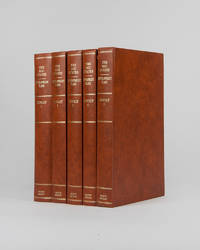
Best.-Nr. 121996London Archive Editions 1994. . 5 vols 8vo 25.5 x 16.5 cm; numerous charts maps plans graphs and tables; publisher's original orange-brown cloth gilt lettering to spines top edges gilt a fine set. The full development plan for Kuwait of 196/7-1971/2 as well as master plan for the city studies for the National Physical Plan and of urban development the statistics and figures for the years 1963-1988 and the statistical abstract for 1990-91. With numerous maps graphs and charts illustrating the reports as well as the full first five year plan reproduced in Arabic. London, Archive Editions, 1994. hardcover
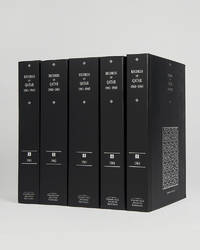
Best.-Nr. 121951Cambridge Cambridge Archive Editions 2021. . 5 vols 25.5 x 16.5 cm; publisher's original black cloth silver gilt lettering a fine set. A very important collection of documents charting the the history of Qatar during the years 1961 to 1965 including the rise of the National Unity Front the growth of the Qatar Petroleum Company and the decline of British-Qatari relations. Chapters divide the documents into sections: the Royal Court Council of Ministers communications economy foreign affairs internal affairs judiciary labour and oil among others. Cambridge, Cambridge Archive Editions, 2021. hardcover
4to (20.5 x 15.5 cm). [20], 211, [1] pp. With the title in red and black in an ornamental, architectural woodcut frame with a palm tree at the head, and woodcut palm tree device above the colophon (both acquired from Erpenius), a decorated woodcut initial, a woodcut factotum and factotums and decorative bands built up from cast fleurons. Set in serto Syriac, meruba Hebrew, Greek and roman types, with incidental estrangela Syriac and italic. Contemporary or near contemporary vellum, sewn on 4 velum tapes laced through the joints, with a hollow back, red edges. The first edition of any early text of the Book of Revelations in the ancient Syriac language, a book that had been lacking in the manuscripts followed by the earlier Syriac New Testaments. It is also the first book the Elzeviers printed with Syriac or any other "oriental" type, their earlier forays into printing with non-Latin types having been limited to Greek and Hebrew. The main text is set in two columns, with the Syriac text set in Syriac type on the outside and the Syriac text set in Hebrew type on the inside, an aid to scholars less familiar with the Syriac script. Two columns in smaller type at the foot provide the original Greek text and a literal Latin translation of the Syriac. The whole is well printed and laid out, showing why the Elzeviers were quickly gaining a reputation as the leading scholarly printers and publishers. Thomas Erpenius made Leiden University the leading centre for the study of oriental languages when appointed professor of oriental languages in 1613. He set up his own printing office, acquiring or commissioning types for Arabic, Syriac, Samaritan and Ethiopic, and inaugurating it with his edition of Lockman's fables in Arabic (1615). His death from the plague at age forty cut his work short in 1624. Ludovicus de Dieu (1590-1642), Regent of the Walloon College associated with the University, had studied under Erpenius and his successor in Arabic studies Jacob Golius, but for Syriac he became Erpenius's spiritual successor. The present book was nearly his first publication. Although Syriac New Testaments had been published earlier, no source had been found for the Syriac text of the Book of Revelation, which was lacking in the standard "Peshitta" Bible, a Syriac Old and New Testament whose text was probably established in the 4th century. In his 1599 Polyglot, Elias Hutter therefore filled the gap with his own new translation, but De Dieu published the present text based on a manuscript from the library of the great orientalist Joseph Scaliger, apparently a copy made in Rome ca. 1580 of an ancient manuscript of the Syriac text established by the Persian Philoxenus, Bishop of Mabbug, in Mesopotamia in 508 and corrected by the Palestinian monk Thomas of Harkel near Alexandria in 616. For that reason, Darlow & Moule, Smitskamp and others call the present book the "editio princeps". Erpenius's widow briefly continued her husband's printing office, completing the Syriac psalter that he had begun, but it was published jointly by the Elzeviers and Johannes Maire, and on 9 October 1625 the Elzeviers bought her printing office and took over most of its materials and workmen. At the same time they began to acquire and commission new printing materials, greatly expanding the printing office they had added to their publishing house in 1617. This made the period 1625 to 1640 the press's golden age. Erpenius had commissioned the woodcut of the present title-page for his Arabic Historia Josephi in 1517 and most of the types and fleurons came from him as well. Plantin commissioned the serto and estrangela Syriac types from Robert Granjon for volume 5 (1571) of his Polyglot Bible (Erpenius added and revised a few characters in the serto) and Daniel Bomberg commissioned the Hebrew type for his press in Venice, where he used it in 1517. The lovely arabesque initial V with a face in the centre, however, belongs to a series cut exclusively for the Elzeviers and used here nearly for the first time. The book also shows them beginning to supplement their 16th-century French types (Garamont romans and Granjon italics) with 17th-century types cut in the Dutch Republic. The New Testament was originally written in Greek, the language of the Christian Church and Christian scholars in the first centuries of the Christian era, and a lingua franca among the diverse groups living in the Middle East at that time. But it relates stories that would have first been told (and in some cases probably also written down) in Aramaic, the vernacular language of Palestine in Jesus's time. It also presents Jesus's words in Greek translation, while he would have spoken them in Aramaic. While no early New Testament survives in Palestinian Aramaic, the Greek was translated into Syriac, probably already in the second century, and surviving manuscripts may date back to the fifth century. Syriac, another dialect of Aramaic, served as the vernacular language of much of the Middle East (it has nothing to do with today's Syria, where the native language is Arabic). The Syriac text therefore provides valuable clues to the Aramaic sources of the New Testament. The Peshitta Bible remains the standard text among some Christian groups. Debates continue as to how much of the "original" Aramaic can be found in the surviving Syriac versions. - The watermark in the endpapers (a simple bend) does not closely match any found in the literature, but the nearest is Heawood 129, used in Amsterdam in 1646. In fine condition, with only an occasional minor spot and at the edge of the last few leaves some tiny (0.2 mm!) worm holes, and with large margins (the leaves are a couple millimetres taller than those noted by Berghman and Rahir). The binding is very slightly rubbed but still very good. A fine copy of an important work of biblical scholarship and a showpiece of the Elzevier's press at the beginning of its golden age. Berghman, Cat. Raisonné 48; Copinger 1310; Darlow & Moule 8962; Rahir 230; Smitskamp, Phil. orientalia 303; STCN (9 copies); Willems 269; www.bibliasacra.nl, 1627.Rev.poly.BE.a.; for the types: J.F. Coakley, Typography of Syriac W3B & S3.
12mo. 4 vols. (12), 320 pp. 314, (2) pp. 301, (3) pp. 312 pp. Contemporary full mottled calf, spine, covers and leading edges gilt. A rare, early English edition based on Galland's liberal but highly influential French translation. Adapted to Parisian tastes, it had been first published in 12 volumes between 1704 and 1717. "Even before the last of Galland's volumes had been published in France, some of his stories had been translated into English and were circulating as cheap chap-books on the popular market" (R. Irwin, The Arabian Nights: A Companion, p. 19). "Galland's translation [...] was quickly translated into English and German. It enjoyed a most remarkable success throughout Europe, perceptible even in children's literature, and contributed significantly to the new image which enlightened Europeans entertained of the Islamic East: after Galland, this was no longer the home of the Antichrist and of accursed heresy, but rather the ever-constant Orient beneath an eternally fair sky, boasting splendid colours and unheard-of wealth, Caliphs, Viziers, and Kadis, harems, fairy-tale princes, fairies and genies, sorcerers and sages, a world of fantastic adventure and outrageous incidents" (cf. Fück, p. 101). - Hinges and spines professionally repaired in places. Light browning and reading marks; old auction lot ticket on vol. 2; clean cuts into the side of three leaves of vol. 4 (no loss to text). A well-preserved set with the blocks intact, all the same edition and uniformly bound. Only three copies listed via COPAC (British Library; Trinity College, Connecticut; Bryn Mawr, Pennsylvania). ESTC N15877. OCLC 504545353. Cf. Chauvin IV, 185 D (1713: 4th ed.), 185 G (1769); 185 L (1778: 14th ed.).