4 497 résultats
Large 12mo. 24 vols. With engraved portraits of Barros, Couto, Henry the Navigator, and Afonso de Albuquerque and 3 (instead of 5) folding maps. Uniformly bound in contemporary half calf over marbled boards, spines with giltstamped titles and volume numbers. Edges lightly sprinkled red. A fundamental travel work: the best and most complete edition of what is considered the most comprehensive publication on Portuguese exploration and colonial history by João de Barros (decades I-IV) and Diego de Couto; the first edition to include decades X and XI. Books 2 and 3 of the "Decada Segunda" offer a detailed narrative of Afonso de Albuquerque's expedition to the Arabian Gulf and his conquest of Ormuz in 1507; the island remained under Portuguese occupation from 1515 to 1622. As vassals of the Portuguese state, the Kingdom of Ormuz jointly participated in the 1521 invasion of Bahrain that ended Jabrid rule of the Arabian archipelago. - This is "the best edition of this famous work on Portuguese colonial history. The first edition appeared at Lisbon, Madrid and Paris from 1552 to 1645. It consists of 12 "Decadas" (decades), comprising the history of the years 1420-1600. Only Decadas I, II, III and a part of IV are by J. de Barros, the rest is by D. de Couto, who begins his part also with Decada IV, so that there are two Decadas IV" (Laures). De Barros (1496-1570), head agent for the Portuguese overseas trade authority "Casa da Índia", managed to persuade King João III to commission from him a history of the Portuguese in India (including Asia and southeast Africa). The result earned him renown as one of the first great Portuguese historians, and the the title of a "Portuguese Livy". The 'Decades' contain "the early history of the Portuguese in India and Asia and reveal careful study of Eastern historians and geographers, as well as of the records of his own country. They are distinguished by clearness of exposition and orderly arrangement. They are also lively accounts" (Enc. Britannica). Cordier, BJ, 34 and BS, 2309. Innocencio III, 322. Laures 642. Streit IV, 667 (with extensive list of contents) & VI, 630. This edition not in Borba de Moraes. For the maps cf. Gole, India, 8.
Large 12mo. 24 vols. With engraved portraits of Barros, Couto, Henry the Navigator, and Afonso de Albuquerque and 5 folding maps. Uniformly bound in contemporary full calf, spines with titles and number of volume on giltstamped red labels. Edges lightly sprinkled red. A fundamental travel work: the best and most complete edition of what is considered the most comprehensive publication on Portuguese exploration and colonial history by João de Barros (decades I-IV) and Diego de Couto; the first edition to include decades X and XI. Books 2 and 3 of the "Decada Segunda" offer a detailed narrative of Afonso de Albuquerque's expedition to the Arabian Gulf and his conquest of Ormuz in 1507; the island remained under Portuguese occupation from 1515 to 1622. As vassals of the Portuguese state, the Kingdom of Ormuz jointly participated in the 1521 invasion of Bahrain that ended Jabrid rule of the Arabian archipelago. - This is "the best edition of this famous work on Portuguese colonial history. The first edition appeared at Lisbon, Madrid and Paris from 1552 to 1645. It consists of 12 "Decadas" (decades), comprising the history of the years 1420-1600. Only Decadas I, II, III and a part of IV are by J. de Barros, the rest is by D. de Couto, who begins his part also with Decada IV, so that there are two Decadas IV" (Laures). De Barros (1496-1570), head agent for the Portuguese overseas trade authority "Casa da Índia", managed to persuade King João III to commission from him a history of the Portuguese in India (including Asia and southeast Africa). The result earned him renown as one of the first great Portuguese historians, and the the title of a "Portuguese Livy". The 'Decades' contain "the early history of the Portuguese in India and Asia and reveal careful study of Eastern historians and geographers, as well as of the records of his own country. They are distinguished by clearness of exposition and orderly arrangement. They are also lively accounts" (Enc. Britannica). - A crisp, uniform set with a contemporary ink note by L. Quesnel on the front pastedown of the index volumes and 19th century collector's blue monogram labels (JCQ?) to flyleaves. Cordier, BJ, 34 and BS, 2309. Innocencio III, 322. Laures 642. Streit IV, 667 (with extensive list of contents) & VI, 630. This edition not in Borba de Moraes. For the maps cf. Gole, India, 8.
1955Roma, 1955 marzo 27, copertina illustrata a colori in fascicolo originale completo di pp. 24 de "La Tribuna illustrata" .
1950réf. 67809Hakone Ito and Kawasaki Japan: The clubs 1950. Golf scorecards each a bi-folium 4 7/8 x 3 inches the inner pages with the scorecard local rules in both Japanese and English on the verso of the integral leaf. The first has been completed 90 100 and 108 for three golfers the other two unused. Each decorated wrappers rubbed. Very good lot. For the three The clubs unknown
1950réf. 67809Hakone Ito and Kawasaki Japan: The clubs 1950. Golf scorecards each a bi-folium 4 7/8 x 3 inches the inner pages with the scorecard local rules in both Japanese and English on the verso of the integral leaf. The first has been completed 90 100 and 108 for three golfers the other two unused. Each decorated wrappers rubbed. Very good lot. For the three The clubs unknown books
4to (140 x 190 mm). Complete Arabic manuscript on strong Chinese paper. 165 ff. (337 numbered pages), leaf size ca. 132 x 182 mm, written space ca. 82 x 128 mm). 6 lines, per extensum (except 4 lines on pp. 3-4; 11 lines on pp. 11-34). Illustrations of the Kaaba in Mecca and the burial sites of the first three Rashidun Caliphs on pp. 47-48. Text written in "sini" calligraphy typical of Chinese Muslims, in an archaic form oscillating between naskh and muhaqqaq. Black ink, various sections highlighted in red, text within single or double red rules; sporadic notes or corrections on the margins. Contemporary black, red and gold painted and lacquered over paper and cloth. Painted boards show floral designs in black and gold on a red background, all within a black border with red wave designs. With remnants of leather on the brown cloth spine. Extremely rare specimen of the famous Sunni prayerbook "Dala'il al-khayrat": an Arabic manuscript written in what is today Xinjiang, China. - The "Dala'il al-khayrat" ("Waymarks of Benefits" or "Proofs of Good Deeds"), an extensive book of poems in praise of the Prophet Muhammad, was compiled by the Moroccan Sufi scholar Muhammad ibn Sulaiman al-Jazuli (807-870 H / 1405-1465 CE) and was quickly received throughout the Islamic world, functioning as a kind of Muslim catechism. Al-Jazuli's inspiration for the book is said to have come before he left Fez to spend forty years in Mecca, Medina and Jerusalem, but he completed it in Fez during the last years of his life. The present manuscript, written in so distant an Islamic community as that of Eastern Turkestan, a territory dominated throughout by Mongols or Chinese, where Muslims were commonly viewed as strangers, gives striking evidence of the range and scope of a tradition lasting for almost six centuries: the utopia of Islam as the Religion of Oneness, aiming to unite all the Muslim peoples in a single community reaching from Europe to the Far East. - The text begins with an introductory praise of Muhammad, followed by the 99 names of Allah (leaves 1-46) and a compilation of eulogies and prayers divided into seven subsequent chapters (each referred to as "juz", or "section"): 1, pp. 46-113; 2, pp. 113-136; 3, pp. 136-181; 4, pp. 181-217; 5, pp. 217-236; 6, pp. 236-256; 7: pp. 256-end. Interestingly, the double page 47/48 does not show Mecca and Medina, as is typical for manuscripts of this text, but rather presents naive illustrations of the "Ka’ba of Allah" (!) and the burial sites of the first three Caliphs. No date in colophon, written in the form of prayer. Leaves 12 to 19, extraneous to the text proper and containing additional prayers and the 99 Names of Allah, are inserted on contemporary Chinese paper. Edges worn; lower corner rounded and fingerstained from long use, but very well legible and altogether well preserved.
Bi-chrome printed map, 735 x 510 mm. Scale 1:10,000. Exceedingly rare first issue of the first map of Damascus published by the British Forces only a week after the Fall of Damascus. Drafted by the Royal Engineers from a "captured enemy map" and printed under the surveyors' supervision in the field, probably in Damascus, on a portable press carried by the Field Survey Company unit. - The ancient city of Damascus, one of the final prizes taken by the Entente Powers, was long a great cultural centre, the head of the Syrian Hajj Road, and more recently the northern terminus of the Hejaz Railway and the headquarters of the Ottoman-German forces in the Middle East. In the latter period of WWI, British forces met stiff resistance in Palestine, and it was only near the end of the conflict that they managed to break into Syria. British forces and their allies captured the Damascus on 1 October 1918. Lawrence of Arabia, who was part of the conquering force, was disappointed not to have been amongst the first Allied troops to enter the city, especially as he envisaged Damascus as the future capital of an independent and unified Arab state. - The British occupying force, commanded by Edmund Allenby, was suddenly in control of city of which they only possessed dated information. To ensure public order, to allocate military resources, and to deliver vital goods to civilians, the British command was in urgent need of an accurate, up-to-date map of Damascus. - All maps printed by Entente forces in the field in the Middle East during WWI are extreme rarities. The present map would have been issued in a only very small print run for the use of senior British officers, and printed on fragile paper in a large format, its survival rate would have been very low. We can trace only a single other example of the present first issue of the map, held by the British Library. The second issue, printed by the Survey of Egypt in 1919, is also extremely rare. - In very good condition, clean and bright, with just some minor creasing from having been rolled for many years. OCLC 557017180. British Library Cartographic Items Maps 48855.11.
8vo. XV, (1), 557, (1) pp. German & Arabic text. Contemporary marbled boards with giltstamped spine label; sprinkled edges. First edition of this compendium of Arabic versification. The German classicist and theologian Freytag (1788-1861) studied at Göttingen, but in his final year accepted an appointment as sub-librarian at Königsberg. In 1815 he became a chaplain in the Prussian Army and visited Paris in that capacity. Upon the proclamation of peace Freytag resigned his chaplaincy and returned to his research in Arabic, Persian, and Turkish, studying in Paris under Silvestre de Sacy. In 1819 he was appointed to the professorship of Oriental Languages at the new University of Bonn, and he held this post until his death. His principal work was the "Lexicon Arabico-Latinum" (Halle, 1830-1837), an abridgment of which was published in 1837. - Occasional browning; slight chipping to spine; early Swiss ownerships ("Dahler", "R. Tschudi", "Meier") to flyleaf. Stamp of "Stadt-Bibliothek Zürich" on upper cover; deaccessioned from the Zentralbibliothek Zürich (stamp on reverse of t. p.). Zenker I, 342. Fück 166. Gay 3361.
1986réf. 47149ABDüsseldorf/Wien, Econ-Verlag, 1986. Völlig überarb. u. erg. Neuausg. 21 cm. 183 S. Pp., OU. Guter Zust., 1 Biblioth.-Stemp. a. Tit.-Bl.
1987réf. 915295Bad Homburg : Limpert, 1987. 227 S. : Ill., gebundene Ausgabe mit Umschl.
Large 4to. (4), 64 pp., partly printed in red and black. Modern brown half cloth. First edition. - Rare work by the Egyptologist and linguist Carl R. Lepsius (1810-84), leader of the 1842/45 Prussian expedition to Egypt. In this treatise, he presented what must be regarded as one of the earliest attempts at a standardised phonetic alphabet for all languages - a function today fulfilled by the International Phonetic Alphabet (IPA), which is still based primarily on the Latin alphabet. Among the many alphabetical systems which Lepsius takes into account are also Egyptian hieroglyphs as well as Hebrew, Arabic, Farsi, Sanscrit, Bengali, Armenian, Malay, Chinese, etc. - Somewhat browned and brownstained throughout with a noticeable waterstain. Some edge flaws. Title page shows library stamp of the Gymnasium of Venray, Netherlands. Kayser XIV, 24.
4to. (4), 92 pp. Printed on thick paper with 2 text illustrations and 1 plate (counted as III). Contemporary brown half cloth over marbled covers with old paper label pasted on the spine. First edition of this important study of Arabic papyrology, exceedingly rare. With quotations and interspersions in Arabic. The orientalist Joseph Maria von Karabacek (1845-1918) was professor at the University of Vienna and director of the Imperial Court Library. This is the first and only independent, monographic edition in German, an offprint (with separate pagination) from vols. II and III of the "Mittheilungen aus der Sammlung der Papyrus Erzherzog Rainer" (1887). The book was translated into English in 1991 (republished in 2001); it remains a classic textbook referenced by specialized literature such as Adam Gacek's handbook on Arabic manuscripts (Leiden: Brill, 2009). - In very good condition: title-page showing light foxing; contemporary library stamp of the Brünn German Technical University on the cover, their bookplate on the pastedown. Binding slightly rubbed; extremeties bumped. A wide-margined copy. OCLC 17791658. Cf. Gacek, Arabic Manuscripts, pp. 191f., 306 (citing the serialized edition and the English translation).
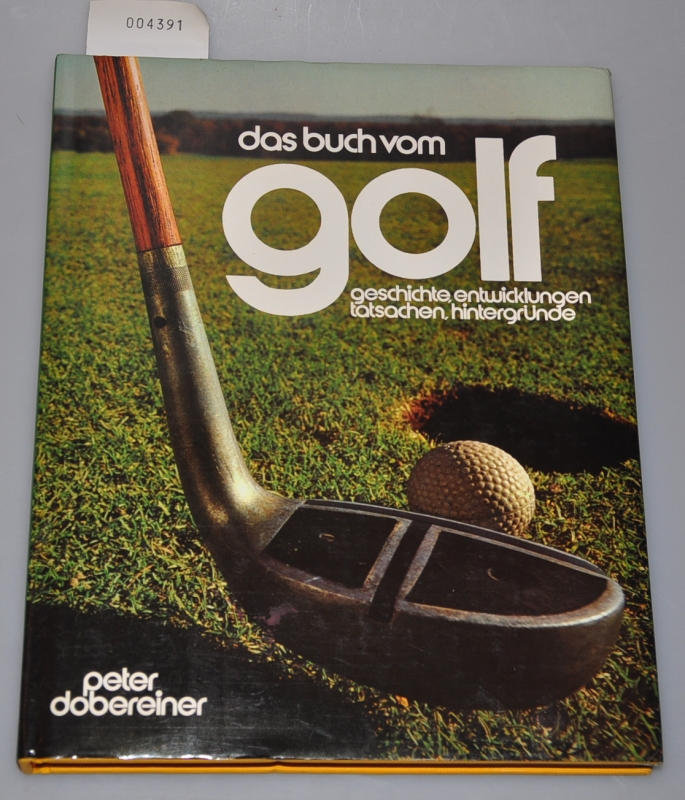
réf. 04391Stranberg, Kless-Böker, oJ. PP, OU, 249S, gutes Exemplar,
1900Engraving, 252 x 308 mm. Matted. Hormuz Island, near Qeshm Island in the Arabian Gulf. Cf. Al-Quasimi 175.
1987réf. 8226Zürich: Diogenes Verlag AG, 1987. Diogenes Taschenbuch 21520 267 Seiten , 19 cm, kart.,
1989réf. 05965Münster, Coppenrath, 1989. Ln, tadelloses Exemplar
réf. 045376München., Keyserssche Verlagsbuchhandlung. Übersetzt und bearbeitet von C. A. Freiherr von Thüna. 283 Seiten mit Zeichnungen im Text. Ohne Jahr (ca. 1960). Guter Zustand. Gr.-8°. OLeinen.
1994réf. 08200Erlangen, Müller, 1994. PP, 527S, einige Anstreichungen mit Textmarker, gutes Exemplar
4to. IX, (1), 356 pp. With steel-engraved title-page, 79 engraved plates (of which 24 are coloured steel-engravings, 54 tinted woodcuts, and one a tinted lithograph), and one steel-engraved folding map of Palestine in original hand colour. Contemporary giltstamped and blindstamped full cloth with title to cover and spine. All edges gilt. First edition. - Lavishly illustrated work on the Holy Land by the professor of archaeology and later conservator at the Bavarian National Museum, Messmer (1829-79), featuring the same illustrations as Friedrich Adolph Strauss in his 1861 work "Die Länder und Stätten der heiligen Schrift". However, Messmer's work greatly differs in the text, which is "preferable [to that of Strauss] as it discusses the element of architecture much more thoroughly" (cf. Tobler). It is sometimes inaccurately described as an extract or abbridgement of another publication by Strauss, entitled "Sinai und Golgatha", first published in 1847. The steel-engraved illustrations include views of Jaffa, Jerusalem, Bethlehem, Nazareth, and Damascus, the interior and exterior of the Church of the Holy Sepulchre, views of Mount Olivet, the Temple Mount, the Jericho desert, and Mount Sinai, as well as archaeological sites like Abu Simbel, and a violent scene showing the assassination of a Maronite priest and the kidnapping of women by Druzes and Bedouins. The woodcut plates include views of Beirut, Gaza, Hebron, Jericho and Sidon. - Hinges somewhat chafed. Several pages show traces of one or two horizontal folds starting from right margin (most prominent in pp. 151-175); occasional light brownstaining; small flaw to lower corner of p. 221f., no loss to text. Otherwise very well preserved. Tobler 171f. (note). Röhricht 2093 (note). OCLC 174874595.
24 vintage photographs (albumen prints) by Ch. Schmid, Reutlingen, mounted on cardboard with printed captions (c. 487 x 320 mm; images c. 270 x 210 mm to 190 x 137 mm). With 4 pp of letterpress text (folio, green papered spine). In custom-made green half morocco solander. Fine set of original photographs showing the Royal Wuerttemberg Stud in Marbach and its famous horses. Owned by Wilhelm, King of Württemberg, Marbach was the first Arabian stud in Europe. From 1852 to 1871 it was directed by Baron Julius von Hügel, who purchased valuable stock from the Egyptian stud of Abbas Pasha, "thus raising it to the highest standard of excellence" (W. R. Brown, The Horse of the Desert, p. 161/166). Hügel was succeeded by Cäsar Paul von Hofacker (1831-96), who issued the present photo series and also composed the accompanying text: the latter discusses the history of the Stud and its horses, including the stallion Sanspareil, son of the Arabian Bajan and bred in 1816; in 1860 another pure-bred Arabian was acquired from the Wuerttemberg Weil Stud. Among the photoportraits are the pure-bred Arabian Zarif, his daughter Zinka, and the stallion Shah. Well-preserved.
1985réf. 48771Duesseldorf, Econ Verlag, 1985.
8vo (150 x 230 mm). (2), XVIII, 257, (3) pp. Contemporary green full calf, spine prettily gilt with title and ornaments, cover with gilt rules and border decoration enclosing a blind-tooled Rocaille centrepiece. Leading edges gilt, gilt inner dentelle, all edges gilt. Red silk divider. First edition of this important study of the plague in Egypt and the quarantine laws to prevent its spread; the "principal work" (Hirsch) of the German physician J. F. Reinhold Grohmann (1784-1867). Educated in Leipzig and Vienna, Grohmann was travelling to Constantinople when the Russo-Turkish War of 1806 stopped short his journey in Bucharest. He remained there and witnessed a particularly severe plague epidemic in 1813. He spent much of his subsequent career in the East before settling in Vienna; from 1831 to 1833 he was a member of a committee convened to formulate new standards for plague epidemics. In his medical work he described the plague as a nervous fever affecting the brain, little influenced by the climate. His son Paul Grohmann would go on to be one of Austria's most famous mountaineers of his age. - Very well preserved in a splendid Austrian master binding. Removed from a baronial library with a crowned monogram stamp "MK" to title-page. Ibrahim-Hilmy I, 278. Hirsch II, 661. OCLC 14832432. Not in Wellcome.
Large folio (450 x 330 mm). 114 ff., illustrated throughout with original photographs, with tissue guards. Original padded cloth with inlaid cast metal coverpiece. Stunning album commemorating the National Socialist exhibition on the history of the horse as represented in art from the stone age to the 20th century, held in Munich's Residenz from July 22 until November 15, 1936. Only 300 copies were produced (this copy is numbered 220). Perfectly preserved. Cf. OCLC 162880518 (4to).
Small folio (212 x 277 mm). 44 pp. Contemporary blue half cloth over marbled boards. Scholarly German translation of the lapidary of Zakariya al-Qazwini (1203-83), being the mineralogical section from the author's famous "Aja'ib al-makhluqat", which was hailed by Brockelmann as "the most valuable cosmography in Islamic culture" (GAL S I, 882). - The Heidelberg-based science educator Julius Ruska (1867-1949) studied ancient oriental languages to focus on the Islamic history of mathematics and science and later became professor at Heidelberg and Berlin. His sons Ernst and Helmut Ruska pioneered the electron microscope, for which invention the former received the Nobel Prize in Physics. - Well preserved. GAL I, 481, no, 12. OCLC 28083936. Not in Sinkankas.
1994réf. 63594Hamburg : Christians 1994. 128 S. : m. Fotos, Beil.: 1 Faltbl. ; 28 cm + Beil. (1 Bl.) Top Zustand, kart., Softcover/Paperback, Exemplar in gutem Erhaltungszustand