Ardoynis, Santes de.MareMagnum
Decisions on the Rules of Golf
réf. 0600608948.Ghardcover. Good. Access codes and supplements are not guaranteed with used items. May be an ex-library book. hardcover

Bonita · États-Unis69,82 $US≈ 62,38 €
4 438 résultats
Folio (420 x 280 mm). (4), 101, (1) ff. Later calf with gold- and blind-tooling. First edition of a work on poisons, compiled by Sante Arduino (or Ardoini) of Pesaro. "[T]he elaborate compendium on poisons in eight books which Sante Ardoini of Pesaro compiled in the years, 1424-1426, from Greek, Arabic and Latin works on medicine and nature, and which was printed at Venice in 1492, and at Basel in 1518 and 1562 [...] Although Ardoini quotes previous authors at great length, his work is no mere compilation, since he does not hesitate to disagree with such medical authorities of Peter of Abano and Gentile da Foligno, and refers to his own medical experience or observation of nature at Venice and to what fisherman or collectors of herbs have told him. He also seems to have known Arabic, and his occasional practice of giving the names of herbs in several Italian dialects is of some linguistic value" (Thorndike). Arduino makes extensive use of the works by Avicenna (Ibn Sina), who "held a high place in Western European medical studies, ranking together with Hippocrates and Galen as an acknowledged authority" (Weisser). Among the numerous other sources he used are Galen, Avenzoar (Ibn Zuhr), Rasis (al-Razi), Andromachus, Albucasis (Al-Zahrawi), Serapion the Younger and Dioscorides. - A very good copy, with only a few marginal waterstains. Binding slightly rubbed along the extremities and with a few scratches on boards. Hain-Copinger 1554. Goff A-950. Ohly-Sack 233. Walsh 2186. Proctor 4963. BMC V, 403. GW 2318. Thorndike III, 545. ISTC ia00950000.
Large 4to. 2 vols. (7), 208 ff. (5), 238 ff. Title vignettes (royal arms of Portugal). Uniform mottled calf with giltstamped red and green spine labels. All edges yellow. Second edition of the first two of the three "Decades" on Portugal's Middle Eastern enterprises (a fourth volume was produced posthumously in 1615, and the set was continued by other hands). "This is considered by Du Fresnoy as being a good edition" (Clarke, The Progress of Maritime Discovery, p. 132). The writer de Barros (1496-1570), head agent for the Portuguese overseas trade authority "Casa da Índia", managed to persuade King João III to commission from him a history of the Portuguese in India (including Asia and southeast Africa). The result, published between 1552 and 1563, earned him renown as one of the first great Portuguese historians, and the the title of a "Portuguese Livy". The 'Decades' contain "the early history of the Portuguese in India and Asia and reveal careful study of Eastern historians and geographers, as well as of the records of his own country. They are distinguished by clearness of exposition and orderly arrangement. They are also lively accounts" (Enc. Britannica). Books 2 and 3 of the "Decada Segunda" (fols. 21 ff.) offer a detailed narrative of Afonso de Albuquerque's expedition to the Arabian Gulf and his conquest of Ormuz in 1507; the island remained under Portuese occupation from 1515 to 1622. As vassals of the Portuguese state, the Kingdom of Ormuz jointly participated in the 1521 invasion of Bahrain that ended Jabrid rule of the Arabian archipelago. - Slight waterstaining throughout first volume; old handwritten ownership "Jose Joares E Britto" to title pages, with earlier ink ownerships obliterated (ink corrosion to title of vol. 2 and final leaf of vol. 1). A good set. Palau I.181b. Howgego I, B34, p. 91. Arouca B 56f. Löwendahl, Sino-Western Cultural Relations I, p. 42, no. 75. OCLC 4507939. Cf. Macro 474.
Large 4to. 3 vols. (7), 208 ff. (2), 238 ff. (10), 262 ff. Title vignettes (royal arms of Portugal). Without the folding plan present in some copies. Uniform contemporary limp vellum with Iberian handwritten spine titles and traces of ties. All edges red. Second edition of the first three "Decades" on Portugal's Middle Eastern enterprises, all that was published during the lifetime of the author (a fourth volume was produced posthumously in 1615, and the set was continued by other hands). "This is considered by Du Fresnoy as being a good edition of the three first decades" (Clarke, The Progress of Maritime Discovery, p. 132). The writer de Barros (1496-1570), head agent for the Portuguese overseas trade authority "Casa da Índia", managed to persuade King João III to commission from him a history of the Portuguese in India (including Asia and southeast Africa). The result, published between 1552 and 1563, earned him renown as one of the first great Portuguese historians, and the the title of a "Portuguese Livy". The 'Decades' contain "the early history of the Portuguese in India and Asia and reveal careful study of Eastern historians and geographers, as well as of the records of his own country. They are distinguished by clearness of exposition and orderly arrangement. They are also lively accounts" (Enc. Britannica). Books 2 and 3 of the "Decada Segunda" (fols. 21 ff.) offer a detailed narrative of Afonso de Albuquerque's expedition to the Arabian Gulf and his conquest of Ormuz in 1507; the island remained under Portuese occupation from 1515 to 1622. As vassals of the Portuguese state, the Kingdom of Ormuz jointly participated in the 1521 invasion of Bahrain that ended Jabrid rule of the Arabian archipelago. - From the library of the Spanish Dukes of Medinaceli y Santisteban (their engraved armorial bookplate on the pastedowns); olf shelfmark on flyleaves. Occasional slight browning, but a very good set. Palau I.181b. Howgego I, B34, p. 91. Arouca B 56-58. Löwendahl, Sino-Western Cultural Relations I, p. 42, no. 75. OCLC 4507939. Cf. Macro 474.
Small folio (222 x 302 mm). 3 volumes bound as two. (32), 605, (1) pp. (14), 607-931, (1), 75, (1) pp. (16), 625, (1) pp. All 3 title-pages printed in red and black. Contemporary full mottled brown calf with giltstamped red labels to finely gilt spines (not uniform). Edges sprinkled red. Continuation of João de Barros's famous work on Portuguese colonial history in the Orient. First published in 1602, this is the first edition to include decade IX. Do Couto (1542-1616), chronicler and custodian of Torre do Tombo, begins with Decada IV, in continuation of de Barros's Decada III. (When de Barros's own Decada IV was discovered and posthumously published in 1615, the work effectively acquired another treatment of the same period with a different text, both numbered IV). "The 'Decades' contain "the early history of the Portuguese in India and Asia and reveal careful study of Eastern historians and geographers, as well as of the records of [the author's] own country. They are distinguished by clearness of exposition and orderly arrangement. They are also lively accounts" (Enc. Britannica). - Vols. I and II bound in a single volume. Some worming to spine-ends, with traces of worming to inner margin of the final four leaves of vol. III. A clean copy. Innocencio II, 154. Monteverde 1900. Cordier, BJ, 34 and BS, 2309. Cf. Macro 763. Not in Samodães or Ameal.
réf. 0600608948.Ghardcover. Good. Access codes and supplements are not guaranteed with used items. May be an ex-library book. hardcover
réf. 008080St Andrews Scotland: W C Henderson Very informative book on the rules of golf for this time period not dated but is revised edition circa 1930. Contains152 pages plus 18 page index all in clean condition just a few very small foxing spots to first and last couple of pages ink stamps of Muswell Hill Golf Club on front and rear endpapers NO dustwrapper outer boards are marked and spotted especially to spine which is a little darkened rubbed and worn to top and bottome of spine and slightly to corners. Still a presentable example of this book SEE IMAGES. DETAILED IMAGES AVAILABLE ON REQUEST. Revised Edition. Gold Embossed Boards. Good Plus/No Jacket. 8 ¾ x 5½ Inches. Hardcover. W C Henderson Hardcover
réf. Q13R-01365Triumph Books. Used - Good. Good condition. Good dust jacket. A copy that has been read but remains intact. May contain markings such as bookplates stamps limited notes and highlighting or a few light stains. Triumph Books unknown
1989réf. 0096-22-41United States Golf Association and The Royal and Ancient Golf Club of St. Andrews 1989. 463p wraps beautiful copy FINE United States Golf Association and The Royal and Ancient Golf Club of St. Andrews paperback
2000réf. Q-1572434031Triumph Books 2000-09-01. Hardcover. New. In shrink wrap. Looks like an interesting title! Triumph Books hardcover
1995réf. Q-1572430478Triumph Books 1995-12-01. Paperback. New. In shrink wrap. Looks like an interesting title! Triumph Books paperback
1999réf. Q-1572433159Triumph Books 1999-03-01. Hardcover. New. In shrink wrap. Looks like an interesting title! Triumph Books hardcover
1993réf. Q-1880141213Triumph Books 1993-02-01. Paperback. New. New. In shrink wrap. Looks like an interesting title! Triumph Books paperback
réf. 1572434031.Ghardcover. Good. Access codes and supplements are not guaranteed with used items. May be an ex-library book. hardcover
réf. DADAX1880141213Brand: Triumph Books 0000-00-00. paperback. New. 4.50x1.25x8.50. Buy with confidence. Excellent Customer Service & Return policy. Brand: Triumph Books paperback
Folio. 28 (misnumbered: 29) pp., 1 blank f., (2) pp. 19th century marbled wrappers. Amsterdam legal injunction against the mother, father, and brother-in-law (formerly defendants and now counterclaimants) of Frans Canter, manager of the VOC factory at Basrah from 1746 till 1750, who had infamously fled his post when he was to be replaced by Tido Baron Kniphausen. Fearing exposure for having embezzled Company funds, Canter had escaped to nearby Grain (Kuwait): "Sig van Bassoura door de vlugt heeft geretireert naar Green" (p. 4, no. 46). He continued his flight by caravan to Aleppo, then to Iskenderun, and finally by ship to Amsterdam, "where the East India Company was unable to get him prosecuted by the autonomous government of this town. - Canter's flight to Grain is a typical manifestation of a basic characteristic of Kuwait. Its essential function in the life of the Gulf at that time was that it was an area outside the sphere of influence of the Ottoman Government of Basra. In this way, it could serve as a refuge for both persons and trade when, for one reason or another, there was risk of trouble in Basra. This little desert trading town was born and continued to grow because of the simple fact of its being outside the troubled area of Ottoman Iraq" (Slot, The Origins of Kuwait, p. 117). Canter is also memorable for having composed, in the course of his escape, the first known letter written in Kuwait. While the original is lost, a contemporary copy made by an Amsterdam notary during these legal proceedings now rests in the General State Archives of the Netherlands (cf. Slot, p. 117-121). - Slight duststaining to the wide margins. A rare survival. Landwehr, VOC, 1020. OCLC 71711399. Not in Knuttel.
1986réf. 118195P., Unesco, 1986, gr. in-8°, 336 pp, 43 photos et cartes, index, reliure toile éditeur, jaquette illustrée, bon état. Texte en anglais
3 vols. in 1. (2), 142, (4), 144, (6), 208, (2) pp. Original half leather. 4to. First edition of the "Notebook of the Economist", a still much-quoted Turkish publication on the fiscal structure of the Ottoman Empire. - Rubbed at spine and corners. Slight brownstaining, otherwise in good condition. OCLC 40382408.
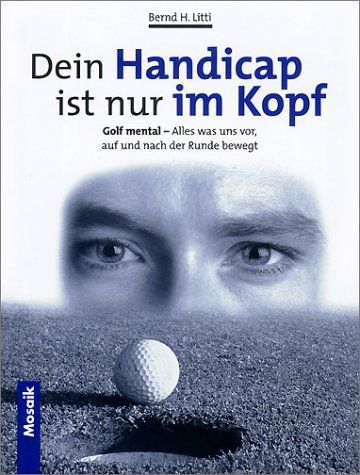
2001réf. 8229ABNiedernhausen/Ts., Mosaik Verlag, 2001. 22 cm, 239 Seiten, mit zahlreichen Abbildungen, blauer Pappband, Original-Schutzumschlag. Schutzumschlag mit leichten Gebrauchsspuren, Buch sehr gut erhalten.
Large folio. 2 vols. in one. (26), VIII, 132 pp. (4), XX, 144 pp. With coloured engraved title-page (dated 1754), large engraved vignette by Andreas Hoffer after Gottfried Eichler, and 91 (1 folding) coloured or colour-printed engravings by Knorr, J. A. Eisenmann, A. Hoffer and others. Contemporary calfskin binding gilt. First edition of this monumental work of natural history, one of the most splendid zoological works ever produced in Nuremberg. Begun by Knorr as early as 1751, it was continued by his heirs after his death in 1761. The book describes items from the great contemporary natural history collections, including the magnificent white falcon (with hood) from the collection of the famous physician and botanist Christoph Jakob Trew. The illustrations, occasionally printed in colours but mostly hand-coloured in radiant hues, depict birds, exotic mammals, fishes, corals, butterflies and other insects. - Occasional insignificant waterstaining to the wide blank margins of the text; a few plates show unobtrusive fingerstaining. A beautiful, very wide-margined copy in excellent state of preservation, printed on good, strong paper. Plates show clean, distinct colours and superior contrast. Nissen, ZBI 2227. Horn/Schenkling 12038. Hagen I, 426. Dean I, 696. Graesse IV, 35.
1807réf. ST12145Edinburgh: Printed for Peter Hill et al. 1807. FIRST EDITION. 197 x 114 mm. 7 3/4 x 4 1/2". 2 p.l. v-viii 244 pp. PUBLISHER'S ORIGINAL BLUE BOARDS paper label on spine edges untrimmed. In a felt-lined morocco-backed folding box. Four engraved plates three views and a city plan. Front free endpaper inscribed "Edin. 27th April 1807 / Agnes Cockburn / in memory / of the author." Donovan & Murdoch 270. Boards a little soiled front joint cracked rear joint starting at tail extremities with the expected considerable wear spine label chipped with a fourth of the letters gone but the boards still attached and the extremely insubstantial publisher's binding still appealing because of its original materials. Title page with a bit of offsetting from frontispiece isolated minor foxing in text other trivial imperfections but an excellent copy internally the untrimmed leaves bright fresh and clean with all of their ample margins intact. This is an invaluable early book on the history of St. Andrews in general and more specifically on St. Andrews as the home of the game of golf offered here in the publisher's original boards. It is the first work by the clergyman and polymath James Grierson M. D. 1768-1844 and the first printing of the first work on the ultimate destination of all those who consider golf sacred.The final chapter here entitled "The Company of Golfers" gives a short history of golf provides "an idea of the nature of this elegant amusement" and describes how the earliest golf balls called "featheries" on account of their stuffing were made. The book is dedicated to Lady Elizabeth Moncreiffe the daughter of the renowned military leader and politician George Ramsay 9th Earl of Dalhousie Governor General of British North America and later Commander-in-Chief of India wife to Sir Thomas Moncreiffe and a woman of considerable wealth. Grierson had served as tutor to her son Sir David Moncreiffe 6th Baronet 1788-1830 early in his career and apparently maintained a connection to the family. Our first edition is uncommonly found in publisher's boards. Printed for Peter Hill, et al. unknown
Small folio (206 x 324 mm). (8), 162, (6) [instead of 8] pp. Title-page printed in red and black. With double-page-sized frontispiece, 39 (instead of 41) engr. plates and 2 engr. maps; numerous woodcuts in the text. Contemp. blindstamped leather over wooden boards with 2 clasps. First edition of this highly interesting, appealing work, a topical publication produced but a year after the 1683 Siege of Vienna. Four additional volumes would be prepared by 1689. The plates show views of Hungary, the Ottoman Empire, and the Near and Middle East (Jerusalem, Egypt, Babylon, etc.), as well as Sultan Mehmet IV and the relief of Vienna. - Binding rubbed. Some brownstaining throughout with occasional waterstains. Several leaves rebacked or reinforced in the margins (occasional loss to text or image); wants the view of Ofen (Buda) and the "Crowning of the Empress" as well as one leaf of the index. VD 17, 23:300271C. Lipperheide LB 22. Nebehay/W. 794. Not in Apponyi.
1807réf. ST12145Edinburgh: Printed for Peter Hill et al. 1807. FIRST EDITION. 197 x 114 mm. 7 3/4 x 4 1/2". 2 p.l. v-viii 244 pp. PUBLISHER'S ORIGINAL BLUE BOARDS paper label on spine edges untrimmed. In a felt-lined morocco-backed folding box. Four engraved plates three views and a city plan. Front free endpaper inscribed "Edin. 27th April 1807 / Agnes Cockburn / in memory / of the author." Donovan & Murdoch 270. Boards a little soiled front joint cracked rear joint starting at tail extremities with the expected considerable wear spine label chipped with a fourth of the letters gone but the boards still attached and the extremely insubstantial publisher's binding still appealing because of its original materials. Title page with a bit of offsetting from frontispiece isolated minor foxing in text other trivial imperfections but an excellent copy internally the untrimmed leaves bright fresh and clean with all of their ample margins intact. This is an invaluable early book on the history of St. Andrews in general and more specifically on St. Andrews as the home of the game of golf offered here in the publisher's original boards. It is the first work by the clergyman and polymath James Grierson M. D. 1768-1844 and the first printing of the first work on the ultimate destination of all those who consider golf sacred.The final chapter here entitled "The Company of Golfers" gives a short history of golf provides "an idea of the nature of this elegant amusement" and describes how the earliest golf balls called "featheries" on account of their stuffing were made. The book is dedicated to Lady Elizabeth Moncreiffe the daughter of the renowned military leader and politician George Ramsay 9th Earl of Dalhousie Governor General of British North America and later Commander-in-Chief of India wife to Sir Thomas Moncreiffe and a woman of considerable wealth. Grierson had served as tutor to her son Sir David Moncreiffe 6th Baronet 1788-1830 early in his career and apparently maintained a connection to the family. Our first edition is uncommonly found in publisher's boards. Printed for Peter Hill, et al. unknown books
Copper engraving (from J. Huygen van Linschoten, Itinerario, 1596). Printed on 2 joined sheets. 385 x 535 mm. Matted. Famous map of the Arabian Sea between Cyprus and northern Sumatra from one of the ed. 1596-1644. "Probably the first detailed navigation chart printed for the Indian Ocean and the Arabian sea" (Al Ankary 148). Tibbetts 46. Al Ankary 148f. Gole, Early Maps 8. Schilder, MCN V, p. 140 & VII, p. 220/1. Clancy 70. Clancy/R. 67 (all illustrated).
8vo. V, (1), 117, (1) pp. Contemporary half calf over marbled boards. Very rare study of Constantinople's plague epidemic of the year 1778, by an anonymous eyewitness. Though not himself a medical man (as he confesses in the preface), he feels that most of Europe's learned physicians lack a practical understanding of the illness, for which reason he here sets out his own experiences in writing. - Only six copies in libraries worldwide, mostly in specialized medical research institutions (Wellcome, Institut Pasteur, New York Academy of Medicine, National Library of Medicine etc.). - Binding rubbed and chipped in places, but a very good copy. Wellcome II, 446. Blake 114.
3 parts in 3 folio volumes (302 x 205 mm). (4), 34, 436 ff. 30, 248 ff. 6, 34, 455 (not 456) ff. With a total of 51 engravings in the text (7 full-page) and 12 double-page maps and plans (2 full-page). 20th-c. full brown morocco, double-gilt fillet on the covers, spine ribbed and decorated with gilt fleurons, mottled edges. Stored in custom-made calf-edged slipcases. Perfectly complete copy of this superb collection of travels, composed of the first edition of the 3rd part and the second edition of the 1st and 2nd part. The second edition, widely enlarged, of the 1st part, is the first and only one to present the 3 double-page maps representing Africa and India that had not been printed in the first edition of 1550, and which would not be reprinted in the 3rd edition of 1563 since the wood plates of these 3 maps had been destroyed in the fire that ravaged Giunti's workshop in 1557. - "This work, which served as a model to Hakluyt, was the first systematical collection of voyages that had so far appeared [...] It [...] is carefully and intelligently done" (Cox). "All authors are unanimous of their praise of Ramusio's choice of published narratives. Locke, the English philosopher, states that it is 'the most perfect work of that nature in any language'. Harrisse writes, 'The publication of Ramusio's "Raccolta" may be said to open an era in the literary history of Voyage and Navigation. Instead of accounts carelessly copied and translated from previous collections, perpetuating errors and anachronisms, we find in this valuable work original narratives which betray the hand of a scholar of great critical acumen'" (Borba de M.). The first volume, mainly dedicated to Africa and South Asia, happily includes several travel reports of the utmost importance for the exploration of the Arabian Peninsula and the Gulf region. Lodovico Varthema's travel report, famous for detailing the first recorded visit of a Westerner to Mecca, indeed the first western encounter with the Arab world, contains accounts of the holy cities of as well as of the port of Jeddah, information on Bedouin life and costume, etc. (ff. 162-166). - The account of Vasco da Gama's voyage to India is comparable in importance only to Columbus’s in the west, as it “opened the way for the maritime invasion of the East by Europe” (PMM 42). Da Gama’s pioneering sea voyage ranks amongst the greatest historic events of the second millennium and as “one of the defining moments in the history of exploration” (BBC History, online). It is also considered the turning point in the political history of the Arabian Gulf region, followed as it was by a prolonged period of east-west commerce, conquest and conflict. Critically, the excerpt here published includes details on "una isola [i. e., Julfar] verso il colfo Persico dove altro non si fa che pescar perle" (I, f. 132). - Duarte Barbosa's report includes accounts of Mecca and Medina (f. 323), the ports of Jeddah (ibid.) and Aden (f. 324), the Arab kingdom of Hormuz (ff. 324-327), Julfar and the islands in the Arabian Gulf (f. 325, with reference to pearl-diving), etc. Also, we find the very early and highly influential, albeit imprecise data on the Kuwait region: place names such as Lorom, Gostaque, Bacido, Conga, Menahaon (p. 325) etc. which Slot discusses at some length: "Much of the toponymic information in the Kuwait region on the maps from the Gastaldi group is based on an erroneous interpretation of Duarte Barbosa's text. From this text come the strange names of places in the area of Kuwait like Costaqui (Kuhistaq) which should in fact be placed on the other side of the Gulf [...] Loron [...] might be an error for the Karun River which is on the Persian side just east of the Shatt al-Arab. Then follows inside the inlet of the Gulf of Kuwait the name Manahon. Then follows around this 'Gulf of Kuwait' three names which are cased by erroneous plotting [...]: Congo (Bandar Kong), Costaqui (Kuhistaq) and Bacido (Basaidu) with the offshore island of Queximi (Qism). These are names taken from [...] Duarte Barbosa's book and erroneously plotted on this coast" (Origins of Kuwait, p. 15). - The volume also includes a set of three woodcut maps by Gastaldi: the first showing Africa, the second showing the Indian subcontinent, the Strait of Hormuz, the Eastern half of the Gulf, and the Indian Ocean, while the third shows Southeast Asia and the East Indies. These were a great advance on earlier maps, including even Gastaldi's own, taking into account new information provided by Portuguese explorers. Many of the topographic names in the Gulf region derive from the forms used by these navigators and can be identified, sometimes tentatively, from their place on the first two of these maps and from the early accounts of the voyages: "Cor. Dulfar" (Dhofar), the island "Macira" (Masirah), "C. Resalgate" (Ras al Had?), "Galatia" (the ancient site Qalhat), "Mazcate" (Muscat), the island "Quexumo" (Qeshm), "Ormus" (Hormuz), and there is even an unlabelled city close to the present-day Abu Dhabi. - Occasional handwritten ink notes. Waterstain on the lower part of vol. 2, ff. 31-35; some browned leaves; otherwise fine, a washed copy. Provenance: Professor Eva G. R. Taylor (1879-1966), historian of science and the first woman to hold an academic chair of geography in the UK, presented to Birkbeck College, University of London (bookplate) and sold through Sotheby's in 1990. Sabin 67731, 67737, 67740. Harrisse 304. Church 99. Borba de Moraes² 698f. Bosch 46. Cox I, 28. Cordier, BS 1939. Fumagalli (Bibl. Etiopica) 83 (note). Gay 258. Adams R 135, 137, 140. Brunet IV, 1100f. Slot, The Origins of Kuwait (1998), p. 15 & 187.