Saunders, Helen: EditorMareMagnum

4 577 résultats
195412 pages. Aerial photo of Edmonton on front cover; Mr. W.A. Bill Munro receives quarter-century honours; McCordick Cup Company Golf Finals held in Red Deer - story and photos; Published monthly in the interests of employees of the T. Eaton Co., Western Ltd., Edmonton. Additional employee news. Moderate wear. Unmarked. A sound copy. Book
195512 pages. Retirement of Tom Carson. Louis Salter retires; Calgary Golfers Capture McCordick Trophies - golf story and photos; Mrs. Joy Young becomes company welfare nurse. Details of new company mail order catalogue which gives first composite picture of Eaton's Canada - all 392 buildings in Canada. New Eaton Group Life Insurance Plan. Mrs. Louise Longoz judges needlepoint at CNE. Published monthly in the interests of employees of the T. Eaton Co., Western Ltd., Edmonton. Additional employee news. Moderate wear. Unmarked. A sound copy. Book
195612 pages. Published monthly in the interests of employees of the T. Eaton Co., Western Ltd., Edmonton. Jack Hartley marks 45 years with Eaton's. George Goulden honoured on retirement. Mrs. Jean Cameron retires. McCordick Cup Golf Tournament coverage - group photo and story. Reports of employee vacations, with photos. Additional employee news. Moderate wear. Unmarked. A sound copy. Book
2 vols. Folio (328 x 447 mm). (8) pp.; (4) pp. of text; a total of 76 photographs on plates by Francis Frith (sizes ca. 145-165 x 215-230 mm), each with a separate leaf of text. Contemporary red morocco, spines and covers gilt. Marbled endpapers; all edges gilt. First edition of this important and early photobook on the Near East. During the years 1856-59, Frith (1822-98) made three visits to Egypt and the Holy Land; this selection of his photographs, from wet-collodion 9 x 7 negatives taken with an 8-by-10 inch camera, was published in 25 fascicles of 3 prints each, a work hailed as "one of the most renowned nineteenth-century photobooks" (The Photobook). Most of these images are dated 1857 either in the plate or the printed caption. They include a portrait of the artist in oriental costume and views of Abu Simbel, Aswan, Baalbek, Bethlehem, Damascus, Giza, Hebron, Jerusalem, Karnak, Luxor, Nazareth, Philae, Tiberias, Wadi Kardassy etc. The preliminaries of vol. 1 include title, introduction, table of contents, and subscribers, those of vol. 2 encompass title and contents. Each plate is accompanied by a full-page letterpress description. "Francis Frith is undoubtedly one of the best-known photographers to work in the Near East. His trips to the Levant were a brilliant commercial success as well as an artistic one" (Perez 163). - Some foxing to blank margins, as well as to a few photographs. Modern bookplate of the German anthropologist Jasper Köcke. Bindings very slightly rubbed, but hinges somewhat brittle; unobtrusive chafe-mark to upper cover of vol. 2. Overall a fine, appealingly bound copy. The Photobook I, 28. Blackmer 1942. Hannavy 561. Gernsheim, History 286. Perez, Focus East 165. Van Haaften-White XII & XV.
8vo. 36 ff., printed on rectos only. Original printed wrappers with oval portrait of the author in Arabic costume. Stapled. First edition, very rare. Extraordinary guide to the Kingdom of Hejaz, "the most frequented pilgrim country in the world" (f. 36). It comprises accounts of Jeddah and Mecca and includes a chapter on King Abd al-Aziz ibn Saud (1875-1953), "undoubtedly the strongest and ablest ruler Arabia has produced for many many years" (f. 29). - Describing the journey from Egypt across the Red Sea, the booklet discusses the travel documents required to enter Hejaz, as well as the enormous economic benefit of the pilgrimage to the Kingdom, and gives a report of the crossing from Suez to Jeddah including stops at El Tor, "the most attractive and beautiful of the Red Sea towns" (f. 11), Wedja and Yambo. It includes a description of the Mount Sinai monastery as well as the wrecked pilgrim ship "Asia", which caught fire in the Jeddah port in 1929. On the one hand deeming Jeddah "a place for work and no play" (p. 24), the guide laments the prohibition of alcohol, cigarettes and gramophones, as well as the lack of hotels, cafés, restaurants, cinemas, and fresh water, and criticises the general state of many houses in the city. On the other hand, the booklet admires the low crime rate of Hejaz as well as recent improvements in public transportation. An uncommonly frank account of a Westerner's stay in Hejaz, not hesitating to speak out on the hardships of pilgrimage. - Covers loosened; somewhat soiled. A few pages slightly wrinkled. Contemporary ownership inscribed to title-page in blue ballpoint. Not a single copy traceable in libraries worldwide.
8vo. 46 pp., final blank leaf. Illustrated throughout with numerous black and white illustrations in the text. Original wrappers printed in green and red. A charming Egyptian primer which includes the Arabic alphabet (accompanied by black and white illustrations, mostly of animals), the basics of calligraphy, and shorter texts. This pamphlet was printed for the education of children in Egypt around 1925, shorty after the country's independence in 1922. Each margin is decorated with ancient Egyptian symbols and a portrait of Fuad I of Egypt (1868-1936), who was the King of Egypt between 1922 and 1936. - A few small stains, minor wear to corners. Inscribed in Croatian from René Balley to Donio Tala, dated 1926, on the inside of the front cover. A very good copy of a rare and innately fragile item; no institutional examples could be traced.
Small 8vo. 71, (1) pp. plus (12) pp. of publisher's ads. Publisher's original printed red cloth. Rare manual of vernacular Egyptian Arabic, intended "for the Navy and Army, Travellers, Missionaries, and Traders on the Nile, in Alexandria, or in the Sudan [...] By the use of this book, students will find they are quite competent to make themselves clearly understood by all classes of Arabs met with in Egypt, the Sudan, and a considerable part of North Africa". Includes "colloquial phrases, travel talk, naval, military and commercial terms, money, weights, and measures", omitting grammar and Arabic characters, instead employing Latin-alphabet transliteration throughout. - Binding loosened; traces of use and moisture. Handwritten ownership of "Alexander Morrison", dated 1897, to front flyleaf.
8vo. 258-274 pp. With several black-and-white photographic illustrations. Original plain wrappers with title-label, bound within contemporary full cloth with giltstamped calf label to spine. Swedish paper about the collection of ancient Egyptian textiles woven in the "dukagång" technique, kept at the "Kulturen" museum in Lund. The personal copy of Carl Johan Lamm with his bookplate to front pastedown. With detailed descriptions of the cloth fragments as well as a bibliography on the subject. - Lamm studied archaeology at the University of Stockholm. He wrote about the glass excavated at Samarra in 1928 and became a leading scholar on Islamic arts and crafts, notably in glass and carpets. He was on the staff of the Stockholm Museum and taught at Uppsala University. - In near-mint condition. OCLC 36400924.
4to. Manuscript copy, dated 1712. (74), 506, (4) pp., with two contemporary woodcuts of horses, removed from an illustrated Bible, mounted on verso of final leaf. Modern brown calf with giltstamped spine label. Remarkable, unpublished hippiatric manuscript, composed in the late 17th century by the Böhlitz blacksmith Christoph Tostlöwe (d. 1699 in Böhlitz-Gundorf near Leipzig) and here presented in a near-contemporary copy prepared only 14 years later by an unknown hand (the initial pages of the present ms. are dated to the early months of the year 1712; the completion of the copy probably required the better part of that year). The ms. begins with a lengthy preface in which the self-confident craftsman justifies his work, demonstrates his familiarity with the Dutch physicians Cornelius Bontekoe and Steven Blankaart, and asserts his competence in the medical field. This is followed by Tostlöwe's wide-ranging treatise on the treatment of the horse, including sections on stomach ailments, enemas, gall disorders, phthisis, afflictons of the eyes, as well as the proper care of the hoof, how to properly cast a horse on its side and tie it down, etc. The end is brought up by a three-page index; the final page shows two woodcuts of horses in battle and flight, removed from a contemporary illustrated Bible. - Tostlöwe was heavily influenced by the Pietist theologians Spener and Francke and was well-connected with the Leipzig Pietist movement. For his heretical views and disputatious activities he was arrested and questioned by the Merseburg consistorium in 1695; his written apology - an outstanding document of a Protestant layman's theological poise in the 17th century - has survived. His self-assured stance in matters theological as well as medical is also evident from the present work, in which he frequently departs into religious similes and parentheses. - A well-preserved and well legible ms., with numerous corrections and revisions by the copyist, prepared within two decades of the original. Cf. Leipzig UB, Ms 2709 (the only known other ms. copy, also dated 1712).
6 original gelatin silver photographs, the smallest measuring 90 x 139 mm and the largest 106 x 148 mm. - (Includes): 2 gelatin silver postcards of Dubai (Noor Ali, Photo-Press International, Dubai), ca. 90 x 139 mm, [ca. 1960s]. Framed and glazed. Rare photographs of Dubai in the early 1960s, showing Al Fahidi Fort, Dubai Old Town, Dubai Creek, Al Maktoum Bridge and the British Bank of the Middle East. They were published by "Studio Andalus", a photographic studio which (according to the stamp) was based on "New Street, near the National Library". Four are captioned in blue ink (another has an unfinished caption) and two have an Arabic studio stamp to their versos. Includes two contemporaneous postcards of Dubai, both also original photographic prints, showing principal views of the town. - A few corners bumped and creased, otherwise very good. A fine ensemble of rare photographs showing Dubai as a "Trucial State", shortly before the oil era and its development into what is today the largest city in the United Arab Emirates.
2 vols. Oblong small folio (23.5 x 36.8 cm and 25.4 x 39.4 cm). 66 pen-and-ink, watercolour and gouache drawings of horses, mostly highlighted with silver and gold (one folding), all signed, each within a black ruled border, most trimmed and mounted onto larger sheets at a period date. Early marbled paper spines. Housed in an early calf-backed marbled paper covered faux-book box, metal clasps. Unique illustrated manuscript trade catalogue, with each image depicting a horse in elaborate carriage tack. The drawings were executed by Michael Fölsch himself, one of the foremost Viennese makers and sellers of luxury tack in the early 19th century, to show prospective clients possible designs for their carriage horses. Every single drawing is signed by the artist: Fölsch's talent for draughtsmanship and colouring was hitherto unknown and is remarkable for a leather craftsman who probably never received training as a painter. The breadth and complexity of the designs, and the use of gold and silver, is impressive, underlining the fact that such bespoke equipment was intended for the wealthy elite. - Provenance: first in the equestrian library of the Imperial stablemaster Franz Wenzel Schleichart von Wiesenthal (engraved bookplate on verso of box), who came from a great dynasty of stablemasters and horsebreakers that included his father as well as his two younger brothers Anton Philipp and Johann Joseph; latterly in the collection of Franz Josef II, Fürst von und zu Liechtenstein (1906-89, armorial bookplate).
1969réf. SBBIH-PVUZQ3C2NM3KPelham Books 1969. hardcover. Acceptable. Please see the condition note after this for details if this is missing please consider Acceptable to mean poor quality that could include major staining water damage writing missing dustjacket etc etc. Our books are dispatched from a Yorkshire former cotton mill. We list via barcode/ISBN so please note that the images are stock images and may not be the exact copy you receive furthermore the details about edition and year might not be accurate as many publishers reuse the same ISBN for multiple editions and as we simply scan a barcode or enter an ISBN we do not check the validity of the edition data when listing. If you're looking for an exact edition please don't order at least not without checking with us first although we don't always have time to check. We aim to dispatch prompty the service used will depend on order value and book size. We can ship to most countries see our shipping policies. Payment is via Abe only. Pelham Books hardcover
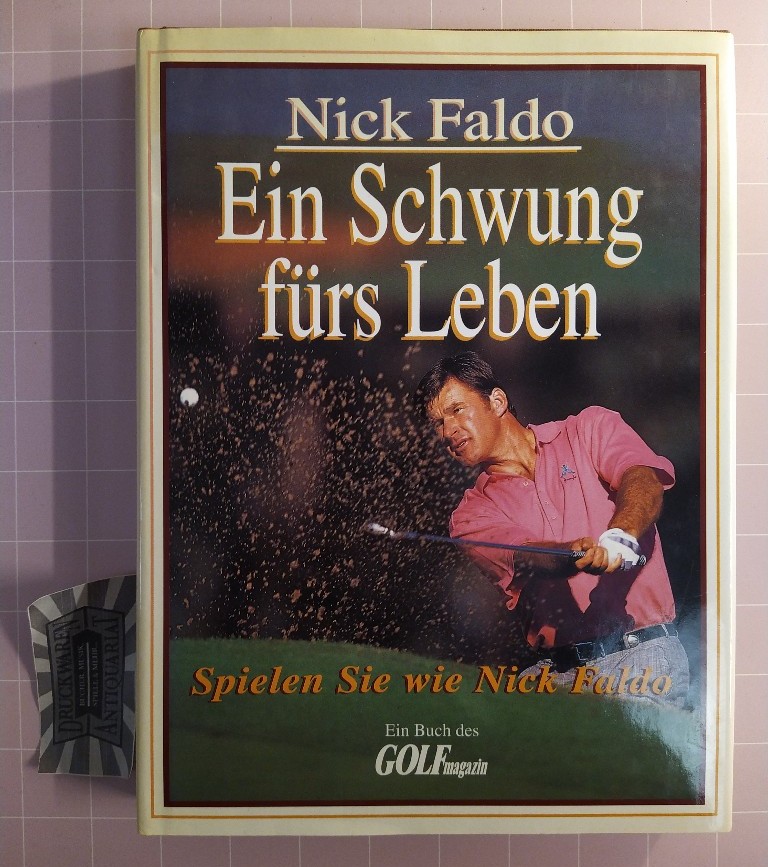
1995réf. 216479Hamburg: Jahr, 1995. 224 S., zahlr. Ill., 27 cm. Opp., gebundene Ausgabe, SU.
8vo. 65 pp. With woodcut vignettes by Jost Amman. A modern reissue of the "Traitte fort curieux de la venerie et de la fauconnerie" (Lyon 1671). Text in German and French. One of 500 copies. Harting 132.
Hand-coloured lithograph, matted (460 x 600 mm). Fine, large-format lithograph of a white Spanish horse with a finely costumed rider, no. 34 in Brodtmann's series of animals within his "Naturhistorische Bilder-Gallerie". Winkler 105.4.
240 x 340 mm. Coloured print. Matted. Plate K VI from Knorr's "Deliciae naturae selectae oder auserlesenes Naturalien-Cabinet welches aus den drey Reichen der Natur zeiget, was von curiösen Liebhabern aufbehalten und gesammlet zu werden verdienet [...]". Begun by Knorr as early as 1751, it was continued by his heirs after his death in 1761. The book describes items from the great contemporary natural history collections. Cf. Nissen, ZBI 2227. Horn/Schenkling 12038. Hagen I, 426. Dean I, 696. Graesse IV, 35.
4to. VI, 294 pp., final blank leaf. With watercolour frontispiece, 5 (instead of 7) watercolour plates, and numerous black and white photographic illustrations and sketches in the text. Contemporary half calf library binding with giltstamped spine, leatherette covers and shelfmark label. First edition. Richly illustrated travel report describing Egypt and the Nile, Lebanon, Syria, and Palestine. This "altogether satisfactory book of travel" (Luzac) describes an extensive trip undertaken in the late 1890s by the German painter Hermann Götz, the Director of the Grand Ducal School for Arts and Crafts in Karlsruhe. - In Genoa Götz boarded a steamer to Port Said, from where he proceeded to Cairo, Thebes, Luxor, and Aswan, then on to the Lebanon and Syria, stops including Beirut and Baalbek, Damascus and Haifa; he eventually reached Jaffa, Jerusalem, Bethlehem, Jericho and the Dead Sea. The lovely watercolours, reproduced after works by the author himself, show the statue of the wife of Ramesses II in the temple of Luxor, the entrance to the temple in Medinet-Habu, the ruins at Baalbek, and a bazaar in Jaffa, as well as atmospheric sunset scenes on the shores of the Nile and on Mount Olivet. The photographic illustrations show famous landmarks including the Pyramids, the Cairo citadel, the Dome of the Rock, and the windmills of Alexandria, as well as bazaar and street scenes, local types, views of the Nile, and group portraits of Götz's travel companions. - Spine very lightly rubbed. Tear to the upper edge of the title-page; pp. 63f. somewhat damaged and stained. Still a good copy of this entertaining travelogue seeking to encourage Europeans to travel the Middle East. Kainbacher I, 57. Luzac's Oriental List and Book Review XII, 236. OCLC 315953018.
(2), (4), 74, 99, (3) SS. Mit zwei Lichtdrucktafeln und neun Zinkdruckabbildungen; Titel in rot und schwarz. Bedr. Originalbroschur. 8vo. Unbeschnitten, teils unaufgeschnitten. Der zweite Teil enthält eine nach Sachgebieten gruppierte Bibliographie von ca. 1250 Titeln. Im Anhang das "Verzeichnis der in der Mechitharisten-Buchdruckerei geschnittenen orientalischen Schriften": neben zahlreichen armenischen auch russisch-serbische, kyrillische, hebräische, syrische und chinesische Typen. Besterman 515.
1983réf. 17103Athen, Karavias, 1983. Reprint der Ausgabe Mercy 1976. 1 separate farb Karte und 2 separate Tafeln. Kl.-4°. OKart. (Gebrssprn., gering fleckig und gebräunt).
1956réf. 91173Zürich Orell Füssli, 1956. 219 S. m. 14 Zeichnungen, einer Karte u. 48 Aufnahmen auf Tafeln; gr. 8°; gebunden, illustrierter Orig.-Pappband,
Folio (469 × 314 mm). 3, (1) pp. The diplomat, orientalist, and historian Max von Oppenheim (1860-1946) had published a memorandum as early as 1914 on "revolutionizing the Islamic territories of our enemies", i.e. trying to persuade religious leaders in the Muslim world to call for a Holy War against colonial powers such as Britain and France. Allied to this was a campaign to try and radicalize Muslim prisoners of war (a mosque was even erected in one camp, Wünsdorf - the first ever built in Germany) through printed matter, such as the camp newspaper "El Dschihad". Circulation began on 5 March 1915, with editions produced in Arabic, Russian, and - the largest print-run - Tartar (reaching 91 issues, the last published on 22 October 1918). Similar newspapers, under different names, were also issued in Georgian, Hindi, and Urdu. The only holdings outside Germany located by WorldCat are at the Hoover Institution (Arabic, Russian, and Tartar editions) and the Library of Congress (Russian edition). Not in COPAC. - Toned due to paper stock; two small wormholes at head; creased where previously folded. ZDB-ID 2079196-3. OCLC 643380726.
Lithographed map, ca. 99 x 137 cm. Scale 1:1,000,000, Conformal Conic Projection. Rare U.S. Air Force aeronautical chart of the Arabian Gulf detailing Saudi Arabia with Al Hasa Oasis, the Qatar Peninsula, Bahrein, parts of Kuwait, Iraq and Iran, as well as the Saudi-Kuwaiti and Saudi-Iraqi neutral zones. Other details include Tapline road, Kuwait road, geological features like the Dibdiba gravel plains, and the Rub al-Khali desert. The most prominent labelled cities include Riyadh, Doha, Kuwait, Bushire and Shiraz. - The map was prepared by the USAF Aeronautical Chart Service with the 1950 copyright belonging to Standard Oil Company. SOC subsequently licensed their copyright to Aramco. - With a single fold. Somewhat toned. Several larger tears to lower margin; a tear in right margin repaired with old adhesive tape.
Large 8vo. (8), VI, (2), 446 pp. With portrait frontispiece, 21 plates (7 of which double-page sized; last single-page plate included in pagination), 2 folding coloured maps of Yemen, folding plate of the game "abdùr", folding coloured plan of Sana'a, folding view of Sana'a, folding view of Aden, as well as numerous woodcut illustrations in the text. Contemporary half calf over marbled boards with blindstamped spine and giltstamped spine-title. Marbled endpapers. First edition, rare. Richly illustrated account of Yemen, without doubt "one of the fullest descriptions of life in San'a' and Turkish-occupied North Yemen" (Auchterlonie) ever to be published. The Italian explorer Manzoni (1852-1918) spent three years travelling the Yemen, altogether staying an entire year in Sana'a, his "citta bellissima". He "investigated the city more thoroughly and described it more vividly than any of his predecessors [...] also, he was the first to draw a map of the city" (cf. Henze). The illustrations include pretty views of Sana'a and Aden, as well as portraits of the local population. - Extremities very slightly rubbed; some remnants of ink stains on the frontispiece; minor browning to margins throughout; last folding map with small tears (repaired). Library stamp of the Paris École des Langues Orientales Vivantes to title-page, somewhat rubbed. Marked as a duplicate in red pencil on the blank recto of the frontispiece. Auchterlonie 138. Henze III, 366.
580 x 420 mm. Colour lithograph, signed "Ibrahim K.". Mounted on styrofoam board. Bilingual safety poster in Arabic and English. - Traces of folds.
8vo. XIX, (1), 197, (3) pp. Contemporary blindstamped green cloth. First published edition. "A translation of Persian narratives from the posthumous papers of his half-brother, Friedrich Rosen, including a glossary and grammar of modern Farsi" (NDB). - The doctoral dissertation of the Prussian oriental scholar and diplomat G. Rosen (Ballhorn, 1820-91), who studied in Berlin and Leipzig. In 1844 he was a dragoman at the Prussian embassy in Constantinople before becoming Prussian consul in Jerusalem in 1853. From 1867 he served as German Consul General in Belgrade. - Some browning and brownstaining throughout due to paper stock. Binding a little rubbed with traces of a library label to spine. NDB XXII, 52.