4 432 résultats
4to. 6, (1), 5, 4 pp. In French, English and Persian. Contemporary printed wrappers. Exceedingly rare article defending the oil nationalisation movement in Iran. Directed at Iranian students in the West, the account aims to clarify "the misunderstandings that prevail in the countries where you study", describing the injustice of foreign oil exploration in Iran leading up to several nationalisation laws passed between 1944 and 1951, which prohibited any concessions being granted to foreigners. - Somewhat dampstained near upper gutter. No more than 3 copies traceable in libraries internationally (all at the Mossadegh Foundation in Geneva).
1997réf. 7080784Zürich: Museum Rietberg 1997. 319 Seiten. Mit zahlreichen farbigen Abbildungen. 4° (30,5 - 25 cm). Farbig illustrierter Orig.-Pappband. [Hardcover / fest gebunden].
1999réf. 23944Melbourne, Ryan Publishing, 1999. IX, 374 SS., einige Abbildungstafeln und Karten in s.w. Gr.-8° (23,5 x 15,5 cm), illustr. original Paperback.
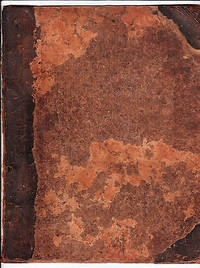
1807réf. 145581807. Waring Edward Scott. A Tour to Sheeraz 1807 travel narrative describing Persia during the early nineteenth century written by an officer of the British East India Company who journeyed to Shiraz in 1802 by way of the Persian Gulf. The work documents British encounters with Persian society at a moment when commercial diplomatic and strategic interests increasingly connected the Persian Gulf with British imperial networks centered in India. Waring records observations of Persian customs language literature and law while also describing economic activity and regional cultures encountered along the Gulf coast. His account places particular attention on the intellectual traditions of Persian literature and the social practices of Persian society providing commentary on classical Persian poetry as well as everyday cultural life. Waring Edward Scott. A Tour to Sheeraz by the Route of Kazroon and Feerozabad; with various remarks on the manners customs laws language and literature of the Persians. London: W. Bulmer for T. Cadell & W. Davies 1807. Second edition revised. Waring recounts his expedition to Shiraz and provides descriptions of landscapes towns and cultural practices encountered along the journey. The narrative includes discussions of hawk hunting Arabian horses and pearl fishing in the Persian Gulf with references to coastal communities stretching from Ras al Khaimah and Qatar to Bahrain and Kuwait. Waring also records an early European account of Muhammad ibn Abd al Wahhab and the religious movement associated with Wahhabi Islam. Throughout the text he comments on Persian language and literary traditions including references to major poets such as Hafiz and Saadi as well as the intellectual influence of Sufi thought. Travel literature concerning Persia and the Persian Gulf formed an important component of European knowledge about the region during the late eighteenth and early nineteenth centuries. British officials and merchants traveling between India and the Middle East produced accounts that combined geographic description with commentary on local society trade networks and political developments. Waring's narrative reflects this tradition presenting observations on Persian history and social customs alongside discussions of the literary heritage that shaped Persian intellectual culture. The author himself noted that the earlier 1804 edition printed in Bombay contained numerous errors that required correction leading to the publication of this revised edition. Folio volume containing 329 pages bound in quarter leather over original boards. The two plates called for are absent. Front board detached but present text block solid with staining and water damage visible throughout and writing on both front and rear pastedowns. Overall good condition. unknown
8 volumes. Each volume ca. 100 pp. Issues present are vol. 7, no. 1; vol. 10, nos. 2 and 3; vol. 11, nos. 1 and 2; vol. 12, nos. 1 and 2; vol. 13, no. 1. Also included are 2 volumes of abstracts from the group's conferences, and a booklet on "American Images of Middle East Peoples: impact of the high school". - Some slight wear, otherwise in very good condition.
1807réf. 145581807. Waring Edward Scott. A Tour to Sheeraz 1807 travel narrative describing Persia during the early nineteenth century written by an officer of the British East India Company who journeyed to Shiraz in 1802 by way of the Persian Gulf. The work documents British encounters with Persian society at a moment when commercial diplomatic and strategic interests increasingly connected the Persian Gulf with British imperial networks centered in India. Waring records observations of Persian customs language literature and law while also describing economic activity and regional cultures encountered along the Gulf coast. His account places particular attention on the intellectual traditions of Persian literature and the social practices of Persian society providing commentary on classical Persian poetry as well as everyday cultural life. Waring Edward Scott. A Tour to Sheeraz by the Route of Kazroon and Feerozabad; with various remarks on the manners customs laws language and literature of the Persians. London: W. Bulmer for T. Cadell & W. Davies 1807. Second edition revised. Waring recounts his expedition to Shiraz and provides descriptions of landscapes towns and cultural practices encountered along the journey. The narrative includes discussions of hawk hunting Arabian horses and pearl fishing in the Persian Gulf with references to coastal communities stretching from Ras al Khaimah and Qatar to Bahrain and Kuwait. Waring also records an early European account of Muhammad ibn Abd al Wahhab and the religious movement associated with Wahhabi Islam. Throughout the text he comments on Persian language and literary traditions including references to major poets such as Hafiz and Saadi as well as the intellectual influence of Sufi thought. Travel literature concerning Persia and the Persian Gulf formed an important component of European knowledge about the region during the late eighteenth and early nineteenth centuries. British officials and merchants traveling between India and the Middle East produced accounts that combined geographic description with commentary on local society trade networks and political developments. Waring's narrative reflects this tradition presenting observations on Persian history and social customs alongside discussions of the literary heritage that shaped Persian intellectual culture. The author himself noted that the earlier 1804 edition printed in Bombay contained numerous errors that required correction leading to the publication of this revised edition. Folio volume containing 329 pages bound in quarter leather over original boards. The two plates called for are absent. Front board detached but present text block solid with staining and water damage visible throughout and writing on both front and rear pastedowns. Overall good condition. unknown books
8vo. (2), 267 pp., final blank. With a double-page wood-engraved frontispiece, 8 wood-engraved plates, including 2 maps of Ballantine's route, and numerous wood-engraved illustrations in the text. Contemporary blindstamped cloth with giltstamped spine-title; brown coated endpapers. First edition. - Exceedingly rare account of a five-and-a-half-month journey from Bombay to New York by the Indian-born American merchant Ballantine, carried out in an attempt to acquire as much information as possible on commerce in Persia. Setting out from Bombay on 7 May 1875, Ballantine visited Karachi, Muscat, Ormus, Bandar Lengeh, Bahrain, Bushire, Shiraz, and Tehran, as well as Moscow, St Petersburg, and Stockholm before reaching London and Liverpool. Conceived as a commercial report, the travelogue covers currencies, weights and measures, and matters of export and import as well as pearl fishing, silk production and opium culture. It also describes the local climate and infrastructure, including water supply and telegraph lines, the ruling Sultan and Shahs, and the Arabian way of life (especially mentioning coffee). In his conclusion, Ballantine calculates the total cost of his journey at 265 pounds in railway, steamer and caravan fares for himself and his servant, a sum which he compares with cheaper modes of travel. The frontispiece shows a bird's-eye view of Bombay, while the plates depict a bazar in Ispahan, Char Bag and the palace at Ispahan, the southern gate of Tehran, the Shah of Iran, and the Tehran Royal Audience Hall. - Extremities very slightly bumped, inner hinges starting, but in all a fine copy, the interior clean and crisp. Pencil ownership of Mrs. John F. Spring of Greenfield, MA, on flyleaf. A single copy in auction records; the London 1875 edition cited by Wilson would appear to be a ghost. Ghani 28f. Wilson 13. OCLC 1706565. Not in Macro or Hünersdorff.
4to. (2), III, (1), 49 pp., final blank page. With 19 maps and several black-and-white photographic illustrations. Original printed wrappers. Stapled. Governmental report on the promising mineral perspectives of the Middle East, "intended to be a ready reference to the salient features of the mineral industry [...] including production, trade, transportation, and reserves" (preface). The maps show the locations of mineral deposits, processing plants, and transportation facilities of 16 Middle Eastern countries, while the photographs depict facilities of Dead Sea Works in Sedom, Israel, a copper mine, smelter, and workers' dwellings at Ergani, Turkey, and one of the world's largest drydocks under construction in Dubai. - The present publication forms part of a series on mining endeavours of various regions of the world prepared by the Bureau of Mines. - Slightly toned. Otherwise very well preserved. OCLC 956621933.
Collection of 14 maps (nos. MI 1-13 and MI 18). Mostly in full colour; various sizes but mostly ca. 70 x 100 cm; scale mostly 1:100,000 (MI 3: 1:250,000; MI 6: 1:2,470 [b&w]; MI 7: ca. 1:1,600 [b&w with red overlays]; MI 8: 1:800 [b&w with red overlays]; MI 9: set of 2 maps [ca. 1:2,340 and 1:1,200] and 1 cross-section [all b&w, maps with red overlays]). All folded in original brown printed envelopes. 14 maps of the 25-map series published between 1966 and 1971, including the complete set of the first 13 maps. Many photomaps based on aerial reconaissance and photomosaics, showing geological or geochemical information. Some sheets include location diagrams, text, notes, cross sections, charts, index map, and insets. The mapped resources also concern ancient gold mines. Among the credited cartographers are some Arabian scientists, but mainly Americans: James Mytton, Robert F. Johnson, Virgil A. Trent, C. W. Smith, J. Kouther, M. Q. Asad, Gerrit Eijkelboom, Mohammed Gendi, Bernard Henry, Xavier Leca, Mohammed Shanti, Phillippe Delange, and Jean Pflaum. Abdullah O. Ankary contributed to the text of several maps, and much of the geology is based on work done in the 1950s and early 1960s by Glen F. Brown, one of the pioneers of the partnership between the U.S. Geological Survey and the Saudi government which began in the 1940s, spanned the next five decades and played such an important role in the development of the kingdom. The map and envelope design closely match that of the geological maps of Saudi Arabia issued by the USGS since the 1950s. - Perfectly preserved. OCLC 977893902.
8vo (127 x 212 mm). (226) pp. Persian manuscript in black ink, with catchwords in red. Nas'taliq calligraphy, bordered in gilt, with 'unwan in colours, gilt, on first page of text. 19th century green morocco with gilt borders and red spine label. Marbled endpapers. Persian translation of this Sufi guide to the devout life, also known as "The High Road of Worshippers" or "The Path of the Worshipful Servants". The 11-century Persian theologian, jurist, philosopher, and mystic Al-Ghazali has been called the single most influential Muslim after the prophet Muhammad, and a "Mujaddid", or Renewer of the Faith. His works were so highly acclaimed by his contemporaries that al-Ghazali was awarded the honorific title "Proof of Islam" ("Hujjat al-Islam"). - Numerous marginal annotations throughout. Binding rubbed and bumped at extremeties; upper hinges starting. Some waterstaining to margins; occasional paper flaws and traces of worming repaired; a few edges folded in to preserve marginalia from further trimming. Later inscription in Arabic on final page, and inscribed in English "to Prince Jehandoor" (27 Nov. 1836) under the colophon. Cf. GAL I, 423, no. 38 (& Suppl. I, 751).
Folio (294 x 394 mm). (8), 29, (3) pp. With XVI plates. Contemporary half vellum over papered boards with floral design heightened in gold; title-label to spine. One of 300 copies. Presentation copy inscribed by the author to the Viennese printer Adolf Holzhausen on the half-title. - Lavishly appointed collection of miniatures from a Persian illuminated manuscript from the early 15th century comprising the collected works of Sultan Ahmad Jalayir (1382-1410). With a description of the manuscript by the British orientalist and historian of Islamic art, Sir Thomas Walker Arnold (1864-1930), crediting Jalayir with "a not inconsiderable skill in the use of the verse forms commonly found in Persian poetry" (p. 6). The present work features reproductions of some of the most splendid folios of the Persian manuscript and its giltstamped leather binding, as well as a few miniatures originating from similar manuscripts. - Extremities very slightly rubbed; spine-label somewhat worn. Interior in excellent condition. Bound with Florentine silk. OCLC 3499905.
Small folio (207 x 311 mm). 295, (1) pp. 26 ff., numbered 1-27. Issues 1 through 7 (of 8) bound together, with an additional booklet is bound at the end of the volume (addendum file no 1., 29 Oct. 1967). Contemporary blue full cloth binding with gilt-printed title label in Hebrew and Arabic to upper cover. The first orders issued by the IDF military authorities in the West Bank after the Six-Day War (Milhemet Sheshet Ha-Yamim, or Harb 1967). Printed in Hebrew and Arabic, the pamphlets include more than a hundred and fifty orders, proclamations and lists of position-holders. - Binding somewhat stained, but generally well preserved. OCLC 20345168.
Folio (214 x 334 mm). X, 565, (3) pp. With 1 folding map. Modern half cloth. Includes the first publication of the treaties closed by the British with the Gulf sheikhdoms following General W. Grant Keir's raid on Ras al-Khaimah in 1819/20: the preliminary treaties with Hassan bin Rama (Ras al-Khaimah, 8 Jan. 1820); Sultan bin Sakr (9 Jan. 1820), Sheikh Kameya bin Mahomed bin Jabin al Moyeying, Sheikh of Kishmee, of Dubai (9 Jan. 1820), Sheikh Shakhbool bin Dhyab of Abu Dhabi (11 Jan. 1820), Hassan bin Ali, for Sharjah, Umm al-Quwain, Ajman, and Abu Dhabi (15 Jan. 1830). Also, Sketch of the Articles proposed to H.H. the Imaum of Muscat for the Prevention of the Foreign Slave Trade, in 1822. - Slight waterstaining near beginning, but well-preserved. Rare. OCLC 45474897.
réf. 686284to. 265 pp. 23-24 & 173-174 missing 11 pages unused page 71 repeated i.e. 251 of 300 numbered pages employed for the manuscript minutes of board meetings and for occasional other purposes; several typed pages or notes laid in or affixed to a page. Minutes in pen and pencil in the hands of recording secretaries Harry Hartmeir Frank Piaget John Connolly and others. Founded in 1895 as the Paterson Golf Club and incorporated as the North Jersey Country Club in 1897 this minute book covers an important period in club history as plans to build roads through the Paterson location occasioned a move to Wayne in 1917 the purchase of the 327 acre Greenbrook Farm in 1921 and the building of a new club house there in 1922; the construction of its new golf course designed by Walter Travis began the same year opening in 1923. The club and course continue today. Contemporary notebook half-leather and black pebbled cloth very worn leather spine gone leather corners mostly gone edges bumped and worn; interior very good and quite legible. unknown
réf. 686284to. 265 pp. 23-24 & 173-174 missing 11 pages unused page 71 repeated i.e. 251 of 300 numbered pages employed for the manuscript minutes of board meetings and for occasional other purposes; several typed pages or notes laid in or affixed to a page. Minutes in pen and pencil in the hands of recording secretaries Harry Hartmeir Frank Piaget John Connolly and others. Founded in 1895 as the Paterson Golf Club and incorporated as the North Jersey Country Club in 1897 this minute book covers an important period in club history as plans to build roads through the Paterson location occasioned a move to Wayne in 1917 the purchase of the 327 acre Greenbrook Farm in 1921 and the building of a new club house there in 1922; the construction of its new golf course designed by Walter Travis began the same year opening in 1923. The club and course continue today. Contemporary notebook half-leather and black pebbled cloth very worn leather spine gone leather corners mostly gone edges bumped and worn; interior very good and quite legible. unknown books
8vo. 99, (1) pp. Red half morocco with blindstamped cloth boards and giltstamped spine title in Ottoman Turkish. First and only edition in the Ottoman world. Sidi Ali Reis was an Ottoman admiral sent by Suleiman the Magnificent to counter Portuguese piracy and attacks on Muslim pilgrim ships in the Indian Ocean, Arabian Sea, Red Sea and Arabian Gulf. He was shipwrecked in India and travelled to the Muslim states of South Asia, Afghanistan, central Asia, Iran, and the Middle East before returning to the Ottoman Empire. His travels are recounted in his present "Mirat ül-Memalik" ("The Mirror of Countries"), first published in 1557, one of the earliest travel books of Turkish literature and written in the now extinct Chagatai language. Rare: OCLC lists 3 copies only internationally (Leiden, Bamberg, Munich). OCLC 632504491, 65818716.
8vo (125 x 197 mm). 206 ff. (foliated in pencil 1-204 + 1 endpaper in an early 19th century hand). Ottoman Turkish manuscript on paper (largely polished paper, but including 18 leaves of silhouette paper with a floral pattern in pink and mint green) in several hands. Contemporary limp leather with remant impression of library chain. Handsome manuscript collection of the most important poets of the Ottoman classical period, including but not limited to Bâkî (1526-1600), Isa Necati (d. 1509), Muhammad ibn Sulaiman Fuzuli (1480-1556), Hayâlî (c.1500-57), and Yahya Efendi (1494-1570). The eighteen leaves of silhouetted paper are an important preservation of a popular but rarely preserved mediaeval and early modern book decoration practice. To dye silhouetted paper, Ottoman papermakers used stencils or pads of felt to bleed designs into the paper itself, creating a beautiful, airy impression of colour and pattern on which a scribe would write. These were high-cost, coveted items in both the East and the West. Perhaps consequently, this manuscript, likely produced in Western Anatolia, had by 1596 made its way to Silesian Breslau (Wroclaw), in what is now Poland. An elaborate librarian's inscription, dated and signed "G. Scheidt", identifies its new home as the library of the Church of St Mary Magdalene. - The inscription notes that the text was donated to the library by "Fridrich von Schliwicz und Klein Wandriß zu Zieserwicz". Friedrich von Schliewitz was a Silesian nobleman who gifted a total of five Turkish manuscripts to St Mary Magdalene Library in 1596, all of which received chains of libri catenati (the remnant punched hole of which is visible on the leather covers of this manuscript) and the elaborately painted crest commissioned by the library from Breslau painter Matthias Heintze (d. 1622). Georg Scheidt (d. 1601) was a teacher at the Mary Magdalene grammar school between 1569 and 1575 before becoming a librarian to the local church library (cf. Zeitschrift des Vereins p. 218, and Schönborn, p. 28). After his death he was replaced by Christoph Sarcephalus, who completed the inventory which forms the library's earliest known catalogue (cf. Garber, p. 568). - The present manuscript itself boasts numerous marginal notes in an early hand, as well as marginalia on fol. 109, depicting a horse in red ink. Covers a bit worn, some early paper repairs. In all a well-preserved and well-travelled early modern text. - Provenance: from the collection of the Turkish-German artist Nedim Sönmez (b. 1957), of Izmir, a specialist for decorated paper, to whom it belonged since 1988. Previously the manuscript had been in a private German collection in Bremen. Carl Brockelmann, Verzeichnis der arabischen, persischen, türkischen und hebräischen Handschriften der Stadtbibliothek zu Breslau, no. 31. Cf. Klaus Garber, Bücherhochburg des Ostens, in: Garber (ed.), Kulturgeschichte Schlesiens in der Frühen Neuzeit I, p. 568. Carl Schönborn, Beiträge zur Geschichte der Schule und des Gymnasiums zu St. Maria Magdalena in Breslau, p. 28. Zeitschrift des Vereins für Geschichte und Alterthum Schlesiens 13.13 (1876), p. 218.
Small folio (237 x 308 mm). 2 vols. (6), IX, (1), VI, 665, (1) pp. (2), VI, 817, (13) pp. Contemporary full sheep, flat spines with red morocco labels. The "Mishkat al-Masabih" ("A Nic33357he for Lamps") of Al-Khatib al-Tabrizi (also known as Wali al-Din, d. 741 H), a revised and expanded version of the "Masabih al-Sunnah" by al-Baghawi, with approximately 1500 hadith added. This important Sunni text was first translated into English by Capt. Matthews of the Bengal Artillery. Although some of the original hadith are not included and others incorrectly translated, this attempt at publishing a translation from the Arabic was a noted accomplishment for the time. - The List of Subscribers accounts for 122 copies, with an additional 100 copies noted as being published on order of the Governor General in Council for the Honourable Company. A statement in an 1848 issue of the Journal of Sacred Literature suggests that most copies of the work were destroyed at sea, yet it was still advertised for sale in 1817 in the Literary Panorama (at the price of £4.4s). - Some browning throughout, more pronounced in endpapers. A short tear to lower edge of vol. 1. A good copy of this rare Calcutta imprint, bound in India. OCLC 15466515. BLC v. 229, p. 302.
Small folio (210 x 297 mm). 2 volumes (text and atlas). Text vol.: (6), 134, (2) pp. with 21 text illustrations. Atlas vol.: 58 loose black-and-white plates and plans as issued. Text vol. in modern cloth-backed boards with original upper wrapper preserved and mounted on front cover; fitted together with the plates in modern cloth-backed board folder with velcro fasteners, preserving original upper board. Third and final instalment of the "Archaeological Mission to Arabia" series published by the "Societé des Fouilles Archéologiques" between 1909 and 1922, this issue dedicated entirely to the famous Umayyad desert castles Quseir Amra, Qasr Al-Kharanah, and Qasr Tuba in present-day eastern Jordan. "The authors found the description of Qasr Haraneh and Qasr Tuba to be faulty and unreliable and re-described them completely. They give numbers of views of Qeseir Amra and a briefer description. The text also includes itineraries and historical and epigraphical notes. It is well arranged, and seems to provide all the information that can possibly be wanted" (Journal of the Royal Asiatic Society 57.1 [1925], p. 161). - Slight traces of worming in lower margin (no loss to text). Folder lightly rubbed around the edges, otherwise in good general condition. OCLC 490111584.
Small folio (190 x 270 mm). 5 vols. (I:) XIV, (4), 507, (3) pp., final blank leaf. With 30 plates, 5 of which folding. (II:) XV, (1), 689, (3) pp. With numerous illustrations in the text. (Atlas:) XI, (1), pp. With 155 (instead of 153) plates. (Supplement:) (4), 98, (1) pp., final blank page. (III:) 2 vols. (text and atlas) bound as one. (6), 134, (2) pp. with 21 text illustrations. III-VII, (1) pp., 58 plates and plans (some folding). Contemporary full cloth with giltstamped calf title label. Vol. III in mid-20th century green cloth with giltstamped spine. Edges of three volumes sprinkled red. First edition of this classic of archaeology, documenting expeditions to Northern Arabia undertaken by the French orientalists Jaussen (1871-1962) and Savignac (1874-1951) prior to World War I. "Still indispensable" (Bowersock), the work is particularly remarkable for its epigraphical observations. Many ancient Arabic inscriptions were reproduced, translated and analysed here for the first time. - The set was published by the Societé des Fouilles Archéologiques between 1909 and 1922 in three parts. Parts I and II (the latter comprising a text volume, an atlas and a supplemental volume) describe the expedition from Jerusalem to Mada'in-Salih in the Hejaz in the spring of 1907, as well as the exploration of the ancient cities of Dadan, Teima and Harrah de Tebouk in 1909 and 1910. The plentiful illustrations include plans of the itinerary as well as photographs of archaeological sites and inscriptions, including impressive depictions of the monumental rock-cut tombs at Mada'in Salih, just north of the oasis Al-'Ula. The archaeologists also mapped the Arabic old town of Al-'Ula on the site of the biblical Dedan in order to localize a wealth of ancient Dadanitic inscriptions that were used as spolia in the Arabic houses. Jaussen and Savignac thus achieved the first systematic archaeological documentation of Mada'in Salih and Al-'Ula. Part III is dedicated entirely to the famous Umayyad desert castles Quseir Amra, Qasr Al-Kharanah, and Qasr Tuba in present-day eastern Jordan. - Volume I with a hole in the right margin throughout the second half, the hole fading to a tear throughout the first half, resulting in flaws to the covers, repaired with brown tape. Volume II has small flaws to extremities of boards; small tear in spine label. Atlas volume lacks plate 132, but includes duplicate plates of nos. 17, 131 and 137, further showing three small piercings to the lower board. An advertisement for the "Oeuvre catholique international pour la protection de la jeune fille", an organisation founded in Fribourg in 1897, is loosely inserted in vol. I. Rarely seen at auction. Bowersock, Roman Arabia 4 (note). OCLC 1204802.
1 text volume (4to) and 2 atlas volumes (38.5 x 28 cm). (6), 304 pp. XI, (5) pp. 4 ff. With 121 illustrations in text and 144 collotype plates in atlas. Text volume in original printed paper wrappers. Atlas in original half cloth, printed paper sides. First edition of an art-historical work on Chinese funeral monuments, dating mainly from the Han dynasty. The work is compiled and written by the French archaeologists Gilbert de Voisins (1877-1939), Jean Lartigue (1886-1940) and Victor Segalen (1878-1919), who was in charge of the expedition. The expedition was cut off early due to the First World War. The two atlasses contain 144 loose collotype plates, showing statues, tombs, mausolea, reliefs and monuments as well as some of the sites, covering the area's of Nanjing, Shanxi, and Sichuan. Scientific descriptions of the plates are given in the text volume, along with small maps of the area, plans of the excavation sites and tombs and schematical reproductions of the artefacts. - Binding slightly rubbed along the extremities. Text volume and plates browned. Overall a very good copy. Couling, p.501.
Folio (ca. 275 x 365 and 370 x 555 mm). Altogether 13 volumes (7 text volumes and 7 issues of plates in 6 volumes). (4), 884, (4) pp. With 70 engraved and lithographed numbered plates, including 1 folded plate, 1 folded map, and 8 plans, 3 of which folded; a few in original hand colour. Contemporary wrappers. Plates stored in two half cloth portfolios. First edition. - A rare complete set of this monumental description of the 1860/61 archaeological expedition to Lebanon and Syria, commissioned by Napoleon III and led by the renowned scholar of Semitic languages, Joseph Ernest Renan. The text volumes give a vivid account of the expedition, its route and findings, and include several illustrations within the text, while the plates provide additional documentation of the visited archaeological sites. Engraved by Jules Penel (b. 1833), Georges Erhard Schièble (1821-80), and others, they include a map of the expedition area, Phoenician monuments at Amrit, Arwad, Byblos, Sidon and other places, as well as a folded plate showing the Kabr Hiram mosaic and 3 folded plans depicting Sidon and the Sidon necropolis. This important work documents the state of the excavations at that time and triggered further research on the Phoenicians. A facsimile edition appeared in 1998. - Text volumes uncut. Some wrappers faded, extremities bumped. Paper somewhat browned as common; plates fresh and clean.
8vo. (14), 311, (1) pp. With 3 lithogr. folding plates, the first two depicting a horse led by a man on foot, and the third a lithographed folding table. Contemporary blue boards, gilt-tooled spine, gilt edges. Second edition of a work on all aspects of horses, horsemanship, the horse trade, horse carriages etc. The work contains 6 chapters by Karl Kegel and 12 by Seufert von Tenecker, with 3 early lithographed plates. It was first published in 1817 and was apparently very popular: the present edition contains a six-page list of subscribers. It was followed by several other editions. - A stain in the last folding plate and some smudges to the binding. A good copy. Huth p. 92. Not in Mennessier de la Lance; Nissen, ZBI; Podeschi.
Large oblong folio (556 x 383 mm), identified as "volume 10". Photostat, 328 pp., block-bound with screws. The Master Plan Drawings for an enormous, never-realized Medical Center which the U.S. Ministry of Defense and Aviation (MODA) aimed to build for the Saudi Arabian Army near Al-Kharj, some 70 km south of Riyadh. Part of an ambitious programme to develop major military medical facilities at Mecca and Riyadh, the project quickly expanded, at the Saudis' request, from a 400-bed hospital in the capital to a massive 600-bed medical center far outside Riyadh with acute care, teaching and research facilities, involving the planning of a small medical city near Al-Kharj with a population of some 15,000 people. The architects whom the U.S. Army Corps of Engineers tasked with the development were Ellerbe and DMJM (Daniel, Mann, Johnson & Mendenhall), two concerns with extensive and international experience in designing medical facilities. By 1976 the cost estimate for the Al-Kharj center had risen to no less than $4.1 billion; in February 1977, the completed master plan was presented to Prince Turki bin Abdulaziz in Riyadh. He appeared pleased but had already suggested that funding might need to be drawn out over a period of 20 years. In early 1978, all funding was abruptly withdrawn, and the architects' design work was brought to an unexpected end before any construction work even began. Today, the desert site north of the highway at Al-Kharj remains as bleak and empty as it appeared in the 1970s. - The present set of ground plans, elevations, and three-dimensional renderings, one of a small number of Master Plan sets produced in 1977 shortly before the programme fell through, shows the extent of planning reached, as well as the humongous scale of the project. A unique survival, and a poignant document of MODA's apparently limitless "willingness to build facilities to modernize every aspect of the Saudi Arabian military structure" (Grathwol/Moorhus, p. 394) at a time when increasing oil revenues redefined the limits of the possible. - In excellent state of preservation. Cf. R. P. Grathwol, D. M. Moorhus: Bricks, Sand, and Marble. U.S. Army Corps of Engineers Construction in the Mediterranean and Middle East, 1947-1991 (Washington, 2009), pp. 394-397.
4to. XIII, (1), 306 pp. Publisher's green cloth with original dustjacket. First edition. - A useful reference work aiming to familiarize students of Modern Arabic literature with the leading authors and essential dates in this field, including 12 extracts in translation, as well as numerous quotations within the text. - In very good condition. OCLC 379738.