4.409 Ergebnisse
Stencil-coloured lithograph. 43 x 33.4 cm. One of the very rare Weißenburg illustrated broadsheets showing oriental motifs. These were published under the fictitious address of Hassan Uwais (Auvès) in Cairo. The actual publisher, Camille Burckardt, was head of the Weißenburg company from 1880 until 1888. - Slight crease, minor browning. All of these prints are very rare; a different print commanded £21,250 at Sotheby's in 2012. Des Mondes de Papier p. 66, no. 1.
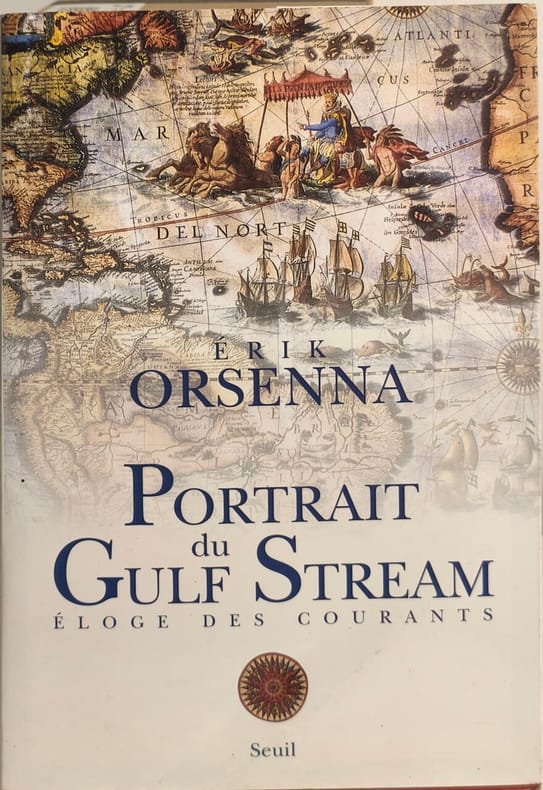
2005Best.-Nr. 5489Seuil 2005 252 pages in8. 2005. broché jaquette. 252 pages.
Best.-Nr. 72614Seuil 2005 livre 20,5*14 252 pages
Best.-Nr. 6446Paris, Editions du Seuil, 2005, broché, 14x20,5 cm, 253 pages.
Gouache on paper with floral borders in gilt and red title within cartouche. C. 170 x 120 mm. Framed and glazed. Very decorative, high-quality miniature portrait of Sultan Umar (Omar) Mirza (1456-93), a Timuride prince from the Fergana valley. He is revered as father of Babur (1483-1530), founder of the Indian Moghul empire. The Arabic captions translates as: "The blessed portrait of Sultan Umar Sheikh Mirza". - Very clean. A comparable portrait is in the Brooklyn Museum (accession no. 59.205.9).
Albumen print (vintage), hand-coloured and raised in gilt and opaque white. Matted (ca. 280 x 360 mm) and framed (ca. 530 x 640 mm). Signed "Lafayette" on the mat. His Royal Highness Saud of Saudi Arabia, second son of and immediate successor to Abdulaziz Ibn Saud, the founder of Saudi Arabia, as a young prince. A fine, splendidly hand-coloured portrait by Lafayette Studios, Photographers Royal and among the world's most prestigious studios of the early 20th century. - In immaculate condition.
Oblong folio (310 x 370 mm). 30 engraved sheets, with 30 (of 34) portraits of thoroughbred race-horses (lacking nos. 10, 15, 31 and 34). Old half calf with marbled covers. A spectacular, exceedingly rare album illustrating the starting point of horse racing in England, when native mares were crossbred with imported oriental stallions. W. S. Sparrow notes, in 1922, "rare, no doubt, because so many copies have been broken up in order that the prints might be sold one by one". The integral engraved text surrounding the image of horse and jockey provides the history and breeding of the subjects of the portraits. The first three horses depicted in this charming album are direct descendants of the three foundation stallions of the modern Thoroughbred breed, namely the Godolphin Arabian (Bajazet, plate 2), the Darley Arabian (Childers, plate 3), and the Byerly Turk (Old Partner, plate 1). All of the other 23 race horses described here trace back to these three stallions just imported into England from the Middle East, as well. According to Pickerell, "all 500,000 of the world's thoroughbred racehorses are descended from 28 ancestors, born in the 18th century", of which, according to Peter Willett, about 50% have Arabian bloodlines, with the remainder evenly divided between Turkoman and Barb breeding. - James Seymour is recognized as one of the earliest English sporting artists. He was the son of a wealthy goldsmith and diamond merchant who supplied the plate for racing trophies. Seymour was passionate about racing and, in addition to drawing and painting them, he is believed to have owned racehorses himself; he was considered one of the most eminent horse painters of his age, and this important and rare album of charming engravings offers a true sampling of his work. - With armorial bookplate with cipher of George Simon Harcourt, Earl Harcourt (1736-1809) on front pastedown. Some early ms. annotations at beginning, some tears and repairs extending into text, first plate laid down. Sparrow, p. 77. Cf. Lane British Racing Prints Seymour 2, nos. 1-7, 11-18, 20-24, 26, 28-33. Mellon Sporting and Animal Prints Seymour 13, nos. 1-7, 11-18, 20-24, 26, 28-33. Cf. Siltzer British Sporting Prints, 389.
Large folio (60 x 42 cm). Letterpress title with engraved vignette, list of subscribers, winners of the St. Leger 1776-1814, 14 hand-coloured aquatint plates by T. Sutherland and R. G. Reeve after Herring, each with letterpress description of riders and winners of other races and the St Leger stakes for each year. Bound in recent half burgundy morocco with contemporary drab boards with large printed label on upper cover. "Extremely rare" (Tooley). Second edition of Herring's finest work, the outcome of his fascination with horse racing and the St. Leger in particular. "In the writer's estimation, the first series of the St. Leger winners contains the very best of Herring prints [...] they were engraved by Sutherland, a more competent aquatinter and colourist than his successors who handled these race-horses" (Siltzer). Herring spent the first 18 years of his life in London, where his father, an American, was a fringe-maker in Newgate Street. Having married against his father's wishes, he went to Doncaster, where he arrived during the races in September 1814, and saw the Duke of Hamilton's horse, William, win the St. Leger. The sight inspired him to attempt the art of animal-painting, in which he subsequently excelled. He painted Filho da Puta, the winner of the St. Leger in 1815, and for the following thirty-two years painted each winner in succession. "Herring's series of Portraits [...] were painted annually and quickly reproduced in large showy aquatints, the horses made literally glossy by the application of varnish to the paper" (Diana Donald, Picturing Animals in Britain 1750-1850, New Haven, CT [2007], p. 215). This is the second edition of this series of wonderful racehorse portraits. It was first published as a suite of 10 plates in 1824 by Sheardown and Son of Doncaster; S. and J. Fuller of London purchased these in 1827 and continued to publish, periodically, the St. Leger winner series up to 1845. The earlier plates were all re-captioned with Fuller's imprint. Plates watermarked 1825-28; the first plate in the present work, "Filho da Puta", is on paper watermarked 1827. - Very slight offsetting to text. Extremities rubbed; otherwise a superb example of this rare work. Siltzer 139-146. Mellon Horsemanship, 128.
1987Watercolour over pencil. 780 x 525 mm. Signed and dated by the artist. Matted.
Standard issue, 515 x 700 mm. Scale 1:4,850. Nautical chart of Port Ibrahim at the entrance of the Suez Canal, prepared by the British Admiralty. It details the north and south harbour basins and the railway station in between, as well as marina buildings including the coast guard station, a quarantine building, a telegraph office, a mosque, and the naval school. The chart includes the Canal Company's premises, showing their southern basin, workshops and offices. Further, it features notes on fairways being dredged in the 1930s and shows the sandbank of Kad el Marakeb south of the port. - The British Admiralty has produced nautical charts since 1795 under the auspices of the United Kingdom Hydrographic Office (HO). Its main task was to provide the Royal Navy with navigational products and service, but since 1821 it has also sold charts to the public. The present chart was composed after surveys carried out by the Suez Canal Company from 1899 to 1930; it was first published in 1901 and saw several corrections up to 1936. - Captioned in print and in a former collector's hand on verso. Small brownstain and small marginal tear near lower right corner.
1973Near VG pbk reprint. Front cover stained. 22894. eng
19678vo., First Edition, with portrait frontispiece, and numerous photographs, illustrations and diagrams in the text, signature erased from front free endpaper; black cloth, backstrip lettered in silver, a very good, bright, clean copy in price-clipped dustwrapper. SIGNED BY THE AUTHOR ON FRONT FREE ENDPAPER. With personal armorial bookplate on front free endpaper. VERY SCARCE, ESPECIALLY A SIGNED COPY.
Colour lithographed postcard, 130 x 90 mm. A very rare Ottoman postcard featuring one of the earliest printed maps to focus on the Asir region, then nominally part of Ottoman Yemen, but today a part of Saudi Arabia. The card was part of a series made by Ibrahim Hilmi, one of the premier Istanbul cartographers of the era. - Ibrahim Hilmi Cigiracan (1876-1963) was one of the most important publishers and cartographers of the late Ottoman Empire. Born in Tulcea (now in Romania), he founded his first printing shop in Istanbul in 1896, under the name "Kitaphane-i Islami" (Islamic Library), largely producing religious books. Subsequently, Hilmi became interested in military affairs, geography and history, and changed the name of his press to "Kitaphane-i Islam ve Askeri" (Islamic and Military Library). He published about 200 military books, and his atlases (especially his "Pocket Atlas") were among the most popular cartographic items throughout the empire. During WWI, Hilmi gained the affection of the public for his charitable programme of sending free books to poor children in Anatolia. - Hilmi's enterprise thrived until Atatürk's Republican regime nationalized the publishing of law and school books in the 1920s, undercutting the most lucrative part of his business. However, Hilmi left an enduring legacy, having published over a thousand books on a wide variety of topics over three decades. - Very good, overall clean and crisp, just some very light even toning and slight stains to verso.
Colour lithographed postcard, 130 x 90 mm. This very rare Ottoman postcard features a map of the Northern Arabian Gulf, including what is today Qatar, Bahrain, the Saudi Arabian Gulf Coast (including Dhahran), Kuwait, Southern Iraq (including Basra), as well as south-western Iran. Interestingly, it shows the Arab Gulf States as being part of the Ottoman Empire, when in reality they were already British Protectorates. The card was part of a series made by Ibrahim Hilmi, one of the premier Istanbul cartographers of the era. - Ibrahim Hilmi Cigiracan (1876-1963) was one of the most important publishers and cartographers of the late Ottoman Empire. Born in Tulcea (now in Romania), he founded his first printing shop in Istanbul in 1896, under the name "Kitaphane-i Islami" (Islamic Library), largely producing religious books. Subsequently, Hilmi became interested in military affairs, geography and history, and changed the name of his press to "Kitaphane-i Islam ve Askeri" (Islamic and Military Library). He published about 200 military books, and his atlases (especially his "Pocket Atlas") were among the most popular cartographic items throughout the empire. During WWI, Hilmi gained the affection of the public for his charitable programme of sending free books to poor children in Anatolia. - Hilmi's enterprise thrived until Atatürk's Republican regime nationalized the publishing of law and school books in the 1920s, undercutting the most lucrative part of his business. However, Hilmi left an enduring legacy, having published over a thousand books on a wide variety of topics over three decades. - Very good, overall clean and crisp, just some very light even toning to verso.
Colour lithographed postcard, 130 x 90 mm. A very rare Ottoman postcard depicting a map of Yemen, including the Ottoman-dominated northern and western parts of the country (Sana'a, Taiz, and Al Hodeidah), as well as the British-dominated southern regions (Aden). The card was part of a series made by Ibrahim Hilmi, one of the premier Istanbul cartographers of the era. - Ibrahim Hilmi Cigiracan (1876-1963) was one of the most important publishers and cartographers of the late Ottoman Empire. Born in Tulcea (now in Romania), he founded his first printing shop in Istanbul in 1896, under the name "Kitaphane-i Islami" (Islamic Library), largely producing religious books. Subsequently, Hilmi became interested in military affairs, geography and history, and changed the name of his press to "Kitaphane-i Islam ve Askeri" (Islamic and Military Library). He published about 200 military books, and his atlases (especially his "Pocket Atlas") were among the most popular cartographic items throughout the empire. During WWI, Hilmi gained the affection of the public for his charitable programme of sending free books to poor children in Anatolia. - Hilmi's enterprise thrived until Atatürk's Republican regime nationalized the publishing of law and school books in the 1920s, undercutting the most lucrative part of his business. However, Hilmi left an enduring legacy, having published over a thousand books on a wide variety of topics over three decades. - Very good, overall clean and crisp, just some very light even toning and slight stains to verso.
Best.-Nr. 201703298Fribourg, Office du livre, 1974 ; in-4, 130 pp., cartonnage de l'éditeur.
1974Best.-Nr. 26270Fribourg Paris Office du Livre Société Française du Livre 1974 -in-8 bradel pleine percale un volume, reliure bradel pleine toile blanche in-octavo cartonnage illustré Editeur(bradel cloth-bound in-8 Editor)(25,5 x 17 cm), dos long (spine without raised band), titre imprimé en noir et vert dans le sens de la hauteur, premier plat imprimé en noir et vert, illustré d'un joueur de Golf en action en noir sur fond vert, (trés légères rousseurs sur la couverture mais l'intérieur est parfait), toutes tranches lisses (all smooth edges), orné d'un frontispice en noir et de 60 illustrations in et hors-texte en noir, 130 pages, 1974 Fribourg Office du Livre, Paris Société Française du Livre Editeurs,
199380 pages, illustrated by Ken Lewis. (Play better Golf) eng
1850Best.-Nr. 53427London & Paris, Fisher, um 1850. Bild ca. 12,5 x 18,5 cm, Blatt ca. 19,5 x 25,5 cm. 1 Blatt, verso weiß.
With a lithographed portrait of the author, 5 lithographed facsimiles of the author's autograph manuscripts and 4 of the letterpress pages printed in gold. Extra-illustrated with 3 lithographed and 4 engraved Royal Folio illustration plates (including 2 portraits of the Ottoman Sultan Abdulmejid I). With: (2) Vernay, Charles. Poésies Turques et Persanes (cent quarante et une pièces) ... Paris, Albert Franck (below frame: lithographed by [Mathieu] Masson), "1858-1859" [= AH 1275]. With a letterpress wrapper-title in French, printed in gold, a lithographed Turkish and Persian wrapper-title (dated "1275" and "1858") and text in Turkish and Persian, lithographed from the autograph manuscript in Arabic script, all printed in gold, and a lithographed portrait of the author (the same as in ad 1). (3) Vernay, Charles. Nouvelles poésies Persanes et Turques ... Paris, Albert Frank, July 1860 (colophon: lithographed by [Mathieu] Masson, r. de Valois 48, Paris). A large 4to bifolium, with a lithographic facsimile of a 4-page autograph manuscript in Arabic script, printed on blue paper. (4-18) Vernay, Charles. [Miscellaneous publications in various formats, some letterpress, others lithographed facsimiles of the author's autograph manuscripts in French, Turkish and Persian, and including a 1-leaf autograph manuscript in Persian]. Paris, Firmin Didot frères and others, 1851-1858. 18 publications in 1 volume. Royal Folio (49.5 × 34.5 cm) with a few items in smaller formats. Contemporary diced, richly gold-tooled calf, each board with a double frame of rolls and stamps, a crescent moon and star inside each corner of the inner frame, blind-tooled turn-ins, green silk brocade endleaves. Unrecorded royal folio issues of two major editions of oriental poetry, bound together and with extensive supplementary material added, probably for presentation to the Ottoman Sultan Abdulmejid I: the first and only edition of the collected oriental poetry (195 pieces) of the French child prodigy orientalist, linguist and poet Charles Vernay; and the earlier lithographic edition of his 141 Turkish and Persian poems. In the former work, the Turkish and Persian poems are rendered both in the Arabic script and in French translation. It also includes a few poems in Italian and German. Even the 8vo issues of these two editions are very rare. The present Royal folio issues of the two main works were clearly never offered for sale. - Charles Vernay (1842-1866?) began publishing his writing at age nine and most of the present publications note the age at which he wrote them, ranging from 9 to 16. When Vernay was in Istanbul in 1861, he wrote a new dedication for the 1860 Poésies nationales et religieuses, addressed to the Ottoman Sultan Abdulmejid I, though Vernay had it printed in Paris. It explicitly notes that he is presenting a copy of "mon volume de Poésies Françaises, Italiennes, Turques et Persanes" to the Sultan. This suggests that the present copy of the two works together, with that dedication and many other additions, is the copy he planned to present. Since the dedication is dated 14 March 1861 and the supplementary Dixième chant mystique (also printed by Lainé and Havard) 20 April 1861 (only 2 months before Sultan's death), it is possible the Sultan died before Vernay had an opportunity to present the book to him. In addition to the extensive additional material inserted in the Poésies nationales et religieuses, and the supplement to the Poésies Turques et Persanes, the present copy has about 15 miscellaneous publications by Vernay bound between the two main works, some letterpress, some lithographic facsimiles of his autograph manuscripts in French, Turkish and Persian, and including a 1-page autograph manuscript in Persian. Some occasional foxing and an occasional marginal tear. The ink in the 5 lithographic facsimiles of very large Arabic script has eaten a few holes in the paper, and it and a few other lithographed leaves have offset onto the facing pages. But the book remains in good condition. The binding is worn at the hinges, shows some superficial damage on the front board near the fore-edge, and the first free endleaves at front and back have been creased and at the front its silk has been torn and repaired, but the binding also remains good and with the tooling clear. Ad 1: cf. Hage Chahine 4995 (8vo issue); WorldCat (7 copies of the 8vo issue); ad 2: cf. Browne, Hand-list ... Turkish (Gibb coll., Cambridge UL), (1906), 169; Hage Chahine 4994 (8vo issue); WorldCat (4 or 5 copies of the 8vo issue); ad 3: not found recorded; none of the 3 in Aboussouan coll.; Atabey; Blackmer; Diba, Persian bibliography; Lambrecht; Coll. Lazard; for Charles Vernay and his poetry, see also: Syed Tanvir Wasti, "On Charles Vernay and his 'Divan'", Middle Eastern studies LI (2015), pp. 789-803.
Best.-Nr. ria9781119823346_inpHardback. New. New Book; Fast Shipping from UK; Not signed; Not First Edition; N/A hardcover
18378vo. Portrait frontispiece, engraved title-page, (4), 434 pp. With 1 engr. medaillon (averse and reverse) in the text. Contemporary red half calf with label to gilt spine. Edges in gilt. Fourth edition; the second one in 24 languages. Prayers "for all the hours of the day" by the Armenian Patriarch Nerses IV. (1102-1173). - Clean copy with stamped exlibris on t. p. Brunet IV, 859. Nersessian 510. OCLC 799387339.
1989100p., illus. SOFTCOVER. Paperback Very good condition
1320 x 865 mm. Scale 1:145,925. Nautical chart of the North Coast of Panama. Engraved chart, including tidal information, compass roses, soundings, seabed notations, currents, sandbanks, shoals, lighthouses and beacons picked out in yellow and red, inland elevations, detailing and buildings. First published in 1938, revised in 1948. Signs of contemporary use. Folded.
Engraved map on two sheets (75 x 79 cm), with hand-coloured cartouche and coloured in outline. “The first really modern map of Arabia” (Tibbetts). An extremely detailed two-sheet map showing the Middle East, Arabia and India. The map extends from Turkey and Arabia to India, Tibet and the Gobi Desert in the east. Alai, General maps E.126; Al-Qasimi 169; Tibbetts 281.