4 114 résultats
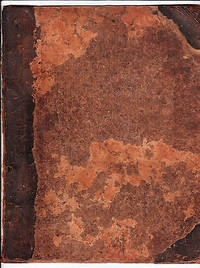
1807réf. 145581807. Waring Edward Scott. A Tour to Sheeraz 1807 travel narrative describing Persia during the early nineteenth century written by an officer of the British East India Company who journeyed to Shiraz in 1802 by way of the Persian Gulf. The work documents British encounters with Persian society at a moment when commercial diplomatic and strategic interests increasingly connected the Persian Gulf with British imperial networks centered in India. Waring records observations of Persian customs language literature and law while also describing economic activity and regional cultures encountered along the Gulf coast. His account places particular attention on the intellectual traditions of Persian literature and the social practices of Persian society providing commentary on classical Persian poetry as well as everyday cultural life. Waring Edward Scott. A Tour to Sheeraz by the Route of Kazroon and Feerozabad; with various remarks on the manners customs laws language and literature of the Persians. London: W. Bulmer for T. Cadell & W. Davies 1807. Second edition revised. Waring recounts his expedition to Shiraz and provides descriptions of landscapes towns and cultural practices encountered along the journey. The narrative includes discussions of hawk hunting Arabian horses and pearl fishing in the Persian Gulf with references to coastal communities stretching from Ras al Khaimah and Qatar to Bahrain and Kuwait. Waring also records an early European account of Muhammad ibn Abd al Wahhab and the religious movement associated with Wahhabi Islam. Throughout the text he comments on Persian language and literary traditions including references to major poets such as Hafiz and Saadi as well as the intellectual influence of Sufi thought. Travel literature concerning Persia and the Persian Gulf formed an important component of European knowledge about the region during the late eighteenth and early nineteenth centuries. British officials and merchants traveling between India and the Middle East produced accounts that combined geographic description with commentary on local society trade networks and political developments. Waring's narrative reflects this tradition presenting observations on Persian history and social customs alongside discussions of the literary heritage that shaped Persian intellectual culture. The author himself noted that the earlier 1804 edition printed in Bombay contained numerous errors that required correction leading to the publication of this revised edition. Folio volume containing 329 pages bound in quarter leather over original boards. The two plates called for are absent. Front board detached but present text block solid with staining and water damage visible throughout and writing on both front and rear pastedowns. Overall good condition. unknown books
8 volumes. Each volume ca. 100 pp. Issues present are vol. 7, no. 1; vol. 10, nos. 2 and 3; vol. 11, nos. 1 and 2; vol. 12, nos. 1 and 2; vol. 13, no. 1. Also included are 2 volumes of abstracts from the group's conferences, and a booklet on "American Images of Middle East Peoples: impact of the high school". - Some slight wear, otherwise in very good condition.
1807réf. 145581807. Waring Edward Scott. A Tour to Sheeraz 1807 travel narrative describing Persia during the early nineteenth century written by an officer of the British East India Company who journeyed to Shiraz in 1802 by way of the Persian Gulf. The work documents British encounters with Persian society at a moment when commercial diplomatic and strategic interests increasingly connected the Persian Gulf with British imperial networks centered in India. Waring records observations of Persian customs language literature and law while also describing economic activity and regional cultures encountered along the Gulf coast. His account places particular attention on the intellectual traditions of Persian literature and the social practices of Persian society providing commentary on classical Persian poetry as well as everyday cultural life. Waring Edward Scott. A Tour to Sheeraz by the Route of Kazroon and Feerozabad; with various remarks on the manners customs laws language and literature of the Persians. London: W. Bulmer for T. Cadell & W. Davies 1807. Second edition revised. Waring recounts his expedition to Shiraz and provides descriptions of landscapes towns and cultural practices encountered along the journey. The narrative includes discussions of hawk hunting Arabian horses and pearl fishing in the Persian Gulf with references to coastal communities stretching from Ras al Khaimah and Qatar to Bahrain and Kuwait. Waring also records an early European account of Muhammad ibn Abd al Wahhab and the religious movement associated with Wahhabi Islam. Throughout the text he comments on Persian language and literary traditions including references to major poets such as Hafiz and Saadi as well as the intellectual influence of Sufi thought. Travel literature concerning Persia and the Persian Gulf formed an important component of European knowledge about the region during the late eighteenth and early nineteenth centuries. British officials and merchants traveling between India and the Middle East produced accounts that combined geographic description with commentary on local society trade networks and political developments. Waring's narrative reflects this tradition presenting observations on Persian history and social customs alongside discussions of the literary heritage that shaped Persian intellectual culture. The author himself noted that the earlier 1804 edition printed in Bombay contained numerous errors that required correction leading to the publication of this revised edition. Folio volume containing 329 pages bound in quarter leather over original boards. The two plates called for are absent. Front board detached but present text block solid with staining and water damage visible throughout and writing on both front and rear pastedowns. Overall good condition. unknown
1999réf. 23944Melbourne, Ryan Publishing, 1999. IX, 374 SS., einige Abbildungstafeln und Karten in s.w. Gr.-8° (23,5 x 15,5 cm), illustr. original Paperback.
1997réf. 7080784Zürich: Museum Rietberg 1997. 319 Seiten. Mit zahlreichen farbigen Abbildungen. 4° (30,5 - 25 cm). Farbig illustrierter Orig.-Pappband. [Hardcover / fest gebunden].
4to. 6, (1), 5, 4 pp. In French, English and Persian. Contemporary printed wrappers. Exceedingly rare article defending the oil nationalisation movement in Iran. Directed at Iranian students in the West, the account aims to clarify "the misunderstandings that prevail in the countries where you study", describing the injustice of foreign oil exploration in Iran leading up to several nationalisation laws passed between 1944 and 1951, which prohibited any concessions being granted to foreigners. - Somewhat dampstained near upper gutter. No more than 3 copies traceable in libraries internationally (all at the Mossadegh Foundation in Geneva).
Small folio (188 x 278 mm). 9 volumes. X, 334; 309, (3); 276, (2); 298, (2); 235, (3); 328, (2); 429, (3); 382, (2); 335, (1) pp. Contemporary half leather over marbled boards. First French edition. Translation of the "'Aja'ib al-athar fi al-tarajim wa-al-akhbar" by 'Abd al-Rahman Jabarti (1754-1822): an important chronicle and source collection for the period of Ottoman rule in Egypt, an era largely marked by a dearth of historical sources from the inhabitants of the country. Jabarti's history is of particular importance for the early 19th century and the time of the French expedition, of which he gives a comprehensive account, as well as for the beginning of the regency of Muhammad Ali Pasha. Because of Jabarti's severely critical view of Muhammad Ali and his reign, the work was long banned in Egypt, and only after the accession of the Khedive Tewfiq did it see its first complete publication and translation (by Chefik Mansour bey, Abdulaziz Kalil bey, Gabriel Nicolas Kalil bey, and Iskender Ammoun effendi). - "The Cairo gentleman Al-Jabarti provides a remarkable, lucid and nuanced account on the French occupation in Egypt" (Fierro, 2). - A few insignificant edge tears or chips; a few paper flaws professionally repaired. Spines rubbed and scuffed; spine-ends chipped or repaired. Generally a very finely preserved set of this rare and important work on Egypt. OCLC 2513833. Not in Ibrahim-Hilmy.
1958réf. 46405679Paris, Service Hydrographique de la Marine, 1958 ; 2 cartes sur une feuille de 53 x 74 cm., imprimé en noir.
4to (200 x 260 mm). 2 pp. on a bifolium inserted in an illustrated printed wrapper with the reproduction of a watercolour of Versailles. Printed menu for the meal served on board 1960's Bastille Day flight from Paris to Cairo, performed by Air France with the legendary Sud Aviation Caravelle. The sumptuous menu comprised "langue de boef fumée en gelée", "cote de veau poèlée Toulousaine" and fresh peas in butter, followed by Salade Lapérouse and a selection of cheeses, pastries, and fruit for dessert. The discerning traveller was also offered a range of aperitifs, champagne, French wine, cognac, and liqueurs. - Light soiling and dust-staining to covers, otherwise well preserved.
Small 8vo. 8, 328 pp. With 64 colour lithographed plates of maps and diagrams. Original light brown cloth bearing elaborate Ottoman Art Nouveau designs. This edition of Hilmi's "Pocket Atlas" captures the Ottoman Empire during the twilight of the Hamidian Era, when it still controlled territories on three continents, extending from Albania to Yemen. With 64 highly attractive colour lithographic plates, the atlas features an especially extensive collation of thematic maps and diagrams, more that we have encountered in other issues, including detailed maps of the empire's various vilayets. Notably, the book's coverage of the Arabian Peninsula is excellent, with a double-page map of the entire peninsula; a custom map of the route of the Hejaz Railway (due to be extended as far south as Medina in 1908); a map of the Basra Vilayet (with southern Iraq, Kuwait, Bahrain and Qatar, as well as parts of today's Saudi Arabia); as well as separate maps of Yemen and Asir. - Ibrahim Hilmi Cigiracan (1876-1963) was one of the most important publishers and cartographers of the late Ottoman Empire. Born in Tulcea (now in Romania), he founded his first printing shop in Istanbul in 1896, under the name "Kitaphane-i Islami" (Islamic Library), largely producing religious books. Subsequently, Hilmi became interested in military affairs, geography and history, and changed the name of his press to "Kitaphane-i Islam ve Askeri" (Islamic and Military Library). He published about 200 military books, and his atlases (especially his "Pocket Atlas") were among the most popular cartographic items throughout the empire. During WWI, Hilmi gained the affection of the public for his charitable programme of sending free books to poor children in Anatolia. - Hilmi's enterprise thrived until Atatürk's Republican regime nationalized the publishing of law and school books in the 1920s, undercutting the most lucrative part of his business. However, Hilmi left an enduring legacy, having published over a thousand books on a wide variety of topics over three decades. - Binding worn with a few chips of minor loss, especially along hinges, but holding firm; old repairs to lower margin of upper cover. Internally light, even toning to text pages and some marginal chips to few leaves and plates, not affecting printed area. Maps generally clean and bright, just some offsetting to 4 maps. A fine edition. OCLC 1014526531.
Folio (30 cm). Double-page ink wash drawing of the idealized (Arabian-bred) Spanish horse, [8], 198, [4 blank], [2], 25 pp; with separate 13 pp. of addenda. Bound in contemporary half black calf over marbled boards, gilt titles and ornaments on spine. Binding a little rubbed, contents very good. Manuscript on Spanish watermarked paper "Manuel Serra 1829", written in neat cursive throughout with occasional flourishes. Signed twice by the author, "Francisco De Laiglesia Y Darrac", dated "Madrid 24 Mayo de 1830". Bookplate on pastedown of the noted Spanish collector José Gallart Folch. Highly important manuscript, being the author's autograph copy - possibly for presentation to the dedicatee (the King of Spain). Darrac's groundbreaking treatise on the admixture of Arabian bloodlines to the Spanish horse was subsequently accepted by the King and printed 'by Royal decree' in the following year, 1831. "To assure that Spain would have ready supply of quality horses and mules, the recommendations first purposed by Francisco Laiglesia Y Darrac in his brilliant 1831 book Memoria sobre la cria caballar en Espana - causas del aniquilamiento de nuestros caballos (Thesis on Horse Breading in Spain- Causes of the Annihilation of Our Horses) were finally adopted. Laiglesia might well be called the father of the Arabian horse of Spain, because he was the first to advocate the importation of a large group of desert-bred stallions and mares as the only means of recuperating the lost qualities in Spain's horses. In the same work he also articulated the first detailed plan for the creation of the Cria Caballar, the Stud Book Español, the National Stud" (Steen). - A horse expert with the Royal Army, Laiglesia's treatise is wonderfully detailed and shows a thorough knowledge of Arabians and their bloodlines. His main thesis argues that with the introduction of as few as 20 of the best pure-bred Arabians, the entire country's stock of horses can be 'regenerated' in a few generations. To this end he launches into an in-depth discussion of the logistics of this plan, ranging from discussions of the desert Bedouin origin of the purest Arabians, from the regions surrounding Sanaa and Nedjed-el-Areb in the Arabian Gulf (Section 65) to an intimate familiarity with the different classes of Arabians from these bloodlines (Hatiks or Kadischi & Kochlani). Laiglesia notes with admiration that the practice of recording the bloodlines of these Arabians is extremely meticulous at the court of the Emir. - Laiglesia also addresses the problems of how to select the best pure-bred Arabians based on proportion, etc., as well as the difficulties in procuring them. He insists that they must be purchased 'on-site' in Arabia Felix and then brought to a station in Aleppo for inspection, en route to Spain. Laiglesia even suggests the most comfortable means of transporting the precious horses (by warship, rather than a smaller merchant vessel which doesn't have enough space). Interestingly, one measure for Laiglesia of the superiority of Arabians is their excellence in horse-races: he points out that all the greatest English champions (Flying Childers, High Flyer, Eclipse, etc.) have all been bred from Arabian stock. - The present author's manuscript and its illustration in fact show significant differences compared to the printed book, which is itself extremely rare (just 3 copies worldwide, according to OCLC). For the printed book, cf OCLC 63603570 (U Barcelona, British Library, U Penn); Palau 130186; Fairman Rogers Collection on the Horse, 453. Cf also Andrew K. Steen, El Caballo Arabe en España, 1831 a 1934 (2007).
Folio. (4), 232 pp. With a woodcut Portuguese coat of arms with owl and Hermes staff on the title-page, decorated "Tuscan" titling caps for the title and script type for the author's name. Set in roman and italic, with transcriptions of and quotations from documents in Greek and Arabic.Modern brown paper wrapper, side stitched through 3 holes. A detailed scholarly study of ancient sources for the history and geography of the Canary Islands, attempting to prove that the Portuguese discovered them before Islamic explorers, and that Islamic geographers knew them only through classical Greek and Roman sources. The main text (pp. 1-105) is followed by extensive notes from a wide variety of sources (pp. 107-168) and transcriptions of numerous primary sources, some in Greek or Arabic (pp. 199-232). In passing it also provides a wealth of information about navigation in the Mediterranean and Atlantic by classical Greek and Roman and by Islamic explorers. - Macedo (1777-1867), son of a Lisbon professor and librarian, was an historian, archivist, councillor to the Kingdom of Portugal and a member of many academic societies at home and abroad. His work on Portuguese explorers in general and the Canary Islands in particular began with a brief 1816 essay read to the Academia Real. He returned to the subject after almost thirty years, publishing the present account in both the present separate publication and as vol. VI of the proceedings of the Academia Real das Sciencias. While Macedo's claim for Malocello's discovery of the Canaries in 1336 is no longer accepted, the Islamic geographer Idrisi noted a Portuguese voyage to the Canaries already before 1154. - In fine condition and wholly untrimmed, with all deckles intact, giving very large margins. The modern wrapper is slightly tattered. A detailed study of early voyages to the Canary Islands, with the texts of primary sources in Greek, Arabic and other languages. Porbase (1 copy). Cf. Innocêncio IV, 96 and XII, 80 (issue in proceedings). For the author: Protásio, "MACEDO, JOAQUIM JOSÉ DA COSTA DE (1777-1867)" in: Dicionário de Historiadores Portugueses.
1956Large 4to (255 x 303 mm). (36) pp. With 6 mounted colour prints after watercolour drawings and numerous black-and-white illustrations. Original giltstamped green cloth. Exceedingly rare "memorandum", printed in Arabic and English throughout, documenting the telecommunication network scheme that was to modernise wireless telecommunications in Saudi Arabia, based on equipment manufactured and installed by the German engineering company Siemens & Halske. Also contains photoportraits of King Saud, Crown Prince Faisal (then Prime Minister, later to establish the first television broadcasting station in 1963), Prince Sultan (Minister of Communications), Sheikh Abdullah Al-Saad, Sheikh Ibrahim Silisilah, and Sheikh Abdullah Kazim, as well as maps, diagrams, and pictures of radio equipment in operation. - In perfect state of preservation. No copy listed in online library catalogues worldwide.
Folio (216 x 342 mm). 12 parts in one volume. (4), 23; (2), II, 30; (4), 19, (1); (4), 23, (1); (4), 19, (1); (4), 12; (4), 12; (4), 20; (4), 22; (4), 15, (1); (4), 23, (1); (4), 10 pp. Printed in single columns with blank space left at inner margins for notes. Half sheep over red cloth boards, rebacked, gilt-lettered spine. A full year's worth of confidential memoranda issued by Edward Henry Scamander Clarke (1856-1947), Deputy Secretary to the Government of India, providing a detailed picture of British relations in Arabia and Asia throughout 1911. The memoranda encompass Arabia (including Aden, Baghdad, Kuwait, Muscat, Bahrain, the Gulf, and the Trucial Coast), Tibet, Bhutan, Assam, and Burma. The numerous and frequently extensive paragraphs dedicated to the "Arabian littoral of the Persian Gulf" not only discuss problems of charting and navigating the coastal waters, but also focus on defending British commercial interests in the region at a moment when the international trade was scrambling to access the Arabian pearl banks, while at the same time British authority was taking a dramatic plunge in the aftermath of the notorious "Dubai Incident" of 24 December 1910, a botched gun raid operation that led to rising tensions between Britain and the people of the Trucial Coast. Items include notes on the desire of the "Wahabi Amir of Nejd", Abdulaziz ibn Saud, to "come into closer relations with His Majesty's Government"; proposed hydrographical surveys of possible approaches to Kuwait and Bahrain; a proposed enquiry into the causes of the depletion of the pearl banks in the Gulf, and the possible attitude of the local Arab tribes as well as foreign agents in the area; an investigation into possible business residences of Rosenthal Frères in Dubai and Bahrain, and the question of British firms entering into the local pearling business; a proposal to secure written assurances from the Sheikhs of the Gulf not to extend pearl fishing concessions to foreigners; policy differences between Britain and the ruler of Dubai, Sheikh Butti bin Suhail Al Maktoum; piracy committed on a Dubai boat; the proposed establishment of British banks at certain port town along the Gulf coast; a discussion of the need for a treaty with the Qatar Sheikhs; the "question of the sovereignty over Katar"; the cancellation by the Sheikh of Sharjah of an excavation concession granted on Abu Musa island; the replacement of lost light buoys off the Arabian Gulf coast; negotiations with Turkey over territorial differences; Kuwait and the Baghdad Railway; and the Ottoman occupation of Jazirat az Zakhnuniyah (off the Saudi Arabian coast, between Bahrain and Qatar). - Further sections discuss treaties and trade agreements; expeditions and scientific missions; irrigation, shipping and railways, telegraph and postal networks, trade; arms trafficking; disturbances and risings; and British relations with Turkey and China. Also covered are the murder of Noel Williamson, assistant political officer, Sadiya, and his party in the Panga Hills, Assam, and the subsequent Abor Expedition; the Chinese Revolution of 1911 (Xinhai Revolution) and its impact in Tibet and Burma; and the Italo-Turkish War. - A few marks to text. Binding rubbed and marked at extremeties, spine recently rebacked. Extremely rare: no copy traceable in library catalogues internationally.
4to. (4), 209, (3) pp. Original green cloth with giltstamped spine and cover titles. Published as a description of the careers of Royal Navy officers in the mid and latter part of the 19th century, this also constitutes an important source book for the activity of the UK forces in the Arabian Gulf during a crucial period of British activity in the region. Contains plentifold references to places along the Gulf coast, Bahrein and Mascat, discussing in particular the survey of the Gulf undertaken by Captain Haines (p. 38f.), Captain Ethersey & Commodore Charles deployment in the Gulf (pp. 54f.), work performed by captain Felix Jones (p. 88ff.), publications of maps by Lieut. Whitelock on the Gulf and Oman (p. 90), map making (p. 100), Marine surveys in the Gulf and mapping (pp. 109f.), list of charts made for the "Persian Gulf Pilot" (p. 128), survey of the reefs near Bahrein (p. 153), Lieut. Wish's map of Bahrein (p. 158) and map making (p. 195). - Extremeties slightly rubbed and bumped; binding a little loosened. Chapters 1 and 2 have photographic portraits mounted at the head of the page; the article of Admiral Sir Edward Belcher has a photographic reproduction of an oil portrait from the National Portrait Gallery loosely inserted. Numerous handwritten annotations. From the library of J. A. Edgell, 1940s editor of the "Persian Gulf Pilot", with his bookplate to pastedown and handwritten ownership to flyleaf; also with bookplate of Allan Carruthers of Abergavenny, Monmouthshire. OCLC 1117176057.
4to (210 x 135 mm). French manuscript on paper. 90 ff. Flemish Bastarda in black ink, 26 lines. Bound with 16 strictly contemporary specimens of Turkish silhouette paper, a series of 28 watercolours, heightened in gilt and two extensive, early 19th century manuscript additions (complete transcript of the the travelogue and a biography of the author). Slightly later vellum with ms. title. Unique, fascinating and unpublished manuscript containing the account of a diplomatic journey to the Ottoman Empire in 1570. Braeckle (1540-71), a Flemish physician, "assisted Charles Rym Baron de Bellem, Ambassador of Maximilian II in Constantinople, probably as a secretary. He wrote an account of his journey, which contains interesting details about the places he visited, the manners and customs of the inhabitants, incidents, etc." (Aug. Vander Meersch, in: Belgian National Biography II, 903). Leaving Prague on 13 March 1570, the mission passed through Vienna and then Hungary and Czechoslovakia before entering Ottoman territory, visiting the mosques and caravanserais of Sokollu Mehmed Pasha (c. 1505-79), Grand Vizier of Sultan Selim II (1524-74) who ruled the Turks at the time of Rym's and Braeckle's journey. Their stay in Constantinople lasted from 31 May to 12 August 1570, permitting the author to describe several monuments and works of art. During the journey back they travelled through Bulgaria, Serbia (they were held in Belgrade for nearly a month), and Hungary. The mission ended with their return to Germany on 23 October 1570. Jacques de Braeckle died shortly afterwards, in 1571. - The ms. is accompanied by a beautiful set of 28 original watercolours heightened in gilt. Showing Turkish people in traditional costumes, such illustrations were usually fashioned for sale to travellers in Constantinople or passed on to western merchants. However, as the present set includes the caravanserai of the diplomatic legation, it is extremely likely that these were created with the sole purpose of illustrating the diplomatic mission of Charles Rym, described within the present manuscript. The figures are captioned next to the subjects (16th century Italian script in black ink), indicating that the legends were recorded after the plates were collated and sewn together, or that they were included in books before insertion into the present volume. Among the illustrations are the caravanserai of the ambassadors to Constantinople, Sultan Selim II, the Mufti, costumes of Ottoman dignitaries and the military, a Persian, a Moor of Barbary, a lady in burqa, a Bulgarian, a giraffe, etc. The author of the Italian captions may have been the ambassador Edoardo Provisionali: he was responsible for several diplomatic missions and is known to have appreciated the Ottoman culture; furthermore, de Braeckle left Constantinople in his company (cf. Yerasimos). The manuscript is also bound with 16 remarkable specimens of 16th c. Turkish paper (title in French in pen on the first sheet: "papier de Turquie"). At the beginning of the volume is a transcription, calligraphed in an elegant French cursive of the early 19th century (18 unnumbered ff., black ink, 21 lines per page). The volume ends with a short biography of the author (2 pp., black ink, with the arms of de Braeckle). Yerasimos provides a detailed chronology of the journey, listing the major cities visited as well as monuments and curiosities noted by the travellers. - Only three manuscript copies of the present travelogue are recorded, mostly restricted to family use: two copies are in the National Archives of Belgium in Brussels (Fonds 692 Lalang, 8f., cf. Yerasimos); a third copy is bound in a miscellany and kept at the communal Archives of Ghent. - Binding rubbed, spine detached, in excellent condition internally. Stéphane Yerasimos, Les Voyageurs dans l'Empire Ottoman (XIVe-XVIe siècles), Ankara, 1991, pp. 286f. Not in Blackmer or Atabey.
1992réf. LFA-126717526Un ouvrage de 574 pages, format 155 x 240 mm, illustré, broché couverture couleurs, publié en 1992, Plon, bon état
Large 8vo. 127, (3) pp. Contemporary wrappers. Only edition. - "His principal work in the department of Oriental literature [...] in which the origin and history of those cities of Barbary of which the names occur upon Arabic coins are detailed" (Men of the Time [1868], p. 161). The Italian classicist and numismatist C. O. Castiglioni (1784-1849) was descended from Baldassare Castiglione, author of "Il Cortegiano". This work established his reputation. - Old shelfmark label on wrappers. Some slight brownstaining. An untrimmed, wide-margined copy. Leitzmann 21. Astor Library Cat., Supplement, p. 116.
8vo. 2 vols., pp. 125-156 and 103-160 of the Geographical Journal of 1839 and 1845, respectively. With a text illustration and two large folding engr. maps of the South East Arabian coast. Offprints in modern wrappers. Early British study of today's Yemen coast. Captain S. B. Haines led a party aboard the "Palinurus" in the 1830s to survey the almost unknown southeast coast of Arabia; he seized Aden in 1839 on behalf of the East India Company, for use as a coaling station for ships steaming to and from India. Appointed Political Agent by the Bombay Presidency of the EIC, Haines served in this capacity (without leave) for the next fifteen years, presiding over Aden’s rapid expansion as a fortress and as a port which by the early 1850s boasted a population of some 20,000. Haines’s deep personal commitment to the revival of Aden’s prosperity ultimately led to his tragic imprisonment in Bombay for debt and to his death (aged only 58) in 1860. But in South West Arabia his name lived on and for decades local tribesmen referred to the inhabitants of Aden as "Awlad Haines" ("Haines’s children"). These two articles, separated by six years, contain Haines's full account of the findings of the survey, with accompanying maps. Among the members of the party was James Wellsted, who during the course of the survey explored the island of Socotra, and also proceeded into the Arabian Peninsula as far as the Rub' al Khali. - Insignificant edge tear to one map, otherwise fine. Macro 1101.
8vo. XXI, (3), 319, (1) pp. Contemporary calf with giltstamped cover borders, gilt spine, giltstamped red spine label; leading edges gilt; all edges gilt. First edition. - Hammer's German translations of the Indian pastoral play "Dewajani", the Persian musical play "Anahid", and the Turkish comedy "Sophia". - From the library of the Swedish diplomat Ulf Torsten Undén (1877-1962) with his ownership "U. T. Undén" signed twice to endpapers. Goedeke VII, 764, 64. Wurzbach VII, 276, 43. WG² 29. OCLC 19226414.
Oblong 12mo (63 x 100 mm). 2 pp. Membership card of the Ras Tanura Golf Association issued to Velma Thomas, the wife of Aramco employee Orlin Orace Thomas. - Slightly spotted. Well-preserved.
Oblong 12mo (74 x 114 mm). 1 page. Membership card of the Ras Tanura Golf Association issued to Aramco employee Orlin Orace Thomas. - Somewhat worn.
Engraved map in outline colour, 119 x 53.4 cm. Backed with cloth. One of the earliest monuments of Islamic cartography, of outstanding rarity: published at roughly the same time as the famous "Cedid Atlas", also by the Imperial Engineering School in Scutari (Istanbul), this large-scale engraved wall map shows the "Northern Territories of the Ottoman Empire". This hitherto practically unknown map is clearly to be viewed in connection with the atlas which has long been considered the first and most important achievement of modern Muslim cartography. Like the Cedid Atlas, this outstanding publishing venture was commissioned under the authority of Sultan Sultan Selim III. A pioneering attempt at mapping a substantial part of the far-flung Empire, the map reaches from southern Italy and the Balkans to the Caucasus and the Caspian Sea. The most detailed map of the Empire's Northern Territories available at the time and one of the first wall maps printed in Constantinople. - Occasional unobtrusive professional repairs, well preserved altogether. Esat Efendi no. 2049. Özdemir, Ottoman Cartography, p. 190f. (illustrated).
Halftone photolitho, 50 x 67 cm. A large bird's-eye view of Mecca showing the city with its main pilgrimage routes, centered on the Kaaba. The principal monuments and places in the city and its surroundings are identified by 64 numbers, with the key printed in the lower margin. The view is based on the classic engraving issued by the Austrian orientalist Andreas Hunglinger in 1803, itself a copy of a print by Ignace Mouradgea d'Ohsson made in 1791. - Overall in good condition.
Hand-coloured lithograph (502 x 370 mm), some parts varnished with albumin, matted (620 x 478 mm). Colour lithograph by Joseph Heicke, showing a Hejaz merchant, based on a drawing by the Hungarian artist and traveller Iván Forray. - Some light duststaining and waterstaining.


