George Peper/ Editors of Golf MagazineBiblio.com

4 079 résultats
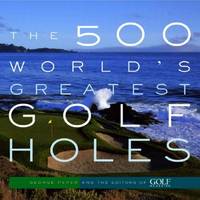
2003réf. __1579652379Artisan 2003. Trade Paperback. New. reprint edition. 442 pages. 10.00x10.00x1.25 inches. Artisan paperback
2000réf. DADAX1579651623Artisan 2000-10-02. hardcover. New. 11.50x1.50x11.50. Buy with confidence. Excellent Customer Service & Return policy. Artisan hardcover
2000réf. 11GW22-791-094Artisan. Good in Good dust jacket. 2000. Hardcover. 1579651623 . This book is in very good condition; no remainder marks. Dustjacket does have some shelfwear scratching edge wear a few small corner tears. Inside pages are clean. ; 448 pages . Artisan hardcover
réf. 0364993073.Ghardcover. Good. Access codes and supplements are not guaranteed with used items. May be an ex-library book. hardcover
réf. 0656600764.Gpaperback. Good. Access codes and supplements are not guaranteed with used items. May be an ex-library book. paperback
1938réf. 11080Houston Texas U. S. A.: Refiner and Natural Gasoline Manufacturer. Very Good with no dust jacket. 1938. First Edition; First Printing. Hardcover. Wear to the spine ends & lower edge. ; 4to 11" - 13" tall; 448 pages . Refiner and Natural Gasoline Manufacturer hardcover
réf. 0365552518.Gpaperback. Good. Access codes and supplements are not guaranteed with used items. May be an ex-library book. paperback
réf. 0365552720.Ghardcover. Good. Access codes and supplements are not guaranteed with used items. May be an ex-library book. hardcover
4to. (2), LIV, 130, (2) pp. Title printed in red and black with engraved title vignette. 1 folding genealogical table. Contemporary half calf with gilt spine and spine label (chipped). First edition; "a groundbreaking achievement" (Fück, p. 111). Reiske's unvocalised edition of Tarafah's text, with a Latin translation on opposite pages and the commentary of Ahmad ibn Muhammad al-Nahhas. "The appended notes trace the poet's chain of thought and elucidate the various themes with their poetic phraeseology by comparison with parallels in other works [...] A geneaological plate visualizes the kinship between Tarafah and other northern Arabian ports, facilitating the reader's checking the chronological approaches suggested in the prologue" (ibid.). In sharp contrast to his teacher Schultens, the brilliant scholar Reiske (1716-74) was one of the first Arabists whose work was fully independent of the constraints of Biblical exegesis. - The sixth century Arab poet Tarafah was the author of the longest of the seven odes in the celebrated collection of pre-Islamic poetry "al-Mu'allaqat" (Moallakah). Some critics judge him to be the greatest of the pre-Islamic poets, if not the greatest Arab poet. - Very rare. Schnurrer 202. Fück 110. Graesse IV, 554. Van der Aa VI, 69ff. Encyc. Britt. 26, 415. OCLC 22661575.
1890Folio. (4), 392 pp. Original printed boards with later cloth spine. First edition of this Uyghur work ("Mémorial des Saints") by Farid al-Din `Attar (d. ca. 1230), preserved in a ms. in the Bibliothèque Nationale. Printed in the language's characteristic Arabic-derived alphabet. - Edges rubbed and bumped; covers stained. Interior foxed throughout. An uncut, untrimmed copy. Collection orientale, tome 16: 2me série, tome II (wants the first volume containing the French translation). OCLC 7524145.
1993réf. 5328Lubbock: Lubbock: Texas Tech University Press 1993 1993. First Edition . Cloth. Fine/Very Good. 4to - over 9¾" - 12" tall. Paul Milosevich. Cloth. Fine. First Edition. Signed By Author & Illustrator. 4to - over 9¾" - 12" tall. xvi 152 pp. illus. w/ b&w drawings signed by both author & illustrator on the half-title page. D/w is very good with a couple of very small indentations on the front cosmetic only. Lubbock: Texas Tech University Press, 1993 hardcover
Head-and-shoulders portrait. Chromolithograph. 60 x 44.6 cm. Very rare Weißenburg broadsheet showing the portrait of an oriental ruler: the last-but-one Khedive (Viceroy) of Egypt, Tewfik Pasha (ruled 1879-1892). These oriental broadsheets were usually sold with the fictitious imprint of Hassan Auvès in Cairo; this one also states the actual publisher, Camille Burckardt's successors. - Slight horizontal crease; edges somewhat browned. All of these prints are very rare; a different print commanded £21,250 at Sotheby's in 2012.
réf. 2090502113707613Not Available N.A. Soft Cover. Fine. The book is in fine condition. Not Available paperback
8vo (155 x 204 mm). Ottoman manuscript on laid paper. 134 pp. on 68 ff., written space ca. 90 x 140-145 mm. 15 lines, per extensum, written in a heavily Persian-influenced naskh style in black ink, gilt ("taddib") section titles, rubricated and sometimes written in gilt for emphasis, no catchwords, but extensively vocalized Turkish text with Arabic diacritics. Gilt gadval borders around introductory double page, remainder of text within double red rules. Frequent marginalia and occasional glosses, with some prayers and charms. Early full leather binding with fore-edge flap, spine and flap hinges reinforced with later leather. Complete Ottoman medical manuscript, copied by the scribe Celalu'd-din Mehmud al-'Ala'i in 1408 CE, still during the lifetime of the book's author, the Anatolian religious scholar and physician Haci Pasha (known in the Arabic tradition as Haggi Basha Galalu'd-Din al-Hidr bin 'Ali bin al-Hattab al-Aydini). - The introduction (1v-2r) sets out the work's content and structure, presented, with Arabic technical terms adopted into Turkish, as a compendium ("muhtasar") and facilitation ("teshil") of medical knowledge, offering a discussion of definitions, medical practices, the administration of solids and liquids, and a description of diseases with their symptoms and related therapies. The following sections treat dietary matters including regimens for exercise ("hereket"), meals ("gazalar"), hot baths ("hammamlar") and vomiting ("istifrag"), as well as self-medication (4v-15v), fevers ("buhran", 16r-17r), and the therapeutic and prophylactic properties of various foods (17v-26r). The third and by far the most extensive section (26r-67r) provides definitions and summary descriptions of the most common ailments with their aetiologies (proceeding from symptomological analysis, "alamet") and treatments. A single final page (67v) entitled "Kitabu'l-Ihtilac" ("Book of attraction or palpitations") contains apotropaic phrases to be pronounced over the patient and a short poem in 11 couplets, followed by the four-line colophon (68r). - Haci Pasha was a famous 14th century physician from Anatolia who moved to Cairo, then the thriving capital of Mamluk Egypt, to refine his medical knowledge during what is today regarded as the beginning of the most famous period of Ottoman medicine. The present treatise enjoyed significant success for many decades and directly influenced the work of one of the most renowned Ottoman physicians of the 15th century, Serefeddin Sabuncuoglu (1385-1468), who composed the first surgical atlas in Ottoman Turkish. - Margins somewhat fingerstained in places with a light waterstain throughout, but generally very well preserved.
1991réf. LFA-126724984Revue de 80 pages, format 210 x 295 mm, illustrée, brochée couverture couleurs, bon état
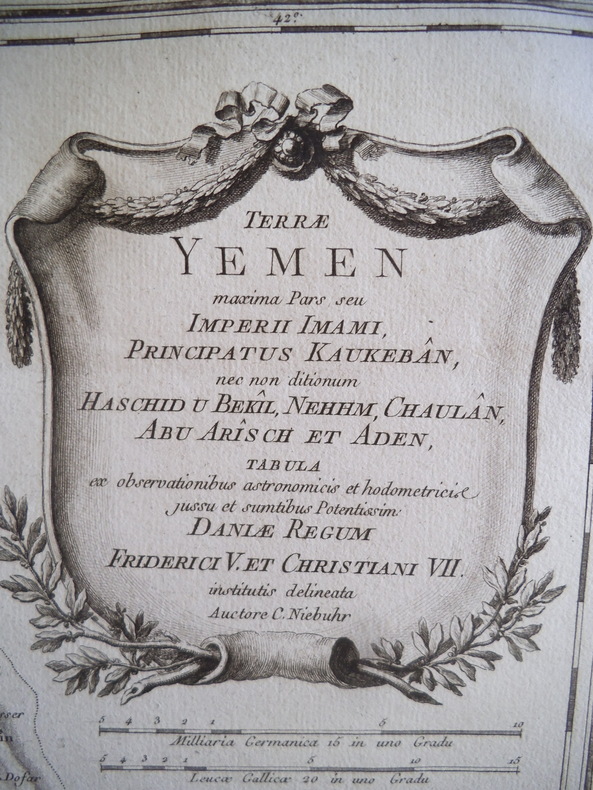
réf. 14503CARSTEN NIEBUHR Terrae YEMEN maxima Pars Seu Imperii Imani Principatus Kaukebân nec non dilionum Haschid U Bkîl, Nehhm Chaulân Abu Arîs Ch et Aden. Tabua ex pbservtionibus astronomicis et hodometricise jussu et sumtibus Potentisissim Danlae Regum. Friderici V et Christaini VII Autore C NIEBUHR Carte 520x 670 mm avec marges, 380x580mm à la cuvette. Gravure sur cuivre d’après CARSTEN NIEBUHR, vers 1771. Né à Altendorf , ingénieur, mathématicien, et astronome allemand, membre d’une expédition Danoise de la péninsule du Sinaï au Yemen 1761 1767 dont il fut le seul survivant.
1999réf. 77390Augsburg, Weltbild Verlag, 1999.
8vo. 44 pp. Ottoman Turkish in Arabic type. Original red printed wrappers. First and only edition. - A rare copy of what likely is the only extant written record of the situation of Muslims in Brazil in the 19th century, a minority formed mostly by former African slaves and their descendants. Abdurrahman was a crew member of one of two Ottoman warships thrown off their course to Basra by a storm on the Atlantic near Cape Verde, which dragged them in the opposite direction, to Rio de Janeiro. While his companions continued their voyage to the Arabian Gulf, Abdurrahman remained in Brazil, and his account focuses entirely on his religious work there. He describes the lessons he gave and a Portuguese booklet he prepared to outline the basics of Islam, which was memorized by most of his students, and he criticizes their way of life, including their former religions, their practice of fasting in the month of Saban instead of Ramadan, and the frequent baptism of Muslim children. The book includes geographical descriptions of Brazil and Rio de Janeiro and mentions tropical fruits unfamiliar to the author, who finishes with the route he took home to Istanbul a few years later, including stops at Lisbon, Cordoba, Tangier, Mecca, and Damascus. - While it discusses the voyage to the New World only briefly, this is in fact the second of two known accounts of the first voyage ever made to the American continent by the Ottoman navy, published only three years after the other travelogue (by Faik Bey). Abdurrahman wrote his account in Arabic and had it translated into Ottoman Turkish by Antepli Mehmed Serif. - A small waqf stamp to the final page. Covers slightly faded, else very good. Several copies in libraries worldwide, mostly in the United States, but none in auction records. Özege 20671. Baysal, Osmanli türklerinin bastiklari kitaplar, 2641. OCLC 68231927. Cf. Snowden, Accidental Turks in Brazil and Beyond. Kabacali, Gezi edebiyati seçkisi (2004).
1939Milano, Sperling, 1939, 8vo br. (mancanza al dorso) cop. ill. pp. 147 con num. tav. f.t.
1945Opera con segni d'uso. Ultima pagina quasi completamente staccata. Stato discreto
1939Milano, Sperling & Kupfer, 1945. 8vo br. pp. 156 con fig. n.t. e tav. f.t.
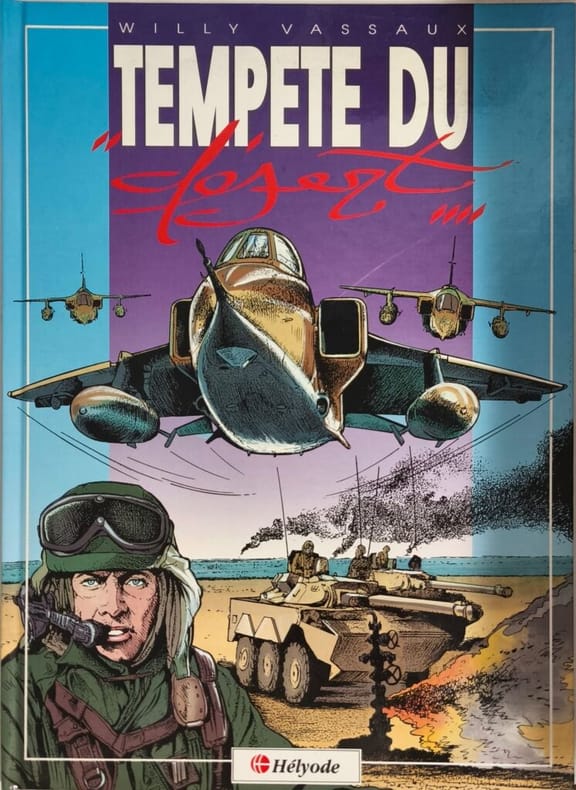
1991réf. 5566Helyode 1991 47 pages IN4. 1991. Cartonnage editeur. 47 pages. Cette bande dessinée documentaire relate l'invasion du Koweït par l'Irak de Saddam Hussein le 2 août 1990 événement déclencheur de la guerre du Golfe qui a bouleversé la géopolitique du Moyen-Orient
92 x 126 cm. Scale: 1:1,000. Whiteprint on thick paper. Title, scale and compass executed in manuscript in blue pen. Impressive plan of the excavation site of Tell Halaf (now on the Syrian-Turkish border), the location of the great ancient Aramaean town of Guzana, and one of the most important archaeological revelations of the modern era. Then in the Ottoman Empire, it was discovered in 1899 by the German diplomat Max von Oppenheim (1860-1946) while travelling through northern Mesopotamia on behalf of Deutsche Bank, working on establishing a route for the Bagdad Railway. - This is a working copy of the official, authoritative plan of the site produced during the 1911-13 excavation led by Oppenheim, printed at Tell Halaf for the use of the senior archaeological team. Signed in the upper right-hand corner by Theodor Dombart (1884-1969), a professional architect and one of Oppenheim’s principal associates, later an esteemed professor of ancient Middle Eastern architecture and an authority on Munich history. - A little worn, slight toning along old folds, else very good.
8vo. XIV, 673, (1) pp. With wood-engraved title vignette, folding map of the Middle East, 3 maps, 4 wood-engraved plates, 1 steel-engraved portrait, and numerous wood-engraved text illustrations. Contemporary half calf with giltstamped spine title. Marbled edges and endpapers. Fascinating account of the work on the submarine telegraph lines from British India to Turkish Arabia, the so-called "Persian Gulf Cable" laid in the 1860s. An extensive section is devoted to the laying of cables in the Arabian Gulf south of Persia, with a separate diagram of the diversion of the "Persian Gulf Cable" from Elphinstone Island off the northern tip of Arabia to Henjam and Jask. The telegraph lines ultimately reached from London via Munich, Vienna, Constantinople, Diarbekr, and Baghdad to Basrah, then continued by the Indian Government to Bushehr, Henjam, Gwdar and Karachi as well as to Tehran. Other cables connected Cairo with Aden and thence with Bombay. - Some brownstaining and edge flaws, otherwise an excellent copy. Inscribed "Thomas Kirk Johnson Dec. 1876 From R. B. Hull". Howgego III, G31. OCLC 1283945.
1996réf. 2240ABAachen, Meyer & Meyer Verlag, 1996. 21 cm, 128 Seiten, mit zahlreichen Illustrationen und graphischen Darstellungen, kartoniert. Einband minimal berieben, Rücken leicht gebräunt, Kanten und Ecken berieben.