81 results
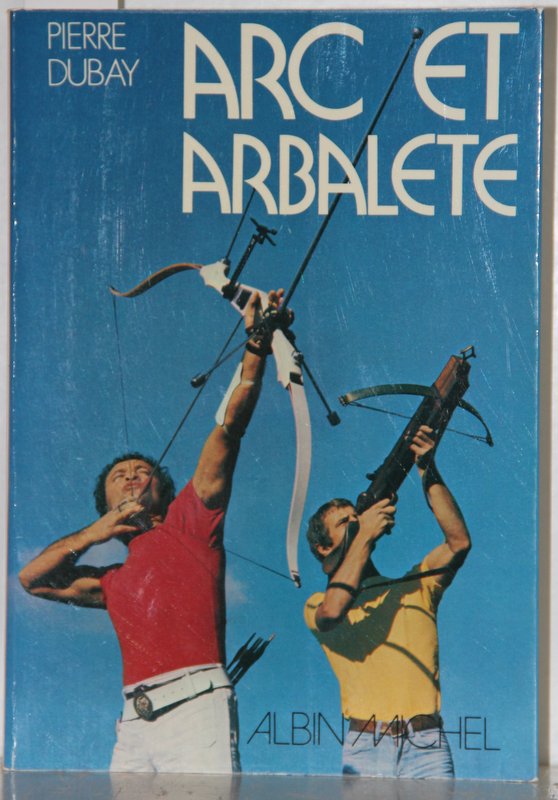
ref. 22696Paris, Albin Michel, 1978. In-8° broché, 206 pages. Nombreuses illustrations en noir et en couleurs in et hors-texte.
1940ref. 238401940. American target archery and home bow making ephemera addressed to George L. Aspinwall 1940 to 1945 documenting how sporting science mail order commerce and workshop practice shaped the equipment choices of a Chestnut Hill archer. The central three page letter comes from Russ Hoogerhyde the six time national champion who answers Aspinwall's complaint about a set of arrows before soliciting his judgment of traditional and Paul E. Klopsteg bow designs. Correspondence invoices instructional sheets and annotated trade literature from Hoogerhyde E. Bud Pierson J. Ellis Mitchell and the Falcon Archery Shop follow Aspinwall from purchasing prepared sinew and glue to comparing limb geometry arrow weight silk backing and the performance of completed bows. Aspinwall George L. Archery Ephemera Archive. Chestnut Hill Massachusetts; Northbrook and Chicago Illinois; Cincinnati Ohio; and Dallas Texas 1940 to 1945. Eight items in 12 leaves principally 8.5 x 11 inches. 1 Hoogerhyde Russ B. Typed letter signed to George L. Aspinwall. Northbrook Illinois August 29 1940. Three pages. Responding to Aspinwall's dissatisfaction with the weight and finish of newly purchased arrows Hoogerhyde explains that shafts were weighed and spine tested before their nocks feathers and cresting were applied. He places shooting performance above uniform scale weight recalling that the "imperfect" set he used at the 1931 National Tournament varied by 52 grains yet enabled him to shoot three perfect ends out of five at 40 yards. The letter then turns to Aspinwall's purchase of two bow types one traditional and one based on Klopsteg's "A Graphic Method of Designing a Bow" published in the June 1939 issue of Ye Sylvan Archer. Hoogerhyde reports selling traditional bows over the newer design by four to one and asks whether Aspinwall's Klopsteg bow developed excessive set in its lower limb under the asymmetrical three finger draw. 2 Pierson E. Bud. Autograph letter signed to George L. Aspinwall. Cincinnati Ohio November 20 1940. One page on illustrated archery tackle letterhead. Pierson acknowledges Aspinwall's five dollar check and shipment of 20 bundles of sinew with enough glue for three bows advising him to apply a medium backing about three sixteenths of an inch thick while wet and to prepare osage wood carefully. 3 Pierson E. Bud. Invoice to George L. Aspinwall. Cincinnati Ohio November 23 1940. One leaf. Records 20 bundles of prepared sinew and one half pint of sinew glue at a total cost of five dollars. 4 Falcon Archery Shop. Loin sinew sales and instruction circular addressed to George L. Aspinwall. Chicago Illinois circa February 21 1945. Two leaves. Announces the return of loin sinew after an absence of nearly two years compares its appearance to "one or two hundred small violin strings dipped in glue and dried within a wrapping" and gives prices for sinew and glue. Aspinwall's pencil calculations a postal money order receipt for $8.58 and the notation "Sent M.O. $8.58 Feb. 21 '45 for 2 orders sinew and glue plus 10% for selected" record his purchase. 5 Pierson Bud and Chas. "Cold Glue Sinew Backing." Cincinnati Ohio undated. One printed leaf with manuscript corrections and numbered procedural changes. The instructions cover preparing yew and osage obtaining beef tendons from slaughterhouses shredding and washing sinew applying it under bandages retillering the finished bow and allowing three weeks to one month for drying. 6 Hoogerhyde Russ. "Directions for Applying Silk Backing." Northbrook Illinois undated. One typed instruction sheet attributing the development of silk backing to physicist Clarence N. Hickman and specifying clamps rosin padding glue and more than 500 pounds of applied tension. 7 Mitchell J. Ellis. "Mitchell Pierson Silk Applicator." Dallas Texas undated. One typed instruction sheet directing the archer to mount silk muslin rubber and plywood in a geared applicator stretch the silk two percent and leave the bow clamped for at least 24 hours. 8 Falcon Archery Shop. "Sinew Backing." Chicago Illinois undated. Two typed leaves with manuscript additions describing the preparation of the bow softening and shredding tendon degreasing the strands maintaining warm glue and positioning the bow during application. Hoogerhyde wrote less than a month after winning his sixth national championship in August 1940 yet his letter treats Aspinwall as a participant in unresolved questions about bow balance and construction. Klopsteg then president of the Central Scientific Company had brought the methods of a physicist and instrument designer to limb geometry while Hickman's experiments addressed arrow oscillation bow efficiency and backing materials. Aspinwall's papers record these ideas outside the laboratory and sporting press where commercial bowyers translated them into customer correspondence and amateurs tested them at the bench and shooting line. The repeated directions for sinew and silk also preserve a transitional workshop culture in which archers sourced animal tendon built clamping fixtures mixed glue altered limb stiffness and annotated printed instructions according to experience. Moderate overall toning old folds staple holes occasional spotting minor edge wear and several short edge tears; manuscript additions and signatures remain legible. Overall good condition. A personal record of scientific experimentation mail order trade and manual craft within American archery during the 1940s. unknown books
1997ref. 22333Toronto: Stoddart. Near Fine in Fine dust jacket. 1997. Hardcover. 077373046X . First printing. Lower corner of rear board slightly bumped else fine in a fine dust jacket. . Stoddart hardcover books
2005ref. 67560Wentorf, Speidel, 2005. 47 SS., 1 mehrfach gefaltete Tafel (beiliegend). Mit vielen Abbildungen. 4°, Illustrierte Original-Broschur.
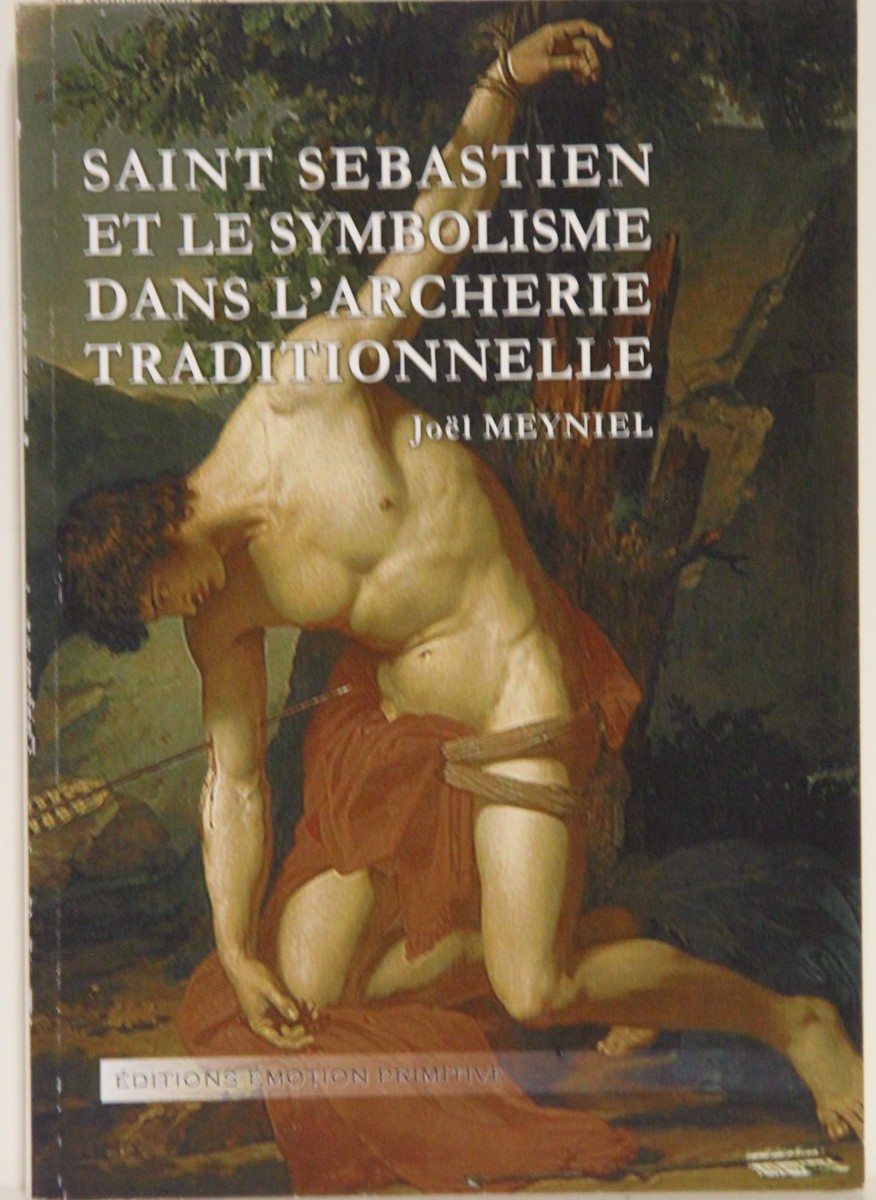
2004ref. 132396Saint Egreve, Editions Emotions Primitive, 2004. 20 x 14 cm. 178 Seiten. Kartonierter Einband (sehr gut).
2004ref. 132397Saint Egreve, Editions Emotions Primitive, 2004. 20 x 14 cm. 176 Seiten. Kartonierter Einband (sehr gut).
2001ref. 126734Emotion Primitive, 2001. 28 x 20 cm. 330 pp. Kartoniert.
2002ref. 126735Emotion Primitive, 2002. 28 x 20 cm. 312 pp. Kartoniert.
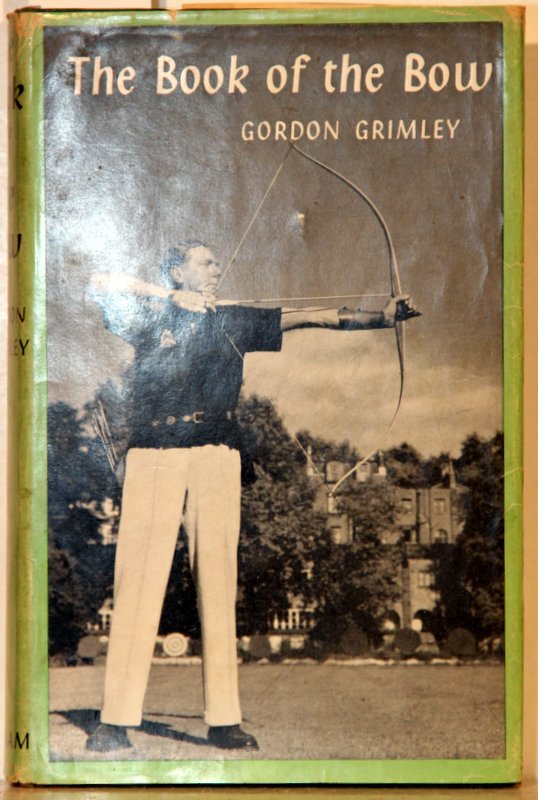
1958ref. 128152London, Putnam, 1958. 22 x 14,5 cm. 242 Seiten. Leinen mit Schutzumschlag.
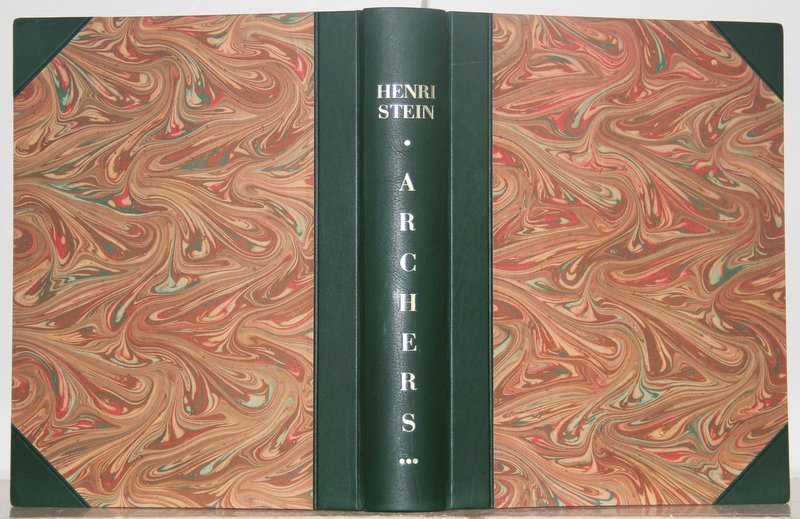
1990ref. 126799Reprint, 1990. 27,5 x 21 cm. Fine half leather binding with gilt titled spine (as new).
2004ref. 132398Saint Egreve, Editions Emotions Primitive, 2004. 20 x 14 cm. 181 Seiten. Kartonierter Einband (sehr gut).
1892ref. 1275271892. 29,5 x 23,5 cm. Seiten 445-465 und 2 Tafeln. Broschur mit Heftstreifen (sehr gut). [2 Warenabbildungen]
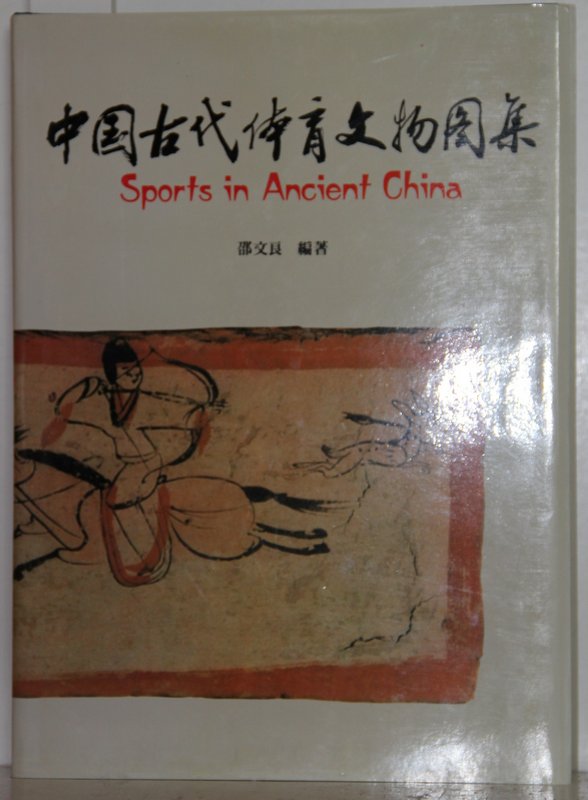
1986ref. 127067Beijing, People's sports publishing house, 1986. 30 x 22 cm. 238 Seiten. Leinen mit Schutzumschlag (sehr gut).
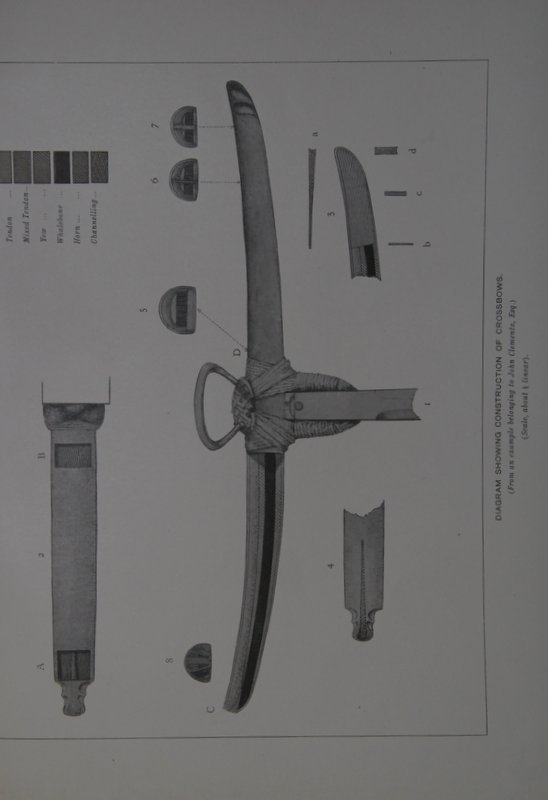
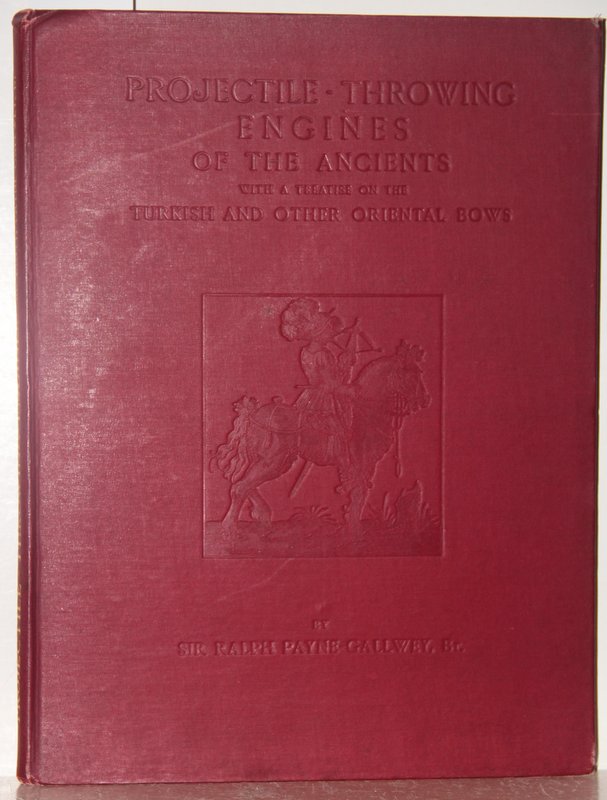
1907ref. 126739London, New York a.o. Longmans, Green an co, 1907. 32 x 24 cm. 44 + 26 pp. with 40 illustrations. Blindpressed orig. cloth binding.
1978ref. 127050Lausanne, Favre, 1978. 23 x 16 cm. 206 Seiten. Kartonierter Einband (sehr gut).
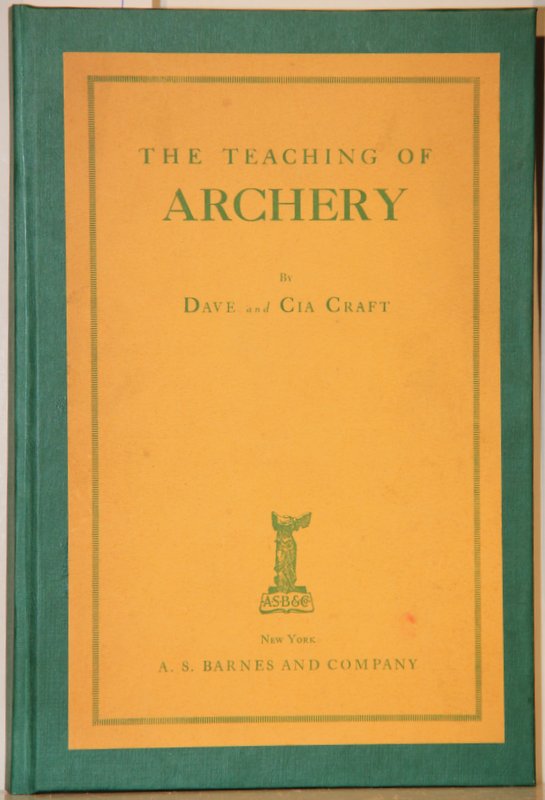
1936ref. 128183New york, Barnes and Compagny, 1936. 23,5 x 16 cm. XI, 82 Seiten. Spterer Pappband mit montiertem Deckeltitel (sehr gut).
2005ref. 132556Saint Egreve, Emotions primitive, 2005. 20 x 14 cm. 128 Seiten. Kartonierter Einband (sehr gut).
1972ref. 127056Bonn, Habelt, 1972. 27,5 x 20 cm. 5 Blatt, 282 Seiten, XII Tafeln und 11 gefalt. Beilagen. Leinenband (sehr gut).
1950ref. 128153Philadelphia, MacManus Company, 1950. 23 x 15 cm. 74 Seiten. Leinen mit Deckeltitel (wie neu).
1983ref. 132552Groningen, Van Denderen, 1983. 23 x 16 cm. 211 Seiten. Kartonierter Einband (gut erhalten).
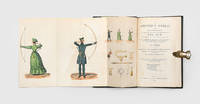
1833ref. 194116London: T. Hurst 1833. First edition of this popular handbook covering the history and theory of the sport. It is aimed towards both men and women with the charming frontispiece depicting both genders in their archery attire. In the late 18th and early 19th centuries "archery was revived as a fashionable pastime among the English aristocracy thanks to a nostalgic taste for the gothic and medieval" Johnes p. 193. It was issued in several variant bindings: green or brown paper-covered boards green and white moiré cloth or green morocco-grain cloth as here. This is the only variant with the plates presented as a folding frontispiece; in the others they were separated into a frontispiece and two plates. Small octavo. Hand-coloured engraved folding frontispiece. Original green morocco-grain cloth Lake variant iii rebacked yellow coated endpapers. Corners bumped and lightly worn occasional marks and damp stains to contents front inner hinge cracked but holding firm neat tape repair to frontispiece verso: a very good copy. Bobbs 7; Lake A17a. Martin Johnes "Archery romance and elite culture in England and Wales" History vol. 89 no. 2 Apr. 2004. hardcover
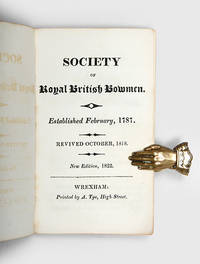
1822ref. 194371Wrexham: Printed by A. Tye 1822. First and only edition of the membership list for the newly restored society. Founded in 1787 the Royal British Bowmen was the first archery collective to admit women. It "regarded shooting more seriously than most and took steps to limit the excessiveness and expense of the festivity" Johnes pp. 196-7. The society toured the country houses of its members rather than meeting in taverns in large part because of the presence of women. The events functioned as an extension of the marriage mart and there were several unions among its members. Although archery enjoyed great popularity in the late 18th century the sport dwindled during the Napoleonic Wars. This membership list dates from the post-Waterloo revival which was also influenced by the growing taste for medievalism. Nineteenth-century archery was characterized by increased opulence and sociability. WorldCat records only one institutional holding: the British Library. Despite the designation on the title page as a "new edition" we have traced no copies of an earlier publication. Sextodecimo 128 x 80 mm pp. 46. Headpiece. Original limp leatherette blue marbled endpapers. Binding soiled extremities rubbed contents lightly toned else clean: in very good condition. Martin Johnes "Archery romance and elite culture in England and Wales" History vol. 89 no. 2 Apr. 2004. hardcover
ref. SONG098242650XUsed: Good unknown
1830ref. 187726Philadelphia: R. H. Hobson 1830. Archery. the best probably of the gymnastic exercises First and sole edition of this rare guide attractively preserved in original state. The United Bowmen was the first archery club founded in the United States and this manual largely based on Thomas Waring's A Treatise of Archery London 1814 the first such text produced in the United States. Just 15 copies traced institutionally all in America. The club was founded in 1828 by artist and natural historian Titian Ramsay Peale 1799-1885 who had just returned from Stephen Harriman Long's expedition to the Rocky Mountains and "feeling the want of outdoor exercise" Davidson p. 1 and inspired by observation of the "Indians settled West of the Mississippi" with whose habits he was "entirely familiar" introduction p. vi settled on archery as a suitable pastime. Along with half a dozen other gentlemen - including fellow artist Thomas Sully who provided the sketch for the frontispiece - he set about formalizing a constitution for a society not to exceed 25 members. The Manual offers a brief history of the practice a discussion of the equipment required and its maintenance technique shooting drill and a guide to archer's etiquette mostly drawn from Waring but with occasional references by way of historical anecdote to Ascham's Toxophilus. By the time of Davidson's celebration of of the UBP Peale the last original member had died and membership had dwindled the new generation having found novel occupations and distractions; so the last "remains. have been gathered together and are deposited as a final resting place in the hall of the Historical Society of Pennsylvania and Sic transit gloria Sagittariorum Conjunctorum". Bookplate of investment banker and philanthropist John M. Schiff's Northwood library to the front pastedown. Schiff 1904-87 was a noted breeder of race horses and a prominent promoter of the Scout Movement recipient of Bronze Wolf in 1981. Duodecimo. pp. xii 66. With an engraved frontispiece by C. G. Childs and T. Kelly from a drawing by Thomas Sully one further engraved plate and a tipped-in sheet of publisher's advertisements to rear. Original publisher's dark olive green linen-backed moderate olive green morocco-grain paper boards lettered in gilt to front board. Housed in modern yellowish green chemise and cloth slipcase deep orange spine label. A little rubbed and stained spine a touch sunned; endpapers browned and slightly marked from the removal of a bookplate and card ticket-pocket text block toned and with sporadic foxing; very good. Henderson Early American Sport 1977 p. 41 title page illustrated at p. 20. Robert B. Davidson History of the United Bowmen of Philadelphia 1888. hardcover
ref. DADAX1447431359New unknown