2 076 résultats
1987réf. 13769Paris, Albin Michel Jeunesse, 1987. 60 S. (unpaginiert); 29 cm Großformat, illustrierter Pappband / gebundene Ausgabe
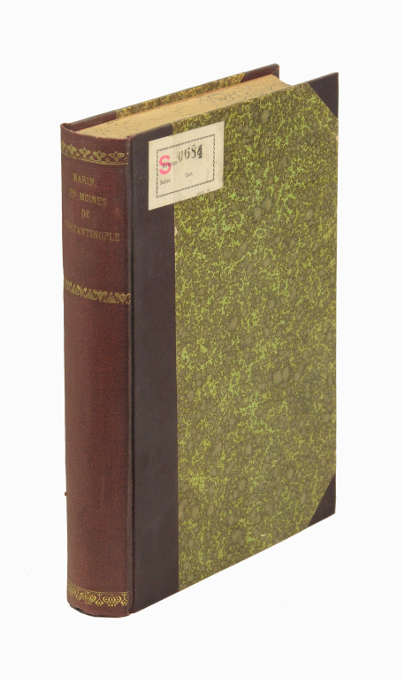
1897réf. 41345Paris, Victor Lecoffre, 1897. Gr.-8°. XX, 546 S., HLwd. d. Zt. m. goldgepr. Rückentitel.
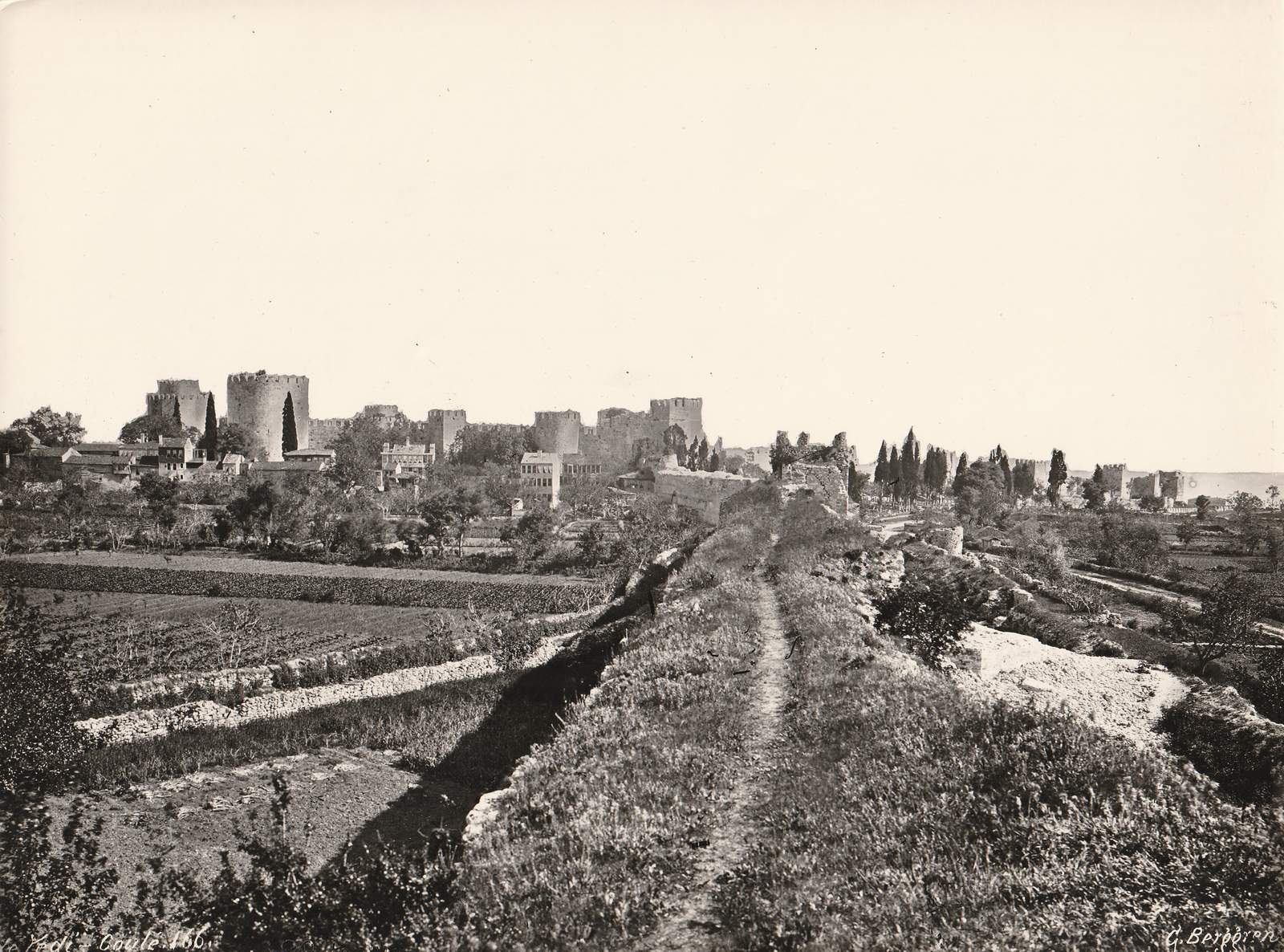
réf. 60553Istanbul, o. J. Ca. 19,5 x 26,5 cm. 1 Blatt (glanz), verso weiß.
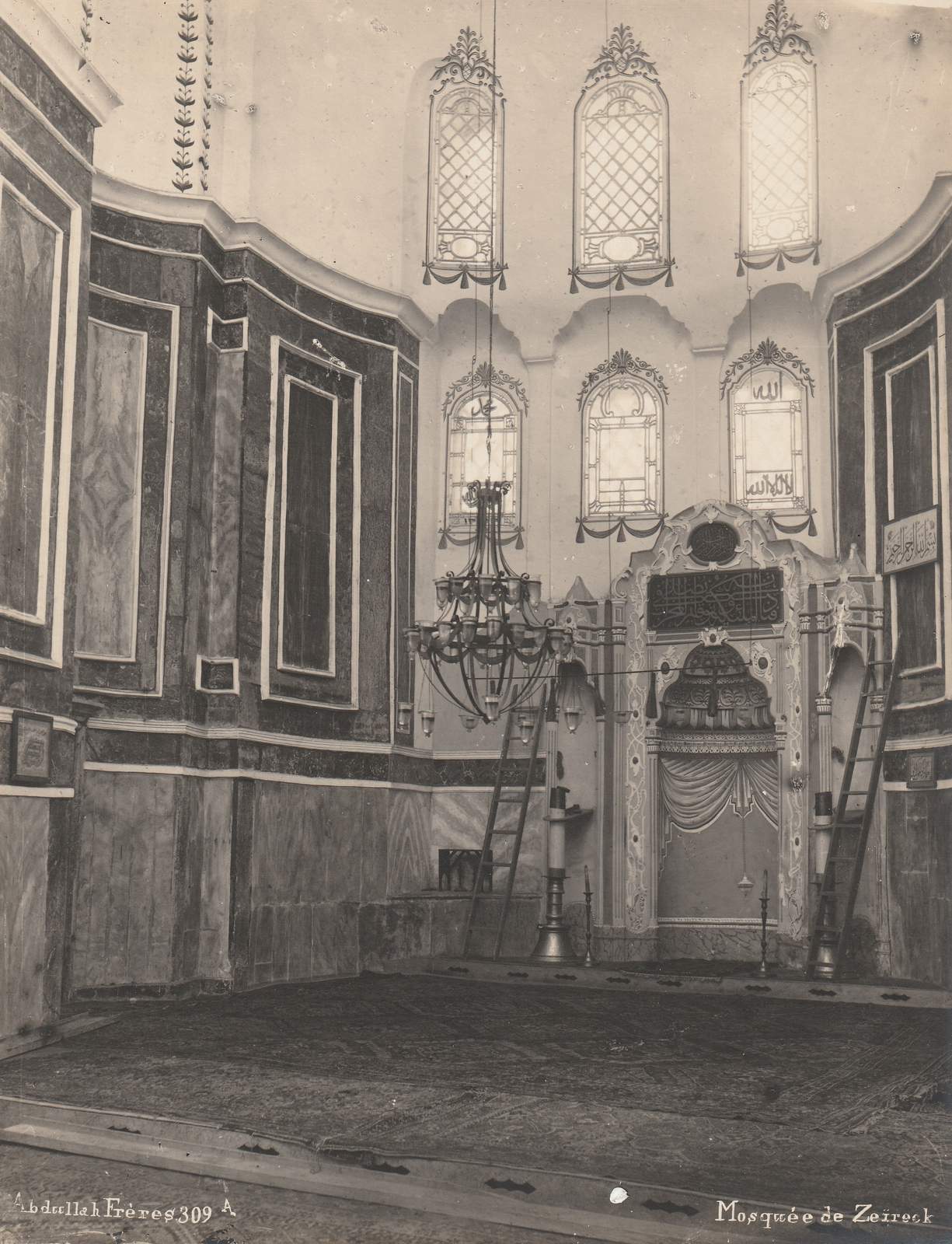
réf. 60554Istanbul, o. J. Ca. 25,5 x 20 cm. 1 Blatt (matt), verso weiß.
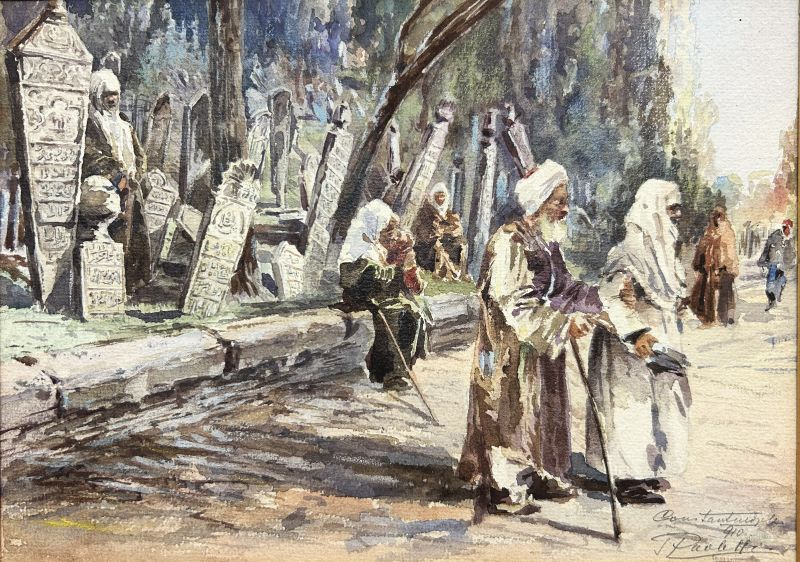
1910réf. 1605131910. Signiert "Paoletti" wohl datiert und bezeichnet "Constantinople / (1)910". Auf Aquarellpapier, fest auf Pappe aufgezogen und unter Passepartout montiert. 19,7 x 27,8 cm.
1984réf. 40340Crestwood: St. Vladimir's Seminary Press 1984. Paperback. Very good. 107pp. Spine sunned else very good in publisher's wraps. Ink name on front free endpaper else internally fine. St. Vladimir's Seminary Press paperback books
1998réf. 186332Berlin: De Gruyter 1998. Hardcover. VG Covers have very minor wear. Greek Text. Volumes I & II. Green cloth boards with light green lettering. Includes bibliographical references. De Gruyter hardcover books
1651réf. 21700London: Robert Daniel 1651. First edition. leather_bound. Contemporary Cambridge style full brown calf lacking spine label. Very good. 393 pages plus 5 leaves: Index Rerum & Verborum & Index Scripturarum. 32 x 21 cm. Translated and edited by Richard Montague. Parallel text in Latin and Greek. He is recognized in the Eastern Orthodox Church as St. Photios the Great viewed as the most important intellectual of his time - "the leading light of the ninth-century renaissance" and a central figure in both the conversion of the Slavs to Christianity. Considered by some scholars as only one of many Byzantine scholars of Armenian descent. Text generally clean and fresh. Armorial bookplate hinges cracked but firm woodcut device on title leaf Ddd browned minor marginal worming not affecting text errata. BRUNET Vol. IV p.623. WING P2136. Robert Daniel unknown books
1897réf. 237507Constantinople 1897. 10 x 7-3/4 inches. Mounted. Slightly faded. 10 x 7-3/4 inches. Photo/Wh/2/up unknown books
1910réf. 25790Turkey: A. Zellich Fils Editeurs 1910. Black and white printed postcard. Unused not dated and undivided back. Light wear; in very good condition. . Postcard. Not Bound. Very Good. A. Zellich Fils, Editeurs paperback books
1910réf. 25789Turkey: A. Zellich Fils Editeurs 1910. Black and white printed postcard. Unused not dated and undivided back. Light wear; in very good condition. . Postcard. Not Bound. Very Good. A. Zellich Fils, Editeurs paperback books
1910réf. 25792Constantinople Turkey 1910. Black and white printed postcard. Unused not dated and undivided back. Light wear; in very good condition. . Postcard. Not Bound. Very Good. paperback books
1911réf. 25813Constantinople: Editeur M.J.C. 1911. Color printed postcard. Used dated and divided back. Constantinople cancel mark about 1/2 visible no stamp old discoloration on back; surface of tips wear; faint cancel mark on front as well; in good condition. . Postcard. Not Bound. Good. Editeur M.J.C. paperback books
1651réf. 047499London: ex officina Rogeri Danielis 1651. viii 393 10p. title in Greek and Latin with parallel Greek and Latin text major index at the end. Bound in period full dark brown leather with red leather spine label and gilt lettering upper one-inch of spine lightly chipped. Tight hinges original endpapers. Small 18th-century signature of "Wm. Henderson" on upper margin of t.p. plus signature and small name label of Kiffin Ayres Rockwell who acquired the copy in November of 1954 on the front flyleaf. Edited from a Bodleaian ms. by Richard Montague 1577-1641 and published after his death. Totalling 248 letters on the controversies of the Photian 9th-century reign as patriarch this is the earliest edition of the correspondence from this Bodleian manuscript. Wing P2136; ESTC R12714. ex officina Rogeri Danielis unknown books
1651réf. 1221324London: Roger Daniels 1651. ESTC R12717. Folio; 393 pp.; recased in modern tan leather with gilt title; moderately worn 18th century leather boards preserved; endpapers freshened; contents very good; spine: tan leather with gilt titles. Consignment. 1221324. Rockville Non-Retail Listings. Roger Daniels unknown books
1904réf. 89351Constantinople: Printed by H. Matteosian for private circulation only 1904. Paperback. Near Fine. double-page photo 20p. Oblong softcover in original wrapper. 8 x 12cm. Minor stain/discoloration on back cover. Issued in connection with an effort to raise over half a million dollars for endowment of professorships repair or replacement of two buildings and to pay off the acumulated deficit in the income of the college over the past three years. Robert College was a "Christian" college although it did not teach religion. In 1904 its students came from the children of Armenian Greek Orthodox and other Christian Minorities in the Ottoman Empire and from the children of Westerners living in Constantinople. Printed by H. Matteosian for private circulation only paperback books
1910réf. 25814Constantinople: Editeur Max Fruchtermann 1910. Black and white printed postcard. Unused not dated and undivided back. Light wear; in very good condition. . Postcard. Not Bound. Very Good. Editeur Max Fruchtermann paperback books
réf. 6j7419Ludwigsohn Constantinopel um 1900. 24 Totochromolithpgraphien auf 12 Tafeln als Leporello Pappband mit Goldprägung . unknown
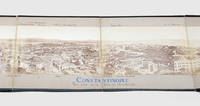
1875réf. 170484Constantinople c. 1875. A superb photographic panorama A panoramic 360-degree view of the city. Towards the Golden Horn the Topkapi Palace and the city's great mosques can be seen including Hagia Sophia the Blue Mosque the Yeni Mosque and the Süleymaniye. Panoramas of this period usually favour the Galata Tower as a vantage point. The view is unsigned though likely from the studios of Pascal Sébah and Policarpe Joaillier or the Swede Guillaume Berggren. Both are renowned for their handsome panoramas of the city. In 1857 Sébah opened one of the first photographic studios in Constantinople. The business was taken over by his son Jean in 1883 who styled himself J. Pascal Sébah and went on to become a talented photographer in his own right. In 1888 he partnered with Policarpe Joaillier their firm becoming the official photographers of the Sultan. "From the 1870s Sébah and Joaillier were major suppliers of evocative imagery to the increasing number of people who undertook the Victorian Grand Tour" Hannavy p. 1261. Berggren moved to Constantinople in 1866 and opened his studio on Grand Rue de Pera in the early 1870s. His oeuvre included studio work a remarkable series of documentary portraits of working people and the eternalising of the construction of the Anatolian Railway. Oblong quarto concertina 290 x 255 mm. Comprising 8 mounted albumen prints each 165 x 248 mm together approximately 165 x 1984 mm mounts captioned in manuscript red and blue ink. Contemporary dark brown pebbled paper over bevelled boards later blue paper on verso of mounts. Minor loss to corners and edges of boards a few surface scratches; prints yellowed and faded in margins some a little creased at folds: a very good example. John Hannavy ed. Encyclopaedia of Nineteenth-Century Photography Vol. I 2005; Engin Özendes From Sebah & Joaillier to Foto Sabah: Orientalism in Photography 2004. hardcover
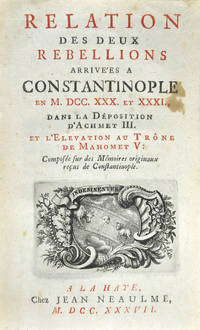
réf. 86461The Hague Jean Neaulme 1737. . First edition first issue; Small 8vo 15.5 x 10.5; iv 164 viiiadspp. title printed in red and black with engraved device small stain to title light waterstain to inner upper margin bound in later green morocco backed marbled boards spine gilt lettered very good. This account describes the two rebellions which broke out during the unsettled period following the victories of Nadir Kuli Khan of Persia against Turkey during September 1730 and which brought to and end the 'Tulip Period'. On the 20th of that month a minor riot developed into a full scale insurrection and Sultan Ahmet III was forced to abdicate in favour of his nephew Mahmoud I. The janissaries were led by one of their own an Albanian by the name of Patrona Halil and for two months the empire was in the hands of the insurgents. They were eventually overthrown by the Grand Vizier the Mufti and Aga of the Janissaries with the help of the Khan of the Crimea and Patrona and 7000 of his supporters were put to death. The first issue has the title printed in red and black as here. Atabey 1026; Blackmer 1407. The Hague, Jean Neaulme, 1737. hardcover
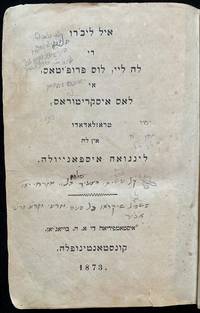
1873réf. 43536Konstantinoplah Constantinople: A. H. Boyagian Boyag'yan 1873. 8vo Original boards 2 volumes bound together 560 630 pages. 22 cm. 23 cm. In Ladino Only. Title translates as "The Book of the Law the Prophets and the Writings Translated into Ladino/Spanish." Ya'ari Reshimat Sifre Ladino no. 3. The publisher also issued a more common parallel Hebrew and Ladino bible the same year; this edition however is the scarcer Ladino only edition. "The translation of the Pentateuch in Hebrew vocalized square characters Constantinople 1547 was the first larger work which the Sephardic Jews of Turkey published in the language 'which the old Jews use. ' Twenty years later the entire Bible was published in several parts the third of which included the Later Prophets. This translation which agreed almost entirely with the one that appeared at Ferrara in Latin letters in 1553 was followed by another in four parts Constantinople 1739-45 in Ladino 'entero bien Ladinado'; seventy years later Israel b. Hayyim of Belgrade issued a translation Vienna 1813-16; the Constantinople edition was reprinted at Smyrna in 1838 et seq and again at Constantinople in 1873 all of these being in Rashi characters." EJ The Ladino Bible was later used by modern scholars and writers such as Holocaust survivor and poet Moshe Ha-Elion as a linguistic reference point to study authentic traditional Salonican and Turkish Ladino vocabulary. "All in all between 1493 and 1940 approximately 260 books and thirty periodicals were printed in Ladino in Istanbul most of them printed after 1730 out of a total of 758 publications in Hebrew type. As we have noted early Ladino publications focused on religion: Biblical commentary and texts religious law ethics and prayer books. These topics continued in the nineteenth century but the majority of publications in the later period were belles lettres history and biography sciences and communal and state laws and regulations. Of special social and cultural importance since the second half of the nineteenth century were Ladino periodicals which also served as publishers of books in Ladino. Having initially aimed to "Judaize" the Jews the objective of Ladino publishing in the later period was to modernize and entertain them while at the same time attempting to spread Judaic knowledge." Rachel Simon The Contribution of Hebrew Printing Houses and Printers in Istanbul to Ladino Culture and Scholarship SUBJECTS: Ladino literature. OCLC:79281753 & 976898012. OCLC locates only 4 sets of this rare Ladino-only edition only 2 in North America Harvard & UToronto. Well bound with some edgewear. Some markings and an inscription on the title page. Good Condition. Rare and important PSB-1-29-CC-'. Konstantinoplah [Constantinople]: A. H. Boyagian [Boyag'yan] unknown
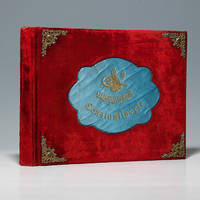
1890réf. 1031341890. PHOTOCHROM ZURICH. Constantinople. Zürich: Photochrom Zürich circa 1890. Oblong folio 16 by 12 inches 30 photochrom images each measuring approximately 9 by 6-1/2 inches and mounted on heavy cardstock; original red velvet blue silk gilt-lettered title centerpiece on front cover brass cornerpieces. $4500.Rare photographic album of Constantinople circa 1890 by the renowned studio of Photochrom Zürich with 30 beautiful mounted vintage photochrom color prints offering exceptional views of majestic mosques palaces and plazas as well as the people of this great city in magnificent velvet binding with brass furniture.This splendid souvenir album of Constantinople contains exquisite color photographic prints of images taken at the turn of the 20th century produced by the revolutionary photochrom process. Photochrom also called the Aäc process is ""a very successful form of color photolithography developed in the late 19th century by the Swiss firm of Orell Füssli and used mainly for topographical views; photochroms have almost the appearance of color photographs but through a glass will show a delicate ink pattern which was achieved by a combination of photographic and manual work on grained i.e. lithographic stones being a forerunner therefore of modern screenless offset lithography"" Gascoigne 206. In this process black and white photographic negatives were directly transferred onto lithographic printing plates to produce color prints. These photographs are a high point in late 19th-century photography when albums such as these captivated a world newly spellbound ""by photography's capacity to 'take them there' and bring them directly in contact with the long ago and far away"" Parr & Badger I:18. Each image captioned with a four-digit number followed by ""P.Z."" for Photochrom Zürich and then the title of the scene in French. A few instances of marginal spotting to mounts; photochrom prints clean and fine with vivid colors. Binding splendid. An about-fine copy of this lovely album. unknown
1897réf. 237507Constantinople 1897. 10 x 7-3/4 inches. Mounted. Slightly faded. 10 x 7-3/4 inches. Photo/Wh/2/up unknown
1913réf. 055948Rodosto & Constantinopoli: Manuscript & Typescript 3-9 October 1913. 1913. No Binding. Very Good. 8vo - over 7¾ - 9¾" tall. A one-page typed letter with autograph marginal notes and a two-page manuscript report in black ink. Both are written on bifolia papers with "Renage's Mill" watermark One is "Banknote Paper" the other is "Extra Strong". "Agenzia Consolare d'Italia Rodosto" & "Consolato Generale d'Italia in Constantinopoli" letterheads. 27x21 cm. The letter is in Italian report is in French. 1 p.; 2 p. Signed. Except for the horizontal centre-fold in very clean condition. A letter written by the Italian Consul General in Constantinople to the Italian chargé d'affaires accompanied by a historically significant report from the Consular Agent in Rodosto provides valuable first-hand information about the outbreak of epidemic diseases such as cholera and typhus among humans and anthrax and bubonic plague among animals in the Ottoman Empire in 1913. It also sheds light on the authorities' failure to address these public health crises while offering significant insights into the Muslim immigrants arriving in convoys to the region during the ongoing Balkan Wars. This is an invaluable firsthand account of the Sixth Cholera Pandemic in the Ottoman Empire "a time when the Empire's foundations were shaken by the Balkan War military defeats territorial losses the plight of refugees and immigrants and the dreadful calamity of the cholera epidemic between 1911 and 1913 during which no reliable official records exist regarding the exact number of cholera cases and deaths". Unat. The manuscript report opens by stating the number of direct death cases as rendered in the translation: "I believe it is my duty to inform you that on the 27th a case of cholera followed by death was reported in the town. The day before yesterday there were four other cases two of them fatal; yesterday four new ones two of which were fatal; today another case. So out of ten cases there have been five deaths." The letter goes on: "The other municipality requested a credit of 1000 piastres from Constantinople to take the measures required by the circumstances. Unfortunately no reply has been given and our local officials do not know to which authority they should turn." "Cholera is present in Kirklareli Quarante Églises Baba-Eski Babaeski à Vise Vize à Bounar-Hissar Pinarhisar à Luli Bourgaz Lüleburgaz à Ouzun Keupiru Uzunköprü and aound Krichan Kirikhan. In Tchorlou Çorlu typhus is wreaking havoc and smallpox is present here. Our entire region is devastated by an epizootic outbreak: smallpox and foot-and-mouth disease among the sheep anthrax and bubonic plague among the oxen and buffaloes. Money and serum have been requested from the Ministry of Agriculture but there has been no response. The chief veterinarian I spoke with assured me that it would be impossible to do anything until he has serum to treat the livestock and that if the epidemic disease continues to spread like this the livestock will be completely wiped out in our region." The Royal Consular Agent states that during and after the war between the Turks and Bulgarians also known as the Battle of Kirkkilise which was part of the Balkan Wars Muslim immigrants who continually flocked to Kirklareli and the surrounding areas brought cholera and other epidemic diseases to the region. "Regularly there are convoys of migrants who had left their villages in the surrounding areas of Adrianople Quarante Églises Lüleburgaz etc. before the Turco-Bulgarian War arriving from Anatolia by steamships. They are the ones who brought us cholera and the epidemic disease." He ended his manuscript report by stating there is no way to convince the authorities to have them disembark elsewhere outside the city or to prevent the arrival of these immigrants who are being directed utilizing forced requisitions to areas where cholera is spreading. This report was presented to the Italian chargé d'affaires with this letter additionally as below: "Healt Manuscript & Typescript, 3-9 October 1913. unknown
1910réf. 053669Istanbul: ADS. AH 1326 1910. No Binding. Very Good. Original manuscript autograph document sealed by Bosnevî Darülhadis Basmüderrisi i.e. Bosnevî Darülhadis School in Sehzâde Istanbul. Oblong: 12x145 cm. In Ottoman script. 1 p. 4 lines. "Huve. Bâdi-i sehâdetnâme oldur ki; Müderrisi bulundugum Sehzâde civarinda Darülhadis Bosnevî Medresesi'nde mukayyid talebe ilm-i sarf. Mehmed bin Mehmed Efendi'nin. 1326 1910 AD.". ADS., [AH 1326] unknown