ARCQ (P.-A. de Sainte-Foix, Chevalier d')Livre Rare Book

5805 resultados
1755ref. 000755Paris Desaint & Saillant, Vincent 1755
ref. 21910Paris, Rousseau-Girard, 1959-1961. 3 vol. in-4, 201 pp. LXXXVIII pl. + 259 pp. LXXI pl. + 288 pp. XCII pl., oasis vert sapin, dos à nerfs, tête dorée, couverture conservée (minuscules épidermures).
ref. 22044Paris, Jean Rousseau-Girard, 1959-1961. 3 vol. in-4, 201 pp. LXXXVIII pl. + 259 pp. LXXI pl. + 288 pp. XCII pl., demi-maroquin rouge à la bradel, plats de toile écrue, dos long, couverture conservée, étui cartonné écru (petits frottements aux étuis et 1 mors fendu à l'étui du 1er vol.).
1880ref. 14523Paris Choudens père et fils sans date (vers 1880) In-4 plein maroquin rouge cardinal Paris, Choudens père et fils, sans date (vers 1880). In-4, (4)-267 pp., plein maroquin rouge cardinal, double filet en encadrement estampé à froid, chiffre "M.D" à l'or sur le plat supérieur, dos à nerfs, entre-nerfs avec encadrement estampés à froid, ornés de lyres, double filet à l'or sur les bords, toutes tranches dorées, dentelles sur les chasses, signée Lortic. (Très petits frottements aux bords des coiffes et aux coins, discrète tache au dos.)
ref. 19380Paris, Octave Doin, 1892-1899. 5 vol. in-4, VI-756 pp. + 767 pp. + 744 pp. + 755 pp. + 802 pp., demi-basane brune, dos à nerfs orné de filets dorés et du nom G. Sourdille doré (reliures légèrement défraîchies mais solide, légère insolation, quelques rousseurs).
ref. 17581Paris, Madame Vve Le Petit, 1811. In-12, 408 pp., basane racinée fauve de l'époque, frises dorées en encadrement sur les plats, dos lisse orné de caissons et fleurons dorés, pièce de titre rouge (épidermures, rousseurs, gravures parfois rognées un peu court).
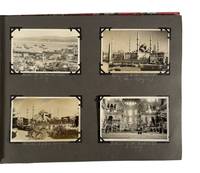
1927ref. 208311927. Photo album documenting a multi country group यातà¥à¤°à¤¾ in 1927 records interwar travel across southern Europe and the eastern Mediterranean including regions under colonial administration and recent political transition. The album follows a group of travelers moving from France through Italy Greece Turkey British administered Palestine and Egypt capturing urban landmarks archaeological sites and local populations encountered along the route. The sequence provides visual evidence of tourism infrastructure mobility and cross cultural observation during a period when former imperial territories such as Constantinople were undergoing redefinition following the dissolution of the Ottoman Empire and the establishment of modern nation states. Album contains 93 black and white silver gelatin photographs and four real photo postcards with images ranging approximately from 2.5 x 4 inches to 3.5 x 5.5 inches and one larger group photograph measuring about 9 x 7 inches. Photographs are mounted on black paper boards with handwritten captions in white pencil and interleaved tissue guards; string bound in patterned cloth boards. The album opens in Avignon with views of St. Pierre's Church and the Palais des Papes then continues through Italy with scenes of Naples and Pompeii as well as shipboard images captioned S.S. Adriatic. Subsequent sections include Athens with views of the Parthenon followed by Constantinople where four postcards depict the harbor the Sultan Ahmed Mosque and the Hagia Sophia shortly after the end of the Ottoman Empire. In British Mandate Palestine images show street scenes in Nazareth and Jerusalem including sites along the River Jordan the Western Wall and the Garden of Gethsemane alongside a captioned portrait labeled "A Jewish Maiden." The album concludes in Egypt with extensive views of archaeological and urban sites at Thebes Memphis Cairo and Luxor including the Obelisk of Hatshepsut Edfu Temple the tomb of Amenhotep II the Colossi of Memnon and the pyramids and Great Sphinx at Giza where the final group portrait shows the travelers posed on camels. Produced during the interwar period the album reflects expanding international tourism networks alongside ongoing European influence in the eastern Mediterranean and Middle East. The juxtaposition of ancient sites modern transport and local populations situates the material within broader histories of archaeology empire and travel culture in the early twentieth century. Light general wear to album and mounts; images well preserved with clear captions; overall very good condition. unknown books
1927ref. 208311927. Photo album documenting a multi country group यातà¥à¤°à¤¾ in 1927 records interwar travel across southern Europe and the eastern Mediterranean including regions under colonial administration and recent political transition. The album follows a group of travelers moving from France through Italy Greece Turkey British administered Palestine and Egypt capturing urban landmarks archaeological sites and local populations encountered along the route. The sequence provides visual evidence of tourism infrastructure mobility and cross cultural observation during a period when former imperial territories such as Constantinople were undergoing redefinition following the dissolution of the Ottoman Empire and the establishment of modern nation states. Album contains 93 black and white silver gelatin photographs and four real photo postcards with images ranging approximately from 2.5 x 4 inches to 3.5 x 5.5 inches and one larger group photograph measuring about 9 x 7 inches. Photographs are mounted on black paper boards with handwritten captions in white pencil and interleaved tissue guards; string bound in patterned cloth boards. The album opens in Avignon with views of St. Pierre's Church and the Palais des Papes then continues through Italy with scenes of Naples and Pompeii as well as shipboard images captioned S.S. Adriatic. Subsequent sections include Athens with views of the Parthenon followed by Constantinople where four postcards depict the harbor the Sultan Ahmed Mosque and the Hagia Sophia shortly after the end of the Ottoman Empire. In British Mandate Palestine images show street scenes in Nazareth and Jerusalem including sites along the River Jordan the Western Wall and the Garden of Gethsemane alongside a captioned portrait labeled "A Jewish Maiden." The album concludes in Egypt with extensive views of archaeological and urban sites at Thebes Memphis Cairo and Luxor including the Obelisk of Hatshepsut Edfu Temple the tomb of Amenhotep II the Colossi of Memnon and the pyramids and Great Sphinx at Giza where the final group portrait shows the travelers posed on camels. Produced during the interwar period the album reflects expanding international tourism networks alongside ongoing European influence in the eastern Mediterranean and Middle East. The juxtaposition of ancient sites modern transport and local populations situates the material within broader histories of archaeology empire and travel culture in the early twentieth century. Light general wear to album and mounts; images well preserved with clear captions; overall very good condition. unknown
ref. DADAX0231033028New unknown
1900ref. 2853Paris, Maison Gosteau, sans date (circa 1900). Format oblong : 19,3 x 12,3 cm. Cartonnage en pleine toile noire de la papeterie "L. Merville Fils", dos lisse muet, plats ornés d'un encadrement en doubles filets à froid, "Album" estampé à froid et doré au centre du premier plat, toutes tranches dorées. 50 feuillets (dont 35 pages manuscrites au recto suivies de 25 feuillets blancs). Bel album de 35 pages (recto uniquement) ornées de 44 dessins originaux réalisés au crayon, à la main. Pièce unique de toute rareté d'un petit artisan parisien dont nous n'avons pas trouvé trace, son atelier étant sans doute de toute petite taille. Très intéressant témoignage sur les cercles de jeux à la fin du XIXe et au début du XXe siècle.
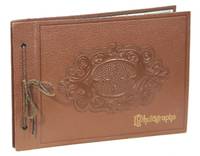
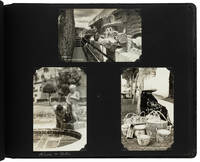
1938ref. 190871938. Photograph album documenting a multi-location journey through Mexico City and surrounding regions in the late 1930s presenting a sustained visual record of urban life Indigenous communities and regional landscapes during a period of post-revolutionary modernization. Comprising 52 original black-and-white photographs the album captures both monumental architecture and everyday social environments offering a layered view of Mexico as experienced by foreign travelers. Album with 52 original black-and-white photographs approximately 3.5" x 2.5" mounted on black paper across 10 photographic leaves 21 leaves total. Album measures approximately 10" x 7". Brown faux-leather binding with blind-stamped design and gilt lettering to front cover; bound with brown tie. Handwritten captions in white ink beneath several images. Includes maps of Mexico City on final leaf and rear pastedown. The photographs emphasize the coexistence of historic colonial structures and emerging modern infrastructure. Prominent architectural views include Chapultepec Castle major ecclesiastical buildings in Puebla and formal civic spaces alongside street scenes featuring automobiles commercial signage and pedestrian activity. These images situate Mexico City within a rapidly modernizing urban framework while retaining strong visual continuity with its colonial past. Equally significant are the album's documentary images of Indigenous and rural life. Several photographs depict Indigenous individuals and families in roadside and village settings including a family group with a child and laborers transporting agricultural materials. These images foreground systems of manual labor and traditional dress contrasting sharply with the urban environments elsewhere in the album. Additional scenes of burro transport rural roads and subsistence activity reinforce this juxtaposition between modernization and longstanding economic practices. Market scenes form another core component of the album's documentary value. Photographs labeled as flower and farmer's markets show dense arrangements of goods vendors and informal commercial structures illustrating local economies and patterns of exchange. These are complemented by images of Xochimilco waterways paddle boats and cultivated landscapes extending the album's coverage to agricultural and peri-urban environments. The album also reflects the perspective of its creators. Handwritten captions in white ink identify locations such as Puebla "pottery tiles" "Indian family" "Indian boys" and "Burros" revealing a period-specific outsider vocabulary and framing of Indigenous subjects. The presence of the traveling party-largely older individuals-along with images of hotels and an English school in Mexico City situates the album within the context of organized or leisure travel likely by English-speaking visitors. Final leaves include printed maps of Mexico City and surrounding areas reinforcing the album's function as both a visual and geographic record of the यातà¥à¤°à¤¾. The structure and sequencing of the photographs suggest a deliberate effort to document both major cultural landmarks and vernacular life across multiple environments. This album holds strong research value for Latin American urban history Indigenous studies visual anthropology tourism history and the study of foreign representations of Mexico in the early 20th century. It provides primary visual evidence of how Mexico City and its environs were experienced interpreted and recorded during a formative period of national development. Condition: Very good; photographs clean and well-preserved. unknown books
1938ref. 190871938. Photograph album documenting a multi-location journey through Mexico City and surrounding regions in the late 1930s presenting a sustained visual record of urban life Indigenous communities and regional landscapes during a period of post-revolutionary modernization. Comprising 52 original black-and-white photographs the album captures both monumental architecture and everyday social environments offering a layered view of Mexico as experienced by foreign travelers. Album with 52 original black-and-white photographs approximately 3.5" x 2.5" mounted on black paper across 10 photographic leaves 21 leaves total. Album measures approximately 10" x 7". Brown faux-leather binding with blind-stamped design and gilt lettering to front cover; bound with brown tie. Handwritten captions in white ink beneath several images. Includes maps of Mexico City on final leaf and rear pastedown. The photographs emphasize the coexistence of historic colonial structures and emerging modern infrastructure. Prominent architectural views include Chapultepec Castle major ecclesiastical buildings in Puebla and formal civic spaces alongside street scenes featuring automobiles commercial signage and pedestrian activity. These images situate Mexico City within a rapidly modernizing urban framework while retaining strong visual continuity with its colonial past. Equally significant are the album's documentary images of Indigenous and rural life. Several photographs depict Indigenous individuals and families in roadside and village settings including a family group with a child and laborers transporting agricultural materials. These images foreground systems of manual labor and traditional dress contrasting sharply with the urban environments elsewhere in the album. Additional scenes of burro transport rural roads and subsistence activity reinforce this juxtaposition between modernization and longstanding economic practices. Market scenes form another core component of the album's documentary value. Photographs labeled as flower and farmer's markets show dense arrangements of goods vendors and informal commercial structures illustrating local economies and patterns of exchange. These are complemented by images of Xochimilco waterways paddle boats and cultivated landscapes extending the album's coverage to agricultural and peri-urban environments. The album also reflects the perspective of its creators. Handwritten captions in white ink identify locations such as Puebla "pottery tiles" "Indian family" "Indian boys" and "Burros" revealing a period-specific outsider vocabulary and framing of Indigenous subjects. The presence of the traveling party-largely older individuals-along with images of hotels and an English school in Mexico City situates the album within the context of organized or leisure travel likely by English-speaking visitors. Final leaves include printed maps of Mexico City and surrounding areas reinforcing the album's function as both a visual and geographic record of the यातà¥à¤°à¤¾. The structure and sequencing of the photographs suggest a deliberate effort to document both major cultural landmarks and vernacular life across multiple environments. This album holds strong research value for Latin American urban history Indigenous studies visual anthropology tourism history and the study of foreign representations of Mexico in the early 20th century. It provides primary visual evidence of how Mexico City and its environs were experienced interpreted and recorded during a formative period of national development. Condition: Very good; photographs clean and well-preserved. unknown
ref. 9134Augsburg, T.V. Poll, (début du XIXème). Deux cartes de 7 x 10,5. Très bon état.
ref. 8967Paris, E. Loyson, 1668. In 12 frontispice, 5 ff. non ch. Et 300 pp. reliure ancienne usagée, trace de mouillures.
1900ref. 2408Sans lieu [Paris], sans nom d'éditeur, sans date [circa 1900]. In-folio, 34,5 x 47 cm. Ensemble de 30 lithographies (dont trois en double page), en feuilles sous portefeuille de l'éditeur illustré en couleurs, fermé par trois épais rubans. (2 f.), 30 planches. Rarissime exemplaire, bien complet de ses 30 lithographies (dont trois en double page et la plupart en couleurs), et enrichi d’un dessin original à l’encre, à l'aquarelle et à la gouache, ainsi que d’un envoi autographe signé de l’auteur. Typographie des deux sous-titres "ceux qui patinent" et "ceux qui badinent" de style Art Nouveau. Sorte de galerie humoristique, voire légèrement caricaturale, de portraits des personnages plus ou moins célèbres qui fréquentent le très mondain Palais de Glace, patinoire édifiée en 1893, au rond-point des Champs Elysées, à Paris. Proche du style de Sem. Né en 1880, Daniel de Losques (de son vrai nom Henri-Daniel-Casimir-Paul Thouroude), oeuvra comme dessinateur et caricaturiste dans la presse (Le Figaro, Le Rire, L’Aurore, Fantasio, Je sais tout, Excelsior, Le Matin, Le Monde illustré, Le Théâtre, Paris-Illustré), ouvrit sa propre imprimerie spécialisée dans l’affiche, et mourut pour la France en combat aérien en 1915. Chers clients Abebooks, le poids et le volume important de cet ouvrage entraîneront des frais postaux additionnels, merci de le prendre en considération avant votre achat. Dear Abebooks customers, the weight and volume of this book will entail additionnal shipping fees, thank you for taking it into consideration before ordering.
ref. 4090"P., Gauthier-Villars et fils, 1891-1894. Quatre volumes in 8 brochés (auréoles sur le premier plat du premier volume, manque angulaire au premier plat du second volume, mouillures aux derniers feuillets du quatrième volume), VIII-254 pp. ; 242 pp. ; 200 p"
ref. 5685P., Masson, sans date. In 4 cartonnage illustré de l'éditeur, 48 pp. illustrées en couleurs.
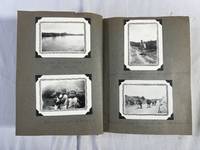
1940ref. 229521940. Photographic album of an American family's travels in 1940 and 1941 documents cross regional movement through Mexico Nova Scotia and the United States with a sustained visual record of Mexican landscapes labor and public life at the beginning of the 1940s. The album titled in manuscript "MEXICO 1941" includes detailed captions identifying locations agricultural practices and infrastructure situating the images within a period of expanding road networks and tourism in North America. The photographs support research into travel history visual documentation of rural and urban environments and cross cultural observation during the early twentieth century. Oblong photograph album containing approximately 180 original black and white silver gelatin photographs each measuring about 3 x 4 inches mounted on grey cardstock pages within a black pebbled faux leather album measuring approximately 9 x 7 inches. Over 80 photographs document travel in Mexico in 1941 with images of central Mexican landscapes including agave fields identified as sources of pulque and mezcal rural roads near Montemorelos the Tampoan River near Valles village scenes and market activity with vendors and goods displayed in open air settings. Urban views show streets with carts wagons and commercial signage. A recurring identified figure "Mary Kay" appears throughout including a photograph with a Spanish interpreter and references to a guide named Miquel "Mike" Soto. Additional photographs depict local residents including agricultural workers and market vendors. The remaining images include approximately 90 photographs from a 1940 trip to Nova Scotia and other North American locations including waterfront and forest scenes Washington D.C. civic architecture and monuments Texas small town environments and Gettysburg battlefield landscapes. The album was produced during a period when automobile travel and tourism expanded access to regional and international destinations allowing American travelers to document landscapes and communities through personal photography. The juxtaposition of Mexican rural and urban scenes with locations in Canada and the United States reflects differing regional environments while also demonstrating the continuity of travel practices and visual documentation. The inclusion of detailed captions indicates an effort to record geographic and cultural information alongside personal experience. Photographs remain clean and well preserved with secure corner mounts and a tight binding; overall very good condition. This album provides an extensive visual record of early 1940s travel across North America with particular emphasis on Mexico and Canada. unknown books
1940ref. 229521940. Photographic album of an American family's travels in 1940 and 1941 documents cross regional movement through Mexico Nova Scotia and the United States with a sustained visual record of Mexican landscapes labor and public life at the beginning of the 1940s. The album titled in manuscript "MEXICO 1941" includes detailed captions identifying locations agricultural practices and infrastructure situating the images within a period of expanding road networks and tourism in North America. The photographs support research into travel history visual documentation of rural and urban environments and cross cultural observation during the early twentieth century. Oblong photograph album containing approximately 180 original black and white silver gelatin photographs each measuring about 3 x 4 inches mounted on grey cardstock pages within a black pebbled faux leather album measuring approximately 9 x 7 inches. Over 80 photographs document travel in Mexico in 1941 with images of central Mexican landscapes including agave fields identified as sources of pulque and mezcal rural roads near Montemorelos the Tampoan River near Valles village scenes and market activity with vendors and goods displayed in open air settings. Urban views show streets with carts wagons and commercial signage. A recurring identified figure "Mary Kay" appears throughout including a photograph with a Spanish interpreter and references to a guide named Miquel "Mike" Soto. Additional photographs depict local residents including agricultural workers and market vendors. The remaining images include approximately 90 photographs from a 1940 trip to Nova Scotia and other North American locations including waterfront and forest scenes Washington D.C. civic architecture and monuments Texas small town environments and Gettysburg battlefield landscapes. The album was produced during a period when automobile travel and tourism expanded access to regional and international destinations allowing American travelers to document landscapes and communities through personal photography. The juxtaposition of Mexican rural and urban scenes with locations in Canada and the United States reflects differing regional environments while also demonstrating the continuity of travel practices and visual documentation. The inclusion of detailed captions indicates an effort to record geographic and cultural information alongside personal experience. Photographs remain clean and well preserved with secure corner mounts and a tight binding; overall very good condition. This album provides an extensive visual record of early 1940s travel across North America with particular emphasis on Mexico and Canada. unknown
1884ref. 994Couverture rigide 1ère Édition Ed. Rouveyre et G. Blond 1884 Paris 32x22,5 cm
1930ref. 205481930. Early twentieth century travel photo album compiled by "Jake"documents the working life and global mobility of a merchant ship crewman during the 1930s and 1940s with sustained visual attention to port cities across Africa the Americas and the United States. The album supports research into maritime labor informal American commercial presence abroad and everyday interactions between traveling workers and local populations under late colonial conditions. Photographs taken in Beira and Dondo in Mozambique and Angola Durban and Cape Town in South Africa and Accra in the Gold Coast record encounters shaped by European colonial infrastructures and tourist economies including images captioned "Typical Ricksha Boy" depicting South African rickshaw pullers in elaborate headdress and dress and scenes of women in Accra balancing baskets and trays of food. Additional captions such as "Sam and his 'girls'" showing uniformed workers marked "Sea View Hotel" and "me and my gals" portraying informal social contact provide direct evidence of how American maritime workers framed and recorded relationships with local communities. The album further situates this mobility within a broader circuit including the Panama Canal Mexico City and Vera Cruz and U.S. port cities such as Galveston New York and Boston. Travel photo album compiled circa 1930s to 1940s likely by an American merchant marine crewman identified as Jake. String-bound black cloth album containing 44 leaves with 218 silver gelatin photographs and postcards mounted or cornered in along with one original sketch of an African man. Images span multiple global locations including Beira Dondo Durban Cape Town Accra Vera Cruz Mexico City the Panama Canal Powell River Vancouver Galveston New York and Boston. Several photographs depict shipboard life and crew activity aboard the S.S. Nemiskam Park with additional images of small craft landings including African men canoeing crew members ashore. A sequence of photographs taken in Boston shows the compiler in maritime work gear wearing thigh-high boot wraps rubber gloves and an oxygen mask captioned "At last -- working for a change." Nineteen photographs document Mexico including rancheros and rancheras in embroidered dress scenes of bullfighting and crew members wearing sombreros and sarapes. This album provides a concentrated record of interwar and wartime-era maritime circulation linking North American labor to colonial and postcolonial port environments offering primary visual evidence of how working-class American travelers documented race labor and leisure across imperial geographies. The inclusion of commercial signage hotel uniforms and transport labor such as rickshaw pulling situates the photographs within local economies shaped by tourism and global trade while the Panama Canal images anchor the album within a critical artery of twentieth-century shipping and U.S. strategic infrastructure. The juxtaposition of African Mexican and U.S. scenes underscores the continuity of maritime networks that connected these regions and the album's captions provide insight into informal language humor and perception among traveling crewmen. Minor edge wear to album corners with some mounts loosening; leaves and photographs remain clean and stable. Overall very good condition. unknown books
1930ref. 205481930. Early twentieth century travel photo album compiled by "Jake"documents the working life and global mobility of a merchant ship crewman during the 1930s and 1940s with sustained visual attention to port cities across Africa the Americas and the United States. The album supports research into maritime labor informal American commercial presence abroad and everyday interactions between traveling workers and local populations under late colonial conditions. Photographs taken in Beira and Dondo in Mozambique and Angola Durban and Cape Town in South Africa and Accra in the Gold Coast record encounters shaped by European colonial infrastructures and tourist economies including images captioned "Typical Ricksha Boy" depicting South African rickshaw pullers in elaborate headdress and dress and scenes of women in Accra balancing baskets and trays of food. Additional captions such as "Sam and his 'girls'" showing uniformed workers marked "Sea View Hotel" and "me and my gals" portraying informal social contact provide direct evidence of how American maritime workers framed and recorded relationships with local communities. The album further situates this mobility within a broader circuit including the Panama Canal Mexico City and Vera Cruz and U.S. port cities such as Galveston New York and Boston. Travel photo album compiled circa 1930s to 1940s likely by an American merchant marine crewman identified as Jake. String-bound black cloth album containing 44 leaves with 218 silver gelatin photographs and postcards mounted or cornered in along with one original sketch of an African man. Images span multiple global locations including Beira Dondo Durban Cape Town Accra Vera Cruz Mexico City the Panama Canal Powell River Vancouver Galveston New York and Boston. Several photographs depict shipboard life and crew activity aboard the S.S. Nemiskam Park with additional images of small craft landings including African men canoeing crew members ashore. A sequence of photographs taken in Boston shows the compiler in maritime work gear wearing thigh-high boot wraps rubber gloves and an oxygen mask captioned "At last -- working for a change." Nineteen photographs document Mexico including rancheros and rancheras in embroidered dress scenes of bullfighting and crew members wearing sombreros and sarapes. This album provides a concentrated record of interwar and wartime-era maritime circulation linking North American labor to colonial and postcolonial port environments offering primary visual evidence of how working-class American travelers documented race labor and leisure across imperial geographies. The inclusion of commercial signage hotel uniforms and transport labor such as rickshaw pulling situates the photographs within local economies shaped by tourism and global trade while the Panama Canal images anchor the album within a critical artery of twentieth-century shipping and U.S. strategic infrastructure. The juxtaposition of African Mexican and U.S. scenes underscores the continuity of maritime networks that connected these regions and the album's captions provide insight into informal language humor and perception among traveling crewmen. Minor edge wear to album corners with some mounts loosening; leaves and photographs remain clean and stable. Overall very good condition. unknown
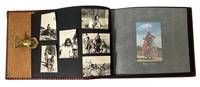
1960ref. 232261960. South Asia photo album recording Darjeeling Nepal Calcutta and Agra in the 1960s in a post Independence view of how religious life urban crowding tourism and Himalayan community identity were being documented by a foreign traveler across India and Nepal. The album showcases the various landscapes of cultural and religious identity throughout South Asia with Muslim architecture in Agra Buddhist and Hindu temple spaces in the Himalayan region crowded Calcutta streets captioned in French as an overpopulated refugee city and repeated portraits of Nepali villagers Sherpas women and children. In the decades after 1947 Indian cities such as Calcutta were absorbing refugee movement housing pressure and widening informal street economies while Himalayan communities in Darjeeling and Nepal were increasingly pulled into road building porterage mountaineering border trade and tourism conditions that form the broader social world around the album's portraits and landscapes. Photo archive of 150 silver gelatin photographs and a small group of color snapshots most measuring 2.5" x 3.75" album measuring 10.5" x 14" Darjeeling Nepal Calcutta and Agra circa early 1960s. Black paper leaves with corner mounts and French captions opening with a map of India labeled in French and moving through place based sequences. Agra pages include captioned views of the "Le Mausolée d'Itimad ud Daula" façades pierced marble screens and views of the Taj Mahal. Buddhist material includes a page captioned "Temple Bouddhique" with rooflines bells carved doors and ornamental details. Nepal and Darjeeling sections show prayer flags strung across roads mountain slopes a ridge top cabin bundled men in traditional clothing and a captioned portrait of "Le sherpa Tensing Norgay." Other leaves caption "Nepalais" and "Mère Népalaise" pairing a woman carrying a child in a basket with village children hillside portraits and small groups gathered outdoors. Calcutta appears through elevated city views dense commercial streets market scenes bridge approaches pavement sleeping and sitting areas and close portraits captioned "mendiantes" and "fumeuse de pipe." A color image captioned "Danseuse du Kashmir" and several small color snapshots extend the album's attention to costume and regional customs. By the 1960s Independence had ended British rule but it had not eased the pressures of displacement poverty overcrowding and uneven development that shaped eastern Indian urban life and the Calcutta pages make those conditions visible through street congestion market trading informal rest spaces and the compiler's own language about refugees and overpopulation. In the Himalayan sections the album does not directly picture hunger land scarcity or labor migration in explicit terms yet those pressures formed the lived context of many Nepali and Sherpa communities during this period when cash income often depended on carrying service work seasonal movement and the new international economy of trekking and mountaineering that made figures such as Tenzing Norgay globally recognizable. Minor edge and corner wear from cornering; images clean and clear; binding and boards intact. A 1960s record of post Independence South Asia combining sacred architecture urban hardship and Himalayan portraiture. unknown books
ref. 20159Paris, pour les bibliophiles du palais, 1940. In-folio, 128 pp. 40 pl., en feuilles, couverture originale imprimée, chemise et étui cartonnés (quelques minuscules rousseurs éparses à la couverture, insolation et frottements à la chemise et à l'étui).
1910ref. 2865Paris, Saussine, sans date (circa 1910). Dimensions : 40,5 x 32 cm. Rarissime et charmant jeu de société ancien édité par la maison Saussine. Le plateau est orné d'une belle lithographie en couleurs représentant deux groupes d'enfants sur une bascule, dans un décor champêtre animé, le tout dans sa boîte en carton bleu d'origine. La balançoire est posée horizontalement entre les deux adversaires. Tour à tour, chaque joueur lance le dé et abaisse son côté d'autant de crans que le dé l'indique. La bascule monte et descend au rythme des lancers... jusqu'à ce que l'un des joueurs atteigne ou dépasse le numéro 10 et s'empare de la victoire ! Les deux échelles de score latérales, numérotées de 1 à 10, sont équipées de leurs curseurs métalliques (également d'origine). Encollées à l'intérieur du couvercle, les règles bilingues français-anglais — avec mention espagnole (Juego de la Báscula) — témoignent des ambitions commerciales internationales du fabricant parisien, qui occupe déjà une place centrale sur le marché français de l'époque.