1.788 resultados
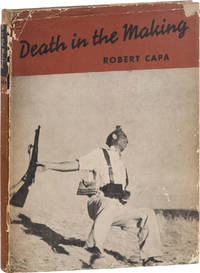
1938ref. 81496New York: Covici-Friede 1938. First Edition. First Printing. Quarto 28cm; taupe cloth blocked and titled in black on spine and front cover; dustjacket; unpaginated 96pp; photographically illustrated. Gently spine-sunned lightly shelfworn with foxing to spine joints board edges and upper edge of textblock; pronounced offsetting to gutters at endpapers from binder's glue though text and illustrations are mostly clean; triangular loss to upper right corner of p.50-51 3.5" x 3.25" x 1 5/8" with the torn corner loosely laid in; just Very Good. Dustjacket is unclipped priced $2.50 spine-sunned showing moderate wear several chips tears and attendant creases with a half-dozen or so tears archivally reinforced on verso; Good or better. One of the definitive photobooks of the 20th century and an essential title in any collection of books on the Spanish Civil War. The untitled jacket image capturing the moment of death of a militiaman on the Cordoba front established Capa's reputation as one of the great battlefield photographers of all time and remains one of the most recognizable photographs of the Twentieth Century. PARR-BADGER I:139. 81496. Covici-Friede unknown books
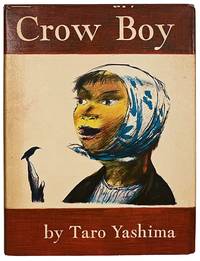
1956ref. 1004316New York: The Viking Press 1956. Second printing of this Caldecott Honor book first published in 1955 inscribed with a full-page original painting by Taro Yashima 1908-1994. A dissident imprisoned for his antimilitarist beliefs Yashima left Japan in 1939 to pursue an artistic career in New York and California. Crow Boy is inspired by Yashima's childhood experiences in a small village school and dedicated to a favorite teacher depicted here as the thoughtful Mr. Isobe. The book follows a friendless non-verbal child called "Chibi" or "tiny boy" a character based on Yashima's memories of a real classmate. Chibi exhibits many of the characteristics now associated with autism: withdrawal from social interaction a rigid focus on pattern and routine and close observation of the natural world reflected in his command of the "voices of crows" memorized on his long walk to school. In the end Mr. Isobe reintroduces Chibi to the school community: "nobody called him Chibi any more. We all called him Crow Boy." Yashima has inscribed this copy to children's author and psychologist Lucile Phillips Morrison 1896-1991; the label of her charitable foundation Angel Island Institute later Phillips-Morrison Institute of California is affixed to the rear endpaper. A near-fine copy of a compelling book inscribed with a vivid painting of a bird flying away from its nest. Single volume measuring 12 x 9 inches: 2 37 1. Original pink cloth stamped in maroon color pictorial endpapers original unclipped color pictorial dust jacket. Color lithographic illustrations throughout text. Original painting of bird and nest facing title page with author's stamp and ink inscription: "To Lucile Morrison / with best wishes / Taro Yashima / Nov. 1959." Small ownership label of Angel Island Institute of California to rear pastedown. Light toning and edgewear to jacket. The Viking Press unknown books
1938ref. 214245New York: Covici Friede 1938. First edition and first printing. Hardcover. Features a preface by Jay Allen who also translated Capa's captions. Legendary collection of black and white photographs by Robert Capa and Gerda Taro of the Spanish Civil War. The book's layout was arranged by Andre Kertesz. A clean very near fine copy in oatmeal colored cloth with the typical toning to the gutters of the endpapers and in a very good plus dust jacket with some slight toning along the edge of the front panel near the spine some small chips to the spine ends some other tiny edge chips and tears and with a nickel sized spot to the front panel. Still easily one of the nicest copies I've ever seen and one that is free of any repairs. Parr & Badger v1 139. Covici Friede unknown books
1998ref. 208173Tucson AZ: Nazraeli Press 1998. First edition and first printing. Hardcover. Printed in an edition of 1000 copies. Features text by Taro Amano and Shino Kuraishi. Includes 60 color images. A fine copy in cloth boards and in a fine dust jacket. Signed by Boo Moon on the half title page. Nazraeli Press unknown books
1962ref. 28529New York: Viking Press 1962. Near fine in very good plus dust jacket. Scarce first edition of the story of how Yashima's daughter Momo makes friends with a painfully shy little boy with an original watercolor by the artist. Taro Yashima real name Jun Iwamatsu was an antifascist activist in addition to an artist; he met his wife Mitsu in the Japanese Proletarian Artists' League. After being arrested and tortured by the Japanese government for their activism they fled to America; they took on their pseudonyms when they were hired by the Office of War Information and later the Office of Strategic Services to protect their family still living in Japan. They produced anti-military propaganda for Japanese consumption in various forms throughout World War II including illustrating handbills for dropping over battlefields. Yashima began writing children's books for Momo the couple's American-born daughter. While these were originally recollections life as a child in Japan as Momo grew he began writing stories about her American childhood. The shy child in YOUNGEST ONE recalls the main character of Yashima's earlier Caldecott Honor title CROW BOY usually interpreted as being on the Autism spectrum. 8.25'' x 9.25''. Original orange publisher's cloth binding with black stamped titles and designs. Original color pictorial dust jacket unclipped $2.75. Color pictorial endpapers of a child's doodle. Illustrated in color throughout. 33 pages. Original watercolor of two birds soaring over a nest with a speckled egg inside signed and stamped by Yashima and dated 1964. Very mild scuffing and light edgewear to dust jacket; several tiny closed tears to edges two closed with tape to verso. Spine ends of book lightly bumped tiy tape-closed tear to lover margin of page 19/20. A sharp vibrant copy. Viking Press unknown books
2007ref. 174423New York: Aperture 2007. First edition and first printing. Hardcover. 163 pages. Features essays by Jock Reynolds and Taro Nettleton and includes an interview of Bey by Carrie Mae Weems. A collection of intimate color portraits. A very fine copy in photo illustrated boards. No dust jacket as issued. An as new copy and still in the publisher's shrinkwrap that has been slit open to verify edition. Aperture unknown books
2008ref. 151370Zurich Switzerland: Nieves 2008. First edition. Softcover. 12 pages. Published in conjunction with an exhibition at Tortoise in Venice that ran November 7-20 2008. Includes 10 color images. A fine copy in stapled wrappers. Uncommon. Nieves unknown books
1963ref. 18794Cleveland: The World Publishing Company 1963. Cloth. Very Good /Very Good. Taro Yashima. INSCRIBED BY THE TRANSLATOR AND ILLUSTRATOR TARO YASHIMA on the half-title. A solid presentable copy to boot of the 1963 3rd American printing. "This story was translated and adapted by Taro Yashima from 'The Golden Footprints' by Hatoju Muku a contemporary Japanese writer for children.". Tight and VG very light bubbling to the front panel's lower-edge in a bright price-intact and price-clipped VG dustjacket with light abrading along the flap-folds and the panel edges. Thin octavo nicely illustrated throughout by Taro Yashima. The World Publishing Company unknown books
1953ref. 35448New York: The Viking Press 1953. First edition. Near fine in like jacket. First edition of Taro Yashima's first children's book about long summer days spent playing in and around a large tree inscribed by the author/artist to radio personality Lowell Blanchard. Taro Yashima real name Jun Iwamatsu was an antifascist activist in addition to an artist; he met his wife Mitsu in the Japanese Proletarian Artists' League. After being arrested and tortured by the Japanese government for their activism they fled to America; they took on their pseudonyms when they were hired by the Office of War Information and later the Office of Strategic Services to protect their family still living in Japan. They produced anti-military propaganda for Japanese consumption in various forms throughout World War II including illustrating handbills for dropping over battlefields. THE VILLAGE TREE was Yashima's first children's book. After the war he developed a stomach ulcer which kept him home for long periods; he began to tell his American-born daughter Momo about life when he was a child in a rural village in Japan and these stories grew into several publications. THE VILLAGE TREE presents a hazy and nostalgic snapshot of the simplicity of childhood when the priorities of the day included catching bugs and swimming. 10'' x 7.75''. Original brown publisher's cloth binding with orange stamped titles and design. Original color pictorial dust jacket unclipped $2.50. Color pictorial endpapers of a bird in flight. Illustrated in color throughout. 34 pages. Inscribed and stamped on half-title page by Taro Yashima to Lowell Blanchard dated "Nov. 25 1956." Mild edgewear to dust jacket with two tiny closed tears to rear; shallow creases to joints. Mild sunning to edges of binding. A sharp vibrant copy. The Viking Press unknown books
1954ref. 11074New York: The Viking Press 1954. Near fine in good plus dust jacket. Inscribed first edition of the charming tale of a walk home from school through a lively Japanese village with an original watercolor by Yashima. Taro and his wife Mitsu real names Jun Iwamatsu and Tomoe Sasako were antifascist activists in addition to artists; they met in the Japanese Proletarian Artists' League. After being arrested and tortured by the Japanese government for their activism they fled to America; they took on their pseudonyms when they were hired by the Office of War Information and later the Office of Strategic Services to protect their family still living in Japan. They produced anti-military propaganda for Japanese consumption in various forms throughout World War II including illustrating handbills for dropping over battlefields. After the war Taro and Mitsu wrote PLENTY TO WATCH and their other children's books to tell their American-born daughter Momo about life in Japan before the war. Based on Taro's childhood in a small village this story brings to life all of the active workshops and craftspeople of early 20th century Japan. 10'' x 7.5''. Original yellow publisher's cloth binding with red stamped titles and designs. Original color pictorial dust jacket awkwardly price-clipped. Pictorial front endpapers with scenes of the Japanese summer. Illustrated in color throughout. 39 pages. Original watercolor artwork to verso of front flyleaf by Taro Yashima of a flowering branch and kanji signed stamped and dated "Dec. 2 1957." Dust jacket with chipping and wear to extremities; long tear to spine repaired with tape on verso. Corners and spine ends of binding very lightly bumped boards mildly bowed. A sound and vibrant copy. The Viking Press unknown books
1963ref. 38048New York: The Viking Press 1963. Near fine in very good dust jacket. Inscribed later printing with an original watercolor by Yashima this illustrated collection of Korean folk tales "changed elaborated and combined" these stories for an American audience. This book of retellings of Korean folk tales was in part an effort to familiarize America with their Korean allies as the fight against Communism wore on in the Cold War. Newbery Medal-winning author Jewett was primarily known for her interpretations of Arthurian tales and she turned her pen to the stories of the Korean people "with whom we have made common cause now for so long." Illustrator Yashima worked for the Office of War Information and later the Office of Strategic Services during World War II producing anti-military propaganda to be dropped over Japan. This work occupies the intersection of his children's books and his political activism. 8'' x 5.25''. Original yellow publisher's cloth binding with orange stamped titles and designs. Original color pictorial dust jacket clipped. Head edge stained red. Pictorial endpapers of a Korean landscape. Illustrated in black-and-white throughout. 160 pages. Large watercolor of a cat signed and stamped by Yashima to dedication page dated 1964. Light edgewear and minor soil spine mildly sunned; tape repairs to spine ends on verso. Binding spine ends mildly bumped. Sharp and clean. The Viking Press unknown books
1954ref. 12610New York: The Viking Press 1954. Near fine in very good minus dust jacket. Early edition of the charming tale of a walk home from school through a lively Japanese village inscribed and with a stunning original watercolor by Yashima. Taro and his wife Mitsu real names Jun Iwamatsu and Tomoe Sasako were antifascist activists in addition to artists; they met in the Japanese Proletarian Artists' League. After being arrested and tortured by the Japanese government for their activism they fled to America; they took on their pseudonyms when they were hired by the Office of War Information and later the Office of Strategic Services to protect their family still living in Japan. They produced anti-military propaganda for Japanese consumption in various forms throughout World War II including illustrating handbills for dropping over battlefields. After the war Taro and Mitsu wrote PLENTY TO WATCH and their other children's books to tell their American-born daughter Momo about life in Japan before the war. Based on Taro's childhood in a small village this story brings to life all of the active workshops and craftspeople of early 20th century Japan. 10'' x 7.5''. Original yellow publisher's cloth binding with red stamped titles and designs. Original color pictorial dust jacket unclipped $2.75. Pictorial front endpapers with scenes of the Japanese summer. Illustrated in color throughout. 39 pages. Original watercolor artwork to verso of front flyleaf by Taro Yashima of a bird in flight over a nest of eggs inscribed stamped and dated "Dec. 16 1959."Some rubbing and chipping to extremities of dust jacket with 1" of loss to top and bottom of spine. Corners and spine ends of binding very lightly bumped with light toning to top edge. A sound and vibrant copy. The Viking Press unknown books
1943ref. 617234New York: Henry Holt 1943. Hardcover. Very Good/Very Good. First edition. Profusely illustrated by the author. 310pp. Light foxing on flyleaves and topedge very good in a very good dust jacket with small chips and tears and heavy foxing. The painter and cartoonist's autobiographical picture book about life in pre-war statist Shwa Japan including details of the inhumane treatment that he and his wife underwent for participation in anti-militarist groups. Henry Holt hardcover books
1960ref. 29598Cleveland: World Publishing Company 1960. Very Good/Very Good-. Cleveland: World Publishing Company 1960. Early Printing. Small slim quarto; publisher's library cloth blue-green pictorial dust jacket retaining original price $2.95; 50pp.; illus. throughout. Moderate wear to jacket margins with rather ubiquitous chipping and a few closed tears light toning to extremities corners nudged else a Very Good internally clean and sound copy. Lovely inscription by the author/illustrator Taro Yashima on half title page with original watercolor illustration of a jolly snowman on facing page. World Publishing Company unknown books
1960ref. 010060Cleveland and New York: World Publishing 1960 Blue cloth with light wear and indent to front cover; pictorial dust jacket is worn with a long slice to front panel price clipped. The story of a kit fox its parents and a little boy. Two-color illustrations by Yashima throughout. Scarce. Stated First Edition. Cloth Hard Cover. Near Fine/Good Minus. Illus. by Taro Yashima. 8vo. World Publishing hardcover books
1932ref. 65593Tokyo: Shunyodo 1932. 8vo pp. 2 4 9 3 503 1 22 2; text in Japanese; full tan cloth; ex-library with stamps on title page and endpapers; boards a little soiled edges spotted text clean very good. Shunyodo unknown books
1993ref. 65624Kasukabe: Hitsuji Shobo 1993. First edition 8vo pp. x 395 7; text in Japanese; laminated paper wrappers; fine. Inscribed by the author to fellow linguist S. Y. Kuroda. Hitsuji Shobo unknown books
1996ref. 52212Yokohama: Yokohama Museum of Art 1996. First edition. Softcover. Near fine condition. Large Quarto. 181 4pp. Original photo-illustrated wraps black lettering on spine in photo-illustrated gray dustjacket with red lettering on spine with photo-illustrated Obi red lettering on spine. Gray endpapers. Photographic double page frontispiece. Half-title printed in red title page in black. Catalog published in conjunction with the exhibition at the Yokohama Museum of Art presenting the new works of Yasumasa Morimura an artist who occupies an important place in the Museum's contemporary collections. "The Actresses series by Yasumasa Morimura brutally exposes the position attitude or stance we assume when we see this boy of work. The viewer's one-sided "gaze" inflicted upon the women Morimura has impersonated is repelled and hurled back to the viewer as the pointed question: Who are you" and "What is your position" Kaori Chino. Profusely illustrated with full page color portrait photographs of Morimura impersonating actresses as Marilyn Monroe Jan Fonda Faye Dunaway and others as well as himself. Various text contributions at rear. Text in Japanese and English. Minor wear. Yokohama Museum of Art unknown books
1943ref. 140948100Topaz UT: The Topazette The Topaz Times 1943. First Edition. Very Good. Archive of documents from the Central Utah Relocation Center known as Topaz. From the estate of Susan Nail daughter of the camp's Military Police company captain who attended Topaz High School for her senior year. Includes 5 issues of the high school newsletter The Topazette, The Topaz Times unknown books
ref. 140943789Tokyo: Fukuinkan-Shoten 1977. First Edition. Very Good. First edition first printing in the original Japanese language of this best-selling plotless children's book. Bound in publisher's original stiff printed wraps. Very Good with toning and wear to wraps musty odor and sporadic foxing to pages. Very uncommon indeed--while everybody poops few can own a book this rare plus most things that poop do not have money. Fukuinkan-Shoten unknown books
1945ref. 140943882Topaz UT: The Topaz Times 1945. Four hundred issues of The Topaz Times; 197 of which are in English and 203 in Japanese; with 47 fragments of various issues 17 illustrated calendars and nine pieces of ephemera including high school newspapers from Topaz War Relocation Center Ram-bler and Topazette. Following two Pre-Issues from September of 1942 the run spans from Vol. II #49 February 27 1943 to Vol. X #19 March 6 1945. The newspaper was issued with varying frequency from daily to weekly or less. Illustrated with drawings many of which are cartoons. Each issue from 2 to 10 pages or so generally printed on both sides of mimeographed sheets measuring about 36.5 x 22.5 cm 14¼" x 8 ¾". Stitched together into monthly groups or fascicles with string through small holes in the top margins. Very Good overall with some edge wear chips and tears; very infrequent loss of text or biopredation. Most issues appear complete but archive is sold "as is" with regards to completeness. Rare. The English language issues are as follows: vol. II no. 49; vol. III nos. 6 7 8-B 9 13 15 18-25 27 30 31 33 34 36 38 39 40 two copies; vol. IV nos. 2 5 7 8-A 9 11-17 20 21 23 24 two copies 26 27 29-31 34-36; vol. V nos. 1 3-13 16-25 27-31 33 two copies 34 36 two copies; vol. VI nos. 1 two copies 2 3 two copies 3-8 9 two copies 10-34; vol. VII nos. 1-3 5-7 8 two copies 9 10 12-22 24 25 27 two copies; vol. VIII nos. 1-3 4 two copies 7 9 two copies 10 12-15 19 21; vol. IX nos. 1-7 9 10 13-18 20 21 23-26; vol. X nos. 1-3 19. Japanese issues are as follows: vol. II no. 49; vol. III nos. 3 6-8 8-B 12-14 18-22 23 two copies 25 29-39; vol. IV nos. 2-4 7 8-A 9 10 12-17 19 two copies 20 21 23 24 26-30 31 two copies 33-37 39; vol. V nos. 1-29 30 two copies 31 33 two copies 34 36 two copies; vol. VI nos. 1-35; vol. VII nos. 1-3 5 6 two copies 7 8 two copies 9 10 12-17 19-22 24 25 27 two copies; vol. VIII nos. 1-3 4 two copies 6 7 9 11-15 18 19 two copies 20 22 25; vol. IX nos. 1-11 13-19 21 23-26; vol. X nos. 1 3. Special editions include: Election Special June 14 1943 bilingual; Extra Dec 18 1944; Extra / Special Edition Jan. 31 1944 lists youths named in draft; Pre-Issue Sept. 26 1942. 6 pp.; Pre-Issue No. 3 September 30 1942. 6 pp.; Special edition Dec. 18 1943 2 pp.; Special edition January 21 1944 bilingual; Special edition May 19 1944 bilingual; Special edition May 23 1944 bilingual two copies; "The Sporting Green" January 22 1944 1 pp.; Topaz Times Extra Two Issues April 16 1943 & April 20 1943 bilingual. Illustrated monthly calendars: May 1943 August-December 1943; Happy New Year 1944 two copies January 1944 two copies February 1944 March 1944 May-August 1944 Dec. 1944. Incomplete issues: Sept. 18 1943 English pp. 3 & 4; Japanese Americanization Supplement only; Sept. 23 1943 English pp. 2 3; vol. IV #37 English pp. 1-3 5; Sept. 25 1943 Japanese Americanization Supplement; vol. IV #38 Japanese p. 3; vol. IV #16 English duplicate of pages 1 & 2; August 12 1943 English p. 5 Japanese p. 3; vol. IV #19 English pp. 1 2 5 6; vol. IV #22 English pp. 1 2 5-8; Japanese pp. 34; vol. IV #27 English pp. 78; vol. V #1 Japanese pp. 23; vol. V #2 English p. 3; vol. V #12 Japanese p. 3; vol. IX #11 English pp. 3 4; vol. VIII #25 English p. 3 4; vol. VIII #21 Japanese pp. 3 4 only but may just be misnumbered; vol. #20 English p. 5; Jan. 6 1944 Japanese pp. 34; Jan. 8 1944 Japanese pp. 34; Feb. 19 1944 English p. 5 b/w Japanese p. 3; vol. VII #6 English pp. 5 6; vol. V #36 Japanese p. 3; Dec. 16 1943 English p. 3 Japanese p. 3; Dec. 9 1943 English p. 3; Japanese p. 3 two copies; Dec. 24 1963 pp. 3 4 7 8; vol. V #28 Japanese pp. 12; Dec. 18 1943 English pp. 3 4; Dec. 11 1943 English pp. 3 4; Dec. 21 1943 English p. 3 Aug. 9 Japanese pp. 34; vol. VI #1 Japanese pp. 3-6; vol. VII #18 Japanese pp. 3 4; June 17 1943 Japanese pp. 4 5; vol. III #37 English p. 3; vol. III #35 English p. 3; June 10 1943 Japanese p. 3 English pp. 3-5; vol. IV #4 English pp. 3 4; July 15 1943 English p. 3 Japanese p. 3; April 24 1943 English pp. 3-6; April 22 1943 English p. 5 Japanese p. 3; vol. III #8 English pp. 3-5; vol. III #21 Japanese pp. 1 2 two copies; vol. III #26 English pp. 3-5 Japanese p. 3; Sept. 25 1943 Americanization Supplement; August 14 1943 English pp. 3 4; Sept. 25 1943 English p. 5; vol. X #2 Japanese pp. 1 2 5. An immense archive of original issues of the camp newspaper for the Topaz War Relocation Center which opened near the town of Delta Utah in September 1942 and closed in October 1945. Now considered concentration camps the centers several of which were scattered across the American west housed Americans of Japanese descent and immigrants who had come to the United States from Japan. President Franklin Roosevelt signed controversial Executive Order 9066 in February 1942 ordering people of Japanese ancestry to be incarcerated in what were euphemistically called "relocation centers" during World War II. Most of the people incarcerated at Topaz came from the Tanforan Assembly Center in California and had previously lived in the San Francisco Bay Area. The articles in these newspapers are concerned mainly with internal camp matters with much on schools and intramural sporting events churches and religious activities camp safety navigating the camp bureaucracy births and a few deaths Nisei soldiers who were either drafted or enlisted into service job opportunities both inside and outside the camp some of which were at The Topaz Times itself and much more. The tone is surprisingly positive and upbeat though perhaps that can be expected due to overt or implied censorship. The illustrations in particular which occasionally take the form of full page comic strips with reoccuring characters demonstrate a unique artistic sensibility born of the grim realities of internment that could not be directly challenged tempered with a distinctly American mid-century optimism. These newspapers' most unsettling quality is their continual insistence on finding and displaying normalcy in the midst of a monumental abnormality namely the tremendous injustice of mass incarceration and displacement on the basis of ethnicity. The Topaz Times unknown books
1957ref. 47639Rutland VT: Charles E. Tuttle Company 1957. Very Good/Very Good. Rutland VT: Charles E. Tuttle Company 1957. Third Printing. Octavo; illustrated dust jacket; illustrated boards; 222pp. Light wear to unclipped dust jacket with a few nicks and short closed tears; general scuffing. Binding sound; gift inscription to preliminaries; else unmarked. Rampo whose pen name is a rendering of Edgar Allan Poe was critical to the development of Japanese mysteries and thrillers in the 20th century. Among the stories included in this collection are "The Human Chair" "The Caterpillar" and "The Traveler with the Pasted Rag Picture. Charles E. Tuttle Company unknown books
2002ref. 164056Japan: Yokohama Museum of Art 2002. Hardcover. VG-. Missing dust jacket. Ex-library with usual marks. Shelf wear on covers corners bumped. Contents are clean and tight. Brown boards with brown lettering.165 pp. An abundance of color illustrations. Missing dust jacket. Text in Japanese and English. Catalogue of an exhibition of the same name at Yokohama Museum of Art July 28-October 6 2002 and the Yamaguchi Prefectural Museum of Art October 16-November 24 2002. Yokohama Museum of Art hardcover books
2008ref. 157684Honolulu: University of Hawai'i Press 2008. Softcover. Fine but art school ex-lib. copy with usual marks. Beige/color-illus. wraps. xxxiv 310 pp. full of bw illus. In 1939 the painter Iwamatsu Jun 1908–1994 and his artist wife Tomoe arrived in the U.S. as political refugees. During World War II Iwamatsu used his artistic talents for the U.S. war effort and he adopted a pseudonym Taro Yashima to protect his young son whom he left behind in Japan. The New Sun which was published in the U.S. in 1943 is an account of his life in prewar Japan. In its depiction of ordinary Japanese The New Sun is both an indictment of Japanese militarism and a plea for American understanding of "the enemy." Told mainly though Yashima’s powerful artwork it is a personal and political text of a rural doctor’s son who becomes an anti-imperialist artist-activist. Yashima recounts how his wife and their peers were imprisoned and brutalized by the Tokkoka Japan’s secret police often for months without being formally charged or knowing when they would be released. Despite the arbitrary deprivations and cruelties of life in prison and in Imperial Japan Yashima retains faith in the regenerative possibilities of art and in a future without tyranny. This work of quiet conscience and protest is now as relevant as when it first appeared more than sixty years ago. University of Hawai'i Press paperback books
1947ref. 67705New York: Henry Holt and Company 1947. Bilingual edition. Hardcover. Very Good /Good. 276pp. Octavo 21 cm Gray cloth over boards. With gentle bruising to the spine ends. In a price-clipped dust jacket with a loss from the paper at the head of the spine measuring 3 inches deep by 1 inch wide. The jacket also has a small piece of tape backing tears to the foot of the spine. Text in English and Japanese. A Japanese graphic novel from the 1940s. The second volume of the remarkable story begun in "The New Sun." The second book by Taro Yashima and an autobiographical book telling in pictures more than words the story of a young Japanese resistance painter and his family. Scarce early Japanese graphic novel. Henry Holt and Company hardcover books