Bridge, Roy; Bullen, RogerBiblio.com

2 573 résultats
2004réf. aauphy990241Routledge 2004-09-09. paperback. NEW. 6x0x9. Routledge paperback
2021réf. __0414098153Sweet & Maxwell 2021. Hardcover. New. 3rd edition. 1536 pages. Sweet & Maxwell hardcover
1938réf. 233971938. Natural DisastersEngineering Niagara Falls bridge collapse photo archive documenting the failure of the Honeymoon Bridge during the catastrophic ice jam of January 1938 one of the most dramatic engineering failures in the history of the Niagara frontier. Built in 1898 as the Upper Steel Arch Bridge and renamed the Honeymoon Bridge in 1937 the structure connected Niagara Falls New York and Niagara Falls Ontario carrying tourists automobiles and cross-border traffic directly beside the falls. During the severe winter of 1938 massive accumulations of ice in the Niagara River created extraordinary pressure against the bridge's steel arch and supports. On January 27 1938 after days of strain and closure to traffic the bridge collapsed into the frozen river below. The destruction ended forty years of continuous operation at one of the most heavily visited tourist and transportation corridors in North America and directly led to construction of the Rainbow Bridge completed in 1941. The archive captures both the frozen landscape that preceded the disaster and the immediate aftermath including crowds gathered along the edge of the falls observing the twisted remains of the bridge lodged in the ice. Photo archive of 13 black and white silver gelatin photographs approximately 3"x5" to 3 x 4.5 inches Niagara Falls New York and Ontario circa January-February 1938. Images show the Horseshoe Falls and American Falls almost entirely surrounded by ice formations with enormous frozen shelves extending across the river basin and dense accumulations of icicles hanging from the cliff faces beside pedestrian overlooks. Several scenes show groups of bundled spectators standing near railings at the edge of the falls while the collapsed steel arch of the Honeymoon Bridge lies broken and partially submerged downstream. Two photographs focus closely on the twisted central truss section bent sharply downward into the ice-choked river while another wider view shows the destroyed span framed directly beside the falls emphasizing the scale of the collapse relative to the landscape. Additional views depict the intact approach structures before failure heavy ice movement beneath the bridge and broad panoramas of the frozen gorge crowded with drifting ice masses. Four photos unmarked appear to show the icy conditions preceding the collapse while the remaining nine stamped "Feb 10 1938" show the aftermath of the disaster. The collapse exposed the fatal weakness of the Honeymoon Bridge's low placement in the gorge where winter ice could press directly against its abutments. Authorities closed the bridge before the final collapse and workers escaped before the steel arch failed resulting in a dramatic but ultimately non-deadly engineering failure. The Rainbow Bridge opened in 1941 about 500 feet from the old site with higher clearance and a design better suited to ice and flood pressure. The event permanently altered the architectural and transportation structure of Niagara Falls with projects designed around ice floes as a primary structural threat not a seasonal inconvenience. Light curling consistent with age and handling; images remain clear and well preserved overall. Overall in very good condition. unknown
1938réf. 233971938. Natural DisastersEngineering Niagara Falls bridge collapse photo archive documenting the failure of the Honeymoon Bridge during the catastrophic ice jam of January 1938 one of the most dramatic engineering failures in the history of the Niagara frontier. Built in 1898 as the Upper Steel Arch Bridge and renamed the Honeymoon Bridge in 1937 the structure connected Niagara Falls New York and Niagara Falls Ontario carrying tourists automobiles and cross-border traffic directly beside the falls. During the severe winter of 1938 massive accumulations of ice in the Niagara River created extraordinary pressure against the bridge's steel arch and supports. On January 27 1938 after days of strain and closure to traffic the bridge collapsed into the frozen river below. The destruction ended forty years of continuous operation at one of the most heavily visited tourist and transportation corridors in North America and directly led to construction of the Rainbow Bridge completed in 1941. The archive captures both the frozen landscape that preceded the disaster and the immediate aftermath including crowds gathered along the edge of the falls observing the twisted remains of the bridge lodged in the ice. Photo archive of 13 black and white silver gelatin photographs approximately 3"x5" to 3 x 4.5 inches Niagara Falls New York and Ontario circa January-February 1938. Images show the Horseshoe Falls and American Falls almost entirely surrounded by ice formations with enormous frozen shelves extending across the river basin and dense accumulations of icicles hanging from the cliff faces beside pedestrian overlooks. Several scenes show groups of bundled spectators standing near railings at the edge of the falls while the collapsed steel arch of the Honeymoon Bridge lies broken and partially submerged downstream. Two photographs focus closely on the twisted central truss section bent sharply downward into the ice-choked river while another wider view shows the destroyed span framed directly beside the falls emphasizing the scale of the collapse relative to the landscape. Additional views depict the intact approach structures before failure heavy ice movement beneath the bridge and broad panoramas of the frozen gorge crowded with drifting ice masses. Four photos unmarked appear to show the icy conditions preceding the collapse while the remaining nine stamped "Feb 10 1938" show the aftermath of the disaster. The collapse exposed the fatal weakness of the Honeymoon Bridge's low placement in the gorge where winter ice could press directly against its abutments. Authorities closed the bridge before the final collapse and workers escaped before the steel arch failed resulting in a dramatic but ultimately non-deadly engineering failure. The Rainbow Bridge opened in 1941 about 500 feet from the old site with higher clearance and a design better suited to ice and flood pressure. The event permanently altered the architectural and transportation structure of Niagara Falls with projects designed around ice floes as a primary structural threat not a seasonal inconvenience. Light curling consistent with age and handling; images remain clear and well preserved overall. Overall in very good condition. unknown books
réf. 48402516like new. unknown
réf. 48402516-nnew. unknown
réf. Z1-R-019-02075NELSON THORNES LTD. Used - Good. Ships from UK in 48 hours or less usually same day. Your purchase helps support Sri Lankan Children's Charity 'The Rainbow Centre'. Ex-library so some stamps and wear but in good overall condition. 100% money back guarantee. We are a world class secondhand bookstore based in Hertfordshire United Kingdom and specialize in high quality textbooks across an enormous variety of subjects. We aim to provide a vast range of textbooks rare and collectible books at a great price. Our donations to The Rainbow Centre have helped provide an education and a safe haven to hundreds of children who live in appalling conditions. We provide a 100% money back guarantee and are dedicated to providing our customers with the highest standards of service in the bookselling industry. NELSON THORNES LTD unknown
réf. Z1-C-043-01225Kessinger Publishing. Used - Like New. Used - Like New. This is a reproduction of an out of print title. This book may have occasional imperfections such as missing or blurred pages poor pictures errant marks etc. that were either part of the original artifact or were introduced by the scanning process. Ships from UK in 48 hours or less usually same day. Your purchase helps support Sri Lankan Children's Charity 'The Rainbow Centre'. 100% money back guarantee. We are a world class secondhand bookstore based in Hertfordshire United Kingdom and specialize in high quality textbooks across an enormous variety of subjects. We aim to provide a vast range of textbooks rare and collectible books at a great price. Our donations to The Rainbow Centre have helped provide an education and a safe haven to hundreds of children who live in appalling conditions. We provide a 100% money back guarantee and are dedicated to providing our customers with the highest standards of service in the bookselling industry. Kessinger Publishing unknown
2020réf. Atlantic-9781789244984CABI Publishing 2020. 1. Hardcover. New. CABI Publishing hardcover
2020réf. Atlantic-9781789244984CABI Publishing 2020. 1. Hardcover. New. CABI Publishing hardcover
2017réf. __0414051017Sweet & Maxwell 2017. Hardcover. New. 1234 pages. Portuguese language. Sweet & Maxwell hardcover
2023réf. Adhya-9781800620766CABI 2023. HB. New. CABI hardcover
2023réf. Adhya-9781800620766CABI 2023. HB. New. CABI hardcover
réf. Z1-M-013-01071Routledge. Used - Good. Used - Good. Ships from UK in 48 hours or less usually same day.Your purchase helps support Sri Lankan Children's Charity 'The Rainbow Centre.' Ex-library but has been well cared for. 100% money back guarantee. We are a world class secondhand bookstore based in Hertfordshire United Kingdom and specialize in high quality textbooks across an enormous variety of subjects. We aim to provide a vast range of textbooks rare and collectible books at a great price. Our donations to The Rainbow Centre have helped provide an education and a safe haven to hundreds of children who live in appalling conditions. We provide a 100% money back guarantee and are dedicated to providing our customers with the highest standards of service in the bookselling industry. Routledge unknown
2020réf. Adhya-9781789244984CABI 2020. Hardcover. New. CABI hardcover
2020réf. Adhya-9781789244984CABI 2020. Hardcover. New. CABI hardcover
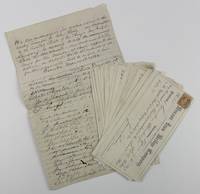
1869réf. 3723Galveston Tx 1869. Very good. 2pp. on a single folded folio sheet of lined paper with integral blank plus fourteen partially-printed receipts completed in manuscript. Minor dust-soiling creasing and edge wear. A post-Civil War manuscript agreement from Texas with the signatures of twenty-six investors transferring their stock in the Brazos Iron Bridge Company to John Sealy of the Galveston Harrisburg and San Antonio Railway Company. Additionally the document is noted and signed on the verso by Sealy transferring those same shares to Thomas W. Peirce. The document is accompanied by fourteen receipts for installment payments on capital stock purchased in the Brazos Iron Bridge Company some of which relates directly to the larger transfer agreement. The Brazos Iron Bridge Company was organized in 1867. Its mission was to construct a railway bridge across the Brazos River. The bridge completed in July 1869 was purchased by the Buffalo Bayou Brazos and Colorado Railway later known as the Galveston Harrisburg and San Antonio Railway Company. When the dust settled on the various transactions among the shareholders John Sealy owned a one-eighth interest in the railway company. Sealy moved from Pennsylvania to Galveston in 1846 and became an important early Galveston merchant real estate investor and railroad magnate. unknown
1869réf. 3723Galveston Tx 1869. Very good. 2pp. on a single folded folio sheet of lined paper with integral blank plus fourteen partially-printed receipts completed in manuscript. Minor dust-soiling creasing and edge wear. A post-Civil War manuscript agreement from Texas with the signatures of twenty-six investors transferring their stock in the Brazos Iron Bridge Company to John Sealy of the Galveston Harrisburg and San Antonio Railway Company. Additionally the document is noted and signed on the verso by Sealy transferring those same shares to Thomas W. Peirce. The document is accompanied by fourteen receipts for installment payments on capital stock purchased in the Brazos Iron Bridge Company some of which relates directly to the larger transfer agreement. The Brazos Iron Bridge Company was organized in 1867. Its mission was to construct a railway bridge across the Brazos River. The bridge completed in July 1869 was purchased by the Buffalo Bayou Brazos and Colorado Railway later known as the Galveston Harrisburg and San Antonio Railway Company. When the dust settled on the various transactions among the shareholders John Sealy owned a one-eighth interest in the railway company. Sealy moved from Pennsylvania to Galveston in 1846 and became an important early Galveston merchant real estate investor and railroad magnate. unknown books
1893réf. 234551893. Boston and Albany Railroad disaster photo archive documenting the catastrophic 1893 bridge collapse at Chester Massachusetts when the westbound Chicago Limited Express crashed through an iron bridge spanning the Westfield River. The wreck occurred on August 31 1893 after the bridge failed beneath the weight of the train sending locomotives and passenger cars into the river gorge below. Fourteen people were killed and dozens injured in a disaster that drew national newspaper attention during a period when American railroads were rapidly expanding passenger service while struggling with aging infrastructure and increasing locomotive weight. Photo archive of 4 albumen photographs mounted on original boards each 8" x 10" Chester Massachusetts August 31 1893. The images show passenger coaches twisted into the collapsed bridge structure tracks hanging above shattered timbers and the locomotive overturned amid splintered debris along the riverbank. One view centers on a heavily damaged passenger car resting beside broken rails while groups of men stand surveying the destruction. Another records the locomotive and tender surrounded by wreckage and recovery workers gathered along the track bed. Smoke rises above the debris field in one scene while telegraph poles hillsides and the river valley remain visible in the background situating the wreck within the narrow western Massachusetts rail corridor. Pencil inscriptions along the mounts identify "Chester" with date "Aug. 31st 1893." The Chester wreck became one of several highly publicized railroad disasters of the late nineteenth century that intensified scrutiny of bridge engineering inspection standards and railroad safety during the peak era of American passenger rail expansion. By the 1890s express trains such as the Chicago Limited linked eastern industrial centers to the Midwest with unprecedented speed but the increased weight of modern locomotives placed enormous strain on bridges originally designed for lighter rolling stock. These photographs preserve not only the violence of the collapse itself but also the physical reality of nineteenth-century rail disaster recovery when wreckage removal body recovery and public investigation unfolded directly at the crash site. Light toning scattered surface wear and minor mount wear consistent with age; images remain clear and detailed. Overall in very good condition. unknown
1893réf. 234551893. Boston and Albany Railroad disaster photo archive documenting the catastrophic 1893 bridge collapse at Chester Massachusetts when the westbound Chicago Limited Express crashed through an iron bridge spanning the Westfield River. The wreck occurred on August 31 1893 after the bridge failed beneath the weight of the train sending locomotives and passenger cars into the river gorge below. Fourteen people were killed and dozens injured in a disaster that drew national newspaper attention during a period when American railroads were rapidly expanding passenger service while struggling with aging infrastructure and increasing locomotive weight. Photo archive of 4 albumen photographs mounted on original boards each 8" x 10" Chester Massachusetts August 31 1893. The images show passenger coaches twisted into the collapsed bridge structure tracks hanging above shattered timbers and the locomotive overturned amid splintered debris along the riverbank. One view centers on a heavily damaged passenger car resting beside broken rails while groups of men stand surveying the destruction. Another records the locomotive and tender surrounded by wreckage and recovery workers gathered along the track bed. Smoke rises above the debris field in one scene while telegraph poles hillsides and the river valley remain visible in the background situating the wreck within the narrow western Massachusetts rail corridor. Pencil inscriptions along the mounts identify "Chester" with date "Aug. 31st 1893." The Chester wreck became one of several highly publicized railroad disasters of the late nineteenth century that intensified scrutiny of bridge engineering inspection standards and railroad safety during the peak era of American passenger rail expansion. By the 1890s express trains such as the Chicago Limited linked eastern industrial centers to the Midwest with unprecedented speed but the increased weight of modern locomotives placed enormous strain on bridges originally designed for lighter rolling stock. These photographs preserve not only the violence of the collapse itself but also the physical reality of nineteenth-century rail disaster recovery when wreckage removal body recovery and public investigation unfolded directly at the crash site. Light toning scattered surface wear and minor mount wear consistent with age; images remain clear and detailed. Overall in very good condition. unknown books
réf. mon0004148945Oxford University Press 2/16/2024 12:00:01 A. hardcover. Very Good. 2.4803 9.8425 7.0866. Cover and edges may have some wear. Oxford University Press hardcover
2015réf. Adhya-9781138794337T&F/Routledge 2015. Paperback. New. T&F/Routledge paperback
2015réf. Adhya-9781138794337T&F/Routledge 2015. Paperback. New. T&F/Routledge paperback
1919Pages 81-102 plus 18 outer pages of nostalgic ads. Features: Cover photo of scene at Cairo's Kasr-en-Nil Bridge; B.S.A. Motor Bicycles ad shows mechanic and sidecar model; First page illustration of great flying display by Australian airmen over London; Photo of Italians protesting outside the Italian Embassy in London; Three photos of stray and abandoned dogs at the Battersea Dogs' Home; Excellent photo and map-illustrated article "With Our Forces in Northern Russia - The Difficulties of Life in a Frozen Zone; Shakespeare at the Peace Conference of 1604 (article); Photos of men in the news include: R.A. Gregory, J.E. H. Williams, Sir John D. Rees, Reginald Blomfield, Sir R.T. Hermon-Hodge, Dr. Adolf Muller, Dr. Eduard David, M. Warburg, Prof. W. Schucking, Count Rantzau, Frank Brangwyn, Ernest Newton, George Harcourt, Adrian Stokes, and W.R. Colton; One-page illustration of Italian peasants praying at wayside shrine; After Caporetto - fascinating photo-illustrated article about who fought and who won on the Piave; Two-page illustration "The Dread Days of the Lenin Experiment in Russia" depicts a most depressing scene in front of Petrograd's winter palace, under the Bolshevik regime; Interesting article about smoking by A.A. Milne; The Unrest in Egypt - two photos including one of celebration over General Allenby's Proclamation in Cairo, and another of a large crowd in Opera Square, Cairo; One-page illustration of Aerial aviator; Centerfold reproduction of Montague Dawson painting "Alone", an impression of Transatlantic Flight (free of staples but present); Page of illustrated text about lady's fashion; Nice back cover color-illustrated ad for Army Club cigarettes shows fashionable young couple fishing. Bit of writing on advertorial front cover. Somewhat above-average external wear. Binding intact. A worthy copy of this wonderful vintage issue. Book
1980512 pages. Index. Color photography throughout. Printed on glossy stock. Prior owner's details covered by white labels upon front endpaper, otherwise book tight, clean and unmarked with very light wear. Light wear to dust jacket which is now preserved in archval-grade Brodart. An excellent copy. Book