2718 risultati
rif. 201805120Paris, Grasset, 1991 ; in-8, 252 pp., br.
rif. 201501696Paris, Le livre de poche , 1988 ; in-12, 409 pp., br.
rif. 201501635Paris, Belfond bridge, 1983 ; in-8, 170 pp., br.
rif. 201407112Paris, Editions du bridgeur , 1988 ; in-8, 234 pp., br.
rif. 201706456Paris, Fayard, 1965 ; in-8, 198 pp., br.
1890rif. 221741890. Ephemera. Very good overall. A large wrapping paper with advertising printed for E. Hammann & Son Successors to Hammann Bros. for custom repair of Boots Shoes and Rubbers. At top an illustration of the Brooklyn Suspension Bridge completed in 1883. Brown paper wrapper 20 x 16.5" some wrinkles and fold lines edges slt. ruffled yet clean and interesting image. unknown
1869rif. 24453Greenpoint NY 1869. Scarce large albumen prints of the beginning of the construction of the iconic Brooklyn Bridge the most daring engineering feat of its time. The images are held by the Museum of the City of New York but not by the Brooklyn Museum or Brooklyn Public Library. Showing construction of the bridge an object of fascination for the public although newspaper editorials scoffed at the enormous undertaking. The Talfor view is taken from the Brooklyn side looking toward Manhattan across the East River with a massive pile of rocks in the forming the base of the pier. In the foreground wooden hoists frame the foundation and temporary construction shacks surround it. In the middle ground lies the East River and tall -masted ships can be seen at anchor on the Manhattan side. Robert B. Talfor is known for the very rare 'Photographic Views of Red River Raft' of 1873. The 113 hand colored photographs measuring 9 x 7" document the landscape and the lives of the crews working on this massive project to remove the thousand year old log jam which blocked the Red River in Louisiana. The lot sold for $93750 in February 2018. During the Civil War Talfor was a topographic engineer who mapped out battlefields. The maps are listed on OCLC. After the war he founded a photography studio in Greenpoint Brooklyn. Curtain's Greenpoint Directory of 1868/9 records him in Brooklyn as follows: Talfor Robert B. photographs Washington c Greenpoint Ave h. Eagle. By the early 1870s Talfor was in Louisiana taking the striking images of the Red River Raft project. The Talfor albumen photograph: 16 x 10 1/2" laid down on board 19 x 14 1/4". Title printed below the image with "East River Bridge" in an elaborate type font. Edges of board rubbed corners slightly chipped. Photograph with a few small marks at lower edge outside image. Period note on verso "Which do you put first ditto faces glass". Possibly a window display note with 3 additional large albumen photographs of the terminal buildings under construction at each end of the Brooklyn Bridge. These massive multistory shed-like structures were also called terminal sheds; here commuters embarked and disembarked to take other mass transit. Two of the images appear to be the Manhattan terminal building at Park Row under construction because tall buildings surround the cast iron structure and tram lines are visible in the road. These two images depict the terminal at the very beginning of construction a close up of the steel outer shell with workers in the foreground and standing on the roof ridge and the finished building with city dwellers passing on the sidewalk below. One is "N.Y. Station East River Bridge." ca. 1875 according to the Museum of the City of New York website. The third albumen likely shows the Brooklyn terminal building under construction as the surrounding area is not as developed as the Manhattan side. Two men stand in the foreground of the half completed steel structure. The three terminal building photographs: 8 1/2 x 6 1/4" mounted on board 14 x 11". Board dusty one scratch at lower edge of print. Second image 16 1/2 x 13" on board 20 1/4 x 16 1/4" board extensively chipped at edges one corner repaired on verso with archival tape; damp stains top edge of image. Third image 10 3/4 x 8 1/2" borders extensively scuffed & marked. Images are mounted in archival mounts. Scarce photographs of the very beginnings of the construction of the iconic Brooklyn Bridge. unknown
1939rif. 60013San Francisco: Golden Gate Bridge and Highway District Schwabacher-Frey Co. 1939. 4to. 246 20 pp. With large folding colour lithograph frontisp. illust. title photo plates text illustrations maps & diagrams throughout 12 large folding blueprint plates at rear. Brick-red publisher’s cloth white lettering illust. of Golden Gate Bridge pier minor rubbing edgewear some scuffing to lower fore-edge ring on recto of frontisp. still VG copy. First edition of this lavishly illustrated engineering report detailing the Herculean efforts to build the Golden Gate Bridge including a detailed history of the project the planning stages construction materials and finished construction. Although Strauss and his original team incorporated Ellis d. 1949 Strauss managed to shunt Ellis aside in November 1931 after several delays and forced him into retirement and long stretches of unemployment even though he continued work unpaid on the calculations and structure of the Golden Gate Bridge. Golden Gate Bridge and Highway District, Schwabacher-Frey, Co., hardcover
rif. RGW9744Hand-Coloured Lithograph heightened with gum arabic showing train and shipping by Day & Son mark on imprint to right Stephenson's Tubular Bridge over the Menai Straits was opened in 1850. Telford's road bridge in the background was built between 1820 and 1826.Francis Klingender in "Art and the Industrial Revolution" observes in the 1840s how artists moved away from depicting the railways themselves to the bridges which carried them. He writes of George Hawkins 1810-52 "his masterpieces are a series of tinted lithographs of the building of the Stephenson tubular bridges over the Conway and the Menai Strait." Here Hawkins shows how even in a remote and sublime location the world is busy with modern communication by train and shipping. Below the image are details of the bridges. unknown
1853rif. 019730New York: George P. Putnam & Co 1853. 2nd edition. 8vo: viii v/vi repeated so x 179 p. Title-page is a cancel. Green vertical ribbed cloth with blindstamped cartouches front and rear reading "Putnam's Popular Library.". Good. Covers spotted two corners lightly bumped first three leaves foxed with only very occasional foxing thereafter. Previous owners' names on front blank and title-page. Binding is sound. George P. Putnam & Co hardcover
1845rif. 157495New York Wiley and Putnam 1845. First edition second issue. Small thin 8vo. Half title. 179 pages. Contemporary 1/2 brown leather over rubbed green cloth with original printed front wrapper from the issue in wrappers tipped-in; chip at top of spine. Very good. This was edited by Hawthorne for his old college chum who had underwritten the cost of Hawthorne's first book1837. With the bookplate of William Temple Emmet's with his pencil signature on the front free endpaper and ink signature on the wrapper leaf. BAL 7597. 1st Edition. Hardcover. Very Good/No Jacket. New York, Wiley and Putnam, hardcover
1845rif. 157495New York Wiley and Putnam 1845. First edition second issue. Small thin 8vo. Half title. 179 pages. Contemporary 1/2 brown leather over rubbed green cloth with original printed front wrapper from the issue in wrappers tipped-in; chip at top of spine. Very good. This was edited by Hawthorne for his old college chum who had underwritten the cost of Hawthorne's first book1837. With the bookplate of William Temple Emmet's with his pencil signature on the front free endpaper and ink signature on the wrapper leaf. BAL 7597. 1st Edition. Hardcover. Very Good/No Jacket. New York, Wiley and Putnam, hardcover books
1922rif. 3433London: Jonathan Cape 1922. Paperback. Very Good. FIRST LIMITED EDITION 296/ 750 INSCRIBED BY CLEMENCE HOUSMAN. 8vo incl. six woodcut plates by Stephen Bone. Original green cloth white paper title label lettered in black with green decorations to spine. Leading and bottom edges untrimmed. Pushing to spine ends. Edges toned top edge spotted. Inscribed in black ink to ffep: "To Norah from C. H. Christmas 1923" later ex libris of Alex. Bridge to front endpaper with his name and date 24.2. 1958 below in blue ink faint bands of offsetting to feps. Occasional fox spots spine cracked at pp. 32-3 with binding firm else clean and bright esp. Bone's six fine woodcut plates. In the original buff dust jacket lettered in black and reproducing Bone's woodcut 'Road' to front panel: price-clipped toned and foxed creased and nicked spine ends chipped; Bridge's pencil notes to ffep re. the inscription. Very good/ very good A tantalising as yet! unsupported association copy of the attractive limited edition George Bourne's familial farming memoir illustrated with six sympathetic woodcuts by Stephen Bone with an inscription ascribed to fellow woodcut artist author and suffragette Clemence Housman supposedly gifting it to the prolific and prolifically censored Irish novelist Norah Hoult: "To Norah from C. H. Christmas 1923"; according to a PO note "Alan Hancox the Cheltenham-based antiquarian bookseller who sold this to me says the inscription on the endpaper is by Clemence Housman. to Norah Hoult". Credibly in Housman's hand in 1923 the year of inscription the retiring artist and author would have been 62 and living briefly in Hampshire with her brother Laurence en route to their final home in Street from London; while her own novels and work for the Suffrage Atelier was behind her Housman was still producing wood engraving of her brother's drawings to illustrate his books with 1922 seeing Jonathan Cape issue three volumes of fairy stories and Christian fantasies on which the siblings collaborated. The significantly younger Hoult 1898–1984 had recently moved to London and was writing for a range of publications including Time and Tide the Telegraph and Pearson's Magazine; her first book Poor Women wouldn't appear for another five years. It's possible that Housman and Hoult may have met through literary circles and it seems likely that they would have been sympathetic to each other. Hoult would go on to nurture a close cross-generational friendship with her neighbour in wartime Kensington the novelist and suffragist Violet Hunt on whom she based her protagonist Claire in her 1944 novel of memory loss There Were No Windows. Alex. Bridge was a Tragara Press collector and correspondent of its founder Alan Anderson. With thanks to Elizabeth Crawford. Jonathan Cape paperback
rif. 102283Marque de Fabrique, RT Paris, Sans date, coll. « Bibliothèque des Jeux » In-16 broché. 417pages. Couverture effrangée aux coiffes. Et papier bruni. Bon état d’occasion.
1815rif. 20053Paris: Goeury 1815. First Edition. Contemporary full green dyed calf with blind stamped roll and broad gilt rule; elaborate gilt spine panels with raised bands. Very good; some spotting and toning; modest chafing at the joints. 4to 2 135 pp. large folding engraved plate. Lamande one of the finest French engineers of the early 19th century was responsible for a number of innovative bridge designs e.g. the multi-span cast iron Austerlitz Bridge in Paris completed in 1806 - the earliest such bridge in France. The innovation at Rouen was the foundation of the bridge. The pier foundations were constructed on timber piles that were closely set within a caisson and then filled with concrete béton. This method was specific to the Rouen Bridge because the river ran deep and the current was strong. The principle was later used by Vicat on his notable Souillac Bridge. An important engineering work. Bound in an unusually elaborate manner presentation for such books. Absent from Roberts; see Peters Transitions in Engineering . p. 190 for a discussion of the Austerlitz Bridge. Goeury hardcover books
1984rif. 33052New York: Rizzoli 1984. Very Good/Very Good. New York: Rizzoli 1984. First American Edition. Folio 34cm; publisher's cloth in white pictorial dust jacket; 752pp.; full color frontispiece color and halftone illus. throughout. Light shelf wear a few faint surface scratches to rear jacket panel brief white residue to bottom edges of both boards corners nudged top textblock edge dusty else Very Good internally clean and sound. Rizzoli unknown
1984rif. 33052New York: Rizzoli 1984. Very Good/Very Good. New York: Rizzoli 1984. First American Edition. Folio 34cm; publisher's cloth in white pictorial dust jacket; 752pp.; full color frontispiece color and halftone illus. throughout. Light shelf wear a few faint surface scratches to rear jacket panel brief white residue to bottom edges of both boards corners nudged top textblock edge dusty else Very Good internally clean and sound. Rizzoli unknown books
1937rif. 140990Murray Bridge: A.C. Weller for the Murray Bridge Centenary Committee 1937. First Edition. Paperback. Very Good. Murray Bridge A.C. Weller for the Murray Bridge Centenary Committee 1937. Octavo 64 pages with numerous illustrations from photographs including a gatefold aerial view plus a loosely inserted folding map of the town 'Scale 16 chains = 1 inch'. Overlapping saddle-stapled printed wrappers a little stained and rubbed; extremities a little creased with a few tiny tears; map lightly creased with a couple of tiny marks and a glue stain to one edge perhaps where the map was glued to the pamphlet itself; overall in very good condition. Printed on the front cover 'The Souvenir Programme and Guide Book with Maps'. A.C. Weller for the Murray Bridge Centenary Committee paperback
1925rif. LIST0213New York 1925. Very Good. A large-scale rendering of the plans for the Greenpoint Avenue bridge over Newtown Creek. The bridge connected Greenpoint to the Blissville neighborhood in Queens. The bridge is the sixth in this location. unknown
1925rif. LIST0213New York 1925. Very Good. A large-scale rendering of the plans for the Greenpoint Avenue bridge over Newtown Creek. The bridge connected Greenpoint to the Blissville neighborhood in Queens. The bridge is the sixth in this location. unknown books
1927rif. 56438Pittsburgh PA New York NY & Toledo OH: The Foundation Company 115 Broadway 1927-1930. Oblong 4to. With 136 linen-backed silver gelatin photographs w/ smaller images mounted 3 to a leaf all w/ linen hinges at gutter margin; including 107 sized 3 x 5.75 in. many w/ text w/in the negative several w/ manuscript descriptions in ink on versos 6 sized 4.75 x 6.75 in. w/ photographer’s stamp for Simmons-Boardman Publishing Co. on verso 23 sized 8 x 10 in. nearly all w/ detailed ink manuscript notes w/in lower parts of negatives many w/ dates in the negative in lower fore-edge and negative numbers manuscript pencil notes of the Northland Studios on verso. All bound w/ sliding metal Acco-fastener at gutter margin manuscript title on front cover of thick paper preserved in the original file folder toning edgewear tears & creases still VG exemplar w/ mimeograph instructions mounted inside front flap detailing that these were to be returned to the Chief Clerk of the Roadway Dept. This amazing photo archive chronicles the bridge removal and construction coffer dam building foundation work and construction project on the Lower Maumee River Bridge for the Toledo Terminal Railroad by The Foundation Company of Pittsburgh & New York. The Toledo Terminal Railroad was completed in 1903 and at one time owned by most of the major railroads that passed through Toledo forming a loop around the city providing an essential link to all of the industrial factories around the city. The Lower Maumee River Bridge was originally erected in 1902-1903 as a single track truss bridge but by the Roaring 20s needed a major upgrade to double-track. These images show in reverse order the construction of additional piers building of coffer dams massive cranes installed to remove the old trusses and install new trusses as well as build the swing span. Along with photos of the control systems the entire intricate process of removing the original single span and installing the double-track trusses is depicted as well as the new swing span in operation. The Foundation Co. was founded in 1900 by Remington Jarrett and Moran and grew rapidly in the opening decades of the 20th century often securing numerous large projects including the building of several dams on the Ohio River to offset flooding railroad bridges and more. It should be noted that the MichiganRailroad project Bridge Hunter and several other references list this still existing and operational railroad bridge as having been constructed in 1902-1903 as double-track but these images clearly show the massive three-year project replacing the original from 1927-1930. See: Toledo Terminal Installs Simplified Interlocking System for Swing Bridge Railway Signaling Vol. 23 No. 12 Dec. 1930 pp. 437-439; R.L. Dalton The Foundation Company In: The Foundation Shipbuilder: The Standard of Stability Vol. 1 No. 3 1918 pp. 1-3; Foundation Company Editorial Chat In: Rock Products Vol. VII No. 2 1907 p. 24; Marvin Kusmierz Industrial Works 1873-1983 aka: Industrial Brownhoist In: Bay-Journal 2007. The Foundation Company, 115 Broadway, unknown
1949rif. lv36h024azbvkBonn, Dümler, 1949. 109 (2) Seiten auf Kunstdruckpapier, durchgehend bebildert; 3 ausfaltbare Tafeln am Ende des Buches. - Original-Leineneinband nit gold- und rotgeprägtem Deckel- und Rückentitel, 4to.(ca. 28 x 23 cm).
rif. 114868Both the card and the photograph are in excellent condition. unknown
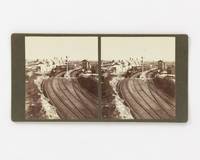
1892rif. 139126Littlehampton: Thomas Sladdin 1892. Very Good. Littlehampton Thomas Sladdin circa 1892. Two individual albumen paper photographs each approximately 82 × 74 mm mounted on a plain stereocard approximately 88 × 175 mm; the photographer's inkstamp 'Thos. Sladdin Photo.' is on the verso. tiny mark to one photograph; in excellent condition. Davies and Stanbury record 'Thomas Sladden Sladdin' working as a photographer at three locations in SA: Littlehampton 1890-91; Sedan 1892-94; and Lyndoch 1895-1900 with his brother John. Littlehampton is the closest of the three to Murray Bridge. Thomas Sladdin unknown
1940rif. 6069Tacoma 1940. 3 RPPC's 2 filled out on versos 1 blank. Generally very good or better with minor corner and edge wear. Three separate views of the historic collapse of the Tacoma Narrows Bridge on November 7 1940. One view is from the east pier during the corkscrewing at 10:45am and another from a similar time viewed from below. The third shows the collapse into the Sound at 11:08am. Various factors including lack of torsional resistance flexibility of the structure "vortex shedding" and high winds contributed to the collapse; "Galloping Gertie" becoming an all-time lesson in physics and bridge construction. unknown