864 risultati
rif. 41902948-nnew. unknown
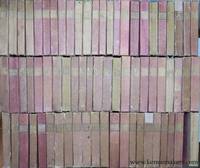
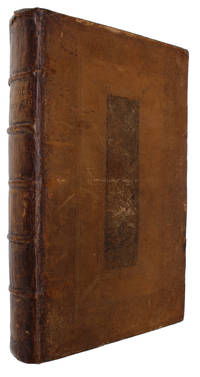
1785rif. 42634N.pl.: De l'Imprimerie de la Société Littéraire-Typographique 1785. 69 of 70 vols. Vol. 69 missing. Large 8vo 275x18 cm. Contemporary marbled boards; spines with paper title-lable of 19 volumes spines restored with contemporary marbled paper; many spines discoloured; 4 tops of spines damaged; 14 hinges more or less damaged but still holding strong. Printed on handmade paper uncut. Copies with wide margins . The set is carefully collated so we mention every minor defect: the verges of the uncut margins soiled; a small number of leaves: browned or soiled; some with light mostly marginal waterstain; margins of plates a bit soiled the frontisp.-portraits with brown spots. 1 general title and 1 sub-title missing; tear repaired in 3 leaves. On the whole a clean set. Most volumes count between 400 and 500 pages 26 volumes more than 500 pages and 9 volumes between 300 and 400 pages. with numerous engraved plates: engraved frontispiece-portrait of Voltaire engraved by Tardieu after De Largillière 6 other engraved portraits 107 of 108 engraved plates 1 engraved plan of the battle Turcs-Tartares and 1 allegorical double-page engraving in the last volume the only volume on title dated 1789. - the first posthumously printed edition with many unpublished pieces printed at Kehl in the printing office of de Beaumarchais who erected this office especially for the edition of Voltaire's works Vols 1-9: Théâtre. With frontisp. portrait and 44 engraved plates. Vol. 10: La Henriade. With 11 engraved plates. Vol. 11: La Pucelle. With 21 engraved plates a few with shorter margins: from an other copy. Vol. 12: Poemes et discours en vers. Vol. 13: Epitres. Vol. 14: Contes en vers. With 4 engraved plates. Vol. 15: Lettres en vers et en prose. Vol. 16-19: Essai sur les moeurs et l'esprit des nations et sur les principaux faits de l'histoire depuis Charlemagne jusqu'à Lous XIII. With frontisp.-portrait of Voltaire engraved by Langlois after De la Tour. Vols. 20-21: Siècle de Louis XIV. With frontisp.-portrait of Louis le Grand. Vol. 22: Précis du siècle de Louis XV. With frontisp.-portrait by Fosseyeux after Vanloo. Vol. 23: Histoire de Charles XII. Vol. 24: Histoire de l'empire de Russie sous Pierre le Grand; divisée en deux parties. with engraved plan battle Turcs - Tartares. Vol. 25: Annales de l'empire depuis Charlemagne. Vol. 26: Histoire du parlement de Paris. Vols.27-28: Melanges historiques. Vols. 29-30: Politique et législation. Vol. 31: Philosophie de Newton. With 14 explanatory engravings. Vols. 32-35: Philosophie générale: Métaphysique morale et théologie. With engraved frontisp.-portrait: buste de Voltaire. Vol. 36: Dialogues et entretiens philosophiques. Vols. 37-43: Dictionnaire philosophique. Vols. 44-45: Romans. With 12 engraved plates 4 inserted from another copy; 1 engraving missing '. cri de douleur'. Vol. 46: Facéties. Vol. 47-49: Melanges littéraires. With engraved portrait. Vols. 50-51: Commentaires sur Corneille. Vols. 52-63. Recueil des lettres de M. de Voltaire 1715-1778. Vols. 64-66: Lettres du Prince royal de Prusse et de M. de Voltaire. With engraved portrait of Frédéric II. Vol. 67: Lettres de l'impératrice de Russie et de M. de Voltaire. Vol. 68: Lettres de M. de Voltaire et de M. d'Alembert. first vol. of 2 1746-1768. Vol. 70: Vie de Voltaire par le marquis de Condorcet; suivie des Memoires de Voltaire écrits par lui-même; des Tables des Oeuvres &. With double-page allegorical engraving and 1 other engraving De l'Imprimerie de la Société Littéraire-Typographique hardcover
1826rif. 38630Paris: Werdet & Lequien fils 1826. 66 of 70 volumes; 21x14 cm. The volumes 15-18: "Essais sur les moeurs" are missing. 66 vols. Half cloth gilt title on spines a few tops and feet of spines rubbed small holes in spine of vol. 65. With engraved portrait and 8 engraved plates. - Foxing throughout but acceptable well bound set of the main works by the most influential philosopher of the 18th century. Vol.1: Vie de Voltaire. iv632 pp. with portrait; Vol.2-9: Théâtre. 8 vols. iv478 pp.; iv512 p.; iv428 pp.; iv502 pp.; iv488 pp.; iv544 pp; iv492 pp.; iv602 p. Vol. 10: La Henriade. iv466 pp. Vol. 11: La Pucelle. iv406 pp. Vol.12-14: Poésies. 3 vols. iv608 pp.; iv448 pp.; iv590ii pp.; Vol.19-20: Siècle de Louis XIV. 2 vols. iv514 pp.; iv558 pp. Vol.21: Siècle de Louis XV. iv484 pp. Vol.22: Histoire de Charles XII. iv358 pp. Vol.23: Histoire de Russie. iv432 pp. Vol.24: Annales de l'Empire. iv672 pp. Vol.25: Histoire du Parlement. iv544 pp. Vol.26-27: Mélanges historiques. 2 vols. iv544 pp.;iv562 pp. Vol.28-29: Politique et l'égislation. 2 vols. iv560 pp.;iv604 pp. Vol.30: Physique. iv642 pp. and 8 engr. plates. Vol.31-34: Philosophie. 4 vols. iv576 pp.; iv584 pp.; iv512 pp.; iv472 pp. Vol.35: Dialogues et entretiens philosophiques. iv584 pp. Vol.36-42: Dictionnaire philosophique. 7 vols. iv528 pp;iv416 pp; iv524 pp.; iv532 pp. iv528 pp; iv516 pp. iv528 pp. Vol.43-44: Romans. 2 vols. iv432 pp; iv482 pp. Vol. 45: Facéties. iv472 pp. Vol.46-47: Melanges littéraires. 2 vols. iv540 pp.; iv532 pp. Vol.48-49: Commentaire sur Corneille. 2 vols. iv540 pp.;iv532 pp. Vol.50-52: Correspondance avec le roi de Prusse. 3 vols. iv510 pp.;iv432 pp.iv412 pp. Vol.53: Correspondance avec Cathérine. iv456 pp. Vol.56-69: Correspondance générale. 14 vols. iv558; iv530; iv564; iv484; iv528; iv556; iv422; iv490; iv480; iv504; iv500; iv486; iv490;iv498 pp. Vol.70: Table des matières. 574 pp. printed in 2 columns pp. 559-562 "Pseudonymes de Voltaire; pp. 563-574 "Table chronologique des principaux ouvrages de Voltaire 1706-1778. Werdet & Lequien fils hardcover
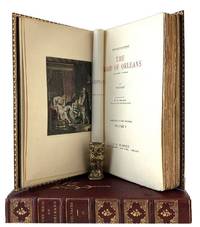
1901rif. 184304London: E. R. Dumont 1901. Translated by W. H. Ireland with rare and voluminous notes. Complete in two volumes. Pp. vi300last blankiv292last blank 18 hand-coloured plates with lettered guards including a frontispiece to each volume the title pages printed in red & black additional notes; demy 8vo; dark red morocco spines lettered and decorated in gilt compartments between raised bands boards lettered and decorated with a floral motif in gilt; t.e.g. others uncut; dentelles decorated in gilt around a large inlaid panel of tortoiseshell veneer dark green moire silk upper endpapers laid on the original light green marbled endpapers; a couple of tiny edge splits occasional light foxing; E. R. Dumont London 1901. Sans Souci edition limited to 25 numbered copies; this set specially bound. E. R. Dumont unknown
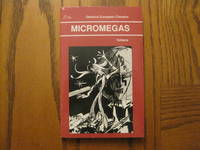
1989rif. 006340Dedalus 1989. Soft cover. Fine. Tim Gray. First Dedalus edition/printing small trade paperback. As New unread condition. Translated by W. Fleming. Intro by Ben Barkow. Collection of stories. ". as Proto SF is "Micromégas" the title story contained in Le Micromégas de Mr. de Voltaire avec une Histoire des Croisades & un nouveau plan de l'Histoire de l'esprit humain coll 1752; trans Tobias Smollett as Micromegas a Comic Romance for full subtitle see Checklist 1753 in which two Alien giants see Great and Small the larger from a planet circling Sirius and a smaller giant from Saturn visit Earth where their responses to human life make some satirical points not least that our species may not be so very important in the context of the much larger physical Universe that was coming to be accepted at the time Voltaire was writing. " JC/PN Encyclopedia of SF Internet 4th Ed. Dedalus paperback
rif. 41902948like new. unknown
1979rif. 230650Franklin Center.: Franklin Library. 1979. First edition thus. Gilt decorated hardcover. Green leather. Gilt edges. Fine copy. 4to. Illustrated by Antoni Clave. Very scarce in this condition. Franklin Library. hardcover
1820rif. 001991Paris: De Pierre Didot L'aine 1820. Collationvol 1: 4382pp vol 2:446pp vol 3:454pp vol 4:4313pp with half titles. Bound in contemporary half calf calf corners marble boards raised bandsgilt title lettering. Calf lightly rubbed some minor scuff marking. bindings in very good solid condition with strong hinge joints. Internally no loose pages previous owners bookplate pages in very good clean condition. A very good clean well bound set.A45. Hardcover. De Pierre Didot, L'aine Hardcover
rif. 122576London Printed for G. Kearsly at No. 46 in Fleet-street 1774. . 2 vols in 1; 8vo 18 x 11 cm; half-titles and divisional title present ad. f. at end of vol. I dated ownership inscription and MS poem in pen to front endpaper pen notes to final few ff and rear free endpapers; contemporary sprinkled calf rebacked in the 19th-century contrasting red morocco lettering-piece to spine joints and extremities a little rubbed very good;2 vi 222 1ad. 2 vi 300pp. An early edition of the French Enlightenment philosopher Voltaire's history of the court of Louis XV the penultimate King of France of the ancien régime. With an interesting manuscript poem to the front free endpaper warding-off theft from the owner Edward Dyke 1815: 'Did you borrow this Book say Did you filch this Book away Do you know the accusers name Pray return it then for shame; Aye you have forgot then know My name is neither Tom nor Jon Neither is it Jack nor Mike But most call me Edward Dyke' ESTC T138091. London, Printed for G. Kearsly, at No. 46, in Fleet-street, 1774. unknown
rif. 73138CBOhne Ort u. Verlag 1759/63. Mod. Ppbd. mit reicher Rvg. Papier teils etwas fleckig. Originalumschlag eingebunden. Es fehlen 1 Frontispiz u. 2 Karten. Eine Karte in Kopie beigebunden. Ohne Ort u. Verlag 1759/63. unknown
rif. 117621Glasgow Printed by Robert Urie 1759. . Fourth edition; 12mo 18 x 10.5 cm; a little toned front hinge reinforced; contemporary tree calf contrasting red morocco lettering-piece to spine joint and headcap repaired slightly scuffed and rubbed very good; 6 3-149 13pp. An early Glasgow printing of this interesting outsider's take on English society and its people precipitated by Voltaire's exile to Great Britain in 1726. The resulting Letters first published in 1734 following his return to Paris express his great admiration for the comparative religious freedom enjoyed by England's Quakers and Socinians as well as its constitutional monarchy 'where the Prince is all powerful to do good and at the same time restrain'd from committing evil' the implication being that England could provide a model for France's reform p.53. When the French edition was published the following year without the approval of the royal censor as Lettres Philosophique it caused a storm with copies confiscated and publicly burnt and Voltaire again forced to flee Paris. The work remains one of Voltaire's most widely known and read texts which helped introduce Bacon Locke and Newton to Europe's Enlightenment thinkers. It also contains an early account of Newton's famous discovery of gravity passed on to Voltaire by Newton's niece Catherine Barton as well as an early translation into French verse of Hamlet's soliloquy from Act 3 Scene 1: 'Demeure il faut choisir & passer à l'instant / De la vie à la mort ou d l'Etre au neant.' p.173. Widely ranked as Voltaire's most important early philosophical work and 'the first bomb hurled against the Ancien Régime' Babson. ESTC T137639. Glasgow, Printed by Robert Urie, 1759. unknown
1949rif. 148560New York: Hermitage House 1949. Hermitage House limited edition of Voltaire’s satirical masterpiece. Octavo bound in full modern morocco by Sangorski & Sutcliffe / Zaehnsdorf with gilt titles and tooling to the spine in six compartments within raised gilt bands gilt ruling to the front and rear panels all edges gilt gilt turn-ins and inner dentelles marbled endpapers with black and white illustrations. One of 1500 numbered copies this is number 500. In fine condition. Illustrated by Sydney Joseph. One of the most influential thinkers of the French Enlightenment François-Marie Arouet know by the nom de plum Voltaire was a resourceful and prolific writer. His works touched nearly every literary form including plays poems novels theoretical essays and scientific treatises. A forthright and candid advocate of civil liberties he frequently criticized the institutions of religious dogma and classism prevalent in 18th century France often doing so through satire to avoid censorship and imprisonment. Candide has ranked as one of the world's great satires since its first publication in 1759. It concerns the adventures of the youthful Candide who in the course of his travels in Europe and South America saw and suffered such misfortune that it was difficult for him to believe this was "the best of all possible worlds." Indeed it seemed to be quite the opposite. In brilliantly skewering such naïveté Voltaire mercilessly exposes and satirizes romance science philosophy religion and government — the ideas and forces that permeate and control the lives of men. Hermitage House unknown
1928rif. 059795New York: Random House 1928. 1st Edition Thus 1st Printing. Hardcover. Very Good . 111 Pp. #1057 Of 1450 Copies The First Book Published By Random House Illustrated Throughout By Rockwell Kent And Signed By Him On The Limitation Page. Tan Cloth Beveled Edges Gilt. Binding With Only Slight Wear To Gilt Contents Fine. With The Original Sales Receipt Dated Sept. 13 1928 From E. Weyhe / Prints And Books On The Fine Arts. Random House hardcover
1928rif. 059796New York: Random House 1928. 1st Edition Thus 1st Printing. Hardcover. Very Good . 111 Pp. #1324 Of 1450 Copies The First Book Published By Random House Illustrated Throughout By Rockwell Kent And Signed By Him On The Limitation Page. Tan Cloth Beveled Edges Gilt. Binding With Only Slight Wear To Gilt Contents Fine. Random House hardcover
rif. 12243473-nnew. unknown
1775rif. 600AG1775. Paris 1775 gez. 1775 Kupferstich Voltaire im Bett liegend von Personen umgeben von Neé und Masquelier nach Non. Bildgrösse: 145 x 18 cm. Blattgrösse: 195 x 23 cm. Leicht fleckig. unknown
1756rif. 00290050Paris 1756. Hardcover. Good. Original gilt half leather.; Edges and corners cover worn; top spine damaged; name/place stamp on endpaper. Paris hardcover
1733rif. 60085London C. Davis and A. Lyon 1733. 8vo. Lovely contemporary full Cambridge-style binding with five raised bands to spine and blindstamped ornamental borders to boards. . Double gilt line-borders to boards. All edges of boards with gilt borders. Gilt title to spine. Hinges neatly and professionally re-inforced. Internally very nice clean and fresh. A lovely crisp and large copy with good margins printed on heavy fine paper. 16 -including preface contents advertisements 253 1 18 -Index pp. The important actual first edition of this highly celebrated key work of the Enlightenment in which the anecdote of how Newton discovered gravity the story about Newton and the falling apple appeared for the first time together with the description of the difference between the physical world view of the English and the French the "plenum" and the "vacuum". This seminal work in which Voltaire famously depicts British philosophy science society and culture in comparison to French can be viewed as the Enlightenment equivalent to Tocqueville's "Democracy in America". This series of essays which is based on Voltaire's experiences when living in England was actually written by Voltaire mostly in English which he mastered to perfection. It has often been presumed that the first edition of the work was that published in French in 1734 but actually the present English edition constitutes the actual first appearance of the work as well as the version that is closest to Voltaire's intention as the French language version is the re-written one and the English version the original. Curiously almost all modern English versions are translations into English of the French edition instead of the original English version making this edition of the utmost importance.After the original English edition of 1733 two French editions soon followed the first in 1734. Unlike the British the French resented the book and already in 1734 the French Parliament issued an order for the author's arrest and condemned the work causing the impact of it in France to be delayed. The book was burned for being "dangerous to religion and civil order". At the same time the work became a bestseller in Britain and as much as 14 editions of the work were published in the eighteenth century. "Inspired by Voltaire's two-year stay in England 1726-8 this is one of the key works of the Enlightenment. Exactly contemporary with Gulliver's Travels and The Beggar's Opera Voltaire's controversial pronouncements on politics philosophy religion and literature have placed the Letters among the great Augustan satires. Voltaire wrote most of the book in English in which he was fluent and witty and it fast became a bestseller in Britain. He re-wrote it in French as the Lettres philosophiques and current editions in English translate his French." Nicholas Cronk Introduction to the Oxford's Classics edition from 1999.The great French philosopher Voltaire was greatly impressed by the philosophical and scientific achievements of the English especially those of Newton Locke and Bacon. As a disseminator of scientific knowledge Voltaire came to play a great rôle in the popularization of Newtonian science and its discoveries the present work being a prime example. Although the work was condemned by the French authorities it still came to play a great rôle in the spreading of Newtonian ideas in France. The present work generally came to play a dominant rôle in Enlightenment accounts of the history of science and philosophy. The work focuses on British science and thought and uses the accounts of these to emphasize what is lacking in French society and French thought. The work is generally very critical towards the French "ancient régime" and when Voltaire here discusses the emergence of empiricism it is viewed as an English tradition that stands in opposition to the French rationalist tradition with Descartes as the prime example. This view is taken over by the following Enlightenment historians of science and philosophy e.g. d'Alembert see for instance his "Preliminary Discourse" of 1751. Some of the most influential passages of the work are probably those on Bacon who Voltaire sees as the founder of modern experimental science Newton and Descartes. Letters XIV on Descartes and Newton XV on attraction and XVI on Newton's Optics from 1704 are among the most influential essays of the work. In XVI Voltaire reflects upon Newton's "Optics" and the way that he rejected Descartes' theory and set out his own account of the properties of light. In XV he presents the first account of Newton and the falling apple: "As he was walking one Day in his Garden and saw some Fruits fall from a Tree he fell into profound Meditation on that Gravity the Cause of which had so long been sought but in vain by all the Philosophers whilst the Vulgar think there is nothing mysterious in it. He said to himself that from what height soever in our Hemisphere those Bodies might descend their Fall wou'd certainly be in the Progression discover'd by Galileo; and the Spaces they run thro' would be as the Square of the Times. Why may not this Power which causes heavy Bodies to descend and is the fame without any sensible Diminution at the remotest Distance from the Center of the Earth or on the Summits of the highest Mountains; Why said Sir Isaac may not this Power extend as high as the Moon." pp. 127-28.But perhaps the most famous passage in the volume is the opening of Letter XIV: "A Frenchman who arrives in London will find Philosophy like every Thing else very much chang'd there. He had left the World a "plenum" and he now finds it a "vacuum". At Paris the Universe is seen compos'd of Vortices of subtile Matter; but nothing like it is seen in London. In France 'tis the Pressure of the Moon that causes the Tides; but in England 'tis the Sea that gravitates towards the Moon; so that when you think that the Moon should make it Flood with us those Gentlemen fancy it should be Ebb which very unluckily cannot be prov'd." pp. 109-10. hardcover
rif. 16958Voltaire. Candide. Franklin Library. Pennsylvania: Franklin Library 1979. Hardcover. A Limited Edition. Original binding. Bound in one quarter premium full leather. Covers Accented in Gilt motifs. Printed on archival paper with gilded edges with silk ribbon page marker and decorated endsheets. Translation of Tobias Smollet This version also includes many with illustrations of Antoni Clave. Candide is a satire first published in 1759 by Voltaire a philosopher of the Age of Enlightenment. A beautiful book in pristine condition. Candide is living a sheltered life with his mentor Professor Pangloss who's mantra is "all is for the best" in the "best of all possible worlds" but as the fantastical and fast-moving plot continues Candide slowly and painfully is disillusioned as he witnesses and experiences great hardships. Voltaire concludes Candide with a practical precept "we must cultivate our garden" in lieu of the "all is for the best" in the "best of all possible worlds". Candide has enjoyed both great success and great scandal. Immediately after its secretive publication the book was widely banned to the public because it contained religious blasphemy political sedition and intellectual hostility hidden under a thin veil of naïveté. Today Candide is recognized as Voltaire's magnum opus and is often listed as part of the Western canon. unknown
1977rif. 020413Lincoln: Penmaen Press 1977. First Edition. Hardcover. Light marking to cloth along spine. Near Fine in a Near Fine slipcase. Lynd Ward. Quarto in cloth-backed boards. Of 200 numbered copies of this special edition this copy not numbered but marked "O.S." out-of-series. Illustrated with six wood engravings by Lynd Ward. SIGNED by artist Lynd Ward Anthony Hecht the translator and Arthur Wilson who wrote the introduction. Hand-printed by Michael McCurdy and Evelyn Clarke with Ward's engravings struck from the blocks. There were also 100 deluxe copies and 200 trade copies. Prospectus laid in. Penmaen Press hardcover
rif. 115135ABParis: Blaizot; 1927. 225 x 27 cm. 6 Bll. 176 S. 3 Bll. Halbfranzband in Maroquin. Pergamentüberzug mit goldener Spiralmusterprägung. Meistereinband von und gestempelt mit "René & Michel Kieffer". Sehr guter Zustand. Kurzroman von Voltaire in dem ein Nordamerikaner an der Küste der Bretagne landet und durch eine Verwechslung bei einem Prior und dessen Schwester aufgenommen wird. Durch seine Ehrlichkeit weil er "ganz naiv stets sagt was er denkt und tut was er will" nennt man ihn den Harmlosen; und da ihm die Kunst der Heuchelei fremd ist stehen ihm viele Enttäuschungen in der Adelsgesellschaft des franz. 18. Jhdts bevor. Voltaire erreicht es so die europäische Kultur in ihrem Zusammenstoß mit der unverbildeten Person des Harmlosen lächerlich und fragwürdig zu machen. siehe auch KLL. Eines von 350 num. Exemplaren auf Vélin-de-Rives-Bütten. Die Zeichungen und der Buchschmuck in diesem Band von Bernard Naudin 1876-1946 zählen zu seinen schönsten Arbeiten. 1927 unknown
1919rif. 6269BB1919. 2 Bände. Berlin Gustav Kiepenheuer 1919. Mit Illustrationen von Moreau Le Jeune nach alten Vorlagen. Orig.-Pergamentbande mit reicher Rücken- und Deckelvergoldung sowie Kopfgoldschnitt. Eines von 150 nummerierten Exemplaren. - Papier gebräunt und wenig stockfleckig. Einband berieben und fleckig. Die Deckel verzogen. unknown
1942rif. 5878BB1942. Zürich Les belles feuilles 1942. 4°. 2 Bl. 115 4 S. 2 Bl. Mit 1 Frontispiz mehreren Textillustr. u. der Suite in 12 losen Tafeln nach Holzschnitten von Imre Reiner. Lose Bogen in illustr. brosch. Orig.-Umschlag sowie Suite in Bütten-Mappe zus. in Halbpergament-Chemise u. Orig.-Pappschuber dieser leicht berieben u. lichtrandig. SIK II 856 für Reiner. - Unnumeriertes nicht signiertes Ex. von 170 GA 232 mit kompletter Suite in dieser Form normalerweise numeriert u. signiert des ersten Druckes der "Belles Feuilles" auf Rives-Bütten. Imre Reiner 1900-1987 geb. in Ungarn war in den 20er Jahren als Graphiker in London Paris New York und ab 1931 in Ruvigliana bei Lugano als Maler Typograph Graphiker u. Illustrator tätig. unknown
1765rif. 4481CB1765. 2 in 1 Band. Genève Cramer 1765. 8°. 292 283 S. Mit 1 gest. Tafel 1 Textholzschn. und einigen Holzschnittvignetten. Lederband der Zeit. Erschien ebenfalls anonym erstmals ebenda 1759-1763 in 2 Bänden. - Nur wenig stockfleckig. Einband berieben und bestossen. unknown
1772rif. 30301AB1772. 8 Bände. Lausanne François Grasset 1772. 8°. Pappbände der Zeit mit verg. Rückensch. Papier vereinzelt stockfleckig. Einbände berieben und bestossen Rücken verblichen. unknown