de Saint-Lambert, Jean-FrancoisBiblio.com

173 résultats
réf. 2013094795.Gpaperback. Good. Access codes and supplements are not guaranteed with used items. May be an ex-library book. paperback
réf. 2329016816.Gpaperback. Good. Access codes and supplements are not guaranteed with used items. May be an ex-library book. paperback
réf. 2013094779.Gpaperback. Good. Access codes and supplements are not guaranteed with used items. May be an ex-library book. paperback
réf. 1120020484.Gpaperback. Good. Access codes and supplements are not guaranteed with used items. May be an ex-library book. paperback
réf. 1166321509.Gpaperback. Good. Access codes and supplements are not guaranteed with used items. May be an ex-library book. paperback
1778réf. R300107921A Amsterdam. 1778. In-12. Relié plein cuir. Etat d'usage, Coins frottés, Dos abîmé, Quelques rousseurs. XXXVI + 215 + 240 pages. Tranches roses. Contreplats jaspés. Dos à 5 nerfs, pièce de titre manquante, motifs dorés passés. Dos frotté, manques en coiffe de pied et au centre du dos. Quelques traces de mouillures sans conséquences sur le texte. 2 photos disponibles.. . . . Classification Dewey : 840.05-XVIII ème siècle
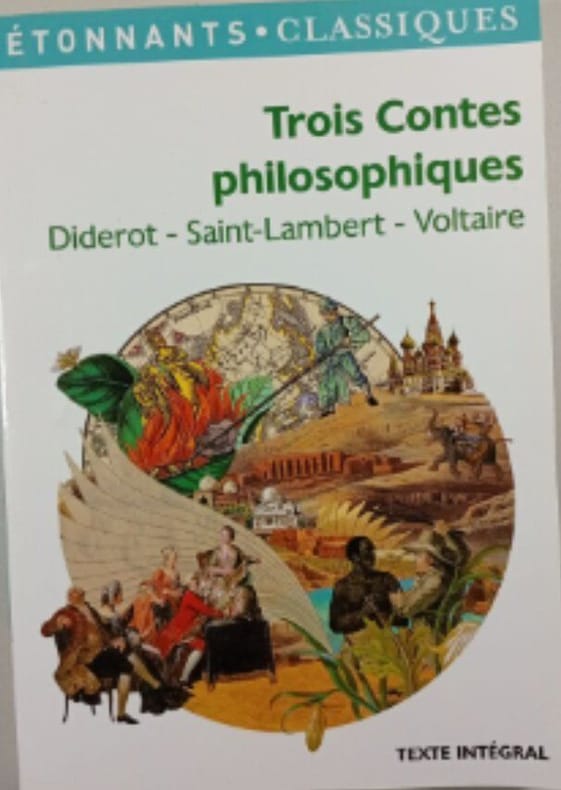
2007réf. 5003782182007 collection étonnants classiques. 2007.
réf. lc_52872La Musardine (26 mai 2004)
2005réf. LFA00e7dUn ouvrage de 128 pages, format 165 x 235 mm, illustré, broché, publié en 2005, Editions Alan Sutton, bon état
réf. 0259016640.Gpaperback. Good. Access codes and supplements are not guaranteed with used items. May be an ex-library book. paperback
réf. 0265493137.Ghardcover. Good. Access codes and supplements are not guaranteed with used items. May be an ex-library book. hardcover
réf. 0428304494.Ghardcover. Good. Access codes and supplements are not guaranteed with used items. May be an ex-library book. hardcover
réf. 46456305like new. unknown
réf. 650546951University of Exeter Press . Papeback. New. pp. 88 University of Exeter Press unknown
réf. 0666664587.Ghardcover. Good. Access codes and supplements are not guaranteed with used items. May be an ex-library book. hardcover
1796réf. 71224Paris: De l'Imprimerie de P. Didot l'aîné 1796. Fine. De l'Imprimerie de P. Didot l'aîné Paris 1796 23 x 31.50 cm relié New edition revised by the author illustrated with 4 copper-engraved plates by Morel after drawings by Chaudet Cohen col. 927. A sumptuous publication from the press of Pierre Didot l'aîné the foremost printer of his day. This edition is distinguished from all previous ones by its entirely renewed illustration in a neoclassical spirit in keeping with the aesthetic of the Directoire period. It is the first to have been revised by the author himself. Contemporary binding in full red morocco spine with five raised bands richly decorated with gilt dentelles fillets and fleurons boards framed with a double gilt dentelle gilt roll on the turn-ins and headbands pastedowns and doublures framed with a gilt dentelle of marbled paper all edges gilt. The first edition of Les Saisons published in 1769 had secured Saint-Lambert's reputation and earned him a seat at the Académie française with the support of Voltaire who wrote of the poem: « C'est le seul ouvrage de notre siècle qui passera à la postérité. » The present edition appears at a singular moment: two years after the abolition of slavery voted by the Convention on 4 February 1794 and at a time when Saint-Lambert then eighty years old was himself revising his work for the last major edition of his lifetime. The choice of Didot as printer whose productions then represented the pinnacle of French typographical luxury and the very date of publication lend this volume a significance that goes well beyond a simple reprint. The work contains in addition to the long poem in four cantos devoted to the seasons and its preface on bucolic and pastoral poetry the tales L'Abénaki Sara Th. Ziméo the Pièces fugitives and the Fables orientales. The latter open with a ""Préface de Saadi"" an explicit attribution new to this edition relative to those of 1769 and 1775 of the free adaptation of the preface to the Gulistan the ""Rose Garden"" 13th century that has appeared in the collection since the first edition. It is in this author-revised edition that Saint-Lambert publicly acknowledges his debt to Persian literature at the very moment when the first complete French translation of the Gulistan had just appeared abbé Gaudin 1789. It is through Ziméo included in the collection since the first edition of 1769 that Saint-Lambert's work occupies a singular place in the literary history of the Enlightenment. One of the rare texts of this period to stage a slave insurrection where Voltaire in Candide had sketched only a solitary figure of revolt this tale constructs an African hero of full epic dignity and predates both the insurgent figure in Louis-Sébastien Mercier 1771 and the celebrated antislavery passage of the Histoire philosophique des deux Indes attributed to Diderot which did not appear until the 1780 edition. It is worth noting however that this 1796 edition unlike its predecessors does not reproduce the ""Réflexions sur les Nègres"" that followed Ziméo in the editions of 1769 and 1775 a text in which Saint-Lambert had argued that the faults attributed to Africans « sont de l'esclavage » and not of nature. This omission occurring barely two years after the abolition decree remains difficult to interpret with certainty: an editorial choice dictated by the luxurious format of the publication a calculated discretion in a still unstable political climate in which the colonial question was far from settled under the Directoire. unless this very absence of advocacy is precisely the sign of the triumph of the humanist ideals for which the author no longer needed to argue having been fully vindicated by the Convention which voted the abolition of slavery on 4 February 1794 16 Pluviôse Year II. A fine copy in a handsome contemporary binding of full red morocco of the definitive edition revised by the author published two years after the abolition of slavery. De l'Imprimerie de P. Didot l'aîné hardcover
1782réf. 19781782. : 8 . 4 Blank pages / 1 Blank pages / 1 Blank pages / 21 Roman numbered pages / 1 Blank pages / 187 Pages / 5 Blank pages Binding: Contemporary Half Leather 24mo Height cm: 134 CM Width cm: 82 CM Thickness cm: 11 CM hardcover
1775réf. 48828Paris: S. n. 1775. Fine. First illustration of Zimeo the first Black insurgent hero in French literature S. n. Paris 1775 - relié Seventh edition first to illustrate Zimeo adorned with 7 plates by Moreau le Jeune: a frontispiece and 4 plates for Les Saisons engraved by Delaunay Duclos Prévost and Simonet and 2 plates for the Contes Poésies fugitives and Fables orientales together with 4 headpiece vignettes by Choffard. Our copy is further enriched with separate pulls of the title-page ornament and Choffard's vignettes. Nineteenth-century binding in full midnight-blue morocco. Five-raised-band spine decorated with pastoral flowers vine wheat and billhook game and hunting horn. and gilt compartments. Triple gilt fillet and geometric gilt lace border to boards. Wide gilt lace border to doublures of marbled paper. Upper joint rubbed. The first edition of Les Saisons published in 1769 with illustrations by Gravelot and Le Prince had secured Saint-Lambert's reputation and earned him a place at the Académie française. The present seventh edition Cohen/Ricci Sp. 926; Sander 1779 retaining the fictitious imprint « Amsterdam » concealing a Parisian printer is the first to include an illustration for Zimeo the anti-slavery philosophical tale that had been part of the volume since the first edition:Moreau's frontispiece captioned ""j'aimerai deux blancs dit-il"" gives a face for the first time to the first Black insurgent hero in French literature.The volume contains in addition to the long poem in four cantos devoted to the seasons and its preface on bucolic and pastoral poetry the tales L'Abénaki Sara Th. Zimeo the Pièces fugitives and the Fables orientales. The Fables orientales open with a prefatory text constituting a free adaptation of the preface to Saadi's Gulistan the « Rose Garden » 13th century. This adaptation is not yet attributed to Saadi in the table of contents it would be in the 1796 edition yet it represents one of the rare French versions of this text available between André du Ryer's partial translation 1634 and the first complete translation by the abbé Gaudin 1789. It is above all through the anti-slavery philosophical tale Zimeo included in the collection since the first edition that this work by Saint-Lambert holds a singular place in European literary history. This philosophical tale is one of the rare Enlightenment texts to stage a slave insurrection where Voltaire in Candide had sketched only a solitary figure of revolt. Drawing on Aphra Behn's Oroonoko 1688 translated into French by La Place in 1745 Saint-Lambert constructs a Black hero endowed with full epic dignity and appends to the narrative « Réflexions sur les Nègres » in which he systematically dismantles racial prejudice asserting that the faults attributed to Africans « sont de l'esclavage » and not of nature. Chronologically Zimeo precedes the figure of the rebel in Louis-Sébastien Mercier 1771 and the celebrated anti-slavery passage of the Histoire philosophique des deux Indes attributed to Diderot which did not appear until 1780. The present 1775 edition is precisely the first to furnish the tale with an illustration: Moreau le Jeune's frontispiece depicting Zimeo rescuing two white captives gives a visual image for the first time to Saint-Lambert's Black hero at the very moment when the abolitionist debate was beginning to gather momentum in France. From the libraries of Francis Kettaneh 18971976 and Irwin Laughlin 18711941 with their bookplates. Francis Kettaneh a businessman born in Lebanon was one of the great American bibliophiles of the twentieth century whose bookplate bears the motto Mehr Licht Goethe's last words. Irwin Boyle Laughlin an American diplomat served as United States Minister Plenipotentiary to Greece 19241926 and subsequently as Ambassador to Spain 19291933; a passionate collector of eighteenth-century French art and books he commissioned the construction of S. n. hardcover
1775réf. 1410060011Amsterdam 1775-01-01. Hardcover. Very Good. Octavo. 7th edition. xxxvi 467 pages 7 plates 4 vignettes 23 cm. Bound in contemporary full red Moroccan leather. Gilt lettering to spine. Gilt tooling to board edges. Inliad gilt tooling to inside board extremities. Contemporary blue page ends. AEG. Good binding and cover. Wear to extremities. Slight soiling to spine. Owners bookplate on FEP. Clean unmarked pages. Cohen-de Ricci 926; Brunet V 52; BMC XXII 435.475 Jean Francois de Saint-Lambert was a French poet philosopher and military officer. Saint-Lambert began writing poetry in his adolescence though in all his life he read his works in salons and to his friends but did not rush to publish them. The Seasons his major poetical work The Season was begun in October 1733 but did not appear in print until 1769. Saint-Lambert's poetry is workmanlike and conventional typical of the latter half of the 18th century. His writings on society politics and moral philosophy are derivative a pale reflection of the ideas of the Philosophes the French Enlightenment thinkers such as Voltaire and Rousseau whom he lived among. Amsterdam hardcover
1775réf. 38316à Amsterdam: S. n. 1775. Fine. First illustrated edition of Ziméo a pioneering anti-slavery tale of the Enlightenment S. n. à Amsterdam 1775 14 x 23 cm relié Seventh edition first issue of Moreau le Jeune's illustrations adorned with 7 plates: a frontispiece and 4 plates for Les Saisons engraved by Delaunay Duclos Lebas and Prévost and 2 plates for the Contes Poésies fugitives and Fables orientales together with headpiece vignettes by Choffard reprinted from the first edition of 1769. Contemporary full calf binding. Richly decorated smooth spine. Red morocco lettering-piece. Boards in mottled calf with Greek-key border added at a later date during restoration. Worn corners. A split to the upper joint extending 5 cm. A very good copy overall. The first edition of Les Saisons published in 1769 with illustrations by Gravelot and Le Prince had established Saint-Lambert's reputation and secured his election to the Académie française with the support of Voltaire. The present seventh edition Cohen/Ricci Sp. 926; Sander 1779 is a reprint of the 1769 edition retaining Choffard's headpiece vignettes but distinguished by the addition of 7 plates by Moreau le Jeune absent from all earlier editions and the use of laid paper in place of the fine paper of the original. It is also the first edition to illustrate Ziméo: Moreau's frontispiece captioned ""j'aimerai deux blancs dit-il"" gives for the first time a face to the first Black insurgent hero in French literature.The volume contains in addition to the long poem in four cantos devoted to the seasons and its preface on bucolic and pastoral poetry the tales L'Abénaki Sara Th. Ziméo the Pièces fugitives and the Fables orientales. The Fables orientales open with a preliminary text constituting a free adaptation of the preface to Saadi's Gulistan the ""Rose Garden"" 13th century. This adaptation is not yet attributed to Saadi in the table of contents an attribution that would appear only in the 1796 edition yet it represents one of the rare accessible French versions of this text in the interval between André du Ryer's partial translation 1634 and the first complete translation by the Abbé Gaudin 1789. It is above all through the anti-slavery philosophical tale Ziméo included in the collection since the first edition that this work by Saint-Lambert occupies a singular place in the literary history of the Enlightenment. First published in 1769 it is one of the rare texts of the period to stage a slave insurrection at a moment when Voltaire in Candide had only sketched a solitary figure of revolt. Saint-Lambert constructs an African hero endowed with full epic dignity and follows his narrative with ""Réflexions sur les Nègres"" in which he dismantles racial prejudice asserting that the faults attributed to Africans ""sont de l'esclavage"" and not of nature. Chronologically Ziméo predates the figure of the rebel in Louis-Sébastien Mercier 1771 and the celebrated anti-slavery passage in the Histoire philosophique des deux Indes attributed to Diderot which appeared only in the expanded edition of 1780. A copy in contemporary binding first issue of Moreau le Jeune's illustrations and first illustrated edition of the Enlightenment's pioneering anti-slavery tale. S. n. hardcover
réf. 0243571607.Gpaperback. Good. Access codes and supplements are not guaranteed with used items. May be an ex-library book. paperback
réf. 0364330260.Ghardcover. Good. Access codes and supplements are not guaranteed with used items. May be an ex-library book. hardcover
réf. 0267412738.Ghardcover. Good. Access codes and supplements are not guaranteed with used items. May be an ex-library book. hardcover
réf. 1332650104.Gpaperback. Good. Access codes and supplements are not guaranteed with used items. May be an ex-library book. paperback
réf. 0259320994.Gpaperback. Good. Access codes and supplements are not guaranteed with used items. May be an ex-library book. paperback