Loutherbourg, Philippe Jacques deBiblio.com

43.599 risultati
rif. 71-8917London: Laurie & Whittle 1794. Etching and aquatint. 24.5 x 30 cm sheet. Very Good sheet toning in the margin areas a few tears along sheet edges London: Laurie & Whittle, 1794. unknown
rif. 51-6563Amsterdam: Chez Jean Neaulme libraire 1757. Small folio. 20 x 33cm. New half goatskin binding by the artisan binder Sasha Mosalov. With ten engraved plates.Cohen-de Ricci Guide de l'amateur de livres a gravures du XVIIIe siècle p. 210; OCLC Number / Unique Identifier:11784330: Physical Description:4 22 pages 10 leaves of plates : illustrations etchings ; 33 cm fol.OCLC Number / Unique Identifier:11784330.Édition originale. Premier tirage des 10 jolies planches gravées à l'eau-forte par Caylus remarquables pour la légèreté de leurs traits. Les dessins qui servirent de modèles à l'artiste auparavant attribués à Rembrandt ont aujourd'hui été restitués à Gerbrandt Van Eeckhout qui fut l'élève du maître hollandais cf. Frits Lugt Musée du Louvre. Inventaire général des dessins des Écoles du Nord: École hollandaise III 1933 n°1216-1225. . Page de titre 12pp. Édition originale. Premier tirage des 10 jolies planches gravées à l'eau-forte par Caylus remarquables pour la légèreté de leurs traits. Les dessins qui servirent de modèles à l'artiste auparavant attribués à Rembrandt ont aujourd'hui été restitués à Gerbrandt Van Eeckhout qui fut l'élève du maître hollandais cf. Frits Lugt Musée du Louvre. Inventaire général des dessins des Écoles du Nord: École hollandaise III 1933 n°1216-1225. Amsterdam: Chez Jean Neaulme, libraire, 1757 unknown
rif. 51-6705Nice: Editions Artazur 1990. In-8° broché envoi de Marchand des Raux.63 pages : illustrations en couleur ; 21 cm.OCLC Number / Unique Identifier:26099418.Provenance. Estate of Jacques and Madeleine Matarasso Nice France.The story of the Matarasso family booksellers gallery owners and publishers of illustrated books and prints spans three generations of enthusiasts. The Matarassos played a leading role in the intellectual and cultural life of Paris and then Nice. "They devoted their lives to promoting the works on paper of artists and writers" recalls Laure Matarasso who took up the torch first with her father in 1993 then alone after his death in 2015.1911 - Henri Matarasso leaves Salonika now Thessalonika for France;1916 - Birth of Jacques Matarasso Henri’s son in Barcelona;1933- Opening of Matarasso bookshop 72 rue de Seine Paris;1941- Jacques moves to Nice; After initially setting up shop on rue Alberti in 1941 followed by a second on rue de Russie after the Liberation Jacques Matarasso settled permanently at 2 rue Longchamp on July 1 1950;1993- Laure Matarasso Jacques and Madeleine's daughter continues the adventure by taking over the gallery in Nice;2016- The bookstore-gallery moved from Rue Longchamp and after a year of searching opened at 46 Boulevard Risso near Mamac and the Nucéra library between Place Garibaldi and Acropolis in Nice. Nice: Editions Artazur, 1990 unknown
rif. 51-6700Nice: Chez l’artiste 1990. In-4° relié toile sous jaquette Envoi de l’artiste à Jacques Matarasso. .Physical Description:137 pages : illustrations chiefly color ; 35 cmOCLC Number / Unique Identifier:27114168.Provenance. Estate of Jacques and Madeleine Matarasso. Nice France.The story of the Matarasso family booksellers gallery owners and publishers of illustrated books and prints spans three generations of enthusiasts. The Matarassos played a leading role in the intellectual and cultural life of Paris and then Nice. "They devoted their lives to promoting the works on paper of artists and writers" recalls Laure Matarasso who took up the torch first with her father in 1993 then alone after his death in 2015.1911 - Henri Matarasso leaves Salonika now Thessalonika for France;1916 - Birth of Jacques Matarasso Henri’s son in Barcelona;1933- Opening of Matarasso bookshop 72 rue de Seine Paris;1941- Jacques moves to Nice; After initially setting up shop on rue Alberti in 1941 followed by a second on rue de Russie after the Liberation Jacques Matarasso settled permanently at 2 rue Longchamp on July 1 1950;1993- Laure Matarasso Jacques and Madeleine's daughter continues the adventure by taking over the gallery in Nice;2016- The bookstore-gallery moved from Rue Longchamp and after a year of searching opened at 46 Boulevard Risso near Mamac and the Nucéra library between Place Garibaldi and Acropolis in Nice. Nice: Chez l’artiste, 1990 unknown
rif. 69-6028Detroit Michigan: Contemporary Authors Gale Research Co 1960. Original Photograph. 10.5 cm x 8.5 cm. Submitted by the author or their agent for inclusion in the publication "Contemporary Authors". Very Good.Provenance: From the collection of Frederic Gale Ruffner Jr the founder of Gale Research Detroit. Detroit, Michigan: Contemporary Authors Gale Research Co, [1960] unknown
rif. A9781032451718Paperback / softback. New. This graduate textbook covers the theory and applications of shells with examples. It establishes general equations of motion and presents particular theories and of applications especially those related to plates and membranes. It offers basic solutions for pre-dimensioning and leads into FEA. paperback
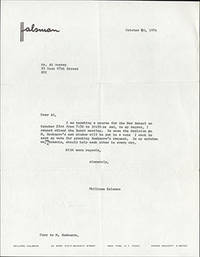
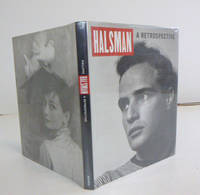
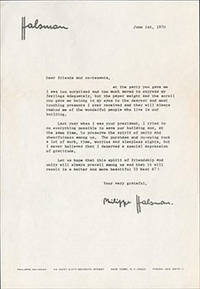
rif. 51-6812New York: 1974. Printed letter. dated October 20 1974. He cannot attend the board meeting since he is teaching .The Atelier constructed in 1903 at 33 West 67th Street is a historic prewar cooperative building originally designed as artists' studios. Located on the Upper West Side within the landmarked West 67th Street Historic Artist's District the limestone and brick building features distinctive Gothic-inspired architectural details including an intimate lobby with its original cast-iron elevator and electrified gas fixtures on the landings.The building is characterized by its dramatic double-height studios with soaring ceilings and expansive windows designed specifically to provide artists with optimal working conditions. Many apartments retain their original architectural elements including ornate wood paneling baronial fireplaces and gothic wainscoting. Notable past residents include renowned portrait artist Albert Murray and acclaimed artist James William Fosdick whose work appears in the Smithsonian.Today The Atelier operates as a full-service cooperative offering modern amenities while preserving its artistic heritage. The building features a 24-hour doorman a landscaped roof terrace with Central Park views and storage facilities. The cooperative allows 75% financing permits washer/dryers in units and welcomes both pied-à-terres and pets with board approval. Its location provides convenient access to Central Park Lincoln Center and the cultural attractions of the Upper West Side.Text below by Mary PanzerCurator of PhotographsNational Portrait Gallery Smithsonian Institution.Philippe Halsman 1906-1979 was born in Riga Latvia. He studied engineering in Dresden before moving to Paris where he set up his photographic studio in 1932. Halsman's bold spontaneous style won him many admirers. His portraits of actors and authors appeared on book jackets and in magazines; he worked with fashion especially hat designs and filled commissions for private clients. By 1936 Halsman was known as one of the best portrait photographers in France.From the 1940s through the 1970s Philippe Halsman's sparkling portraits of celebrities intellectuals and politicians appeared on the covers and pages of the big picture magazines including Look Esquire the Saturday Evening Post Paris Match and especially Life. His work also appeared in advertisements and publicity for clients like Elizabeth Arden cosmetics NBC Simon & Schuster and Ford. Photographers amateur as well as professional admired Halsman's stunning images. In 1958 a poll conducted by Popular Photography named Halsman one of the "World's Ten Greatest Photographers" along with Irving Penn Richard Avedon Ansel Adams Henri Cartier-Bresson Alfred Eisenstaedt Ernst Haas Yousuf Karsh Gjon Mili and Eugene Smith. Altogether Halsman's images form a vivid picture of prosperous American society in the middle years of the twentieth century. "Philippe Halsman: A Retrospective" is the first historical survey of his work.Halsman's career came to a dramatic halt in the summer of 1940 when Hitler's troops invaded Paris. Albert EinsteinHis wife daughter sister and brother-in-law who all held French passports immigrated to America but as a Latvian citizen Philippe Halsman could not obtain a visa. For several long months he waited in Marseilles along with many others who were forced to escape fascist Europe. Finally through the intervention of Albert Einstein who had met Halsman's sister in the 1920s Halsman obtained permission to enter the United States and he arrived in New York in November 1940 with little more than his camera.Halsman's big break came when he met Connie Ford a striking young model who agreed to pose in exchange for prints for her portfolio.Constance Ford When publicists at Elizabeth Arden saw Halsman's photograph of Ford against an American flag they used the image to launch a national campaign for "Victory Red" lipstick. A year later in the fall of 1942 Life asked Halsman to shoot a story on new hat design. To Halsman's delight his portrait of the model smiling through a feathery brim landed on the cover. One hundred more covers followed before the magazine ceased weekly publication in 1972.When Halsman began working for Life the magazine was only six years old and photojournalism was still a new field. Before the existence of Life and its competitors Americans learned about the world from newspapers radio and newsreels. But the new picture magazines published pages filled with bright dramatic photographs bringing Americans vivid information that no other media could match. Frank SinatraIn the spirit of a variety show or a world's fair magazines combined stories about international politics everyday life news events celebrities exotic scenery and humor to prove that "so much of the world so judiciously selected had never been seen before in one place." Today to understand the significance of those great magazines we need only look at the many forms of mass media that have come to replace them. Now we find photographs on television and billboards; in special publications devoted to news people fashion or sports; in newspapers; in museums and galleries; and on the Internet. And ironically the more places there are to see photographs the harder it is to attract viewers. But in 1942 when Philippe Halsman's portrait simply appeared on the cover of Life and immediately reached a large united audience.Surrealism:.In Paris Halsman studied the work of other artists and photographers especially the surrealists from whom he learned to make images that surprised his viewers. By including homely and ultimately disturbing details he gave his subjects memorable tension. Through subtle lighting sharp focus and close cropping he turned formal fashion shots into serious investigations of character. When Halsman posed NBC comedians against bare white paper eliminating all defining context their isolation made them look both frail and funny.Salvidor Dali Most important of all from the surrealists' exploration of the erotic unconscious Halsman learned how to combine glamour sex and wholesome energy in one portrait. This unusual ability made him Life's favorite photographer for sensual stars like Marilyn Monroe and Brigitte Bardot. Halsman's sympathy for surrealism also led to his long productive friendship with Salvador Dali. Halsman met Dali on assignment in 1941 and over the next three decades they became partners on many projects including a series of playful tableaux that had all the disturbing irrationality of dreams or a painting by Dali. Their most notable production was "Dali Atomicus" in which the artist his canvas furniture cats and water all appear suspended in air.Psychological Portraiture:.Over the course of his career Halsman enjoyed comparing his work to that of a good psychologist who regards his subjects with special insight. With his courtly manners and European accent Halsman also fit the popular stereotype at a time when Americans regarded psychology with fascinated skepticism. In fact Halsman was proud of his ability to reveal the character of his sitters. As he explained "It can't be done by pushing the person into position or arranging his head at a certain angle. It must be accomplished by provoking the victim amusing him with jokes lulling him with silence or asking impertinent questions which his best friend would be afraid to voice.".Marilyn MonroeIn the spring of 1952 Halsman put his signature technique to work when Life sent him to Hollywood to photograph Marilyn Monroe. Halsman asked Monroe to stand in a corner and placed his camera directly in front of her. Later he recalled that she looked "as if she had been pushed into the corner cornered with no way to escape." Then Halsman his assistant and Life's reporter staged a "fiery" competition for Monroe's attention. "Surrounded by three admiring men she smiled flirted giggled and wriggled with delight. During the hour I kept her cornered she enjoyed herself royally and I . . . took between 40 and 50 pictures.".In this widely familiar portrait Monroe wears a white evening gown and stands with her back against two walls one dark the other light her eyes half closed and her dark lipsticked mouth partly open. Yet Halsman deftly avoided any explicit representation of the true subject of the picture. Using the euphemistic language of the time Halsman's assistant admired the photographer's ability to make "suggestive" pictures of beautiful women which still showed "good taste" emphasizing "expression" rather than "physical assets." And then the assistant added "Halsman is very adept at provoking the expression he wants.".Jumpology:.In 1950 NBC asked Halsman to photograph many of its popular comedians. Milton Berle Ed Wynn Sid Caesar Groucho Marx Bob Hope Red Skelton and many others came to Halsman's studio where they performed while he captured their antics on film. A single session could generate two or three hundred pictures. When Halsman compared these comic images to more traditional portraits he found that comedians often jumped and always stayed in character. Desperation and good humor finally drove him to ask others to jump for his camera when the Ford Motor Company commissioned him to make an official family photograph in honor of the company's fiftieth anniversary. WindsorsHalsman spent a long tiring session with nine edgy adults and eleven restless children. Afterward Halsman's irrepressible humor inspired him to ask matriarch Mrs. Edsel Ford "May I take a picture of you jumping'" The astonished Mrs. Ford replied "You want me to jump with my high heels" Next her daughter-in-law Mrs. Henry Ford II requested a turn. The "jump" pictures had surprising charm and over the next six years Halsman asked many clients to jump for him. Van Cliburn Edward R. Murrow and Herbert Hoover declined Halsman's invitation but most people realized they had nothing to lose. Some gained considerably like the suddenly buoyant and likable Vice President Richard Nixon who jumped for Halsman in the White House. Halsman claimed the jumps revealed character that was otherwise hidden. "When you ask a person to jump his attention is mostly directed toward the act of jumping and the mask falls so that the real person appears.".Halsman also pursued this project to discover something about himself. "I assure you that often before approaching the person my heart would beat and I would have to fight down all my inhibitions in order to address this request to my subject. At every time when the subject agreed to jump it was for me like a kind of victory." How did Halsman persuade so many to abandon their composure for his camera Somehow he managed to convince each one that the risk was all his own.Like many who escaped Hitler's Europe Philippe Halsman rarely discussed the past. He rightly insisted that his most important work took place in America and in many ways his adopted country became his subject. One typical review noted his patriotic flair praising Halsman's "unsanctimonious and immensely intense portrayal of American bounce." From a historian's perspective it seems clear that Halsman invented a glowing image of the nation as he saw it using light persuasion nerve imagination psychology and experience. This place and these faces are his creation.Halsman's perpetual quest for hidden truth also recalls his personal history as an artist and a refugee. Halsman knew that the effort to establish one's identity had significance far beyond the needs of the celebrity marketplace. "This fascination with the human face has never left me. . . . Every face I see seems to hide and sometimes fleetingly to reveal the mystery of another human being. . . . Capturing this revelation became the goal and passion of my life.". New York: 1974 hardcover
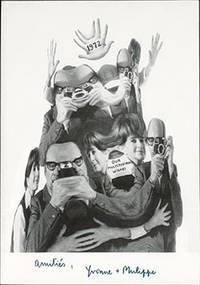
rif. 51-6805New York: circa 1972. Original photograph. Signed in ink. 19.5 x 13.7cm. Text below by Mary PanzerCurator of PhotographsNational Portrait Gallery Smithsonian Institution.Philippe Halsman 1906-1979 was born in Riga Latvia. He studied engineering in Dresden before moving to Paris where he set up his photographic studio in 1932. Halsman's bold spontaneous style won him many admirers. His portraits of actors and authors appeared on book jackets and in magazines; he worked with fashion especially hat designs and filled commissions for private clients. By 1936 Halsman was known as one of the best portrait photographers in France.From the 1940s through the 1970s Philippe Halsman's sparkling portraits of celebrities intellectuals and politicians appeared on the covers and pages of the big picture magazines including Look Esquire the Saturday Evening Post Paris Match and especially Life. His work also appeared in advertisements and publicity for clients like Elizabeth Arden cosmetics NBC Simon & Schuster and Ford. Photographers amateur as well as professional admired Halsman's stunning images. In 1958 a poll conducted by Popular Photography named Halsman one of the "World's Ten Greatest Photographers" along with Irving Penn Richard Avedon Ansel Adams Henri Cartier-Bresson Alfred Eisenstaedt Ernst Haas Yousuf Karsh Gjon Mili and Eugene Smith. Altogether Halsman's images form a vivid picture of prosperous American society in the middle years of the twentieth century. "Philippe Halsman: A Retrospective" is the first historical survey of his work.Halsman's career came to a dramatic halt in the summer of 1940 when Hitler's troops invaded Paris. Albert EinsteinHis wife daughter sister and brother-in-law who all held French passports immigrated to America but as a Latvian citizen Philippe Halsman could not obtain a visa. For several long months he waited in Marseilles along with many others who were forced to escape fascist Europe. Finally through the intervention of Albert Einstein who had met Halsman's sister in the 1920s Halsman obtained permission to enter the United States and he arrived in New York in November 1940 with little more than his camera.Halsman's big break came when he met Connie Ford a striking young model who agreed to pose in exchange for prints for her portfolio.Constance Ford When publicists at Elizabeth Arden saw Halsman's photograph of Ford against an American flag they used the image to launch a national campaign for "Victory Red" lipstick. A year later in the fall of 1942 Life asked Halsman to shoot a story on new hat design. To Halsman's delight his portrait of the model smiling through a feathery brim landed on the cover. One hundred more covers followed before the magazine ceased weekly publication in 1972.When Halsman began working for Life the magazine was only six years old and photojournalism was still a new field. Before the existence of Life and its competitors Americans learned about the world from newspapers radio and newsreels. But the new picture magazines published pages filled with bright dramatic photographs bringing Americans vivid information that no other media could match. Frank SinatraIn the spirit of a variety show or a world's fair magazines combined stories about international politics everyday life news events celebrities exotic scenery and humor to prove that "so much of the world so judiciously selected had never been seen before in one place." Today to understand the significance of those great magazines we need only look at the many forms of mass media that have come to replace them. Now we find photographs on television and billboards; in special publications devoted to news people fashion or sports; in newspapers; in museums and galleries; and on the Internet. And ironically the more places there are to see photographs the harder it is to attract viewers. But in 1942 when Philippe Halsman's portrait simply appeared on the cover of Life and immediately reached a large united audience.Surrealism:.In Paris Halsman studied the work of other artists and photographers especially the surrealists from whom he learned to make images that surprised his viewers. By including homely and ultimately disturbing details he gave his subjects memorable tension. Through subtle lighting sharp focus and close cropping he turned formal fashion shots into serious investigations of character. When Halsman posed NBC comedians against bare white paper eliminating all defining context their isolation made them look both frail and funny.Salvidor Dali Most important of all from the surrealists' exploration of the erotic unconscious Halsman learned how to combine glamour sex and wholesome energy in one portrait. This unusual ability made him Life's favorite photographer for sensual stars like Marilyn Monroe and Brigitte Bardot. Halsman's sympathy for surrealism also led to his long productive friendship with Salvador Dali. Halsman met Dali on assignment in 1941 and over the next three decades they became partners on many projects including a series of playful tableaux that had all the disturbing irrationality of dreams or a painting by Dali. Their most notable production was "Dali Atomicus" in which the artist his canvas furniture cats and water all appear suspended in air.Psychological Portraiture:.Over the course of his career Halsman enjoyed comparing his work to that of a good psychologist who regards his subjects with special insight. With his courtly manners and European accent Halsman also fit the popular stereotype at a time when Americans regarded psychology with fascinated skepticism. In fact Halsman was proud of his ability to reveal the character of his sitters. As he explained "It can't be done by pushing the person into position or arranging his head at a certain angle. It must be accomplished by provoking the victim amusing him with jokes lulling him with silence or asking impertinent questions which his best friend would be afraid to voice.".Marilyn MonroeIn the spring of 1952 Halsman put his signature technique to work when Life sent him to Hollywood to photograph Marilyn Monroe. Halsman asked Monroe to stand in a corner and placed his camera directly in front of her. Later he recalled that she looked "as if she had been pushed into the corner cornered with no way to escape." Then Halsman his assistant and Life's reporter staged a "fiery" competition for Monroe's attention. "Surrounded by three admiring men she smiled flirted giggled and wriggled with delight. During the hour I kept her cornered she enjoyed herself royally and I . . . took between 40 and 50 pictures.".In this widely familiar portrait Monroe wears a white evening gown and stands with her back against two walls one dark the other light her eyes half closed and her dark lipsticked mouth partly open. Yet Halsman deftly avoided any explicit representation of the true subject of the picture. Using the euphemistic language of the time Halsman's assistant admired the photographer's ability to make "suggestive" pictures of beautiful women which still showed "good taste" emphasizing "expression" rather than "physical assets." And then the assistant added "Halsman is very adept at provoking the expression he wants.".Jumpology:.In 1950 NBC asked Halsman to photograph many of its popular comedians. Milton Berle Ed Wynn Sid Caesar Groucho Marx Bob Hope Red Skelton and many others came to Halsman's studio where they performed while he captured their antics on film. A single session could generate two or three hundred pictures. When Halsman compared these comic images to more traditional portraits he found that comedians often jumped and always stayed in character. Desperation and good humor finally drove him to ask others to jump for his camera when the Ford Motor Company commissioned him to make an official family photograph in honor of the company's fiftieth anniversary. WindsorsHalsman spent a long tiring session with nine edgy adults and eleven restless children. Afterward Halsman's irrepressible humor inspired him to ask matriarch Mrs. Edsel Ford "May I take a picture of you jumping'" The astonished Mrs. Ford replied "You want me to jump with my high heels" Next her daughter-in-law Mrs. Henry Ford II requested a turn. The "jump" pictures had surprising charm and over the next six years Halsman asked many clients to jump for him. Van Cliburn Edward R. Murrow and Herbert Hoover declined Halsman's invitation but most people realized they had nothing to lose. Some gained considerably like the suddenly buoyant and likable Vice President Richard Nixon who jumped for Halsman in the White House. Halsman claimed the jumps revealed character that was otherwise hidden. "When you ask a person to jump his attention is mostly directed toward the act of jumping and the mask falls so that the real person appears.".Halsman also pursued this project to discover something about himself. "I assure you that often before approaching the person my heart would beat and I would have to fight down all my inhibitions in order to address this request to my subject. At every time when the subject agreed to jump it was for me like a kind of victory." How did Halsman persuade so many to abandon their composure for his camera Somehow he managed to convince each one that the risk was all his own.Like many who escaped Hitler's Europe Philippe Halsman rarely discussed the past. He rightly insisted that his most important work took place in America and in many ways his adopted country became his subject. One typical review noted his patriotic flair praising Halsman's "unsanctimonious and immensely intense portrayal of American bounce." From a historian's perspective it seems clear that Halsman invented a glowing image of the nation as he saw it using light persuasion nerve imagination psychology and experience. This place and these faces are his creation.Halsman's perpetual quest for hidden truth also recalls his personal history as an artist and a refugee. Halsman knew that the effort to establish one's identity had significance far beyond the needs of the celebrity marketplace. "This fascination with the human face has never left me. . . . Every face I see seems to hide and sometimes fleetingly to reveal the mystery of another human being. . . . Capturing this revelation became the goal and passion of my life.". New York: circa 1972 hardcover
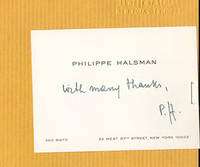
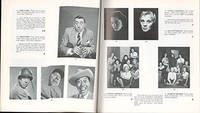
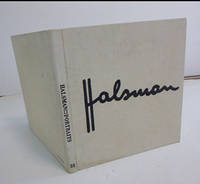
rif. 51-6817New York : International Center of Photography June 9-July 22 1979. . 4to. 21 x 30.7cm.Original wraps.60pp.Presentation copy with signed carte de visite.NY Times June 3 1979:Among the photography shows opening this week is Philippe Halsman's at the International Center of Photography Saturday through July 22 the first museum exhibition of this renowned portraitist who has done more than 100 Life magazine covers and several books of collected photographs. “A portrait should give you the possibility of recognizing even stranger and knowing something about him” Mr. Halsman has said though there won't be any difficulty in recognizing the likes of Albert Einstein Marilyn Monroe.Winston Churchill Gloria Swanson and other notables whose portraits are on view at the International Center. Also at Light Gallery new work by Garry Winogrand and Thomas Barrow will be on display starting Friday through June 30. On the occasion of Mr. Winogrand's exhibit at the Museum of Modern Art two years ago The Times's Gene Thornton praised the photographer's “remarkably sure instinct for fascinating subject matter” which at Light are the people and scenes of Greece. M”r. Barrow whose work links photographic and non”photographic ideas will be showing prints in which brightly colored spray paints are applied to the emulsion.Text below by Mary PanzerCurator of PhotographsNational Portrait Gallery Smithsonian Institution.Philippe Halsman 1906-1979 was born in Riga Latvia. He studied engineering in Dresden before moving to Paris where he set up his photographic studio in 1932. Halsman's bold spontaneous style won him many admirers. His portraits of actors and authors appeared on book jackets and in magazines; he worked with fashion especially hat designs and filled commissions for private clients. By 1936 Halsman was known as one of the best portrait photographers in France.From the 1940s through the 1970s Philippe Halsman's sparkling portraits of celebrities intellectuals and politicians appeared on the covers and pages of the big picture magazines including Look Esquire the Saturday Evening Post Paris Match and especially Life. His work also appeared in advertisements and publicity for clients like Elizabeth Arden cosmetics NBC Simon & Schuster and Ford. Photographers amateur as well as professional admired Halsman's stunning images. In 1958 a poll conducted by Popular Photography named Halsman one of the "World's Ten Greatest Photographers" along with Irving Penn Richard Avedon Ansel Adams Henri Cartier-Bresson Alfred Eisenstaedt Ernst Haas Yousuf Karsh Gjon Mili and Eugene Smith. Altogether Halsman's images form a vivid picture of prosperous American society in the middle years of the twentieth century. "Philippe Halsman: A Retrospective" is the first historical survey of his work.Halsman's career came to a dramatic halt in the summer of 1940 when Hitler's troops invaded Paris. Albert EinsteinHis wife daughter sister and brother-in-law who all held French passports immigrated to America but as a Latvian citizen Philippe Halsman could not obtain a visa. For several long months he waited in Marseilles along with many others who were forced to escape fascist Europe. Finally through the intervention of Albert Einstein who had met Halsman's sister in the 1920s Halsman obtained permission to enter the United States and he arrived in New York in November 1940 with little more than his camera.Halsman's big break came when he met Connie Ford a striking young model who agreed to pose in exchange for prints for her portfolio.Constance Ford When publicists at Elizabeth Arden saw Halsman's photograph of Ford against an American flag they used the image to launch a national campaign for "Victory Red" lipstick. A year later in the fall of 1942 Life asked Halsman to shoot a story on new hat design. To Halsman's delight his portrait of the model smiling through a feathery brim landed on the cover. One hundred more covers followed before the magazine ceased weekly publication in 1972.When Halsman began working for Life the magazine was only six years old and photojournalism was still a new field. Before the existence of Life and its competitors Americans learned about the world from newspapers radio and newsreels. But the new picture magazines published pages filled with bright dramatic photographs bringing Americans vivid information that no other media could match. Frank SinatraIn the spirit of a variety show or a world's fair magazines combined stories about international politics everyday life news events celebrities exotic scenery and humor to prove that "so much of the world so judiciously selected had never been seen before in one place." Today to understand the significance of those great magazines we need only look at the many forms of mass media that have come to replace them. Now we find photographs on television and billboards; in special publications devoted to news people fashion or sports; in newspapers; in museums and galleries; and on the Internet. And ironically the more places there are to see photographs the harder it is to attract viewers. But in 1942 when Philippe Halsman's portrait simply appeared on the cover of Life and immediately reached a large united audience.Surrealism:.In Paris Halsman studied the work of other artists and photographers especially the surrealists from whom he learned to make images that surprised his viewers. By including homely and ultimately disturbing details he gave his subjects memorable tension. Through subtle lighting sharp focus and close cropping he turned formal fashion shots into serious investigations of character. When Halsman posed NBC comedians against bare white paper eliminating all defining context their isolation made them look both frail and funny.Salvidor Dali Most important of all from the surrealists' exploration of the erotic unconscious Halsman learned how to combine glamour sex and wholesome energy in one portrait. This unusual ability made him Life's favorite photographer for sensual stars like Marilyn Monroe and Brigitte Bardot. Halsman's sympathy for surrealism also led to his long productive friendship with Salvador Dali. Halsman met Dali on assignment in 1941 and over the next three decades they became partners on many projects including a series of playful tableaux that had all the disturbing irrationality of dreams or a painting by Dali. Their most notable production was "Dali Atomicus" in which the artist his canvas furniture cats and water all appear suspended in air.Psychological Portraiture:.Over the course of his career Halsman enjoyed comparing his work to that of a good psychologist who regards his subjects with special insight. With his courtly manners and European accent Halsman also fit the popular stereotype at a time when Americans regarded psychology with fascinated skepticism. In fact Halsman was proud of his ability to reveal the character of his sitters. As he explained "It can't be done by pushing the person into position or arranging his head at a certain angle. It must be accomplished by provoking the victim amusing him with jokes lulling him with silence or asking impertinent questions which his best friend would be afraid to voice.".Marilyn MonroeIn the spring of 1952 Halsman put his signature technique to work when Life sent him to Hollywood to photograph Marilyn Monroe. Halsman asked Monroe to stand in a corner and placed his camera directly in front of her. Later he recalled that she looked "as if she had been pushed into the corner cornered with no way to escape." Then Halsman his assistant and Life's reporter staged a "fiery" competition for Monroe's attention. "Surrounded by three admiring men she smiled flirted giggled and wriggled with delight. During the hour I kept her cornered she enjoyed herself royally and I . . . took between 40 and 50 pictures.".In this widely familiar portrait Monroe wears a white evening gown and stands with her back against two walls one dark the other light her eyes half closed and her dark lipsticked mouth partly open. Yet Halsman deftly avoided any explicit representation of the true subject of the picture. Using the euphemistic language of the time Halsman's assistant admired the photographer's ability to make "suggestive" pictures of beautiful women which still showed "good taste" emphasizing "expression" rather than "physical assets." And then the assistant added "Halsman is very adept at provoking the expression he wants.".Jumpology:.In 1950 NBC asked Halsman to photograph many of its popular comedians. Milton Berle Ed Wynn Sid Caesar Groucho Marx Bob Hope Red Skelton and many others came to Halsman's studio where they performed while he captured their antics on film. A single session could generate two or three hundred pictures. When Halsman compared these comic images to more traditional portraits he found that comedians often jumped and always stayed in character. Desperation and good humor finally drove him to ask others to jump for his camera when the Ford Motor Company commissioned him to make an official family photograph in honor of the company's fiftieth anniversary. WindsorsHalsman spent a long tiring session with nine edgy adults and eleven restless children. Afterward Halsman's irrepressible humor inspired him to ask matriarch Mrs. Edsel Ford "May I take a picture of you jumping'" The astonished Mrs. Ford replied "You want me to jump with my high heels" Next her daughter-in-law Mrs. Henry Ford II requested a turn. The "jump" pictures had surprising charm and over the next six years Halsman asked many clients to jump for him. Van Cliburn Edward R. Murrow and Herbert Hoover declined Halsman's invitation but most people realized they had nothing to lose. Some gained considerably like the suddenly buoyant and likable Vice President Richard Nixon who jumped for Halsman in the White House. Halsman claimed the jumps revealed character that was otherwise hidden. "When you ask a person to jump his attention is mostly directed toward the act of jumping and the mask falls so that the real person appears.".Halsman also pursued this project to discover something about himself. "I assure you that often before approaching the person my heart would beat and I would have to fight down all my inhibitions in order to address this request to my subject. At every time when the subject agreed to jump it was for me like a kind of victory." How did Halsman persuade so many to abandon their composure for his camera Somehow he managed to convince each one that the risk was all his own.Like many who escaped Hitler's Europe Philippe Halsman rarely discussed the past. He rightly insisted that his most important work took place in America and in many ways his adopted country became his subject. One typical review noted his patriotic flair praising Halsman's "unsanctimonious and immensely intense portrayal of American bounce." From a historian's perspective it seems clear that Halsman invented a glowing image of the nation as he saw it using light persuasion nerve imagination psychology and experience. This place and these faces are his creation.Halsman's perpetual quest for hidden truth also recalls his personal history as an artist and a refugee. Halsman knew that the effort to establish one's identity had significance far beyond the needs of the celebrity marketplace. "This fascination with the human face has never left me. . . . Every face I see seems to hide and sometimes fleetingly to reveal the mystery of another human being. . . . Capturing this revelation became the goal and passion of my life.". New York : International Center of Photography June 9-July 22, 1979. paperback
rif. 51-6808New York: 1978. Original photograph: Dated in ink verso. 17.5 x 12.8.cm. Text below by Mary PanzerCurator of PhotographsNational Portrait Gallery Smithsonian Institution.Philippe Halsman 1906-1979 was born in Riga Latvia. He studied engineering in Dresden before moving to Paris where he set up his photographic studio in 1932. Halsman's bold spontaneous style won him many admirers. His portraits of actors and authors appeared on book jackets and in magazines; he worked with fashion especially hat designs and filled commissions for private clients. By 1936 Halsman was known as one of the best portrait photographers in France.From the 1940s through the 1970s Philippe Halsman's sparkling portraits of celebrities intellectuals and politicians appeared on the covers and pages of the big picture magazines including Look Esquire the Saturday Evening Post Paris Match and especially Life. His work also appeared in advertisements and publicity for clients like Elizabeth Arden cosmetics NBC Simon & Schuster and Ford. Photographers amateur as well as professional admired Halsman's stunning images. In 1958 a poll conducted by Popular Photography named Halsman one of the "World's Ten Greatest Photographers" along with Irving Penn Richard Avedon Ansel Adams Henri Cartier-Bresson Alfred Eisenstaedt Ernst Haas Yousuf Karsh Gjon Mili and Eugene Smith. Altogether Halsman's images form a vivid picture of prosperous American society in the middle years of the twentieth century. "Philippe Halsman: A Retrospective" is the first historical survey of his work.Halsman's career came to a dramatic halt in the summer of 1940 when Hitler's troops invaded Paris. Albert EinsteinHis wife daughter sister and brother-in-law who all held French passports immigrated to America but as a Latvian citizen Philippe Halsman could not obtain a visa. For several long months he waited in Marseilles along with many others who were forced to escape fascist Europe. Finally through the intervention of Albert Einstein who had met Halsman's sister in the 1920s Halsman obtained permission to enter the United States and he arrived in New York in November 1940 with little more than his camera.Halsman's big break came when he met Connie Ford a striking young model who agreed to pose in exchange for prints for her portfolio.Constance Ford When publicists at Elizabeth Arden saw Halsman's photograph of Ford against an American flag they used the image to launch a national campaign for "Victory Red" lipstick. A year later in the fall of 1942 Life asked Halsman to shoot a story on new hat design. To Halsman's delight his portrait of the model smiling through a feathery brim landed on the cover. One hundred more covers followed before the magazine ceased weekly publication in 1972.When Halsman began working for Life the magazine was only six years old and photojournalism was still a new field. Before the existence of Life and its competitors Americans learned about the world from newspapers radio and newsreels. But the new picture magazines published pages filled with bright dramatic photographs bringing Americans vivid information that no other media could match. Frank SinatraIn the spirit of a variety show or a world's fair magazines combined stories about international politics everyday life news events celebrities exotic scenery and humor to prove that "so much of the world so judiciously selected had never been seen before in one place." Today to understand the significance of those great magazines we need only look at the many forms of mass media that have come to replace them. Now we find photographs on television and billboards; in special publications devoted to news people fashion or sports; in newspapers; in museums and galleries; and on the Internet. And ironically the more places there are to see photographs the harder it is to attract viewers. But in 1942 when Philippe Halsman's portrait simply appeared on the cover of Life and immediately reached a large united audience.Surrealism:.In Paris Halsman studied the work of other artists and photographers especially the surrealists from whom he learned to make images that surprised his viewers. By including homely and ultimately disturbing details he gave his subjects memorable tension. Through subtle lighting sharp focus and close cropping he turned formal fashion shots into serious investigations of character. When Halsman posed NBC comedians against bare white paper eliminating all defining context their isolation made them look both frail and funny.Salvidor Dali Most important of all from the surrealists' exploration of the erotic unconscious Halsman learned how to combine glamour sex and wholesome energy in one portrait. This unusual ability made him Life's favorite photographer for sensual stars like Marilyn Monroe and Brigitte Bardot. Halsman's sympathy for surrealism also led to his long productive friendship with Salvador Dali. Halsman met Dali on assignment in 1941 and over the next three decades they became partners on many projects including a series of playful tableaux that had all the disturbing irrationality of dreams or a painting by Dali. Their most notable production was "Dali Atomicus" in which the artist his canvas furniture cats and water all appear suspended in air.Psychological Portraiture:.Over the course of his career Halsman enjoyed comparing his work to that of a good psychologist who regards his subjects with special insight. With his courtly manners and European accent Halsman also fit the popular stereotype at a time when Americans regarded psychology with fascinated skepticism. In fact Halsman was proud of his ability to reveal the character of his sitters. As he explained "It can't be done by pushing the person into position or arranging his head at a certain angle. It must be accomplished by provoking the victim amusing him with jokes lulling him with silence or asking impertinent questions which his best friend would be afraid to voice.".Marilyn MonroeIn the spring of 1952 Halsman put his signature technique to work when Life sent him to Hollywood to photograph Marilyn Monroe. Halsman asked Monroe to stand in a corner and placed his camera directly in front of her. Later he recalled that she looked "as if she had been pushed into the corner cornered with no way to escape." Then Halsman his assistant and Life's reporter staged a "fiery" competition for Monroe's attention. "Surrounded by three admiring men she smiled flirted giggled and wriggled with delight. During the hour I kept her cornered she enjoyed herself royally and I . . . took between 40 and 50 pictures.".In this widely familiar portrait Monroe wears a white evening gown and stands with her back against two walls one dark the other light her eyes half closed and her dark lipsticked mouth partly open. Yet Halsman deftly avoided any explicit representation of the true subject of the picture. Using the euphemistic language of the time Halsman's assistant admired the photographer's ability to make "suggestive" pictures of beautiful women which still showed "good taste" emphasizing "expression" rather than "physical assets." And then the assistant added "Halsman is very adept at provoking the expression he wants.".Jumpology:.In 1950 NBC asked Halsman to photograph many of its popular comedians. Milton Berle Ed Wynn Sid Caesar Groucho Marx Bob Hope Red Skelton and many others came to Halsman's studio where they performed while he captured their antics on film. A single session could generate two or three hundred pictures. When Halsman compared these comic images to more traditional portraits he found that comedians often jumped and always stayed in character. Desperation and good humor finally drove him to ask others to jump for his camera when the Ford Motor Company commissioned him to make an official family photograph in honor of the company's fiftieth anniversary. WindsorsHalsman spent a long tiring session with nine edgy adults and eleven restless children. Afterward Halsman's irrepressible humor inspired him to ask matriarch Mrs. Edsel Ford "May I take a picture of you jumping'" The astonished Mrs. Ford replied "You want me to jump with my high heels" Next her daughter-in-law Mrs. Henry Ford II requested a turn. The "jump" pictures had surprising charm and over the next six years Halsman asked many clients to jump for him. Van Cliburn Edward R. Murrow and Herbert Hoover declined Halsman's invitation but most people realized they had nothing to lose. Some gained considerably like the suddenly buoyant and likable Vice President Richard Nixon who jumped for Halsman in the White House. Halsman claimed the jumps revealed character that was otherwise hidden. "When you ask a person to jump his attention is mostly directed toward the act of jumping and the mask falls so that the real person appears.".Halsman also pursued this project to discover something about himself. "I assure you that often before approaching the person my heart would beat and I would have to fight down all my inhibitions in order to address this request to my subject. At every time when the subject agreed to jump it was for me like a kind of victory." How did Halsman persuade so many to abandon their composure for his camera Somehow he managed to convince each one that the risk was all his own.Like many who escaped Hitler's Europe Philippe Halsman rarely discussed the past. He rightly insisted that his most important work took place in America and in many ways his adopted country became his subject. One typical review noted his patriotic flair praising Halsman's "unsanctimonious and immensely intense portrayal of American bounce." From a historian's perspective it seems clear that Halsman invented a glowing image of the nation as he saw it using light persuasion nerve imagination psychology and experience. This place and these faces are his creation.Halsman's perpetual quest for hidden truth also recalls his personal history as an artist and a refugee. Halsman knew that the effort to establish one's identity had significance far beyond the needs of the celebrity marketplace. "This fascination with the human face has never left me. . . . Every face I see seems to hide and sometimes fleetingly to reveal the mystery of another human being. . . . Capturing this revelation became the goal and passion of my life.". New York: 1978 hardcover
rif. 51-6814Baltimore: Harris Auction Galleries 1981. 4to. Original wraps. "The Mask Falls: Psychological Portraits by Philippe Halsman" was the title of a 1981 public auction catalog from Harris Auction Galleries in Baltimore MD featuring a collection of Philippe Halsman's famous photographs. The sale offered 249 images arranged by category serving as a retrospective of the photographer's work known for his psychological portraits and innovative "jumpology" technique. .Text below by Mary PanzerCurator of PhotographsNational Portrait Gallery Smithsonian Institution.Philippe Halsman 1906-1979 was born in Riga Latvia. He studied engineering in Dresden before moving to Paris where he set up his photographic studio in 1932. Halsman's bold spontaneous style won him many admirers. His portraits of actors and authors appeared on book jackets and in magazines; he worked with fashion especially hat designs and filled commissions for private clients. By 1936 Halsman was known as one of the best portrait photographers in France.From the 1940s through the 1970s Philippe Halsman's sparkling portraits of celebrities intellectuals and politicians appeared on the covers and pages of the big picture magazines including Look Esquire the Saturday Evening Post Paris Match and especially Life. His work also appeared in advertisements and publicity for clients like Elizabeth Arden cosmetics NBC Simon & Schuster and Ford. Photographers amateur as well as professional admired Halsman's stunning images. In 1958 a poll conducted by Popular Photography named Halsman one of the "World's Ten Greatest Photographers" along with Irving Penn Richard Avedon Ansel Adams Henri Cartier-Bresson Alfred Eisenstaedt Ernst Haas Yousuf Karsh Gjon Mili and Eugene Smith. Altogether Halsman's images form a vivid picture of prosperous American society in the middle years of the twentieth century. "Philippe Halsman: A Retrospective" is the first historical survey of his work.Halsman's career came to a dramatic halt in the summer of 1940 when Hitler's troops invaded Paris. Albert EinsteinHis wife daughter sister and brother-in-law who all held French passports immigrated to America but as a Latvian citizen Philippe Halsman could not obtain a visa. For several long months he waited in Marseilles along with many others who were forced to escape fascist Europe. Finally through the intervention of Albert Einstein who had met Halsman's sister in the 1920s Halsman obtained permission to enter the United States and he arrived in New York in November 1940 with little more than his camera.Halsman's big break came when he met Connie Ford a striking young model who agreed to pose in exchange for prints for her portfolio.Constance Ford When publicists at Elizabeth Arden saw Halsman's photograph of Ford against an American flag they used the image to launch a national campaign for "Victory Red" lipstick. A year later in the fall of 1942 Life asked Halsman to shoot a story on new hat design. To Halsman's delight his portrait of the model smiling through a feathery brim landed on the cover. One hundred more covers followed before the magazine ceased weekly publication in 1972.When Halsman began working for Life the magazine was only six years old and photojournalism was still a new field. Before the existence of Life and its competitors Americans learned about the world from newspapers radio and newsreels. But the new picture magazines published pages filled with bright dramatic photographs bringing Americans vivid information that no other media could match. Frank SinatraIn the spirit of a variety show or a world's fair magazines combined stories about international politics everyday life news events celebrities exotic scenery and humor to prove that "so much of the world so judiciously selected had never been seen before in one place." Today to understand the significance of those great magazines we need only look at the many forms of mass media that have come to replace them. Now we find photographs on television and billboards; in special publications devoted to news people fashion or sports; in newspapers; in museums and galleries; and on the Internet. And ironically the more places there are to see photographs the harder it is to attract viewers. But in 1942 when Philippe Halsman's portrait simply appeared on the cover of Life and immediately reached a large united audience.Surrealism:.In Paris Halsman studied the work of other artists and photographers especially the surrealists from whom he learned to make images that surprised his viewers. By including homely and ultimately disturbing details he gave his subjects memorable tension. Through subtle lighting sharp focus and close cropping he turned formal fashion shots into serious investigations of character. When Halsman posed NBC comedians against bare white paper eliminating all defining context their isolation made them look both frail and funny.Salvidor Dali Most important of all from the surrealists' exploration of the erotic unconscious Halsman learned how to combine glamour sex and wholesome energy in one portrait. This unusual ability made him Life's favorite photographer for sensual stars like Marilyn Monroe and Brigitte Bardot. Halsman's sympathy for surrealism also led to his long productive friendship with Salvador Dali. Halsman met Dali on assignment in 1941 and over the next three decades they became partners on many projects including a series of playful tableaux that had all the disturbing irrationality of dreams or a painting by Dali. Their most notable production was "Dali Atomicus" in which the artist his canvas furniture cats and water all appear suspended in air.Psychological Portraiture:.Over the course of his career Halsman enjoyed comparing his work to that of a good psychologist who regards his subjects with special insight. With his courtly manners and European accent Halsman also fit the popular stereotype at a time when Americans regarded psychology with fascinated skepticism. In fact Halsman was proud of his ability to reveal the character of his sitters. As he explained "It can't be done by pushing the person into position or arranging his head at a certain angle. It must be accomplished by provoking the victim amusing him with jokes lulling him with silence or asking impertinent questions which his best friend would be afraid to voice.".Marilyn MonroeIn the spring of 1952 Halsman put his signature technique to work when Life sent him to Hollywood to photograph Marilyn Monroe. Halsman asked Monroe to stand in a corner and placed his camera directly in front of her. Later he recalled that she looked "as if she had been pushed into the corner cornered with no way to escape." Then Halsman his assistant and Life's reporter staged a "fiery" competition for Monroe's attention. "Surrounded by three admiring men she smiled flirted giggled and wriggled with delight. During the hour I kept her cornered she enjoyed herself royally and I . . . took between 40 and 50 pictures.".In this widely familiar portrait Monroe wears a white evening gown and stands with her back against two walls one dark the other light her eyes half closed and her dark lipsticked mouth partly open. Yet Halsman deftly avoided any explicit representation of the true subject of the picture. Using the euphemistic language of the time Halsman's assistant admired the photographer's ability to make "suggestive" pictures of beautiful women which still showed "good taste" emphasizing "expression" rather than "physical assets." And then the assistant added "Halsman is very adept at provoking the expression he wants.".Jumpology:.In 1950 NBC asked Halsman to photograph many of its popular comedians. Milton Berle Ed Wynn Sid Caesar Groucho Marx Bob Hope Red Skelton and many others came to Halsman's studio where they performed while he captured their antics on film. A single session could generate two or three hundred pictures. When Halsman compared these comic images to more traditional portraits he found that comedians often jumped and always stayed in character. Desperation and good humor finally drove him to ask others to jump for his camera when the Ford Motor Company commissioned him to make an official family photograph in honor of the company's fiftieth anniversary. WindsorsHalsman spent a long tiring session with nine edgy adults and eleven restless children. Afterward Halsman's irrepressible humor inspired him to ask matriarch Mrs. Edsel Ford "May I take a picture of you jumping'" The astonished Mrs. Ford replied "You want me to jump with my high heels" Next her daughter-in-law Mrs. Henry Ford II requested a turn. The "jump" pictures had surprising charm and over the next six years Halsman asked many clients to jump for him. Van Cliburn Edward R. Murrow and Herbert Hoover declined Halsman's invitation but most people realized they had nothing to lose. Some gained considerably like the suddenly buoyant and likable Vice President Richard Nixon who jumped for Halsman in the White House. Halsman claimed the jumps revealed character that was otherwise hidden. "When you ask a person to jump his attention is mostly directed toward the act of jumping and the mask falls so that the real person appears.".Halsman also pursued this project to discover something about himself. "I assure you that often before approaching the person my heart would beat and I would have to fight down all my inhibitions in order to address this request to my subject. At every time when the subject agreed to jump it was for me like a kind of victory." How did Halsman persuade so many to abandon their composure for his camera Somehow he managed to convince each one that the risk was all his own.Like many who escaped Hitler's Europe Philippe Halsman rarely discussed the past. He rightly insisted that his most important work took place in America and in many ways his adopted country became his subject. One typical review noted his patriotic flair praising Halsman's "unsanctimonious and immensely intense portrayal of American bounce." From a historian's perspective it seems clear that Halsman invented a glowing image of the nation as he saw it using light persuasion nerve imagination psychology and experience. This place and these faces are his creation.Halsman's perpetual quest for hidden truth also recalls his personal history as an artist and a refugee. Halsman knew that the effort to establish one's identity had significance far beyond the needs of the celebrity marketplace. "This fascination with the human face has never left me. . . . Every face I see seems to hide and sometimes fleetingly to reveal the mystery of another human being. . . . Capturing this revelation became the goal and passion of my life.". Baltimore: Harris Auction Galleries, 1981. paperback
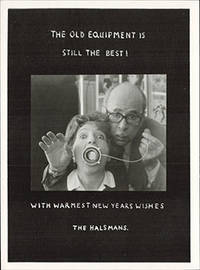
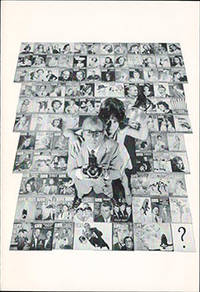
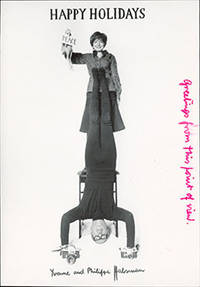
rif. 51-6804New York: circa 1971. Printed notecard with image and printed text. 30 x 13.5cm.Text below by Mary PanzerCurator of PhotographsNational Portrait Gallery Smithsonian Institution.Philippe Halsman 1906-1979 was born in Riga Latvia. He studied engineering in Dresden before moving to Paris where he set up his photographic studio in 1932. Halsman's bold spontaneous style won him many admirers. His portraits of actors and authors appeared on book jackets and in magazines; he worked with fashion especially hat designs and filled commissions for private clients. By 1936 Halsman was known as one of the best portrait photographers in France.From the 1940s through the 1970s Philippe Halsman's sparkling portraits of celebrities intellectuals and politicians appeared on the covers and pages of the big picture magazines including Look Esquire the Saturday Evening Post Paris Match and especially Life. His work also appeared in advertisements and publicity for clients like Elizabeth Arden cosmetics NBC Simon & Schuster and Ford. Photographers amateur as well as professional admired Halsman's stunning images. In 1958 a poll conducted by Popular Photography named Halsman one of the "World's Ten Greatest Photographers" along with Irving Penn Richard Avedon Ansel Adams Henri Cartier-Bresson Alfred Eisenstaedt Ernst Haas Yousuf Karsh Gjon Mili and Eugene Smith. Altogether Halsman's images form a vivid picture of prosperous American society in the middle years of the twentieth century. "Philippe Halsman: A Retrospective" is the first historical survey of his work.Halsman's career came to a dramatic halt in the summer of 1940 when Hitler's troops invaded Paris. Albert EinsteinHis wife daughter sister and brother-in-law who all held French passports immigrated to America but as a Latvian citizen Philippe Halsman could not obtain a visa. For several long months he waited in Marseilles along with many others who were forced to escape fascist Europe. Finally through the intervention of Albert Einstein who had met Halsman's sister in the 1920s Halsman obtained permission to enter the United States and he arrived in New York in November 1940 with little more than his camera.Halsman's big break came when he met Connie Ford a striking young model who agreed to pose in exchange for prints for her portfolio.Constance Ford When publicists at Elizabeth Arden saw Halsman's photograph of Ford against an American flag they used the image to launch a national campaign for "Victory Red" lipstick. A year later in the fall of 1942 Life asked Halsman to shoot a story on new hat design. To Halsman's delight his portrait of the model smiling through a feathery brim landed on the cover. One hundred more covers followed before the magazine ceased weekly publication in 1972.When Halsman began working for Life the magazine was only six years old and photojournalism was still a new field. Before the existence of Life and its competitors Americans learned about the world from newspapers radio and newsreels. But the new picture magazines published pages filled with bright dramatic photographs bringing Americans vivid information that no other media could match. Frank SinatraIn the spirit of a variety show or a world's fair magazines combined stories about international politics everyday life news events celebrities exotic scenery and humor to prove that "so much of the world so judiciously selected had never been seen before in one place." Today to understand the significance of those great magazines we need only look at the many forms of mass media that have come to replace them. Now we find photographs on television and billboards; in special publications devoted to news people fashion or sports; in newspapers; in museums and galleries; and on the Internet. And ironically the more places there are to see photographs the harder it is to attract viewers. But in 1942 when Philippe Halsman's portrait simply appeared on the cover of Life and immediately reached a large united audience.Surrealism:.In Paris Halsman studied the work of other artists and photographers especially the surrealists from whom he learned to make images that surprised his viewers. By including homely and ultimately disturbing details he gave his subjects memorable tension. Through subtle lighting sharp focus and close cropping he turned formal fashion shots into serious investigations of character. When Halsman posed NBC comedians against bare white paper eliminating all defining context their isolation made them look both frail and funny.Salvidor Dali Most important of all from the surrealists' exploration of the erotic unconscious Halsman learned how to combine glamour sex and wholesome energy in one portrait. This unusual ability made him Life's favorite photographer for sensual stars like Marilyn Monroe and Brigitte Bardot. Halsman's sympathy for surrealism also led to his long productive friendship with Salvador Dali. Halsman met Dali on assignment in 1941 and over the next three decades they became partners on many projects including a series of playful tableaux that had all the disturbing irrationality of dreams or a painting by Dali. Their most notable production was "Dali Atomicus" in which the artist his canvas furniture cats and water all appear suspended in air.Psychological Portraiture:.Over the course of his career Halsman enjoyed comparing his work to that of a good psychologist who regards his subjects with special insight. With his courtly manners and European accent Halsman also fit the popular stereotype at a time when Americans regarded psychology with fascinated skepticism. In fact Halsman was proud of his ability to reveal the character of his sitters. As he explained "It can't be done by pushing the person into position or arranging his head at a certain angle. It must be accomplished by provoking the victim amusing him with jokes lulling him with silence or asking impertinent questions which his best friend would be afraid to voice.".Marilyn MonroeIn the spring of 1952 Halsman put his signature technique to work when Life sent him to Hollywood to photograph Marilyn Monroe. Halsman asked Monroe to stand in a corner and placed his camera directly in front of her. Later he recalled that she looked "as if she had been pushed into the corner cornered with no way to escape." Then Halsman his assistant and Life's reporter staged a "fiery" competition for Monroe's attention. "Surrounded by three admiring men she smiled flirted giggled and wriggled with delight. During the hour I kept her cornered she enjoyed herself royally and I . . . took between 40 and 50 pictures.".In this widely familiar portrait Monroe wears a white evening gown and stands with her back against two walls one dark the other light her eyes half closed and her dark lipsticked mouth partly open. Yet Halsman deftly avoided any explicit representation of the true subject of the picture. Using the euphemistic language of the time Halsman's assistant admired the photographer's ability to make "suggestive" pictures of beautiful women which still showed "good taste" emphasizing "expression" rather than "physical assets." And then the assistant added "Halsman is very adept at provoking the expression he wants.".Jumpology:.In 1950 NBC asked Halsman to photograph many of its popular comedians. Milton Berle Ed Wynn Sid Caesar Groucho Marx Bob Hope Red Skelton and many others came to Halsman's studio where they performed while he captured their antics on film. A single session could generate two or three hundred pictures. When Halsman compared these comic images to more traditional portraits he found that comedians often jumped and always stayed in character. Desperation and good humor finally drove him to ask others to jump for his camera when the Ford Motor Company commissioned him to make an official family photograph in honor of the company's fiftieth anniversary. WindsorsHalsman spent a long tiring session with nine edgy adults and eleven restless children. Afterward Halsman's irrepressible humor inspired him to ask matriarch Mrs. Edsel Ford "May I take a picture of you jumping'" The astonished Mrs. Ford replied "You want me to jump with my high heels" Next her daughter-in-law Mrs. Henry Ford II requested a turn. The "jump" pictures had surprising charm and over the next six years Halsman asked many clients to jump for him. Van Cliburn Edward R. Murrow and Herbert Hoover declined Halsman's invitation but most people realized they had nothing to lose. Some gained considerably like the suddenly buoyant and likable Vice President Richard Nixon who jumped for Halsman in the White House. Halsman claimed the jumps revealed character that was otherwise hidden. "When you ask a person to jump his attention is mostly directed toward the act of jumping and the mask falls so that the real person appears.".Halsman also pursued this project to discover something about himself. "I assure you that often before approaching the person my heart would beat and I would have to fight down all my inhibitions in order to address this request to my subject. At every time when the subject agreed to jump it was for me like a kind of victory." How did Halsman persuade so many to abandon their composure for his camera Somehow he managed to convince each one that the risk was all his own.Like many who escaped Hitler's Europe Philippe Halsman rarely discussed the past. He rightly insisted that his most important work took place in America and in many ways his adopted country became his subject. One typical review noted his patriotic flair praising Halsman's "unsanctimonious and immensely intense portrayal of American bounce." From a historian's perspective it seems clear that Halsman invented a glowing image of the nation as he saw it using light persuasion nerve imagination psychology and experience. This place and these faces are his creation.Halsman's perpetual quest for hidden truth also recalls his personal history as an artist and a refugee. Halsman knew that the effort to establish one's identity had significance far beyond the needs of the celebrity marketplace. "This fascination with the human face has never left me. . . . Every face I see seems to hide and sometimes fleetingly to reveal the mystery of another human being. . . . Capturing this revelation became the goal and passion of my life.". New York: circa 1971 hardcover
rif. 51-6810New York: Circa 1970s. Original photographs. 3 kodak photographs of Yvonne and Philippe Halsman at Marc Bernheim's measuring 9 x13 cm 3½x5¼".•Annoted vers on one fof the three.Text below by Mary PanzerCurator of PhotographsNational Portrait Gallery Smithsonian Institution.Philippe Halsman 1906-1979 was born in Riga Latvia. He studied engineering in Dresden before moving to Paris where he set up his photographic studio in 1932. Halsman's bold spontaneous style won him many admirers. His portraits of actors and authors appeared on book jackets and in magazines; he worked with fashion especially hat designs and filled commissions for private clients. By 1936 Halsman was known as one of the best portrait photographers in France.From the 1940s through the 1970s Philippe Halsman's sparkling portraits of celebrities intellectuals and politicians appeared on the covers and pages of the big picture magazines including Look Esquire the Saturday Evening Post Paris Match and especially Life. His work also appeared in advertisements and publicity for clients like Elizabeth Arden cosmetics NBC Simon & Schuster and Ford. Photographers amateur as well as professional admired Halsman's stunning images. In 1958 a poll conducted by Popular Photography named Halsman one of the "World's Ten Greatest Photographers" along with Irving Penn Richard Avedon Ansel Adams Henri Cartier-Bresson Alfred Eisenstaedt Ernst Haas Yousuf Karsh Gjon Mili and Eugene Smith. Altogether Halsman's images form a vivid picture of prosperous American society in the middle years of the twentieth century. "Philippe Halsman: A Retrospective" is the first historical survey of his work.Halsman's career came to a dramatic halt in the summer of 1940 when Hitler's troops invaded Paris. Albert EinsteinHis wife daughter sister and brother-in-law who all held French passports immigrated to America but as a Latvian citizen Philippe Halsman could not obtain a visa. For several long months he waited in Marseilles along with many others who were forced to escape fascist Europe. Finally through the intervention of Albert Einstein who had met Halsman's sister in the 1920s Halsman obtained permission to enter the United States and he arrived in New York in November 1940 with little more than his camera.Halsman's big break came when he met Connie Ford a striking young model who agreed to pose in exchange for prints for her portfolio.Constance Ford When publicists at Elizabeth Arden saw Halsman's photograph of Ford against an American flag they used the image to launch a national campaign for "Victory Red" lipstick. A year later in the fall of 1942 Life asked Halsman to shoot a story on new hat design. To Halsman's delight his portrait of the model smiling through a feathery brim landed on the cover. One hundred more covers followed before the magazine ceased weekly publication in 1972.When Halsman began working for Life the magazine was only six years old and photojournalism was still a new field. Before the existence of Life and its competitors Americans learned about the world from newspapers radio and newsreels. But the new picture magazines published pages filled with bright dramatic photographs bringing Americans vivid information that no other media could match. Frank SinatraIn the spirit of a variety show or a world's fair magazines combined stories about international politics everyday life news events celebrities exotic scenery and humor to prove that "so much of the world so judiciously selected had never been seen before in one place." Today to understand the significance of those great magazines we need only look at the many forms of mass media that have come to replace them. Now we find photographs on television and billboards; in special publications devoted to news people fashion or sports; in newspapers; in museums and galleries; and on the Internet. And ironically the more places there are to see photographs the harder it is to attract viewers. But in 1942 when Philippe Halsman's portrait simply appeared on the cover of Life and immediately reached a large united audience.Surrealism:.In Paris Halsman studied the work of other artists and photographers especially the surrealists from whom he learned to make images that surprised his viewers. By including homely and ultimately disturbing details he gave his subjects memorable tension. Through subtle lighting sharp focus and close cropping he turned formal fashion shots into serious investigations of character. When Halsman posed NBC comedians against bare white paper eliminating all defining context their isolation made them look both frail and funny.Salvidor Dali Most important of all from the surrealists' exploration of the erotic unconscious Halsman learned how to combine glamour sex and wholesome energy in one portrait. This unusual ability made him Life's favorite photographer for sensual stars like Marilyn Monroe and Brigitte Bardot. Halsman's sympathy for surrealism also led to his long productive friendship with Salvador Dali. Halsman met Dali on assignment in 1941 and over the next three decades they became partners on many projects including a series of playful tableaux that had all the disturbing irrationality of dreams or a painting by Dali. Their most notable production was "Dali Atomicus" in which the artist his canvas furniture cats and water all appear suspended in air.Psychological Portraiture:.Over the course of his career Halsman enjoyed comparing his work to that of a good psychologist who regards his subjects with special insight. With his courtly manners and European accent Halsman also fit the popular stereotype at a time when Americans regarded psychology with fascinated skepticism. In fact Halsman was proud of his ability to reveal the character of his sitters. As he explained "It can't be done by pushing the person into position or arranging his head at a certain angle. It must be accomplished by provoking the victim amusing him with jokes lulling him with silence or asking impertinent questions which his best friend would be afraid to voice.".Marilyn MonroeIn the spring of 1952 Halsman put his signature technique to work when Life sent him to Hollywood to photograph Marilyn Monroe. Halsman asked Monroe to stand in a corner and placed his camera directly in front of her. Later he recalled that she looked "as if she had been pushed into the corner cornered with no way to escape." Then Halsman his assistant and Life's reporter staged a "fiery" competition for Monroe's attention. "Surrounded by three admiring men she smiled flirted giggled and wriggled with delight. During the hour I kept her cornered she enjoyed herself royally and I . . . took between 40 and 50 pictures.".In this widely familiar portrait Monroe wears a white evening gown and stands with her back against two walls one dark the other light her eyes half closed and her dark lipsticked mouth partly open. Yet Halsman deftly avoided any explicit representation of the true subject of the picture. Using the euphemistic language of the time Halsman's assistant admired the photographer's ability to make "suggestive" pictures of beautiful women which still showed "good taste" emphasizing "expression" rather than "physical assets." And then the assistant added "Halsman is very adept at provoking the expression he wants.".Jumpology:.In 1950 NBC asked Halsman to photograph many of its popular comedians. Milton Berle Ed Wynn Sid Caesar Groucho Marx Bob Hope Red Skelton and many others came to Halsman's studio where they performed while he captured their antics on film. A single session could generate two or three hundred pictures. When Halsman compared these comic images to more traditional portraits he found that comedians often jumped and always stayed in character. Desperation and good humor finally drove him to ask others to jump for his camera when the Ford Motor Company commissioned him to make an official family photograph in honor of the company's fiftieth anniversary. WindsorsHalsman spent a long tiring session with nine edgy adults and eleven restless children. Afterward Halsman's irrepressible humor inspired him to ask matriarch Mrs. Edsel Ford "May I take a picture of you jumping'" The astonished Mrs. Ford replied "You want me to jump with my high heels" Next her daughter-in-law Mrs. Henry Ford II requested a turn. The "jump" pictures had surprising charm and over the next six years Halsman asked many clients to jump for him. Van Cliburn Edward R. Murrow and Herbert Hoover declined Halsman's invitation but most people realized they had nothing to lose. Some gained considerably like the suddenly buoyant and likable Vice President Richard Nixon who jumped for Halsman in the White House. Halsman claimed the jumps revealed character that was otherwise hidden. "When you ask a person to jump his attention is mostly directed toward the act of jumping and the mask falls so that the real person appears.".Halsman also pursued this project to discover something about himself. "I assure you that often before approaching the person my heart would beat and I would have to fight down all my inhibitions in order to address this request to my subject. At every time when the subject agreed to jump it was for me like a kind of victory." How did Halsman persuade so many to abandon their composure for his camera Somehow he managed to convince each one that the risk was all his own.Like many who escaped Hitler's Europe Philippe Halsman rarely discussed the past. He rightly insisted that his most important work took place in America and in many ways his adopted country became his subject. One typical review noted his patriotic flair praising Halsman's "unsanctimonious and immensely intense portrayal of American bounce." From a historian's perspective it seems clear that Halsman invented a glowing image of the nation as he saw it using light persuasion nerve imagination psychology and experience. This place and these faces are his creation.Halsman's perpetual quest for hidden truth also recalls his personal history as an artist and a refugee. Halsman knew that the effort to establish one's identity had significance far beyond the needs of the celebrity marketplace. "This fascination with the human face has never left me. . . . Every face I see seems to hide and sometimes fleetingly to reveal the mystery of another human being. . . . Capturing this revelation became the goal and passion of my life.". New York: Circa 1970s hardcover
rif. 51-6813New York: Society for Ethical Culture 1979. Printed card 9 x 12.5cm. and letter size list of speakers. Dated October 20 1974. .Text below by Mary PanzerCurator of PhotographsNational Portrait Gallery Smithsonian Institution.Philippe Halsman 1906-1979 was born in Riga Latvia. He studied engineering in Dresden before moving to Paris where he set up his photographic studio in 1932. Halsman's bold spontaneous style won him many admirers. His portraits of actors and authors appeared on book jackets and in magazines; he worked with fashion especially hat designs and filled commissions for private clients. By 1936 Halsman was known as one of the best portrait photographers in France.From the 1940s through the 1970s Philippe Halsman's sparkling portraits of celebrities intellectuals and politicians appeared on the covers and pages of the big picture magazines including Look Esquire the Saturday Evening Post Paris Match and especially Life. His work also appeared in advertisements and publicity for clients like Elizabeth Arden cosmetics NBC Simon & Schuster and Ford. Photographers amateur as well as professional admired Halsman's stunning images. In 1958 a poll conducted by Popular Photography named Halsman one of the "World's Ten Greatest Photographers" along with Irving Penn Richard Avedon Ansel Adams Henri Cartier-Bresson Alfred Eisenstaedt Ernst Haas Yousuf Karsh Gjon Mili and Eugene Smith. Altogether Halsman's images form a vivid picture of prosperous American society in the middle years of the twentieth century. "Philippe Halsman: A Retrospective" is the first historical survey of his work.Halsman's career came to a dramatic halt in the summer of 1940 when Hitler's troops invaded Paris. Albert EinsteinHis wife daughter sister and brother-in-law who all held French passports immigrated to America but as a Latvian citizen Philippe Halsman could not obtain a visa. For several long months he waited in Marseilles along with many others who were forced to escape fascist Europe. Finally through the intervention of Albert Einstein who had met Halsman's sister in the 1920s Halsman obtained permission to enter the United States and he arrived in New York in November 1940 with little more than his camera.Halsman's big break came when he met Connie Ford a striking young model who agreed to pose in exchange for prints for her portfolio.Constance Ford When publicists at Elizabeth Arden saw Halsman's photograph of Ford against an American flag they used the image to launch a national campaign for "Victory Red" lipstick. A year later in the fall of 1942 Life asked Halsman to shoot a story on new hat design. To Halsman's delight his portrait of the model smiling through a feathery brim landed on the cover. One hundred more covers followed before the magazine ceased weekly publication in 1972.When Halsman began working for Life the magazine was only six years old and photojournalism was still a new field. Before the existence of Life and its competitors Americans learned about the world from newspapers radio and newsreels. But the new picture magazines published pages filled with bright dramatic photographs bringing Americans vivid information that no other media could match. Frank SinatraIn the spirit of a variety show or a world's fair magazines combined stories about international politics everyday life news events celebrities exotic scenery and humor to prove that "so much of the world so judiciously selected had never been seen before in one place." Today to understand the significance of those great magazines we need only look at the many forms of mass media that have come to replace them. Now we find photographs on television and billboards; in special publications devoted to news people fashion or sports; in newspapers; in museums and galleries; and on the Internet. And ironically the more places there are to see photographs the harder it is to attract viewers. But in 1942 when Philippe Halsman's portrait simply appeared on the cover of Life and immediately reached a large united audience.Surrealism:.In Paris Halsman studied the work of other artists and photographers especially the surrealists from whom he learned to make images that surprised his viewers. By including homely and ultimately disturbing details he gave his subjects memorable tension. Through subtle lighting sharp focus and close cropping he turned formal fashion shots into serious investigations of character. When Halsman posed NBC comedians against bare white paper eliminating all defining context their isolation made them look both frail and funny.Salvidor Dali Most important of all from the surrealists' exploration of the erotic unconscious Halsman learned how to combine glamour sex and wholesome energy in one portrait. This unusual ability made him Life's favorite photographer for sensual stars like Marilyn Monroe and Brigitte Bardot. Halsman's sympathy for surrealism also led to his long productive friendship with Salvador Dali. Halsman met Dali on assignment in 1941 and over the next three decades they became partners on many projects including a series of playful tableaux that had all the disturbing irrationality of dreams or a painting by Dali. Their most notable production was "Dali Atomicus" in which the artist his canvas furniture cats and water all appear suspended in air.Psychological Portraiture:.Over the course of his career Halsman enjoyed comparing his work to that of a good psychologist who regards his subjects with special insight. With his courtly manners and European accent Halsman also fit the popular stereotype at a time when Americans regarded psychology with fascinated skepticism. In fact Halsman was proud of his ability to reveal the character of his sitters. As he explained "It can't be done by pushing the person into position or arranging his head at a certain angle. It must be accomplished by provoking the victim amusing him with jokes lulling him with silence or asking impertinent questions which his best friend would be afraid to voice.".Marilyn MonroeIn the spring of 1952 Halsman put his signature technique to work when Life sent him to Hollywood to photograph Marilyn Monroe. Halsman asked Monroe to stand in a corner and placed his camera directly in front of her. Later he recalled that she looked "as if she had been pushed into the corner cornered with no way to escape." Then Halsman his assistant and Life's reporter staged a "fiery" competition for Monroe's attention. "Surrounded by three admiring men she smiled flirted giggled and wriggled with delight. During the hour I kept her cornered she enjoyed herself royally and I . . . took between 40 and 50 pictures.".In this widely familiar portrait Monroe wears a white evening gown and stands with her back against two walls one dark the other light her eyes half closed and her dark lipsticked mouth partly open. Yet Halsman deftly avoided any explicit representation of the true subject of the picture. Using the euphemistic language of the time Halsman's assistant admired the photographer's ability to make "suggestive" pictures of beautiful women which still showed "good taste" emphasizing "expression" rather than "physical assets." And then the assistant added "Halsman is very adept at provoking the expression he wants.".Jumpology:.In 1950 NBC asked Halsman to photograph many of its popular comedians. Milton Berle Ed Wynn Sid Caesar Groucho Marx Bob Hope Red Skelton and many others came to Halsman's studio where they performed while he captured their antics on film. A single session could generate two or three hundred pictures. When Halsman compared these comic images to more traditional portraits he found that comedians often jumped and always stayed in character. Desperation and good humor finally drove him to ask others to jump for his camera when the Ford Motor Company commissioned him to make an official family photograph in honor of the company's fiftieth anniversary. WindsorsHalsman spent a long tiring session with nine edgy adults and eleven restless children. Afterward Halsman's irrepressible humor inspired him to ask matriarch Mrs. Edsel Ford "May I take a picture of you jumping'" The astonished Mrs. Ford replied "You want me to jump with my high heels" Next her daughter-in-law Mrs. Henry Ford II requested a turn. The "jump" pictures had surprising charm and over the next six years Halsman asked many clients to jump for him. Van Cliburn Edward R. Murrow and Herbert Hoover declined Halsman's invitation but most people realized they had nothing to lose. Some gained considerably like the suddenly buoyant and likable Vice President Richard Nixon who jumped for Halsman in the White House. Halsman claimed the jumps revealed character that was otherwise hidden. "When you ask a person to jump his attention is mostly directed toward the act of jumping and the mask falls so that the real person appears.".Halsman also pursued this project to discover something about himself. "I assure you that often before approaching the person my heart would beat and I would have to fight down all my inhibitions in order to address this request to my subject. At every time when the subject agreed to jump it was for me like a kind of victory." How did Halsman persuade so many to abandon their composure for his camera Somehow he managed to convince each one that the risk was all his own.Like many who escaped Hitler's Europe Philippe Halsman rarely discussed the past. He rightly insisted that his most important work took place in America and in many ways his adopted country became his subject. One typical review noted his patriotic flair praising Halsman's "unsanctimonious and immensely intense portrayal of American bounce." From a historian's perspective it seems clear that Halsman invented a glowing image of the nation as he saw it using light persuasion nerve imagination psychology and experience. This place and these faces are his creation.Halsman's perpetual quest for hidden truth also recalls his personal history as an artist and a refugee. Halsman knew that the effort to establish one's identity had significance far beyond the needs of the celebrity marketplace. "This fascination with the human face has never left me. . . . Every face I see seems to hide and sometimes fleetingly to reveal the mystery of another human being. . . . Capturing this revelation became the goal and passion of my life.". New York: Society for Ethical Culture, 1979. hardcover
rif. 75-8144New York: Alfred A. Knopf 1976. Fo. Hard Cover ca. 250 pp. First Edition B&W Plates. Very Good. Dust Jacket Good wih tear. Protective Bro-Dart style jacket. Oversize Book Will require extra Shipping Charges New York: Alfred A. Knopf, 1976 hardcover
rif. 51-6815Boston: Little Brown and Company 1998. Quarto. Cloth in d-j. 26 x 33cm. 212pp. Fully-illustrated after black-and-white photographs arranged alphabetically according to subject. Fine in fine jacket. .Text below by Mary PanzerCurator of PhotographsNational Portrait Gallery Smithsonian Institution.Philippe Halsman 1906-1979 was born in Riga Latvia. He studied engineering in Dresden before moving to Paris where he set up his photographic studio in 1932. Halsman's bold spontaneous style won him many admirers. His portraits of actors and authors appeared on book jackets and in magazines; he worked with fashion especially hat designs and filled commissions for private clients. By 1936 Halsman was known as one of the best portrait photographers in France.From the 1940s through the 1970s Philippe Halsman's sparkling portraits of celebrities intellectuals and politicians appeared on the covers and pages of the big picture magazines including Look Esquire the Saturday Evening Post Paris Match and especially Life. His work also appeared in advertisements and publicity for clients like Elizabeth Arden cosmetics NBC Simon & Schuster and Ford. Photographers amateur as well as professional admired Halsman's stunning images. In 1958 a poll conducted by Popular Photography named Halsman one of the "World's Ten Greatest Photographers" along with Irving Penn Richard Avedon Ansel Adams Henri Cartier-Bresson Alfred Eisenstaedt Ernst Haas Yousuf Karsh Gjon Mili and Eugene Smith. Altogether Halsman's images form a vivid picture of prosperous American society in the middle years of the twentieth century. "Philippe Halsman: A Retrospective" is the first historical survey of his work.Halsman's career came to a dramatic halt in the summer of 1940 when Hitler's troops invaded Paris. Albert EinsteinHis wife daughter sister and brother-in-law who all held French passports immigrated to America but as a Latvian citizen Philippe Halsman could not obtain a visa. For several long months he waited in Marseilles along with many others who were forced to escape fascist Europe. Finally through the intervention of Albert Einstein who had met Halsman's sister in the 1920s Halsman obtained permission to enter the United States and he arrived in New York in November 1940 with little more than his camera.Halsman's big break came when he met Connie Ford a striking young model who agreed to pose in exchange for prints for her portfolio.Constance Ford When publicists at Elizabeth Arden saw Halsman's photograph of Ford against an American flag they used the image to launch a national campaign for "Victory Red" lipstick. A year later in the fall of 1942 Life asked Halsman to shoot a story on new hat design. To Halsman's delight his portrait of the model smiling through a feathery brim landed on the cover. One hundred more covers followed before the magazine ceased weekly publication in 1972.When Halsman began working for Life the magazine was only six years old and photojournalism was still a new field. Before the existence of Life and its competitors Americans learned about the world from newspapers radio and newsreels. But the new picture magazines published pages filled with bright dramatic photographs bringing Americans vivid information that no other media could match. Frank SinatraIn the spirit of a variety show or a world's fair magazines combined stories about international politics everyday life news events celebrities exotic scenery and humor to prove that "so much of the world so judiciously selected had never been seen before in one place." Today to understand the significance of those great magazines we need only look at the many forms of mass media that have come to replace them. Now we find photographs on television and billboards; in special publications devoted to news people fashion or sports; in newspapers; in museums and galleries; and on the Internet. And ironically the more places there are to see photographs the harder it is to attract viewers. But in 1942 when Philippe Halsman's portrait simply appeared on the cover of Life and immediately reached a large united audience.Surrealism:.In Paris Halsman studied the work of other artists and photographers especially the surrealists from whom he learned to make images that surprised his viewers. By including homely and ultimately disturbing details he gave his subjects memorable tension. Through subtle lighting sharp focus and close cropping he turned formal fashion shots into serious investigations of character. When Halsman posed NBC comedians against bare white paper eliminating all defining context their isolation made them look both frail and funny.Salvidor Dali Most important of all from the surrealists' exploration of the erotic unconscious Halsman learned how to combine glamour sex and wholesome energy in one portrait. This unusual ability made him Life's favorite photographer for sensual stars like Marilyn Monroe and Brigitte Bardot. Halsman's sympathy for surrealism also led to his long productive friendship with Salvador Dali. Halsman met Dali on assignment in 1941 and over the next three decades they became partners on many projects including a series of playful tableaux that had all the disturbing irrationality of dreams or a painting by Dali. Their most notable production was "Dali Atomicus" in which the artist his canvas furniture cats and water all appear suspended in air.Psychological Portraiture:.Over the course of his career Halsman enjoyed comparing his work to that of a good psychologist who regards his subjects with special insight. With his courtly manners and European accent Halsman also fit the popular stereotype at a time when Americans regarded psychology with fascinated skepticism. In fact Halsman was proud of his ability to reveal the character of his sitters. As he explained "It can't be done by pushing the person into position or arranging his head at a certain angle. It must be accomplished by provoking the victim amusing him with jokes lulling him with silence or asking impertinent questions which his best friend would be afraid to voice.".Marilyn MonroeIn the spring of 1952 Halsman put his signature technique to work when Life sent him to Hollywood to photograph Marilyn Monroe. Halsman asked Monroe to stand in a corner and placed his camera directly in front of her. Later he recalled that she looked "as if she had been pushed into the corner cornered with no way to escape." Then Halsman his assistant and Life's reporter staged a "fiery" competition for Monroe's attention. "Surrounded by three admiring men she smiled flirted giggled and wriggled with delight. During the hour I kept her cornered she enjoyed herself royally and I . . . took between 40 and 50 pictures.".In this widely familiar portrait Monroe wears a white evening gown and stands with her back against two walls one dark the other light her eyes half closed and her dark lipsticked mouth partly open. Yet Halsman deftly avoided any explicit representation of the true subject of the picture. Using the euphemistic language of the time Halsman's assistant admired the photographer's ability to make "suggestive" pictures of beautiful women which still showed "good taste" emphasizing "expression" rather than "physical assets." And then the assistant added "Halsman is very adept at provoking the expression he wants.".Jumpology:.In 1950 NBC asked Halsman to photograph many of its popular comedians. Milton Berle Ed Wynn Sid Caesar Groucho Marx Bob Hope Red Skelton and many others came to Halsman's studio where they performed while he captured their antics on film. A single session could generate two or three hundred pictures. When Halsman compared these comic images to more traditional portraits he found that comedians often jumped and always stayed in character. Desperation and good humor finally drove him to ask others to jump for his camera when the Ford Motor Company commissioned him to make an official family photograph in honor of the company's fiftieth anniversary. WindsorsHalsman spent a long tiring session with nine edgy adults and eleven restless children. Afterward Halsman's irrepressible humor inspired him to ask matriarch Mrs. Edsel Ford "May I take a picture of you jumping'" The astonished Mrs. Ford replied "You want me to jump with my high heels" Next her daughter-in-law Mrs. Henry Ford II requested a turn. The "jump" pictures had surprising charm and over the next six years Halsman asked many clients to jump for him. Van Cliburn Edward R. Murrow and Herbert Hoover declined Halsman's invitation but most people realized they had nothing to lose. Some gained considerably like the suddenly buoyant and likable Vice President Richard Nixon who jumped for Halsman in the White House. Halsman claimed the jumps revealed character that was otherwise hidden. "When you ask a person to jump his attention is mostly directed toward the act of jumping and the mask falls so that the real person appears.".Halsman also pursued this project to discover something about himself. "I assure you that often before approaching the person my heart would beat and I would have to fight down all my inhibitions in order to address this request to my subject. At every time when the subject agreed to jump it was for me like a kind of victory." How did Halsman persuade so many to abandon their composure for his camera Somehow he managed to convince each one that the risk was all his own.Like many who escaped Hitler's Europe Philippe Halsman rarely discussed the past. He rightly insisted that his most important work took place in America and in many ways his adopted country became his subject. One typical review noted his patriotic flair praising Halsman's "unsanctimonious and immensely intense portrayal of American bounce." From a historian's perspective it seems clear that Halsman invented a glowing image of the nation as he saw it using light persuasion nerve imagination psychology and experience. This place and these faces are his creation.Halsman's perpetual quest for hidden truth also recalls his personal history as an artist and a refugee. Halsman knew that the effort to establish one's identity had significance far beyond the needs of the celebrity marketplace. "This fascination with the human face has never left me. . . . Every face I see seems to hide and sometimes fleetingly to reveal the mystery of another human being. . . . Capturing this revelation became the goal and passion of my life.". Boston: Little, Brown and Company, 1998. hardcover
rif. 51-6806New York: circa 1976. Original photograph. Dated in ink verso. 12.8 x 13.7cm. Text below by Mary PanzerCurator of PhotographsNational Portrait Gallery Smithsonian Institution.Philippe Halsman 1906-1979 was born in Riga Latvia. He studied engineering in Dresden before moving to Paris where he set up his photographic studio in 1932. Halsman's bold spontaneous style won him many admirers. His portraits of actors and authors appeared on book jackets and in magazines; he worked with fashion especially hat designs and filled commissions for private clients. By 1936 Halsman was known as one of the best portrait photographers in France.From the 1940s through the 1970s Philippe Halsman's sparkling portraits of celebrities intellectuals and politicians appeared on the covers and pages of the big picture magazines including Look Esquire the Saturday Evening Post Paris Match and especially Life. His work also appeared in advertisements and publicity for clients like Elizabeth Arden cosmetics NBC Simon & Schuster and Ford. Photographers amateur as well as professional admired Halsman's stunning images. In 1958 a poll conducted by Popular Photography named Halsman one of the "World's Ten Greatest Photographers" along with Irving Penn Richard Avedon Ansel Adams Henri Cartier-Bresson Alfred Eisenstaedt Ernst Haas Yousuf Karsh Gjon Mili and Eugene Smith. Altogether Halsman's images form a vivid picture of prosperous American society in the middle years of the twentieth century. "Philippe Halsman: A Retrospective" is the first historical survey of his work.Halsman's career came to a dramatic halt in the summer of 1940 when Hitler's troops invaded Paris. Albert EinsteinHis wife daughter sister and brother-in-law who all held French passports immigrated to America but as a Latvian citizen Philippe Halsman could not obtain a visa. For several long months he waited in Marseilles along with many others who were forced to escape fascist Europe. Finally through the intervention of Albert Einstein who had met Halsman's sister in the 1920s Halsman obtained permission to enter the United States and he arrived in New York in November 1940 with little more than his camera.Halsman's big break came when he met Connie Ford a striking young model who agreed to pose in exchange for prints for her portfolio.Constance Ford When publicists at Elizabeth Arden saw Halsman's photograph of Ford against an American flag they used the image to launch a national campaign for "Victory Red" lipstick. A year later in the fall of 1942 Life asked Halsman to shoot a story on new hat design. To Halsman's delight his portrait of the model smiling through a feathery brim landed on the cover. One hundred more covers followed before the magazine ceased weekly publication in 1972.When Halsman began working for Life the magazine was only six years old and photojournalism was still a new field. Before the existence of Life and its competitors Americans learned about the world from newspapers radio and newsreels. But the new picture magazines published pages filled with bright dramatic photographs bringing Americans vivid information that no other media could match. Frank SinatraIn the spirit of a variety show or a world's fair magazines combined stories about international politics everyday life news events celebrities exotic scenery and humor to prove that "so much of the world so judiciously selected had never been seen before in one place." Today to understand the significance of those great magazines we need only look at the many forms of mass media that have come to replace them. Now we find photographs on television and billboards; in special publications devoted to news people fashion or sports; in newspapers; in museums and galleries; and on the Internet. And ironically the more places there are to see photographs the harder it is to attract viewers. But in 1942 when Philippe Halsman's portrait simply appeared on the cover of Life and immediately reached a large united audience.Surrealism:.In Paris Halsman studied the work of other artists and photographers especially the surrealists from whom he learned to make images that surprised his viewers. By including homely and ultimately disturbing details he gave his subjects memorable tension. Through subtle lighting sharp focus and close cropping he turned formal fashion shots into serious investigations of character. When Halsman posed NBC comedians against bare white paper eliminating all defining context their isolation made them look both frail and funny.Salvidor Dali Most important of all from the surrealists' exploration of the erotic unconscious Halsman learned how to combine glamour sex and wholesome energy in one portrait. This unusual ability made him Life's favorite photographer for sensual stars like Marilyn Monroe and Brigitte Bardot. Halsman's sympathy for surrealism also led to his long productive friendship with Salvador Dali. Halsman met Dali on assignment in 1941 and over the next three decades they became partners on many projects including a series of playful tableaux that had all the disturbing irrationality of dreams or a painting by Dali. Their most notable production was "Dali Atomicus" in which the artist his canvas furniture cats and water all appear suspended in air.Psychological Portraiture:.Over the course of his career Halsman enjoyed comparing his work to that of a good psychologist who regards his subjects with special insight. With his courtly manners and European accent Halsman also fit the popular stereotype at a time when Americans regarded psychology with fascinated skepticism. In fact Halsman was proud of his ability to reveal the character of his sitters. As he explained "It can't be done by pushing the person into position or arranging his head at a certain angle. It must be accomplished by provoking the victim amusing him with jokes lulling him with silence or asking impertinent questions which his best friend would be afraid to voice.".Marilyn MonroeIn the spring of 1952 Halsman put his signature technique to work when Life sent him to Hollywood to photograph Marilyn Monroe. Halsman asked Monroe to stand in a corner and placed his camera directly in front of her. Later he recalled that she looked "as if she had been pushed into the corner cornered with no way to escape." Then Halsman his assistant and Life's reporter staged a "fiery" competition for Monroe's attention. "Surrounded by three admiring men she smiled flirted giggled and wriggled with delight. During the hour I kept her cornered she enjoyed herself royally and I . . . took between 40 and 50 pictures.".In this widely familiar portrait Monroe wears a white evening gown and stands with her back against two walls one dark the other light her eyes half closed and her dark lipsticked mouth partly open. Yet Halsman deftly avoided any explicit representation of the true subject of the picture. Using the euphemistic language of the time Halsman's assistant admired the photographer's ability to make "suggestive" pictures of beautiful women which still showed "good taste" emphasizing "expression" rather than "physical assets." And then the assistant added "Halsman is very adept at provoking the expression he wants.".Jumpology:.In 1950 NBC asked Halsman to photograph many of its popular comedians. Milton Berle Ed Wynn Sid Caesar Groucho Marx Bob Hope Red Skelton and many others came to Halsman's studio where they performed while he captured their antics on film. A single session could generate two or three hundred pictures. When Halsman compared these comic images to more traditional portraits he found that comedians often jumped and always stayed in character. Desperation and good humor finally drove him to ask others to jump for his camera when the Ford Motor Company commissioned him to make an official family photograph in honor of the company's fiftieth anniversary. WindsorsHalsman spent a long tiring session with nine edgy adults and eleven restless children. Afterward Halsman's irrepressible humor inspired him to ask matriarch Mrs. Edsel Ford "May I take a picture of you jumping'" The astonished Mrs. Ford replied "You want me to jump with my high heels" Next her daughter-in-law Mrs. Henry Ford II requested a turn. The "jump" pictures had surprising charm and over the next six years Halsman asked many clients to jump for him. Van Cliburn Edward R. Murrow and Herbert Hoover declined Halsman's invitation but most people realized they had nothing to lose. Some gained considerably like the suddenly buoyant and likable Vice President Richard Nixon who jumped for Halsman in the White House. Halsman claimed the jumps revealed character that was otherwise hidden. "When you ask a person to jump his attention is mostly directed toward the act of jumping and the mask falls so that the real person appears.".Halsman also pursued this project to discover something about himself. "I assure you that often before approaching the person my heart would beat and I would have to fight down all my inhibitions in order to address this request to my subject. At every time when the subject agreed to jump it was for me like a kind of victory." How did Halsman persuade so many to abandon their composure for his camera Somehow he managed to convince each one that the risk was all his own.Like many who escaped Hitler's Europe Philippe Halsman rarely discussed the past. He rightly insisted that his most important work took place in America and in many ways his adopted country became his subject. One typical review noted his patriotic flair praising Halsman's "unsanctimonious and immensely intense portrayal of American bounce." From a historian's perspective it seems clear that Halsman invented a glowing image of the nation as he saw it using light persuasion nerve imagination psychology and experience. This place and these faces are his creation.Halsman's perpetual quest for hidden truth also recalls his personal history as an artist and a refugee. Halsman knew that the effort to establish one's identity had significance far beyond the needs of the celebrity marketplace. "This fascination with the human face has never left me. . . . Every face I see seems to hide and sometimes fleetingly to reveal the mystery of another human being. . . . Capturing this revelation became the goal and passion of my life.". New York: circa 1976 hardcover
rif. 51-6816Paris: Flammarion 1994. 12mo. 13 x 18cm. Boards in d-j. Fine.The relationship between Dali and Halsman:. The collaboration between Dalí and Halsman began in 1941. They met while working on Labyrinth a project performed by the Ballets Russes at New York’s Metropolitan Opera House in 1941 for which Halsman photographed the costumes designed by Dalí. They continued to work closely together on joint commissions mainly related to ballet but also generated their own projects such as Dali’s Midsummer Night’s Mare Dali Atomicus Dali Sculpture with Light and In Voluptate Mors in which models are arranged in the shape of a skull. In 1960 Halsman documented the making of Dalí’s film Chaos and Creation.Philippe Halsman explains the concept of the jointly produced book Dali’s Mustache as follows: “In 1954 the growth of Dali’s mustache miraculously increased. When the painter returned to New York I was amazed: the points of his mustache were higher than his eyebrows. I saw my duty and started to photograph the play and interplay of his mustache. I needed Dalí’s consent and I approached the great surrealist cautiously: ‘Books have been written about you and about other painters. But there is no book about a part of their personality as for instance Rembrandt’s nose or Picasso’s foot. What a tribute to your genius Dalí! A book to appear – dedicated not to the whole but only to a small part of you!”.Text below by Mary PanzerCurator of PhotographsNational Portrait Gallery Smithsonian Institution.Philippe Halsman 1906-1979 was born in Riga Latvia. He studied engineering in Dresden before moving to Paris where he set up his photographic studio in 1932. Halsman's bold spontaneous style won him many admirers. His portraits of actors and authors appeared on book jackets and in magazines; he worked with fashion especially hat designs and filled commissions for private clients. By 1936 Halsman was known as one of the best portrait photographers in France.From the 1940s through the 1970s Philippe Halsman's sparkling portraits of celebrities intellectuals and politicians appeared on the covers and pages of the big picture magazines including Look Esquire the Saturday Evening Post Paris Match and especially Life. His work also appeared in advertisements and publicity for clients like Elizabeth Arden cosmetics NBC Simon & Schuster and Ford. Photographers amateur as well as professional admired Halsman's stunning images. In 1958 a poll conducted by Popular Photography named Halsman one of the "World's Ten Greatest Photographers" along with Irving Penn Richard Avedon Ansel Adams Henri Cartier-Bresson Alfred Eisenstaedt Ernst Haas Yousuf Karsh Gjon Mili and Eugene Smith. Altogether Halsman's images form a vivid picture of prosperous American society in the middle years of the twentieth century. "Philippe Halsman: A Retrospective" is the first historical survey of his work.Halsman's career came to a dramatic halt in the summer of 1940 when Hitler's troops invaded Paris. Albert EinsteinHis wife daughter sister and brother-in-law who all held French passports immigrated to America but as a Latvian citizen Philippe Halsman could not obtain a visa. For several long months he waited in Marseilles along with many others who were forced to escape fascist Europe. Finally through the intervention of Albert Einstein who had met Halsman's sister in the 1920s Halsman obtained permission to enter the United States and he arrived in New York in November 1940 with little more than his camera.Halsman's big break came when he met Connie Ford a striking young model who agreed to pose in exchange for prints for her portfolio.Constance Ford When publicists at Elizabeth Arden saw Halsman's photograph of Ford against an American flag they used the image to launch a national campaign for "Victory Red" lipstick. A year later in the fall of 1942 Life asked Halsman to shoot a story on new hat design. To Halsman's delight his portrait of the model smiling through a feathery brim landed on the cover. One hundred more covers followed before the magazine ceased weekly publication in 1972.When Halsman began working for Life the magazine was only six years old and photojournalism was still a new field. Before the existence of Life and its competitors Americans learned about the world from newspapers radio and newsreels. But the new picture magazines published pages filled with bright dramatic photographs bringing Americans vivid information that no other media could match. Frank SinatraIn the spirit of a variety show or a world's fair magazines combined stories about international politics everyday life news events celebrities exotic scenery and humor to prove that "so much of the world so judiciously selected had never been seen before in one place." Today to understand the significance of those great magazines we need only look at the many forms of mass media that have come to replace them. Now we find photographs on television and billboards; in special publications devoted to news people fashion or sports; in newspapers; in museums and galleries; and on the Internet. And ironically the more places there are to see photographs the harder it is to attract viewers. But in 1942 when Philippe Halsman's portrait simply appeared on the cover of Life and immediately reached a large united audience.Surrealism:.In Paris Halsman studied the work of other artists and photographers especially the surrealists from whom he learned to make images that surprised his viewers. By including homely and ultimately disturbing details he gave his subjects memorable tension. Through subtle lighting sharp focus and close cropping he turned formal fashion shots into serious investigations of character. When Halsman posed NBC comedians against bare white paper eliminating all defining context their isolation made them look both frail and funny.Salvidor Dali Most important of all from the surrealists' exploration of the erotic unconscious Halsman learned how to combine glamour sex and wholesome energy in one portrait. This unusual ability made him Life's favorite photographer for sensual stars like Marilyn Monroe and Brigitte Bardot. Halsman's sympathy for surrealism also led to his long productive friendship with Salvador Dali. Halsman met Dali on assignment in 1941 and over the next three decades they became partners on many projects including a series of playful tableaux that had all the disturbing irrationality of dreams or a painting by Dali. Their most notable production was "Dali Atomicus" in which the artist his canvas furniture cats and water all appear suspended in air.Psychological Portraiture:.Over the course of his career Halsman enjoyed comparing his work to that of a good psychologist who regards his subjects with special insight. With his courtly manners and European accent Halsman also fit the popular stereotype at a time when Americans regarded psychology with fascinated skepticism. In fact Halsman was proud of his ability to reveal the character of his sitters. As he explained "It can't be done by pushing the person into position or arranging his head at a certain angle. It must be accomplished by provoking the victim amusing him with jokes lulling him with silence or asking impertinent questions which his best friend would be afraid to voice.".Marilyn MonroeIn the spring of 1952 Halsman put his signature technique to work when Life sent him to Hollywood to photograph Marilyn Monroe. Halsman asked Monroe to stand in a corner and placed his camera directly in front of her. Later he recalled that she looked "as if she had been pushed into the corner cornered with no way to escape." Then Halsman his assistant and Life's reporter staged a "fiery" competition for Monroe's attention. "Surrounded by three admiring men she smiled flirted giggled and wriggled with delight. During the hour I kept her cornered she enjoyed herself royally and I . . . took between 40 and 50 pictures.".In this widely familiar portrait Monroe wears a white evening gown and stands with her back against two walls one dark the other light her eyes half closed and her dark lipsticked mouth partly open. Yet Halsman deftly avoided any explicit representation of the true subject of the picture. Using the euphemistic language of the time Halsman's assistant admired the photographer's ability to make "suggestive" pictures of beautiful women which still showed "good taste" emphasizing "expression" rather than "physical assets." And then the assistant added "Halsman is very adept at provoking the expression he wants.".Jumpology:.In 1950 NBC asked Halsman to photograph many of its popular comedians. Milton Berle Ed Wynn Sid Caesar Groucho Marx Bob Hope Red Skelton and many others came to Halsman's studio where they performed while he captured their antics on film. A single session could generate two or three hundred pictures. When Halsman compared these comic images to more traditional portraits he found that comedians often jumped and always stayed in character. Desperation and good humor finally drove him to ask others to jump for his camera when the Ford Motor Company commissioned him to make an official family photograph in honor of the company's fiftieth anniversary. WindsorsHalsman spent a long tiring session with nine edgy adults and eleven restless children. Afterward Halsman's irrepressible humor inspired him to ask matriarch Mrs. Edsel Ford "May I take a picture of you jumping'" The astonished Mrs. Ford replied "You want me to jump with my high heels" Next her daughter-in-law Mrs. Henry Ford II requested a turn. The "jump" pictures had surprising charm and over the next six years Halsman asked many clients to jump for him. Van Cliburn Edward R. Murrow and Herbert Hoover declined Halsman's invitation but most people realized they had nothing to lose. Some gained considerably like the suddenly buoyant and likable Vice President Richard Nixon who jumped for Halsman in the White House. Halsman claimed the jumps revealed character that was otherwise hidden. "When you ask a person to jump his attention is mostly directed toward the act of jumping and the mask falls so that the real person appears.".Halsman also pursued this project to discover something about himself. "I assure you that often before approaching the person my heart would beat and I would have to fight down all my inhibitions in order to address this request to my subject. At every time when the subject agreed to jump it was for me like a kind of victory." How did Halsman persuade so many to abandon their composure for his camera Somehow he managed to convince each one that the risk was all his own.Like many who escaped Hitler's Europe Philippe Halsman rarely discussed the past. He rightly insisted that his most important work took place in America and in many ways his adopted country became his subject. One typical review noted his patriotic flair praising Halsman's "unsanctimonious and immensely intense portrayal of American bounce." From a historian's perspective it seems clear that Halsman invented a glowing image of the nation as he saw it using light persuasion nerve imagination psychology and experience. This place and these faces are his creation.Halsman's perpetual quest for hidden truth also recalls his personal history as an artist and a refugee. Halsman knew that the effort to establish one's identity had significance far beyond the needs of the celebrity marketplace. "This fascination with the human face has never left me. . . . Every face I see seems to hide and sometimes fleetingly to reveal the mystery of another human being. . . . Capturing this revelation became the goal and passion of my life.". Paris: Flammarion, 1994. hardcover
rif. 51-6809New York: 1978. Original photograph: Dated in ink verso. 12 x 16.7.cm. Text below by Mary PanzerCurator of PhotographsNational Portrait Gallery Smithsonian Institution.Philippe Halsman 1906-1979 was born in Riga Latvia. He studied engineering in Dresden before moving to Paris where he set up his photographic studio in 1932. Halsman's bold spontaneous style won him many admirers. His portraits of actors and authors appeared on book jackets and in magazines; he worked with fashion especially hat designs and filled commissions for private clients. By 1936 Halsman was known as one of the best portrait photographers in France.From the 1940s through the 1970s Philippe Halsman's sparkling portraits of celebrities intellectuals and politicians appeared on the covers and pages of the big picture magazines including Look Esquire the Saturday Evening Post Paris Match and especially Life. His work also appeared in advertisements and publicity for clients like Elizabeth Arden cosmetics NBC Simon & Schuster and Ford. Photographers amateur as well as professional admired Halsman's stunning images. In 1958 a poll conducted by Popular Photography named Halsman one of the "World's Ten Greatest Photographers" along with Irving Penn Richard Avedon Ansel Adams Henri Cartier-Bresson Alfred Eisenstaedt Ernst Haas Yousuf Karsh Gjon Mili and Eugene Smith. Altogether Halsman's images form a vivid picture of prosperous American society in the middle years of the twentieth century. "Philippe Halsman: A Retrospective" is the first historical survey of his work.Halsman's career came to a dramatic halt in the summer of 1940 when Hitler's troops invaded Paris. Albert EinsteinHis wife daughter sister and brother-in-law who all held French passports immigrated to America but as a Latvian citizen Philippe Halsman could not obtain a visa. For several long months he waited in Marseilles along with many others who were forced to escape fascist Europe. Finally through the intervention of Albert Einstein who had met Halsman's sister in the 1920s Halsman obtained permission to enter the United States and he arrived in New York in November 1940 with little more than his camera.Halsman's big break came when he met Connie Ford a striking young model who agreed to pose in exchange for prints for her portfolio.Constance Ford When publicists at Elizabeth Arden saw Halsman's photograph of Ford against an American flag they used the image to launch a national campaign for "Victory Red" lipstick. A year later in the fall of 1942 Life asked Halsman to shoot a story on new hat design. To Halsman's delight his portrait of the model smiling through a feathery brim landed on the cover. One hundred more covers followed before the magazine ceased weekly publication in 1972.When Halsman began working for Life the magazine was only six years old and photojournalism was still a new field. Before the existence of Life and its competitors Americans learned about the world from newspapers radio and newsreels. But the new picture magazines published pages filled with bright dramatic photographs bringing Americans vivid information that no other media could match. Frank SinatraIn the spirit of a variety show or a world's fair magazines combined stories about international politics everyday life news events celebrities exotic scenery and humor to prove that "so much of the world so judiciously selected had never been seen before in one place." Today to understand the significance of those great magazines we need only look at the many forms of mass media that have come to replace them. Now we find photographs on television and billboards; in special publications devoted to news people fashion or sports; in newspapers; in museums and galleries; and on the Internet. And ironically the more places there are to see photographs the harder it is to attract viewers. But in 1942 when Philippe Halsman's portrait simply appeared on the cover of Life and immediately reached a large united audience.Surrealism:.In Paris Halsman studied the work of other artists and photographers especially the surrealists from whom he learned to make images that surprised his viewers. By including homely and ultimately disturbing details he gave his subjects memorable tension. Through subtle lighting sharp focus and close cropping he turned formal fashion shots into serious investigations of character. When Halsman posed NBC comedians against bare white paper eliminating all defining context their isolation made them look both frail and funny.Salvidor Dali Most important of all from the surrealists' exploration of the erotic unconscious Halsman learned how to combine glamour sex and wholesome energy in one portrait. This unusual ability made him Life's favorite photographer for sensual stars like Marilyn Monroe and Brigitte Bardot. Halsman's sympathy for surrealism also led to his long productive friendship with Salvador Dali. Halsman met Dali on assignment in 1941 and over the next three decades they became partners on many projects including a series of playful tableaux that had all the disturbing irrationality of dreams or a painting by Dali. Their most notable production was "Dali Atomicus" in which the artist his canvas furniture cats and water all appear suspended in air.Psychological Portraiture:.Over the course of his career Halsman enjoyed comparing his work to that of a good psychologist who regards his subjects with special insight. With his courtly manners and European accent Halsman also fit the popular stereotype at a time when Americans regarded psychology with fascinated skepticism. In fact Halsman was proud of his ability to reveal the character of his sitters. As he explained "It can't be done by pushing the person into position or arranging his head at a certain angle. It must be accomplished by provoking the victim amusing him with jokes lulling him with silence or asking impertinent questions which his best friend would be afraid to voice.".Marilyn MonroeIn the spring of 1952 Halsman put his signature technique to work when Life sent him to Hollywood to photograph Marilyn Monroe. Halsman asked Monroe to stand in a corner and placed his camera directly in front of her. Later he recalled that she looked "as if she had been pushed into the corner cornered with no way to escape." Then Halsman his assistant and Life's reporter staged a "fiery" competition for Monroe's attention. "Surrounded by three admiring men she smiled flirted giggled and wriggled with delight. During the hour I kept her cornered she enjoyed herself royally and I . . . took between 40 and 50 pictures.".In this widely familiar portrait Monroe wears a white evening gown and stands with her back against two walls one dark the other light her eyes half closed and her dark lipsticked mouth partly open. Yet Halsman deftly avoided any explicit representation of the true subject of the picture. Using the euphemistic language of the time Halsman's assistant admired the photographer's ability to make "suggestive" pictures of beautiful women which still showed "good taste" emphasizing "expression" rather than "physical assets." And then the assistant added "Halsman is very adept at provoking the expression he wants.".Jumpology:.In 1950 NBC asked Halsman to photograph many of its popular comedians. Milton Berle Ed Wynn Sid Caesar Groucho Marx Bob Hope Red Skelton and many others came to Halsman's studio where they performed while he captured their antics on film. A single session could generate two or three hundred pictures. When Halsman compared these comic images to more traditional portraits he found that comedians often jumped and always stayed in character. Desperation and good humor finally drove him to ask others to jump for his camera when the Ford Motor Company commissioned him to make an official family photograph in honor of the company's fiftieth anniversary. WindsorsHalsman spent a long tiring session with nine edgy adults and eleven restless children. Afterward Halsman's irrepressible humor inspired him to ask matriarch Mrs. Edsel Ford "May I take a picture of you jumping'" The astonished Mrs. Ford replied "You want me to jump with my high heels" Next her daughter-in-law Mrs. Henry Ford II requested a turn. The "jump" pictures had surprising charm and over the next six years Halsman asked many clients to jump for him. Van Cliburn Edward R. Murrow and Herbert Hoover declined Halsman's invitation but most people realized they had nothing to lose. Some gained considerably like the suddenly buoyant and likable Vice President Richard Nixon who jumped for Halsman in the White House. Halsman claimed the jumps revealed character that was otherwise hidden. "When you ask a person to jump his attention is mostly directed toward the act of jumping and the mask falls so that the real person appears.".Halsman also pursued this project to discover something about himself. "I assure you that often before approaching the person my heart would beat and I would have to fight down all my inhibitions in order to address this request to my subject. At every time when the subject agreed to jump it was for me like a kind of victory." How did Halsman persuade so many to abandon their composure for his camera Somehow he managed to convince each one that the risk was all his own.Like many who escaped Hitler's Europe Philippe Halsman rarely discussed the past. He rightly insisted that his most important work took place in America and in many ways his adopted country became his subject. One typical review noted his patriotic flair praising Halsman's "unsanctimonious and immensely intense portrayal of American bounce." From a historian's perspective it seems clear that Halsman invented a glowing image of the nation as he saw it using light persuasion nerve imagination psychology and experience. This place and these faces are his creation.Halsman's perpetual quest for hidden truth also recalls his personal history as an artist and a refugee. Halsman knew that the effort to establish one's identity had significance far beyond the needs of the celebrity marketplace. "This fascination with the human face has never left me. . . . Every face I see seems to hide and sometimes fleetingly to reveal the mystery of another human being. . . . Capturing this revelation became the goal and passion of my life.". New York: 1978 hardcover
rif. 51-6811New York: 1970. Printed letter. dated June 13 1970 .The Atelier constructed in 1903 at 33 West 67th Street is a historic prewar cooperative building originally designed as artists' studios. Located on the Upper West Side within the landmarked West 67th Street Historic Artist's District the limestone and brick building features distinctive Gothic-inspired architectural details including an intimate lobby with its original cast-iron elevator and electrified gas fixtures on the landings.The building is characterized by its dramatic double-height studios with soaring ceilings and expansive windows designed specifically to provide artists with optimal working conditions. Many apartments retain their original architectural elements including ornate wood paneling baronial fireplaces and gothic wainscoting. Notable past residents include renowned portrait artist Albert Murray and acclaimed artist James William Fosdick whose work appears in the Smithsonian.Today The Atelier operates as a full-service cooperative offering modern amenities while preserving its artistic heritage. The building features a 24-hour doorman a landscaped roof terrace with Central Park views and storage facilities. The cooperative allows 75% financing permits washer/dryers in units and welcomes both pied-à-terres and pets with board approval. Its location provides convenient access to Central Park Lincoln Center and the cultural attractions of the Upper West Side.Text below by Mary PanzerCurator of PhotographsNational Portrait Gallery Smithsonian Institution.Philippe Halsman 1906-1979 was born in Riga Latvia. He studied engineering in Dresden before moving to Paris where he set up his photographic studio in 1932. Halsman's bold spontaneous style won him many admirers. His portraits of actors and authors appeared on book jackets and in magazines; he worked with fashion especially hat designs and filled commissions for private clients. By 1936 Halsman was known as one of the best portrait photographers in France.From the 1940s through the 1970s Philippe Halsman's sparkling portraits of celebrities intellectuals and politicians appeared on the covers and pages of the big picture magazines including Look Esquire the Saturday Evening Post Paris Match and especially Life. His work also appeared in advertisements and publicity for clients like Elizabeth Arden cosmetics NBC Simon & Schuster and Ford. Photographers amateur as well as professional admired Halsman's stunning images. In 1958 a poll conducted by Popular Photography named Halsman one of the "World's Ten Greatest Photographers" along with Irving Penn Richard Avedon Ansel Adams Henri Cartier-Bresson Alfred Eisenstaedt Ernst Haas Yousuf Karsh Gjon Mili and Eugene Smith. Altogether Halsman's images form a vivid picture of prosperous American society in the middle years of the twentieth century. "Philippe Halsman: A Retrospective" is the first historical survey of his work.Halsman's career came to a dramatic halt in the summer of 1940 when Hitler's troops invaded Paris. Albert EinsteinHis wife daughter sister and brother-in-law who all held French passports immigrated to America but as a Latvian citizen Philippe Halsman could not obtain a visa. For several long months he waited in Marseilles along with many others who were forced to escape fascist Europe. Finally through the intervention of Albert Einstein who had met Halsman's sister in the 1920s Halsman obtained permission to enter the United States and he arrived in New York in November 1940 with little more than his camera.Halsman's big break came when he met Connie Ford a striking young model who agreed to pose in exchange for prints for her portfolio.Constance Ford When publicists at Elizabeth Arden saw Halsman's photograph of Ford against an American flag they used the image to launch a national campaign for "Victory Red" lipstick. A year later in the fall of 1942 Life asked Halsman to shoot a story on new hat design. To Halsman's delight his portrait of the model smiling through a feathery brim landed on the cover. One hundred more covers followed before the magazine ceased weekly publication in 1972.When Halsman began working for Life the magazine was only six years old and photojournalism was still a new field. Before the existence of Life and its competitors Americans learned about the world from newspapers radio and newsreels. But the new picture magazines published pages filled with bright dramatic photographs bringing Americans vivid information that no other media could match. Frank SinatraIn the spirit of a variety show or a world's fair magazines combined stories about international politics everyday life news events celebrities exotic scenery and humor to prove that "so much of the world so judiciously selected had never been seen before in one place." Today to understand the significance of those great magazines we need only look at the many forms of mass media that have come to replace them. Now we find photographs on television and billboards; in special publications devoted to news people fashion or sports; in newspapers; in museums and galleries; and on the Internet. And ironically the more places there are to see photographs the harder it is to attract viewers. But in 1942 when Philippe Halsman's portrait simply appeared on the cover of Life and immediately reached a large united audience.Surrealism:.In Paris Halsman studied the work of other artists and photographers especially the surrealists from whom he learned to make images that surprised his viewers. By including homely and ultimately disturbing details he gave his subjects memorable tension. Through subtle lighting sharp focus and close cropping he turned formal fashion shots into serious investigations of character. When Halsman posed NBC comedians against bare white paper eliminating all defining context their isolation made them look both frail and funny.Salvidor Dali Most important of all from the surrealists' exploration of the erotic unconscious Halsman learned how to combine glamour sex and wholesome energy in one portrait. This unusual ability made him Life's favorite photographer for sensual stars like Marilyn Monroe and Brigitte Bardot. Halsman's sympathy for surrealism also led to his long productive friendship with Salvador Dali. Halsman met Dali on assignment in 1941 and over the next three decades they became partners on many projects including a series of playful tableaux that had all the disturbing irrationality of dreams or a painting by Dali. Their most notable production was "Dali Atomicus" in which the artist his canvas furniture cats and water all appear suspended in air.Psychological Portraiture:.Over the course of his career Halsman enjoyed comparing his work to that of a good psychologist who regards his subjects with special insight. With his courtly manners and European accent Halsman also fit the popular stereotype at a time when Americans regarded psychology with fascinated skepticism. In fact Halsman was proud of his ability to reveal the character of his sitters. As he explained "It can't be done by pushing the person into position or arranging his head at a certain angle. It must be accomplished by provoking the victim amusing him with jokes lulling him with silence or asking impertinent questions which his best friend would be afraid to voice.".Marilyn MonroeIn the spring of 1952 Halsman put his signature technique to work when Life sent him to Hollywood to photograph Marilyn Monroe. Halsman asked Monroe to stand in a corner and placed his camera directly in front of her. Later he recalled that she looked "as if she had been pushed into the corner cornered with no way to escape." Then Halsman his assistant and Life's reporter staged a "fiery" competition for Monroe's attention. "Surrounded by three admiring men she smiled flirted giggled and wriggled with delight. During the hour I kept her cornered she enjoyed herself royally and I . . . took between 40 and 50 pictures.".In this widely familiar portrait Monroe wears a white evening gown and stands with her back against two walls one dark the other light her eyes half closed and her dark lipsticked mouth partly open. Yet Halsman deftly avoided any explicit representation of the true subject of the picture. Using the euphemistic language of the time Halsman's assistant admired the photographer's ability to make "suggestive" pictures of beautiful women which still showed "good taste" emphasizing "expression" rather than "physical assets." And then the assistant added "Halsman is very adept at provoking the expression he wants.".Jumpology:.In 1950 NBC asked Halsman to photograph many of its popular comedians. Milton Berle Ed Wynn Sid Caesar Groucho Marx Bob Hope Red Skelton and many others came to Halsman's studio where they performed while he captured their antics on film. A single session could generate two or three hundred pictures. When Halsman compared these comic images to more traditional portraits he found that comedians often jumped and always stayed in character. Desperation and good humor finally drove him to ask others to jump for his camera when the Ford Motor Company commissioned him to make an official family photograph in honor of the company's fiftieth anniversary. WindsorsHalsman spent a long tiring session with nine edgy adults and eleven restless children. Afterward Halsman's irrepressible humor inspired him to ask matriarch Mrs. Edsel Ford "May I take a picture of you jumping'" The astonished Mrs. Ford replied "You want me to jump with my high heels" Next her daughter-in-law Mrs. Henry Ford II requested a turn. The "jump" pictures had surprising charm and over the next six years Halsman asked many clients to jump for him. Van Cliburn Edward R. Murrow and Herbert Hoover declined Halsman's invitation but most people realized they had nothing to lose. Some gained considerably like the suddenly buoyant and likable Vice President Richard Nixon who jumped for Halsman in the White House. Halsman claimed the jumps revealed character that was otherwise hidden. "When you ask a person to jump his attention is mostly directed toward the act of jumping and the mask falls so that the real person appears.".Halsman also pursued this project to discover something about himself. "I assure you that often before approaching the person my heart would beat and I would have to fight down all my inhibitions in order to address this request to my subject. At every time when the subject agreed to jump it was for me like a kind of victory." How did Halsman persuade so many to abandon their composure for his camera Somehow he managed to convince each one that the risk was all his own.Like many who escaped Hitler's Europe Philippe Halsman rarely discussed the past. He rightly insisted that his most important work took place in America and in many ways his adopted country became his subject. One typical review noted his patriotic flair praising Halsman's "unsanctimonious and immensely intense portrayal of American bounce." From a historian's perspective it seems clear that Halsman invented a glowing image of the nation as he saw it using light persuasion nerve imagination psychology and experience. This place and these faces are his creation.Halsman's perpetual quest for hidden truth also recalls his personal history as an artist and a refugee. Halsman knew that the effort to establish one's identity had significance far beyond the needs of the celebrity marketplace. "This fascination with the human face has never left me. . . . Every face I see seems to hide and sometimes fleetingly to reveal the mystery of another human being. . . . Capturing this revelation became the goal and passion of my life.". New York: 1970 hardcover
rif. 51-6818New York: McGraw-Hill Book Company 1983. 4to. 31.5 x 33.5cm. Original embossed linen. Illustrated. . The images in this book were selected by his wife Yvonne and his two daughters Irene Halsman Rosenberg and Jane Halsman Bello. Bookplate of Kelly Collins-Beatty.Text below by Mary PanzerCurator of PhotographsNational Portrait Gallery Smithsonian Institution.Philippe Halsman 1906-1979 was born in Riga Latvia. He studied engineering in Dresden before moving to Paris where he set up his photographic studio in 1932. Halsman's bold spontaneous style won him many admirers. His portraits of actors and authors appeared on book jackets and in magazines; he worked with fashion especially hat designs and filled commissions for private clients. By 1936 Halsman was known as one of the best portrait photographers in France.From the 1940s through the 1970s Philippe Halsman's sparkling portraits of celebrities intellectuals and politicians appeared on the covers and pages of the big picture magazines including Look Esquire the Saturday Evening Post Paris Match and especially Life. His work also appeared in advertisements and publicity for clients like Elizabeth Arden cosmetics NBC Simon & Schuster and Ford. Photographers amateur as well as professional admired Halsman's stunning images. In 1958 a poll conducted by Popular Photography named Halsman one of the "World's Ten Greatest Photographers" along with Irving Penn Richard Avedon Ansel Adams Henri Cartier-Bresson Alfred Eisenstaedt Ernst Haas Yousuf Karsh Gjon Mili and Eugene Smith. Altogether Halsman's images form a vivid picture of prosperous American society in the middle years of the twentieth century. "Philippe Halsman: A Retrospective" is the first historical survey of his work.Halsman's career came to a dramatic halt in the summer of 1940 when Hitler's troops invaded Paris. Albert EinsteinHis wife daughter sister and brother-in-law who all held French passports immigrated to America but as a Latvian citizen Philippe Halsman could not obtain a visa. For several long months he waited in Marseilles along with many others who were forced to escape fascist Europe. Finally through the intervention of Albert Einstein who had met Halsman's sister in the 1920s Halsman obtained permission to enter the United States and he arrived in New York in November 1940 with little more than his camera.Halsman's big break came when he met Connie Ford a striking young model who agreed to pose in exchange for prints for her portfolio.Constance Ford When publicists at Elizabeth Arden saw Halsman's photograph of Ford against an American flag they used the image to launch a national campaign for "Victory Red" lipstick. A year later in the fall of 1942 Life asked Halsman to shoot a story on new hat design. To Halsman's delight his portrait of the model smiling through a feathery brim landed on the cover. One hundred more covers followed before the magazine ceased weekly publication in 1972.When Halsman began working for Life the magazine was only six years old and photojournalism was still a new field. Before the existence of Life and its competitors Americans learned about the world from newspapers radio and newsreels. But the new picture magazines published pages filled with bright dramatic photographs bringing Americans vivid information that no other media could match. Frank SinatraIn the spirit of a variety show or a world's fair magazines combined stories about international politics everyday life news events celebrities exotic scenery and humor to prove that "so much of the world so judiciously selected had never been seen before in one place." Today to understand the significance of those great magazines we need only look at the many forms of mass media that have come to replace them. Now we find photographs on television and billboards; in special publications devoted to news people fashion or sports; in newspapers; in museums and galleries; and on the Internet. And ironically the more places there are to see photographs the harder it is to attract viewers. But in 1942 when Philippe Halsman's portrait simply appeared on the cover of Life and immediately reached a large united audience.Surrealism:.In Paris Halsman studied the work of other artists and photographers especially the surrealists from whom he learned to make images that surprised his viewers. By including homely and ultimately disturbing details he gave his subjects memorable tension. Through subtle lighting sharp focus and close cropping he turned formal fashion shots into serious investigations of character. When Halsman posed NBC comedians against bare white paper eliminating all defining context their isolation made them look both frail and funny.Salvidor Dali Most important of all from the surrealists' exploration of the erotic unconscious Halsman learned how to combine glamour sex and wholesome energy in one portrait. This unusual ability made him Life's favorite photographer for sensual stars like Marilyn Monroe and Brigitte Bardot. Halsman's sympathy for surrealism also led to his long productive friendship with Salvador Dali. Halsman met Dali on assignment in 1941 and over the next three decades they became partners on many projects including a series of playful tableaux that had all the disturbing irrationality of dreams or a painting by Dali. Their most notable production was "Dali Atomicus" in which the artist his canvas furniture cats and water all appear suspended in air.Psychological Portraiture:.Over the course of his career Halsman enjoyed comparing his work to that of a good psychologist who regards his subjects with special insight. With his courtly manners and European accent Halsman also fit the popular stereotype at a time when Americans regarded psychology with fascinated skepticism. In fact Halsman was proud of his ability to reveal the character of his sitters. As he explained "It can't be done by pushing the person into position or arranging his head at a certain angle. It must be accomplished by provoking the victim amusing him with jokes lulling him with silence or asking impertinent questions which his best friend would be afraid to voice.".Marilyn MonroeIn the spring of 1952 Halsman put his signature technique to work when Life sent him to Hollywood to photograph Marilyn Monroe. Halsman asked Monroe to stand in a corner and placed his camera directly in front of her. Later he recalled that she looked "as if she had been pushed into the corner cornered with no way to escape." Then Halsman his assistant and Life's reporter staged a "fiery" competition for Monroe's attention. "Surrounded by three admiring men she smiled flirted giggled and wriggled with delight. During the hour I kept her cornered she enjoyed herself royally and I . . . took between 40 and 50 pictures.".In this widely familiar portrait Monroe wears a white evening gown and stands with her back against two walls one dark the other light her eyes half closed and her dark lipsticked mouth partly open. Yet Halsman deftly avoided any explicit representation of the true subject of the picture. Using the euphemistic language of the time Halsman's assistant admired the photographer's ability to make "suggestive" pictures of beautiful women which still showed "good taste" emphasizing "expression" rather than "physical assets." And then the assistant added "Halsman is very adept at provoking the expression he wants.".Jumpology:.In 1950 NBC asked Halsman to photograph many of its popular comedians. Milton Berle Ed Wynn Sid Caesar Groucho Marx Bob Hope Red Skelton and many others came to Halsman's studio where they performed while he captured their antics on film. A single session could generate two or three hundred pictures. When Halsman compared these comic images to more traditional portraits he found that comedians often jumped and always stayed in character. Desperation and good humor finally drove him to ask others to jump for his camera when the Ford Motor Company commissioned him to make an official family photograph in honor of the company's fiftieth anniversary. WindsorsHalsman spent a long tiring session with nine edgy adults and eleven restless children. Afterward Halsman's irrepressible humor inspired him to ask matriarch Mrs. Edsel Ford "May I take a picture of you jumping'" The astonished Mrs. Ford replied "You want me to jump with my high heels" Next her daughter-in-law Mrs. Henry Ford II requested a turn. The "jump" pictures had surprising charm and over the next six years Halsman asked many clients to jump for him. Van Cliburn Edward R. Murrow and Herbert Hoover declined Halsman's invitation but most people realized they had nothing to lose. Some gained considerably like the suddenly buoyant and likable Vice President Richard Nixon who jumped for Halsman in the White House. Halsman claimed the jumps revealed character that was otherwise hidden. "When you ask a person to jump his attention is mostly directed toward the act of jumping and the mask falls so that the real person appears.".Halsman also pursued this project to discover something about himself. "I assure you that often before approaching the person my heart would beat and I would have to fight down all my inhibitions in order to address this request to my subject. At every time when the subject agreed to jump it was for me like a kind of victory." How did Halsman persuade so many to abandon their composure for his camera Somehow he managed to convince each one that the risk was all his own.Like many who escaped Hitler's Europe Philippe Halsman rarely discussed the past. He rightly insisted that his most important work took place in America and in many ways his adopted country became his subject. One typical review noted his patriotic flair praising Halsman's "unsanctimonious and immensely intense portrayal of American bounce." From a historian's perspective it seems clear that Halsman invented a glowing image of the nation as he saw it using light persuasion nerve imagination psychology and experience. This place and these faces are his creation.Halsman's perpetual quest for hidden truth also recalls his personal history as an artist and a refugee. Halsman knew that the effort to establish one's identity had significance far beyond the needs of the celebrity marketplace. "This fascination with the human face has never left me. . . . Every face I see seems to hide and sometimes fleetingly to reveal the mystery of another human being. . . . Capturing this revelation became the goal and passion of my life.". New York: McGraw-Hill Book Company, 1983. hardcover
rif. 51-6807New York: circa 1970s. Original photograph.: "greetings from this point of view" in red ink.15 x 10.5cm. Text below by Mary PanzerCurator of PhotographsNational Portrait Gallery Smithsonian Institution.Philippe Halsman 1906-1979 was born in Riga Latvia. He studied engineering in Dresden before moving to Paris where he set up his photographic studio in 1932. Halsman's bold spontaneous style won him many admirers. His portraits of actors and authors appeared on book jackets and in magazines; he worked with fashion especially hat designs and filled commissions for private clients. By 1936 Halsman was known as one of the best portrait photographers in France.From the 1940s through the 1970s Philippe Halsman's sparkling portraits of celebrities intellectuals and politicians appeared on the covers and pages of the big picture magazines including Look Esquire the Saturday Evening Post Paris Match and especially Life. His work also appeared in advertisements and publicity for clients like Elizabeth Arden cosmetics NBC Simon & Schuster and Ford. Photographers amateur as well as professional admired Halsman's stunning images. In 1958 a poll conducted by Popular Photography named Halsman one of the "World's Ten Greatest Photographers" along with Irving Penn Richard Avedon Ansel Adams Henri Cartier-Bresson Alfred Eisenstaedt Ernst Haas Yousuf Karsh Gjon Mili and Eugene Smith. Altogether Halsman's images form a vivid picture of prosperous American society in the middle years of the twentieth century. "Philippe Halsman: A Retrospective" is the first historical survey of his work.Halsman's career came to a dramatic halt in the summer of 1940 when Hitler's troops invaded Paris. Albert EinsteinHis wife daughter sister and brother-in-law who all held French passports immigrated to America but as a Latvian citizen Philippe Halsman could not obtain a visa. For several long months he waited in Marseilles along with many others who were forced to escape fascist Europe. Finally through the intervention of Albert Einstein who had met Halsman's sister in the 1920s Halsman obtained permission to enter the United States and he arrived in New York in November 1940 with little more than his camera.Halsman's big break came when he met Connie Ford a striking young model who agreed to pose in exchange for prints for her portfolio.Constance Ford When publicists at Elizabeth Arden saw Halsman's photograph of Ford against an American flag they used the image to launch a national campaign for "Victory Red" lipstick. A year later in the fall of 1942 Life asked Halsman to shoot a story on new hat design. To Halsman's delight his portrait of the model smiling through a feathery brim landed on the cover. One hundred more covers followed before the magazine ceased weekly publication in 1972.When Halsman began working for Life the magazine was only six years old and photojournalism was still a new field. Before the existence of Life and its competitors Americans learned about the world from newspapers radio and newsreels. But the new picture magazines published pages filled with bright dramatic photographs bringing Americans vivid information that no other media could match. Frank SinatraIn the spirit of a variety show or a world's fair magazines combined stories about international politics everyday life news events celebrities exotic scenery and humor to prove that "so much of the world so judiciously selected had never been seen before in one place." Today to understand the significance of those great magazines we need only look at the many forms of mass media that have come to replace them. Now we find photographs on television and billboards; in special publications devoted to news people fashion or sports; in newspapers; in museums and galleries; and on the Internet. And ironically the more places there are to see photographs the harder it is to attract viewers. But in 1942 when Philippe Halsman's portrait simply appeared on the cover of Life and immediately reached a large united audience.Surrealism:.In Paris Halsman studied the work of other artists and photographers especially the surrealists from whom he learned to make images that surprised his viewers. By including homely and ultimately disturbing details he gave his subjects memorable tension. Through subtle lighting sharp focus and close cropping he turned formal fashion shots into serious investigations of character. When Halsman posed NBC comedians against bare white paper eliminating all defining context their isolation made them look both frail and funny.Salvidor Dali Most important of all from the surrealists' exploration of the erotic unconscious Halsman learned how to combine glamour sex and wholesome energy in one portrait. This unusual ability made him Life's favorite photographer for sensual stars like Marilyn Monroe and Brigitte Bardot. Halsman's sympathy for surrealism also led to his long productive friendship with Salvador Dali. Halsman met Dali on assignment in 1941 and over the next three decades they became partners on many projects including a series of playful tableaux that had all the disturbing irrationality of dreams or a painting by Dali. Their most notable production was "Dali Atomicus" in which the artist his canvas furniture cats and water all appear suspended in air.Psychological Portraiture:.Over the course of his career Halsman enjoyed comparing his work to that of a good psychologist who regards his subjects with special insight. With his courtly manners and European accent Halsman also fit the popular stereotype at a time when Americans regarded psychology with fascinated skepticism. In fact Halsman was proud of his ability to reveal the character of his sitters. As he explained "It can't be done by pushing the person into position or arranging his head at a certain angle. It must be accomplished by provoking the victim amusing him with jokes lulling him with silence or asking impertinent questions which his best friend would be afraid to voice.".Marilyn MonroeIn the spring of 1952 Halsman put his signature technique to work when Life sent him to Hollywood to photograph Marilyn Monroe. Halsman asked Monroe to stand in a corner and placed his camera directly in front of her. Later he recalled that she looked "as if she had been pushed into the corner cornered with no way to escape." Then Halsman his assistant and Life's reporter staged a "fiery" competition for Monroe's attention. "Surrounded by three admiring men she smiled flirted giggled and wriggled with delight. During the hour I kept her cornered she enjoyed herself royally and I . . . took between 40 and 50 pictures.".In this widely familiar portrait Monroe wears a white evening gown and stands with her back against two walls one dark the other light her eyes half closed and her dark lipsticked mouth partly open. Yet Halsman deftly avoided any explicit representation of the true subject of the picture. Using the euphemistic language of the time Halsman's assistant admired the photographer's ability to make "suggestive" pictures of beautiful women which still showed "good taste" emphasizing "expression" rather than "physical assets." And then the assistant added "Halsman is very adept at provoking the expression he wants.".Jumpology:.In 1950 NBC asked Halsman to photograph many of its popular comedians. Milton Berle Ed Wynn Sid Caesar Groucho Marx Bob Hope Red Skelton and many others came to Halsman's studio where they performed while he captured their antics on film. A single session could generate two or three hundred pictures. When Halsman compared these comic images to more traditional portraits he found that comedians often jumped and always stayed in character. Desperation and good humor finally drove him to ask others to jump for his camera when the Ford Motor Company commissioned him to make an official family photograph in honor of the company's fiftieth anniversary. WindsorsHalsman spent a long tiring session with nine edgy adults and eleven restless children. Afterward Halsman's irrepressible humor inspired him to ask matriarch Mrs. Edsel Ford "May I take a picture of you jumping'" The astonished Mrs. Ford replied "You want me to jump with my high heels" Next her daughter-in-law Mrs. Henry Ford II requested a turn. The "jump" pictures had surprising charm and over the next six years Halsman asked many clients to jump for him. Van Cliburn Edward R. Murrow and Herbert Hoover declined Halsman's invitation but most people realized they had nothing to lose. Some gained considerably like the suddenly buoyant and likable Vice President Richard Nixon who jumped for Halsman in the White House. Halsman claimed the jumps revealed character that was otherwise hidden. "When you ask a person to jump his attention is mostly directed toward the act of jumping and the mask falls so that the real person appears.".Halsman also pursued this project to discover something about himself. "I assure you that often before approaching the person my heart would beat and I would have to fight down all my inhibitions in order to address this request to my subject. At every time when the subject agreed to jump it was for me like a kind of victory." How did Halsman persuade so many to abandon their composure for his camera Somehow he managed to convince each one that the risk was all his own.Like many who escaped Hitler's Europe Philippe Halsman rarely discussed the past. He rightly insisted that his most important work took place in America and in many ways his adopted country became his subject. One typical review noted his patriotic flair praising Halsman's "unsanctimonious and immensely intense portrayal of American bounce." From a historian's perspective it seems clear that Halsman invented a glowing image of the nation as he saw it using light persuasion nerve imagination psychology and experience. This place and these faces are his creation.Halsman's perpetual quest for hidden truth also recalls his personal history as an artist and a refugee. Halsman knew that the effort to establish one's identity had significance far beyond the needs of the celebrity marketplace. "This fascination with the human face has never left me. . . . Every face I see seems to hide and sometimes fleetingly to reveal the mystery of another human being. . . . Capturing this revelation became the goal and passion of my life.". New York: circa 1970s hardcover
rif. 69-3159Geneva: Patek Philippe 2004. 4to. circa 180 pp. Hard Cover Very Good. Small Crease at Corner. Color Plates. From the Collection of the Art Historian Peter Selz 1919-2019. Geneva: Patek Philippe, 2004 hardcover
rif. 68-7291Loire France: Spectacles Philippe Billard ca. 1980. Autographed B&W post card. 10 x 14.5 cm. Very Good. En Francais. Loire, France: Spectacles Philippe Billard, [ca. 1980?]. unknown
rif. 69-3587Paris France: Galerie Vendome 1988. 69 x 49 Offset Color Lithograph. Very Good. Paris, France: Galerie Vendome, 1988 unknown