47.733 risultati
rif. 46479Directeurs : François Barat - Paris : Albatros, 1977 - un volume 18x23cm broché sous jaquette illustrée de 106 pages - couverture poussiéreuse sinon bon état -
rif. 42486Directeurs : François Barat et Joël Farges - Paris : Albatros, 1972 - un volume 18x23cm broché de 96 pages - bon état -
rif. BN272513Ägypten Ägypten Emilie Beaumont Philippe Lamarque unknown
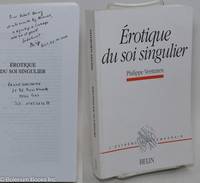
2000rif. 295146Paris: Belin 2000. Paperback. 496p. softbound in 8.5x5 inch white wraps slight handling soil to the fore edge otherwise clean and sound this copy inscribed and signed by Verstraten with contact information. L'extreme contemporain. Belin paperback books
rif. ria9782322217724_inpPaperback. New. New Book; Fast Shipping from UK; Not signed; Not First Edition; Une nouvelle exploration de l' Histoire menant de front les recherches linguistiques théologiques et archéologiques car tous les pans de l' Histoire sont reliés entre eux. On ne peut comprendre les trouvailles archéologiques sans l paperback
rif. ria9782322394562_inpPaperback. New. New Book; Fast Shipping from UK; Not signed; Not First Edition; Cette compilation des premières études de Philippe POTEL-BELNER permet de retracer les hypothèses et raisonnements qui ont conduit à de nouvelles théories linguistiques et ethnogénétiques. Les sujets de ces études sont variés des inscr paperback
rif. ria9782322380190_inpPaperback. New. New Book; Fast Shipping from UK; Not signed; Not First Edition; Ces études couvrent de nombreux champs d' études depuis les inscriptions gauloises et latines jusqu' aux attributs et épithètes divins en passant par les noms de famille et les prénoms de toutes les époques les toponymes de toutes é paperback
rif. Juanpebooks038767WE ship worldwide. Brand new 100%guarentee unknown
rif. LDM0013661We ship worldwide. 100% guarentee. BRAND NEW unknown
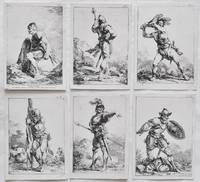
1755rif. 25093A work from Loutherbourg`s early career when he was in Paris 1755 – 1770. This series is outstandingly rare. Ca. 11.9 x 8.5 cm; plate mark not visible; in fine condition. Literature: Le Blanc. Loutherbourg an Alsatian painter who studied etching in Johann Georg Wille's academy clearly admired the prints of the seventeenth-century Neapolitan painter Salvator Rosa as did many other French printmakers of the time. In the set entitled "First suite of Soldiers"Loutherbourg took up a format associated with Rosa in order to showcase his own inventiveness and fluency. Philip James de Loutherbourg RA 31 October 1740 – 11 March 1812 whose name is sometimes given in the French form of Philippe-Jacques the German form of Philipp Jakob or with the English-language epithet of the Younger was a French-born British painter who became known for his large naval works his elaborate set designs for London theatres and his invention of a mechanical theatre called the "Eidophusikon". He also had an interest in faith-healing and the occult and was a companion of the confidence-trickster Alessandro Cagliostro <input type="checkbox"> Loutherbourg was born in Strasbourg in 1740 the son of an expatriate Polish miniature painter.1 Intended for the Lutheran ministry he was educated at the University of Strasbourg.2 Rejecting a religious calling Loutherbourg decided to become a painter and in 1755 placed himself under >Charles-André van Loo in Paris and later under Francesco Giuseppe Casanova. His talent developed rapidly and he became a figure in the fashionable society of the day. In 1767 he was elected to the French Academy although below the age required by the rules of the institution and painted landscapes sea storms and battles all of which work had a celebrity above those of the specialists then working in Paris. He made his debut with the exhibition of twelve pictures including Storm at Sunset Night and Morning after Rain.2 Loutherbourg then travelled through Switzerland Germany and Italy distinguishing himself as much by his mechanical inventions as by his painting. One of these showing new effects produced in a model theatre was the wonder of the day with its use of lights behind canvas representing the moon and stars and the illusory appearance of running water produced by clear blue sheets of metal and gauze with loose threads of silver.2 In 1771 he settled in London where David Garrick paid him £500 a year to design scenery and costumes and oversee the stage machinery at the Drury Lane Theatre.3 His stage effects attracted the admiration not just of the general public but also of artists including Joshua Reynolds. He devised scenic effects in which for instance green trees gradually became russet and the moon rose and lit the edges of passing clouds:2 illusions achieved through the use of coloured lantern-slides and the ingenious lighting of transparencies.4 He continued to work at the theatre until 1785.3 He achieved an even greater success with an entertainment called the Eidophusikon meaning "image of nature". This was a miniature mechanical theatre measuring six by eight feet and described as displaying "Various Imitations of Natural Phenomena represented by Moving Pictures". It was presented at Loutherbourg's home from March 1781 in an auditorium seating about 130 people. He used Argand lamps to light the stage and stained glass to change colours. At Christmas 1781 Loutherbourg mounted a spectacle at a party in the Egyptian Hall at Fonthill for William Beckford promising according to Beckford to "present a mysterious something that the eye has not seen or heart of man conceived".4 Following this he attempted rather more fantastical subjects for the Eidophusikon presenting a scene from Paradise Lost with "Satan arraying his troops on the banks of the Fiery Lake and the rising of the Palace of Pandemonium".4 The Eidophusikon soon closed however as the income did not cover the costs and the audience demanded new productions faster than Loutherbourg could create them. He has been called the inventor of the panorama but although it first appeared about the same time as the Eidophusikon the first panorama was painted and exhibited by the Scottish painter Robert Barker. Despite these other projects Loutherbourg still found time for painting. Lord Howe's action or the Glorious First of June exhibited 1795 and other large naval pictures were commissioned to commemorate British naval victories many of them ending up soon afterwards in the Greenwich Hospital Gallery in whose successor the National Maritime Museum they still remain. His finest work was the Destruction of the Armada. He also painted the Great Fire of London and several historical works including the Attack of the Combined Armies on Valenciennes 1793.2 He was interested in the industrial revolution and his 1801 painting Coalbrookdale by Night shows iron foundries at work. Seven of his paintings including Lodore Waterfall and Skating in Hyde Park are in the Government Art Collection.5 He was made a member of the Royal Academy in 1781. Two sets of drawings by de Loutherbourg were published reproduced in aquatint under the title Picturesque English Scenery in 1801 and 1805. He also contributed illustrations to a Bible published by Thomas Macklin in 1800.3 After his death Cadell and Davies published a volume of the Apocrypha. All 110 of his drawings for the vignettes but not the Apocrypha are pasted in the Bowyer Bible in Bolton Museum in Greater Manchester. Esoteric interests In 1789 Loutherbourg temporarily gave up painting in order to pursue an interest in alchemy and the supernatural.3 He met Alessandro di Cagliostro who instructed him in the occult.3 He travelled about with Cagliostro leaving him however before his condemnation to death.2 He and his wife also took up faith-healing. A pamphlet called A List of a Few Cures performed by Mr and Mrs De Loutherbourg of Hammersmith Terrace without Medicine was published in 1789. Written by a follower named Mary Pratt it claimed that the Loutherbourgs had cured two thousand people between Christmas 1788 and the following July "having been made proper recipients to receive divine manuductions".6 Death Loutherbourg died in Chiswick in 1812. There are paintings by him in the collections of many British institutions including Tate Britain The Victoria and Albert Museum The National Portrait Gallery The Royal Academy of Art Leicester Farnham and Derby Art Gallery.7 Loutherbourg was buried in Chiswick Old Cemetery adjoining the graveyard of St Nicholas Church Chiswick. Buried nearby are the artists William Hogarth and James Abbott McNeill Whistler.
2011rif. 400016914editions persée 2011 2011. Philippe Cauvin: Âmes en perdition/ Les Editions Persée 2011 . Philippe Cauvin: Âmes en perdition/ Les Editions Persée 2011
rif. 22368Montpellier, Fata Morgana, 1975. In-4, 49 pp. 3 pl., en feuilles, couverture originale imprimée (petites rousseurs marginales).
rif. 048324449X.Ghardcover. Good. Access codes and supplements are not guaranteed with used items. May be an ex-library book. hardcover
rif. 048321213X.Gpaperback. Good. Access codes and supplements are not guaranteed with used items. May be an ex-library book. paperback
rif. 9752À REBOURS. Paris (2, rue des Francs-Bourgeois, puis 51, rue des Archives). Directeur : Paul Bénard. Comité de rédaction : Léopold Saint-Brice, Aurélien Marfée, Philippe Gras, Jean Hautepierre. In-8° broché. 56 numéros ont paru de 1977 à mars 1992. // Malgré ses airs de modeste fanzine tapuscrit, " À Rebours " est une revue d'excellent niveau, spécialisée dans le mouvement symboliste et la littérature fin-de-siècle.
rif. 9750À REBOURS. Paris (2, rue des Francs-Bourgeois, puis 51, rue des Archives). Directeur : Paul Bénard. Comité de rédaction : Léopold Saint-Brice, Aurélien Marfée, Philippe Gras, Jean Hautepierre. In-8° broché. 56 numéros ont paru de 1977 à mars 1992. // Malgré ses airs de modeste fanzine tapuscrit, " À Rebours " est une revue d'excellent niveau, spécialisée dans le mouvement symboliste et la littérature fin-de-siècle.
rif. 2603017071.Ghardcover. Good. Access codes and supplements are not guaranteed with used items. May be an ex-library book. hardcover
rif. ING9789004433274BRILL. New. Special order direct from the distributor BRILL unknown
rif. BN314671FLAMMARION. Hardcover. À la table de l'Ambassadeur: LES RECETTES DE LA RESIDENCE DE L'AMBASSADEUR AMERICAIN A PARIS À la table de l'Ambassadeur: LES RECETTES DE LA RESIDENCE DE L'AMBASSADEUR AMERICAIN A PARIS Dorothy Stapleton et Philippe Excoffier FLAMMARION hardcover
1968rif. 134173Paris, Nrf Gallimard, coll. « La Gerbe illustrée » 1968 7 volumes. In-8 24 x 16 cm. Reliures éditeur pleine peau vert-amande, exécutées par Babouot d’après les maquettes de Massin et décorées à l’or fin de fers originaux, têtes dorées, 458-528-390-485-466-489-365 pp., illustrées de 107 planches de Philippe Jullian. Notes et tables à la fin de chaque volume. Exemplaires en bon état avec légers frottis.
2018rif. 100094207Mardaga 2018 182 pages 13x21x2cm. 2018. Broché. 182 pages.
2018rif. 100096351Mardaga 2018 182 pages 13x21x2cm. 2018. Broché. 182 pages.
2018rif. 100097943Mardaga 2018 182 pages 13x21x2cm. 2018. Broché. 182 pages.
2018rif. 100099630Mardaga 2018 182 pages 13x21x2cm. 2018. Broché. 182 pages.