Milton, John; Lawes, Henry.MareMagnum
Antiquariat.de
Typographische Jahrbücher.
1926Best.-Nr. 12446Leipzig Technikum für Buchdrucker, 1926. IV S. + 626 S. 4° Quart Hln.
Antiquariat Boller · Deutschland94,00 €
6.366 Ergebnisse
1937pp. xviii, 44 + color frontis and full page color plates printed from the artist's, M. R. H. Farrar, linoleum-cuts at the Curwen Press. Printed on Pannekoek mould-made paper. Text and music printed by John Johnson at the University Press, Oxford. Color drawing on title page. Uncut.Autograph ownership (1931) of Waynesboro, PA financier, industrialist, and press book collector, Jefford F. Oller (1896-1974). . Insert of Nonesuch News, Number One, September 1938. Folio. Original full vellum like paper binding, embossed and decorated in blind. Yapp edges. Gilt lettered spine. Binding by the Leighton-Straker Bookbinding Company. Original slip case, worn and broken. Hardbound. Limited Edition. Number 416 of only 950 copies. Very handsome copy. PRESS/W38
1916This is the "Popular Edition". 24 black and white plates (one is tipped-on the front cover). This is a very good softcover copy, in stiff orange card covers, with just light wear to the covers and corners. The plates have a little wear, but are clean. 12.5" high X 8" wide. This book will be securely wrapped and packed in a sturdy box and shipped with tracking.
1951Two Volumes. Illustrated in pen and dry-brush by Edward A. Wilson, the key black printed by The Photogravure and Color Company, hand-colored by Walter Fischer; set in linotpe Baskerville on Curtis special paper. Sm. 4to. 6 1/8 x 9 1/4 inches. Bound by The Russell-Rutter Company in full linen with a red American Indian design, gold-stamped spine. Original rose slip case houses both volumes. Number 769 of an edition limited to only 1500 copies, signed in green ink by the illustrator, Edward A. Wilson. A Fine Set. The books published by the Limited Editions Club are justly treasured for the quality of the texts, the beauty and artistry of the illustrations, the creativity of design, and the overall excellence of the paper, presswork, and binding. Each book would make a wonderful gift for any occasion. W90
1935Two Volumes. pp. xxiii, 782 (1) + Plates in color. Small folios. Designed, printed, and bound (in full green linen, gold stamped) by John Johnson, at the Oxford University Press; set in Monotype Bell; on William Nash Special paper. Dust jackets and slipcase show some soiling and wear. Number 413 of an edition limited to only 1500 copies, signed by the artist. In the autumn of 1750 Smollett set out for Paris in order to collect material for another novel. The result of the tour was The Adventures of Peregrine Pickle, published in 1751. In some respects, this is the most remarkable of Smollett's novels; it is, also, the longest, and it maintains its vivacity and vigour throughout. Peregrine is a scoundrel with a very moderate sense of shame; he is also, in his elegant and rather witty way, a bully of the most refined cruelty, who is not content to feast on others' folly, but likes to pay for the feast with all kinds of insult and annoyance. It is still a fun read today. A handsomely produced edition. These would make a great gift. W96
1956pp. (xvii), 113 (1). Small folio. Designed, printed, and bound by Ward Ritchie. Set in Intertype Waverly; on Linweave Paper, deckle edged. Bound in paper boards decorated by the artist, backed in brown cloth. Slipcase covered in rice paper, slightly soiled. Number 769 of an edition limited to only 1500 copies, signed by the artist. A fine example. From Wiki: The story is told in the first person by John Wiltshire, a British copra trader on the fictional South Sea island of Falesá. Upon arriving on the island, he meets a rival trader named Case, who (in an apparently friendly gesture) arranges for him to be "married" to a local girl named Uma in a ceremony designed to impress the natives but to be completely non-binding in the view of Europeans. Wiltshire soon discovers that Uma has a taboo attached to her which causes all the other natives to refuse to do business with him, to Case's profit. He also hears rumors of Case having been involved in the suspicious deaths of his previous competitors. Although realising that he has been tricked, Wiltshire has genuinely fallen in love with Uma, and has their marriage legalised by a passing missionary. Wiltshire gradually learns that Case's influence over the villagers stems from their belief that he has demonic powers, as a result of his simple conjuring tricks as well as strange noises and visions they have experienced at a "temple" he has built in the forest. Upon investigating, Wiltshire finds that these experiences are also tricks produced by imported technologies such as luminous paint and Aeolian harps. Wiltshire sets out that night to destroy the temple with gunpowder. Case confronts him and the two men fight, resulting in Case's death. The story concludes with Wiltshire several years later living on another island, still happily married to Uma, worrying about what will happen to his mixed-race children. Stevenson saw "The Beach of Falesá" as the ground-breaking work in his turn away from romanticism to realism. Stevenson wrote to his friend Sidney Colvin: 'It is the first realistic South Seas story; I mean with real South Sea character and details of life. Everybody else that has tried, that I have seen, got carried away by the romance, and ended in a kind of sugar candy sham epic, and the whole effect was lost - there was not etching, no human grin, consequently no conviction. Now I have got the smell and look of the thing a good deal. You will know more about the South Seas after you have read my little tale than if you had read a library.' In an unusual change for Stevenson, but in-line with realism, the plot of the story is less important, rather the realistic portrayal of the manners of various social classes in island society is foregrounded; it is essentially a novel of manners. As Stevenson says to Colvin in a letter, "The Beach of Falesá" is "well fed with facts" and "true to the manners' of the society it depicts." Other than the island itself which is fictional, it contains the names of real people, real ships and real buildings which Stevenson was familiar with from his personal travels in the South Seas. W42 L
1926Best.-Nr. 12446Leipzig Technikum für Buchdrucker, 1926. IV S. + 626 S. 4° Quart Hln.
1989(Codice BB/0755) In 4º (30,5 cm) XVI-408 pp. Prima edizione. Con innumerevoli figure, illustrazioni e facsimili. A cura di Luigi Cesare Maletto. Legatura tela editoriale, sovraccoperta illustrata da Aldo Novarese. Ottimo stato. ~~~ SPEDIZIONE IN ITALIA SEMPRE TRACCIATA
2021br. La descrizione delle singole marche segue lo schema dei volumi precedenti anche se con il progredire dell'opera si profilano nuovi approcci sempre più specifici e si aggiungono più complete documentazioni bibliografiche e iconografiche. Le marche descritte e riprodotte sono 1.328, relative a 433 tipografi e/o editori, appartenenti a 8 diversi stati, 78 città europee e a 276 denominazioni di insegna. Altri dati numerici: 238 i motti, oltre 300 i soggetti individuati nell'indice iconografico relativi a figure principali e secondarie, 95 le firme o sigle degli artisti, 621 le edizioni citate, 221 le opere segnalate nella bibliografia. Uno dei risultati certamente più importanti è di avere descritto e riprodotto un considerevole numero di marche non censite in repertori.
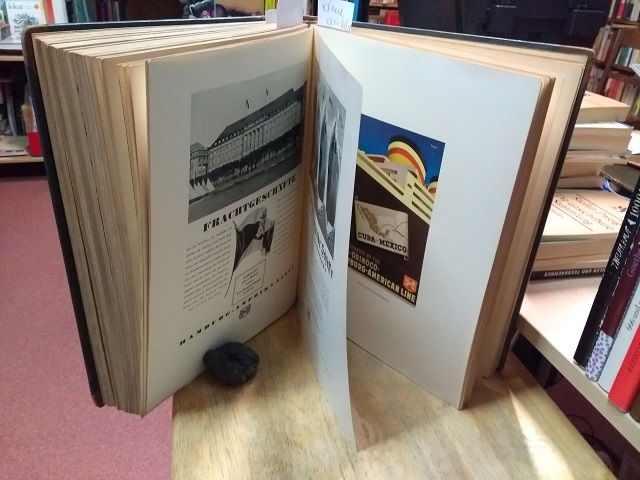
1934Best.-Nr. 32456ABLeipzig, Verlag des Deutschen Buchgewerbevereins, 1934. 4°. Seiten 485-538, 689-820, 821-916 mit ca. 60 Anzeigenseiten bzw. Seiten mit Schriftmustern verschiedener Schriftgießereien, Beispielen von Verlagsprospekten, Illustrations-Tafeln, Porträts, dem farbigen Umschlagblatt von Heft 12 u.a. Privater Halbleinenband der Zeit. Schnitt gebräunt, Ränder teils abgegriffen, sehr wenige Einrisse am unteren Rand, 5 Blätter mit Aufklebern für Koffer lose.
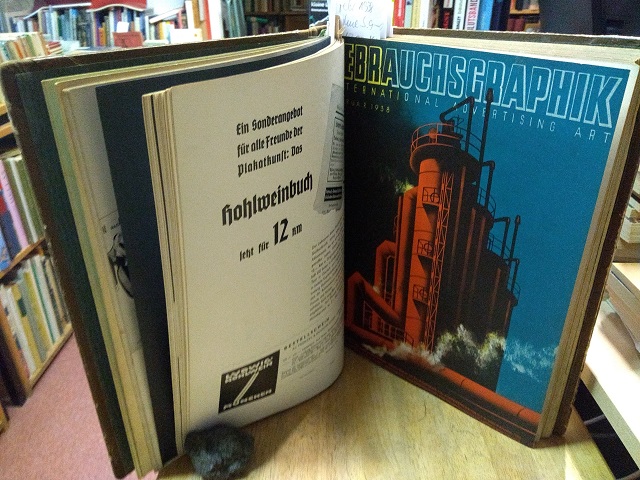
1936Best.-Nr. 32455ABBerlin, Frenzel und Engelbrecher "Gebrauchsgraphik" Verlag, 1936-1938. 4°. Heft 1: 67, 1 Seite mit 5 Anzeigenseiten u. 6 (statt 8) Seiten Beilage über die Firma Schriftgießerei Bauer Frankfurt, ohne S. 19/20 u. 33-40. - Heft 2/Februar: 64 Seiten (ohne S. 9-18, 37-44 u. 53-60). - Heft 3/März: 62 Seiten (ohne S. 1-4, 15/16, 39-42, 63-64). - Heft 4/April: 64 Seiten (ohne S. 7-10, 19/20, 23-30, 37-40). - Heft 5/Mai 1938: 66 Seiten (ohne S. 47/48, 57-60). - Heft 3/März 1936: 72 Seiten (ohne S. 1-4, 9/10, 15/16, 27/28, Seite 53/54 ohne die untere Hälfte, ohne S. 55/56, 63-66), mit 4 S. Beilage "Schriftgießerei J. D. Tennert & Sohn, Hamburg-Altona". - Heft 9/September 1937: 64 Seiten (ohne S. 19-24), mit 5 Farbtafeln u. 4 Anzeigenseiten. Privater Halbleinenband der Zeit. 7 (unvollständige) Hefte in einem Band, die farbigen Deckblätter mitgebunden. Schnitt gebräunt, Ränder teils abgegriffen, wenige Einrisse am unteren Rand, ein Blatt mit längerem Einriss. 2 Blätter lose.
1956Best.-Nr. 197823Krefeld, Selbstverlag, 1956. Ex. Nr. 00161. Mit zahlr. Schriftmustern unter den Reitern: Handsatz Antiqua, Handsatz Grotesk, Handsatz Schreibschrift, Handsatz Fraktur, Handsatz Schmuck und Maschinensatz. Quer-Gr.-8°, Original-Halbleinenordner mit Ringbindung. (ca.).
1990Best.-Nr. 144794Zürich, Argem E., 1990. 3. Aufl. 688 S. 4°, OKart.
1968Best.-Nr. 146235Stuttgart, Staatliche Kunstakademie, 1968. 11 Bll. Gr-4°, OHLnbd.
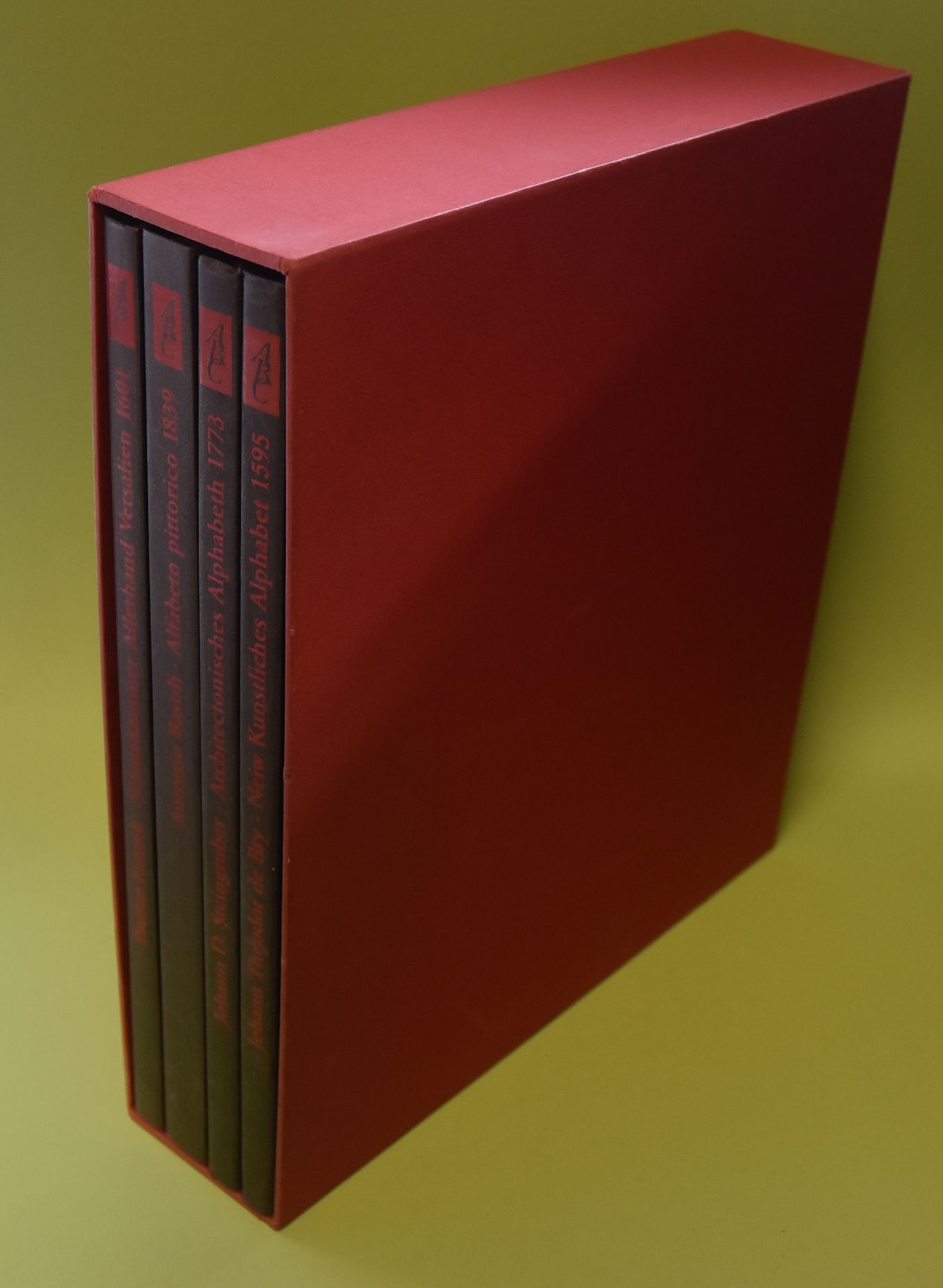
1998Best.-Nr. 65354Ravensburger Verlag, Ravensburg 1998. 4 Bücher 79+79+80+144 S., 28cm Pappe 0
1959Best.-Nr. 10598ABDresden, VEB Verlag der Kunst, (1959). 30 : 22 cm. 272 Seiten Mit vielen, teils farbigen Tafeln und Abbildungen. Original-Leinenband.
1926Best.-Nr. T786Berlin, H. Berthold A. - G., Abt. Privatdrucke, 1926. (Achtzehnter Bertholddruck) - Nummer 120 von 350 Exemplaren. Erste Ausgabe. Ohne die Mappe mit den 4 gefalteten Tafeln. Bibliotheks-Exlibris, mehrfach gestempelt, sondt gut und sauber erhalten.
2004Best.-Nr. 255603Mainz: Schmidt 2004. 312 S., überaus zahlr. Abb. 4° HLn.
1969Best.-Nr. 25640ABWinterthur, 1969. Quadrat-4°. 22 Blatt. Franz. Broschur, Pergaminumschlag. Pergamin am Rand etwas vergilbt. Innen gute Erhaltung.
1954Best.-Nr. 1191Couverture rigide 1ère Édition Arts graphiques Haefeli 1954 La Chaux-de-Fonds 37x29 cm
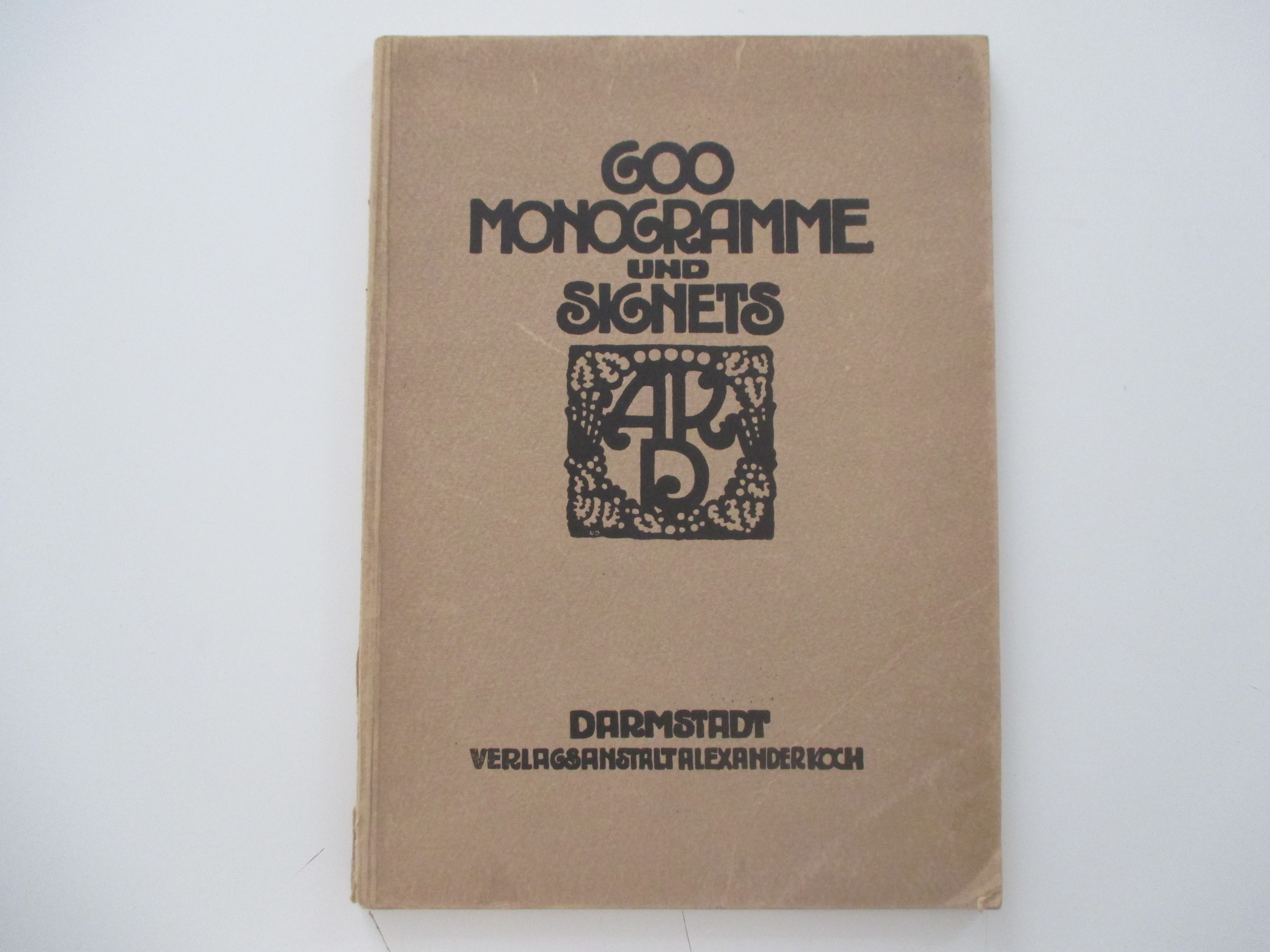
1900Best.-Nr. 16561ABDarmstadt, Koch, ca. 1900. 29,5 : 21,5 cm. 30 plates with many illustrations. Original illustrated boards.
1913Best.-Nr. 97051Offenbach a. M. Gebr. Klingspor, ( 1913). 22 S. Mit zahlreichen Beispieltexten, Schrift- und Ornamentmustern. 29 cm. OBroschur.
1721Best.-Nr. ERJ-24Salamanticae, 1721. Reliure fatiguée et postérieure mais intérieur en très bel état. Ouvrage en latin de 196 pages, 19x14 cm, très belle typographie.
1980Best.-Nr. T303O. O., o. Drucker, o. J. (ca. 1980). 9. Folge des Mühlberger Bibliophilen Kalenders. Dokumentiert die Augsburger Buchkunst und Graphik, Zeugnisse handwerklicher Fähigkeit der Drucker, die ideenreichen Gestaltungen der Künstler und den unternehmerischen Wagemut der Verleger vom ausgehenden Mittelalter bis ins 18. Jahrhundert. Unter dem montierten Blatt befindet sich jeweils der Kommentar. Gutes und sauberes Exemplar.
1940Best.-Nr. T905Berlin, Buchmeister-Verlag, 1940. Vorsatzblatt, Vortitel und Titel jeweils mit Besitzerstempel, sonst gut und sauber erhalten.
1922Best.-Nr. T968Ohne Ort, Privatdruck (Anzengruber Verlag), [1922]. Nummer 111 von 650 Exemplaren. Erste deutsche Ausgabe. Die galanten Schwänke des Guillaume Bouchet (1513-1593) wurden als Privatdruck des Herausgebers für seinen Freunde, für Künstler, Sammler und Gelehrte gedruckt. Bei Bouchets Werk handelt es sich um ein bizarres literarisches Konglomerat von Gelehrsamkeit, Spaß, Moral und Obszönität. - Die für Hayn-Gotendorf "futuristisch" anmutenden Lithographien sind eher in expressionistischer Manier gestaltet und mit "EF" signiert: Bei dem Künstler könnte es sich um den ungarischen Maler und Grafiker Esteban Fekete handeln. Das in klarer Type, zweifarbig gedruckte Werk sauber und wohlerhalten.Hayn-Gotendorf IX, 78