Rohault De Fleury, CharlesBiblio.com

3 664 résultats
1870réf. 38498Paris: L. Lesort. Very Good with no dust jacket. 1870. Hardcover. Half vellum Or leather with marbled boards red spine label/gilt. Backstrip splitting bumped at head corners lightly bumped edges worn light soil. Foxing more concentrated at prelims. Frontis plates. Firm binding. The panels show views of the Holy Cross and materials and tools used for the crucifixion. ; Folio 13" - 23" tall; 416 pages . L. Lesort hardcover
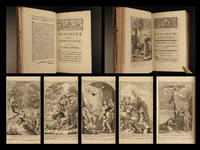
1768réf. 180841768 Fleury Historical Catechism Illustrated BIBLE BANNED Prohibited Book Index Claude Fleury was a 17th-century French priest best-known for his histories of the church and church doctrine. One of his best works was his 'Historical Catechism' – a history of Christian doctrine. It covers the secrets of the foundation of Christianity siting references from scripture and Bible stories. The Catholic Church condemned this book and immediately placed it on the Prohibited Books Index. This impressive 1768 two-volume edition contains 40 full-page engravingsdepicting iconic Bible scenes including Creation and the Great Flood! Item number: #18084 Price: $599 FLEURY Claude CateÌchisme historique contenant en abreÌgeÌ l'histoire sainte & la doctrine chreÌtienne A Paris : Chez Herissant fils 1768. Details: · Collation: Complete with all pages – 2 volumes o Vol. I – vii cxi 1 228 § 31 engraved plates o Vol. II – viii 446 2 § 9 engraved plates · Language: French · Binding: Leather; tight and secure · Size: ~6.75in X 4in 17cm x 10.5cm Our Guarantee: Very Fast. Very Safe. Free Shipping Worldwide. Customer satisfaction is our priority! Notify us with 7 days of receiving and we will offer a full refund without reservation! 18084 Photos available upon request. Herissant fils hardcover
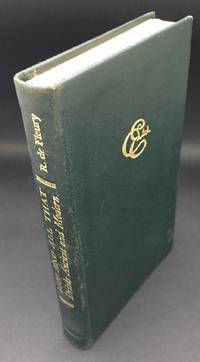
1937réf. biblio352First UK Printing published by The St. Catherine Press London in 1937. The BOOK is in Very Good condition. It would be near fine apart from the fact that there are some penned notes written on one page at the rear in the allotted blank notes section. The black Leather binding is in very good condition and the gilt titling is very bright. Light toning to text block and the page edges. Two small stains to the lower text block which do not encroach onto the pages. Presentation copy with the company details of Edwards and Cleave Ltd. to the verso of the blank front end paper. There is also the Company's gilt motif to the front book cover. Lacking the very scarce dustjacket. The book is protected in a loose mylar cover. The follow up to R de Fleury's 1934 book titled '1700 Cocktails for the Man behind the Bar' in which he attempted to compile recipes for every known cocktail to date. Very Scarce. Ashtonrarebooks welcomes direct contact. St. Catherine Press, London hardcover
réf. 1975Middle East: Paris Impremerie de C.L.F.Pancoucke 1820-1829. Copper engraved view of the painted interior of the temple of Mnemnon Thebes from the third volume of the "Antiquities "of the "Description de l'Egypte" 2nd Edition; black & white; verso blank. Blind stamp of the publisher Panckoucke to margin. The view shows the highly decorated interior of the palace and temple of Remeses II. erroneously called the Memnonium. Good dark impression; some light foxing mainly to margins. "Description de l'Egypte ou Recueil des observations et des recherches qui ont été faites en Egypte pendant l'expédition de l'armée française." When Napoleon Bonaparte invaded Egypt in 1798 he brought with him an entourage of more than 160 scholars and scientists. Known as the French Commission on the Sciences and Arts of Egypt these experts undertook an extensive survey of the country's archeology topography and natural history. . For four years more than 150 artists engineers linguists and scientists traveled throughout the country examining almost every aspect of ancient and contemporary Egypt. They recorded and measured in meticulous detail Egypt's topography flora and fauna and its ancient and contemporary architecture. A soldier who was part of the expedition found the famous Rosetta Stone which the French linguist and scholar Jean-François Champollion 1790-1832 later used to unlock many of the mysteries that long had surrounded the language of ancient Egypt. The Egyptian expedition ended with a total military failure. The French left Egypt in 1801 with the honors of war but defeated; yet military failure remains a significant event in the history of knowledge because it is the first time a military expedition was accompanied by a scientific expedition. In 1802 Napoleon authorized the publication of the commission's findings in a monumental multi-volume work that included plates maps scholarly essays and a detailed index. Publication of the original Imperial edition began in 1809 and continued to 1822 sold by subscription. It proved so popular that a second edition was published under the post-Napoleonic Bourbon Restoration. The "Royal edition" published in Paris by C.L.F. Panckoucke from 1820-1830. The Second edition consists of 11 or 12 volumes of plates in folio and 24 of text bound as 26 8vo. Brunet:II 617; Blackmer/Navari: 476 1st edition Middle East Egypt Memnonium. Thebes Paris Impremerie de C.L.F.Pancoucke 1820-1829 unknown
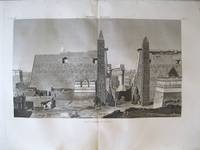
réf. 1973Middle East: Paris Impremerie de C.L.F.Pancoucke 1820-1829. Large double page copper engraved view entrance to the Templeof Luxor Thebes from the third volume of the "Antiquities "of the "Description de l'Egypte" 2nd Edition; black & white; verso blank. Blind stamp of the publisher Panckoucke to margin. The view shows the entrance to the temple with the two obelisks the one on the right now stands in the Place de la Concorde in Paris with two defaced heads of statues buried in the sand in front of the pylons of the temple with their decorated walls; just glimpsed through the entrance can be seen the hall of columns. Good dark impression; some light foxing. mainly to upper margin. "Description de l'Egypte ou Recueil des observations et des recherches qui ont été faites en Egypte pendant l'expédition de l'armée française." When Napoleon Bonaparte invaded Egypt in 1798 he brought with him an entourage of more than 160 scholars and scientists. Known as the French Commission on the Sciences and Arts of Egypt these experts undertook an extensive survey of the country's archeology topography and natural history. . For four years more than 150 artists engineers linguists and scientists traveled throughout the country examining almost every aspect of ancient and contemporary Egypt. They recorded and measured in meticulous detail Egypt's topography flora and fauna and its ancient and contemporary architecture. A soldier who was part of the expedition found the famous Rosetta Stone which the French linguist and scholar Jean-François Champollion 1790-1832 later used to unlock many of the mysteries that long had surrounded the language of ancient Egypt. The Egyptian expedition ended with a total military failure. The French left Egypt in 1801 with the honors of war but defeated; yet military failure remains a significant event in the history of knowledge because it is the first time a military expedition was accompanied by a scientific expedition. In 1802 Napoleon authorized the publication of the commission's findings in a monumental multi-volume work that included plates maps scholarly essays and a detailed index. Publication of the original Imperial edition began in 1809 and continued to 1822 sold by subscription. It proved so popular that a second edition was published under the post-Napoleonic Bourbon Restoration. The "Royal edition" published in Paris by C.L.F. Panckoucke from 1820-1830. The Second edition consists of 11 or 12 volumes of plates in folio and 24 of text bound as 26 8vo. Brunet:II 617; Blackmer/Navari: 476 1st edition Middle East Egypt Luxor Thebes Paris Impremerie de C.L.F.Pancoucke 1820-1829 unknown
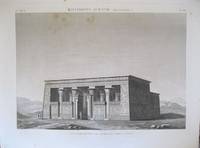
réf. 1981Middle East: Paris Impremerie de C.L.F.Pancoucke 1820-1829. Copper engraved view of the temple of Esna from the first volume of the "Antiquities "of the "Description de l'Egypte" 2nd Edition; black & white; verso blank. Blind stamp of the publisher Panckoucke to margin. The view shows a reconstruction of the temple of Khnum. at Esné The tutelary deities of Latopolis seem to have been the triad – Khnum and Neith and Heka their offspring. The temple of Esna dedicated to this triad was remarkable for the beauty of its site and the magnificence of its architecture. It was built of red sandstone and its portico consisted of six rows of four columns each with lotus-leaf capitals all of which however differ from each other Good dark impression; some foxing to sky and spotting to margins. "Description de l'Egypte ou Recueil des observations et des recherches qui ont été faites en Egypte pendant l'expédition de l'armée française." When Napoleon Bonaparte invaded Egypt in 1798 he brought with him an entourage of more than 160 scholars and scientists. Known as the French Commission on the Sciences and Arts of Egypt these experts undertook an extensive survey of the country's archeology topography and natural history. . For four years more than 150 artists engineers linguists and scientists traveled throughout the country examining almost every aspect of ancient and contemporary Egypt. They recorded and measured in meticulous detail Egypt's topography flora and fauna and its ancient and contemporary architecture. A soldier who was part of the expedition found the famous Rosetta Stone which the French linguist and scholar Jean-François Champollion 1790-1832 later used to unlock many of the mysteries that long had surrounded the language of ancient Egypt. The Egyptian expedition ended with a total military failure. The French left Egypt in 1801 with the honors of war but defeated; yet military failure remains a significant event in the history of knowledge because it is the first time a military expedition was accompanied by a scientific expedition. In 1802 Napoleon authorized the publication of the commission's findings in a monumental multi-volume work that included plates maps scholarly essays and a detailed index. Publication of the original Imperial edition began in 1809 and continued to 1822 sold by subscription. It proved so popular that a second edition was published under the post-Napoleonic Bourbon Restoration. The "Royal edition" published in Paris by C.L.F. Panckoucke from 1820-1830. The Second edition consists of 11 or 12 volumes of plates in folio and 24 of text bound as 26 8vo. Brunet:II 617; Blackmer/Navari: 476 1st edition Middle East Egypt Esne Esna Latopolis Paris Impremerie de C.L.F.Pancoucke 1820-1829 unknown
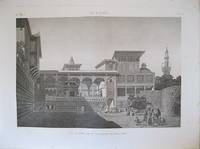
réf. 1967Middle East: Paris Impremerie de C.L.F.Pancoucke 1820-1829. Copper engraved view of the interior of a noble Egyptian house Cairo from the first volume of the "Etat Modene "of the "Description de l'Egypte" 2nd Edition; 1822; black & white; verso blank. Blind stamp of the publisher Panckoucke to margin. The view shows the courtyard of the house belonging to Osman Bey Visitors arrive on horse and camel and are ushered up to an audience with the Bey. The view shows the ornate decoration of the house with a minaret in the background. Good dark impression; some foxing mainly to blank margins. "Description de l'Egypte ou Recueil des observations et des recherches qui ont été faites en Egypte pendant l'expédition de l'armée française." When Napoleon Bonaparte invaded Egypt in 1798 he brought with him an entourage of more than 160 scholars and scientists. Known as the French Commission on the Sciences and Arts of Egypt these experts undertook an extensive survey of the country's archeology topography and natural history. . For four years more than 150 artists engineers linguists and scientists traveled throughout the country examining almost every aspect of ancient and contemporary Egypt. They recorded and measured in meticulous detail Egypt's topography flora and fauna and its ancient and contemporary architecture. A soldier who was part of the expedition found the famous Rosetta Stone which the French linguist and scholar Jean-François Champollion 1790-1832 later used to unlock many of the mysteries that long had surrounded the language of ancient Egypt. The Egyptian expedition ended with a total military failure. The French left Egypt in 1801 with the honors of war but defeated; yet military failure remains a significant event in the history of knowledge because it is the first time a military expedition was accompanied by a scientific expedition. In 1802 Napoleon authorized the publication of the commission's findings in a monumental multi-volume work that included plates maps scholarly essays and a detailed index. Publication of the original Imperial edition began in 1809 and continued to 1822 sold by subscription. It proved so popular that a second edition was published under the post-Napoleonic Bourbon Restoration. The "Royal edition" published in Paris by C.L.F. Panckoucke from 1820-1830. The Second edition consists of 11 or 12 volumes of plates in folio and 24 of text bound as 26 8vo. Brunet:II 617; Blackmer/Navari: 476 1st edition Middle East Egypt Cairo House of Osman Bey Paris Impremerie de C.L.F.Pancoucke 1820-1829 unknown
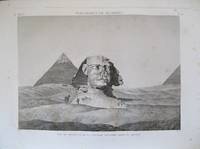
réf. 1978Middle East: Paris Impremerie de C.L.F.Pancoucke 1820-1829. Copper engraved view of the Great Sphinx between the Pyramids of Giza from the fifth volume of the "Antiquities "of the "Description de l'Egypte" 2nd Edition; black & white; verso blank. Blind stamp of the publisher Panckoucke to margin. The view shows the Sphinx full face emerging from the sand with the Pyramid of Khafre behind. Good dark impression; some spotting mainly to margins a few to image. "Description de l'Egypte ou Recueil des observations et des recherches qui ont été faites en Egypte pendant l'expédition de l'armée française." When Napoleon Bonaparte invaded Egypt in 1798 he brought with him an entourage of more than 160 scholars and scientists. Known as the French Commission on the Sciences and Arts of Egypt these experts undertook an extensive survey of the country's archeology topography and natural history. . For four years more than 150 artists engineers linguists and scientists traveled throughout the country examining almost every aspect of ancient and contemporary Egypt. They recorded and measured in meticulous detail Egypt's topography flora and fauna and its ancient and contemporary architecture. A soldier who was part of the expedition found the famous Rosetta Stone which the French linguist and scholar Jean-François Champollion 1790-1832 later used to unlock many of the mysteries that long had surrounded the language of ancient Egypt. The Egyptian expedition ended with a total military failure. The French left Egypt in 1801 with the honors of war but defeated; yet military failure remains a significant event in the history of knowledge because it is the first time a military expedition was accompanied by a scientific expedition. In 1802 Napoleon authorized the publication of the commission's findings in a monumental multi-volume work that included plates maps scholarly essays and a detailed index. Publication of the original Imperial edition began in 1809 and continued to 1822 sold by subscription. It proved so popular that a second edition was published under the post-Napoleonic Bourbon Restoration. The "Royal edition" published in Paris by C.L.F. Panckoucke from 1820-1830. The Second edition consists of 11 or 12 volumes of plates in folio and 24 of text bound as 26 8vo. Brunet:II 617; Blackmer/Navari: 476 1st edition Middle East Egypt Sphinx Pyramids of Giza Memphis Paris Impremerie de C.L.F.Pancoucke 1820-1829 unknown
réf. 1971Middle East: Paris Impremerie de C.L.F.Pancoucke 1820-1829. Copper engraved view of Festival of the Nile flood and the opening of Khaleej dike Cairo from the first volume of the "Etat Modene "of the "Description de l'Egypte" 2nd Edition; 1822; black & white; verso blank. Blind stamp of the publisher Panckoucke to margin. The view shows the festival celebrated at the opening of the Khaleej dike so that the flood waters of the Nile can enter the canal. Since ancient times the Nile has played a vital role in Egypt to the point that it is the river that the Egyptians attributed the birth and existence of their country. As the waters of the Nile rose the Egyptians prepared to let them through for irrigation etc thus a most important moment each year to be celebrated. the sultan would proceed to the Misr point to open the dike. Called the cavalcade of the opening of the Khaleej. it was was one of the most important festivals of the year. Good dark impression; some light foxing; glue and remains of tissue guard to upper margin. "Description de l'Egypte ou Recueil des observations et des recherches qui ont été faites en Egypte pendant l'expédition de l'armée française." When Napoleon Bonaparte invaded Egypt in 1798 he brought with him an entourage of more than 160 scholars and scientists. Known as the French Commission on the Sciences and Arts of Egypt these experts undertook an extensive survey of the country's archeology topography and natural history. . For four years more than 150 artists engineers linguists and scientists traveled throughout the country examining almost every aspect of ancient and contemporary Egypt. They recorded and measured in meticulous detail Egypt's topography flora and fauna and its ancient and contemporary architecture. A soldier who was part of the expedition found the famous Rosetta Stone which the French linguist and scholar Jean-François Champollion 1790-1832 later used to unlock many of the mysteries that long had surrounded the language of ancient Egypt. The Egyptian expedition ended with a total military failure. The French left Egypt in 1801 with the honors of war but defeated; yet military failure remains a significant event in the history of knowledge because it is the first time a military expedition was accompanied by a scientific expedition. In 1802 Napoleon authorized the publication of the commission's findings in a monumental multi-volume work that included plates maps scholarly essays and a detailed index. Publication of the original Imperial edition began in 1809 and continued to 1822 sold by subscription. It proved so popular that a second edition was published under the post-Napoleonic Bourbon Restoration. The "Royal edition" published in Paris by C.L.F. Panckoucke from 1820-1830. The Second edition consists of 11 or 12 volumes of plates in folio and 24 of text bound as 26 8vo. Brunet:II 617; Blackmer/Navari: 476 1st edition Middle East Egypt Cairo Festival of the Khaleej Paris Impremerie de C.L.F.Pancoucke 1820-1829 unknown
réf. 1974Middle East: Paris Impremerie de C.L.F.Pancoucke 1820-1829. Copper engraved view view of the great hypostyle hall in the Precinct of Amun Re Karnak Thebes from the third volume of the "Antiquities "of the "Description de l'Egypte" 2nd Edition; black & white; verso blank. Blind stamp of the publisher Panckoucke to margin. The view shows the great hypostyle hall in the Precinct of Amun Re with the massive carved columns. Good dark impression; some light foxing. "Description de l'Egypte ou Recueil des observations et des recherches qui ont été faites en Egypte pendant l'expédition de l'armée française." When Napoleon Bonaparte invaded Egypt in 1798 he brought with him an entourage of more than 160 scholars and scientists. Known as the French Commission on the Sciences and Arts of Egypt these experts undertook an extensive survey of the country's archeology topography and natural history. . For four years more than 150 artists engineers linguists and scientists traveled throughout the country examining almost every aspect of ancient and contemporary Egypt. They recorded and measured in meticulous detail Egypt's topography flora and fauna and its ancient and contemporary architecture. A soldier who was part of the expedition found the famous Rosetta Stone which the French linguist and scholar Jean-François Champollion 1790-1832 later used to unlock many of the mysteries that long had surrounded the language of ancient Egypt. The Egyptian expedition ended with a total military failure. The French left Egypt in 1801 with the honors of war but defeated; yet military failure remains a significant event in the history of knowledge because it is the first time a military expedition was accompanied by a scientific expedition. In 1802 Napoleon authorized the publication of the commission's findings in a monumental multi-volume work that included plates maps scholarly essays and a detailed index. Publication of the original Imperial edition began in 1809 and continued to 1822 sold by subscription. It proved so popular that a second edition was published under the post-Napoleonic Bourbon Restoration. The "Royal edition" published in Paris by C.L.F. Panckoucke from 1820-1830. The Second edition consists of 11 or 12 volumes of plates in folio and 24 of text bound as 26 8vo. Brunet:II 617; Blackmer/Navari: 476 1st edition Middle East Egypt Karnak Thebes Paris Impremerie de C.L.F.Pancoucke 1820-1829 unknown
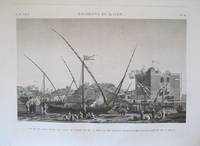
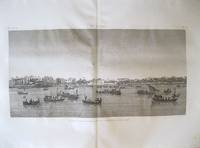
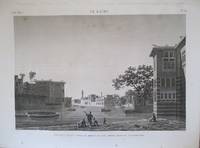
réf. 1968Middle East: Paris Impremerie de C.L.F.Pancoucke 1820-1829. Large double page copper engraved view of the area of Ezbekyeh North West Cairo from the first volume of the "Etat Modene "of the "Description de l'Egypte" 2nd Edition; 1822; black & white; verso blank. Blind stamp of the publisher Panckoucke to margin. The view shows the area of Ezbekieh in Cairo as seen from the Nile with many boats in the foreground. Ezbekieh is part of modern Cairo close to the gardens of the same name and popular with foreign visitors. Good dark impression; foxing to sky and blank margins. "Description de l'Egypte ou Recueil des observations et des recherches qui ont été faites en Egypte pendant l'expédition de l'armée française." When Napoleon Bonaparte invaded Egypt in 1798 he brought with him an entourage of more than 160 scholars and scientists. Known as the French Commission on the Sciences and Arts of Egypt these experts undertook an extensive survey of the country's archeology topography and natural history. . For four years more than 150 artists engineers linguists and scientists traveled throughout the country examining almost every aspect of ancient and contemporary Egypt. They recorded and measured in meticulous detail Egypt's topography flora and fauna and its ancient and contemporary architecture. A soldier who was part of the expedition found the famous Rosetta Stone which the French linguist and scholar Jean-François Champollion 1790-1832 later used to unlock many of the mysteries that long had surrounded the language of ancient Egypt. The Egyptian expedition ended with a total military failure. The French left Egypt in 1801 with the honors of war but defeated; yet military failure remains a significant event in the history of knowledge because it is the first time a military expedition was accompanied by a scientific expedition. In 1802 Napoleon authorized the publication of the commission's findings in a monumental multi-volume work that included plates maps scholarly essays and a detailed index. Publication of the original Imperial edition began in 1809 and continued to 1822 sold by subscription. It proved so popular that a second edition was published under the post-Napoleonic Bourbon Restoration. The "Royal edition" published in Paris by C.L.F. Panckoucke from 1820-1830. The Second edition consists of 11 or 12 volumes of plates in folio and 24 of text bound as 26 8vo. Brunet:II 617; Blackmer/Navari: 476 1st edition Middle East Egypt Cairo Ezbekieh Paris Impremerie de C.L.F.Pancoucke 1820-1829 unknown
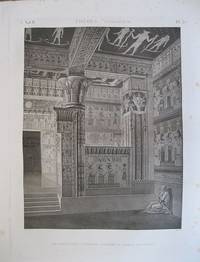
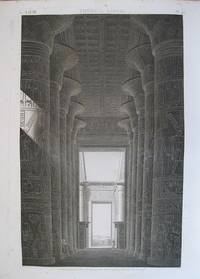
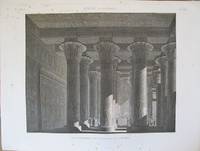
réf. 1980Middle East: Paris Impremerie de C.L.F.Pancoucke 1820-1829. Copper engraved view of the interior of the temple of Esna from the first volume of the "Antiquities "of the "Description de l'Egypte" 2nd Edition; black & white; verso blank. Blind stamp of the publisher Panckoucke to margin. The view shows the highly decorated columns and ceiling of the entrance to the temple with a procession moving through to the main temple The tutelary deities of Latopolis seem to have been the triad – Khnum and Neith and Heka their offspring. The temple of Esna dedicated to this triad was remarkable for the beauty of its site and the magnificence of its architecture. It was built of red sandstone and its portico consisted of six rows of four columns each with lotus-leaf capitals all of which however differ from each other Good dark impression; spotting mainly to margins. "Description de l'Egypte ou Recueil des observations et des recherches qui ont été faites en Egypte pendant l'expédition de l'armée française." When Napoleon Bonaparte invaded Egypt in 1798 he brought with him an entourage of more than 160 scholars and scientists. Known as the French Commission on the Sciences and Arts of Egypt these experts undertook an extensive survey of the country's archeology topography and natural history. . For four years more than 150 artists engineers linguists and scientists traveled throughout the country examining almost every aspect of ancient and contemporary Egypt. They recorded and measured in meticulous detail Egypt's topography flora and fauna and its ancient and contemporary architecture. A soldier who was part of the expedition found the famous Rosetta Stone which the French linguist and scholar Jean-François Champollion 1790-1832 later used to unlock many of the mysteries that long had surrounded the language of ancient Egypt. The Egyptian expedition ended with a total military failure. The French left Egypt in 1801 with the honors of war but defeated; yet military failure remains a significant event in the history of knowledge because it is the first time a military expedition was accompanied by a scientific expedition. In 1802 Napoleon authorized the publication of the commission's findings in a monumental multi-volume work that included plates maps scholarly essays and a detailed index. Publication of the original Imperial edition began in 1809 and continued to 1822 sold by subscription. It proved so popular that a second edition was published under the post-Napoleonic Bourbon Restoration. The "Royal edition" published in Paris by C.L.F. Panckoucke from 1820-1830. The Second edition consists of 11 or 12 volumes of plates in folio and 24 of text bound as 26 8vo. Brunet:II 617; Blackmer/Navari: 476 1st edition Middle East Egypt Esne Esna Latopolis Paris Impremerie de C.L.F.Pancoucke 1820-1829 unknown
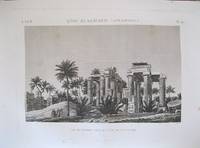
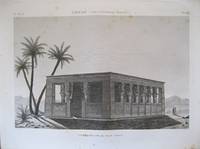
réf. 1982Middle East: Paris Impremerie de C.L.F.Pancoucke 1820-1829. Copper engraved view of the temple of Qau el-Kebir from the fourth volume of the "Antiquities "of the "Description de l'Egypte" 2nd Edition; black & white; verso blank. Blind stamp of the publisher Panckoucke to margin. The view shows the ruins of the temple Qau or Qau el-Kebir surrounded by palm trees Qau is located by the site of ancient Tjebu known in ancient Greek records as Antaeopolis 'city of Antaeus' on the east bank of the Nile midway between the towns of Akhmim and Asyut The temple was built by Ptolemy IV. substantial parts of which were still standing at the beginning of the 19th century sadly it was swept away by the Nile flood of 1821 Good dark impression; some light foxing to sky and spotting to margins. "Description de l'Egypte ou Recueil des observations et des recherches qui ont été faites en Egypte pendant l'expédition de l'armée française." When Napoleon Bonaparte invaded Egypt in 1798 he brought with him an entourage of more than 160 scholars and scientists. Known as the French Commission on the Sciences and Arts of Egypt these experts undertook an extensive survey of the country's archeology topography and natural history. . For four years more than 150 artists engineers linguists and scientists traveled throughout the country examining almost every aspect of ancient and contemporary Egypt. They recorded and measured in meticulous detail Egypt's topography flora and fauna and its ancient and contemporary architecture. A soldier who was part of the expedition found the famous Rosetta Stone which the French linguist and scholar Jean-François Champollion 1790-1832 later used to unlock many of the mysteries that long had surrounded the language of ancient Egypt. The Egyptian expedition ended with a total military failure. The French left Egypt in 1801 with the honors of war but defeated; yet military failure remains a significant event in the history of knowledge because it is the first time a military expedition was accompanied by a scientific expedition. In 1802 Napoleon authorized the publication of the commission's findings in a monumental multi-volume work that included plates maps scholarly essays and a detailed index. Publication of the original Imperial edition began in 1809 and continued to 1822 sold by subscription. It proved so popular that a second edition was published under the post-Napoleonic Bourbon Restoration. The "Royal edition" published in Paris by C.L.F. Panckoucke from 1820-1830. The Second edition consists of 11 or 12 volumes of plates in folio and 24 of text bound as 26 8vo. Brunet:II 617; Blackmer/Navari: 476 1st edition Middle East Egypt Qau el-Kebir Qâou El Kebyreh Antæopolis. Paris Impremerie de C.L.F.Pancoucke 1820-1829 unknown
réf. 1965Middle East: Paris Impremerie de C.L.F.Pancoucke 1820-1829. Copper engraved view of the grand square of Birket-el-Fyl Cairo from the first volume of the "Etat Modene "of the "Description de l'Egypte" 2nd Edition; 1822; black & white; verso blank. Blind stamp of the publisher Panckoucke to margin. The view shows the square in a state of flood with boats upon the water. Good dark impression; some foxing to plate darker spots to lower margin; in the upper margin remains of glue from tissue guard outside the platemark. "Description de l'Egypte ou Recueil des observations et des recherches qui ont été faites en Egypte pendant l'expédition de l'armée française." When Napoleon Bonaparte invaded Egypt in 1798 he brought with him an entourage of more than 160 scholars and scientists. Known as the French Commission on the Sciences and Arts of Egypt these experts undertook an extensive survey of the country's archeology topography and natural history. . For four years more than 150 artists engineers linguists and scientists traveled throughout the country examining almost every aspect of ancient and contemporary Egypt. They recorded and measured in meticulous detail Egypt's topography flora and fauna and its ancient and contemporary architecture. A soldier who was part of the expedition found the famous Rosetta Stone which the French linguist and scholar Jean-François Champollion 1790-1832 later used to unlock many of the mysteries that long had surrounded the language of ancient Egypt. The Egyptian expedition ended with a total military failure. The French left Egypt in 1801 with the honors of war but defeated; yet military failure remains a significant event in the history of knowledge because it is the first time a military expedition was accompanied by a scientific expedition. In 1802 Napoleon authorized the publication of the commission's findings in a monumental multi-volume work that included plates maps scholarly essays and a detailed index. Publication of the original Imperial edition began in 1809 and continued to 1822 sold by subscription. It proved so popular that a second edition was published under the post-Napoleonic Bourbon Restoration. The "Royal edition" published in Paris by C.L.F. Panckoucke from 1820-1830. The Second edition consists of 11 or 12 volumes of plates in folio and 24 of text bound as 26 8vo. Brunet:II 617; Blackmer/Navari: 476 1st edition Middle East Egypt Cairo Birket-el-Fyl Paris Impremerie de C.L.F.Pancoucke 1820-1829 unknown
réf. 1979Middle East: Paris Impremerie de C.L.F.Pancoucke 1820-1829. Copper engraved view of the small temple or Birth House at Edfu from the first volume of the "Antiquities "of the "Description de l'Egypte" 2nd Edition; black & white; verso blank. Blind stamp of the publisher Panckoucke to margin. The view shows a reconstrucion of the small temple or Birth house described in the Antiquites. Opposite the large temple of Horus is another much smaller temple in a rather poorer state of preservation - the mammisi Birth House. The floral columns are crowned with sculptures of the god Bes a disfigured domestic god considered the guardian of expectant mothers and newborn infants. Since the scenes on the outside had been destroyed the French artists executed an imaginary reconstruction of the temple with all the decoration typical of similar monuments. Good dark impression; some spotting mainly to margins a few to image. "Description de l'Egypte ou Recueil des observations et des recherches qui ont été faites en Egypte pendant l'expédition de l'armée française." When Napoleon Bonaparte invaded Egypt in 1798 he brought with him an entourage of more than 160 scholars and scientists. Known as the French Commission on the Sciences and Arts of Egypt these experts undertook an extensive survey of the country's archeology topography and natural history. . For four years more than 150 artists engineers linguists and scientists traveled throughout the country examining almost every aspect of ancient and contemporary Egypt. They recorded and measured in meticulous detail Egypt's topography flora and fauna and its ancient and contemporary architecture. A soldier who was part of the expedition found the famous Rosetta Stone which the French linguist and scholar Jean-François Champollion 1790-1832 later used to unlock many of the mysteries that long had surrounded the language of ancient Egypt. The Egyptian expedition ended with a total military failure. The French left Egypt in 1801 with the honors of war but defeated; yet military failure remains a significant event in the history of knowledge because it is the first time a military expedition was accompanied by a scientific expedition. In 1802 Napoleon authorized the publication of the commission's findings in a monumental multi-volume work that included plates maps scholarly essays and a detailed index. Publication of the original Imperial edition began in 1809 and continued to 1822 sold by subscription. It proved so popular that a second edition was published under the post-Napoleonic Bourbon Restoration. The "Royal edition" published in Paris by C.L.F. Panckoucke from 1820-1830. The Second edition consists of 11 or 12 volumes of plates in folio and 24 of text bound as 26 8vo. Brunet:II 617; Blackmer/Navari: 476 1st edition Middle East Egypt Edfu Paris Impremerie de C.L.F.Pancoucke 1820-1829 unknown
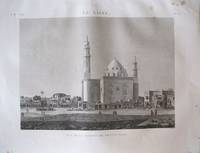
réf. 1966Middle East: Paris Impremerie de C.L.F.Pancoucke 1820-1829. Copper engraved view of the mosque of Sultan Hasan Cairo from the first volume of the "Etat Modene "of the "Description de l'Egypte" 2nd Edition; 1822; black & white; verso blank. Blind stamp of the publisher Panckoucke to margin. The view shows the mosque towering over the nearby buildings with small shops and workshops in and around the Square. Good dark impression; some foxing to platemainly to blank margins. "Description de l'Egypte ou Recueil des observations et des recherches qui ont été faites en Egypte pendant l'expédition de l'armée française." When Napoleon Bonaparte invaded Egypt in 1798 he brought with him an entourage of more than 160 scholars and scientists. Known as the French Commission on the Sciences and Arts of Egypt these experts undertook an extensive survey of the country's archeology topography and natural history. . For four years more than 150 artists engineers linguists and scientists traveled throughout the country examining almost every aspect of ancient and contemporary Egypt. They recorded and measured in meticulous detail Egypt's topography flora and fauna and its ancient and contemporary architecture. A soldier who was part of the expedition found the famous Rosetta Stone which the French linguist and scholar Jean-François Champollion 1790-1832 later used to unlock many of the mysteries that long had surrounded the language of ancient Egypt. The Egyptian expedition ended with a total military failure. The French left Egypt in 1801 with the honors of war but defeated; yet military failure remains a significant event in the history of knowledge because it is the first time a military expedition was accompanied by a scientific expedition. In 1802 Napoleon authorized the publication of the commission's findings in a monumental multi-volume work that included plates maps scholarly essays and a detailed index. Publication of the original Imperial edition began in 1809 and continued to 1822 sold by subscription. It proved so popular that a second edition was published under the post-Napoleonic Bourbon Restoration. The "Royal edition" published in Paris by C.L.F. Panckoucke from 1820-1830. The Second edition consists of 11 or 12 volumes of plates in folio and 24 of text bound as 26 8vo. Brunet:II 617; Blackmer/Navari: 476 1st edition Middle East Egypt Cairo Sultan Hasan Mosque Paris Impremerie de C.L.F.Pancoucke 1820-1829 unknown
1937réf. 082059The St. Catherine Press 1937. First Edition. Hardback. Very Good. 336 pages. Black leather HB Small pocket book. Scarce. A very good copy with a neat previous owner's name on the f.e.p. Lacks dust jacket. Leather is a little rubbed. Gilt titles on the spine still vivid. The St. Catherine Press hardcover
réf. mc261Downey & Co London 1901. Red cloth 196pp. Good. hardcover
2020réf. 2091202133208630Jinbunshoin 2020. Soft Cover. Fine. Volume: 1 Jinbunshoin paperback
réf. 124765London: William Baynes 1809 3rd edition. Hardcover 389pp. Very good. Rebound in a 19th century leather binding. Engraved frontispiece portrait index. The spine and covers are lightly rubbed and edgeworn the margins have been trimmed and the edges spackled there is a previous owner's bookplate the pages are quite clean except for the frontis which has some spotting. With a short account of the Ancient and Modern Samaritans. The whole much enlarged from the principal writers on Jewish Antiquities by Adam Clarke LL.D. The Third Edition with many additions and improvements. Edited by Adam Clarke. History--Ancient Jews Religion. William Baynes Hardcover
1868réf. RWARE0000014532Stanley Bradley Publishing. Acceptable. 1868. Hardcover. Front cover detatched but present. Some pages loose. Gold lettering and de corations on cover. Reading copy. Delightful old book. . Stanley Bradley Publishing hardcover
1741réf. 24683Bruxelles: Jen-F. Broncart 1741. Two Volumes in One. 6&5/8"x4&1/8". Leather moderately worn. Ribbed gold embossed spine. Very short 3/8" closed tear at title page of "Chretiens." 219pgs.348pgs. Overall clean and tight. Full-Leather. Very Good/No Jacket. Jen-F. Broncart Hardcover
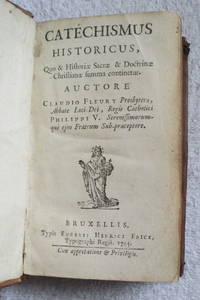
1705réf. 26613Bruxellis: Eugenii Henrici Fricx 1705. edition not stated in contemporary full calf gilt decoration on spine the binding a little worn at corners but sound and strong pages 8 147 : 334 11 3 blank two parts in one volume Historicus Minor and Historicus Major. Despite his high standing in French society the Roman Congregation of the Index condemned this work. Text is in Latin. Reprint. Full-Leather. Very Good/No Jacket. 24mo - over 5" - 5¾" tall. Eugenii Henrici Fricx Hardcover
1984réf. PH-277New York: Plenum Press 1984. Comprehensive text contains detailed topics covering statics and dynamics of glasses; low energy excitation; optical energy transfer; coherent optical processes; optical devices and media; chalogenide semiconductors; defects in amorphous semiconductors; localization phenomena; etc. 419 pgs. Illustrated. Blank pocket remnant on front endpaper; small stamps to endpapers. Gilt spine. Minimal shelfwear. . First Edition. Hard Cover. Very Good. 8vo - over 7¾" - 9¾" tall. Ex-Professional Library. Plenum Press Hardcover
1847réf. 20653Firenze Italy: Presso Celli Usigli E Compagno. Good with no dust jacket. 1847. Hardcover. Good hardcover edition has previous owner's bookplate on inside of front board and also has some small library stamps on the title page and last page. ; 8vo 8" - 9" tall; 726 pages . Presso Celli, Usigli E Compagno hardcover