3 664 résultats
réf. 3032Lancaster Eaton & Bulfield 1891. pp. xi 612 including a list of subscribers. Original cloth. An unusually excellent crisp copy of this three inch thick book. Lancaster, Eaton & Bulfield, 1891. hardcover
1761réf. 44801Augsburg & Innsbrugg: Printed By Jos. Wolff. G. 1761. Hardcover. Early possibly contemporary 3/4 Vellum Binding with speckled brown paper. Covers quite worn and rubbed title hand written in ink on the spine early. Numerous early inscriptions on the flyleaves interior paper slightly browned. Overall a worn but quite nice copy. Rare. ; 12mo 7" - 7½" tall; 630 pages; RB Glass . Printed By Jos. Wolff hardcover
1750réf. 2856': P. G. Le Mercier / Desaint & Saillant / Jean-Th Herrisant / Durand / Le Prieur 1750. Hardcover. Good . Vol 32.Unpaginated introduction 639 pgs with table.8 x 10 1/4 in. Text in French.Brown polished calf. Gilt lettering and decoration on spine. 5 raised bands. Silk bookmark. Marbled endpapers. Red edges to text block engraved design on title page. Condition of book is GOOD; Spine worn small cracks and bumps. Upper text block slightly darkened. Glued in label on ffep: “M. Doudement cure de St-Jacques Dieppe” Slight foxing to some text otherwise very tight solid copy. . P. G. Le Mercier / Desaint & Saillant / Jean-Th Herrisant / Durand / Le Prieur hardcover
1950réf. 1-2489201950. Couverture souple. Assez bon . IMP. LA TYPO-LITHO & JULES CARBONEL collection 1950. 1 volume brochés format In-8 correct plats élimés. Envoi avec numéro de Suivi - shipping with tracking number. IMP. LA TYPO-LITHO & JULES CARBONEL unknown
1861réf. 006382Geneve: Jacquemot 1861. Due volumi in 8vo 21 cm di XV-406 e 550 pagine. Ritratto inciso di Vuarin all'antiporta. Due bolli alle pagg. bianche e di titolo. Mezza pelle coeva dorso liscio con titolo dorato usure alle cuffie. Belle condizioni per questo resoconto di parte cattolica dell'opera del Vuarin in particolare per il proselitismo cattolico nella calvinista Ginevra soprattutto negli anni della Restaurazione e gli scontri col potere civile. Jacquemot unknown
1753réf. 007455Venetiis: Balleoniana 1753. Un volume in 8vo 11x17 cm di 573-3 pagine. Qualche fioritura soprattutto ai margini. Legatura coeva in piena pergamena tassello di titolo dorato al dorso. Balleoniana unknown
1974réf. 069790Flammarion 1974. Hardcover. Very Good/Good. Huge hardcover in excellent condition: slightest handling owner's 7x3cm sticker inside the front cover otherwise unmarked. The dust jacket is good with slight wear and a 2x1cm chip missing at the top of the spine. The SLIPCASE is VG with light handling evident. 409 pages with photographs throughout. Text in French. Only slow USA shipment available. 6.9 lbs Flammarion hardcover
réf. 3021Librairie Plon Paris. Volume 1 4th edition 1899. Volume 2 3rd edition 1898. Vol 1: viii 433pp 2 heliogravure printed portraits. Vol 2:iv 393pp 1 heliogravure printed portrait. Rebound. Leather spines with marbled boards. Spines little faded. Page edges little dusty and foxed. 2 volumes. 23x14cms. Librairie Plon, Paris. Volume 1 4th edition, 1899. Volume 2 3rd edition, 1898. hardcover
1727réf. 015151Paris: Emery Saugrain Martin 1727. Un volume in 12mo 9x17 cm di 4-392 pagine. Legatura coeva in piena pelle dorso a nervi ornato e dorato risguardie con carta marmorizzata. Ottime condizioni. La prima edizione è del 1681. Emery, Saugrain, Martin unknown
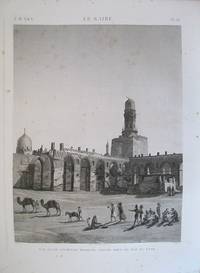
réf. 1969Middle East: Paris Impremerie de C.L.F.Pancoucke 1820-1829. Copper engraved view of an old mosque Cairo from the first volume of the "Etat Modene "of the "Description de l'Egypte" 2nd Edition; 1822; black & white; verso blank. Blind stamp of the publisher Panckoucke to margin. The view shows the mosque close to the gate of Bab el Nasr and the city walls. In the foreground are travelers arriving in the city by camel and donkey. Two French soldiers seem to be moving on a group of musicians and healers. Good dark impression; foxing to sky and blank margins. "Description de l'Egypte ou Recueil des observations et des recherches qui ont été faites en Egypte pendant l'expédition de l'armée française." When Napoleon Bonaparte invaded Egypt in 1798 he brought with him an entourage of more than 160 scholars and scientists. Known as the French Commission on the Sciences and Arts of Egypt these experts undertook an extensive survey of the country's archeology topography and natural history. . For four years more than 150 artists engineers linguists and scientists traveled throughout the country examining almost every aspect of ancient and contemporary Egypt. They recorded and measured in meticulous detail Egypt's topography flora and fauna and its ancient and contemporary architecture. A soldier who was part of the expedition found the famous Rosetta Stone which the French linguist and scholar Jean-François Champollion 1790-1832 later used to unlock many of the mysteries that long had surrounded the language of ancient Egypt. The Egyptian expedition ended with a total military failure. The French left Egypt in 1801 with the honors of war but defeated; yet military failure remains a significant event in the history of knowledge because it is the first time a military expedition was accompanied by a scientific expedition. In 1802 Napoleon authorized the publication of the commission's findings in a monumental multi-volume work that included plates maps scholarly essays and a detailed index. Publication of the original Imperial edition began in 1809 and continued to 1822 sold by subscription. It proved so popular that a second edition was published under the post-Napoleonic Bourbon Restoration. The "Royal edition" published in Paris by C.L.F. Panckoucke from 1820-1830. The Second edition consists of 11 or 12 volumes of plates in folio and 24 of text bound as 26 8vo. Brunet:II 617; Blackmer/Navari: 476 1st edition Middle East Egypt Cairo Bab el Nasr Paris Impremerie de C.L.F.Pancoucke 1820-1829 unknown
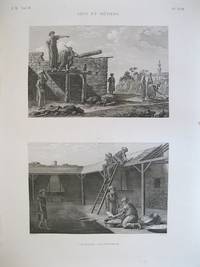
réf. 1991Trades Professions & the Arts: Paris Impremerie de C.L.F.Pancoucke 1820-1829. Copper engravings 2 on 1 plate showing the trades of builder and roofer from the second volume of "Etat Moderne" of the "Description de l'Egypte" 2nd Edition; black & white; verso blank. Blind stamp of the publisher Panckoucke to margin. Good dark impression; some light spotting to extreme left margin; remains of glue and tissue guard to right margin. "Description de l'Egypte ou Recueil des observations et des recherches qui ont été faites en Egypte pendant l'expédition de l'armée française." When Napoleon Bonaparte invaded Egypt in 1798 he brought with him an entourage of more than 160 scholars and scientists. Known as the French Commission on the Sciences and Arts of Egypt these experts undertook an extensive survey of the country's archeology topography and natural history. . For four years more than 150 artists engineers linguists and scientists traveled throughout the country examining almost every aspect of ancient and contemporary Egypt. They recorded and measured in meticulous detail Egypt's topography flora and fauna and its ancient and contemporary architecture. A soldier who was part of the expedition found the famous Rosetta Stone which the French linguist and scholar Jean-François Champollion 1790-1832 later used to unlock many of the mysteries that long had surrounded the language of ancient Egypt. The Egyptian expedition ended with a total military failure. The French left Egypt in 1801 with the honors of war but defeated; yet military failure remains a significant event in the history of knowledge because it is the first time a military expedition was accompanied by a scientific expedition. In 1802 Napoleon authorized the publication of the commission's findings in a monumental multi-volume work that included plates maps scholarly essays and a detailed index. Publication of the original Imperial edition began in 1809 and continued to 1822 sold by subscription. It proved so popular that a second edition was published under the post-Napoleonic Bourbon Restoration. The "Royal edition" published in Paris by C.L.F. Panckoucke from 1820-1830. The Second edition consists of 11 or 12 volumes of plates in folio and 24 of text bound as 26 8vo. Brunet:II 617; Blackmer/Navari: 476 1st edition Trades Professions & the Arts Egypt Builder Mason Roofer Paris Impremerie de C.L.F.Pancoucke 1820-1829 unknown
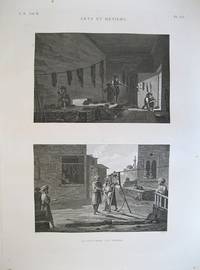
réf. 1993Trades Professions & the Arts: Paris Impremerie de C.L.F.Pancoucke 1820-1829. Copper engravings 2 on 1 plate showing the trades of dyer & rope maker from the second volume of "Etat Moderne" of the "Description de l'Egypte" 2nd Edition; black & white; verso blank. Blind stamp of the publisher Panckoucke to margin. Good dark impression; a few spots to extreme margins; remains of glue and tissue guard to right margin. "Description de l'Egypte ou Recueil des observations et des recherches qui ont été faites en Egypte pendant l'expédition de l'armée française." When Napoleon Bonaparte invaded Egypt in 1798 he brought with him an entourage of more than 160 scholars and scientists. Known as the French Commission on the Sciences and Arts of Egypt these experts undertook an extensive survey of the country's archeology topography and natural history. . For four years more than 150 artists engineers linguists and scientists traveled throughout the country examining almost every aspect of ancient and contemporary Egypt. They recorded and measured in meticulous detail Egypt's topography flora and fauna and its ancient and contemporary architecture. A soldier who was part of the expedition found the famous Rosetta Stone which the French linguist and scholar Jean-François Champollion 1790-1832 later used to unlock many of the mysteries that long had surrounded the language of ancient Egypt. The Egyptian expedition ended with a total military failure. The French left Egypt in 1801 with the honors of war but defeated; yet military failure remains a significant event in the history of knowledge because it is the first time a military expedition was accompanied by a scientific expedition. In 1802 Napoleon authorized the publication of the commission's findings in a monumental multi-volume work that included plates maps scholarly essays and a detailed index. Publication of the original Imperial edition began in 1809 and continued to 1822 sold by subscription. It proved so popular that a second edition was published under the post-Napoleonic Bourbon Restoration. The "Royal edition" published in Paris by C.L.F. Panckoucke from 1820-1830. The Second edition consists of 11 or 12 volumes of plates in folio and 24 of text bound as 26 8vo. Brunet:II 617; Blackmer/Navari: 476 1st edition Trades Professions & the Arts Egypt Dyer Rope Maker Paris Impremerie de C.L.F.Pancoucke 1820-1829 unknown
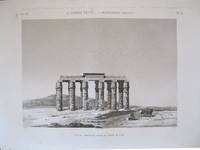
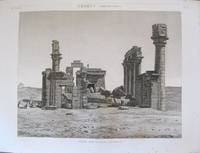
réf. 1983Middle East: Paris Impremerie de C.L.F.Pancoucke 1820-1829. Copper engraved view of the temple of Hermopolis Magna Achmouneyn. from the fourth volume of the "Antiquities "of the "Description de l'Egypte" 2nd Edition; black & white; verso blank. Blind stamp of the publisher Panckoucke to margin. The view shows the ruins of the temple of Hermopolis which was dedicated to the Ibis-headed god. The emblems the Ibis and the Cynocephalus or ape are the most conspicuous among the sculptures upon the great portico of the temple. Good dark impression; generally clean; some spotting to margins; remains of glue and tissue guard to upper margin. "Description de l'Egypte ou Recueil des observations et des recherches qui ont été faites en Egypte pendant l'expédition de l'armée française." When Napoleon Bonaparte invaded Egypt in 1798 he brought with him an entourage of more than 160 scholars and scientists. Known as the French Commission on the Sciences and Arts of Egypt these experts undertook an extensive survey of the country's archeology topography and natural history. . For four years more than 150 artists engineers linguists and scientists traveled throughout the country examining almost every aspect of ancient and contemporary Egypt. They recorded and measured in meticulous detail Egypt's topography flora and fauna and its ancient and contemporary architecture. A soldier who was part of the expedition found the famous Rosetta Stone which the French linguist and scholar Jean-François Champollion 1790-1832 later used to unlock many of the mysteries that long had surrounded the language of ancient Egypt. The Egyptian expedition ended with a total military failure. The French left Egypt in 1801 with the honors of war but defeated; yet military failure remains a significant event in the history of knowledge because it is the first time a military expedition was accompanied by a scientific expedition. In 1802 Napoleon authorized the publication of the commission's findings in a monumental multi-volume work that included plates maps scholarly essays and a detailed index. Publication of the original Imperial edition began in 1809 and continued to 1822 sold by subscription. It proved so popular that a second edition was published under the post-Napoleonic Bourbon Restoration. The "Royal edition" published in Paris by C.L.F. Panckoucke from 1820-1830. The Second edition consists of 11 or 12 volumes of plates in folio and 24 of text bound as 26 8vo. Brunet:II 617; Blackmer/Navari: 476 1st edition Middle East Egypt Hermopolis Magna Achmouneyn Paris Impremerie de C.L.F.Pancoucke 1820-1829 unknown
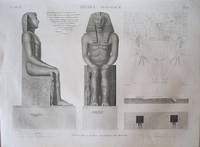
réf. 1977Middle East: Paris Impremerie de C.L.F.Pancoucke 1820-1829. Copper engraving showing one of the Colossi of Mnemnon Thebes from the second volume of the "Antiquities "of the "Description de l'Egypte" 2nd Edition; black & white; verso blank. Blind stamp of the publisher Panckoucke to margin. The image shows the statue reconstructed from the front and side sides showing the Greek graffiti carved on the massive legs of the statue and on the sides of the pedestal; with a detail of the carving of the Nile god Hapy from the side of his throne. The statue depicts Amenhotep III fl. 14th century BC in a seated position his hands resting on his knees and his gaze facing eastwards towards the river. Two shorter figures are carved into the front throne alongside his legs: these are his wife Tiy and mother Mutemwiya. Good dark impression; generally clean a few very minor spots. "Description de l'Egypte ou Recueil des observations et des recherches qui ont été faites en Egypte pendant l'expédition de l'armée française." When Napoleon Bonaparte invaded Egypt in 1798 he brought with him an entourage of more than 160 scholars and scientists. Known as the French Commission on the Sciences and Arts of Egypt these experts undertook an extensive survey of the country's archeology topography and natural history. . For four years more than 150 artists engineers linguists and scientists traveled throughout the country examining almost every aspect of ancient and contemporary Egypt. They recorded and measured in meticulous detail Egypt's topography flora and fauna and its ancient and contemporary architecture. A soldier who was part of the expedition found the famous Rosetta Stone which the French linguist and scholar Jean-François Champollion 1790-1832 later used to unlock many of the mysteries that long had surrounded the language of ancient Egypt. The Egyptian expedition ended with a total military failure. The French left Egypt in 1801 with the honors of war but defeated; yet military failure remains a significant event in the history of knowledge because it is the first time a military expedition was accompanied by a scientific expedition. In 1802 Napoleon authorized the publication of the commission's findings in a monumental multi-volume work that included plates maps scholarly essays and a detailed index. Publication of the original Imperial edition began in 1809 and continued to 1822 sold by subscription. It proved so popular that a second edition was published under the post-Napoleonic Bourbon Restoration. The "Royal edition" published in Paris by C.L.F. Panckoucke from 1820-1830. The Second edition consists of 11 or 12 volumes of plates in folio and 24 of text bound as 26 8vo. Brunet:II 617; Blackmer/Navari: 476 1st edition Middle East Antiquities Colossi of Memnon Paris Impremerie de C.L.F.Pancoucke 1820-1829 unknown
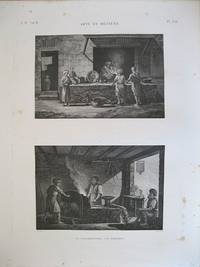
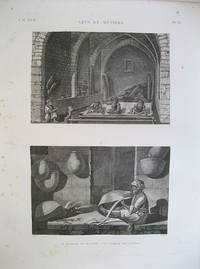
réf. 1995Trades Professions & the Arts: Paris Impremerie de C.L.F.Pancoucke 1820-1829. Copper engravings 2 on 1 plate showing the trades of coppersmith and blacksmith from the second volume of "Etat Moderne" of the "Description de l'Egypte" 2nd Edition; black & white; verso blank. Blind stamp of the publisher Panckoucke to margin. The images show the coppersmith's workshop as he makes a bowl and the interior of the blacksmith's forge. Good dark impression; some spotting to margins; remains of glue and tissue guard to right margin. "Description de l'Egypte ou Recueil des observations et des recherches qui ont été faites en Egypte pendant l'expédition de l'armée française." When Napoleon Bonaparte invaded Egypt in 1798 he brought with him an entourage of more than 160 scholars and scientists. Known as the French Commission on the Sciences and Arts of Egypt these experts undertook an extensive survey of the country's archeology topography and natural history. . For four years more than 150 artists engineers linguists and scientists traveled throughout the country examining almost every aspect of ancient and contemporary Egypt. They recorded and measured in meticulous detail Egypt's topography flora and fauna and its ancient and contemporary architecture. A soldier who was part of the expedition found the famous Rosetta Stone which the French linguist and scholar Jean-François Champollion 1790-1832 later used to unlock many of the mysteries that long had surrounded the language of ancient Egypt. The Egyptian expedition ended with a total military failure. The French left Egypt in 1801 with the honors of war but defeated; yet military failure remains a significant event in the history of knowledge because it is the first time a military expedition was accompanied by a scientific expedition. In 1802 Napoleon authorized the publication of the commission's findings in a monumental multi-volume work that included plates maps scholarly essays and a detailed index. Publication of the original Imperial edition began in 1809 and continued to 1822 sold by subscription. It proved so popular that a second edition was published under the post-Napoleonic Bourbon Restoration. The "Royal edition" published in Paris by C.L.F. Panckoucke from 1820-1830. The Second edition consists of 11 or 12 volumes of plates in folio and 24 of text bound as 26 8vo. Brunet:II 617; Blackmer/Navari: 476 1st edition Trades Professions & the Arts Egypt Coppersmith Blacksmith Paris Impremerie de C.L.F.Pancoucke 1820-1829 unknown
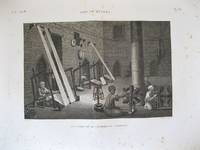
réf. 1988Trades Professions & the Arts: Paris Impremerie de C.L.F.Pancoucke 1820-1829. Copper engraving showing the interior of a weaver's workshop from the second volume of "Etat Moderne" of the "Description de l'Egypte" 2nd Edition; black & white; verso blank. Blind stamp of the publisher Panckoucke to margin. The image shows the workshop with two weavers at their looms whilst apprentices spin threads. Good dark impression; foxing & spotting to margins; remains of glue and tissue guard to upper margin. "Description de l'Egypte ou Recueil des observations et des recherches qui ont été faites en Egypte pendant l'expédition de l'armée française." When Napoleon Bonaparte invaded Egypt in 1798 he brought with him an entourage of more than 160 scholars and scientists. Known as the French Commission on the Sciences and Arts of Egypt these experts undertook an extensive survey of the country's archeology topography and natural history. . For four years more than 150 artists engineers linguists and scientists traveled throughout the country examining almost every aspect of ancient and contemporary Egypt. They recorded and measured in meticulous detail Egypt's topography flora and fauna and its ancient and contemporary architecture. A soldier who was part of the expedition found the famous Rosetta Stone which the French linguist and scholar Jean-François Champollion 1790-1832 later used to unlock many of the mysteries that long had surrounded the language of ancient Egypt. The Egyptian expedition ended with a total military failure. The French left Egypt in 1801 with the honors of war but defeated; yet military failure remains a significant event in the history of knowledge because it is the first time a military expedition was accompanied by a scientific expedition. In 1802 Napoleon authorized the publication of the commission's findings in a monumental multi-volume work that included plates maps scholarly essays and a detailed index. Publication of the original Imperial edition began in 1809 and continued to 1822 sold by subscription. It proved so popular that a second edition was published under the post-Napoleonic Bourbon Restoration. The "Royal edition" published in Paris by C.L.F. Panckoucke from 1820-1830. The Second edition consists of 11 or 12 volumes of plates in folio and 24 of text bound as 26 8vo. Brunet:II 617; Blackmer/Navari: 476 1st edition Trades Professions & the Arts Egypt Weaving Paris Impremerie de C.L.F.Pancoucke 1820-1829 unknown
réf. 1984Middle East: Paris Impremerie de C.L.F.Pancoucke 1820-1829. Copper engraved view of the temple of Hermonthis. from the first volume of the "Antiquities "of the "Description de l'Egypte" 2nd Edition; black & white; verso blank. Blind stamp of the publisher Panckoucke to margin. The view shows the ruins of the temple of Hermonthis. The temple was dedicated to Menthu a god whose name means "nomad". Menthu was associated with raging bulls strength and war. He was also said to manifest himself in a white bull with a black face which was referred to as the Bakha. Egypt's greatest general-kings called themselves Mighty Bulls the sons of Menthu. Good dark impression; generally clean; some spotting to margins; remains of glue and tissue guard to upper margin. "Description de l'Egypte ou Recueil des observations et des recherches qui ont été faites en Egypte pendant l'expédition de l'armée française." When Napoleon Bonaparte invaded Egypt in 1798 he brought with him an entourage of more than 160 scholars and scientists. Known as the French Commission on the Sciences and Arts of Egypt these experts undertook an extensive survey of the country's archeology topography and natural history. . For four years more than 150 artists engineers linguists and scientists traveled throughout the country examining almost every aspect of ancient and contemporary Egypt. They recorded and measured in meticulous detail Egypt's topography flora and fauna and its ancient and contemporary architecture. A soldier who was part of the expedition found the famous Rosetta Stone which the French linguist and scholar Jean-François Champollion 1790-1832 later used to unlock many of the mysteries that long had surrounded the language of ancient Egypt. The Egyptian expedition ended with a total military failure. The French left Egypt in 1801 with the honors of war but defeated; yet military failure remains a significant event in the history of knowledge because it is the first time a military expedition was accompanied by a scientific expedition. In 1802 Napoleon authorized the publication of the commission's findings in a monumental multi-volume work that included plates maps scholarly essays and a detailed index. Publication of the original Imperial edition began in 1809 and continued to 1822 sold by subscription. It proved so popular that a second edition was published under the post-Napoleonic Bourbon Restoration. The "Royal edition" published in Paris by C.L.F. Panckoucke from 1820-1830. The Second edition consists of 11 or 12 volumes of plates in folio and 24 of text bound as 26 8vo. Brunet:II 617; Blackmer/Navari: 476 1st edition Middle East Egypt Hermonthis Erment Paris Impremerie de C.L.F.Pancoucke 1820-1829 unknown
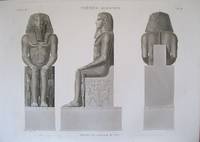
réf. 1976Middle East: Paris Impremerie de C.L.F.Pancoucke 1820-1829. Copper engraving showing one of the Colossi of Mnemnon Thebes from the second volume of the "Antiquities "of the "Description de l'Egypte" 2nd Edition; black & white; verso blank. Blind stamp of the publisher Panckoucke to margin. The image shows the statue from three sides and in a reconstructed condition The statue depicts Amenhotep III fl. 14th century BC in a seated position his hands resting on his knees and his gaze facing eastwards towards the river. Two shorter figures are carved into the front throne alongside his legs: these are his wife Tiy and mother Mutemwiya. The side panels depict the Nile god Hapy. Good dark impression; generally clean a few very minor spots. "Description de l'Egypte ou Recueil des observations et des recherches qui ont été faites en Egypte pendant l'expédition de l'armée française." When Napoleon Bonaparte invaded Egypt in 1798 he brought with him an entourage of more than 160 scholars and scientists. Known as the French Commission on the Sciences and Arts of Egypt these experts undertook an extensive survey of the country's archeology topography and natural history. . For four years more than 150 artists engineers linguists and scientists traveled throughout the country examining almost every aspect of ancient and contemporary Egypt. They recorded and measured in meticulous detail Egypt's topography flora and fauna and its ancient and contemporary architecture. A soldier who was part of the expedition found the famous Rosetta Stone which the French linguist and scholar Jean-François Champollion 1790-1832 later used to unlock many of the mysteries that long had surrounded the language of ancient Egypt. The Egyptian expedition ended with a total military failure. The French left Egypt in 1801 with the honors of war but defeated; yet military failure remains a significant event in the history of knowledge because it is the first time a military expedition was accompanied by a scientific expedition. In 1802 Napoleon authorized the publication of the commission's findings in a monumental multi-volume work that included plates maps scholarly essays and a detailed index. Publication of the original Imperial edition began in 1809 and continued to 1822 sold by subscription. It proved so popular that a second edition was published under the post-Napoleonic Bourbon Restoration. The "Royal edition" published in Paris by C.L.F. Panckoucke from 1820-1830. The Second edition consists of 11 or 12 volumes of plates in folio and 24 of text bound as 26 8vo. Brunet:II 617; Blackmer/Navari: 476 1st edition Middle East Antiquities Colossi of Memnon Paris Impremerie de C.L.F.Pancoucke 1820-1829 unknown
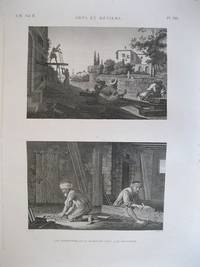
réf. 1996Trades Professions & the Arts: Paris Impremerie de C.L.F.Pancoucke 1820-1829. Copper engravings 2 on 1 plate showing the trades of reed mat and basket weaving from the second volume of "Etat Moderne" of the "Description de l'Egypte" 2nd Edition; black & white; verso blank. Blind stamp of the publisher Panckoucke to margin. The images show the mat maker weaving the reed and the basket weaver stitching the basket . Good dark impression; some spotting to margins; remains of glue and tissue guard to right margin. "Description de l'Egypte ou Recueil des observations et des recherches qui ont été faites en Egypte pendant l'expédition de l'armée française." When Napoleon Bonaparte invaded Egypt in 1798 he brought with him an entourage of more than 160 scholars and scientists. Known as the French Commission on the Sciences and Arts of Egypt these experts undertook an extensive survey of the country's archeology topography and natural history. . For four years more than 150 artists engineers linguists and scientists traveled throughout the country examining almost every aspect of ancient and contemporary Egypt. They recorded and measured in meticulous detail Egypt's topography flora and fauna and its ancient and contemporary architecture. A soldier who was part of the expedition found the famous Rosetta Stone which the French linguist and scholar Jean-François Champollion 1790-1832 later used to unlock many of the mysteries that long had surrounded the language of ancient Egypt. The Egyptian expedition ended with a total military failure. The French left Egypt in 1801 with the honors of war but defeated; yet military failure remains a significant event in the history of knowledge because it is the first time a military expedition was accompanied by a scientific expedition. In 1802 Napoleon authorized the publication of the commission's findings in a monumental multi-volume work that included plates maps scholarly essays and a detailed index. Publication of the original Imperial edition began in 1809 and continued to 1822 sold by subscription. It proved so popular that a second edition was published under the post-Napoleonic Bourbon Restoration. The "Royal edition" published in Paris by C.L.F. Panckoucke from 1820-1830. The Second edition consists of 11 or 12 volumes of plates in folio and 24 of text bound as 26 8vo. Brunet:II 617; Blackmer/Navari: 476 1st edition Trades Professions & the Arts Egypt Reed mat maker Basket weaver Paris Impremerie de C.L.F.Pancoucke 1820-1829 unknown
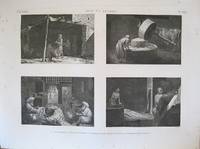
réf. 1986Trades Professions & the Arts: Paris Impremerie de C.L.F.Pancoucke 1820-1829. Copper engravings 4 on 1 plate showing the trades of toolmaker plaster grinder tanner or currier and coffee roaster from the second volume of "Etat Moderne" of the "Description de l'Egypte" 2nd Edition; black & white; verso blank. Blind stamp of the publisher Panckoucke to margin. The images show the workshops of the various trades: the toolmaker forging a pickhead; the miller of plaster with his mill powered by an ox; the coffee roaster stirring the beans over a fire and the naked curriers/tanners stretching the skins to make Marocco leather. Good dark impression; generally clean; some spotting to margins; remains of glue and tissue guard to upper margin. "Description de l'Egypte ou Recueil des observations et des recherches qui ont été faites en Egypte pendant l'expédition de l'armée française." When Napoleon Bonaparte invaded Egypt in 1798 he brought with him an entourage of more than 160 scholars and scientists. Known as the French Commission on the Sciences and Arts of Egypt these experts undertook an extensive survey of the country's archeology topography and natural history. . For four years more than 150 artists engineers linguists and scientists traveled throughout the country examining almost every aspect of ancient and contemporary Egypt. They recorded and measured in meticulous detail Egypt's topography flora and fauna and its ancient and contemporary architecture. A soldier who was part of the expedition found the famous Rosetta Stone which the French linguist and scholar Jean-François Champollion 1790-1832 later used to unlock many of the mysteries that long had surrounded the language of ancient Egypt. The Egyptian expedition ended with a total military failure. The French left Egypt in 1801 with the honors of war but defeated; yet military failure remains a significant event in the history of knowledge because it is the first time a military expedition was accompanied by a scientific expedition. In 1802 Napoleon authorized the publication of the commission's findings in a monumental multi-volume work that included plates maps scholarly essays and a detailed index. Publication of the original Imperial edition began in 1809 and continued to 1822 sold by subscription. It proved so popular that a second edition was published under the post-Napoleonic Bourbon Restoration. The "Royal edition" published in Paris by C.L.F. Panckoucke from 1820-1830. The Second edition consists of 11 or 12 volumes of plates in folio and 24 of text bound as 26 8vo. Brunet:II 617; Blackmer/Navari: 476 1st edition Trades Professions & the Arts Egypt Toolmaker Plaster Miller Coffee Roaster Tanner/ Currier Paris Impremerie de C.L.F.Pancoucke 1820-1829 hardcover
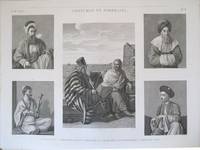
réf. 1998Middle East: Paris Impremerie de C.L.F.Pancoucke 1820-1829. Copper engravings 5 on 1 plate showing portraits and costumes from the second volume of "Etat Moderne" of the "Description de l'Egypte" 2nd Edition; black & white; verso blank. Blind stamp of the publisher Panckoucke to margin. The central image of two men by the seashore is surrounded by 4 smaller portaits Good dark impression; some light spotting to margins; remains of glue and tissue guard to right margin. The print is black and white. "Description de l'Egypte ou Recueil des observations et des recherches qui ont été faites en Egypte pendant l'expédition de l'armée française." When Napoleon Bonaparte invaded Egypt in 1798 he brought with him an entourage of more than 160 scholars and scientists. Known as the French Commission on the Sciences and Arts of Egypt these experts undertook an extensive survey of the country's archeology topography and natural history. . For four years more than 150 artists engineers linguists and scientists traveled throughout the country examining almost every aspect of ancient and contemporary Egypt. They recorded and measured in meticulous detail Egypt's topography flora and fauna and its ancient and contemporary architecture. A soldier who was part of the expedition found the famous Rosetta Stone which the French linguist and scholar Jean-François Champollion 1790-1832 later used to unlock many of the mysteries that long had surrounded the language of ancient Egypt. The Egyptian expedition ended with a total military failure. The French left Egypt in 1801 with the honors of war but defeated; yet military failure remains a significant event in the history of knowledge because it is the first time a military expedition was accompanied by a scientific expedition. In 1802 Napoleon authorized the publication of the commission's findings in a monumental multi-volume work that included plates maps scholarly essays and a detailed index. Publication of the original Imperial edition began in 1809 and continued to 1822 sold by subscription. It proved so popular that a second edition was published under the post-Napoleonic Bourbon Restoration. The "Royal edition" published in Paris by C.L.F. Panckoucke from 1820-1830. The Second edition consists of 11 or 12 volumes of plates in folio and 24 of text bound as 26 8vo. Brunet:II 617; Blackmer/Navari: 476 1st edition Middle East Egypt Costumes Paris Impremerie de C.L.F.Pancoucke 1820-1829 unknown
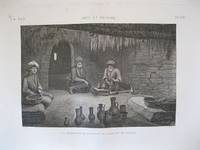
réf. 1989Trades Professions & the Arts: Paris Impremerie de C.L.F.Pancoucke 1820-1829. Copper engraving showing the interior of a potter's workshop from the second volume of "Etat Moderne" of the "Description de l'Egypte" 2nd Edition; black & white; verso blank. Blind stamp of the publisher Panckoucke to margin. The image shows the workshop with the potter at his wheel. Good dark impression; some light spotting to margins; remains of glue and tissue guard to upper margin. "Description de l'Egypte ou Recueil des observations et des recherches qui ont été faites en Egypte pendant l'expédition de l'armée française." When Napoleon Bonaparte invaded Egypt in 1798 he brought with him an entourage of more than 160 scholars and scientists. Known as the French Commission on the Sciences and Arts of Egypt these experts undertook an extensive survey of the country's archeology topography and natural history. . For four years more than 150 artists engineers linguists and scientists traveled throughout the country examining almost every aspect of ancient and contemporary Egypt. They recorded and measured in meticulous detail Egypt's topography flora and fauna and its ancient and contemporary architecture. A soldier who was part of the expedition found the famous Rosetta Stone which the French linguist and scholar Jean-François Champollion 1790-1832 later used to unlock many of the mysteries that long had surrounded the language of ancient Egypt. The Egyptian expedition ended with a total military failure. The French left Egypt in 1801 with the honors of war but defeated; yet military failure remains a significant event in the history of knowledge because it is the first time a military expedition was accompanied by a scientific expedition. In 1802 Napoleon authorized the publication of the commission's findings in a monumental multi-volume work that included plates maps scholarly essays and a detailed index. Publication of the original Imperial edition began in 1809 and continued to 1822 sold by subscription. It proved so popular that a second edition was published under the post-Napoleonic Bourbon Restoration. The "Royal edition" published in Paris by C.L.F. Panckoucke from 1820-1830. The Second edition consists of 11 or 12 volumes of plates in folio and 24 of text bound as 26 8vo. Brunet:II 617; Blackmer/Navari: 476 1st edition Trades Professions & the Arts Egypt Pottery Paris Impremerie de C.L.F.Pancoucke 1820-1829 unknown
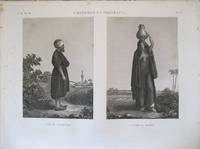
réf. 1999Middle East: Paris Impremerie de C.L.F.Pancoucke 1820-1829. Copper engravings 2 on 1 plate showing costumes from the second volume of "Etat Moderne" of the "Description de l'Egypte" 2nd Edition; black & white; verso blank. Blind stamp of the publisher Panckoucke to margin. The images show the grooms tanding in the countryside; the woman with a water jar on her head stands on the edge of the desert with the Pyramids in the background. Good dark impression; some light spotting to margins; remains of glue and tissue guard to right margin. "Description de l'Egypte ou Recueil des observations et des recherches qui ont été faites en Egypte pendant l'expédition de l'armée française." When Napoleon Bonaparte invaded Egypt in 1798 he brought with him an entourage of more than 160 scholars and scientists. Known as the French Commission on the Sciences and Arts of Egypt these experts undertook an extensive survey of the country's archeology topography and natural history. . For four years more than 150 artists engineers linguists and scientists traveled throughout the country examining almost every aspect of ancient and contemporary Egypt. They recorded and measured in meticulous detail Egypt's topography flora and fauna and its ancient and contemporary architecture. A soldier who was part of the expedition found the famous Rosetta Stone which the French linguist and scholar Jean-François Champollion 1790-1832 later used to unlock many of the mysteries that long had surrounded the language of ancient Egypt. The Egyptian expedition ended with a total military failure. The French left Egypt in 1801 with the honors of war but defeated; yet military failure remains a significant event in the history of knowledge because it is the first time a military expedition was accompanied by a scientific expedition. In 1802 Napoleon authorized the publication of the commission's findings in a monumental multi-volume work that included plates maps scholarly essays and a detailed index. Publication of the original Imperial edition began in 1809 and continued to 1822 sold by subscription. It proved so popular that a second edition was published under the post-Napoleonic Bourbon Restoration. The "Royal edition" published in Paris by C.L.F. Panckoucke from 1820-1830. The Second edition consists of 11 or 12 volumes of plates in folio and 24 of text bound as 26 8vo. Brunet:II 617; Blackmer/Navari: 476 1st edition Middle East Egypt Costumes Paris Impremerie de C.L.F.Pancoucke 1820-1829 unknown
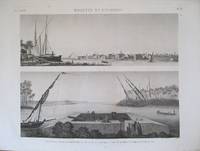
réf. 1972Middle East: Paris Impremerie de C.L.F.Pancoucke 1820-1829. 2 copper engraved views on 1 plate: View of the port town of Rosetta Rashid & a view of the fort at the entrance to the Nile from the first volume of the "Etat Modene "of the "Description de l'Egypte" 2nd Edition; 1822; black & white; verso blank. Blind stamp of the publisher Panckoucke to margin. The upper view shows the town of Rosetta on the banks of the Nile near which the Rosetta stone was found. The lower view shows the fort at the entrance to the Nile from above the battery. Good dark impression; some light foxing. "Description de l'Egypte ou Recueil des observations et des recherches qui ont été faites en Egypte pendant l'expédition de l'armée française." When Napoleon Bonaparte invaded Egypt in 1798 he brought with him an entourage of more than 160 scholars and scientists. Known as the French Commission on the Sciences and Arts of Egypt these experts undertook an extensive survey of the country's archeology topography and natural history. . For four years more than 150 artists engineers linguists and scientists traveled throughout the country examining almost every aspect of ancient and contemporary Egypt. They recorded and measured in meticulous detail Egypt's topography flora and fauna and its ancient and contemporary architecture. A soldier who was part of the expedition found the famous Rosetta Stone which the French linguist and scholar Jean-François Champollion 1790-1832 later used to unlock many of the mysteries that long had surrounded the language of ancient Egypt. The Egyptian expedition ended with a total military failure. The French left Egypt in 1801 with the honors of war but defeated; yet military failure remains a significant event in the history of knowledge because it is the first time a military expedition was accompanied by a scientific expedition. In 1802 Napoleon authorized the publication of the commission's findings in a monumental multi-volume work that included plates maps scholarly essays and a detailed index. Publication of the original Imperial edition began in 1809 and continued to 1822 sold by subscription. It proved so popular that a second edition was published under the post-Napoleonic Bourbon Restoration. The "Royal edition" published in Paris by C.L.F. Panckoucke from 1820-1830. The Second edition consists of 11 or 12 volumes of plates in folio and 24 of text bound as 26 8vo. Brunet:II 617; Blackmer/Navari: 476 1st edition Middle East Egypt Rosetta Rosette Rashid Farchel Paris Impremerie de C.L.F.Pancoucke 1820-1829 unknown
réf. 1992Trades Professions & the Arts: Paris Impremerie de C.L.F.Pancoucke 1820-1829. Copper engravings 2 on 1 plate showing the trades of carpenter with a sawyer and joiner from the second volume of "Etat Moderne" of the "Description de l'Egypte" 2nd Edition; black & white; verso blank. Blind stamp of the publisher Panckoucke to margin. Good dark impression; some light spotting to extreme left margin; remains of glue and tissue guard to right margin. "Description de l'Egypte ou Recueil des observations et des recherches qui ont été faites en Egypte pendant l'expédition de l'armée française." When Napoleon Bonaparte invaded Egypt in 1798 he brought with him an entourage of more than 160 scholars and scientists. Known as the French Commission on the Sciences and Arts of Egypt these experts undertook an extensive survey of the country's archeology topography and natural history. . For four years more than 150 artists engineers linguists and scientists traveled throughout the country examining almost every aspect of ancient and contemporary Egypt. They recorded and measured in meticulous detail Egypt's topography flora and fauna and its ancient and contemporary architecture. A soldier who was part of the expedition found the famous Rosetta Stone which the French linguist and scholar Jean-François Champollion 1790-1832 later used to unlock many of the mysteries that long had surrounded the language of ancient Egypt. The Egyptian expedition ended with a total military failure. The French left Egypt in 1801 with the honors of war but defeated; yet military failure remains a significant event in the history of knowledge because it is the first time a military expedition was accompanied by a scientific expedition. In 1802 Napoleon authorized the publication of the commission's findings in a monumental multi-volume work that included plates maps scholarly essays and a detailed index. Publication of the original Imperial edition began in 1809 and continued to 1822 sold by subscription. It proved so popular that a second edition was published under the post-Napoleonic Bourbon Restoration. The "Royal edition" published in Paris by C.L.F. Panckoucke from 1820-1830. The Second edition consists of 11 or 12 volumes of plates in folio and 24 of text bound as 26 8vo. Brunet:II 617; Blackmer/Navari: 476 1st edition Trades Professions & the Arts Egypt Carpenter Sawyer Joiner Paris Impremerie de C.L.F.Pancoucke 1820-1829 unknown