2,453 results
1832ref. 48987Paris, Crochard, 1832. Contemp. hcloth, gilt lettering to spine. In: ""Annales de Chimie et de Physique, Par MM. Gay-Lussac et Arago."", tome 50, Series 2. (Entire volume offered). 448 pp. 2 folded engraved plates. Faraday's papers: pp. 5-67 a. pp. 113-162. Some scattered brownspots.
1863ref. 44144Paris, Victor Masson et Fils, 1863 a. 1864. Boundin 2 contemp. hcalf. Gilt spines, raised bands, light wear along edges. In: ""Annales de Chimie et de Physique"", 3e Series - Tome 68 a. 4e Series, tome 1. 512 pp. a. 5 large folded engraved plates. + 512 pp. a. 3 large folded engraved plates. Kirchhoff's papers: pp. 5-45 a. pp. 396-411. 5 plates belongs to K's papers, 4 showing spectra and 1 plate (double page) depicts the famous spectroscope invented by K. and used by K. and Bunsen in their importent analysis of the spectra of the elements.
1986ref. 107053Droz 1986 Droz, Textes Littéraires Français, 1986, 522 p., broché, environ 18x12cm, bon état.
1809ref. 50198Paris Mad. Ve Barnard 1809. Contemp. hcalf. Spine gilt. Wear to top of spine. A few scratches to binding. Small stamps on verso of titlepage.In: "Annales de Chimie ou Recueil de Mémoires concernant la Chemie" Tome 70. 336 pp. Entire volume offered. Davy's paper: pp. 189-254. First edition in French the first English 1808 of this importent historical paper in chemistry in which Davy shows that electricity is capable of decomposing some alkalies isolating two new substances and discovering potassium and sodium. Neville in his Historical Chemical Library vol. I p.340 writes about this paper "ONE OF THE GREAT CLASSIC RESEARCHES IN CHEMISTRY in which Davy announced in this his second Bakterian lecture the isloation of metallic potassium and sodium by the electrolytic decomposition of their fused oxides.""He Davy began his own electrical experiments.The results were spectacular. On October 6 1807 the current passing through molten potash liberated a metal which Davy called potassium. The little globules of shining metal tore the water molecule apart as it eagerly recombined with oxygen and the liberated hydrogen burst into lavender flame. Davy danced about in a delirium of joy. A week later he isolated sodium from soda."Asimow. The paper offered here describes these discoveries."Humphry Davy was one of the most brilliant chemists of the early nineteenth century. His early study of nitrous oxide brought him his first reputation but his later and most importent investigations were devoted to electrochemistry. Following Galvani's experiments and the discovery of the voltaic pile interest in galvanic electricity had become widespread. The first electrolysis by means of the pile was carried out in 1800 by Nicholson and Carisle who obtained oxygen and hydrogen from water. Davy began to examine the chemical effects of electricity in 1800 and his numerous discoveries were presented in his Bakerian lecture to the Royal Society on November 20 1806. A Source Book in Chemistry p. 243. unknown
1832ref. 44145Paris Crochard 1832. Contemp. hcalf. gilt spine light wear along edges. In: "Annales de Chimie et de Physique Par MM. Gay-Lussac et Arago." tome 50 Series 2. Entire volume offered. 448 pp. 2 folded engraved plates. Faraday's papers: pp. 5-67 a. pp. 113-162. First French editions of the 2 first memoirs of Faradays groundbreaking researches on electricity constituting the first 2 papers of his "Experimental Researches in Electricity" and containing his fundamental discovery of electromagnetic induction THE FOUNDATION OF NEARLY ALL THE ELECTRICITY IN USE TODAY. In 1820 Oersted had generated magnetism from electricity Faraday here finds the opposite effect generating electricity by magnetism. He also described the first electrical generator second paper. THESE PAPERS ARE SOME OF THE GREAT CLASSICS OF CHEMISTRY AND PHYSICS."Faraday demonstrated this theory involving the lines of force.by inserting a magnet into a coil of wire attached to a galvanometer. While the magnet was being inserted or removd current flowed through the wire. If the magnet was held stationary and the coil moved over it one way or the other there was current in the wire. In either case the magnetic lines of force about the magnet were cut by the wire.If the magnet and coil were both held motionless whether the magnet was within the coil or not there was no current.Faraday hd thus discovered electricalinduction.It was to lead to great things but this was not apparent."Asimov."Although his discovery of the electric motor and the dynamo was almost entirely identical to his theoretical discoveries it laid the foundation of the modern electrical industry - electric light and power teælephony wireless telegraphy televison etc. - by providing for the production of continous mechanical motion from an electrical source and vice versa." PMM 308.Horblit 29 - Milestones 62. - Dibner 64. - PMM 308. unknown
1832ref. 48987Paris Crochard 1832. Contemp. hcloth gilt lettering to spine. In: "Annales de Chimie et de Physique Par MM. Gay-Lussac et Arago." tome 50 Series 2. Entire volume offered. 448 pp. 2 folded engraved plates. Faraday's papers: pp. 5-67 a. pp. 113-162. Some scattered brownspots. First French editions of the 2 first memoirs of Faradays groundbreaking researches on electricity constituting the first 2 papers of his "Experimental Researches in Electricity" and containing his fundamental discovery of electromagnetic induction THE FOUNDATION OF NEARLY ALL THE ELECTRICITY IN USE TODAY. In 1820 Oersted had generated magnetism from electricity Faraday here finds the opposite effect generating electricity by magnetism. He also described the first electrical generator second paper. THESE PAPERS ARE SOME OF THE GREAT CLASSICS OF CHEMISTRY AND PHYSICS."Faraday demonstrated this theory involving the lines of force.by inserting a magnet into a coil of wire attached to a galvanometer. While the magnet was being inserted or removd current flowed through the wire. If the magnet was held stationary and the coil moved over it one way or the other there was current in the wire. In either case the magnetic lines of force about the magnet were cut by the wire.If the magnet and coil were both held motionless whether the magnet was within the coil or not there was no current.Faraday hd thus discovered electricalinduction.It was to lead to great things but this was not apparent."Asimov."Although his discovery of the electric motor and the dynamo was almost entirely identical to his theoretical discoveries it laid the foundation of the modern electrical industry - electric light and power teælephony wireless telegraphy televison etc. - by providing for the production of continous mechanical motion from an electrical source and vice versa." PMM 308.Horblit 29 - Milestones 62. - Dibner 64. - PMM 308.The volume contains further notable papers. Elie de Beaumont "Zweiter geologischer Brief.an A.v. Humboldt über die relative Alter der Gebirgszüge" pp. 1-58 a. 2 plates one handcoloured papers by Döbereiner E. Lenz Moser Mitscherlich de Saussure J. Dumas F.E. Neumann Gay-Lussac Johannes Müller "Beobachtungen zur Analyse der Lymphe des Bluts und des Chylus" pp. 513-590. hardcover
1863ref. 44144Paris Victor Masson et Fils 1863 a. 1864. Boundin 2 contemp. hcalf. Gilt spines raised bands light wear along edges. In: "Annales de Chimie et de Physique" 3e Series - Tome 68 a. 4e Series tome 1. 512 pp. a. 5 large folded engraved plates. 512 pp. a. 3 large folded engraved plates. Kirchhoff's papers: pp. 5-45 a. pp. 396-411. 5 plates belongs to K's papers 4 showing spectra and 1 plate double page depicts the famous spectroscope invented by K. and used by K. and Bunsen in their importent analysis of the spectra of the elements. First edition in French of Kirchhoff's milestone papers on the interpretation of the dark D lines - noticed by Fraunhofer in 1814 - in the spectrum of the sun the papers that inspired Max Planck to his theory of quanta 1900. The papers are the French translations of his papers published in Abhandl. d. königl. Akad. d. Wissenscchaften in Berlin in 1861 and 1862.In the course of his preparatory work in the autumn of 1859 Kirchhoff made an unexpected observation. It had long been known that the dark D lines noticed in the solar spectrum by Fraunhofer 1814 coincided with the yellow lines emitted by flames containing sodium.Kirchhoff's unexpected discovery was that if the intensity of the solar spectrum increased above a certain limit the dark D lines were made much darker by the interrposition of the sodium flame. He instantly felt that he had got hold of "something fundamental" even though he was at a loss to suggest an explanation. On the day following the surprising observation Kirchhoff found the the correct interpretation which wass soon confirmed by new experiments: a substance capable of emittiing a certain spectral line has a strong absorptive power for the same line.The dark D lines in the solar spectrum could accordingly be ascribed to absorption by a solar atmosphere containing sodium. Immense prospects thus opened up of ascertaining the chemical composition of the sun and other stars from the study of their optical spectra. A few more weeks sufficed for Kirchhoff to elaborate a quantitative theory of the relationship between emissive and absorptive poweer."DSB VII pp. 381-82.PMM 278 b. - Barchas 1169-70 - Sparrow 117 - Horbli 59 - Dibner 153 the note. hardcover
2003ref. Q-1840023570Oberon Books 2003-09-01. Paperback. New. In shrink wrap. Looks like an interesting title! Oberon Books paperback

1966ref. 1585241283109GLN-473, Editorial Nova Terra, Barcelona, 1966
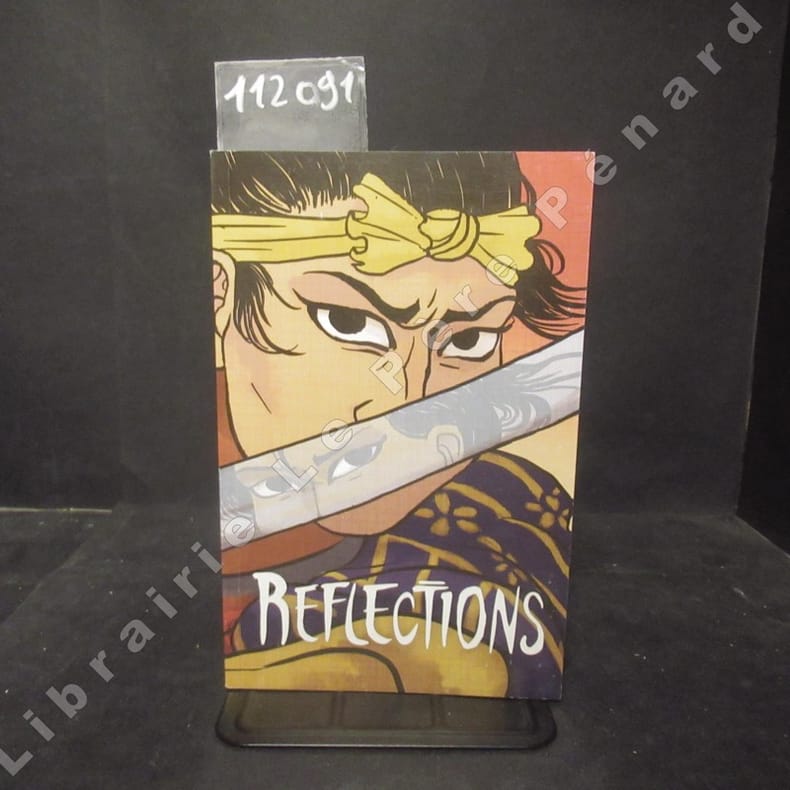
2016ref. 1120912016 Editions Third Act Publishing - 2016 - In-8, broché, couverture illustrée - 66 p. - Quelques illustrations in texte et pleine page en couleurs - Ouvrage en anglais
ref. 2080202103704810Jinbunshoin N.A. Soft Cover. Fine. Page number: 246p Size: 20cm B6 Jinbunshoin paperback
ref. 0879819251.Ghardcover. Good. Access codes and supplements are not guaranteed with used items. May be an ex-library book. hardcover
ref. 2090502130400397Not Available N.A. Soft Cover. Fine. The book is in fine condition. Not Available paperback
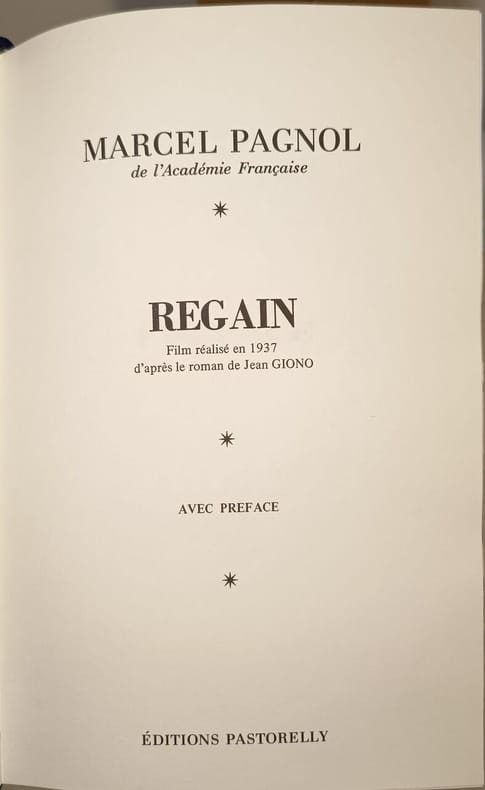
1973ref. 6378Editions Pastorelly 1973 254 pages in8. 1973. reliure editeur. 254 pages. Regain est l'adaptation par Marcel Pagnol du roman de Jean Giono publiée en 1937. L'histoire raconte la renaissance du village provençal d'Aubignagne où le dernier habitant Panturle retrouve goût à la vie grâce à la rencontre d'une jeune femme. Cette édition de 1973 des Éditions Pastorelly est une version illustrée par Suzanne Ballivet avec une reliure cuir et des photographies du film
1850ref. 2080302106802665Not Available 1850. Soft Cover. Fine. Number of books: 1 Not Available paperback
1984ref. 013572Paris Gallimard - collection "Tradition" 1984 in-8° Broché Dédicacé par l'auteur
1984ref. 114160Gallimard 1984 Gallimard, Coll. Tradition, 1984, 315 p., broché, couverture insolée avec quelques frottement d'usage et coins des plats cornés, bon état pour le reste et intérieur propre.
1981ref. 2092902141208657Chinese social sciences 1981. Soft Cover. Fine. Volume: 1 Chinese social sciences paperback
1988ref. 2083002116401159Kirishobo 1988. Soft Cover. Fine. The book is in fine condition. Kirishobo paperback
1898ref. mon0000060159Philadelphia : John D. Wattles 1898-01-01. Paperback. Acceptable. in x in x in. Hardcover. Philadelphia : John D. Wattles paperback
ref. 2090202120404439Akishobo N.A. Soft Cover. Fine. Number of books: 1 Akishobo paperback
1928ref. 2111902160200389Yoneyamado 1928. Soft Cover. Fine. Volume: 1 Yoneyamado paperback
1959ref. 45822New York: Random House 1959. First Edition. First Printing. Octavo 21cm; gray vinyl cloth with titles stamped in black and gilt and photographic still mounted to front cover; dark yellow-orange topstain; dustjacket; xiv23-1055pp; illus. Inscribed by Ruth Ford to Harlan P. Kleiman on the front endpaper: "To Harlan / with great expectations / Ruth Ford." Fine in a Near Fine dustjacket unclipped priced $2.95 with sunning to spine and front panel extremities some light dustiness and trivial wear to crown. Distinguished copy of Ford's stage adaptation of Faulkner's 1951 novel written in the form of a three-act play with each act preceded by a narrative section. Ford removed the narrative sections and revised the remainder of the novel for dramatic unity. Inscribed to Harlan Phillip Kleiman screenwriter Broadway producer and co-founder of New Haven's Long Wharf Theatre. Provenance: From the collection of Broadway star Sondra Lee. Petersen Collection A49.1. Random House unknown
1959ref. 51460New York: Random House 1959. First Edition. First Printing. Octavo 21cm; gray vinyl cloth with titles stamped in black and gilt and photographic still mounted to front cover; dark yellow-orange topstain; dustjacket; xiv23-1055pp; illus. Fine in a Near Fine price-clipped dustjacket with some trivial wear to extremities and gentle sunning to spine panel. Ford's stage adaptation of Faulkner's 1951 novel written in the form of a three-act play with each act preceded by a narrative section. Ford removed the narrative sections and revised the remainder of the novel for dramatic unity. Petersen Collection A49.1. Random House unknown books
1959ref. 45822New York: Random House 1959. First Edition. First Printing. Octavo 21cm; gray vinyl cloth with titles stamped in black and gilt and photographic still mounted to front cover; dark yellow-orange topstain; dustjacket; xiv23-1055pp; illus. Inscribed by Ruth Ford to Harlan P. Kleiman on the front endpaper: "To Harlan / with great expectations / Ruth Ford." Fine in a Near Fine dustjacket unclipped priced $2.95 with sunning to spine and front panel extremities some light dustiness and trivial wear to crown. Distinguished copy of Ford's stage adaptation of Faulkner's 1951 novel written in the form of a three-act play with each act preceded by a narrative section. Ford removed the narrative sections and revised the remainder of the novel for dramatic unity. Inscribed to Harlan Phillip Kleiman screenwriter Broadway producer and co-founder of New Haven's Long Wharf Theatre. Provenance: From the collection of Broadway star Sondra Lee. Petersen Collection A49.1. Random House unknown books