WAR OF THE SPANISH SUCCESSIONBiblio.com

8 244 résultats
1703réf. 139168London: Printed and sold by John Nutt 1703. Planting colonies in the Spanish Americas First edition preceding the second edition of that year with an added postscript. Published in the third year of the War of the Spanish Succession 1701-1714 the anonymous author proposes that in return for the support of Britain and the Netherlands for the claim of the Emperor of Austria to the Spanish crown Spain's territories in America should be ceded to the two mercantile powers. They propose a confederation which will share the treasure from the Spanish mines keeping it out of the hands of a single monarch and in so doing preserve the balance of power in Europe. They moreover support extending the war to the Spanish West-Indies at that stage untouched by the conflict and offer proposals to plant colonies there. They respond to critics who would argue that such attempts at joint control of the American mines and territories would engender war between Britain and the Netherlands as trade brings peace and also reject the arguments that American wealth flowing into the mercantile nations would weaken the nation as was believed to be the case in Spain. The polemic nonetheless offers a stark realpolitik view of world politics and of the war treating as irrelevant the moral questions of stripping the territories of their nominal ally Habsburg Spain rather than the official war aims of taking French territories and stemming the growth of Bourbon power. A scarce treatise with ESTC locating six copies for this issue and a further two copies of the second edition Library Hub and Worldcat adding several more yet still absent from many prominent institutional collections and untraced in auction records. Small quarto 205 x 162 mm. Disbound pamphlet with remnants of original spine the pages numbered in an 18th-century hand 589-654 from its original place in the sammelband vol. Lightly browned and foxed top two cords mostly gone but bottom two holding light worming at foot not affecting text tiny hole affecting one letter to pp. 25/26. A very good copy without chipping or repairs. Alden 703153; European Americana 703/53; ESTC T193661; Kress S2261. Not in Sabin. unknown
1932réf. 016152Paris Galerie Georges Petit 1932 In-4 Broché, couverture rempliée
1799Opera tratta dai "Los Caprichos", per la prima volta pubblicati nel 1799. Prova della quinta edizione di dodici, stampata dalla calcografia di Madrid, circa 1883. Acquaforte, acquatinta brunita e puntasecca, in perfetto stato di conservazione. La serie chiamata Los Caprichos è composta da ottanta incisioni, la cui prima edizione [l’unica a non essere pubblicata postuma] venne alla luce nel 1799. Curata in fase d’edizione dallo stesso artista, la serie fu commercializzata e dopo poco tempo ritirata dal mercato. Infatti, a causa dei numerosi soggetti che ironizzavano sulla società spagnola di fine secolo, il Goya subì una censura. L’interpretazione dei soggetti rappresentati su queste lastre, sempre enigmatiche, è spesso controversa Plate 1: portrait of the artist wearing hat, bust-length to left; Fifth Edition c.1883 impression. 1799 Etching, aquatint, drypoint and burinFrom the fifth edition of twelve of the so-called "Los Caprichos" series, edited by the Madrid Calcografia [circa 1883].A very good impression, with good contrast, printed on contemporary paper, customary margins, in very good conditions. The series called Los Caprichos, consists of eighty etchings. This first edition of 1799, the only one not to be published posthumously, is imprinted on soft laid pape. Cured in phase edition by the same artist, the series was marketed and before long withdrawn from the market. In fact, because of the many subjects that mocked the Spanish society of the century, Goya suffered censorship. The interpretation of the subjects represented on these plates, always enigmatic, is often controversial. Harris 36, Delteil 38.
1961Variazioni su di un tema di Romano BILENCHI. Versione di Mario LUZI. Con tre illustrazioni di Gian Luigi Giovanola. Testo a fronte. Alle ultime pagine un componimento autografo scritto a penna dall'Autore dedicato a Picasso, datato Roma, XII 1960, intitolato ''Picasso. Tauromaquia (La pique cassée)''. (With a hand-written poem by Guillen written in blue ink on 3 pages, dedicated to Picasso, dated Rome XII-1960) Volume n. 3 della collana "Poeti stranieri tradotti da poeti italiani". Libro a cura di Vanni Scheiwiller e impresso a Milano dalla Tipografia U. Allegretti di Campi il 9 febbraio 1961. 16mo. pp. 28. Dedica e firma autografe dell'Autore, datata Roma 27/II/1961 (Inscribed and signed by the Author, dated Rome 27/II/1961). Ottimo (Fine). . Prima edizione di 1000 es. numerati. .
1678In -4°, pp. (40), 146, (6), pergamena coeva, difetti al dorso. Prima edizione. Nato a Saragozza, l’autore insegnò a Napoli e Roma prima di partire per Cuba, dove avrebbe passato la vecchiaia. Il libro, interessante e curioso, si occupa di prostituzione e della sua accettabilità dottrinaria, argomento rispetto al quale l’autore è fortemente contrario. Lo scritto replica a un manoscritto (poi stampato a Catania, “Resolutio theologica moralis in qua occasione cuiusdam casus occurrentis afferitur et propugnatur, licite permitti posse Meretrices”, 1677) del francescano Giovanni dell’Olmo, che difendeva il diritto delle prostitute a entrare nelle dimore nobiliari napoletane. La polemica svela molto sui costumi del sesso a pagamento all’epoca. Born in Saragoza, the author was a professor in Naples and Rome before leaving to Cuba. This curious book deals with prostitution and its doctrinaire acceptability (that the author is strongly against to). This work replies to a manuscript (then printed in Catania, “Resolutio theologica moralis in qua occasione… licite permitti posse meretrices”, 1677) of a franciscan preacher, Giovanni dell’Olmo, who supports permission to prostitutes to enter in neapolitan noble palaces. This controversy reveals many facts about prostitution at time.
1914réf. T91037Barcelona, Institut d'Estudis Catalana 1914-1937 Colletion of 22 volumes (in total 24 volumes have been published ever, this collection lacks only vol.3 & 19), together more than 3700pp. with some illustrations in text and some folding maps and plates out-of-text, 24cm., most texts are in Catalan, uniform hardcover bindings with spine in green leather and title in gilt (except for vols.23-24: brown leather), few stamps (at blanco front endpaper and on titlepage), some traces of humidity on volumes 1 and 5 and 9 and 18 (mainly on cloth boards), good condition, rare and almost complete set, [contains a.o. Volume XII (1924): AMADES J. & ROIG E.: Vocabulari de l'Art de la navigacio i la pesca (116pp. with illustrations), vol.XIV (1926): ROIG E. & AMADES J.: Vocabulari de la pesca (83pp. with ills.), Vol.XV (1927): AMADES J.: Essers fantastics (80pp. with some ills.), vol.20 (1932): GRIERA A.: La casa catalana (pp.13-332 with ills. & plates out of text), vol.21 (1935): Indexs generals dels vint primeirs volums (xii + 356pp.), vol.22 (1934): AMADES J.: Vocabulari dels vells oficis de transport i llurs derivats (pp.59-239 with ills.), etc.], total weight is 15kg., T91037
1914Colletion of 22 volumes (in total 24 volumes have been published ever, this collection lacks only vol.3 & 19), together more than 3700pp. with some illustrations in text and some folding maps and plates out-of-text, 24cm., most texts are in Catalan, uniform hardcover bindings with spine in green leather and title in gilt (except for vols.23-24: brown leather), few stamps (at blanco front endpaper and on titlepage), some traces of humidity on volumes 1 and 5 and 9 and 18 (mainly on cloth boards), good condition, rare and almost complete set, [contains a.o. Volume XII (1924): AMADES J. & ROIG E.: Vocabulari de l'Art de la navigacio i la pesca (116pp. with illustrations), vol.XIV (1926): ROIG E. & AMADES J.: Vocabulari de la pesca (83pp. with ills.), Vol.XV (1927): AMADES J.: Essers fantastics (80pp. with some ills.), vol.20 (1932): GRIERA A.: La casa catalana (pp.13-332 with ills. & plates out of text), vol.21 (1935): Indexs generals dels vint primeirs volums (xii + 356pp.), vol.22 (1934): AMADES J.: Vocabulari dels vells oficis de transport i llurs derivats (pp.59-239 with ills.), etc.], total weight is 15kg., T91037
A bibliophile edition of selections from Berceo's masterpiece, ILLUSTRATED WITH 9 FULL-PAGE HORS-TEXTE MIXED ETCHINGS BY ASCENSION BIOSCA AFTER SANDRA ESCOHOTADO AND FERNANDO CANO. Each etching is SIGNED AND JUSTIFIED BY BIOSCA IN PENCIL. From a total edition of 89 numbered copies, all printed on fine, thick wove paper, this is ONE OF ONLY 40 COPIES WITH THE ETCHINGS PRINTED IN BLACK. Large folio. Loose as issued in wraps. Housed in publisher's attractive silk folding case. Prospectuses laid in. FINE AND BRIGHT. New.
réf. 20757Paris A l'Emblème du Secrétaire 1938 in 4 (26,5x19,5) 4 volumes brochés sous couvertures rempliées, [4], 315 pages; [1] 330 pages; [2] 347 pages; [4] 371 pages. Avec 288 dessins dont 48 hors texte, coloriés au pochoir par Beaufumé, Jon et Raynal. Avec 288 dessins de Dubout, dont 48 hors-texte, coloriés au pochoir par Beaufumé, Jon et Raynal. Tirage limité à 2144 exemplaires, celui-ci un des 56 exemplaires de collaborateurs, celui-ci nominatif imprimé sur royal Vidalon avec une suite en noir des 48 hors-texte. Notre exemplaire est enrichi d'un envoi autographe signé de Dubout et d'un petit dessin en couleurs. Très bel exemplaire ( Photographies sur demande / We can send pictures of this book on simple request )
1738In -4°, pp. (108), 216, 196-199, (8), 229-326, capilettera, testatine e finali; pergamena coeva con lacci e titolo manoscritto al dorso. Qualche foro di tarlo che non incide sul testo. Vari errori di segnatura e numerazione delle pagine. Prima edizione di quest’opera del maggiore poligrafo e scienziato del Perù in epoca colonialista. Il libro si distingue per una vasta incoerenza delle segnature, per l’uso esteso dei capilettera di tipo “factotum”, caratteristiche entrambe dell’editore, Antonio José Gutierrez de Cevallos che possedeva la tipografia “extra muros de Santa Cathalina e fu attivo in città fino al 1750. Pedro Peralta Barnuevo (1663-1743) era rettore della Università di San Marcos e con evidenza scrisse questi dieci sermoni sulla Passione di Cristo per presentarli a una platea universitaria: si distinguono infatti per il ritmo narrativo del testo. Il lavoro è preceduto da un saggio di genealogia sulla famiglia Moscoso, una delle più influenti famiglie del Nuovo mondo, ed è ricco di informazioni storiche e politiche circa questa e altre importanti famiglie messicane, peruviane e spagnole. Vari errori di numerazione e segnatura ma libro completo. The first edition of this work by the major writer and scientist of Peru, at time. The book is interesting under a typographic point of view, because of the extended use of “factotum” initials and a wide incoherence in signatures, both typical of its publisher, Antonio José Gutierrez de Cevallos. The author was dean of San Marcos university and he wrote these ten speeches about Christ passion towards an academic audience. The work is introduced by a genealogic essay about Moscoso family, one of the most important in the New World, rich of historic and politic information about Peru and spanish colonies. Many page number and signature mistakes, but the book is complete.
réf. SONG8484438589Used: Good unknown
réf. SONG0073269565Used: Good unknown
2005réf. SONG1888467460Brand: Command Spanish Inc 2005-09-01. paperback. Used: Good. 8.50x0.25x11.00. Buy with confidence. Excellent Customer Service & Return policy. Brand: Command Spanish, Inc paperback
réf. SONG0805495916Used: Good unknown
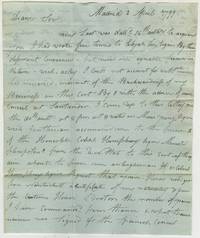
1799réf. BK0181Ribadesella Santander and Madrid Spain 1799. Three autograph letters signed by William Riddell to Elijah Dix of Boston each with integral address leaf and contemporary postal markings. Each 2 pp measuring appx 7 ¼ x 9 inches. Preserved on three later philatelic album leaves with typed transcriptions and detailed annotations concerning postal routes rates and contemporary shipping records. Original folds with some minor toning and handling wear. A group of three letters written from Spain by American sea captain William Riddell concerning the seizure of the brig Minerva by Spanish privateers in 1798 and his subsequent efforts to recover the vessel and its cargo. Writing to Boston merchant Elijah Dix over a period of two months in early 1799 Riddell describes the slow progress of his case through Spanish courts. He describes efforts to secure the assistance of American diplomats and the difficulties of establishing his nationality and the legitimacy of his vessel's papers. The letters follow Riddell from the northern Spanish coast to Madrid where he eventually secured an audience with American minister David Humphreys. In the first letter written February 3 from Ribadesella Riddell expresses frustration with the Spanish authorities and describes the intervention of the American consul in Madrid Moses Young who had been corresponding with Spanish officials concerning the detention of the Minerva. Riddell writes that Young had received assurances that justice would be administered according to the treaty between the United States and Spain but that the Spanish government was proceeding so slowly that he could not predict when the case would be resolved: "Your Brig the Minerva is in as good order as the natier of time & our condition will admit." By March 15 Riddell was in Santander where he continued to seek the release of his vessel. He complains that he has written five letters to Dix without receiving a reply and describes the progress of the case through the American consulate in Madrid. Young had received the vessel's papers and obtained an additional thirty days from the Spanish government for their examination. Riddell had also corresponded with the London firm of H. & G. Johnston & Co. the underwriters of the cargo who proposed that he proceed to Dublin once the vessel was released. He was concerned that the cargo might instead have to be sold in Spain. The March letter also contains an interesting account of two sailors who had apparently given false testimony concerning the seizure: "I am heare to apprehend two my Sailors that came back in the privateer that tooke me for gaving a false oath in a diclaration however thay aire of no use to any perty thay now have told the trewth." The final letter dated April 2 from Madrid describes Riddell's journey to the Spanish capital and his meeting with Colonel David Humphreys the American minister plenipotentiary. Humphreys had advised that the captain secure documentation from Nantucket and Boston establishing his American nationality and record of service apparently because the Spanish authorities had questioned whether he was British. Riddell writes: "It is Colonel Humphreys Esquire request that youre Honer wold get from Nantucket a Certificate of my nativity & from the Custom House Boston the number of years I have Commanded from thance & what thaire names was signed pr the Spanish Consul & dispatch thame to me to the Care of his Honer without los of time. By wich means we Expect to Recover Every dimerrage damaeges & Sura." David Humphreys 1752-1818 a former aide-de-camp to George Washington served as United States minister to Spain from 1797 to 1801. Moses Young the American consul in Madrid was likewise involved in diplomatic disputes over privateering and the capture of American merchant vessels during this period. The correspondence dates from the Quasi-War with France when American merchant vessels faced seizures and interference with their trade by European belligerents. Spain then allied with France and at war with Britain was formally at peace with the United States under the Treaty of San Lorenzo of 1795. That treaty provided protections for neutral shipping and established requirements for maritime passports identifying the ownership and nationality of vessels and their commanders. Riddell's need to establish his birthplace and demonstrate his American maritime service was therefore directly relevant to the legal arguments surrounding the Minerva's detention. The recipient Dr. Elijah Dix 1747-1809 was a prominent Boston physician merchant and importer who had established an extensive commercial business after moving from Worcester to Boston in 1795. He was also the grandfather of the reformer Dorothea Lynde Dix. His involvement in transatlantic commerce is consistent with the ownership interests and shipping arrangements discussed in Riddell's correspondence. The three letters are accompanied by detailed postal documentation. The February letter traveled from Ribadesella by way of Gijón to Marblehead Massachusetts arriving March 30 where it was rated ten cents. The March letter traveled from Santander aboard the schooner Hawke Captain Lovett arriving at Beverly Massachusetts May 16 and bears an eighteen-cent rating. The April letter traveled overland to Bilbao where it was forwarded by Ventura Gomez de la Torre & Grand Sons aboard the brig Hannah Captain Harris arriving at New York July 24. It bears a New York clamshell postmark and a nineteen-cent rate. The accompanying annotations cite contemporary shipping notices from the Salem Gazette and New York Commercial Advertiser documenting the arrivals of the vessels that carried the correspondence. Together the letters preserve a sustained account of an American captain's attempts to obtain restitution for a privateer seizure including the involvement of consular officials cargo insurers and the American minister to Spain. The three different postal routes provide an additional record of the means by which correspondence traveled between Spain and New England in the late eighteenth century. . unknown
1799réf. BK0181Ribadesella Santander and Madrid Spain 1799. Three autograph letters signed by William Riddell to Elijah Dix of Boston each with integral address leaf and contemporary postal markings. Each 2 pp measuring appx 7 ¼ x 9 inches. Preserved on three later philatelic album leaves with typed transcriptions and detailed annotations concerning postal routes rates and contemporary shipping records. Original folds with some minor toning and handling wear. A group of three letters written from Spain by American sea captain William Riddell concerning the seizure of the brig Minerva by Spanish privateers in 1798 and his subsequent efforts to recover the vessel and its cargo. Writing to Boston merchant Elijah Dix over a period of two months in early 1799 Riddell describes the slow progress of his case through Spanish courts. He describes efforts to secure the assistance of American diplomats and the difficulties of establishing his nationality and the legitimacy of his vessel's papers. The letters follow Riddell from the northern Spanish coast to Madrid where he eventually secured an audience with American minister David Humphreys. In the first letter written February 3 from Ribadesella Riddell expresses frustration with the Spanish authorities and describes the intervention of the American consul in Madrid Moses Young who had been corresponding with Spanish officials concerning the detention of the Minerva. Riddell writes that Young had received assurances that justice would be administered according to the treaty between the United States and Spain but that the Spanish government was proceeding so slowly that he could not predict when the case would be resolved: "Your Brig the Minerva is in as good order as the natier of time & our condition will admit." By March 15 Riddell was in Santander where he continued to seek the release of his vessel. He complains that he has written five letters to Dix without receiving a reply and describes the progress of the case through the American consulate in Madrid. Young had received the vessel's papers and obtained an additional thirty days from the Spanish government for their examination. Riddell had also corresponded with the London firm of H. & G. Johnston & Co. the underwriters of the cargo who proposed that he proceed to Dublin once the vessel was released. He was concerned that the cargo might instead have to be sold in Spain. The March letter also contains an interesting account of two sailors who had apparently given false testimony concerning the seizure: "I am heare to apprehend two my Sailors that came back in the privateer that tooke me for gaving a false oath in a diclaration however thay aire of no use to any perty thay now have told the trewth." The final letter dated April 2 from Madrid describes Riddell's journey to the Spanish capital and his meeting with Colonel David Humphreys the American minister plenipotentiary. Humphreys had advised that the captain secure documentation from Nantucket and Boston establishing his American nationality and record of service apparently because the Spanish authorities had questioned whether he was British. Riddell writes: "It is Colonel Humphreys Esquire request that youre Honer wold get from Nantucket a Certificate of my nativity & from the Custom House Boston the number of years I have Commanded from thance & what thaire names was signed pr the Spanish Consul & dispatch thame to me to the Care of his Honer without los of time. By wich means we Expect to Recover Every dimerrage damaeges & Sura." David Humphreys 1752-1818 a former aide-de-camp to George Washington served as United States minister to Spain from 1797 to 1801. Moses Young the American consul in Madrid was likewise involved in diplomatic disputes over privateering and the capture of American merchant vessels during this period. The correspondence dates from the Quasi-War with France when American merchant vessels faced seizures and interference with their trade by European belligerents. Spain then allied with France and at war with Britain was formally at peace with the United States under the Treaty of San Lorenzo of 1795. That treaty provided protections for neutral shipping and established requirements for maritime passports identifying the ownership and nationality of vessels and their commanders. Riddell's need to establish his birthplace and demonstrate his American maritime service was therefore directly relevant to the legal arguments surrounding the Minerva's detention. The recipient Dr. Elijah Dix 1747-1809 was a prominent Boston physician merchant and importer who had established an extensive commercial business after moving from Worcester to Boston in 1795. He was also the grandfather of the reformer Dorothea Lynde Dix. His involvement in transatlantic commerce is consistent with the ownership interests and shipping arrangements discussed in Riddell's correspondence. The three letters are accompanied by detailed postal documentation. The February letter traveled from Ribadesella by way of Gijón to Marblehead Massachusetts arriving March 30 where it was rated ten cents. The March letter traveled from Santander aboard the schooner Hawke Captain Lovett arriving at Beverly Massachusetts May 16 and bears an eighteen-cent rating. The April letter traveled overland to Bilbao where it was forwarded by Ventura Gomez de la Torre & Grand Sons aboard the brig Hannah Captain Harris arriving at New York July 24. It bears a New York clamshell postmark and a nineteen-cent rate. The accompanying annotations cite contemporary shipping notices from the Salem Gazette and New York Commercial Advertiser documenting the arrivals of the vessels that carried the correspondence. Together the letters preserve a sustained account of an American captain's attempts to obtain restitution for a privateer seizure including the involvement of consular officials cargo insurers and the American minister to Spain. The three different postal routes provide an additional record of the means by which correspondence traveled between Spain and New England in the late eighteenth century. . unknown books
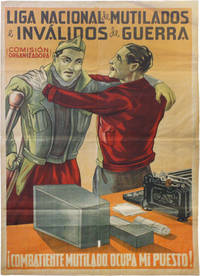
1938réf. 52890Madrid: Gráficas Reunidas U.H.P. 1938. Original illustrated poser offset printed in colors on beige stock measuring 68.5cm x 100cm 27" x 39.25". Light wear and toning to extremities a few old folds smoothed-out with several tiny nicks and small edge tears a few tiny splits at intersection of folds and a small loss toward lower margin just above the lettering; an unrestored Very Good example unbacked. The first in a series of four propaganda posters produced by Gráficas Reunidas for the Liga Nacional de Mutilados e Inválidos de Guerra LNMIG the National League of War Wounded and Invalids founded in Madrid in 1937. "The creation of this association was the first tangible outcome of the organizational efforts made by wounded Republican veterans. According to their provisional programme their key concern was to remain 'useful' útiles to the war effort and provide 'unconditional help to the government'. It was stated that the association should 'educate and re-educate the disabled veterans in physical and cultural terms. As a consequence of the efforts made by the LNMIG on behalf of disabled veterans the government gave preference to the war wounded to fill vacant menial jobs such as janitors messengers and the like" cf.Matthews James. Spain at War: Society Culture and Mobilization 1936-44. The poster created by an anonymous artist depicts a wounded soldier supporting himself with a crutch being embraced by a typist above text reading "Wounded soldier take my place!" translation mine. OCLC notes a single holding at the Biblioteca Universitat de Barcelona. CARULLA 1.268. Gráficas Reunidas U.H.P. unknown
1938réf. 52890Madrid: Gráficas Reunidas U.H.P. 1938. Original illustrated poser offset printed in colors on beige stock measuring 68.5cm x 100cm 27" x 39.25". Light wear and toning to extremities a few old folds smoothed-out with several tiny nicks and small edge tears a few tiny splits at intersection of folds and a small loss toward lower margin just above the lettering; an unrestored Very Good example unbacked. The first in a series of four propaganda posters produced by Gráficas Reunidas for the Liga Nacional de Mutilados e Inválidos de Guerra LNMIG the National League of War Wounded and Invalids founded in Madrid in 1937. "The creation of this association was the first tangible outcome of the organizational efforts made by wounded Republican veterans. According to their provisional programme their key concern was to remain 'useful' útiles to the war effort and provide 'unconditional help to the government'. It was stated that the association should 'educate and re-educate the disabled veterans in physical and cultural terms. As a consequence of the efforts made by the LNMIG on behalf of disabled veterans the government gave preference to the war wounded to fill vacant menial jobs such as janitors messengers and the like" cf.Matthews James. Spain at War: Society Culture and Mobilization 1936-44. The poster created by an anonymous artist depicts a wounded soldier supporting himself with a crutch being embraced by a typist above text reading "Wounded soldier take my place!" translation mine. OCLC notes a single holding at the Biblioteca Universitat de Barcelona. CARULLA 1.268. Gráficas Reunidas U.H.P. unknown books
1898réf. 239391898. Spanish American War soldier photo archive depicting the 18th U.S. Infantry Regiment and the camp environment of American military service circa 1898 to 1899 during the transformation of the Regular Army from scattered peacetime garrisons into an expeditionary force operating overseas. The largest photograph shows two long ranks identified as soldiers of the 18th U.S. Infantry a Regular Army regiment serving within an institution that entered 1898 with only twenty five infantry regiments generally dispersed in small detachments across western posts. Army Historical Program The photographs record the practical world surrounding that transition: formations and small groups of enlisted men officers tents and makeshift quarters mounted personnel horses and wagons flags and the dirt streets of a military encampment. The 1898 war carried the Army across both the Caribbean and Pacific culminating in the occupation of Manila on August 13 and the subsequent conflict between American forces and the Philippine Republic beginning in February 1899. Photo archive of 14 photographs including a large albumen print and smaller silver gelatin photographs Various sizes ranging from approximately 3.5 x 3.5 to large 8 x 10 inches circa 1898 to 1899. The largest albumen photograph depicts two extended lines identified as the 18th U.S. Infantry Regiment standing in uniform along a broad camp street with officers at the head of the formation and rows of tents extending behind them. Other photographs show soldiers in mixed campaign and dark uniform coats before tents; another group stands before an open military tent; mounted soldiers gather in the field; a horse drawn wagon and driver appear along a rough road; soldiers stand beside camp buildings; and an individual serviceman poses in uniform. One photograph records an American flag displayed beside an organizational flag while another shows soldiers and horses near wagons and camp equipment. A photograph of temporary quarters carries the archive's only substantial manuscript caption on the verso provisionally reading: "This is a picture of our shack. Ben Robinson is standing in the doorway and the fellow walking down the street is Mc. Monahan. You can get an idea how we live. There is twelve of us . in it." The final words are difficult to resolve but the writer's phrase "how we live" identifies the structure as soldiers' quarters and turns an otherwise uncaptioned camp photograph into direct evidence of the housing conditions experienced by its occupants. The photographs belong to a period when overseas war forced a Regular Army organized around small frontier posts to adapt rapidly to expeditionary operations. In the Philippines approximately 11300 American troops had reached Manila under Maj. Gen. Wesley Merritt by July 25 1898 and American forces occupied the city after the August campaign against Spain. The Treaty of Paris transferred the Philippines from Spain to the United States in December; armed conflict with the Philippine Republic began on February 4 1899 and the Army subsequently organized forces across Luzon and the Visayas. Official Army correspondence places the 18th U.S. Infantry in the Visayan Military District by November 1899 alongside the 6th 19th and elements of the 23rd Infantry. The camp scenes document the infrastructure behind service with canvas tents and improvised quarters horses and wagons for movement and supply and small temporary military settlements. Some fading and toning with scattered surface stains creases edge wear and some loss to several mounts; the large albumen print shows substantial fading and surface abrasion but retains the photo clearly. Overall in very good condition. A field level photographic record of the 18th U.S. Infantry and the camps transportation quarters uniforms and formations that defined Regular Army service during the United States' transition from war with Spain to sustained military operations in the Philippines. unknown
1898réf. 239391898. Spanish American War soldier photo archive depicting the 18th U.S. Infantry Regiment and the camp environment of American military service circa 1898 to 1899 during the transformation of the Regular Army from scattered peacetime garrisons into an expeditionary force operating overseas. The largest photograph shows two long ranks identified as soldiers of the 18th U.S. Infantry a Regular Army regiment serving within an institution that entered 1898 with only twenty five infantry regiments generally dispersed in small detachments across western posts. Army Historical Program The photographs record the practical world surrounding that transition: formations and small groups of enlisted men officers tents and makeshift quarters mounted personnel horses and wagons flags and the dirt streets of a military encampment. The 1898 war carried the Army across both the Caribbean and Pacific culminating in the occupation of Manila on August 13 and the subsequent conflict between American forces and the Philippine Republic beginning in February 1899. Photo archive of 14 photographs including a large albumen print and smaller silver gelatin photographs Various sizes ranging from approximately 3.5 x 3.5 to large 8 x 10 inches circa 1898 to 1899. The largest albumen photograph depicts two extended lines identified as the 18th U.S. Infantry Regiment standing in uniform along a broad camp street with officers at the head of the formation and rows of tents extending behind them. Other photographs show soldiers in mixed campaign and dark uniform coats before tents; another group stands before an open military tent; mounted soldiers gather in the field; a horse drawn wagon and driver appear along a rough road; soldiers stand beside camp buildings; and an individual serviceman poses in uniform. One photograph records an American flag displayed beside an organizational flag while another shows soldiers and horses near wagons and camp equipment. A photograph of temporary quarters carries the archive's only substantial manuscript caption on the verso provisionally reading: "This is a picture of our shack. Ben Robinson is standing in the doorway and the fellow walking down the street is Mc. Monahan. You can get an idea how we live. There is twelve of us . in it." The final words are difficult to resolve but the writer's phrase "how we live" identifies the structure as soldiers' quarters and turns an otherwise uncaptioned camp photograph into direct evidence of the housing conditions experienced by its occupants. The photographs belong to a period when overseas war forced a Regular Army organized around small frontier posts to adapt rapidly to expeditionary operations. In the Philippines approximately 11300 American troops had reached Manila under Maj. Gen. Wesley Merritt by July 25 1898 and American forces occupied the city after the August campaign against Spain. The Treaty of Paris transferred the Philippines from Spain to the United States in December; armed conflict with the Philippine Republic began on February 4 1899 and the Army subsequently organized forces across Luzon and the Visayas. Official Army correspondence places the 18th U.S. Infantry in the Visayan Military District by November 1899 alongside the 6th 19th and elements of the 23rd Infantry. The camp scenes document the infrastructure behind service with canvas tents and improvised quarters horses and wagons for movement and supply and small temporary military settlements. Some fading and toning with scattered surface stains creases edge wear and some loss to several mounts; the large albumen print shows substantial fading and surface abrasion but retains the photo clearly. Overall in very good condition. A field level photographic record of the 18th U.S. Infantry and the camps transportation quarters uniforms and formations that defined Regular Army service during the United States' transition from war with Spain to sustained military operations in the Philippines. unknown books
réf. keith-richards-in-exile-vHarman B/W Digital Fibre. Limitation of only 20 First ever printing. Hand numbered. Spanish Tony Media estate stamp to verso. Spanish Tony Sanchez facsimile signature to bottom right recto. Taken early 1970s printed 2024. All prices are unframed. If you would like your print to be framed do get in touch. unknown
réf. mick-jagger-and-keith-ricHarman B/W Digital Fibre. Limitation of only 20 First ever printing. Hand numbered. Spanish Tony Media estate stamp to verso. Spanish Tony Sanchez facsimile signature to bottom right recto. Taken 1972 printed 2024. All prices are unframed. If you would like your print to be framed do get in touch. unknown
réf. RGW19242AEtching and aquatint from L'Art on laid paper small tear professionally repaired This is one of the additional plates for 'The Proverbios' series. This edition impression was published in 1877 in volume 2 of L'Art with the title Que Guerrero Quel Guerrier. The man running in mock terror from the scarecrow figures slaps his backside to entertain the crowd. unknown
1649In -4°, due parti legate assieme, ciascuna con frontespizio autonomo; pp. IV (4) VI-XV, (1), 120 (8); (4), 48. Legatura in pergamena. La seconda parte s’intitola “Predica contro l'abuso delle comedie, fatta nella citta di Huesca la sera della circoncisione dell'anno 1629 dal p. Gaime Alberto della Compagnia di Giesu, e tradotta di spagnuolo in italiano dal signor Alessandro Adimari”. Fra le due opere è inserito un quartino, non rilegato, che titola “Aggiunta al libro terzo della christiana moderatione... fatta l’anno 1656”. The second half’s title is “Predica contro l’abuso delle comedie…” Between the two works a gathering is included, not bound, whose title is “Aggiunta al libro terzo…”
1639réf. ABC_50152Madrid 1639. Folio c. 29 x 20.1 cm. Diego Diaz Unbound housed in a plastic folder. 2 ll. Rare 17th-century Spanish pamphlet documenting the maritime activities of the Royal Armada of Dunkirk and privateers along the coasts of France England and other territories from 1 May to 31 December 1638. This detailed account lists 118 captured vessels including warships frigates and small craft many laden with highly valuable cargoes such as silk spices wine sugar salt precious metals and pearls.Printed in Madrid it served both as a record of naval prizes and a public announcement of military success during the turbulent years of the Eighty Years War 1568-1648 and concurrent Franco-Spanish conflicts. Dunkirk then a major Spanish port in the Low Countries was a base for state-authorised privateers corsarios whose daring raids on enemy shipping are vividly detailed here including the disposition of artillery captured crews and the fate of vessels either incorporated into the Spanish fleet or destroyed.The present work emphasizes the skill and bravery of the Dunkirkers noting that despite repeated attempts by Dutch fleets to block them only one Spanish warship was lost over thirty months of operations while over 800 enemy ships were captured. It is an exceptional example of early modern naval reporting illustrating not only the logistics and spoils of naval warfare but also the political and economic role of privateering in Spanish maritime strategy.The leaves are slightly browned and foxed the gutter of the second leaf has been reinforced with a manuscript page number "124" and "125" at the recto of the first leaf and the verso of the last leaf. Otherwise in good condition.l Catálogo y Biblioteca Digital de Relaciones de Sucesos CBDRS 0001964; WorldCat 1025513992 224450878 7 copies. unknown