Tam, Pui-Shum [P'ei-sen T'an], author of the first & only dictionary of the Spanish & ChineseBiblio.com

8244 risultati
1916rif. 73065Hongkong: printed by the Chinese Printing and Publishing Co. . No. 51 Gough Street 1916. First edition 8vo pp. viii 264; text in Chinese Spanish and English; mid-20th century black cloth gilt lettering on spine; light toning else a very good sound copy. "Relations between the then Empire of China and the Republic of Costa Rica began in 1911 with the arrival of the Chinese diplomat Tam Pui-Shum on Costa Rican coasts where he was received by the president of the country government authorities and representatives of the Chinese colony. Tam was the author of a Chinese-Spanish dictionary and a translation of Don Quixote into Chinese . introducing Spanish literature to the Chinese-speaking world . He had been China's representative to Spain and Mexico and was introduced as Special Commissioner of the Chinese Empire for Central America" es.Wikipedia. A tri-lingual dictionary and phrase book and a section on letter-writing at the back with two sample letters in all three languages dated Panama and Mexico City 1916 evidence for this edition being first. Apparently rare. The only other edition listed in OCLC is that of 1928 - of which only the BL and one in Sweden is noted. Of this earlier edition the earliest noted HongKong and Georgetown only in OCLC. printed by the Chinese Printing and Publishing Co. ... No. 51, Gough Street unknown
1916rif. 73065Hongkong: printed by the Chinese Printing and Publishing Co. . No. 51 Gough Street 1916. First edition 8vo pp. viii 264; text in Chinese Spanish and English; mid-20th century black cloth gilt lettering on spine; light toning else a very good sound copy. "Relations between the then Empire of China and the Republic of Costa Rica began in 1911 with the arrival of the Chinese diplomat Tam Pui-Shum on Costa Rican coasts where he was received by the president of the country government authorities and representatives of the Chinese colony. Tam was the author of a Chinese-Spanish dictionary and a translation of Don Quixote into Chinese . introducing Spanish literature to the Chinese-speaking world . He had been China's representative to Spain and Mexico and was introduced as Special Commissioner of the Chinese Empire for Central America" es.Wikipedia. A tri-lingual dictionary and phrase book and a section on letter-writing at the back with two sample letters in all three languages dated Panama and Mexico City 1916 evidence for this edition being first. Apparently rare. The only other edition listed in OCLC is that of 1928 - of which only the BL and one in Sweden is noted. Of this earlier edition the earliest noted HongKong and Georgetown only in OCLC. printed by the Chinese Printing and Publishing Co. ... No. 51, Gough Street unknown books
1821rif. 21164Berlin: Ferdinand Dummler 1821. First Edition. Century old linen library cloth dating to 1921; some pencil marking; barely perceptible miniature perforation stamp to blank area of the title page; small faint transfer stamp to the verso of the title page; gum label to the edge of the front cover. Very good. 4to viii 1 - 192 pp. The first important book written by the noted philologist. The book traces the origin of the Basque language through Spain France and into northern Africa. This was his first attempt to " . trace a connexion between the character and evolution of the Basque peoples and the style and content of their language PMM #301." It was the first effort to plot the development of individual languages to the broad history of a people. A rare and important treatise. See Printing and the Mind of Man #301; Sebeok Portraits of Linguists I 71-120. Ferdinand Dummler hardcover books
1787rif. 135132Madrid: En la Imprenta Real 1787. First nationwide Spanish census First edition of Spain's first nationwide census the census of 1787. The first census in Spain was undertaken in Castile as early as 1594 and there was a census of the Spanish Empire in 1776 but this was the first which embraced the whole country. It is sometimes known as the Census of Floridablanca after the reformist prime minister Count Floridablanca under whom it was undertaken from 1785 to 1787. The 43 tables list the regions of Spain alphabetically from Andalucia to Valencia but also include the Balearic and Canary Islands. The data accounts for the number of persons their ages religious affiliation and social status. The final population count is 10409879. Although the census did display modern demographic techniques the attempts to classify the population on class and occupation proved too rudimentary - servants were not classified in any consistent way and the scope of the hidalgo class varied considerably from region to region. Even so the census was a considerable demographic achievement and remains studied in modern Spanish demography; it is considered more accurate than the subsequent Spanish census of 1797. Quarto 301 x 225 mm. With 43 printed tables and large printed folding table at rear. Contemporary quarter sheep smooth spine ruled in gilt with green calf label marbled paper sides edges speckled red. Inked number "153" to title page. Scuffing and wear around extremities contents clean leaf a4 creased minor paper faults to tables XVIII and XXVIII 6 cm closed tear to map. A nice unrestored example. Goldsmiths' 13352; Palgrave I 242. unknown
1701rif. ABC_48243Amsterdam 1701. Small 4to ca. 20 x 15 cm. Nicolas Chevalier Contemporary limp vellum with the manuscript title on the spine and a paper shelf mark label at the foot. With a general title and 2 divisional titles for ad 6 and ad 11 all with a woodcut vignette further with 2 hand-coloured engraved maps 1 folding engraved plate and several woodcut initials. 12 parts in 1 volume. 134 pp. Collection of very rare pamphlets and printed letters published under a collective title on the actual political circumstances of Northern Europe in the years 1699-1701 especially in connection with the death of the Spanish King Charles II born in 1661 in 1700 leading to the War of the Spanish Succession 1701-1714. The work includes 2 maps of Flanders and a folding plate of the Battle of Narva which took place on 30 November 1700. Although the pamphlets and letters were printed separately the present collection appears to be very rare as we have not been able to find any other copies with the same contents.Charles died childless. His possessions would go to one of his brothers-in-law: the French King Louis XIV 1638-1715 or the German Emperor Leopold I 1640-1705. Both had agreed already beforehand that they would divide Charles heritage to avoid disturbance of the European balance of power. In his last will however Charles had appointed the grandson of Louis XIV as his successor named from now on Philip V of Spain 1683-1746. The Treaty of The Hague affirmed this in 1701. With the deaccession stamp of the "Bibliothèque municipale de Nîmes" on the title page and its shelf mark label at the foot of the spine. The vellum at the foot of the spine with a tear the boards are somewhat stained. The leaves are occasionally browned and foxed. Otherwise in good condition.l Cf. Knuttel no. 14.510 ad 1 14.543 ad 6 14.588-14.589 ad 9 14.538 ad 10 and 14.538 a comparable collective title page with the imprint "Amsterdam Daniel de la Feuille 1701" with various texts ca. 78 pp.; STCN 317179241 1 copy the same general title page but with only 3 letters all different from ours. hardcover
1696In -4°, pp. (16), 557, (9) - errore di numerazione alle pp. 120-23; antiporta incisa in rame; legatura in pelle con fregi in oro alle armi di Benedetto XIV. Tagli dorati. Calf binding with golden ornaments, gilt edges.
1940In-4°, prima edizione, copertina morbida, pp. 191, con due disegni a colori e due in b/n, esemplare perfetto. Poesie scritte tra il 1929-1930, inedite fino a quel momento, pubblicate durante l’esilio forzato in Messico, accompagnate dal poema ‘El crimen fue en Granada’ di Antonio Machado e dello scritto in prosa ‘Federico Garcia Lorca. La muerte vencida’ di José Bergamin. Presenti quattro disegni del poeta. First edition, 191pages, with four drawings (2bw and 2 colours), fine edition, soft cover.Poetries written between 1929 and 1930, published during Garcia Lorca’s exile in Mexico; additional poems ‘El crimen fue en Granada’ by Antonio Machado and ‘Federico Garcia Lorca. La muerte vencida’ by José Bergamin
1695In -4°, pp. (28), 156, (26), all’antiporta ritratto inciso da Blondeau; pergamena coeva con titolo manoscritto al dorso. Prima e unica edizione di questa singolare biografia: Sebastian de Aparicio, nato in Spagna nel 1502 e morto in Messico nel 1600, fu beatificato nel 1789 da Pio VI: al di là dell’interesse di retaggio religioso Aparicio, che partì per il nuovo mondo nel 1530, è considerato il primo allevatore di bestiame e il primo “charro” (per estensione il primo “cowboy”) nella storia d’America. Diventato ricco (grazie all’attività di colono, agricoltore, e all’estrazione di metalli, soprattutto argento), e due volte vedovo, si dedicò alla vita ascetica fino a essere ammesso all’ordine francescano, col patto che i suoi beni venissero donati al primo monastero delle Clarisse in Messico (dove sarebbe stato ospitato prima di venir ordinato frate e unirsi alla comunità francescana di Puebla). First and only edition of this unique biography: Sebastian de Aparicio, born in Spain in 1502 and dead in Mexico in 1600, was canonized in 1789 by Pius VI. Beyond the religious interest, Aparicio is considered the first “cowboy” of America (or “charro”, in spanish): he became rich thanks to his agricultural activity (and also for his activity in mines, especially silver ones) he was the first to raise livestock on ground, in America: between his dowries the one to tame savage animals. He left his large fortune to a claires monastry in order to be received in the franciscan order.
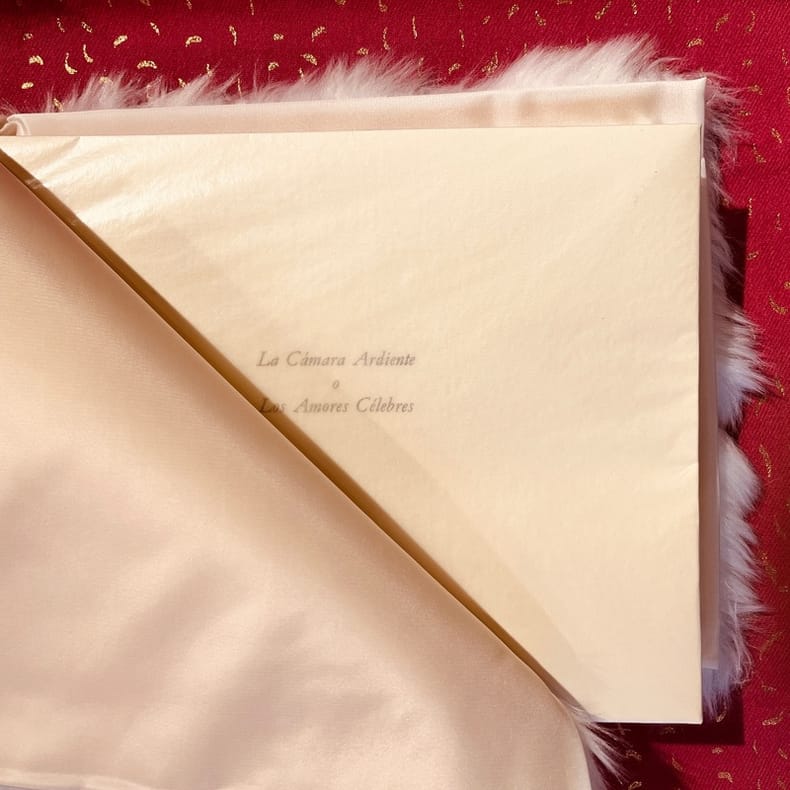
1977rif. 20185Barcelone, Editorial Gustavo Gili, 1977. Grand in-8 oblong, en feuilles sous couverture rempliée, couverture en fourrure blanche, sous emboîtage en Plexiglas.
1911rif. 030666Madrid: Imprenta Espanola / Fernando Fe / Victoriano Suarez 1911. 1st Edition 1st Printing. Soft cover. Near Fine. 291 Pp 1 Pp Advertisement For The Author's Works. Original Beige Wrappers Printed In Black Priced 3 Pesetas On Spine. Inscribed By Unamuno To The Cervantes Scholar Rudolph Rodolfo Schevill And Dated In Salamanca Vi/11 June 1911 The Year Of Publication. Covers With Slight Browning More Browning To Spine Water-Staining At Upper Right Corner Edges Of Rear Cover To 1/4" Deep But No Traces Elsewhere On Covers Or Pages. Contents Fine Pages Unopened Still Attached At Top. A Book Of Poetry Noted By Some As Containing The Finest Sonnets In The Spanish Language. Imprenta Espanola / Fernando Fe / Victoriano Suarez paperback
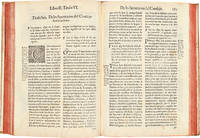
1681rif. 40803Madrid. 1681. Including Laws Regulating Indigenous Peoples and Banning the Encomienda The first comprehensive compilation of the laws of the Spanish Indies. Antonio Rodríguez de León Pinello compiled it by 1635 but it circulated only in manuscript until Fernando Jiménez de Paniagua brought it up to date and saw the work through the press in 1681. Prior to the publication of this massive work it was common practice for lawyers and courts in the various legal districts of the New World i.e. audiencias to compile in manuscript the laws in force in order that they might be used as precedents. Upon publication of this code the number of precedents did not decrease but increased: the courts continued to accept the cases and laws in the old local manuscript compilations as well as those on point and laws contained in the Recopilación. In sum this is a major work for all collections of international and Hispanic specific law. Folio. Later sheepskin leather labels. Binding rubbed at extremities. Light soiling to titlepages titlepage of first volume backed with paper. Minor soiling to text; some heavier dampstaining to first volume. Overall very good. SABIN 68386. PALAU 252516. EUROPEAN AMERICANA 681/135. hardcover
1681rif. 40803Madrid. 1681. Including Laws Regulating Indigenous Peoples and Banning the Encomienda The first comprehensive compilation of the laws of the Spanish Indies. Antonio Rodríguez de León Pinello compiled it by 1635 but it circulated only in manuscript until Fernando Jiménez de Paniagua brought it up to date and saw the work through the press in 1681. Prior to the publication of this massive work it was common practice for lawyers and courts in the various legal districts of the New World i.e. audiencias to compile in manuscript the laws in force in order that they might be used as precedents. Upon publication of this code the number of precedents did not decrease but increased: the courts continued to accept the cases and laws in the old local manuscript compilations as well as those on point and laws contained in the Recopilación. In sum this is a major work for all collections of international and Hispanic specific law. Folio. Later sheepskin leather labels. Binding rubbed at extremities. Light soiling to titlepages titlepage of first volume backed with paper. Minor soiling to text; some heavier dampstaining to first volume. Overall very good. SABIN 68386. PALAU 252516. EUROPEAN AMERICANA 681/135. hardcover books
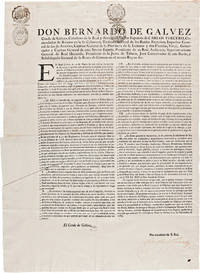
1785rif. 57874Mexico. November 22 1785. Announcing the Compañia Real de Filipinas Regulating Trade with the Philippines A very rare Mexico City printing of the announcement of the creation of the Royal Company of the Philippines by Spanish royal decree in 1785 which regulated and effectively monopolized trade with the Philippines. This copy bears the manuscript rubric of Don Bernardo de Gálvez and signature of his secretary Joseph de Gorraes. Gálvez then Viceroy of New Spain ordered this broadside printed for the reason that "An Establishment so important and of such general interest should be understood and known by all" our translation. The creation of the Royal Company would be particularly relevant to residents of Mexico as most if not all of the trade with the Philippines would come through New Spain. Accompanying the announcement this broadside also prints Articles 1 2 14 21 and 100 of the royal decree which were considered to effectively summarize the purpose and mechanics of the new Company. The articles printed here proclaim that the Company is to enjoy the protection of the Crown for at least twenty-five years establish a fund to back its shares describe how shares and subscriptions could be purchased and organize a general meeting of shareholders. Notably absent from this broadside is the important article of the decree which closed Manila's ports to foreign vessels giving the Company an effective monopoly on all trade between Asia and the Americas. The Royal Company of the Philippines quickly gained vast wealth from this lucrative deal transporting commodities such as indigo coffee sugar spices and cotton across the Pacific. Regardless of its initial success the Company did not endure - the wave of rebellions against Spanish rule in Central and South America in the early 19th century quickly rendered it obsolete and the company was officially dissolved in 1834. A rare broadside announcing this important Royal Decree to the people of the Western Hemisphere; OCLC records only one copy at the Bancroft Library. Broadside printed on two joined sheets of sealed paper 23½ x 17 inches in total. Old folds and light creases a few small worm holes. Very good. OCLC 21747301. unknown
1785rif. 57874Mexico. November 22 1785. Announcing the Compañia Real de Filipinas Regulating Trade with the Philippines A very rare Mexico City printing of the announcement of the creation of the Royal Company of the Philippines by Spanish royal decree in 1785 which regulated and effectively monopolized trade with the Philippines. This copy bears the manuscript rubric of Don Bernardo de Gálvez and signature of his secretary Joseph de Gorraes. Gálvez then Viceroy of New Spain ordered this broadside printed for the reason that "An Establishment so important and of such general interest should be understood and known by all" our translation. The creation of the Royal Company would be particularly relevant to residents of Mexico as most if not all of the trade with the Philippines would come through New Spain. Accompanying the announcement this broadside also prints Articles 1 2 14 21 and 100 of the royal decree which were considered to effectively summarize the purpose and mechanics of the new Company. The articles printed here proclaim that the Company is to enjoy the protection of the Crown for at least twenty-five years establish a fund to back its shares describe how shares and subscriptions could be purchased and organize a general meeting of shareholders. Notably absent from this broadside is the important article of the decree which closed Manila's ports to foreign vessels giving the Company an effective monopoly on all trade between Asia and the Americas. The Royal Company of the Philippines quickly gained vast wealth from this lucrative deal transporting commodities such as indigo coffee sugar spices and cotton across the Pacific. Regardless of its initial success the Company did not endure - the wave of rebellions against Spanish rule in Central and South America in the early 19th century quickly rendered it obsolete and the company was officially dissolved in 1834. A rare broadside announcing this important Royal Decree to the people of the Western Hemisphere; OCLC records only one copy at the Bancroft Library. Broadside printed on two joined sheets of sealed paper 23½ x 17 inches in total. Old folds and light creases a few small worm holes. Very good. OCLC 21747301. unknown books
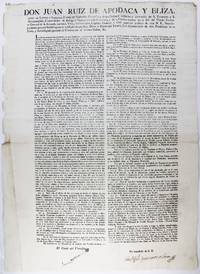
1820rif. 3330Mexico City: July 11 1820. About very good. Large double-sheet broadside approximately 23.5 x 17 inches. Two sheets joined at central horizontal fold. Five chips at left edge not affecting text and some additional minor edge wear; otherwise light toning and dust soiling. Two contemporary manuscript signatures at foot; contemporary duty stamps on blank verso. Fascinating and otherwise unrecorded broadside that dictates the organization and process for the 1820 election of Mexican deputies to the Spanish Cortes during the second and last period of constitutional monarchy in Mexico. Colonial Mexico first achieved some representation in the Spanish government under the liberal Constitution of 1812 which lasted for two years before being revoked by Ferdinand VII upon his return to power in 1814. The reinstatement of the liberal constitution and the Cortes of Cadiz in 1820 however was not enough to prevent Mexico from obtaining full independence one year later. This broadside promulgated in Mexico on July 11 1820 by the colonial Viceroy Juan Ruiz de Apodaca y Eliza announces the renewed representation via regional elections to select Provincial Deputies for the Cortes and contains eight articles delineating the process by which these elections are to be held. In brief these articles order representation be apportioned according to the population as approximated from the 1792 census; divides Mexico into provinces for the purposes of the election; and places parameters on representation for each province. In all a very interesting window onto the formation of the brief final period of Spanish colonial rule in Mexico. July 11 unknown
1820rif. 3330Mexico City: July 11 1820. About very good. Large double-sheet broadside approximately 23.5 x 17 inches. Two sheets joined at central horizontal fold. Five chips at left edge not affecting text and some additional minor edge wear; otherwise light toning and dust soiling. Two contemporary manuscript signatures at foot; contemporary duty stamps on blank verso. Fascinating and otherwise unrecorded broadside that dictates the organization and process for the 1820 election of Mexican deputies to the Spanish Cortes during the second and last period of constitutional monarchy in Mexico. Colonial Mexico first achieved some representation in the Spanish government under the liberal Constitution of 1812 which lasted for two years before being revoked by Ferdinand VII upon his return to power in 1814. The reinstatement of the liberal constitution and the Cortes of Cadiz in 1820 however was not enough to prevent Mexico from obtaining full independence one year later. This broadside promulgated in Mexico on July 11 1820 by the colonial Viceroy Juan Ruiz de Apodaca y Eliza announces the renewed representation via regional elections to select Provincial Deputies for the Cortes and contains eight articles delineating the process by which these elections are to be held. In brief these articles order representation be apportioned according to the population as approximated from the 1792 census; divides Mexico into provinces for the purposes of the election; and places parameters on representation for each province. In all a very interesting window onto the formation of the brief final period of Spanish colonial rule in Mexico. July 11 unknown books
1799Acquaforte, acquatinta brunita e bulino, 1799. Dalla rara prima edizione di dodici della serie detta Los Caprichos, tavola 15. Magnifica prova, particolarmente nitida, impressa su carta vergata coeva, con usuali ampli margini, piccoli strappi di carta alle estremità dei margini, per il resto in perfetto stato di conservazione. La serie chiamata Los Caprichos, è composta da ottanta incisioni. Questa prima edizione del 1799, l’unica a non essere pubblicata postuma, è impressa su soffice carta vergata di gran qualità ed è stampata usando un delicato inchiostro seppia. Curata in fase d’edizione dallo stesso artista, la serie fu commercializzata e dopo poco tempo ritirata dal mercato. Infatti, a causa dei numerosi soggetti che ironizzavano sulla società spagnola di fine secolo, il Goya subì una censura. Per questo ne sono stimati solo circa 300 esemplari. L’interpretazione dei soggetti rappresentati su queste lastre, sempre enigmatiche, è spesso controversa - First edition -Etching, burnished aquatint and engraving, 1799. From the rare first edition (of twelve) of Los Caprichos, plate 15. A very fine impression, showing a good contrast, on contemporary paper, with usual wide margins, small tears at left white margin, otherwise in perfect condition. The series called Los Caprichos, consists of eighty etchings. This first edition of 1799, the only one not to be published posthumously, is imprinted on soft laid paper of great quality and is printed using a delicate sepia ink. Cured in phase edition by the same artist, the series was marketed and before long withdrawn from the market. In fact, because of the many subjects that mocked the Spanish society of the century, Goya suffered censorship. For this it is estimated only about 300 copies. The interpretation of the subjects represented on these plates, always enigmatic, is often controversial. The title can be translated into: Pretty teachings. Harris 50, Delteil 52.
1799Acquaforte, acquatinta brunita e bulino, 1799.Dalla rara prima edizione di dodici della serie detta Los Caprichos, tavola 54.Magnifica prova, particolarmente nitida, impressa su carta vergata coeva, con usuali ampli margini, in perfetto stato di conservazione.La serie chiamata Los Caprichos, è composta da ottanta incisioni. Questa prima edizione del 1799, l’unica a non essere pubblicata postuma, è impressa su soffice carta vergata di gran qualità ed è stampata usando un delicato inchiostro seppia. Curata in fase d’edizione dallo stesso artista, la serie fu commercializzata e dopo poco tempo ritirata dal mercato. Infatti, a causa dei numerosi soggetti che ironizzavano sulla società spagnola di fine secolo, il Goya subì una censura. Per questo ne sono stimati solo circa 300 esemplari. L’interpretazione dei soggetti rappresentati su queste lastre, sempre enigmatiche, è spesso controversa In questo soggetto Goya affronta il tema del mondo alla rovescia. Nella scena ci sono tre personaggi, il centro dell'attenzione è l'uomo che sta mangiando, e che cerca di evitare tutti gli sguardi, vergognandosi dei tratti osceni del suo viso. L'artista ha chiaramente indicato il suo pensiero disegnando la cintura di un paio di pantaloni sopra la testa del personaggio. I nasi sono una presenza notevole sul viso, e nel linguaggio popolare "nasi" è un chiaro eufemismo sessuale. Il modo in cui il viso è costruito, in modo che sopracciglia, occhi e naso evochino l'apparato genitale maschile, rafforzerebbe lo stesso senso. Altri commenti insinuano che la figura, nel piano superiore, con i suoi grandi pugni serrati, stia commettendo sodomia con la figura che tiene il vaso da cui mangia l'uomo vergognoso. L'anno 1799 è uno dei momenti chiave nella vita e nel lavoro di Francisco de Goya. Oltre ad essere nominato primo pittore da camera di Goya, a godere di un crescente prestigio come ritrattista e ad inaugurare la cappella di San Antonio de la Florida, che aveva decorato, il 6 febbraio il Diario de Madrid pubblicò un annuncio in cui venivano messe in vendita le ottanta stampe che compongono la serie dei Caprichos. Bellissimo esemplare. Al verso timbro di collezione HENRI MARIE PETIET (Saint-Prix, Seine-et-Oise, 1894-1980), editore, libraio e mercante di stampe a Parigi (Lugt 5031). - The rare first edition -Etching, burnished aquatint and engraving, 1799.From the rare first edition (of twelve) of Los Caprichos, plate 54.A very fine impression, showing a good contrast, on contemporary paper, with usual wide margins, perfect condition.The series called Los Caprichos, consists of eighty etchings. This first edition of 1799, the only one not to be published posthumously, is imprinted on soft laid paper of great quality and is printed using a delicate sepia ink. Cured in phase edition by the same artist, the series was marketed and before long withdrawn from the market. In fact, because of the many subjects that mocked the Spanish society of the century, Goya suffered censorship. For this it is estimated only about 300 copies. The interpretation of the subjects represented on these plates, always enigmatic, is often controversial. In this print Goya approaches the theme of the world upside down. In the scene there are three characters, being the focus of attention the man who is eating, and tries to avoid all eyes, ashamed of the obscene features of his face. The artist has clearly indicated his thinking by drawing above the character's head the waistband of a pair of pants. The noses take on a notable presence on the face, and in popular language "noses" is a clear sexual euphemism. The way the face is constructed, so that eyebrows, eyes and nose evoke the male genital apparatus, would reinforce the same sense. Other comments insinuate that the figure, in the upper plane, with his large clenched fists, is committing sodomy with the figure holding the vessel from which the shameful man eats. The year 1799 is one of the key moments in the life and work of Francisco de Goya. In addition to being named first chamber painter, enjoying a growing prestige as a portrait painter and the inauguration of the chapel of San Antonio de la Florida, which he had decorated, on February 6 the announcement of the sale of the eighty prints that form the series of the Caprichos was published in the Diario de Madrid. Here, Goya focuses his social criticism on the bestiality of a deformed man whose head emerges from his breeches. Among the slight variations between the print and the preparatory drawing, the most striking is that, in the former, he wears his trousers, but in the latter, he does not. As a result, the latter came to be known as The satire of man’s lechery. Moreover, this is the only drawing in the series to mix red-ink wash with pen. Valentín Carderera’s handwritten commentaries on the Caprichos, which are in both the Biblioteca Nacional and the Museo del Prado, further clarify this subject. The first reads: Men with large noses also tend to have large arrows [here, “arrow” is a euphemism for penis] and fat gandumbas [testicles]. As they are often sodomites, this one is depicted with his breeches on his head, with his pudenda hanging out as he lies on top of a poor devil and pulls up his skirts. The second commentary completes the information: There are men whose face is the most indecent part of their body, and it would be good if those whose face is that disgraceful and ridiculous would stick it in their breeches. Example from the HENRI MARIE PETIET (Saint-Prix, Seine-et-Oise, 1894-1980) collection (Lugt 5031). Harris 1964, 89.
1913Unread. As new. Number 216 of limited edition of 350 copies. Signed by co-author R.E. Gosnell. "Few publications, if any, of similar size and excellence have been produced in Canada." - From Editor's Foreword. Part I includes 210 pages and eighteen chapters which constitute "a survey of events from the earliest times down to the Union of the Crown Colony of British Columbia with the Dominion of Canada." Part II is "a history, mainly political and economic, of the Province since Confederation up to the present time." Part I is preceded and followed by dozens of tissue-protected black and white portraits of individuals influential in the early history of the province, complete with their brief biographies upon the tissue. Part II comprises eighteen chapters over 226 pages plus 5 pages of addenda followed by dozens of tissue protected portraits of "some of the men conspicuous as present day factors in development." Top edge gilt. Gilt lettering upon backstrip. Marbled endpapers. Exceptionally clean, bright, and unmarked with zero wear. Brown suede exterior appears as fresh as the day it was applied over 100 years ago. This majestic fourteen pound tome measures 13" x 10.5" x 4". A magnificent acquisition for any serious collector of British Columbia history. A better copy will not be found. [Lowther 1607, Hale 2523, Edwards & Lort 3177, Strathern 495] Book
1890Two decorated wooden panels, painted in polychrome tempera, gold gilt, and gesso, with a leather spine. 330 x 250 mm. Elaborately decorated on one board with four armorial shields, surrounded by incised stamps on gilt fields and gilt floral sprays on a blue field. The text below the shields reads: "INVENTARIO DELLE COSE DEL LA SAGRESTIA DEL DUOMO EDE LALTRE COSE MOBILI DELU OPARA RIFATTO LASICO DA VOLTA AL TENPO DEL UENE RABILE UOMO FRANCESCHO DI PAOLO TADDEI ANNO D. 1475." [Roughly translated: Inventory of the things in the sacristy of the Duomo Ede. Taken from the last by the incomparable Frances Taddei in the year 1475. The front board has a lovely Rennaisance Madonna and Child, with "Samis de Petris" below. This de may have been an attempt to attribute the painting to the artist Sano di Pietro. Beveled edges. Brass bosses at each corner. Very good. RARE. A contemporary of the famed "Spanish Forger", Icilio Federico Joni (1866-1946) was born in Siena. As a young man he worked in the shop of a gilder and art restorer. He began, as a sideline, to produce imitations of fifteenth century Sienese painted wooden panel book covers. He based these tempera painted wooden panels on the Tavolette in the Archivio di Stato, which he probably never saw in person. It is quite clear from his autobiography (1932) that he was proud of his skill and his brilliant imitations of the ancient art of Siena. He considered them original art rather than 'forgeries'. There are probably no more than twenty examples of his work extant today. From the Bridwell Library, SMU: "A skilled producer of imitation "Gothic" altarpieces, he received a commission c. 1890 to create a book cover in imitation of those found on Siena's Tavole di Biccherna, the elaborately gilt and painted fourteenth-century tax registers. Without ever seeing a real Biccherna, he established a lucrative business of faking Biccherna covers. Joni later boasted of incidents in which the local police were alerted to books purportedly stolen from Siena Cathedral or the state archives, only to discover that they were by Joni. A number of book collectors were deceived by Joni's creations, and several of his works were published as Gothic originals. Today, Joni's forgeries are highly valued in their own right. In his autobiography Joni discussed his methods for antiquing the covers by mixing soot, turmeric, chrome yellow, and gilding gesso with gum arabic to produce the patina on the gold. The bosses were bathed in ammonia and the clasp plates were dipped in iodine, "which rusted them in just the right way." Note that Joni's boards are simply glued onto a rough leather spine; he apparently did not know how to replicate a fifteenth-century sewing structure." Research in America has clarified Joni's role as a restorer in such works as Piermatteo d'Amelia's Annunciation (Gardner Museum) and the half-length figures in Fra Angelico's Annunciation (Mrs E. Ford Collection). **PRICE JUST REDUCED! Front Case 1/R
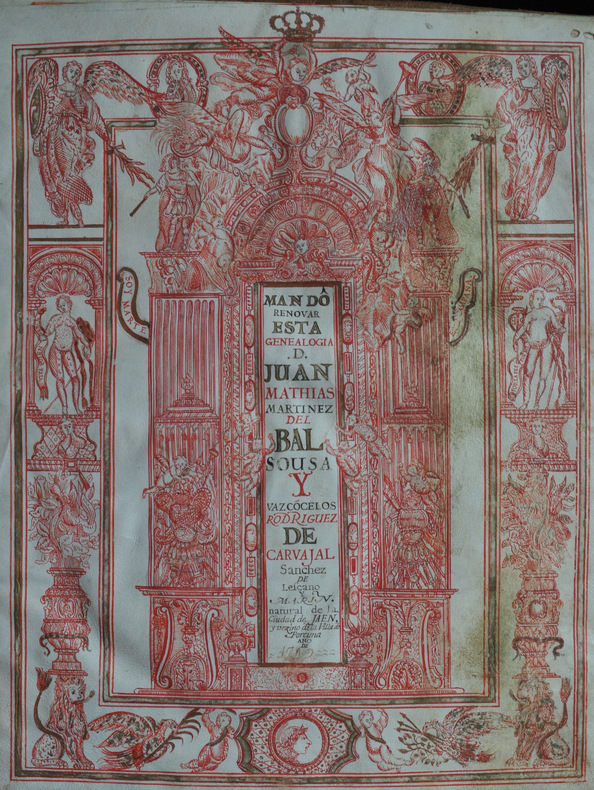
1748rif. 46400880, 1748-1749 ; in-4°, basane fauve de l'époque (lacets) - Beau manuscrit calligraphe espagnol du XVIII° siècle. 10 grandes feuillets de vélin. Le premier orné d'une grande composition (titre - frontispice), dessinée à la plume à l'encre rouge avec rehauts d'or : large architecture rococo avec portique, colonnes, médaillons, angelots, statues, emblèmes et portraits. Le second feuillet est une composition dédicace à la Vierge, également dessinée en rouge et or ; large encadrement de rocailles et d'emblèmes ; au centre la Vierge en assomption entourée d'anges ; en dessous, le personnage pour lequel a été exécuté ce manuscrit représenté à cheval ; suivent 15 pages de manuscrit d'une belle calligraphie, avec double encadrement de filets d'argent ; 2 lettres ornées, grotesques calligraphiés sur l'avant dernière page, la dernière page donne l'arbre généalogique des Martinez Rodriguez de Carvajal. L'illustration de ce manuscrit est d'une belle facture populaire rococo. La planche de la Vierge est préservée par un feuillet de soie rose."
19334 vols., 8vo., First Edition, with 4 portrait frontispieces, and numerous plates, facsimiles, maps and plans; handsomely bound in half navy crushed and polished morocco BY SOTHERAN, blue cloth sides ruled in gilt, backs with raised bands with gilt fillets, second and third compartments with red leather labels framed and lettered in gilt, all other compartments framed in gilt, gilt tops, marbled endpapers, an elegant set ideal as a gift or presentation. THE BINDINGS ARE SIGNED ON FRONT FREE ENDPAPER VERSOS. AN ELEGANT SET OF THE ORIGINAL EDITION AND SCARCE IN THIS CONDITION. Cohen A97.2(I-IV).a, Woods/ICS A40(aa).
1820rif. ZB394212American Association of Teachers of Spanish and Portuguese 1918-2000. Price HAS BEEN REDUCED by 10% until Monday Oct. 26 weekend SALE item volumes 1-83; lacks 9-12. 1918-2000. partly bound library markings textually clean & tight price is for the set. - If you are reading this this item is actually physically in our stock and ready for shipment once ordered. We are not bookjackers. Buyer is responsible for any additional duties taxes or fees required by recipient's country. Photos available upon request. American Association of Teachers of Spanish and Portuguese unknown
Four volumes. A COMPLETE SET, ON SPECIAL PAPER, OF THE MOST IMPORTANT PUBLICATION OF SPANISH MEDIEVAL TEXTS. Comprises, IN FIRST EDITION, (I) the Poema del Cid, (II) the complete works of Berceo, (III) the Poem of Alejandro Magno, and (IV) the Arcipreste de Hita's Libro de buen amor (this fourth volume is almost always missing.) This is A SPECIAL SET, PRINTED ON THICK PAPER. This is furthermore AN ASSOCIATION COPY, from the library of DANIEL DEVOTO AND MARIA BEATRIZ DEL VALLE-INCLAN (their stamp on rear endpapers). Devoto (1916-2001) was an important intellectual figure who counted among his close friends many of the great literary figures of 20th-century Spain, France, and Latin America. He wrote many books and articles, some of which concern the texts which appear in the present publication. COMPLETE WITH ALL HALF-TITLES. 8vos. ATTRACTIVELY BOUND IN SPANISH CALF. Tiny traces of wear to bindings, else an EXCELLENT SET. In the introduction to his edition of El poema del Cid, Colin Smith emphasizes the great importance of this publication, pointing out that Sanchez was way ahead of his time as a textual editor. AN OUTSTANDING SET OF AN EXTREMELY RARE AND IMPORTANT PUBLICATION, WITH A FINE PROVENANCE.
1634In -4°, pp. (22), 289 (i.e. 379), (9); frontespizio inciso (al fr. la data è 1633) e un ritratto calcografico dell’autore che precede il testo. Carta Yy con prova di penna, con testo ancora leggibile. Saavedra, nato e vissuto a Cordoba fra il XVI e il XVII secolo fu un poeta spagnolo, lontano parente di Cervantes. Fumagalli 428. Il volume è rilegato con la raccolta poetica del figlio di Saavedra, “Ocios de Aganipe divididos en differentes poesias” - pp. (6), 260, frontespizio inciso -, pubblicato anch’esso a Trani nello stesso anno. Due rarissime opere spagnole appartenenti al Siglo de oro. In -4 °, pp. (22), 289 (i.e. 379), (9); engraved title page (the title page date is 1633) and a chalchographic portrait of the author preceding the text. Yy leaf with spoiled with ink, yet the text is still readable. Saavedra, was born and lived in Cordoba between the 16th and 17th centuries, was a Spanish poet, distant relative of Cervantes. Fumagalli 428. The volume is bound with the poetic collection of Saavedra’s son, “Ocios de Aganipe divididos en differentes poesias” - pp. (6), 260, engraved title page -, also published in Trani in the same year. Two very rare Spanish works belonging to the Siglo de oro.