8 698 résultats
réf. 237944Paris, Rougeron, 1815 in-8, 296 pp., 1 feuillet d'errata, dérelié.
réf. 43451Paris Pierre Seghers, Editeur 1957 in 8 (27,5x19) 1 volume reliure cartonnée de l'éditeur, couverture rempliée, plat supérieur illustré par Pablo Picasso, 37 pages {1], avec 12 photographies en noir et blanc par Lucien Clergue, dont 2 sur double-page. Poème liminaire de Jean Cocteau. Première édition. Bel exemplaire ( Photographies sur demande / We can send pictures of this book on simple request )
Barcelona, Trilla y Serra Editores,1880. Gran folio; 221 pp. de texto, con magníficas viñetas intercaladas entre el mismo, grabadas por Fusté y dibujadas por Apeles Mestres (1854-1936). Más 16 extraordinarias láminas aparte, litografiadas en color en la Litografía de Pigrau, obra del ilustrador Eusebio Planas(1833-1897). Encuadernación en media piel, de la época. La desgraciada peripecia de Margarita Gautier, la mas singular "traviata" de todos los tiempos, galantemente vestida aquí por Eusebio Planas, quien no puede reprimir guiños a su producción erótica del mismo año "Historia de una mujer", o a sus sicalípticas "Academias de mujer" y pornográfica "El noble arte del billar".
réf. 188486Madrid, Imprenta de D. M. de Burgos, mai 1817 in-12, [8]-263 pp., basane maroquinée cerise, dos lisse orné de guirlandes et fleurons dorés, pièce de titre verte, encadrement de guirlande dorée sur les plats, hachuré doré sur les coupes, tranches dorées (reliure de l'époque). Bel exemplaire.
1695réf. 1000019AGAmsterdam, Johannes van Keulen, [1695]. Kupferstich altkoloriert. 54 x 63 cm (Blattgröße), [7 Warenabbildungen] unter Glas gerahmt, leichte Mittelfalte etwas knittrig, kleinere Randläsuren, Rahmen etwas bestossen,
1799Opera tratta dai "Los Caprichos", per la prima volta pubblicati nel 1799. Prova della quarta edizione di dodici, stampata dalla calcografia di Madrid, circa 1870. Aquaforte, acquatinta brunita e puntasecca, in perfetto stato di conservazione. La serie chiamata Los Caprichos, è composta da ottanta incisioni, la cui prima edizione [l’unica a non essere pubblicata postuma] venne alla luce ne 1799. Curata in fase d’edizione dallo stesso artista, la serie fu commercializzata e dopo poco tempo ritirata dal mercato. Infatti, a causa dei numerosi soggetti che ironizzavano sulla società spagnola di fine secolo, il Goya subì una censura. L’interpretazione dei soggetti rappresentati su queste lastre, sempre enigmatiche, è spesso controversa. Etching with burnished aquatint and engraving, 1799. From the fourth edition of twelve of the so-called "Los Caprichos" series, edited by the Madrid Calcografia [circa 1870].A very good impression, with good contrast, printed on contemporary paper, customary margins, in very good conditions. The series called Los Caprichos, consists of eighty etchings. This first edition of 1799, the only one not to be published posthumously, is imprinted on soft laid pape. Cured in phase edition by the same artist, the series was marketed and before long withdrawn from the market. In fact, because of the many subjects that mocked the Spanish society of the century, Goya suffered censorship. The interpretation of the subjects represented on these plates, always enigmatic, is often controversial. Harris 68, Delteil 70
1799Opera tratta dai Los Caprichos, per la prima volta pubblicati nel 1799.Prova della quarta edizione di dodici, stampata dalla calcografia di Madrid, circa 1870.Acquaforte, acquatinta brunita e puntasecca, in perfetto stato di conservazione.La serie chiamata Los Caprichos, è composta da ottanta incisioni, la cui prima edizione [l’unica a non essere pubblicata postuma] venne alla luce ne 1799. Curata in fase d’edizione dallo stesso artista, la serie fu commercializzata e dopo poco tempo ritirata dal mercato.Infatti, a causa dei numerosi soggetti che ironizzavano sulla società spagnola di fine secolo, il Goya subì una censura. L’interpretazione dei soggetti rappresentati su queste lastre, sempre enigmatiche, è spesso controversa. Etching with burnished aquatint and engraving, 1799.From the fourth edition of twelve of the so-called Los Caprichos series, edited by the Madrid Calcografia [circa 1870].A very good impression, with good contrast, printed on contemporary paper, usual wide margins, in very good conditions.The series called Los Caprichos, consists of eighty etchings. This first edition of 1799, the only one not to be published posthumously, is imprinted on soft laid pape.Cured in phase edition by the same artist, the series was marketed and before long withdrawn from the market. In fact, because of the many subjects that mocked the Spanish society of the century, Goya suffered censorship.The interpretation of the subjects represented on these plates, always enigmatic, is often controversial. Harris 68, Delteil 70.
1799Opera tratta dai "Los Caprichos", per la prima volta pubblicati nel 1799. Prova della quarta edizione di dodici, stampata dalla calcografia di Madrid, circa 1870. Aquaforte, acquatinta brunita e puntasecca, in perfetto stato di conservazione. La serie chiamata Los Caprichos, è composta da ottanta incisioni, la cui prima edizione [l’unica a non essere pubblicata postuma] venne alla luce ne 1799. Curata in fase d’edizione dallo stesso artista, la serie fu commercializzata e dopo poco tempo ritirata dal mercato. Infatti, a causa dei numerosi soggetti che ironizzavano sulla società spagnola di fine secolo, il Goya subì una censura. L’interpretazione dei soggetti rappresentati su queste lastre, sempre enigmatiche, è spesso controversa. Etching with burnished aquatint and engraving, 1799. From the fourth edition of twelve of the so-called "Los Caprichos" series, edited by the Madrid Calcografia [circa 1870].A very good impression, with good contrast, printed on contemporary paper, customary margins, in very good conditions. The series called Los Caprichos, consists of eighty etchings. This first edition of 1799, the only one not to be published posthumously, is imprinted on soft laid pape. Cured in phase edition by the same artist, the series was marketed and before long withdrawn from the market. In fact, because of the many subjects that mocked the Spanish society of the century, Goya suffered censorship. The interpretation of the subjects represented on these plates, always enigmatic, is often controversial. Harris 102, Delteil 104.
1799Opera tratta dai "Los Caprichos", per la prima volta pubblicati nel 1799. Prova della quarta edizione di dodici, stampata dalla calcografia di Madrid, circa 1870. Aquaforte, acquatinta brunita e puntasecca, in perfetto stato di conservazione. La serie chiamata Los Caprichos, è composta da ottanta incisioni, la cui prima edizione [l’unica a non essere pubblicata postuma] venne alla luce ne 1799. Curata in fase d’edizione dallo stesso artista, la serie fu commercializzata e dopo poco tempo ritirata dal mercato. Infatti, a causa dei numerosi soggetti che ironizzavano sulla società spagnola di fine secolo, il Goya subì una censura. L’interpretazione dei soggetti rappresentati su queste lastre, sempre enigmatiche, è spesso controversa. Etching with burnished aquatint and engraving, 1799. From the fourth edition of twelve of the so-called "Los Caprichos" series, edited by the Madrid Calcografia [circa 1870].A very good impression, with good contrast, printed on contemporary paper, customary margins, in very good conditions. The series called Los Caprichos, consists of eighty etchings. This first edition of 1799, the only one not to be published posthumously, is imprinted on soft laid pape. Cured in phase edition by the same artist, the series was marketed and before long withdrawn from the market. In fact, because of the many subjects that mocked the Spanish society of the century, Goya suffered censorship. The interpretation of the subjects represented on these plates, always enigmatic, is often controversial. Harris 111
1799Opera tratta dai "Los Caprichos", per la prima volta pubblicati nel 1799. Prova della quarta edizione di dodici, stampata dalla calcografia di Madrid, circa 1870. Aquaforte, acquatinta brunita e puntasecca, in perfetto stato di conservazione. La serie chiamata Los Caprichos, è composta da ottanta incisioni, la cui prima edizione [l’unica a non essere pubblicata postuma] venne alla luce ne 1799. Curata in fase d’edizione dallo stesso artista, la serie fu commercializzata e dopo poco tempo ritirata dal mercato. Infatti, a causa dei numerosi soggetti che ironizzavano sulla società spagnola di fine secolo, il Goya subì una censura. L’interpretazione dei soggetti rappresentati su queste lastre, sempre enigmatiche, è spesso controversa Etching with burnished aquatint and engraving, 1799. From the fourth edition of twelve of the so-called "Los Caprichos" series, edited by the Madrid Calcografia [circa 1870].A very good impression, with good contrast, printed on contemporary paper, customary margins, in very good conditions. The series called Los Caprichos, consists of eighty etchings. This first edition of 1799, the only one not to be published posthumously, is imprinted on soft laid pape. Cured in phase edition by the same artist, the series was marketed and before long withdrawn from the market. In fact, because of the many subjects that mocked the Spanish society of the century, Goya suffered censorship. The interpretation of the subjects represented on these plates, always enigmatic, is often controversial. Harris 109, Delteil 111.
1799Opera tratta dai "Los Caprichos", per la prima volta pubblicati nel 1799. Prova della quarta edizione di dodici, stampata dalla calcografia di Madrid, circa 1870. Aquaforte, acquatinta brunita e puntasecca, in perfetto stato di conservazione. La serie chiamata Los Caprichos, è composta da ottanta incisioni, la cui prima edizione [l’unica a non essere pubblicata postuma] venne alla luce ne 1799. Curata in fase d’edizione dallo stesso artista, la serie fu commercializzata e dopo poco tempo ritirata dal mercato. Infatti, a causa dei numerosi soggetti che ironizzavano sulla società spagnola di fine secolo, il Goya subì una censura. L’interpretazione dei soggetti rappresentati su queste lastre, sempre enigmatiche, è spesso controversa. Etching with burnished aquatint and engraving, 1799. From the fourth edition of twelve of the so-called "Los Caprichos" series, edited by the Madrid Calcografia [circa 1870].A very good impression, with good contrast, printed on contemporary paper, customary margins, in very good conditions. The series called Los Caprichos, consists of eighty etchings. This first edition of 1799, the only one not to be published posthumously, is imprinted on soft laid pape. Cured in phase edition by the same artist, the series was marketed and before long withdrawn from the market. In fact, because of the many subjects that mocked the Spanish society of the century, Goya suffered censorship. The interpretation of the subjects represented on these plates, always enigmatic, is often controversial. Harris 65
1799Opera tratta dai "Los Caprichos", per la prima volta pubblicati nel 1799. Prova della quarta edizione di dodici, stampata dalla calcografia di Madrid, circa 1870. Aquaforte, acquatinta brunita e puntasecca, in perfetto stato di conservazione. La serie chiamata Los Caprichos, è composta da ottanta incisioni, la cui prima edizione [l’unica a non essere pubblicata postuma] venne alla luce ne 1799. Curata in fase d’edizione dallo stesso artista, la serie fu commercializzata e dopo poco tempo ritirata dal mercato. Infatti, a causa dei numerosi soggetti che ironizzavano sulla società spagnola di fine secolo, il Goya subì una censura. L’interpretazione dei soggetti rappresentati su queste lastre, sempre enigmatiche, è spesso controversa. Etching with burnished aquatint and engraving, 1799. From the fourth edition of twelve of the so-called "Los Caprichos" series, edited by the Madrid Calcografia [circa 1870].A very good impression, with good contrast, printed on contemporary paper, customary margins, in very good conditions. The series called Los Caprichos, consists of eighty etchings. This first edition of 1799, the only one not to be published posthumously, is imprinted on soft laid pape. Cured in phase edition by the same artist, the series was marketed and before long withdrawn from the market. In fact, because of the many subjects that mocked the Spanish society of the century, Goya suffered censorship. The interpretation of the subjects represented on these plates, always enigmatic, is often controversial. Harris 53, Delteil 55.
1948réf. 002874Paris, Les Presses de la Cité, 1948
1666In -8°, pp. (16), 692; molte illustrazioni nel testo, legatura in piena pelle coeva. Celebre libro spagnolo di stemmi, edito per la prima volta nel 1640, conobbe diverse edizioni nell’arco di tutto il secolo. Bell’esemplare, rifilato, ma mai oltre metà delle testatine; testo e immagini sono intatti.
réf. DADAX0710309287New unknown
réf. DADAX0789912988New unknown
réf. DADAX0415990440New unknown
réf. DADAX1472438280New unknown
réf. DADAX041512428XNew unknown
réf. DADAX0933884184New unknown
réf. 129359hardcover. Real Academia Nacional de Medicina. 16 vols. 8vo flexible white cloth; slightly soiled. Madrid: Julio Cosano 1921-1949. A scholarly set on internal medicine biography epidemics pediatrics and other topics. unknown
réf. 129359hardcover. Real Academia Nacional de Medicina. 16 vols. 8vo flexible white cloth; slightly soiled. Madrid: Julio Cosano 1921-1949. A scholarly set on internal medicine biography epidemics pediatrics and other topics. unknown books
1887réf. 64748Barcelona Spain: Campania Trasatlantica Espanola S.A. C.T.E. 1887. 8vo. 72 pp. With 2 large double-page colour maps 5 large folding engraved colour deck plans for CTE ocean liners. Red cloth-backed colour chromolithograph boards cover art of CTE liner in port at Gibraltar CTE Barcelona insignia on back cover minor scuffing edgewear minor soiling front cover slightly shaken 2 deckplans w/ very minor closed tears still a VG- copy. First edition of this very rare transatlantic guidebook timetable and deck plans for the Campania Trasatlantica Espanola S.A. Barcelona CTE ocean liner service between Spain Cuba Mexico New York & Colombia. Ports of call after New York included Boston Philadelphia Baltimore Georgetown Charleston Savannah and New Orleans with stops in various ports in Cuba Puerto Rico Jamaica Veracruz Mexico as well as several in Colombia and the Guiana’s. Deck plans engraved by Hermenagilda Miralles Bailan in Barceolna include those for the 8600 ton Reina Ma Cristina 9850 ton Buenos Aires 5450 ton Veracruz 6720 ton Ciudad de Santander and finally the 9700 ton Alfonso XII. Founded originally in 1850 by Spanish businessman and slave trader Don Antonio L. Lopez in 1850 to feed African-American slaves into both Havana as well as Mobile AL & New Orleans LA prior to the Civil War and headquarters was established in Barcelona after the marriage of Lopez to Luisa Bru Lassus. After 1883 Don Claudio B. Lopez took charge of the company and by 1887 had reached over 30 steamships and ocean liners many of which were used by the Spanish Navy following the outbreak of the Spanish-American War. Campania Trasatlantica [Espanola S.A.] (C.T.E.), hardcover
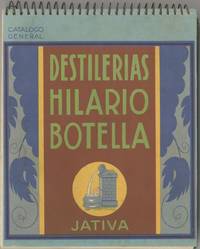
1920réf. 6853Barcelona: Encuardernaciones Patentadas Spirax Sol; Papeles de Estano-Barna 1920. Booklet spiral-bound along top edge 17 x 13 cm. 58 leaves printed rectos only. Illustrated throughout in chromolithography. Title from cover. FIRST & ONLY EDITION. A trade catalog for the distinctive and elaborate bottles for wine and spirits from the firm of Destilerias Hilario Botella from Jativa in Spanish Valencia. The first offerings are the highly decorated bottles in styles such as Anfora Valenciana Nagasaki del Japon Carmen Sevilla Piramidal Conica and most exciting the Botella Pinguino Patentada– a 1000 gram bottle in the shape of a penguin. Bottles for dozens of types of spirits are included as well as a lemonade dispensing device and two pages of fine leather goods. Some offsetting throughout; rear wrapper panel soiled but mostly clean and bright. Some early ink scribbles to front wrapper verso otherwise generally very good or better. Scarce. OCLC locates no copies. Encuardernaciones Patentadas Spirax Sol; Papeles de Estano-Barna hardcover
1920réf. 6853Barcelona: Encuardernaciones Patentadas Spirax Sol; Papeles de Estano-Barna 1920. Booklet spiral-bound along top edge 17 x 13 cm. 58 leaves printed rectos only. Illustrated throughout in chromolithography. Title from cover. FIRST & ONLY EDITION. A trade catalog for the distinctive and elaborate bottles for wine and spirits from the firm of Destilerias Hilario Botella from Jativa in Spanish Valencia. The first offerings are the highly decorated bottles in styles such as Anfora Valenciana Nagasaki del Japon Carmen Sevilla Piramidal Conica and most exciting the Botella Pinguino Patentada– a 1000 gram bottle in the shape of a penguin. Bottles for dozens of types of spirits are included as well as a lemonade dispensing device and two pages of fine leather goods. Some offsetting throughout; rear wrapper panel soiled but mostly clean and bright. Some early ink scribbles to front wrapper verso otherwise generally very good or better. Scarce. OCLC locates no copies. Encuardernaciones Patentadas Spirax Sol; Papeles de Estano-Barna hardcover books