8972 risultati
1971Quarto in offwhite printed stiff paper wraps; 34, 120, 64, 174, 27, 9, 57 and 16 pp (various pagings; total of 501 pages) 23 cm, bib. Very scarce. In Spanish. Only "380 ejemplares" printed--colophopn. Review copy. Series: Centro Intercultural de DocumentaciÛn. CIDOC cuaderno.; no. 60. "Tupamaros, also known as the MLN-T (Movimiento de LiberaciÛn Nacional-Tupamaros or Tupamaros National Liberation Movement), was a left-wing urban guerrilla group in Uruguay in the 1960s and 1970s. The MLN-T is inextricably linked to its most important leader, Ra˙l Sendic, and his brand of social politics. JosÈ Mujica, who later became president of Uruguay, was also a member." -- Wikipedia || Movimiento de LiberaciÛn Nacional (Uruguay) Movimiento de LiberaciÛn Nacional (Uruguay) Movimiento de LiberaciÛn Nacional (Uruguay) Uruguay -- Politics and government -- 1904- Uruguay.
1912Hardcover black quartos with gilt title on spine. 3 volumes, b/w plates, 24 cm.Includes bibliographical references and index. In Spanish. Scarce in cloth. || Series: Sociedad de bibliofilos madrileÒos. t. 7-9; || Spanish fiction -- Classical period, 1500-1700. Picaresque literature, Spanish -- Early works to 1800. Women in literature. || At head of title: Licenciado Francisco LÛpes de Ubeda./ Seal of the society on t.p. and, enlarged, on last leaf./ Includes reproduction of original t.p.: Libro de entretenimiento, de la Picara Ivstina, en el qual debaxo de graciosos discursos, se encierran prouechosos auisos ... Compvesto por el licenciado Francisco de Vbeda, natural de Toledo. Medina del Campo, C. Lasso Vaca, 1605./ Vol. 3: Estudio crÌtico, glosario, notas y bibliografÌa, por Julio Puyol y Alonso.
1992Quarto in black boards in glossy illus. black DJ; illus.; 210 p., 29 cm. In Spanish and some English.
1890Octavo in stapled, printed wraps; 112p. Recipes. Rare. No copies located in WorldCat. Worthy of restoration or conservation. The "A" of "Aguifero may possibly be another letter. || Mexico Food. Comida Mexicana. Women Chefs, cooks.
rif. DADAX1596730013New unknown
rif. DADAX6073164882New unknown
rif. SONG8497773012Used: Good unknown
rif. DADAX8478445102New unknown
rif. 18643Paris A l'Emblème du Secrétaire 1938 in 4 (26x19,5) 4 volumes brochés sous couvertures rempliées, [4], 315 pages; [1] 330 pages; [2] 347 pages; [4] 371 pages. Avec 288 dessins dont 48 hors texte, coloriés au pochoir par Beaufumé, Jon et Raynal. Avec 288 dessins de Dubout, dont 48 hors-texte, coloriés au pochoir par Beaufumé, Jon et Raynal. Première édition illustrée par Dubout. Tirage limité à 2144 exemplaires numérotés, celui-ci un des 1800 exemplaires numérotés sur vélin Bulky. Bel exemplaire ( Photographies sur demande / We can send pictures of this book on simple request )
rif. SONG1642802301Used: Good unknown
1927rif. 055900Ankara: Adliye Vekâleti Istatistik ve Nesriyât Müdüriyeti Türk Ocaklari Matbaasi 1927. 1st Edition . Soft cover. Very Good. 4to - over 9¾ - 12" tall. Original trichrome wrappers. 4to. 27 x 20 cm. In Ottoman script Old Turkish in Arabic letters. 4 56 72 92 32 92 41 31 8 25 p. two full paged b/w plates. First and only edition of detailed account of the Lotus case an international legal case involving France and Turkey in front of the Permanent Court of International Justice compiled by Spanish judge Altavira y Crevea and translated by Turkish Distinguished Professor of International Law Menemenlizâde Edhem 1878-1965. The case is known for establishing the so-called "Lotus principle" in international law says that sovereign states may act in any way they wish so long as they do not contravene an explicit prohibition. The Bozkurt-Lotus case decided by the Permanent Court of International Justice PCIJ in 1927 became a landmark in international law especially regarding issues of jurisdiction and the extent of a state's rights to assert criminal jurisdiction over foreign nationals. The case arose from the collision between the S.S. Lotus a French vessel and the S.S. Bozkurt a Turkish ship near the Greek island of Mytilene on 2 August 1926. After the collision eight Turkish nationals aboard the Bozkurt drowned. In response Turkey arrested and charged the captain of the Lotus Captain Demons for causing the deaths and damages to the Turkish vessel. The Turkish courts condemned him asserting their right to try him for the incident even though the collision occurred in international waters and involved a French ship. France contested the jurisdiction of Turkish courts over the captain arguing that Turkey could not claim the right to prosecute a foreign national for actions committed on a foreign vessel in international waters. France brought the case before the PCIJ to challenge Turkey's legal authority. The court ruled in favour of Turkey emphasizing that under international law there was no general prohibition against a state asserting jurisdiction over crimes involving foreign nationals even when the incident occurred outside its territorial waters. The PCIJ's decision established the principle that absent an explicit prohibition in international law states are free to exercise jurisdiction in cases where they have a legitimate interest even if the matter involves foreign nationals and occurred in international waters. This judgment reinforced the notion of state sovereignty in determining jurisdiction and highlighted the extent to which international law permits states to assert legal authority over incidents involving foreign nationals under certain conditions. However it also raised important questions about extraterritorial jurisdiction and the balance between state sovereignty and international cooperation in legal matters. "The Lotus principle or Lotus approach usually considered a foundation of international law says that sovereign states may act in any way they wish so long as they do not contravene an explicit prohibition. The application of this principle - an outgrowth of the Lotus case - to future incidents raising the issue of jurisdiction over people on the high seas was changed by article 11 of the Convention on the High Seas. The convention held in Geneva in 1958 laid emphasis on the fact that only the flag state or the state of which the alleged offender was a national had jurisdiction over sailors regarding incidents occurring on the high seas." Wikipedia. It is the first legal Turkish success achieved in the international arena after the proclamation of the Republic. Karakus. In court the Turkish side was represented by Mahmut Esat Bozkurt who was the Minister of Justice at the time. When Turkey adopted the formal surname system in 1934 Mahmut Esat chose the surname "Bozkurt" as a reminder of the landmark case. Sources: Karakus H.Burak. 2013. Atatürk Özel Sayisi: "Genç Türkiye'nin Ilk Hukuk Zaferi: Bozkurt-Lotus Davasi". Ankara: Hukuk Gündemi Dergisi. Wikipedia. Bulut Hüseyin. 2018. Atatürk Adliye Vekâleti Istatistik ve Nesriyât Müdüriyeti, Türk Ocaklari Matbaasi paperback
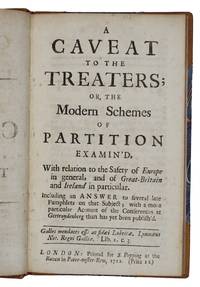
1711rif. AQ26623London: Printed for S. Popping 1711. 8 88pp. Modern half-calf marbled paper boards contrasting red morocco lettering-piece. Minor shelf-wear. Half-title browned. The sole edition of a pamphlet variously attributed to Bishop of Chichester Francis Hare 1671-1740 and physician and satirist William Wagstaff 1683/4-1725 demonstrating 'the Danger of leaving the House of Bourbon in possession of the whole Spanish Monarchy or of any considerable part of it' occasioned by the peace negotiations March-July 1710 held at Geertruidenberg in the United Provinces between representatives of Louis XIV and the Dutch in an attempt to conclude the War of the Spanish Succession and written partly in response to three contemporary pamphlets; The ballance of Europe: or an enquiry into the respective dangers of giving the Spanish monarchy to the Emperour as well as to King Philip; Reasons why this nation ought to put a speedy end to this expensive war; and An essay at a plain exposition of that difficult phrase a good peace - all commonly ascribed to Daniel Defoe 1660-1731. ESTC T56742. First edition. 8vo. Printed for S. Popping hardcover
rif. DADAX843481174XNew unknown
rif. DADAX8466652744New unknown
rif. DADAX0198226128New unknown
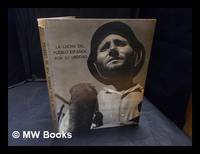
1937rif. 369023London : Press Department of the Spanish Embassy 1937. First Edition. Softcover. Good copy in original stiff card wrappers with some wear and tear as with age. Remains well-preserved overall; bright and clean. Physical description; 15 pages 128 pages plates ; 31 cm. Notes; Preface and captions in Spanish English and French. In Spanish English and French. Subjects; Spain History Civil War 1936-1939 ; Pictorial works. Spain Pictorial works History Civil War 1936-1939. Genres; History. Illustrated. Pictorial works. London : Press Department of the Spanish Embassy paperback
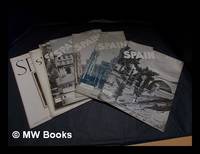
1939rif. 369001Madrid: Spanish Press Services Ltd 1939. First Edition. Softcover. Good set in the original stiff-card wrappers; edges slightly nicked and dust-dulled as with age. Physical description; 9 issues. Contents; No. 88: 8th June 1939 ; No. 89: 15th June 1939 ; No. 107: 7th March 1940 ; No. 108: 4th April 1940 ; 109: 2nd May 1940 ; No. 11: 4th July 1940 ; No. 112: 1st August 1940 ; No. 113: 5th September 1940 ; No. 115: 7th November 1940. Subjects; Spain. Spanish Culture. Spanish History. Madrid: Spanish Press Services Ltd paperback
rif. DADAX1572481862New unknown
rif. DADAX0521361893New unknown
rif. DADAX6070714628New unknown
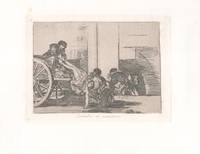
1867Acquaforte e bulino, circa 1810/15. Il titolo dell’opera è tratto da una scrittura a mano in una prova di stampa dell’opera che Goya include nell’album dei “Disastri della guerra” che donò al suo amico Ceán Bermúdez e che ora è conservato al British Museum di Londra. Il disegno preparatorio dell’opera è conservato al Prado di Madrid. Esemplare nel terzo stato di quattro, inserito nella Gazette des Beaux-Arts (1867); si tratta della prima vera edizione dell’opera, conosciuta altrimenti solo attraverso due prove di stampa. "A seated prisoner raises his clasped hands, both fastened with chains, in a gesture of supplication. We cannot see his features since his face is hidden beneath his long, dark hair. His feet are fastened in large shackles. Both the chains and the shackles are of considerable size, underlining their importance in any interpretation of the print. In fact, just as the title of the etching shows, the painter is comparing the excessive zeal employed in preventing the prisoner from escaping to the brutality of the crime he is accused of. It is possible that the way in which the prisoner is secured in this work by Goya was habitual at the time, an idea which is supported by certain passages of Forensic Discourses (Discursos forenses), by Juan Meléndez Valdés (Ribera del Fresno, Badajoz, 1754- Montpellier, 1814), whose portrait Goya painted in 1797. This book, published in Madrid in 1821, speaks of the cumbersome chains and shackles used to hold one María Vicente, put to death on the 23rd April 1798. Goya could well have known of her story: "But it is said that Doña María Vicente must have been treated, as the noblewoman that she is, in a very different manner, and not locked in shackles; and even thus fettered it was the judge's responsibility to examine their state and quality beforehand, to order them put on correctly". The painter has made extensive use of the etching technique here, building up the background with short, horizontal lines, whilst leaving large areas on the prisoner's clothing untouched and white, underlining his innocence. This etching would have been made at the same time as two others: The custody of a prisoner does not call for torture and If he is guilty, let him die quickly. In these images, Goya openly expresses his repulsion of the way in which prisoners were treated, as well as his opposition to the death penalty, echoing the ideas of Cesare Beccaria (Milan, 1738- Milan, 1794). In the pages of the work entitled Dei deliti e delle pene, published between 1763 and 1764, the Milanese talks of the need to modify the penal system, to lessen the severity of punishments and to seek out mechanisms for preventing crime. It is possible that these etchings also contributed to the debate on the abolition of torture which was being discussed in the Courts of Cádiz. Goya reiterates this same topic in some of the prints in his Disasters of War series, such as no. 15, And it can't be helped, no. 31, That's tough!, no. 32, Why?, no. 34, On account of a knife, no. 35, One can't tell why and no. 36, Not in this case either. Despite the gritty subject matter, the figure depicted in this etching possesses great dignity, recalling some earlier precedents which Goya may have been familiar with. One of these is an anonymous print based on Interior of a Prison (16th century, Museum of Fine Arts, Boston), by Giulio Romano (Rome, 1499-Mantua, 1596). When he was making this print, Goya may also have had in mind the disturbing, gloomy ambience of the prisons of Giambattista Piranesi (Mogliano Veneto, Treviso, 1720- Roma, 1778)." (cfr. https://fundaciongoyaenaragon.es/eng/obra/tan-barbara-la-seguridad-como-el-delito/712). Tomás Harris ritiene che la matrice di rame si trovi in una collezione privata di Parigi. Bibliografia Harris 26 III/IV; Delteil 31. Etching and engraving, circa 1810/15. The title of this work is taken from the handwritten title of a state proof that Goya included in the album of his Disasters of War prints which he gave to his friend Ceán Bermúdez and which is now in the British Museum, London. The preparatory drawing for this etching is in the Prado Museum, Madrid. Example of the third state of four, form the Gazette des Beaux-Arts (1867), firts edition of this work, before known only for proof states. "A seated prisoner raises his clasped hands, both fastened with chains, in a gesture of supplication. We cannot see his features since his face is hidden beneath his long, dark hair. His feet are fastened in large shackles. Both the chains and the shackles are of considerable size, underlining their importance in any interpretation of the print. In fact, just as the title of the etching shows, the painter is comparing the excessive zeal employed in preventing the prisoner from escaping to the brutality of the crime he is accused of. It is possible that the way in which the prisoner is secured in this work by Goya was habitual at the time, an idea which is supported by certain passages of Forensic Discourses (Discursos forenses), by Juan Meléndez Valdés (Ribera del Fresno, Badajoz, 1754- Montpellier, 1814), whose portrait Goya painted in 1797. This book, published in Madrid in 1821, speaks of the cumbersome chains and shackles used to hold one María Vicente, put to death on the 23rd April 1798. Goya could well have known of her story: "But it is said that Doña María Vicente must have been treated, as the noblewoman that she is, in a very different manner, and not locked in shackles; and even thus fettered it was the judge's responsibility to examine their state and quality beforehand, to order them put on correctly". The painter has made extensive use of the etching technique here, building up the background with short, horizontal lines, whilst leaving large areas on the prisoner's clothing untouched and white, underlining his innocence. This etching would have been made at the same time as two others: The custody of a prisoner does not call for torture and If he is guilty, let him die quickly. In these images, Goya openly expresses his repulsion of the way in which prisoners were treated, as well as his opposition to the death penalty, echoing the ideas of Cesare Beccaria (Milan, 1738- Milan, 1794). In the pages of the work entitled Dei deliti e delle pene, published between 1763 and 1764, the Milanese talks of the need to modify the penal system, to lessen the severity of punishments and to seek out mechanisms for preventing crime. It is possible that these etchings also contributed to the debate on the abolition of torture which was being discussed in the Courts of Cádiz. Goya reiterates this same topic in some of the prints in his Disasters of War series, such as no. 15, And it can't be helped, no. 31, That's tough!, no. 32, Why?, no. 34, On account of a knife, no. 35, One can't tell why and no. 36, Not in this case either. Despite the gritty subject matter, the figure depicted in this etching possesses great dignity, recalling some earlier precedents which Goya may have been familiar with. One of these is an anonymous print based on Interior of a Prison (16th century, Museum of Fine Arts, Boston), by Giulio Romano (Rome, 1499-Mantua, 1596). When he was making this print, Goya may also have had in mind the disturbing, gloomy ambience of the prisons of Giambattista Piranesi (Mogliano Veneto, Treviso, 1720- Roma, 1778)." (cf. https://fundaciongoyaenaragon.es/eng/obra/tan-barbara-la-seguridad-como-el-delito/712). Tomás Harris believes that the plate for this etching may be in a private collection in Paris. Literature Harris 26 III/IV; Delteil 31. Harris 26, III/IV; Delteil 31.
A portfolio of five color etchings, each signed and numbered by the artist. Printed on fine wove paper. Folio. Loose as issued in paper folding case. Fine and bright. Edition limited to 92 copies.
1937rif. 82176Madrid: S.E.I.C. 1937. First Editions. Fifteen folio issues one 40.5cm the remainder 58cm; original photo-illustrated newsprint wrappers; a few issues 2pp though most are 4pp per issue; text is entirely in Spanish. Publication sequence as follows: No.443 20 May 32 26 May 451 29 May 453 31 May 454 1 June 455 2 June 513 7 August 514 9 August 515 10 August 536 3 September 537 4 September 570 12 October 586 29 October 591 4 November 601 16 November. Most issues with old folds but stable modest wear and handling varying degrees of toning and dust-soil with some edge tears small splits and attendant creases and some old red and blue pencil underlining relegated chiefly to the front wrappers; right margin trimmed on No.586; Very Good. Group of well-preserved issues of the official publishing organ of the Communist Party of Spain the Spanish Section of the Communist International. Established in 1931 the newspaper headquartered in Madrid published illegally during Franco's regime and took a strict Bolshevist stance. The daily paper provided coverage from the various fronts during the civil war articles on the various labor unions and ideological factions and political cartoons. Substantial groups are uncommon in commerce. 82176. S.E.I.C. unknown
1937rif. 82176Madrid: S.E.I.C. 1937. First Editions. Fifteen folio issues one 40.5cm the remainder 58cm; original photo-illustrated newsprint wrappers; a few issues 2pp though most are 4pp per issue; text is entirely in Spanish. Publication sequence as follows: No.443 20 May 32 26 May 451 29 May 453 31 May 454 1 June 455 2 June 513 7 August 514 9 August 515 10 August 536 3 September 537 4 September 570 12 October 586 29 October 591 4 November 601 16 November. Most issues with old folds but stable modest wear and handling varying degrees of toning and dust-soil with some edge tears small splits and attendant creases and some old red and blue pencil underlining relegated chiefly to the front wrappers; right margin trimmed on No.586; Very Good. Group of well-preserved issues of the official publishing organ of the Communist Party of Spain the Spanish Section of the Communist International. Established in 1931 the newspaper headquartered in Madrid published illegally during Franco's regime and took a strict Bolshevist stance. The daily paper provided coverage from the various fronts during the civil war articles on the various labor unions and ideological factions and political cartoons. Substantial groups are uncommon in commerce. 82176. S.E.I.C. unknown books
rif. 76-0143Madrid: Real Academia 1903. Etching aquatint and drypoint on wove paper. 23.5 x 33 cm sheet. Limited edition to 100. Very Good light specks of foxing in the margins.Ref.: Harris 184; Delteil 183. Madrid: Real Academia, 1903. unknown