10.380 resultados
ref. SONG0618017941Used: Good unknown
1715ref. 21226London 1715. Broadsheet. 1p. plus printed docket title on verso. Ornamental initial. Disbound. Small folio. Early folds and early stab holes in left margin. Some foxing. A rare political leaflet petitioning Parliament for relief of warrant officers who had fought in the recent War of the Spanish Succession. In March 1715 the House of Commons ordered that a list of all the regimental and warrant officers be drawn up but by the time of this document's printing numerous warrant officers had not been entered into the list and rumors had begun to circulate that they would therefore not be receiving expected compensation for their service. "Besides the Nature of several of the Warrant Officers Posts was such as they could not be put on a Regimental List viz. Directors of Hospitals Commissaries Officers who have lost their Limbs and many other Officers whose particular Hardships Pretensions and Disappointments are more at large set forth and specify'd in their several Warrants. So that their Condition is very deplorable." This is among the earliest examples of lobbying literature which first began proliferating in the lobby of the House of Commons at the time of the accession of King George I and the British general election of 1715. ESTC lists only two copies at Oxford and the University of Missouri. Hanson 2212. unknown
1715ref. 21226London 1715. Broadsheet. 1p. plus printed docket title on verso. Ornamental initial. Disbound. Small folio. Early folds and early stab holes in left margin. Some foxing. A rare political leaflet petitioning Parliament for relief of warrant officers who had fought in the recent War of the Spanish Succession. In March 1715 the House of Commons ordered that a list of all the regimental and warrant officers be drawn up but by the time of this document's printing numerous warrant officers had not been entered into the list and rumors had begun to circulate that they would therefore not be receiving expected compensation for their service. "Besides the Nature of several of the Warrant Officers Posts was such as they could not be put on a Regimental List viz. Directors of Hospitals Commissaries Officers who have lost their Limbs and many other Officers whose particular Hardships Pretensions and Disappointments are more at large set forth and specify'd in their several Warrants. So that their Condition is very deplorable." This is among the earliest examples of lobbying literature which first began proliferating in the lobby of the House of Commons at the time of the accession of King George I and the British general election of 1715. ESTC lists only two copies at Oxford and the University of Missouri. Hanson 2212. unknown books
ref. DADAX847953060XNew unknown
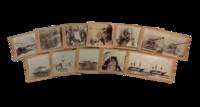
1898ref. 239371898. Spanish American War stereoview archive depicting American commanders naval power coastal defenses combat in Cuba and the extension of U.S. warfare into the Philippines 1898 to 1899. The group includes General Nelson A. Miles imagery of the assault at San Juan American warships and naval personnel heavy coastal artillery and Washington Volunteers firing from stone defenses at Taguig in the Philippines. Miles then commanding general of the U.S. Army directed the American invasion of Puerto Rico in July 1898 while the Taguig photograph belongs to the Philippine American War that followed the United States' acquisition of the Philippines from Spain. The photos extend beyond commemoration of the short war with Spain into the military expansion that followed the Treaty of Paris. Photo archive of 11 stereographic photographs each approximately 7 x 3.5 inches each circa 1898 to 1899. The group includes cards issued as "Spanish American War Stereoscopic Gems" as well as a view of Washington Volunteers firing rifles from a stone wall at Taguig Philippines. The latter is captioned "Fighting from stone wall defenses Washington Volunteers Taguig Philippines" and carries the same caption on the verso in six languages; artillery and troops advancing in a view captioned "Storming of the Hill at San Juan"; a large "12 inch coast defense gun"; the U.S. cruiser Baltimore at sea; the old ship of the line New Hampshire; sailors assembled on the deck of a naval vessel; a torpedo boat or destroyer underway; and additional shipboard and military subjects. The concentration on ships guns commanders and battle imagery corresponds to the broader contemporary stereographic treatment of the conflict. The war with Spain lasted from April to August 1898 but these cards document the larger military transformation surrounding it. Battles around Santiago including the fighting at San Juan Heights became central episodes in the American visual narrative of the Cuban campaign while Miles's subsequent expedition to Puerto Rico opened another theater of U.S. occupation. The Philippine subject records the consequences that continued after Spain's defeat. Some toning and scattered surface wear; photos and captions remain legible. Overall in very good condition. A compact visual record of the military imagery through which American audiences encountered the war with Spain and the country's almost immediate transition into colonial warfare in the Philippines. unknown
1898ref. 239371898. Spanish American War stereoview archive depicting American commanders naval power coastal defenses combat in Cuba and the extension of U.S. warfare into the Philippines 1898 to 1899. The group includes General Nelson A. Miles imagery of the assault at San Juan American warships and naval personnel heavy coastal artillery and Washington Volunteers firing from stone defenses at Taguig in the Philippines. Miles then commanding general of the U.S. Army directed the American invasion of Puerto Rico in July 1898 while the Taguig photograph belongs to the Philippine American War that followed the United States' acquisition of the Philippines from Spain. The photos extend beyond commemoration of the short war with Spain into the military expansion that followed the Treaty of Paris. Photo archive of 11 stereographic photographs each approximately 7 x 3.5 inches each circa 1898 to 1899. The group includes cards issued as "Spanish American War Stereoscopic Gems" as well as a view of Washington Volunteers firing rifles from a stone wall at Taguig Philippines. The latter is captioned "Fighting from stone wall defenses Washington Volunteers Taguig Philippines" and carries the same caption on the verso in six languages; artillery and troops advancing in a view captioned "Storming of the Hill at San Juan"; a large "12 inch coast defense gun"; the U.S. cruiser Baltimore at sea; the old ship of the line New Hampshire; sailors assembled on the deck of a naval vessel; a torpedo boat or destroyer underway; and additional shipboard and military subjects. The concentration on ships guns commanders and battle imagery corresponds to the broader contemporary stereographic treatment of the conflict. The war with Spain lasted from April to August 1898 but these cards document the larger military transformation surrounding it. Battles around Santiago including the fighting at San Juan Heights became central episodes in the American visual narrative of the Cuban campaign while Miles's subsequent expedition to Puerto Rico opened another theater of U.S. occupation. The Philippine subject records the consequences that continued after Spain's defeat. Some toning and scattered surface wear; photos and captions remain legible. Overall in very good condition. A compact visual record of the military imagery through which American audiences encountered the war with Spain and the country's almost immediate transition into colonial warfare in the Philippines. unknown books
ref. DADAX160738020XNew unknown
ref. DADAX111135538XNew unknown
ref. SONG3709173949Used: Good unknown
ref. DADAX0671212222New unknown
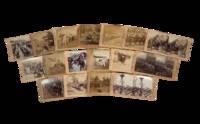
1898ref. 239361898. Spanish American War stereoview archive depicting American mobilization naval power embarkation and combat across the United States and the Philippines 1898 to 1899 documenting a war that carried the United States from intervention in Cuba into sustained overseas military rule. The views move from volunteer camps in Virginia and Florida and troops departing San Francisco to the wreck of the USS Maine American warships and fighting in the Philippines. Several Philippine views extend beyond the Spanish American War itself into the Philippine American War which began in 1899 after the United States took sovereignty over the Philippines under the Treaty of Paris and Filipino forces resisted American rule. Contemporary Underwood & Underwood negatives preserved by the Smithsonian confirm that the firm's Philippine series included combat and occupation subjects from 1899 including American troops at Pasig and battle sites around Manila. Smithsonian Institution Photo archive of 17 stereographic photographs approximately 7 x 3.5 inches each United States and Philippines circa 1898 to 1899. The cards show the Army of Volunteers assembled at Camp Alger Virginia; the Third New York Volunteers standing in formation there; Troop B of the Third U.S. Cavalry at Camp Alger preparing for the Cuban invasion; Troop I of the Sixth U.S. Cavalry mounted at Camp Tampa Florida; U.S. Regulars eating their last meal at Fortress Monroe before leaving for Cuba; and a large formation captioned "Reinforcements for Dewey leaving San Francisco Cal. U.S.A." Naval subjects include the battleship Oregon captioned "Old Glory flies proudly on the noble 'Oregon'"; a "General view of the wrecked battleship Maine"; and sailors beside the aft turret and 12 inch guns of the double turret monitor Puritan. The Philippine material includes Washington Volunteers firing from a defensive position cavalry and field formations and soldiers lying prone along a wooded firing line in a view captioned "On the firing line at dead man's bend Imus road P.I." The latter subjects belong to the transition from war against Spain to armed conflict between the United States and the Philippine Republic. Smithsonian holdings document Underwood & Underwood photographing American troops Filipino prisoners ruined positions military encampments and battle sites in the Philippines during 1899. Smithsonian Institution Printed captions appear on the rectos and substantial descriptive texts on several versos including multilingual explanations of Camp Alger and the departure from Fortress Monroe. A verso devoted to the Maine recounts its destruction in Havana harbor on February 15 1898 and lists the ship's dimensions armament complement and cost while another supplies technical specifications for the Puritan. The Spanish American War began in April 1898 amid the Cuban struggle for independence from Spain and mounting American intervention with the February destruction of the Maine becoming one of the defining public events preceding the declaration of war. The conflict lasted only months but its territorial consequences placed Puerto Rico Guam and the Philippines under American control and established the United States as an overseas imperial power. After Spain ceded the islands to the United States fighting between American and Filipino forces began in February 1899. The surviving 1899 negatives include subjects under the Philippine American War among them trenches captured Filipino soldiers American military positions and the aftermath of fighting around Manila and Malolos. Smithsonian Institution The archive therefore records both the mobilization for the short war with Spain and the longer colonial conflict that followed it while the publishers' captions preserve the language through which American viewers were taught to understand troops battlefields conquered territory and overseas rule. Mounts show moderate toning edge and corner wear scattered staining and rubbing some images faded but sharp and legible. Overall in very good condition. A concentrated visual record of the military mobilization and popular photographic culture that accompanied the United States' emergence as an overseas imperial power in 1898 and its subsequent war in the Philippines. unknown
1898ref. 239361898. Spanish American War stereoview archive depicting American mobilization naval power embarkation and combat across the United States and the Philippines 1898 to 1899 documenting a war that carried the United States from intervention in Cuba into sustained overseas military rule. The views move from volunteer camps in Virginia and Florida and troops departing San Francisco to the wreck of the USS Maine American warships and fighting in the Philippines. Several Philippine views extend beyond the Spanish American War itself into the Philippine American War which began in 1899 after the United States took sovereignty over the Philippines under the Treaty of Paris and Filipino forces resisted American rule. Contemporary Underwood & Underwood negatives preserved by the Smithsonian confirm that the firm's Philippine series included combat and occupation subjects from 1899 including American troops at Pasig and battle sites around Manila. Smithsonian Institution Photo archive of 17 stereographic photographs approximately 7 x 3.5 inches each United States and Philippines circa 1898 to 1899. The cards show the Army of Volunteers assembled at Camp Alger Virginia; the Third New York Volunteers standing in formation there; Troop B of the Third U.S. Cavalry at Camp Alger preparing for the Cuban invasion; Troop I of the Sixth U.S. Cavalry mounted at Camp Tampa Florida; U.S. Regulars eating their last meal at Fortress Monroe before leaving for Cuba; and a large formation captioned "Reinforcements for Dewey leaving San Francisco Cal. U.S.A." Naval subjects include the battleship Oregon captioned "Old Glory flies proudly on the noble 'Oregon'"; a "General view of the wrecked battleship Maine"; and sailors beside the aft turret and 12 inch guns of the double turret monitor Puritan. The Philippine material includes Washington Volunteers firing from a defensive position cavalry and field formations and soldiers lying prone along a wooded firing line in a view captioned "On the firing line at dead man's bend Imus road P.I." The latter subjects belong to the transition from war against Spain to armed conflict between the United States and the Philippine Republic. Smithsonian holdings document Underwood & Underwood photographing American troops Filipino prisoners ruined positions military encampments and battle sites in the Philippines during 1899. Smithsonian Institution Printed captions appear on the rectos and substantial descriptive texts on several versos including multilingual explanations of Camp Alger and the departure from Fortress Monroe. A verso devoted to the Maine recounts its destruction in Havana harbor on February 15 1898 and lists the ship's dimensions armament complement and cost while another supplies technical specifications for the Puritan. The Spanish American War began in April 1898 amid the Cuban struggle for independence from Spain and mounting American intervention with the February destruction of the Maine becoming one of the defining public events preceding the declaration of war. The conflict lasted only months but its territorial consequences placed Puerto Rico Guam and the Philippines under American control and established the United States as an overseas imperial power. After Spain ceded the islands to the United States fighting between American and Filipino forces began in February 1899. The surviving 1899 negatives include subjects under the Philippine American War among them trenches captured Filipino soldiers American military positions and the aftermath of fighting around Manila and Malolos. Smithsonian Institution The archive therefore records both the mobilization for the short war with Spain and the longer colonial conflict that followed it while the publishers' captions preserve the language through which American viewers were taught to understand troops battlefields conquered territory and overseas rule. Mounts show moderate toning edge and corner wear scattered staining and rubbing some images faded but sharp and legible. Overall in very good condition. A concentrated visual record of the military mobilization and popular photographic culture that accompanied the United States' emergence as an overseas imperial power in 1898 and its subsequent war in the Philippines. unknown books
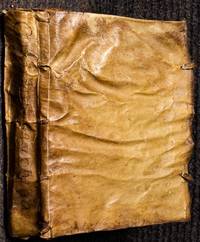
1595ref. 40142En Granada Por Sebastian De Mena A Costa De Ioan Diaz . Good with no dust jacket. 1595. First Edition. Velllum. 10 267 blank leaves pages; Compendio de Doctrina Christiana with: Siguense Treze Sermones de las Principales.Together 2 parts in 1 volume. Small 4to limp vellum; covers creased and worn 8 tightly written pages of contemporary manuscript notes on endpapers generally sound although bulked internally. Louis of Granada was a Dominican friar who was noted as theologian writer and preacher. The cause for his canonization has been long accepted by the Holy See with his current status being Venerable. Apparently the first edition. Elaborated initials. Ties worn to nubs. Wrinkling thoughout. Only a single copy located in Biblikoteca Nacional de Espana in Madriod Spain. . En Granada Por Sebastian De Mena A Costa De Ioan Diaz ... unknown
ref. DADAX2030205419New unknown
ref. DADAX8408057855New unknown
ref. DADAX188567063XNew unknown
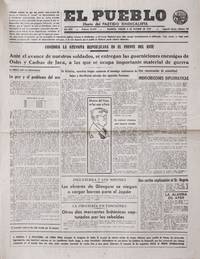
1937ref. 30146Valencia: S.i. 1937. Six tabloid issues 58cm; newsprint wrappers; 4pp per issue; occasional illus; text entirely in Spanish. Publication sequence as follows: Año XLIV Nos.15.394 15.409 15.411 15.413 15.424 15.435 October 8272931; November 1326 1937. All six issues horizontally folded at center occasional creasing to extremities with a few scattered passages underlined in red and blue colored pencil; one with mild toning along folds else paper is still supple and quite fresh; Very Good overall. Nicely-preserved selection of issues of this Republican daily newspaper the official organ of the Partido Sindicalista one of the smaller Spanish left-wing workers' parties that would eventually become affiliated with the United Front. The paper was founded in 1896 by the popular Spanish novelist and journalist Vicente Blasco Ibañez. During the Second Republic under the management of Ibañez's nephew Sigfrido the paper became more politically aligned eventually becoming the organ of the Syndicalists in 1932; it ceased publication with the end of the Republic in 1939. Rare; OCLC finds 2 locations holding any issues Biblioteca Universitat de Barcelona Universidad de Valencia none in the U.S. S.i. unknown
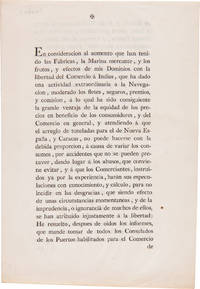
1789ref. 47977Madrid. February 28 1789. Spain Regulates Trade with the Americas This royal decree liberalized the tightly controlled trade between Spain New Spain and the Captaincy of Caracas. The Crown hoped to spur navigation and commerce and lessen the incentive for smuggling. Export duties on goods travelling to the Indies were to be slashed by ten percent but penalties against contraband would still be enforced. Two worm holes very minor soiling else fine. unknown
1937ref. 30146Valencia: S.i. 1937. Six tabloid issues 58cm; newsprint wrappers; 4pp per issue; occasional illus; text entirely in Spanish. Publication sequence as follows: Año XLIV Nos.15.394 15.409 15.411 15.413 15.424 15.435 October 8272931; November 1326 1937. All six issues horizontally folded at center occasional creasing to extremities with a few scattered passages underlined in red and blue colored pencil; one with mild toning along folds else paper is still supple and quite fresh; Very Good overall. Nicely-preserved selection of issues of this Republican daily newspaper the official organ of the Partido Sindicalista one of the smaller Spanish left-wing workers' parties that would eventually become affiliated with the United Front. The paper was founded in 1896 by the popular Spanish novelist and journalist Vicente Blasco Ibañez. During the Second Republic under the management of Ibañez's nephew Sigfrido the paper became more politically aligned eventually becoming the organ of the Syndicalists in 1932; it ceased publication with the end of the Republic in 1939. Rare; OCLC finds 2 locations holding any issues Biblioteca Universitat de Barcelona Universidad de Valencia none in the U.S. S.i. unknown books
1789ref. 47977Madrid. February 28 1789. Spain Regulates Trade with the Americas This royal decree liberalized the tightly controlled trade between Spain New Spain and the Captaincy of Caracas. The Crown hoped to spur navigation and commerce and lessen the incentive for smuggling. Export duties on goods travelling to the Indies were to be slashed by ten percent but penalties against contraband would still be enforced. Two worm holes very minor soiling else fine. unknown books
ref. 76-0141Paris: Gazette des Beaux-Arts 1867. Etching aquatint and drypoint on laid watermark paper. 21 x 29 cm sheet. Printed by Delatre Paris. From the first edition with lettering. Very Good light staining in margins.Ref.: Harris 25; Delteil 24. Paris: Gazette des Beaux-Arts, 1867. unknown
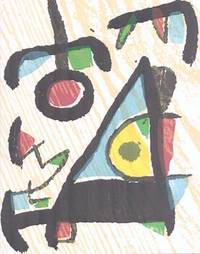
ref. 76-0877Barcelona: Joan Barbara 1990. Color wood engraving. 32 x 25 cm sheet. Not signed. Printed by Joan Barbara Barcelona. From an edition of 5500. Very Good.Literature: Dupin 1291. [Barcelona: Joan Barbara, 1990]. unknown
ref. DADAX3110314568New unknown
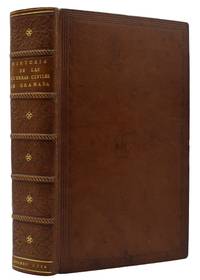
1714ref. AQ23536En Amberes i.e. Antwerp: Por Henrico y Cornelio Verdussen 1714. 8 336 331-680pp 2. Text complete despite erratic pagination. Handsomely bound in nineteenth century russia tooled in gilt and blind A.E.G. A trifle rubbed and marked. Armorial bookplate in sanguine superimposed on an earlier bookplate of Thomas Merthyr Guest to FEP An early eighteenth century revised edition of the first part of Gines Perez de Hita's 1544-1619 Historia de los vandos de los Zegries y Abencerrages 1595-1619 widely considered the first Spanish historical novel. The book's portrait of the chivalrous Moorish family of the Abencerrages did much to establish the stereotype of the romantic Moor in European literature. Thomas Merthyr Guest 1838-1904 Welsh industrialist and landowner husband to author and benefactor Lady Theodora Guest née Grosvenor 1840-1924. . 8vo. Por Henrico y Cornelio Verdussen unknown
1937ref. SPANISHC016421Madrid. 1937-1938. Thirty-six issues - most comprising two folded sheets one inserted within the other. A daily tabloid size newspaper. This batch consists of fifteen issues from November 1937 twenty issues from December 1937 including those for 25th and 31st December and one issue from January 1938. Numerous photographs. Several issues contain as a supplement a full-page photograph or portrait issued in a series entitled ''Figuras de la Democracia Mundial'' - the ''figuras'' include Gandhi and Paderewski.Together with: ABC - Diario Illustrado. 1937. Seville. Eight issues from November and December. Falangist daily tabloid size newspaper though each issue is much more substantial than those of the Madrid ABC each consisting of twenty to thirty pages. Several black and white photographs including one of members of the Hitler Youth visiting the ruins of Toledo.This daily founded in 1903 remains one of the three newspapers of record in Spain. In July 1936 the Madrid version was seized by the Republican government with a consequent change in its political outlook while that of Seville supported the Nationalists. In 1939 the government of Franco returned the Madrid ABC to its original owners.Generally very good. Madrid. unknown