Schumacher, EmilAntiquariat.de
3350 risultati
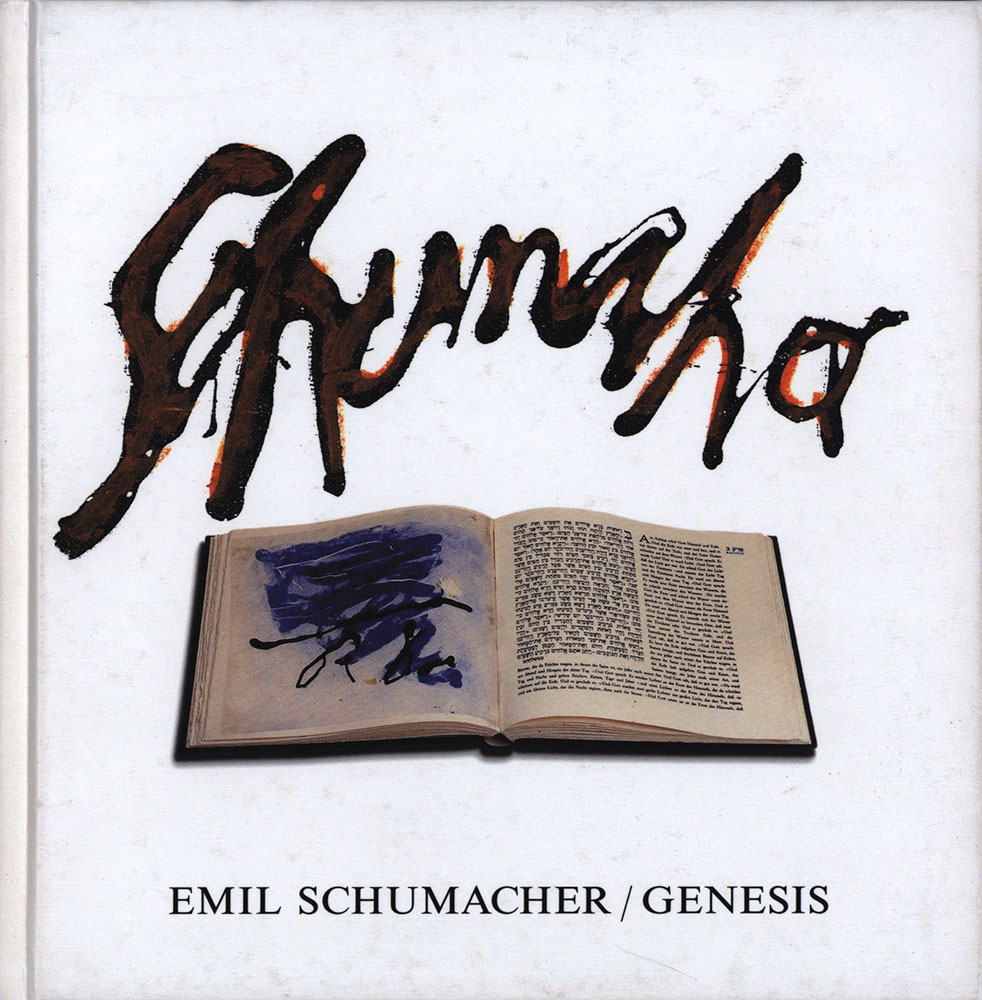
2001rif. 8582EBJaffa, Har-El Printers & Publishers, 2001. Groß-8°. 23 x 22 cm. [86] Blatt. Original-Pappband.
2009rif. 123990Aschaffenburg. Geschichts- und Kunstverein 2009. 145 Seiten. Mit zahlreichen Abbildungen. Farbig ill. Originalbroschur. (Geringe Gebrauchsspuren). 21x20 cm
1964rif. 40420BBPhiladelphia, Dropsie College for Hebrew and Cognate Learning, 1964. Original Cloth-Volume (gilt Lettering on the Spine). No Dust-jacket. Ex-Library-Copy. Library-Sticker on the Spine. Library-Stamp [dropped out] on Title. Inside otherwise very good Condition. No Markings in the Text! No Underlinings! No private Owner's No
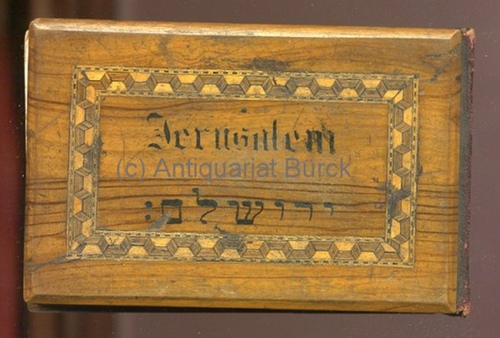
1910rif. 26282Jerusalem: Druck vermutlich bei Gebr. Monsohn. um 1910). Quer-Oktav, 10,5 x 16,5 cm. (etwas beschabt, eine kleine Ecke des hinteren Deckels fehlt, innen etwas gebräunt, Stempel auf Titel verso, insgesamt abr recht gut erhalten und farbfrisch) 12 Blatt. Original-Halbleder mit Orig.-Zedernholz-Deckeln,
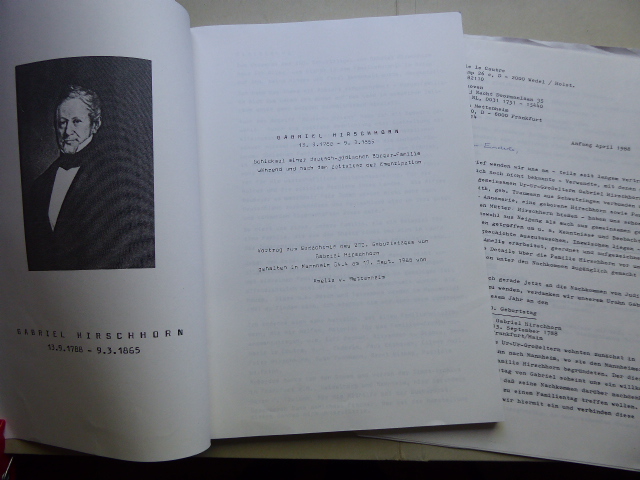
1988rif. 52200Mannheim. Privatdruck. (1988). Als Fotokopie vervielfältigt. 57 nummerierte u. 17 nicht nummertierte Blätter sowie mehreren Beilagen (mit teils handschriftlichen Anmerkungen). Mit zahlreichen Abbildungen. Ill. Originalbroschur mit leinwandverstärktem Rücken. 29x21 cm
1994rif. 121350Budapest 1994. 265 Seiten. Mit zahlreichen, teils faks. Abbildungen. Ill. Originalbroschur. 25x18 cm
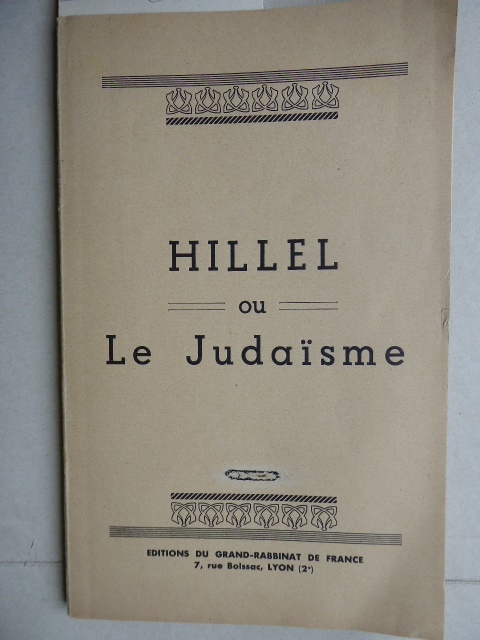
rif. 140994Editions du Grand-Rabbinat de France. Lyon. (No year). 102 pages. Original softcover binding. (A little used). 22x13 cm
1989rif. 138190April 1989. 60 Seiten. Mit zahlreichen teils faks. bbildungen. Illustrierte Originalbroschur. (Untere rechte Ecke etwas gestaucht). 20x21 cm
2003rif. 139987Stadtarchiv Krefeld. 2003. Zwei Bände. 500 Seiten u. eine Kartenbeilage u. 208 Seiten. Mit sehr zahlreichen Abbildungen. Illustrierte Originalbroschuren im farbig illustrierten Origianl-Papp-Schuber. Sehr guter Zustand. 25x15x5,5 cm
2026rif. 91587Boston: Academic Studies Press 2026. Digitally reprinted POD style. Hardcover. fine. Octavo. 9 1/2' x 6 1/2". Pictorial covers. 473pp. Studies in Orthodox Judaism. Academic Studies Press hardcover
rif. 2125727Geneva: Kefa Elon i.e. Pierre de la Rouviere. 5377 i.e. 1616 or 1617. with:--. Samuel. SHmvAl.Geneva: Kefa Elon i.e. Pierre de la Rouviere. 5377 i.e. 1616 or 1617. Two parts in one volume 16mo. Eighteenth-century sheep spine richly gilt in compartments board-edges roll-tooled in gilt red gilt brocade endpapers; Joshua and Judges: ff. 3 blank 130 3 blank with part-title to Judges; Samuel: ff. 3 blank 151 6 blank; titles within architectural woodcut borders and start of text within woodcut cartouches; hinges starting boards lightly rubbed with a few minor abrasions worming to upper joint with small loss; internally clean and bright; a very good copy.Two portions comprising Joshua and Judges as well as Samuel of the handsome eighteen-part pocket-sized Hebrew Bible printed in Geneva by Pierre de la Rouviere sold as individual fascicles which could be bound together as here or in sets of four volumes.The Christian printer Pierre de la Rouviere 1574-1622 fl. 159-1622 is here listed on the title-page as 'Kefa Elon' a literal translation of his name 'Rock Oak'; he is elsewhere known as Cephas/Cafa Elon or Petrus Quercetanus and was the printer of the first bilingual Josephus 1611 as well as a Hebrew-Greek Bible 1609. The two discrete parts bound together here form part of what Steinschneider calls the Biblia Eliana - known also as the Petrus Bibles - issued shortly after the 4to Hebrew edition also published in 8vo with interlinear Latin translation. All are based largely on earlier Venetian Hebrew Bibles especially those printed by Giustiniani in the sixteenth century to which they are typographically related. The present work evidently makes use of Picard's square Sephardic Hebrew typeface Lubell's Hb27 first used by Robert Estienne in 1543 and 'most probably the first complete Hebrew type specimen ever recorded' Lubell p. 258. De la Rouviere had used the same type for his 1614 Thesaurus linguae sanctae distinguished by the 'lamed with its distinctive flagged ascender the shin with the squared termination on the middle stroke and the gimmel with the bent middle stroke and calligraphic termination to the baseline . The attributions for this Picard typeface show a very wide distribution: Geneva Giessen Frankfurt and Hanau in Germany' and were likely spread by Andre Wechel who re-established his business in Frankfurt in the aftermath of the St Bartholomew's Day Massacre and likely 'managed to have some of his type brought to Frankfurt by Denis du Val his associate in Paris' or by Robert Estienne who brought much of his type to Geneva after 1549 ibid. pp. 259-60. Geneva gnvvA is often mistaken in the imprint as Genova. The title-page to each fascicle gives the date of 5377 i.e. 1617 but the colophon of the last portion Chronicles gives the date of 13 Av 5318 i.e. 28 July 1618 and the name of 'the German Johann Caspar from Oeder' trans. whose name also appears at the end of the Book of Esther. We have been un-able to identify the handsome gilt brocade endpapers depicting acanthus leaves and flowerpots and signed 'B.L.sC' although the interlacing geometric borders bear a resemblance to motifs employed by Georg Christoph Stoy cf. Kopylov 38.BM STC p. 99; Darlow & Moule 5121 dividing the work into fourteen parts rather than eighteen; Roest I p. 168; Steinschneider 420b. See Heller The Seventeenth Century Hebrew Book I pp. 380-81; cf. Vinograd Geneva 9 calling for 8vo and 4to only ; endpapers not in Kopylov. hardcover
rif. DADAX965776517XNew unknown
rif. DADAX029574376XNew unknown
rif. DADAX0415524806New unknown
rif. SONG9653501275Used: Good unknown
rif. DADAX1160803889New unknown
rif. DADAX0615537898New unknown
rif. DADAX9027926735New unknown
rif. SONG0567436926Used: Good unknown
rif. DADAX1138684988New unknown
rif. DADAX056737503XNew unknown
2013rif. 1-9651308834Am Oved 2013. Hardcover. New. 80 pages. Hebrew language. 9.50x6.75x0.50 inches. Am Oved hardcover
2012rif. 1-9650706003Keter 2012. Hardcover. New. 72 pages. 10.80x0.40x7.90 inches. Keter hardcover
2010rif. 1-9650717935Keter Publishing 2010. Hardcover. New. hebrew translation edition. 38 pages. Hebrew language. 9.90x9.10x0.40 inches. Keter Publishing hardcover
rif. 1502JC008Contenant les grands & hauts poincts desquels elle traite tant pour les choses Morales & Naturelles que pour les diuines & supernatureles. Traduite d’Italien en François par le Seigneur du Parc Champenois. A LYON PAR BENOIST RIGAUD. M. D. XCV. 1595.In 8º. 12x8 cm. 816 47 págs.Encadernação em pergaminho flexível do século XVIII com título 2 vezes manuscrito na lombada uma vez ao alto e desvanecido e outra vez na coifa superior.Ilustrado com uma vinheta tipográfica com o retrato do autor no centro da folha de rosto.Reedição da versão original em francês traduzida por Denis Sauvage Sieur du Parc e impressa inicialmente por Guillaume Rouillé em 1551.Exemplar com leves picos de traça marginais sem afectar a leitura do texto.Principal obra deste autor Diálogos de Amor é um diálogo entre dois amantes: Fílon - o amor - e Sofia - a sabedoria. Aí expõe a sua doutrina segundo a qual o amor é o fundamento ontológico do real concebido não apenas como sentimental mas também como intelectual. Deste modo pretende unificar fé e razão embora deixando clara a prevalência da primeira. Pelo amor Deus criou e pelo amor a criatura regressa a Deus. É então o amor que a tudo anima e a tudo harmoniza.Neste sentido Leão Hebreu defende uma conceção cosmológica que à maneira neoplatónica estabelece uma hierarquia de seres que vai do puro espírito - Deus - à matéria. O mundo é visto como um ser vivo composto de superior e inferior respetivamente alma e corpo. O regresso do homem a Deus realiza-se pelo amor na medida em que este é um amor intelectual. Esta visão idealizada e mística do amor exerceu um impacto profundo na literatura ocidental servindo de base direta para a poesia lírica de Luís de Camões e influenciando profundamente autores como Miguel de Cervantes e Baruch Espinoza.A expressão Leão Hebreu refere-se a Judá Abravanel Lisboa c. 1460 – Nápoles c. 1530 um influente filósofo médico e poeta judeu sefardita português. O termo também pode estar relacionado à tradução da palavra leão para o hebraico Aryeh ou ao símbolo bíblico do "Leão da Tribo de Judá”. Filho do célebre estadista teólogo e financeiro Isaac Abravanel Judá recebeu uma educação excecional que aliou a tradição talmúdica e a Cabala aos estudos de medicina astrologia e filosofia clássica. A sua vida foi profundamente marcada pela instabilidade geopolítica da época: em 1483 a sua família foi forçada a fugir para o Reino de Castela devido a tensões políticas com o rei D. João II de Portugal. Anos mais tarde em 1492 o Decreto de Alhambra promulgado pelos Reis Católicos obrigou-os a um novo exílio desta vez para a península itálica onde Judá enfrentou a dolorosa perda do seu filho primogénito raptado e batizado à força por ordem real.Estabelecido em Itália Judá Abravanel viveu em cidades como Nápoles Génova e Veneza onde exerceu a medicina com grande prestígio chegando a servir como médico pessoal do capitão espanhol Gonzalo Fernández de Córdoba. Foi neste ambiente vibrante do humanismo italiano que conviveu com importantes intelectuais da época e redigiu por volta de 1502 a sua obra-prima os Diálogos de Amor publicados postumamente em 1535. O filósofo faleceu em Nápoles por volta de 1530 deixando um legado intelectual duradouro que fundiu a mística judaica com o neoplatonismo cristão quebrando barreiras religiosas e moldando o pensamento de grandes vultos da cultura ocidental.EN In octavo. 12 × 8 cm. 816 47 pp.18th-century flexible parchment binding with the title handwritten twice on the spine once at the top where it has faded and once on the upper cap.Illustrated with a typographic vignette featuring the author’s portrait in the centre of the title page.A reprint of the original French version translated by Denis Sauvage Sieur du Parc and first printed by Guillaume Rouillé in 1551.Copy with slight marginal moth work that does not affect the readability of the text.This author’s main work Diálogos de Amor Dialogues on Love is a dialogue between two lovers: Philo – love – and Sophia – wisdom. In it he sets out his doctrine according to which love is the ontological foundation of reality conceived not only as emotional but also as intellectual. In this way he seeks to unify faith and reason whilst making clear the primacy of the former. Through love God created and through love the creature returns to God. It is therefore love that animates and harmonises all things.Leo the Hebrew advocates a cosmological conception which in the Neoplatonic manner establishes a hierarchy of beings ranging from pure spirit – God – to matter. The world is viewed as a living being composed of a higher and a lower part namely the soul and the body. Man’s return to God is achieved through love insofar as this is an intellectual love. This idealised and mystical vision of love had a profound impact on Western literature serving as a direct basis for the lyric poetry of Luís de Camões and profoundly influencing authors such as Miguel de Cervantes and Baruch Spinoza.The term ‘Hebrew Lion’ refers to Judah Abravanel Lisbon c. 1460 – Naples c. 1530 an influential Portuguese Sephardic Jewish philosopher physician and poet. The term may also be related to the Hebrew translation of the word ‘lion’ Aryeh or to the biblical symbol of the ‘Lion of the Tribe of Judah’. The son of the celebrated statesman theologian and financier Isaac Abravanel Judah received an exceptional education that combined Talmudic tradition and Kabbalah with studies in medicine astrology and classical philosophy. His life was profoundly shaped by the geopolitical instability of the time: in 1483 his family was forced to flee to the Kingdom of Castile due to political tensions with King John II of Portugal. Years later in 1492 the Decree of the Alhambra issued by the Catholic Monarchs forced them into a new exile this time to the Italian peninsula where Judah faced the painful loss of his eldest son who was abducted and forcibly baptised by royal decree.Having settled in Italy Judah Abravanel lived in cities such as Naples Genoa and Venice where he practised medicine with great distinction even serving as personal physician to the Spanish captain Gonzalo Fernández de Córdoba. It was within this vibrant milieu of Italian humanism that he rubbed shoulders with leading intellectuals of the time and around 1502 penned his masterpiece the Dialogues on Love published posthumously in 1535. The philosopher died in Naples around 1530 leaving behind an enduring intellectual legacy that fused Jewish mysticism with Christian Neoplatonism breaking down religious barriers and shaping the thinking of major figures in Western culture.Ref:.Baudrier Bibliogr. lyon. III p. 441. SACO NMANNO1-01 unknown