28 025 résultats
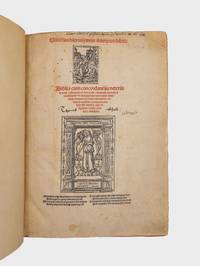
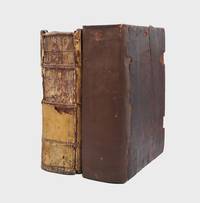
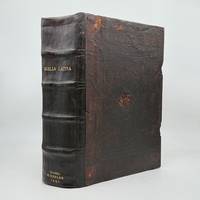
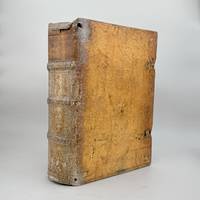
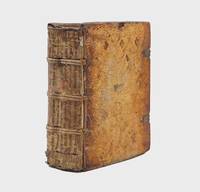
1522réf. 378141Nuremberg: Per Foedericum Peypus Sumptu.Johannis Koberger 1522. iv CCCCXCII ff. Leaves CXCVII-CXCVIII bound before leaf CXCV text complete. Title page printed within elaborate woodcut border woodcut illustration to head of leaf I main text in two-column Gothic type with woodcut initials woodcut tables preceding New Testament text. 4to. Contemporary pigskin with fleur-de-lis blindstamping over wooden boards brass catches at fore-edges. Some soiling spine defective revealing manuscript waste extremities worn. Dampstaining to endleaves and foot of text block which is slightly shaken with a few cracks but all leaves holding discreet repair to foot of title without loss final leaf mounted to following endleaf. Early ink underlining brief annotations or doodles in several places. Housed in blue cloth clamshell box with typed paper spine label. Provenance: Johannes Triclerious struck-through owner inscription on title H.J. Atkinson owner name/19th-c. sales description General Theological Seminary bookplate blindstamp. iv CCCCXCII ff. Leaves CXCVII-CXCVIII bound before leaf CXCV text complete. Title page printed within elaborate woodcut border woodcut illustration to head of leaf I main text in two-column Gothic type with woodcut initials woodcut tables preceding New Testament text. 4to. "In this revision of the current Vulgate the editor Andreas Osiander the elder.not only emended the text by substituting other readings many of which according to Masch had already appeared in A. Koburger's sic fifteenth-century Bibles but also in the O.T. added marginal notes on the Hebrew original" Darlow & Moule. A Lyon edition also printed for Johann Koberger was published the same year and another edition was issued by Peypus in August of 1523. A scarce printing both commercially and institutionally. OCLC locates 2 complete copies outside of Continental Europe Harvard Divinity School OCLC Data Ingest. VD16 B 2587; Darlow & Moule note to 6102 Per Foedericum Peypus Sumptu...Johannis Koberger unknown books
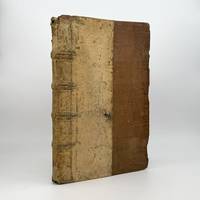
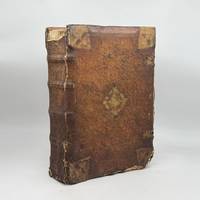
1512réf. 372711Lyon: Jacob Sacon for Anton Koberger 1512. 14 CCCXVII 1 blank 28 leaves. Collation a8 b6; a-b8 c-z8 A-Q8 R6 AA-BB8 CC10. Title-page and a few other leaves printed in red and black; text principally in two columns 66 lines. Illustrated throughout with woodcuts of various sizes including full-page portrait of St. Jerome on title page within architectural border full-page woodcut in 6 compartments preceding Genesis and a full-page Nativity scene facing the beginning of the New Testament; and numerous woodcut initial capitals. Printer's device on title page end of Apocalypse and end of Interpretationes CC10 recto blank. 1 vols. Folio. Twentieth-century quarter morocco and cloth. Title leaf remargined at gutter ownership marks trimmed at head some traces of damp. A few early annotations in N.T. Very good. 14 CCCXVII 1 blank 28 leaves. Collation a8 b6; a-b8 c-z8 A-Q8 R6 AA-BB8 CC10. Title-page and a few other leaves printed in red and black; text principally in two columns 66 lines. Illustrated throughout with woodcuts of various sizes including full-page portrait of St. Jerome on title page within architectural border full-page woodcut in 6 compartments preceding Genesis and a full-page Nativity scene facing the beginning of the New Testament; and numerous woodcut initial capitals. Printer's device on title page end of Apocalypse and end of Interpretationes CC10 recto blank. 1 vols. Folio. First of a series of illustrated Bibles printed by Jacob Sacon for Anton Koberger of Nuremberg between the years 1512 through 1522 - other editions being 1513 1515 1516 1519 and 1522. Darlow & Moule 6101 note; Adams B988; VD16 ZV 26695. Provenance: Thomas Schele ownership signatures from 1519 conveyed to John Cowper; General Theological Seminary gift of Samuel Hoffman bookplates and stamps Jacob Sacon for Anton Koberger unknown books
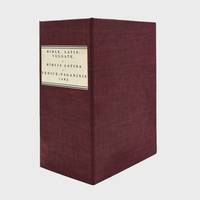
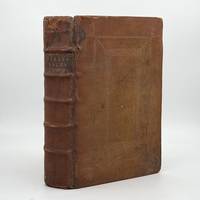
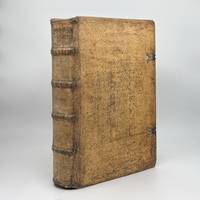
réf. 379034Venice: Hieronymus de Paganinis. Woodcut pictorial title page. 555 leaves 50-line text in two columns initials executed in red to roughly half of text. First leaf of signature a1 misbound at rear of signature. 8vo. Contemporary blind-stamped calf. Worn boards detached clasps lacking. Faint dampstaining to fore-edge of text block foxing in places title page re-hinged its edges mended repairs to edges of a few other leaves. Occasional annotations and tick marks in later hands to margins and rear pastedown. Book housed in recent linen-covered box with paper spine label. Provenance: W. A. Copinger bookplate; General Theological Seminary gift of Cornelius Vanderbilt II and Dean Augustus Hoffman bookplates bookseller description and embossed stamps. Woodcut pictorial title page. 555 leaves 50-line text in two columns initials executed in red to roughly half of text. First leaf of signature a1 misbound at rear of signature. 8vo. This Bible was the first issued with a pictorial title page the third with a title page and the second Bible in octavo format. It also includes the first appearance of the alphabetical table of contents Tabula Alphabetica Historiarum Biblie prepared by the Franciscan Gabriele Bruno. The title page is a classic image of a standing St. Peter keys in hand and a nimbus around his head accompanied by the inscription Tu es Petrus "you are Peter" a reference to Matthew 16:13-19 KJB 16:18-19: "thou art Peter and upon this rock I will build my church.And I will give unto thee the keys of the kingdom of heaven." Its colophon is also notable. More than a basic production statement it includes an early form of a publisher's blurb. After it discusses the value of the Bible as a "Book of Life" it enumerates the features of this imprint: marginal concordances interpretations of Hebrew names Bruno's table and the editorial oversight by another Franciscan Petrus Angelus de Monte Ulmi. Another feature not mentioned is its lower cost which was made possible by its small format. Girolamo de' Paganini is known only through the three volumes he issued in Venice in the 1490s: the 1492 Latin Bible 1492 its reprint 1497 which does not have a pictorial title page and a quarto edition of Pope Gregory's Pastoral Rule 1492. Copinger 1847-1910 a founder of the Bibliographical Society was a leading bibliographer as well as a notable lawyer antiquary and lay-minister. Among his major works are the Supplement to Hain's Repertorium Bibliographicum 1895-1902 and the Incunabula Biblica Or The First Half Century of the Latin Bible 1892. In a private sale in 1893 Cornelius Vanderbilt II 1843-1899 and Eugene Augustus Hoffman 1829-1902 dean of the General Theological Seminary who had a vast personal fortune purchased it along with the rest of Copinger's outstanding collection of Latin Biblical texts and donated it to the seminary's library. ISTC ib00594000; GW 4271; Goff B594; Copinger Incunabula Biblia 95 Hieronymus de Paganinis unknown books
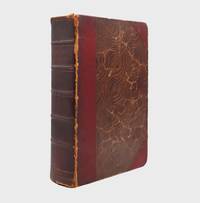
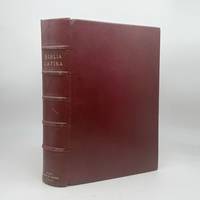
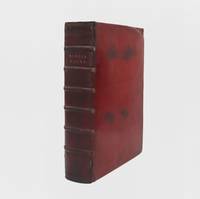
1534réf. 372721Antwerp: Martin Caesar 1534. Ornamental general title and separate titles for the two indices. 8 416 101 1 41 82 leaves. Bound without NN6 and ee10 blanks. 1 vols. Folio. Full red morocco by Zaehnsdorf. Spine soot-blackened but sound. Internally clean. Very good. Cloth slipcase. Ornamental general title and separate titles for the two indices. 8 416 101 1 41 82 leaves. Bound without NN6 and ee10 blanks. 1 vols. Folio. This edition follows Robert Etienne's second edition of 1532 very closely in form and content: in the preliminaries the preface by Stephanus is here printed anonymously. Early glosses and annotations. Copinger 241; Adams B1014; Darlow & Moule 6112 note. Provenance: General Theological Seminary gift of Dean Augustus Hoffman bookplates and blindstamps Martin Caesar unknown books
1596réf. 372882Hannover: Excudebat Ioannes Tornæsius Impensis Andreæ Wecheli heredum 1596. Printer's device of winged horse as vignette on title page text ornaments and initials. Text in two columns. Interleaved copy annotated throughout. 4 448 pp.; 74 8 index leaves. 1 vols. Folio. Nineteenth century half red morocco. Spine darkened and rubbed first and last leaves toned; foot of last leaf remargined. About very good. Printer's device of winged horse as vignette on title page text ornaments and initials. Text in two columns. Interleaved copy annotated throughout. 4 448 pp.; 74 8 index leaves. 1 vols. Folio. This copy of the Junius Tremellius Bible contains parts 6 the New Testament in the versions of Theodore de Beze and of Immanuel Tremellius printed in parallel columns on each page; and part 5 the Apocrypha. Interleaved and with hundreds of textual annotations chiefly in Latin and occasionally in Hebrew or Greek. Darlow & Moule 6187; Adams B1104; VD16 ZV 25809. Provenance: General Theological Seminary bookplates and perforated stamps Excudebat Ioannes Tornæsius, Impensis Andreæ Wecheli heredum unknown books
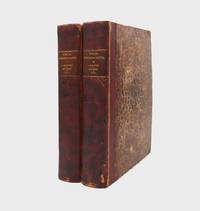
1483réf. 372162Strasbourg: Johann Grüninger 1483. Fifth 'Fontibus ex Graecis' edition. 678 ff. Collation: A-ZAA-DD⸠FF⸠EE⸠GG-IIkkLL-PP⸠14-18⸠19¹²; a-long ss-v⸠uâ´ x⸠1-89-13¹Ⱐ14-17⸠18¹Ⱐ19¹². Signatures 14-19 Interpretationes hebraicorum nominorum & Nominorum hebraicorum printed in both volumes; signatures EE and FF in Vol. I bound in reverse; 2 leaves in signature 18 in Vol. II duplicated. Complete. Text in two columns 45 lines per page. 37-line capital in purple green and yellow on leaf A2 many initials completed in red ink Vol. I rubricated throughout in red. Manuscript title to Vol. I initial blank and table of contents to Vol. II initial blank Vol. II has early ink numbering in top corners. 2 vols. Chancery folio. Contemporary blind-stamped calf over wooden boards early vellum reback to Vol. I twentieth-century plain brown calf reback to Vol. II brass catches to fore-edges clasps lacking manuscript title "prima pars biblie" to bottom edge of Vol. I text block. Front board of Vol. I detached its spine mostly perished front catches of Vol. II lacking minor worming to pastedowns of Vol. I endpapers of Vol. II renewed. Minor worming to margins of first and final few leaves occasional light soiling and faint staining mostly confined to margins clean tear to foot of leaf 11⸠extending into three lines of text block without loss small hole to leaf 14-6 Vol. II with loss to a word upper inside corner of final leaf torn away with loss missing text supplied in manuscript in an early hand. Worn and crudely repaired but a complete copy in a mostly contemporary binding and with good margins. Fifth 'Fontibus ex Graecis' edition. 678 ff. Collation: A-ZAA-DD⸠FF⸠EE⸠GG-IIkkLL-PP⸠14-18⸠19¹²; a-long ss-v⸠uâ´ x⸠1-89-13¹Ⱐ14-17⸠18¹Ⱐ19¹². Signatures 14-19 Interpretationes hebraicorum nominorum & Nominorum hebraicorum printed in both volumes; signatures EE and FF in Vol. I bound in reverse; 2 leaves in signature 18 in Vol. II duplicated. Complete. Text in two columns 45 lines per page. 37-line capital in purple green and yellow on leaf A2 many initials completed in red ink Vol. I rubricated throughout in red. Manuscript title to Vol. I initial blank and table of contents to Vol. II initial blank Vol. II has early ink numbering in top corners. 2 vols. Chancery folio. The colophon dated but without publisher or place notes this as a Fontibus ex Graecis Bible: part of "a series of corrected Latin Bibles which claim for themselves-apparently with justice-a superiority above all contemporary editions. They are known as the 'Fontibus ex Graecis' editions from the opening words of the Latin distichs found in them. Masch enumerates ten genuine 'Fontibus ex Graecis' editions the other nine bearing the dates 1479 1481 1482 1483 1485 1486 2 editions 1487 and 1489-all without name of printer or place" Darlow & Moule. A unique copy with the indexes of Hebrew names appearing twice at the end of each volume. ISTC ib00577000; Goff B-577; GW 4242; Darlow & Moule II pp. 911-912 note following 6083. Provenance: General Theological Seminary Copinger Collection gift of Cornelius Vanderbilt and Dean Augustus Hoffman bookplates and blindstamps Johann Grüninger] unknown books
1480réf. 379043Venice: Franciscus Renner De Heilbronn 1480. 468 leaves lacking i6 and D12 blank 51-line text in two columns rubricated throughout initials in later hands executed in red to roughly 25% of text intricate contemporary 18-line initial in red and blue at beginning of text a1. Small 4to some sections in folio. Recent cloth paper title label to spine endpapers renewed gilded edges numbering and annotations and underlining to sections of text in contemporary and later hands first and second leaves which are lightly soiled re-hinged their inside-lower corners repaired. Provenance: General Theological Seminary blind and ink stamps Cornelius Paine signature dated 1875. 468 leaves lacking i6 and D12 blank 51-line text in two columns rubricated throughout initials in later hands executed in red to roughly 25% of text intricate contemporary 18-line initial in red and blue at beginning of text a1. Small 4to some sections in folio. Based on the 1472 Bible printed by Peter Schoeffer in Mainz which was based on the original Gutenberg text this was one of the earliest Bibles printed in quarto format the second according to Goff. Priority may belong to the Bible issued by Octavianus Scotus dated 31 May 1480; the first was issued in Piacenza in 1475. Considerably less expensive than books produced in Folio format these early quarto Bibles were produced for the general marketplace. Less-expensive portable easy to store and better suited to study they found a ready audience among clergy students and laypeople. Copinger notes: "The type is in an elegant small Gothic and the paper of a very fine silky nature" Incunabula Biblica 46 Cornelius Paine 1809-1890 was a notable English bibliophile. His extensive library was auctioned by Sotheby's in 1891. ISTC ib00566000; Goff B566; GW 4241 Franciscus Renner, De Heilbronn unknown books
1487réf. 379062Venice: Georgius Arrivabenus 27 Feb. 1487/88 1487. 466 leaves lacking blank leaf a1 "Interpretation of Hebrew Names" aa8-dd10 bound at beginning of text. 52-line text in two columns contemporary rubrication pen flourishes and initials in red piece of a contemporary engraved image with added hand-coloring pasted into 15-line space at beginning of prologue contemporary 15-line initial in red at beginning of main text. 4to. Recent morocco blind rules to boards raised bands and gilt title to spine endpapers renewed. Light smoke-staining and a few small burn-spots to sections of binding. Occasional foxing inkstains and contemporary underlining marks and annotations chapter heads affected in places by trimming. Provenance: Walter Copinger see below; General Theological Seminary gift of Cornelius Vanderbilt II and Dean Augustus Hoffman bookplates blindstamps. 466 leaves lacking blank leaf a1 "Interpretation of Hebrew Names" aa8-dd10 bound at beginning of text. 52-line text in two columns contemporary rubrication pen flourishes and initials in red piece of a contemporary engraved image with added hand-coloring pasted into 15-line space at beginning of prologue contemporary 15-line initial in red at beginning of main text. 4to. In most respects this is a fine example of the less-expensive quarto Bibles issued by Venetian printers in the late 1400s for the general marketplace. This copy has an unusual feature. Instead of an iluminated or decorated initial at the beginning of the main text it has a repurposed section of a woodcut depicting the murder of a sainted bishop with mitre and halo by two men in an ecclesiastical setting. The victim is probably Thomas a Becket Archbishop of Canterbury who was assassinated in 1170 or Praetextatus Bishop of Rouen who was assassinated in 586. Both men were assassinated by order of their monarchs in their cathedrals and canonized afterwards which adds an intriguing element to our copy. Was it owned by someone who opposed royal infringement on Church authority The date of this imprint is somewhat vague. The colophon states "Anno dni. Mcccclxxxvij iij. Cal. Martij." The ISTC notes this has been interpreted as 27 February 1487/88 in the BMC and GW and by Sack as 28 February 1487/88 who probably assumed that February 1487 in the Venetian calendar included an extra day on account the leap year of 1488. Copinger 1847-1910 a founder of the Bibliographical Society was a leading bibliographer as well as a notable lawyer antiquary and lay-minister. Among his major works are the Supplement to Hain's Repertorium Bibliographicum 1895-1902 and the Incunabula Biblica Or The First Half Century of the Latin Bible 1892. Plate 39 in Incunabula Biblia is a facsimile of Fol. 21 Recto from his copy which has unique scribal traits and other indicia that show we have his copy. Moreover in a private sale in 1893 Cornelius Vanderbilt II 1843-1899 and Eugene Augustus Hoffman 1829-1902 dean of the General Theological Seminary who had a vast personal fortune purchased it along with the rest of Copinger's outstanding collection of Latin Biblical texts and donated it to the seminary's library. ISTC ib00586000; Goff B586; GW 4263; Copinger Incunabula Biblia 73 Georgius Arrivabenus, 27 Feb. 1487/88 unknown books
1475réf. 379049Venice: Franciscus Renner de Heilbronn and Nicolaus de Frankfordia 1475. 452 leaves lacking o10 154 and 10 and final blank 54-line text in two columns contemporary rubrication and initials in red and blue throughout 14-line initial in blue and gold at beginning of text. Small folio. Later quarter calf over marbled boards wear to joints and foot of spine front hinge cracked partial crack through center of text block all leaves secure early clipped bookseller description to front pastedown. Occasional dampstaining light soiling in a few places chapter titles affected by trimming foot of leaf a2 removed with no loss to text. Provenance: General Theological Seminary bookplates. 452 leaves lacking o10 154 and 10 and final blank 54-line text in two columns contemporary rubrication and initials in red and blue throughout 14-line initial in blue and gold at beginning of text. Small folio. An interesting copy derived from two Renner imprints with a complete and continuous text. Roughly half of its signatures are from his landmark 1475 edition which was the first Bible printed in Venice and the copy text for Jenson's famous 1476 edition. The others are from his 1476 edition. It is likely that ours was one of several two-edition copies Renner rushed to market in order to compete with Jenson a testament to Venice's competitive printing industry in the late 1400s which was discovering the commercial value of Bibles intended for the general marketplace. Copinger notes the attractive typography of these two editions Incunabula Biblica 24 27. ISTC ib00541000 ib00548000; Goff B541 B548; GW 4216 4223 Franciscus Renner, de Heilbronn and Nicolaus de Frankfordia unknown books
1535réf. 372715Basel: Bebel Isengrin and Petri 1535. Text in two columns in Hebrew and Latin. 2 vols. Folio. Nineteenth century half calf and marbled boards. Old ink notation at top of front pastedowns: Duplum. Very good plus some rubbing. Text in two columns in Hebrew and Latin. 2 vols. Folio. First edition of the new Latin translation by Sebastian Münster. Copinger 243; Darlow & Moule 5087 6115; VD 16 B2881. Provenance: W. A. Copinger bookplate; General Theological Seminary [Bebel, Isengrin, and Petri] unknown books
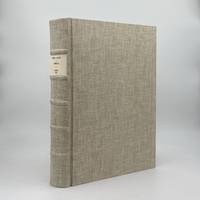
1512réf. 372103Paris: Philippe Pigouchet for Simon Vostre 1512. Title page printed in red and black with woodcut device of Simon Vostre; full page woodcuts of St. Jerome crucifixion old coloring. Text in gothic type in two columns ornamental initials some colored text ruled in red throughout. 15 340 28 leaves. Terminal black dd6 present. 1 vols. Folio. Modern linen conservation binding. First leaf toned ownership marks struck out early bibliopole's description in ink at bottom of title. Some minor worming at end. Very good. Title page printed in red and black with woodcut device of Simon Vostre; full page woodcuts of St. Jerome crucifixion old coloring. Text in gothic type in two columns ornamental initials some colored text ruled in red throughout. 15 340 28 leaves. Terminal black dd6 present. 1 vols. Folio. Large folio Bible printed for Simon Vostre by Philippe Pigouchet the famous printer of some of the most beautiful Books of Hours. Uncommon in institutions and in the trade. Renouard ICP II 248; Delaveau & Hillard 778 Philippe Pigouchet for Simon Vostre unknown books
1607réf. 372868Sanctii Gervasii Saint-Gervais Geneva: Sumptibus Caldorianae Societatis 1607. O.T. and N.T. title pages with printer's device of Fama; each part of O.T. with sectional title parts 2-4 paginated consecutively. 1 vols. Folio. Old calf boards ruled in gilt. Rebacked with morocco spine label. Some paper flaws at end. Portrait of William Lupton 1676-1726 dated 1727 frontispiece to his Sermons on front pastedown. Cloth slipcase and folding box. O.T. and N.T. title pages with printer's device of Fama; each part of O.T. with sectional title parts 2-4 paginated consecutively. 1 vols. Folio. The Junius-Tremellius Bible with Theodore de Beze's translation of the New Testament. This was for many years the standard Latin Bible favored by Protestants. Uncommon OCLC records fewer than 20 locations with interesting English provenance. William Slater or Slatyer 1587-1647 whose Psalmes or songs of Sion: turned into the language of a strange land 1631 "was on 9 July 1631 ordered to be burned. Summoned before the court of high commission on 20 October Slatyer confessed that he had 'added thereunto a scandalous table to the disgrace of religion and to the encouragement of the contemners thereof'; judging from an annotated copy of the work dated 1642 this probably consisted of a list of popular tunes to which the psalms might be sung" ODNB He was also editor of The Psalmes of David in 4 languages 1643 "a high quality edition containing both words and music the latter principally by Thomas Ravenscroft". Not in Darlow & Moule; Bibles imprimées 976 locates a copy with later Genevae imprint. Provenance: William Slater his Latin ownership signature; W.A. Copinger; General Theological Seminary gift of Cornelius Vanderbilt and Dean Augustus Hoffman bookplates and blindstamps Sumptibus Caldorianae Societatis unknown books
1509réf. 372247Basel: per Johannem Petri de Langdorff et Johannem Froben de Hammelburg 1509. Printer's device on title hand colored at an early date. Large manuscript initials in red and blue; rubricated throughout. 14 CCCXLVII 28 leaves. Manuscript references and extensive early marginalia in Hebrew in O.T.; citations in Table keyed to N.T. and underlined. Contemporary colored deerskin sectional fore-edge tabs. Folio 13 x 8-1/2 inches. Full burgundy morocco by Zaehnsdorf. Title leaf repaired at gutter and bottom corner; minor staining. Printer's device on title hand colored at an early date. Large manuscript initials in red and blue; rubricated throughout. 14 CCCXLVII 28 leaves. Manuscript references and extensive early marginalia in Hebrew in O.T.; citations in Table keyed to N.T. and underlined. Contemporary colored deerskin sectional fore-edge tabs. Folio 13 x 8-1/2 inches. A scarce Latin bible the first edition of the Vulgate with the printed marginal references to canon law. These 'Concordantiae iuris canonici' according to Masch were compiled by Johannes Niuicellensis an abbot and were printed separately in 1482. This is also the first edition to printed the commendatory hexastich by Matthias Sambucellus on the title page beginning: "Emendata magis scaturit nunc biblia tota." A tall copy with generous margins lovely stylish manuscript initials and full rubrication. VD16 B2584. Delaveau & Hillard 771; cf. Darlow & Moule note after 6092. Provenance: Dr. Charles Clay Manchester 19th century inscription on front endpaper sold Sotheby Wilkinson & Hodge May 18 1883; General Theological Seminary bookplate blindstamps; [per Johannem Petri de Langdorff et Johannem Froben de Hammelburg unknown books
1491réf. 372087Basel: Nicolaus Kesler Kessler 1491. With one small polychrome gilt illuminated initial F on a2 initials in red or blue thoughout. Printed marginalia present on a2 and a7. 436 ff. 872 pp. final page is blank. 1 vols. Folio. Old leather tooled in blind clasps perished. Rebacked edges repaired last few leaves with marginal repairs final leaf of Names backed with small losses at head. Ownership marks struck out on title leaf. Very good. Cloth folding box. With one small polychrome gilt illuminated initial F on a2 initials in red or blue thoughout. Printed marginalia present on a2 and a7. 436 ff. 872 pp. final page is blank. 1 vols. Folio. Kesler's second Bible a page-for-page reprint of the edition 9 October 1487. These editions are notable for including at end the section headed "Translatores Biblie" with two notes "dealing with 1 ancient versions . and 2 with the methods of interpreting the Holy Scripture" D&M and form part of the apparatus accompanying many later editions of the Latin Bible. The first use of a title page for the Bible is ascribed to Johann Pruess in the 1486 Strassburg edition; here it is simply: Biblia. ISTC ib00591000; GW 4268; Goff B591; Copinger Incunabula Biblica 88; Darlow & Moule note at 6086. Provenance: W. A. Copinger bookplate; General Theological Seminary gift of Cornelius Vanderbilt and Dean Augustus Hoffman bookplates and blindstamps Nicolaus Kesler (Kessler) unknown books
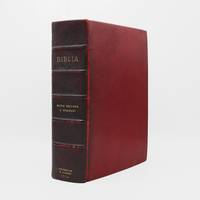
1590réf. 372093Rome: Ex Typographia Apostolica Vaticana 1590. First edition of the Sixtine Vulgate Bible. Engraved illustrated title-page. Title in red and black text in double columns. 8 479 1; 5 482-899; 5 902-1141pp. Lacks the 4ff preface i.e. the papal bull of Sixtus V beginning "Aeternus ille caelestium terrestriumq. rerum omnium conditr ac moderator Deus ." as often. Folio 13-1/2 x 9-1/2 inches. Later red morocco spine darkened corners bumped some repairs at head and tail of spine marbled endpapers gilt edges. Engraved title and title page paper-backed. Red quarter morocco clamshell box. First edition of the Sixtine Vulgate Bible. Engraved illustrated title-page. Title in red and black text in double columns. 8 479 1; 5 482-899; 5 902-1141pp. Lacks the 4ff preface i.e. the papal bull of Sixtus V beginning "Aeternus ille caelestium terrestriumq. rerum omnium conditr ac moderator Deus ." as often. Folio 13-1/2 x 9-1/2 inches. The Sixtine Bible containing the Vulgate text as edited by Pope Sixtus V intended as the first ecclesiastically authorized text to be used throughout Christendom. "In its text it comes closer to R. Stephanus' Bible of 1538-40 than to the Louvain editions" Darlow & Moule who discuss the textual variations. The association with Aldus II suggested by Renouard and lasting long thereafter is spurious. Pope Sixtus V died soon after the book was printed and was followed by three short-lived popes. The Sixtine Bible had "aroused antagonism among both clergy and laity" and was swiftly condemned; the edition was withdrawn by Pope Clement VIII soon after his elevation to the papal throne in 1592 and many copies were destroyed. Preparations began in 1591 for a new edition of the Vulgate printed in 1592 and known as the Clementine Bible which long remained the standard Vulgate text. As often e.g. the Brooker copy this copy without the preface the Bull of Sixtus declaring the text to be immutable and forbidding any reprint without papal permission. Copinger 521; Darlow & Moule 6181; Adams B1098; BM STC Italian 1465-1600 p. 93; EDIT16 CNCE 5805. Provenance: Henry John Farmer Atkinson his sale Sotheby Wilkinson & Hodge March 1896 lot 2752 sold for £18.15s to; Bernard Quaritch; General Theological Seminary bookplate Ex Typographia Apostolica Vaticana unknown books
1510réf. 371469Leipzig: Wolfgang Stockel 1510. Title in red and black. A-DⶠEâ´ F-JⶠKâ´ L-Mâ¶. 68 leaves. Extensive annotations throughout in Latin in a contemporary Germanic cursive comprising both interlinear notes and marginal gloss. 1 vols. Folio 12x8-1/2 inches. Early pigskin and oaken boards a remboitage from a thicker volume worn front hinge split between A2 and A3. Housed in a blue cloth slipcase. Provenance: Duplum Bibliothecae Regiae Monacensis pencil annotation; John Pintard inscription presenting the book to; General Theological Seminary bookplate and inked stamps. Title in red and black. A-DⶠEâ´ F-JⶠKâ´ L-Mâ¶. 68 leaves. Extensive annotations throughout in Latin in a contemporary Germanic cursive comprising both interlinear notes and marginal gloss. 1 vols. Folio 12x8-1/2 inches. Edited by Johann Kusthuert this printing of the Epistles of Paul was intended for the student market with the introduction addressed to studiosis sacarum litterarum tyronibus. In addition the colophon reads: Impressum ad altissimi Dei laudem ac studiosorum Sacre Scripture tyronum perfectum in officina libraria prouidi viri Vuolffgangi Stockel ciuis Liptzensis anno Domini 1510 quarto kalendis Septembris. The annotations and marginal gloss are impressive and very similar though in a different hand to the copy described by Rosenthal now at the Beinecke suggesting they are by a student at the same institution: "The present copy comes with a vast manuscript apparatus in Latin covering the entire text from St. Jerome's general preface to the last sentence of the last epistle. The annotation . is uniformly intense throughout. The script is a very small at times microscopic Germanic cursive and there is evidence of careful layout especially in the marginal gloss." Estimating the annotations to be approximately 80000 words Rosenthal describes the interlinear notes as "frequently far more than simole reading aids." He continues: "The marginal gloss includes an argumentum for each chapter and its subdivisions . There are also occasional citations from authorities such as St. Thomas and Ambrose." It is a handsomely printed volume with the title in large red letters above an 11-line subtitle in black. The verso of the title comprises a table of contents of the Pauline epistles and is followed by an introduction by Kusthuert. On the duplicates sold by the Munich royal library including the present volume see: Wagner Bettina. "'Duplum Bibliothecae Regiae Monacensis': The Munich Court Library and Its Book Auctions in the Nineteenth Century." The Papers of the Bibliographical Society of America vol. 111 no. 3 2017 pp. 345-77. Pintard 1759-1844 was a prominent New Yorker of Huguenot origin patron of education and one of the earliest and staunchest advocates for the preservation and study of the history of New York and the United States. Pintard began to work towards the establishment of a historical society in the city in early 1804 and he was the leader in the organization of the New-York Historical Society in November 1804. He was also a patron of the old French Huguenot Church of St. Esprit and the General Theological Seminary to whom he donated this volume in 1826. Scarce. OCLC locates three copies in Germany the aforementioned copy at Yale described by Rosenthal and the present example. Rosenthal B.M. Printed books with manuscript annotations 105 for a similarly annotated copy of the same edition; Panzer vii p. 169; VD16 B 4980. Not in BM STC Germany Adams or Darlow & Moule [Wolfgang Stockel] unknown books
1593réf. 371924London: Excudebant G. Bishop R. Newbery & R. Barker 1593. Six parts in one. Text printed in verse form double column references and notes in margins. 81771 blankpp; 31041 blank leaves; 3 75 i.e. 73 leaves; 6 numbered 1-12pp 13-129 leaves 1 blank; 3 4-74 leaves; 3 198 leaves. With additional blanks bound in at the front and rear. 1 vols. Folio. Eighteenth century reverse calf covers blocked in blind red morocco lettering piece repairs to joints minor loss at head of spine. Repairs at hinges scattered minor paper repairs. Provenance: Peckham Williams armorial bookplate; General Theological Seminary bookplate. Six parts in one. Text printed in verse form double column references and notes in margins. 81771 blankpp; 31041 blank leaves; 3 75 i.e. 73 leaves; 6 numbered 1-12pp 13-129 leaves 1 blank; 3 4-74 leaves; 3 198 leaves. With additional blanks bound in at the front and rear. 1 vols. Folio. The third edition of the Latin Bible printed in England in this case printing Tremellius and Junius's version of the Old Testament with Beza's translation of the New Testament accompanied by Tremellius's version based on the edition printed in Geneva in 1590 see D&M 6182. Texts printed in double columns. The complete text was printed in six parts each with a divisional title and independent pagination or foliation. The fifth part Junius's translation of The Apocrypha was never bound into this copy. A variant of this edition with the imprint for "Guliel. N." i.e. William Norton appeared the same year. ESTC S106974; STC 2061.5; Darlow & Moule 6185; BM 1. b. 12; Copinger 534 Excudebant G. B[ishop] R. N[ewbery] & R. B[arker] unknown books
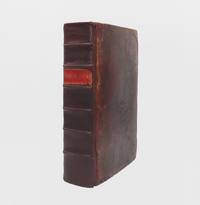
1483réf. 372104Venice: Johannes Herbort de Seligenstadt 1483. Text in two columns 56 lines per page. Initials mostly executed in red Psalms and a few other chapter headings with large color initial others empty. N.T. with printed marginal glosses. 398 leaves. 1 vols. Folio. Contemporary pigskin stamped in blind lower pastedown with manuscript waste re-inforcement. Binding worn and soiled spine darkened. Front pastedown with abundant annotations; flyleaf with tabulations of books of the Bible; occasional marginal annotations a bit more frequent in N.T. Pious abecedary poem in 23 lines in manuscript on blank verso of last leaf. Text in two columns 56 lines per page. Initials mostly executed in red Psalms and a few other chapter headings with large color initial others empty. N.T. with printed marginal glosses. 398 leaves. 1 vols. Folio. With additions by Franciscus Moneliensis and Quintius Aemilianus. This is grouped with the Fontibus ex Graecis editions of the corrected Latin text though this edition does not include the Latin verses. Leaf a1v prints a letter by Franciscus Moneliensis in which he praises the printer Johannes Herbort who got his start in Padua in the mid-1470s where he printed Avicenna's Canon medicinae. He came to Venice and worked with Jenson and others; he printed an edition of the Bible with Postilla of Nicolaus de Lyra in 1481; a quarto Bible was issued in 1484. Herbort produced some 50 works during his career. ISTC ib00579000; GW 4254; Goff B579; cf. Darlow & Moule 2:911 note. Provenance: W. A. Copinger bookplate; General Theological Seminary gift of Cornelius Vanderbilt and Dean Augustus Hoffman bookplates and blindstamps Johannes Herbort, de Seligenstadt unknown books
1476réf. 372231Nuremberg: Johann Sensenschmidt and Andreas Frisner 1476. Second Sensenschmidt and Frisner Bible. Text in two columns 57 lines per page rubricated with many manuscript initials in red and blue and black some descenders with leafy flourishes and occasional touches of green; some initial spaces unaccomplished. 392 ff. bound without first and last blanks. Copiously annotated chiefly in O.T. in several early Germanic Latin hands; a lengthy gloss to Acts 18 is dated at end 1525. 1 vols. Folio. Original pigskin stamped in blind vellum manuscript waste supports used at inner hinges last four leaves strengthened at gutter. Corners and bosses perished edgeworn some worming entering text at end; upper joint cracked and first two gatherings loosened. Vestiges of marginal tabs; a few paper. A bit rough very good. Second Sensenschmidt and Frisner Bible. Text in two columns 57 lines per page rubricated with many manuscript initials in red and blue and black some descenders with leafy flourishes and occasional touches of green; some initial spaces unaccomplished. 392 ff. bound without first and last blanks. Copiously annotated chiefly in O.T. in several early Germanic Latin hands; a lengthy gloss to Acts 18 is dated at end 1525. 1 vols. Folio. The second Bible printed by Sensenschmidt and Frisner at Nuremberg dated 1476 at the end of the Notitia by Menardus with generous margins and some idiosyncratic flourishes and decorations to the manuscript. At the foot of the first text leaf the manuscript ownership note of a brotherhood of monks in Gmünd. The second gathering includes a leaf where text on the verso is printed only in 44 lines and an inserted half leaf stub printed one side only in one column. Four stubs of blanks are visible at the end of Esdra but the text is complete resuming with Tobias. This copy bound without the Interpretationes hebraicorum nominum as is often the case; that work appears frequently with Koberger editions of this period and "should perhaps be regarded as a separate work". And excellent and unsophisticated copy. ISTC ib00546000 four other locations in N. America; GW 4221; Goff B546; Delaveau & Hillard 696. Provenance: W. A. Copinger bookplate; General Theological Seminary gift of Cornelius Vanderbilt and Dean Augustus Hoffman bookplates and blindstamps Johann Sensenschmidt and Andreas Frisner unknown books
1527réf. 372109Coloniae: Petrus Quentel excudebat 1527. First Protestant Bible printed in Latin. Title-page with large woodcut vignette of arms of Cologne lion and gryphon rampant with and three crowns; numerous illustrations by Anton Woensam and ornamental initials throughout. Ff. 8 CCCXXV 1 LXXXVII i.e. 85 5. Manuscript marginal glosses in red chiefly calling out names names in Kings. 1 vols. Folio. Contemporary blindstamped pigskin over bevelled wooden boards clasps perished. Some soiling repairs to hinges painted fore-edge tabs. Very good. First Protestant Bible printed in Latin. Title-page with large woodcut vignette of arms of Cologne lion and gryphon rampant with and three crowns; numerous illustrations by Anton Woensam and ornamental initials throughout. Ff. 8 CCCXXV 1 LXXXVII i.e. 85 5. Manuscript marginal glosses in red chiefly calling out names names in Kings. 1 vols. Folio. The first Protestant Bible in Latin edited by Johan Rüdel Rudelius printed in Cologne by Peter Quentel or Quentell and notable for the wood engraved illustrations by Anton Woensam Anton von Worms particularly those at the head of each of the four gospels. Matthew faces an angle who is touching his stylus; a lion is seated beside Mark; a bull with Luke; and an eagle stands beside John. Quentel was the printer of Tyndale's quarto Cologne English New Testament known from a single surviving fragment in the Grenville Collection where this same illustration to Matthew appears. It is a reasonable inference that each of the four gospels would have carried an illustration. The project which had "'got as far as the letter K' the signature that would have taken the work well into Mark" ODNB was unfinished at the time of Tyndale's flight from Cologne in 1525. Quentel's print shop was raided but sheets of the first gospel translated from the original Greek and printed in English soon began to circulate in England. Tyndale settled in Worms where Schöffer completed an octavo printing of the first complete English New Testament in 1526 a facsimile of the Grenville fragment and its illustration were published in 1871. The blocks for the illustrations evidently survived the raid on the Quentel's shop and are used here at the head of each of the four gospels. A notable edition in the history of the printing of the Bible. Adams B1007; Darlow & Moule 6107 note; VD16 B2589; Copinger 210. Provenance: Cartusiae Buxiana Buxheim inscription on title; Thomas Raffle early signature on title; General Theological Seminary blindstamps bookplate Petrus Quentel excudebat unknown books
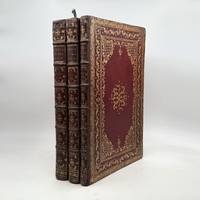
1590réf. 371036Rome: Ex Typographia Apostolica Vaticana 1590. First edition of the Sixtine Vulgate Bible large paper copy. Engraved illustrated title-page. Title in red and black text in double columns. 3 vols. Folio. Italian full red morocco binding of the seventeenth or early eighteenth century elaborately gilt with triple floral scrollwork borders stars in cornerpieces about a central motif stencilled paste paper endsheets a.e.g. Boxed. First edition of the Sixtine Vulgate Bible large paper copy. Engraved illustrated title-page. Title in red and black text in double columns. 3 vols. Folio. The engraved title reads: Biblia sacra vulgatae editionis ad concilii Tridentini praescriptum emendata et a Sixto V.P.M. recognata et approbata. With the preliminary document the Bull of Sixtus V beginning 'Aeternus ille caelestium terrestriumq. rerum omnium conditr ac moderator Deus .". This is often lacking. An extraordinary copy of the Sixtine Bible containing the Vulgate text as edited by Pope Sixtus V intended as the first ecclesiastically authorized text to be used throughout Christendom. "In its text it comes closer to R. Stephanus' Bible of 1538-40 than to the Louvain editions" Darlow & Moule who discuss the textual variations. This copy includes examples of the printed overslips required to correct hurried printing. The association with Aldus II suggested by Renouard and lasting long thereafter is spurious. Pope Sixtus V died soon after the book was printed and was followed by three short-lived popes. The Sixtine Bible had "aroused antagonism among both clergy and laity" and was swiftly condemned; the edition was withdrawn by Pope Clement VIII soon after his elevation to the papal throne in 1592 and many copies were destroyed. Preparations began in 1591 for a new edition of the Vulgate printed in 1592 and known as the Clementine Bible which long remained the standard Vulgate text. The ordinary issue of this printing measures 13-3/8 inches tall as in the Brooker copy sold 2024; the present copy measures 15-3/4. AN OUTSTANDING LARGE PAPER COPY OF A NOTABLE EDITION. Copinger 521; Darlow & Moule 6181; Adams B1098; BM STC Italian 1465-1600 p. 93; EDIT 16 CNCE 5805. Provenance: Vincenzo Maria Carafa 1739-1814 Prince of Roccella and Duke of Bruzzano engraved bookplates MS shelfmark :H 5; Douglas Maxwell Moffat bought of Quaritch in Dec. 1939; General Theological Seminary Ex Typographia Apostolica Vaticana unknown books
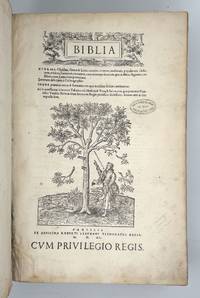
1540réf. 372229Paris: Ex officina Roberti Stephani typographi Regii 1540. Third edition and the first with these illustrations. Printer's device on title pages woodcut illustrations in text including 5 full-page ornamental initials. 10 268; 1 104 i.e. 103 error in pagination omitting leaf 83; 90; 92 ff. Collation: 10 a-z⸠A-I⸠K-LⶠAa10 Bb-Mm⸠NnⶠAA-KK⸠LL10 2a-2l⸠2mâ´. Early manuscript annotations. 1 vols. Folio 17x11-1/4 inches. Contemporary blindstamped pigskin over bevelled wooden boards title stamped on the upper cover lacks bosses hinges and clasps upper joint cracked darkening to spine other wear. Early vellum manuscript waste at inner hinges. Minor staining minor foxing a few scattered edge tears. Provenance: Christopher Jonas a Taubenheim early inscription mentioning commentary by Rabbi Moses ben Nahman Gerondi; Polling Monastery armorial bookplate; Duplum Bibliothecae Regiae Monacensis; General Theological Seminary stamps bookplate. Third edition and the first with these illustrations. Printer's device on title pages woodcut illustrations in text including 5 full-page ornamental initials. 10 268; 1 104 i.e. 103 error in pagination omitting leaf 83; 90; 92 ff. Collation: 10 a-z⸠A-I⸠K-LⶠAa10 Bb-Mm⸠NnⶠAA-KK⸠LL10 2a-2l⸠2mâ´. Early manuscript annotations. 1 vols. Folio 17x11-1/4 inches. The third and finest folio edition of Latin Vulgate Bible prepared by scholar/printer Robert Estienne 1503-59. Though the edition was entered into the Vatican's Index of Prohibited Books and is correspondingly scarce ultimately this text served as the foundation of the official Roman Vulgate. The illustrations of Noah's ark the Tabernacle of Moses and Temple of Solomon were widely copied. The general title page and the Prophetae are dated 1540; that of the New Testament is dated 1539; and that for the Hebraea Chaldaea Graeca & Latina Nomina . cum Interpretationis and Index is dated 1538. "The text was revised from additional MS sources; a list given at the end of the preface enumerates at least 16 MSS and 3 printed editions. This edition contains the first printing of the Prayer of Manasses in Greek and Latin. It is the text of this monumental edition which became the foundation of the official Roman vulgate ." Schreiber. The text of the Oratio Manassae is printed here for the first time leaf v8v. This is a tall and generally well preserved copy with good margins. Darlow & Moule 6117; Renouard pp. 48-9 no. 1; Copinger 275; Schreiber Estiennes 359; Adams B1022; Mortimer French 16th cent. 68 Ex officina Roberti Stephani typographi Regii unknown books
1482réf. 372091Nuremberg: Anton Koberger 1482. Eighth edition of the Bible printed by Koberger his first was 1475. Date from the colophon at end of text on fol. 427. Text in black letter two columns 53 lines. Red initials rubricated throughout. Foliation irregular. Bound without first and last blanks. 460 of 462 leaves. 1 vols. Folio. Twentieth century orange morocco by Zaehnsdorf preserving earlier gauffered and gilt edges. Spine darkened from smoke minor rubbing. First leaf remargined at foot; some traces of damp and stains from old marginal tabs internally clean overall closed tear in fol. 388. Very good plus. Eighth edition of the Bible printed by Koberger his first was 1475. Date from the colophon at end of text on fol. 427. Text in black letter two columns 53 lines. Red initials rubricated throughout. Foliation irregular. Bound without first and last blanks. 460 of 462 leaves. 1 vols. Folio. ISTC ib00575000; GW 4250; Goff B575. Provenance: George Livermore Harvard bookplate recording 1859 deposit with ink release dated 1894; General Theological Seminary gift of Cornelius Vanderbilt and Dean Augustus Hoffman bookplates and blindstamps Anton Koberger unknown books
1527réf. 318283Coloniae: Petrus Quentel excudebat 1527. First Protestant Bible printed in Latin. Title-page with large woodcut vignette of arms of Cologne lion and gryphon rampant with and three crowns; numerous illustrations by Anton Woensam and ornamental initials throughout. Ff. 8 CCCXXV 1 LXXXVII i.e. 85 5. 1 vols. Folio. Recent half calf and marbled boards. Title page soiled old remargining tissue repairs on verso; some marginal worming and soiling generally clean with generous margins. Stamps of Cambridge Public Library in ink or in blind on four leaves. First Protestant Bible printed in Latin. Title-page with large woodcut vignette of arms of Cologne lion and gryphon rampant with and three crowns; numerous illustrations by Anton Woensam and ornamental initials throughout. Ff. 8 CCCXXV 1 LXXXVII i.e. 85 5. 1 vols. Folio. The first Protestant Bible in Latin edited by Johan Rüdel Rudelius printed in Cologne by Peter Quentel or Quentell and notable for the wood engraved illustrations by Anton Woensam Anton von Worms particularly those at the head of each of the four gospels. Matthew faces an angle who is touching his stylus; a lion is seated beside Mark; a bull with Luke; and an eagle stands beside John. Quentel was the printer of Tyndale's quarto Cologne English New Testament known from a single surviving fragment in the Grenville Collection where this same illustration to Matthew appears. It is a reasonable inference that each of the four gospels would have carried an illustration. The project which had "'got as far as the letter K' the signature that would have taken the work well into Mark" ODNB was unfinished at the time of Tyndale's flight from Cologne in 1525. Quentel's print shop was raided but sheets of the first gospel translated from the original Greek and printed in English soon began to circulate in England. Tyndale settled in Worms where Schöffer completed an octavo printing of the first complete English New Testament in 1526 a facsimile of the Grenville fragment and its illustration were published in 1871. The blocks for the illustrations evidently survived the raid on the Quentel's shop and are used here at the head of each of the four gospels. A notable edition in the history of the printing of the Bible. Adams 1007; not in Darlow & Moule but see note to 6107; VD16 B2589.OCLC: 22847218 Petrus Quentel excudebat unknown books
1970réf. 83025Eugene OR: Third World Students Coalition Undated but mid-1970s. Original lithographed poster offset printed in three colors on white stock measuring 35.5cm x 51cm 14" x 20". Subtle toning and some inoffensive dust-soil on verso; Near Fine. A scathing poster featuring a detourned image of Chilean military dictator Augusto Pinochet where the heads of his military advisors have been substituted with those of Gerald Ford Richard Nixon and Henry Kissinger who were enmeshed in planning and executing the military takeover of President Salvador Allende's government in September 1973. Not separately listed in OCLC though we do find an example held at the Library of Congress. 83025. Third World Students Coalition unknown books