28.490 resultados
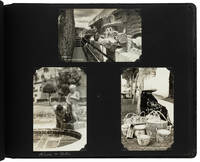
1930ref. 205481930. Early twentieth century travel photo album compiled by "Jake"documents the working life and global mobility of a merchant ship crewman during the 1930s and 1940s with sustained visual attention to port cities across Africa the Americas and the United States. The album supports research into maritime labor informal American commercial presence abroad and everyday interactions between traveling workers and local populations under late colonial conditions. Photographs taken in Beira and Dondo in Mozambique and Angola Durban and Cape Town in South Africa and Accra in the Gold Coast record encounters shaped by European colonial infrastructures and tourist economies including images captioned "Typical Ricksha Boy" depicting South African rickshaw pullers in elaborate headdress and dress and scenes of women in Accra balancing baskets and trays of food. Additional captions such as "Sam and his 'girls'" showing uniformed workers marked "Sea View Hotel" and "me and my gals" portraying informal social contact provide direct evidence of how American maritime workers framed and recorded relationships with local communities. The album further situates this mobility within a broader circuit including the Panama Canal Mexico City and Vera Cruz and U.S. port cities such as Galveston New York and Boston. Travel photo album compiled circa 1930s to 1940s likely by an American merchant marine crewman identified as Jake. String-bound black cloth album containing 44 leaves with 218 silver gelatin photographs and postcards mounted or cornered in along with one original sketch of an African man. Images span multiple global locations including Beira Dondo Durban Cape Town Accra Vera Cruz Mexico City the Panama Canal Powell River Vancouver Galveston New York and Boston. Several photographs depict shipboard life and crew activity aboard the S.S. Nemiskam Park with additional images of small craft landings including African men canoeing crew members ashore. A sequence of photographs taken in Boston shows the compiler in maritime work gear wearing thigh-high boot wraps rubber gloves and an oxygen mask captioned "At last -- working for a change." Nineteen photographs document Mexico including rancheros and rancheras in embroidered dress scenes of bullfighting and crew members wearing sombreros and sarapes. This album provides a concentrated record of interwar and wartime-era maritime circulation linking North American labor to colonial and postcolonial port environments offering primary visual evidence of how working-class American travelers documented race labor and leisure across imperial geographies. The inclusion of commercial signage hotel uniforms and transport labor such as rickshaw pulling situates the photographs within local economies shaped by tourism and global trade while the Panama Canal images anchor the album within a critical artery of twentieth-century shipping and U.S. strategic infrastructure. The juxtaposition of African Mexican and U.S. scenes underscores the continuity of maritime networks that connected these regions and the album's captions provide insight into informal language humor and perception among traveling crewmen. Minor edge wear to album corners with some mounts loosening; leaves and photographs remain clean and stable. Overall very good condition. unknown books
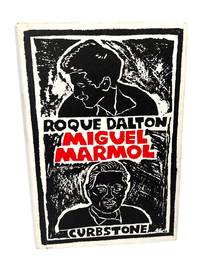
1982ref. 196021982. Chicano Literature Dalton Roque. Miguel Marmol. Willimantic CT: Curbstone Press 1987. First English language edition first printing hardcover. 503 pages. Original Dust Jacket features sketched portraits of Miguel Marmol in his youth and in adulthood. Back cover features an additional black and white photograph of Roque Dalton and Miguel Marmol in Prague. Miguel Marmol born in San Salvador in 1905 was a Chicano revolutionary in the first decades of the 20th century. This testimony recorded by Dalton describes the growth and development of the workers movement as witnessed by Marmol and the communist party in El Salvador and Guatemala. Passages cover vivid details of the brutality of the Martinez dictatorship and the re-emergence of the worker's movement after Martinez was ousted also depict the 1932 uprising and mass execution in El Salvador where 30000 were killed and where Marmol solidified his reputation as a revolutionary. The book also documents Marmol's imprisonment in Cuba and his return to El Salvador. The first English edition includes a retrospective interview with Marmol conducted by the translators in Cuba in 1986. Dust Jacket is vibrant and in very good condition. Boards have very minor foxing around the edges. Textblock is tight and very neat. Overall in very good condition. Marmol is one of the most important revolutionary figures in El Salvador's history who served as an inspiration for several generations of Chicano revolutionaries advocating for freedom. unknown books
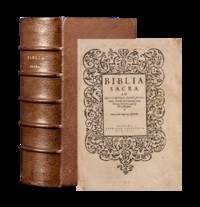
1527ref. 318283Coloniae: Petrus Quentel excudebat 1527. First Protestant Bible printed in Latin. Title-page with large woodcut vignette of arms of Cologne lion and gryphon rampant with and three crowns; numerous illustrations by Anton Woensam and ornamental initials throughout. Ff. 8 CCCXXV 1 LXXXVII i.e. 85 5. 1 vols. Folio. Recent half calf and marbled boards. Title page soiled old remargining tissue repairs on verso; some marginal worming and soiling generally clean with generous margins. Stamps of Cambridge Public Library in ink or in blind on four leaves. First Protestant Bible printed in Latin. Title-page with large woodcut vignette of arms of Cologne lion and gryphon rampant with and three crowns; numerous illustrations by Anton Woensam and ornamental initials throughout. Ff. 8 CCCXXV 1 LXXXVII i.e. 85 5. 1 vols. Folio. The first Protestant Bible in Latin edited by Johan Rüdel Rudelius printed in Cologne by Peter Quentel or Quentell and notable for the wood engraved illustrations by Anton Woensam Anton von Worms particularly those at the head of each of the four gospels. Matthew faces an angle who is touching his stylus; a lion is seated beside Mark; a bull with Luke; and an eagle stands beside John. Quentel was the printer of Tyndale's quarto Cologne English New Testament known from a single surviving fragment in the Grenville Collection where this same illustration to Matthew appears. It is a reasonable inference that each of the four gospels would have carried an illustration. The project which had "'got as far as the letter K' the signature that would have taken the work well into Mark" ODNB was unfinished at the time of Tyndale's flight from Cologne in 1525. Quentel's print shop was raided but sheets of the first gospel translated from the original Greek and printed in English soon began to circulate in England. Tyndale settled in Worms where Schöffer completed an octavo printing of the first complete English New Testament in 1526 a facsimile of the Grenville fragment and its illustration were published in 1871. The blocks for the illustrations evidently survived the raid on the Quentel's shop and are used here at the head of each of the four gospels. A notable edition in the history of the printing of the Bible. Adams 1007; not in Darlow & Moule but see note to 6107; VD16 B2589.OCLC: 22847218 Petrus Quentel excudebat unknown books
1558ref. 303259Lugduni: Apud Haered. Seb. Gryphi 1558. 478 p.; 333 1 16 pp. 108 woodcut vignettes by repetition of 78 blocks by Jacques Le Fevre. Printer's griffin device on title-page. 2 vols. 16mo. 19th-century polished calf; joints starting spine of first volume chafed; vol. I title soiled worn and remargined at gutter some toning and soiling to text throughout. 478 p.; 333 1 16 pp. 108 woodcut vignettes by repetition of 78 blocks by Jacques Le Fevre. Printer's griffin device on title-page. 2 vols. 16mo. Published by Sebastian Gryphius a German bookseller and printer who settled in Lyon in the 1520s. Described by Febvre and Martin as the "Prince of the Lyon book trade" in the 1540s he supported local humanist culture and used the italic type developed by Aldus Manutius to print compact beautiful books. A famous illustrated New Testament important "chiefly because of its influence on Bernard Salomon's New Testament cuts". Baudrier VIII 290; Mortimer French 16th Century Books 90 edition of 1560; OCLC: 551931968 locates one copy Apud Haered. Seb. Gryphi unknown books
1557ref. 254216Basilaea Basel: Nicolaum Bryling Nicolaus Brylinger 1557. Woodcut border and printer's device on title. INCOMPLETE. 8 479 of 500 8 leaves. Lacking ff. 46-56 & 61-70. 1 vols. 8vo. Bound in contemporary blind panel-stamped pigskin over bevelled wooden boards clasps removed binding worn exposing boards on rear cover title page detached contemporary marginalia by Johannes Weneken throughout. Woodcut border and printer's device on title. INCOMPLETE. 8 479 of 500 8 leaves. Lacking ff. 46-56 & 61-70. 1 vols. 8vo. Brylinger published the only 16th century edition of Luther's Bible in Switzerland published one of the earliest Greek and Latin diglot Bibles and published a series of 8vo editions of the Bible with diglot and Greek-only text which was popular with students. Darlow & Moule makes no mention of this or any other Latin-only edition by Brylinger. Front paste-down endpaper and front free endpaper display extensive annotations in Greek and Latin presumably by Johannes Weneken. The marginal annotations provide a fascinating insight into how this book was used. Not in Darlow & Moule but cf. 4621; Adams 1056; OCLC: 46973017 6 copies only 3 of which in U.S. Nicolaum Bryling [Nicolaus Brylinger] unknown books
1652ref. 85679Amsterdam: sumptibus regiis L. Elzevier 1652. Editio nova ab auctore sucta et recognita. Hardcover. Very Good. 499p. Later old leather. 14 cm. No cover titling. Edges and joints rubbed. Backstrip crazed. Outer blanks partially pasted down. Old name Daniel Keim inked on a couple of leaves. Narrowly margined. Latin text. This defense of Charles I and of the divine right of kings was first published in the year 1649 that Charles I was executed. This "Edition nova" appears to be rather scarce. sumptibus regiis [L. Elzevier] hardcover books
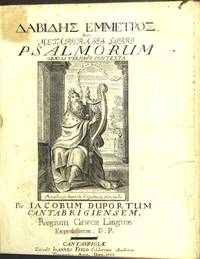
1666ref. 25559Cantabrigiæ: excudit Ioannes Field 1666. 4to pp. 72 431; inserted engraved vignette title-p.; parallel text in Greek and Latin; 2 short tears in fore-edge of title-p. not touching any letterpress worm track occasionally touching letters in first 60 leaves; stains on G2-G4; lacking the portrait of Charles II; contemporary calf-backed marbled boards red morocco label on spine; minor rubbing and wear small cracks starting at the extremities of the joints else generally a very good copy. Paraphrase in Homeric language and verse and its translation in Latin prose on opposite pages with a prefatory treatise on the ancient versions of the Old Testament. Translated by Jacob Duport. "Immediately after the Restoration he was made one of the king's chaplains and reinstated in the possession of his prebend at Lincoln but not of the archdeaconry of Stow as he preferred holding his fellowship and vice-mastership in Trinity College. Widdrington was now dispossessed of the Greek professorship and Duport restored to it but he resigned the chair the same year in favour of his pupil Isaac Barrow. On 19 July 1660 he was by royal mandate with many other learned divines created D.D. at Cambridge Kennett p. 251. He was installed dean of Peterborough 27 July 1664. In 1668 on the death of Dr. John Howorth master of Magdalene College Duport was recalled to Cambridge and appointed by James earl of Suffolk possessor of Audley End to fill the vacant headship. In the following year Duport was elected vice-chancellor of the university. Bishop Monk says that Duport 'appears to have been the main instrument by which literature was upheld in this university Cambridge during the civil dissensions in the seventeenth century and though seldom named and little known at present he enjoyed an almost transcendent reputation for a great length of time among his contemporaries as well as in the generation which immediately succeeded" DNB. Wing B2739a. excudit Ioannes Field unknown books
1970ref. 83025Eugene OR: Third World Students Coalition Undated but mid-1970s. Original lithographed poster offset printed in three colors on white stock measuring 35.5cm x 51cm 14" x 20". Subtle toning and some inoffensive dust-soil on verso; Near Fine. A scathing poster featuring a detourned image of Chilean military dictator Augusto Pinochet where the heads of his military advisors have been substituted with those of Gerald Ford Richard Nixon and Henry Kissinger who were enmeshed in planning and executing the military takeover of President Salvador Allende's government in September 1973. Not separately listed in OCLC though we do find an example held at the Library of Congress. 83025. Third World Students Coalition unknown books
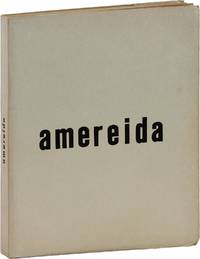
1967ref. 87336Santiago: Editorial Cooperativa Lambda 1967. First Edition. Octavo 24cm. Coated card wrappers with French flaps; unpaginated 193pp; illus. Very light wear to covers; internally complete and clean but for a few faint pencil marginal markings by the previous owner the noted poet and translator Nathaniel Tarn. Near Fine. Text entirely in Spanish. A collaborative book-length work combining poetry and conceptual imagery; published anonymously but compiled and edited primarily by Chilean avant-garde poet Godofredo Iommi. "Amereida" a composite neologism for "American Aeneid" is a conceptual chronicle of a literal cross-country trek from Tierra del Fuego to Southern Bolivia undertaken in 1965 by a group of like-minded poets architects designers philosophers and artists including Iommi 1925-2001 the architect Alberto Cruz 1917-2013 sculptor Claudio Girola 1923-1994 French philosopher François Fédier 1935-2021 and numerous others. Many of the participants in this first "Travesia Amereida" had originally coalesced around the surrealist group in post-war Paris and were later responsible for modernizing the faculty and curriculum of the College of Architecture at the Universidad Católico de Valparaíso. In 1971 the group founded an intentional community the "Ciudad Abierta" "Open City" in Ritoque Chile some kilometers southwest of Valparaíso; the community is still in existence and the tradition of the "Travesias" continues with annual journeys through the South American wilderness that become stages for performance poetry readings and art installations. La Ciudad Abierta quoting the editorial introduction to the poem in the Oxford Book of Latin American Poetry ".is probably the only site in the world where architecture is conceived as an outgrowth of poetry" OBLAP p.362ff. The current volume nominally the community's founding document is notoriously scarce almost never encountered in commerce; OCLC locates only about a dozen holdings worldwide 8 in North America. Editorial Cooperativa Lambda unknown books
ref. 83486San Juan: 1970. Original serigraph in three colors; 80.5cm x 50.5cm 31-1/2" x 19-3/4". Signed and dated in plate at lower left. A few inobtrusive creases at margins; printed area clean and bright. Near Fine. Eduardo Vera Cortés 1926-2006 a prominent figure among the "Fifties Generation" of Puerto Rican artists studied printmaking under Félix Bonilla at the University of Puerto Rico. His work was nearly all produced with a social focus as was the film advertised here the 1956 short drama "Ignacio" in which the citizens of a rural village confront their political leaders to clean up their water supply. unknown books
ref. 83085San Francisco: La Raza 1978-79. Original silkscreened poster in colors 58.5cm x 44.5cm approx. 23" x 17-1/2". Tackholes at margins; lightly toned on verso and unprinted borders else Near Fine. Issued without imprint. An unsigned poster by San Francisco printmaker Alfonso Maciel supporting the Nicaraguan and Salvadoran revolutions of 1979. Reproduces and translates to English a Sandino quote: "Nos hacía falta que el mundo supiera que aún estábamos en la lucha" - "We needed the world to know that we were still in the struggle." The attribution to Maciel and La Raza are from the Library of Congress cataloguing data. OCLC notes only the Library of Congress copy. unknown books
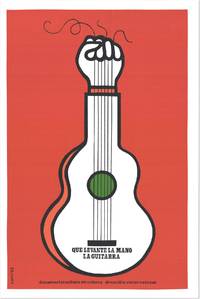
1983ref. 83069Havana: S.i. 1983. Original illustrated poster with text and pictorial elements silkscreened in four colors on white stock measuring 51cm x 76.25cm 20 1/8" x 30". Mild handling to extremities ele a bright Fine copy unbacked. Striking poster designed by Concepción Robinson Mendoza aka. "Coni" for Victor Cassaus's 1983 documentary Que Levante la Mano la Guitarra centered around Cuban musician and folk singer Silvio Rodríguez Domínguez. 83069. S.i. unknown books
1554ref. 6212Lyon: Jean de Tournes 1554. First edition. Octavo 6 3/4 x 4 3/4 inches; 171 x 121 mm. . 16 1152 76 pp bound without the last two blank leaves as in most copiese.g. Mortimer OCLC. The penultimate leaf had only a fleuron at the foot of the page and the final leaf was blank. Arabesque title border and 198 with 1 repeat woodcuts in the text by Bernard Salomon. Title-page with faint early ink "ex-Libris petri ------ at top blank margin. Title-page expertly cleaned some occasional mainly marginal faint foxing otherwise a superb example of this wonderfully illustrated mid sixteenth-century Latin Bible. Bound ca. 1880 by Chambolle-Duru in full brown crushed levant morocco spine with five raised bands lettered in gilt gilt ruled board edges decorative gilt turn-ins marbled endpapers all edge gilt. Armorial bookplate "In Memori: Weiler Bibliotheca Trautner Falkiana" on verso of front free endpaper. First De Tournes Latin Bible based on Robert Estienne's text and beautifully illustrated with 198 woodcuts by Bernard Salomon. "Considerable work could be done on Salomon's sources for these cuts. The Expulsion from Paradise suggests Holbein's version; the New Testament shows some dependence on the set owned by Sébastien Gryphius. the Apocalypse blocks are enlarged copies of the fine Janot Apocalypse. But the cumulative effect of Salomon's carefully detailed scenes is that of an individual contribution to Bible illustration. Particularly interesting from the point of view of technique are the night scenes in Exodus and the storm over Noah's ark. In this 1554 Bible the New Testament blocks are printed with arabesque strip borders at the sides. Arabesque and type ornament headpieces." Mortimer Contents include: Old Testament; Psalms; New Testament Epistles Acts; Index Testimoniorum & Index Epistolarum. Robert I Estienne 1503-1559 was a French protestant printer and scholar born into a printmaking family. He would take over his family's Paris firm in 1526 where he printed significant works in Latin Greek Hebrew and other languages. His 1531 Thesaurus linguae latinae is considered a major milestone in lexicography. Despite his many commissions for the King religious tensions forced Estienne to flee to Geneva. This bible was illustrated by Bernard Salomon c.1508-1561 a French artist who is known for engravings and illustrations. Although little is known about his life his art reveals stylistic influences from Mannerism and the School of Fontainebleau executed in a detailed and small scale. Salomon is known to have collaborated with the printer Jean de Tournes and produced decoration for emblem books bibles and classic texts. Many of his engravings also appear as source material for art objects such as a Faience plate at the MET featuring the Sacrifice of Noah. Brunet I 876 & Supplement I 125; Darlow & Moule 6134 note; Mortimer French no. 81. Jean de Tournes unknown books
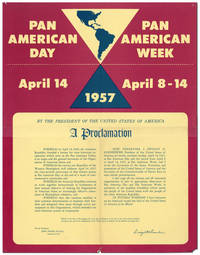
ref. 42513Washington: GPO 1957. Offset-printed broadside in three colors 21-1/2" x 17"; printed recto-only. Old folds probably as issued; a few small nicks to extremities; Very Good or better. Announces the establishment of Pan American Week April 8-14; and Pan American Day April 14 and reprints the full text of Eisenhower's proclamation. Pan-American Day is still celebrated in some Latin American countries though news of its establishment never seems to have made a lasting impression on the U.S. populace. Though clearly intended for display this broadside is apparently scarce with no example recorded in commerce and none catalogued in OCLC as of October 2018. unknown books
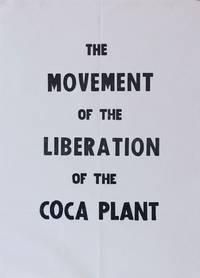
ref. 27909N.p.: S.i. 2009. Original silkscreened poster text printed in black on thin powder gray stock made with coca leaf pulp measuring 49.75cm x 70cm 19.5" x 27.5". Old folds smoothed out small unobtrusve tear at center with faint smudge at upper left corner; very Near Fine / A-. Collaborative work created by Colombian artist Wilson Díaz and San Francisco native Amy Franceschini. In 2009 Franceschini an artist and educator in her own right received an Art Matters grant for support in traveling to Cali Colombia to work with Díaz on a new body of work titled Movement of the Liberation of the Coca Plant MLCP. The two have been involved in creating a number of conceptual works which communicate the various political social and economic powers at play around the conservation and perpetuity of the coca plant from which cocaine is derived. Díaz has been known for incorporating pigment extracted from coca seeds into his works as well creating works on paper made with coca leaf pulp highlighting some of the plants traditional non-illicit uses. S.i. unknown books
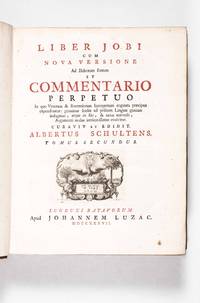
1737ref. 49261Leiden: Jean Luzac 1737. First edition. Two volumes large quarto. 52 544; 2 545-1232 63 indices 1 corrigendapp. Text in two columns with Hebrew text and facing Latin translation interspersed with commentary. Titles in red and black with engraved vignettes. Contemporary speckled calf; gilt-tooled spine with raised bands and morocco lettering pieces; gilt dentelles; edges daubed in red and green. Light scuffing to boards and fading to spines. A very good set with crisp clean text throughout. First edition of this comprehensive commentary to the biblical Book of Job by the Dutch scholar of Semitic languages Albert Schultens 1686-1750 who maintained "that the true nature of the Hebrew language and the meaning of many of its words and idioms are to be found chiefly in the Arabic" Orme. Fifty-five pages of the indices constitute a brief lexicon and provide Latin as well as Arabic equivalents for more than 1000 Hebrew words. Schultens studied theology and eastern languages at Groningen where he received his degree in theology in 1709. After a brief career as a preacher in Wassenaar he was nominated professor of Hebrew and Jewish antiquities at Franeker in 1713. In 1729 he decamped for Leiden were he was first appointed reader in eastern languages and finally full professor in 1732. At this time a chief concern of Calvinist theologians was to liberate Old Testament exegesis from the Jewish Rabbinic as well as Catholic traditions. Schultens' influential and controversial solution was revealed as early as 1706 in his first public thesis Disputatio theologico philologica de utilitate linguae Arabicae in interpretanda S. Scriptura A Theologico-Philosophical Dissertation on the Utility of the Arabic Language for the Interpretation of the Holy Scriptures "a forceful attack" Brugman & Schröder on the Protestant sola scriptura methodology of Biblical exegesis. "With the help of Jacobus Golius' Arabic dictionary he perused with zeal and fervour the Old Testament and wrote prolifically. The lexical superiority of Arabic had led him to a reconsideration of the position of Hebrew: at first he had called Arabic 'the most splendid daughter of mother Hebrew' but in his oration of 1729 he proclaimed Hebrew and Arabic cognate twin sisters. This shocked conservative theologians as an outright profanation of God's Word" Brugman & Schröder. "In 1737 he applied his theories in his bilingual edition of the book of the prophet Job whom he regarded as an Arab. The Hebrew text and the Latin translation are all but totally submerged by the extensive commentary in which Schultens draws abundantly on Arabic texts such as the Hamasa an anthology of early Arabic poetry by the ninth-century poet Abu Tammam" Vrolijk & van Leeuwen. Schultens was not without his critics and by 1824 William Orme notes a turning of the tide: "Different opinions are entertained of the correctness of his views and also of his success in applying them; but it is now generally admitted that he carries his notions of the advantage of Arabic learning to the interpretation of the Scriptures too far." Jean Luzac 1728-1777 was a member of a well-known Huguenot family of printers; he published many works for the University of Leiden including three Hebrew books of Albert Schultens. Isaac van der Mijn is noted as the printer at the colophon of the second volume. Provenance: printed label of the Bibliotheca Seminarii Warmondani at the front endleaf of the first volume. Full title: Liber Jobi cum nova versione ad Hebraeum fontem et commentario perpetuo in quo Veterum et Recentiorum Interpretum cogitata præcipua expenduntur: genuinus sensus ad priscum Linguae genium indagatur atque ex filo et nexu universo Argumenti nodus intricatissimus evolvitur. Curavit et editit. Albertus Schultens. Tomus Primus. -Tomus Secundus References: J. Brugman & F. Schröder Arabic Studies in the Netherlands Leiden: E.J. Brill 1979 p.26f. Fuks/Fuks-Mansfeld 78. Orme Bibl. Biblica p. 390. A. Vrolijk & R. van Leeuwen Arabic Studies in the Netherlands a Short History in Portraits 1580-1950 Leiden: E.J. Brill 2014 pp. 73-79. Jean Luzac unknown books
1859ref. 2221732First edition. Octavo. 2 large folding tables at rear. Errata leaf. Contemporary maroon calf over marbled boards red morocco label minor rubbing. Very good. 65 pages XXVIII appendix. Scarce work by this Mexican Lt. Colonel of Artillery 1831-1877. He achieved the rank of brigadier general and was appointed commander of the imperial artillery at the Siege of Queretara. Provenance: From the library of the great English collector and bibliophile Sir Thomas Phillips 1792-1872 with his MS pressmark. Imprenta de J. M. Lana hardcover books
1529ref. 66850Lyons: Per Johanem Crespin 1529. BIBLE IN LATIN. Lyons: Per Johanem Crespin 1529. Second Crespin edition reprinted from the 1527 edition. Folio 13 15/16 x 10 inches; 354 x 252 mm. 304 leaves 18 CCLXVIII 18 leaves. Complete with final blank leaf. Gothic type. Text in double columns within rule borders. Title printed in red and black with small woodcut of St. Jerome repeated three times in the text with Jerome's prefaces within a four-part woodcut border showing God the Father and two angels in a tympanum the six days of Creation and the Last Supper. Large six-part Creation woodcut at the beginning of Genesis half-page woodcut of King Solomon at the beginning of Proverbs full-page Nativity woodcut at the beginning of the New Testament and 121 small text woodcuts including twenty-three repetitions: ninety-one Old Testament woodcuts within strip borders including eight repetitions and thirty New Testament woodcuts without borders including fifteen repetitions. Decorative woodcut initials. The Eusebian canons leaves D1-D3 are printed in red and black in a red architectural framework. Contemporary pigskin over wooden boards roll-tooled in blind to a panel design. Lacking clasps. Original index tabs. Binding worn with some loss of pigskin on upper corner of front cover. Title soiled lower margin of first few leaves wormed and frayed with some loss to woodcut title border a few short marginal tears some mostly marginal dampstaining minor worming to lower inner margins a few inkstains slight discoloration throughout. Despite these minor flaws this is a beautiful example of a French woodcut Bible completely unsophisticated. Contemporary ink inscription on back pastedown dated 1534 contemporary ink inscription on the recto of D4 beneath the Nativity cut eighteenth- or nineteenth-century inscription on title: B.V. Maria in Fürstenfeld. Some early underlining and coloring of woodcuts in red. A few early ink marginalia. Housed in a custom quarter brown morocco clamshell case. The illustrations follow the schema of the Sacon Bibles printed in Lyons in 1518 and 1521. Crespin's blocks with the exception of the Creation are close copies of those used in Jacques and Jean Mareschal's Lyons Bibles of 1523-1541 as is the layout of the text within ruled columns. The borders for the Old Testament blocks include a strip with the initials "PBA." Fairfax Murray French 36. Harvard French 66. Not in Brunet Rothschild Darlow and Moule. HBS 66850. $9500. Per Johanem Crespin unknown books
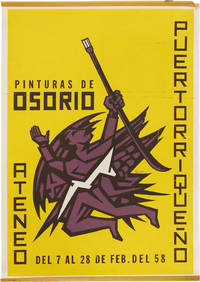
1958ref. 55418San Juan: Ateneo Puertorriqueño 1958. Original illustrated poster silkscreened in three colors on white stock measuring 47.25cm x 67.25cm 18.5" x 26.5". Light wear and handling some faint creases short tear to upper left margin with masking tape along upper and lower margins on recto and some faint adhesive streaking; unbacked; Very Good / B. Striking poster announcing a 1958 exhibition of paintings by Puerto Rican painter and printmaker Carlos Osorio 1927-1984 at the Ateneo Puertorriqueño the country's oldest private cultural institution. The exhibition featured 41 works including oil paintings watercolor and drawings. The poster designed by Puerto Rican artist Carlos Rivera 1923-1999 features a powerful central image of a winged man holding aloft a staff which is both his paintbrush and his machete. Not separately listed in OCLC though we note an example held by the University of Puerto Rico. Ateneo Puertorriqueño] unknown books
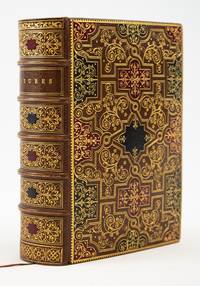
ref. ST20295Northern France probably Paris third quarter of 15th century. 130 x 100 mm. 5 1/8 x 3 7/8". Single column 15 lines in an elegant gothic book hand. 280 leaves. First four leaves misbound lacking at least seven leaves five of which probably contained miniatures. Contents: Devotion to the Passion f. 1r; blank f. 4; Calendar f. 5r; Gospel Lessons f. 17r; "Obsecro te" and "O intemerata" f. 23r; blank f. 23; Hours of the Virgin lacking opening leaves for Terce Nones and Vespers f. 33r; Penitential Psalms and Litany f. 100r; Hours of the Cross lacking preliminary leaf f. 120r; Hours of the Holy Spirit p. 123r; Office of the Dead lacking preliminary leaf f. 127r; "Sept Vers de Saint Bernard" and Suffrages f. 176v; series of devotional prayers in Latin and French including the Hours of the Conception an indulgence devotional poems in French prayers for specific occasions such as when facing tribulations going to confession protection against storms and for friends abroad the Stabat Mater the Seven Joys of the Virgin Gospel sequences "Le chemin de paradis" and many others f. 199r; blank f. 280. ESPECIALLY BEAUTIFUL MID-19TH CENTURY LIGHT BROWN MOROCCO LAVISHLY GILT IN THE "FANFARE" STYLE BY CAPÉ stamp-signed in gilt on front turn-in covers with large green and red morocco inlaid panels gilt strapwork scrolling and small star tools raised bands spine compartments with red or green morocco inlay surrounded by gilt scrolling embellishments gilt lettering RED MOROCCO DOUBLURES gilt in the style of Duodo with repeating pattern of flowers encircled by vines marbled endleaves modern paper and vellum flyleaves all edges gilt. Housed in a fine suede-lined pebble-grained leather pull-off case with gilt lettering on spine. Light red ruling and rubrics numerous line-fillers in blue and pink with gilt embellishments many one- and two-line initials in burnished gold on pink and blue ground three four-line initials in pink or blue filled with ivy leaves on a burnished gold ground two of these with a gilt and painted baguette along the outer edge of text and all with a three-quarter border of hairline vines flowers acanthus and gold leaves the majority of the leaves with a panel border of hairline vines and flowers on one side one historiated initial painted blue on a burnished gold ground depicting the Virgin accompanied by a gilt and painted baguette and three-quarter border FOUR SMALL MINIATURES DEPICTING THE APOSTLES each with a gilt and painted baguette and surrounded by a three-quarter border and EIGHT LARGE ARCH-TOPPED MINIATURES above a three-line initial painted blue or pink on gold ground a gilt "L" shaped bar border incorporating colorful flowers and a full border of border of hairline vines flowers acanthus and gold leaves and A HALF-PAGE RECTANGULAR MINIATURE with a border along the lower half. The subjects of the large miniatures include: the Mass of St. Gregory f. 1r; Annunciation f. 33r; Visitation f. 57r; Nativity f. 70r; Adoration of the Magi f. 80v; Crowning of the Virgin f. 94v; David in Prayer f. 100r; Pentecost f. 123r; and a rectangular miniature of the Holy Wound or perhaps the Bleeding Host of Dijon f. 241v. Isolated light rubbing and negligible chips to miniatures the dark blue paint appearing slightly worn in places as is often the case occasional faint smudges to borders and other imperfections but all of these trivial. IN THOROUGHLY FINE CONDITION INTERNALLY--the paint fresh the vellum clean and the margins quite comfortable--AND THE EXTRAORDINARILY FINE BINDING FLAWLESS. In a spectacular 19th century binding this lovely thick little Book of Hours was executed by a talented follower of Maître François and the Master of Jean Rolin and contains a large number of prayers and devotional texts many of them in French. The manuscript includes a fine array of large and small miniatures executed with a colorful palette and careful attention to detail. Particularly noteworthy is the excellent molding of faces. Each figure--no matter their station or importance to the scene--displays unique characteristics that give us a sense of their age sentiments and demeanor. This is an impressive feat given the small scale of the compositions and this individualization adds a great deal of value to the miniatures as well as the viewer's emotional experience connecting to the images. Our artist owes much to the work of the so-called Maître François and slightly before him the Master of Jean Rolin the latter an eponym attached to the illuminator of missals done for Rolin cardinal-bishop of Autun d. 1483. Perhaps of Burgundian origin the Master of Jean Rolin completed his artistic education in Paris probably in the workshop of the Bedford Master and afterward established his own atelier in Burgundy. There he played a key role in the transition from the Bedford Master's slightly more gothic style to the more thoroughly Renaissance style of Maître François who ran the most successful Parisian workshop during the years between 1460 and 1480 producing illuminated manuscripts small and large sacred and secular. Characteristic of Maître François's style are richly colored scenes interiors depicted with considerable detail women and children with pale porcelain complexions and male figures with darker weathered flesh tones--all of which can be seen in the present work. The final miniature present in this work however seems to have been executed by a different artist altogether being rather more flat in appearance and without the detailed facial molding noted earlier. About two-thirds of the manuscript follows fairly regular arrangement of texts with the exception of the Mass of St. Gregory which is misbound at the beginning of the volume. Then following the Suffrages are approximately 80 leaves of devotional texts in Latin and French including popular verses such as the "Seven Joys of the Virgin" and the "Stabat Mater" as well as more unusual texts such as the Hours of the Conception prayers for specific occasions or protections--for example against storms "Contre tempeste" and when one passes over water "Quant on passe par eaue"--indulgences and other related texts. Two of the more interesting passages are "Le chemin de paradis" a French prayer beginning "Qui en paradis veult aller" and a series of Latin poems that claim to be copied from originals found at the church of St. Paul in Rome. These copious additional prayers suggest a high degree of customization for a client who may have been particularly religious or at least very concerned with self-preservation! and they present intriguing possibilities for further study. The manuscript was rebound sometime in the middle years of the 19th century by Capé d. 1867 one of the most distinguished binders in France in his day. He was especially well known for the delicacy of his work which can be observed to great effect in the present example. He was the binder to the Empress Eugenie and Béraldi calls him "the Bozérian of the second Empire." His work has always been highly sought after and it resides in all of the great collections where bindings are considered important. This volume seems to have been sold to bookseller Francis Edwards as lot no. 95 at Sotheby's sale on 3 April 1957 and has been in private hands ever since. The manuscript is a little jewel inside and out and has obviously been a treasured vessel of prayer and art for generations of owners. unknown books
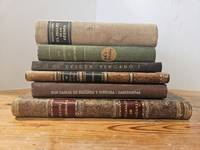
1953ref. BK0111V.p.: V.p. 1953. Twelve books. Conditions vary though generally very good to excellent. See description. Irving A. Leonard 1896-1996 was a pioneering historian of Latin America. Leonard specialized in the cultural and intellectual history of colonial Latin America particularly the literature of Spanish colonists as it influenced the intellectual life of the colonies. He is best known for Books of the Brave 1949 a study of the literature that Spanish conquistadors and settlers brought to the Americas which argues that their literature shaped how they understood their experiences and uses shipping and customs records to demonstrate the circulation of literature in Spanish America. Offered here is a collection of both fiction and nonfiction books from Leonard's personal library including some by Leonard himself. Two of the books Leonard's Don Carlos de Sigüenza y Góngora 1929 and The Mercurio Volante of Don Carlos de Sigüenza y Góngora 1932 are in English while the remainder are in Spanish. Full inventory follows. Francisco Rodríguez Marín El "Quijote" y Don Quijote en América Los Sucesores de Hernando 1911. Inscribed "Irving A Leonard / Sevilla España 30 Marzo 1931." with stamp reading "NUEVA LIBRERIA M. COLONIS SEVILLA". 8vo marbled boards. Boards with wear especially to edges and spine very good. Contents with a few pencil markings excellent. Pérez Galdós Los Ayacuchos Los Sucesores de Hernando 1916. 12mo green boards. Boards with normal wear especially to edges and library call number sticker on spine VG. With Middlebury College Library bookplate and WITHDRAWN stamp on pastedown. Contents toned excellent. Irving A. Leonard Ensayo Bibliografico de Don Carlos de Sigüenza y Gongora Monografias Bibliograficas Mexicanas 1929. Inscribed by the author and dated Oct. 11 1929 Berkeley CA. 8vo marbled boards. Boards with normal wear especially to spine very good plus. Contents foxed with a few pencil markings; excellent. Irving A. Leonard Don Carlos de Sigüenza y Góngora. A Mexican Savant of the Seventeenth Century University of California Press Berkeley 1929. 8vo in marbled boards. Boards with wear especially at edges and to spine very good plus. Contents excellent to Near Fine. Irving A. Leonard Alboroto y Motin de Mexico del 8 de Junio de 1692. Relacion de Don Carlos de Sigüenza y Gongora en una Carta Dirigida al Almirante Don Andres de Pez. Edicion Anotada Talleres Graficos del Museu Nacional de Arqueologia Historia y Etnografia 1932. 8vo marbled boards. Boards with normal wear especially to spine and edges very good plus. Contents with some wrinkling very good plus. Irving A. Leonard trans. The Mercurio Volante of Don Carlos de Sigüenza y Góngora. An Account of the First Expedition of Don Diego de Vargas into New Mexico in 1692 The Quivira Society Vol. III Pl. I 1932. 8vo brown boards with Quivira Society marker debossed in gold. With some apparent water stains to spine though no dampness or mold; boards very good. Contents slightly foxed especially at some gutters else Near Fine. Irving A. Leonard El Desdén Vengado de Lope de Vega University of California Press Berkeley 1935. 8vo brown boards with title debossed. Boards with small stains and some wrinkling very good. Contents Near Fine. Benito Lynch El Inglés de los Güesos Libreria y Editorial "La Facultad" Bernabe y Cía 1937. 5th Ed. With Irving Leonard's stamp on flyleaf. 8vo in white cloth. Boards worn with some stains very good. Contents with pencil markings very good. Irving A. Leonard Obras Dramáticas de Pedro de Peralta Barnuevo. Con un Apéndice de Poemas Inéditos Santiago de Chile Imprenta Universitaria 1937. 8vo brown boards with leather spine. Slight wear to boards with more significant wear to spine and corners very good plus. Contents excellent to Near Fine. Manuel Galvez La Maestra Normal Editorial Tor c. 1937. Inscribed by the author. 8vo white cloth. Boards toned excellent. Contents quite toned with a few pencil markings very good. Jose Rojas Garcidueñas Don Carlos de Sigüenza y Gongora Erudito Barroco Ediciones Xochitl 1945. With Leonard's English review affixed to pastedown. 12mo white boards with red spine. Foxing and toning to boards with wear especially to edges very good minus. Contents toned else Near Fine. Irving A. Leonard Los Libros del Conquistador trans. Mario Monteforte Toledo and Julián Calvo Fondo de Cultura Economica 1953. First Spanish edition. Inscribed by Leonard to his son "Para mi hijo amigo y colega David P. Leonard con todo el afecto de tu 'Dad'. Ann Arbor 1 Diciembre 1953". 8vo marbled boards. Boards quite attractive with some small areas of wear to edges NF. Contents with some toning else NF. . V.p. unknown books
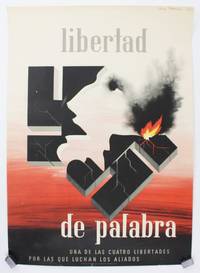
1942ref. 4754Washington DC: El Coordinador de Asuntos Interamericanos 1942. Very good. Pictorial lithograph 20 x 14.25 inches printed in red gray yellow and black. Minor surface wear mild creasing light dust-soiling a few pinholes. A rare poster issued by the Office of the Coordinator of Inter-American Affairs CIAA during World War II attempting to sway public opinion in Latin America to the Allied side. The CIAA was established by executive order in July 1941 in order to distribute news advertising film reels and more to and from Latin America to counter Italian and German propaganda campaigns in the region. The text of the present poster translates from the Spanish as "Freedom of Speech. One of the four freedoms for which the Allies are fighting." The central image features an open-mouthed face breaking open a large swastika which is itself on fire. A mildly subtle message that free speech destroys fascism. The poster was designed by noted Russian-American graphic designer and photographer Alexey Brodovitch whose printed credit appears at top right; Brodovitch is most well-known for his art direction of Harper's Bazaar from 1934 to 1958. A powerful visual display with only one copy reported in OCLC at MOMA though we also find two other institutional holdings at the United States Holocaust Museum and the Hoover Institute. El Coordinador de Asuntos Interamericanos unknown books
1969ref. 554876New York: Harper & Row 1969. Hardcover. Very Good/Very Good. First edition. 327pp. Slightly cocked spine fading on the board edges and spotting thus very good in a very good dust jacket with toning shallow chips and tears. Inscribed by the author. Harper & Row hardcover books
ref. BK0031V.p. 1977. Appx. 55 pieces: appx. 30 letters 13 photographs and 12 pieces of ephemera. Conditions vary; generally very good plus. Irving A. Leonard 1896-1996 was a pioneering historian of Latin America specializing in the cultural and intellectual history of its colonial era particularly the literature of Spanish colonists as it influenced the intellectual life of the colonies. He is best known for Books of the Brave 1949 a study of the literature that Spanish conquistadors and settlers brought to the Americas which argues that their literature shaped how they understood their experiences and uses shipping and customs records to demonstrate the circulation of literature in Spanish America. Offered here is a collection of correspondence photographs and ephemera belonging to Irving Leonard. The collection is highlighted by the correspondence which came to Leonard from a number of major figures in Latin American history at the time including US ambassador to Mexico Dwight Morrow Nicaraguan president José María Moncada Spanish diplomat and historian Salvador de Madariaga Spanish historian Rafael Altamira and Mexican writer and diplomat Alfonso Reyes; and other figures such as poet Archibald MacLeish and publisher Alfred A. Knopf who rejects Manuel Gálvez's La Maestra Normal as "too slow" "not very original" and "too remote from us to interest many". Most of the correspondence concerns Leonard's Don Carlos de Sigüenza Y Góngora 1929 an early work based on his Berkeley dissertation about the Mexican criollo intellectual. In a copy of a 1929 letter to Dwight Morrow Leonard explains that: "I think it well that we Americans should realize that during the seventeenth century at least Mexico enjoyed a more advanced culture and civilization than contemporary New England though that may come as a shock to some. I think it significant that Don Carlos was setting forth his views on the rational nature of comets while Cotton Mather and others desisted from their witch-burning activities to sermonize on these phenomena which they were pleased to call portents of coming evil". October 3 1929 Most letters are thanking Leonard for copies of Don Carlos and praising his work; for instance Rafael Altamira states that Leonard's "work on these Spanish subjects" gives him "great pleasure" February 1934 trans. and Salvador de Madariaga writes: "I believe that historians of your type are rendering great services to true history by showing up all the absurdities which ignorance and bias have propagated with regard to that truly epical period of the occupation and civilization of the New World by the Iberian people." August 1933 Some correspondents comment on work of their own. De Madariaga writes that English audiences had received his The Rise of the Spanish American Empire 1947 with "an opener mind than the Americans" who had "been inclined to take the old fashioned narrow-minded point of view" March 1948; Archibald Macleish expresses surprise that his work "was printable in Franco Spain" and describes having "wholly lost my heart" to Harvard compared to Yale November 1956. One extracurricular letter comes from William Sanders a fellow delegate to a 1939 conference in Santiago de Chile related to the International Committee on Intellectual Cooperation an advisory committee to the League of Nations. The Santiago conference the First Conference of Committees on the American Continent was one of only two related conferences in the Americas and is fairly understudied in the literature.1 Sanders remarks on a letter sent to Leonard by politician and future Peruvian Prime Minister Luis Alberto Sánchez expressing dissatisfaction with the "results of the Santiago Conference" "the point of view that we maintained with respect to" questions of intellectual property raised at the conference and with the "excess profits of booksellers". Moreover he writes: "Apparently Sánchez looks upon our failure to comment on the resolution relative to the Indian problem as an indication of indifference. I need not tell you of course how important this problem is to most of the Latin American countries. . I believe however that the American National Committee is not qualified to intervene in the matter in our own muddled Indian problem in the United States and much less in the greatly more complex situation in Latin America." 1939 Also included in the collection are photographs-mainly portraits of Leonard though with several images relating to cycling a lifelong hobby of his-and several pieces of ephemera including three cards from Alfonso Reyes thanking Leonard for various books sent to him and book reviews by or of Leonard. The collection provides a personal view of Leonard's place within the international intellectual networks that shaped the study of Latin America in the first half of the twentieth century. Of interest to scholars of Latin American historiography and the cultural and intellectual relations between the United States Spain and Latin America. 1 Alexandra Pita "Peace Debates on Intellectual Cooperation in America. Santiago 1939" in Elisabet Carbó-Catalan and Diana Roig-Sanz eds. Culture as Soft Power: Bridging Cultural Relations Intellectual Cooperation and Cultural Diplomacy De Gruyter Brill 2022: 121-146. . unknown books
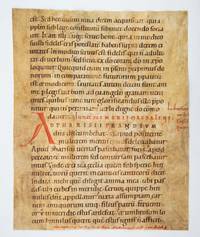
ref. ST20617bAustria Salzburg second half of 12th century. 298 x 232 mm. 11 3/4 x 9 1/4". Single column 26 lines in a lovely proto-gothic hand with two lines of uncials. Rubrics in red two two-line initials in red one four-line initial in red. Lower margin of recto with a 20th century note in very small letters in red ink see below. Recovered from a binding and thus with overall darkening though the recto much less affected by this four lines of contemporaneous annotations slightly trimmed though good margins all the way around vertical crease with small wormholes and tears touching text but not affecting legibility other minor defects but on the whole quite well preserved and entirely legible. Containing a large elegant initial and a beautiful proto-gothic script featuring two rows of uncials this leaf is an excellent example of early Austrian manuscript production. The text here includes the end of a homily by the Venerable Bede followed by the rubric for the Feast of the Birth of Mary Magdalene July 22 commencing with St. Gregory the Great's Homily 33 beginning "Ad Pharisei prandium dominus discumbebat" from his "Homilies on the Gospels." The homily played an important role in Christian understanding of Mary Magdalene as a penitent sinner identifying her for the first time as the unnamed "sinful woman" who comes to anoint Christ's feet at the house of a Pharisee Luke 7:36-50 and conflating her with Mary of Bethany sister to Martha and Lazarus. Although modern scholarship now differentiates these three women Gregory's interpretation of Mary Magdalene as a reformed prostitute has persisted for centuries. The present leaf almost certainly belonged to a Lectionary owned by a Romanesque church in Salzburg a manuscript that was later dismembered for use in bookbinding. The script is particularly pleasing being large and dignified with extremely regular letterforms executed by a steady hand. According to the source from which we purchased this leaf it was shown in 1893 to the Medieval historian and later the Abbot of St. Peter's Salzburg Willibald Hauthaler 1843-1922 who wrote the identification in red ink along the lower edge. It was later owned by the Salzburg-based merchant artist and collector Carl von Frey 1826-96. It appeared at Christie's in 2010 where along with five sister leaves it sold for £13970. unknown books